or call (602) 265-0905 — no-obligation, on-site.
Shade Structure Buying & Design Guides
Since 1998
Designing & building Arizona shade
In-House Fabrication
Built at our Phoenix shop
Engineered & Permit-Ready
Stamped drawings for AZ wind loads
Free On-Site Quote
No-obligation project assessment
Choosing a commercial shade structure comes down to four decisions in order: match the structure to how the space is used, set a budget against the real cost drivers, pick materials that survive Arizona UV and wind, and confirm the frame is engineered to local code. These guides walk each step with defensible numbers rather than sales copy. Knitted HDPE shade fabric blocks roughly 90-99% of UV, commercial covers commonly carry 10-15 year warranties, and Valley frames are designed to ASCE 7 wind loads near 90-115 mph. Start with the use-case match below, then follow the cost and engineering guides before you ask anyone for a quote.
Start with the use, not the catalog
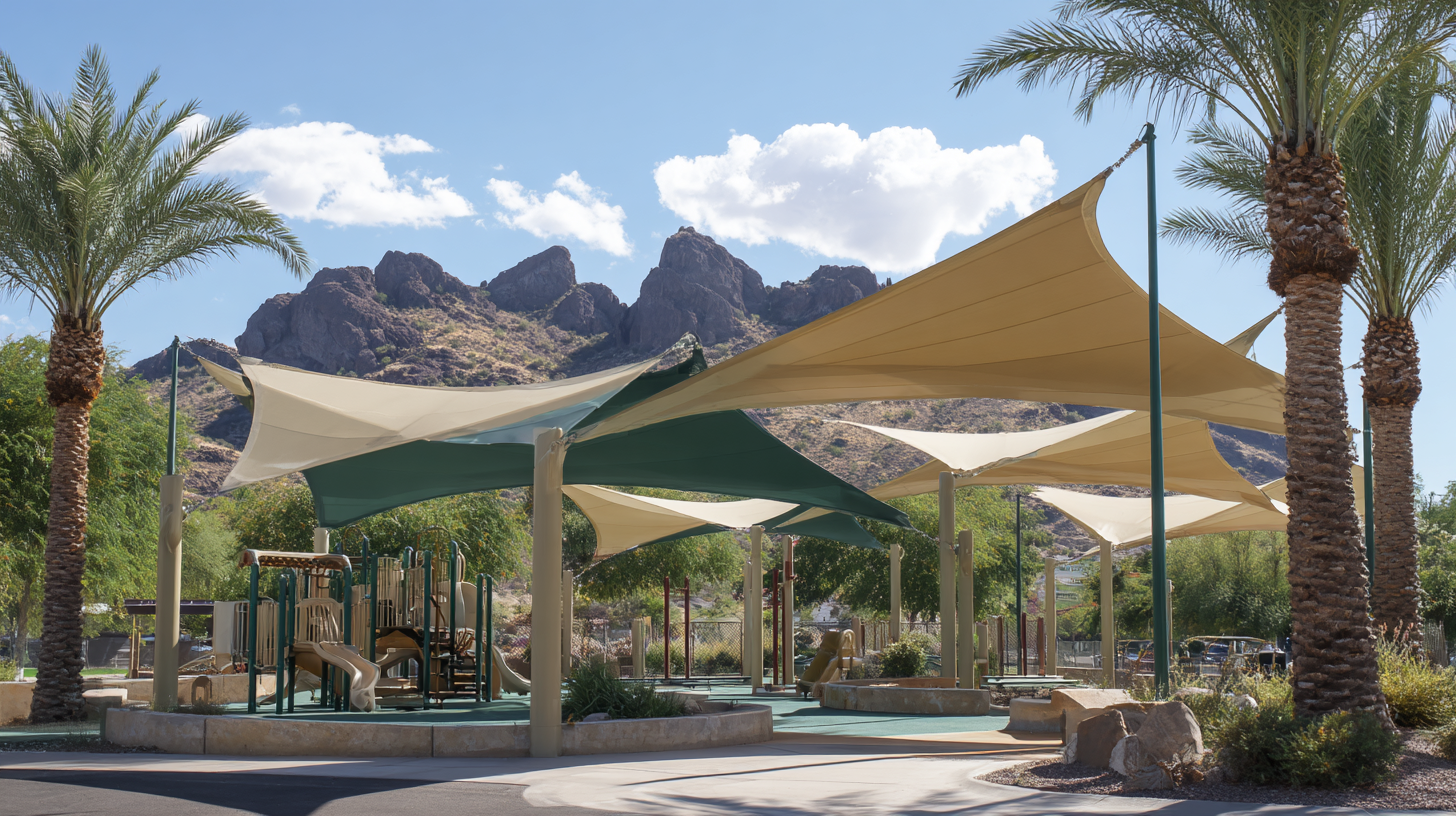
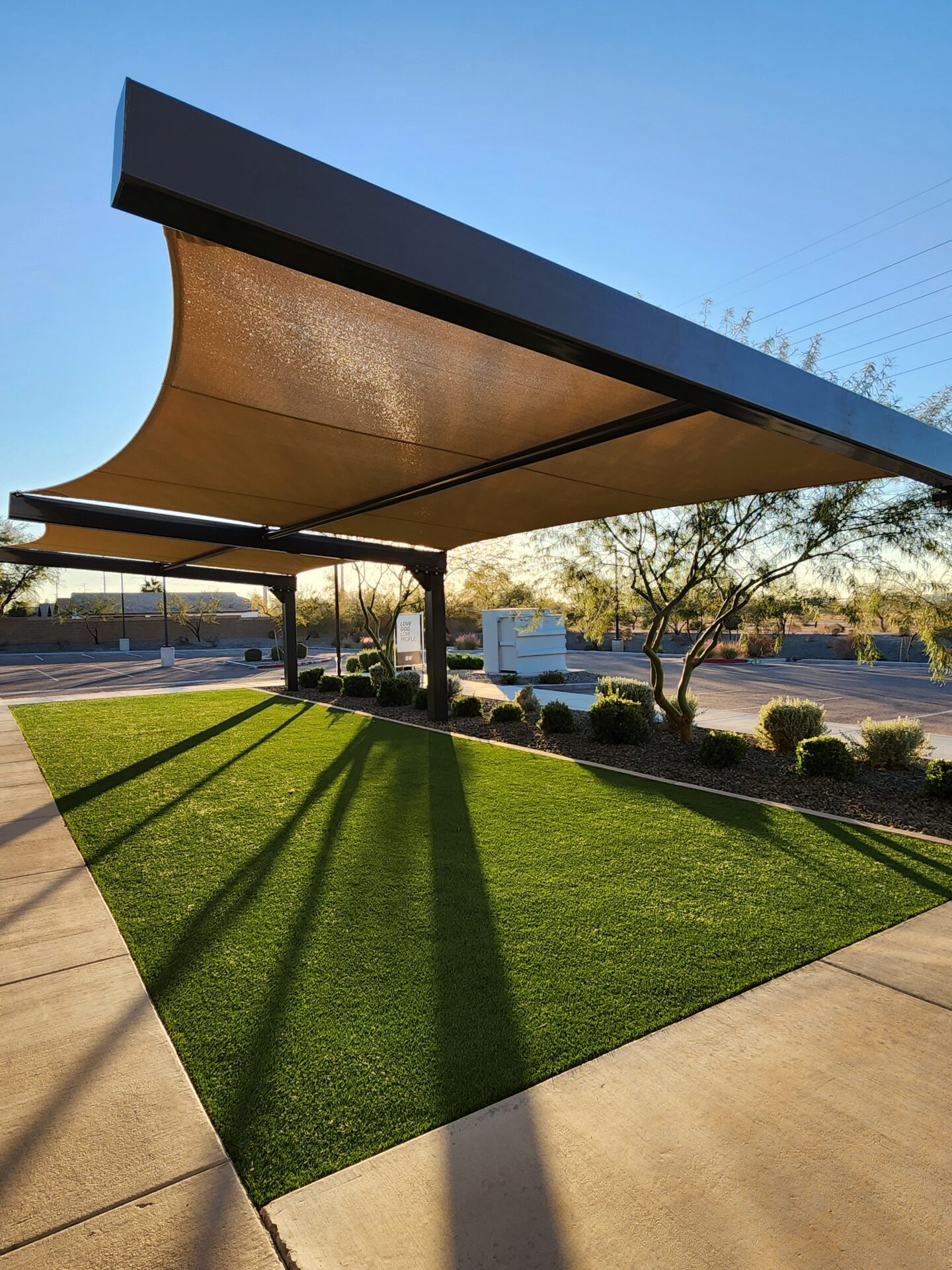
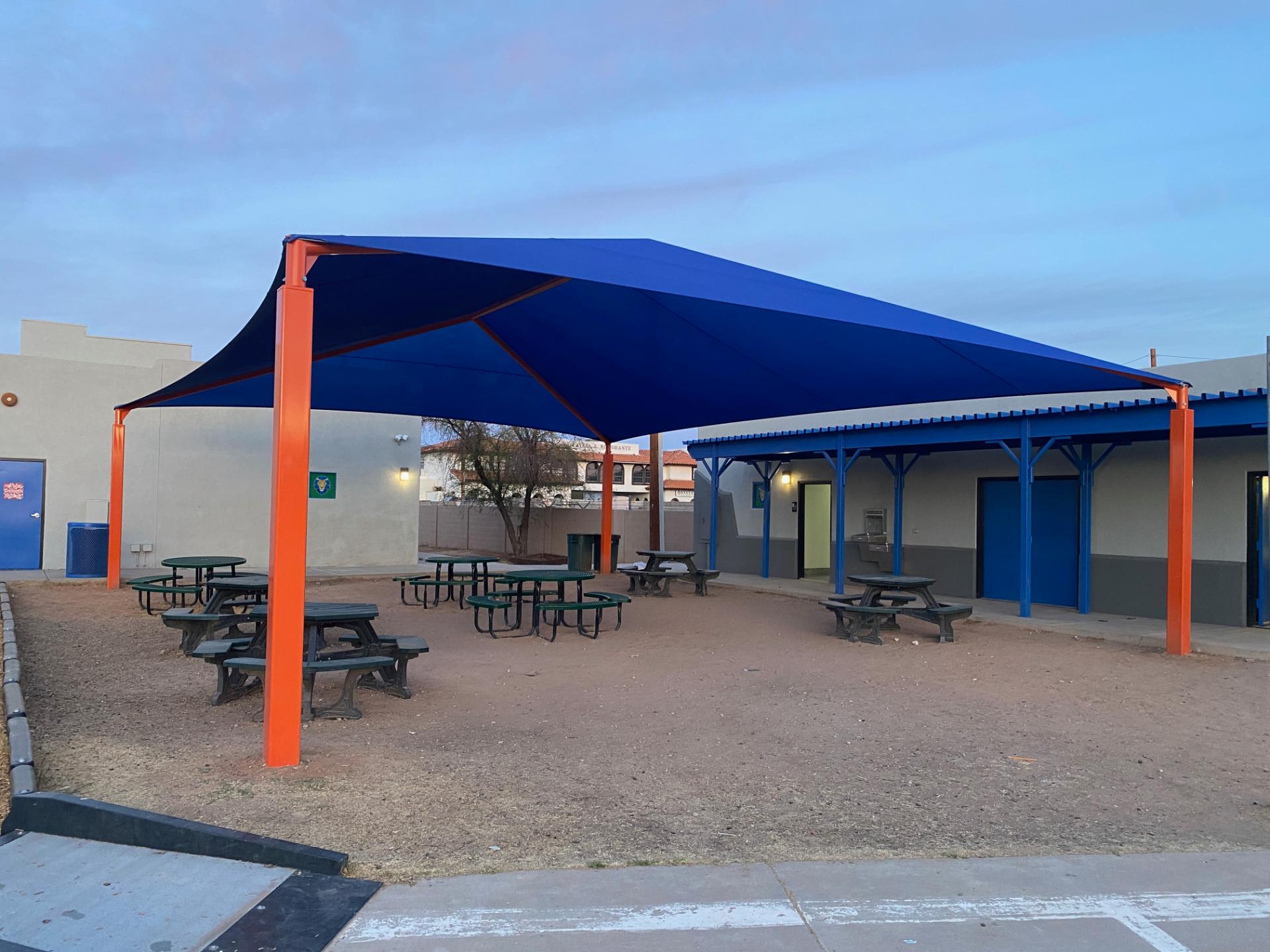
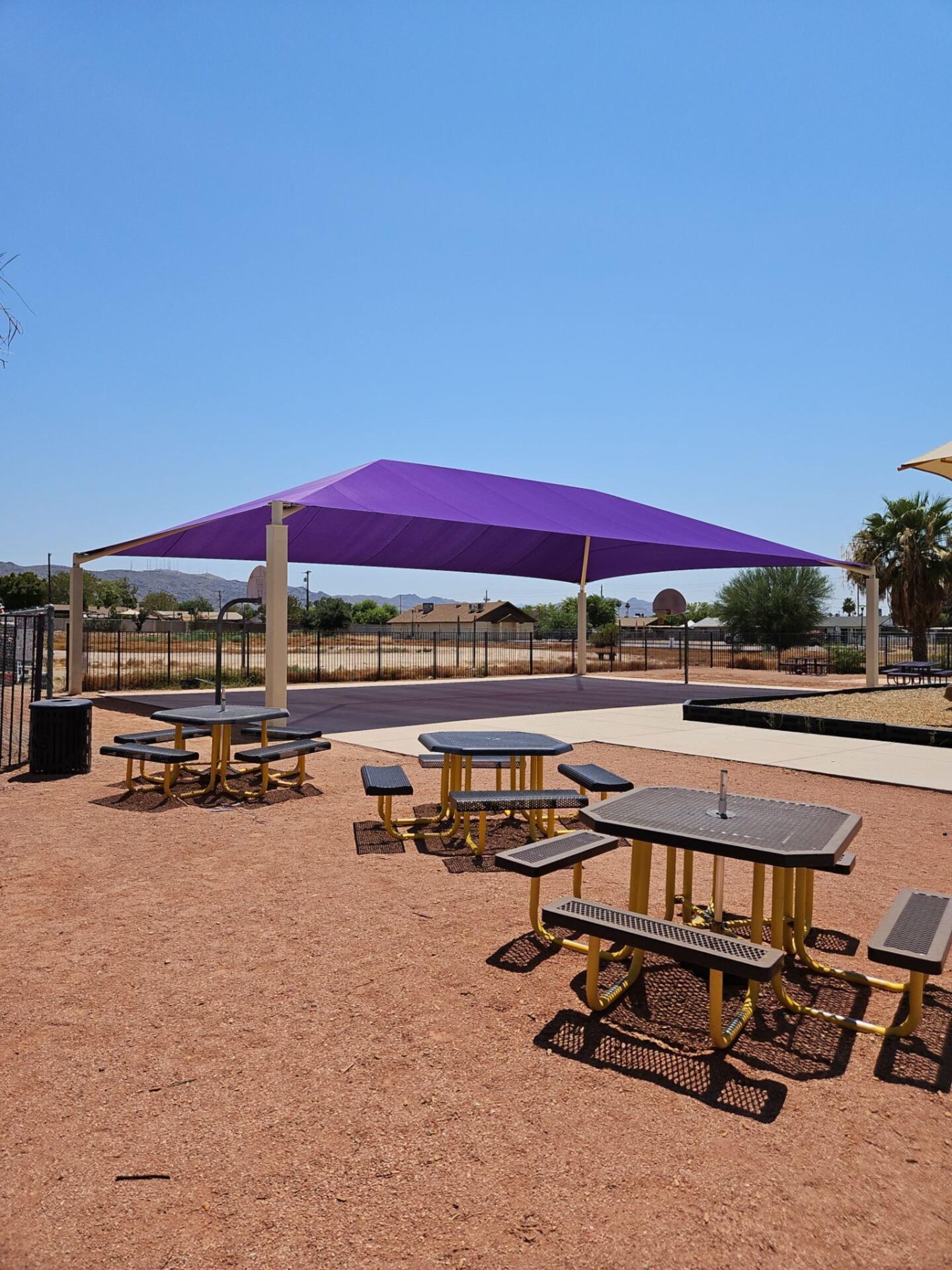
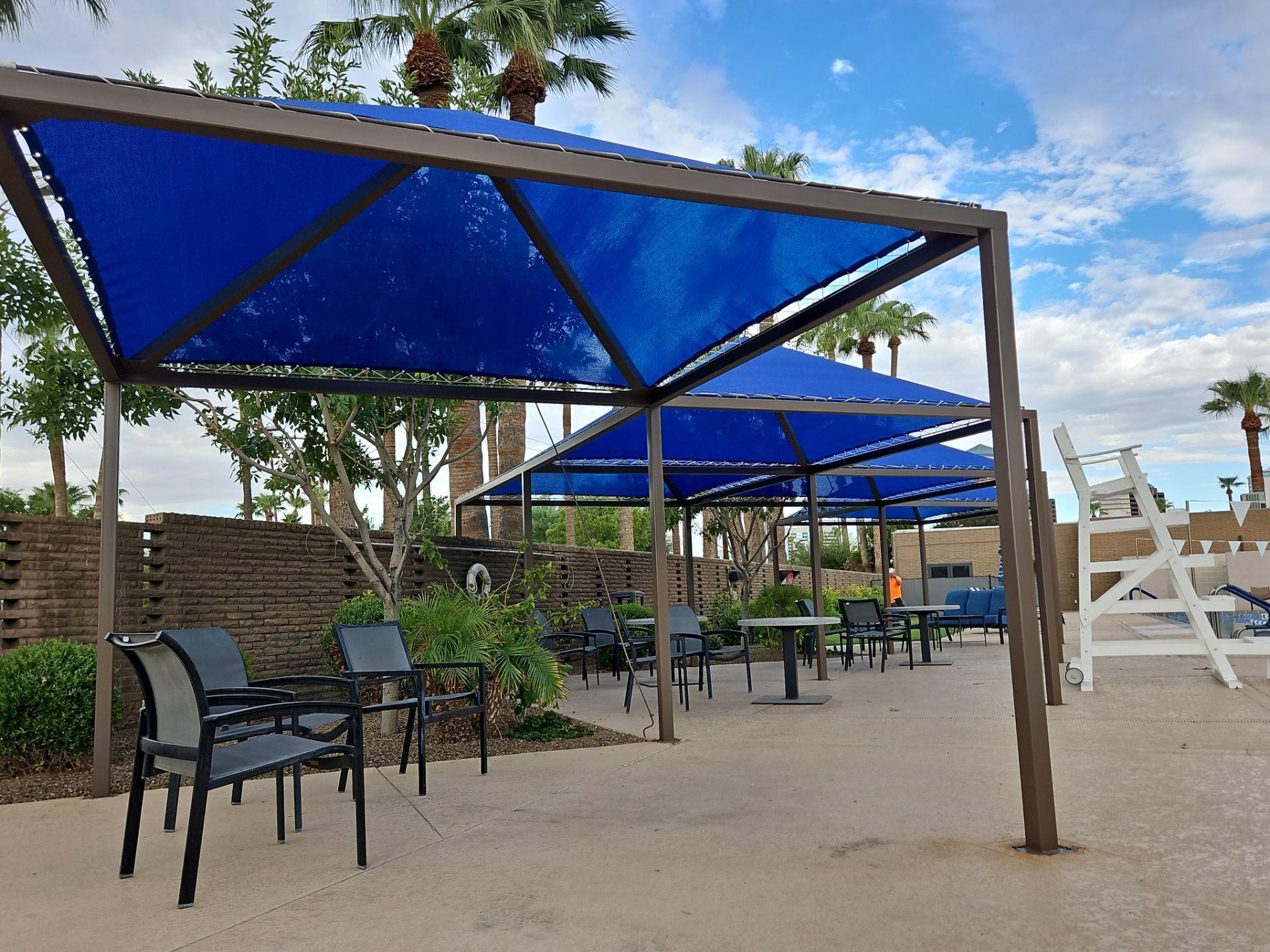
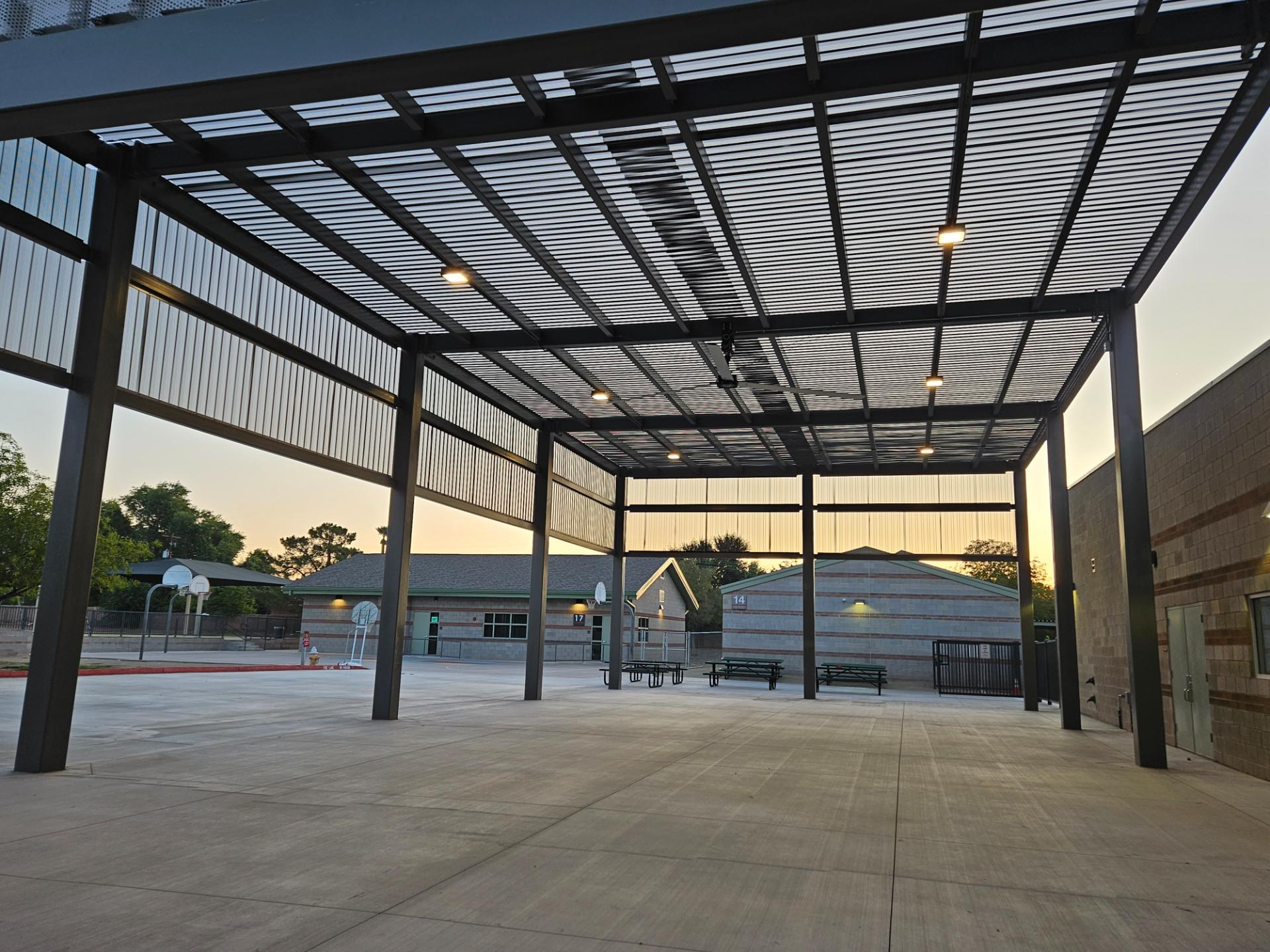
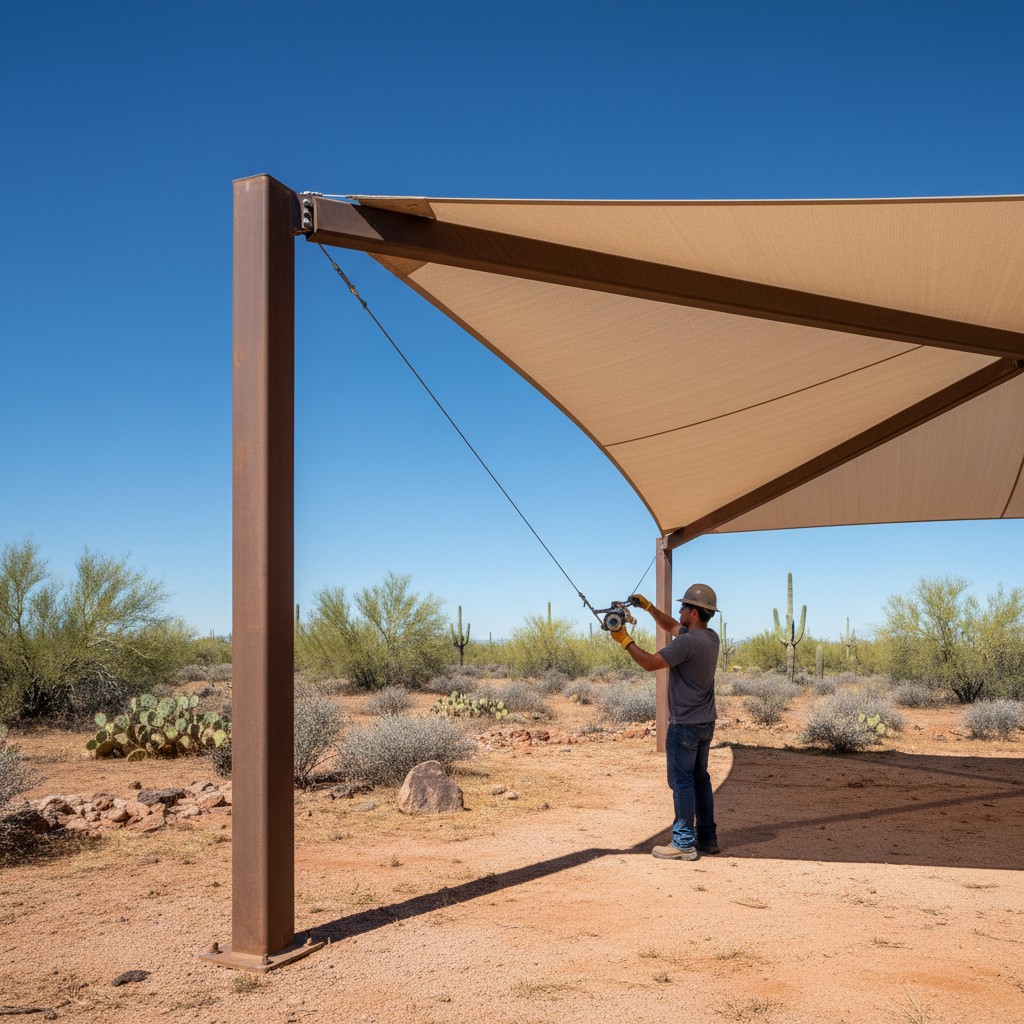
The single decision that drives every other one is how people and vehicles actually move through the shaded space, because that dictates post layout before it dictates style. A parking lot needs columns out of the drive lane, so it leans toward single-post cantilevered shade structures that shade roughly 16-20 ft of depth off one foundation line. A school lunch court or bleacher run, where load matters more than column placement, usually fits a multi-post hip frame instead.
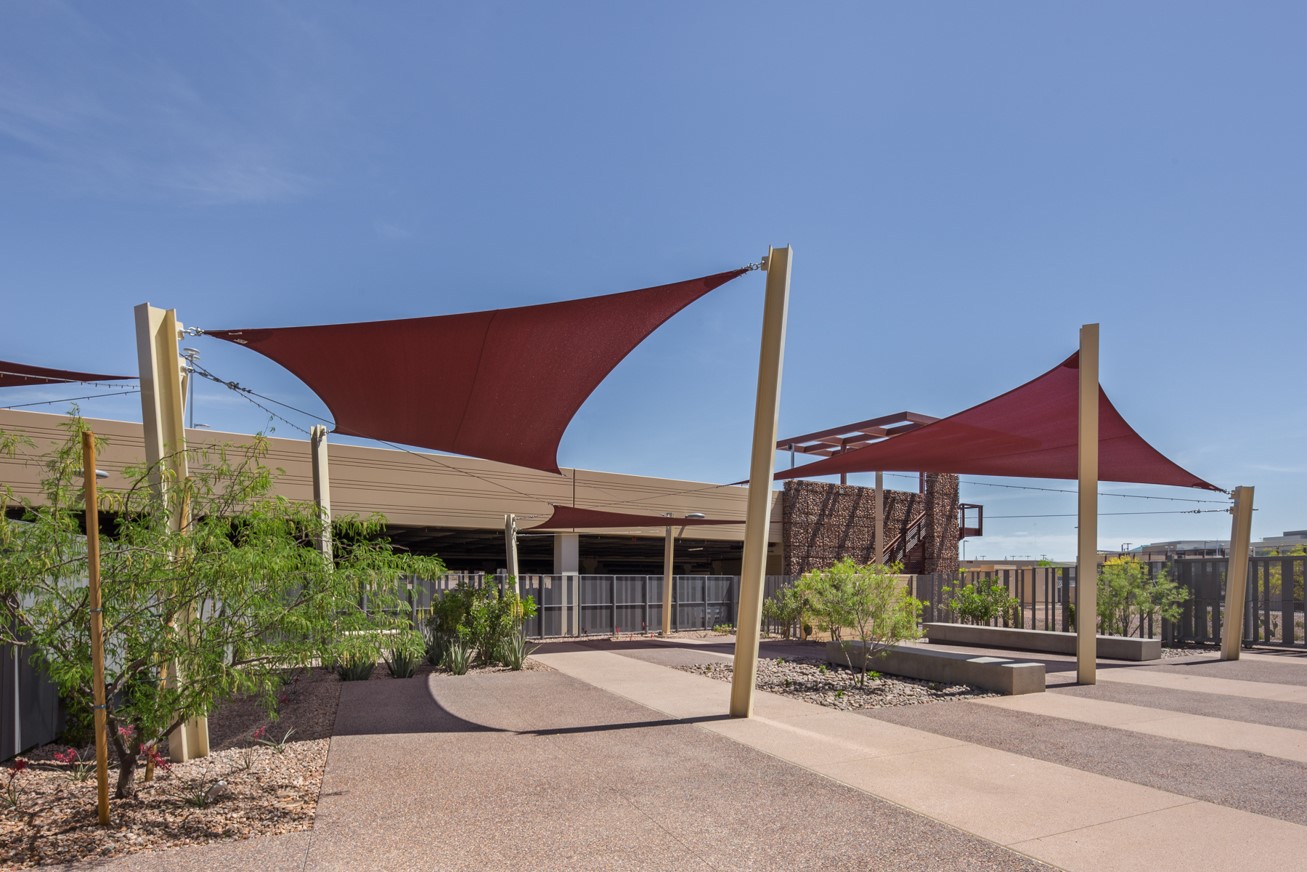
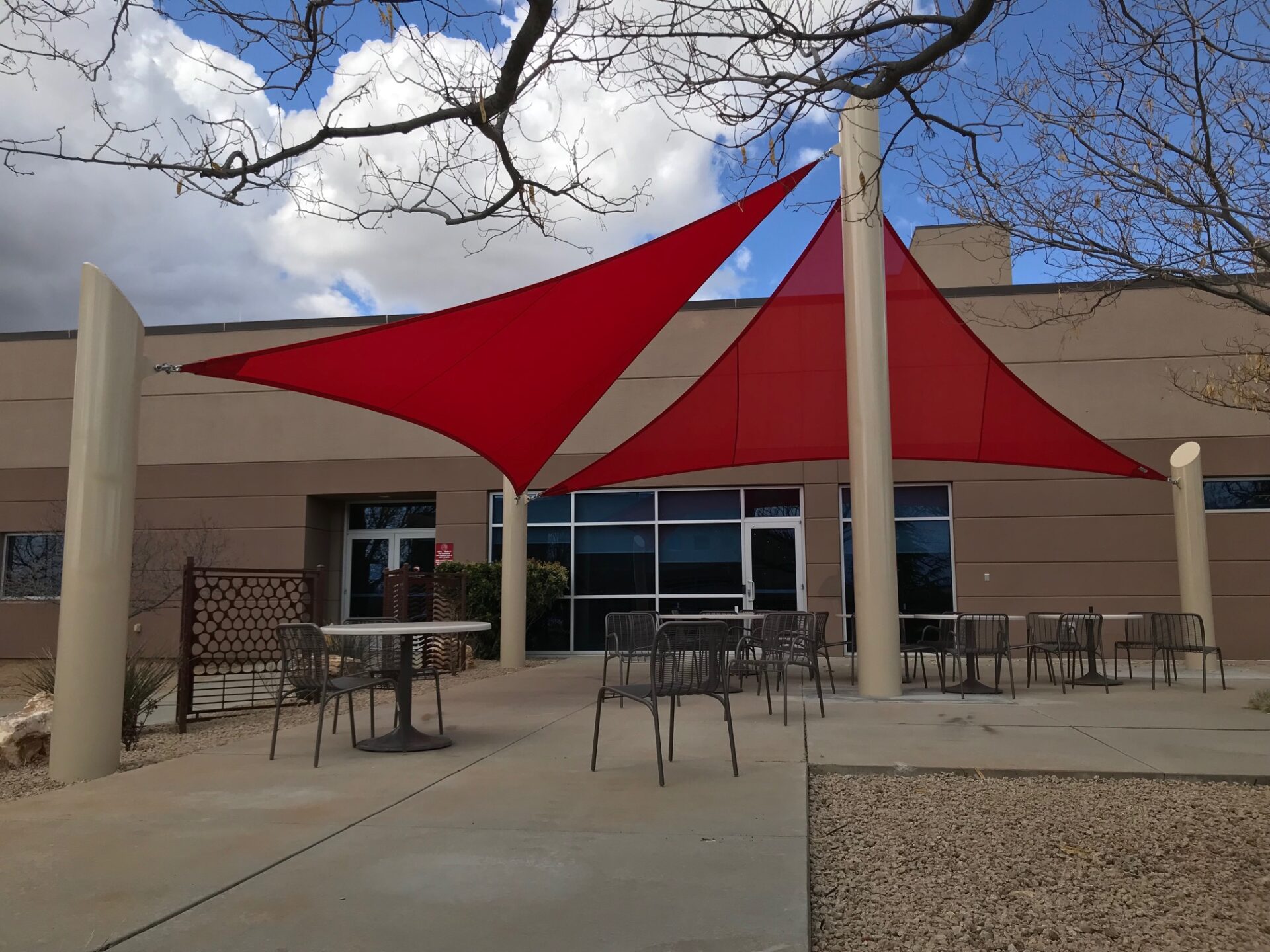
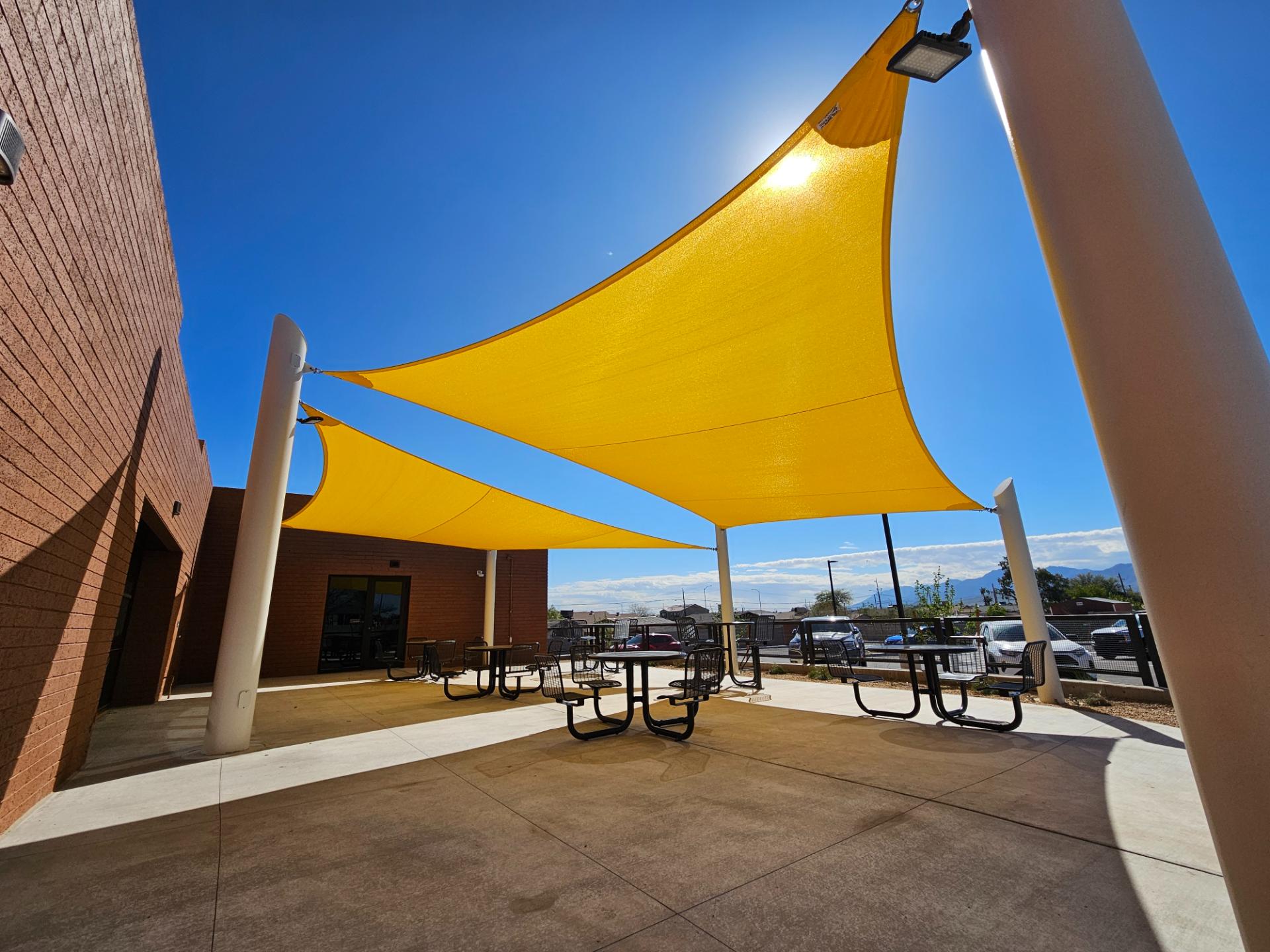
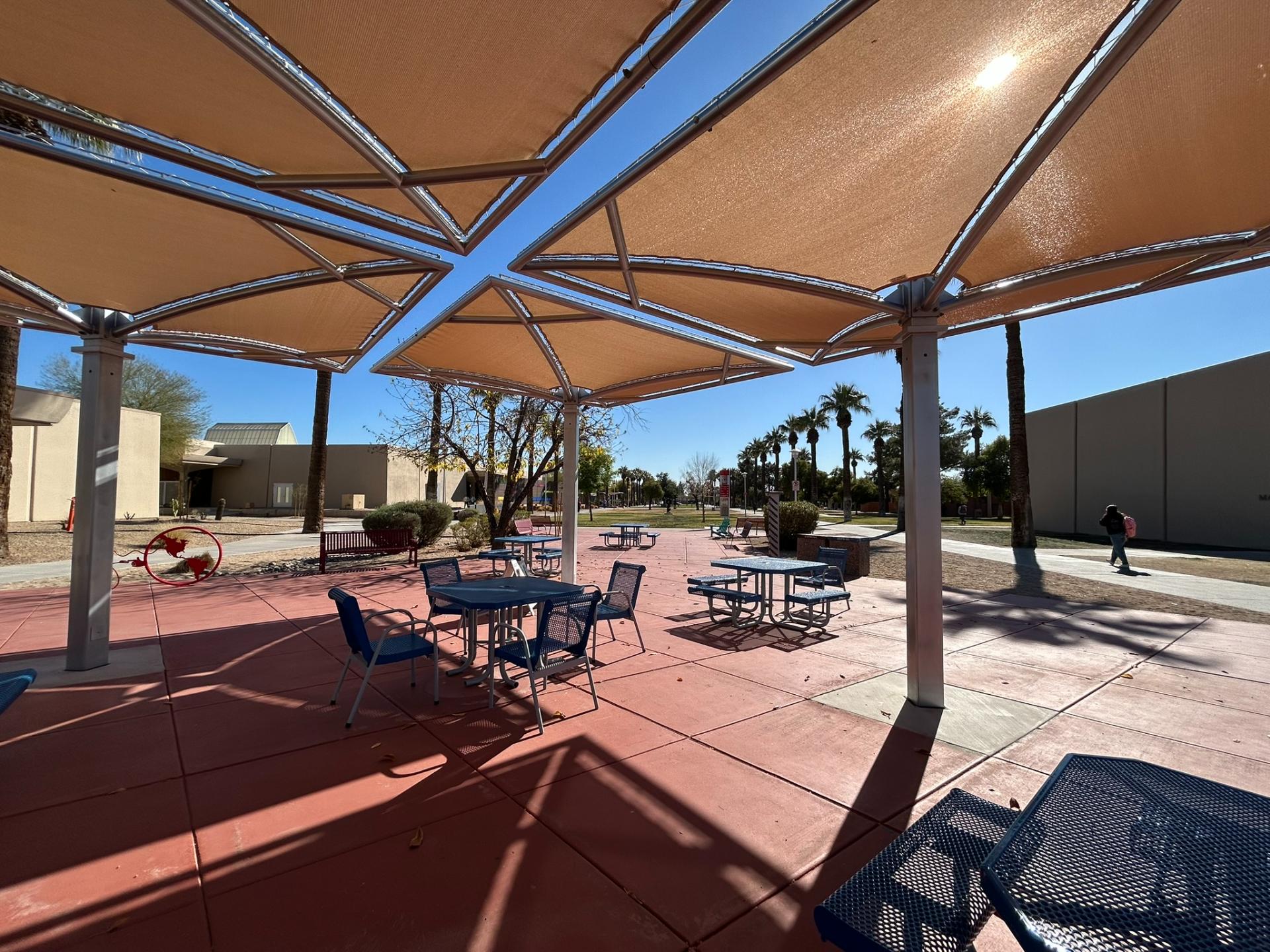
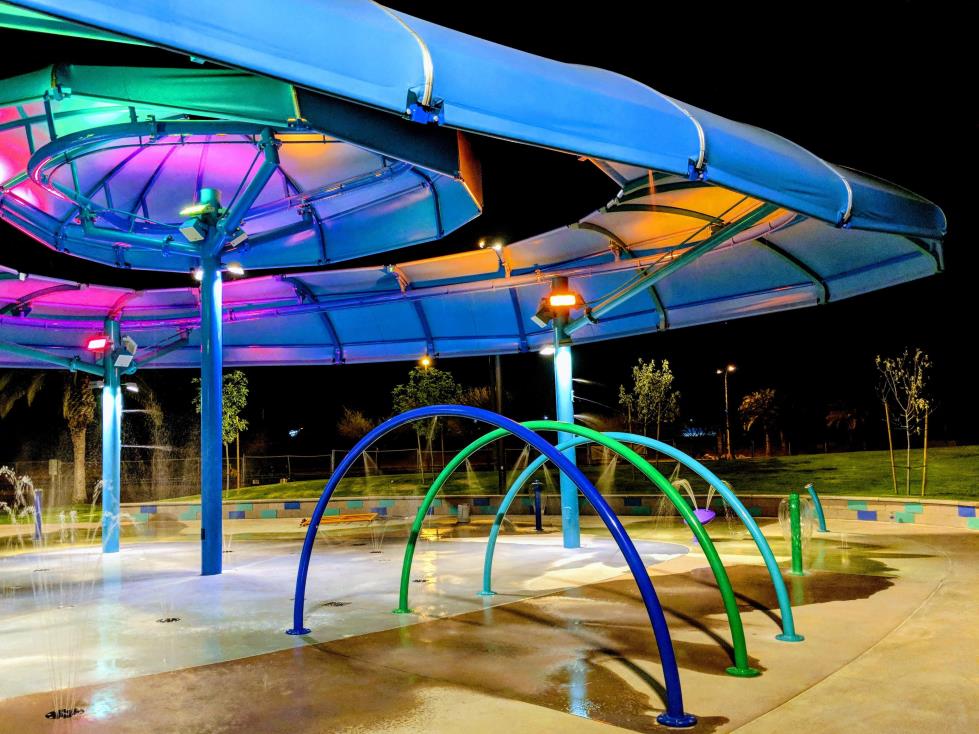
Design-led sites change the math again. A resort courtyard or an HOA-reviewed common area wants an architectural line, which pushes the choice toward hypar or tensioned-sail geometry over a flat box. The full menu, with the trade-offs spelled out, lives in how to choose a shade structure and across our product families. Get the use-to-structure match right first; everything downstream gets easier.
The cost drivers, at a glance
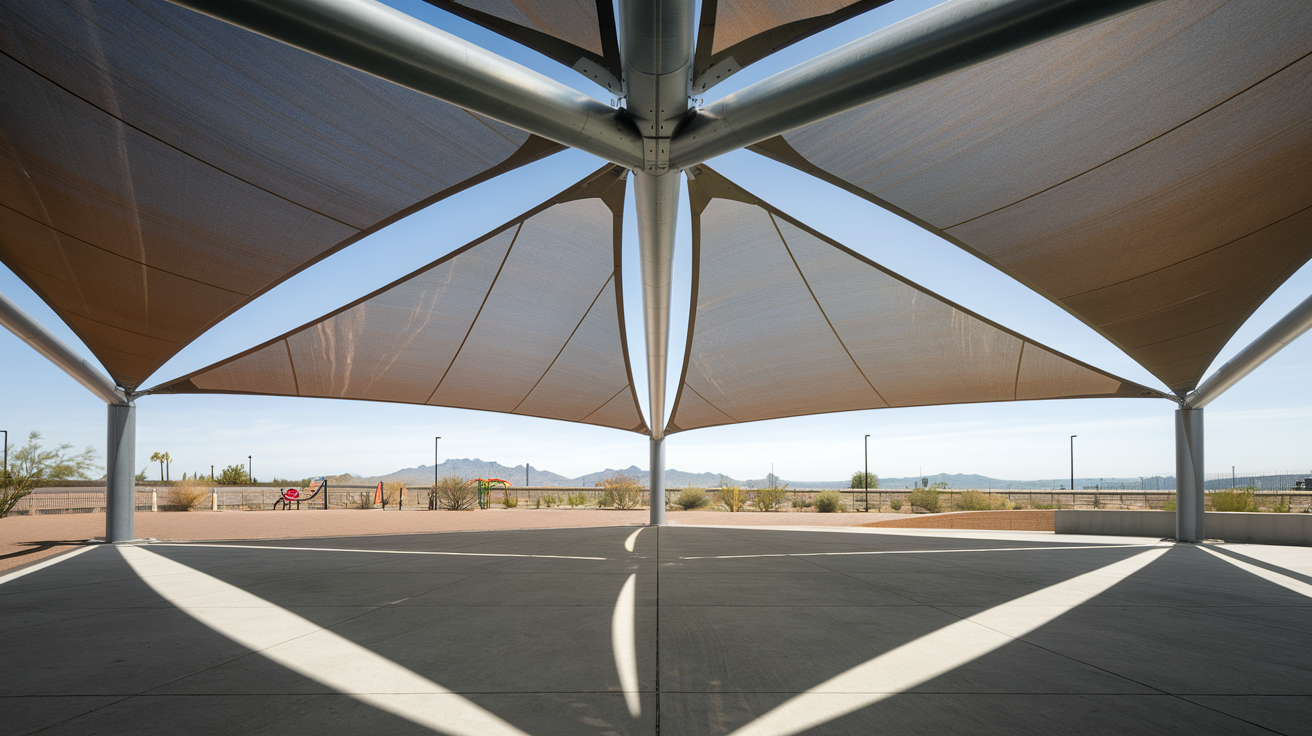
Span, post count, foundation depth, and fabric grade move a commercial shade price far more than square footage alone, which is why nobody quotes a credible structure off a per-foot chart. A single-post cantilever carries its whole load on one column line, so its foundation is deeper and heavier than a multi-post frame covering the same area. Caliche-laden Valley soil adds another variable: caissons often run 6-10 ft deep before they grip, and that hidden concrete is a real line item.
What pushes a number up or down
- Geometry. A design-led hypar or sail takes more engineering and fabrication time than a standard parking bay of equal coverage.
- Foundation. Deeper caissons in caliche or a high water table cost more than shallow footings in stable ground.
- Fabric grade. A heavier knit with a 10-15 year warranty sits above a lighter cover, and re-cover cycles factor into lifetime cost.
The full breakdown, with honest ranges, is in shade structure cost in Arizona. Walk in knowing the drivers and the quote conversation gets shorter.
Materials and durability, in plain terms
Two materials decide how long a structure lasts in the desert: the steel frame and the HDPE cover, and they fail in different ways on different timelines. Knitted HDPE shade fabric blocks roughly 90-99% of UV depending on weave density, and it is the consumable layer; commercial covers commonly carry 10-15 year warranties, with Arizona’s UV sitting at the demanding end of that window. The steel frame outlasts several covers when it is powder-coated, a baked-on finish that resists the chalking bare desert sun forces on cheaper brushed paint.
That split is why re-covering is normal budgeting, not a defect. When a cover wears out, the engineered steel stays put and only the fabric is swapped, which keeps the cost well below a new build. The steel-versus-HDPE comparison, gauges, and finish trade-offs are detailed in shade structure materials: steel and HDPE. Picking grade up front is cheaper than discovering it at the first monsoon.
Wind and engineering basics every buyer should know
A shade canopy is a sail before it is anything else, so wind engineering is the line between a 15-year structure and one that folds in its first haboob. Maricopa County structures are engineered to Arizona building code and ASCE 7 wind loads, where Valley design wind speeds run roughly 90-115 mph. Monsoon microbursts add the real-world stress test, sometimes punching past 60 mph in minutes, which is why frame gauge, post spacing, and foundation depth all get sized for gusts rather than averages.
The honest caveat: no commercial structure is rated for every extreme on record, and an engineered design covers typical monsoon loads, not a freak event. Foundations carry as much of that load as the steel, especially in caliche where caissons run deep. The full treatment of wind load, soil, and stamped drawings is in shade structure wind load and engineering. A frame that survives monsoon season is engineered, not assumed.
Hip versus hypar, and where each fits
Hip and hypar structures solve the same problem with opposite philosophies, and the choice usually tracks whether the site values clean utility or architectural identity. A hip frame uses a multi-post layout with sloped panels that shed water and clear tall vehicles, which makes it the workhorse over lunch courts, bleachers, and municipal walkways. A hypar (hyperbolic-paraboloid) twists its fabric into a saddle, trading some structural simplicity for a sculptural line that reads as design rather than infrastructure.
Neither is better in the abstract; they fit different jobs. A district buying shade for twelve playgrounds wants the repeatable economics of hip; a resort restating its brand at the pool deck wants the hypar’s silhouette. The side-by-side on span, drainage, cost, and aesthetics is in hip versus hypar shade structures. Match the form to what the site is trying to say.
The decision sequence, start to quote
Running the decisions in order saves the most money, because a late change to structure type or fabric grade ripples back through engineering and foundation. The sequence is: confirm the use and post constraints, choose the structure family, set the fabric grade and warranty target, then confirm the wind and foundation engineering before pricing. Reverse that order and you end up re-quoting after the drawings are half done.
Each guide here maps to one step, so a buyer can work through them like a checklist: how to choose for the structure, materials for the cover, wind engineering for the frame, and cost to set the budget. By the time you reach a quote, the only open variable should be the site survey.
Shade Structure Guides & Comparisons
Browse the full library:
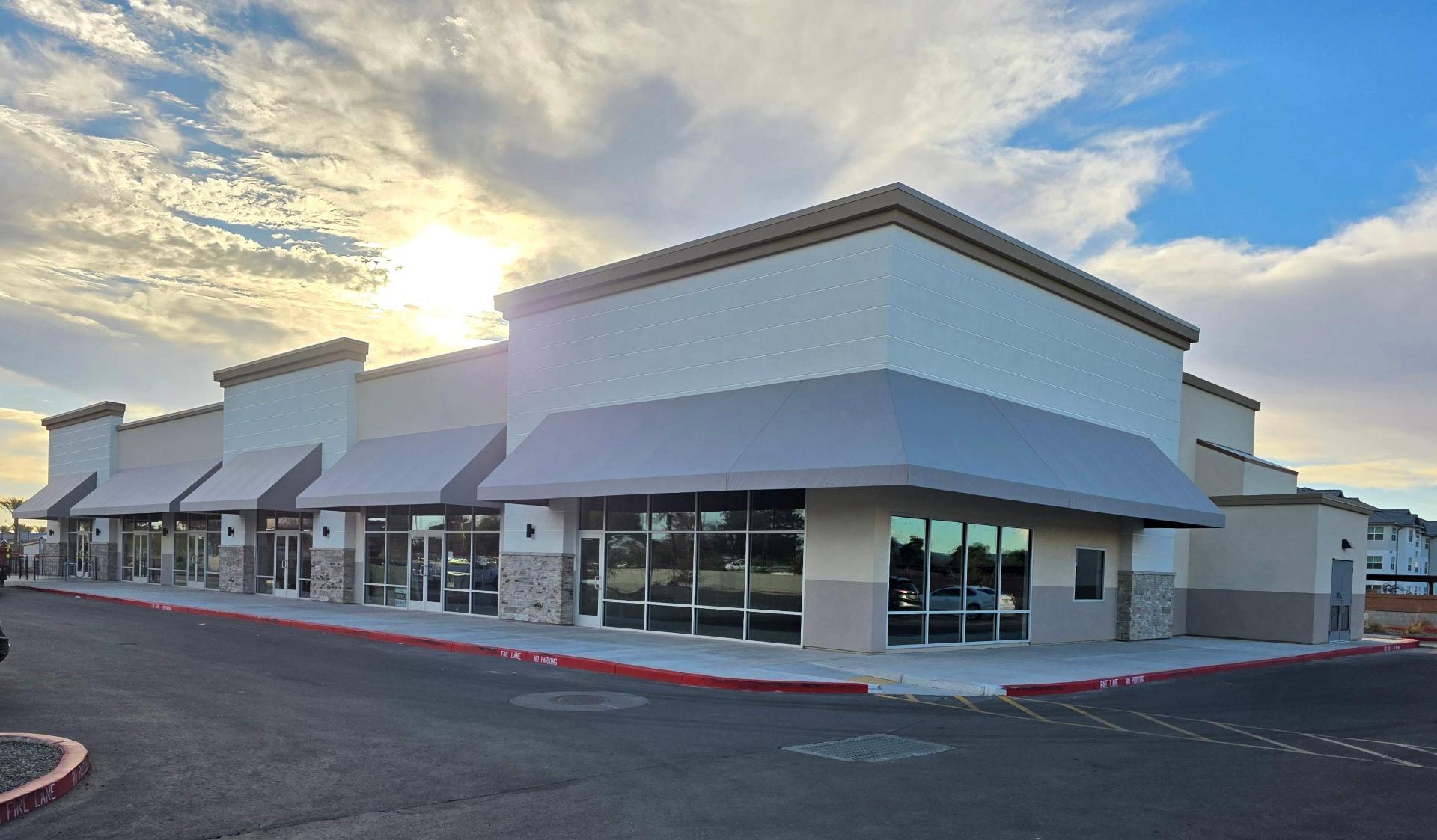
- Awnings vs Umbrellas: Commercial Shade Compared
- Hip vs Hypar Shade Structures Compared
- Shade Sails vs Cantilever Structures Compared
- Fabric vs Metal Shade Structures Compared
- Ramada vs Pergola: Which Suits Arizona
- Shade Structure Cost in Arizona: Pricing Guide
- Shade Structure Materials: Steel Frames & HDPE Fabric
- Shade Structure Wind Load & Arizona Monsoon Engineering
- Choosing a Commercial Shade Structure: Key Criteria
- Shade Structure ADA & Building-Code Compliance in Arizona
- How Long Shade Structures Last in Arizona
- Best Shade Fabric for Arizona Sun
- Shade Structure Permits in Arizona
- Shade Structure Installation Process & Timeline
- Shade Structure Cleaning & Maintenance
- Carport vs Shade Structure
- Shade Structure vs Awning
Shade Structures We Build
Ready to talk through your project?
Call (602) 265-0905 for a free assessment.
Frequently Asked Questions
Which guide should I read first?
Start with how to choose a shade structure, because matching the structure to how the space is used drives every later decision. Once the structure family is set, move to the cost guide to budget against span, post count, and foundation, then the materials and wind-engineering guides before you request a quote.
What actually drives the cost of a commercial shade structure?
Span, post count, foundation depth, and fabric grade move the price far more than square footage. Caliche soil that pushes caissons 6-10 ft deep and design-led geometry like a hypar or sail both raise the number, while a standard multi-post parking bay sits lower. The cost-in-Arizona guide breaks down each driver with honest ranges.
How long does the shade fabric last, and what happens when it wears out?
Commercial knitted HDPE covers commonly carry 10-15 year warranties, and Arizona’s intense UV sits at the demanding end of that range. The fabric is a consumable layer, so when it wears out the engineered steel frame stays in place and only the cover is replaced, which keeps a re-cover far cheaper than a new structure.
How do I know a structure is engineered for monsoon wind?
A code-compliant commercial structure is engineered to Arizona building code and ASCE 7 wind loads, with Valley design wind speeds near 90-115 mph and stamped drawings to prove it. Because monsoon microbursts can exceed 60 mph, frame gauge, post spacing, and foundation depth are all sized for gusts. The wind-load guide covers what to ask for.
Should I choose a hip or a hypar structure?
Choose a hip frame when you want repeatable, water-shedding coverage over lunch courts, bleachers, or walkways, and a hypar when the site wants an architectural, sculptural line such as a resort pool deck. The hip-versus-hypar guide compares span, drainage, cost, and aesthetics so the form matches the job.