or call (602) 265-0905 — no-obligation, on-site.
Choosing a Commercial Shade Structure: Key Criteria
A buyer’s decision sequence: four site questions plus budget, then the structure family that fits.
Choosing a shade structure comes down to four things: how much area and what use (parking, play, dining), whether you need rain cover (metal or ramada) or just UV (fabric), site constraints like where posts can go, and budget. Match those to a sail, hip, cantilever, or ramada — then size it to local wind code.
Since 1998
Designing & building Arizona shade
In-House Fabrication
Built at our Phoenix shop
Engineered & Permit-Ready
Stamped drawings for AZ wind loads
Free On-Site Quote
No-obligation project assessment
Choose a commercial shade structure by answering four questions in order, then setting a budget: how the space is used, where posts and columns can land, how much wind the site sees, and whether design review is in play. Those answers narrow the field before anyone talks style or price. A parking lot that needs clear drive lanes points to a single-post cantilever; a school lunch court points to a hip frame; a resort pool deck under HOA review points to a tensioned sail. Knitted HDPE fabric blocks roughly 90-99% of UV, commercial covers commonly carry 10-15 year warranties, and Valley frames are engineered to ASCE 7 wind loads near 90-115 mph. Work the four questions below, set the budget, then match to a family.
Question 1: How is the space used?
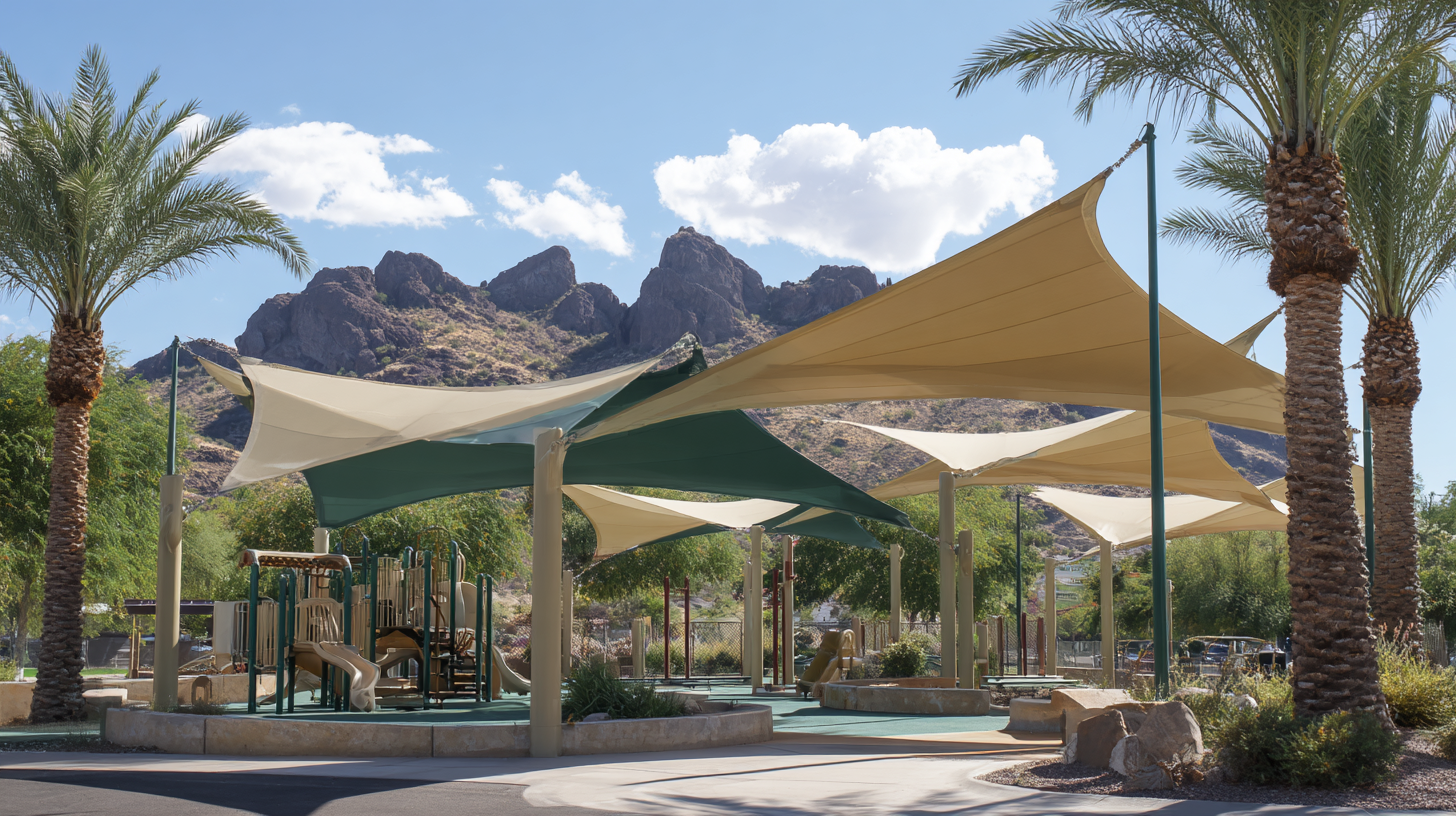
Start with how people and vehicles actually move through the space, because use dictates structure before style ever enters. A parking lot has to keep drive lanes and parking stalls clear, so it rules out interior columns and leans toward a single foundation line. A school lunch court or playground prioritizes wide, low-maintenance coverage over a tidy column count, and a restaurant patio needs shade that clears table-and-chair circulation without dropping a post in a walking path.
Use also sets coverage depth. A single cantilever shades roughly 16-20 ft off one post line, which suits a single row of parking; a multi-post frame spans wider for a courtyard or bleacher run of 30-60 ft. Map the daily traffic pattern first, then read it against the product families. Get the use right and the next three questions answer themselves faster.
Question 2: Where can the posts and columns land?
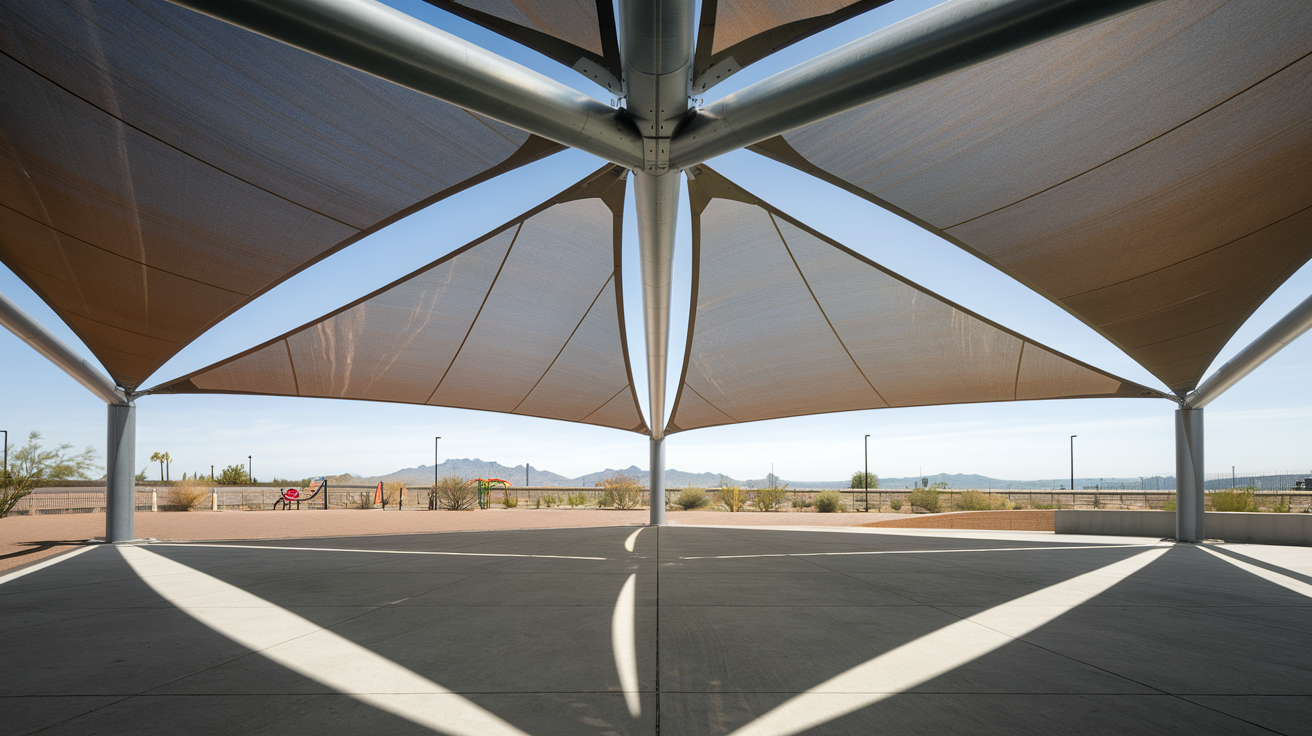
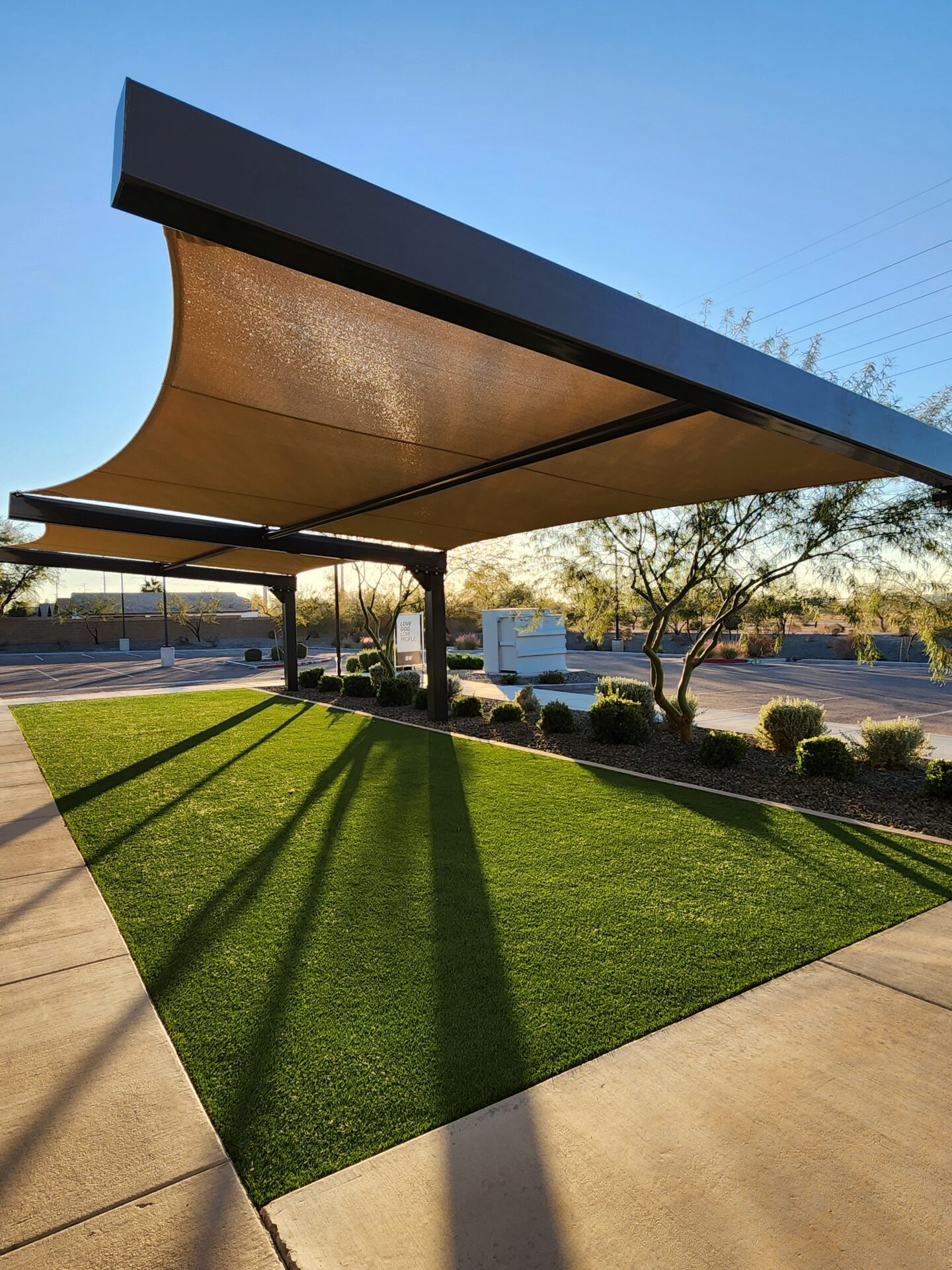
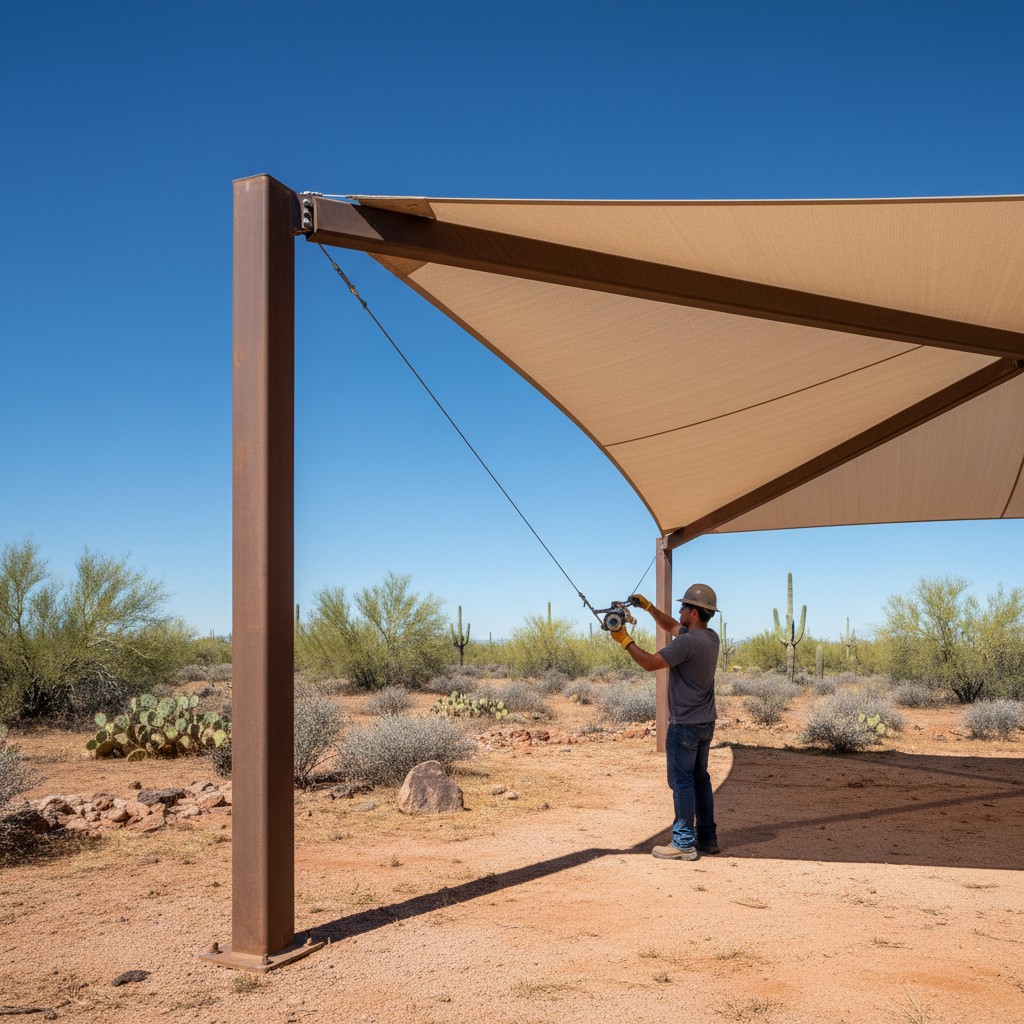
The second question is purely physical: where can a foundation actually go? Posts cannot sit in a fire lane, a drive aisle, an ADA path, or directly over buried utilities, and every one of those constraints removes options. When the only clear ground is along one edge, a flat cantilevered shade structure carries the whole load on a single column line and reaches out over the protected zone, which is why it dominates parking and drop-off areas.
When the site has room for several footings, the math opens up. A hip structure uses a multi-post layout to span wide and shed water, and tensioned sails anchor to a mix of posts and walls. Valley caliche often forces caissons 6-10 ft deep before they grip, so a column you cannot place where you need it reshapes the whole design. Mark the no-go zones early; they decide more than aesthetics do.
Question 3: How much wind does the site see?
A shade canopy is a sail before it is anything else, so wind exposure sets the engineering floor. Maricopa County structures are designed to Arizona building code and ASCE 7 wind loads, where Valley design wind speeds run roughly 90-115 mph. An open lot with no surrounding buildings catches more gust than a courtyard tucked between two-story walls, and that difference shows up in frame gauge, post spacing, and foundation depth. Monsoon microbursts are the real-world test, sometimes punching past 60 mph in minutes.
Exposure also nudges the family choice. A tightly tensioned 3-point sail sheds wind through curvature, while a flat hip panel relies on heavier steel and deeper footings. The honest caveat: no commercial structure is rated for every extreme on record, and an engineered design covers typical monsoon loads, not a freak event. Size the frame for the gusts the site actually catches.
Question 4: Is design review in play, and what finishes?
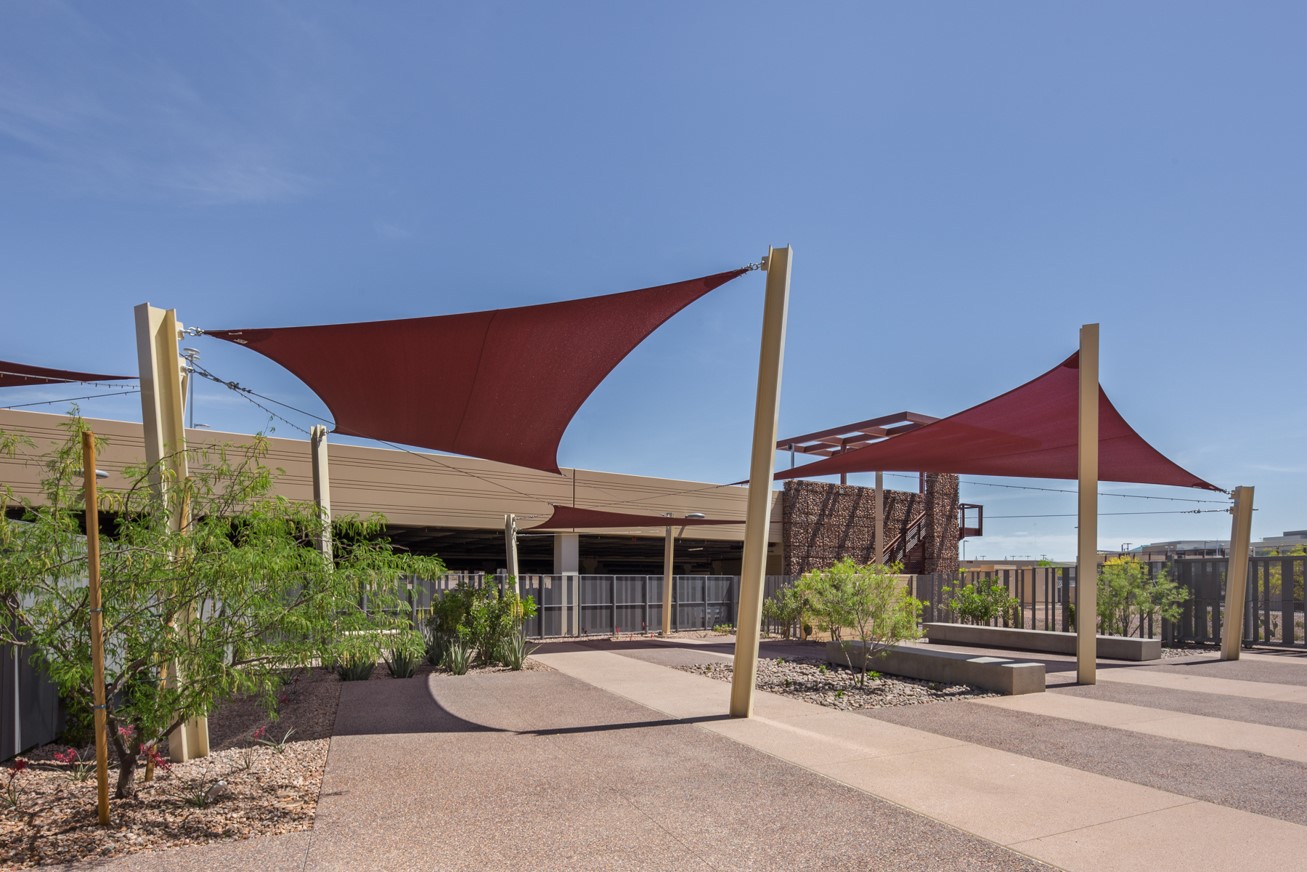
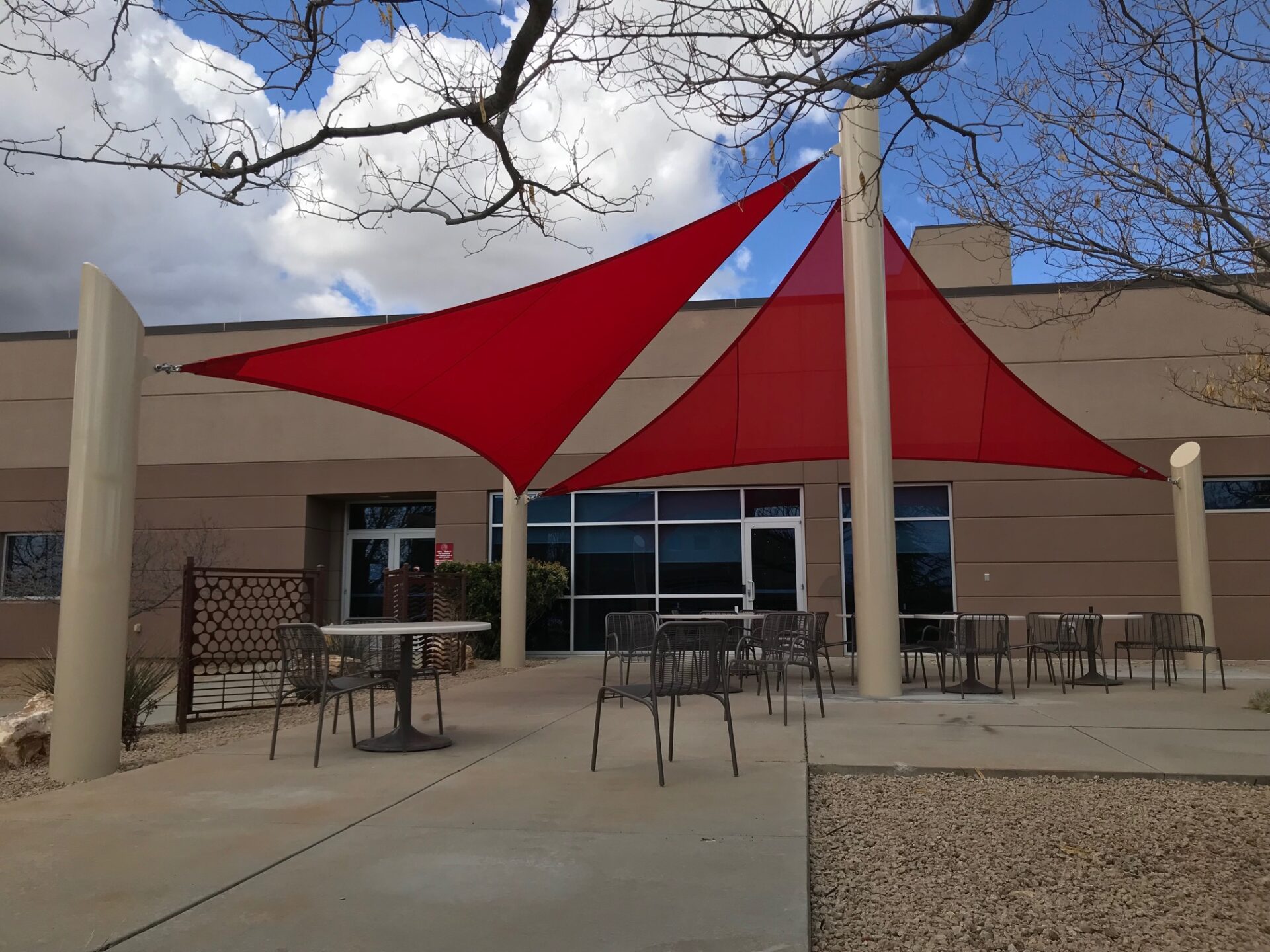
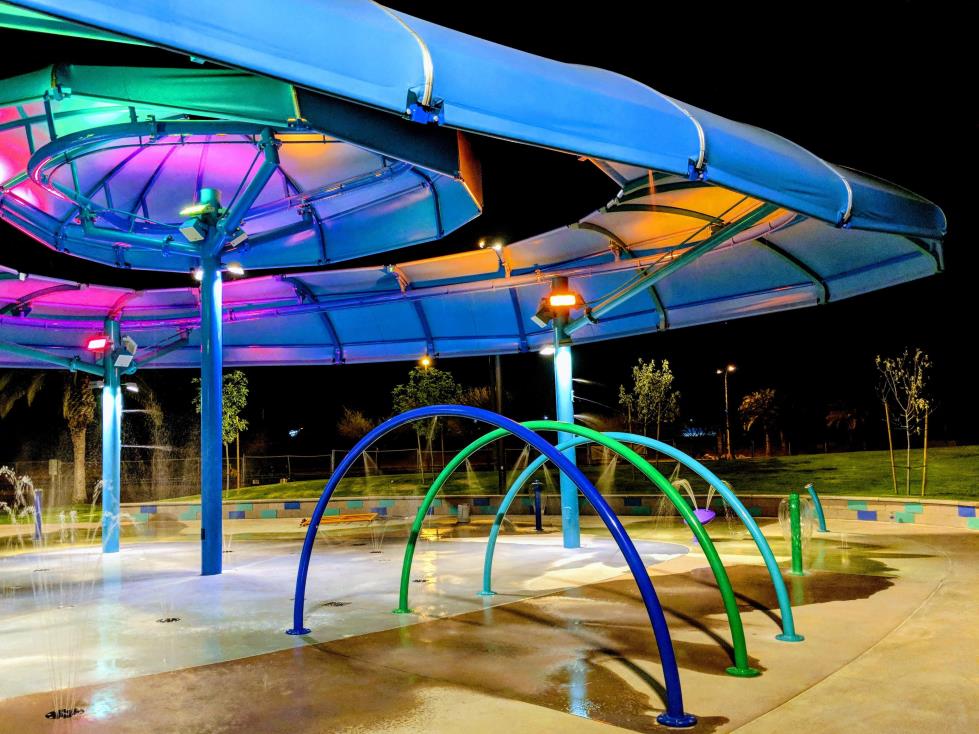
The fourth question decides how much the structure has to look like architecture rather than infrastructure. If an HOA architectural committee, a resort brand standard, or a municipal design board has to approve the project, the form and finish move from afterthought to requirement. A 3-point tensioned fabric sail reads as a sculptural line and clears most aesthetic reviews; a flat box over a pool cabana often does not.
Finishes carry the same weight. Powder-coated steel is a baked-on finish that resists the chalking bare desert sun forces on cheaper brushed paint, and color choice frequently has to match an approved palette. Fabric color affects both the look and the heat underneath. Where review is light or absent, a ramada or standard hip wins on cost and speed. Confirm who signs off before you fall in love with a shape.
Budget and timeline: what the numbers really track
Budget tracks span, post count, foundation depth, and fabric grade far more than raw square footage, which is why no honest quote comes off a per-foot chart. A single-post cantilever carries its full load on one column, so its foundation runs deeper and heavier than a multi-post frame covering the same area. Design-led geometry like a tensioned sail adds engineering and fabrication time, and a heavier fabric knit with a 10-15 year warranty sits above a lighter cover.
Timeline checkpoints
- Engineering and stamped drawings come before fabrication and feed the permit submittal.
- City plan review is handled by the jurisdiction and sits outside the fabricator’s control.
- In-house fabrication of the steel and cover, then field install, follows the permit.
Treat re-covering as planned budgeting, not failure: when fabric reaches the end of its warranty window, the steel frame stays put and only the cover is swapped, well below a new build. The full ranges live in shade structure cost in Arizona. Walk in knowing the drivers and the quote conversation gets shorter.
Matching to a structure family: the decision sequence
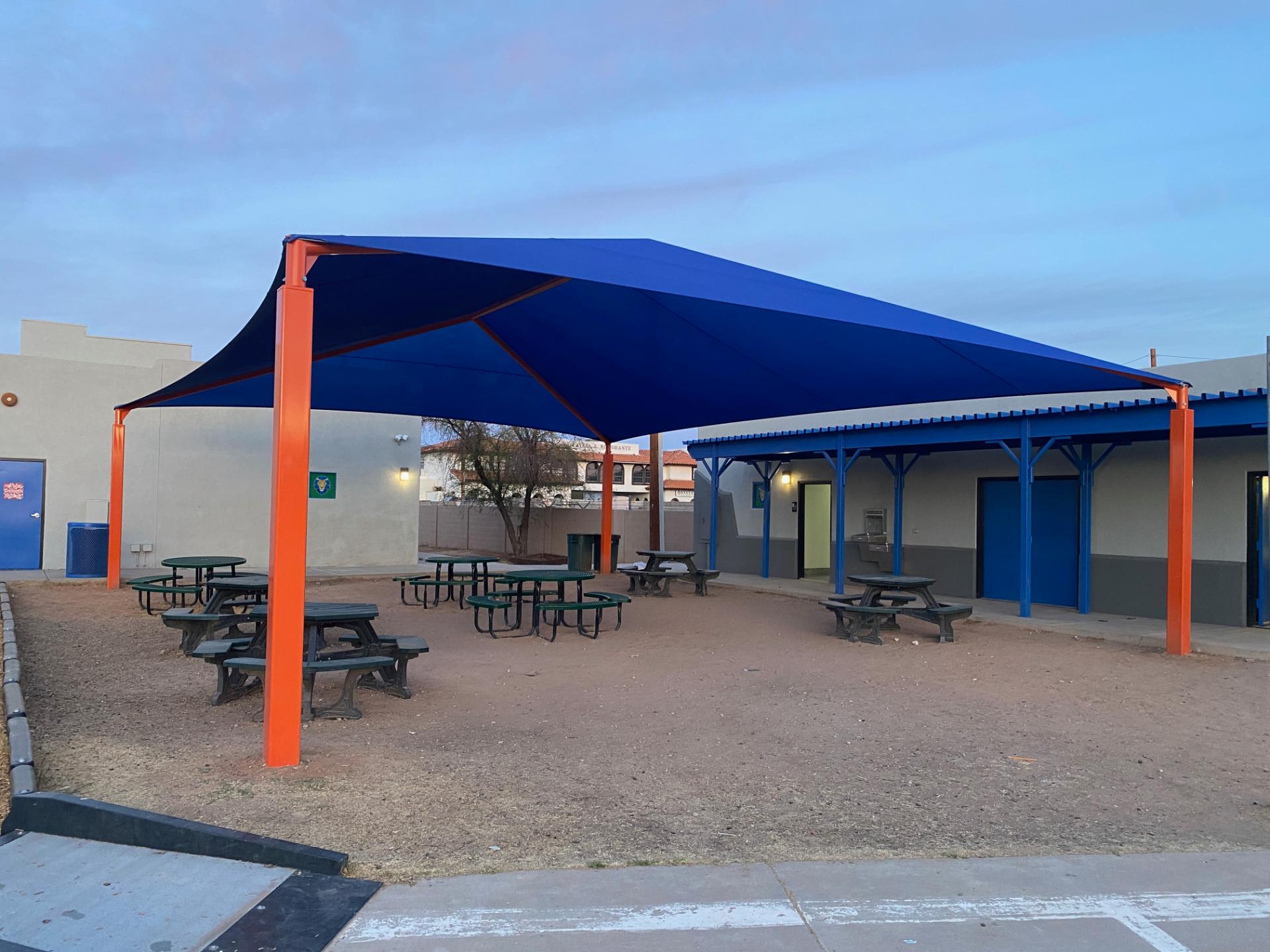
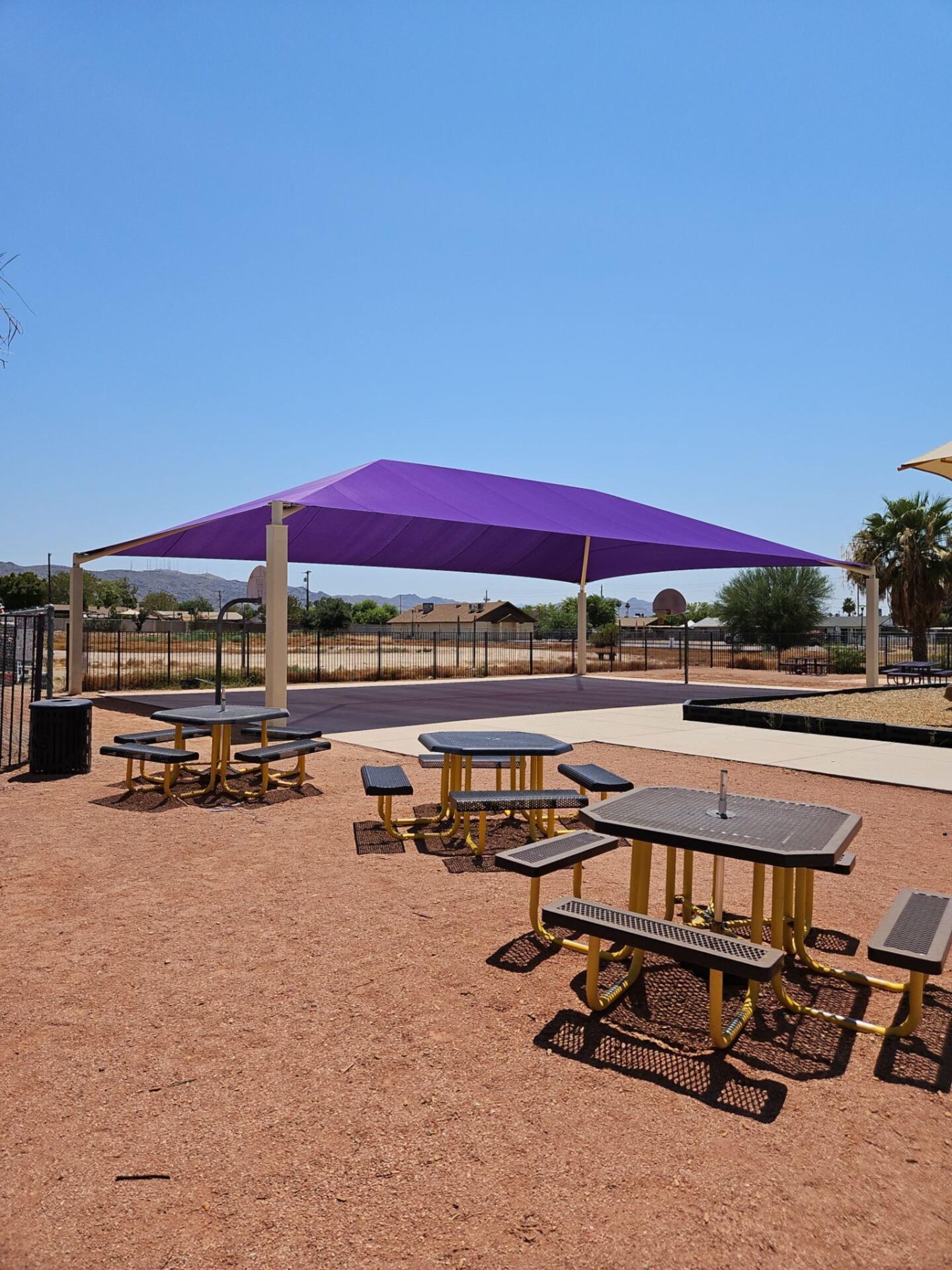
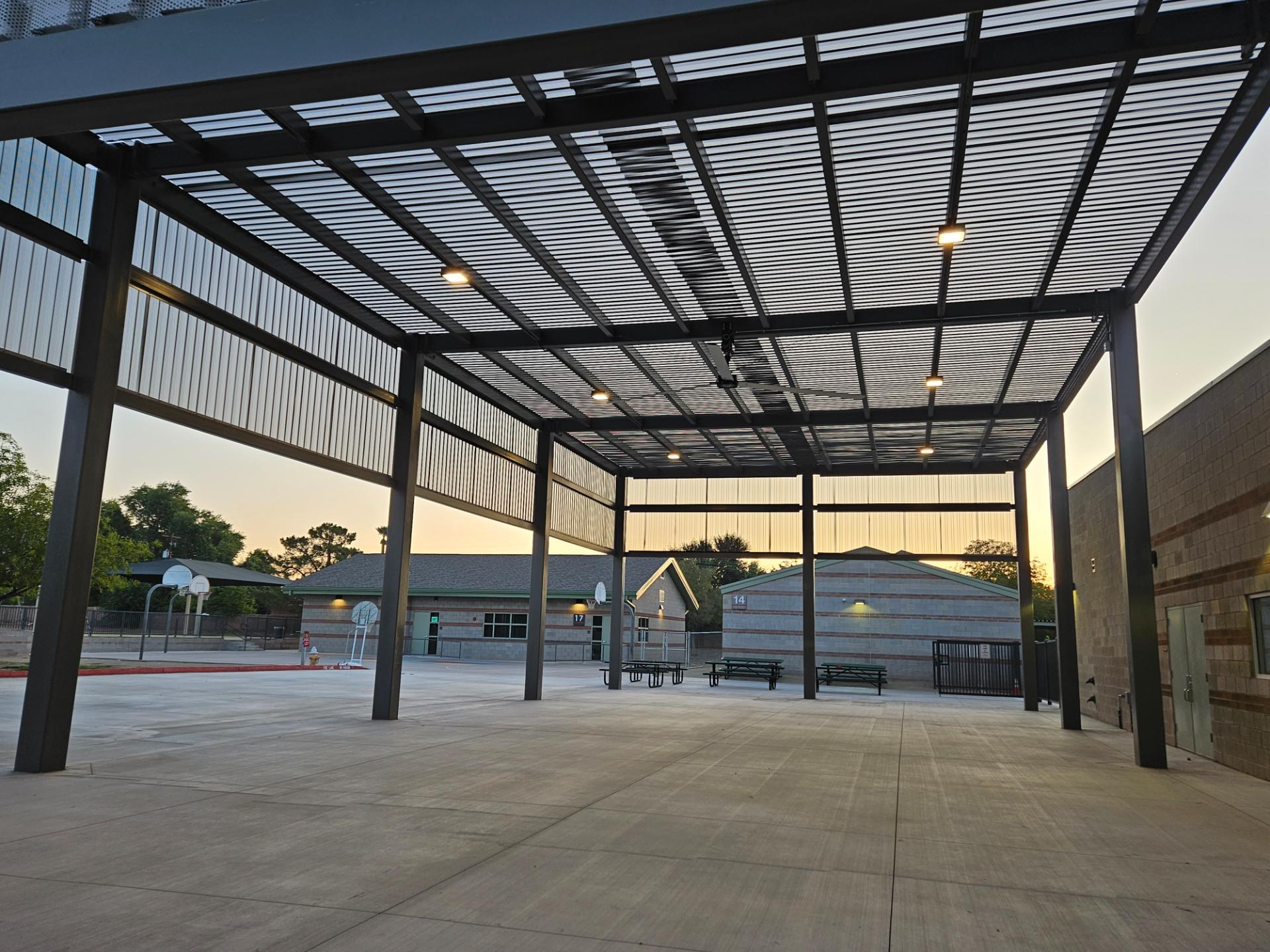
Run the four questions plus budget in order and a single family usually rises to the top. Clear drive lanes with posts allowed on one edge point to a cantilever. Wide coverage with room for several footings and a need to shed water points to a hip structure. A site under design review that wants an architectural line points to a tensioned fabric sail. A picnic, patio, or park gathering area with light review and a tighter budget points to a ramada.
When no standard family fits the spans, the angles, or the brand language, a custom-built shade structure is engineered to the site instead of forcing the site to a catalog. The sequence saves money because a late switch in family or fabric grade ripples back through engineering and foundation. For the wider set of guides on materials, wind, and cost, start at the shade structure guides hub. Work the order, and the only open variable left should be the site survey.
Shade Structures We Build
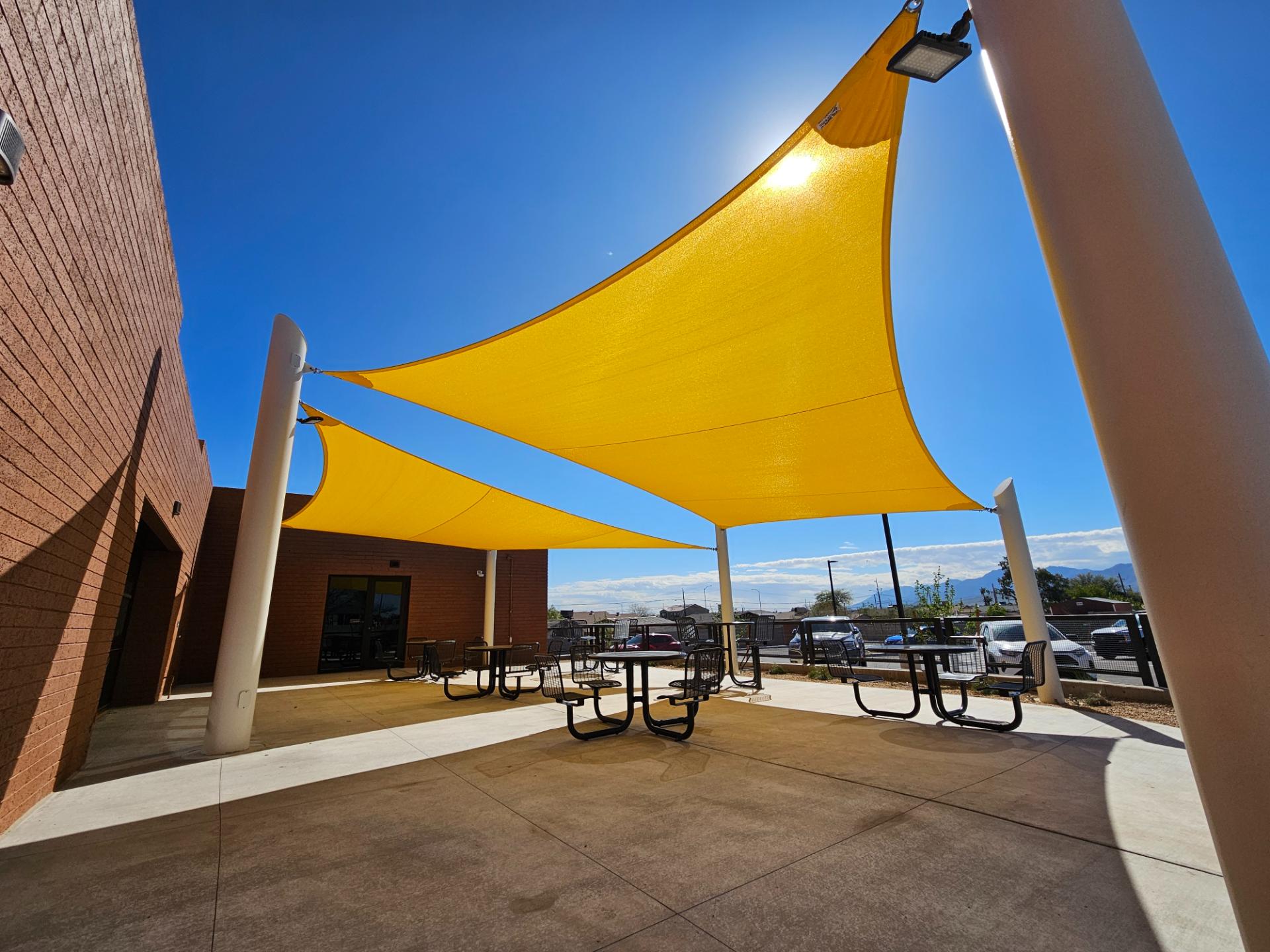
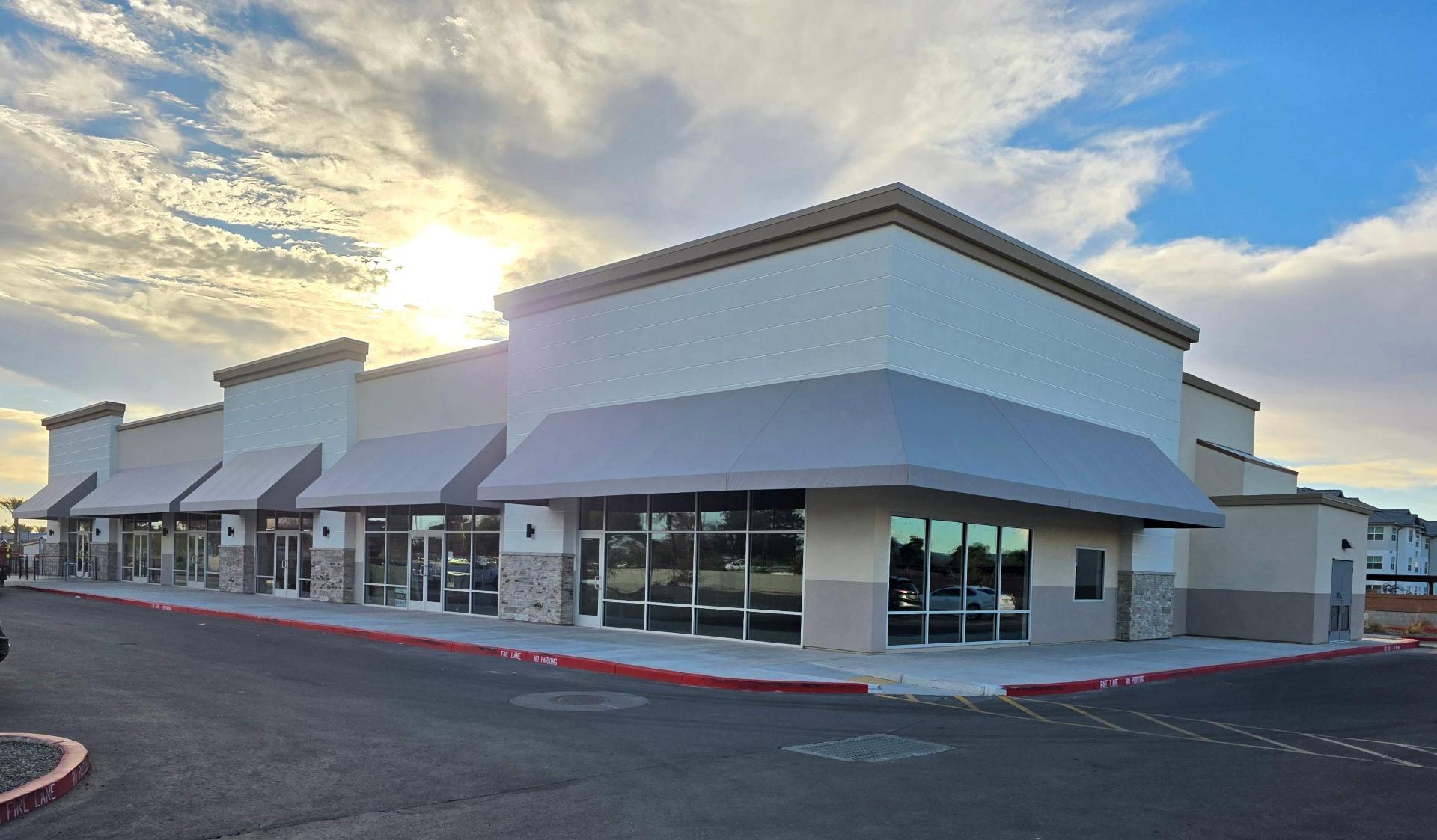
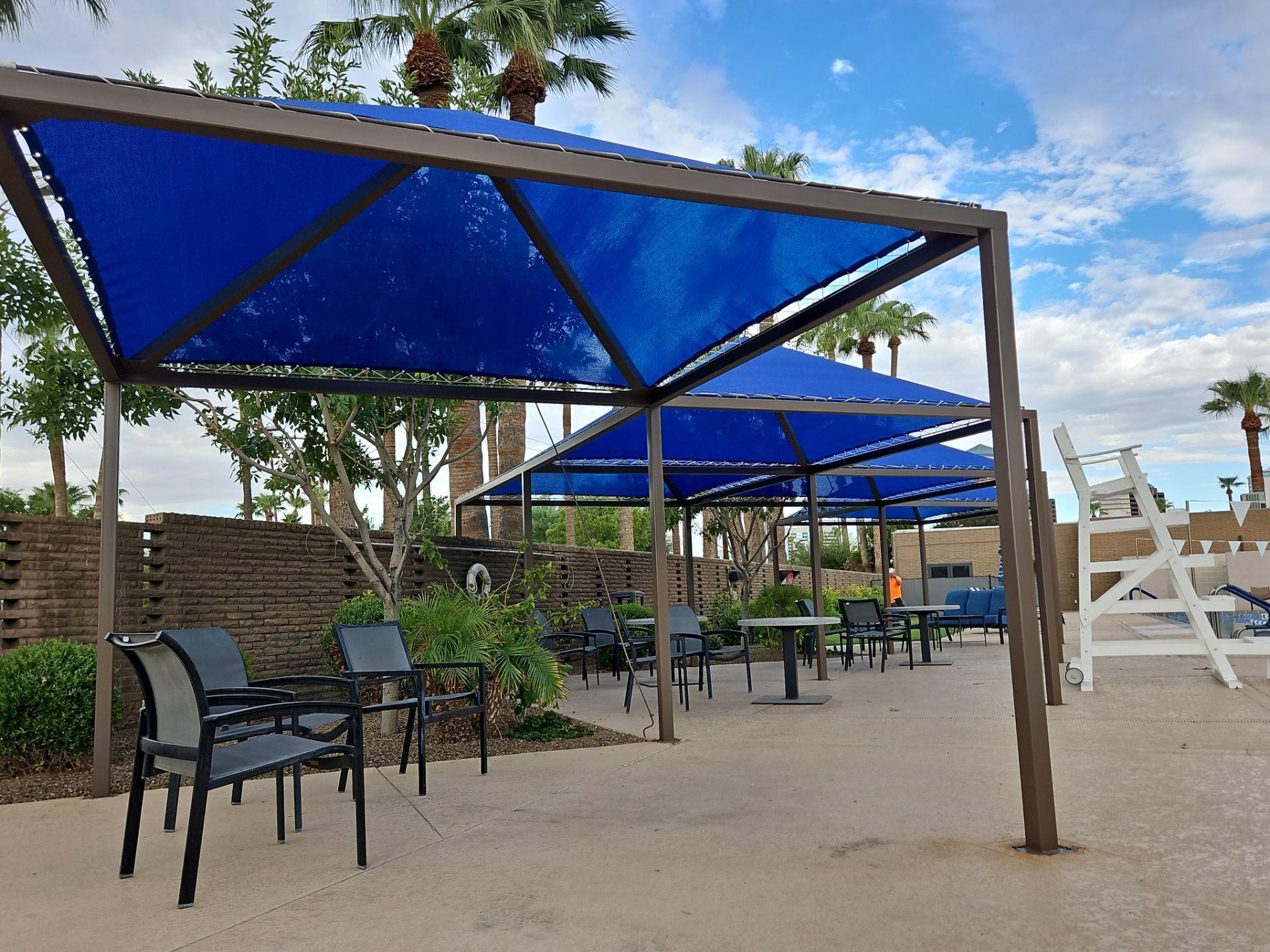
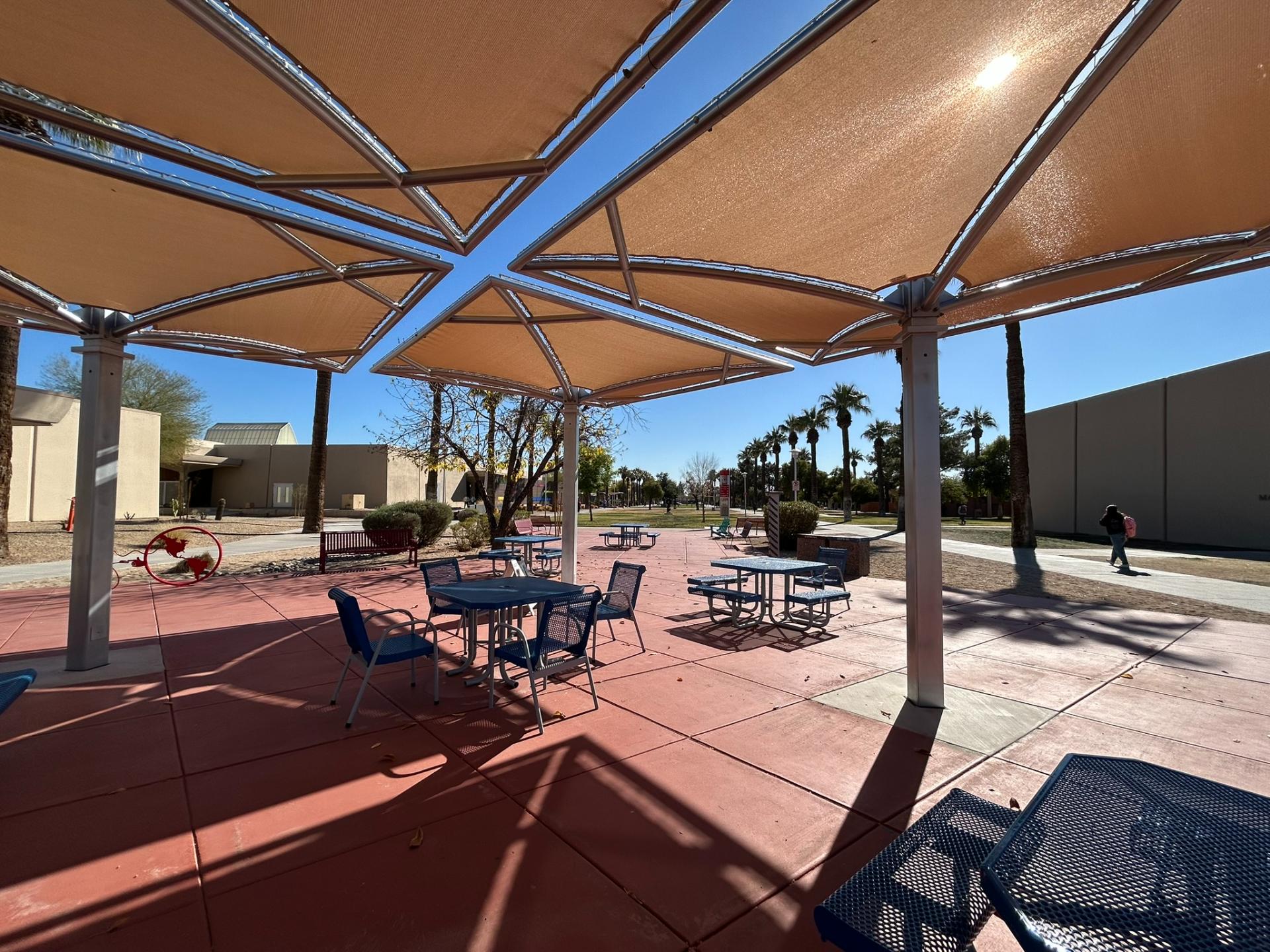
Ready to talk through your project?
Call (602) 265-0905 for a free assessment.
Frequently Asked Questions
How do I pick the right commercial shade structure?
Answer four questions in order, then set a budget: how the space is used, where posts and columns can land, how much wind the site sees, and whether design review is in play. Those answers narrow the field to one or two families before you compare style or price. A parking lot points to a cantilever, a lunch court to a hip frame, and a design-reviewed pool deck to a tensioned sail.
Which structure is best for a parking lot versus a playground or patio?
A parking lot usually wants a flat cantilevered structure, because it keeps posts off the drive lanes and shades roughly 16-20 ft off a single column line. A playground or school lunch court fits a multi-post hip frame that spans wide and sheds water, while a restaurant patio under design review often suits a 3-point tensioned sail that clears foot traffic and reads as architecture.
What is the cheapest shade structure versus the best value?
A ramada or a standard hip frame is typically the lowest entry price for a given footprint, especially where design review is light. Best value tracks lifetime cost, not just install: a powder-coated steel frame paired with a 10-15 year warranty fabric lets you re-cover later for far less than a rebuild. Span, post count, and foundation depth move the number more than square footage.
How long does a commercial shade structure take to build?
Timeline depends on engineering, permitting, and fabrication rather than a fixed number. Stamped engineering drawings come first and feed the permit submittal, city plan review is handled by the jurisdiction and sits outside the fabricator’s control, then in-house fabrication and field install follow. A design-led custom structure runs longer than a standard parking bay because it takes more engineering and fabrication time.
Can someone help me decide which structure fits my site?
Yes. The fastest path is a site survey: someone reads the traffic pattern, the no-go zones for posts, the wind exposure, and any design-review requirement against the actual ground, then recommends a family. You can start by working the four questions in this guide, browse the product families, and review the cost and engineering guides before requesting that survey.