or call (602) 265-0905 — no-obligation, on-site.
3-pt Tensioned Fabric Sails
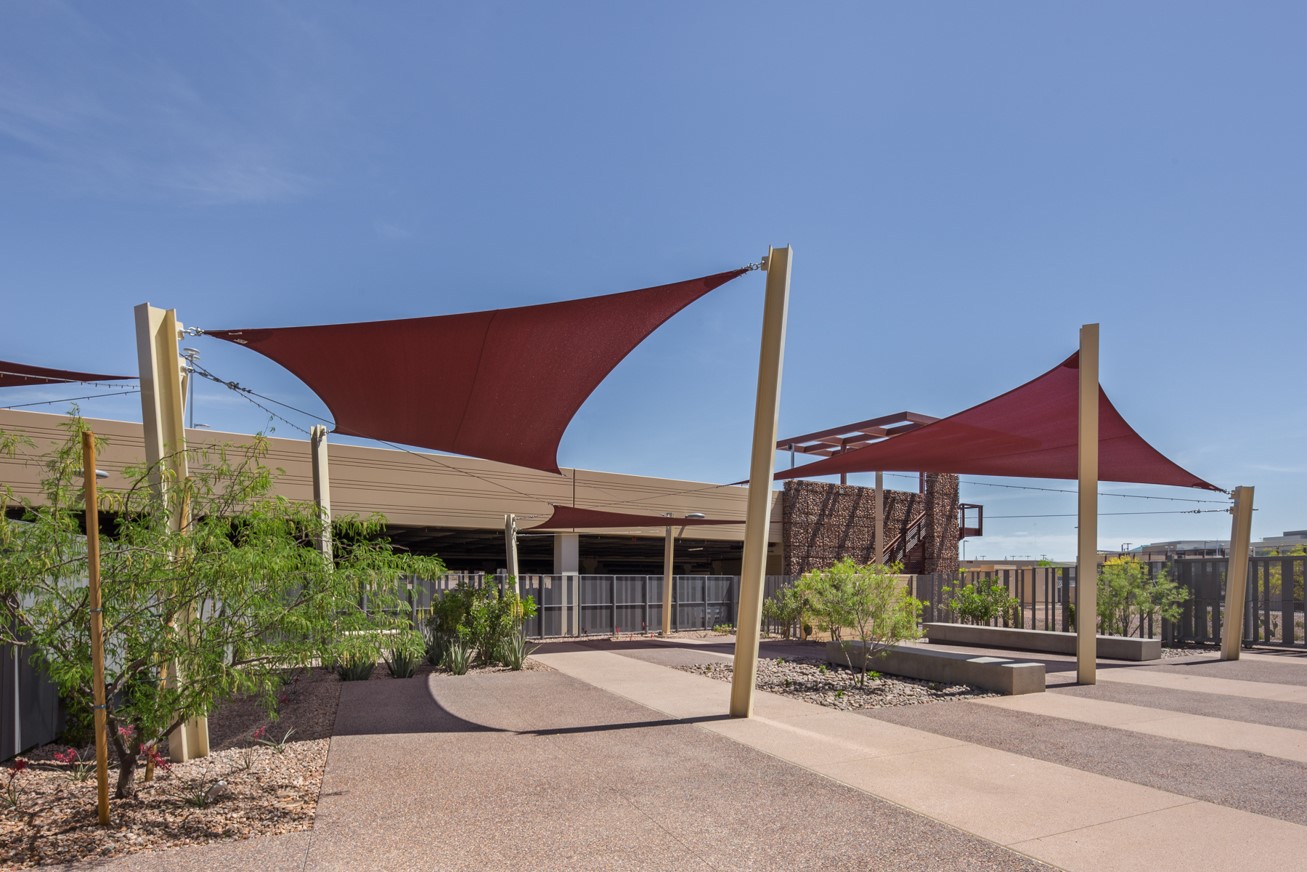
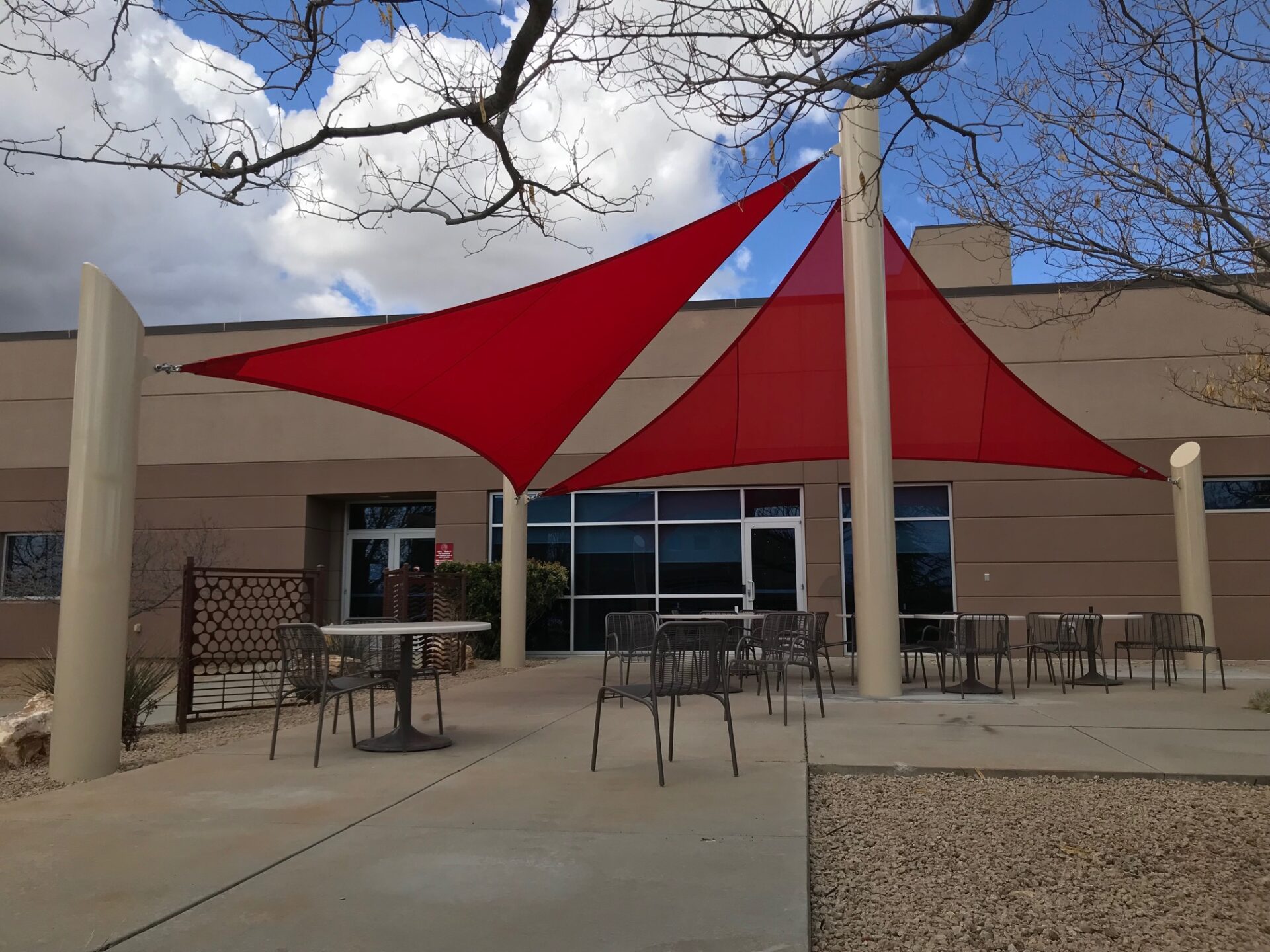
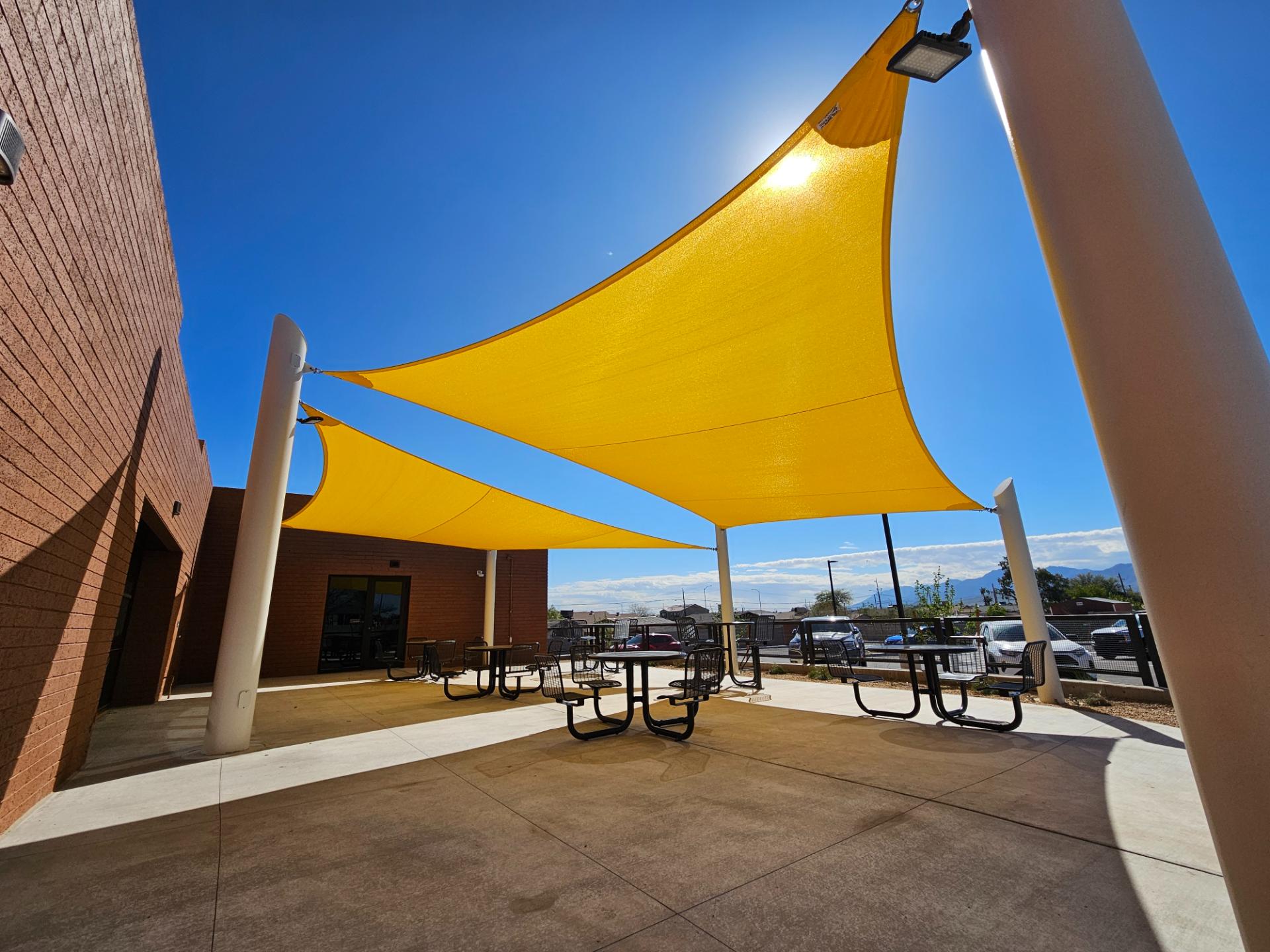
A three-point tensioned fabric sail is a triangular knitted-HDPE canopy stretched between three anchor points on posts or buildings. The three corners create simple, low-cost shade with built-in airflow and a sculptural look — well suited to patios, play areas, and tight spaces a single triangle can cover.
Triangular HDPE sails on three anchor points – the lightest, lowest-cost way to throw architectural shade over a small span.
Since 1998
Designing & building Arizona shade
In-House Fabrication
Built at our Phoenix shop
Engineered & Permit-Ready
Stamped drawings for AZ wind loads
Free On-Site Quote
No-obligation project assessment
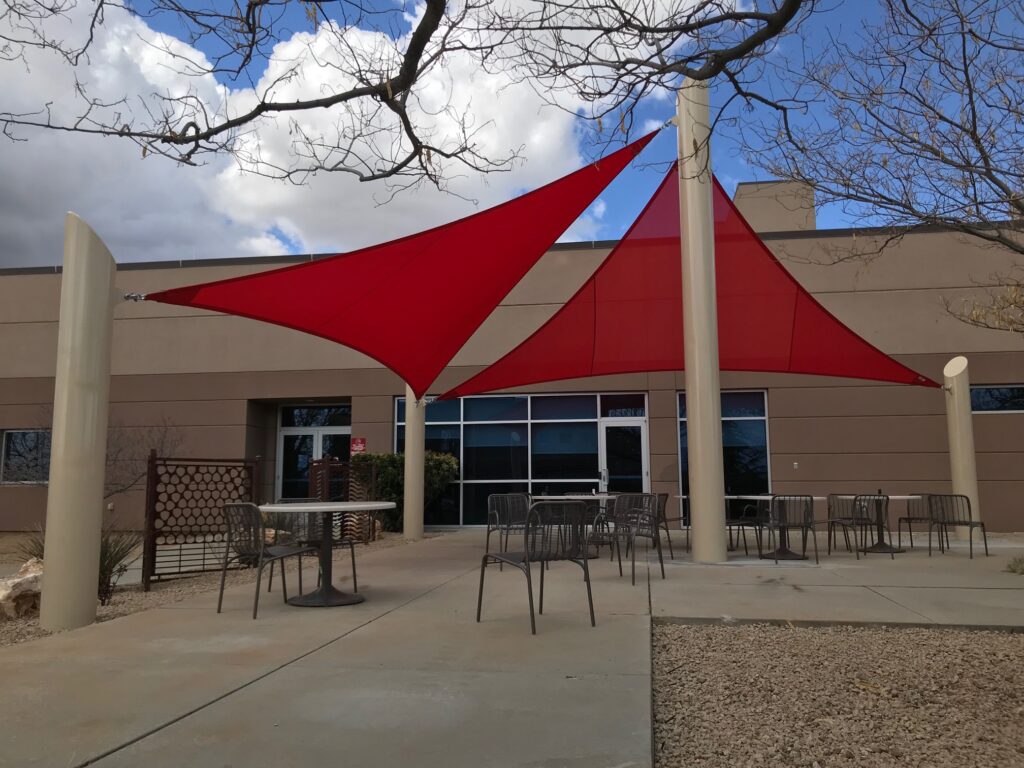
A 3-point tensioned fabric sail is a triangular sheet of knitted HDPE stretched taut between three anchor points, and it is the simplest, lowest-cost way to put a clean architectural shade over a small footprint – a patio, an entry, a play area, or a single seating cluster. Three anchors is the minimum that holds a fabric plane rigid, so a triangle tensions evenly with the least hardware and the fewest posts to set. Total Shade fabricates these from our Phoenix shop at 2331 W. Holly St, building powder-coated steel masts and knitted HDPE covers that block roughly 90-99% of UV. The triangle’s edge is that it sheds wind and drains water by shape, and it layers – two or three overlapping triangles read as a single sculptural canopy over a courtyard.
Why three anchors, and what the triangle buys you
Three is the fewest anchor points that hold a fabric plane flat and rigid, which is why a triangle is the cheapest, most forgiving sail to engineer. The fabric tensions into one continuous plane that cannot develop the slack diagonal a four-corner sail can, so it stays drum-tight with less re-tensioning fuss, each corner pulling against the other two across three masts instead of four. The triangle also drains, because a sail cut with one low corner channels monsoon rain off a single point instead of pooling in a belly – and pooled water is the fastest way to stretch and tear a cover. It spills wind too, behaving more like a taut tent than a billboard in a haboob, which is why it holds up on exposed entries. The cost of that simplicity is coverage: a triangle shades less ground per square foot of fabric than a rectangle.
Where a 3-point sail fits best
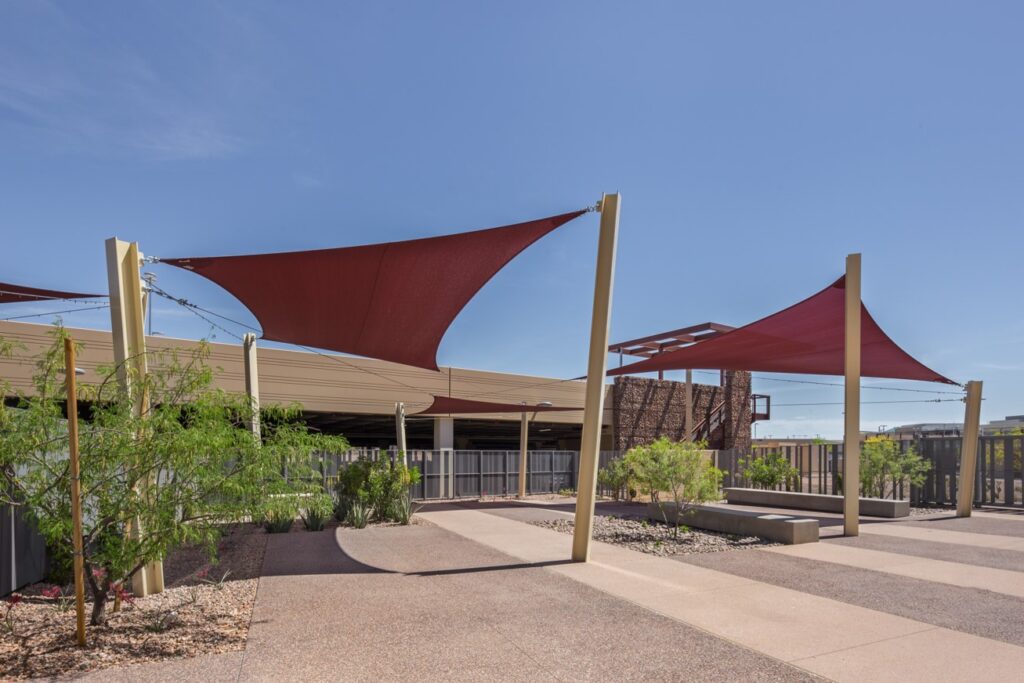
A 3-point sail earns its place over small-to-medium spans where the look matters as much as the shade – typically a single triangle 12 to 20 ft per side on masts roughly 8 to 12 ft tall, over a patio, an entry walkway, a tot lot, or a table cluster. Their real edge is layering: because a single triangle is light and cheap, three or four can overlap at staggered heights to cover an irregular courtyard no single rectangle would fit, each sail sharing a mast with its neighbor so the group reads as one wave of fabric. That overlapping look is the architectural signature people are usually after when they ask for sails by name. For larger continuous coverage off a square footprint, a 4-point tensioned sail covers more ground per anchor; for a single sculptural plane over an entry or plaza, the hypar structure twists the fabric into true architecture.
Tensioning, anchors, and the engineering behind a taut sail
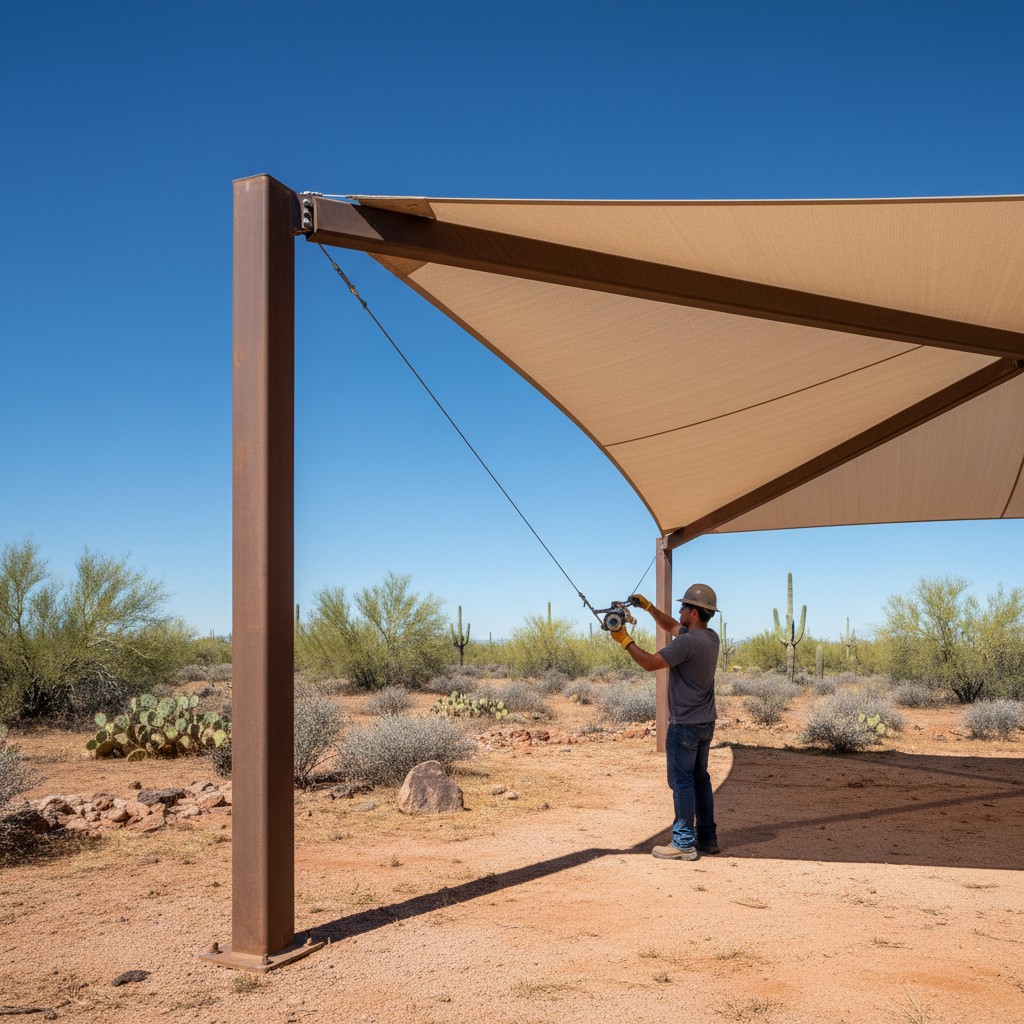
The performance of a sail lives in its tension, so the anchors matter more than the fabric. Each corner terminates in a turnbuckle that lets the crew crank the cover drum-tight at install and re-tension it later, pulling against masts or wall mounts that resist hundreds of pounds of constant load. A 3-point sail is set to a slight twist – two corners high, one low – rather than dead flat, because a twisted plane resists fluttering far better than a level one. The masts are powder-coated structural steel, raked back 10 to 15 degrees away from the sail so they pull against the fabric, and they stand on caissons that in hard Valley caliche often run 4 to 8 ft deep before they grip. That below-grade work is where bargain sails fail: a mast that loosens in its footing lets the whole sail go slack. Total Shade engineers these to Arizona building code and ASCE 7 wind loads – Valley design wind speeds run roughly 90-115 mph – and provides the stamped drawings, while the city handles review.
HDPE fabric, UV, and how it handles monsoon wind
The cover is knitted high-density polyethylene, and it blocks roughly 90-99% of UV depending on weave density – what spares skin, patio furniture, and playground surfaces the fade and brittle-cracking bare Arizona sun forces in a single season. Knitted HDPE breathes rather than sealing like vinyl, so hot air rises through the weave instead of trapping under the sail, and the shaded air runs cooler than under a solid panel that radiates heat back down.
HDPE is also why a sail must be re-tensioned: the fiber relaxes and stretches over its first season under constant tension and heat, so a cover that was drum-tight at install needs a re-tension pass after a few months. The cover is a consumable with commonly 10 to 15 year manufacturer warranties, and Arizona’s UV sits at the demanding end of that window, so plan a re-cover inside it rather than treating a faded sail as a defect. On wind, the curved, breathable plane spills gusts well, but a sail is the lightest structure in the line; in a microburst past 60 mph the responsible move is a design sized to the site, not a claim that fabric is bulletproof.
3-point vs 4-point sails, and when to layer
The choice between a 3-point and a 4-point sail comes down to footprint shape and how much continuous shade you need. A 3-point triangle covers less area per square foot of fabric but tensions tighter, sheds wind cleaner, drains to a single point, and costs less because it sets one fewer mast – pick it for smaller spans, exposed sites, and the layered look. A 4-point square or rectangle covers a larger continuous footprint off four anchors, the better single sail for a wide patio or full play area. The best installs mix them: one large 4-point sail over a main seating area with two overlapping 3-point triangles fanning off shared masts to catch the irregular edges the rectangle cannot. When no standard sail geometry fits the lot, a custom-built shade structure lets the frame follow the site; the full line sits on the products hub.
Honest limits worth naming before you buy
A 3-point sail is a small-span tool, and it is worth being plain about where it is the wrong one. A single triangle past about 20 ft per side needs heavier masts and deeper footings, and at that point a flat cantilevered structure or a hip canopy usually shades more ground for less money – trying to cover a 40-car parking aisle with sails is the most common oversizing mistake we talk clients out of. Three more caveats: the fabric is a consumable, so budget a re-cover inside that 10-15 year window; the first-season re-tension is not optional, since skipping it lets the sail flap and abrade at the corners; and dust is real, so a rinse once or twice a year keeps grit from sanding the weave from the inside. A sail with its anchors set deep, its first re-tension on schedule, and an occasional hose-down holds its shape and its UV block for its full warranted life.
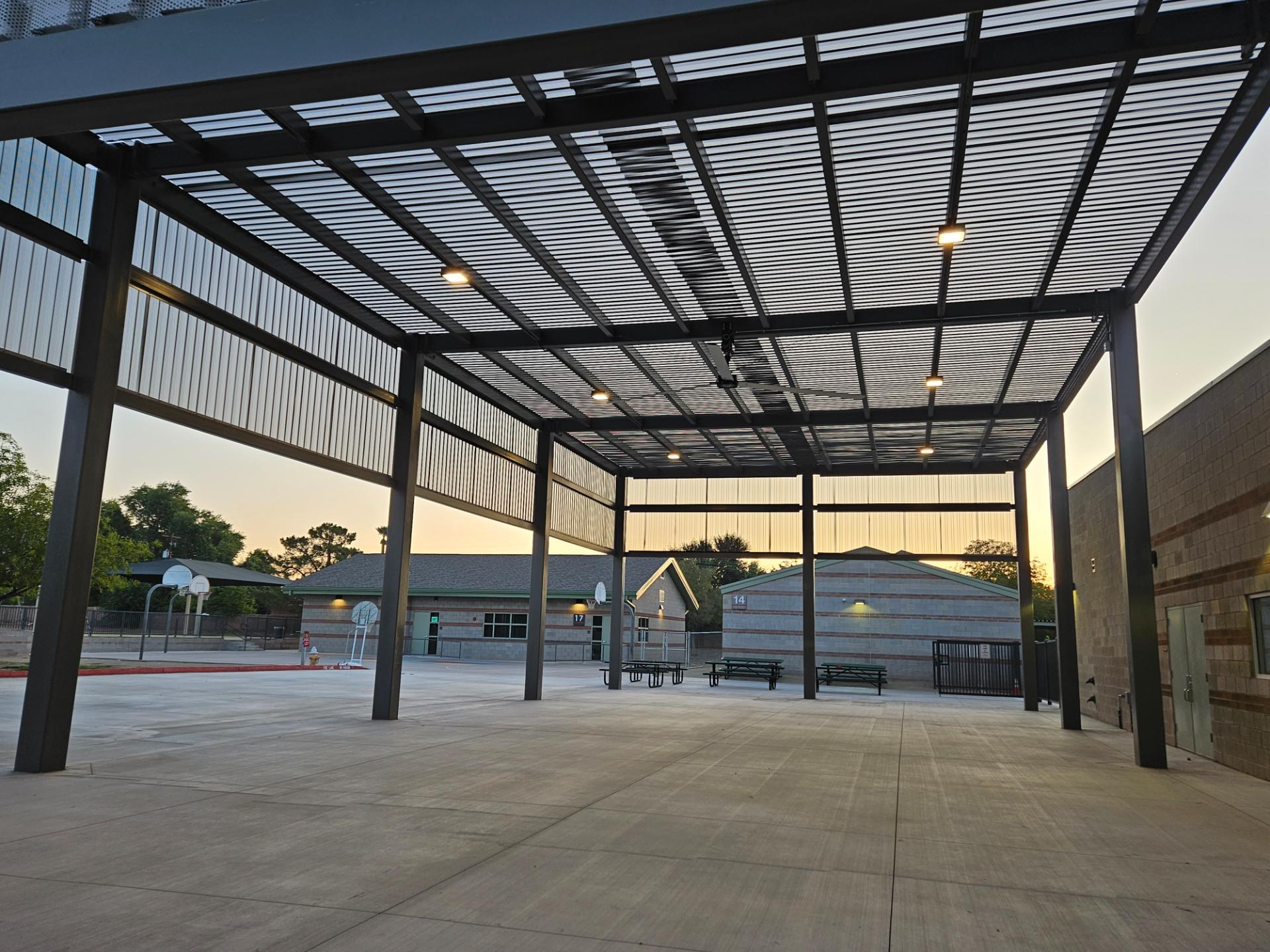
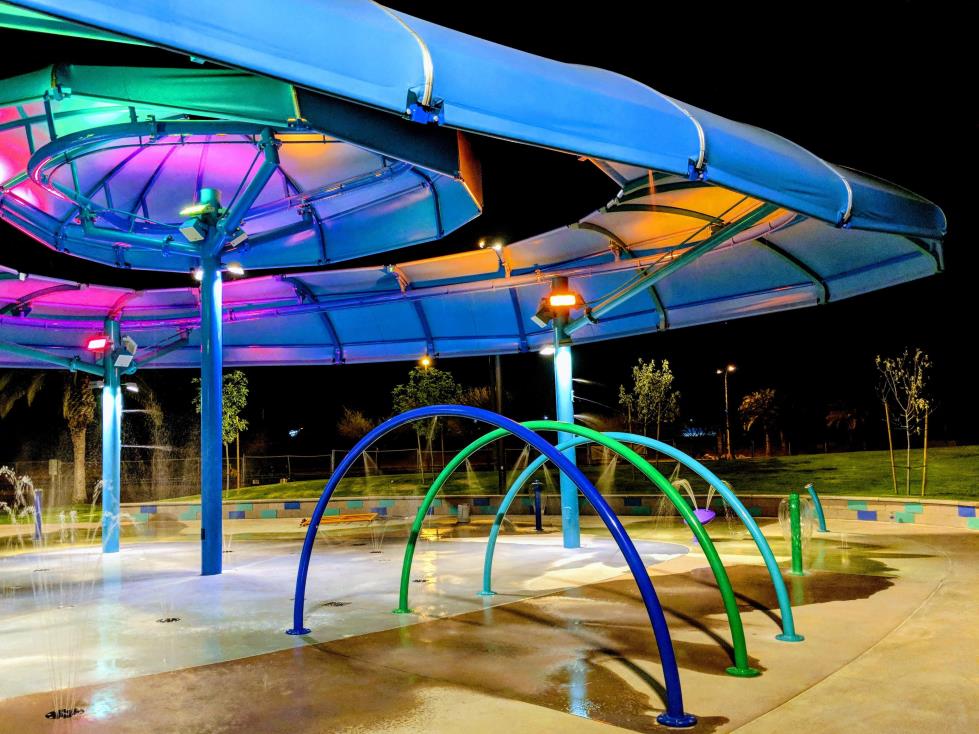
Explore Our Full Shade Structure Line
Want this structure quoted for your property?
Call (602) 265-0905 for a free assessment.
Frequently Asked Questions
What’s the difference between a 3-point and a 4-point shade sail?
A 3-point sail is a triangle on three anchors; a 4-point sail is a square or rectangle on four. The triangle tensions tighter, drains monsoon rain to a single low corner, spills wind better, and costs less because it sets one fewer mast – but it covers less ground per square foot of fabric. Choose a 3-point for smaller spans, exposed sites, and overlapping layered designs; choose a 4-point when you need one large continuous plane over a wide patio or play area.
How much does a 3-point tensioned fabric sail cost?
Cost tracks span, mast height, foundation depth, and how many sails layer together, so sails are priced per project rather than off a per-square-foot chart. A single 3-point triangle is usually the lowest-cost entry in the tensioned-fabric line because it uses the fewest masts and the least hardware. Caliche ground raises the number where caissons run 4-8 ft deep, and a multi-sail layered design costs more than one triangle. We quote after reviewing the site so the figure reflects the actual anchors.
How big can a single 3-point sail span?
A single 3-point triangle works best from about 12 to 20 ft per side on masts roughly 8-12 ft tall. Past 20 ft per side the masts and footings have to grow enough that a 4-point sail, a flat cantilever, or a hip canopy usually shades more ground for less money. When a footprint is bigger than one triangle should stretch, the better move is layering two or three smaller sails or stepping up to a larger structure rather than oversizing a single sail.
Will a 3-point sail survive an Arizona monsoon?
A 3-point sail engineered to ASCE 7 loads handles typical monsoon gusts, and the triangle’s curved, breathable plane sheds wind better than a flat panel – Valley design wind speeds run roughly 90-115 mph. That said, a sail is the lightest structure in the fabric line, and microbursts can punch past 60 mph, so the rating comes from how deep the masts are set and how the corners are tensioned, not from the fabric. Some owners detension or drop sails ahead of a forecast severe storm to be safe.
How often does a fabric sail need re-tensioning?
Expect one re-tension within the first season. Knitted HDPE relaxes and stretches under constant tension and Arizona heat, so a sail that was drum-tight at install loosens over the first few months; one tensioning pass after that settling-in period takes the stretch out. After the first re-tension the interval stretches out considerably, with only an occasional check. Skipping that first pass is what causes a sail to flap, abrade at the corners, and wear out years early.