
or call (602) 265-0905 — no-obligation, on-site.
4-pt Tensioned Fabric Sails
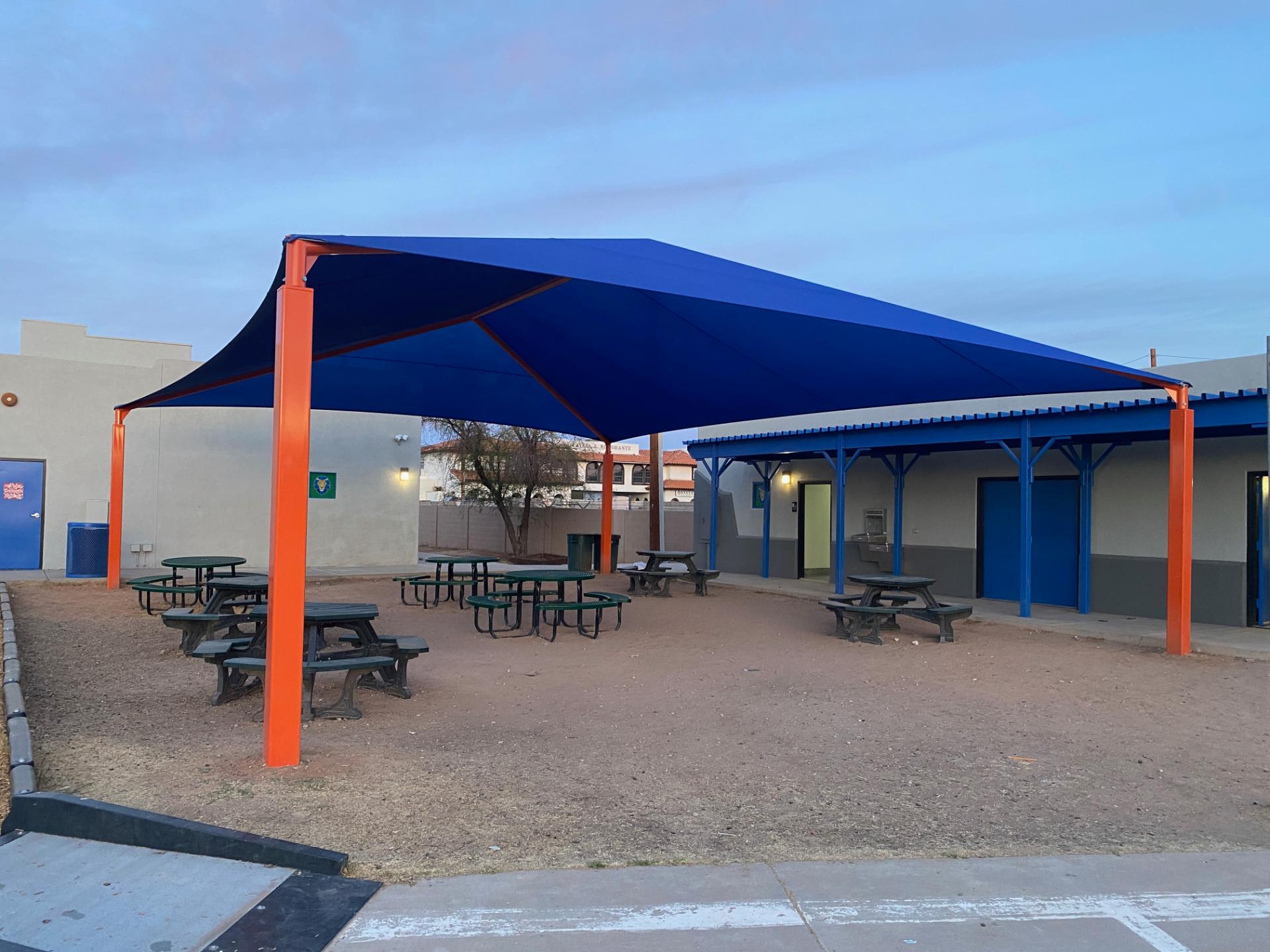
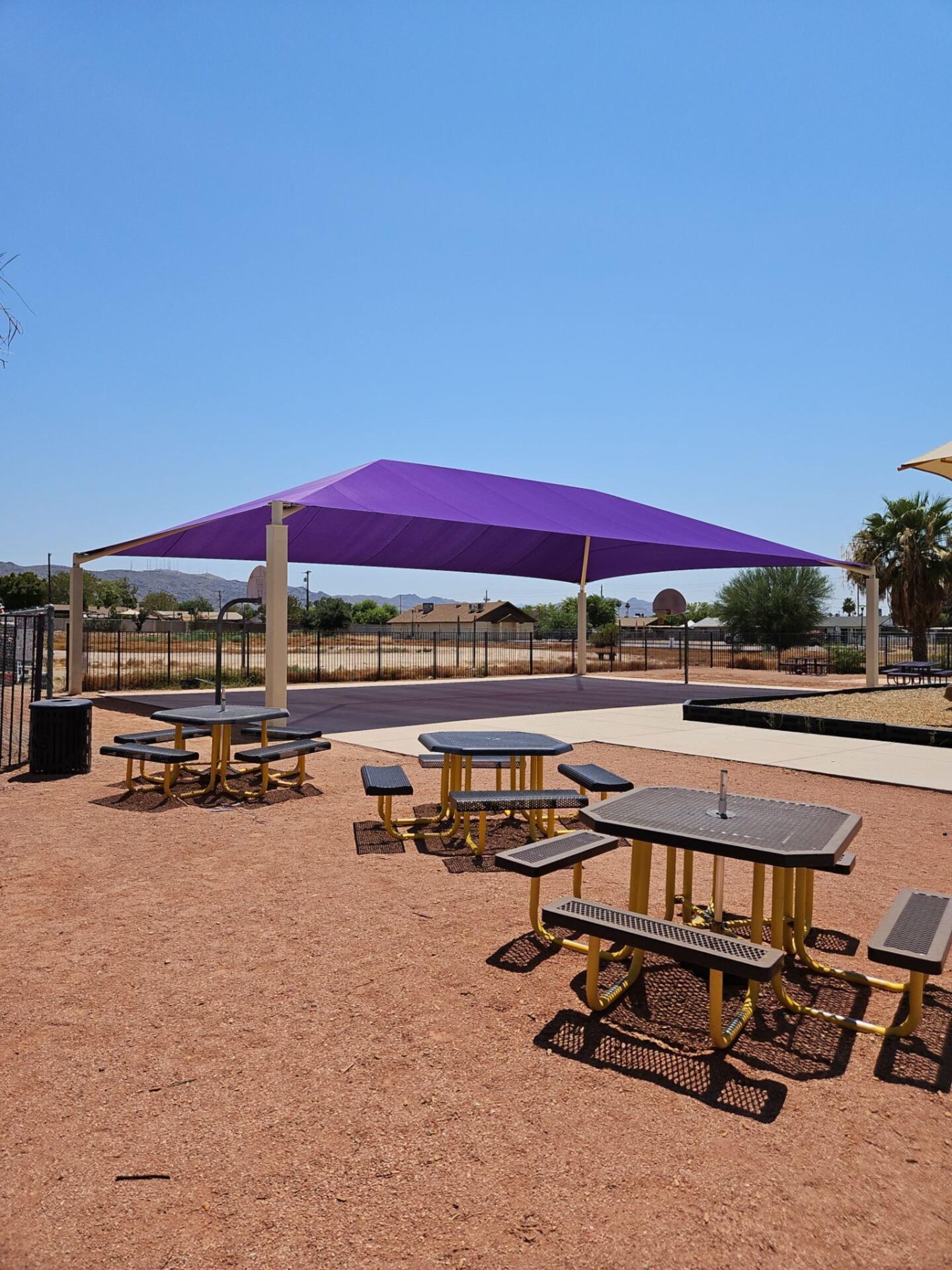
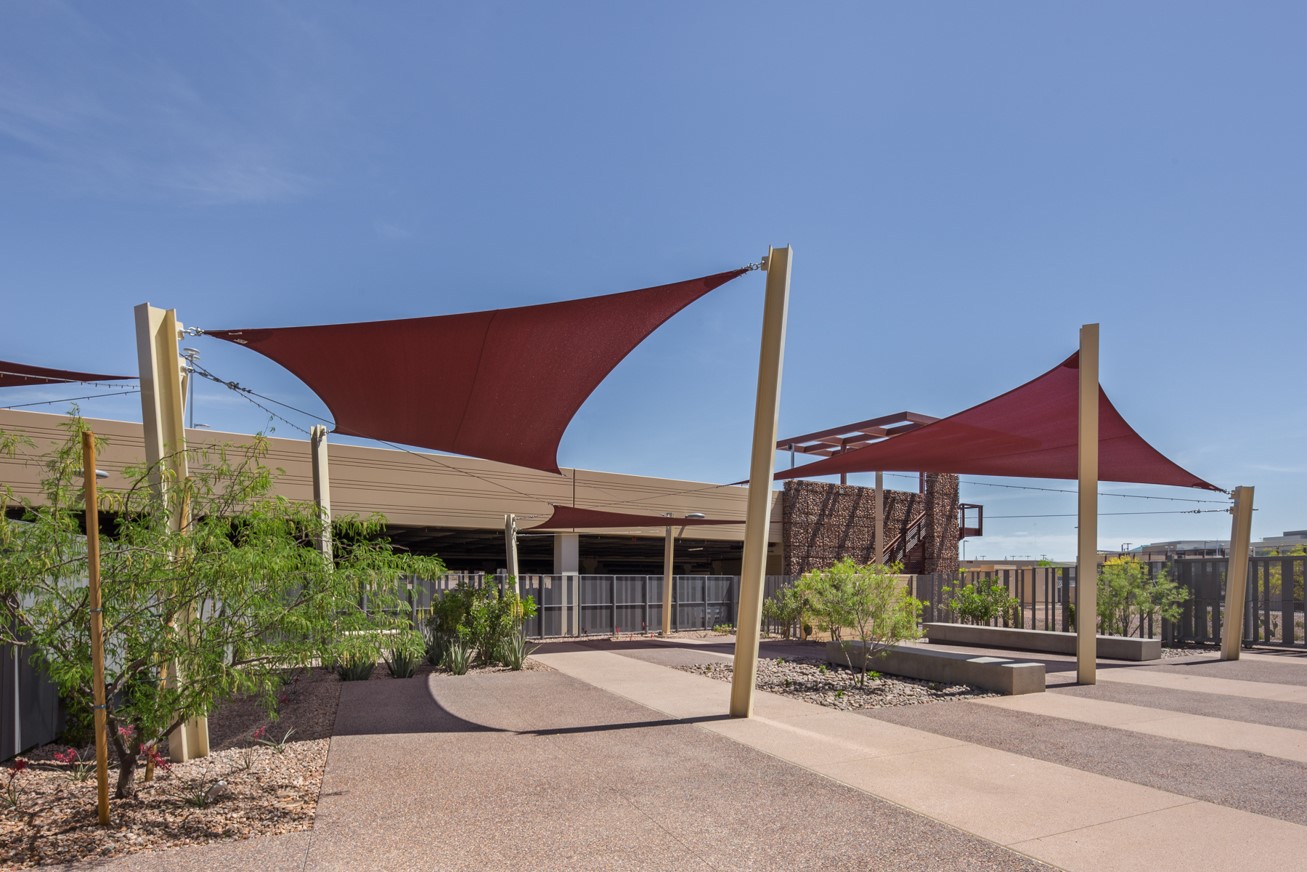
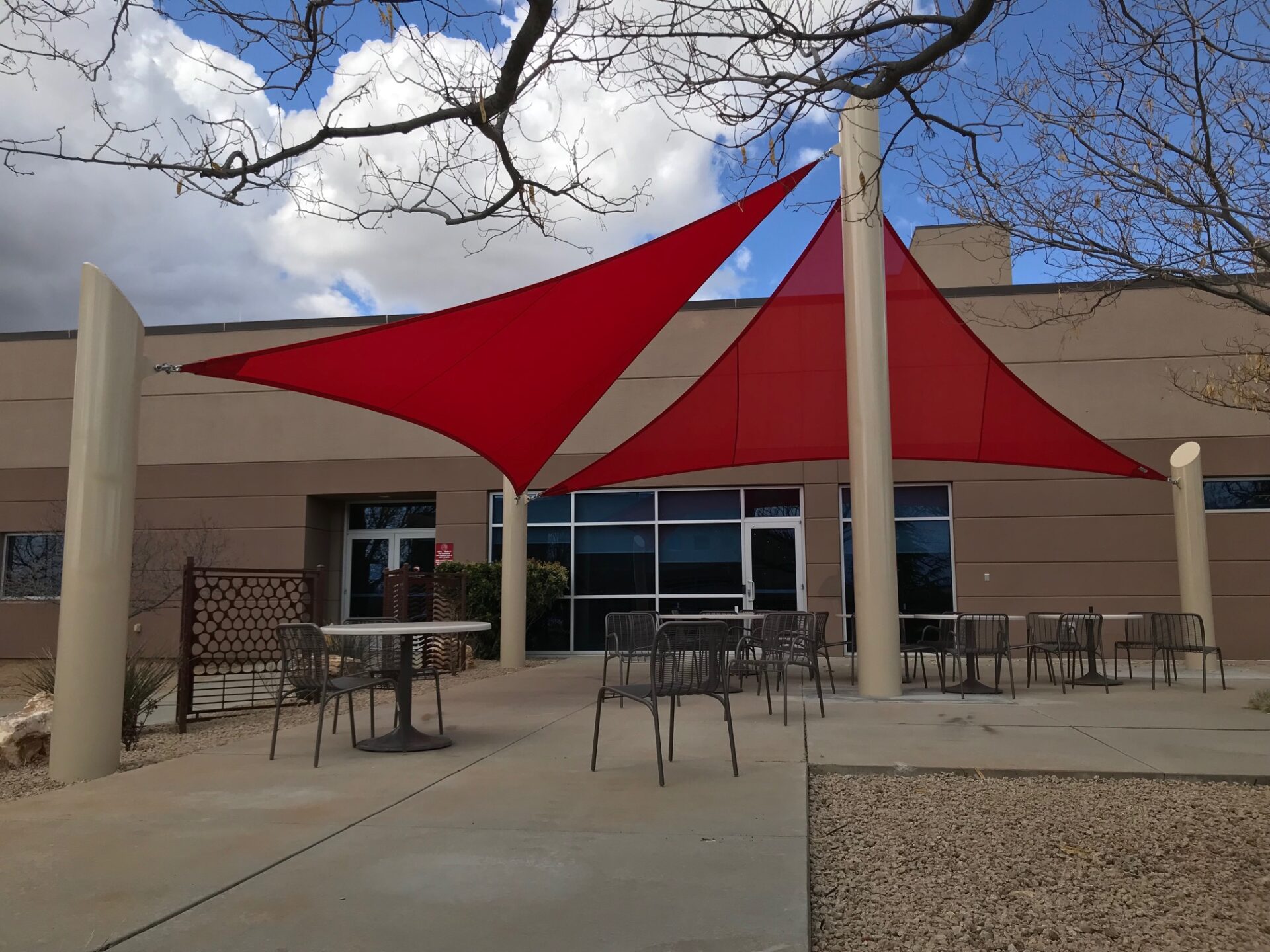
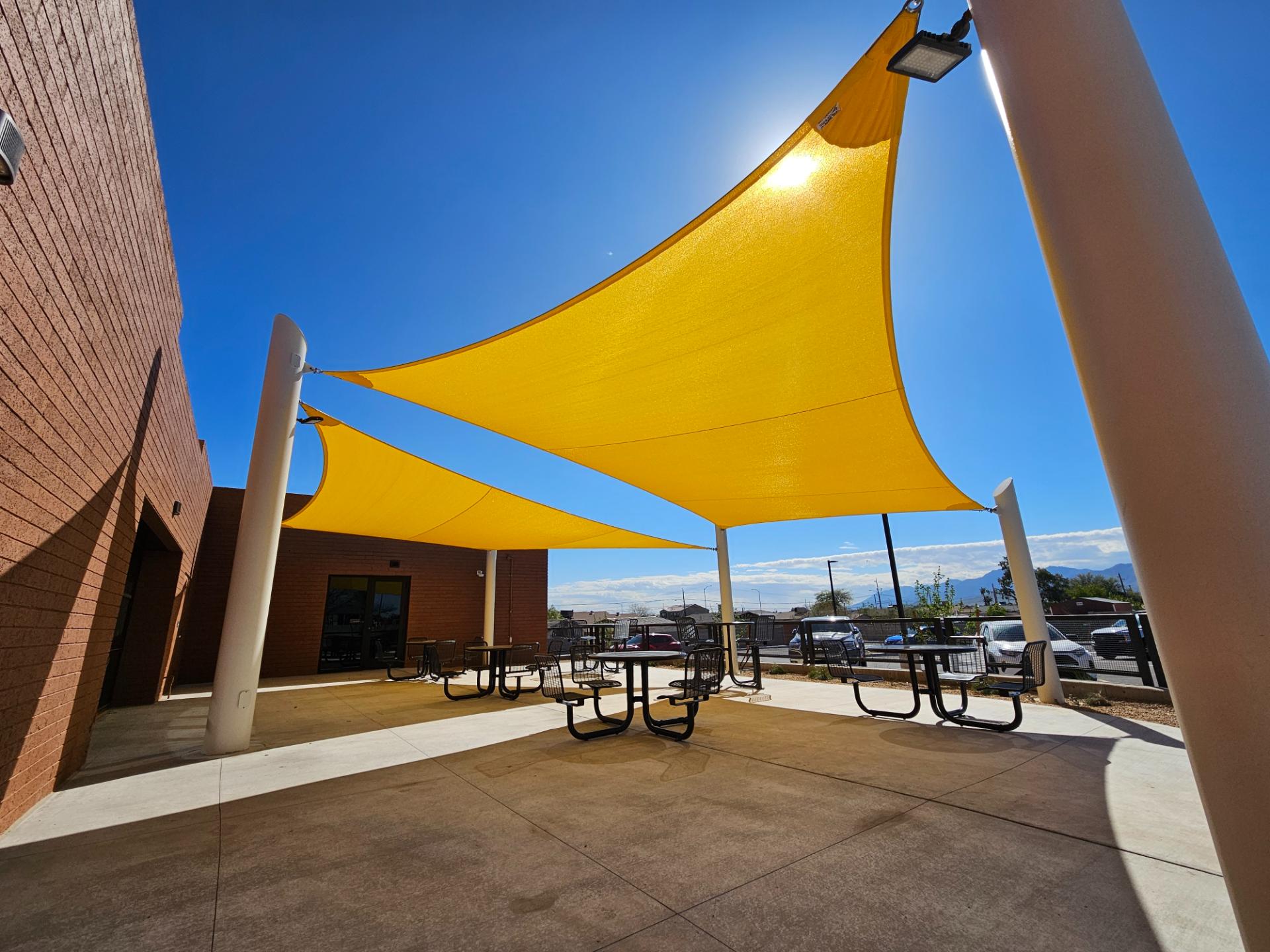
A four-point tensioned fabric sail is a square or rectangular HDPE canopy anchored at four corners, usually set high-low to shed water and hold tension. The four-point layout shades more square footage per sail than a triangle, making it a go-to for pool decks, courtyards, and seating areas.
Square and rectangular HDPE sails on four anchor points — the larger-footprint cousin of the triangular sail.
Since 1998
Designing & building Arizona shade
In-House Fabrication
Built at our Phoenix shop
Engineered & Permit-Ready
Stamped drawings for AZ wind loads
Free On-Site Quote
No-obligation project assessment
A 4-point tensioned fabric sail is a square or rectangular panel of knitted HDPE stretched between four anchor points, and it shades a far larger continuous footprint than a triangular sail off the same hardware budget. Where a three-corner sail tops out around 20 ft per side, a four-corner panel commonly runs 12 x 16 ft up to 20 x 30 ft and beyond, covering pool decks, playgrounds, parking aisles, and courtyards in one clean rectangle instead of a wedge. The catch is that a flat four-sided plane holds water and flutters unless it is engineered with a deliberate twist and re-tensioned as the fabric relaxes. Total Shade has built tensioned sails across the Phoenix metro for 25+ years, fabricating the steel masts and HDPE covers in-house at 2331 W. Holly St.
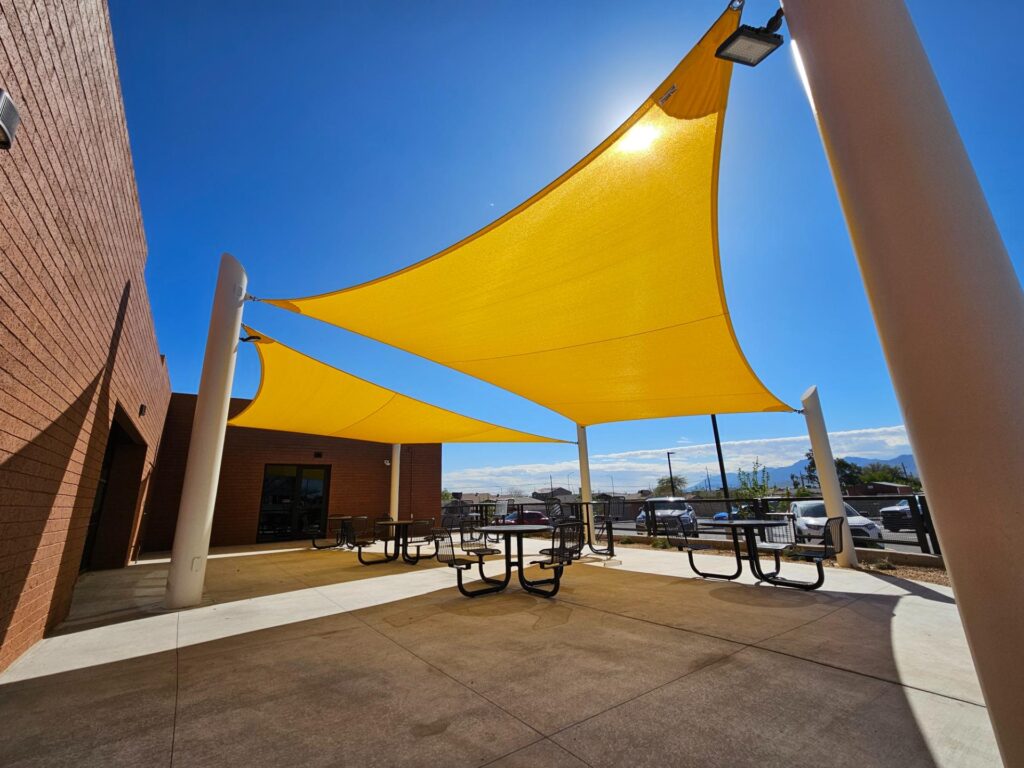
Why a four-corner sail covers more ground
A 4-point sail wins on coverage because a rectangle fills a usable area with almost no wasted edge, while a triangle leaves two corners of a square deck unshaded. Anchor a single rectangular panel over a 16 x 24 ft patio and the whole table-and-lounge zone sits in shade by mid-afternoon; do the same with a triangle and you are buying a second sail to catch the corners. That trade — the triangle’s wind-shedding simplicity for square footage — is the entire reason a four-point design exists.
The math is straightforward. A 20 x 20 ft square sail covers 400 sq ft of plan area; the largest triangle that fits the same 20 ft anchor spread covers closer to 170 sq ft — you roughly double shaded area off four masts instead of three. For pools, playgrounds, and parking lanes whose footprint is itself rectangular, the four-point form fits the problem rather than fighting it. The trade-offs that come with that larger flat plane are the rest of this page.
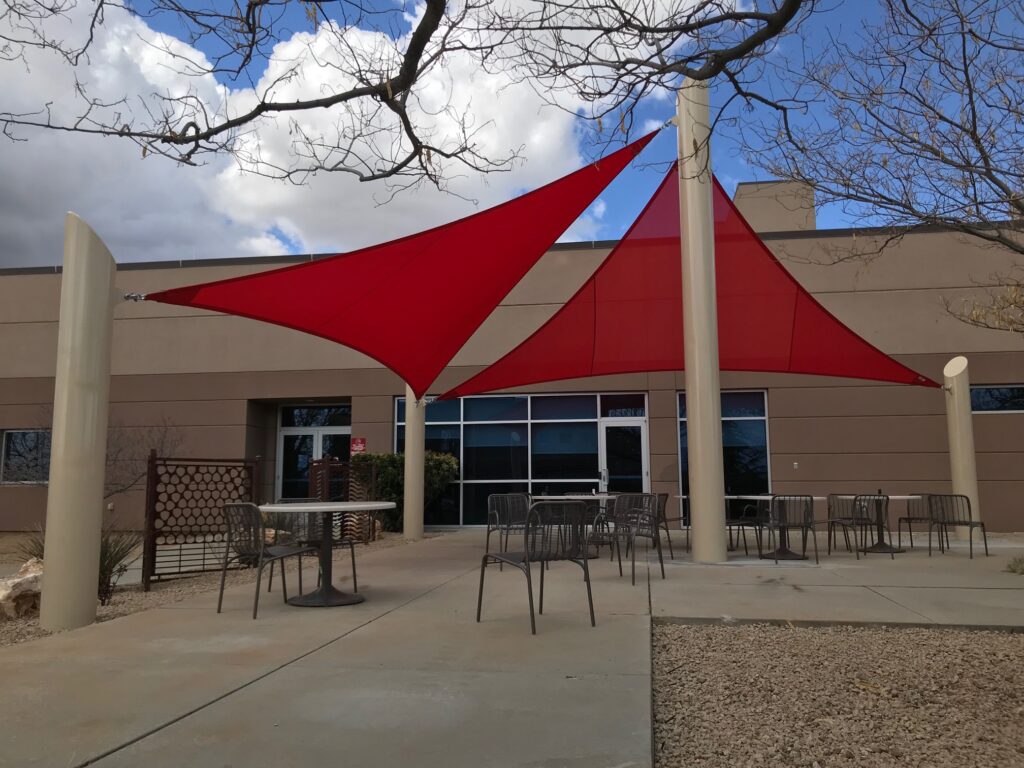
Where four-point sails earn their keep
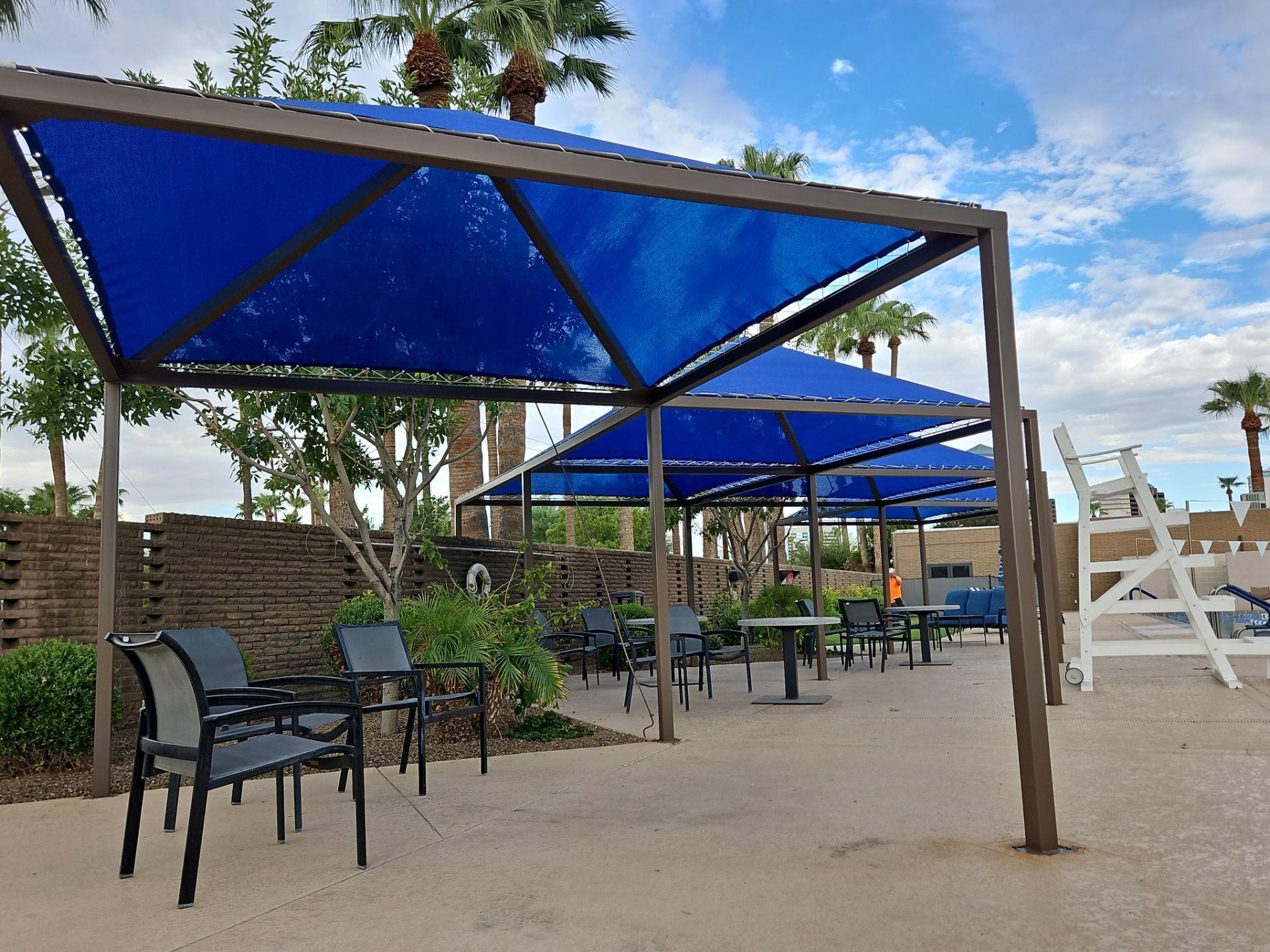
Four-point sails fit any space that is itself rectangular and wants continuous overhead cover. Pool decks are the clearest case: a 14 x 28 ft panel can span a lap pool and its lounge edge in one piece, and the high-corner drainage keeps monsoon rain sheeting off to one side instead of pooling over swimmers. Playgrounds are the second: a single 18 x 24 ft sail drops a play structure’s surface temperature out of the burn range, and at 9-12 ft anchor heights it clears climbers and slides without putting a post in the fall zone.
Parking aisles and courtyards round out the demand. A run of rectangular sails over a parking lane shades cars without the column-between-stalls problem of a multi-post canopy, and overlapping panels cover a long aisle a single sail never could. For restaurant patios and school lunch areas, the rectangle matches the seating grid below it. When the footprint is genuinely odd — an L-shape, a curve, a tight setback — that is the point to look at a custom-built shade structure instead of forcing a rectangle onto it.
Tension, the hypar twist, and the four anchors
A four-point sail only performs if it carries a built-in twist, because a dead-flat four-sided panel ponds water and flogs in wind. The fix borrowed from architecture is the hyperbolic-paraboloid (hypar) geometry: two diagonally opposite anchors go high, the other two go low, so the fabric curves in two directions at once. That double curve is what drains rain off a corner and pre-loads the panel so gusts tighten it rather than slap it. A common setup runs the high corners at 12-14 ft and the low corners at 8-10 ft, a 3-4 ft drop across the diagonal. The same principle scaled up to rigid steel becomes a hypar shade structure.
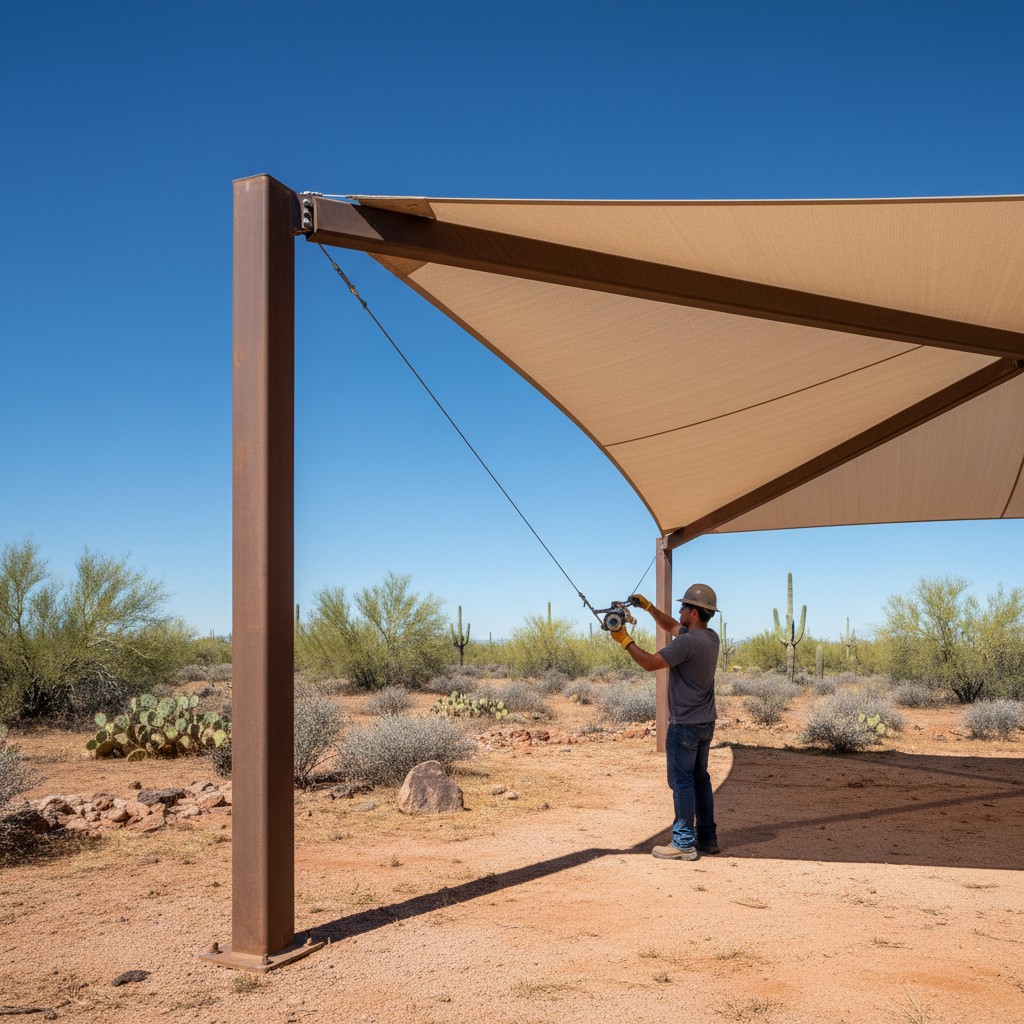
The anchors carry real load, not decoration. Each of the four masts is steel set in a caisson footing, and Valley caliche often forces those footings 4-8 ft deep before they hold against a sail trying to lift in a microburst. Turnbuckles or tensioning hardware at each corner let the crew dial the fabric tight and re-tighten it later. The honest reality of any tensioned fabric: HDPE relaxes after its first hot season and the sail needs re-tensioning, or it begins to flutter and wear at the corner patches. That first re-tension is maintenance, not a defect.
HDPE fabric against UV and Arizona wind
The cover is knitted high-density polyethylene, and it blocks roughly 90-99% of UV depending on weave density. That single layer keeps pool decks, playground rubber, and parked-car dashboards from the fade-and-crack that bare Phoenix sun forces in a season. HDPE breathes — air passes through the knit — so it stays cooler underneath than a solid vinyl panel and lets a sudden gust bleed through instead of catching the whole panel like a sail on a boat. Commercial HDPE covers commonly carry 10-15 year warranties.
Wind is the design constraint that decides the steel. Maricopa County structures are engineered to Arizona building code and ASCE 7 wind loads, where Valley design wind speeds run roughly 90-115 mph, and monsoon microbursts can punch past 60 mph in minutes. A larger four-point panel catches more wind than a small triangle, so the masts and footings on a 20 x 30 ft sail are sized heavier than the hardware a backyard triangle would need. The fabric itself is a consumable layer: it behaves more like a high-end tarp with a 10-15 year clock than a permanent roof, and re-covering the worn cover onto sound steel is normal budgeting in this climate.
Four-point vs three-point, and multi-sail arrays
Choose between the two sail types by the shape of the area and the wind exposure. A 3-point tensioned sail uses three anchors and a triangular panel; it sheds wind beautifully and suits a small or oddly angled spot, but it leaves square corners open. The 4-point sail uses four anchors and a square or rectangular panel for far larger continuous coverage, at the cost of more wind load and a mandatory built-in twist. Put simply: triangles for wind and tight angles, rectangles for area.
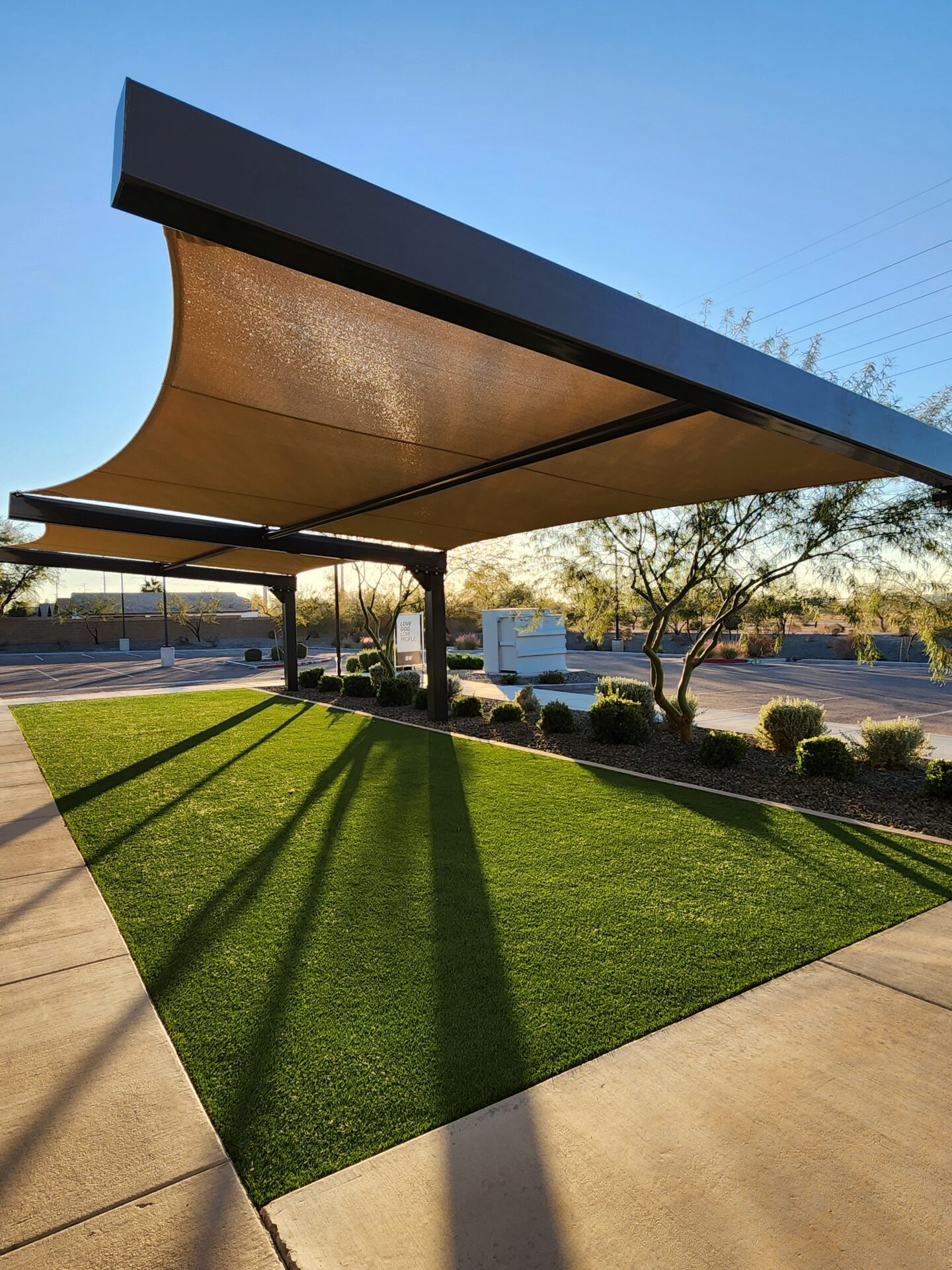
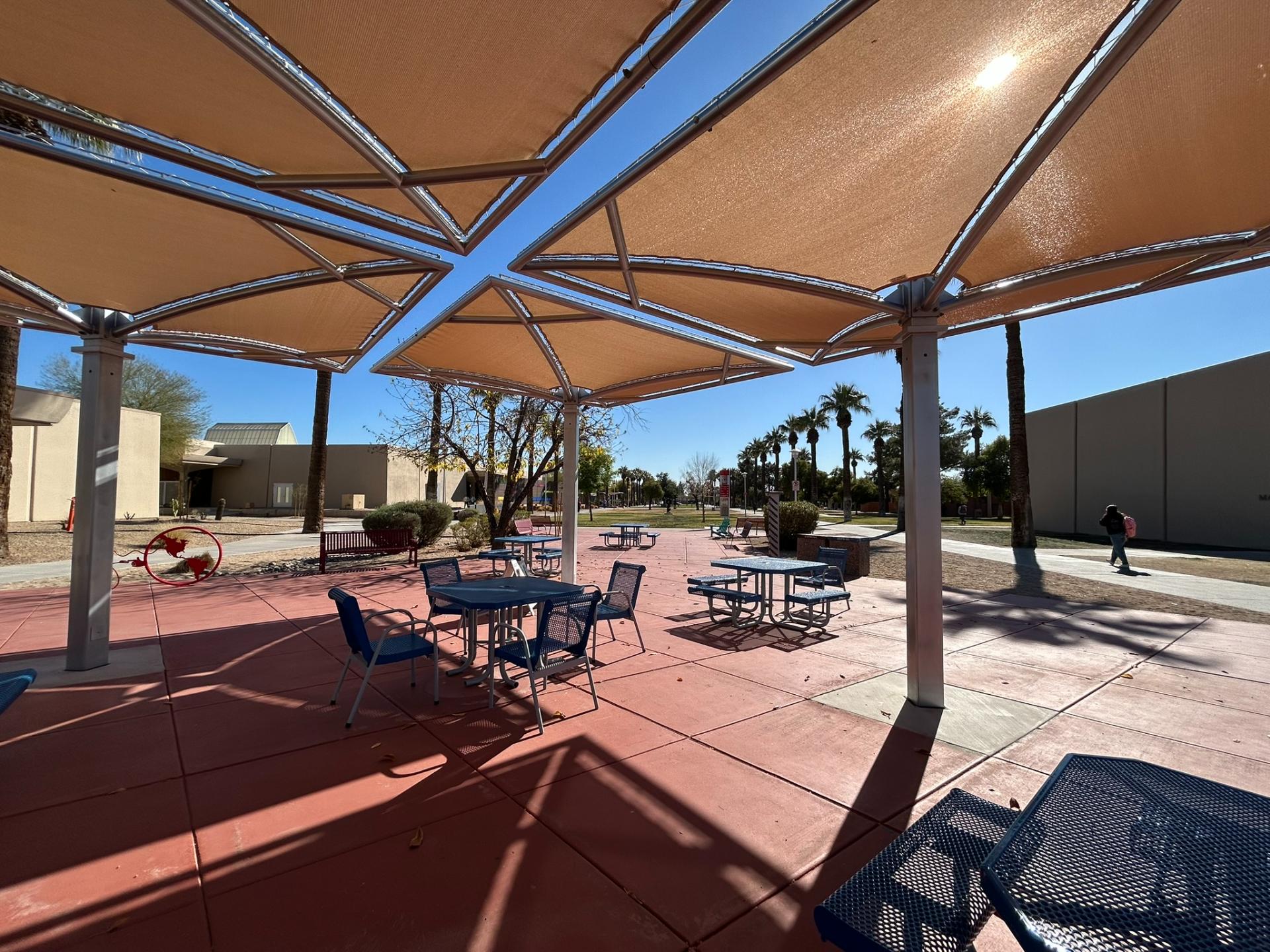
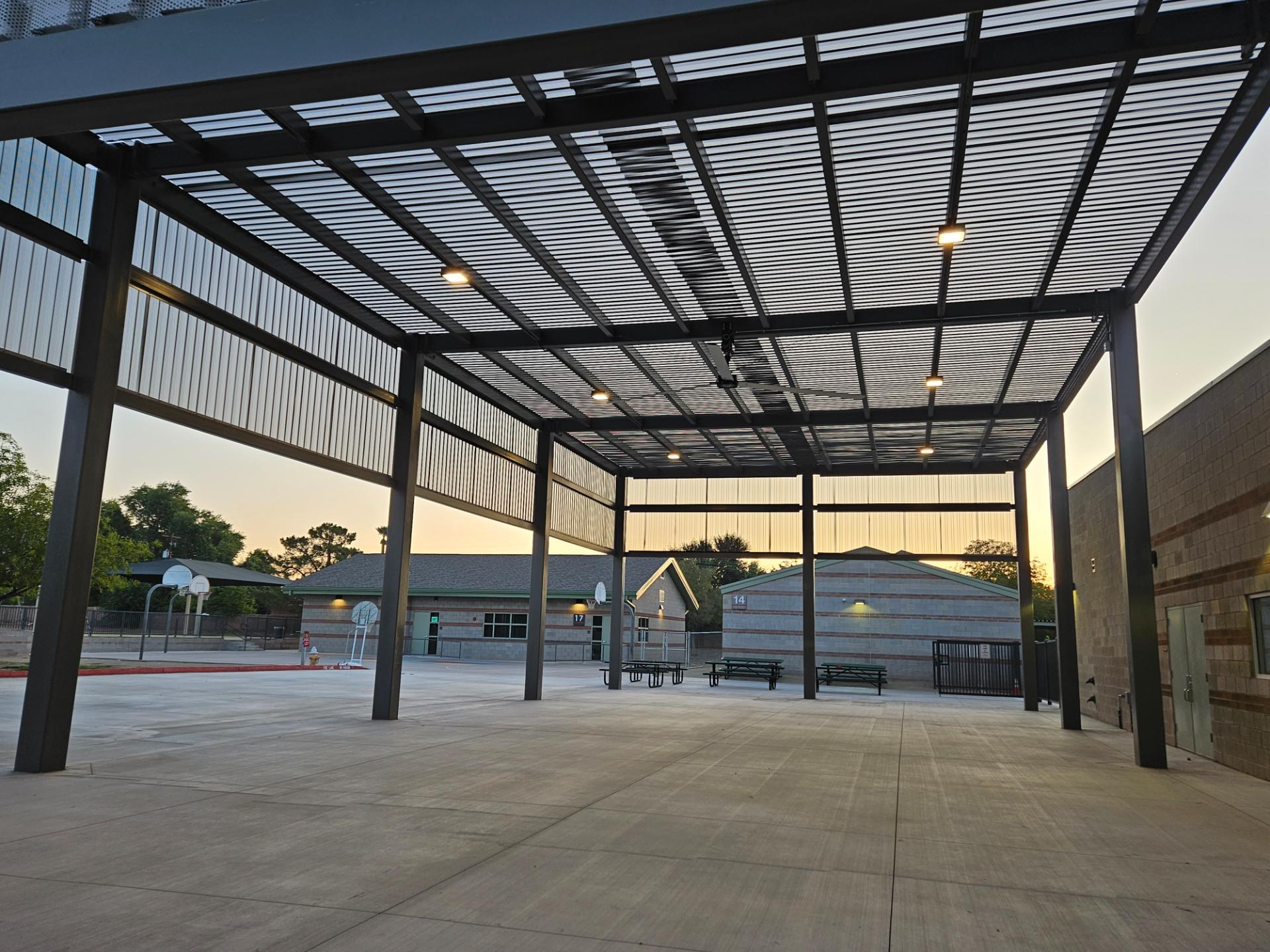
The most useful pattern on bigger projects is the multi-sail array — several panels at staggered heights and overlapping edges. Mixing four-point rectangles with the occasional three-point triangle covers a long parking aisle or courtyard with built-in air gaps that relieve wind pressure and add a layered, architectural look. When a site needs that scale but wants a single rigid plane with no flutter at all, a flat cantilevered structure carries its load on one post line and shades roughly 16-20 ft of depth with no columns between stalls. Sails and rigid canopies often share a lot — the sail handles the entry and patio, the cantilever handles the cars. The full line is laid out on the products hub.
Honest limits worth knowing first
A four-point sail is the right tool for a rectangular area, not a do-everything roof, and three limits are worth stating up front. First, fabric is consumable: plan a re-cover inside the 10-15 year window, sooner if the panel runs the largest sizes under full sun. Second, wind ratings have a ceiling — an engineered sail handles typical monsoon loads, but no fabric panel is rated for every freak 80 mph gust on record, and the larger the rectangle the more careful the wind sizing has to be. Third, the first-season re-tension is not optional; skip it and the relaxed fabric flutters, abrades at the corners, and ages fast.
Dust is the quiet maintenance cost. A rinse once or twice a year keeps grit from grinding into the knit, and clearing the low corner after a haboob keeps drainage working. Sails also need real anchor room — four masts and their footings have to land where the geometry wants them, which is why a tight setback sometimes points toward a rigid frame instead. Knowing these limits going in is what separates a sail that looks sharp for 12 years from one that disappoints in 4. From here, the next step is sizing the rectangle to your footprint and post lines.
Explore Our Full Shade Structure Line
Want this structure quoted for your property?
Call (602) 265-0905 for a free assessment.
Frequently Asked Questions
What is the difference between a 4-point and a 3-point shade sail?
A 4-point sail is a square or rectangular panel anchored to four masts, and a 3-point sail is a triangular panel anchored to three. The four-point form covers a much larger continuous rectangle — roughly double the shaded area off the same anchor spread — which suits pools, playgrounds, and parking aisles. The three-point form sheds wind more easily and fits small or oddly angled spaces, but leaves square corners unshaded. Pick rectangles for area, triangles for wind and tight angles.
How large can a 4-point shade sail be?
Single rectangular panels commonly run from about 12 x 16 ft up to 20 x 30 ft and beyond, with the practical ceiling set by wind load rather than the fabric. The bigger the panel, the heavier the masts and the deeper the caisson footings — often 4-8 ft in Valley caliche — because a large flat sail catches more wind. For coverage past a single panel, a multi-sail array of overlapping rectangles spans a long aisle or courtyard without one oversized sail fighting the monsoon.
What does a 4-point tensioned sail cost?
Cost tracks panel size, the four masts and their footing depth, the fabric grade, and how much wind the site sees, so sails are quoted per project rather than off a per-square-foot chart. A large 20 x 30 ft rectangle with deep caliche footings runs well above a small backyard panel, and a multi-sail array costs more than a single sail of similar coverage because each sail needs its own anchors. We quote after reviewing the footprint and post lines so the number matches the real structure.
Will a 4-point sail survive Arizona monsoon storms?
Yes, when it is engineered for it. Sails are sized to Arizona building code and ASCE 7 wind loads, where Valley design wind speeds run roughly 90-115 mph; the built-in hypar twist pre-loads the fabric so gusts tighten it rather than slap it, and the breathable HDPE knit bleeds air through instead of catching the full panel. No fabric sail is rated for every record gust, and a larger rectangle demands heavier hardware, which is why mast size and footing depth are sized to the specific site.
How often does a 4-point sail need re-tensioning?
Plan on a re-tension after the first hot season, because HDPE relaxes once it has cooked through a Phoenix summer, and then occasional checks over the years as needed. Skipping that first re-tension is the most common reason a sail starts to flutter and wear at the corner patches early. Re-tensioning is a quick hardware adjustment at the turnbuckles, not a rebuild, and it is normal upkeep for any tensioned fabric structure rather than a sign of a defect.