or call (602) 265-0905 — no-obligation, on-site.
Hip Shade Structures
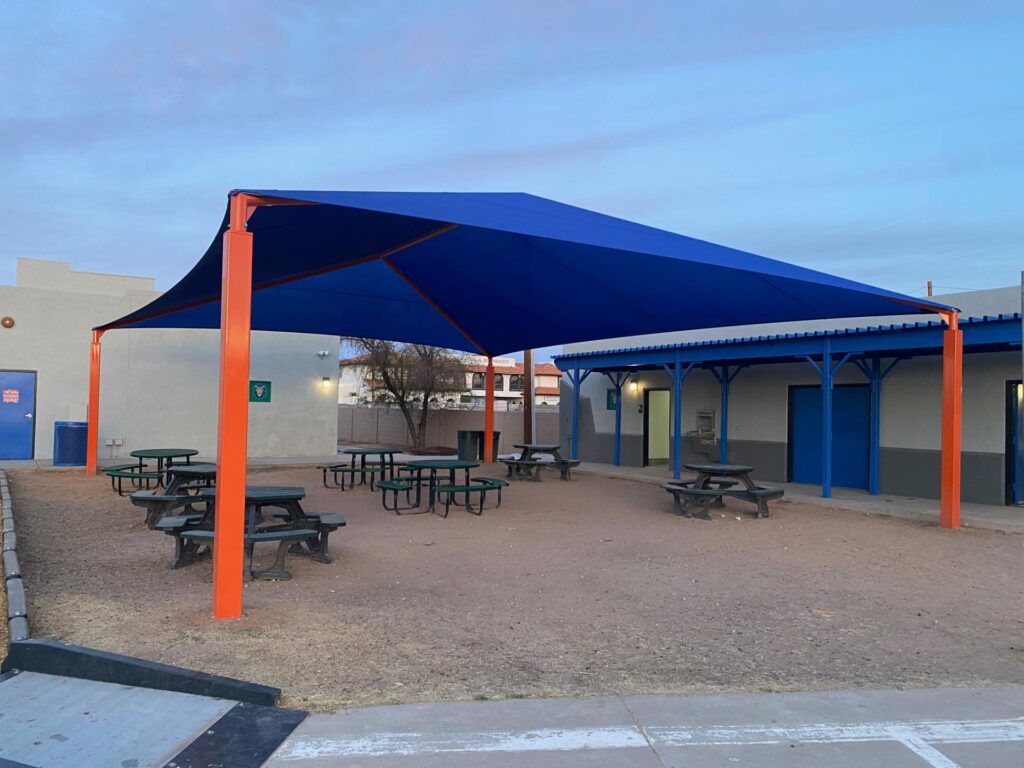
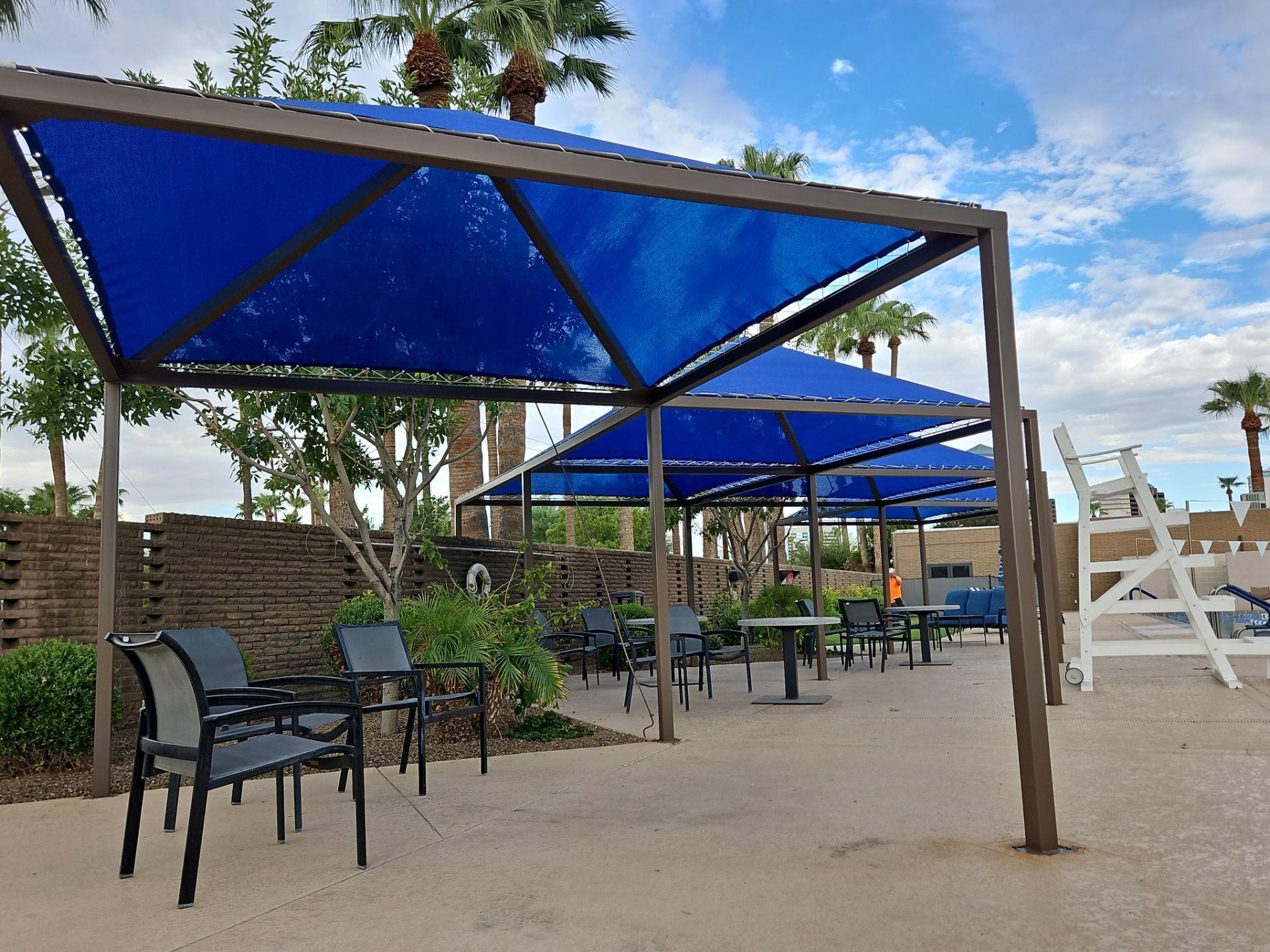
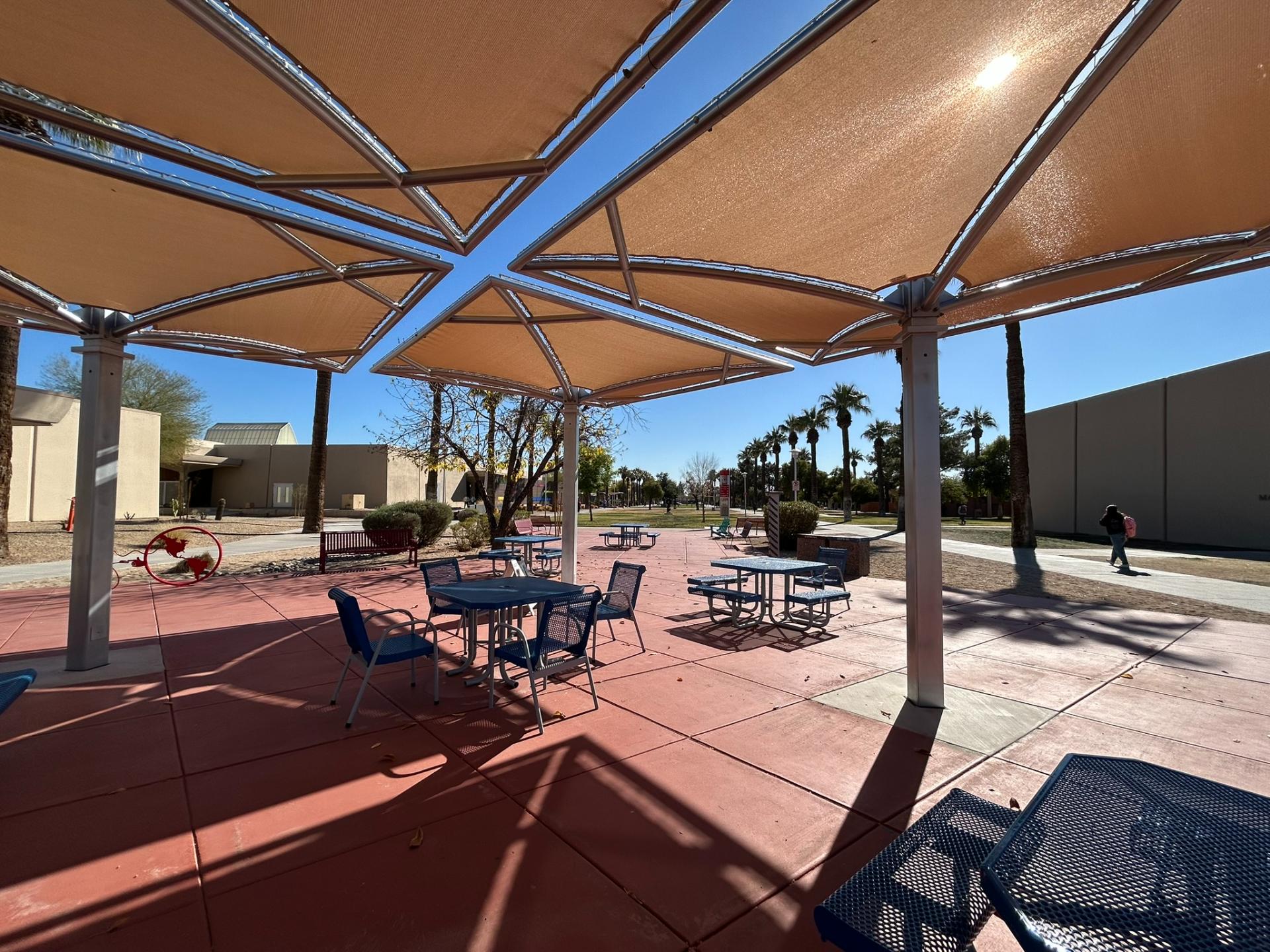
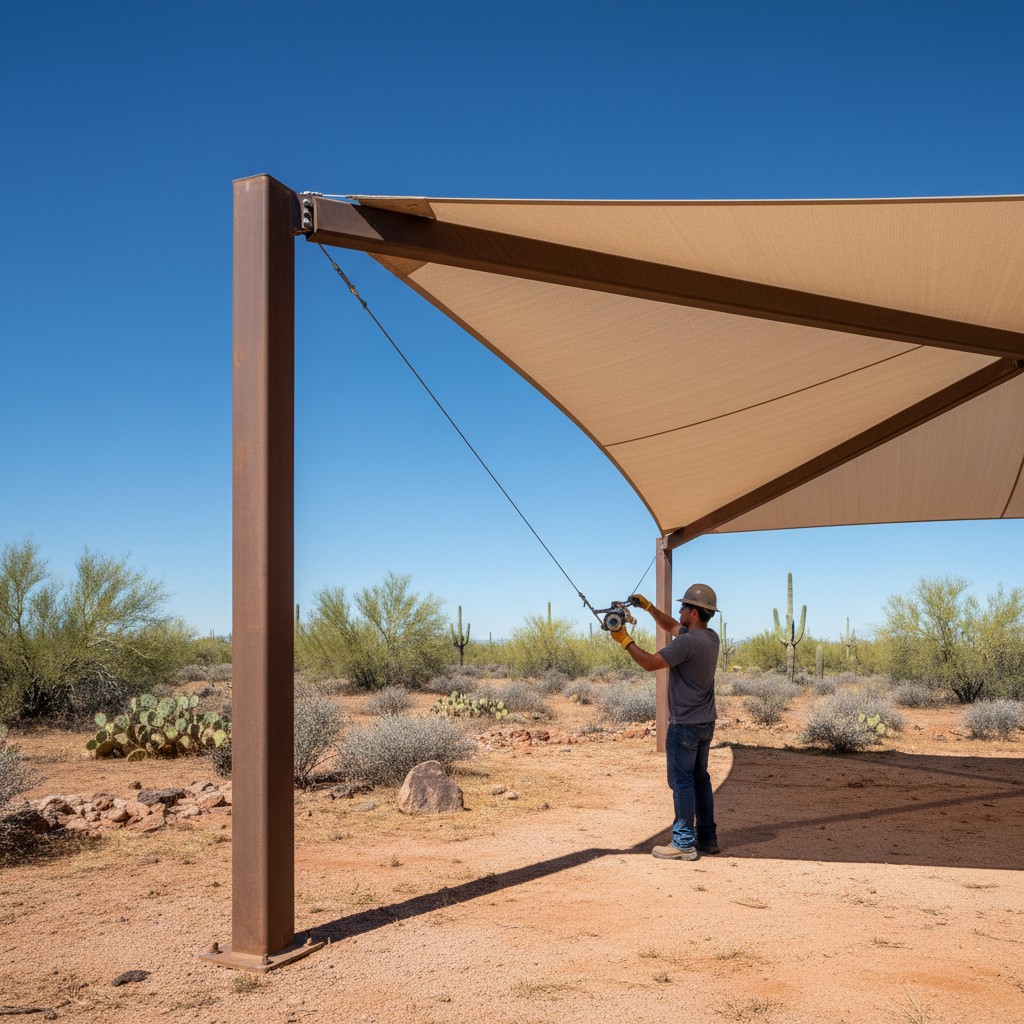
A hip shade structure is a steel-framed canopy with a pitched, four-sided 'hip' roof carrying tensioned HDPE fabric or panels. The sloped form sheds rain and monsoon debris, adds clearance height, and spans walkways, bleachers, and lunch courts. Modular bays let it run in long continuous rows over large areas.
Since 1998
Designing & building Arizona shade
In-House Fabrication
Built at our Phoenix shop
Engineered & Permit-Ready
Stamped drawings for AZ wind loads
Free On-Site Quote
No-obligation project assessment
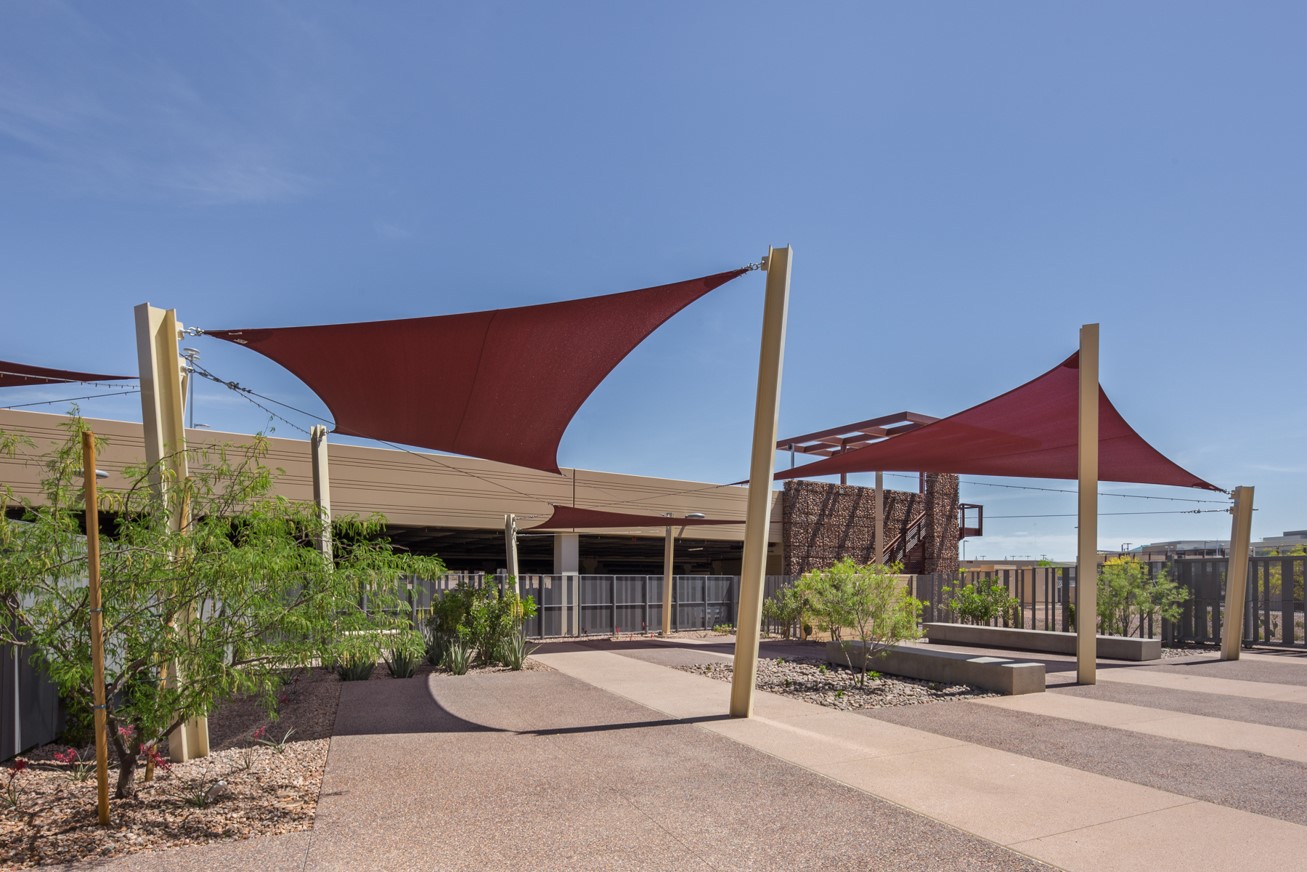
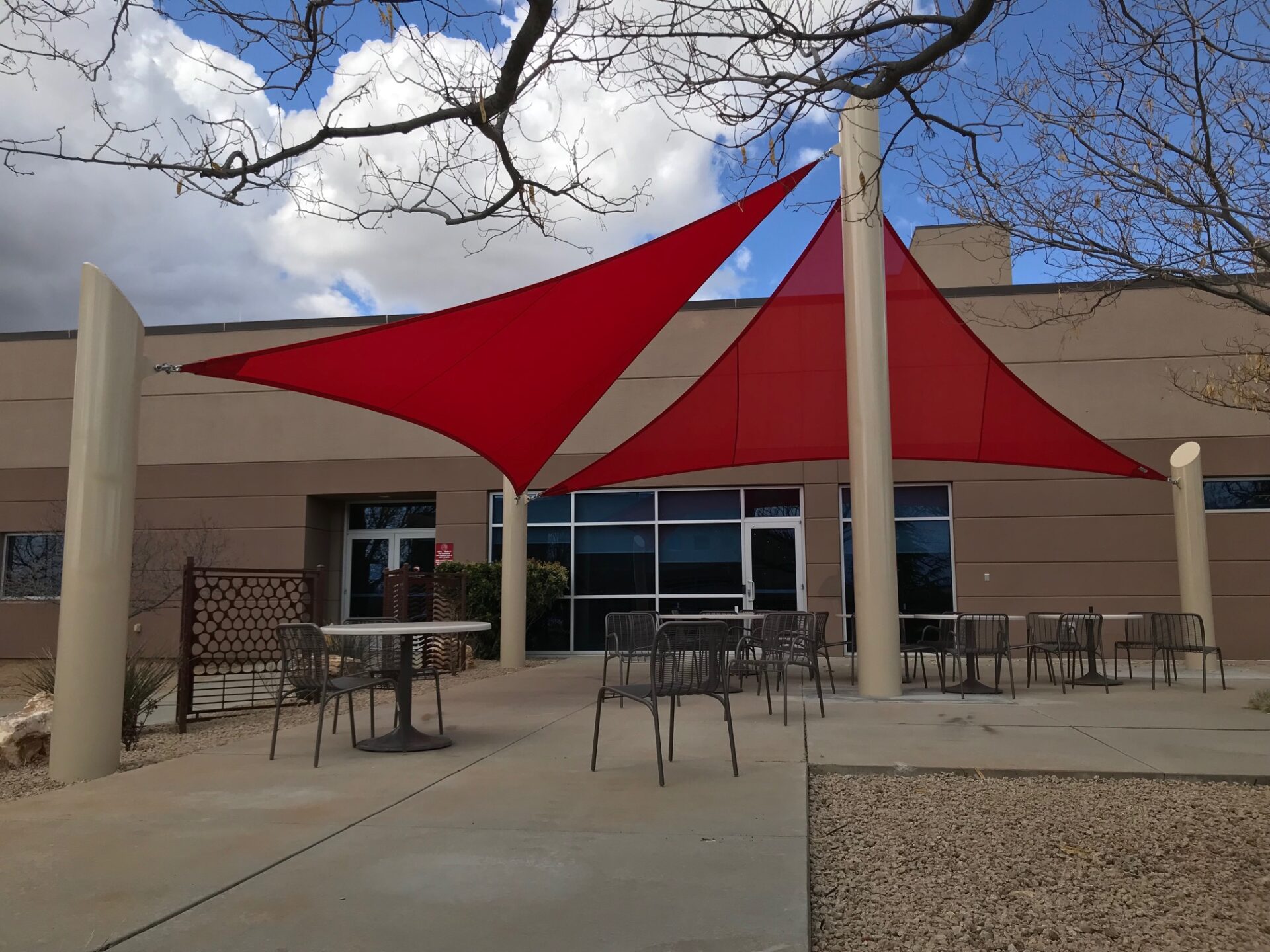
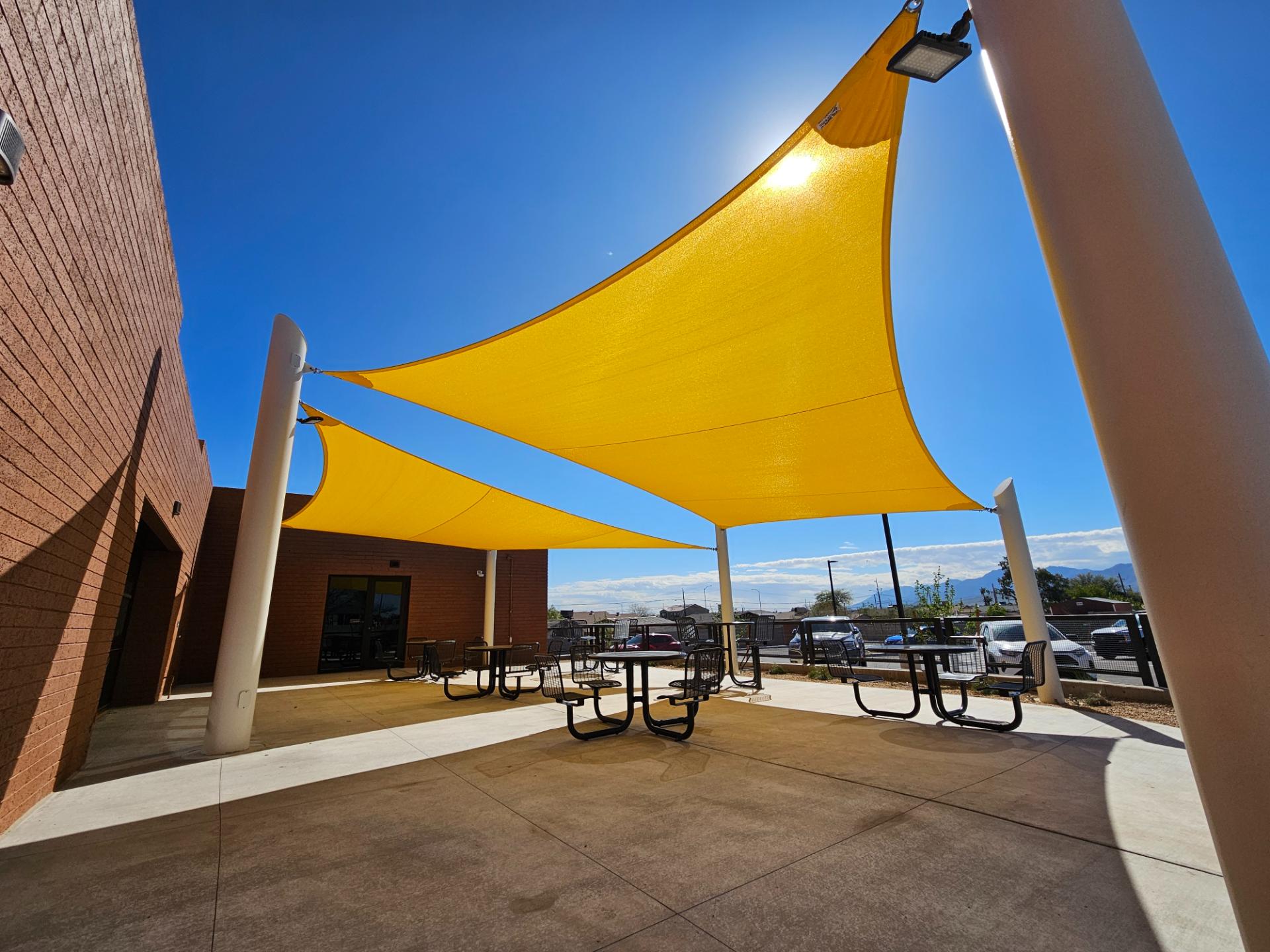
A hip structure is a steel-framed canopy with a peaked, four-slope fabric roof that pitches down on every side, making it the most cost-effective way to cover a large open footprint over a few interior posts. The four pitched planes meet at a ridge or central peak, so monsoon rain and dust slide off toward the perimeter instead of pooling overhead. Total Shade builds hip canopies from our Phoenix shop at 2331 W. Holly St, stretching knitted HDPE that blocks roughly 90-99% of UV over powder-coated steel engineered to Arizona wind code. The look reads classic and architectural while the geometry stays cheap per shaded foot, which is why schools and parks default to it.
Our Hip Shade Structures
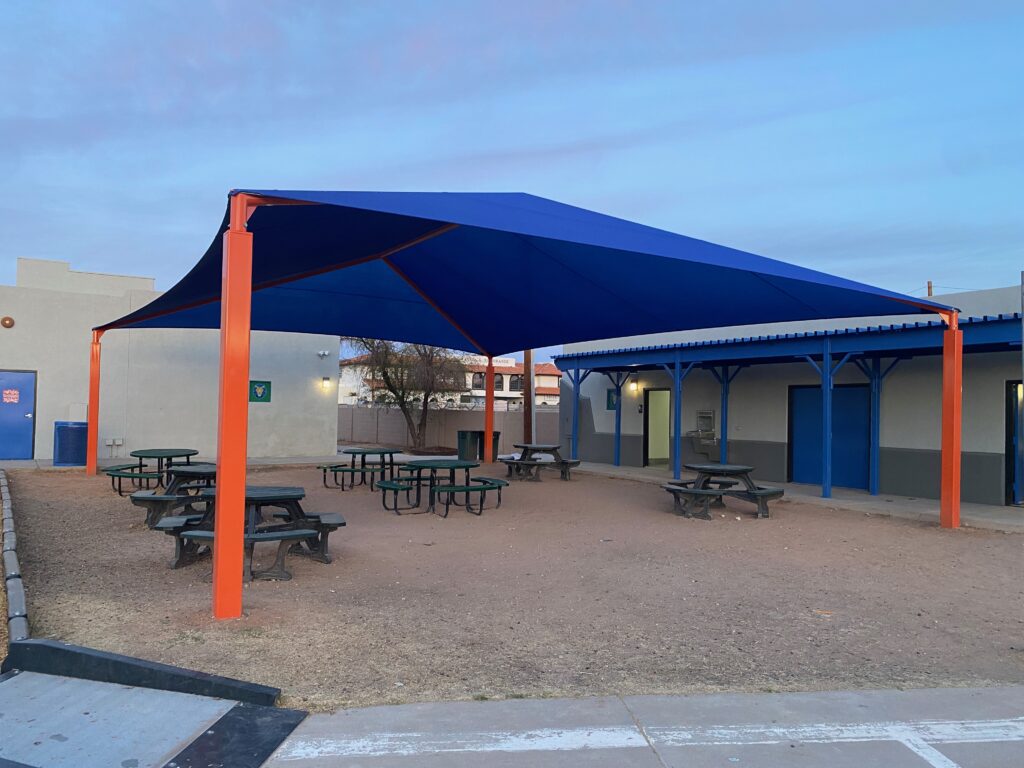
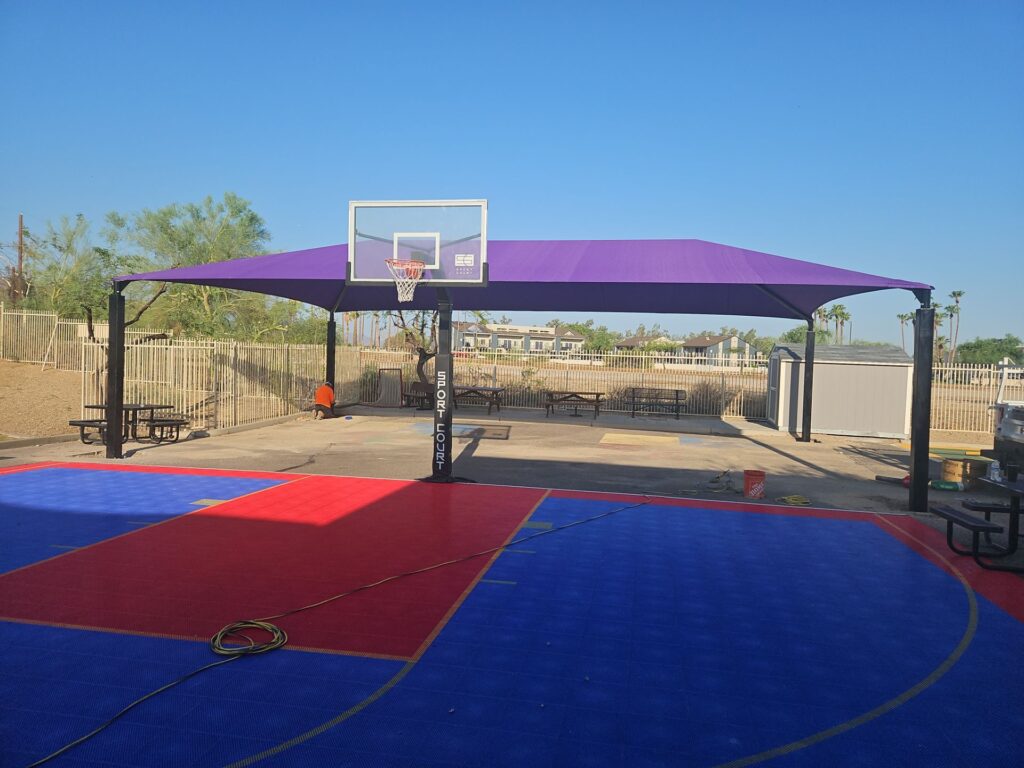
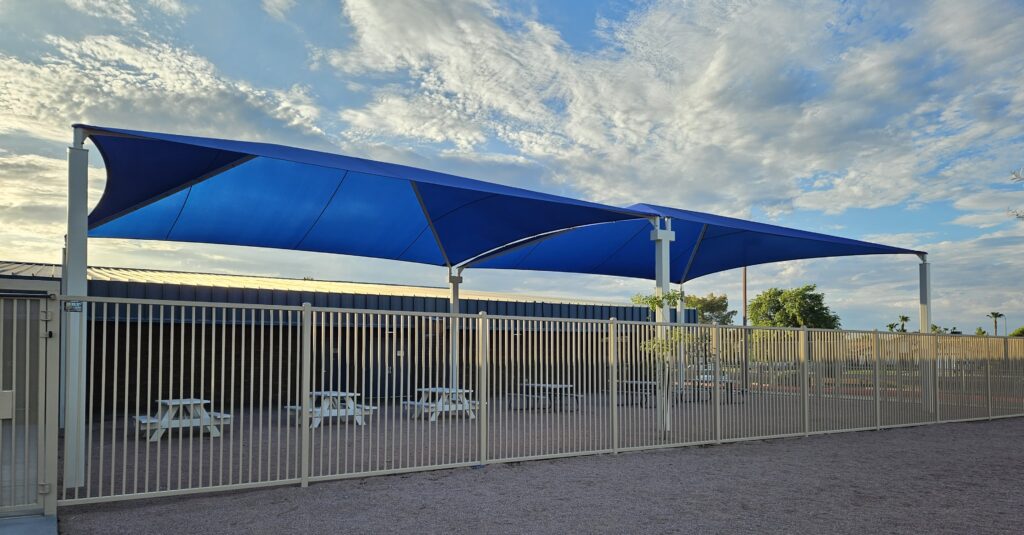
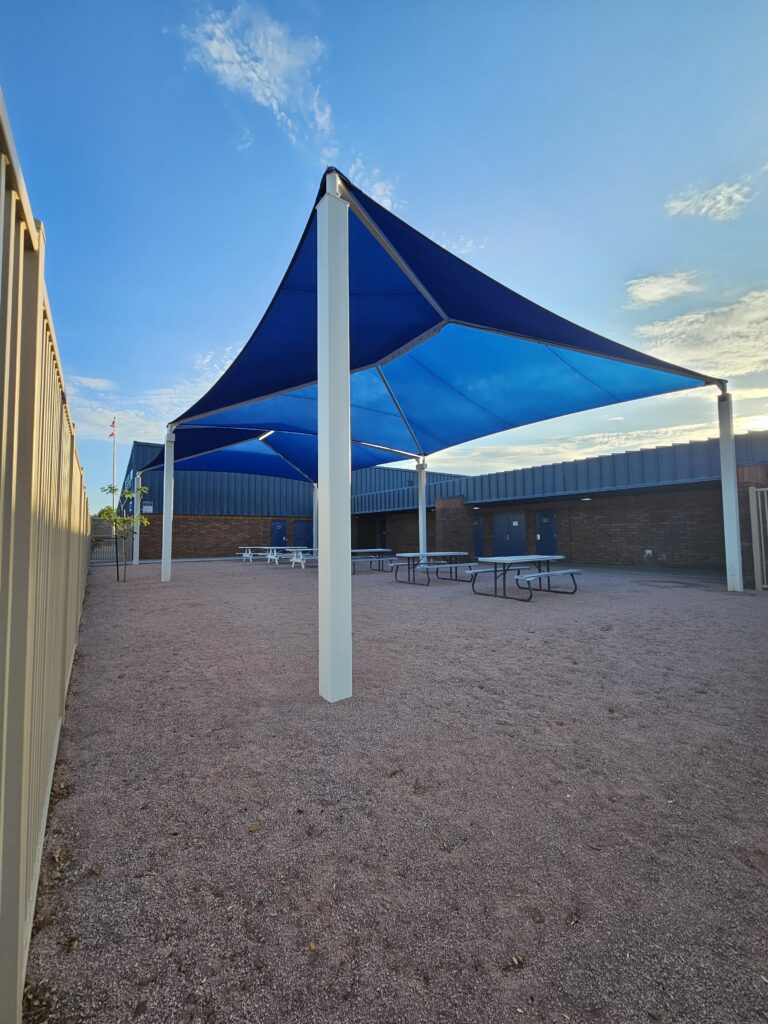
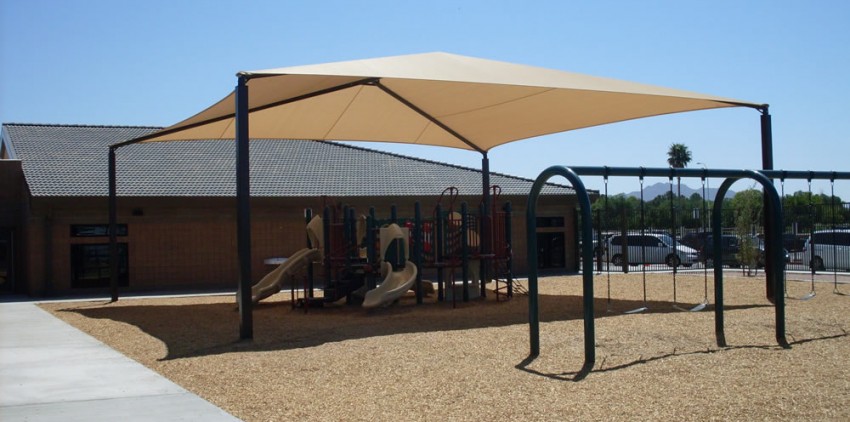
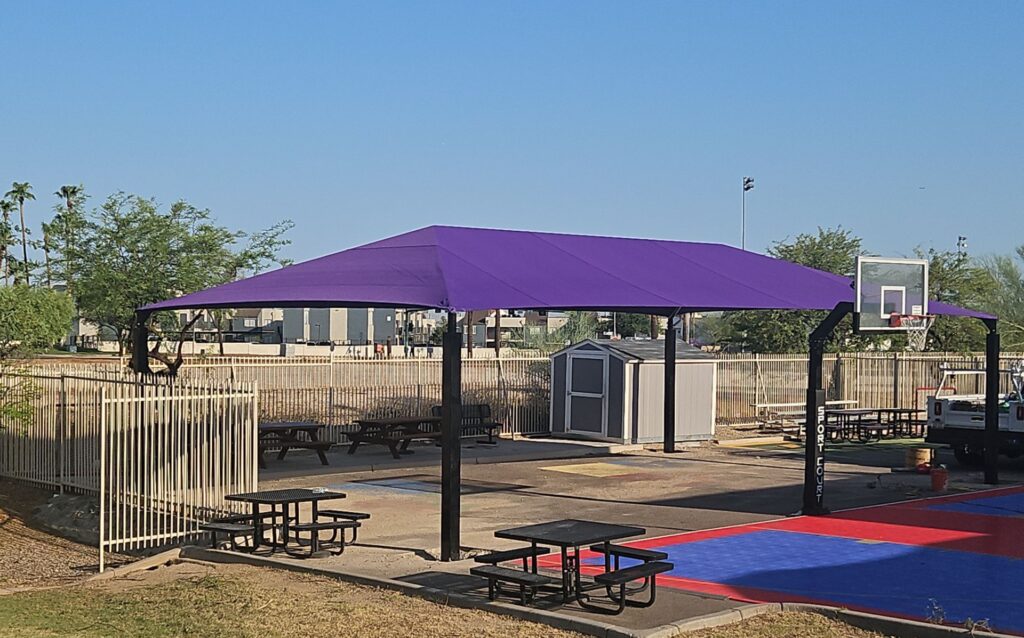
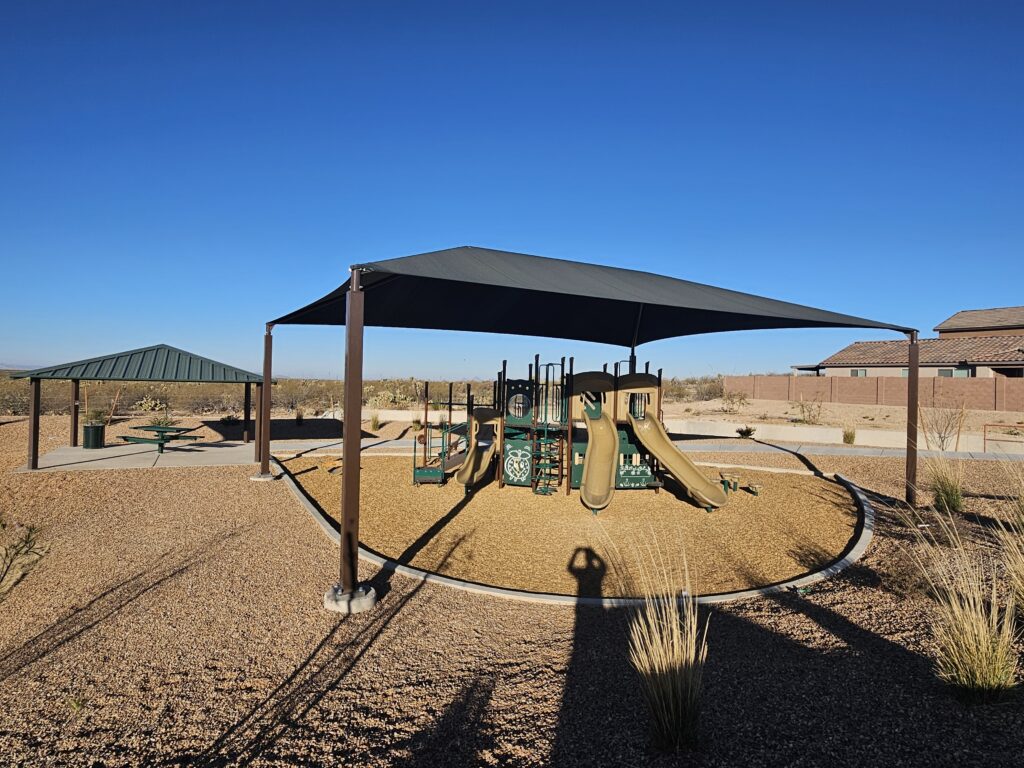
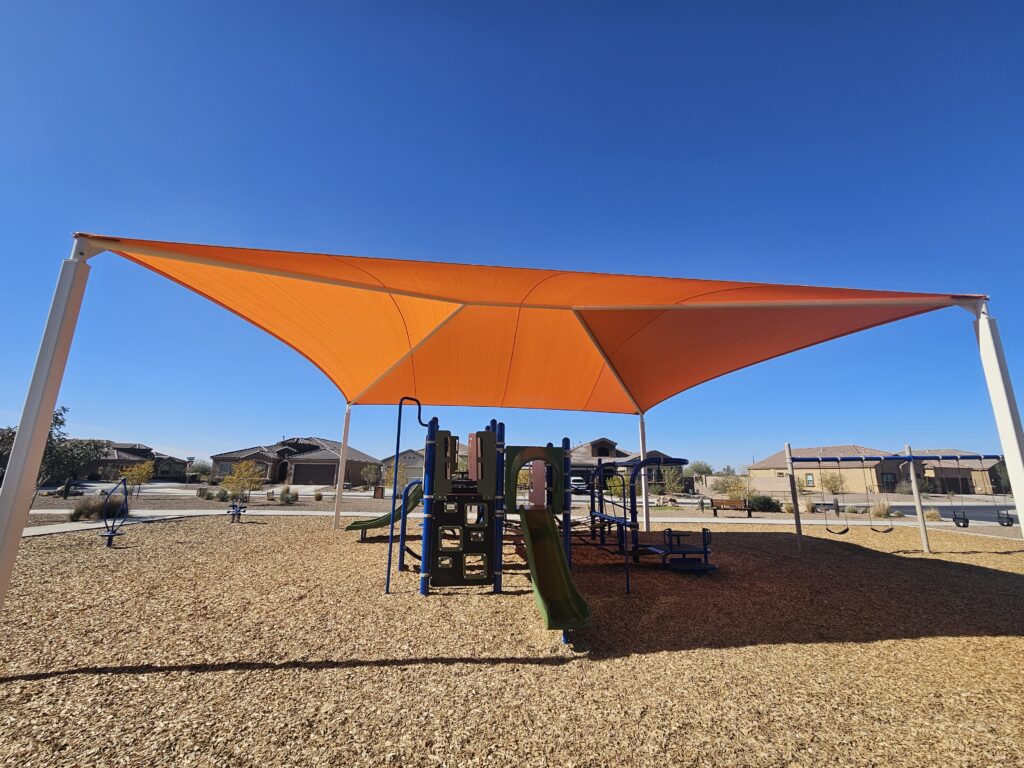
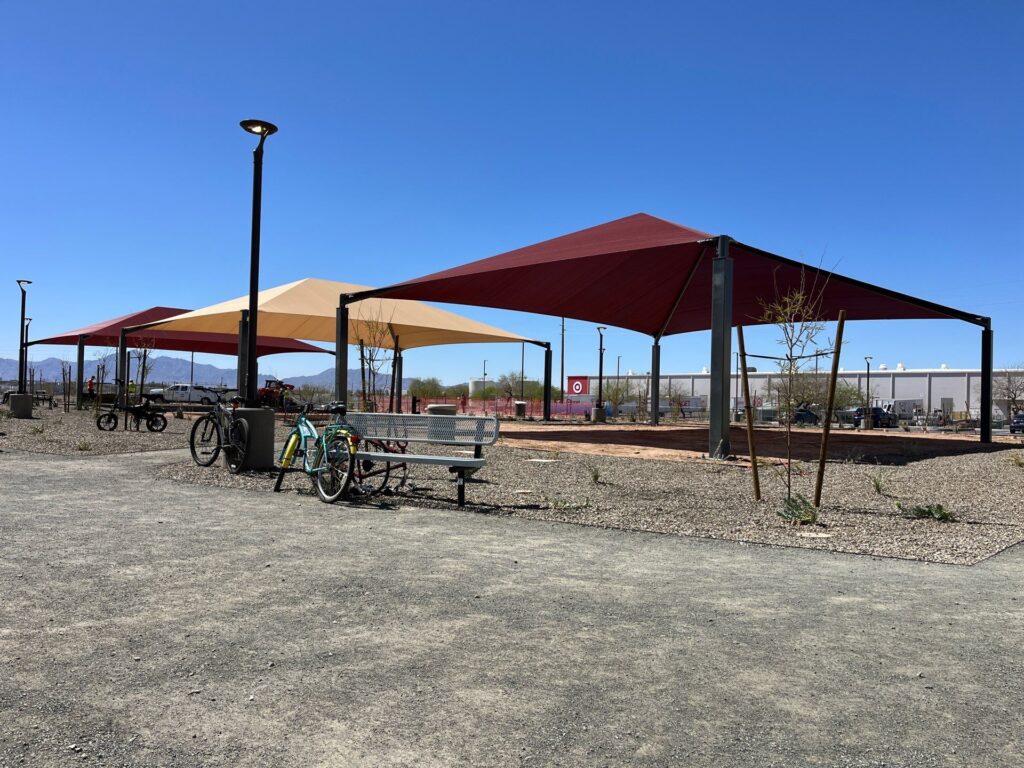
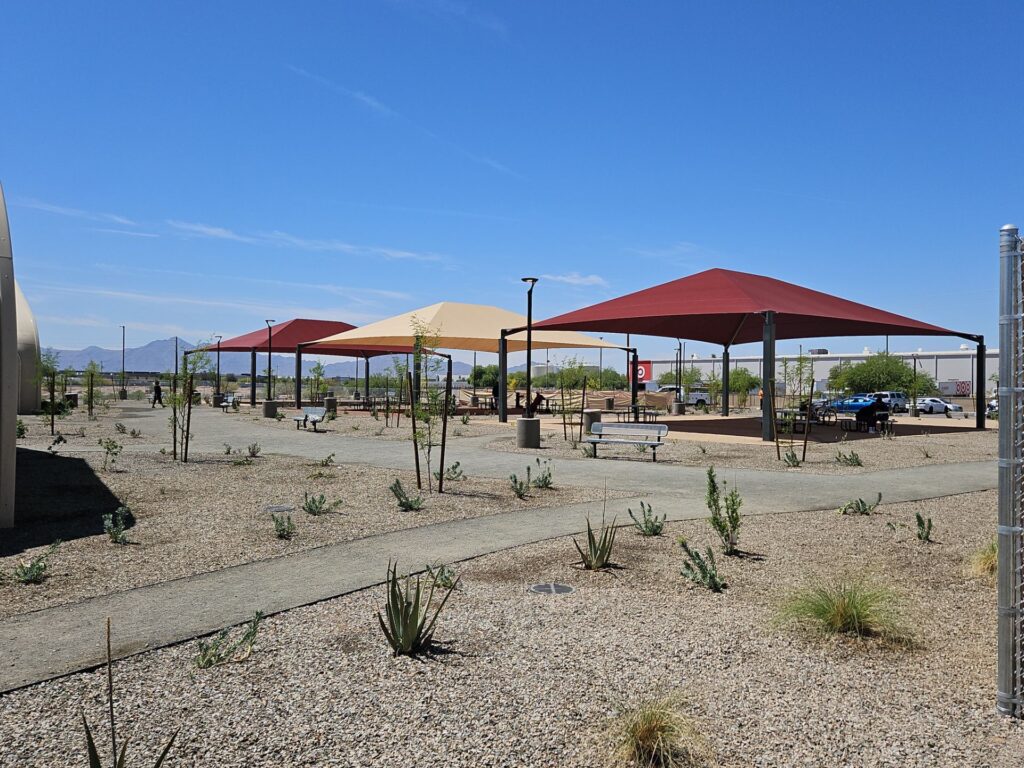
The peaked four-slope roof is what makes it cheap and weather-smart
A hip roof earns its keep by spreading load across several posts and shedding weather off four faces at once. Each of the four fabric planes pitches down from a central peak or ridge, usually at a 15-30 degree slope, so water and grit run to the edges rather than sagging into a pond in the middle. That same pitch lets monsoon gusts spill over the surface instead of catching it like a flat sail, which is why hip canopies hold up well when a microburst tops 60 mph.
Because the weight rides on interior columns spaced across the footprint, no single post has to cantilever a heavy load. The steel can run lighter per square foot than a one-sided design, and that is the core of the cost advantage. A hip canopy behaves more like a pavilion roof than a stretched sail: it wants posts under it, and in exchange it covers more ground per dollar of steel than any tensioned form. For the longer-span version of the same geometry, the MAX hip structure uses heavier members to stretch wider bays.
Where hip structures fit best
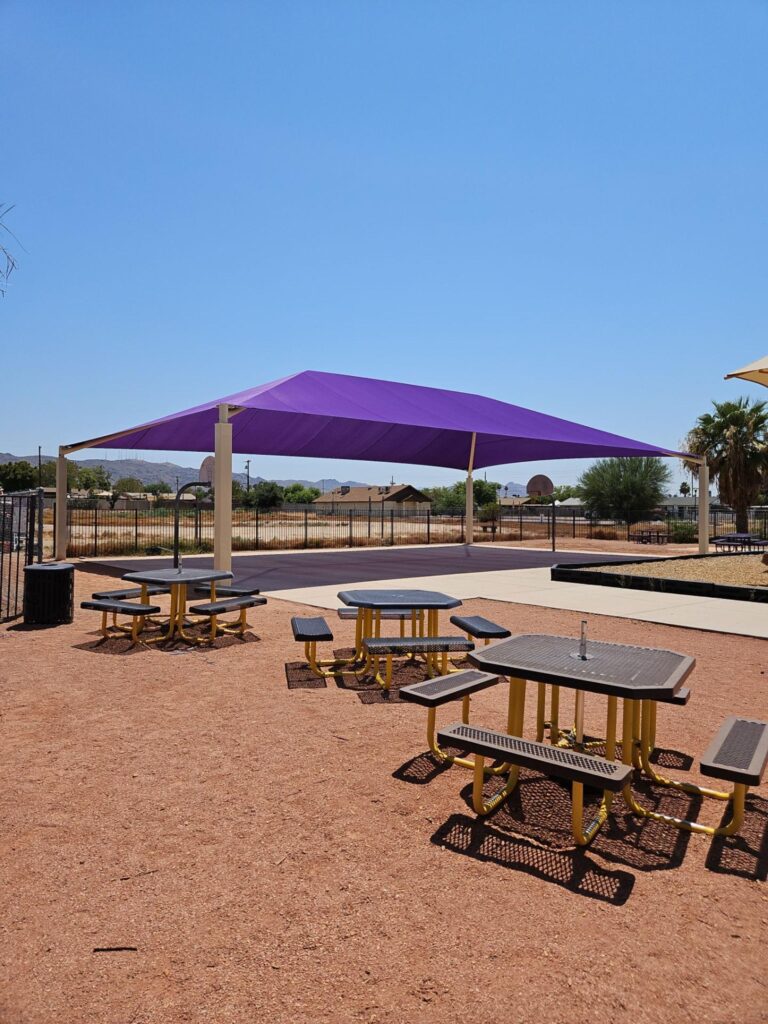
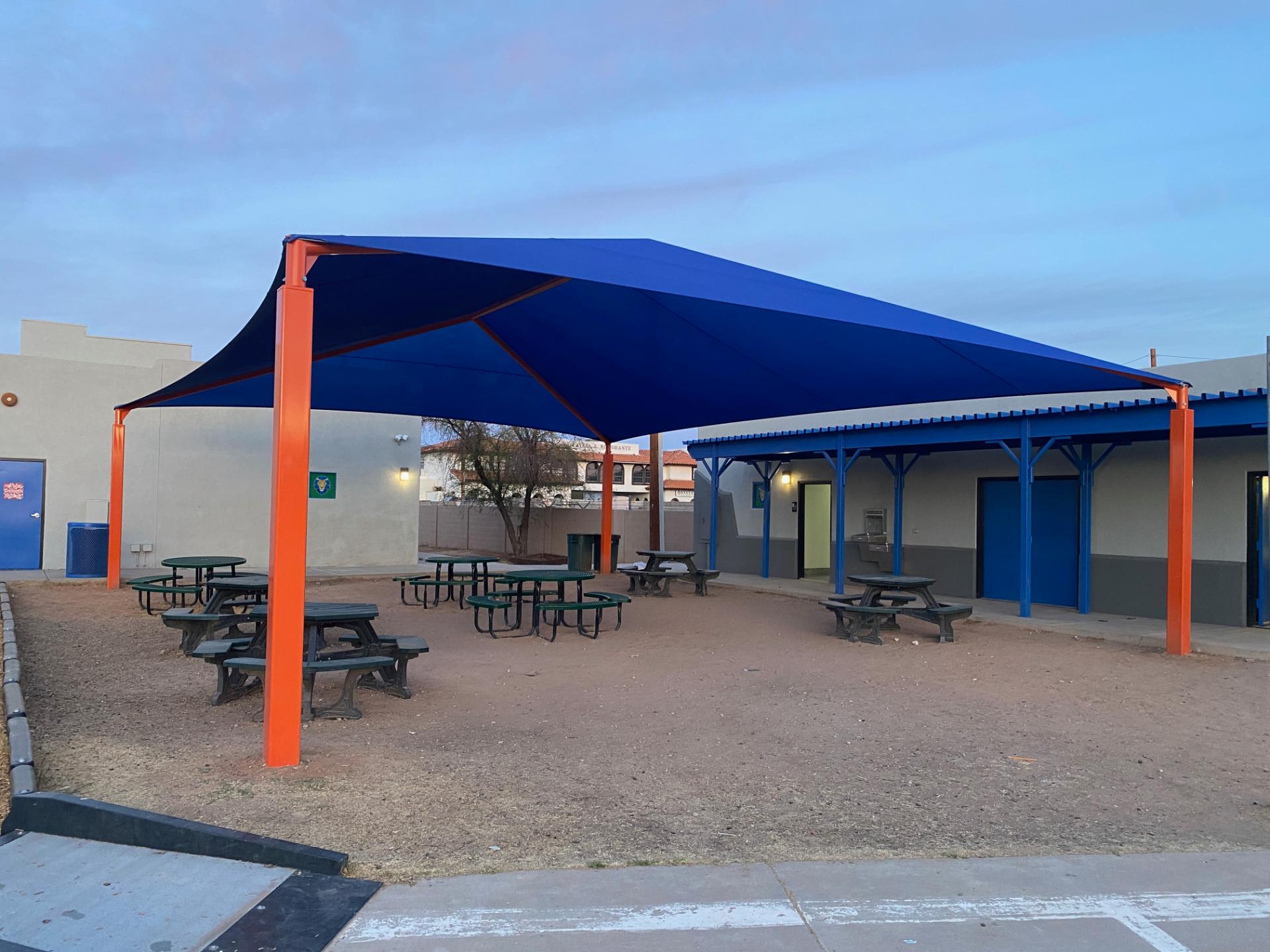
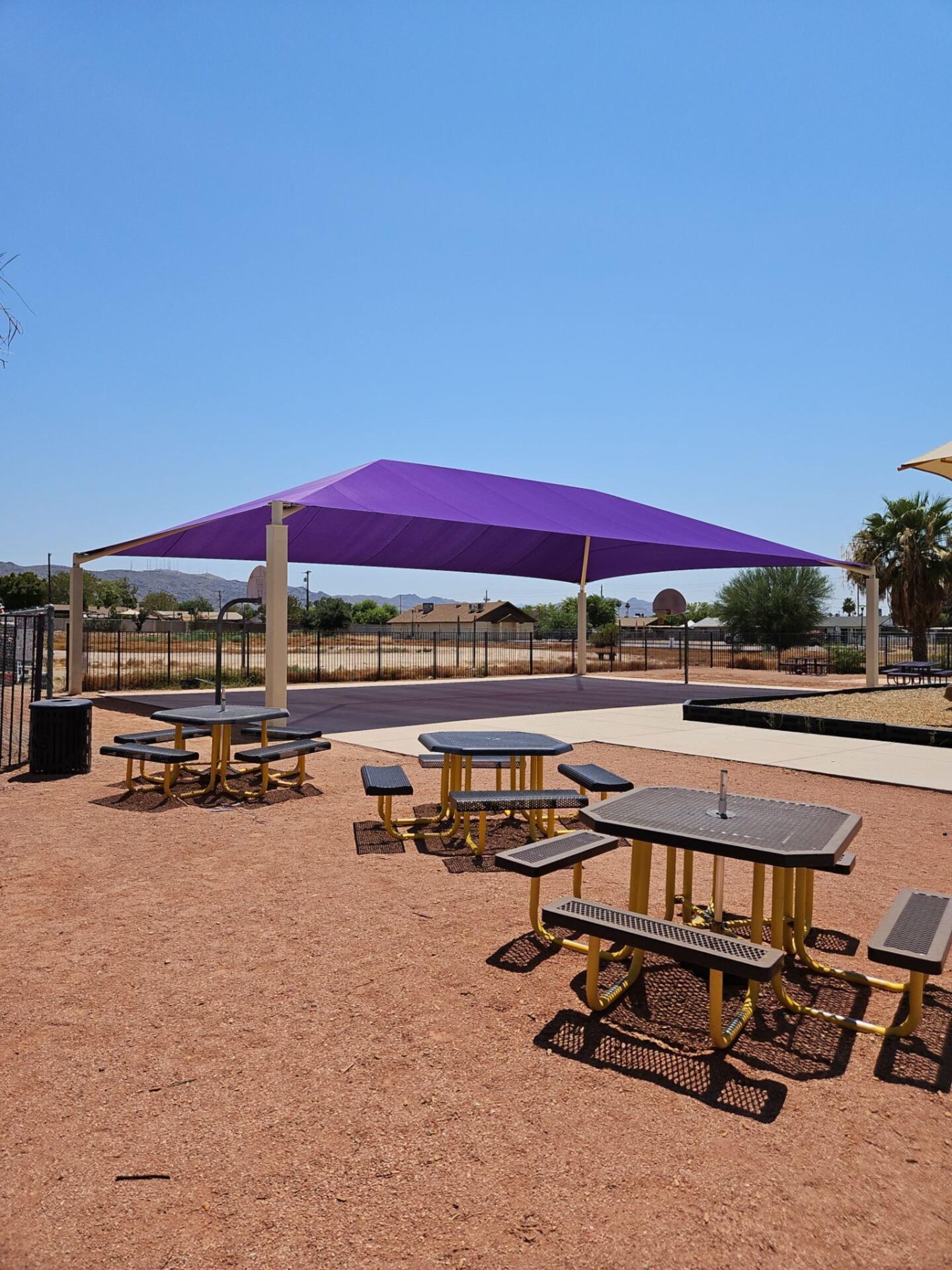
Hip structures belong over large, open, rectangular spaces where a column or two between users is no problem. Playgrounds, park ramadas, school lunch courts, bleacher seating, and big commercial yards are the natural fit, because all of them want broad continuous cover and none of them care about an interior post.
Schools and municipal parks are the heaviest users for a practical reason: a single hip canopy can run a long lunch court or shade a full set of bleachers in one structure, and the peaked roof clears tall enough for kids, picnic tables, and foot traffic underneath. A typical run sits at a 10-14 ft post height, enough headroom for a crowd without wasting steel. Hip canopies also suit market pavilions, equipment yards, and any open commercial area where the goal is maximum shaded square footage at the lowest cost. For oddly shaped lots or one-off footprints where a stock hip will not drop in cleanly, a custom-built shade structure lets the frame follow the site. You can see how the hip fits alongside the rest of the line on the products hub.
Spans, columns, and the engineering behind a clear footprint
A standard hip canopy spans roughly 20-40 ft per bay between posts, and larger sites simply add bays in a grid rather than chasing one impossible span.
Why interior posts are a feature, not a flaw
The posts are what let hip structures stay affordable at scale. Instead of forcing one mast to carry an entire roof, the load shares across columns spaced through the footprint, so each footing and each steel member stays modest. That is the opposite trade from a flat cantilevered structure, which buys a column-free zone by pouring deeper foundations and using heavier steel on one side.
Every hip we build is engineered to Arizona building code and ASCE 7 wind loads, with Valley design wind speeds landing roughly in the 90-115 mph range depending on the site. Footings are sized to the soil and the exposure, and we provide stamped drawings for the permit. The math is straightforward: wider clear spans and taller clearances cost more steel and deeper concrete, so the MAX version exists for the jobs that need them and the standard hip handles the rest.
Materials hold up because the steel and fabric are matched to the desert
The cover is knitted HDPE shade fabric, the same family used across commercial shade, and it blocks roughly 90-99% of UV depending on weave density. These covers commonly carry 10-15 year warranties, and Phoenix sun sits at the demanding end of that window, so the fabric is best treated as a long-lived consumable rather than a permanent surface. The frame underneath is powder-coated steel, typically in the 2-3 inch tube range for posts on a standard hip, finished with a baked-on coat that resists the chalking and fading that desert sun forces on cheaper brushed paint.
The pitched roof does double duty here. Beyond shedding rain, the slope keeps fabric taut against wind flutter, which is the wear pattern that shortens a cover’s life fastest. Matched correctly, the steel outlasts several fabric cycles, so a hip structure is really a long-term frame with a replaceable skin. For comparison, an architectural twist on tensioned fabric lives on the hypar structure page, where the shape itself is the selling point rather than raw coverage.
Hip versus cantilever, hypar, and shade sails
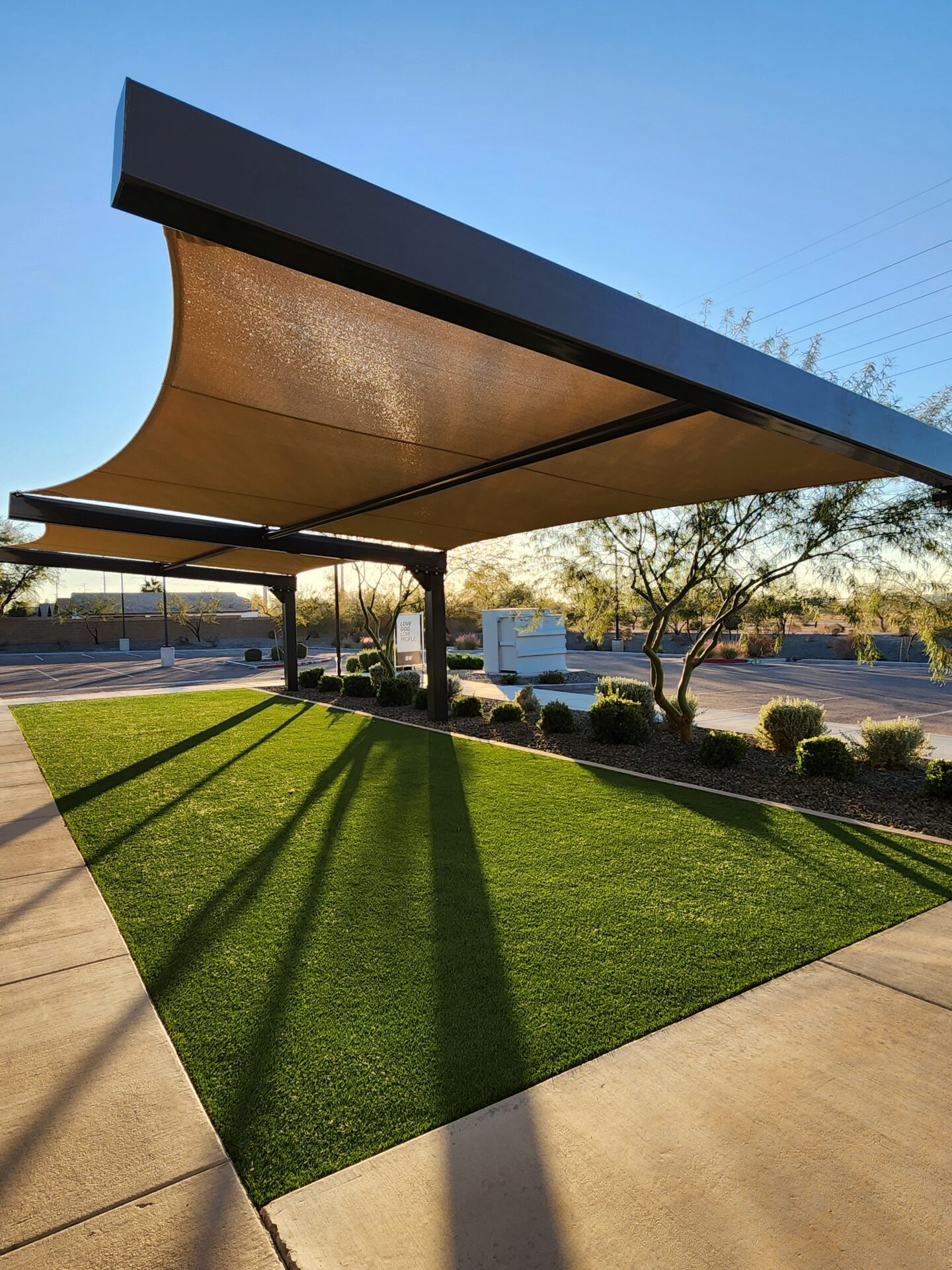
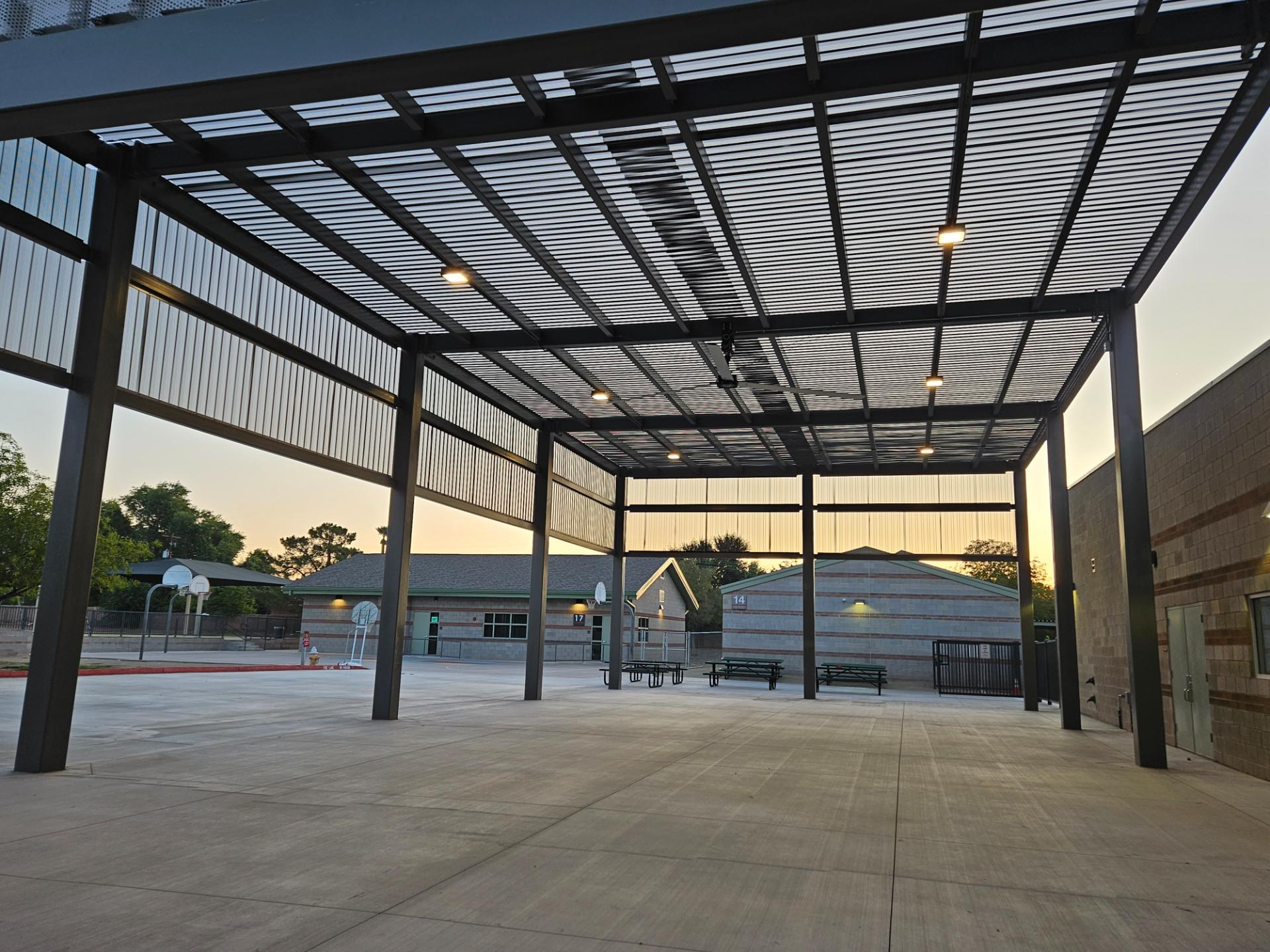
Choosing a hip over the other families comes down to one question: can a post land inside the space. If yes, the hip almost always wins on cost. If no, you are in cantilever territory. A cantilevered structure shades a parking aisle with no column between stalls, but it pays for that clear span with heavier steel and bigger footings, so it costs more per shaded foot than a hip covering the same area.
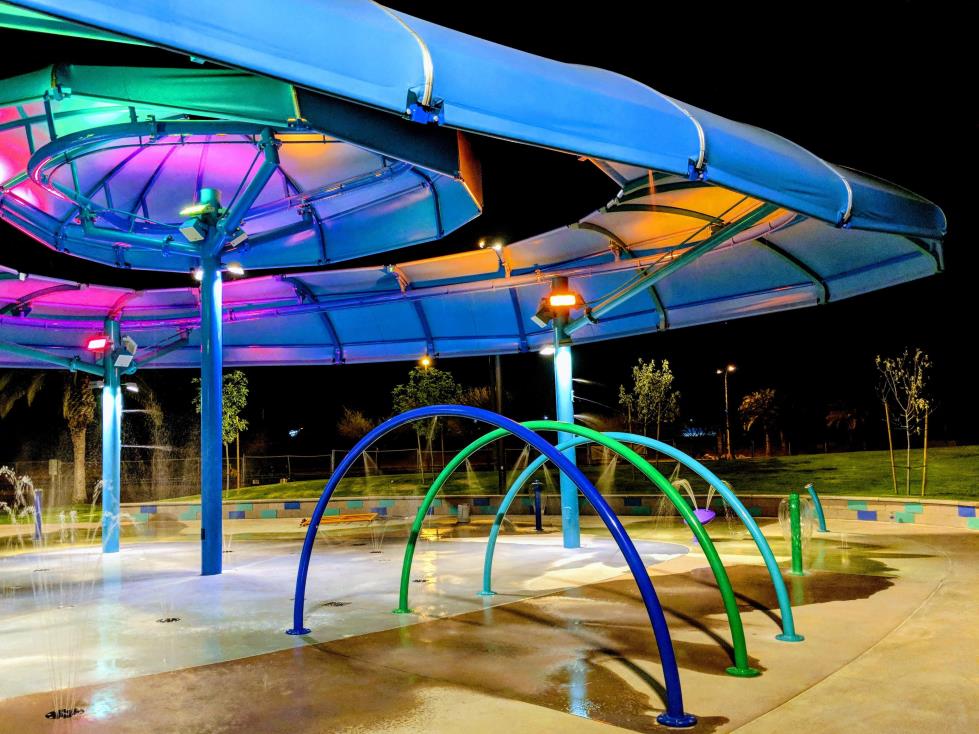
A hypar is the design pick: its warped, sculptural plane reads as architecture for entries, plazas, and HOA-reviewed common areas, and it sheds wind beautifully, but it covers less flat area for the price. Shade sails are lighter and cheaper than all of them, yet they cover smaller spans and must be re-tensioned. Put plainly, the hip is the workhorse, the cantilever is the parking-lot specialist, and the hypar is the showpiece. Most large flat coverage jobs end on the hip for the simple reason that nothing else shades a lunch court or a bleacher set for less.
Common mistakes and the honest caveats
The most frequent error is forcing a hip where posts cannot go. If the brief truly cannot tolerate an interior column, a hip is the wrong tool no matter how attractive the price, and a cantilever is the honest answer. The second mistake is undersizing: ordering a single bay for a footprint that really needs a grid leaves edges exposed to the low afternoon sun the structure was supposed to block.
Three caveats worth saying out loud. The fabric is consumable, not forever; plan on a re-cover inside that 10-15 year window, and budget for it rather than treating it as a failure. Wind ratings have limits, and an extreme haboob beyond the design speed can still damage any canopy, which is why the engineered number on the stamped drawing matters more than a marketing claim. Finally, Valley dust settles on the fabric and needs an occasional rinse to keep the weave breathing and looking right. When the cover finally wears out, a canopy replacement and repair reuses the standing steel and swaps only the skin, which keeps the next cycle far cheaper than a new build.
Explore Our Full Shade Structure Line
Want this structure quoted for your property?
Call (602) 265-0905 for a free assessment.
Frequently Asked Questions
Hip structure or cantilever, which should I choose?
Choose a hip if a support post can land inside the space, and a cantilever if it cannot. The hip shares its load across interior columns, so it shades large open areas like lunch courts and parks for less money per square foot. A cantilever buys a column-free zone, which is what you want over a parking aisle, but it costs more because the clear span needs heavier steel and deeper footings.
How much does a hip shade structure cost?
Cost scales with footprint, post height, and wind exposure rather than a flat per-unit price, so the honest answer comes from a site-specific quote. As a rule of thumb, a hip covers more shaded square footage per dollar of steel than any tensioned form, because the load shares across posts instead of cantilevering off one line. Adding bays to a grid is cheaper than stretching one extreme span.
How wide can a hip structure span?
A standard hip canopy spans roughly 20-40 ft per bay between posts, and larger sites add bays in a grid rather than forcing one giant span. For wider clear spans and taller clearances over a full court or drive-through, the MAX hip structure uses heavier members and deeper foundations to stretch the same four-slope geometry.
Do hip structures hold up to Arizona monsoons?
Yes, the peaked four-slope roof is built for it. The pitch lets rain and dust shed off four faces instead of pooling, and the sloped surface spills wind rather than catching it like a flat sail. Every hip is engineered to Arizona building code and ASCE 7 wind loads, with Valley design wind speeds around 90-115 mph, though microbursts beyond the stamped design speed can damage any canopy.
How long does the shade fabric last on a hip structure?
Knitted HDPE covers commonly carry 10-15 year warranties, and Phoenix UV sits at the demanding end of that window. Treat the fabric as a long-lived consumable on a permanent steel frame: when it finally fades or tears, a re-cover reuses the standing structure and swaps only the skin, which costs far less than a new build.