or call (602) 265-0905 — no-obligation, on-site.
MAX Hip Shade Structures
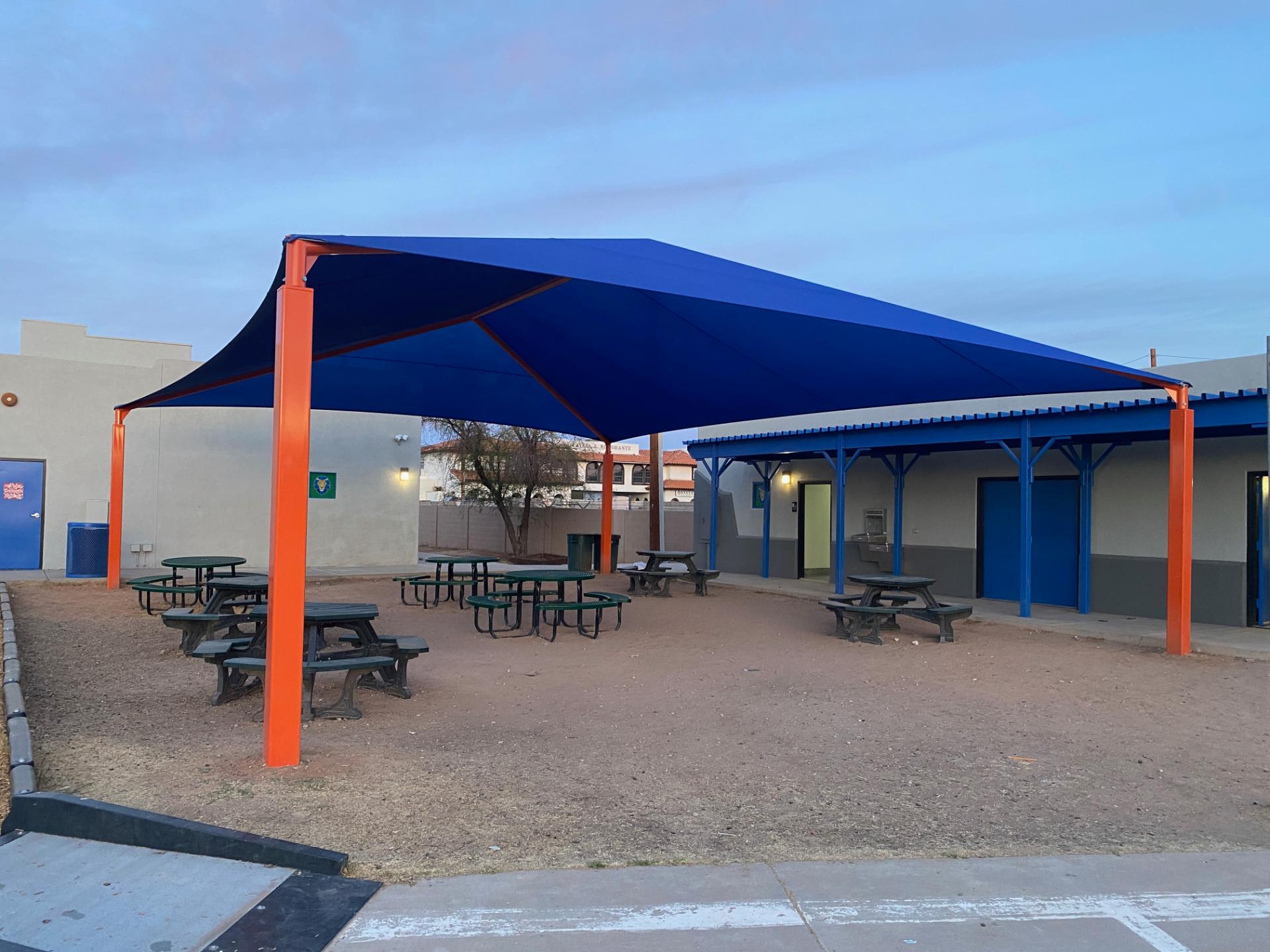
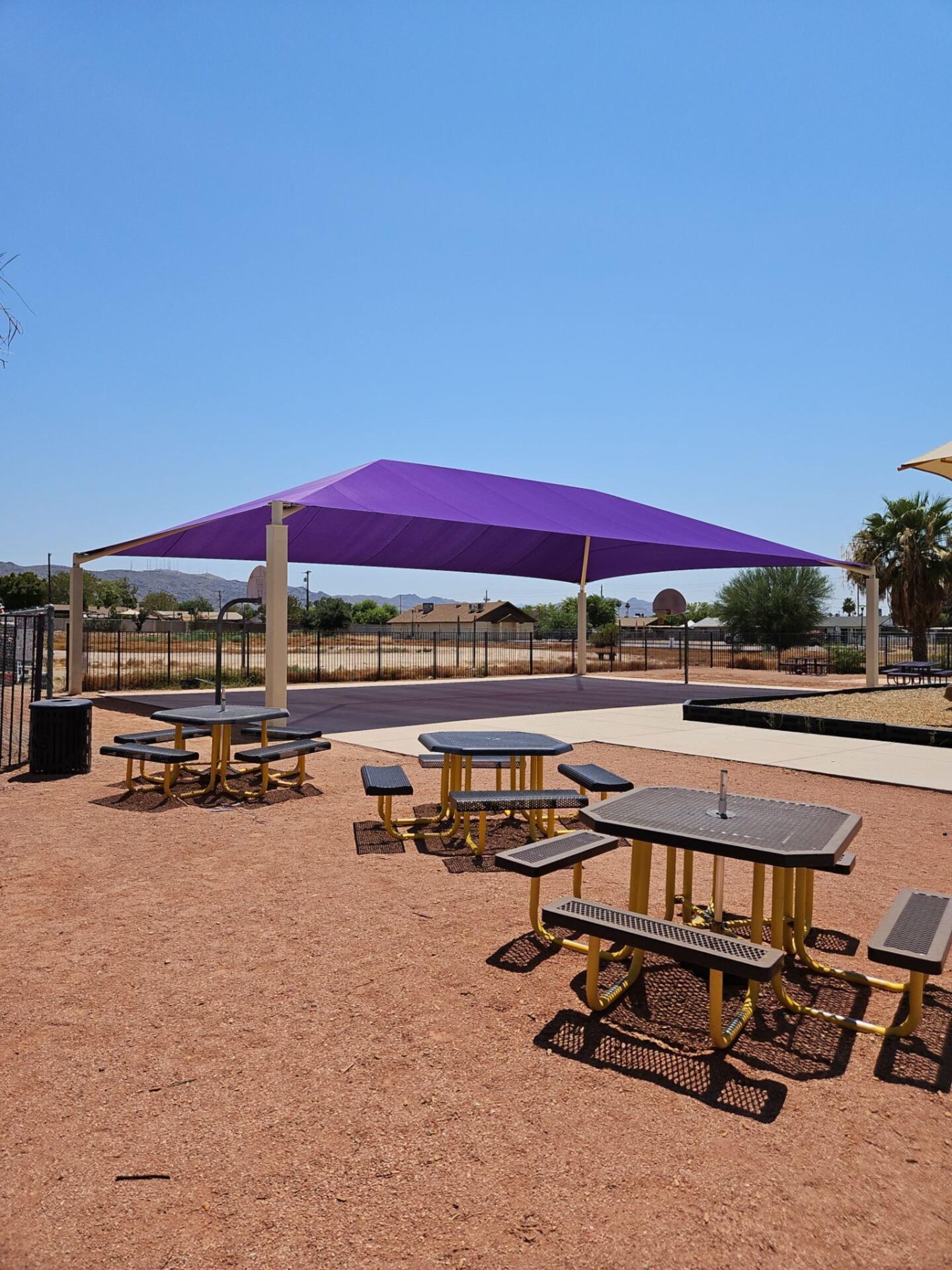
A MAX hip structure is an oversized hip canopy built with heavier steel, wider spans, and taller entry heights than a standard hip. It delivers continuous, uninterrupted shade over large footprints — full parking fields, big playgrounds, or event areas — where standard modules would need too many posts.
Since 1998
Designing & building Arizona shade
In-House Fabrication
Built at our Phoenix shop
Engineered & Permit-Ready
Stamped drawings for AZ wind loads
Free On-Site Quote
No-obligation project assessment
A MAX hip structure is the oversized, long-span version of a standard hip roof: the same four-sided pitched geometry, but built with heavier steel and deeper footings so a single canopy can clear bays of roughly 50-80 ft and cover wide fields with far fewer interior columns. You reach for it when a standard hip structure would need a forest of posts to span the area, and those posts get in the way of cars, play, or play-of-the-game. Total Shade has engineered and fabricated long-span steel from our Phoenix shop at 2331 W. Holly St for 25+ years, sizing every MAX frame to Arizona’s UV and monsoon gusts rather than a catalog default. The decision between MAX and standard hip is almost always about clear span, not looks.
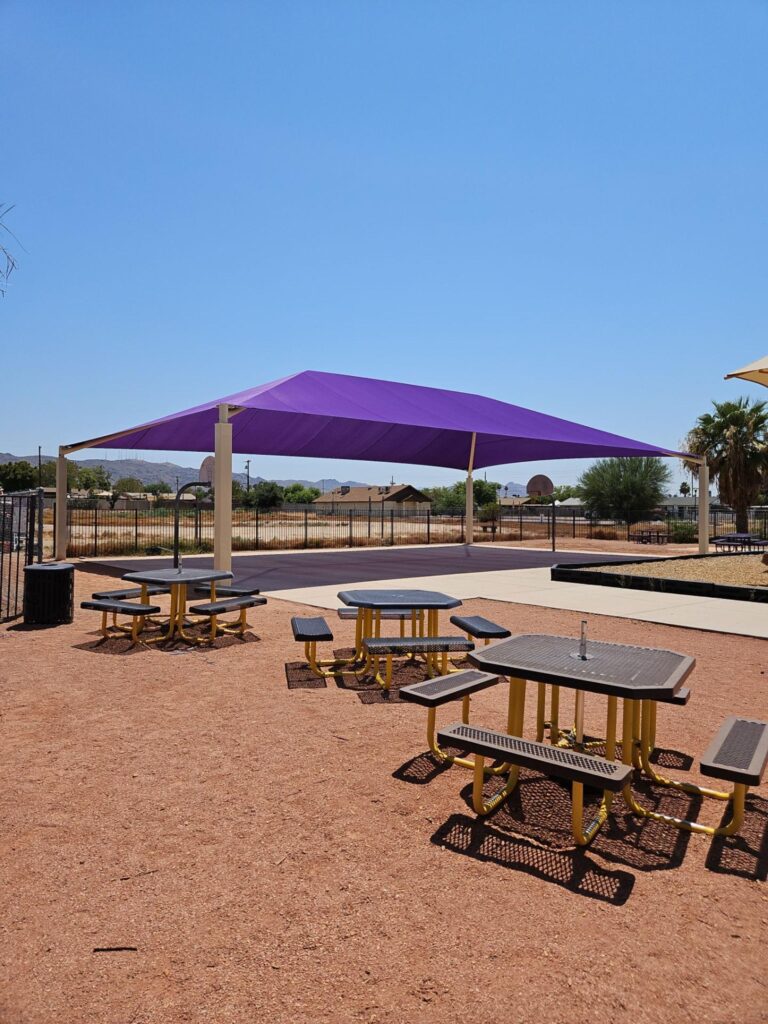
What a MAX hip is, and when the larger span earns its cost
A MAX hip structure exists for one job: covering a wide footprint under one continuous roof while keeping the interior nearly column-free. Where a standard hip canopy typically posts up every 20-30 ft, a MAX frame stretches structural bays to roughly 50-80 ft using deeper roof trusses, heavier steel members, and larger foundations. The result reads as one roof over an entire parking field or athletic area instead of a grid of smaller shades stitched together.
The cost premium is real: more steel per square foot and deeper footings push a MAX hip above a standard hip of the same area. That premium buys usable open floor, because every post you delete is a car space, a play zone, or a sightline you keep. If your space is under about 40 ft across and posts aren’t in your way, a standard hip is the smarter spend. The MAX earns its keep once the span outgrows what ordinary members can carry.
Large-area uses: parking fields, athletic areas, and big play
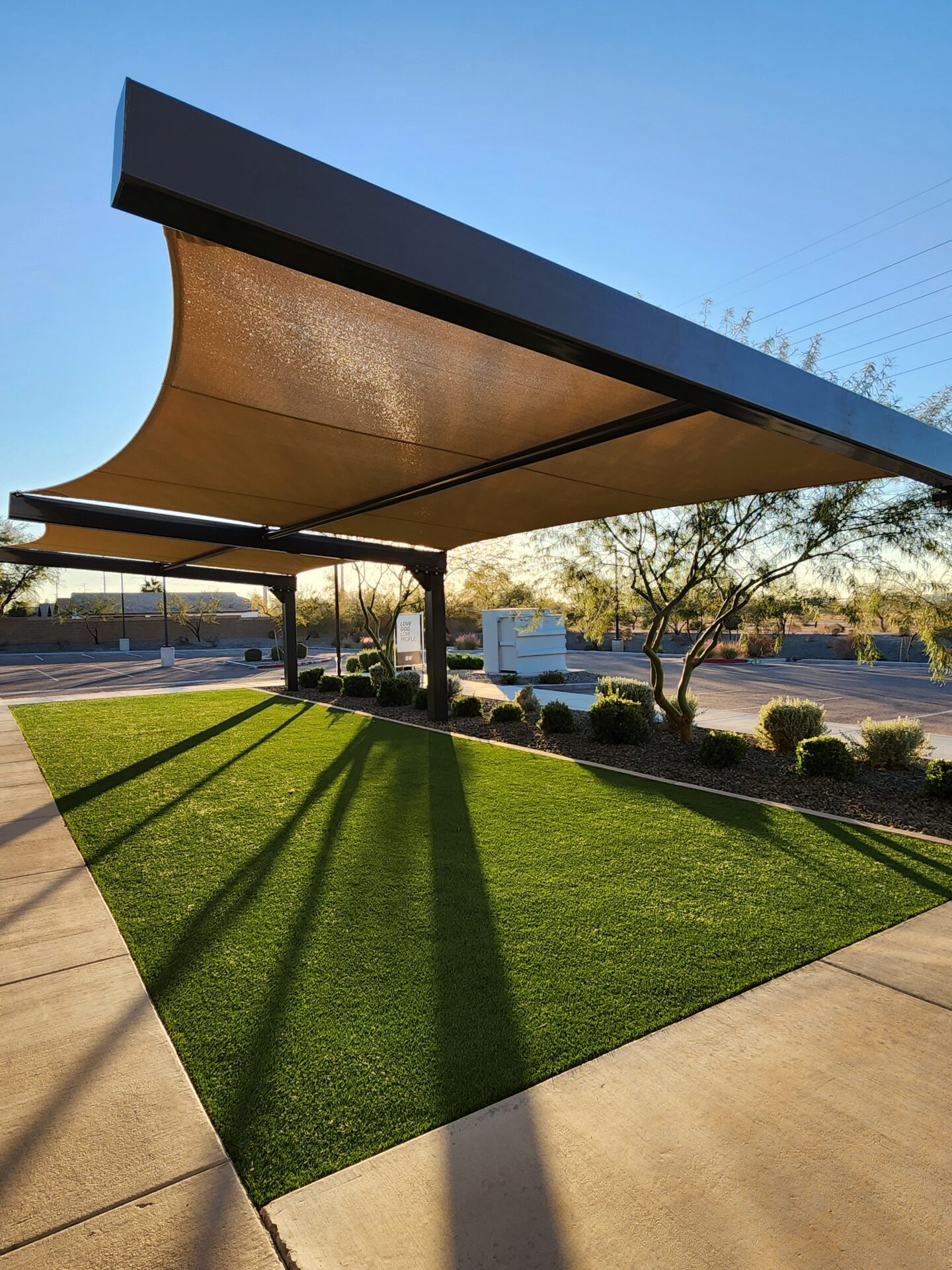
MAX hip structures fit the places where coverage is measured in hundreds of feet, not a single bay. Large parking fields are the headline use: a long-span hip can roof multiple rows of stalls and the drive aisles between them while keeping columns out of the turning paths, so a delivery truck or a parent in a minivan never threads between posts. For sites needing perimeter-only columns over a single aisle, a flat cantilevered structure is the better tool; the MAX hip shades the whole field at once.
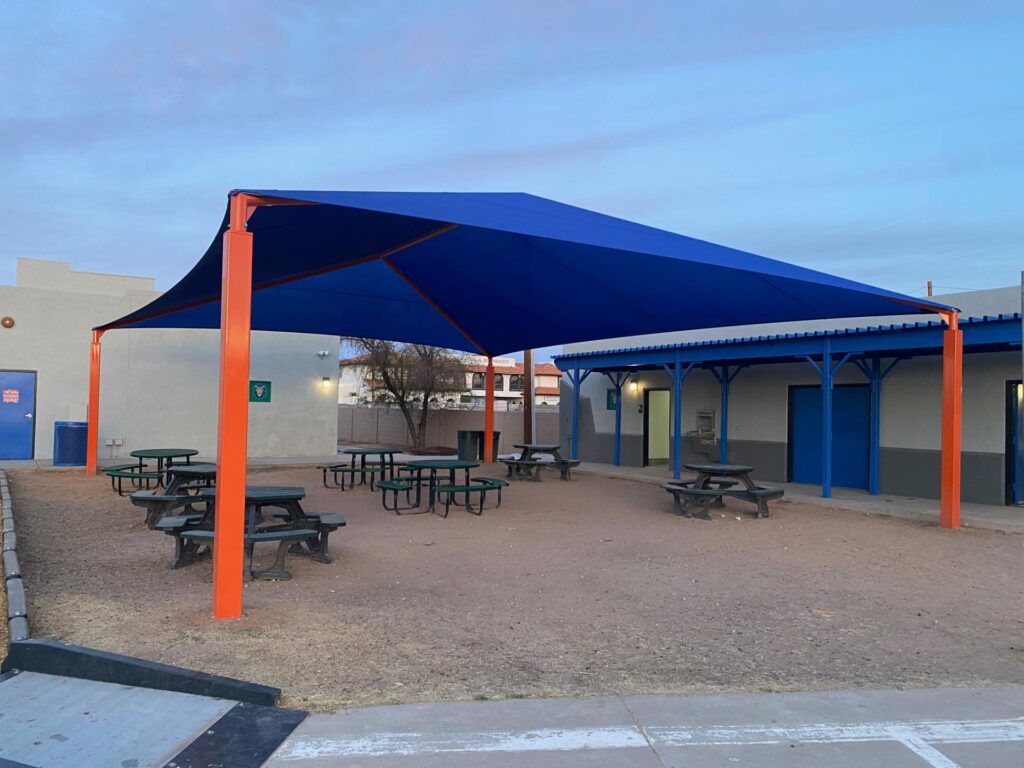
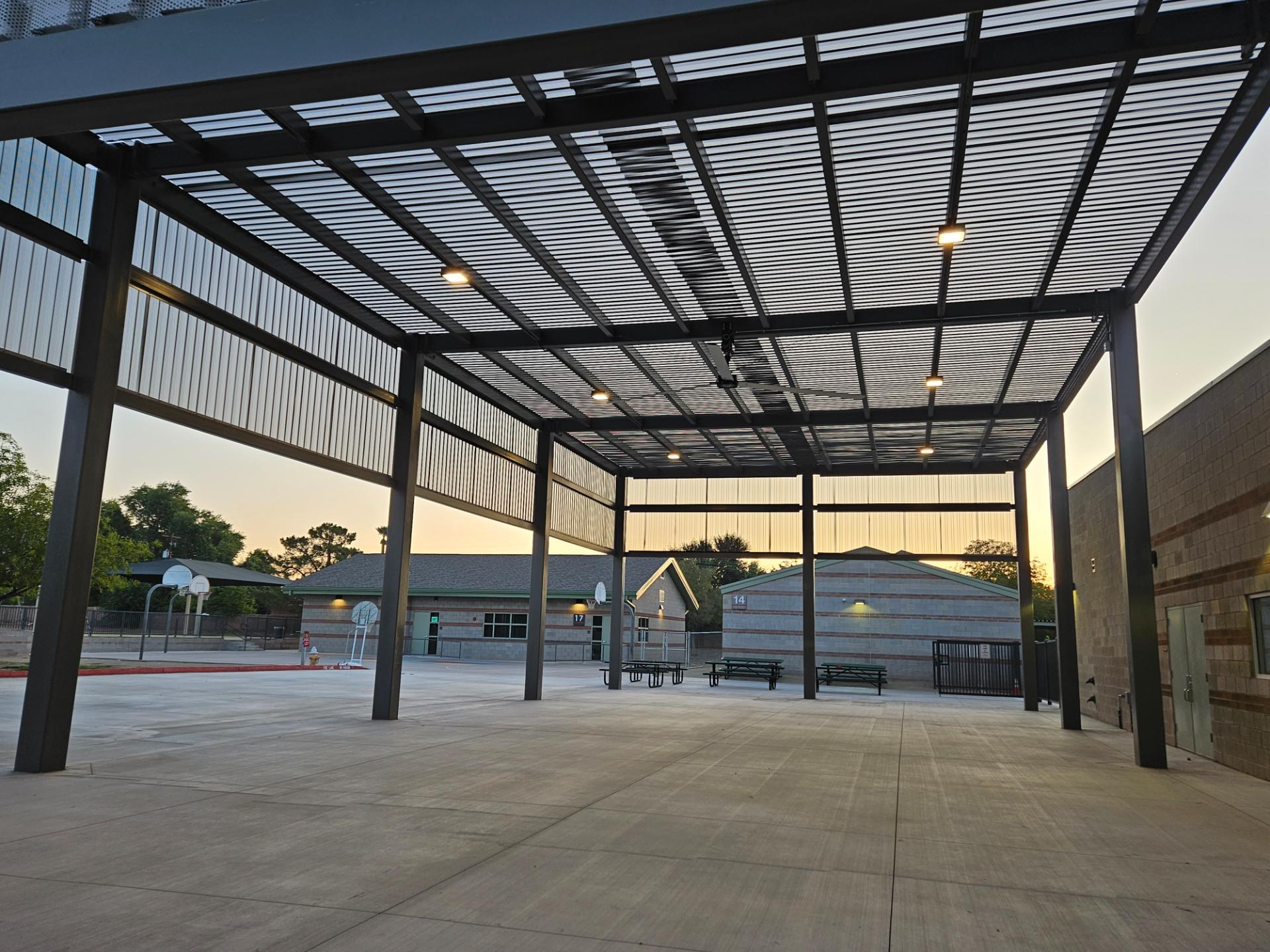
The same wide, tall, column-light envelope serves athletic and event areas. Big playgrounds get one roof over the entire equipment field instead of three small canopies with posts kids run into. Courts, practice slabs, and gathering areas get the high clearance a MAX hip provides, because the pitched roof can sit well above grade without crowding the floor. School lunch courts and park pavilions that have outgrown a standard hip are a steady source of MAX projects. When a footprint defies these patterns, a custom-built shade structure tunes the long-span frame to the exact lot.
Long-span engineering: trusses, members, and caliche footings
Spanning 50-80 ft without crowding the floor with posts is an engineering problem, not a fabric problem, and it’s solved at the steel. A MAX hip carries its wider bays on deeper roof trusses and heavier-gauge structural members than a standard hip uses, because the bending load on a beam climbs sharply as the span grows. That heavier frame is then anchored against far larger overturning and uplift forces, which is where the foundation does its quiet work.
In the Valley, that means drilled caissons that often run 6-10 ft deep, and on a long-span MAX frame they trend toward the deep end of that range and a larger diameter, because caliche, the cement-hard caliche layer under much of Phoenix, has to grip enough mass to keep a wide roof from levering itself out of the ground in a gust. Every MAX structure ships with engineered, stamped drawings sized to the specific site; the city handles plan review and inspection. The honest framing: the most expensive part of a long-span hip is the part you never see. Skimping on footing depth is the single fastest way to turn a 25-year canopy into a monsoon liability.
Materials and how a long span handles monsoon wind
A MAX hip runs the same two-material system as the rest of the line, powder-coated structural steel for the frame and knitted HDPE for the cover, but the larger sail area changes how wind is handled. The HDPE cover blocks roughly 90-99% of UV depending on weave density, which spares the cars, rubber play surfaces, and finishes beneath it the fade and brittle-cracking bare Arizona sun forces in a single season. The powder coat behaves more like a baked-on finish than brushed paint, resisting the chalking desert UV drives on cheaper coatings across a 25-year service life.
Wind is where span size matters most. A bigger roof catches more wind, so Maricopa County long-span structures are engineered to Arizona building code and ASCE 7 loads, where Valley design wind speeds run roughly 90-115 mph and monsoon microbursts can punch past 60 mph in minutes. The pitched four-sided hip roof helps, spilling wind toward the perimeter rather than trapping a flat pressure plane, but the real defense on a MAX frame is heavier steel and deeper footings absorbing the larger uplift. The fabric is the planned-consumable layer, carrying common 10-15 year warranties, so a re-cover inside that window is honest budgeting rather than a failure.
MAX hip vs standard hip vs cantilever
Three structures shade large outdoor areas, and the right one is decided by span and where columns can land, not by looks. The clearest way to read your own site:
- Standard hip structure: the most cost-effective coverage for footprints up to roughly 40 ft across, with posts every 20-30 ft. Interior columns are fine, and you want the lowest steel cost per shaded foot. This is the workhorse, and most lunch courts, bleachers, and walkways belong here.
- MAX hip structure: the same geometry stretched to 50-80 ft bays for extra-wide fields where a standard hip would need too many posts. You pay more per square foot to keep the interior nearly column-free over a large area, parking fields, big playgrounds, athletic spaces.
- Flat cantilevered structure: all load on a single perimeter post line, so a bay shades roughly 16-20 ft of depth with zero columns between parked cars. Right for one parking aisle; wrong for shading a whole field, where you’d line up many cantilevers and pay for many foundations.
Put simply: a cantilever clears posts out of a single lane, a standard hip is the budget choice when posts are welcome, and a MAX hip is what you build when the area is too big for a standard hip but too sprawling for a row of cantilevers. The rest of the catalog sits on the products hub.
Honest caveats on building this big
A long-span hip is the right answer less often than people expect, and saying so is part of the spec. Three limits decide whether MAX is overkill. First, it is not column-free, only column-light: even an 80 ft bay still lands posts at the perimeter and occasionally one interior line, so if you need a truly clear span with no posts anywhere in a drive aisle, a cantilever does that job and a MAX does not. Second, the cost curve is steep, because steel weight and footing size both climb faster than the span does; doubling a bay can more than double the framing cost, so oversizing ‘just in case’ is the most expensive mistake we talk clients out of.
Third, the same realities that limit every shade structure still apply here, only scaled up. The HDPE cover is a consumable, so plan a re-cover inside the 10-15 year window, and a larger roof means a larger cover to swap. Wind ratings have ceilings; an engineered MAX frame covers typical monsoon loads, not every freak gust on record. And the bigger the roof, the more dust it collects, so a rinse once or twice a year keeps grit from abrading the weave. If a standard hip, a few cantilevers, or a phased build covers your area for less, that’s the call we’ll make, and where a site genuinely needs the long span, the MAX is the structure built to carry it.
Explore Our Full Shade Structure Line
Want this structure quoted for your property?
Call (602) 265-0905 for a free assessment.
Frequently Asked Questions
When should I choose a MAX hip instead of a standard hip structure?
Choose a MAX hip when your footprint is too wide for a standard hip to span without crowding the area with posts, generally once it runs past about 40 ft across or you need bays in the 50-80 ft range. A standard hip posts up every 20-30 ft and shades the most square footage per dollar of steel, so it wins on smaller footprints where interior columns are acceptable. The MAX costs more per square foot but keeps a large field nearly column-free, which is the whole point of the upgrade.
What is the maximum span a MAX hip structure can cover?
A MAX hip is engineered for long-span bays in roughly the 50-80 ft range, and multiple bays can be combined to roof a parking field or athletic area hundreds of feet across under one connected roof. The exact clear span depends on the steel members, truss depth, and wind load the site has to carry, so the final number comes from the engineered drawings rather than a fixed catalog spec. For a truly post-free single aisle beyond what a hip allows, a flat cantilever is usually the better tool.
How much more does a MAX hip cost than a standard hip?
A MAX hip costs more per square foot than a standard hip because it uses heavier steel members, deeper roof trusses, and larger drilled caissons, often 6-10 ft deep, to carry the wider span. The premium isn’t fixed; it tracks how far you stretch the bay, since steel weight and footing size climb faster than the span itself. We price after reviewing the site layout, span, and post lines so the number reflects the actual structure rather than a per-square-foot estimate.
Can a MAX hip structure handle Arizona monsoon wind?
Yes, when it’s engineered to the site. Maricopa County long-span structures are designed to Arizona building code and ASCE 7 loads, where Valley design wind speeds run roughly 90-115 mph and monsoon microbursts can exceed 60 mph. A larger roof catches more wind, so the defense is heavier steel and deeper footings absorbing the extra uplift, plus the pitched hip roof spilling wind toward the perimeter. No design is rated for every freak gust on record, which is why footing depth and steel gauge are sized to the specific span.
Is a MAX hip structure ever overkill?
Often, yes, and that’s worth checking before you spec one. If your area is under about 40 ft across, or interior posts don’t get in your way, a standard hip covers it for less steel per shaded foot. If you only need one parking aisle cleared of columns, a flat cantilever does that more cheaply than stretching a hip. The MAX earns its premium specifically when the area is too large for a standard hip but too sprawling to economically line up a row of cantilevers.