or call (602) 265-0905 — no-obligation, on-site.
Shade Structure Cost in Arizona: Pricing Guide
What actually moves the number on a commercial shade structure in Arizona, and how to budget without getting surprised.
Commercial shade structures in Arizona typically run from a few thousand dollars for a small sail to tens of thousands for large hip, cantilever, or parking-lot systems. Price tracks footprint, post count, steel gauge, fabric vs metal, and footing and engineering — so projects are quoted per site, not by flat catalog price.
Since 1998
Designing & building Arizona shade
In-House Fabrication
Built at our Phoenix shop
Engineered & Permit-Ready
Stamped drawings for AZ wind loads
Free On-Site Quote
No-obligation project assessment
A commercial shade structure in Arizona can run from a few thousand dollars for a single small canopy to well into six figures for a large multi-bay parking system, because price tracks the structure, not a square-foot sticker. Five things move the number: how far the steel has to span, how much steel that takes, the grade of fabric on top, how deep the footings go in caliche ground, and how hard the site is to permit and reach. A 12 ft shade sail over a patio and a 200-car parking canopy are the same trade, different budgets by an order of magnitude. This guide lays out the real cost drivers and defensible budget tiers, then points to the product pages where each form’s spec lives. It does not quote prices, because an honest number comes from your site, not a chart.
What actually drives the price
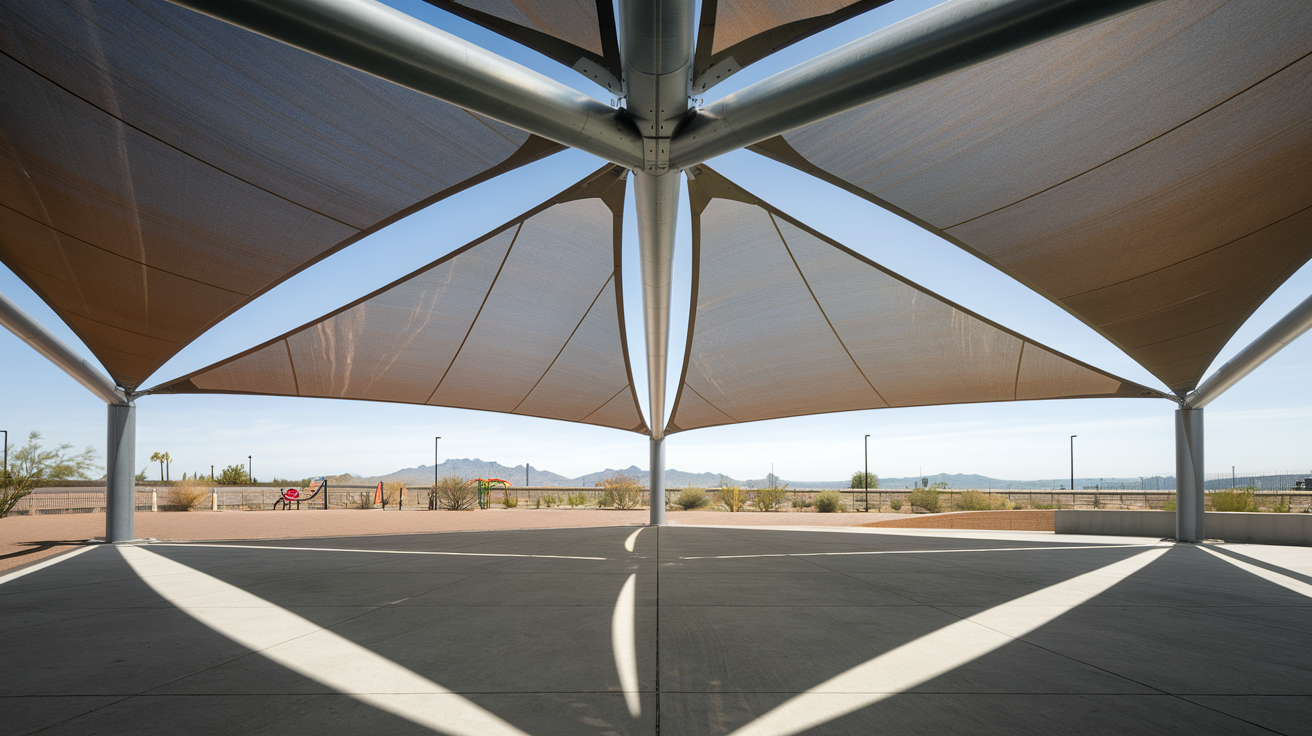
Seven variables settle most of the cost, and span sits at the top. Every extra foot a canopy clears without an interior post forces heavier steel and deeper foundations, so a structure that cantilevers 16-20 ft over a parking aisle costs more per shaded foot than a posted hip canopy covering the same area. Steel tonnage is the second lever and the one buyers underestimate: the frame, not the fabric, is where most of the money goes, and a design rated for higher wind carries more steel by definition. Fabric grade is the third, knitted HDPE covers block roughly 90-99% of UV depending on weave density, and denser, longer-warranty weaves cost more per square foot than thin economy cloth.
The last drivers live underground and on paper. Hard Valley caliche often pushes caissons 6-10 ft deep before they grip, and every structure needs stamped drawings sized to Arizona building code and ASCE 7 wind loads, where Valley design wind speeds run roughly 90-115 mph. Site access rounds it out: a tight lot or a live business you cannot close adds install labor.
Rough budget tiers by project type
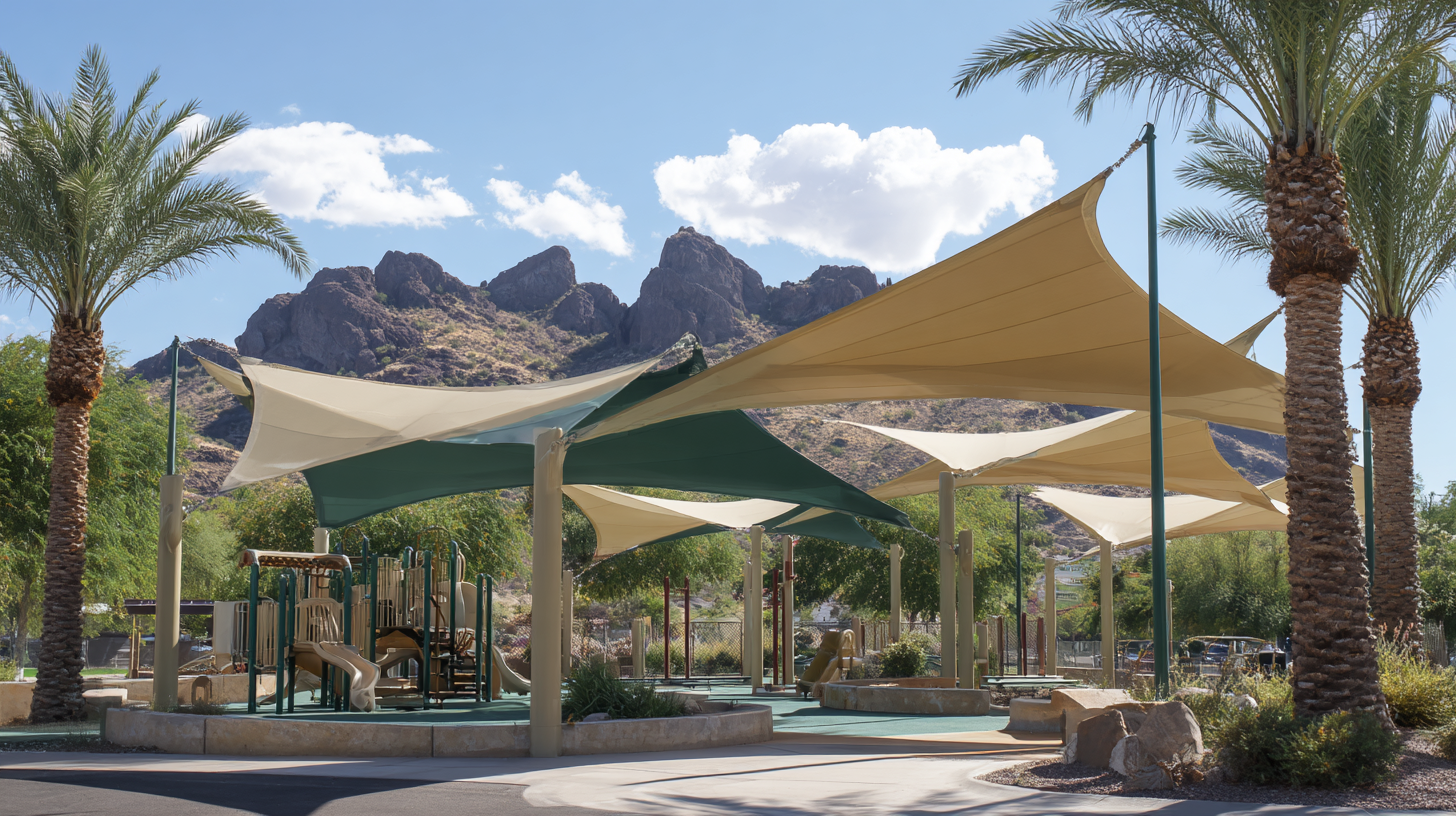
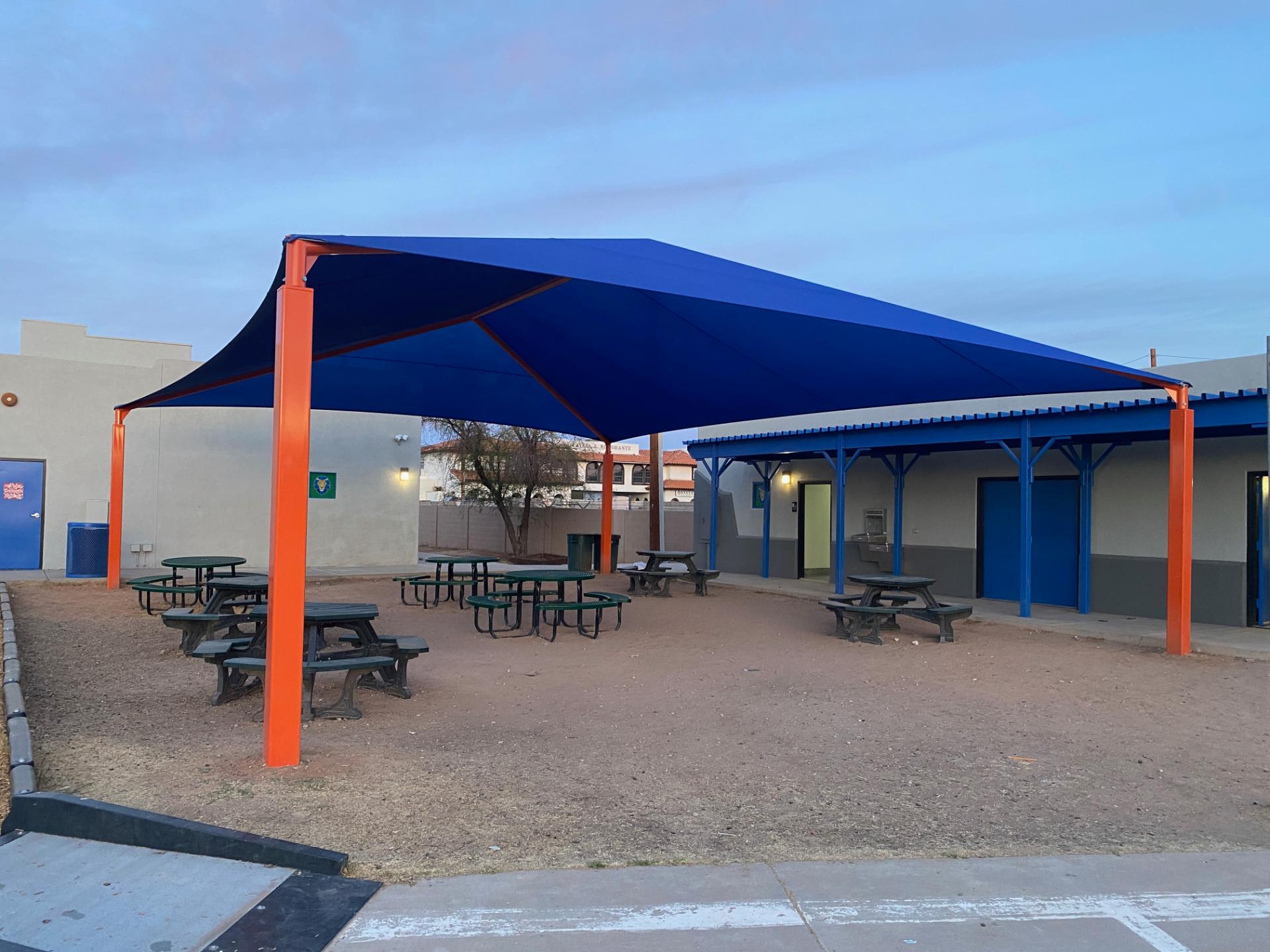
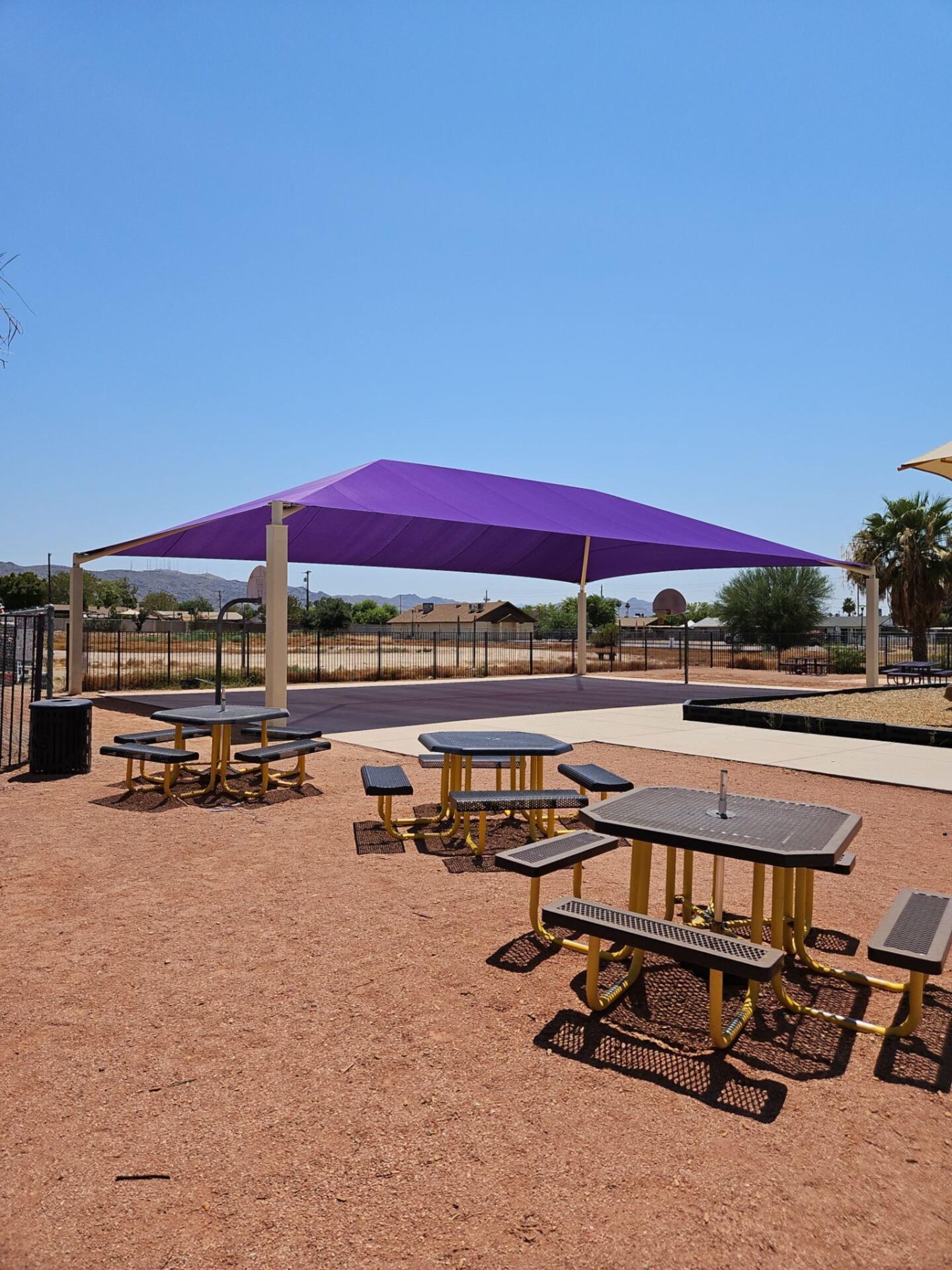
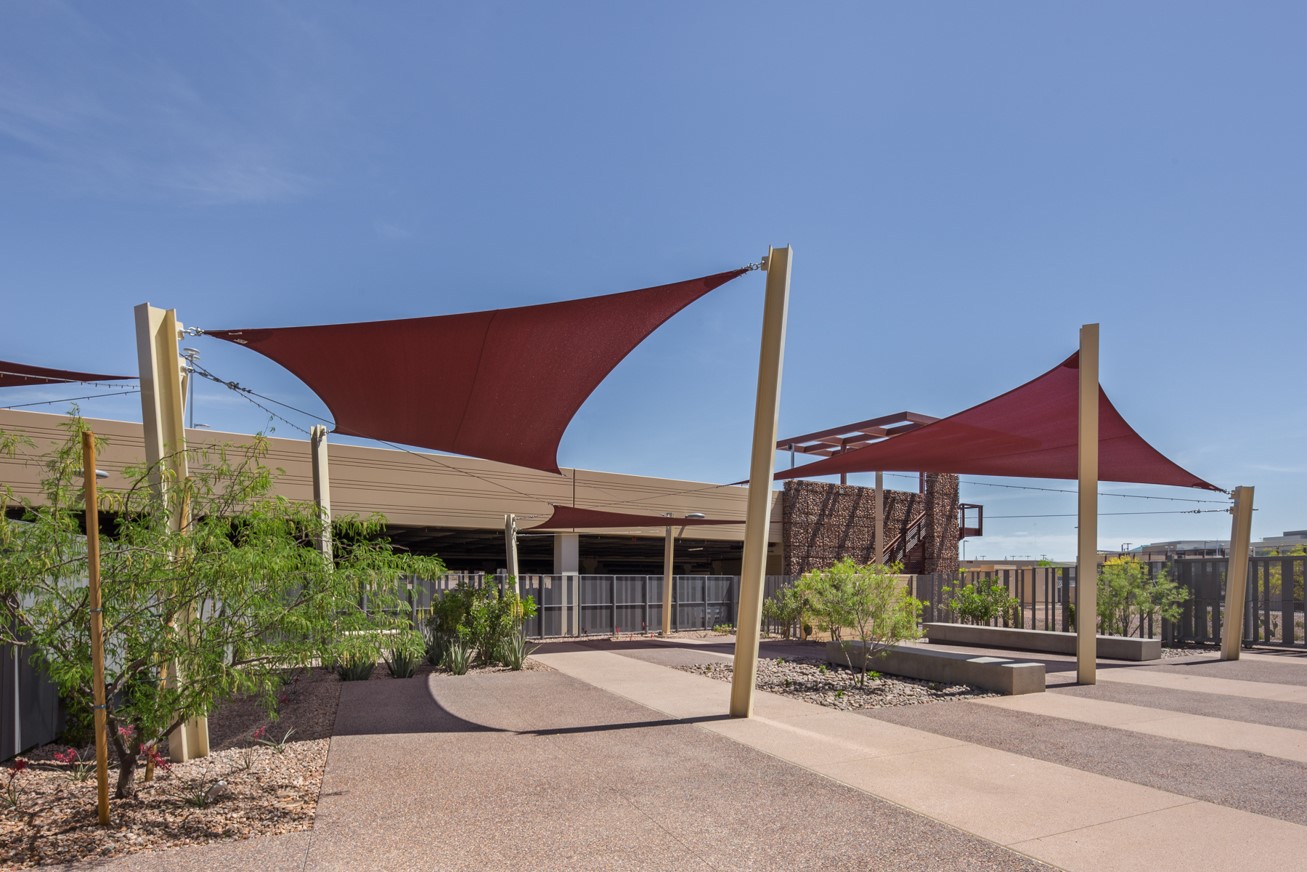
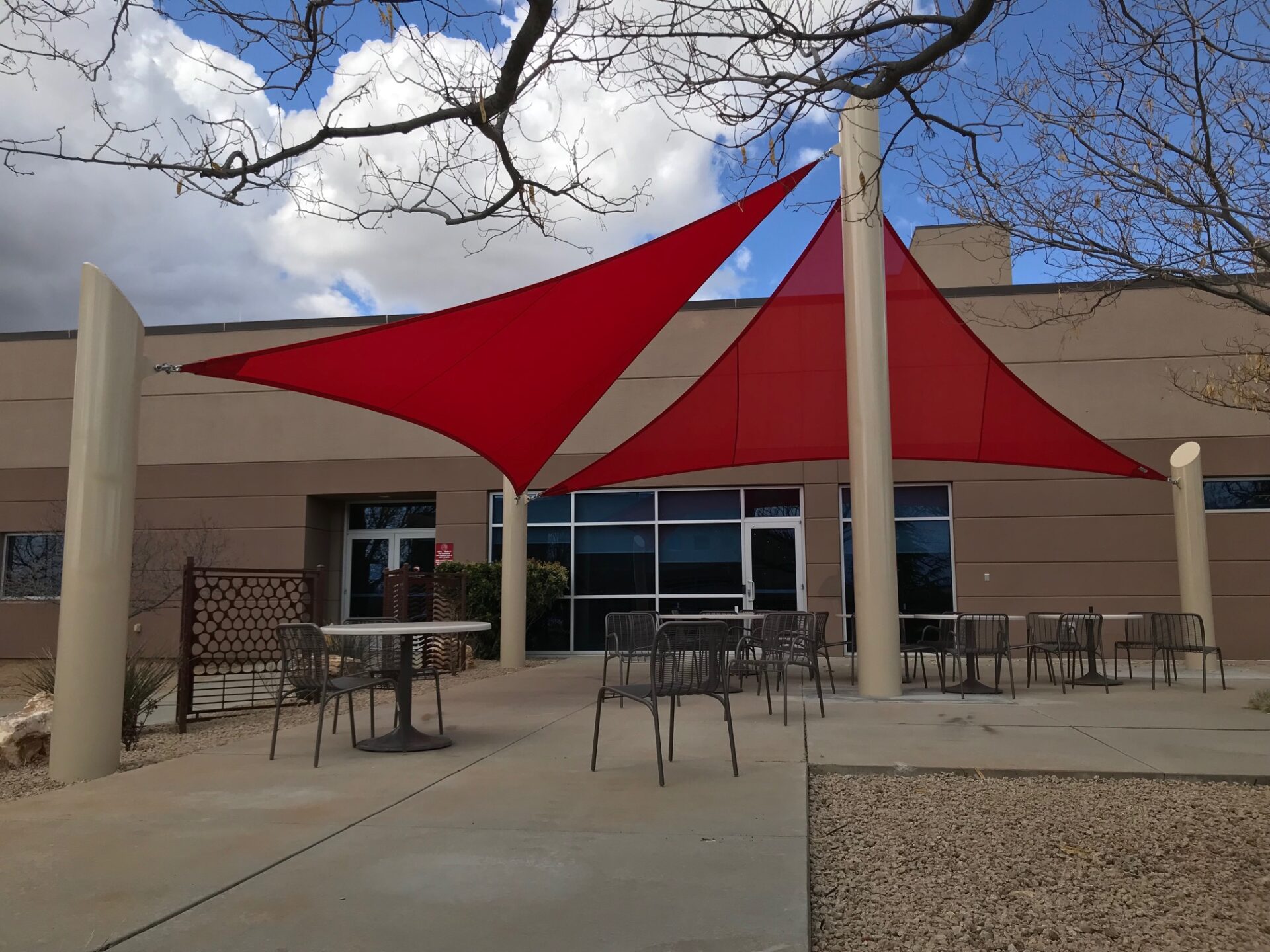
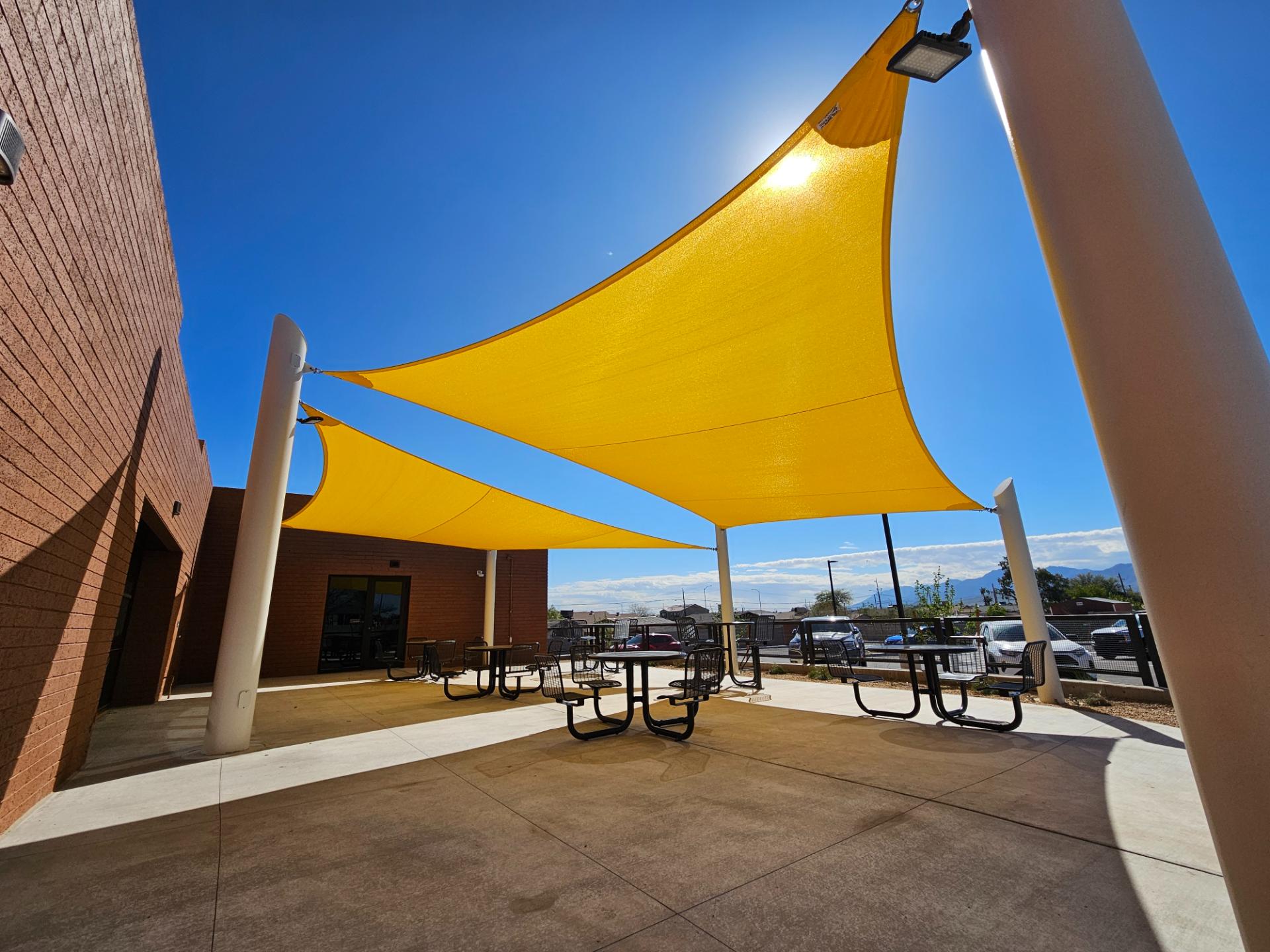
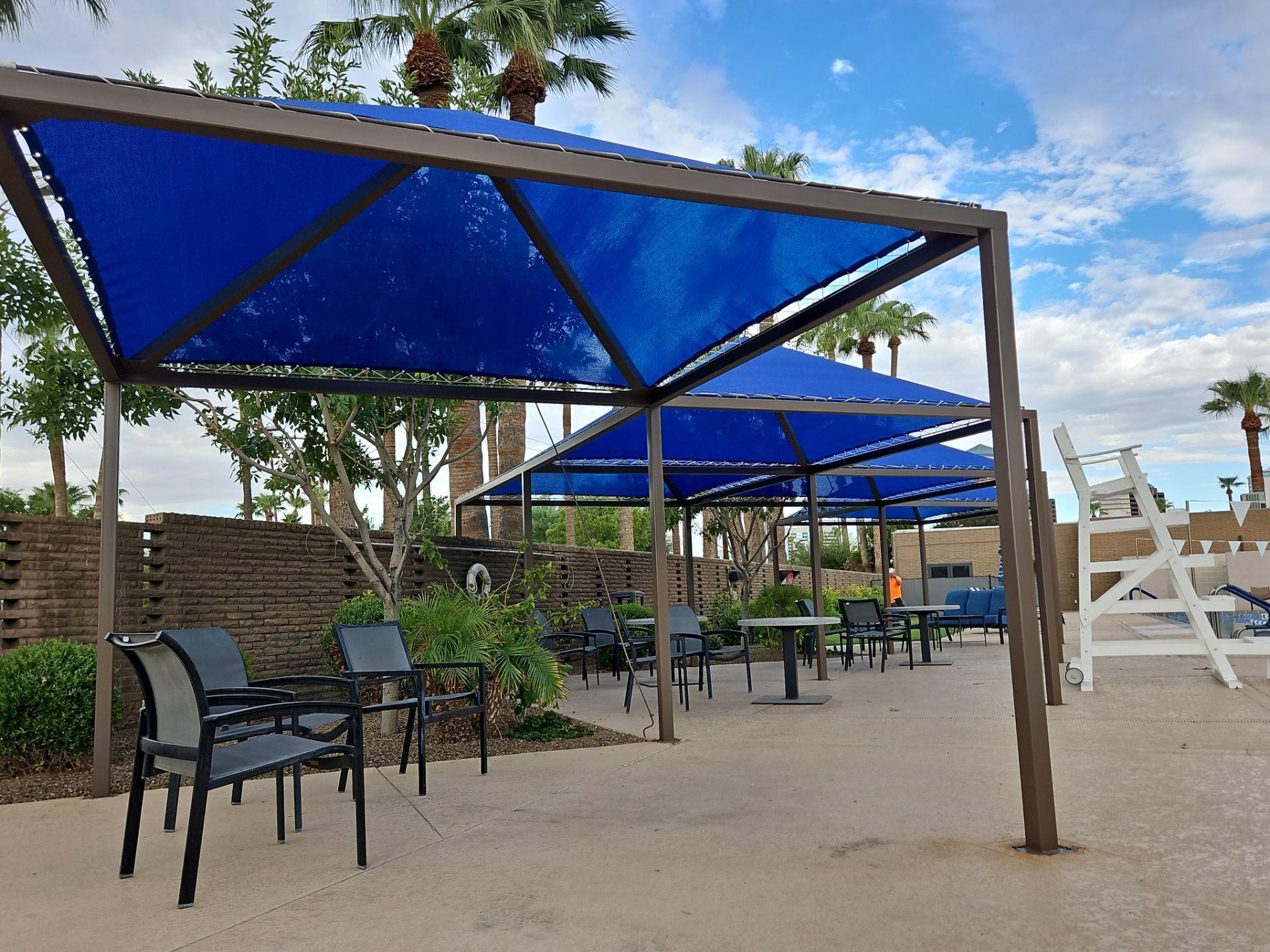
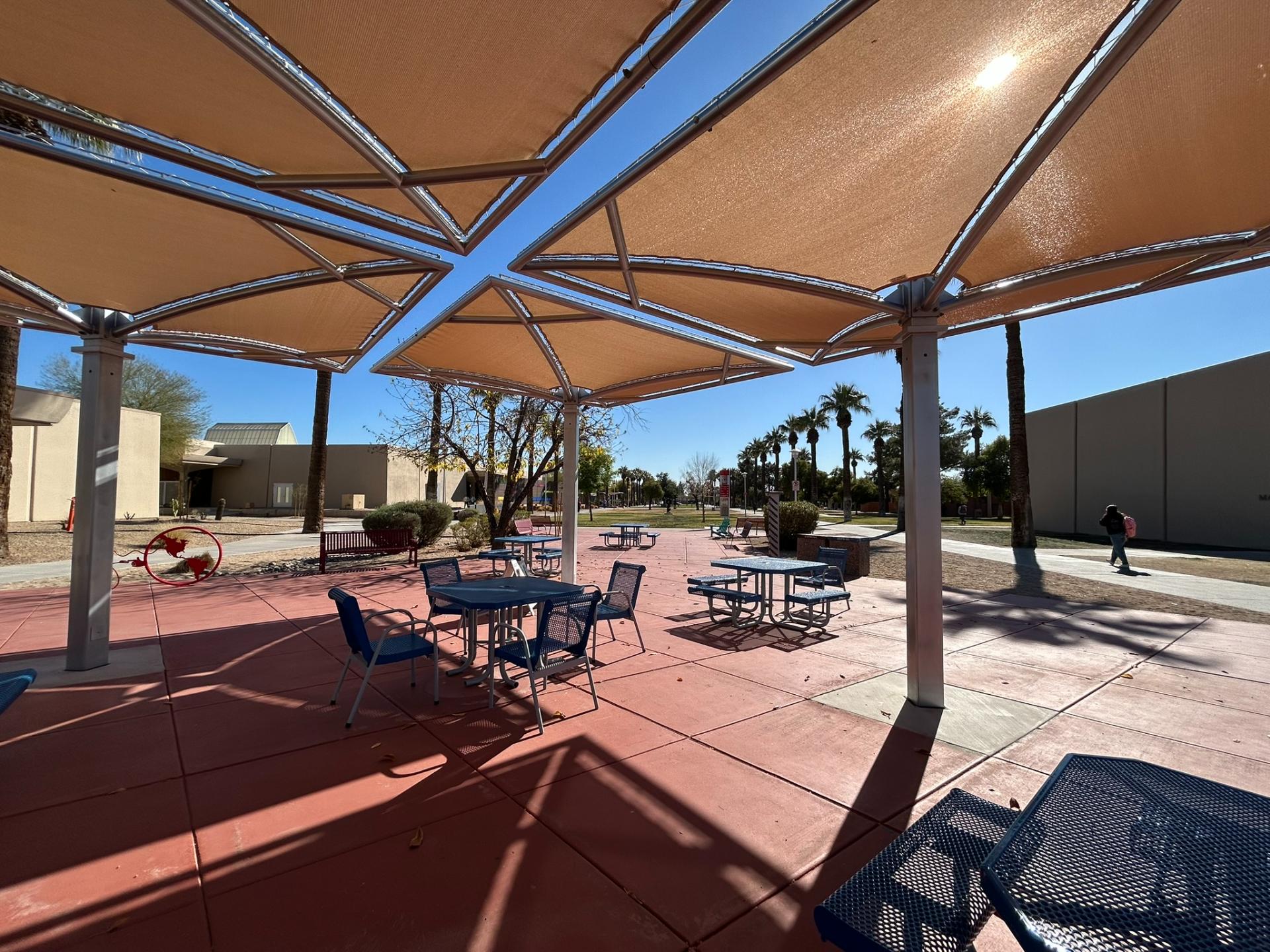
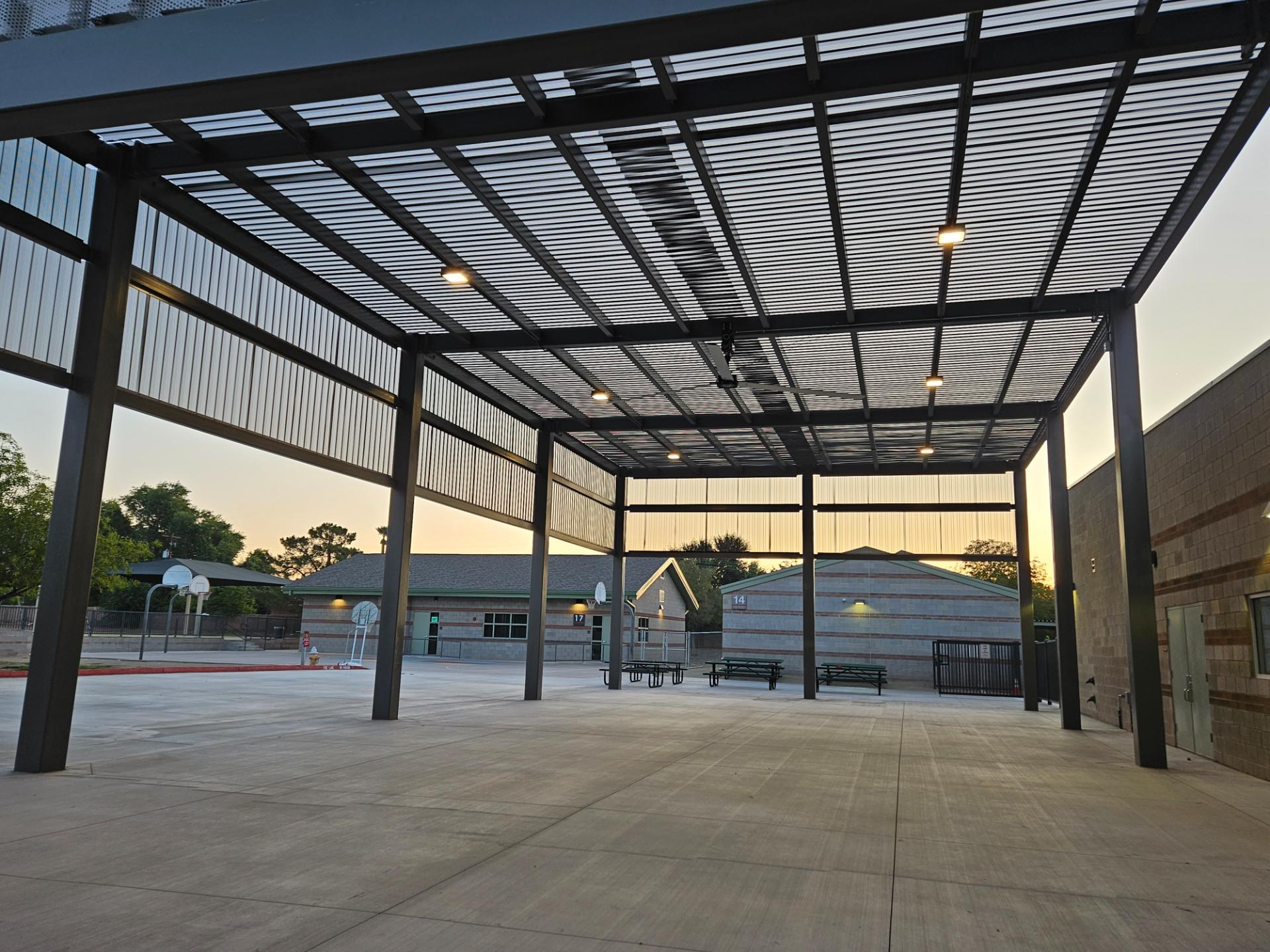
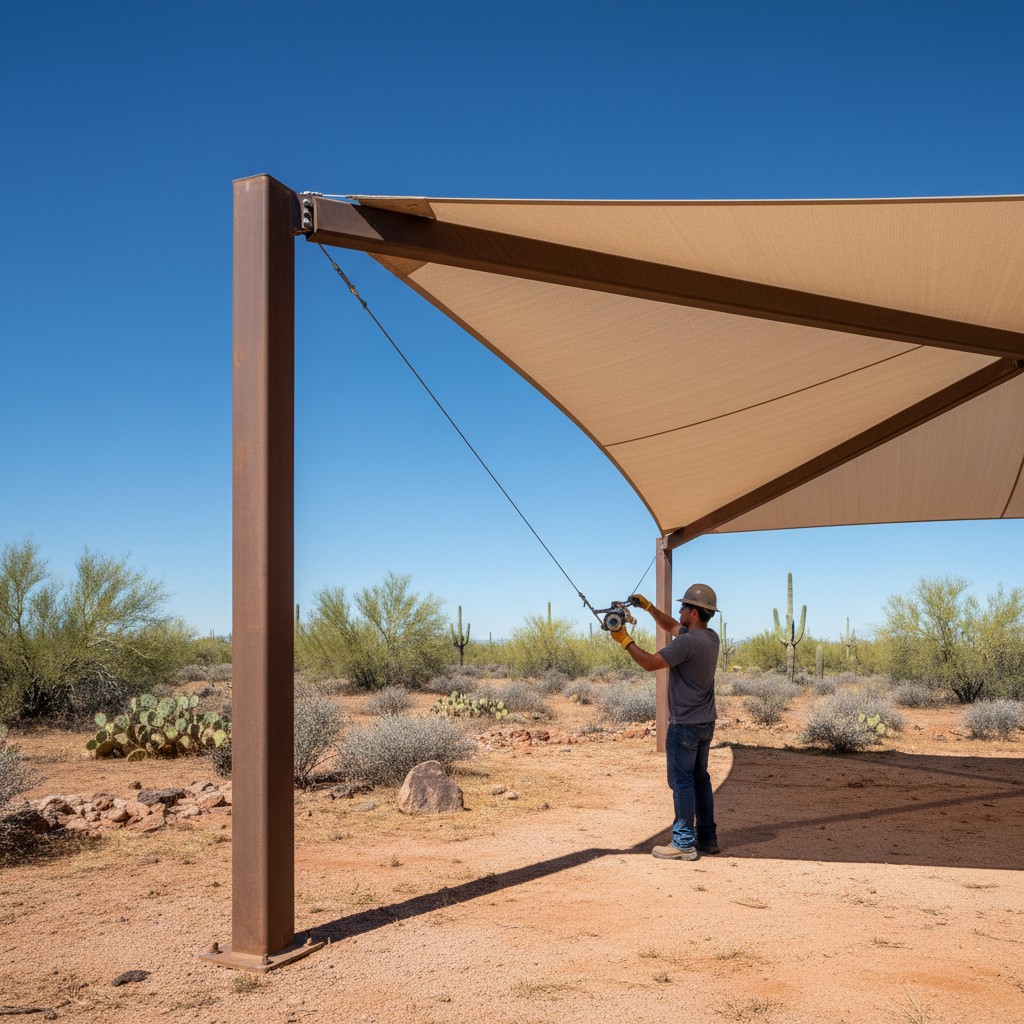
Budget tiers track scale and form, and the ranges below are industry-typical bands, not Total Shade quotes. At the entry end, a single small fabric structure, a 3-point tensioned sail over a patio or play area, commonly lands in the low-to-mid four figures because it anchors to three masts and uses minimal steel. A standalone flat cantilevered structure for one or two parking bays steps up from there, since the single post line carries the whole load. Mid-range projects, a hip structure over a lunch court or a handful of cantilever bays, typically run five figures, with the exact spot set by span and post count. Large jobs are where six figures appear: a full parking-lot shade system covering dozens to a couple hundred stalls multiplies bays, foundations, and steel until the total scales with the lot. The pattern holds, cost rises with clear span and tonnage faster than with shaded area, which is why two canopies of equal square footage can differ 30-50% in price. A custom-built structure can fall anywhere on this map depending on what the site demands.
What’s actually included in a real quote
A defensible quote covers far more than fabric and posts, and reading the line items is how you tell a real proposal from a lowball. The number should account for stamped engineering drawings, structural steel sized to the wind load, powder-coat finish, the HDPE cover, foundation work priced to actual caliche depth, install crew, and the permit-submission package. Foundations alone can swing a budget, because caissons 6-10 ft deep cost real concrete and drilling time a thin quote quietly omits. City review and inspection fees usually sit outside the quote, billed by the municipality, not the builder. If a bid is dramatically cheaper than the rest, the gap is almost always hiding in foundation depth, steel weight, or fabric grade, the three places cost cuts do the most long-term damage.
How to compare proposals fairly
Compare proposals on engineering spec, not headline price, because two bids for the same footprint can differ by design choices you cannot see in a total. Line them up on five points: clear span and post layout, steel gauge and total tonnage, fabric weave and its warranty (commercial HDPE warranties commonly run 10-15 years), foundation depth, and the design wind speed the structure is rated to. A canopy engineered to 115 mph carries more steel than one rated to 90 mph, so a cheaper bid may simply be a lighter structure, not a better deal. Watch the apples-to-oranges traps too: a bid covering fewer square feet should cost less, thin economy cloth blocks less UV and wears into an early re-cover, and a quote that excludes stamped drawings has quietly pushed the engineering cost onto you. When every proposal lists the same span, tonnage, fabric, foundation, and wind rating, price compares cleanly and the spread usually narrows fast.
Ways to control cost without gutting the structure
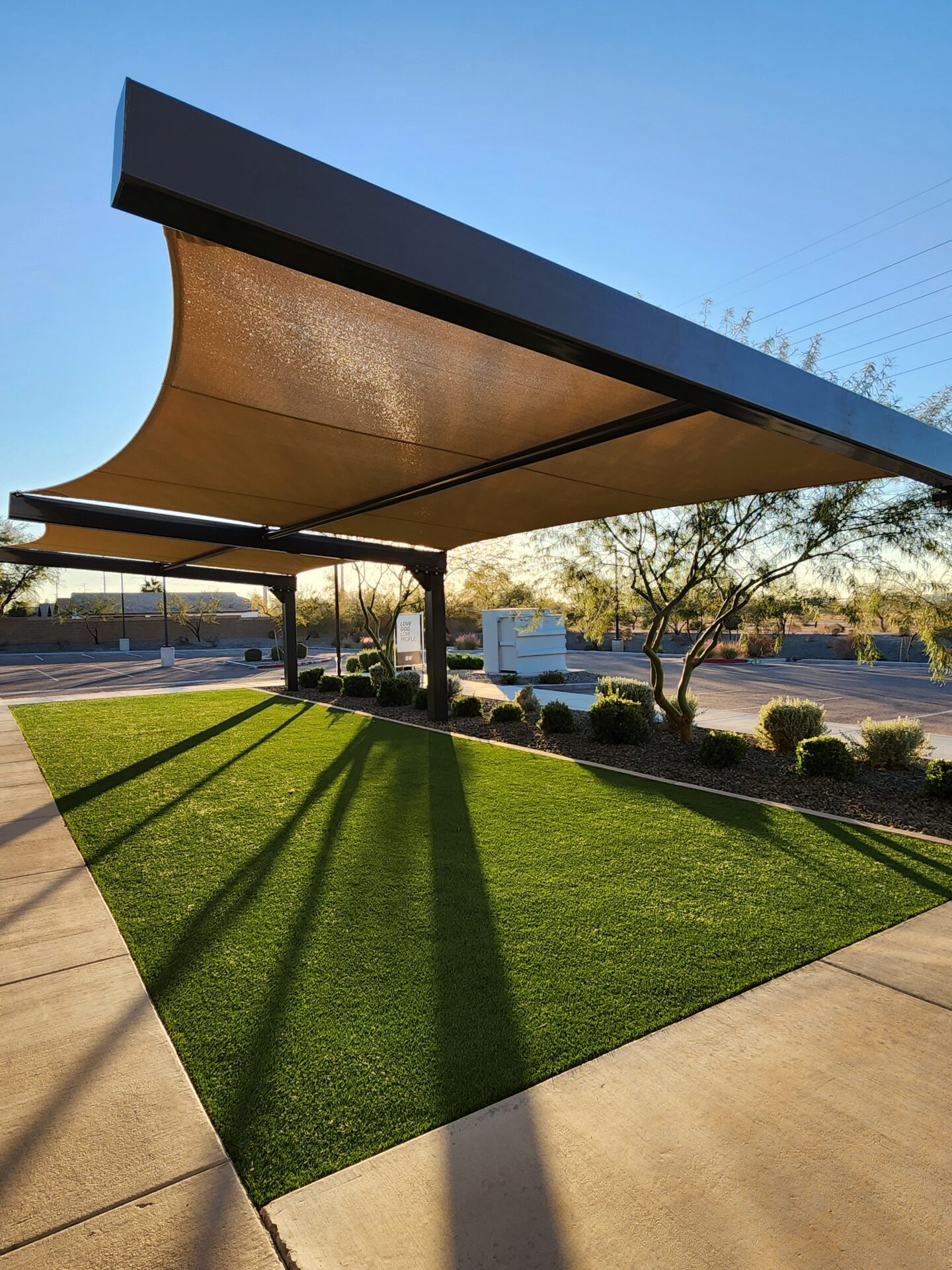
You can lower a shade budget without cutting the steel that keeps it standing, and the smartest savings are in geometry, not gauge. Choosing a posted hip structure over a cantilever where columns are acceptable is the biggest single lever, because spreading the load across interior posts shades more square footage per dollar of steel than carrying it all on one post line, and standardizing on repeated bay sizes across a large lot drives the per-bay cost down by cutting engineering and fabrication time. Phasing is the other practical move: shade the highest-value rows first, then add bays as budget allows, spreading a six-figure parking project across two or three seasons. Where the existing steel is sound, a re-cover beats a teardown and keeps cost far below a new structure. What does not pay off is shaving foundation depth or dropping to thin economy fabric, both trade a small upfront saving for a structure that fails or fades inside 5 years instead of lasting 15. Browse the full line on the products page or the guides hub to match a form to your budget before you scope the project.
Honest caveats on any estimate
Any number you see before a site visit is a planning band, not a quote, and treating it otherwise is how projects blow their budgets. Three site realities move the final figure most: caliche depth, since Valley ground can demand caissons anywhere from 6 to 10 ft deep until a soils condition is known; the wind load the jurisdiction requires, where a higher design speed adds steel a generic ballpark cannot predict; and access, since a live parking lot you cannot close adds install labor no chart captures. The fabric is also a consumable, not a permanent finish, so honest budgeting plans a re-cover inside that 10-15 year warranty window, and Arizona’s UV sits at the demanding end of that range. None of this is a reason to delay, it is the reason a real quote comes from your layout and soils, not a price list. With 25+ years fabricating in-house at our Phoenix shop, the fastest path to an accurate number is a site walk, and from there the budget tiers above stop being ranges and become a line-item proposal you can hold a builder to.
Shade Structures We Build
Ready to talk through your project?
Call (602) 265-0905 for a free assessment.
Frequently Asked Questions
How much does a commercial shade structure cost in Arizona?
It ranges widely because price tracks the structure, not a flat square-foot rate. A single small fabric sail can land in the low-to-mid four figures, a mid-size hip canopy or a few cantilever bays typically runs five figures, and a large multi-bay parking system covering dozens to a couple hundred stalls can reach six figures. Those are industry-typical bands; an accurate figure comes from your site’s span, soils, and wind requirement, so we quote after a site walk rather than off a chart.
What affects the price of a shade structure the most?
Clear span and steel tonnage move the number most, because every foot a canopy spans without an interior post forces heavier steel and deeper foundations. After that come fabric grade (denser, longer-warranty HDPE costs more), foundation depth in caliche (caissons often run 6-10 ft deep), the design wind speed the structure is engineered to (roughly 90-115 mph in the Valley), and site access. Two canopies of equal shaded area can differ 30-50% on these factors alone.
What is the cheapest shade option for a commercial site?
For a small footprint, a 3-point tensioned fabric sail is usually the lowest-cost form, since it anchors to three masts and uses minimal steel. For larger flat coverage, a posted hip structure shades the most square footage per dollar because the load spreads across interior posts instead of cantilevering off one line. The catch is that the cheapest form is only cheapest where its post layout fits the site; a hip canopy is wrong for a parking aisle that cannot tolerate a column between stalls.
Can I phase or finance a large shade project?
Yes, phasing is a common way to spread a six-figure parking project across two or three seasons. Shade the highest-value or customer-facing rows first, then add bays as budget allows; standardizing on repeated bay sizes keeps the per-bay cost down across phases. Designing the full layout up front means each phase ties cleanly into the next instead of being re-engineered. Talk through phasing during the site walk so the structure is planned as one system built in stages.
How do I get an accurate quote instead of a ballpark?
Accuracy requires a site visit, because the three biggest cost variables, caliche foundation depth, the required design wind load, and site access, cannot be read from a satellite image. A real quote names the clear span, steel gauge, fabric weave and warranty term, foundation spec, and who pulls the permit, rather than one round number. Have your lot dimensions, post-placement constraints, and any HOA or municipal review requirements ready, and the budget tier turns into a line-item proposal.