or call (602) 265-0905 — no-obligation, on-site.
Commercial Shade Structures Across Arizona
Engineered commercial shade designed, built, and installed across the Phoenix metro.
Since 1998
Designing & building Arizona shade
In-House Fabrication
Built at our Phoenix shop
Engineered & Permit-Ready
Stamped drawings for AZ wind loads
Free On-Site Quote
No-obligation project assessment
Total Shade designs, fabricates, and installs commercial shade structures across the Phoenix metro from our shop at 2331 W. Holly St, with 25+ years engineering steel frames and HDPE covers against Arizona’s two hardest tests: relentless UV and monsoon wind. Knitted HDPE shade fabric blocks roughly 90-99% of that UV, and our frames are engineered to Arizona building code and ASCE 7 loads, where Valley design wind speeds run about 90-115 mph. From Surprise to Queen Creek we cover schools, parking lots, resorts, sports complexes, and distribution yards. The work is done in-house, which keeps the steel, the engineering, and the install under one roof instead of three.
Why Valley properties need engineered shade, not a tarp
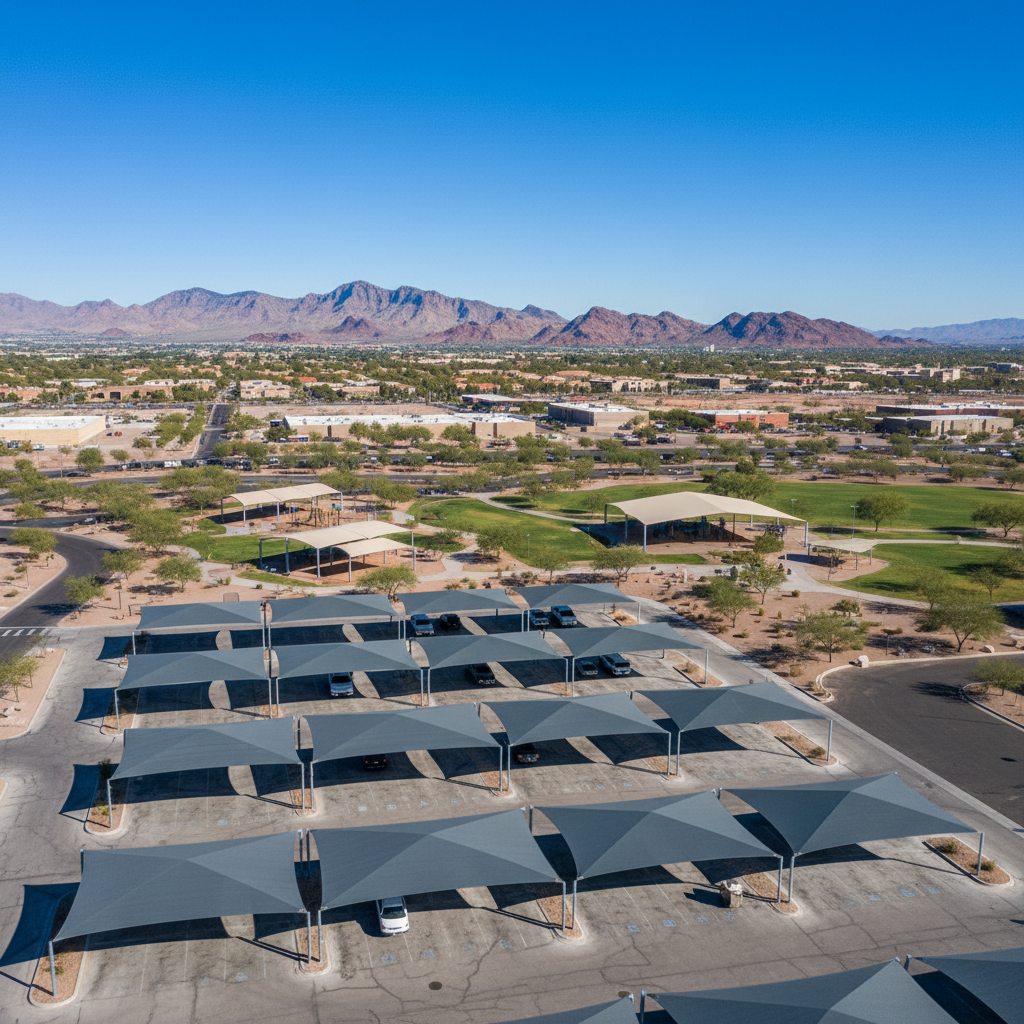
Two desert forces decide whether a shade structure lasts 15 years or fails in 3: UV that degrades unprotected materials within a few summers, and monsoon microbursts that can punch past 60 mph in minutes. A patio umbrella or a big-box tarp survives neither. Knitted HDPE shade fabric blocks roughly 90-99% of UV depending on weave density, which keeps paint, dashboards, playground rubber, and patio furniture from the fade and brittle-cracking that bare Arizona sun forces in a single season.
The wind side is where engineering earns its keep. A canopy aimed only at sun behaves like a sail the first time a haboob rolls through, so frames are sized to ASCE 7 wind loads with foundations set deep enough to hold. Valley design wind speeds land roughly in the 90-115 mph band, and caliche-heavy ground often pushes caissons 6-10 ft deep before they grip. That foundation work is invisible once the lot is paved, and it is the biggest reason an engineered structure outlives a bargain one.
What we build, matched to how a property actually uses shade
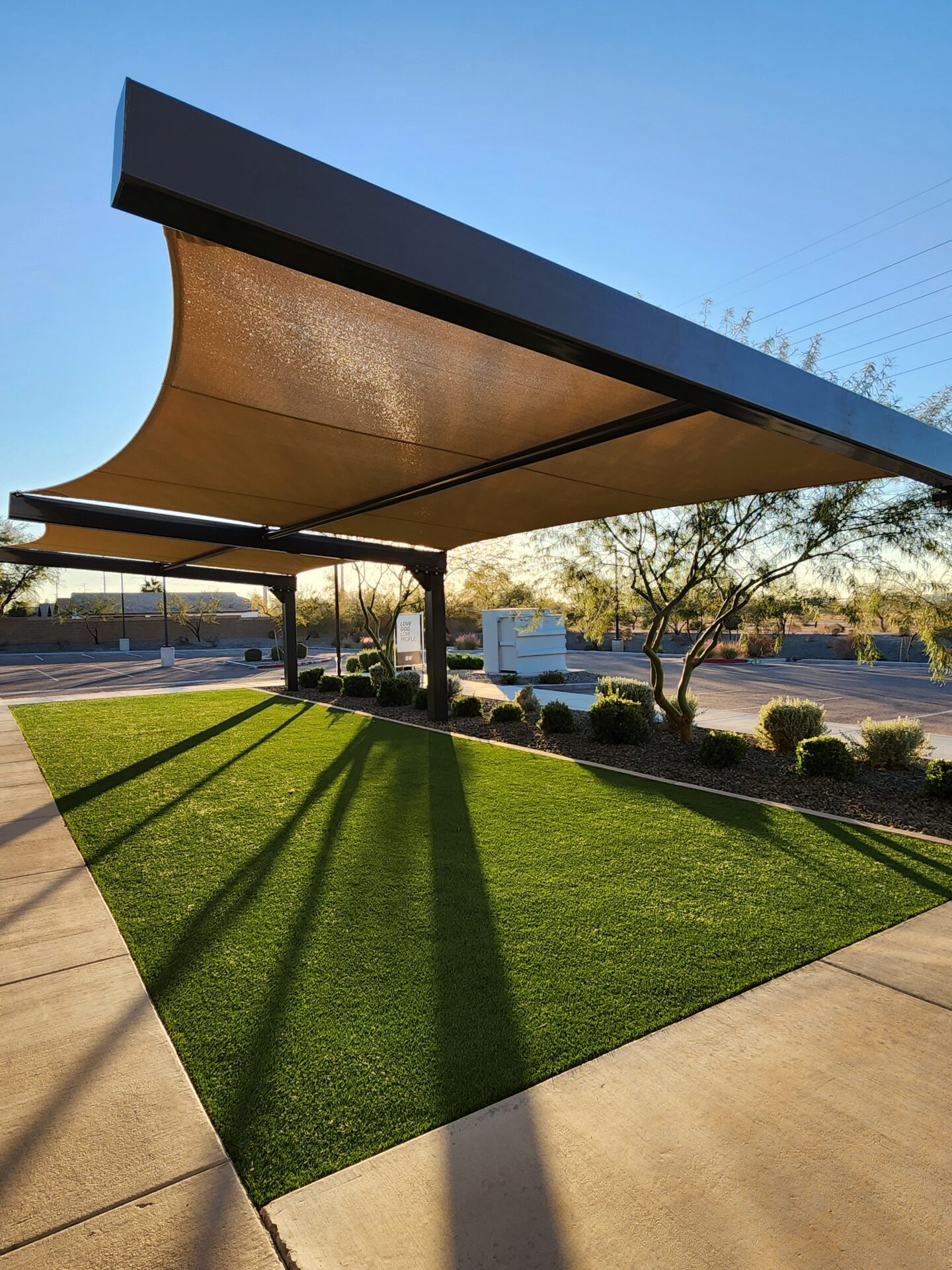
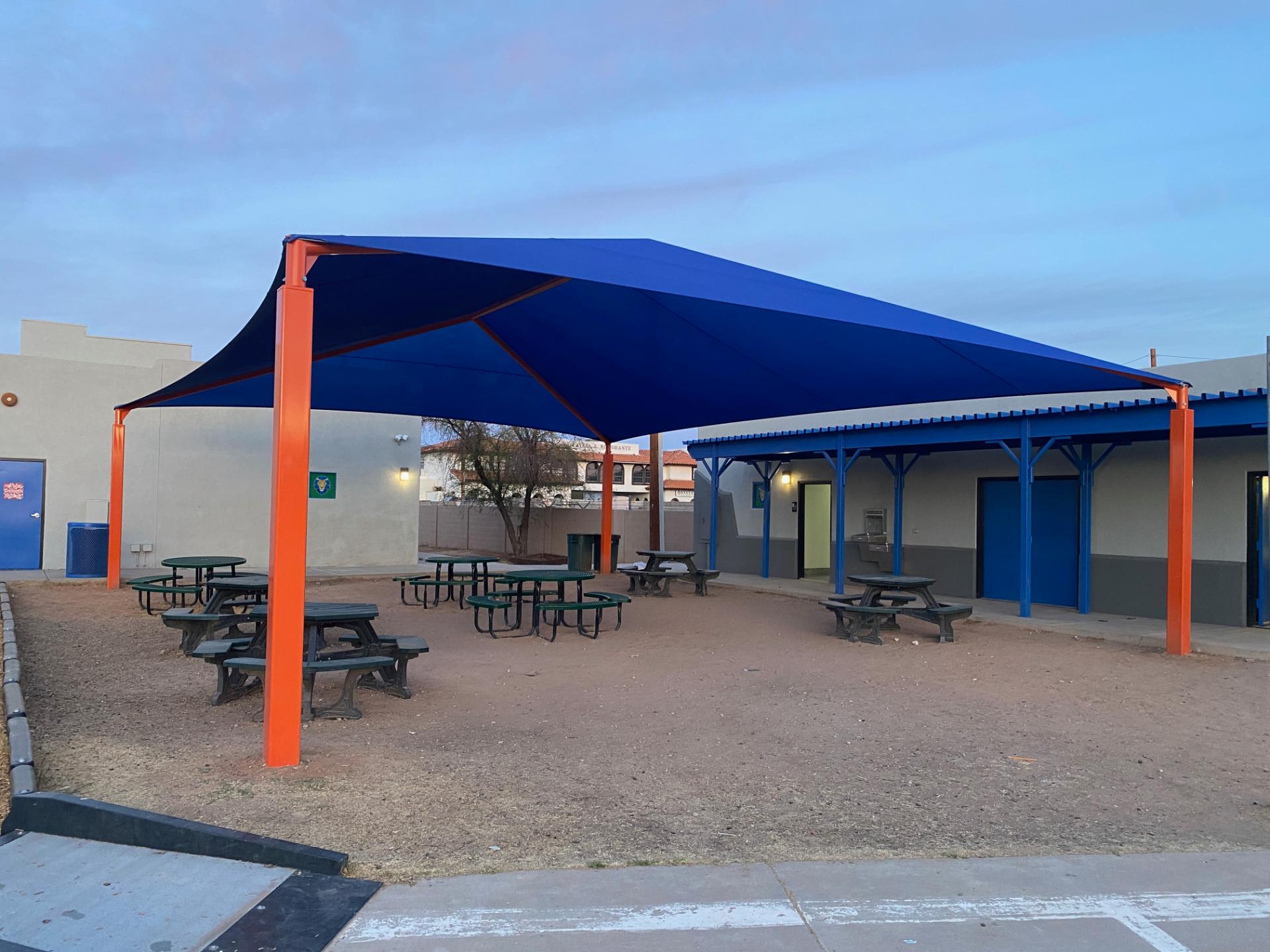
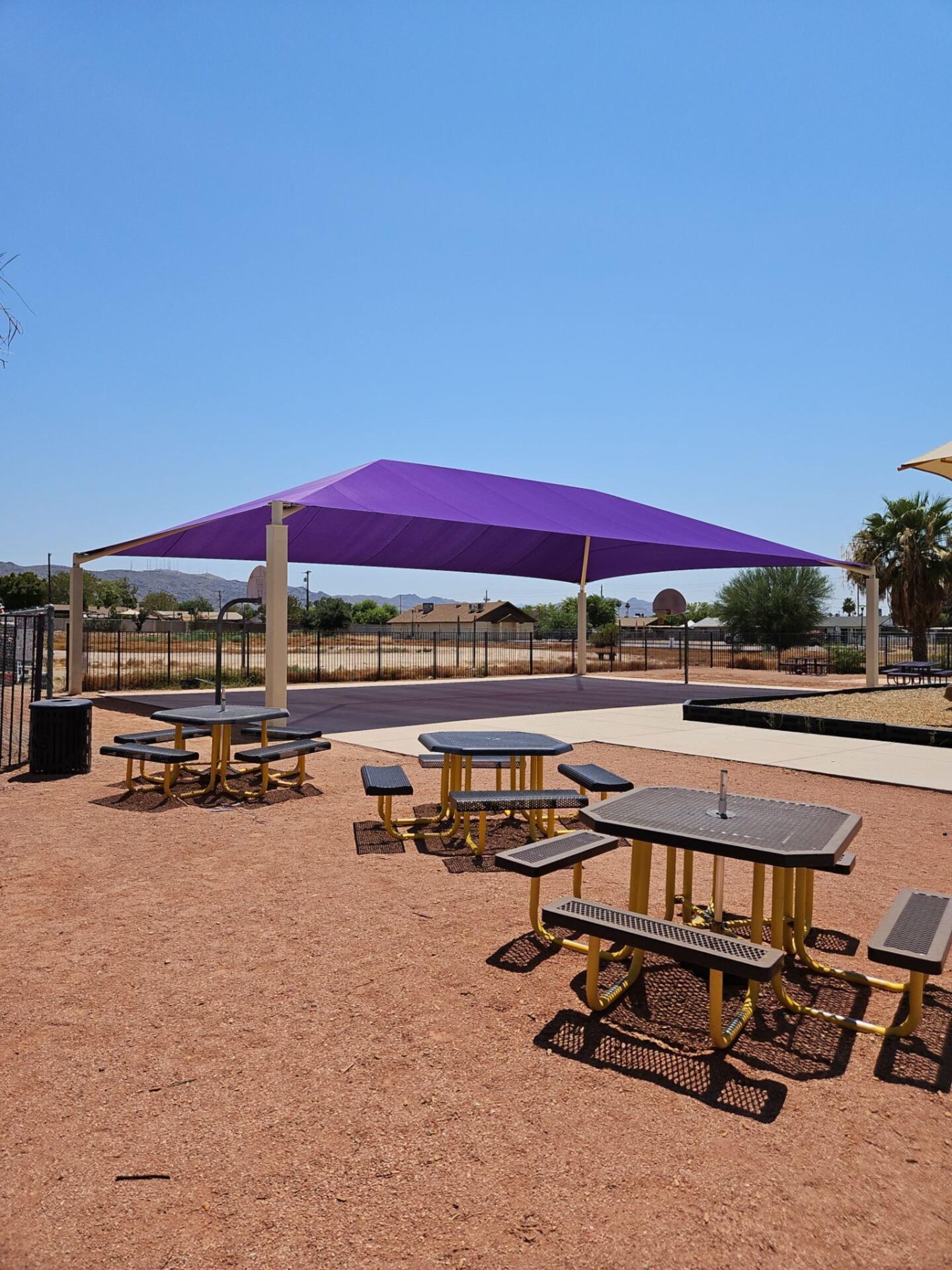
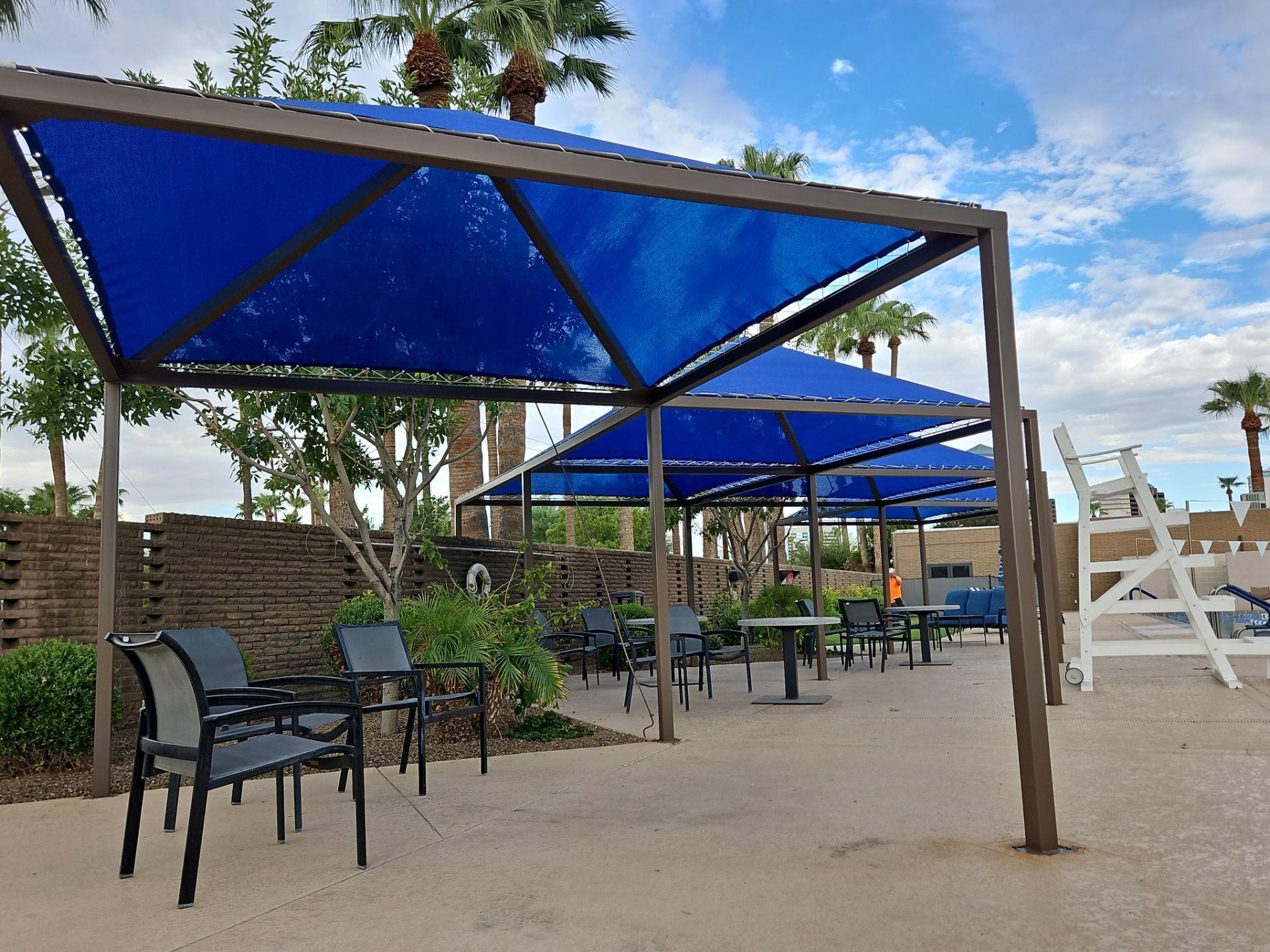
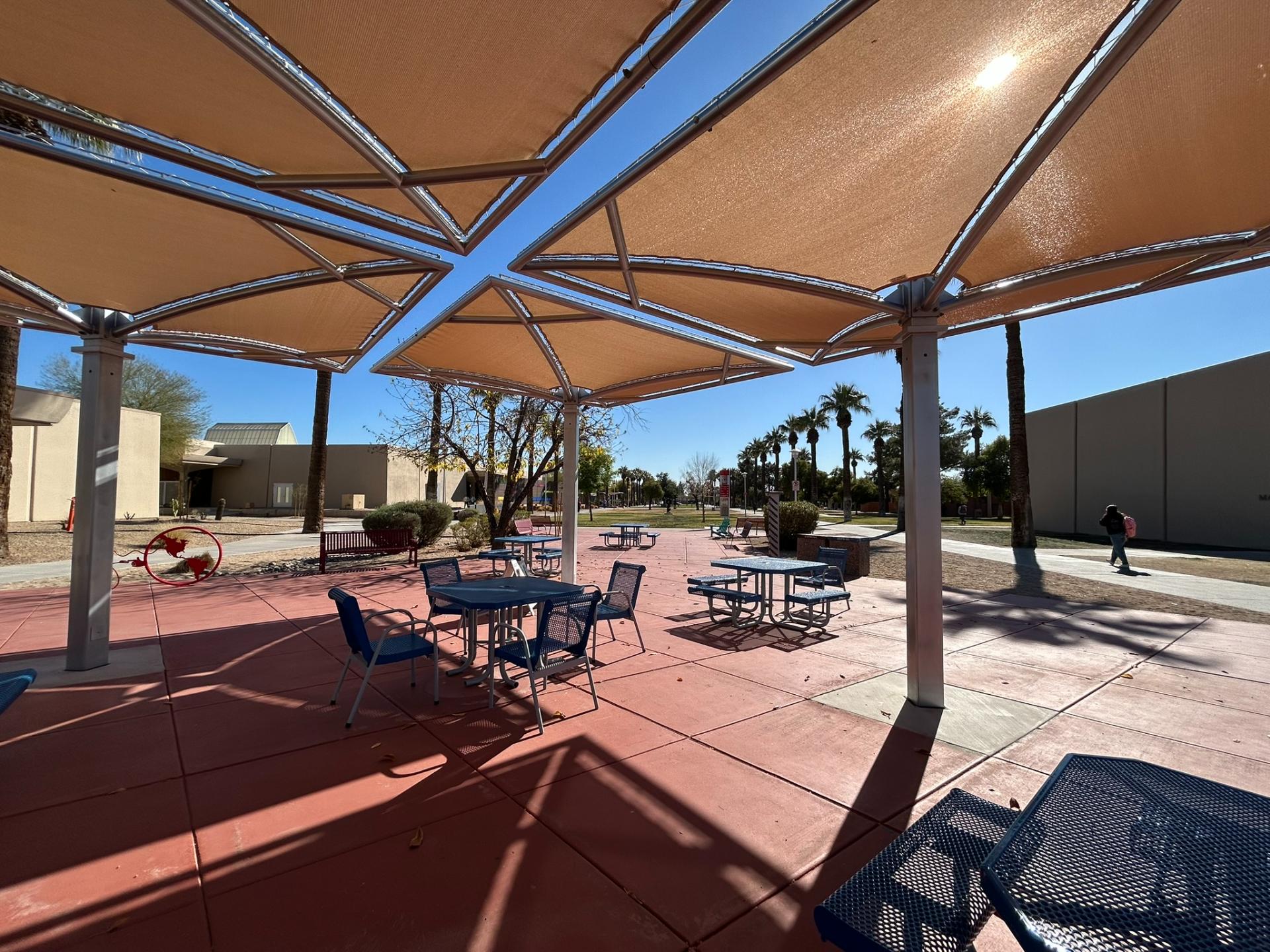
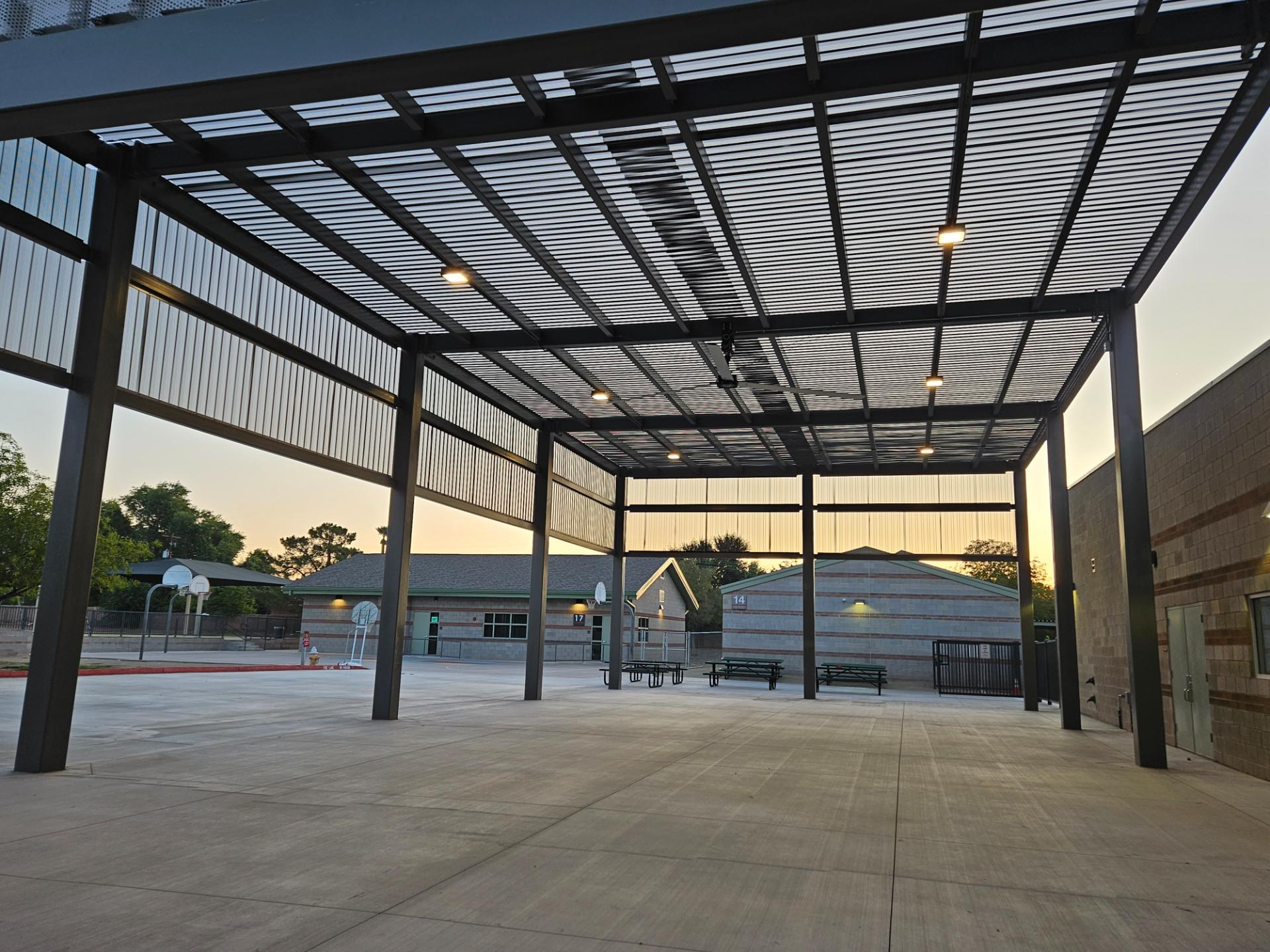
The right structure follows the use, not a catalog default, and most Valley demand falls into a handful of families. Parking lots and big retail aprons lean on single-post cantilevered shade structures, which carry their load on one post line so cars never thread between columns; a typical bay shades roughly 16-20 ft of depth off that single foundation. Schools, parks, and municipal sites favor hip structures over lunch courts and bleachers, where multiple posts spread the load and clear tall vehicles.
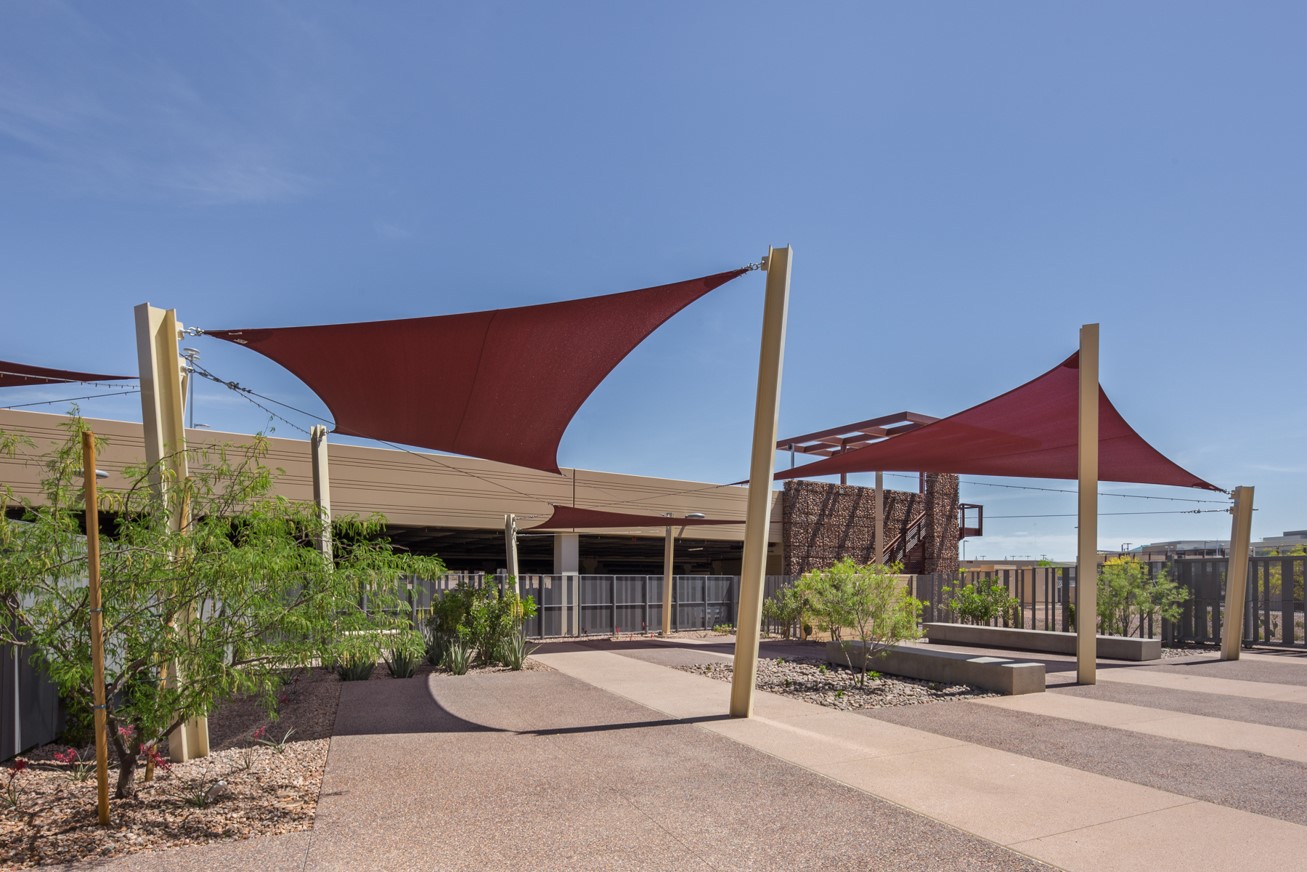
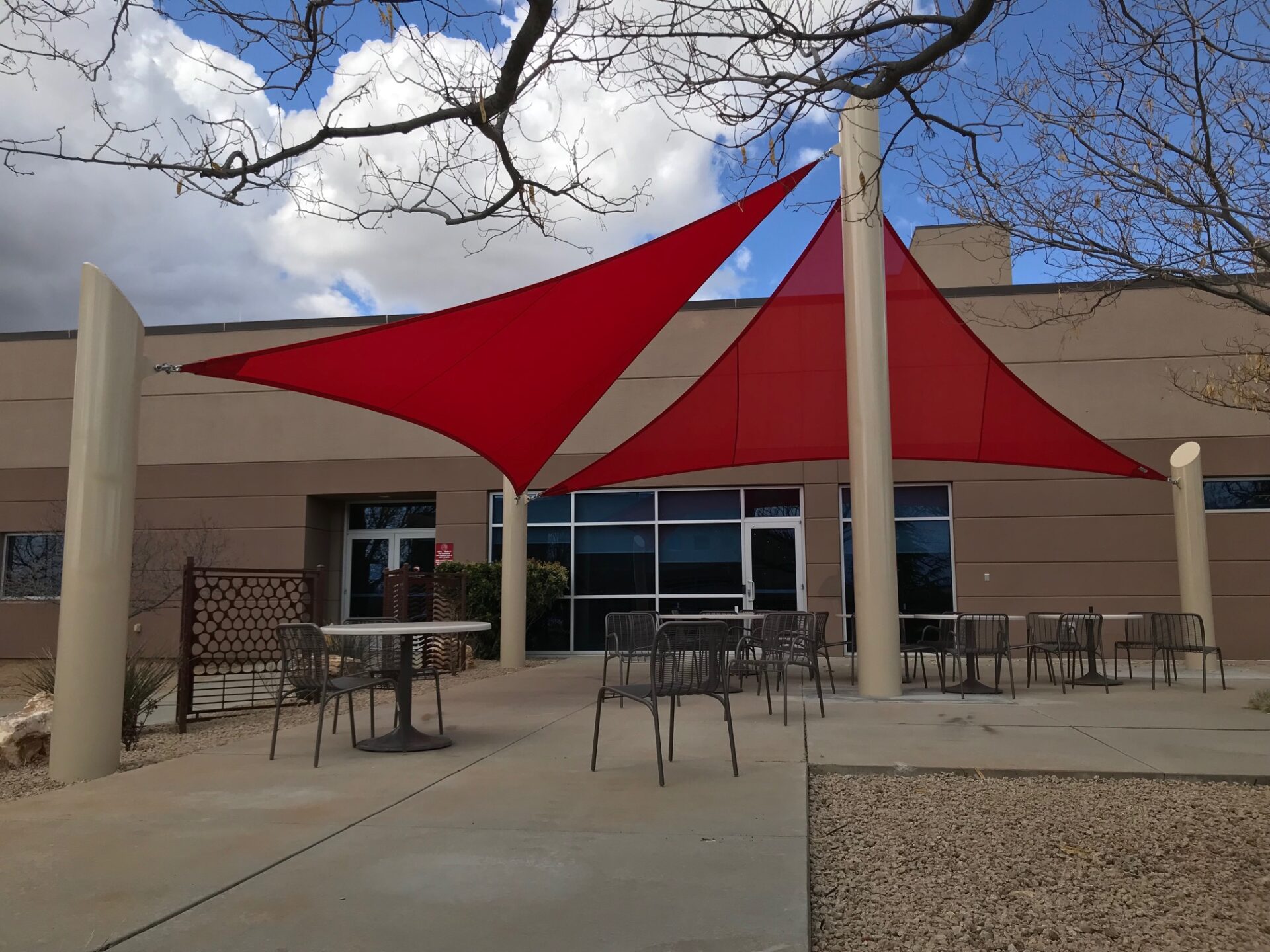
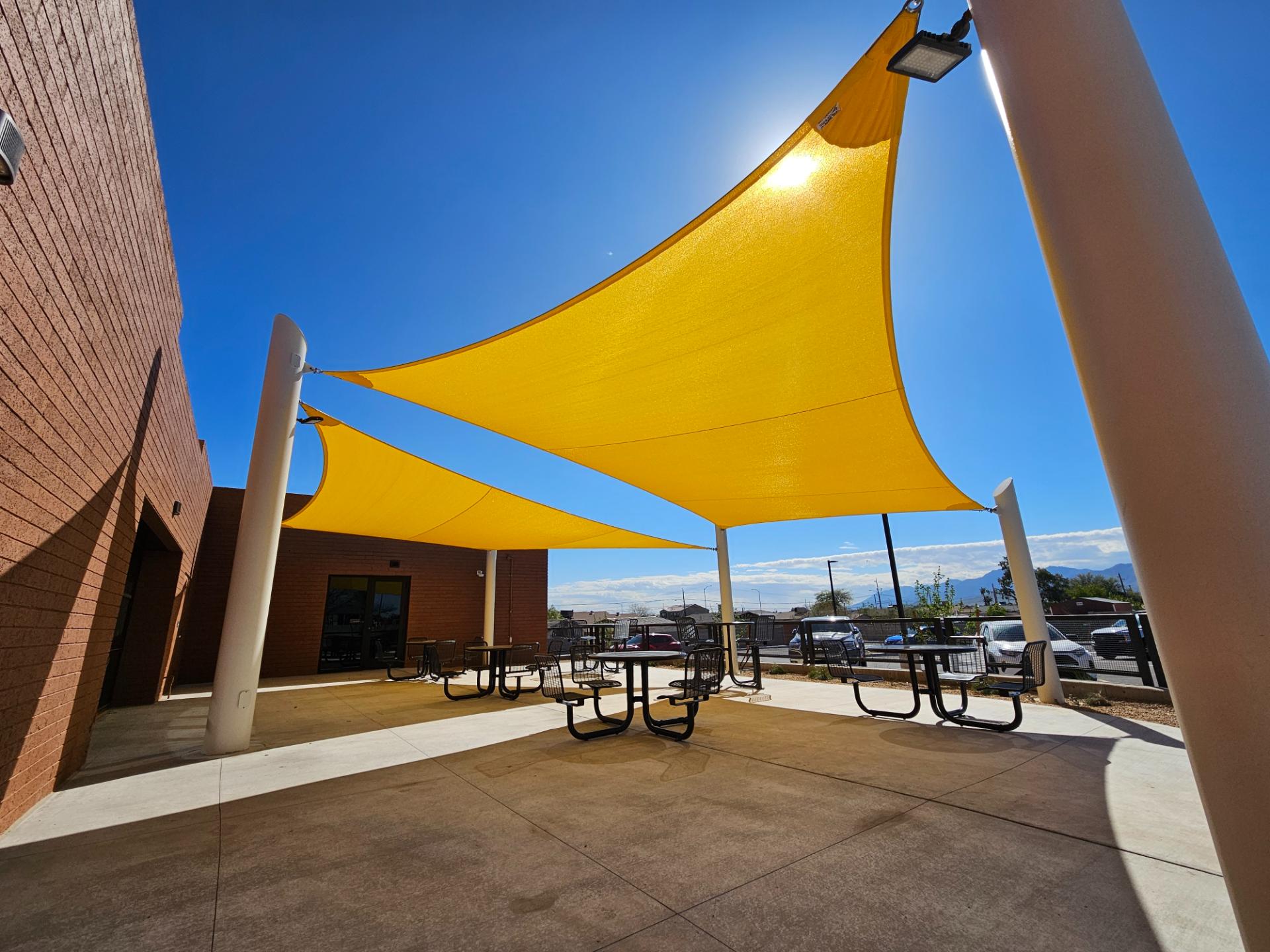
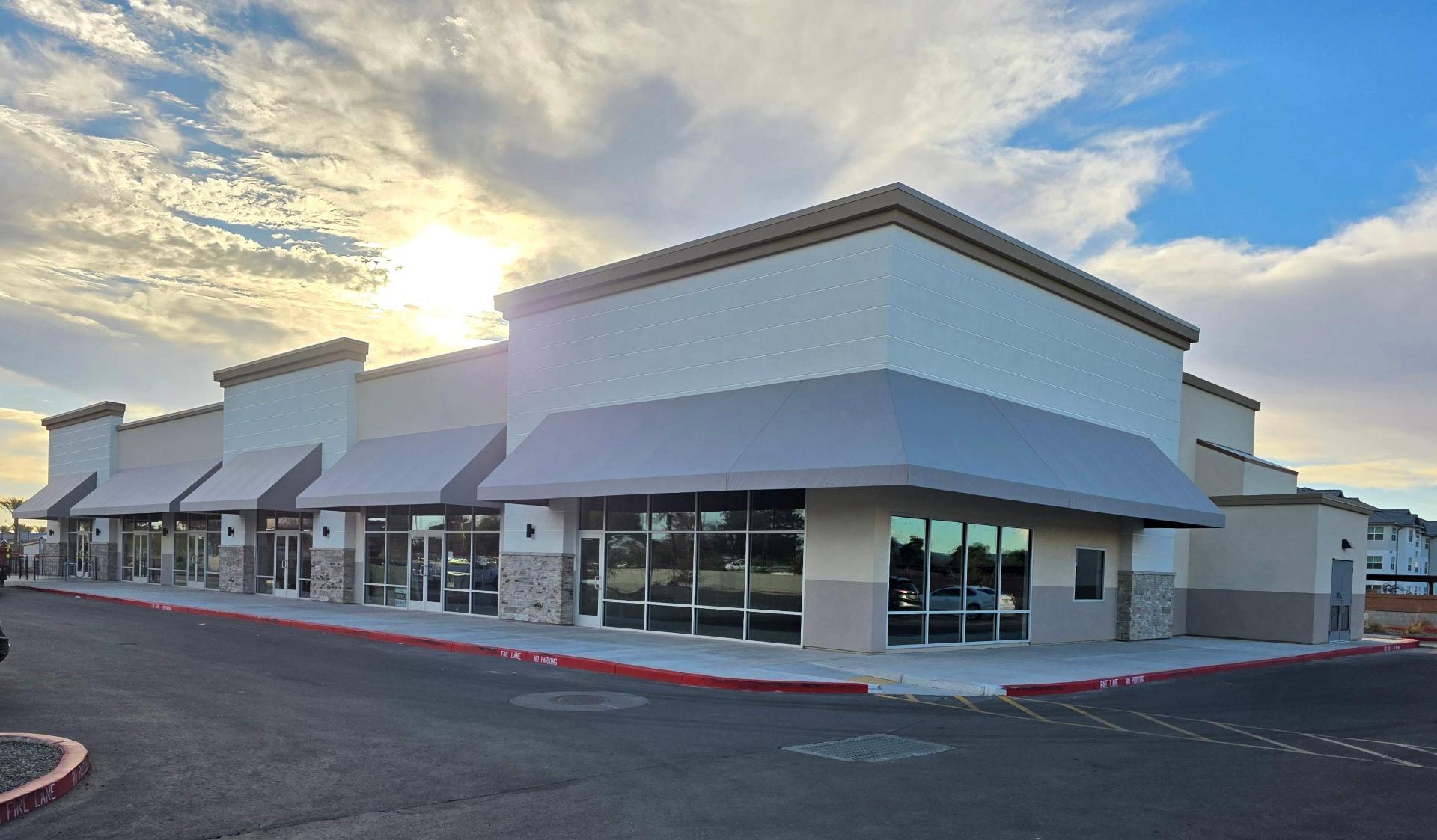
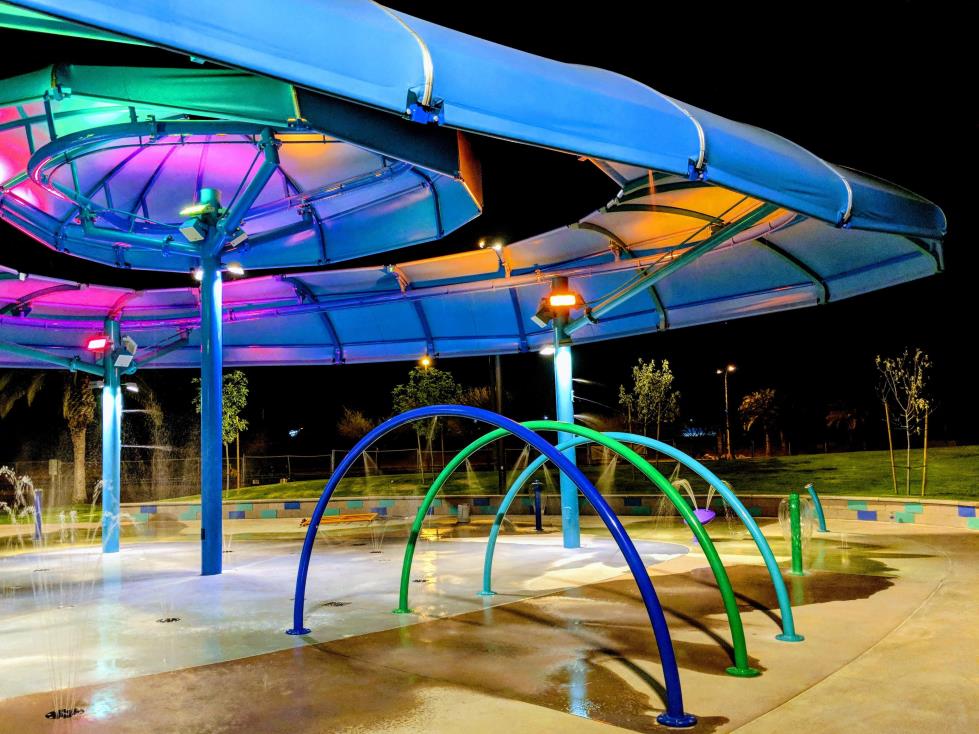
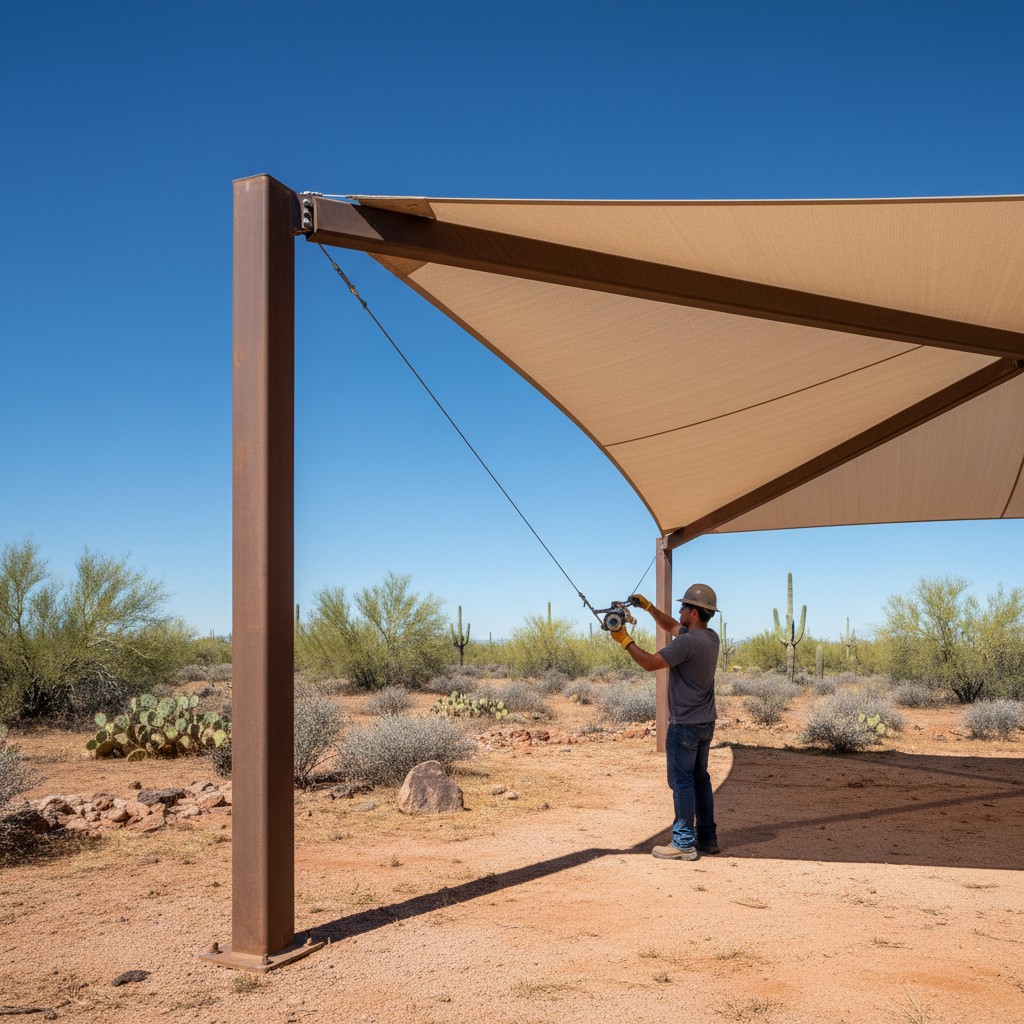
Design-led and hospitality work pulls in different shapes. Hypar (hyperbolic-paraboloid) structures and 3-point tensioned fabric sails give resorts, courtyards, and HOA-reviewed common areas an architectural line instead of a flat box. Restaurants and storefronts add awnings over entries and patios; pool decks and cabanas get cabanas; and parks and backyards still rely on solid-roof ramadas for all-weather cover. When a site fits none of those, a custom-built shade structure lets the frame follow the lot instead of forcing the lot to fit the frame.
Why in-house Phoenix fabrication and Arizona-code engineering matter
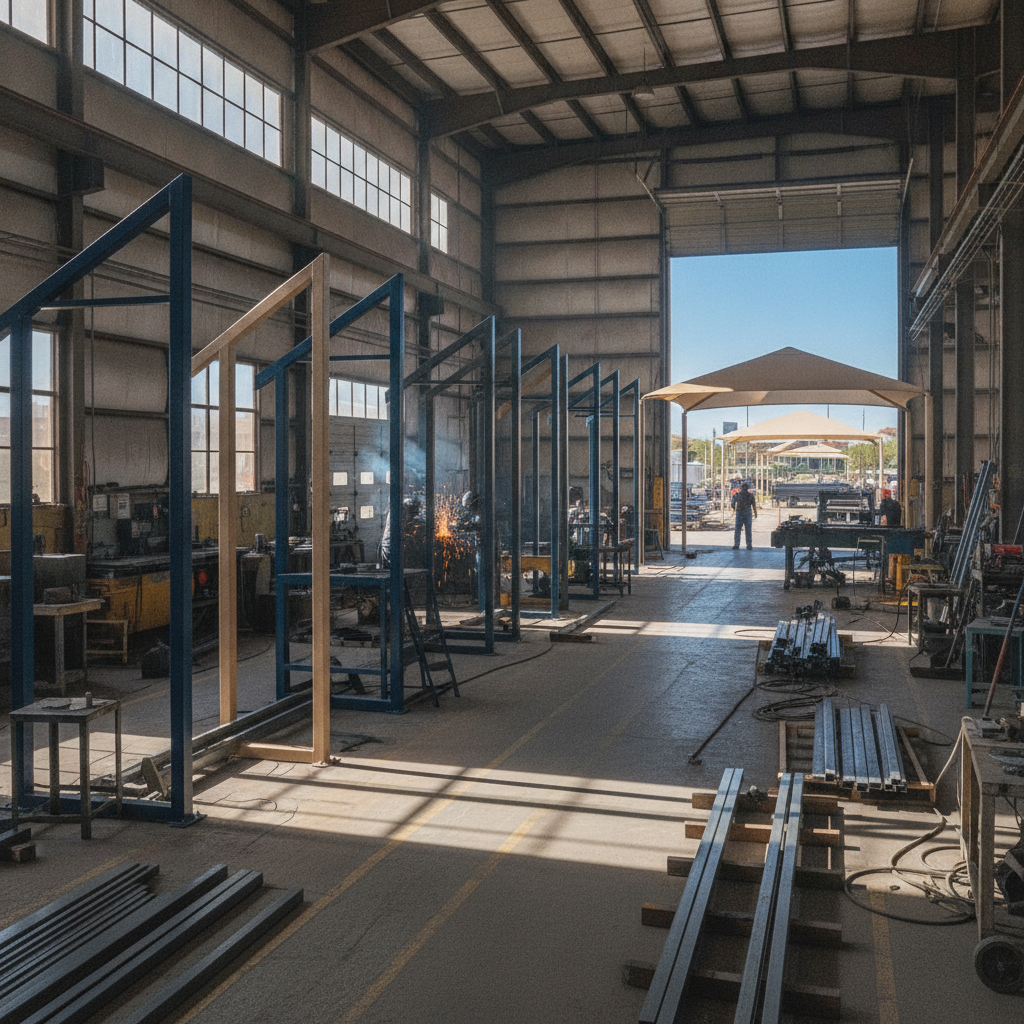
Building under one roof at 2331 W. Holly St removes the handoffs where most shade projects go wrong. When the same shop draws the engineering, cuts and welds the steel, and runs the install crew, a span change on the drawing reaches the saw the same week instead of bouncing between an out-of-state manufacturer and a local subcontractor. That control is why a custom bay can be tuned to an odd stall count or a tight HOA setback without a six-week change order.
What local engineering buys you
- Stamped, code-ready drawings. Maricopa County structures are engineered to Arizona building code and ASCE 7 wind loads; we provide the engineered, stamped plans, and the city handles review and inspection.
- Wind and soil sized for here. Foundations are designed against the 90-115 mph Valley design range and caliche soil, not a generic national spec.
- Powder-coated steel. The frame behaves more like a baked-on finish than brushed paint, resisting the chalking desert sun forces on cheaper coatings.
The trade-off worth stating: a fabricated-to-order structure is not an off-the-shelf kit, so lead time reflects real engineering and welding rather than pulling a box from a warehouse. For most commercial sites racing a certificate of occupancy, day-one full coverage from an engineered canopy still beats waiting a decade for shade trees to fill in.
Honest limits, maintenance, and when to re-cover
A shade structure manages sun and most weather, but it has real boundaries worth naming up front. The fabric is a consumable layer: commercial knitted HDPE covers commonly carry 10-15 year warranties, and Arizona’s UV sits at the demanding end of that window, so planning a re-cover is honest budgeting rather than a defect. When that day comes, a canopy replacement reuses the existing steel and swaps only the cover, which keeps the cost far below a new structure and the old frame out of the landfill.
Wind ratings have ceilings too. An engineered design protects against typical monsoon loads, not every freak gust on record, and HDPE relaxes over its first season, so a canopy that never gets re-tensioned will start to flap and wear at the seams. Dust is the quiet chore: haboobs leave grit that should be rinsed off once or twice a year before it abrades the weave or clogs drainage. None of that undercuts the structure. Knowing the limits is what separates a canopy that lasts 15 years from one that disappoints in 5.
How we serve the metro, from the West Valley to Queen Creek
Our service area runs the full Phoenix metro, and the dominant shade driver shifts by city, so we plan each project around local demand rather than a single template. Glendale, Peoria, Surprise, and Goodyear pull heavily on sports-complex and stadium shade plus large retail parking; the East Valley, from Mesa and Gilbert out to Queen Creek, is school-district and master-planned-community work as fast-growing towns build playgrounds, lunch courts, and parks. Central Phoenix leans on parking-lot shading, while Scottsdale and the resort corridor want the design-led hypar and cantilever lines that pass architectural review.
Distance from our Holly Street shop does not change the spec. A Queen Creek school lunch court and a Glendale retail apron get the same powder-coated steel, the same ASCE 7 wind engineering, and the same in-house crew that built the frame. From here, the right starting point is the city page closest to your site below, or the product family that matches your use.
Our Complete Shade Structure Product Line
Service Areas Across the Phoenix Metro
Select your city for local shade-structure information:
- Shade Structures in Phoenix, AZ
- Shade Structures in Scottsdale, AZ
- Shade Structures in Tempe, AZ
- Shade Structures in Mesa, AZ
- Shade Structures in Chandler, AZ
- Shade Structures in Gilbert, AZ
- Shade Structures in Glendale, AZ
- Shade Structures in Peoria, AZ
- Shade Structures in Surprise, AZ
- Shade Structures in Goodyear, AZ
- Shade Structures in Avondale, AZ
- Shade Structures in Queen Creek, AZ
Frequently Asked Questions
What areas of Arizona does Total Shade serve?
We serve the full Phoenix metro from our shop at 2331 W. Holly St, including Phoenix, Scottsdale, Tempe, Mesa, Chandler, Gilbert, Glendale, Peoria, Surprise, Goodyear, Avondale, and Queen Creek. The same in-house crew designs, fabricates, and installs each project, so the engineering and steel are consistent whether the site is in central Phoenix or the far East Valley.
Why does in-house Phoenix fabrication matter for a shade project?
Building the engineering, the steel, and the install under one roof removes the handoffs where most projects stall. A span or layout change reaches the saw the same week instead of bouncing between an out-of-state manufacturer and a local subcontractor, which lets a custom bay match an odd stall count or a tight HOA setback without a long change order. It also keeps one team accountable from drawing to bolt-down.
How are Valley shade structures engineered for monsoon wind?
Frames are engineered to Arizona building code and ASCE 7 wind loads, with Valley design wind speeds running roughly 90-115 mph. Because monsoon microbursts can exceed 60 mph with little warning, foundation depth and steel gauge are sized for those gusts, and caliche soil often pushes caissons 6-10 ft deep. No structure is rated for every extreme on record, but proper engineering covers typical monsoon conditions.
What does a commercial shade structure cost in the Phoenix metro?
Cost depends on span, post count, foundation depth, and fabric grade, so structures are priced per project rather than off a per-square-foot chart. Caliche ground can raise foundation cost where caissons run 6-10 ft deep, and a design-led hypar or sail differs from a standard parking bay. We quote after reviewing the site layout so the number reflects the actual structure.
How long do commercial shade fabrics last in Arizona sun, and what happens then?
Commercial knitted HDPE covers commonly carry 10-15 year warranties, and Arizona’s intense UV sits at the demanding end of that range. The fabric is a replaceable layer, so when it wears out the steel frame stays in place and only the cover is swapped. A canopy replacement reuses the existing engineered steel, which keeps a re-cover far cheaper than building a new structure.
Get a free shade-structure quote anywhere in the Valley.
Call (602) 265-0905 for a free assessment.
Featured Shade Structure Projects Across Arizona
Total Shade has installed commercial shade structures at recognized Arizona venues — Talking Stick Resort, Six Flags Hurricane Harbor, Hotel Adeline, and school, park, and municipal sites across the Valley. Each was fabricated in-house and engineered to Arizona building code for desert sun and monsoon wind loads. A sample of named installations: