or call (602) 265-0905 — no-obligation, on-site.
Commercial Shade Structures by Industry
Since 1998
Designing & building Arizona shade
In-House Fabrication
Built at our Phoenix shop
Engineered & Permit-Ready
Stamped drawings for AZ wind loads
Free On-Site Quote
No-obligation project assessment
Industry decides the shade structure long before style does: a school district, a retail parking lot, a municipal park, and an HOA pool deck each carry different code paths, foundation loads, budget cycles, and traffic that push them toward different frames and fabrics. A playground needs fall-zone clearance and a cool deck below; a parking lot needs single-post bays cars can thread; a resort needs a shape that survives architectural review. The constant across all of them is Arizona’s two-front test, where knitted HDPE blocks roughly 90-99% of UV and frames meet ASCE 7 wind loads near 90-115 mph. What changes is who signs the permit and who writes the check.
Use-case drives the frame, not the catalog
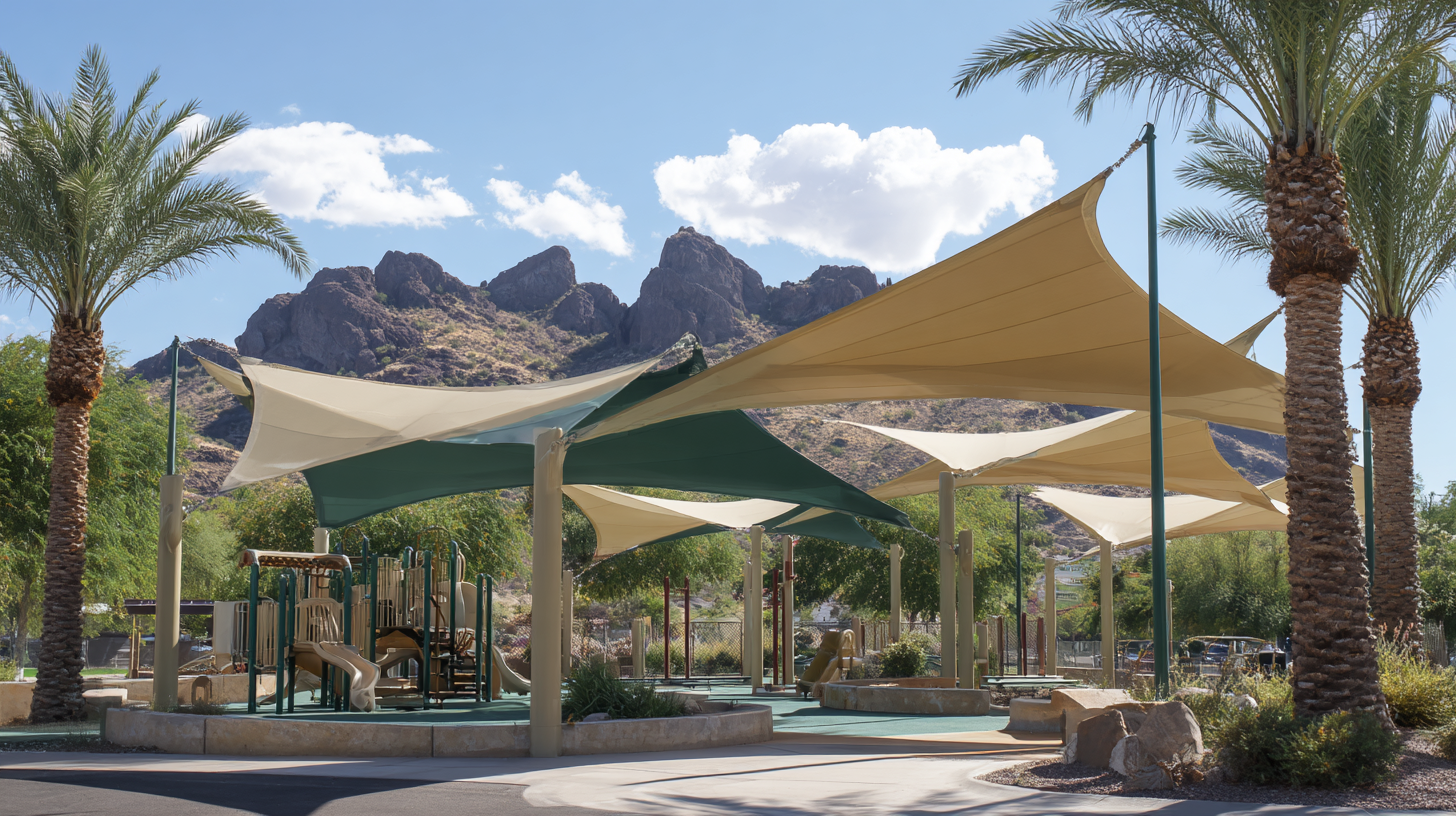
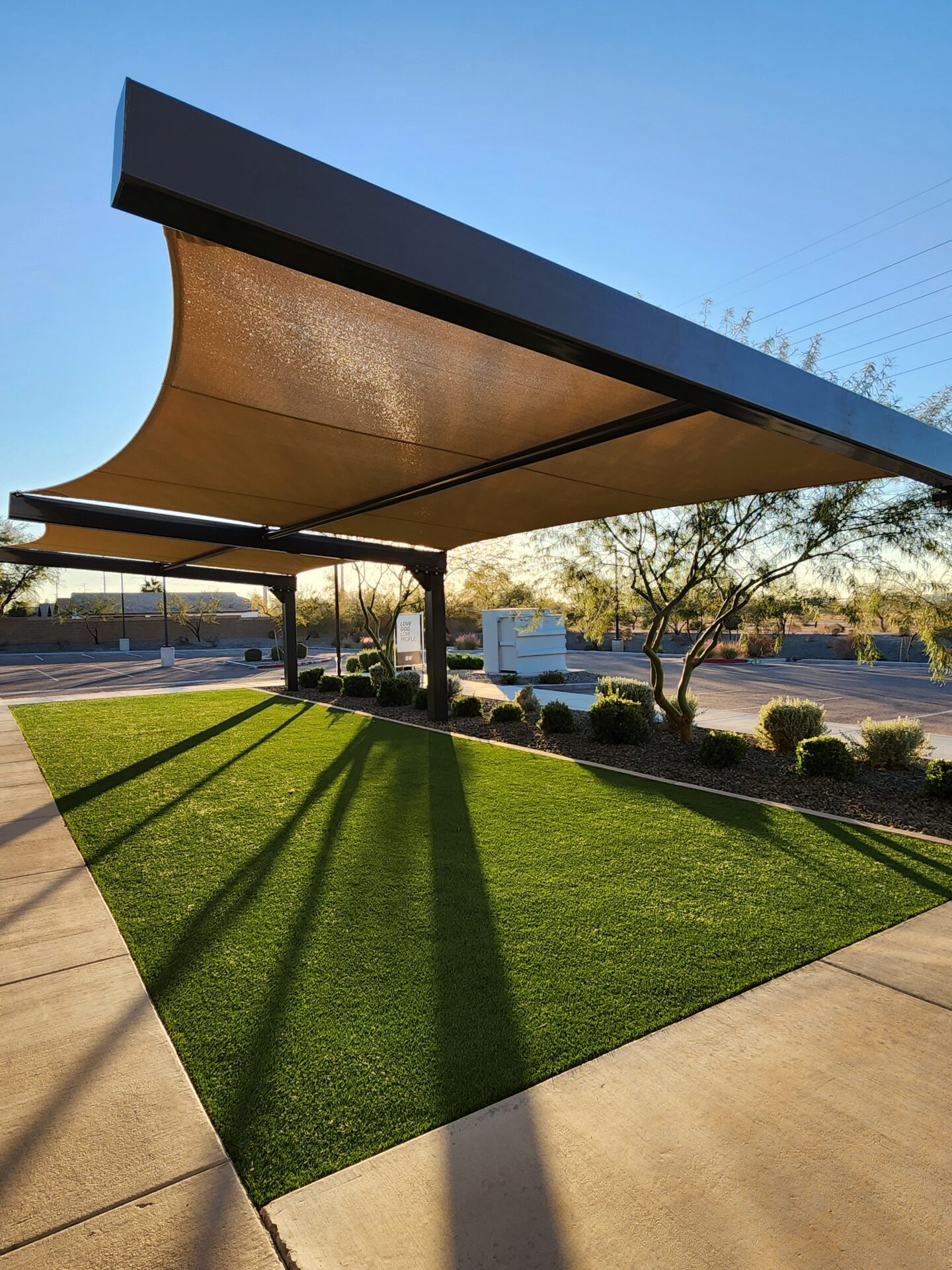
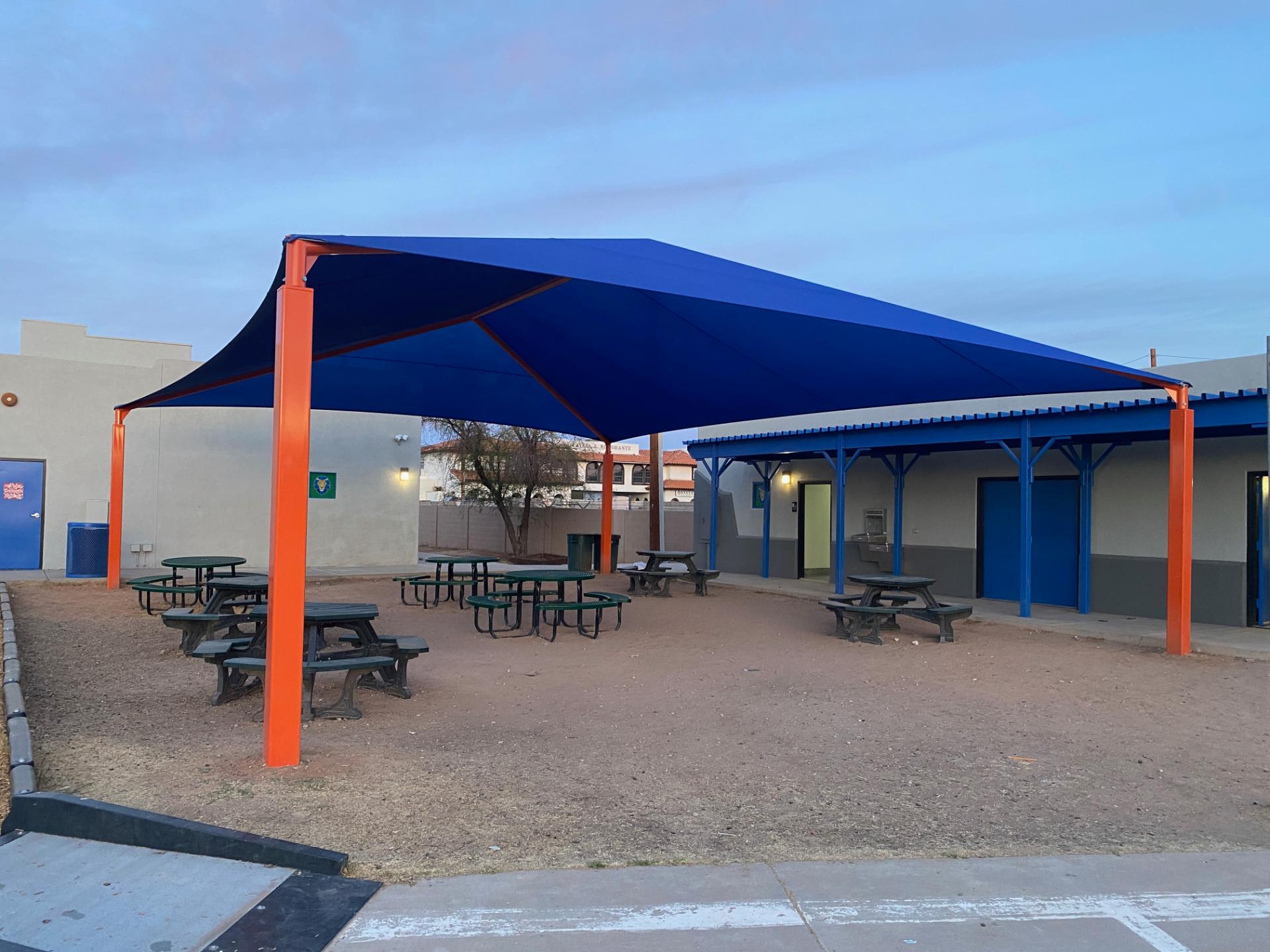
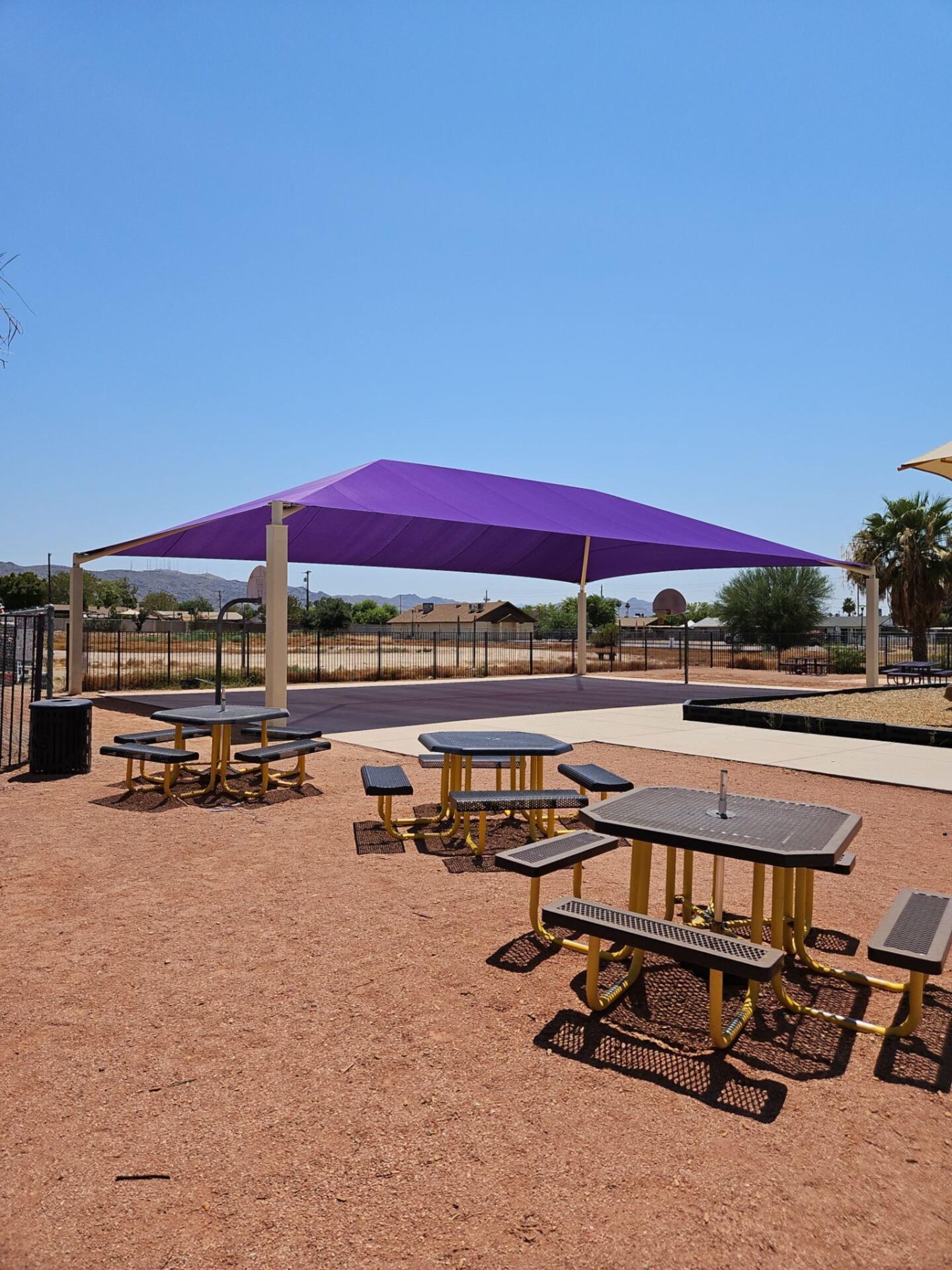
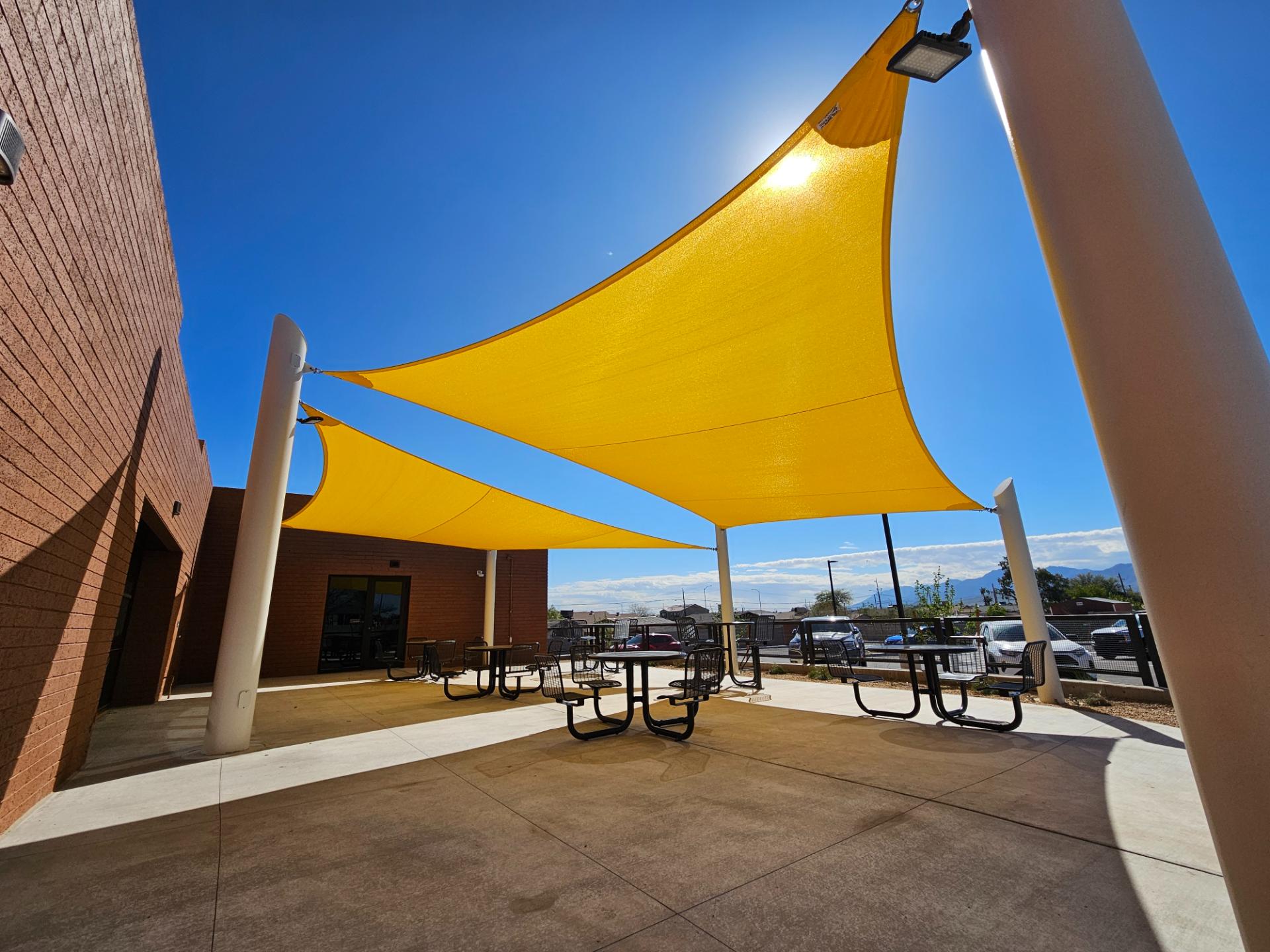
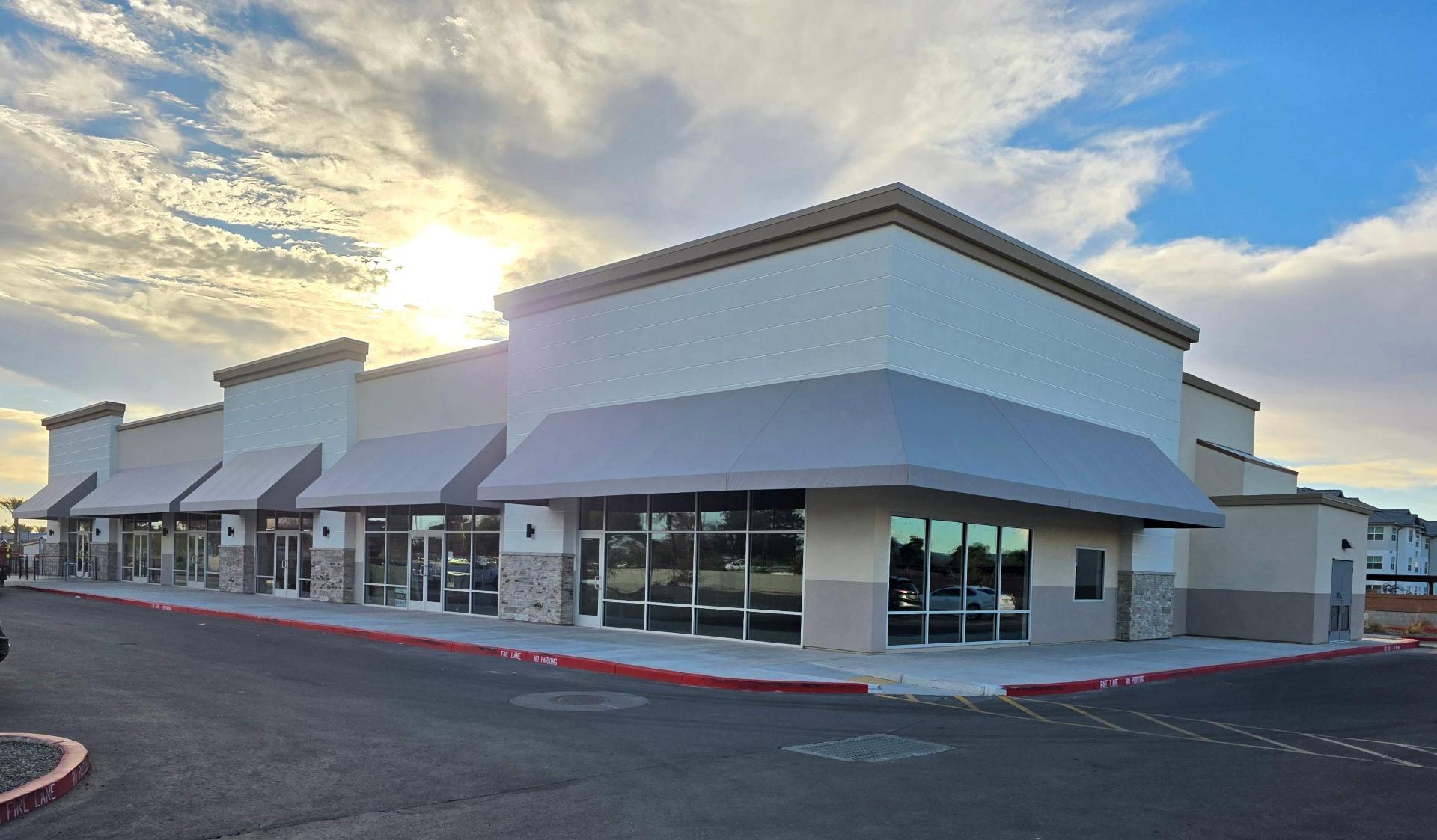
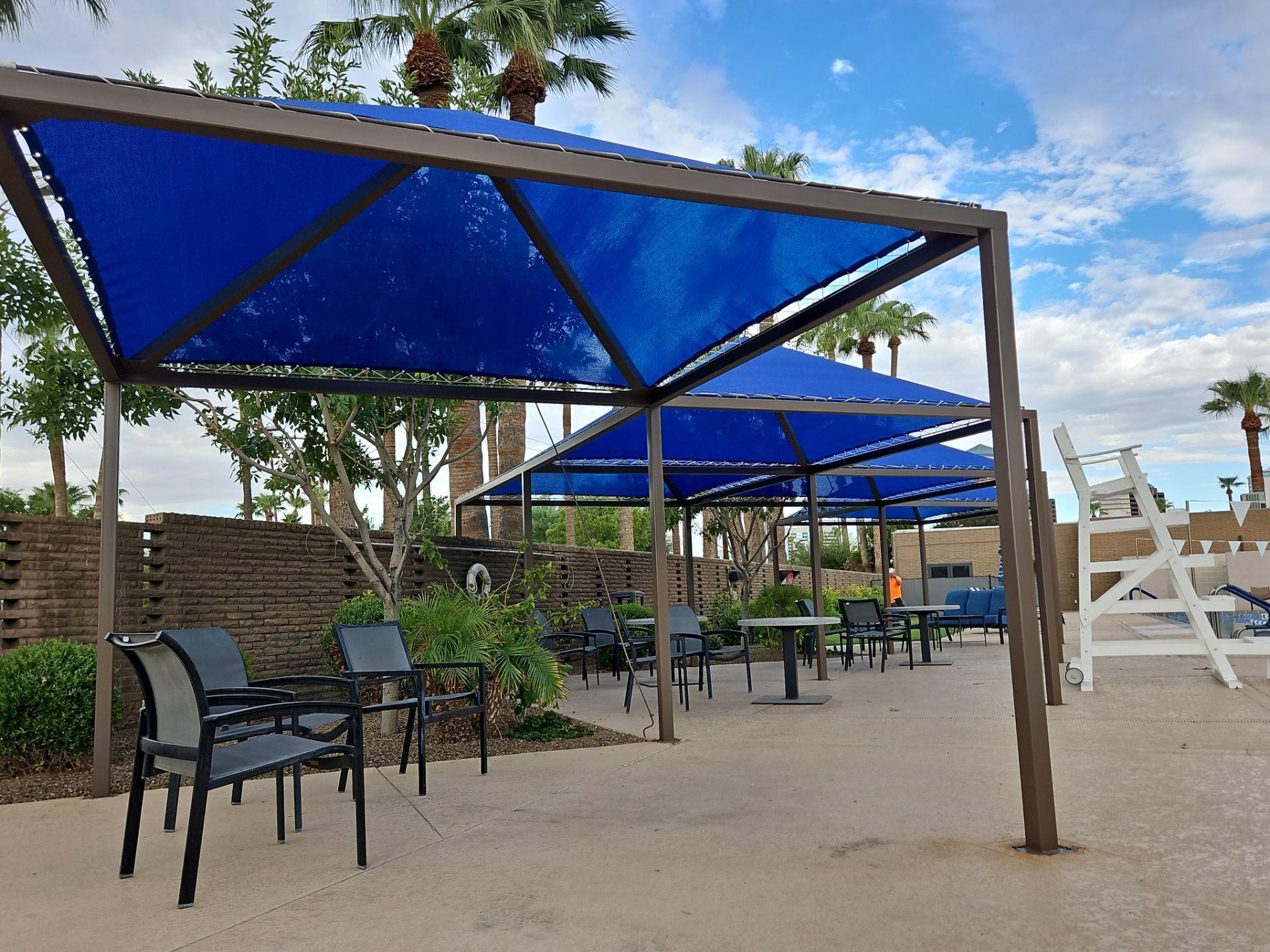
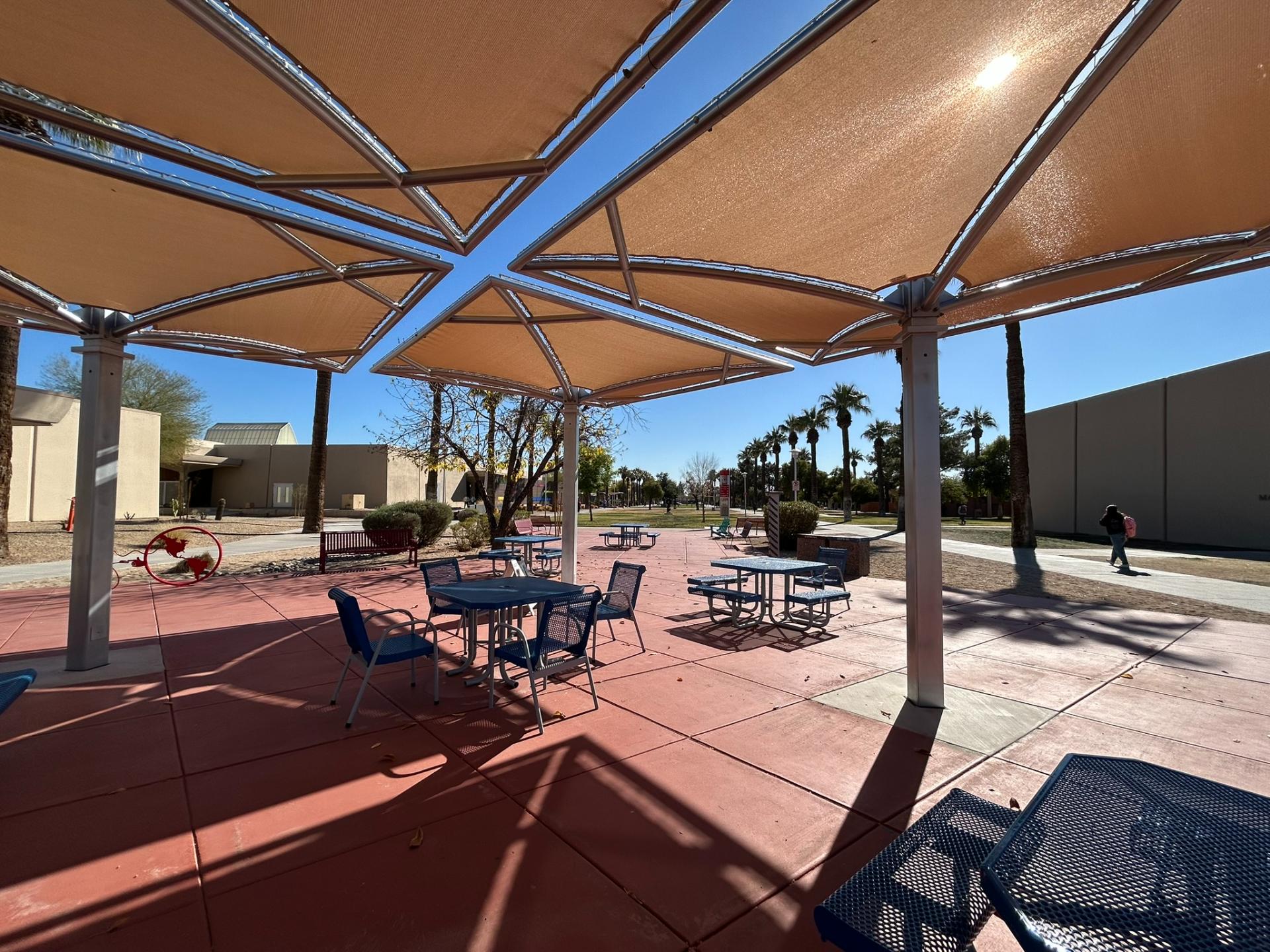
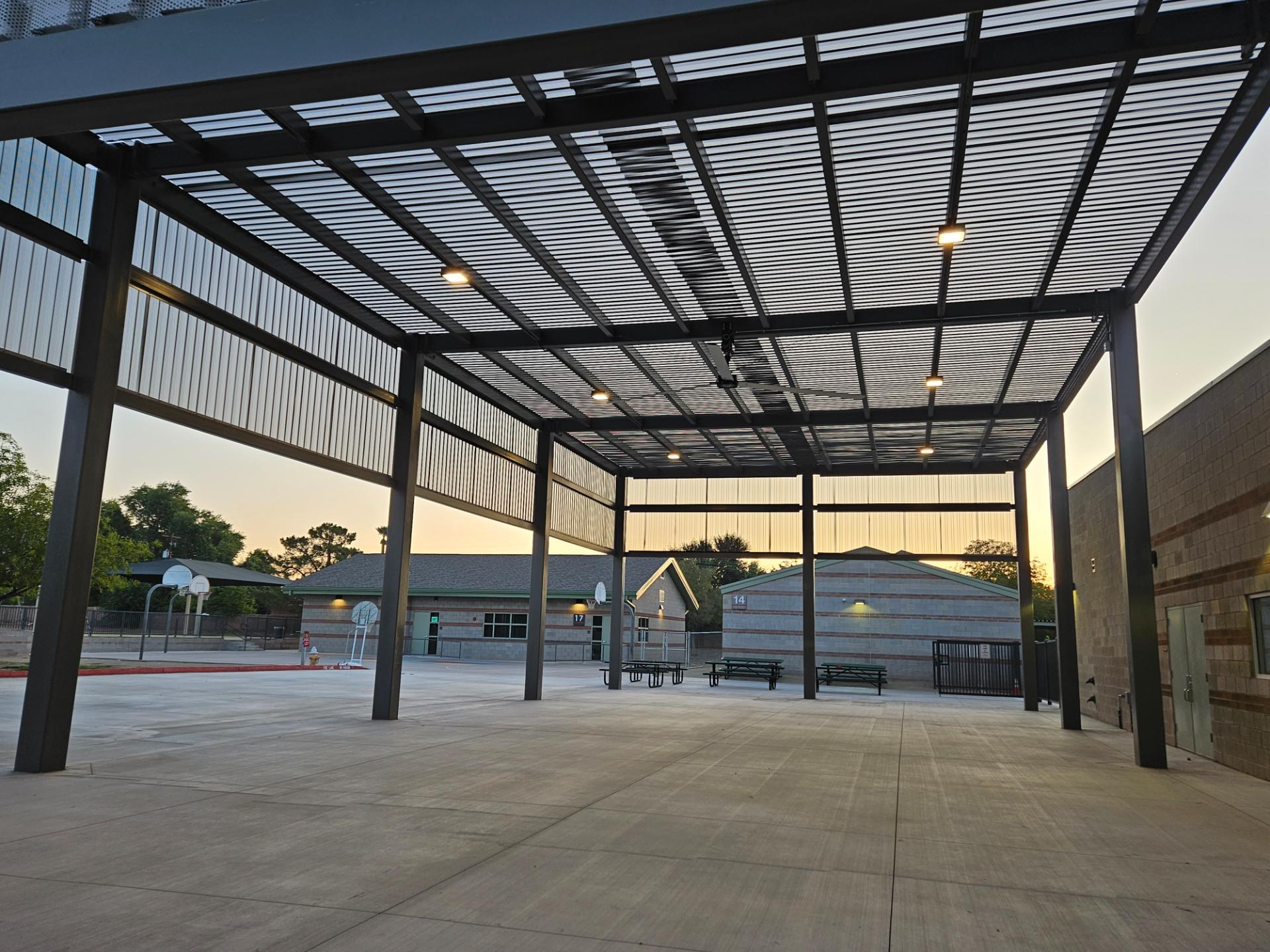
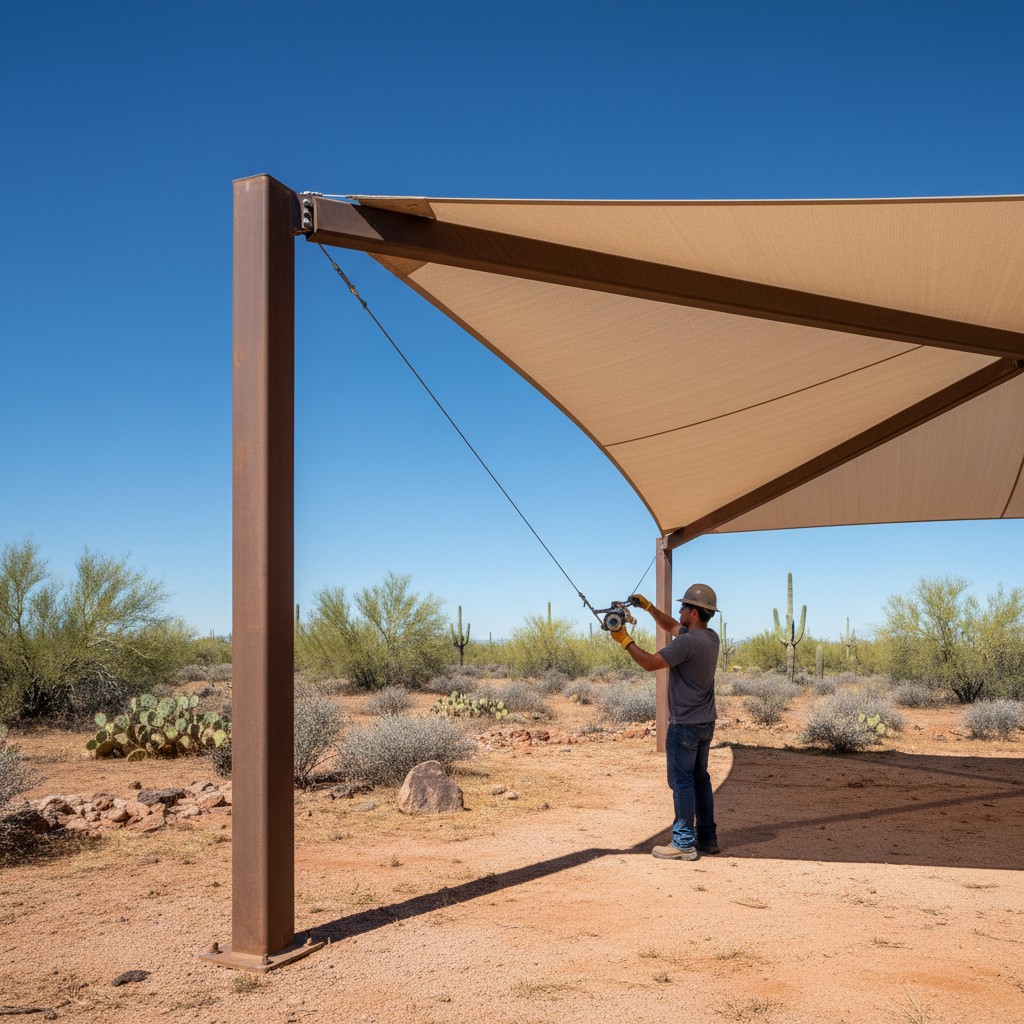
The fastest way to pick a shade structure wrong is to start with a shape instead of the way the site gets used. A parking lot rules out interior posts, so retail aprons and employee lots lean on single-post cantilevered shade structures that carry their load on one column line and let cars park without threading between supports; a standard bay shades roughly 16-20 ft of depth off that single foundation. A school lunch court or a park ramada has the opposite problem: it needs maximum clear span over tables and tall service vehicles, which pushes the design toward hip structures where multiple posts spread the load and the roof clears 8-12 ft of headroom.
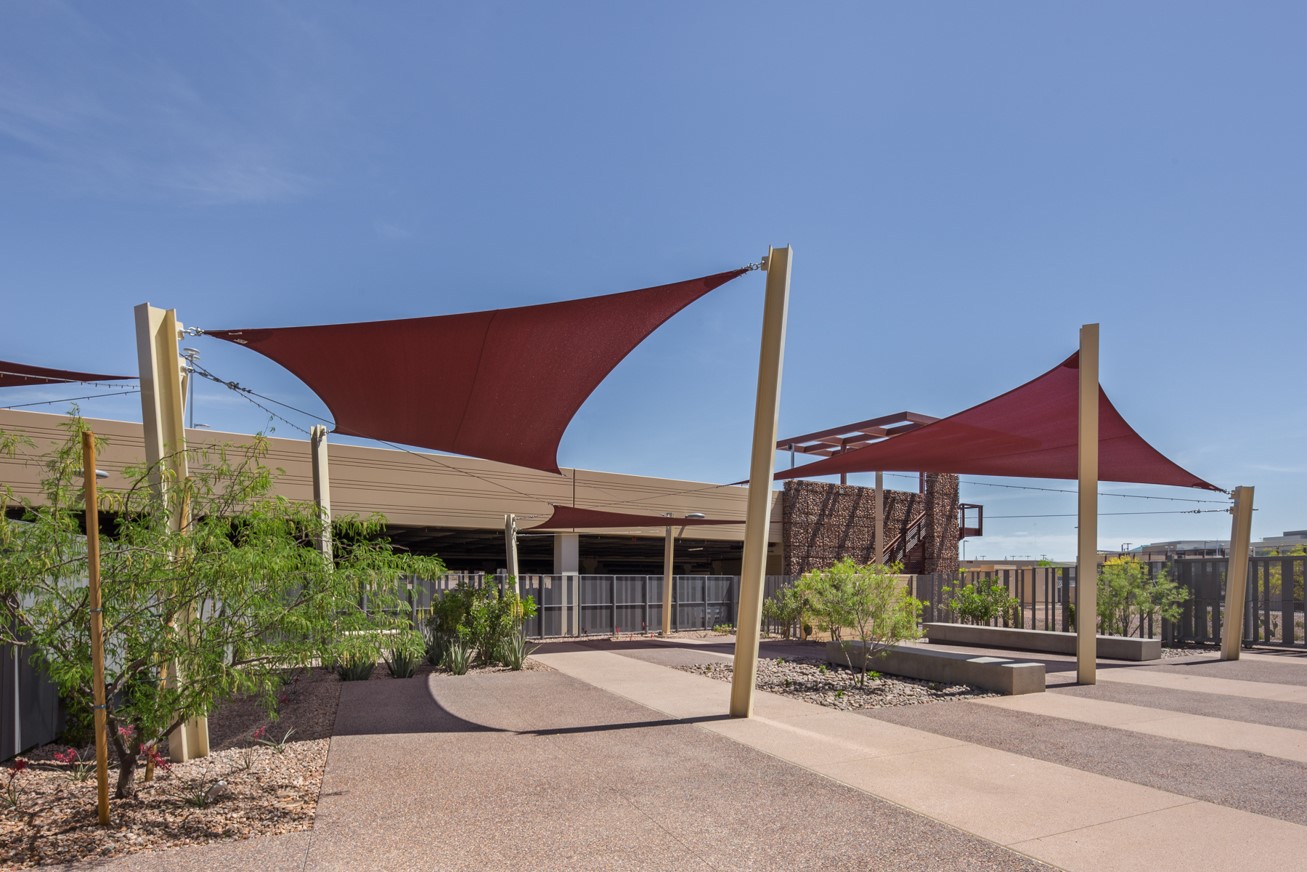
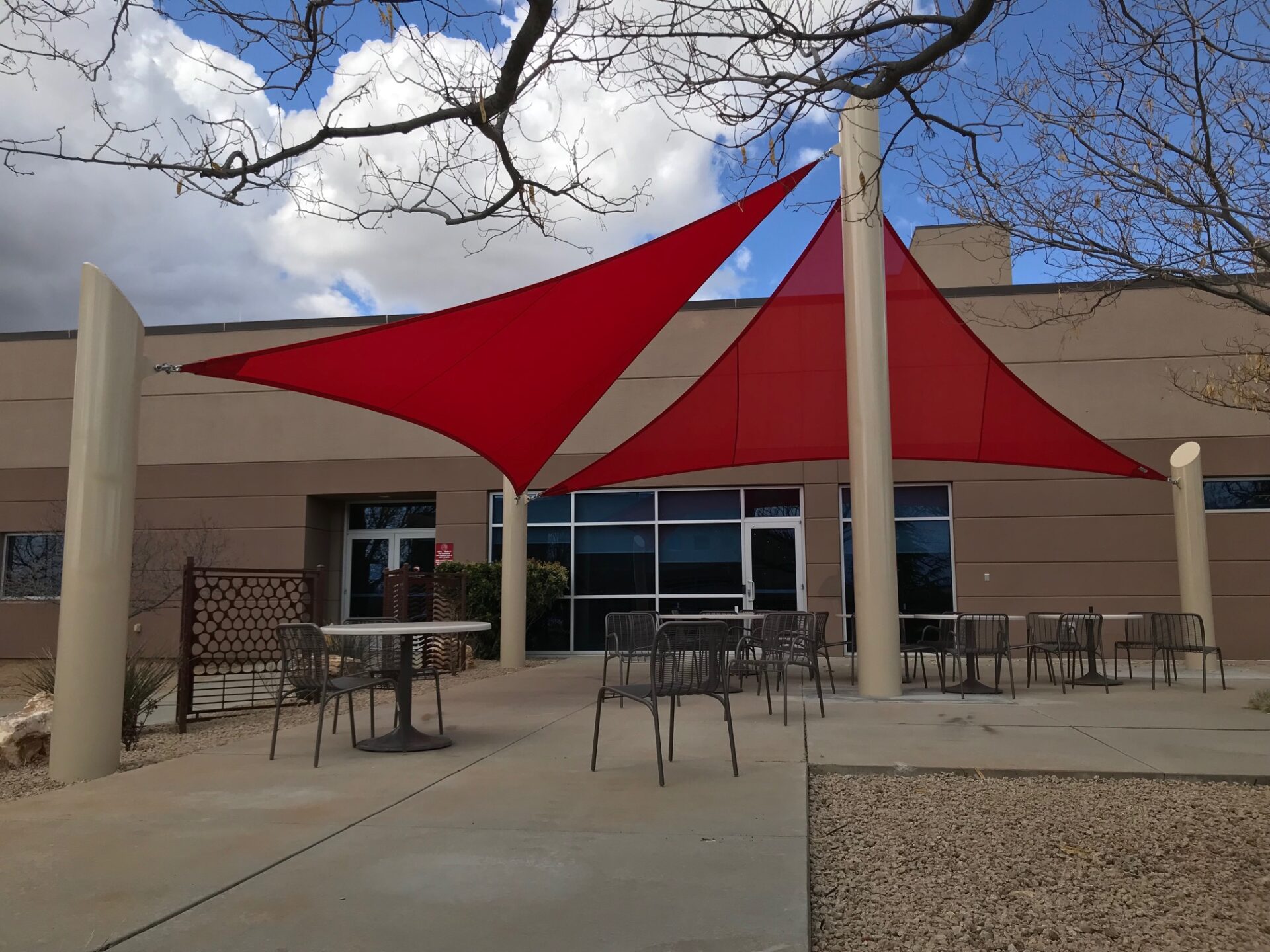
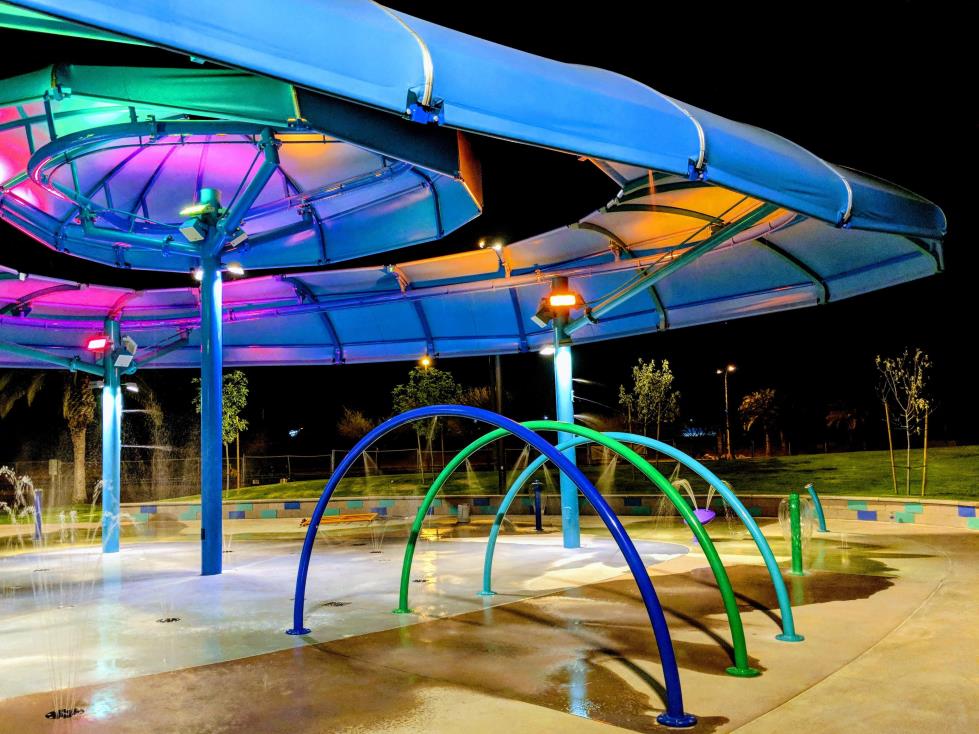
Design-led sectors change the math again. Resorts, HOA common areas, and corporate campuses often want an architectural line rather than a flat box, which is where 3-point tensioned fabric sails and custom geometry earn their place. The rule holds across every industry: the use defines the post layout, and the post layout defines everything downstream, from foundation depth to fabric cut. Start with how people and vehicles move under the shade, and the frame chooses itself.
Code and permitting split sharply by sector
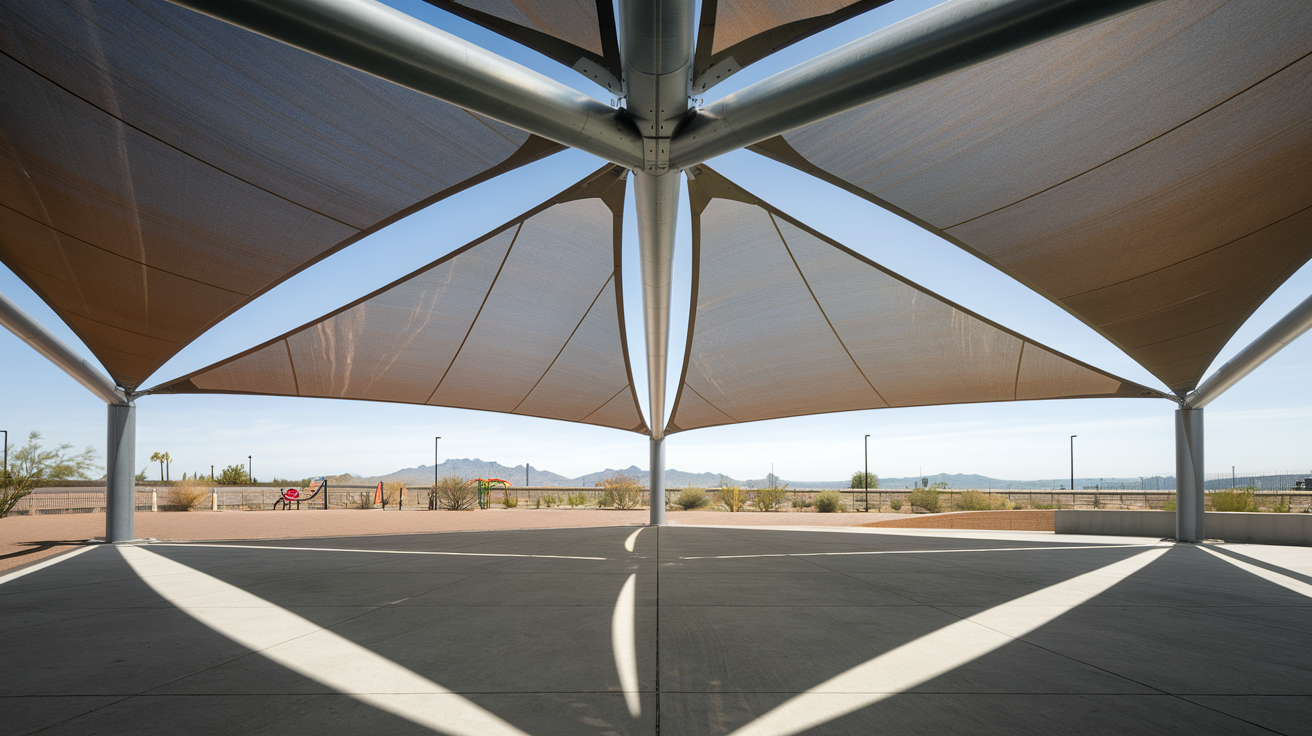
Two structures of identical size can face markedly different review depending on who owns the site. A school or municipal project runs through public review with the district’s facilities department and often the state, so it carries stricter accessibility, fall-protection, and inspection requirements than a backyard ramada. A commercial parking structure answers to Maricopa County or the city building department against ASCE 7 wind loads, while an HOA amenity adds an architectural-review committee on top of the city permit, meaning the design has to clear aesthetics before it ever reaches engineering.
What stays constant across sectors
Regardless of industry, every permanent structure in the Valley needs stamped, engineered drawings sized to local wind and soil. We provide the engineered plans; the reviewing authority handles approval and inspection. The variable is how many bodies sign off: a residential ramada might clear one city counter, while a school playground shade structure can pass through facilities, a safety reviewer, and the building department before a single caisson is poured. Building that review chain into the schedule up front is what keeps a sector project from missing its opening date.
Procurement: public bid, HOA vote, and commercial PO each move differently
How a project gets bought matters as much as how it gets built, and the three dominant paths run on different clocks. Public-sector work, schools, parks, municipal lots, typically requires a formal bid or a cooperative purchasing contract, with budgets locked to a fiscal year and decisions made by committee; that process can stretch a timeline by months but rewards a clear, code-complete spec. HOA work routes through a board and often a homeowner vote, so a ramada over a community pool may wait on a quarterly meeting before anyone signs.
Commercial procurement is usually the fastest. A property manager or owner can issue a purchase order on their own timeline once the quote and engineering line up, which is why a retail or restaurant project often moves from drawing to install in a fraction of the time a public bid takes. None of these paths is better; they answer to different masters. Knowing which one a sector follows lets us shape the proposal, stamped plans for the public bid, board-ready renderings for the HOA, a tight scope for the commercial PO, so it survives the decision process instead of stalling in it.
High-traffic public sites demand the upper end of materials
Durability requirements scale with foot traffic and consequence, and public sites sit at the top of that curve. A parking lot shade structure at a busy retail center, a school playground used by hundreds of kids a day, or a park pavilion open year-round all take abuse a backyard cover never sees, so they justify the heavier specs: thicker powder-coated steel, denser knitted HDPE that blocks toward the 95-99% end of the UV range, and foundations sized for both wind and the occasional vehicle bump. Commercial covers commonly carry 10-15 year warranties, and on a high-use municipal site that fabric earns every year of it.
The cost logic favors the durable spec here. Public and high-traffic structures are expensive to permit and install, so a re-cover or a frame failure carries a heavy soft cost in downtime and re-bidding, not just materials. Spending more on steel gauge and fabric density up front behaves more like buying fewer future shutdowns than buying luxury. For lighter-use sectors with tighter budgets, that logic runs the other way, and right-sizing down is the honest call. The full lineup of frames sits on our products page for matching spec to use.
Honest limits every sector should plan around
No shade structure escapes three realities, and naming them up front is how a sector buyer budgets honestly. First, fabric is a consumable layer: even commercial HDPE rated for 10-15 years sits at the demanding end of that window under Arizona UV, so every sector should plan a re-cover rather than treat it as a defect; reusing the existing steel keeps that swap far below the cost of a new structure. Second, wind ratings have ceilings, an engineered frame covers typical monsoon loads, where microbursts can top 60 mph, but no canopy is rated for every gust on record.
Third, maintenance scales with exposure. Dust from haboobs should be rinsed off once or twice a year before it abrades the weave, and HDPE relaxes through its first season, so a cover that never gets re-tensioned will flap and wear at the seams. High-traffic public sites need that attention more than a quiet HOA cabana does. When a sector’s needs fall outside the standard product families, a custom-built shade structure lets the frame follow the site instead of forcing the site to fit a kit. The sector pages below break down how each of these factors lands in a specific industry.
Shade Structures by Industry
Explore commercial shade by sector:
- School & Playground Shade Structures in Arizona
- Restaurant & Patio Shade Structures in Arizona
- Parking Lot Shade Structures & Phoenix 50% Shade Rule
- HOA & Residential Shade Structures in Arizona
- Park & Municipal Shade Structures in Arizona
- Church & Worship-Center Shade Structures in Arizona
- Car Dealership Shade Structures in Arizona
- Pool & Aquatic Center Shade Structures in Arizona
- Bleacher, Dugout & Sports-Field Shade
- Apartment & Multifamily Community Shade
- Healthcare & Hospital Shade
- Industrial & Warehouse Shade
- Daycare & Preschool Shade
- Dog Park Shade
Shade Structures We Build
Frequently Asked Questions
Which industries does commercial shade serve most?
Schools and districts, parks and municipalities, retail and commercial parking, hospitality and resorts, HOAs and master-planned communities, sports complexes, auto dealerships, and corporate campuses are the most common sectors. Each one drives a different structure: schools need fall-zone clearance and clear span, parking lots need single-post cantilevers, and resorts need architectural-review-ready shapes. The sector pages below break down each industry’s specific requirements.
How do shade needs differ from one industry to another?
The biggest differences are post layout, code path, and budget cycle. A parking lot rules out interior posts and pushes toward cantilevers, while a lunch court needs multiple posts and 8-12 ft of clearance. Public sites face stricter accessibility and inspection rules than a residential ramada, and they buy on fiscal-year bid cycles rather than a same-week purchase order. Use-case decides the frame; ownership decides the paperwork.
Does commercial shade cost more for some sectors than others?
Yes, mostly because of spec and foundation, not the sector label. High-traffic public sites justify heavier steel, denser fabric toward the 95-99% UV range, and deeper foundations, which raises cost over a light-use HOA cabana of the same footprint. Caliche soil that forces caissons 6-10 ft deep adds cost on any site. We quote per project after reviewing the layout so the number reflects the actual structure, not a per-square-foot average.
How does permitting differ for public versus private shade projects?
Public and school projects run through more reviewers, facilities, safety, and the building department, with stricter accessibility and inspection requirements, while an HOA adds an architectural-review committee on top of the city permit. A commercial or residential project usually clears fewer counters. In every case we provide stamped, engineered drawings sized to ASCE 7 wind loads; the reviewing authority handles approval and inspection.
Will an industry shade structure hold up to Arizona monsoons?
An engineered structure is sized to Arizona building code and ASCE 7 wind loads, with Valley design wind speeds running roughly 90-115 mph, which covers typical monsoon conditions, including microbursts that can exceed 60 mph. No canopy is rated for every extreme gust on record, and HDPE fabric should be re-tensioned after its first season. Foundation depth and steel gauge are sized for the site’s exposure, which is why high-traffic public structures often carry heavier specs.