or call (602) 265-0905 — no-obligation, on-site.
Restaurant & Patio Shade Structures in Arizona
Commercial patio shade that turns dead afternoon hours and shoulder seasons into revenue — engineered for food-service clearances, branding, and Phoenix monsoon wind.
Since 1998
Designing & building Arizona shade
In-House Fabrication
Built at our Phoenix shop
Engineered & Permit-Ready
Stamped drawings for AZ wind loads
Free On-Site Quote
No-obligation project assessment
Restaurant patio shade structures are commercial canopies — fabric sails, awnings, cantilevers, cabanas, and umbrellas — that keep outdoor seating usable when the Phoenix sun would otherwise empty it, and the math behind them is seating revenue, not decoration. A covered patio earns through the 11 a.m.-to-5 p.m. window and the long March-to-November shoulder season that uncovered tables lose to 100-degree-plus heat. Total Shade fabricates these in steel and knitted HDPE shade fabric at our Phoenix shop at 2331 W. Holly St, engineered to Maricopa County code, for restaurants, breweries, hotels, and resort patios across the Valley. The sections below cover the revenue case, branding, food-service clearances, materials for busy patios, and the mistakes that sink a hospitality install.
How patio shade adds covered seats and revenue
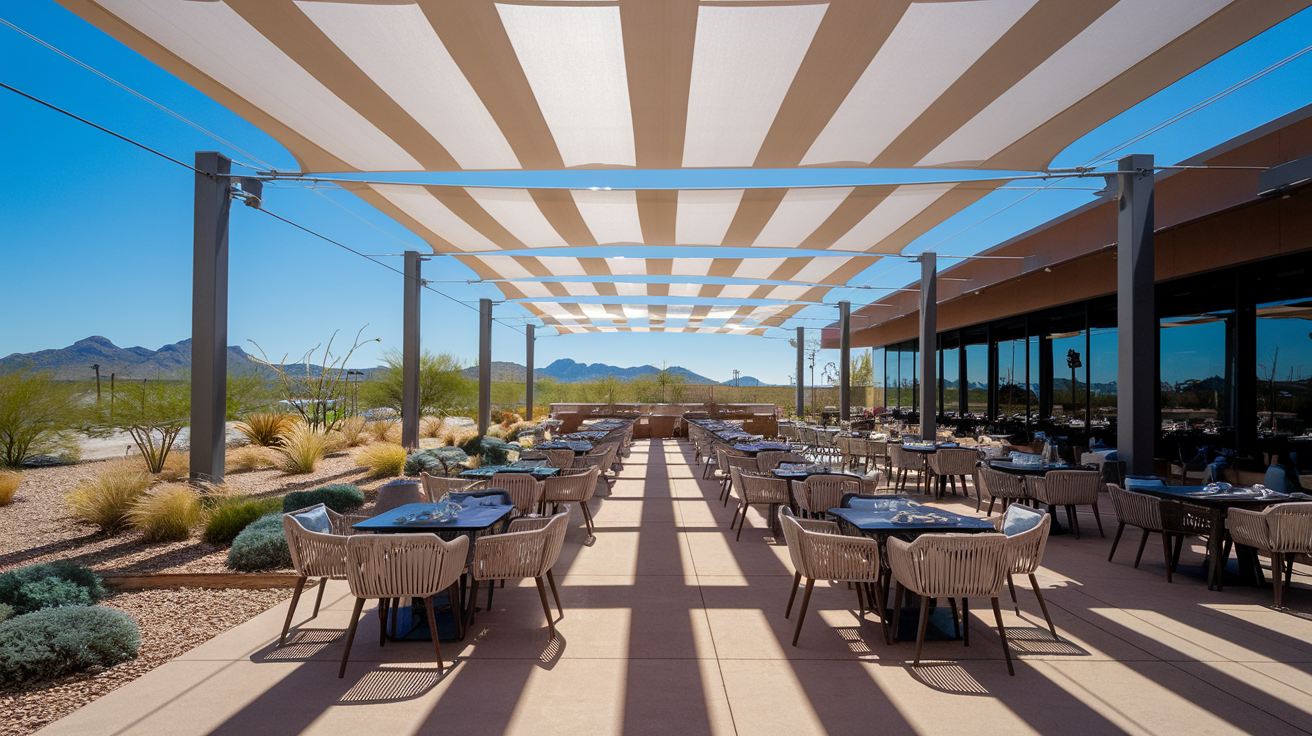
Shade pays for itself by converting hours and tables that heat would otherwise erase. A Phoenix patio that bakes from 11 a.m. to 5 p.m. for roughly seven months a year is dead inventory; cover it, and that square footage flips back into bookable seats across lunch, happy hour, and the shoulder seasons that make up most of the Valley calendar. The unit to watch is revenue per covered seat: if a shaded four-top turns even one extra cover per service across a season, the canopy is a capital asset that pays down, not a cost.
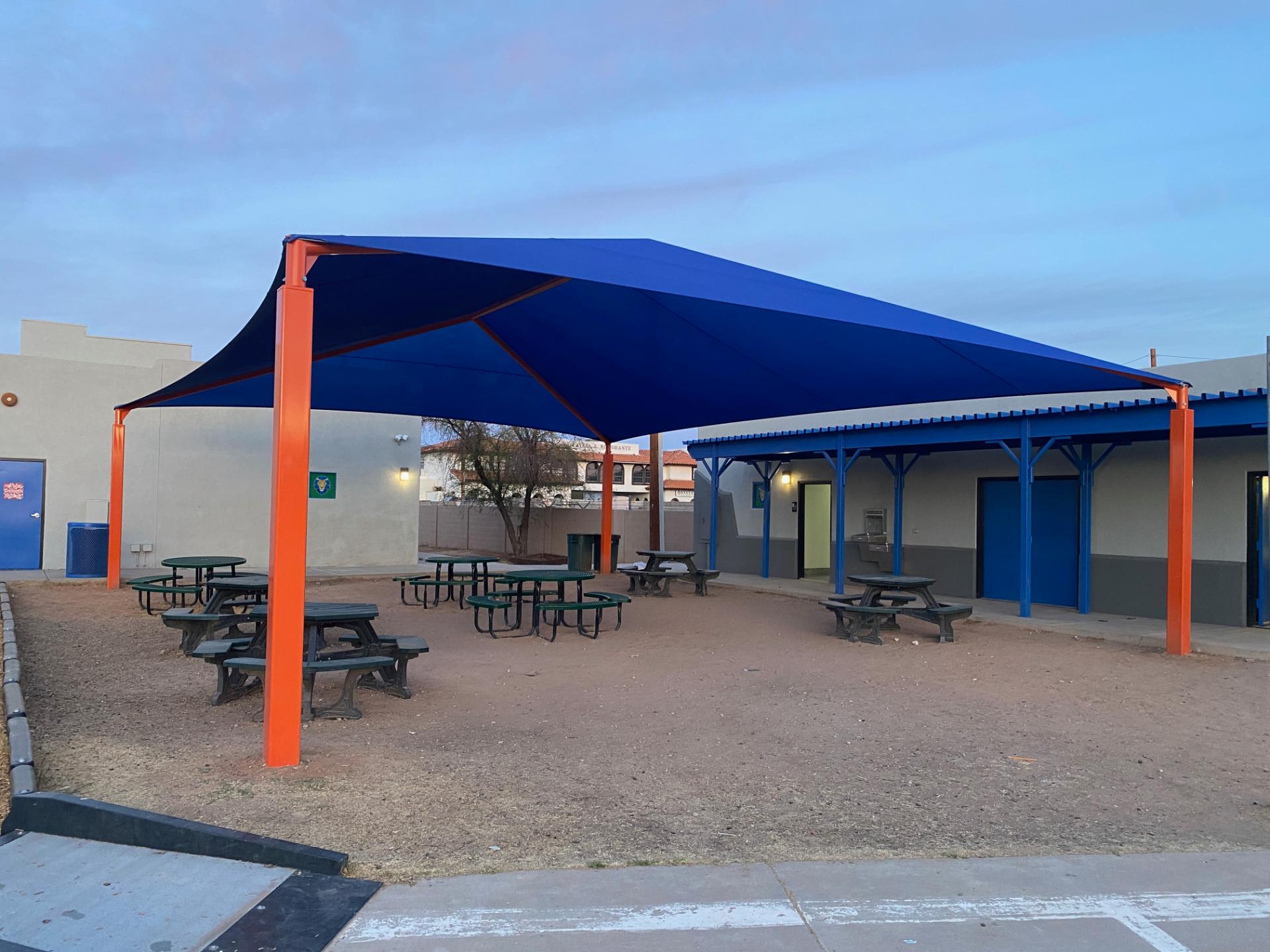
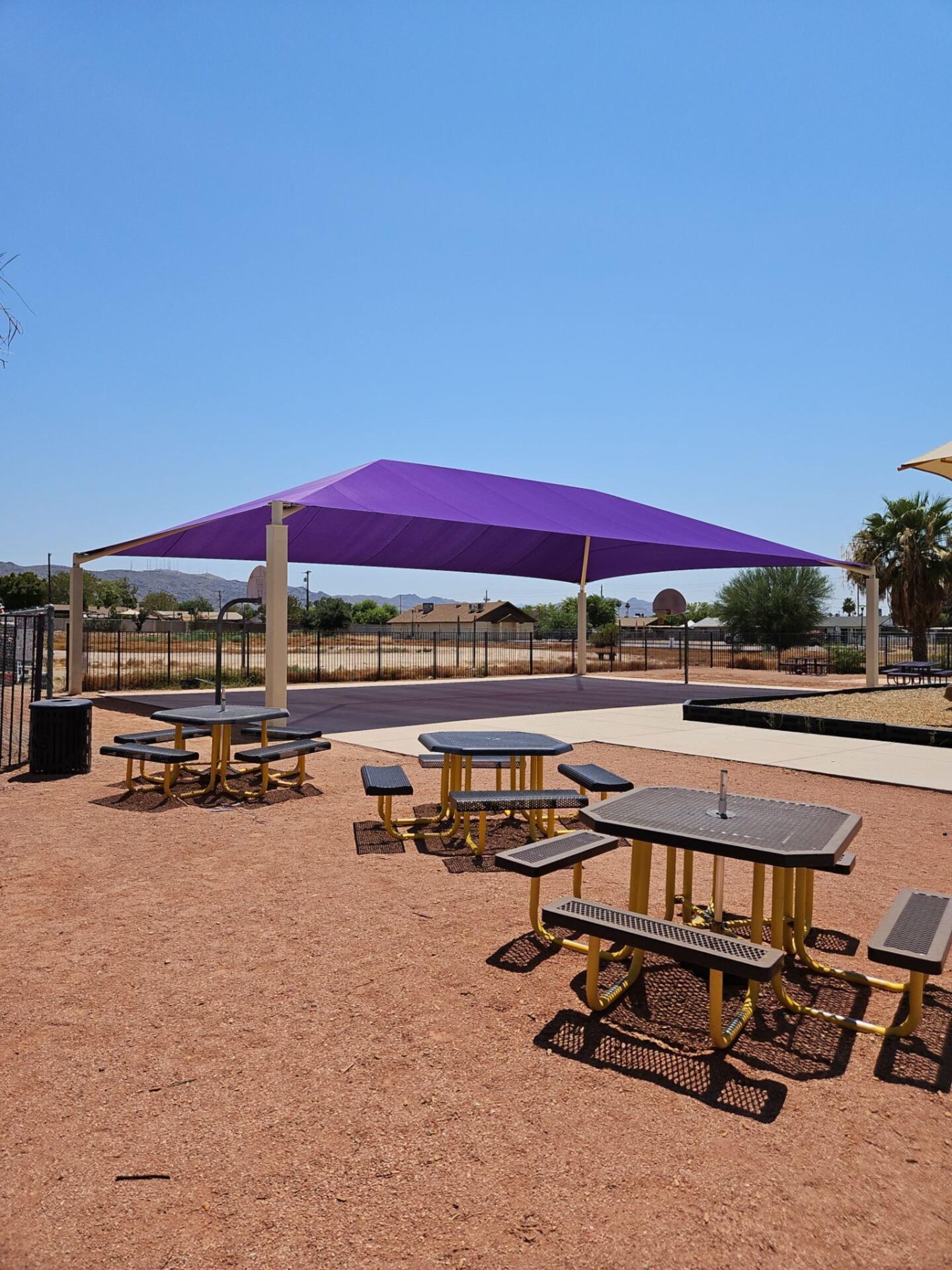
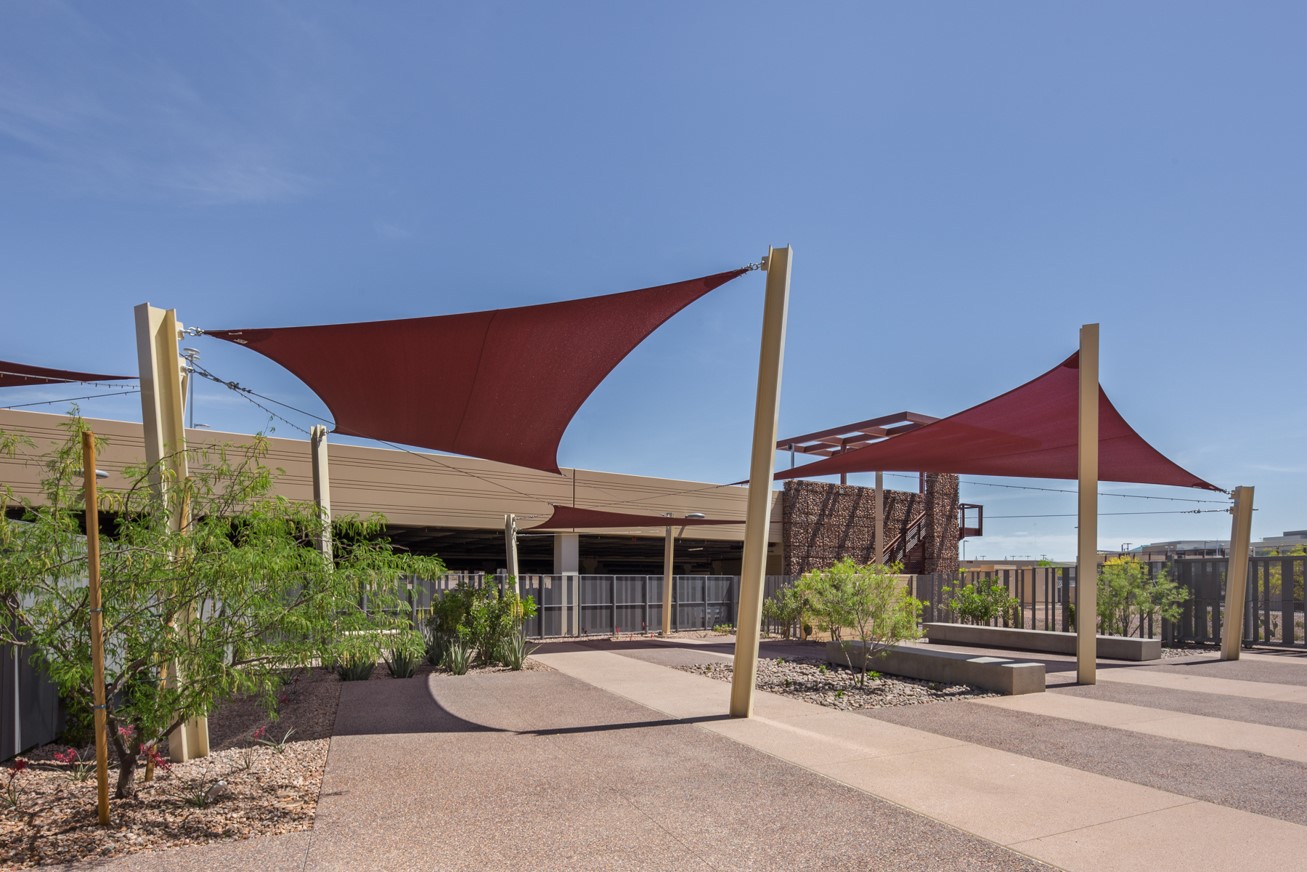
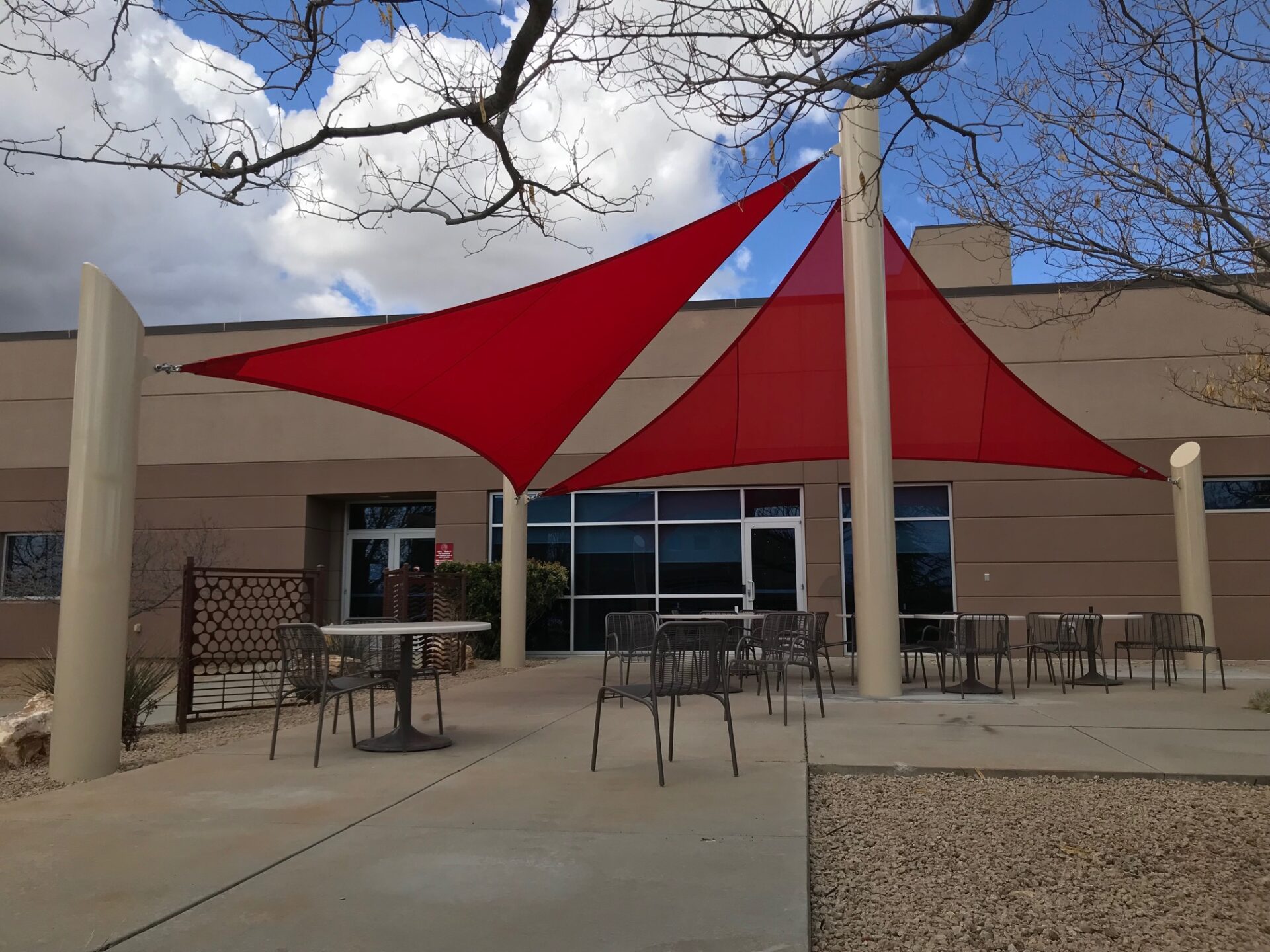
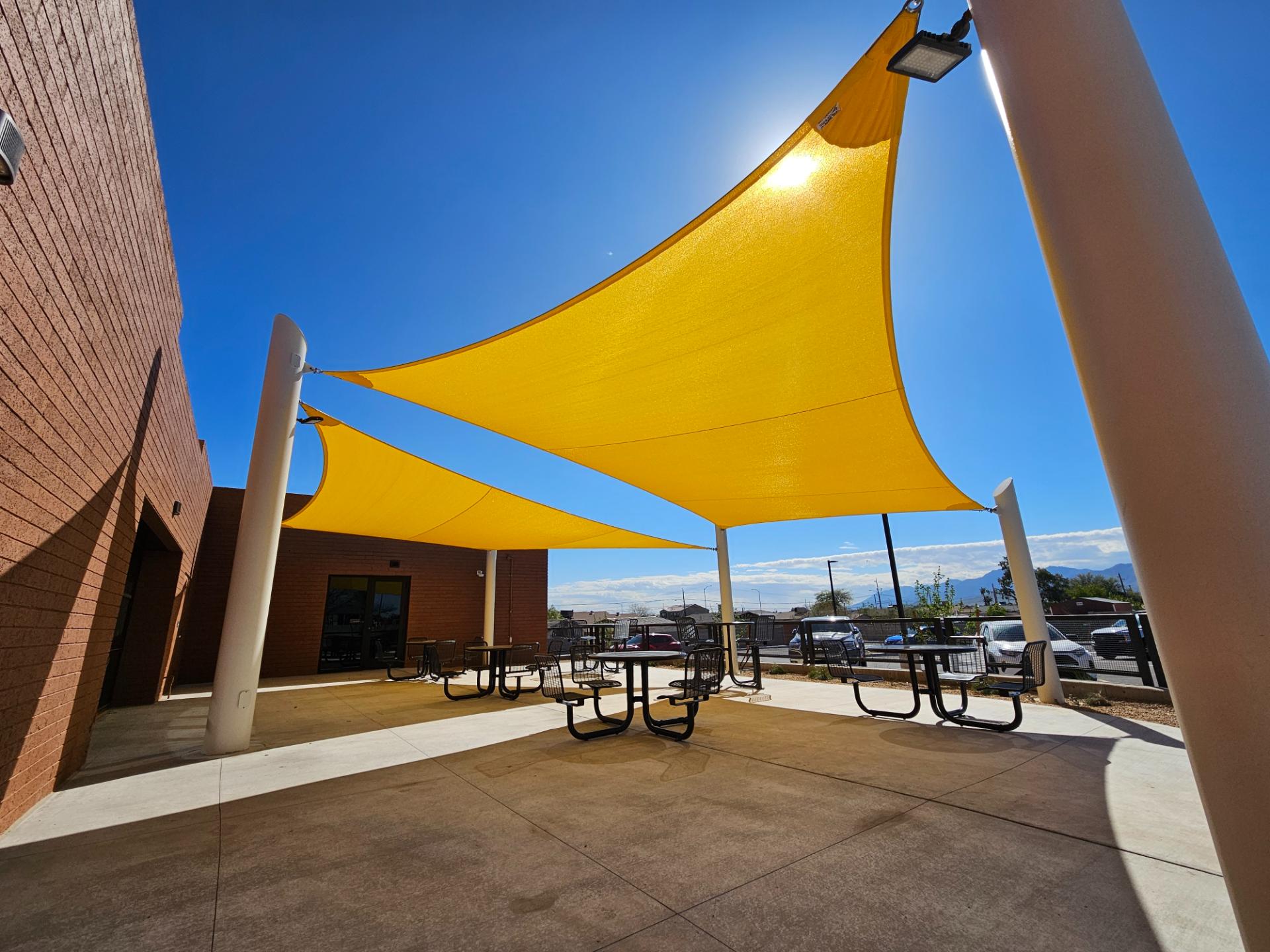
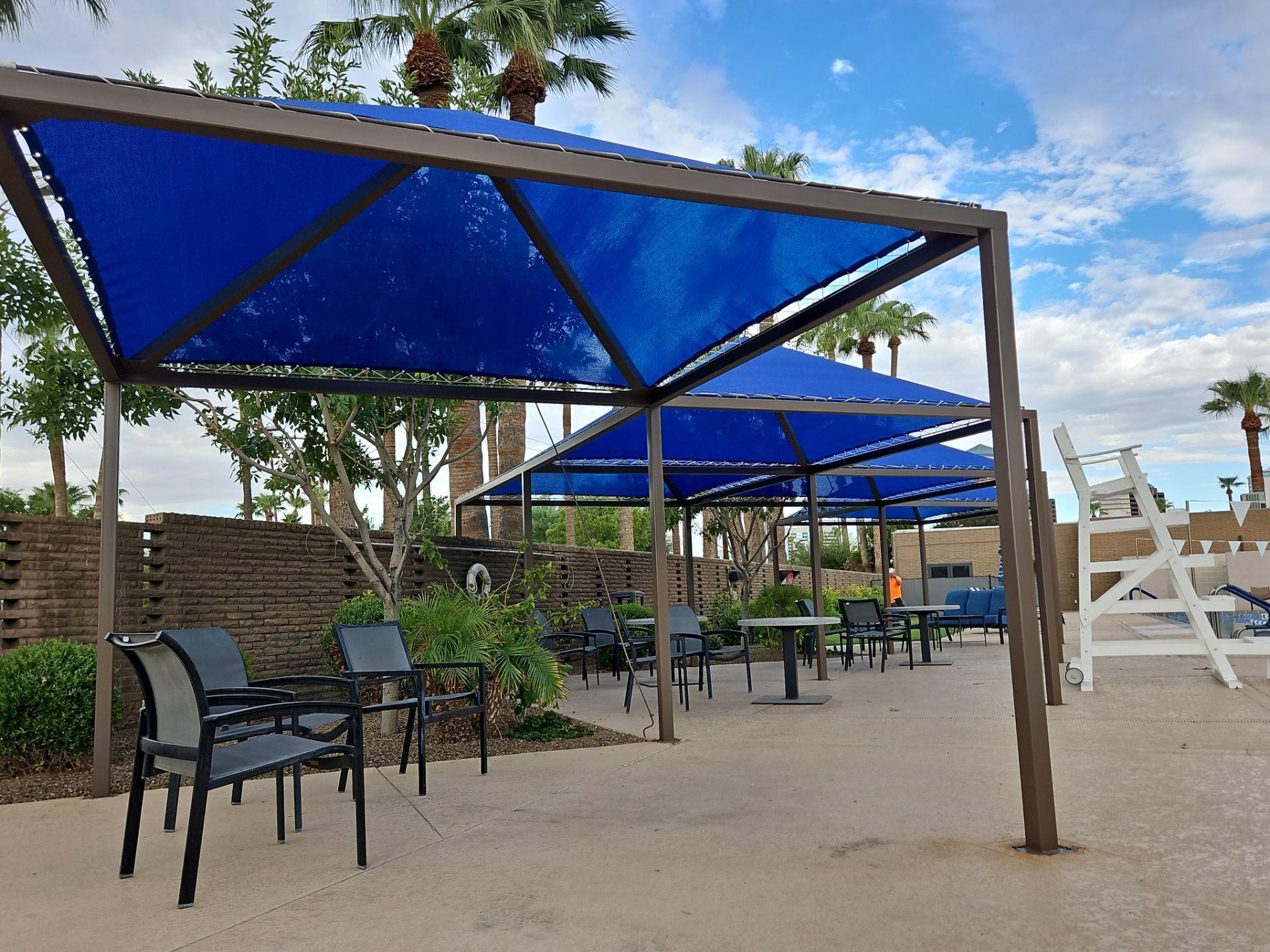
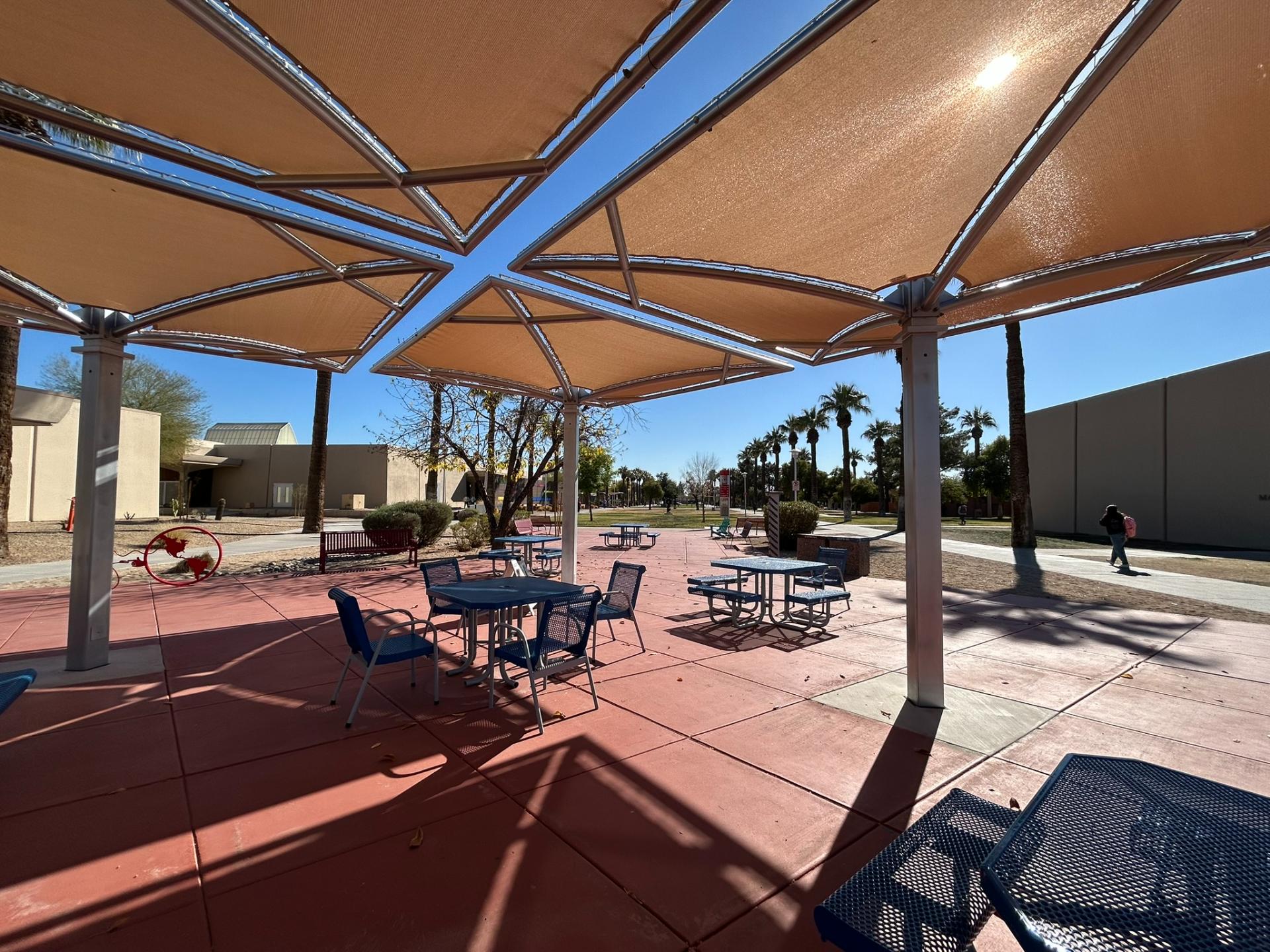
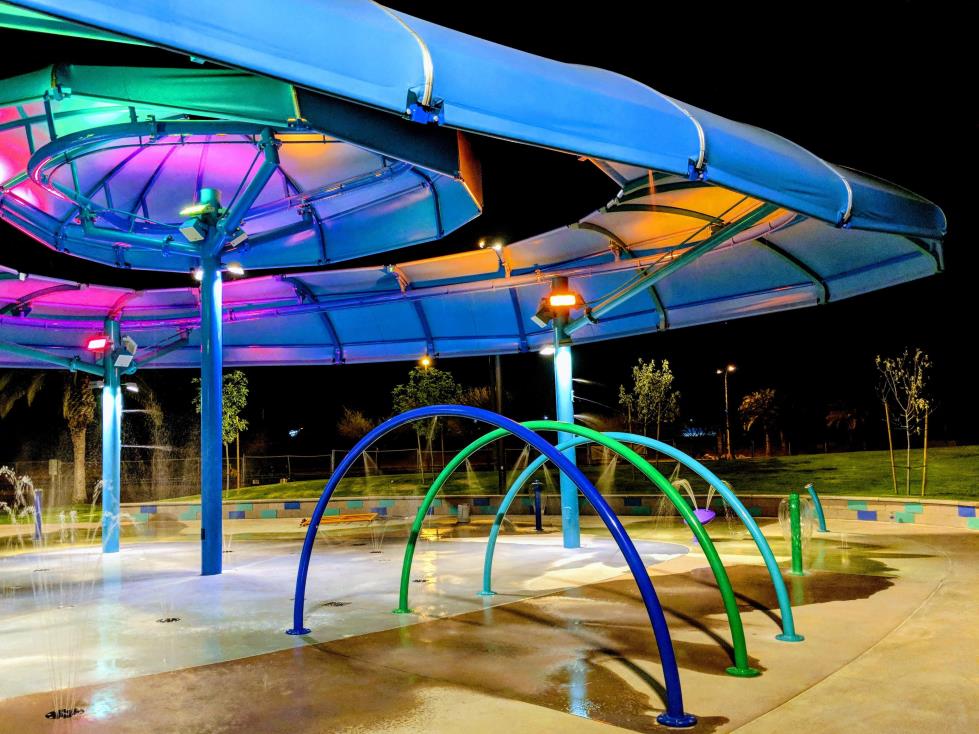
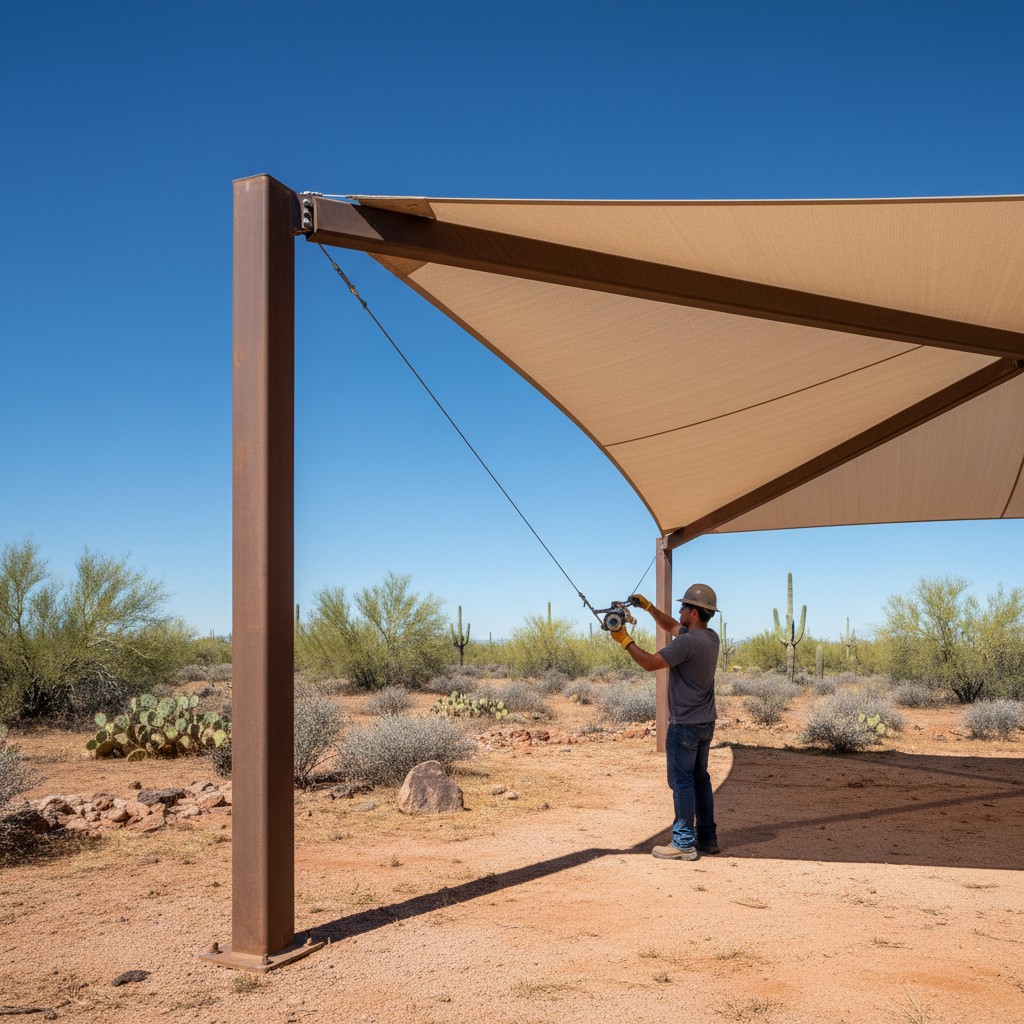
Product choice starts with seating density. A tensioned fabric sail floats over a cluster of tables with no posts in the dining field, so servers and guests move freely beneath a span that can reach 20-30 ft clear. A run of awnings hugs the building face for the tables nearest the wall, and commercial umbrellas flex table by table for a patio that reconfigures nightly. Match the structure to how the seats actually sit, and the same footprint holds more paying guests for more of the day.
Branding and design options for hospitality patios
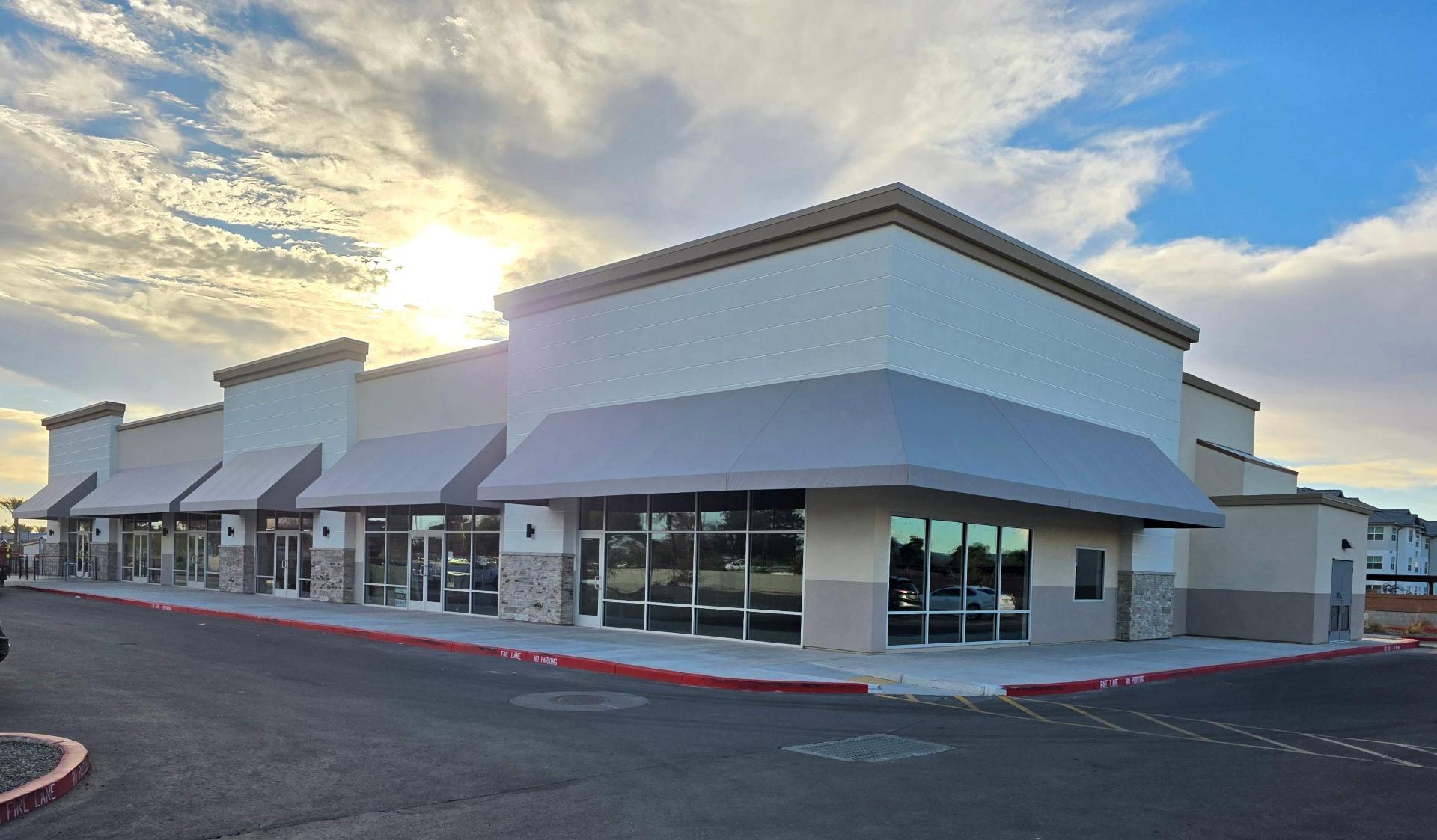
A patio canopy is the largest branded surface most restaurants own, and the choices read from the street. Knitted HDPE shade fabric comes in a broad color range, so a sail or awning can carry house colors, and a valance or fascia can print a logo where every passerby and rideshare drop-off sees it. The structure sets the tone: a three-point sail reads modern, a deep storefront awning reads classic, and a cluster of cabanas reads resort-premium, which is why pool decks and hotel patios reach for them.
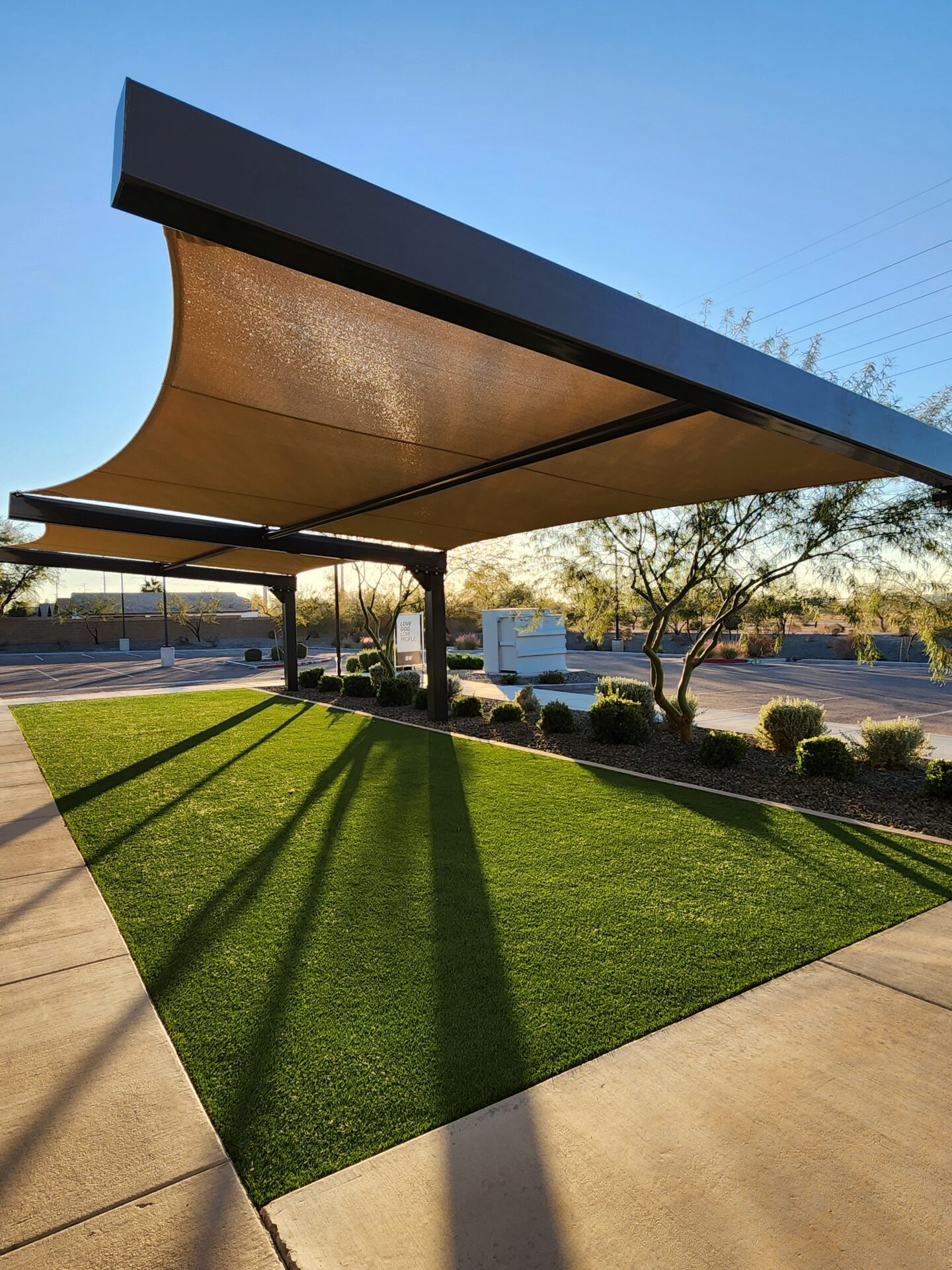
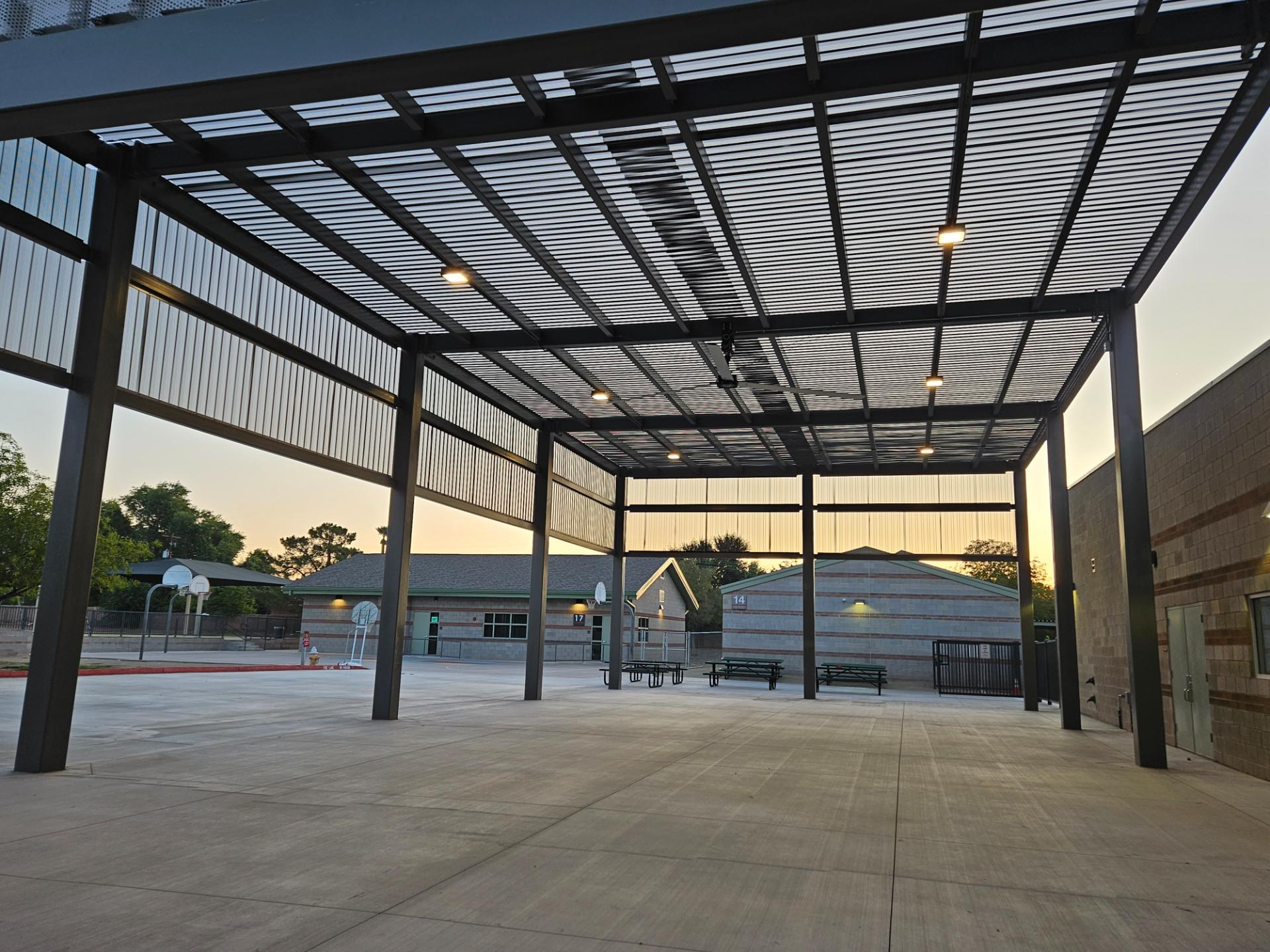
Cantilever canopies open a third lane. A flat cantilevered structure carries its load on posts pushed to one edge, so the patio gets a clean, columnless plane and an uninterrupted sightline to the bar or the band — closer to an architectural roof than a tent. For a multi-location concept, repeating the same sail geometry and brand color across patios makes a chain legible at 40 mph from the road. The shape that shades the seats is the same shape that sells them.
Clearances, egress, and permitting for food service
Food-service patios answer to more than the building code, so the design starts with clearances. A canopy over a dining patio has to preserve ADA-accessible routes and table approaches, keep a clear exit path to the required egress width, and hold height clearance that does not trap heat or block sightlines — typically the structure clears the deck by 8 ft or more so servers, trays, and guests pass freely. Where the patio includes cooking, heaters, or open flame, fire clearances and fire-rated fabric come into play, and the fabric and frame have to sit clear of any heat source by the margin the fire code sets.
Permitting runs on two tracks at once. We provide engineered, stamped drawings sized to Arizona building code and ASCE 7 wind loads; the city handles structural plan review and inspection. In parallel, a restaurant patio often touches the Maricopa County health department where the canopy shelters food prep or wash stations, and a fire marshal where egress and occupant load are in play. Sorting that sequence before fabrication — building, fire, and health, not just one counter — keeps a patio cover from stalling between departments while the season slips. A shade structure matched to your industry is engineered with these food-service constraints in mind rather than retrofitted around them later.
Materials, UV, and wind for high-traffic patios
A busy patio runs its shade hard, so the spec has to survive both the sun and the crowd. Knitted HDPE shade fabric blocks roughly 90-99% of UV depending on weave density and color, which is what drops the felt temperature under the canopy enough to keep guests seated through a 105-degree afternoon. The frame is powder-coated structural steel, baked to resist the chalking that raw desert sun forces on cheaper painted tube within a few seasons, so the structure holds its brand color rather than fading to gray behind the logo.
What the spec covers on a hospitality patio
- UV and heat. HDPE fabric blocks ~90-99% of UV and cuts radiant heat, while its open knit lets hot air rise through rather than pocketing under a solid roof.
- Wind for the Valley. Structures are engineered to ASCE 7 loads, where Phoenix design wind speeds run roughly 90-115 mph; monsoon microbursts can punch past 60 mph, and a tensioned sail sheds that wind through its curved shape better than a flat panel.
- Warranty horizon. Commercial shade fabric commonly carries a 10-15 year warranty; the steel frame outlasts it, and the fabric re-covers onto the same posts when its service life ends.
- Spans without posts. Sails and cantilevers clear 20-30 ft so the dining field stays open, while umbrellas and awnings handle tighter, table-level coverage.
Because engineering, steel cutting, welding, and install all run under one Phoenix roof, a span change to clear a fire lane or a color match to a rebrand reaches the saw the same week rather than routing through an out-of-state plant — the difference between opening the patio this season and missing it.
Common mistakes and honest caveats
The most expensive patio-shade mistake is shading the wrong hours. A canopy placed to block the noon sun can still leave the seats in glare from the low western sun by 5 p.m. — exactly when the dinner rush fills the patio — because late desert sun rakes in sideways under a flat cover. Read the afternoon angle, not just the overhead, and orient or extend the structure to catch the hours that actually seat guests. The second mistake is undersizing to save on the quote, then watching the shade fall short of the table count it was bought to cover.
The honest caveats matter on a hospitality budget. Shade fabric is a consumable: it blocks the UV that eventually breaks down the fabric itself, so plan a re-cover inside the 10-15 year window rather than treating the canopy as permanent. Wind ratings have ceilings — an engineered structure covers typical monsoon loads, not every freak microburst on record, which is why a light umbrella has to be weighted or stowed when a cell rolls through. Dust accumulates on any patio canopy, so a rinse a couple of times a year keeps grit off the fabric and out of the food zone. And a fabric sail filters rather than seals — it breaks light rain, but a patio that must seat guests through a hard downpour wants a solid roof, which is why a Tempe restaurant row of structures often mixes both. Knowing those limits up front separates a patio that earns for 15 years from one that disappoints by its second summer.
Shade Structures We Build
Frequently Asked Questions
What are the best shade options for a restaurant patio?
It depends on how the seats sit. Tensioned fabric sails float over a cluster of tables with no posts in the dining field and clear 20-30 ft, which keeps the patio open for servers and guests. Awnings hug the building face for the tables nearest the wall. Cabanas read resort-premium for pool decks and hotel patios. Cantilevers give a columnless plane and a clean sightline to the bar or view, and commercial umbrellas flex table by table for a patio that reconfigures nightly. Most hospitality patios end up mixing two of these.
Do restaurant patio shade structures need permits and egress clearances?
Yes, on more than one track. The structure needs engineered, stamped drawings and a city structural permit sized to Arizona building code and ASCE 7 wind loads, and we provide those drawings while the city handles review and inspection. Separately, the design has to preserve ADA-accessible routes, keep the required egress width and exit path clear, and clear the deck by roughly 8 ft or more. Patios with cooking, heaters, or open flame add fire clearances and fire-rated fabric, and food-service areas can involve the county health department, so the building, fire, and health reviews are sorted before fabrication.
How much does a restaurant patio shade structure cost, and what is the ROI?
Cost tracks the structure type, span, post count, fabric, and foundation, so canopies are quoted per project rather than off a flat per-square-foot chart — a few umbrellas sit well below a 30-ft cantilever over a full dining patio. The ROI case runs on revenue per covered seat: a Phoenix patio loses its 11 a.m.-to-5 p.m. hours and most of a seven-month shoulder season to heat when uncovered, and shading that inventory back into bookable seats is what pays the canopy down. We price after reviewing the patio layout, sun angles, and code constraints so the number reflects the real structure.
Can a patio canopy carry my restaurant’s branding?
Yes — a patio canopy is the largest branded surface most restaurants own. Knitted HDPE shade fabric comes in a broad color range, so a sail or awning can carry house colors, and a valance or fascia can print a logo where street traffic and rideshare drop-offs see it. The structure type sets the tone too: a three-point sail reads modern, a deep awning reads classic, and cabanas read premium. For a multi-location concept, repeating the same sail geometry and brand color across patios makes the chain legible from the road.
Will a patio shade structure hold up to Arizona monsoon storms?
An engineered structure handles typical monsoon loads, but it has limits worth stating. Fabric sails and cantilevers are designed to ASCE 7 wind loads, where Valley design wind speeds run roughly 90-115 mph, and a tensioned sail sheds wind through its curved shape better than a flat panel. Monsoon microbursts can punch past 60 mph, and no canopy is rated for every freak gust on record — which is why fixed structures are engineered and anchored to the site while loose umbrellas should be weighted or stowed when a cell rolls in. A fabric sail also filters rather than seals, so a patio that must seat guests through a hard downpour wants a solid roof.