or call (602) 265-0905 — no-obligation, on-site.
Commercial Shade Structures in Tempe, Arizona
Since 1998
Designing & building Arizona shade
In-House Fabrication
Built at our Phoenix shop
Engineered & Permit-Ready
Stamped drawings for AZ wind loads
Free On-Site Quote
No-obligation project assessment
Total Shade LLC designs and builds commercial shade structures for Tempe’s restaurant patios, ASU-adjacent courtyards, and student-housing amenity decks — the places where seating turns over from 11 a.m. lunch through late-night Mill Avenue crowds. We fabricate steel frames and HDPE shade fabric in-house in Phoenix and have done shade work across the Valley for 25+ years. Tempe’s draw is foot traffic: dense student and multifamily housing, a year-round campus calendar, and dining districts where covered seats earn more than open ones. Most of our Tempe builds cover spans of 12 to 40 ft and target shaded surface temperatures 15 to 30 degrees below bare concrete.
Shade that keeps high-traffic patios full
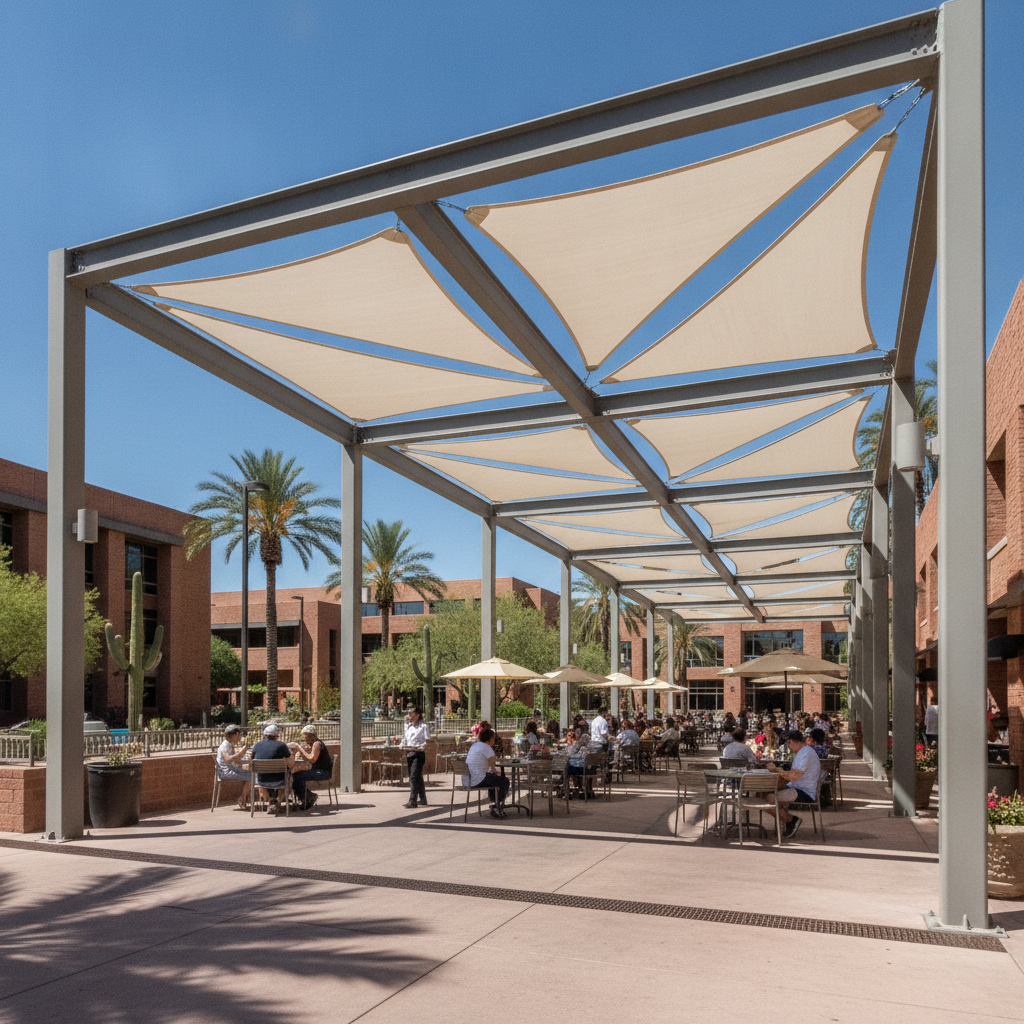
For a Tempe restaurant or cafe, shade is a seating-capacity decision, not a comfort add-on. A patio that bakes from noon onward loses its outer tables for six to eight hours a day in summer, while a covered patio keeps every seat sellable. Knitted HDPE shade fabric blocks roughly 90 to 99% of UV depending on weave density, and a shaded surface typically runs 15 to 30 degrees cooler than uncovered pavers — enough to move guests outside instead of crowding indoor tables.
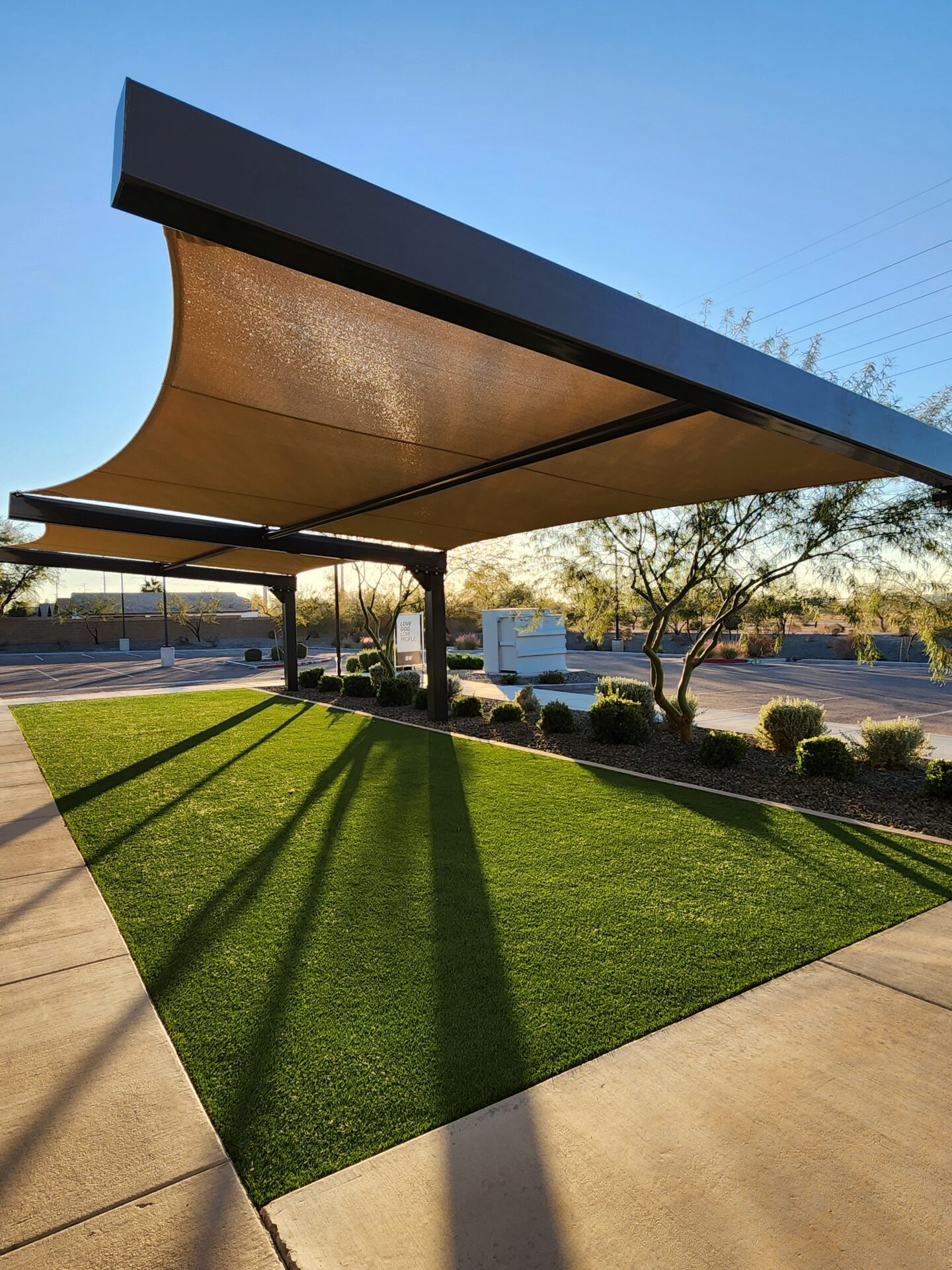
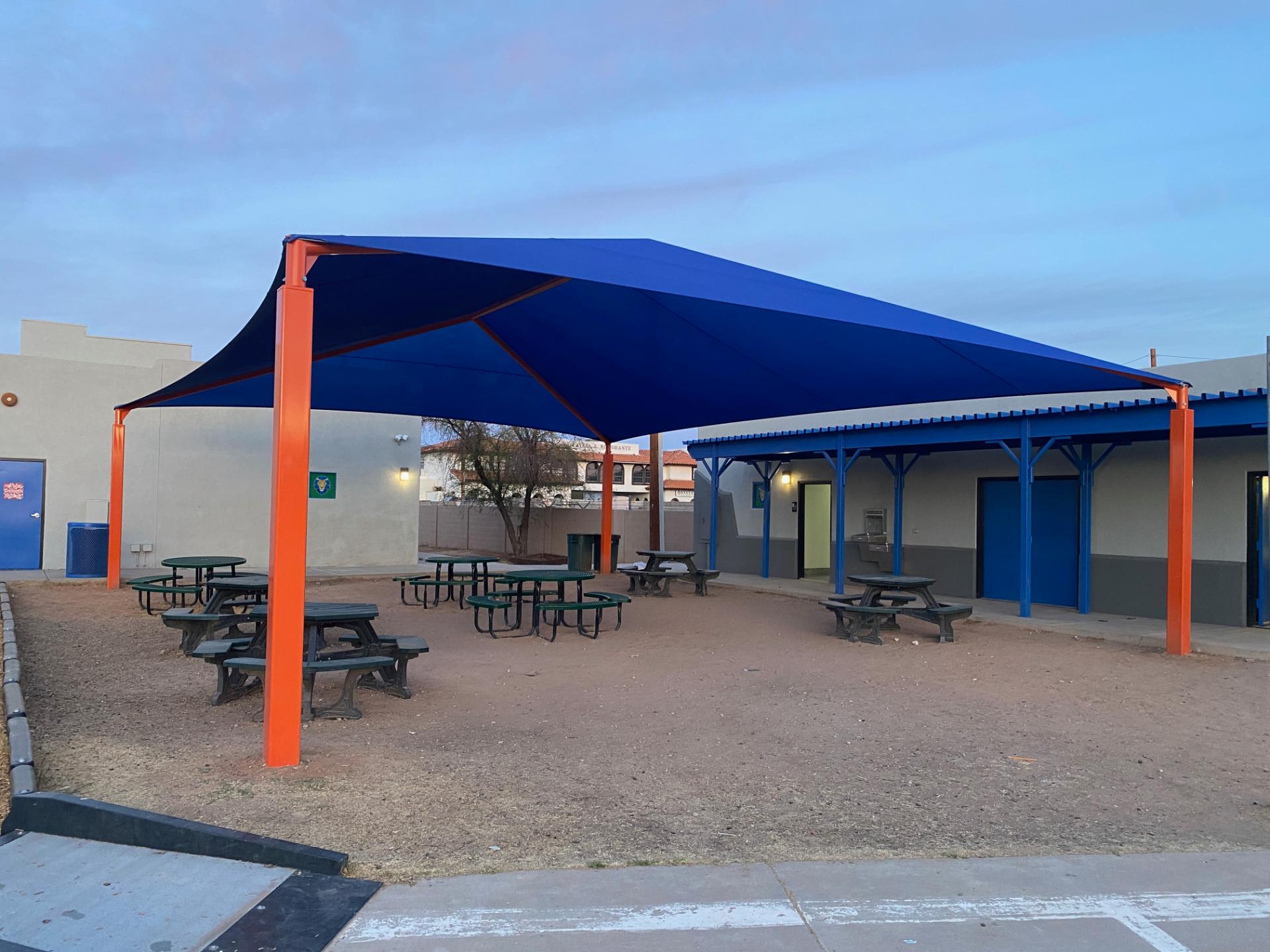
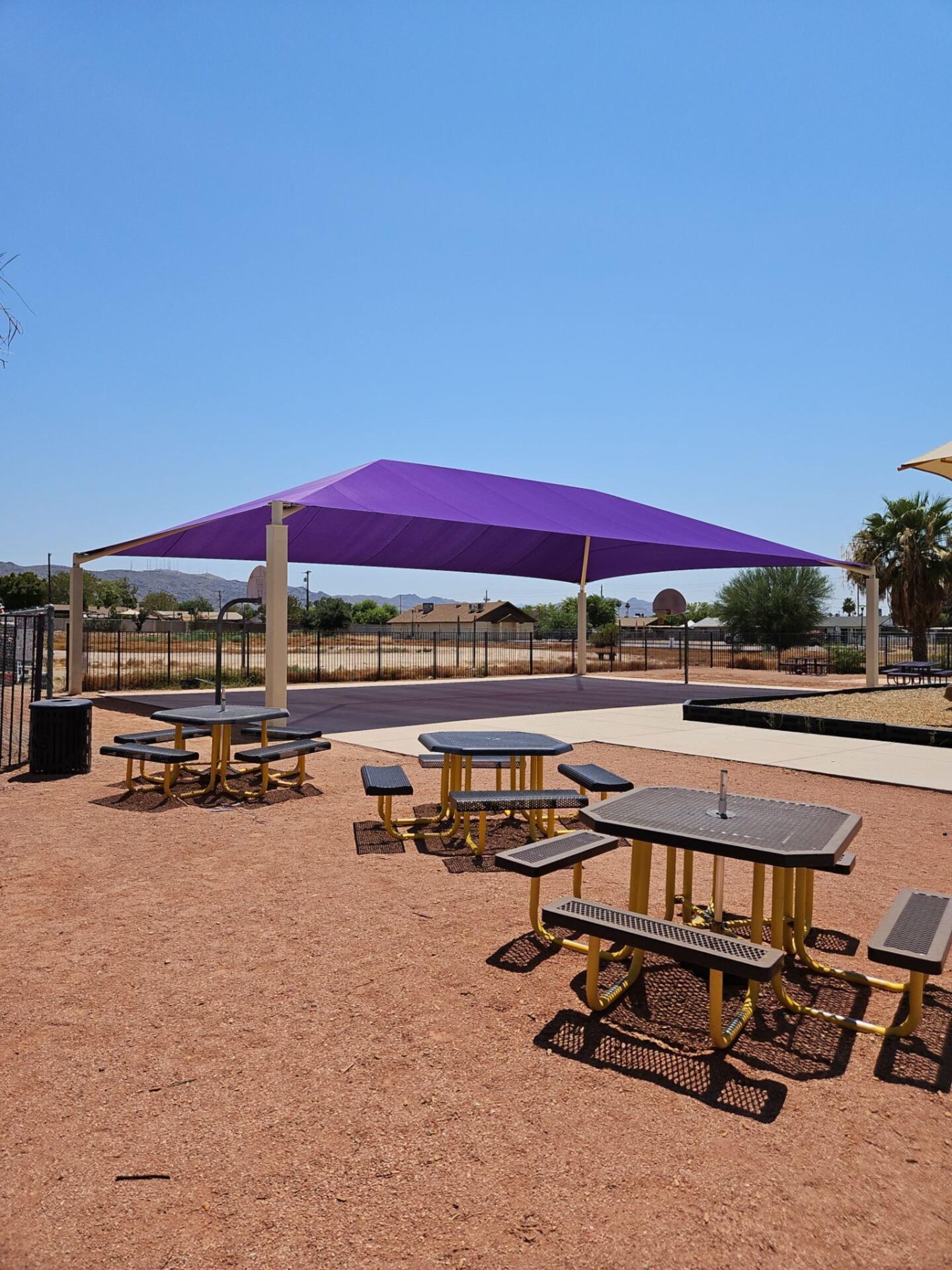
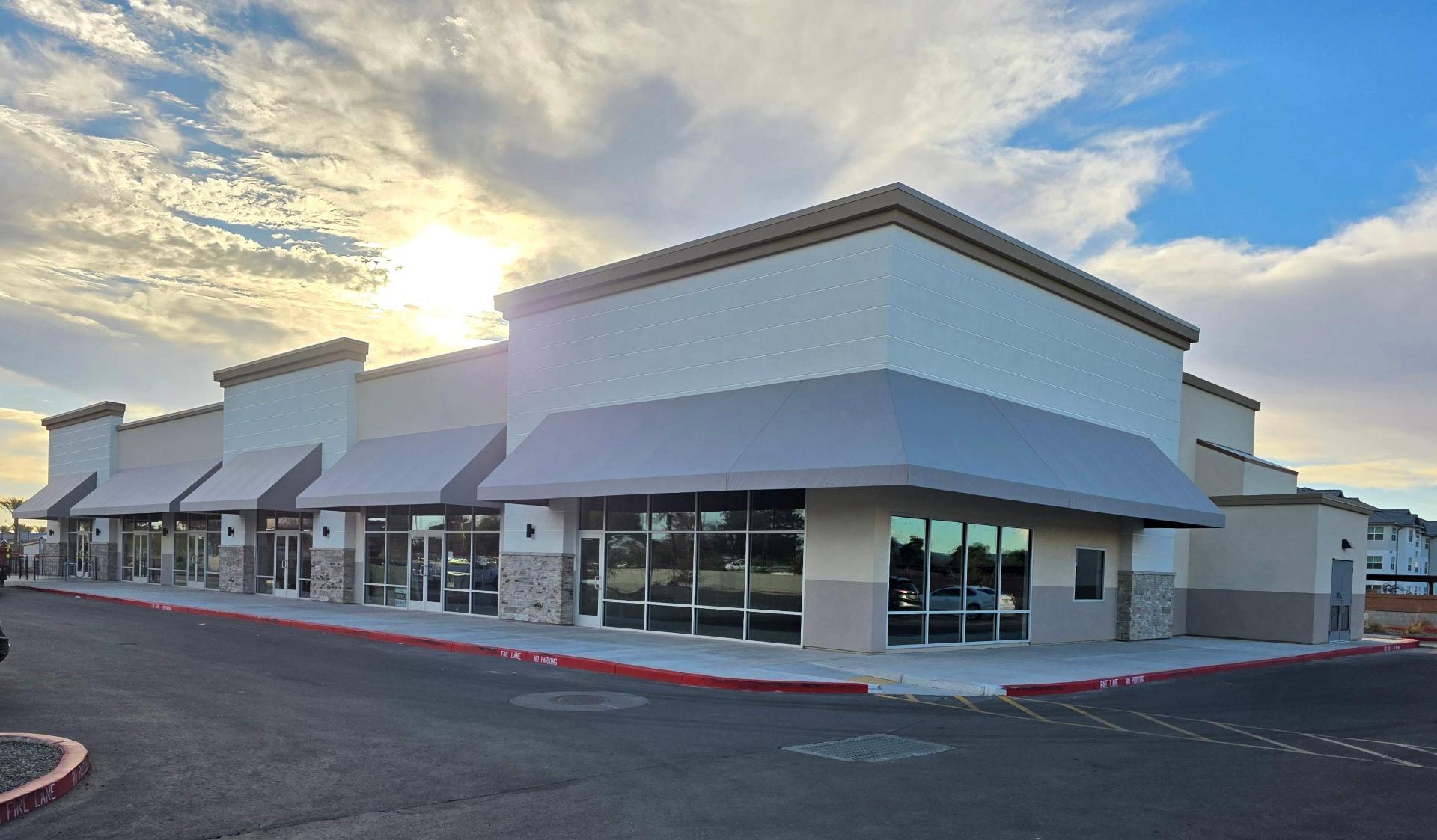
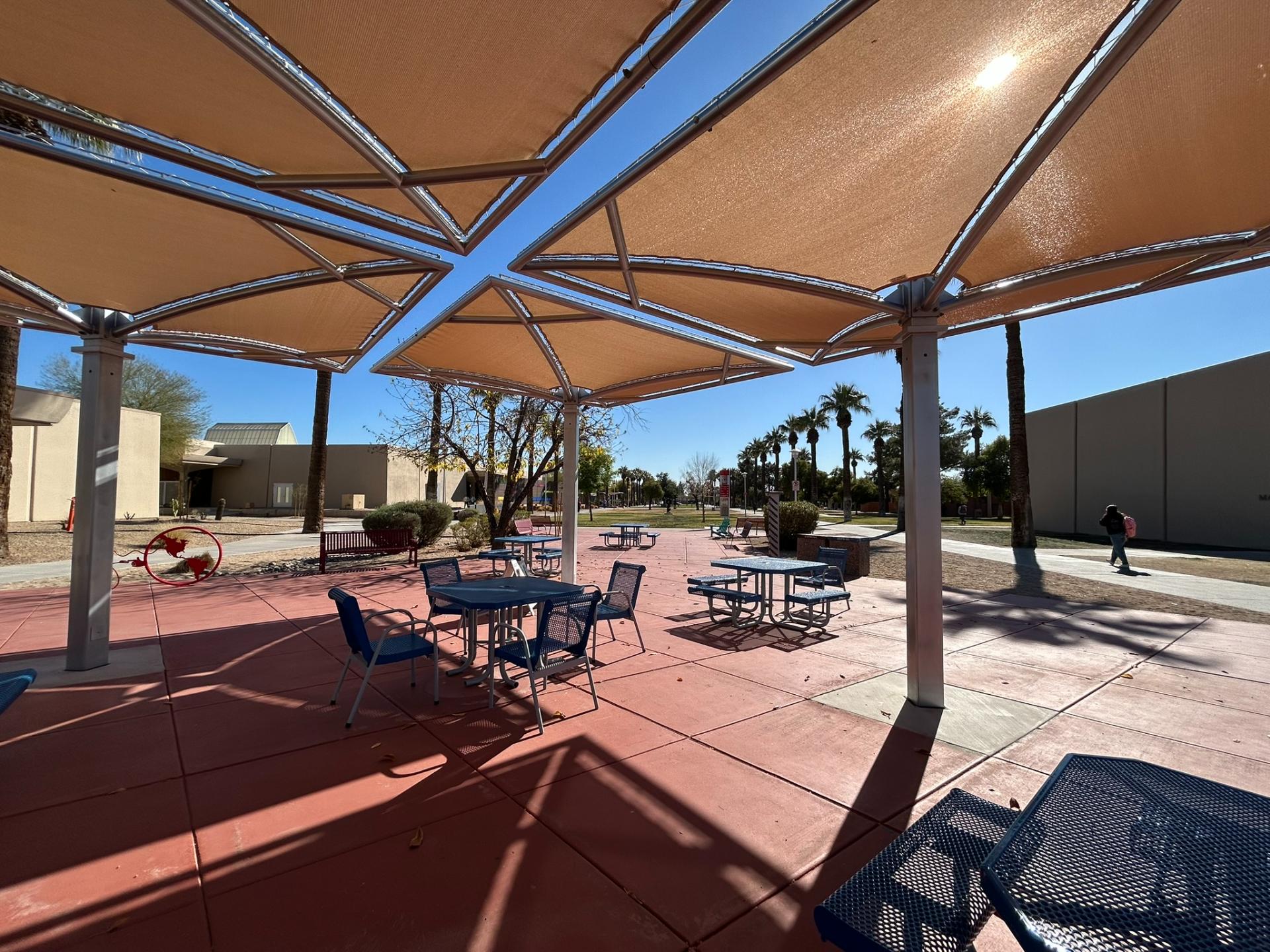
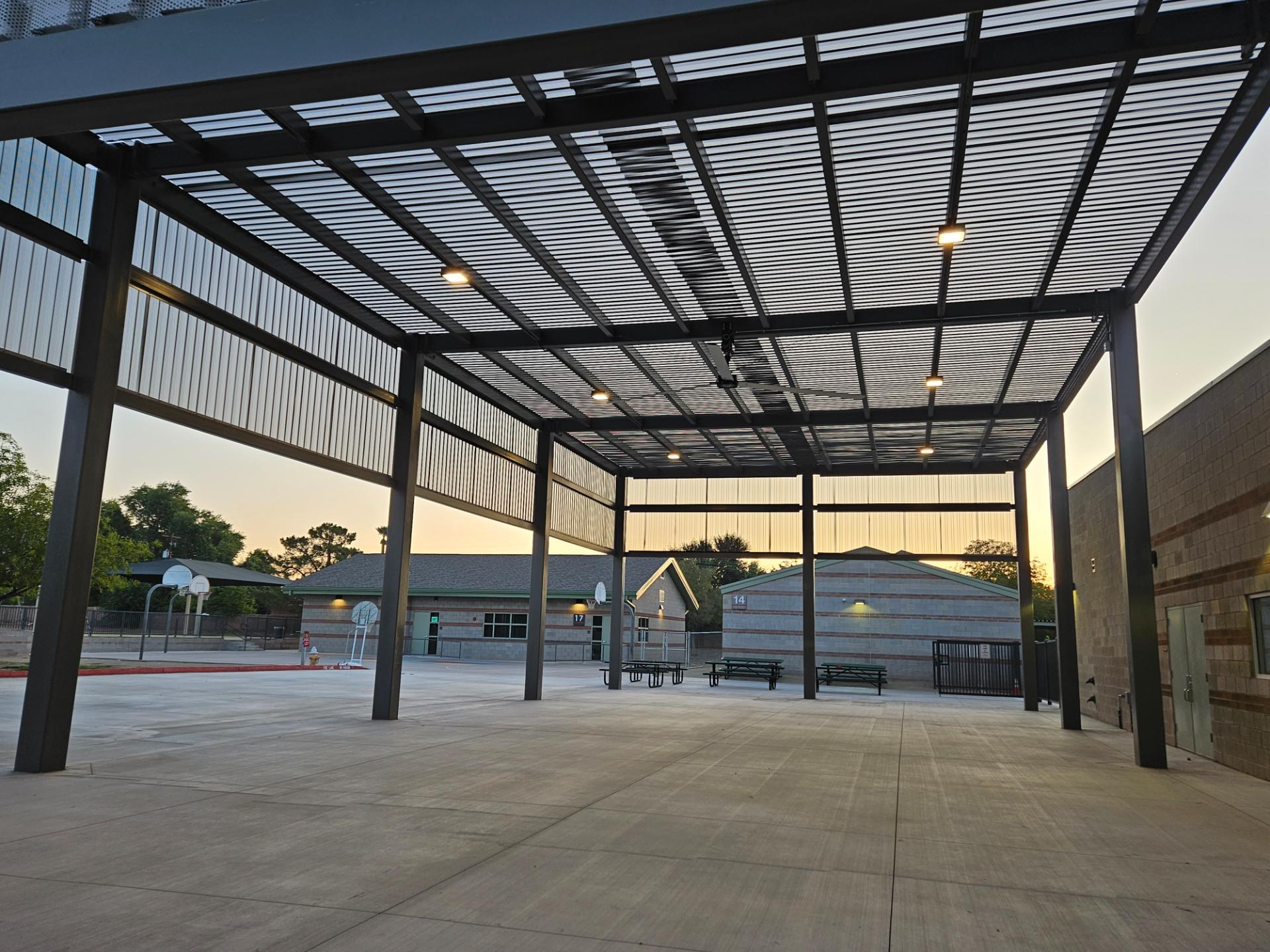
For dining edges along buildings, awnings attach to the structure and throw clean linear cover over a row of tables without planting posts in the walkway. Where a patio sits open in a courtyard or on a corner, a flat cantilevered shade structure shades the full footprint from one side, leaving 100% of the seating area column-free. Quick-turn tables and tight service lanes both stay clear.
Amenity decks for student and multifamily housing
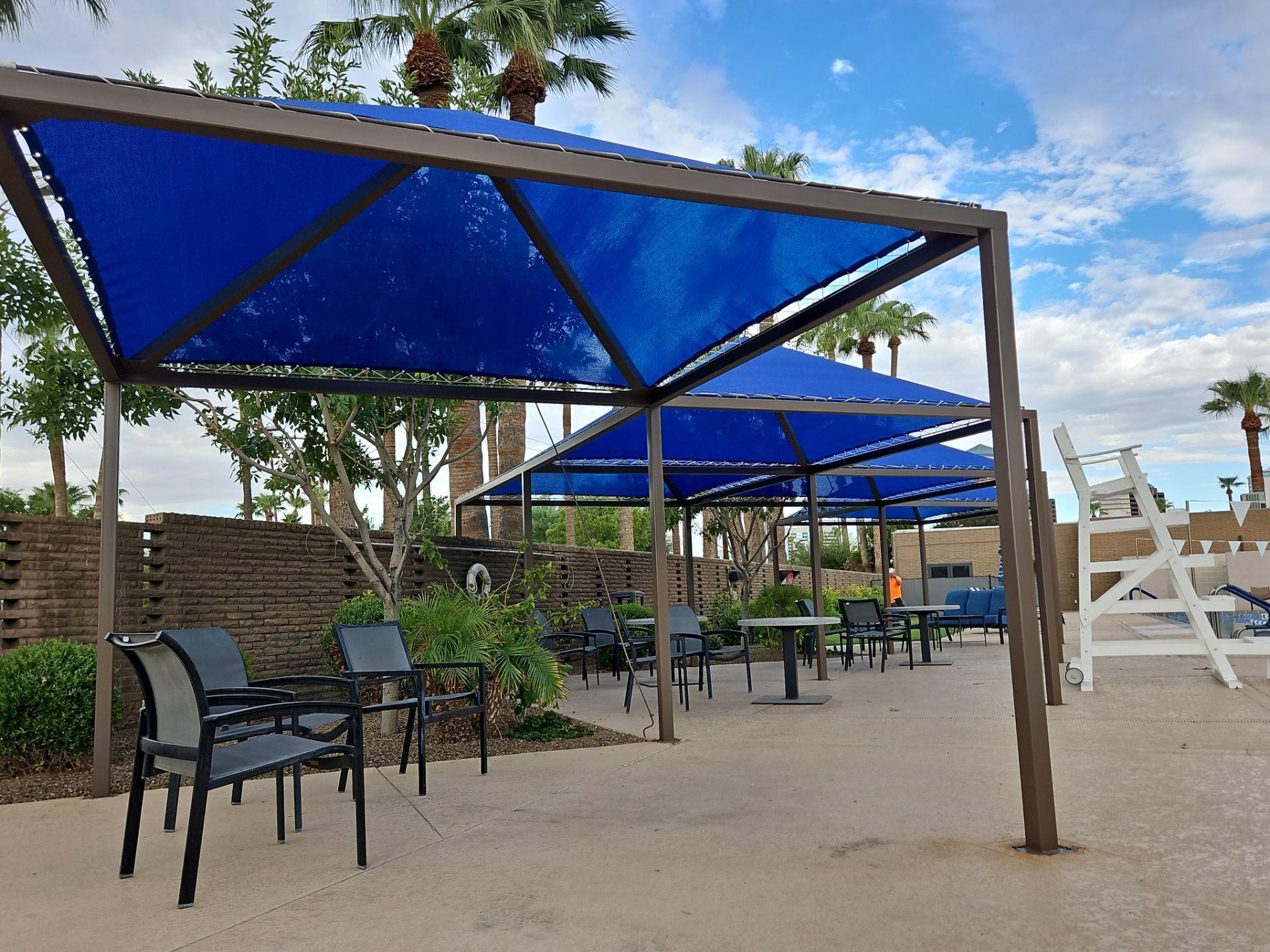
Tempe’s apartment and student-housing market competes on amenities, and a shaded pool deck or courtyard is one of the most-used. Mid-rise communities near campus pack 200 to 600 beds into a block, so a single amenity deck absorbs heavy daily use — and uncovered, it sits empty from late morning through late afternoon for much of the year.
What works on a residential deck
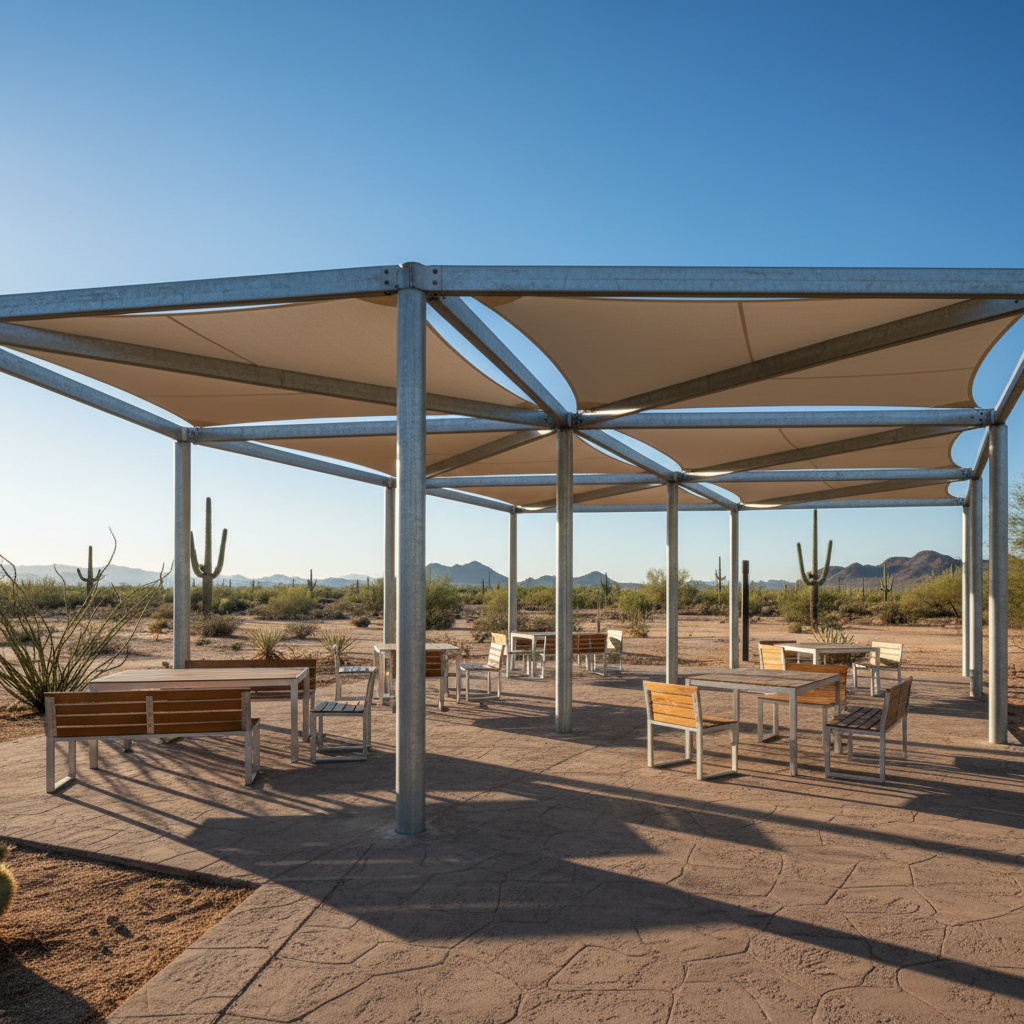
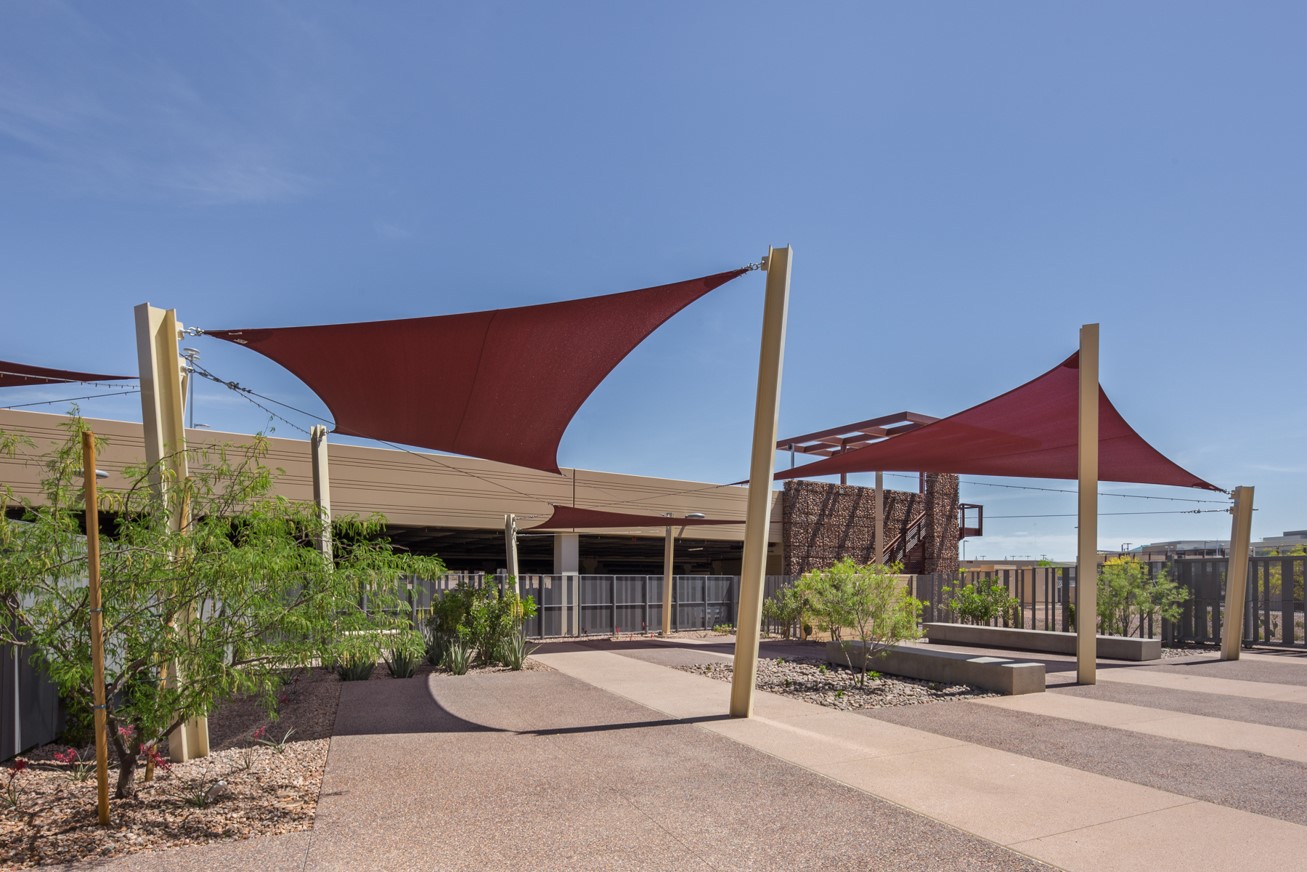
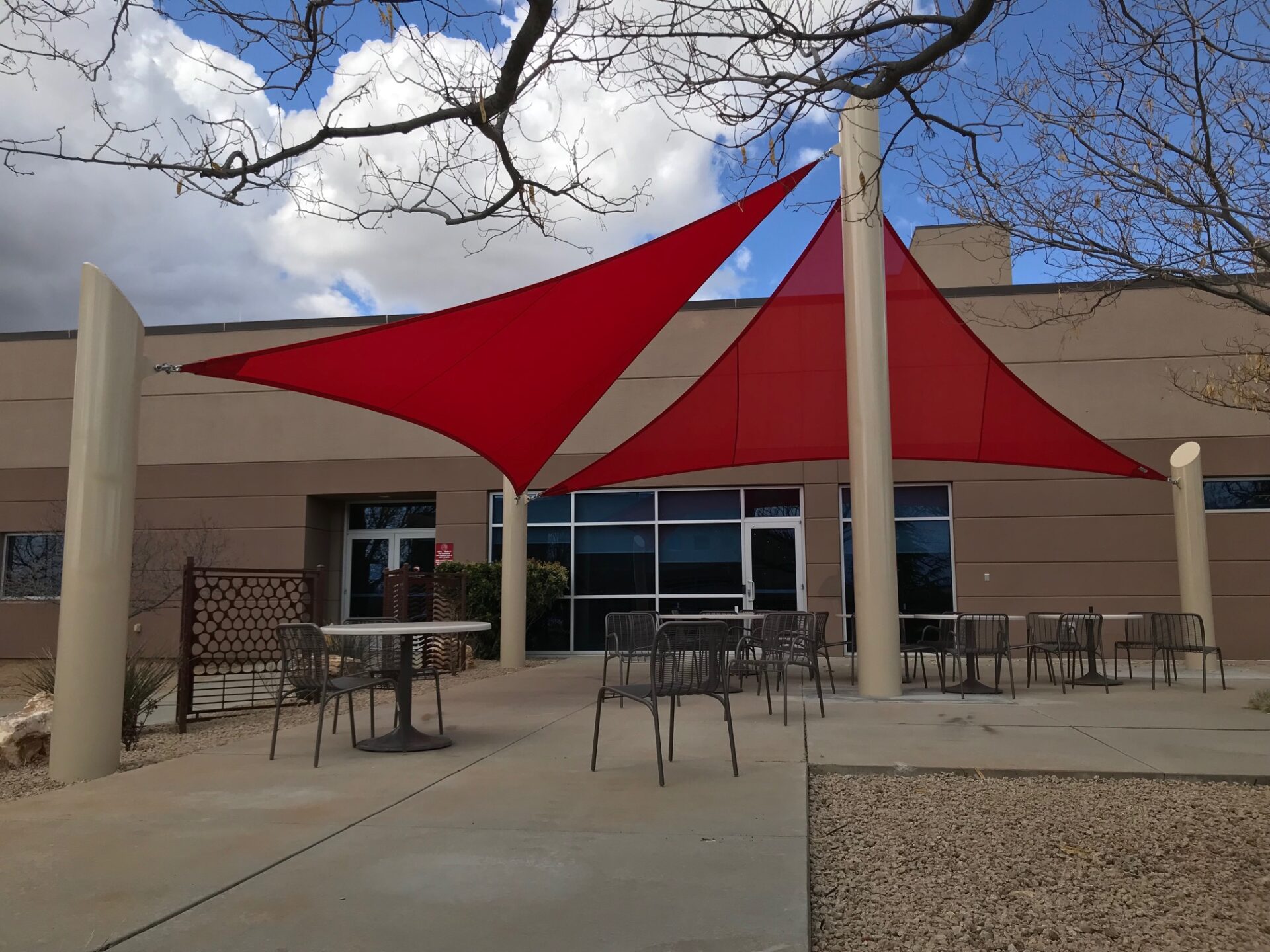
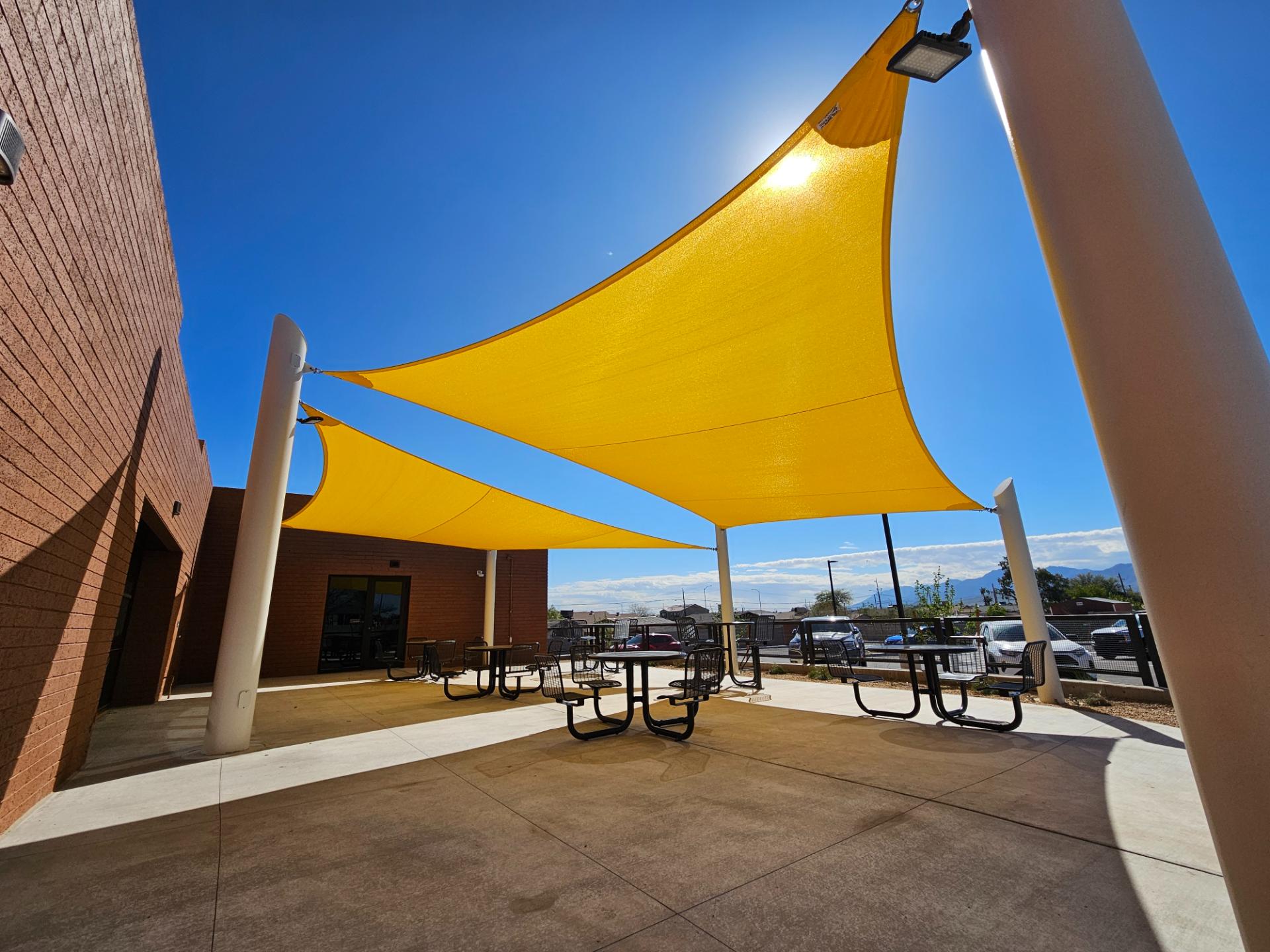
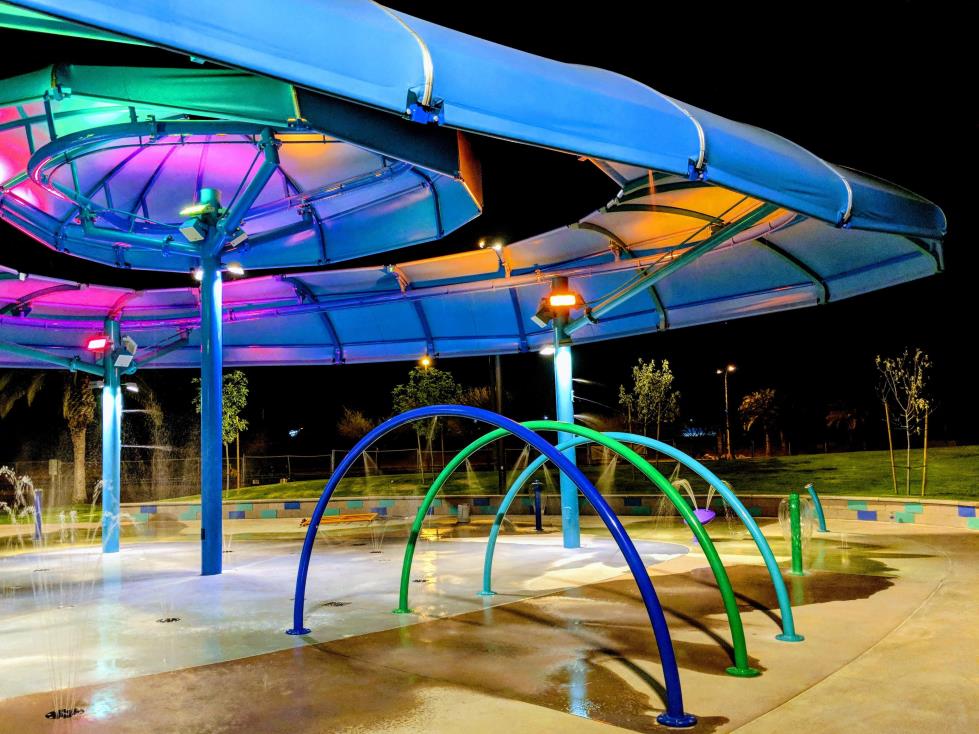
Over pool lounging and grill stations, 3-point tensioned fabric sails add height and angle that reads as design rather than infrastructure — useful when leasing photos sell the space. Typical sail spans run 18 to 32 ft per panel, and overlapping two or three at different heights covers an irregular deck while letting evening light through. For poolside reading nooks and individual cabana zones, freestanding commercial umbrellas with 9 to 13 ft canopies give flexible, movable cover that staff can reposition as sun angle shifts across the day.
Wind exposure near Tempe Town Lake
Shade near Tempe Town Lake has to be engineered for gusts, not just sun. The open water and surrounding low-rise corridors give monsoon microbursts a clean run, and those downdrafts can exceed 60 mph — well above an everyday breeze. Maricopa County requires structures engineered to Arizona building code and ASCE 7 wind loads, with Valley design wind speeds landing roughly in the 90 to 115 mph range depending on the site and structure category.
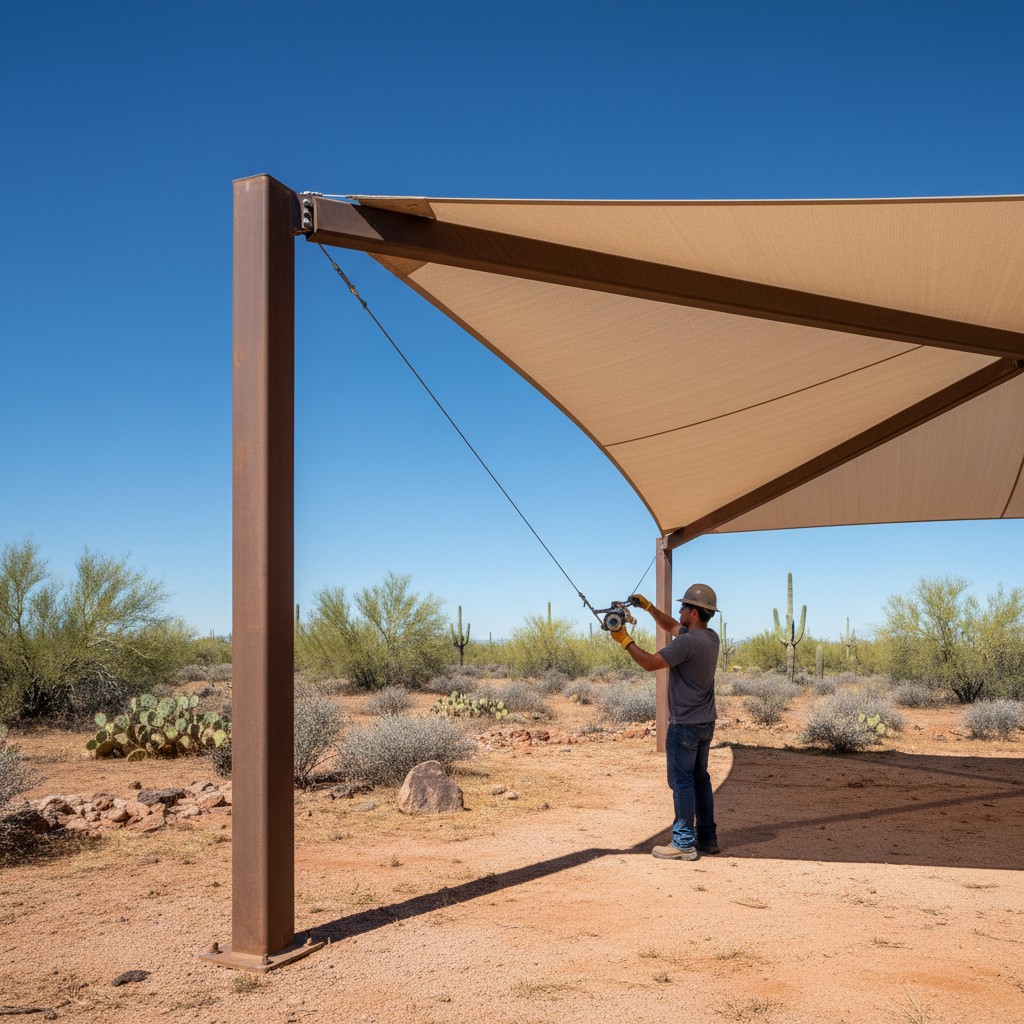
That margin lives in the steel and the connections, not the fabric. We size powder-coated steel posts and footings to the engineered load and stamp the drawings so the design intent is documented. Tensioned sails carry a real advantage in gusty exposures: the fabric is engineered to flex and shed wind rather than catch it like a flat panel. The trade-off is honest — sails need correct tension and periodic re-tensioning, and any fabric structure is built to a rated limit, not an unlimited one.
Materials that survive constant use
In Tempe, the failure mode is wear, not just age. A campus-district patio or amenity deck cycles people, furniture, and cleaning crews under it every day, so the structure has to hold up to handling as much as weather. We build frames from powder-coated steel — the coating resists the chips and corrosion that bare or painted steel picks up around saltwater pools and daily foot traffic.
The fabric is the consumable layer, and we treat it that way. Commercial HDPE shade fabric commonly carries manufacturer warranties of 10 to 15 years against UV breakdown, and it is designed to be re-covered without replacing the frame. Plan on rinsing dust off canopies a couple of times a year — Valley dust is constant, and clean fabric holds its color and tension longer. When a canopy finally fades or tears, canopy replacement and repair reskins the existing steel, so a 15-year-old frame gets a new top for a fraction of a full rebuild.
Where Tempe shade projects go wrong
The most common mistake is undersizing for the sun’s travel, not the structure’s footprint. A canopy sized to the patio outline shades the ground only at solar noon; by 4 p.m. the shadow has walked 6 to 10 ft off the seating, and the outer tables bake again. We size and orient cover to the afternoon sun angle, which on a west-facing Mill Avenue patio usually means extending the canopy past the slab edge or angling a sail toward the southwest.
Two more failures we see: skipping re-tensioning on fabric (a loose sail flutters, wears at the seams, and snaps faster in a gust), and planting posts where they choke a service lane or ADA path. A 36-inch clearance that looks fine on paper disappears once tables and a host stand go in. We walk the live traffic pattern before locating footings so the structure shades the seats without blocking the flow that fills them.
Every Shade Structure We Build for Tempe
Planning a shade project in Tempe?
Call (602) 265-0905 for a free assessment.
Serving Tempe and the Phoenix Metro
Total Shade LLC builds shade structures in Tempe as part of our Phoenix-metro service area, including nearby Mesa and Chandler. From our Phoenix fabrication shop we deliver engineered, permit-ready shade across the entire Valley.
Frequently Asked Questions
Do I need a permit for a shade structure on a Tempe restaurant patio?
Yes, a permanent commercial shade structure in Tempe requires a building permit, and the City handles plan review and inspection. We provide engineer-stamped drawings sized to Arizona building code and ASCE 7 wind loads so the submittal has what reviewers need. Permitting timelines vary by scope, so build a few weeks into the schedule before a patio reopen.
How well will shade hold up over a student-housing amenity deck that gets used every day?
A powder-coated steel frame is built to last decades under daily use, and the HDPE fabric on top commonly carries a 10 to 15 year UV warranty. The fabric is the wear layer — when it eventually fades or tears, we re-cover the existing frame rather than rebuild. Expect to rinse dust off the canopy a couple of times a year to keep color and tension.
Can shade near Tempe Town Lake handle monsoon wind?
Yes, when it is engineered for it. We size steel posts, footings, and connections to ASCE 7 wind loads, with Valley design wind speeds running roughly 90 to 115 mph depending on the site. Monsoon microbursts off the open water can top 60 mph, so tensioned sails that flex and shed wind often perform better than flat panels in that exposure.
What kind of shade is best for a high-turnover Mill Avenue patio?
For tables along a building wall, awnings give clean linear cover without posts in the walkway. For an open courtyard or corner patio, a flat cantilevered structure shades the whole footprint column-free from one side, keeping service lanes and seating clear. The right pick depends on the patio shape and where the afternoon sun lands.
How much cooler is a shaded patio in the Tempe summer?
A shaded surface typically runs 15 to 30 degrees cooler than bare concrete or pavers, and HDPE shade fabric blocks roughly 90 to 99% of UV. That swing is usually the difference between outer patio tables sitting empty through the afternoon and staying sellable from lunch into the evening.
Get a free on-site quote in Tempe.
Call (602) 265-0905 for a free assessment.