or call (602) 265-0905 — no-obligation, on-site.
Dog Park Shade Structures in Arizona
Pet-safe shade for Arizona dog parks and runs — cools paw-burning pavement, water stations, and owner benches.
Since 1998
Designing & building Arizona shade
In-House Fabrication
Built at our Phoenix shop
Engineered & Permit-Ready
Stamped drawings for AZ wind loads
Free On-Site Quote
No-obligation project assessment
Dog-park shade structures are steel canopies built around a problem people forget: dogs overheat faster than their owners and cool far less efficiently, so the same Arizona afternoon that feels warm to a handler can put a panting dog into heat exhaustion in minutes. Artificial turf and pavement in a Valley dog run can pass 150 degrees in summer, hot enough to burn paw pads on contact, which is why shade over the play surface, the water station, and the owner seating is a safety system rather than a comfort feature. Knitted HDPE fabric blocks roughly 90-99% of UV and pulls surface heat down hard underneath. Total Shade fabricates these canopies in steel at our Phoenix shop, founded in 1998 and licensed under AZ ROC #272680, and engineers every frame to Arizona building code. The buyers are parks departments, property managers, and pet-business owners.
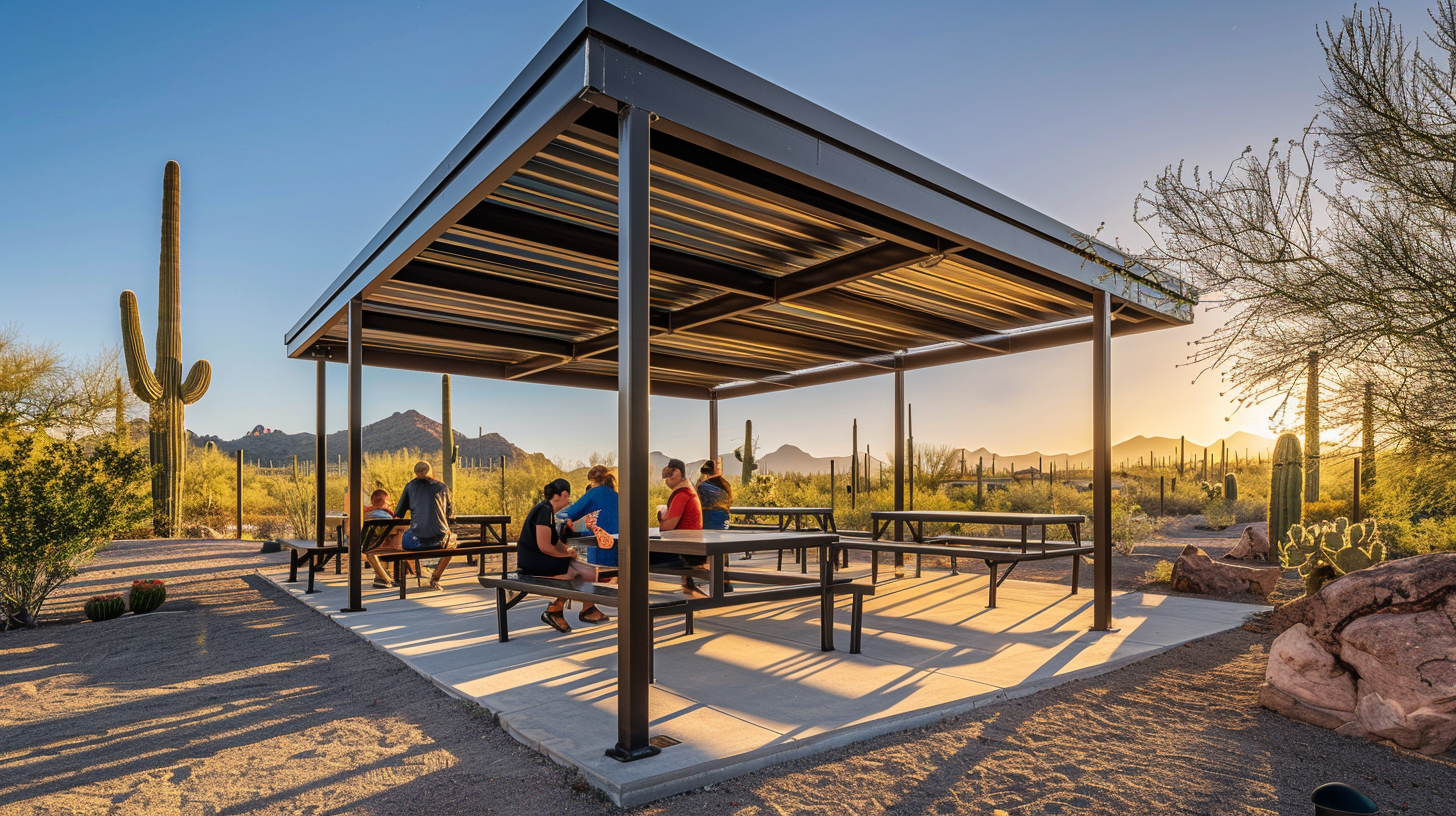
Shade is canine heat-safety, not a comfort upgrade
A dog run in Arizona needs shade because the animal using it cannot shed heat the way a person can. Dogs cool mostly by panting and through limited paw-pad sweat, not the full-body sweating that lets a handler stand the same heat, so a dog crosses from playing to distress on a faster clock than the owner watching it. On open artificial turf or pavement that climbs past 150 degrees by midday, that clock runs faster still — the surface radiates up into the dog and burns paw pads on direct contact, the two injuries a Valley dog park sees most.
Shade attacks both at once. Knitted HDPE blocks roughly 90-99% of UV and drops the deck temperature in the covered zone enough to keep paws off a griddle and give a panting dog a cooler patch to recover on. The design rule that follows is specific to pets: cover the surfaces dogs and owners actually occupy — the play zone, the water station, and the seating — not just a token patch of the lot. A municipal version of this surface-temperature logic for broader public sites sits on the park and municipal shade page; here the spec bends around four-legged users.
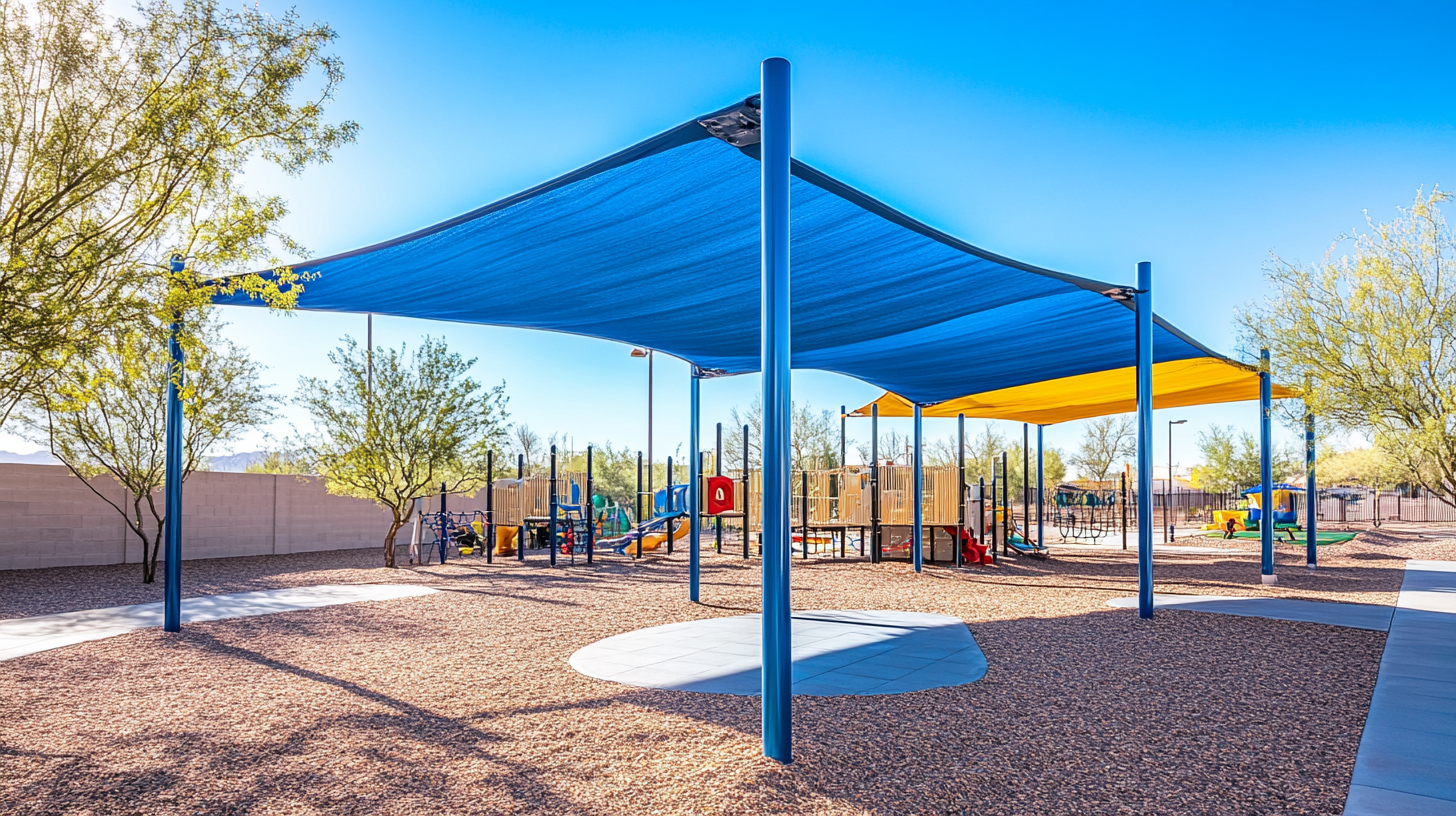
Cover the water station first, then the rest zones
The single highest-value square foot of shade in a dog park sits over the water station, because a hydration point baking in full sun is one a dog avoids exactly when it needs it most. A small cantilever or hip bay over the fountain and bowls keeps the water cooler and pulls dogs toward it instead of away, and it gives an overheated animal a shaded place to stand and drink at the same time. A flat cantilevered structure works well here because its single line of posts can sit at the fence line, leaving the drinking area clear of columns a dog or a leash could catch.
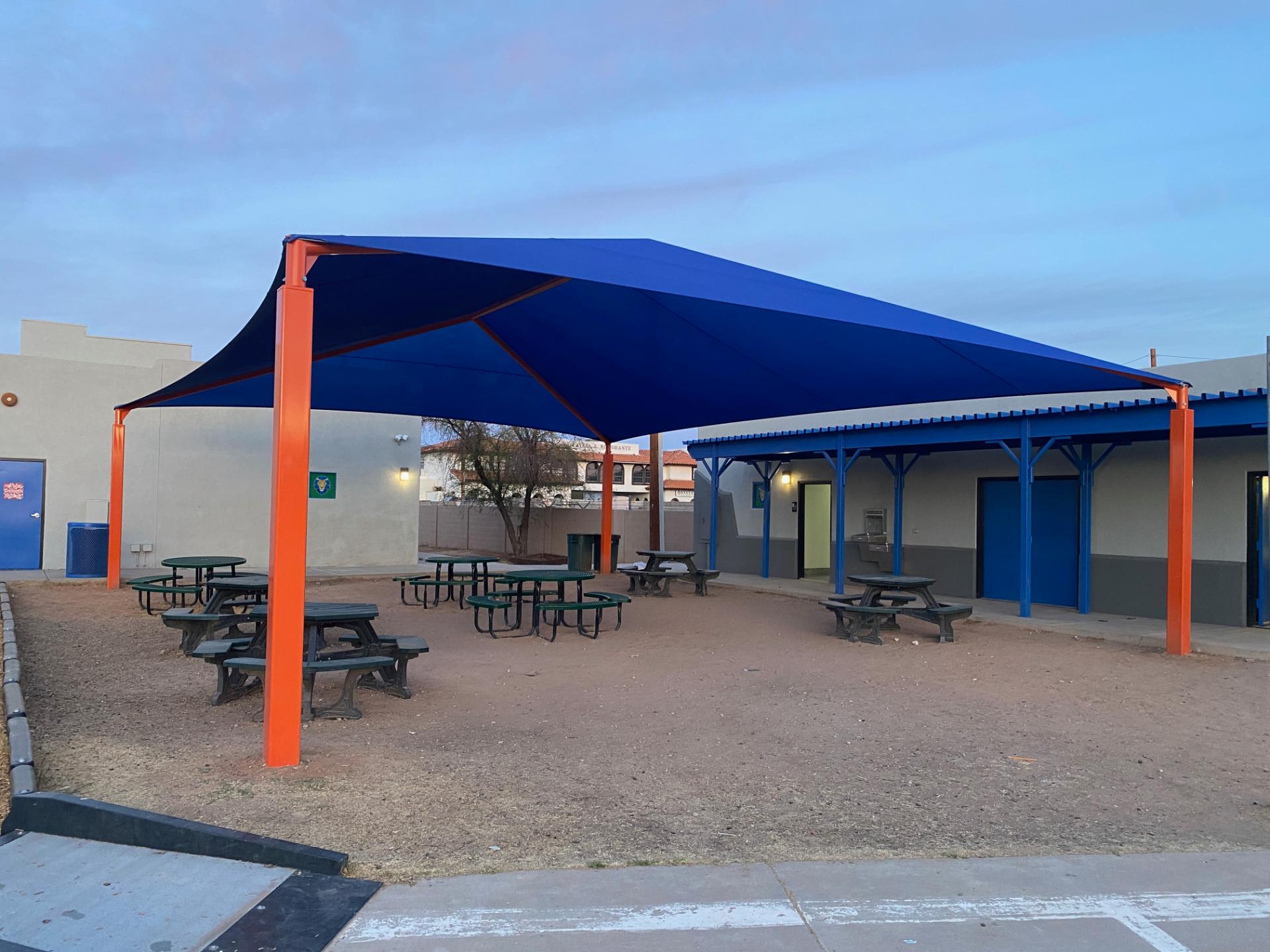
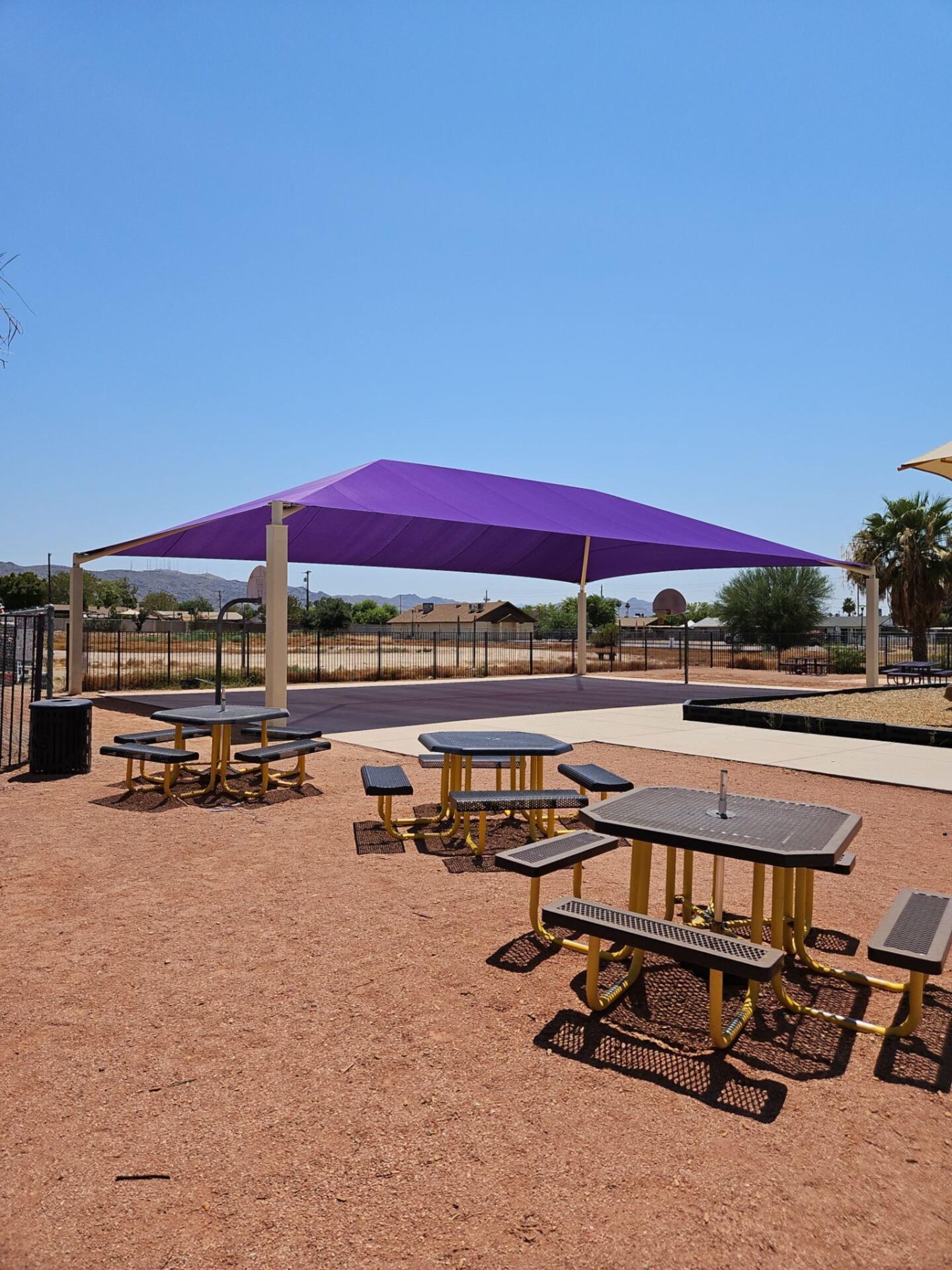
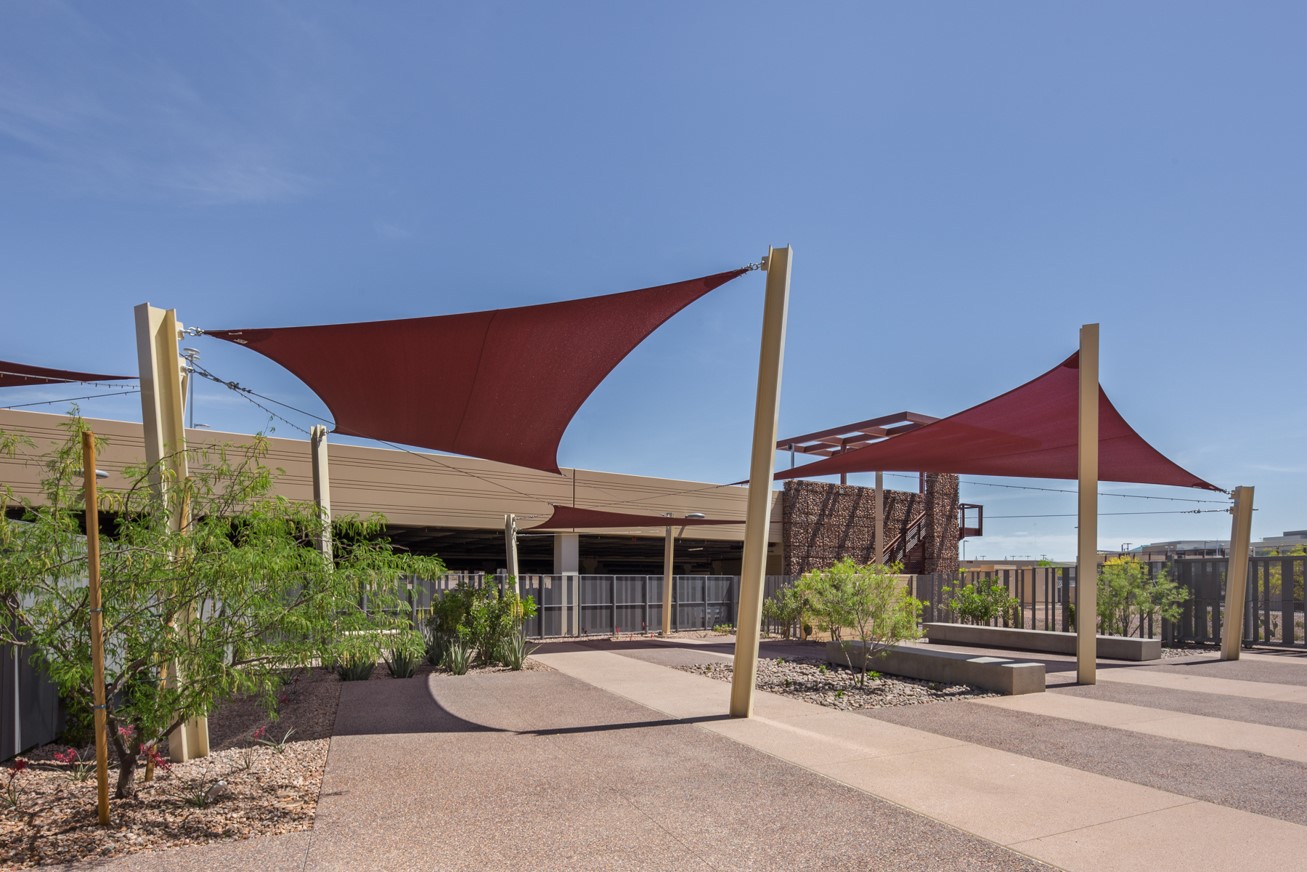
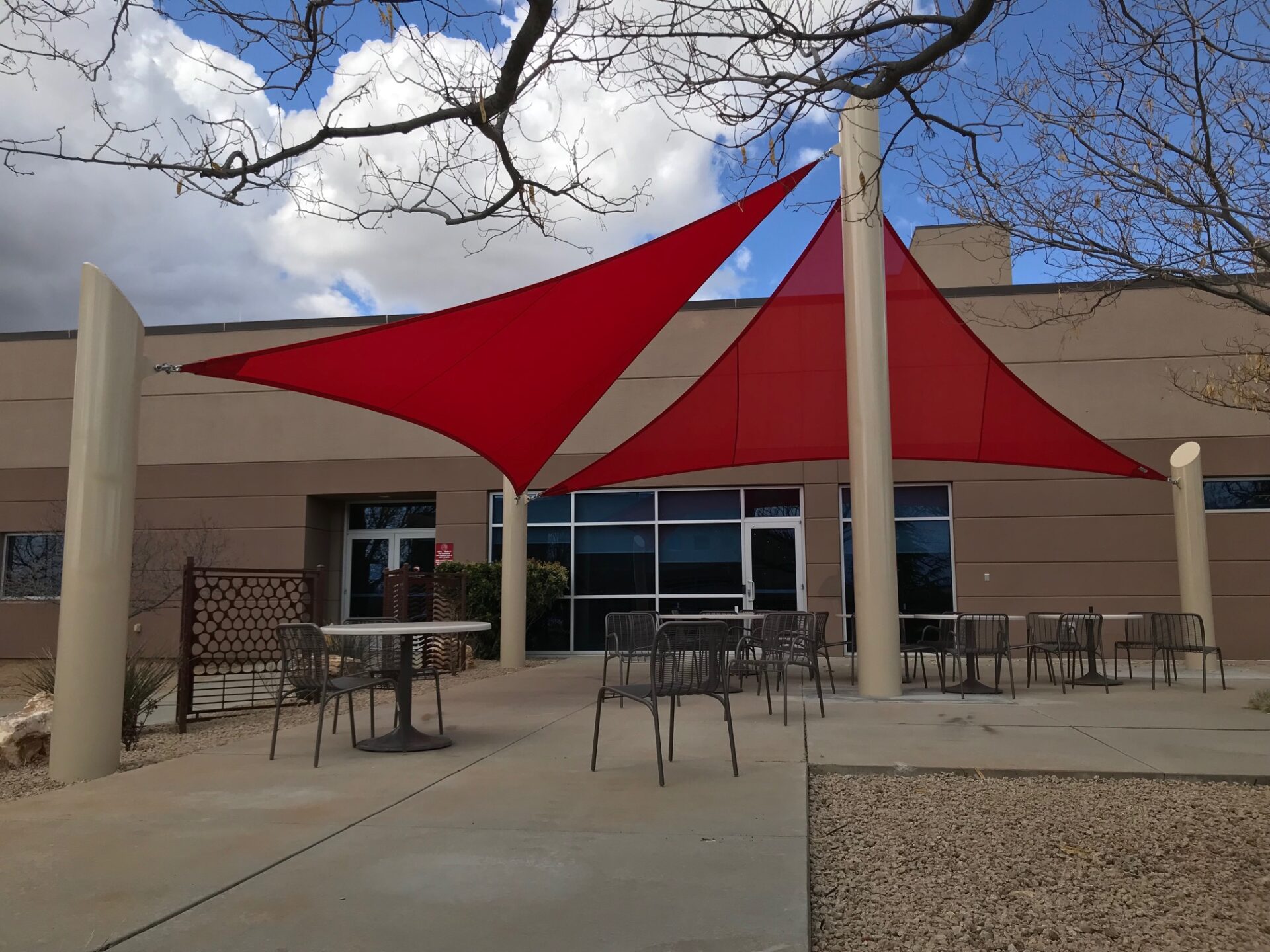
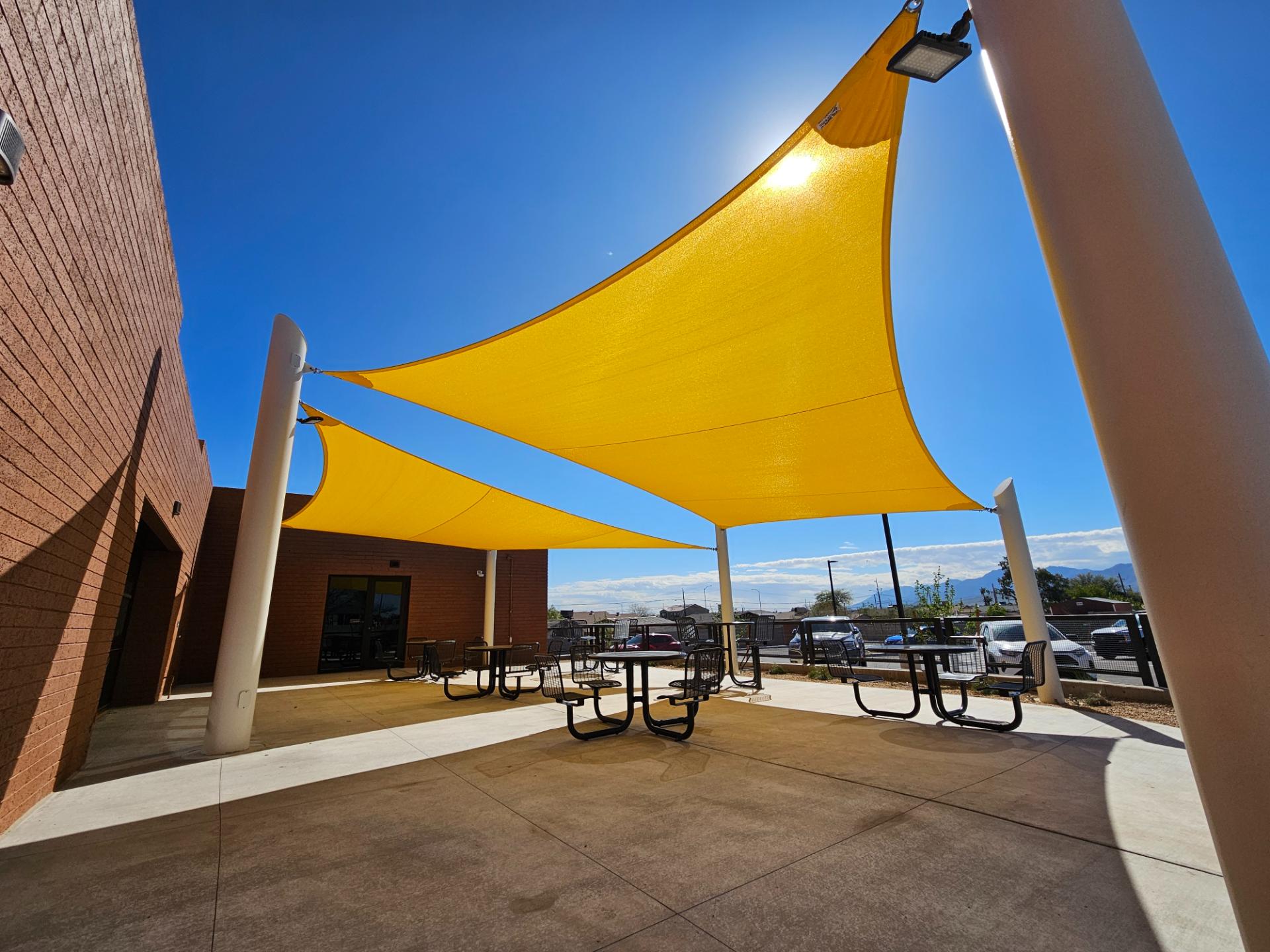
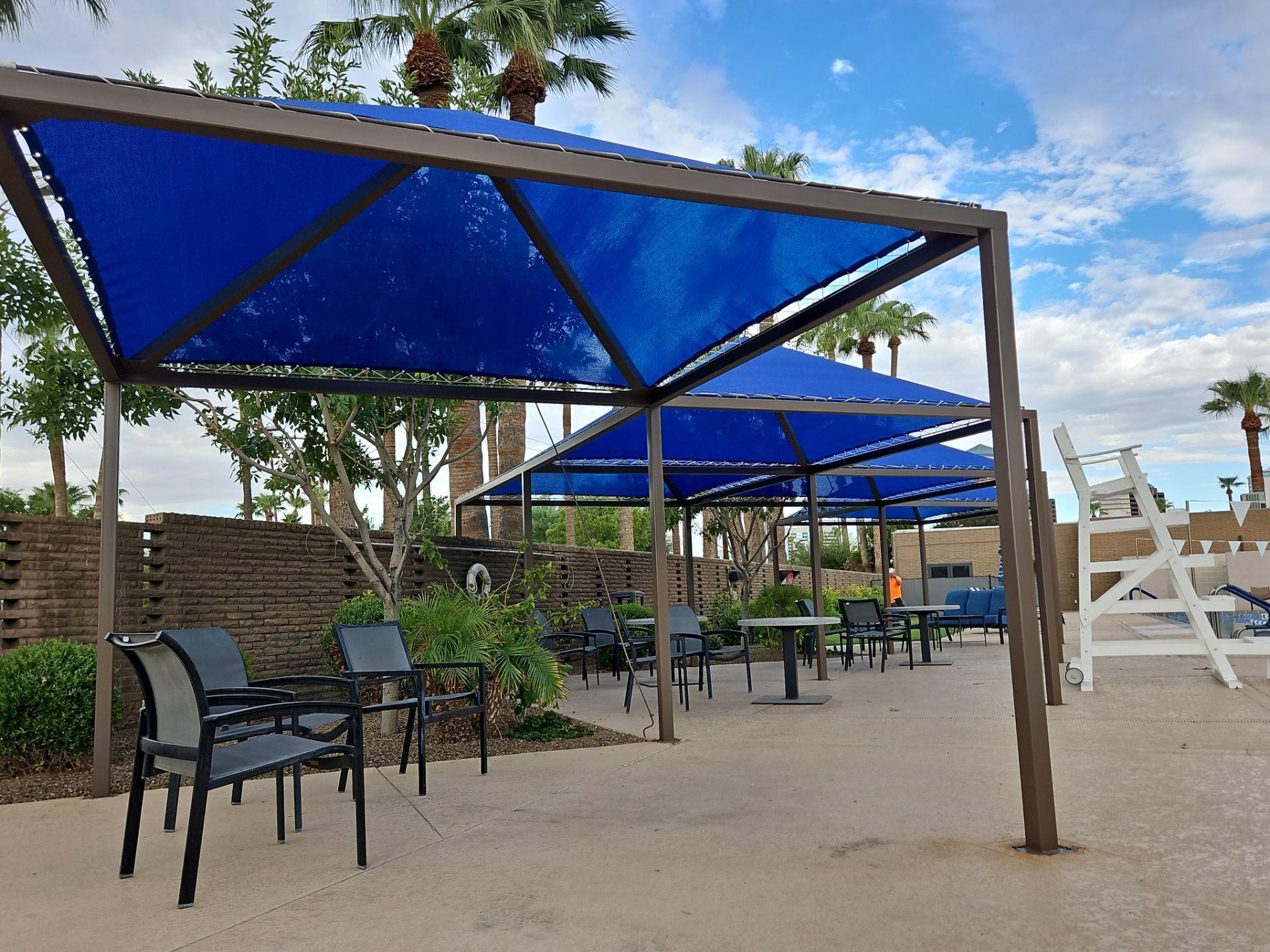
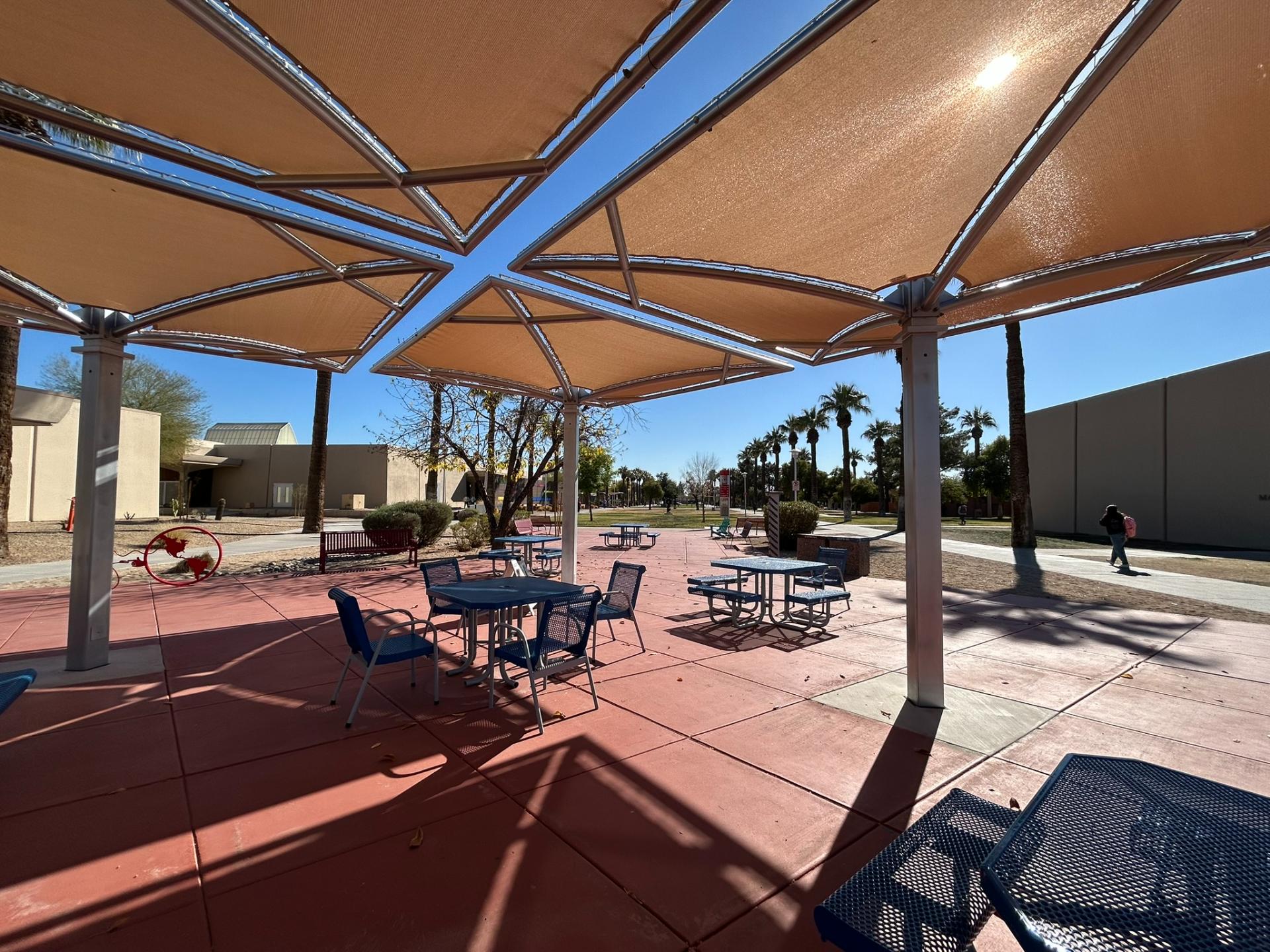
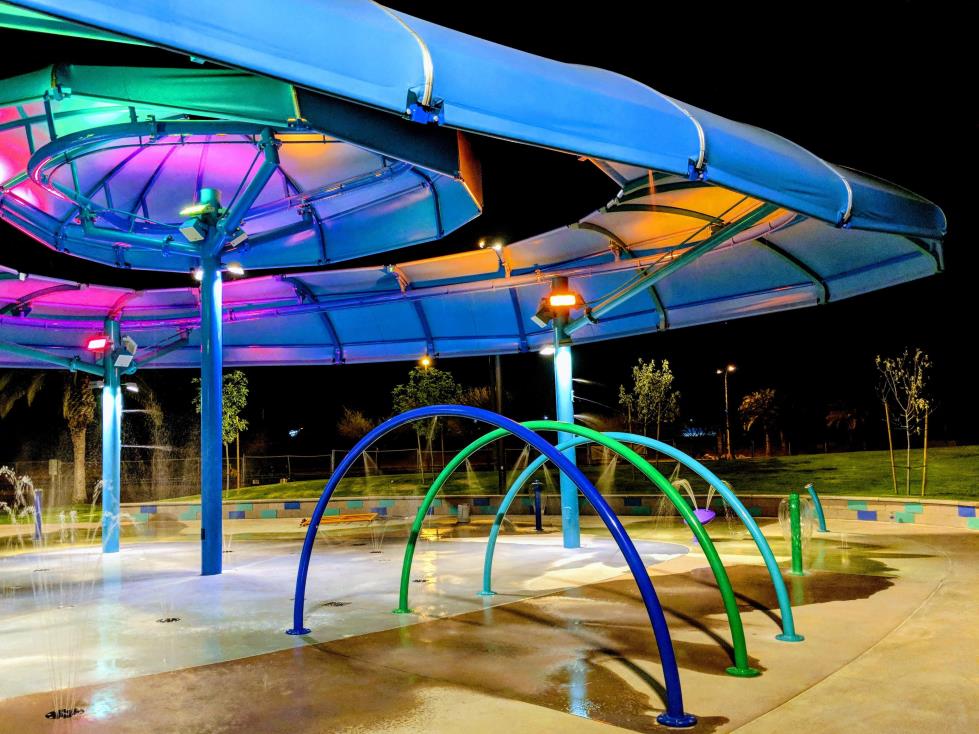
Rest and cool-down zones come next — the spots an owner steers a winded dog to before it overheats. These want broad, post-light cover a dog can lie under on a cooler patch of turf, which a hip canopy or a tensioned sail delivers across an open span. Owner seating sits in the same shaded footprint so handlers stay out where they can watch their dogs rather than retreating to a car. The honest priority order for a tight budget is plain: water station, then rest zones, then play surface, then perimeter benches.
Low-reach, chew-resistant structures for a yard full of dogs
Dog-park shade has to survive a use case no playground or pool deck imposes: animals that jump, chew, dig at footings, and run into posts at speed. That pushes the design toward fewer, heavier, higher-reach members. Powder-coated structural steel posts get sized to the span and set so the lowest structural element stays above a leaping dog’s reach, and footings are poured and collared so a digging dog or a power-washing crew never exposes them. The powder coat itself resists the scratching and chewing that would chip cheaper brushed paint, and it takes repeated rinse-downs without chalking.
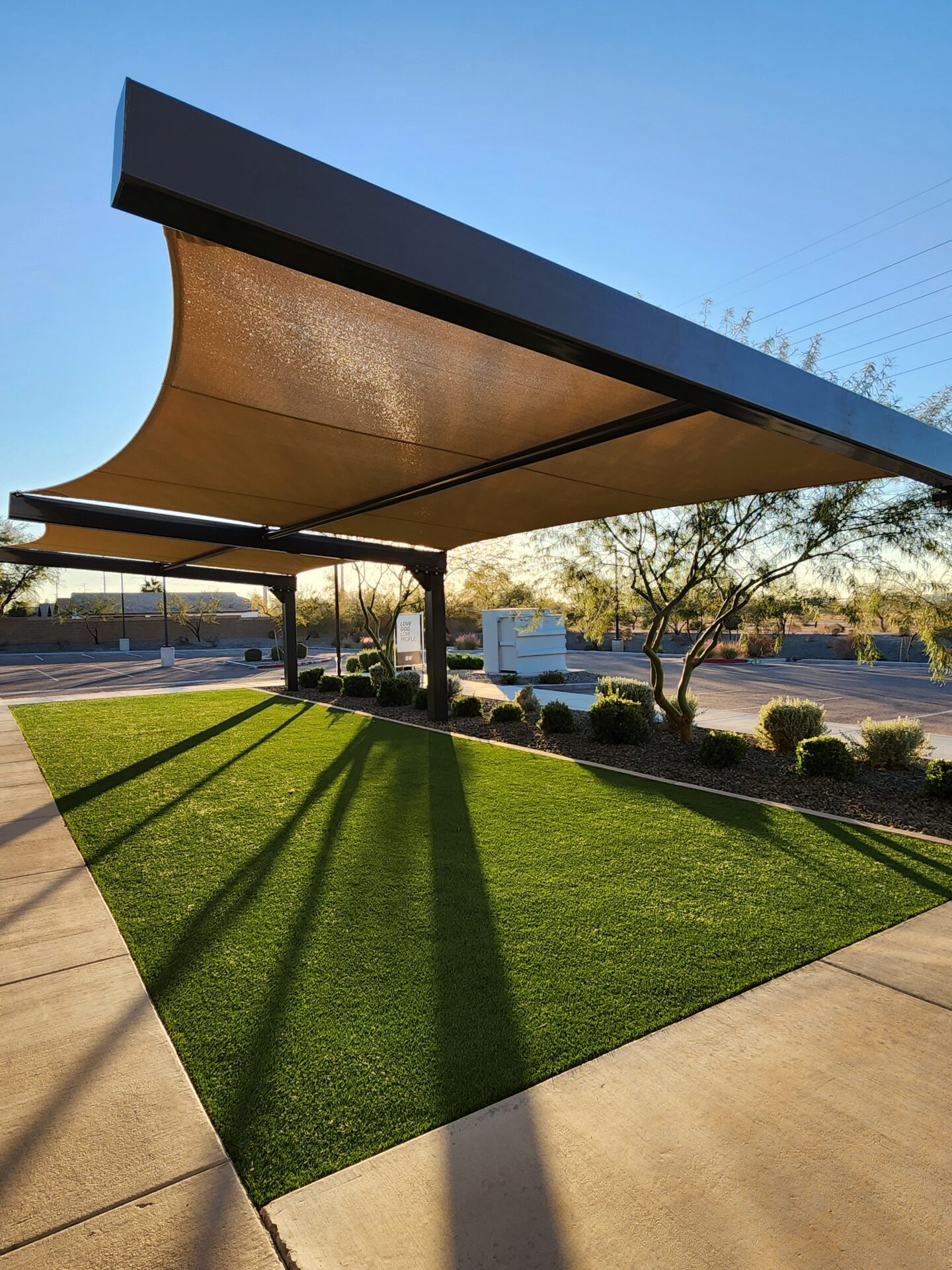
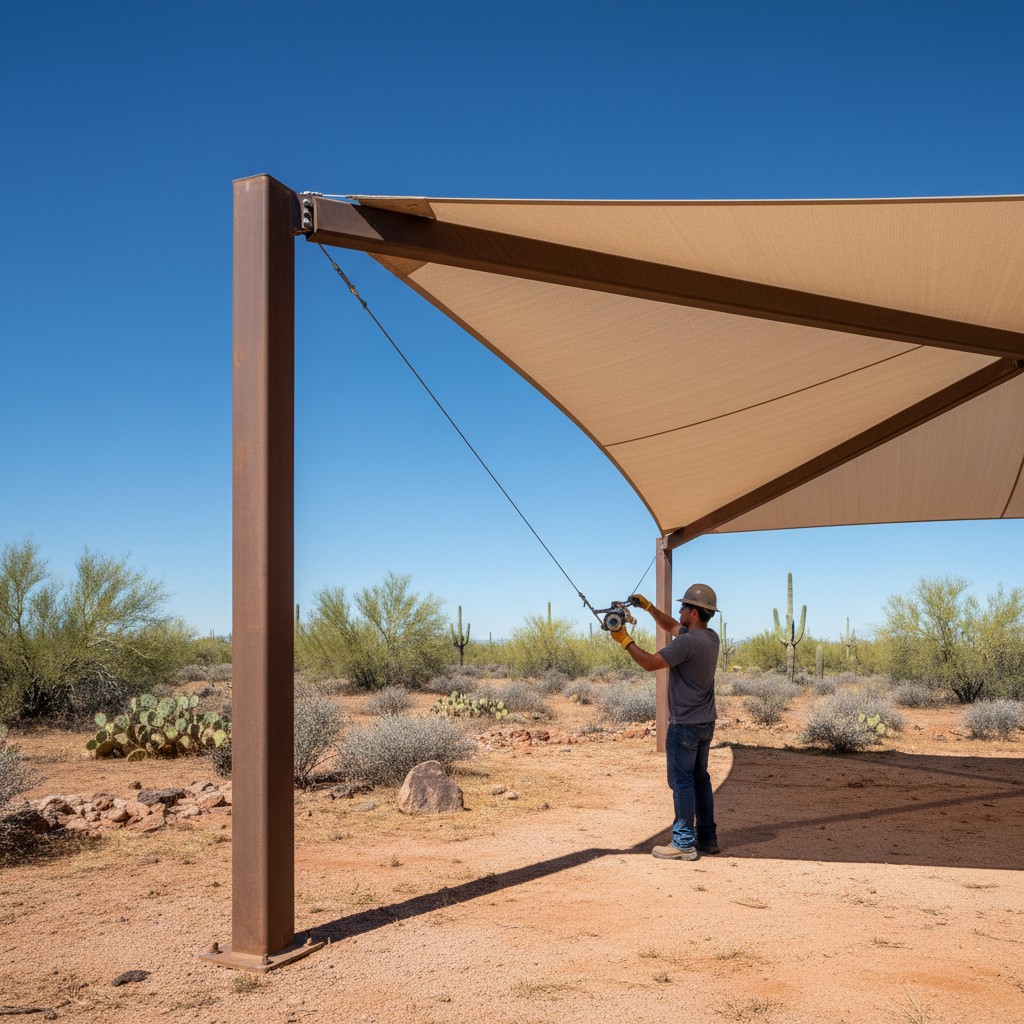
Fabric placement matters as much as the frame. A tensioned membrane anchored high and tight gives no low edge for a dog to grab, while a poorly hung sail with a reachable corner becomes a chew toy. Where a yard wants a solid roof that rules out fabric damage entirely — a boarding facility with large or destructive dogs, say — a ramada trades the fabric line item for a fixed metal roof. The form menu, from sails to hip canopies to cantilevers, sits on the products page so a buyer can match structure to how rough the dogs are.
Ramada versus fabric for the play surface
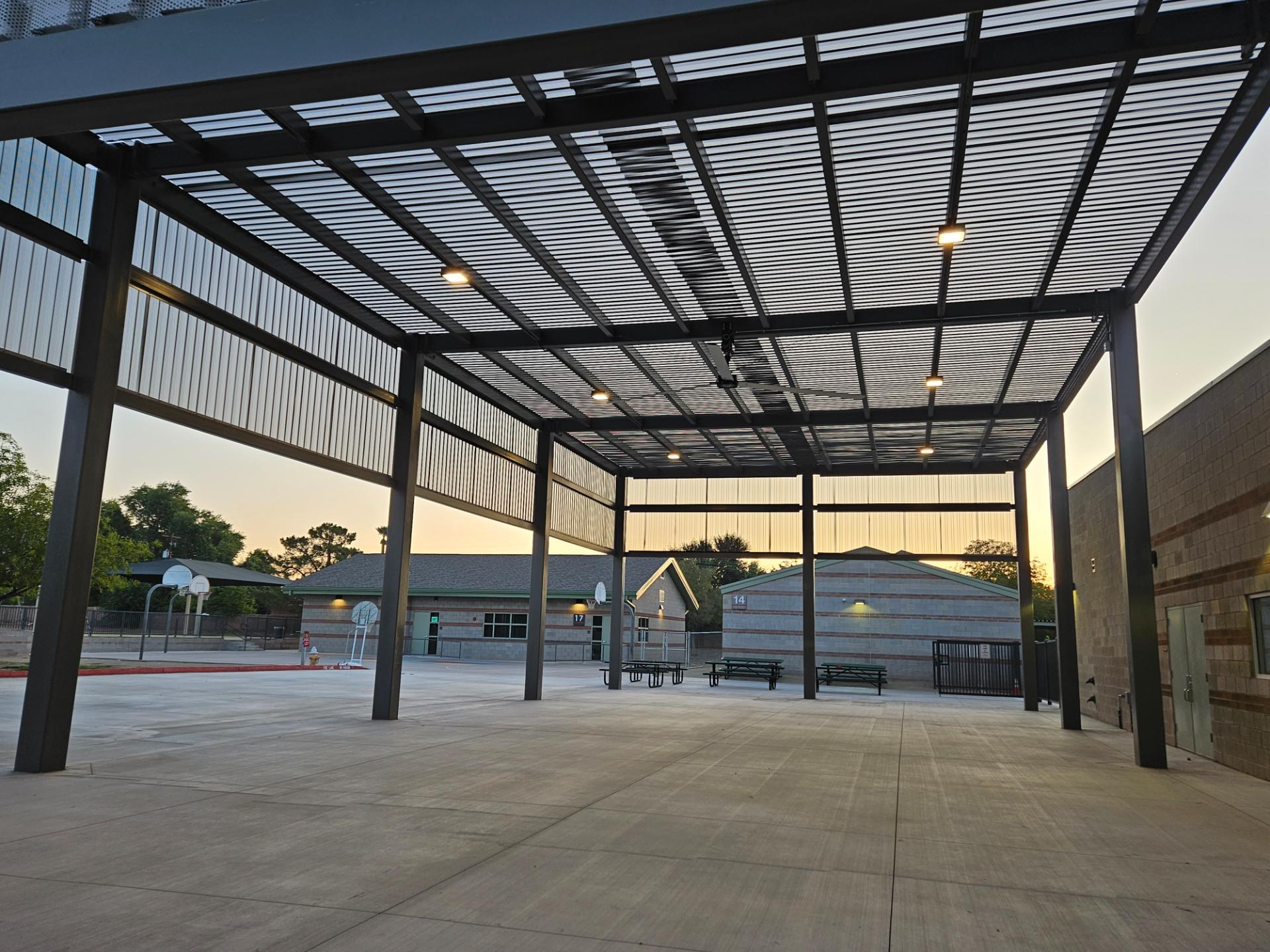
The play-surface decision comes down to whether you need rain cover and chew-proofing or maximum cool, open span. A fabric canopy — a hip structure or a tensioned sail — shades a wide play footprint with few posts and reads light and open, which keeps owners’ sightlines across the run clear and the deck temperature down. It is the cheaper way to cover a large area, and over a fenced play zone with ordinary dogs it is usually the right call. The tradeoff is honest: fabric is a consumable and a determined chewer can reach a low edge if the geometry is wrong.
A ramada gives a solid metal roof that blocks 100% of sun under the deck and sheds monsoon rain instead of dripping through, which a fabric sail cannot do. For a doggy-daycare yard that runs dogs in all weather, a pet resort wanting an all-day shaded room, or any site with large destructive animals, the ramada’s higher upfront cost buys out the fabric re-cover line and the chew risk together. Apartment and HOA communities weighing a small dog run as one amenity among several can see how it fits on the apartment and multifamily shade page, where the dog park shares a budget with the pool and playground.
Municipal dog parks, HOA runs, and pet businesses each spec differently
Who owns the dog park changes what it needs. A municipal dog park takes unsupervised public use, so it gets the heaviest steel and the most vandal- and dig-resistant footings, the same durability bar that governs the rest of a city’s recreation system. A HOA community dog run is smaller and judged by an architectural review board, so the cover often matches the neighborhood’s existing ramada or sail palette rather than chasing maximum span. Both are park-grade work — the same capability that built shade at Tumbleweed Park in Chandler and the Avondale Community Center carries straight into a dog run on the same grounds.
Pet businesses spec for duty cycle. A doggy-daycare or boarding yard runs dogs from open to close every day, so the structure is sized like commercial infrastructure and often favors a solid ramada roof to kill the chew and weather risk. A pet resort’s outdoor area trades on appearance, so a clean tensioned sail over a turf play zone photographs the way a guest expects. A veterinary recovery yard wants gentle, low-glare shade over a small soft surface where post-surgical dogs rest. Each of these starts from the same Phoenix-fabricated steel; the span, roof type, and finish bend to the owner. Our municipal park capability is the backbone all of them draw on.
Engineering, maintenance, and honest caveats
Every dog-park canopy is engineered to Arizona building code and ASCE 7 wind loads, with Valley design wind speeds running roughly 90-115 mph and monsoon microbursts that can punch past 60 mph in minutes. Dog parks often sit on open ground at the edge of a development with nothing to break the wind, which pushes exposure up and the steel heavier than a sheltered courtyard would need. Frames are powder-coated steel, and a pitched or tensioned shape spills wind rather than catching it flat, the same reason a slope keeps fabric taut against the flutter that wears it fastest.
Three caveats worth pricing in. The fabric is a consumable: knitted HDPE covers commonly carry 10-15 year warranties, Phoenix UV sits at the demanding end of that window, and over a yard of chewers the clock runs shorter — which is exactly when a solid ramada roof pays off. Wind ratings have ceilings; an engineered structure covers typical monsoon loads to its stamped design speed, not every freak haboob on record, so a light DIY kit is the wrong call for a public dog park. And Valley dust plus the grit dogs kick up settles fast on the weave, so a rinse two or three times a year keeps the fabric breathing.
Shade Structures We Build
Frequently Asked Questions
Why do dog parks need shade in Arizona?
Because dogs overheat faster than people and cool far less efficiently. A dog sheds heat mostly by panting and limited paw-pad sweat, not full-body sweating, so the same afternoon a handler tolerates can put a dog into heat exhaustion in minutes. On top of that, Arizona artificial turf and pavement can pass 150 degrees in summer, hot enough to burn paw pads on contact. Shade over the play surface, water station, and seating cuts both the UV load and the surface temperature, which makes it a canine safety system rather than a comfort feature.
What shade structure is best for a dog park?
It depends on the dogs and the budget. A hip canopy or tensioned fabric sail covers a wide play surface with few posts and keeps the deck cool, which suits a fenced run with ordinary dogs and a lower upfront cost. A solid-roof ramada blocks 100% of sun, sheds monsoon rain, and removes the chew and re-cover risk, which fits doggy-daycare yards, boarding facilities, and sites with large destructive dogs. A flat cantilever is the usual pick over a water station because its posts sit at the fence line and leave the drinking area clear of columns.
How hot does pavement get for dogs in Phoenix?
Pavement and artificial turf in a Phoenix dog park can exceed 150 degrees on a summer afternoon, well above the threshold that burns canine paw pads on direct contact. The surface also radiates that heat up into a dog standing on it, which speeds heat exhaustion in an animal that already cools less efficiently than its owner. A shaded zone runs noticeably cooler underneath, which is why covering the play surface, the rest areas, and especially the water station is the core of a safe Arizona dog-park design.
Should the water station be shaded in a dog park?
Yes — the water station is the highest-value spot to shade in a dog park. A hydration point baking in full sun keeps the water hot and gets avoided by dogs exactly when they need it most, so a small cantilever or hip bay over the fountain and bowls pulls dogs toward it and gives an overheated animal a cool place to drink and stand. A flat cantilever works well there because its single post line can sit at the fence, keeping the drinking area clear of columns a dog or leash could catch.
How long do dog-park shade structures last in Arizona?
The powder-coated steel frame is long-term infrastructure, while the knitted HDPE fabric is the wear item, recovered roughly every 10-15 years under a typical commercial warranty. In a dog park that clock can run shorter, because chewing, digging, and the grit dogs kick up wear fabric faster than a quiet courtyard would, which is one reason a solid-roof ramada often wins on lifecycle cost at boarding and daycare sites. Service life depends on upkeep: a rinse two or three times a year for Valley dust and a periodic re-tension keep a fabric cover from pooling water and failing short of its warranty.