or call (602) 265-0905 — no-obligation, on-site.
HOA & Residential Shade Structures in Arizona
Architectural-review-ready shade for community pool decks, ramadas, playgrounds, and pickleball courts — finishes that match the HOA standard and steel sized for shared, all-day use.
Since 1998
Designing & building Arizona shade
In-House Fabrication
Built at our Phoenix shop
Engineered & Permit-Ready
Stamped drawings for AZ wind loads
Free On-Site Quote
No-obligation project assessment
HOA and master-planned-community shade has to clear two bars at once: it must survive shared, all-day use by hundreds of residents, and it must pass the community’s architectural-review committee on color, profile, and finish before a single footing is poured. That is a different job than a backyard cover. Pool decks, ramadas, tot-lot playgrounds, pickleball courts, and clubhouse patios run hot for years, and the review board treats the structure as a permanent part of the community’s look. Total Shade fabricates these structures in steel at our Phoenix shop at 2331 W. Holly St, engineered to Maricopa County code, with powder-coat colors and roof profiles chosen to match a community standard rather than fight it. The sections below cover which amenities take which structure, how to clear design review, how the steel is sized for shared use, the wind-and-UV engineering, the permitting sequence, and where these projects go wrong.
Which community amenity takes which structure
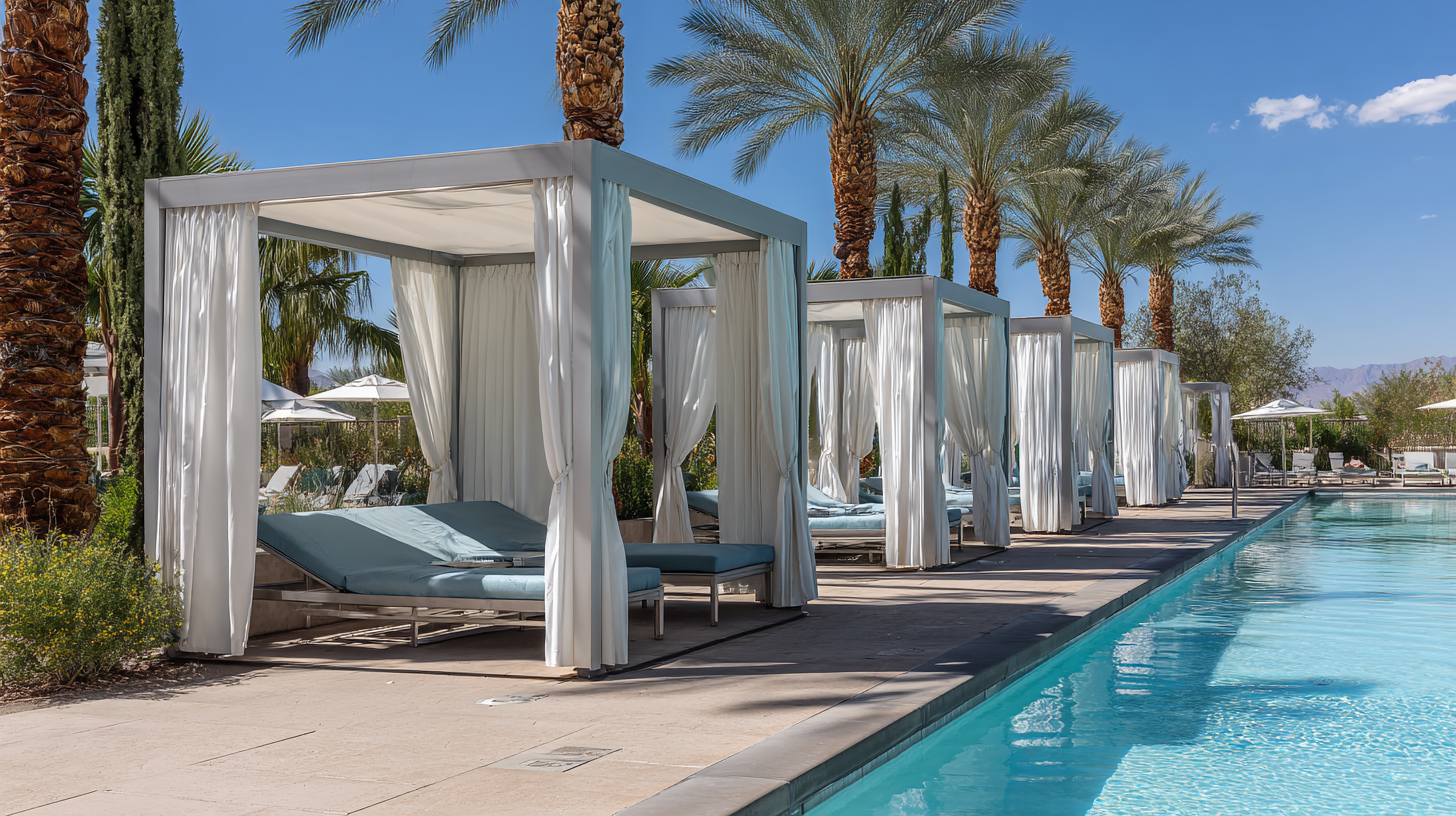
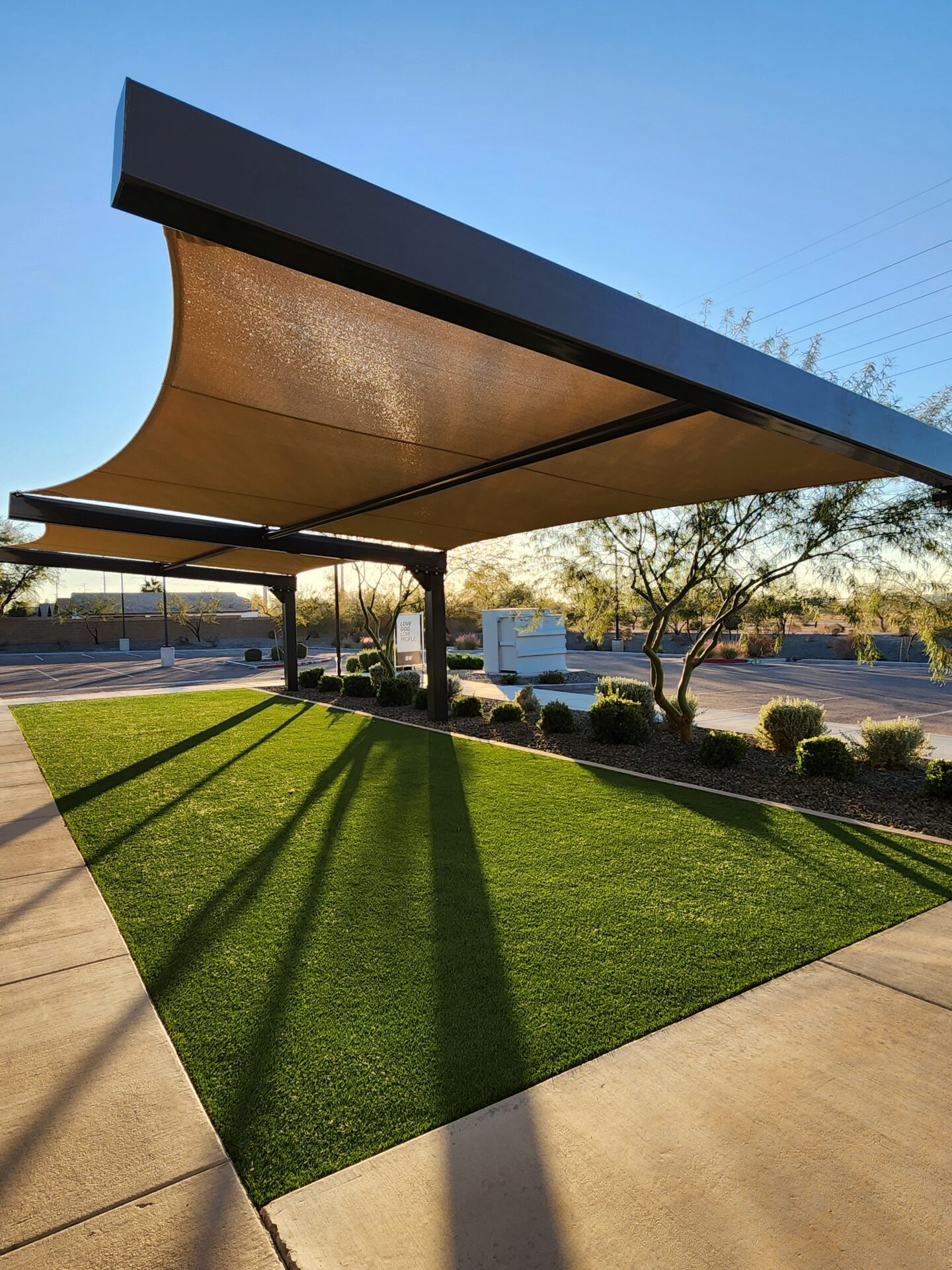
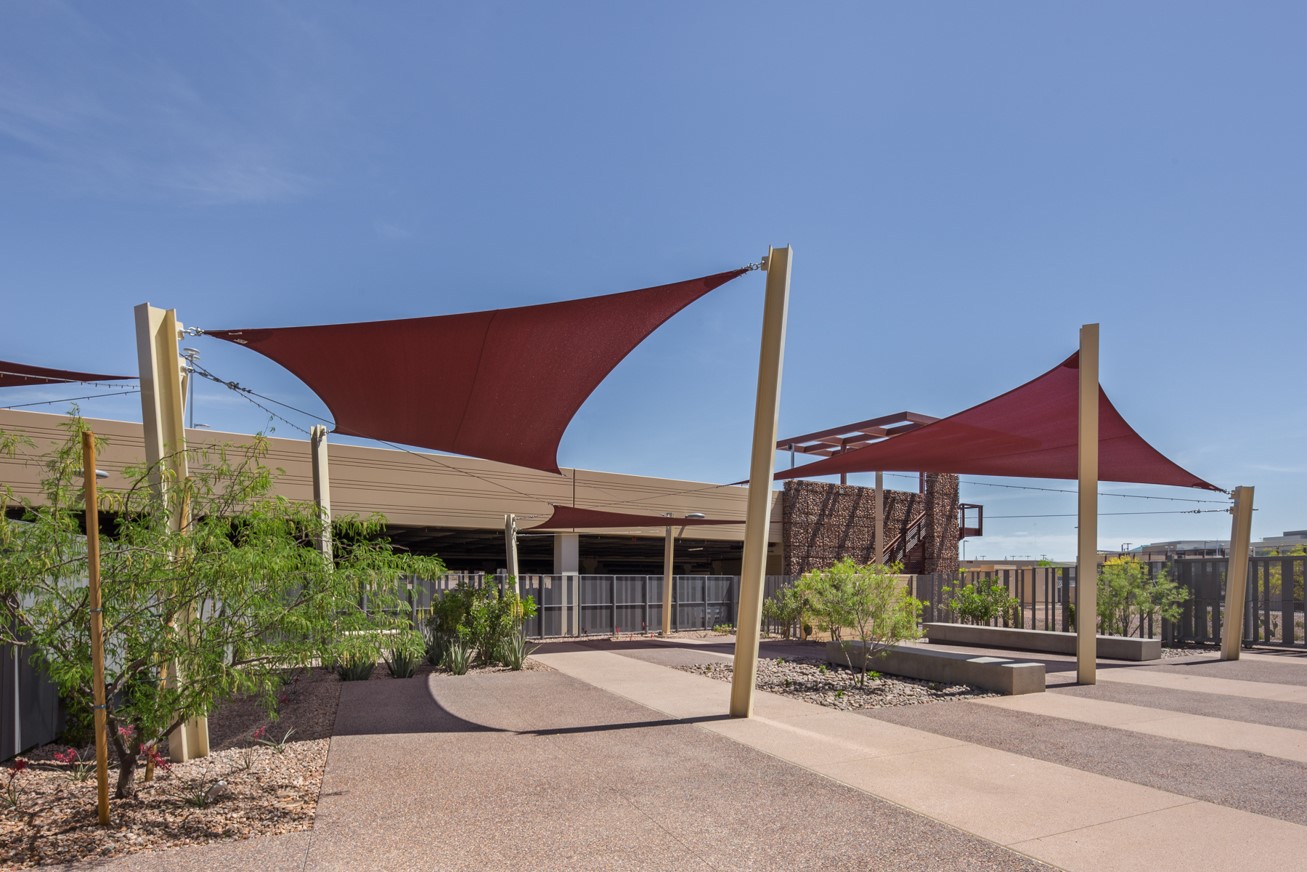
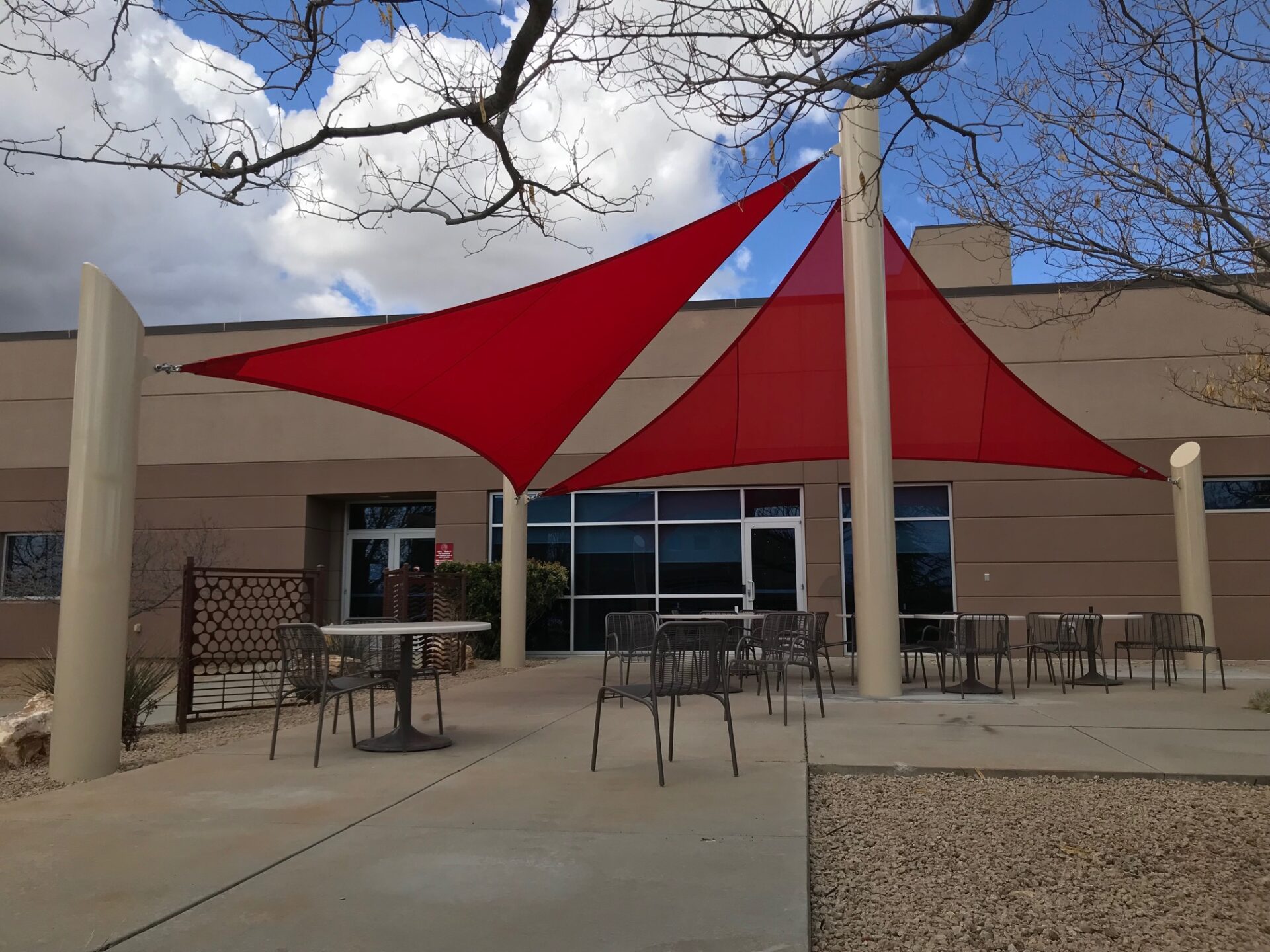
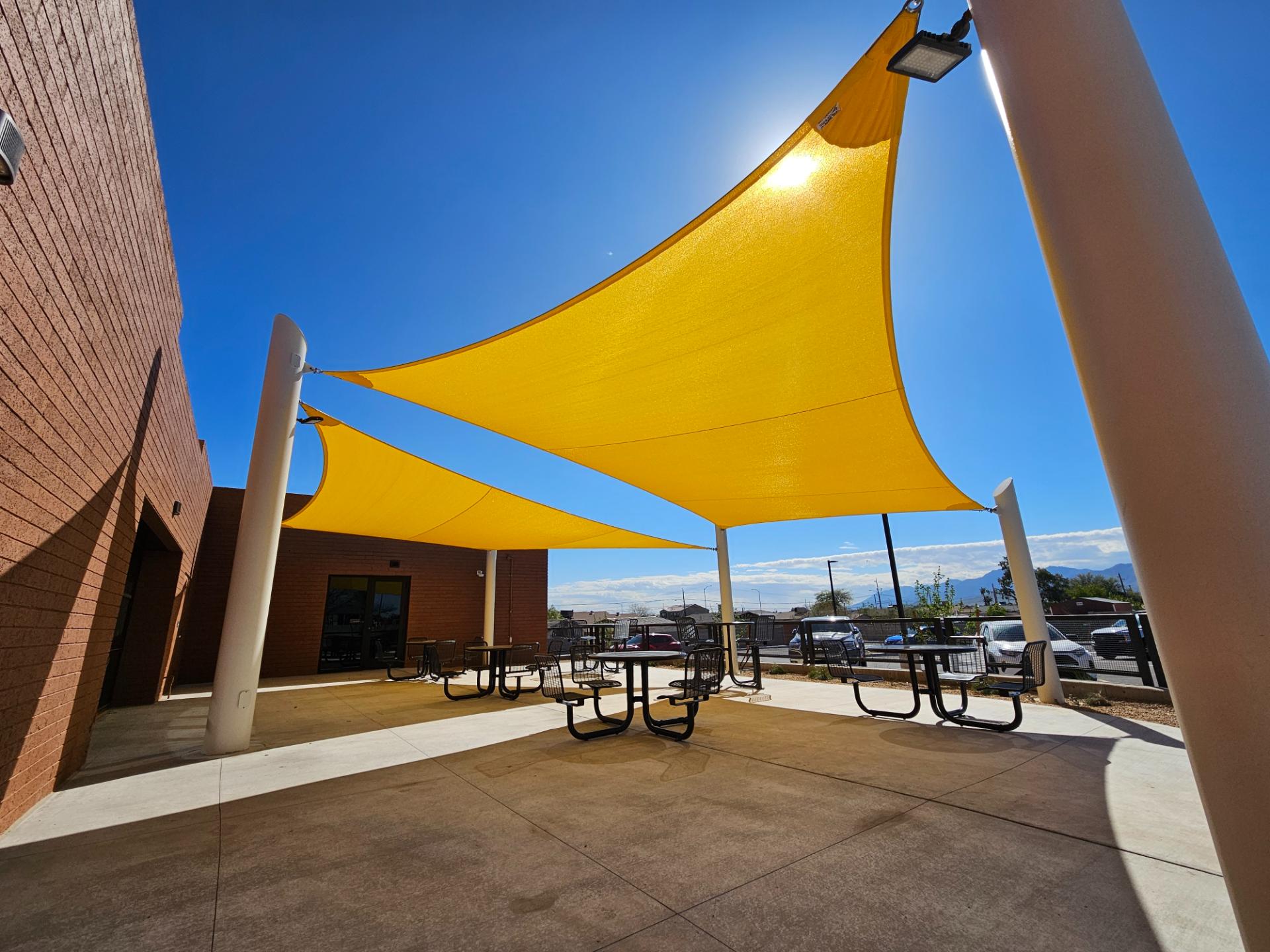
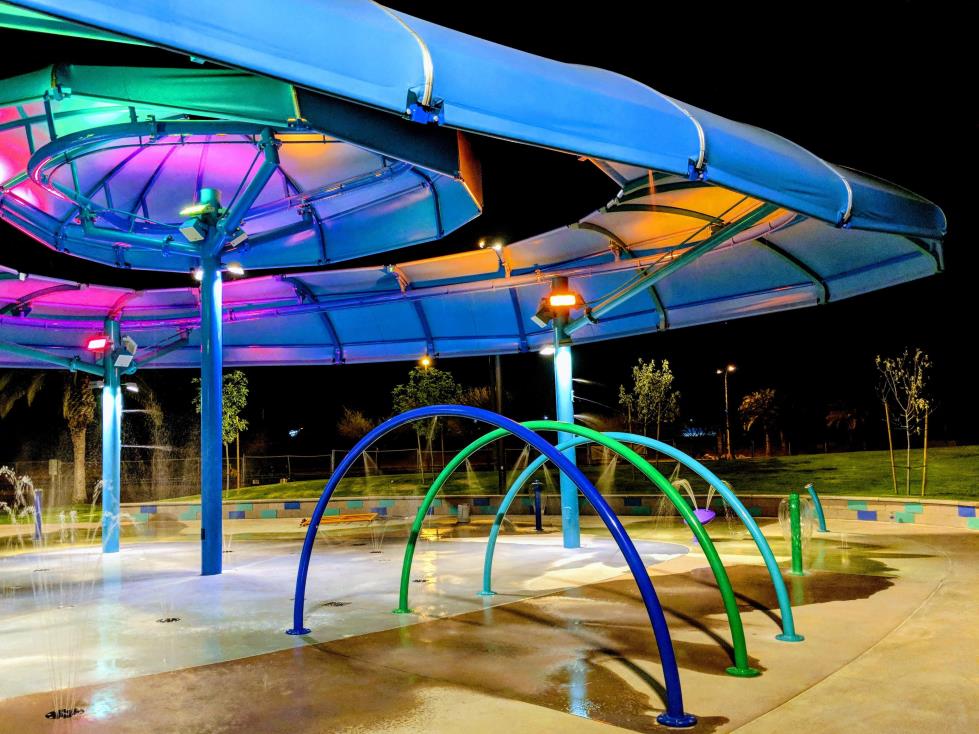
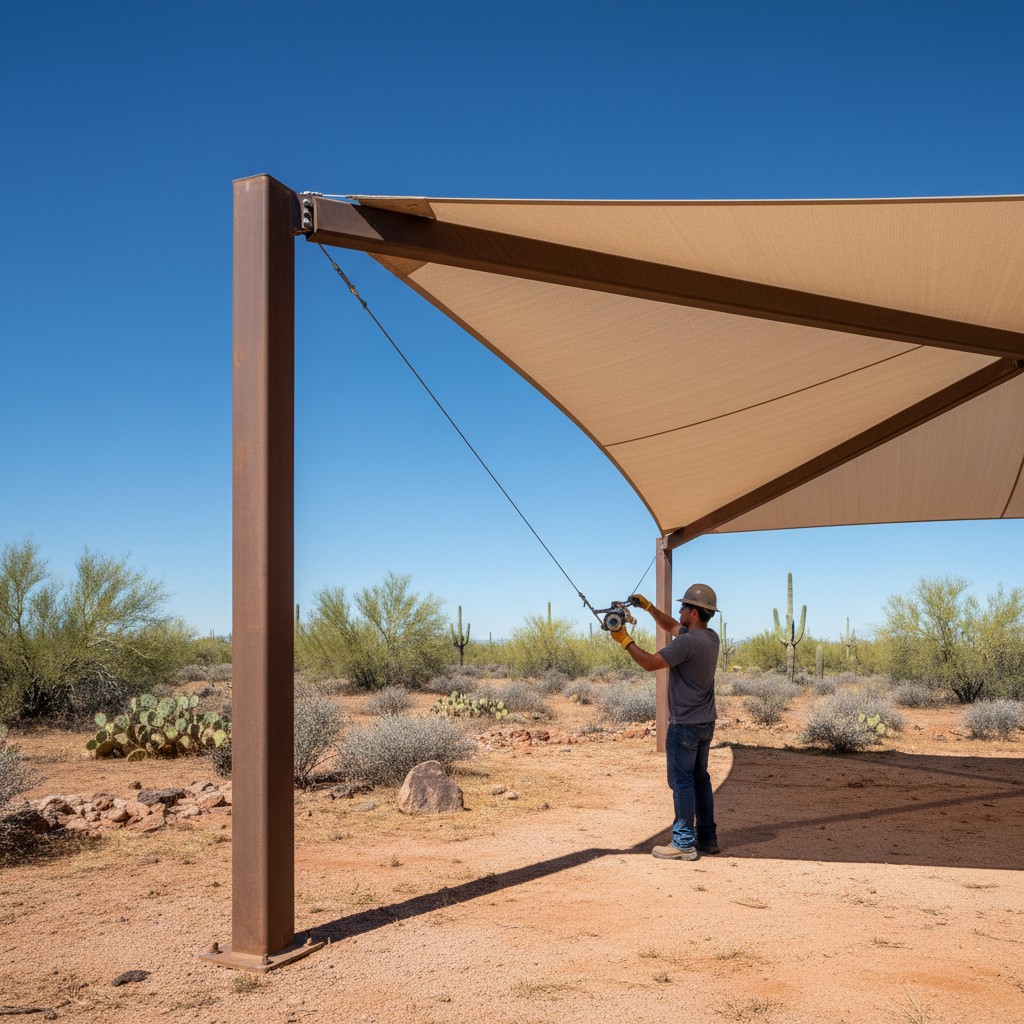
Match the structure to how residents actually use the amenity, not to a catalog default. A community pool deck wants open, sculptural shade that keeps lounge chairs cool without blocking the water view, which is where a 3-point tensioned fabric sail earns its place — a knitted-HDPE plane that blocks roughly 90-99% of UV and reads as a design element rather than a roof. For poolside lounging and a more finished, resort feel, cabanas give enclosed corners and a built room residents reserve by the hour.
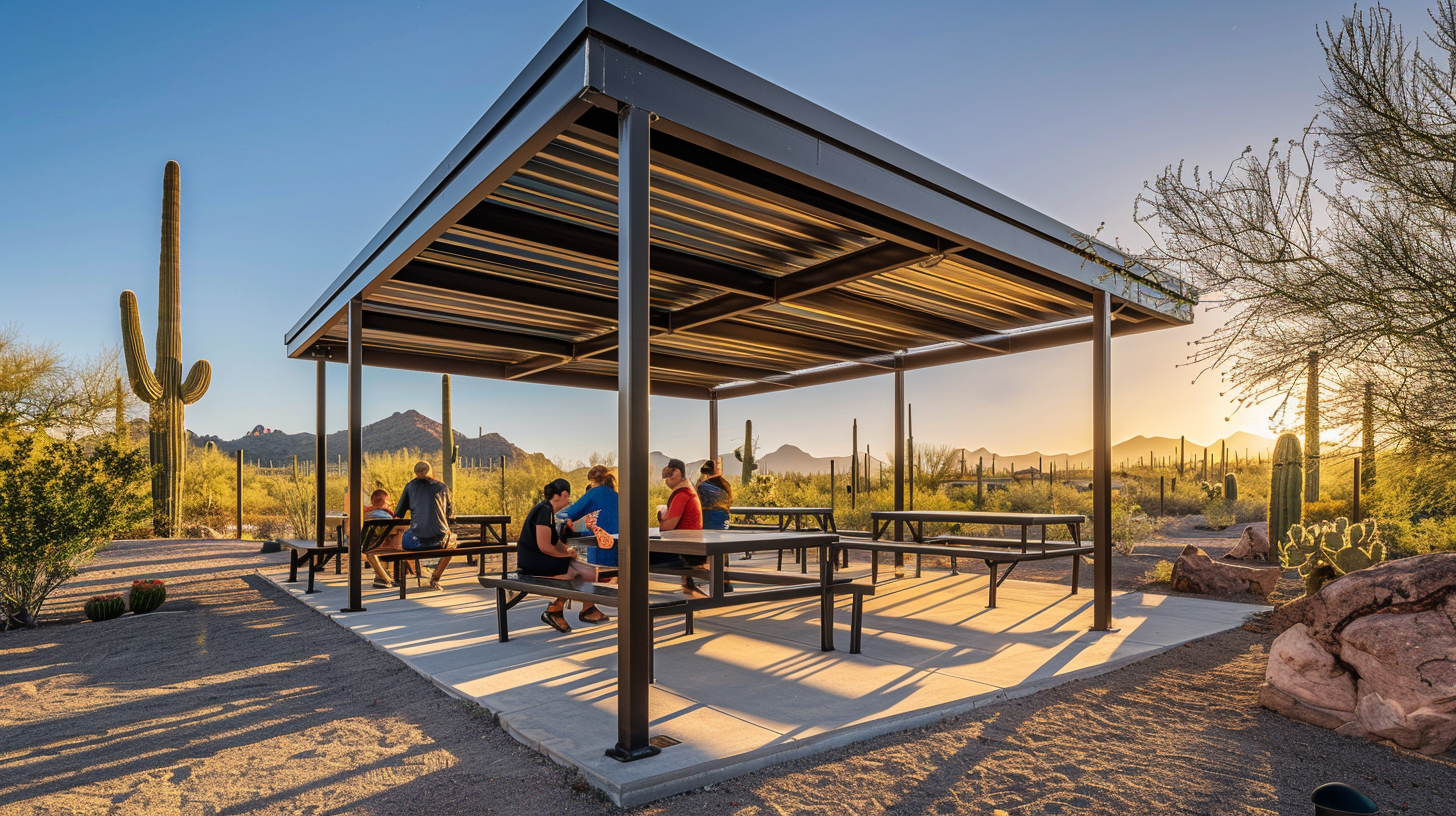
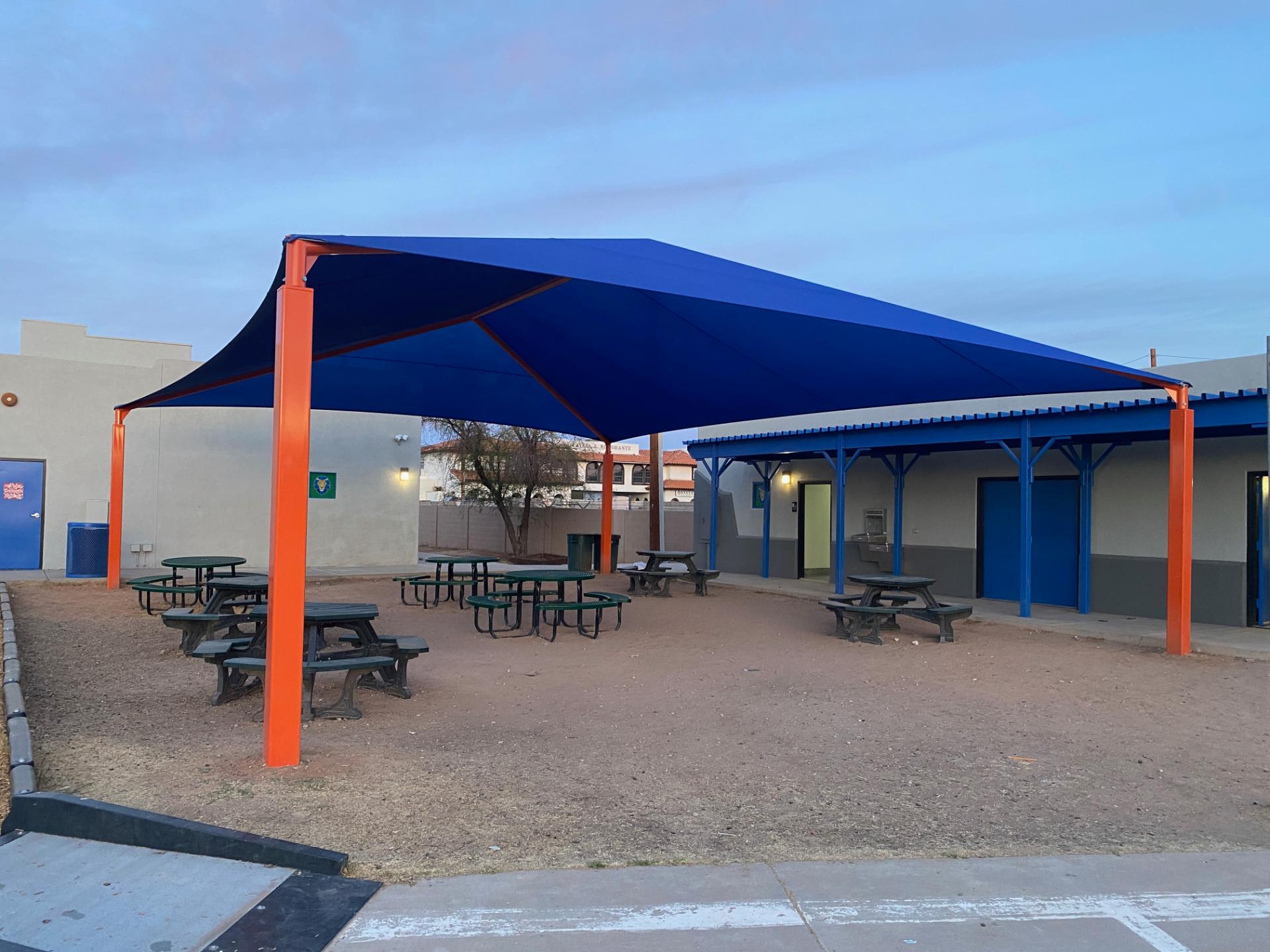
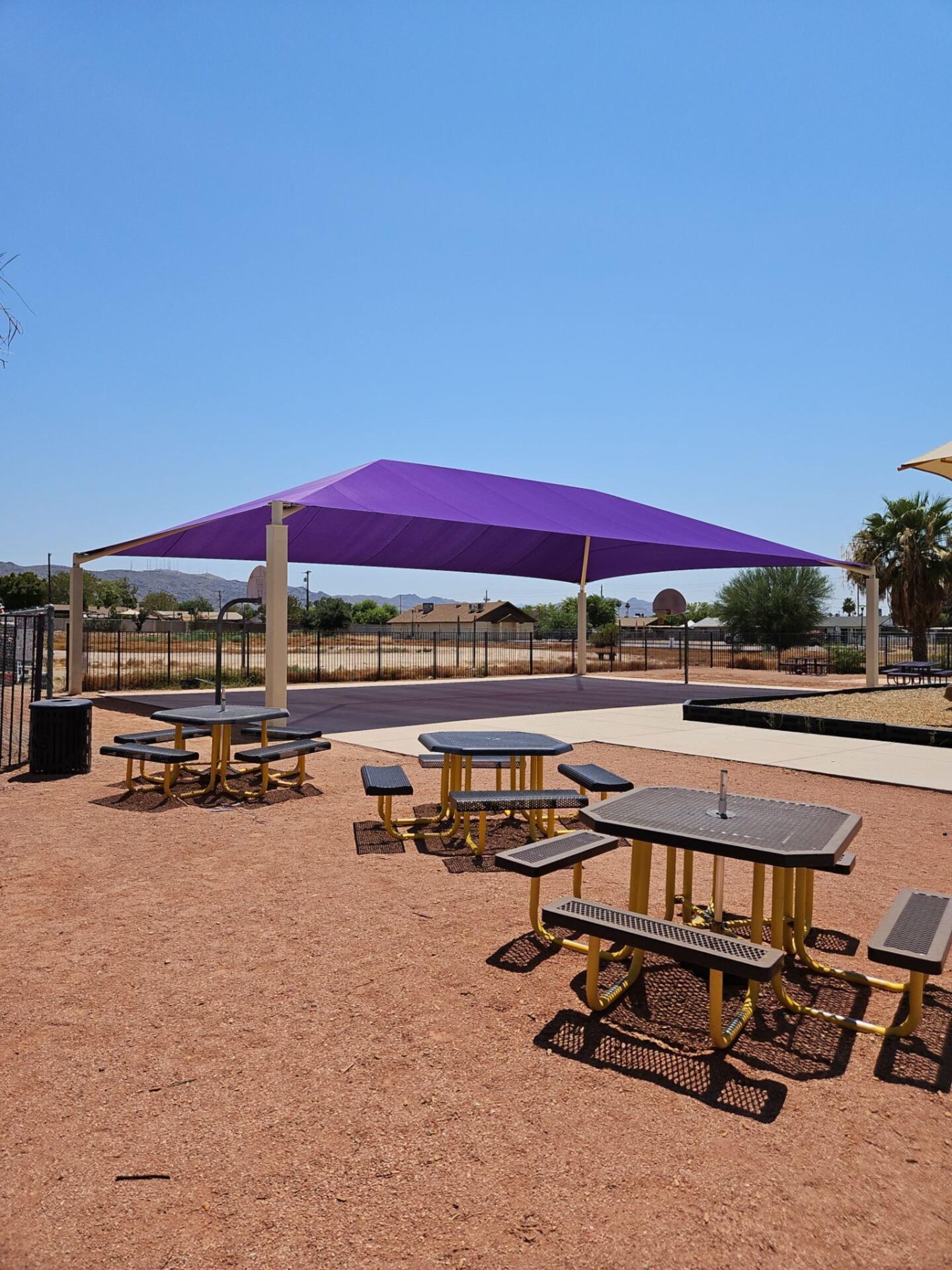
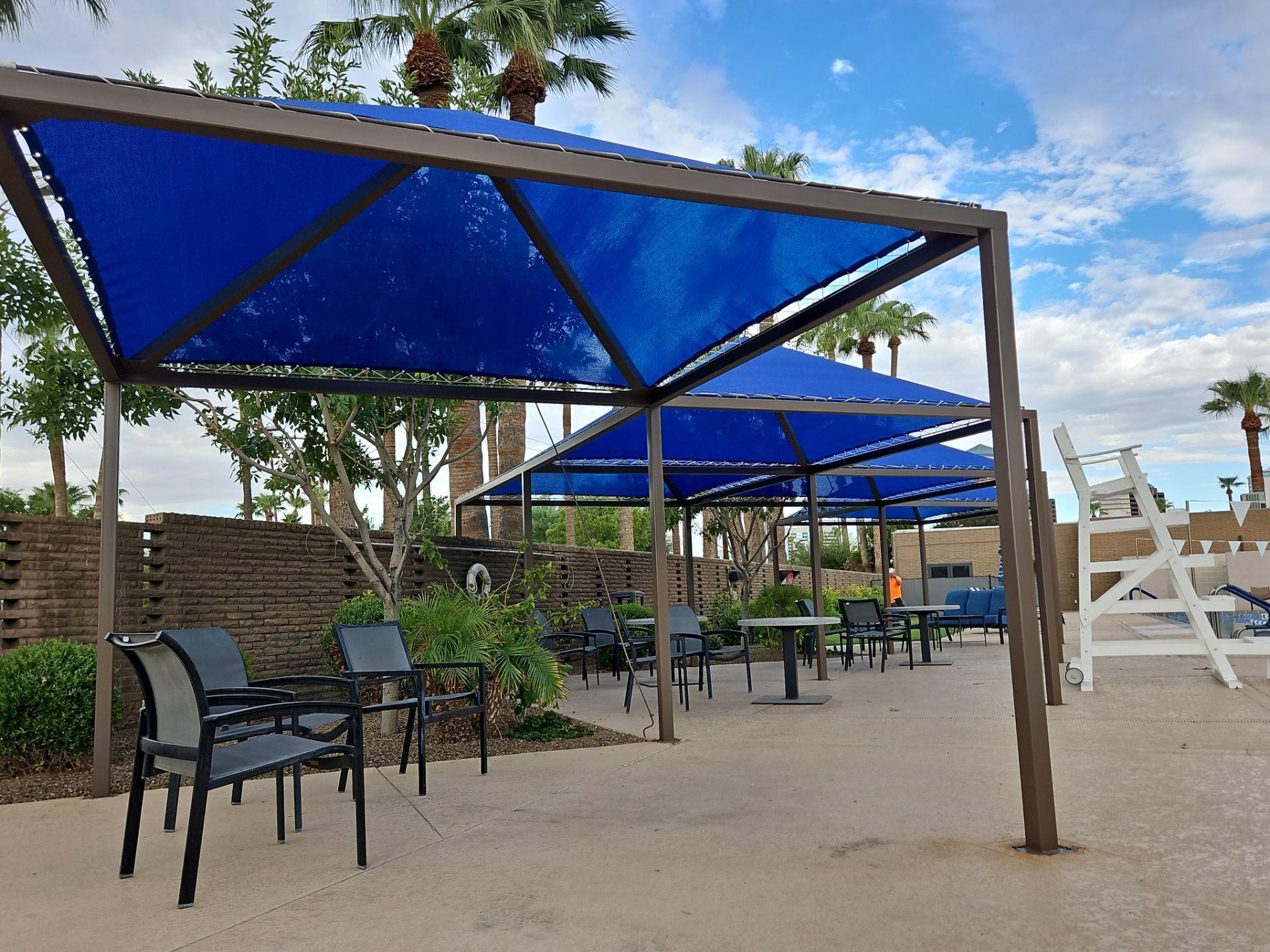
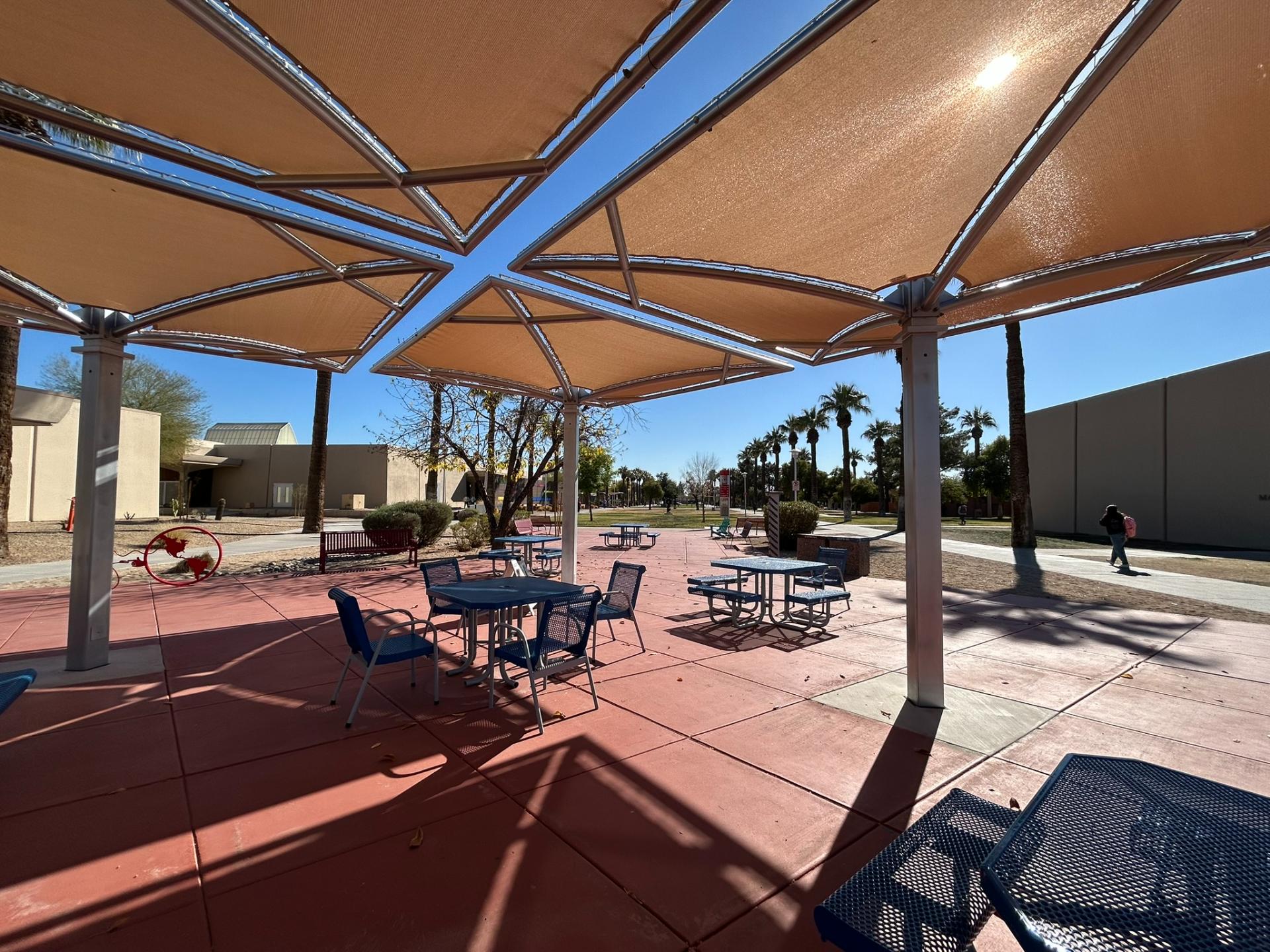
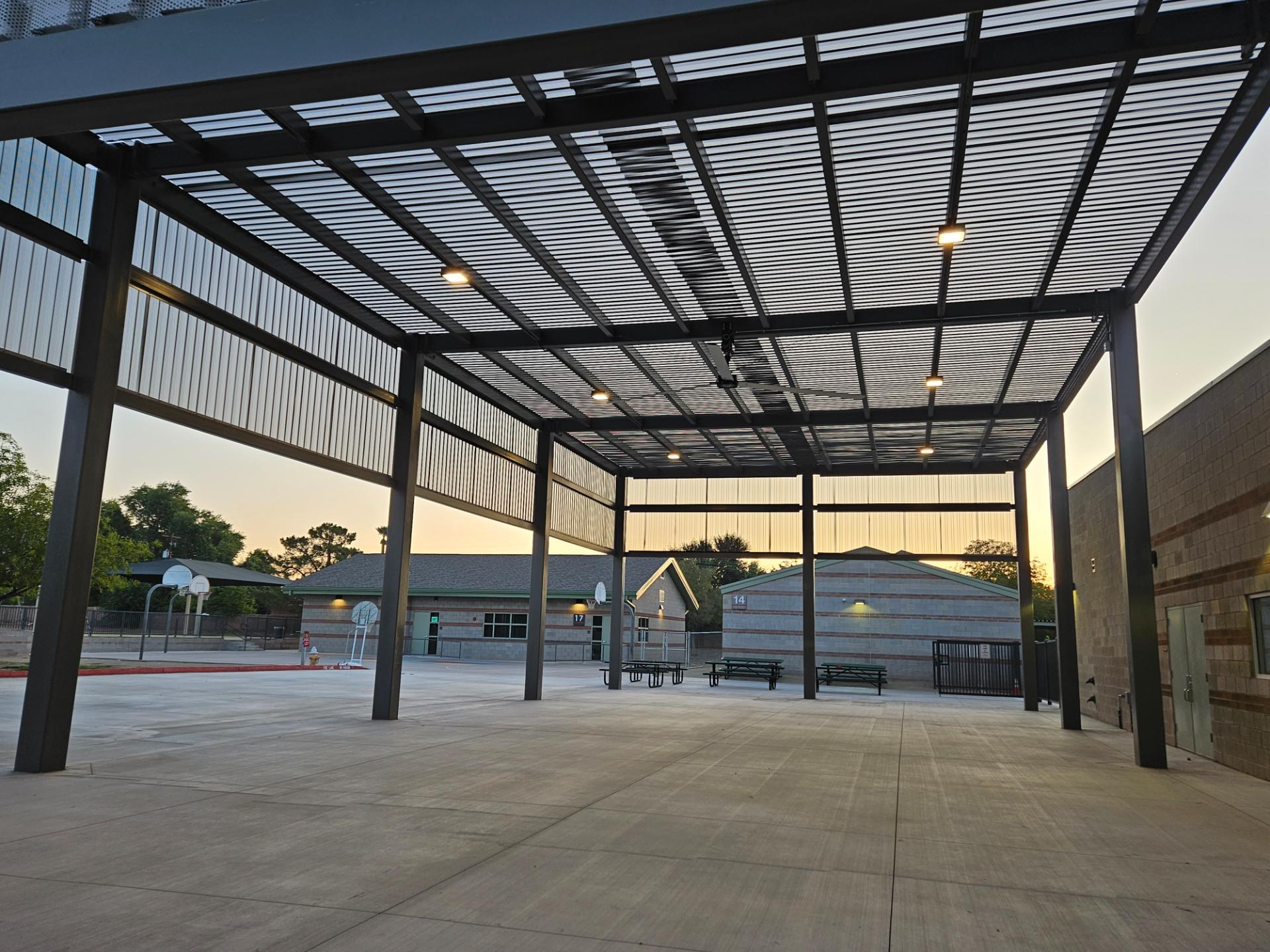
Gathering amenities ask for something different. A community ramada over picnic tables and a grill gives a fixed, all-weather room that fabric cannot — a rigid roof sheds monsoon rain instead of dripping through. Playgrounds and tot lots need maximum coverage over equipment with no posts in the play zone, which points to a hip structure spanning the whole footprint. Pickleball and sport courts, where shade has to cover spectators and benches without columns on the court, lean toward a flat cantilevered structure that throws shade from a single line of posts off to the side. Read the amenity first; the structure follows.
Clearing architectural review and matching community finishes
The architectural-review committee is the real gate on an HOA shade project, and it judges three things before approving: color, roof profile, and post style against the community’s established standard. We size the submittal package to that review — powder-coat color drawn from a community palette, a roof profile that echoes the neighborhood’s rooflines, and a post-and-beam style that reads as part of the original master plan rather than a bolt-on. Powder coat matters here beyond looks: the baked-on finish holds color far longer than brushed paint, which chalks under desert sun in a few seasons and forces the exact mismatched look a review board is trying to prevent.
Color and fabric options run wide enough to match nearly any standard. Commercial HDPE shade fabric comes in roughly 15-30 stock colors across manufacturers, and powder-coat frame colors run a similar range, so a desert-tan-and-bronze community and a gray-and-white modern community can both be matched without a custom run. The practical sequence: bring the committee a color sample and a profile drawing early, get the finish signed off, then move to the building permit. A board that approves the look on paper almost never balks at the engineered structure underneath it.
Why shared-amenity steel is sized differently than a backyard cover
Shared community amenities take far more use than a private cover, so the steel and the warranty have to account for it. A backyard sail shades one family a few hours a week; a community pool sail runs hot from open to close all summer, and a clubhouse pickleball canopy sees daily play for years. That duty cycle is why these structures use powder-coated structural steel with posts sized to the span — a small playground hip runs posts in the 4-6 inch range, while a wide pool-deck sail or a multi-court cantilever steps up to 6-8 inch columns and heavier beams to carry the load without flex.
The warranty reflects the same logic. Commercial shade-fabric warranties commonly run 10-15 years, and the steel frame is built to outlast several fabric cycles, so a community plans the structure as a 20-plus year asset with a re-coverable membrane on top. That is the honest math an HOA board should price against: the frame is the long-term investment, the fabric is a consumable you re-cover once or twice across the structure’s life. Sizing for shared use up front is what keeps a community amenity from wearing out in a third of its expected lifespan.
Materials, wind, and UV engineering for the Valley
Community structures in Maricopa County are engineered to Arizona building code and ASCE 7 wind loads, where design wind speeds run roughly 90-115 mph, and that is non-negotiable for a structure hundreds of residents stand under. Monsoon microbursts can punch past 60 mph in minutes, so the steel, footings, and fabric tension are all sized for uplift, not just for shade on a calm day. Footings in hard Valley caliche often run 3-8 ft deep before they grip — that buried work is the single biggest reason an engineered community structure outlives a bargain kit that pulls loose in the first bad cell.
What the engineering covers
- UV block. Knitted-HDPE shade fabric blocks roughly 90-99% of UV depending on weave density and color, cutting the heat load on a pool deck or playground surface dramatically.
- Spans without posts in the way. Cantilever and hip designs clear playgrounds and courts of mid-field columns, with single spans reaching well past 20-40 ft on engineered frames.
- Powder-coat durability. The baked-on coating resists the chalking that raw desert sun forces on cheap paint, holding the review-approved color through years of exposure.
- Fabric tension and re-cover. Membranes are re-tensioned over their service life and re-covered inside the 10-15 year window, which is the planned, honest maintenance line, not a failure.
Because the engineering, steel cutting, welding, and install all run under one roof at our Phoenix shop, a span change to clear a play structure or a setback reaches the saw the same week instead of routing through an out-of-state factory. That control is what makes an odd pool-deck footprint or a tight court setback practical without a six-week change order.
Permitting and the HOA approval sequence
An HOA shade project clears two separate approvals in order, and getting the sequence wrong is what stalls projects between a board and a city counter. First is architectural review inside the community: the committee signs off on color, profile, and post style. Second is the municipal building permit: we provide engineered, stamped drawings sized to the site’s wind and soil, and the city or county handles plan review and inspection. A fabric canopy is a lighter submittal than a solid-roofed ramada, which is treated as a building with a full foundation and roof-load package, so the structure type changes how heavy the permit is.
The order matters because architectural review can change the exact details the permit is drawn around — a board that asks for a taller pitch or a different post style after the permit is filed forces a redraw. The clean path is committee approval on the finish and profile first, then the stamped structural drawings, then the city. For communities spread across the East Valley and North, the same sequence holds whether the amenity sits in a Gilbert master-planned community or a Scottsdale HOA with a strict design standard. Sequencing the two approvals correctly up front is what keeps the install on schedule.
Common mistakes and honest caveats
The most common HOA shade mistake is filing for the building permit before architectural review signs off on the finish — a board reversal on color or post style then forces a redraw and resets the clock. The second is undersizing a high-use amenity: a pool sail or playground canopy that looks right on a drawing crowds the moment a summer Saturday fills the deck, because community use runs heavier than a board pictures from a quiet weekday walk-through. Size to peak weekend use, not the empty footprint.
The honest caveats are worth stating plainly. Fabric is a consumable — it blocks 90-99% of UV for a 10-15 year service life and is re-covered, not replaced whole, which a board should budget for rather than be surprised by. Wind ratings have ceilings: an engineered structure covers typical monsoon loads to ASCE 7 design speeds, not every freak gust on record, so a light DIY kit is the wrong call for an amenity hundreds of people stand under. And desert dust still accumulates, so a rinse once or twice a year keeps grit off the fabric and frame and the review-approved color looking the way the committee approved it. Find the rest of our community and commercial work on the shade structures by industry hub. Knowing those limits up front is what separates an amenity that serves a community for two decades from one that disappoints the board in a few seasons.
Shade Structures We Build
Frequently Asked Questions
Will an HOA shade structure pass our architectural-review committee?
Yes, when the submittal is built around the committee’s three gates: color, roof profile, and post style measured against the community standard. We draw powder-coat frame colors and HDPE fabric colors from a palette that matches the neighborhood, and choose a roof profile and post style that read as part of the original master plan. The practical path is to bring the committee a color sample and profile drawing for sign-off first, then file the building permit — a board that approves the look on paper rarely balks at the engineered structure underneath.
Which shade structure is right for our community’s pool, playground, or pickleball courts?
Match the structure to the amenity. A pool deck wants an open, sculptural 3-point tensioned fabric sail that blocks 90-99% of UV without hiding the water; cabanas suit a resort-style lounge. Picnic and grill areas take a ramada with a rigid roof that sheds monsoon rain. Playgrounds need a hip structure that spans the equipment with no posts in the play zone, and pickleball or sport courts lean toward a flat cantilevered structure that shades spectators from a single line of posts off the court. Read how residents use the space first.
How much do community amenity shade structures cost?
Cost tracks footprint, post count, structure type, fabric versus solid roof, and foundation depth, so community amenities are quoted per project rather than off a per-square-foot chart. A single playground hip sits well below a multi-court cantilever or a wide pool-deck sail array. The honest long-term math: the powder-coated steel frame is a 20-plus year investment, while the fabric is a consumable re-covered inside a 10-15 year window, so budget the frame as the asset and the membrane as a planned maintenance line. We price after reviewing the amenity layout, wind exposure, and soil.
Can the structure match our community’s existing colors and finishes?
Yes. Commercial HDPE shade fabric comes in roughly 15-30 stock colors across manufacturers, and powder-coat frame colors run a similar range, so a desert-tan-and-bronze community and a gray-and-white modern community can both be matched without a custom run. Powder coat also holds the approved color far longer than brushed paint, which chalks under desert sun in a few seasons and creates the exact mismatch a review board works to prevent. We bring color samples to architectural review so the committee approves the actual finish, not a printed swatch.
Will community shade structures survive Arizona monsoon wind?
Yes, when engineered for the site. Community structures in Maricopa County are sized to Arizona building code and ASCE 7 wind loads, where design wind speeds run roughly 90-115 mph, and monsoon microbursts can exceed 60 mph. Footings in caliche often run 3-8 ft deep before they grip, and fabric tension and steel are sized for uplift, not just shade on a calm day. No structure is rated for every freak gust on record, which is exactly why a light kit is the wrong call for an amenity hundreds of residents stand under and an engineered structure is not.