or call (602) 265-0905 — no-obligation, on-site.
Commercial Shade Structures in Gilbert, Arizona
Since 1998
Designing & building Arizona shade
In-House Fabrication
Built at our Phoenix shop
Engineered & Permit-Ready
Stamped drawings for AZ wind loads
Free On-Site Quote
No-obligation project assessment
Total Shade builds commercial-grade shade structures across Gilbert, Arizona — HOA amenity ramadas, school and park playground covers, pool-deck shade, and Heritage District patio canopies engineered to Maricopa County code. Gilbert grew from a farm town into one of Arizona’s largest master-planned communities, and that growth shows up as new amenity centers, school campuses, and dining patios that all need shade. We fabricate steel frames and knitted HDPE fabric in-house in Phoenix, then engineer and install on a roughly 4-to-8 week timeline depending on permits and span. Our crews have done this for 25+ years.
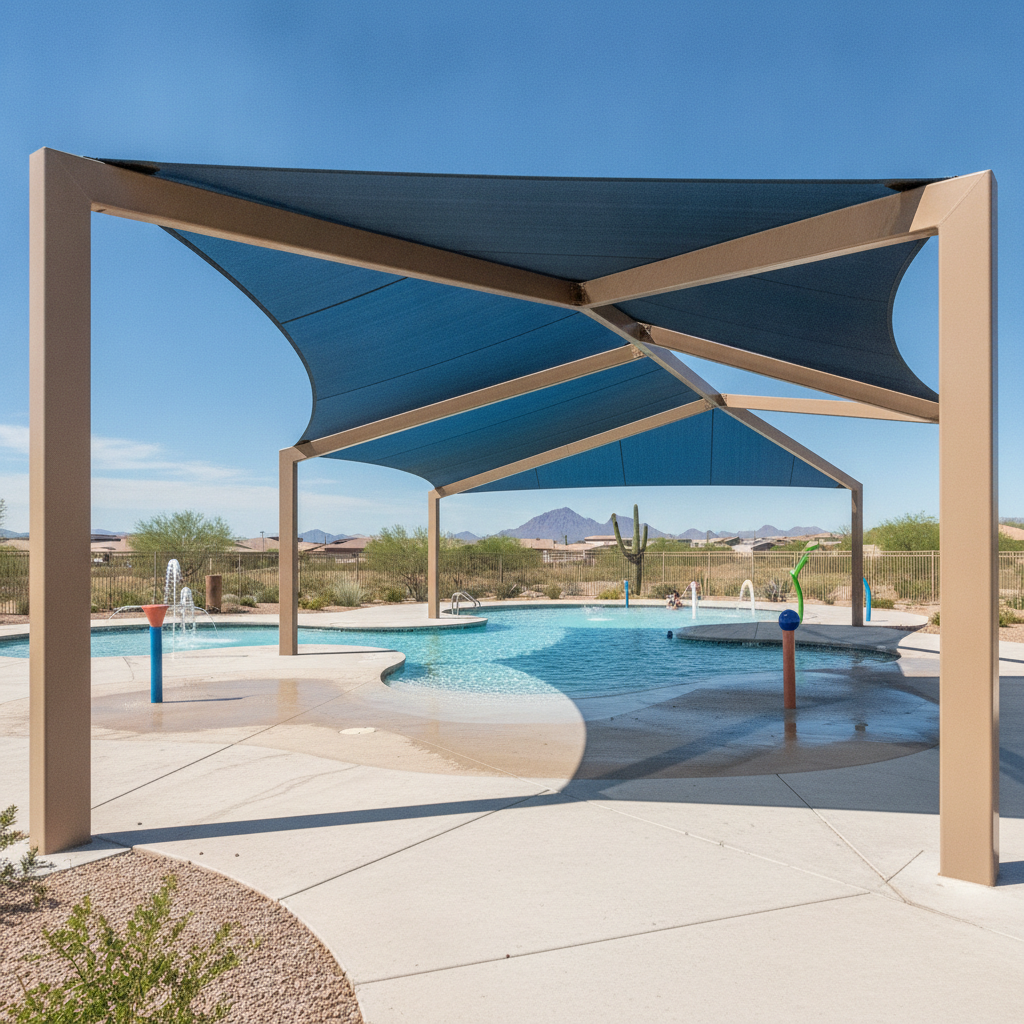
HOA amenity and pool-deck shade that clears architectural review
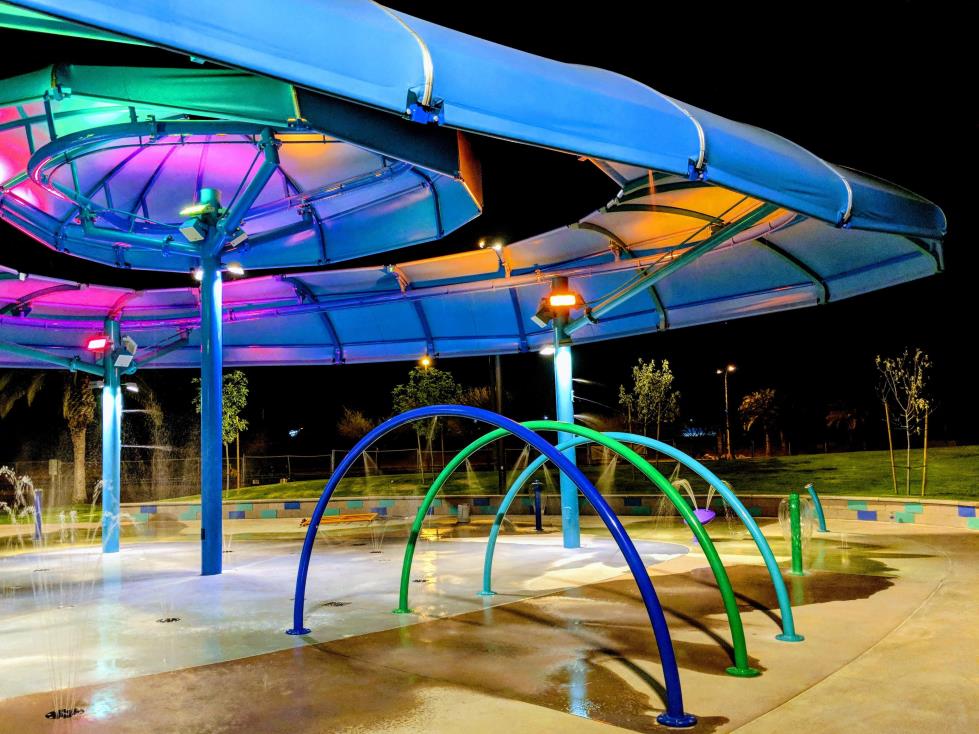
Gilbert’s master-planned communities run on amenity centers, and nearly every one needs shade over a ramada, splash pad, or pool deck. A typical neighborhood pool area calls for one or two structures spanning 20 to 40 feet, sized to cover lounge seating and the shallow-end approach where families gather. Ramadas work for picnic areas and barbecue stations; cabanas suit poolside lounge clusters where you want a finished, resort-style feel.
Design standards and HOA approval
Most Gilbert HOAs route amenity additions through an architectural review committee that checks color, height, and placement against the community’s standards. We provide engineered, stamped drawings and powder-coat color samples so the board approves the actual specification, not a guess. HDPE fabric comes in a wide color range, so matching an earth-tone palette is usually straightforward. Plan for a review cycle of two to four weeks on top of the build schedule.
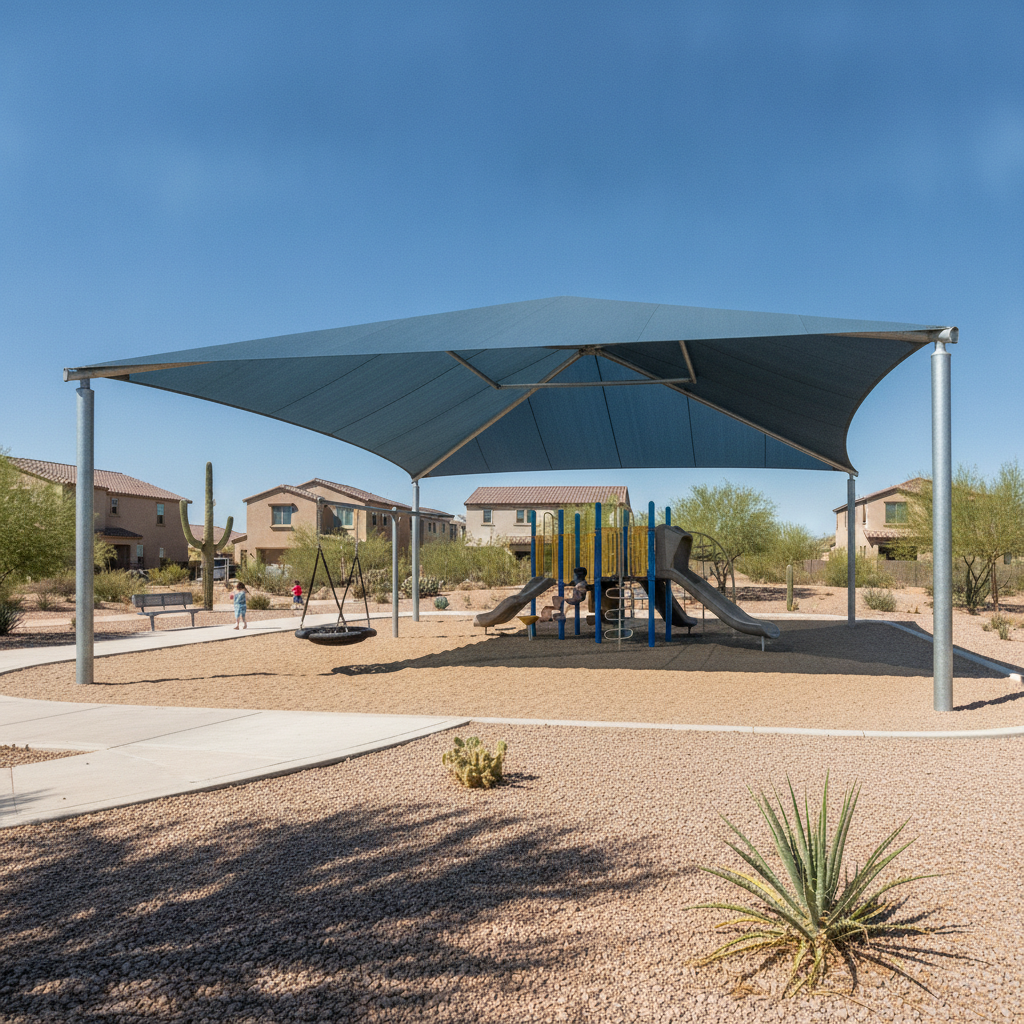
Playground and field shade for Gilbert schools and parks
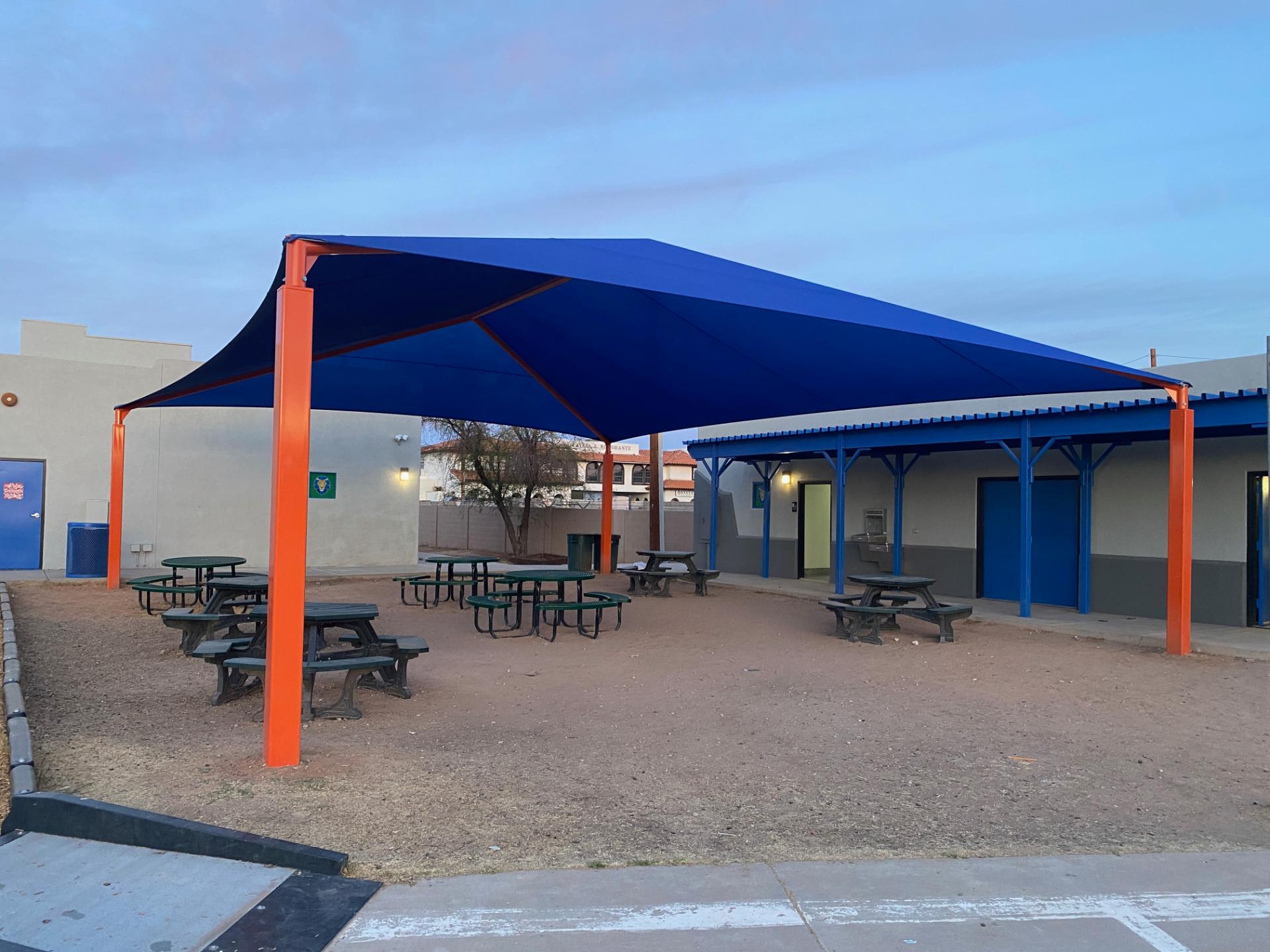
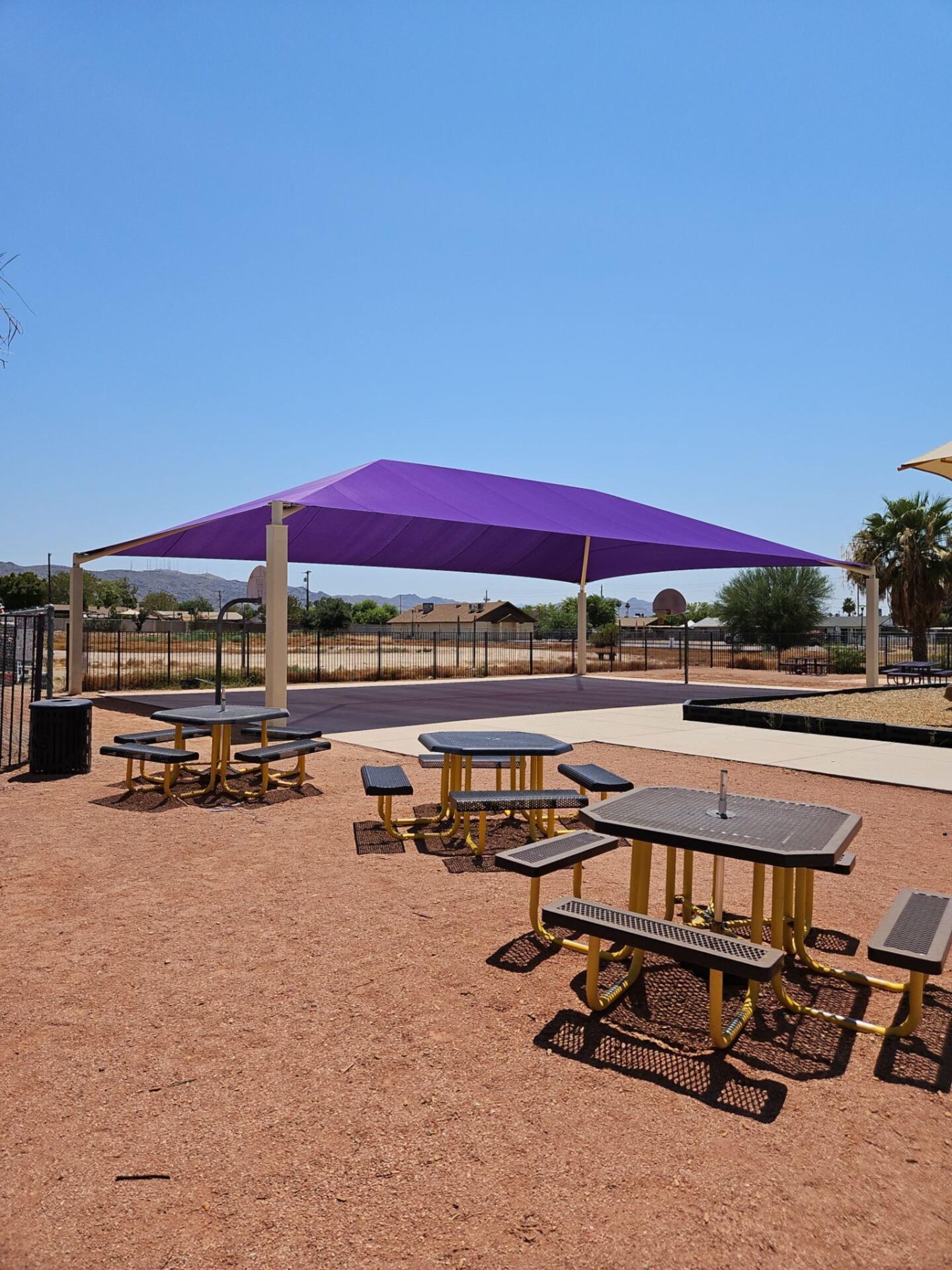
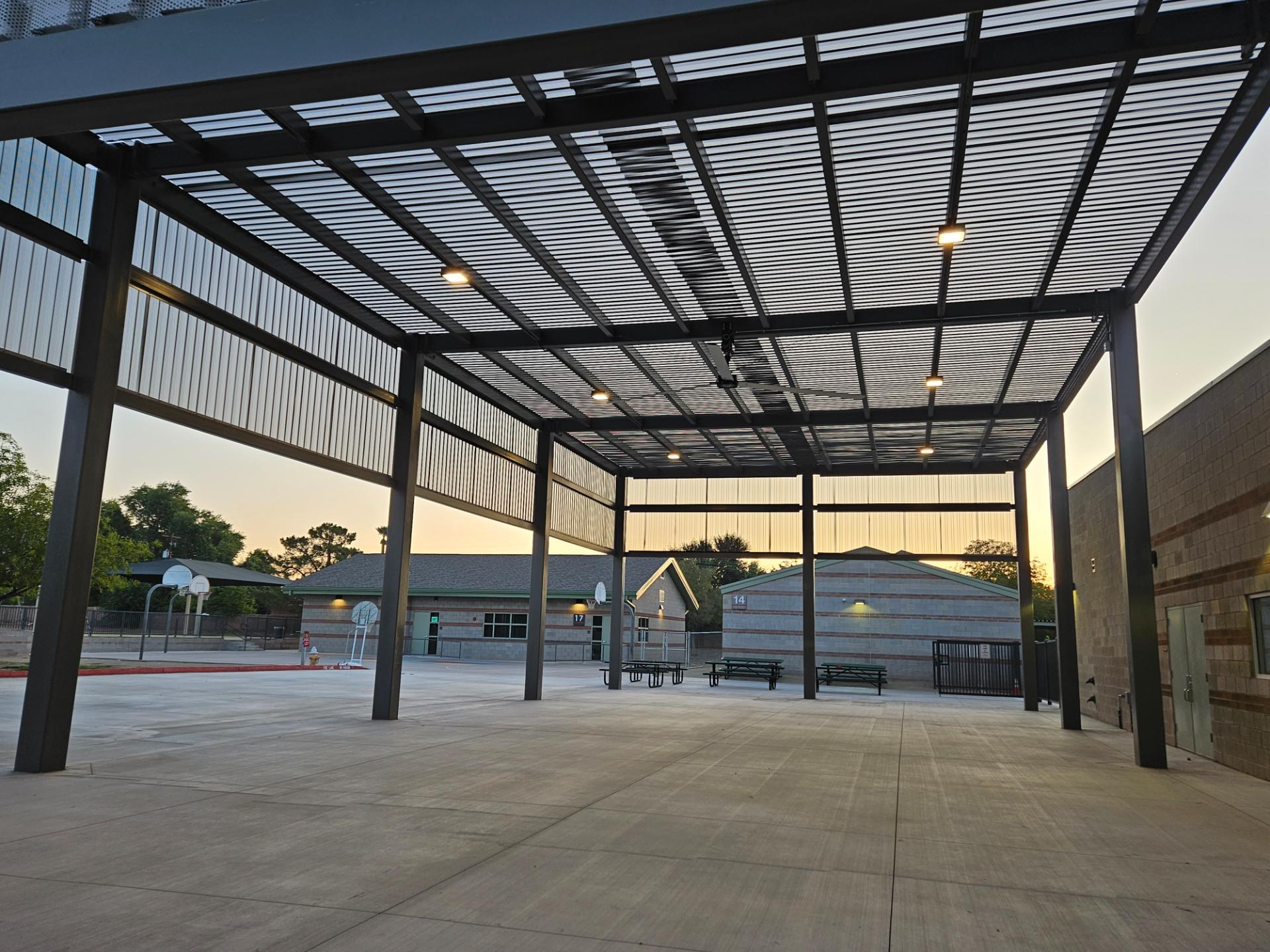
Shade over a playground or bleacher set keeps surface temperatures within a usable range during Gilbert’s long cooling season, roughly April through October. Rubberized play surfaces can read 40 to 60 degrees hotter than air temperature in direct July sun; fabric that blocks 90 to 99 percent of UV brings that down sharply. For play areas we set posts at a minimum 8-foot clearance for headroom and orient the canopy to follow the afternoon sun.
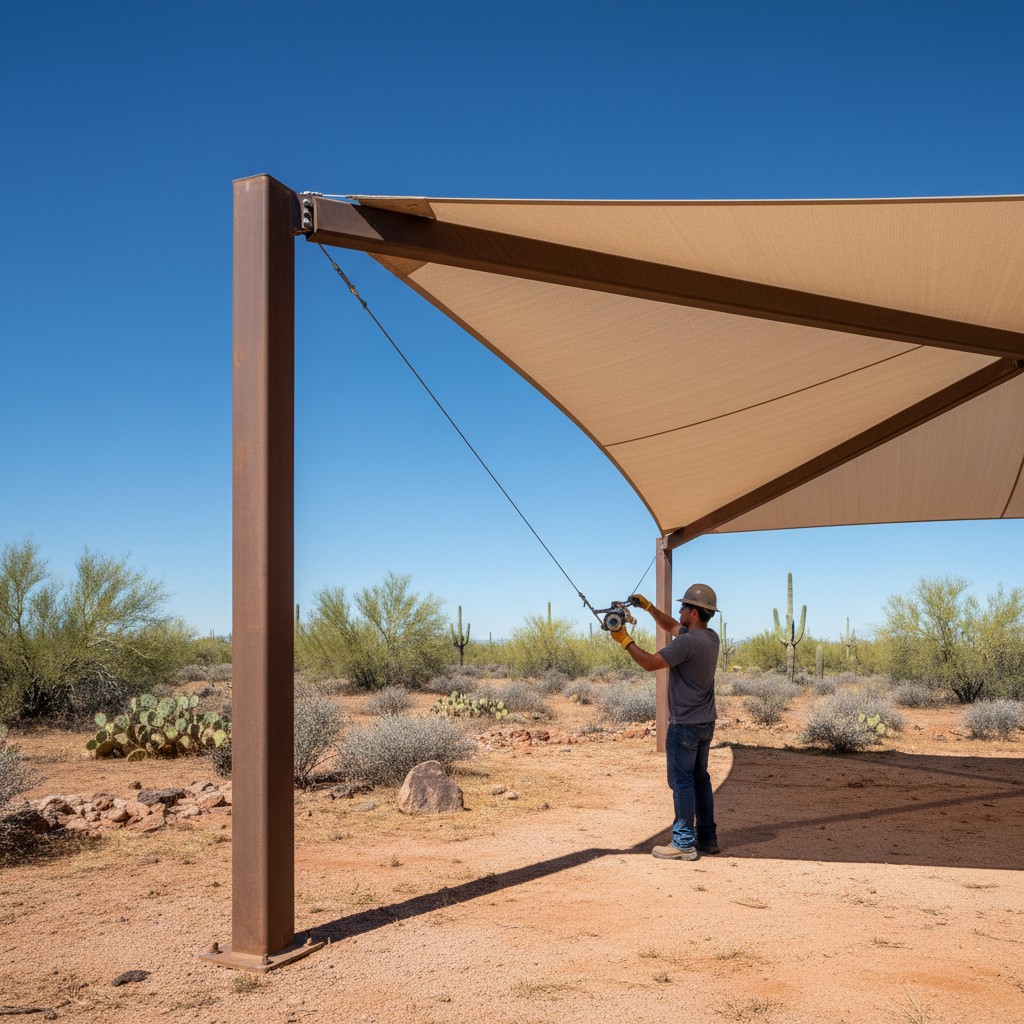
Larger field, dugout, and bleacher applications often use a hip structure for its long clear spans. For broad coverage over a single play structure, a 3-point tensioned fabric sail covers a lot of ground with fewer footings — useful when you’re working around existing concrete.
Heritage District restaurant patio shade
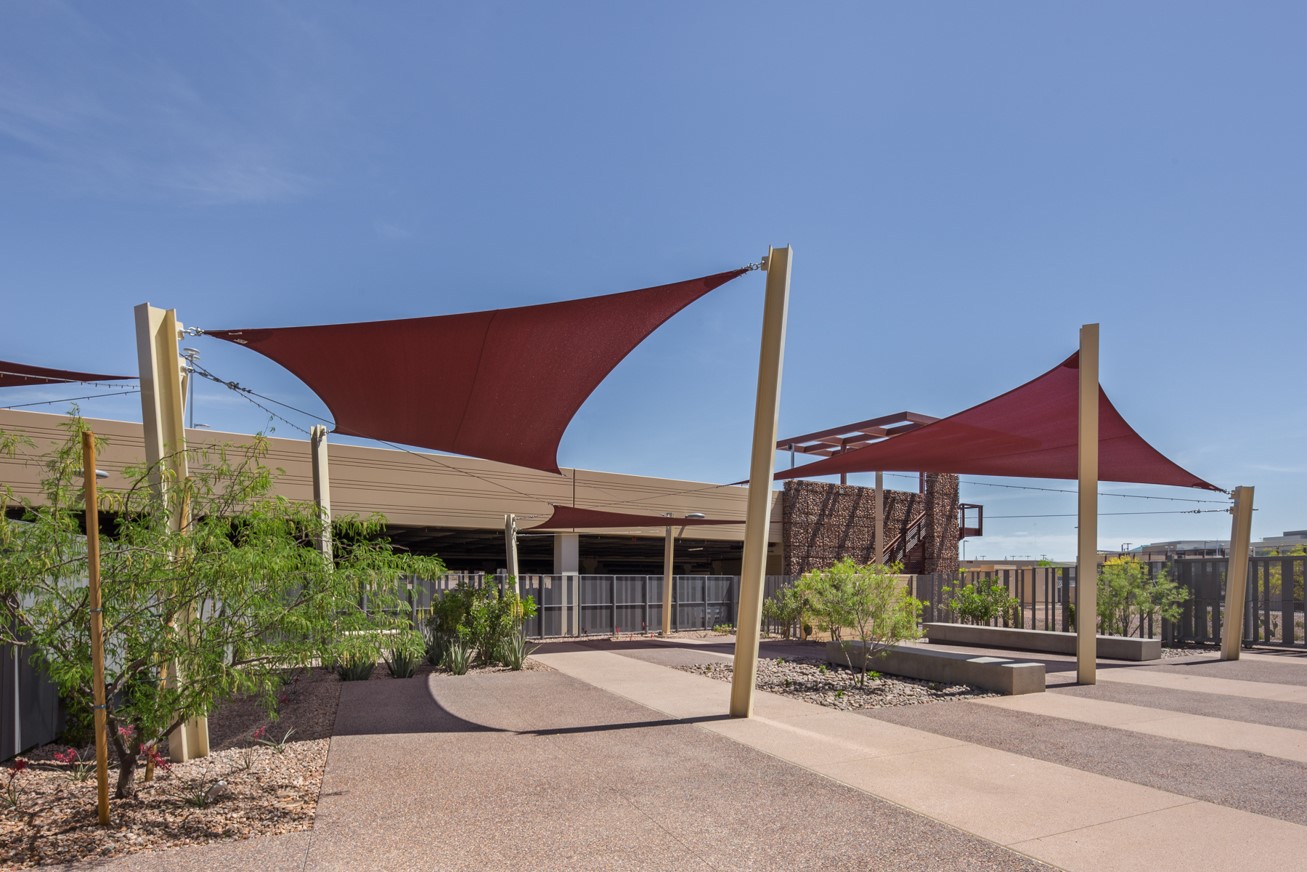
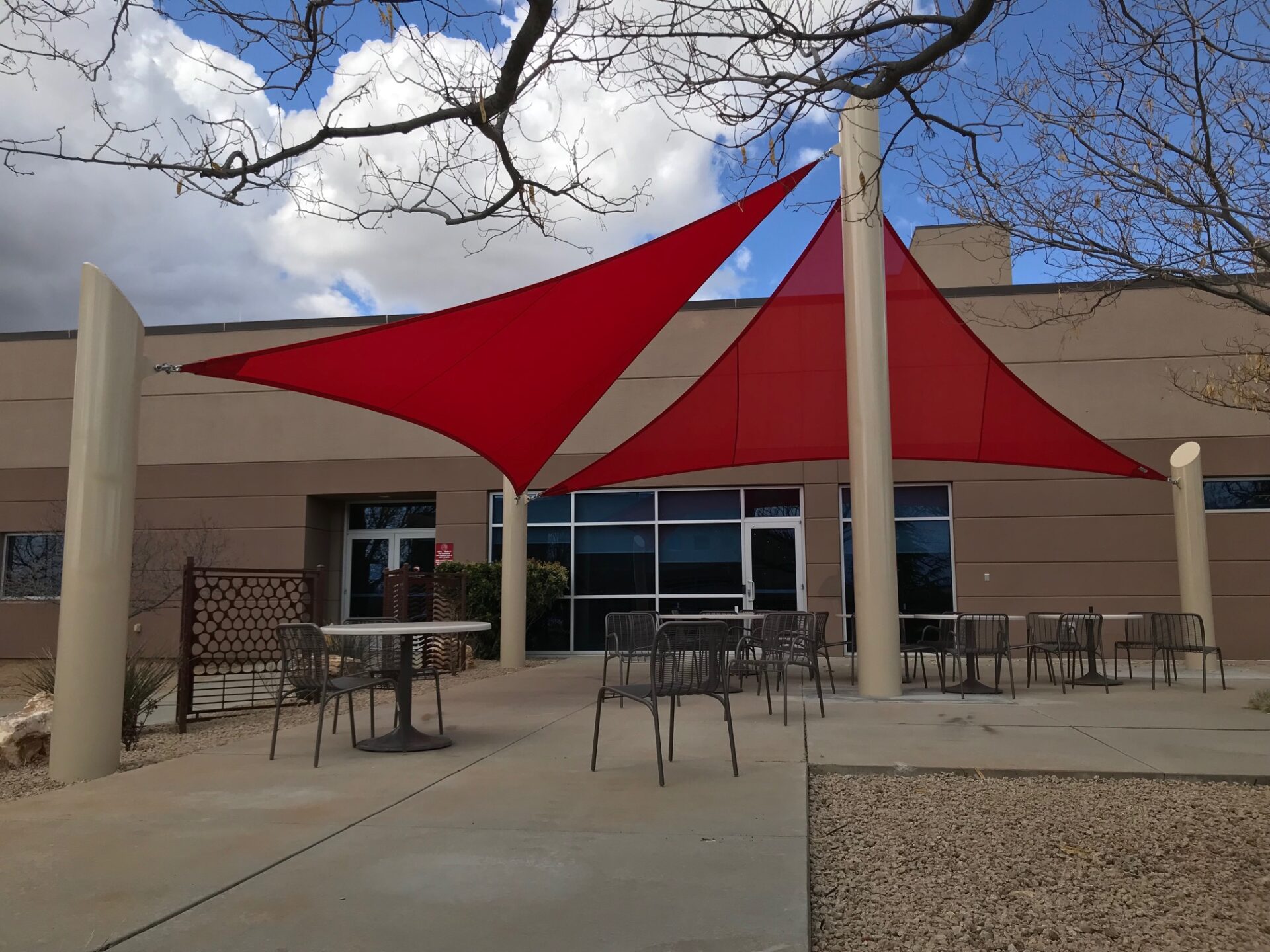
Gilbert’s Heritage District turned downtown into a walkable dining strip, and the patios that draw evening crowds need shade that survives full-sun afternoons and monsoon wind. A patio canopy has to handle daytime UV in the 90-to-99 percent range while staying breathable so heat doesn’t pool underneath. Tensioned fabric reads as architectural rather than industrial, which fits a district built on character. Patios sit close to the street, so a tensioned fabric sail that spans with three or four anchor points beats a grid of poles. When an existing canopy fades or tears after years of sun, canopy replacement re-skins the same frame for a fraction of a rebuild — the steel typically outlasts two or three fabric cycles.
Materials, finish, and wind specs for Gilbert structures
Commercial shade in Gilbert is built on powder-coated structural steel and knitted HDPE shade fabric, not residential canvas. Maricopa County reviews structures against Arizona building code and ASCE 7 wind loads, which in the Valley means design wind speeds in roughly the 90 to 115 mph range depending on exposure and structure type. The fabric blocks about 90 to 99 percent of UV while letting air pass, so it sheds heat instead of trapping it the way a solid roof would — closer to a tree’s canopy than a metal awning. Fabric warranties commonly run 10 to 15 years against UV degradation, with the steel frame lasting well beyond that and the fabric serving as a separate, replaceable layer. Footings are sized to the engineered load, which for a mid-size structure usually means concrete piers two to four feet deep depending on soil and span.
Permitting and timeline in Gilbert
A commercial shade structure in Gilbert needs a building permit, and we handle the engineering side so your review goes smoothly. We provide Arizona-stamped structural drawings that the Town of Gilbert plan reviewers check against code; the municipal review and inspection are theirs to run, not ours. From signed contract to installed structure, plan on roughly 4 to 8 weeks: in-house fabrication in Phoenix overlaps with the permit cycle, and HOA review can add two to four weeks ahead of that. Footing inspection happens before the frame goes up, and a final inspection closes the permit once the fabric is tensioned. Knowing the sequence keeps an amenity opening or a school’s start date from slipping.
Common mistakes that shorten a shade structure’s life
The most expensive Gilbert mistakes are undersizing and bad orientation. A canopy sized only to the equipment footprint leaves people in full sun by mid-afternoon, because shadows move; coverage should extend 6 to 10 feet past the target area on the west and south sides to track the late-day sun. Orienting a structure for a tidy site plan instead of the actual sun path is the second error — a canopy that looks balanced on paper can shade an empty walkway at 4 p.m.
The third is skipping re-tensioning. HDPE fabric relaxes slightly over the first season and after big wind events; left loose, it flaps, wears at the seams, and can fail early in a monsoon microburst that exceeds 60 mph. Fabric is consumable — plan on periodic re-tensioning and an eventual re-cover. Dust is the other reality; a rinse once or twice a year keeps the weave breathing and the color even.
Every Shade Structure We Build for Gilbert
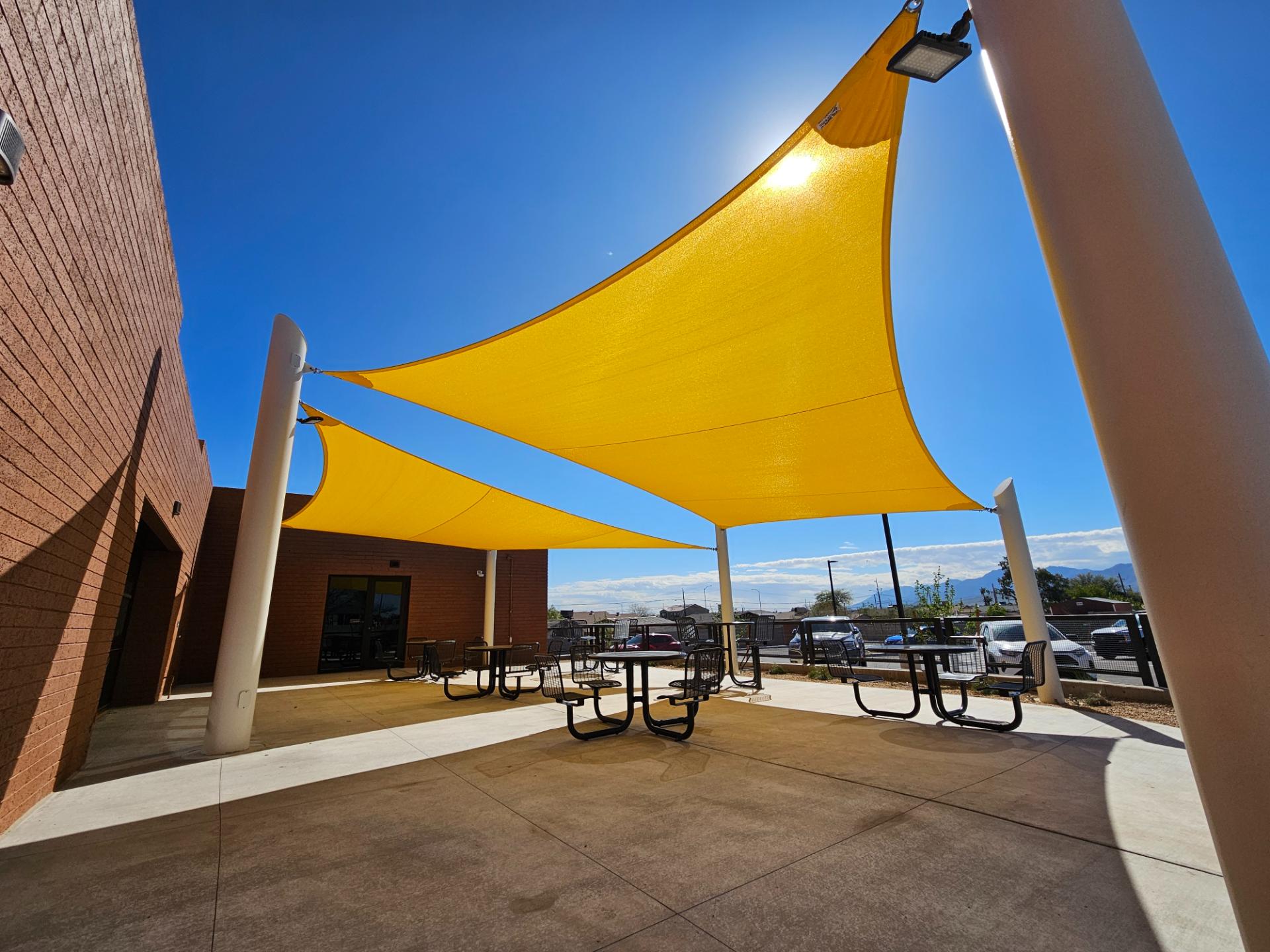
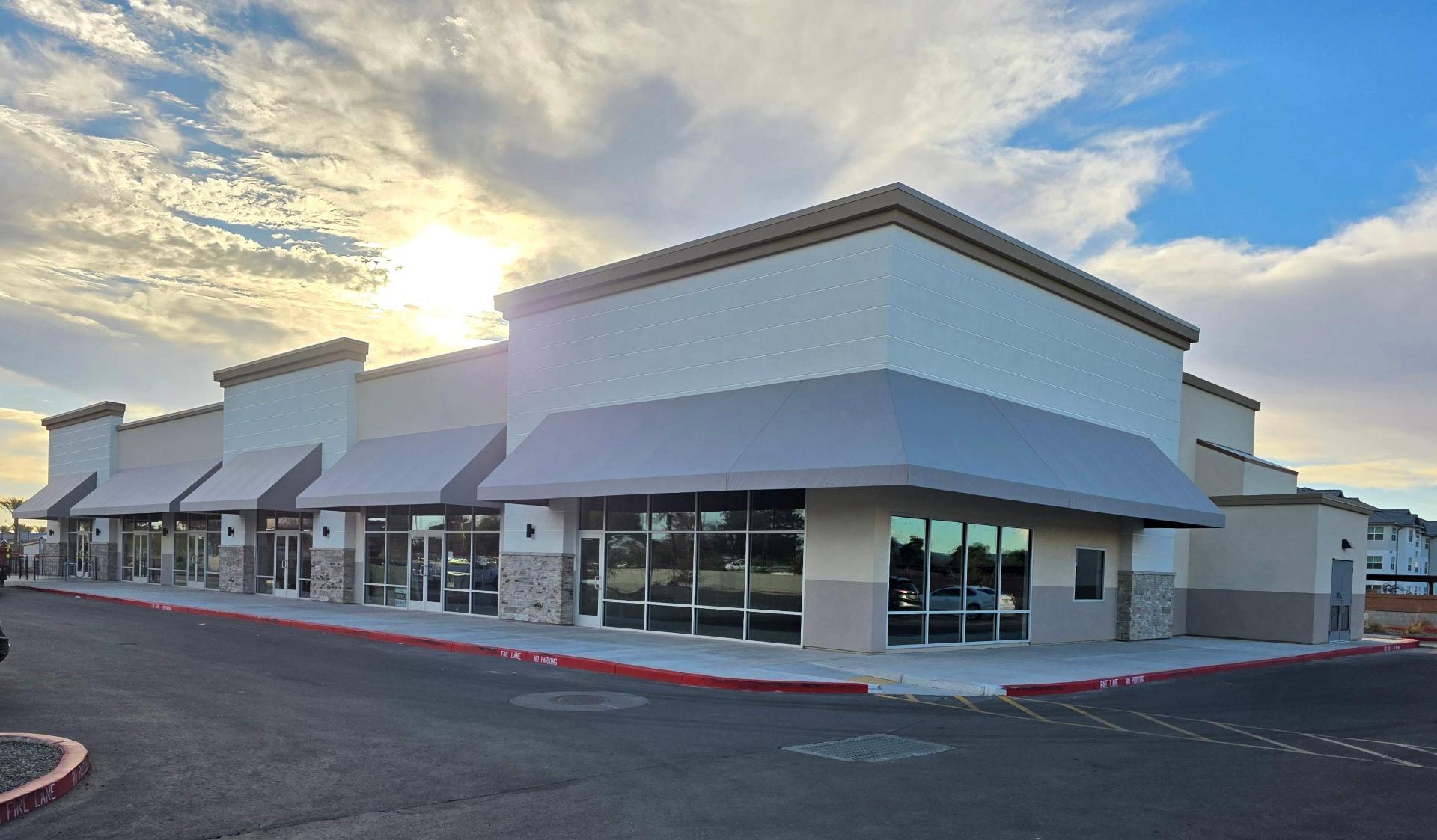
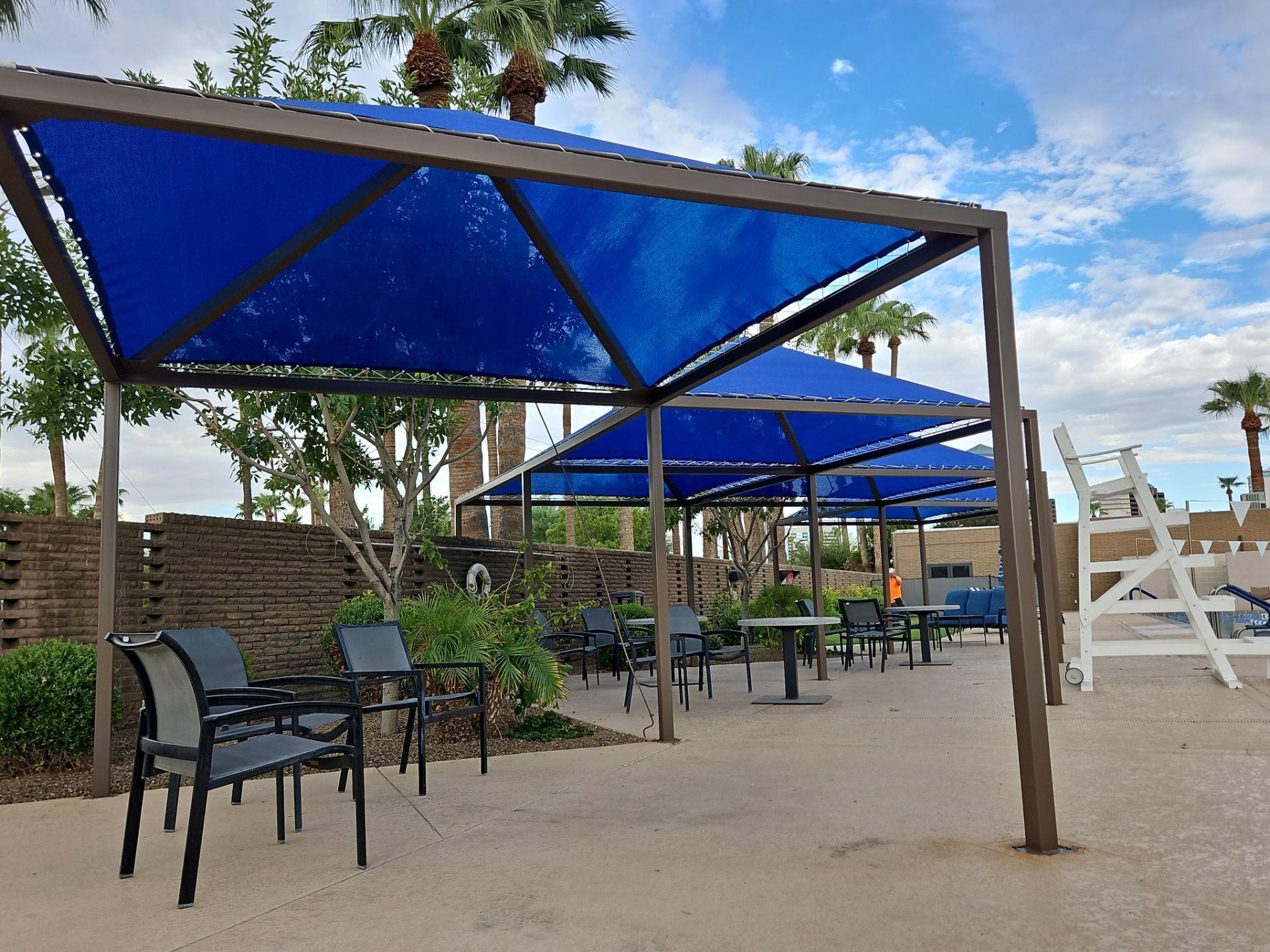
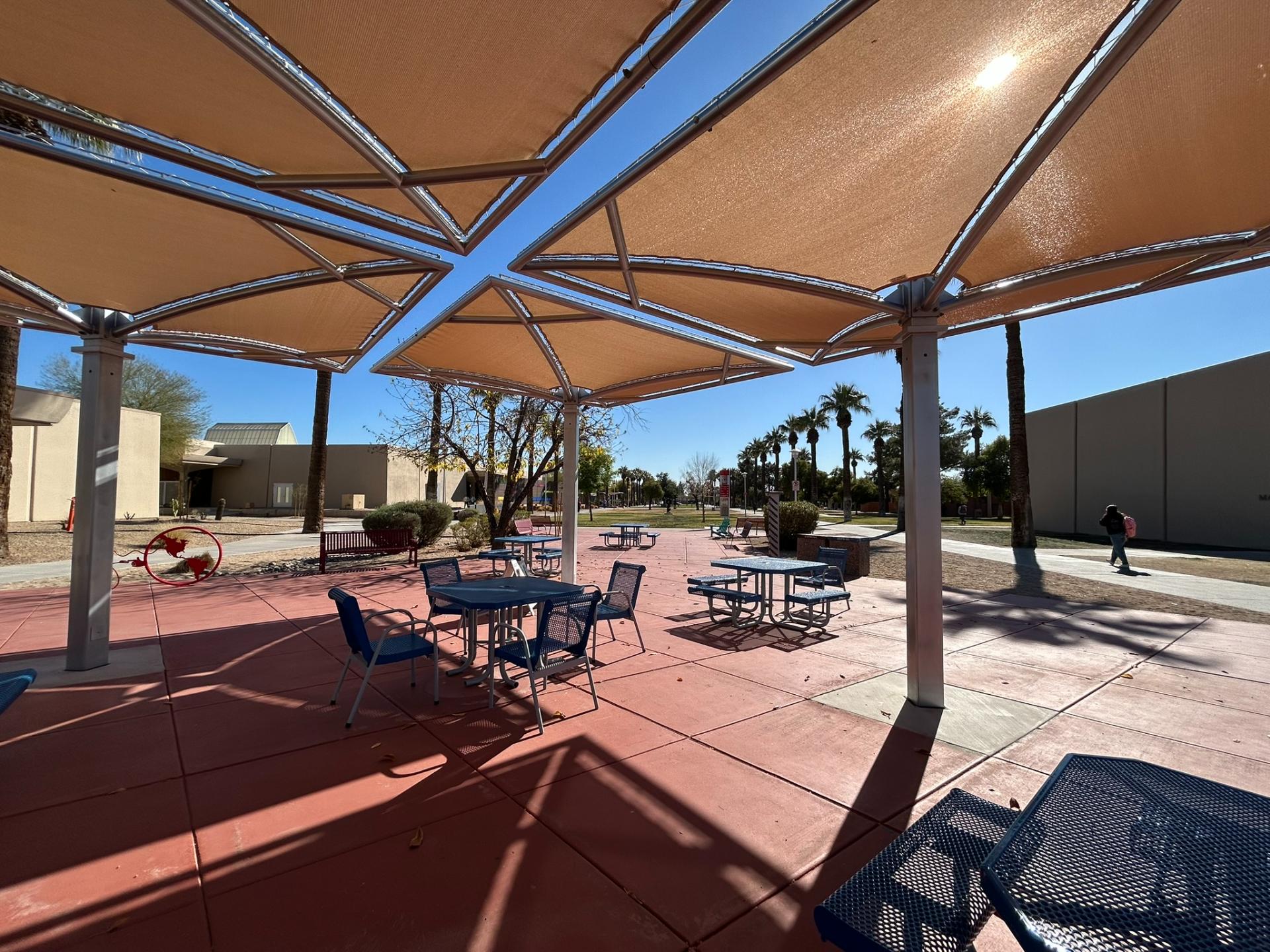
Planning a shade project in Gilbert?
Call (602) 265-0905 for a free assessment.
Serving Gilbert and the Phoenix Metro
Total Shade LLC builds shade structures in Gilbert as part of our Phoenix-metro service area, including nearby Chandler and Queen Creek. From our Phoenix fabrication shop we deliver engineered, permit-ready shade across the entire Valley.
Frequently Asked Questions
Do I need HOA approval for a shade structure in a Gilbert community?
Almost certainly yes. Most Gilbert master-planned communities require architectural review for amenity and visible structures, checking color, height, and placement. We supply stamped drawings and powder-coat color samples so your board reviews the exact specification. Budget two to four weeks for that review on top of the build schedule.
How much does a commercial shade structure cost in Gilbert?
Cost depends on span, structure type, and footing requirements, so a fair quote needs a site visit. As rough guidance, a single small amenity ramada or sail sits well below a multi-structure pool deck or a long bleacher run. Steel, fabric grade, wind engineering, and concrete piers two to four feet deep all factor in.
Will a shade canopy hold up to Gilbert monsoon winds?
Structures are engineered to Arizona building code and ASCE 7 wind loads, with Valley design wind speeds in roughly the 90 to 115 mph range. That said, monsoon microbursts can exceed 60 mph and ratings have limits. Proper footing depth and keeping fabric re-tensioned matter as much as the rating; a loose canopy fails before a taut one does.
What’s the best shade option for a Gilbert neighborhood pool or splash pad?
For a pool deck or splash pad, most communities use a 20-to-40-foot structure covering lounge seating and the shallow-end gathering area. Ramadas suit picnic and grill stations, cabanas suit poolside lounge clusters, and tensioned sails cover irregular pads with fewer posts. The fabric blocks 90 to 99 percent of UV while staying breathable, so heat sheds instead of pooling underneath.
Can you re-cover an existing patio canopy instead of replacing the whole thing?
Usually, yes. If the steel frame is sound, canopy replacement re-skins it with fresh HDPE fabric for a fraction of a full rebuild — the frame typically outlasts two or three fabric cycles. This is common for Heritage District patios and amenity structures where the original fabric has faded or torn after 10-plus years of sun.
Get a free on-site quote in Gilbert.
Call (602) 265-0905 for a free assessment.