or call (602) 265-0905 — no-obligation, on-site.
Commercial Shade Structures in Queen Creek, Arizona
Since 1998
Designing & building Arizona shade
In-House Fabrication
Built at our Phoenix shop
Engineered & Permit-Ready
Stamped drawings for AZ wind loads
Free On-Site Quote
No-obligation project assessment
Total Shade builds commercial shade structures for Queen Creek’s new master-planned communities, schools, parks, and equestrian properties from a Phoenix fabrication shop at 2331 W. Holly St, with 25+ years of work across the Valley. As one of the fastest-growing towns in the far East Valley, Queen Creek adds amenity centers, splash pads, ball fields, and pool decks faster than most of its neighbors, so the demand here splits between new-community HOA shade and the town’s older agricultural and equestrian land. We fabricate powder-coated steel frames and knitted HDPE fabric in-house, deliver stamped engineering drawings for HOA and town review, and size every structure for the heat and monsoon gusts that hit the East Valley from June through September.
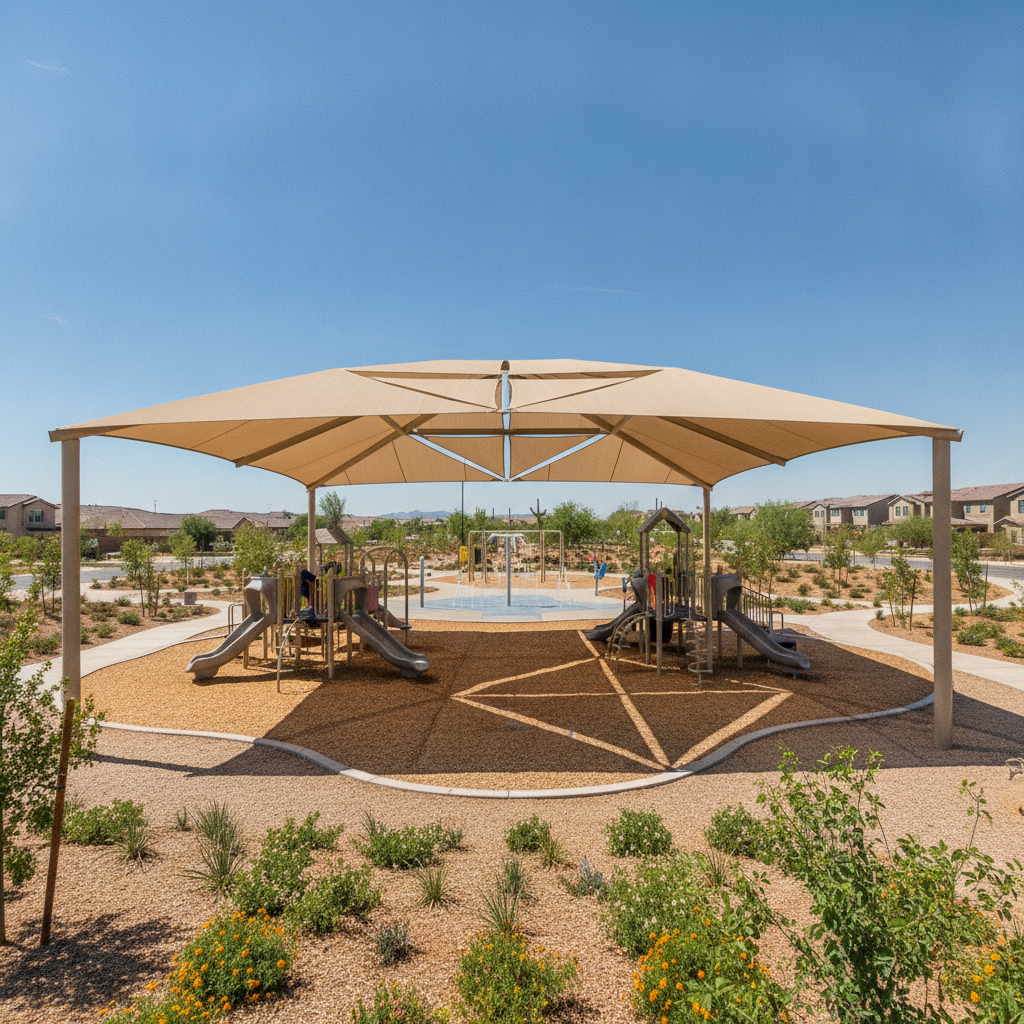
Amenity-center, pool, and playground shade for new Queen Creek communities
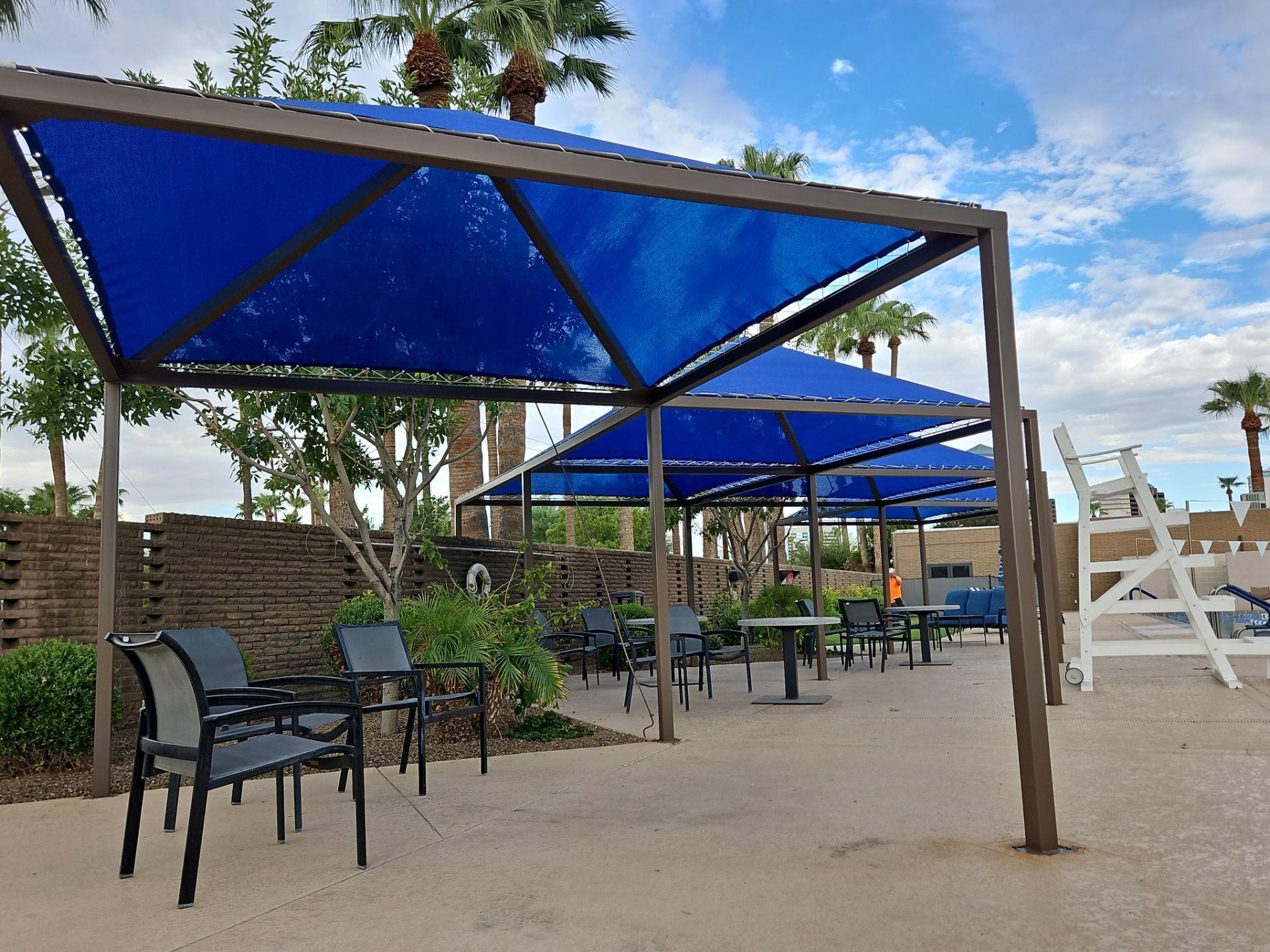
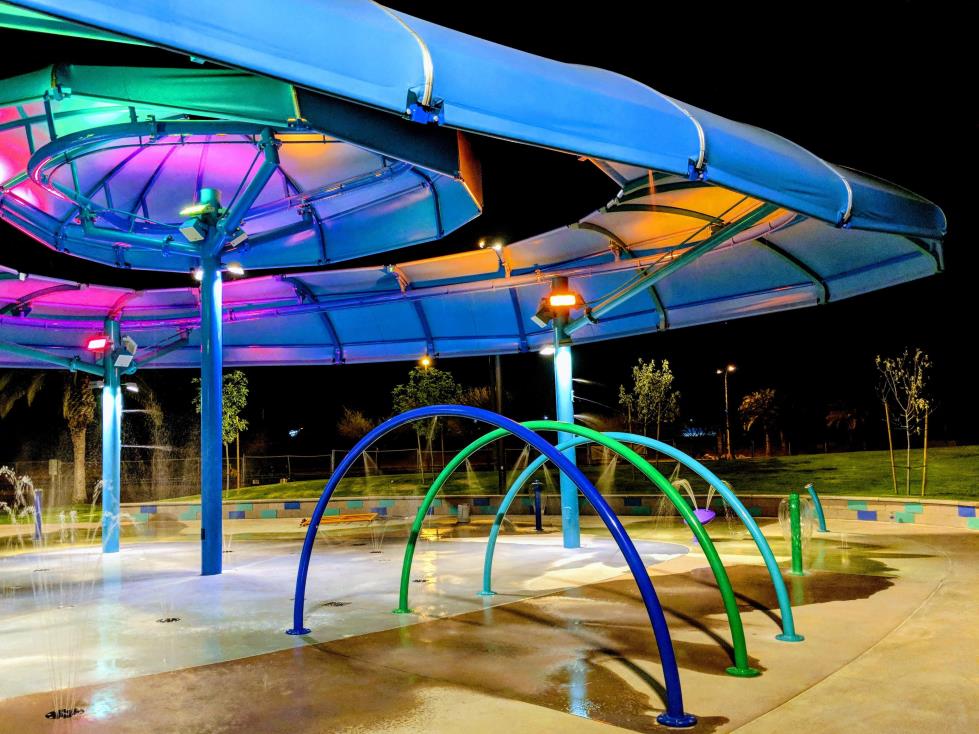
Most new Queen Creek shade work sits inside master-planned amenity centers: pool decks, splash pads, tot lots, and ramada-style gathering areas that an HOA has to deliver as the neighborhood fills in. Pool decks need shade that clears the water’s edge and the deck furniture without dropping a post into a walkway, so a single wide span matters more than the catalog footprint. A ramada over a cluster of picnic tables and grills gives a community an all-day gathering point, while a cabana along a pool deck creates the resort-style shaded seating that buyers in these communities expect.
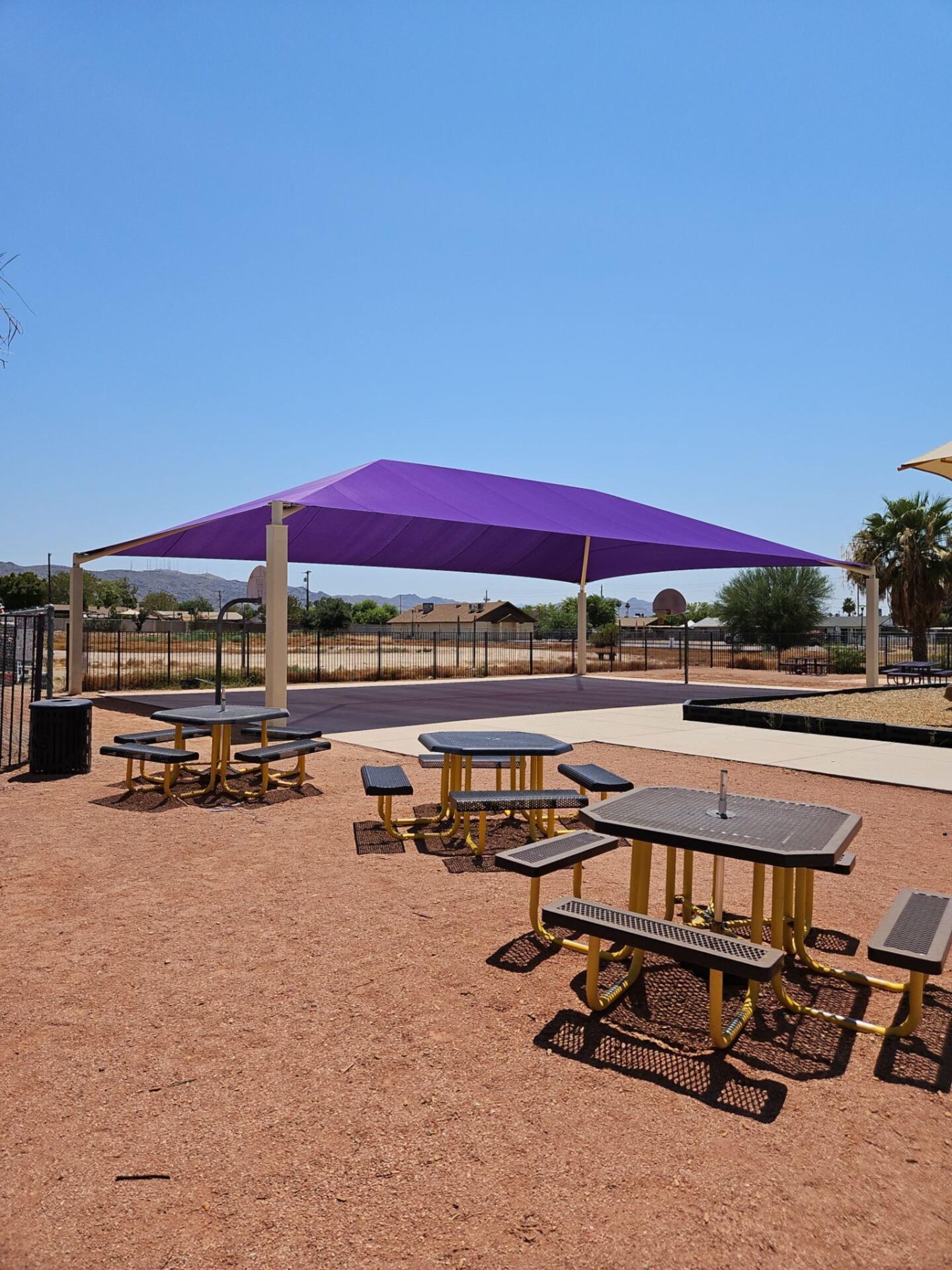
Over playgrounds, the canopy has to clear the equipment fall zone by a safe margin, keeping the lowest fabric edge and any column footing well outside the recommended 6 ft minimum use zone around play structures. Knitted HDPE fabric on these canopies blocks roughly 90 to 99% of UV depending on color and weave, which is the point over a pool deck or tot lot where children spend 30 to 45 minutes at a stretch. For a flush, modern line near a building face, a hip structure spreads a pitched fabric roof over multiple table rows in one continuous span.
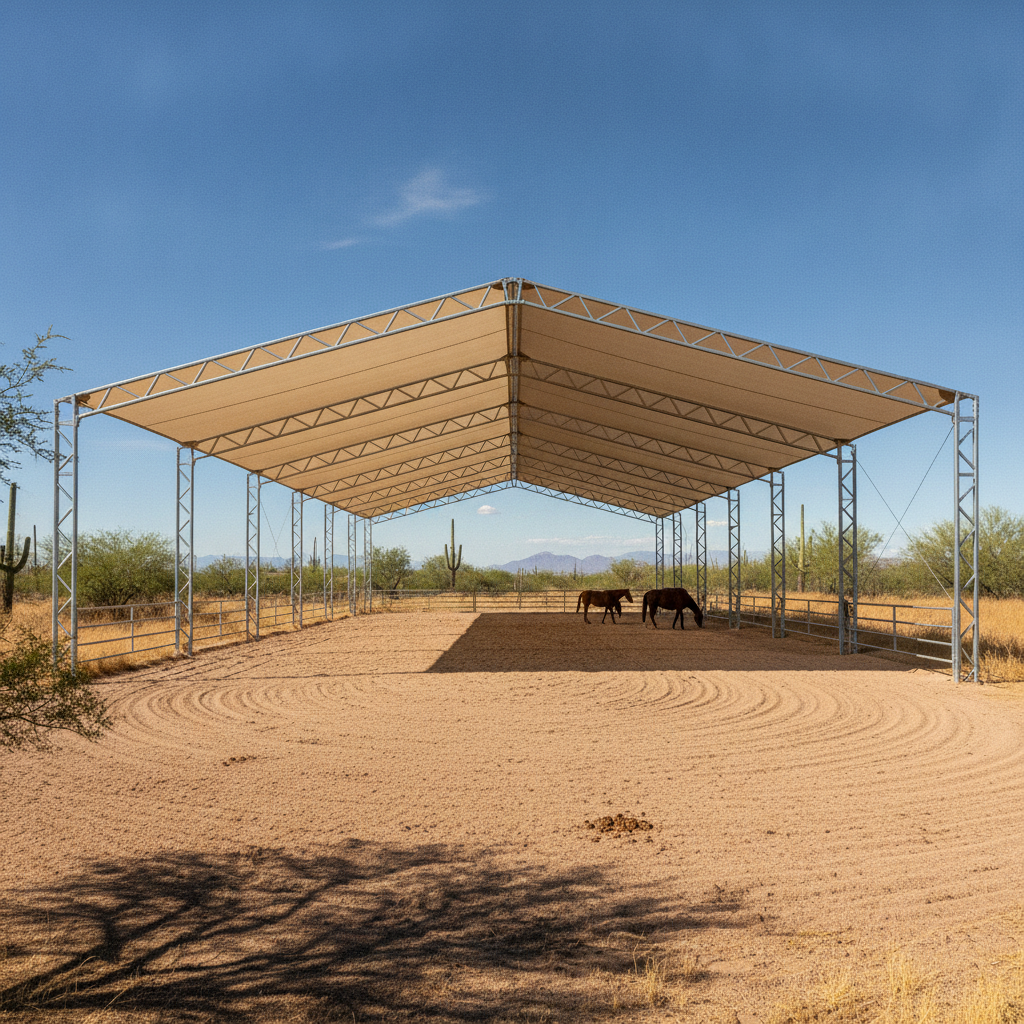
Agricultural and equestrian shade for Queen Creek properties
Queen Creek’s agricultural and equestrian heritage keeps a steady demand for cover that has nothing to do with a pool deck: arena shade, wash-rack and tack-area roofs, hay and equipment cover, and shaded turnouts for livestock. These structures favor height and clear span over a finished architectural look, since a horse arena or equipment bay needs an open interior with no mid-span columns to work around.
Why HDPE fabric suits livestock and ag use
Knitted HDPE fabric breathes, so heat does not build under it the way it does under a solid metal roof, and it blocks the same roughly 90 to 99% of UV while letting monsoon rain drain off a pitched plane. For larger equestrian and agricultural spans, a custom-built shade structure lets us set column spacing, clearance height, and roof pitch to the actual arena or equipment footprint rather than forcing the use into a stock size. Powder-coated steel frames resist the rust that bare steel develops where wash racks, sprinklers, and monsoon humidity hit it.
School and park cover across a growing town
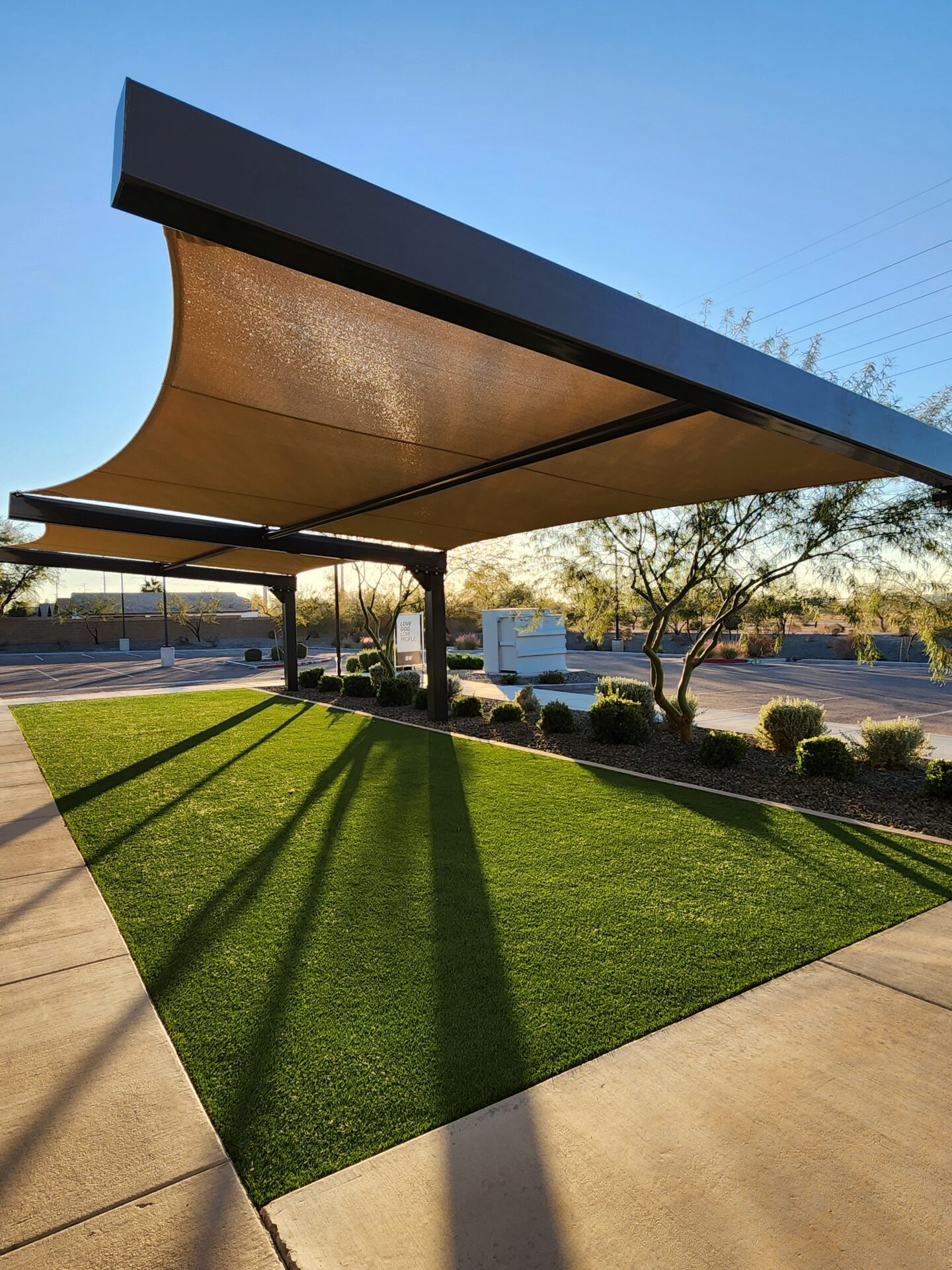
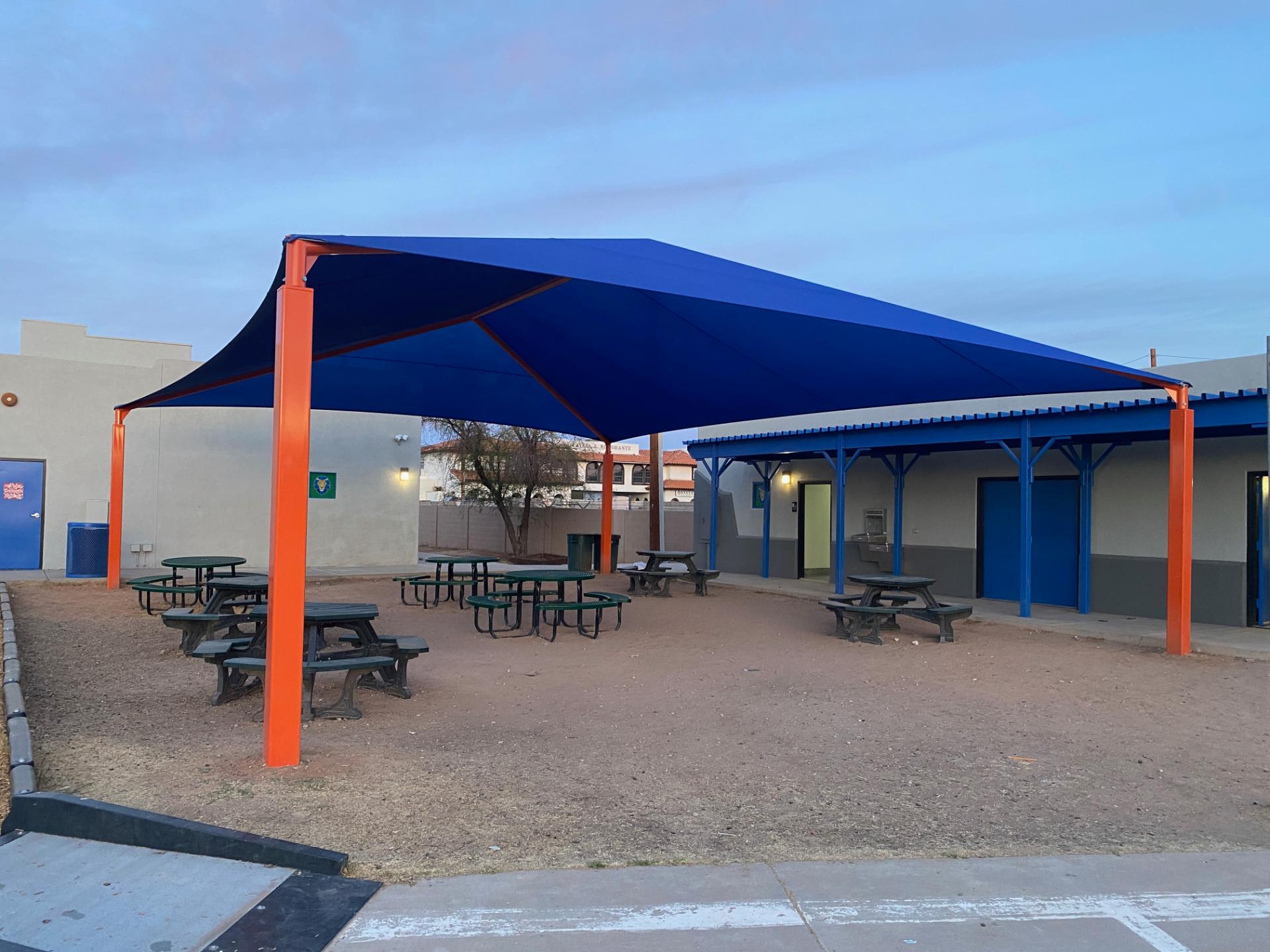
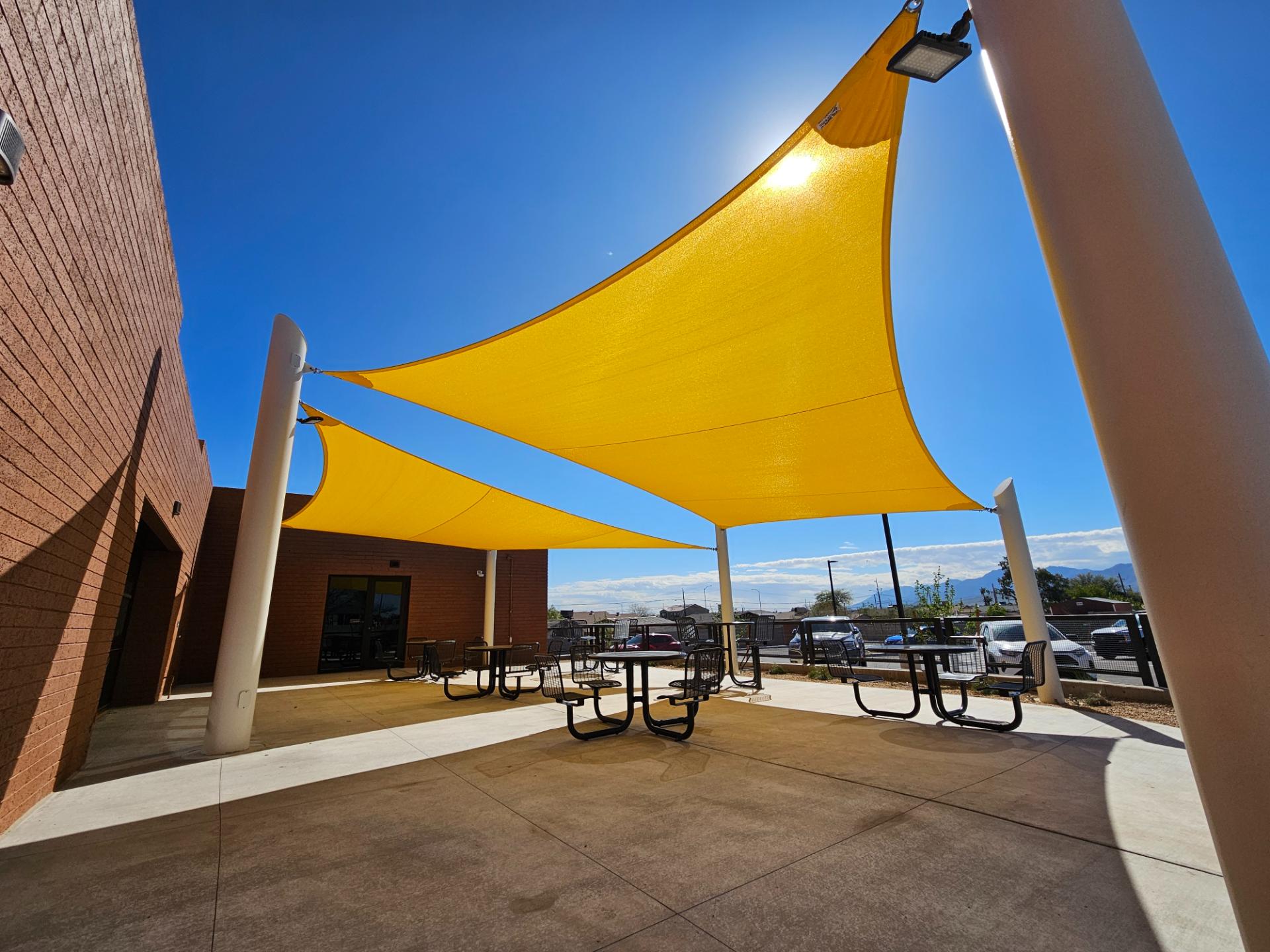
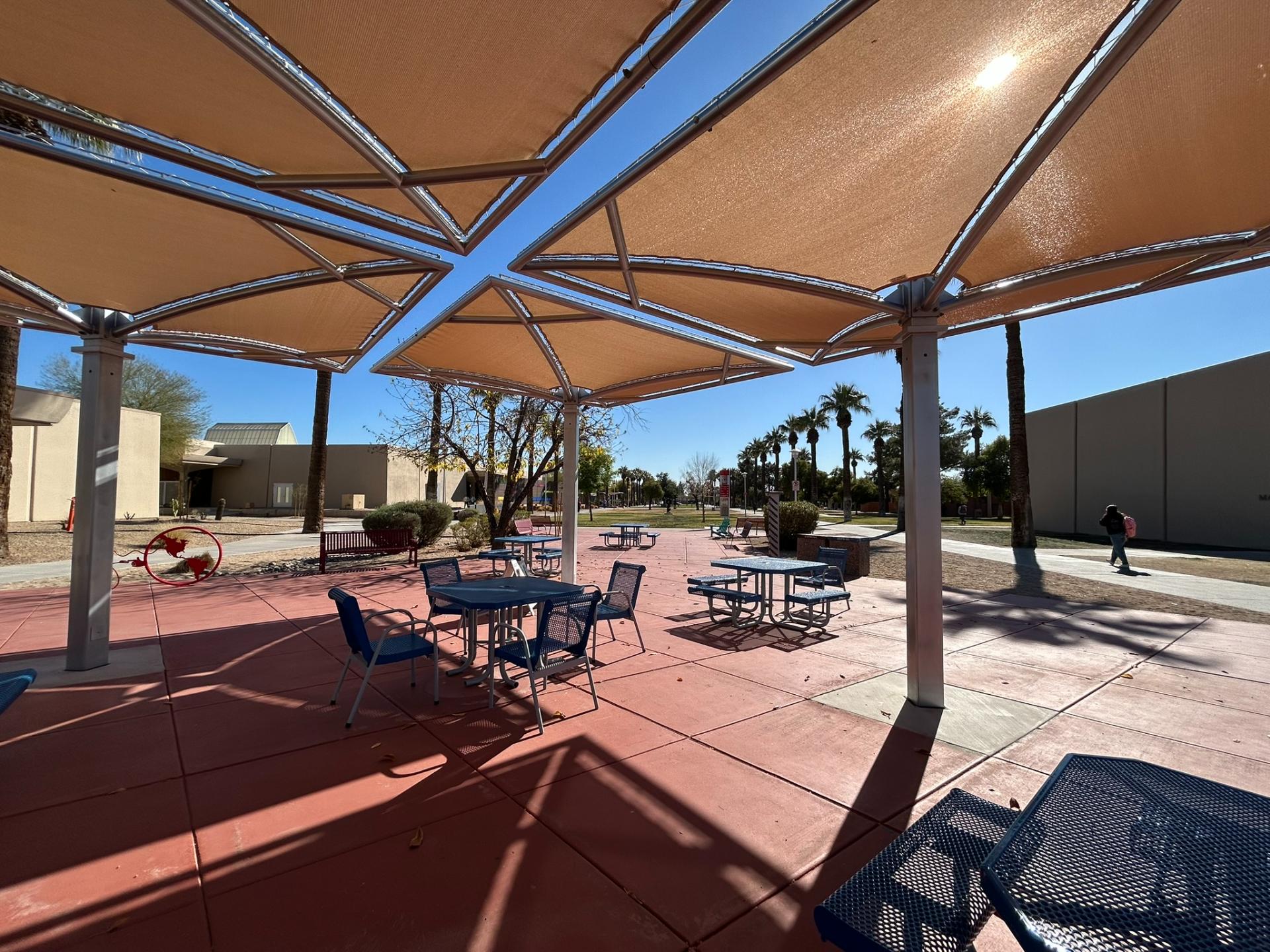
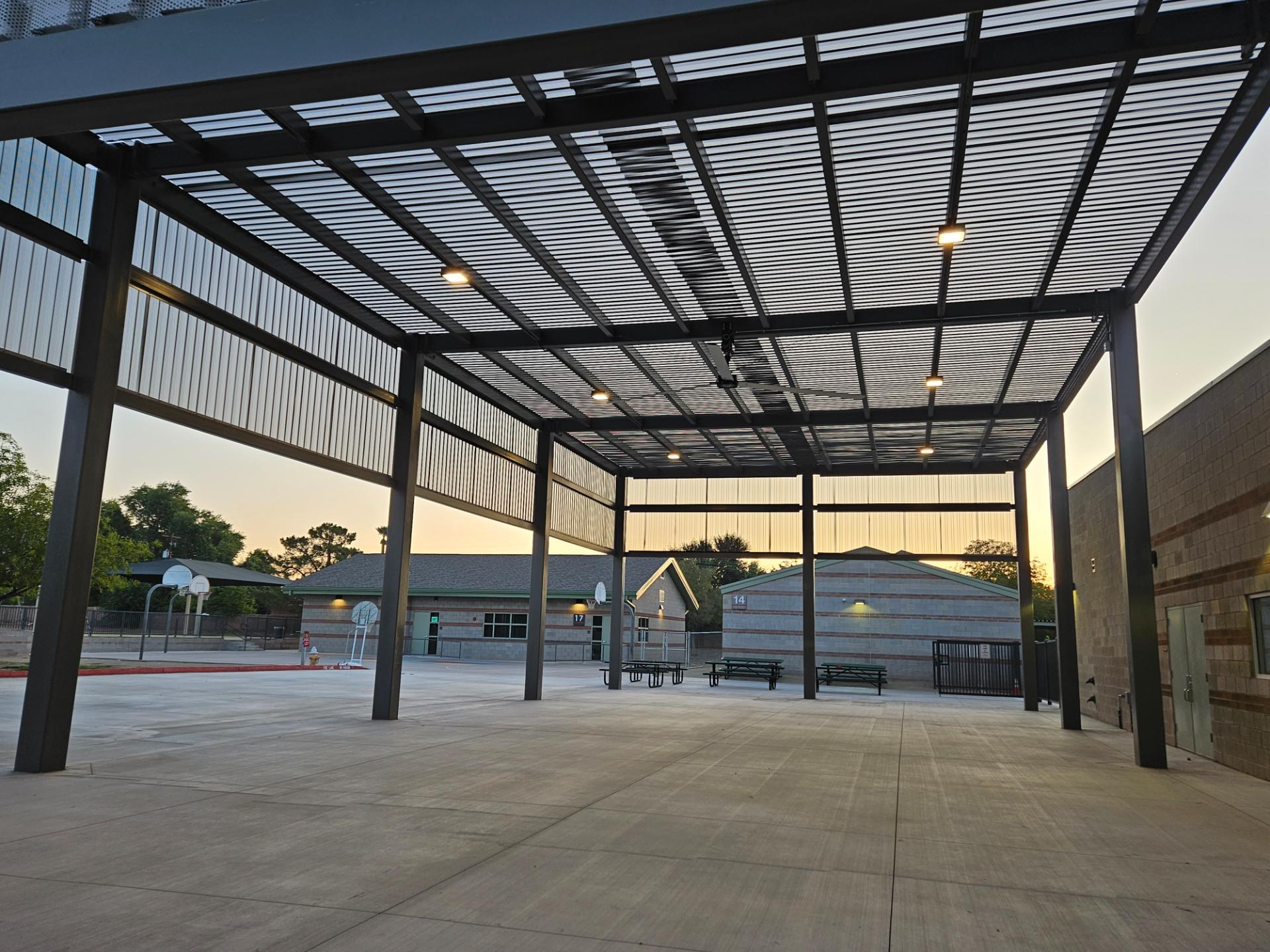
Queen Creek’s school and park building keeps pace with its housing, which means a steady run of playground canopies, lunch-court cover, bleacher shade, and dugout roofs on new and expanding campuses. Lunch courts and large open expanses are usually best covered by a single pitched span: a hip structure over multiple table rows, or a hip span pushed to cover a 40 to 60 ft court without a forest of posts in the middle. Bleachers run long and narrow, so a cantilever that reaches over the seating from one line of posts behind the stands keeps the footprint off the field and out of foul territory.
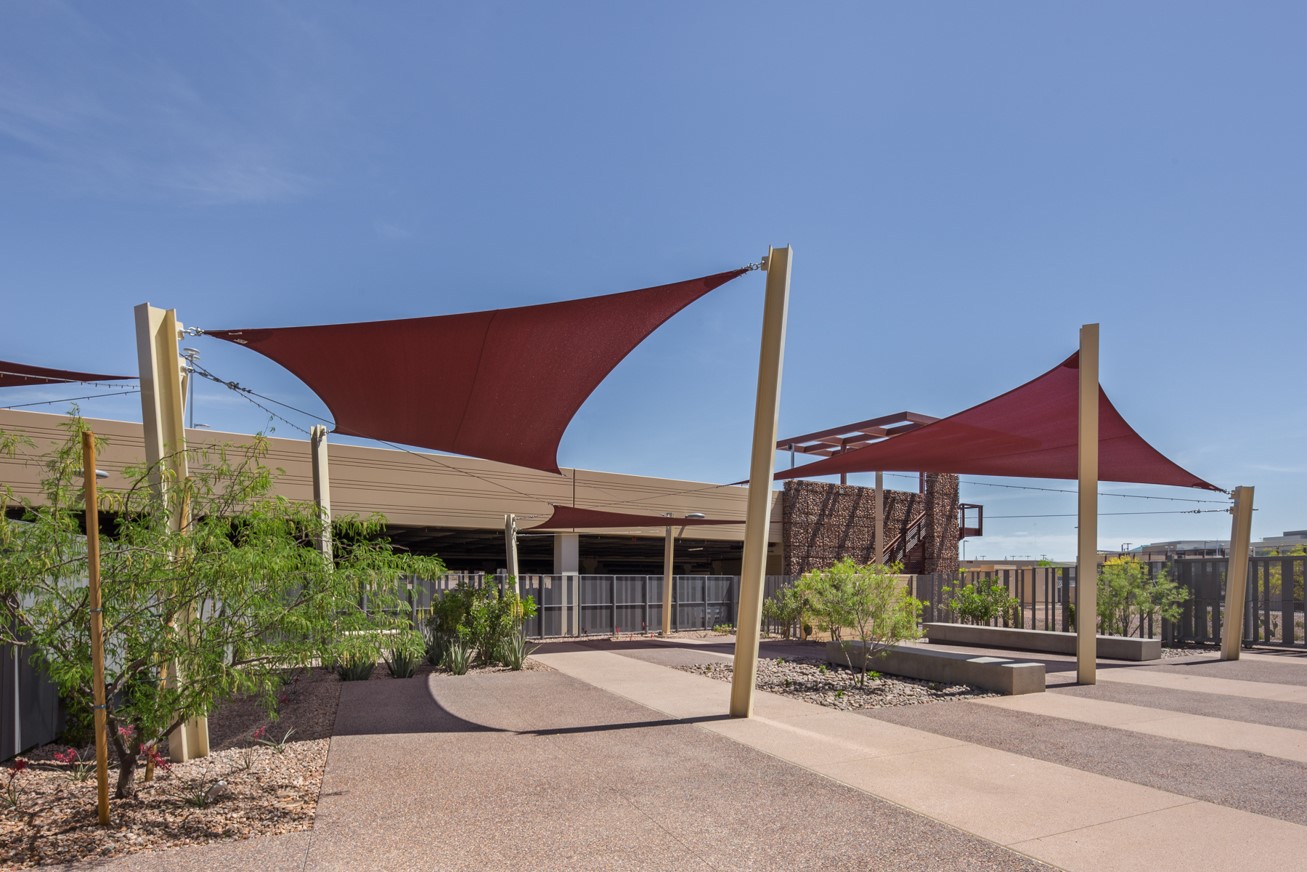
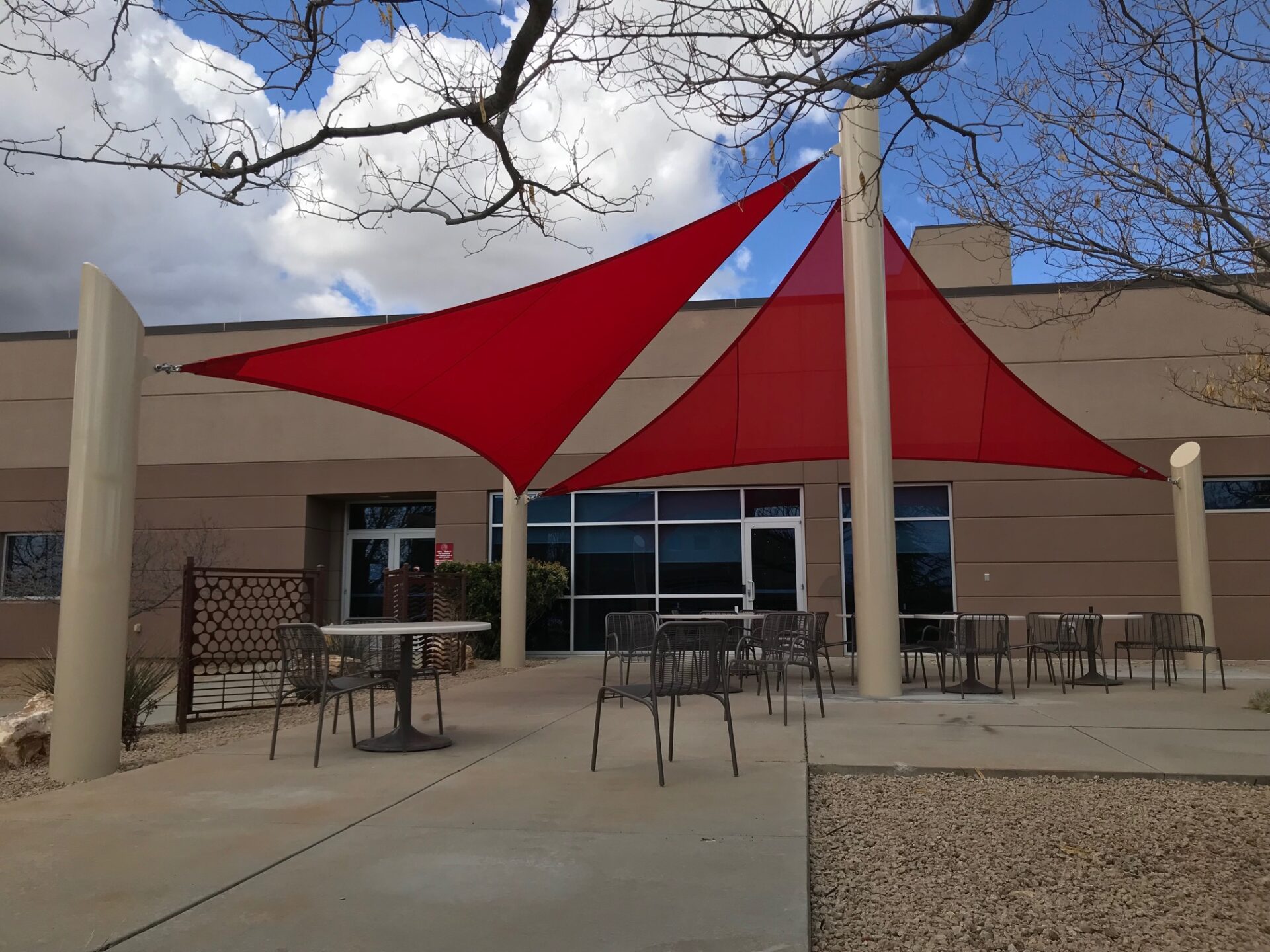
Park ramadas and ball-field cover face the same governing load as any East Valley structure: wind, not snow. A new park canopy that reads light and angled, rather than institutional, tends to clear a parks board or HOA design review faster, which is why a tensioned look or a clean hip roof often wins on a community amenity even when a flat canopy would shade the same area.
Materials, UV, and wind specs for the far East Valley
Every permanent structure here is engineered to the same Arizona building code, then sized with margin for the loads Queen Creek actually sees. Frames are powder-coated steel rated to outlast several fabric cycles, and fabric is knitted HDPE that the manufacturer rates to block roughly 90 to 99% of UV. Commercial shade-fabric warranties commonly run 10 to 15 years against UV degradation, so the cover is the consumable and the steel is the long-term asset.
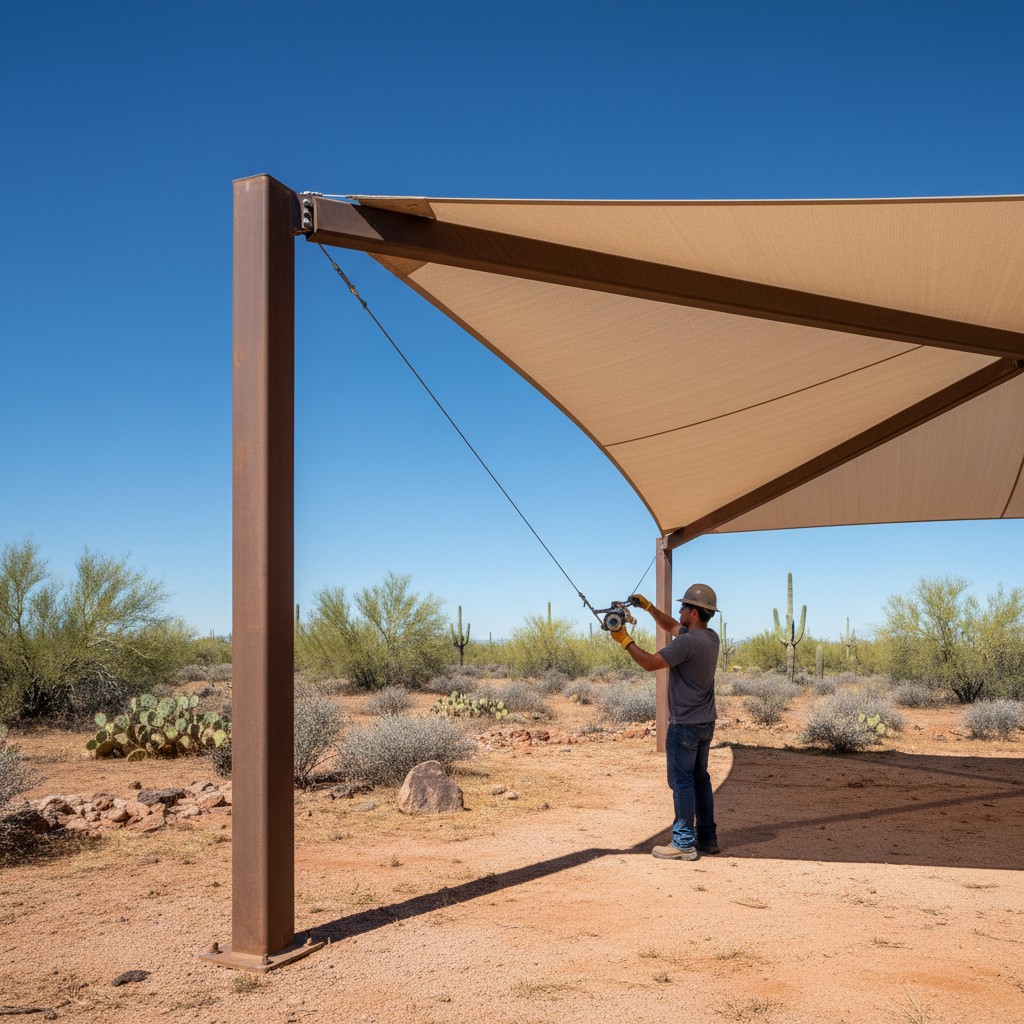
Wind governs the design. Permanent structures are engineered to ASCE 7 wind provisions, with Valley design wind speeds landing roughly in the 90 to 115 mph range depending on site and code edition. On Queen Creek’s open, flatter parcels there is little to break the wind, and monsoon microbursts can briefly exceed 60 mph with almost no warning, so column size, footing depth, and fabric tension all get set for gusts rather than steady load. One honest limit: fabric is a consumable. Even a 15-year fabric eventually needs re-tensioning or replacement, and in an extreme burst a structure may shed or tear its cover to protect the frame, which is a re-cover job rather than a rebuild.
Permitting and HOA review in Queen Creek
Permanent shade structures in Queen Creek need a building permit, and inside a master-planned community the HOA’s architectural review usually weighs in on color and placement before a permit is even filed. We provide stamped structural drawings showing the frame, footings, and wind-load calculations so plan review has what it needs; the Town of Queen Creek and the HOA handle approval and inspection on their own schedule. On a school site, the district’s facilities team reviews the project first, then the town issues the permit.
Two things move a Queen Creek approval faster: getting the structure into the plan set early rather than as a later change order, and confirming the foundation detail against the actual soil at the site, since the town’s agricultural parcels and new graded lots can behave quite differently. We coordinate the stamped package with whoever is managing the bid, whether that is an HOA board, a developer’s amenity budget, or a general contractor on a new commercial pad.
What goes wrong: undersizing, orientation, and skipped maintenance
The most common Queen Creek mistake is buying a canopy sized for the catalog photo instead of the afternoon. A shade that covers a splash pad or tot lot at noon leaves half of it in sun by 3 p.m. once the angle shifts, so coverage has to be sized for the hours people actually use it. Orientation matters as much as size: a pool cabana aimed for morning shade can leave the deck baking through the hottest part of the day.
The second recurring problem is skipping maintenance on open, dusty parcels. Queen Creek dust settles on fabric and into hardware, and fabric that never gets re-tensioned starts to pool water and flap in monsoon gusts, which cuts its life well short of the 10 to 15 year warranty window. We re-cover and re-tension existing canopies, including frames we did not originally build, through our canopy replacement and repair service, so an aging community or arena structure can be made safe again without a full teardown.
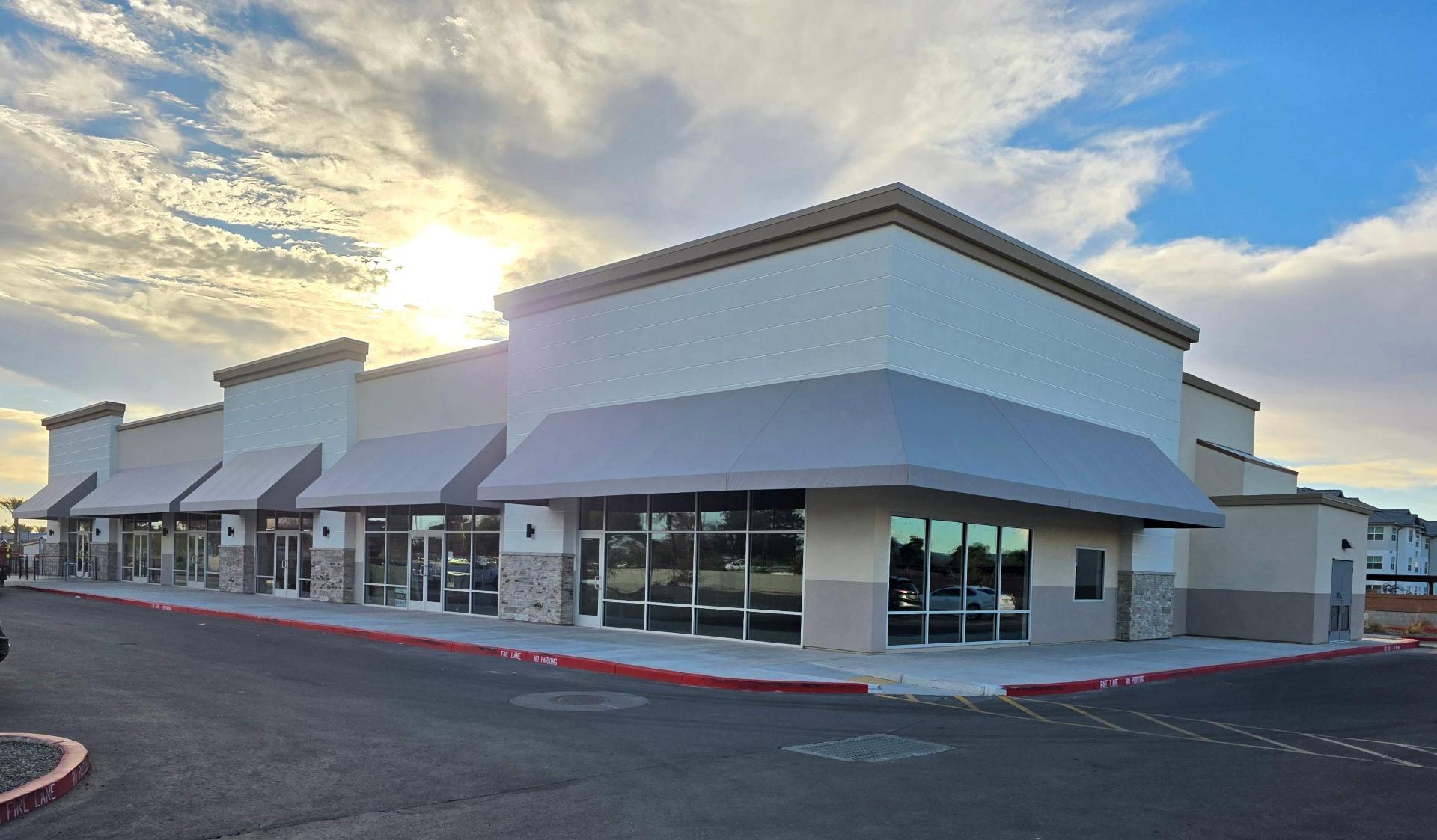
Every Shade Structure We Build for Queen Creek
Planning a shade project in Queen Creek?
Call (602) 265-0905 for a free assessment.
Serving Queen Creek and the Phoenix Metro
Total Shade LLC builds shade structures in Queen Creek as part of our Phoenix-metro service area, including nearby Gilbert and Mesa. From our Phoenix fabrication shop we deliver engineered, permit-ready shade across the entire Valley.
Frequently Asked Questions
What shade structures do new Queen Creek communities need most?
New master-planned communities in Queen Creek most often need pool-deck and splash-pad shade, playground and tot-lot canopies, and ramada-style gathering areas at the amenity center. Pool decks call for wide clear spans that keep posts out of walkways, while playgrounds need a canopy that clears the equipment fall zone by a safe margin. Cabanas along a pool deck deliver the resort-style shaded seating buyers in these neighborhoods expect.
Can you build equestrian or agricultural shade in Queen Creek?
Yes. Queen Creek’s equestrian and agricultural land drives steady demand for arena shade, wash-rack and tack-area roofs, hay and equipment cover, and shaded livestock turnouts. We build these as custom structures with the height, clear span, and roof pitch the use needs, on powder-coated steel that resists rust around wash racks and sprinklers. Knitted HDPE fabric breathes, so heat does not build under it the way it does under a solid metal roof, while still blocking roughly 90 to 99% of UV.
Does an HOA have to approve a shade structure in Queen Creek?
Inside a master-planned community, the HOA’s architectural review usually weighs in on color and placement before a building permit is even filed, then the Town of Queen Creek handles the permit and inspection. We provide stamped structural drawings with wind-load calculations for both reviews. Getting the structure into the plan set early, rather than as a later change order, is the single biggest factor in how fast it clears.
What does a commercial shade structure cost in Queen Creek?
Cost depends on span, structure type, and site conditions rather than a flat per-square-foot number, so we price each project off the drawings. A small dugout cover or a single cabana is a fraction of a full pool-deck ramada or an equestrian arena span. Because we fabricate steel and fabric in-house in Phoenix, we quote against the actual engineered design, and re-covering an existing frame costs far less than a full replacement.
Will a shade structure hold up to Queen Creek monsoon winds?
Permanent structures are engineered to ASCE 7 wind provisions, with Valley design wind speeds roughly in the 90 to 115 mph range depending on site and code edition. On Queen Creek’s open, flatter parcels there is little to break the wind, and monsoon microbursts can briefly exceed 60 mph, so columns, footings, and fabric tension are all set for gusts. The honest limit: in an extreme burst a structure may shed or tear its fabric to protect the frame, which is a re-cover rather than a rebuild.
Get a free on-site quote in Queen Creek.
Call (602) 265-0905 for a free assessment.