or call (602) 265-0905 — no-obligation, on-site.
Park & Municipal Shade Structures in Arizona
Ramadas, playground cover, and bleacher shade engineered for Arizona city parks, splash pads, and public facilities — built to survive unsupervised public use and pass procurement review.
Since 1998
Designing & building Arizona shade
In-House Fabrication
Built at our Phoenix shop
Engineered & Permit-Ready
Stamped drawings for AZ wind loads
Free On-Site Quote
No-obligation project assessment
Park and municipal shade structures are the steel-framed ramadas, playground canopies, splash-pad covers, and bleacher shade that public agencies install across Arizona parks, trailheads, and recreation facilities — built to survive years of unsupervised public use, meet ADA access rules, and clear a competitive procurement bid. Total Shade fabricates these in steel and knitted HDPE fabric at our Phoenix shop at 2331 W. Holly St, with 25+ years of work for Valley parks departments, school districts, and recreation authorities. Public sites raise the bar over private ones: the structure has to take vandalism, ball impact, and 360-degree access with no one watching it, and it has to do that for 20 to 40 years while the steel outlasts several fabric cycles. The sections below cover park ramadas, playground and splash-pad cover, sports shade, how procurement and ADA work, the durability a public site demands, and the honest limits worth knowing before a bid goes out.
Park ramadas and gathering shade
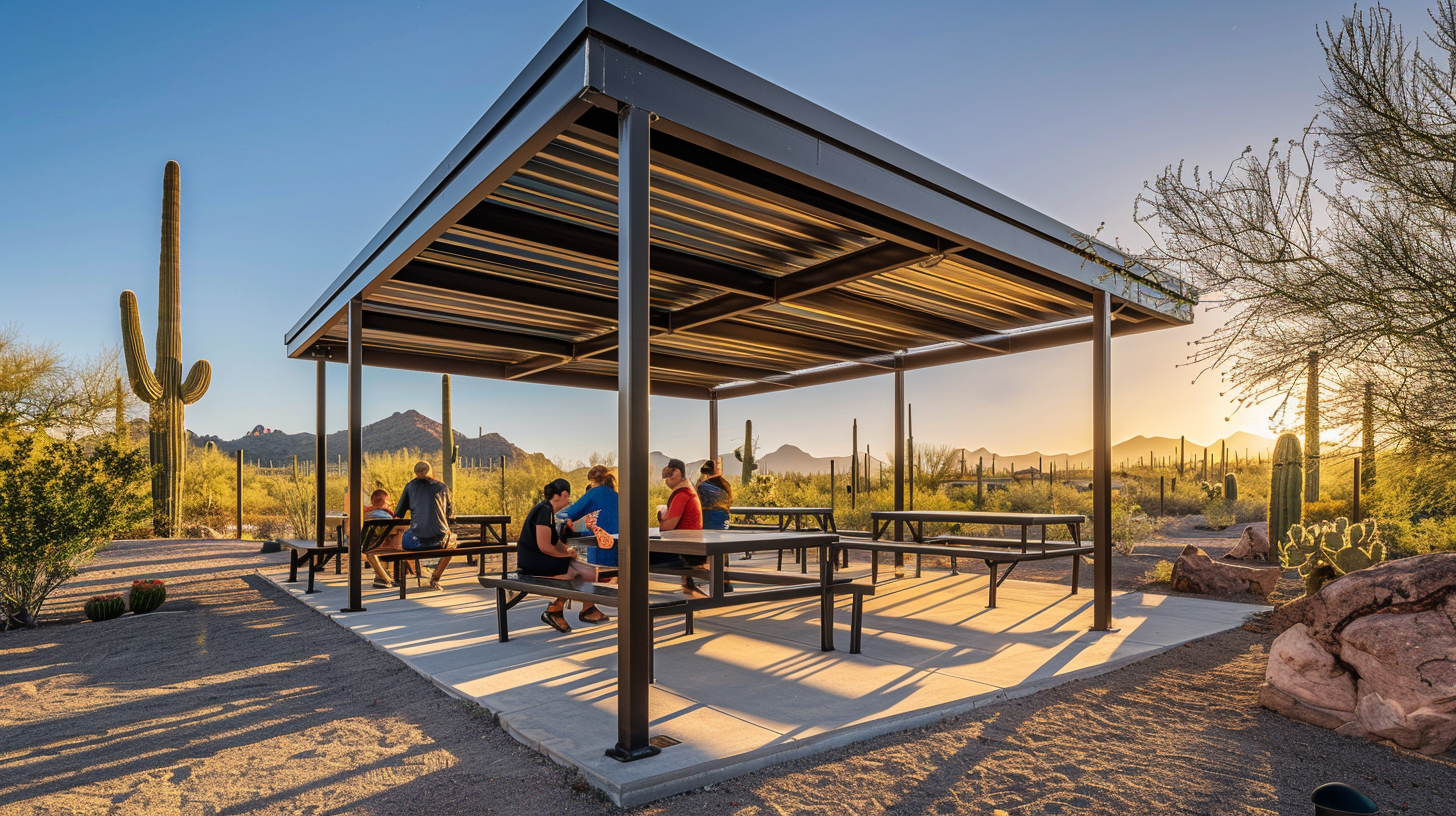
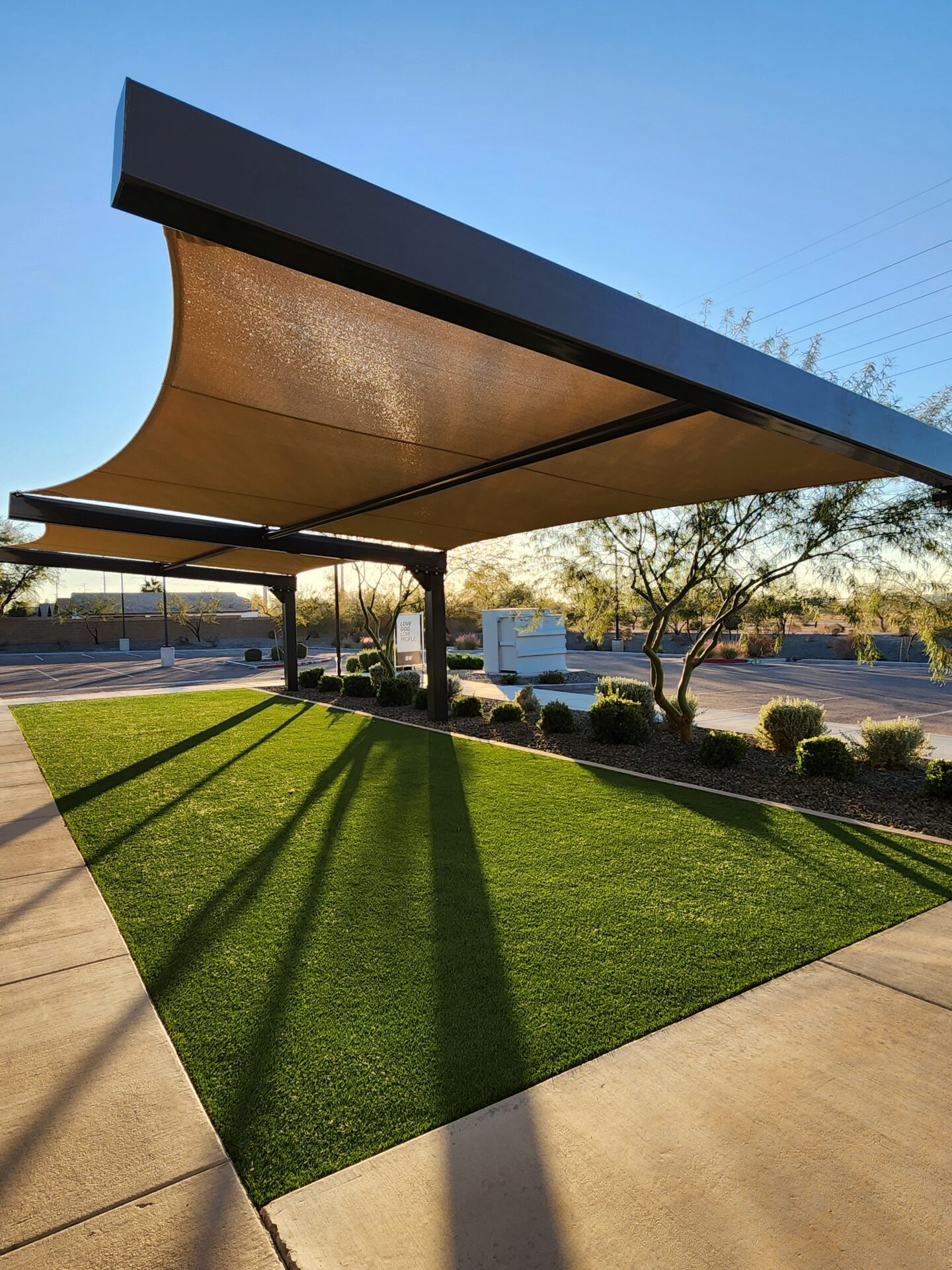
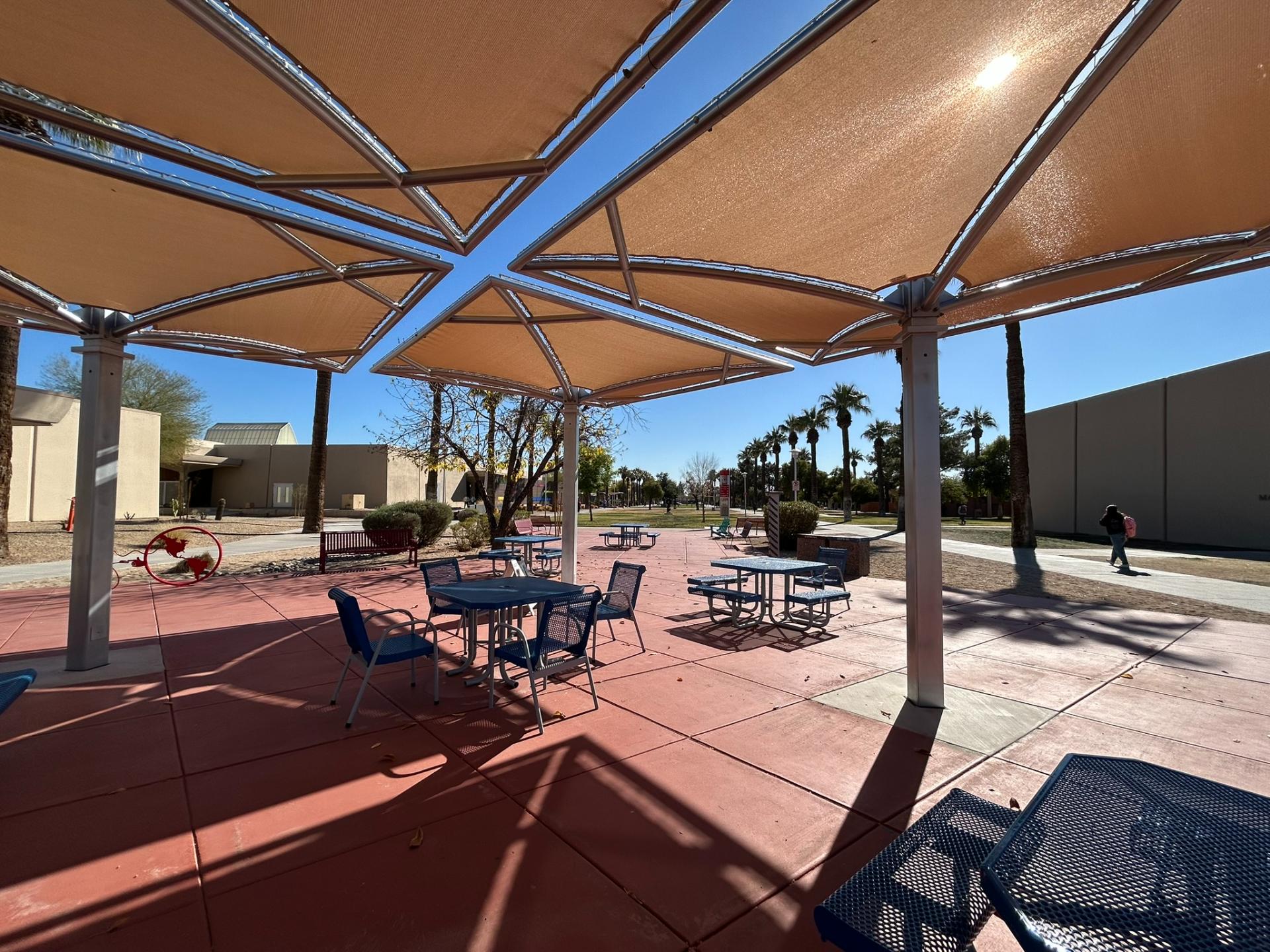
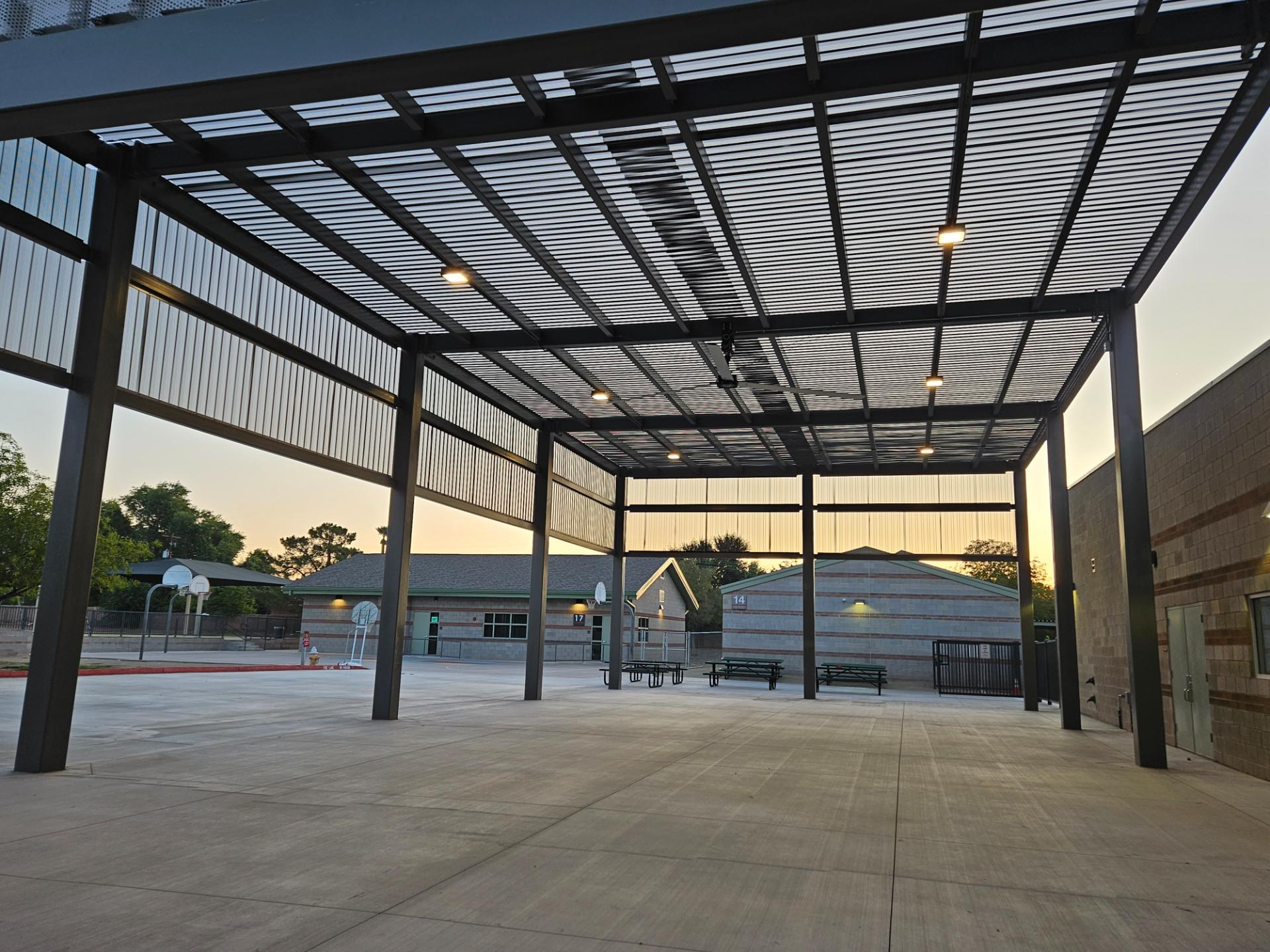
The workhorse of any park system is the ramada — a steel-framed shelter with a solid or slatted roof over a concrete pad, picnic tables, and often a grill. Ramadas anchor reservable picnic areas, trailhead staging points, and event lawns because they block 100% of direct sun under the deck and shed monsoon rain rather than letting it drip through, which a tensioned-fabric canopy cannot do. A single-unit shelter usually covers a 12×12 ft to 20×20 ft pad for one or two tables; double and triple units run 30×40 ft and beyond for group reservations and pavilion events. Where a parks board wants a sculptural, lower-cost cover over a wide open area instead of a fixed room, a flat cantilevered structure or a custom-built structure sized to the site fits better than a catalog ramada.
Trailheads and event plazas are the other heavy users. A ramada at a trail staging point shields a kiosk, benches, and a water station from 110-degree afternoon sun and marks the entry from a distance. The deciding question is whether the crowd settles into one footprint for hours or spreads across a lot — settling crowds want ramadas, spreading crowds want a clustered set or a wider cantilever run. Our ramada page breaks down solid versus slatted roofs and the foundation work that hard Valley caliche demands, where footings often run 3 to 8 ft deep before they grip.
Playground and splash-pad cover
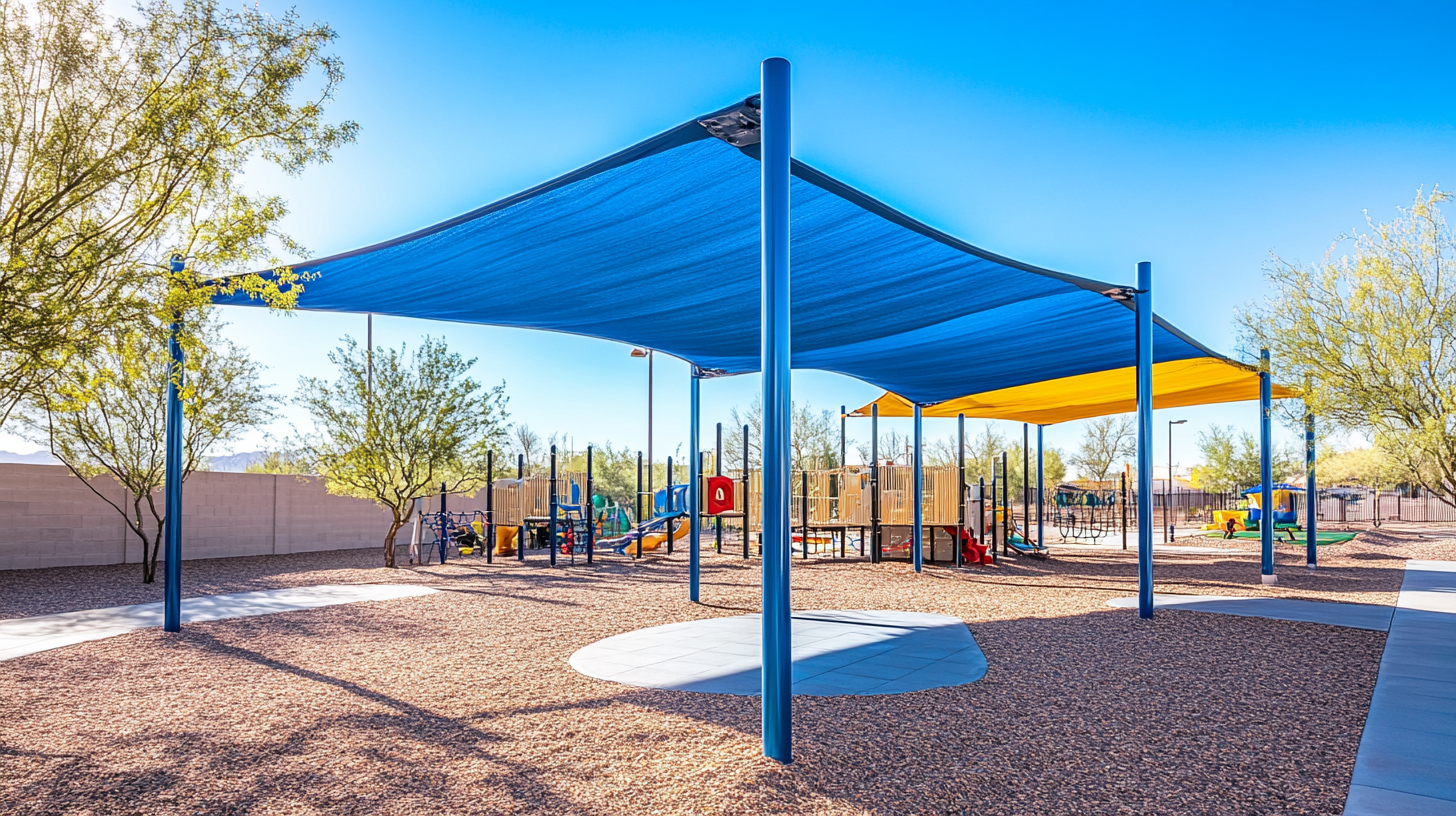
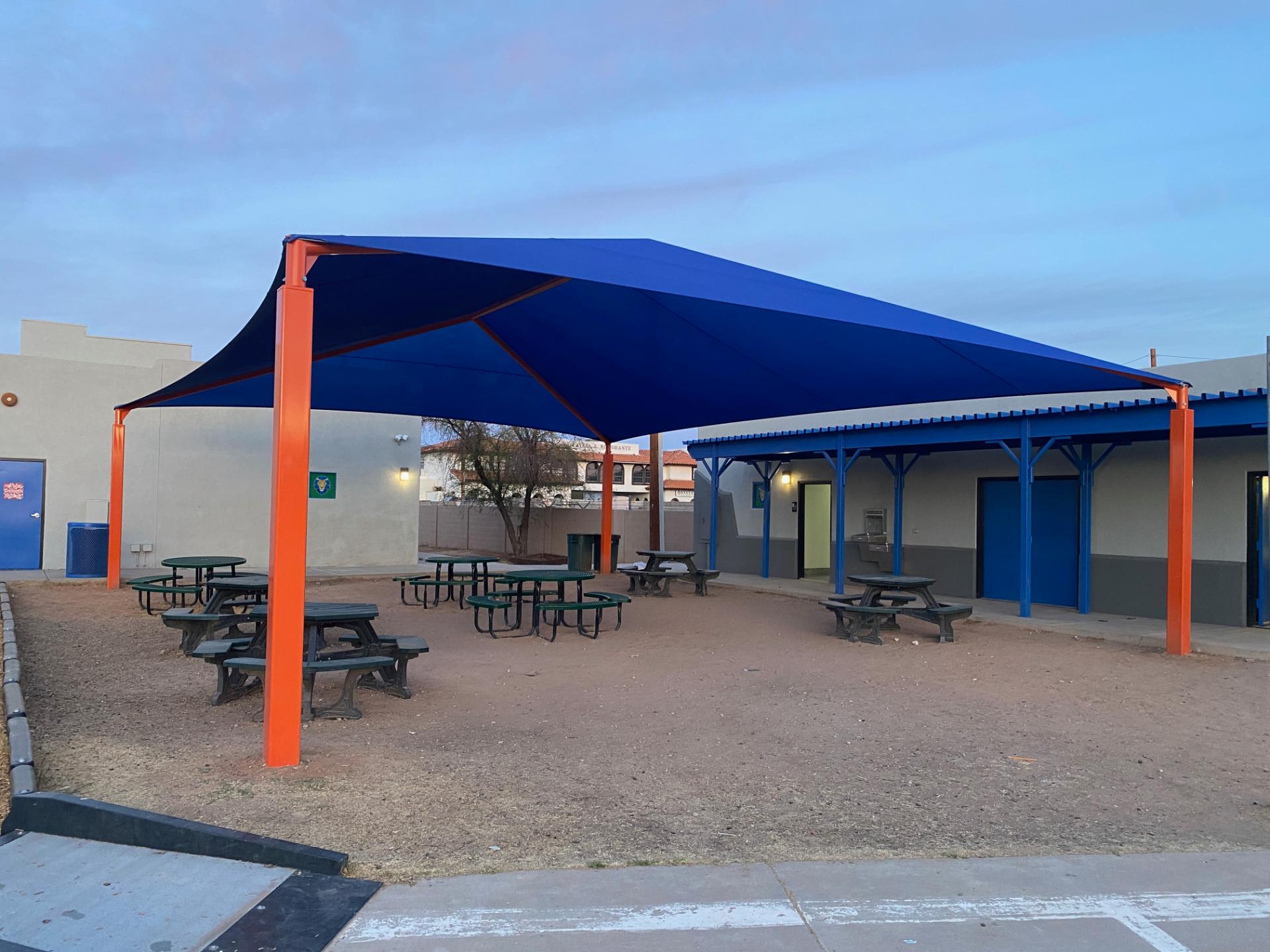
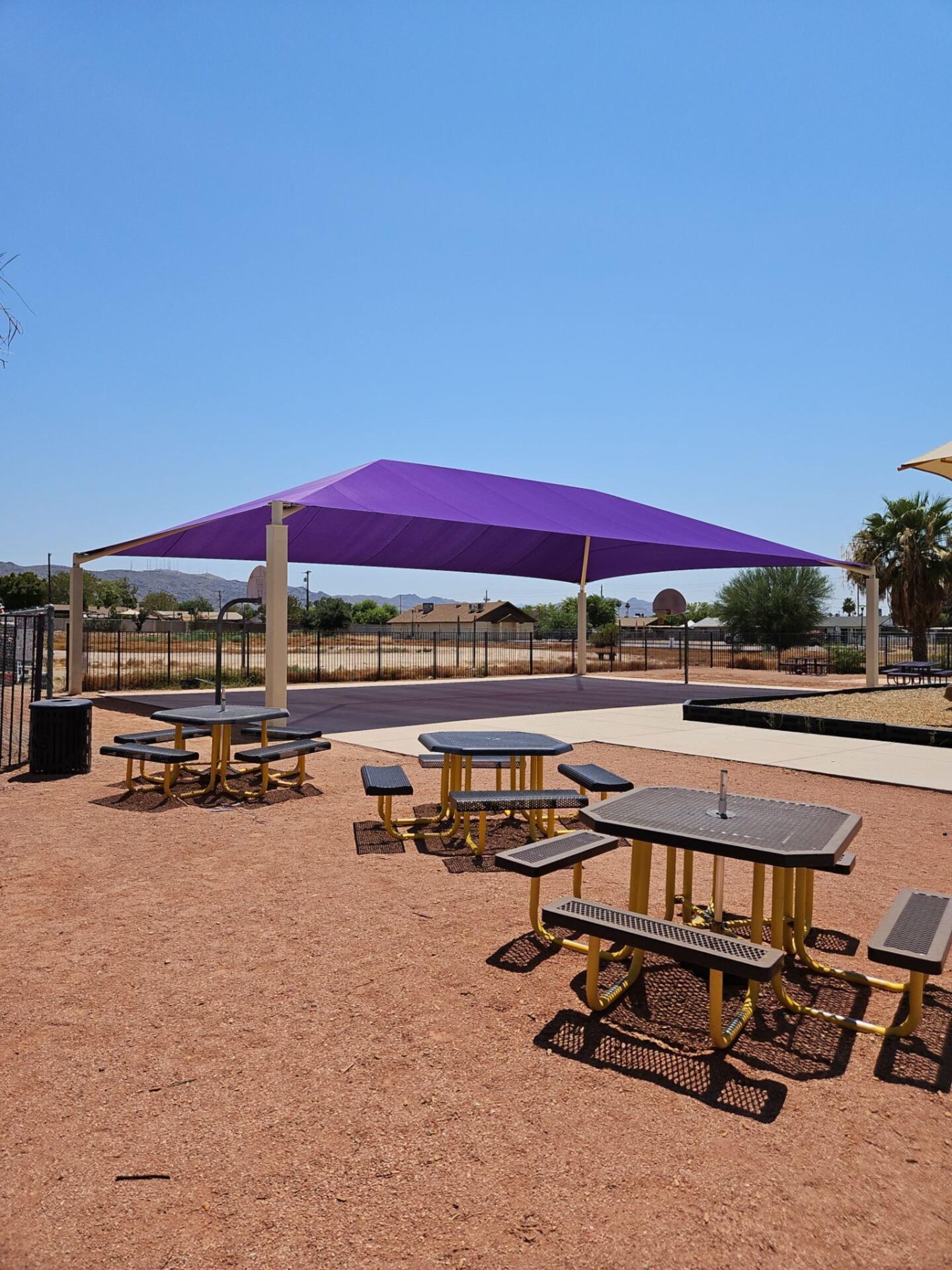
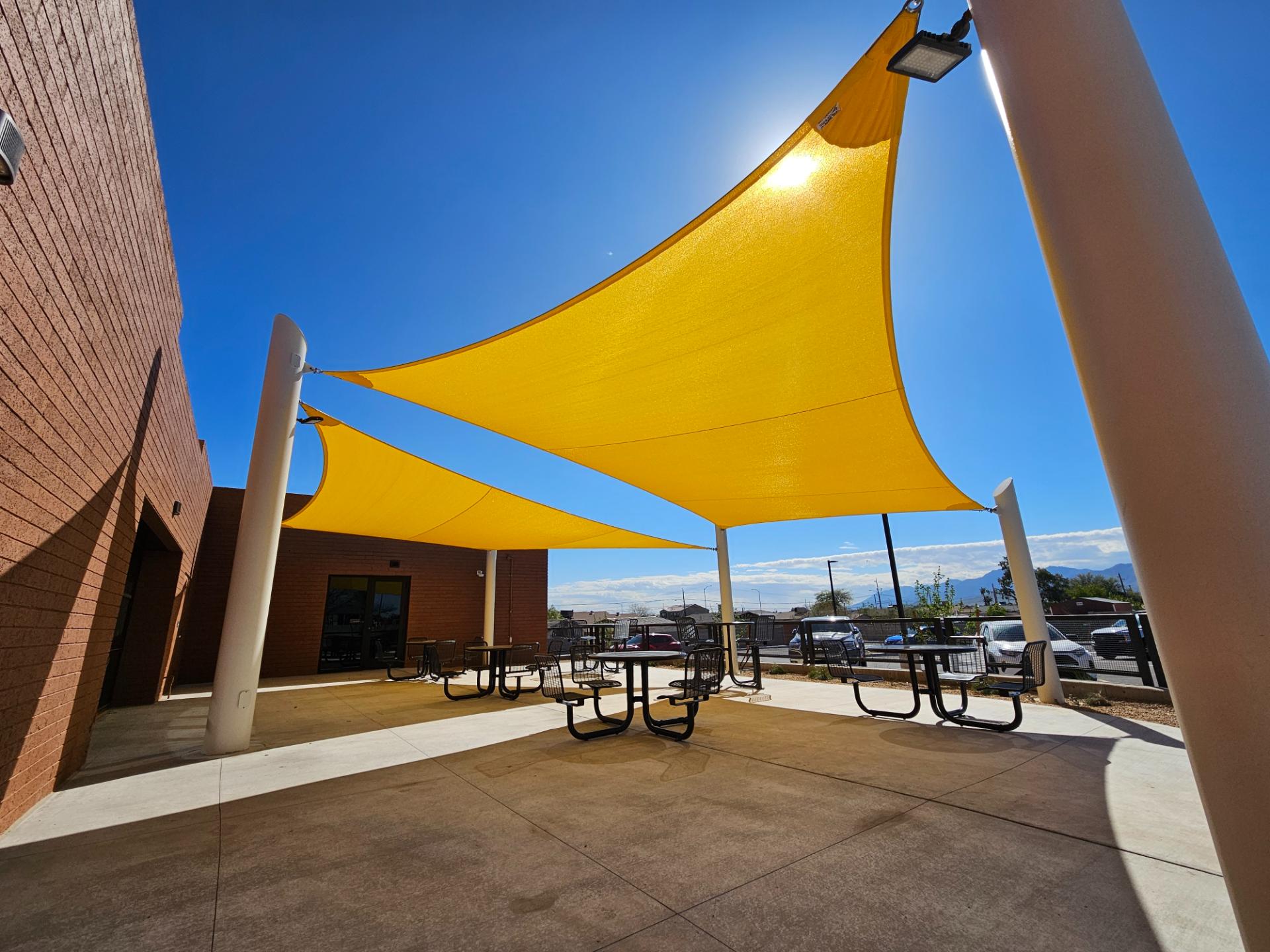
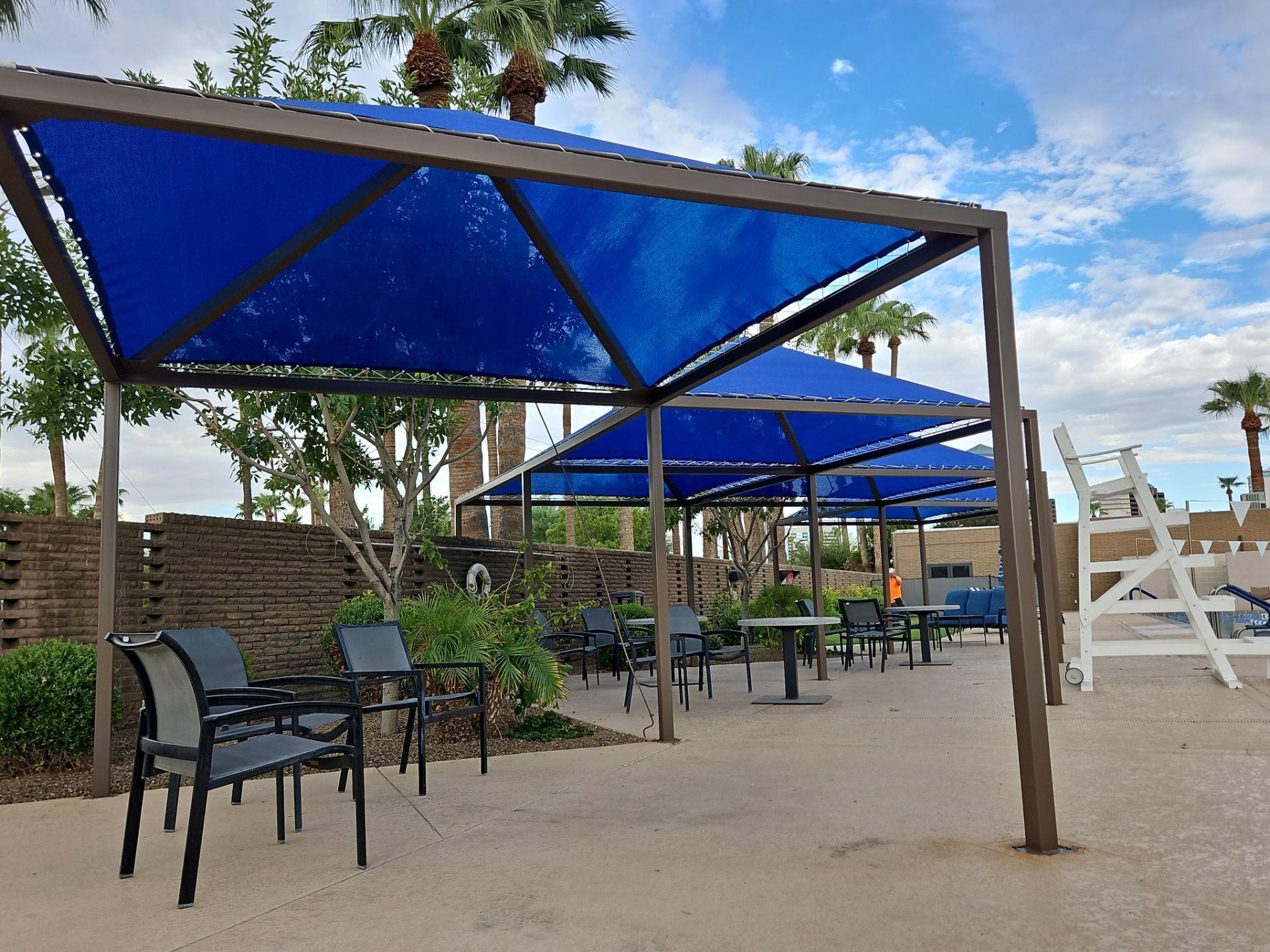
Shade over a playground or splash pad protects equipment and kids from surfaces that hit 150-plus degrees in July, and it is the most safety-sensitive shade a park installs. The governing constraint is the equipment use zone: posts and footings have to clear the manufacturer’s fall zone, which is commonly a 6 ft minimum around play equipment, so playground canopies need wide clear spans that cover the structure without a column landing in the play surface. A hip structure spreads a pitched fabric roof over a full play area, and the max hip structure pushes that span to 40 to 60 ft when a single canopy has to cover a large composite play set with no interior posts.
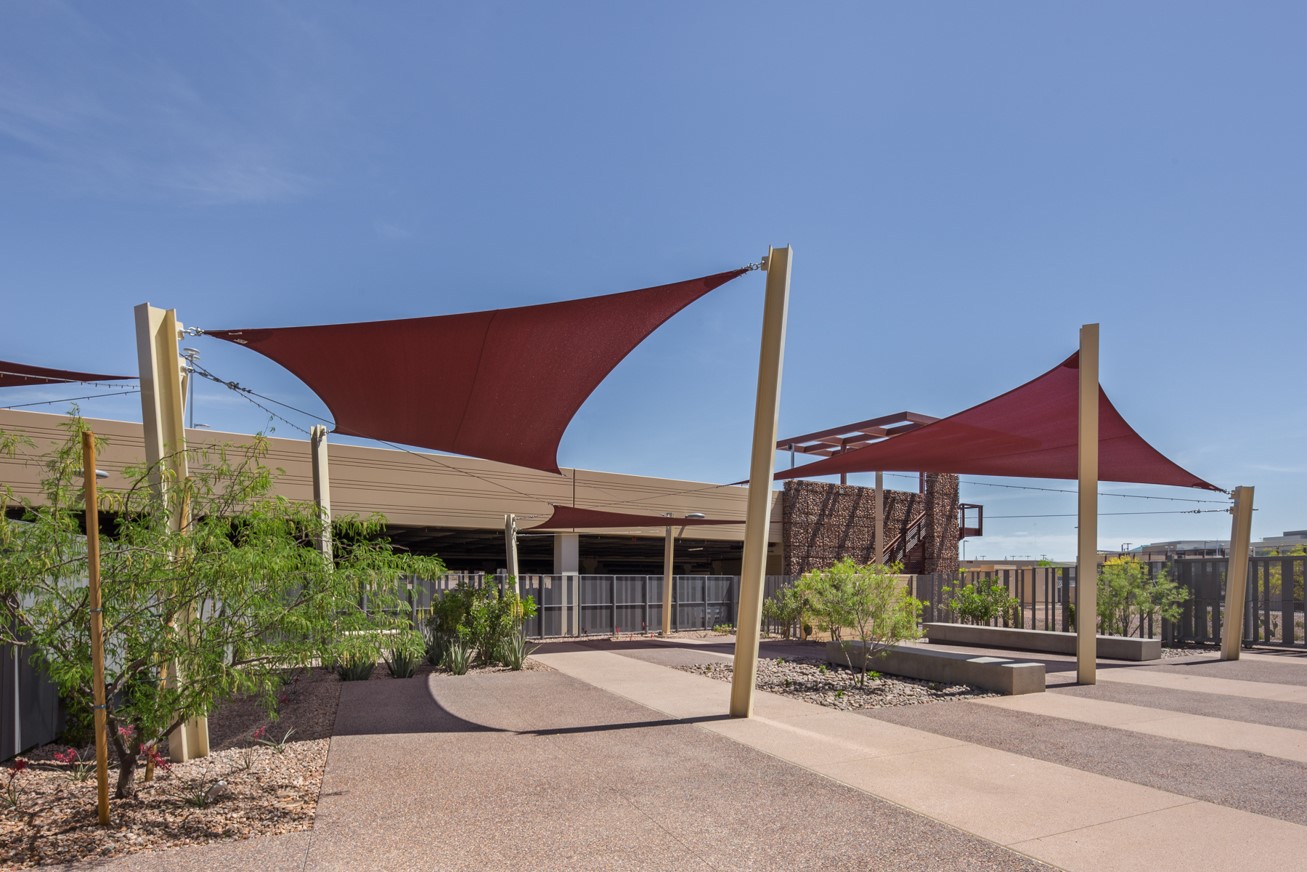
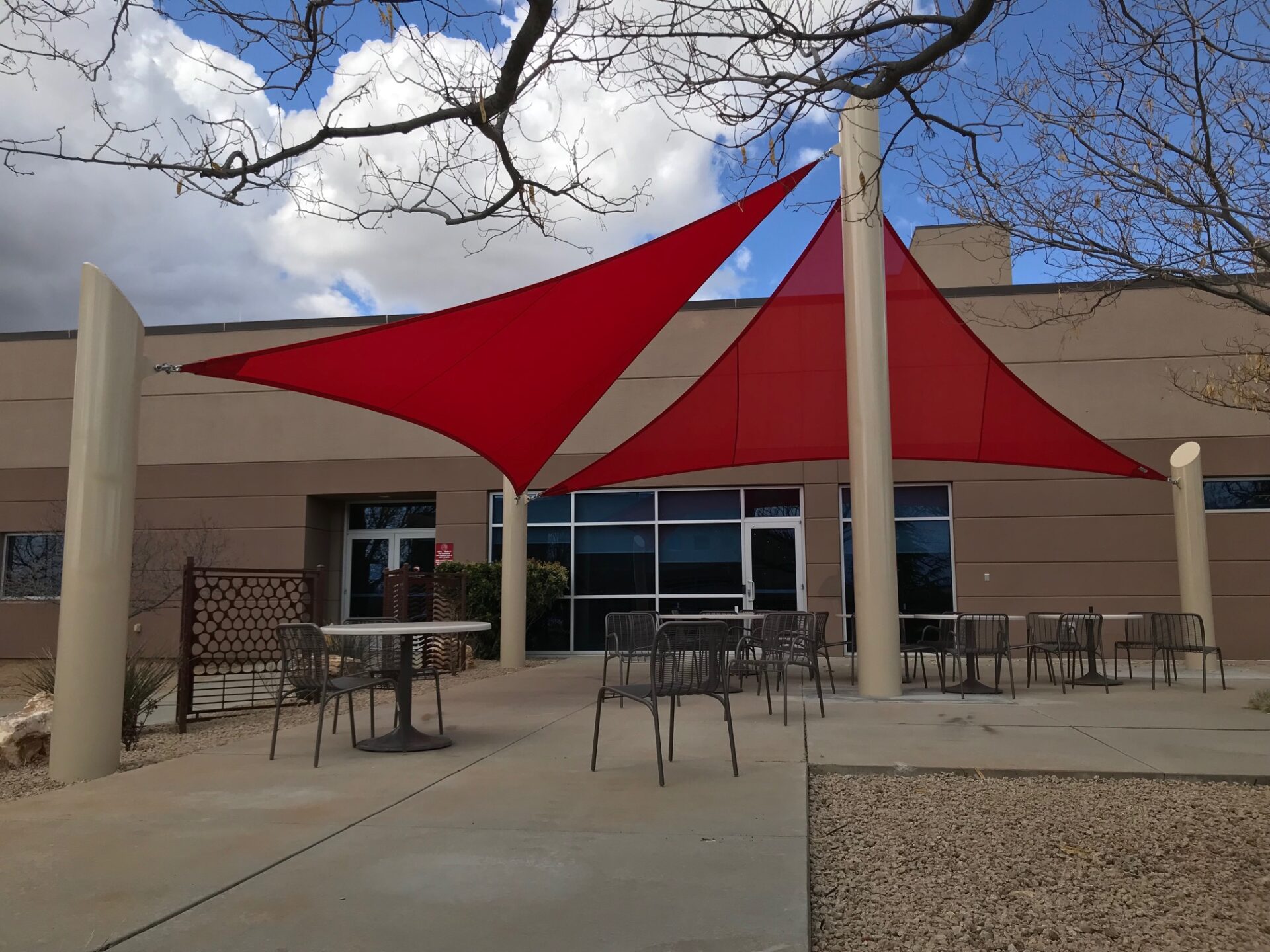
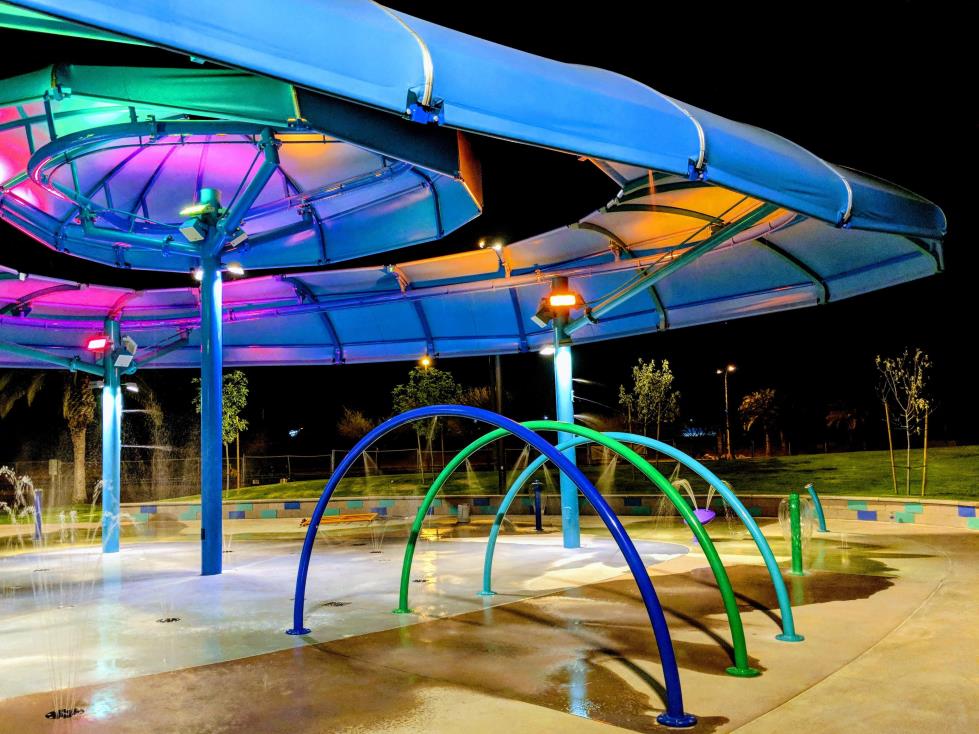
Splash pads add their own wrinkle: the cover sits over constant water and reflected glare, so fabric and hardware see more humidity and UV bounce than a dry playground. Knitted HDPE fabric blocks roughly 90 to 99% of UV depending on color and weave, which is the point over a surface where children play for 30 to 45 minutes at a stretch and the deck temperature drops noticeably in the shaded zone. For a softer, fast-draining look over a splash feature or a themed play area, a tensioned sail reads less institutional than a flat roof — but over a true playground fall zone, a post-free clear span almost always wins.
Bleacher, dugout, and concourse shade for public sports
Public ballfields and recreation complexes need shade that stays clear of the field, and that points to cantilevers. Bleachers are long and narrow, so a flat cantilevered shade structure that reaches over the seating from a single line of posts behind the stands keeps every footing out of foul territory and walkways. The shaded run can extend 20 to 40 ft along a bank of bleachers from one support line, which is why cantilevers, not center-post canopies, dominate spectator shade at municipal fields.
Dugouts and concourses
Dugout roofs run smaller and lower — often a 12 to 20 ft span over a bench — and they take repeated ball impact and bag traffic, so we build them with the same commercial-grade steel as the larger canopies rather than a lighter frame. Concourse and concession shade behaves more like park gathering cover: entry plazas, scorers’ tables, and walk-up windows where a hip structure or a cantilever gives continuous overhead protection along a public circulation path. Cities like Peoria, home to the Peoria Sports Complex, and Mesa, with its deep municipal-park and school-district system, run heavy on exactly this mix of bleacher, dugout, and concourse work.
Public procurement and ADA access
A public shade project clears two gates a private one does not: competitive procurement and ADA compliance. Most municipal and district work goes out as a formal bid, RFP, or job-order contract, and many agencies buy through a cooperative purchasing contract — Sourcewell, OMNIA, or a state contract — that lets them skip a full bid by riding an already-competed price. We supply the stamped structural drawings, wind-load calculations, and specifications a bid package needs, and we coordinate with whoever manages the procurement, whether that is a parks department, a bond program, or a general contractor.
ADA shapes the structure itself, not just the paperwork. Accessible routes under and around a ramada or canopy have to hold a minimum 36-inch clear path, and a shaded picnic area generally needs accessible tables with knee clearance and a firm, stable, slip-resistant surface connecting them to the accessible route. Headroom matters too: low canopy edges and post placement can’t pinch the required clearance, and bleacher shade has to preserve accessible seating sightlines. We size post layout and edge heights to keep those routes clear, and the city or district confirms compliance at plan review and inspection. Getting ADA into the drawing early — rather than discovering a 32-inch pinch point after install — is what keeps a public project from failing inspection. Browse the full shade structures by industry hub for how these requirements shift across schools, retail, and hospitality.
Durability for unsupervised public sites
The hardest thing about public shade is that no one is watching it. A structure at a city park takes climbing, ball impact, graffiti, and 360-degree access from strangers, year-round, with no gate and no staff — so the engineering margin and the finish matter more than they would on a private courtyard. Frames are powder-coated structural steel, which resists both the chalking that desert sun forces on cheaper painted frames and the scratching that comes with public traffic; a steel ramada roof is a 20 to 40 year asset, far longer than a fabric cover’s 10 to 15 year service life.
Vandal resistance comes from design choices, not a single product. Solid metal ramada roofs remove the tear risk a fabric cover carries at an unsupervised site; powder coat takes graffiti removal better than bare or painted steel; and posts sized for span — 4 to 8 inch columns depending on the structure — resist the leverage of someone hanging or climbing. Wind is the governing load on top of all that: Valley structures are engineered to Arizona building code and ASCE 7 wind provisions, with design wind speeds roughly in the 90 to 115 mph range, and monsoon microbursts can briefly exceed 60 mph. Because we fabricate steel and fabric in-house in Phoenix, a span or post change to harden a high-traffic site reaches the saw the same week rather than routing through an out-of-state manufacturer.
Honest caveats for public projects
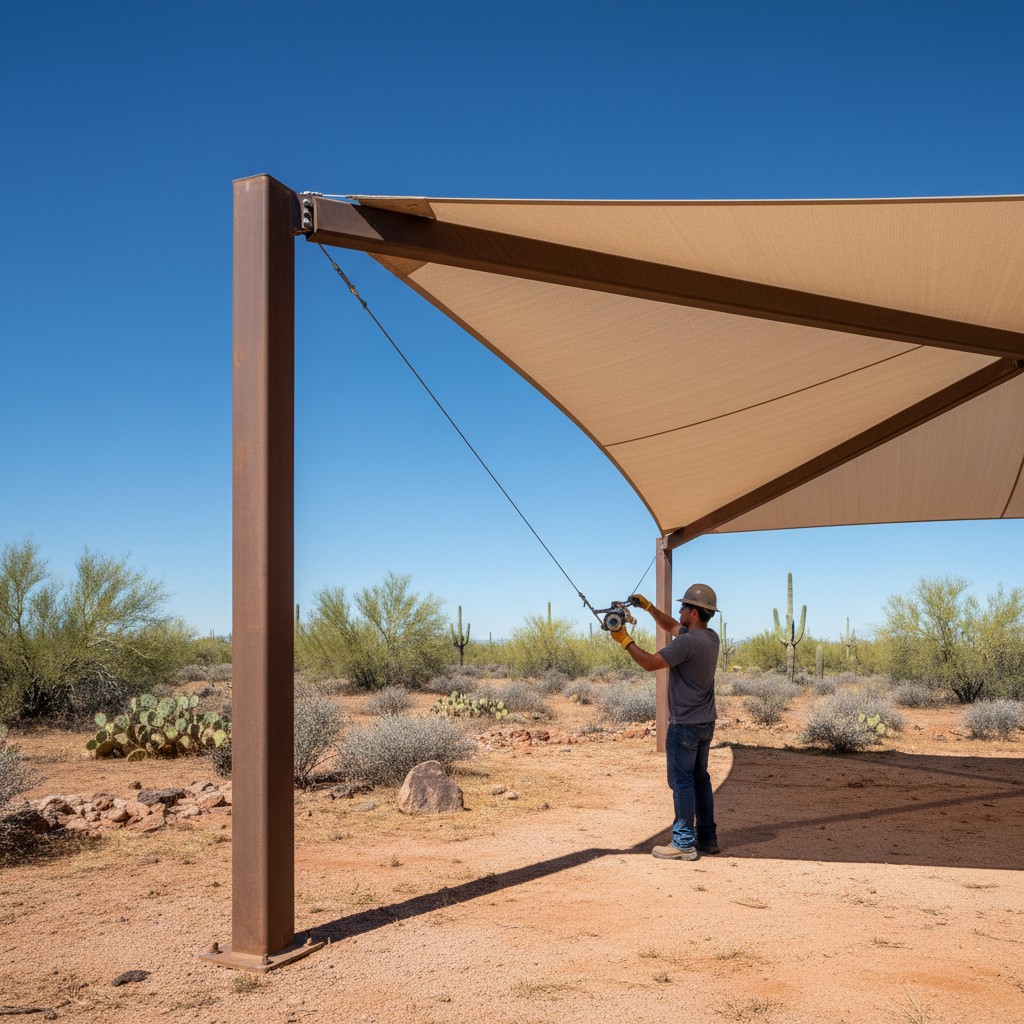
Fabric is a consumable, and that is the most important thing to plan for on a public site. Even a 15-year HDPE cover will eventually need re-tensioning or replacement, and a canopy that survives a microburst may still shed or tear its fabric to protect the frame — a re-cover job, not a rebuild. For a high-vandalism or fully unsupervised location, a solid-roof ramada often outperforms a fabric canopy on lifecycle cost even though it carries a higher upfront price, because it removes the re-cover line entirely.
Wind ratings have ceilings. An engineered structure covers typical monsoon loads, not every freak gust on record, and a solid roof catches more uplift than open fabric, so footings and steel get sized for it — a light DIY kit is exactly the wrong call in microburst country and on a public site that has to stay safe unattended. Dust is the quiet tax: grit settles on fabric and roof decks, so a rinse once or twice a year and a periodic re-tension keep a cover from pooling water and flapping short of its warranty. And the cheapest bid is not always the lowest lifecycle cost — a kit that needs replacing in 8 years costs more over 30 than an engineered structure that needs only fabric cycles. Naming those limits up front is what separates a park structure that serves for 30 years from one that disappoints in 10.
Shade Structures We Build
Frequently Asked Questions
What shade options work best for a public park?
It depends on what sits underneath. Ramadas with solid or slatted roofs suit reservable picnic areas and trailheads because they block 100% of sun and shed rain. Hip and max-hip structures cover playgrounds and lunch areas with wide clear spans that keep posts out of the use zone. Flat cantilevers fit bleachers and dugouts because all the steel stays on one side, clear of the field. Splash pads and themed areas often take tensioned fabric for a lighter look. A typical park system uses a mix rather than a single structure type.
How does buying shade structures through public procurement work?
Most municipal and district shade work goes out as a competitive bid, RFP, or job-order contract, and many agencies buy through a cooperative purchasing contract such as Sourcewell, OMNIA, or a state contract that lets them ride an already-competed price instead of running a full bid. We supply the stamped structural drawings, wind-load calculations, and specifications a bid package needs and coordinate with the parks department, bond program, or general contractor managing the procurement. Getting the structure into the plan set early, rather than as a change order, is the single biggest factor in how fast it clears.
Are park shade structures required to be ADA compliant?
Yes — public shade structures have to preserve ADA access. Accessible routes under and around a ramada or canopy generally need a minimum 36-inch clear path, shaded picnic areas need accessible tables with knee clearance on a firm slip-resistant surface connected to that route, and post placement and edge heights can’t pinch the required headroom or clearance. Bleacher shade also has to keep accessible seating sightlines clear. We size the layout to hold those clearances; the city or district confirms compliance at plan review and inspection.
What does a park or municipal shade structure cost?
Cost tracks span, structure type, foundation depth, and site conditions rather than a flat per-square-foot number, so we price each project off the engineered drawings. A small dugout cover is a fraction of a full playground hip structure or a multi-unit picnic ramada. Because we fabricate steel and fabric in-house in Phoenix, we quote against the actual design rather than a generic estimate, and re-covering an existing frame costs far less than a full replacement. For public buyers, the lowest bid is not always the lowest lifecycle cost — a kit that fails in 8 years costs more over 30 years than an engineered structure that needs only fabric cycles.
How long do park shade structures last in Arizona?
A powder-coated steel frame is a 20 to 40 year asset, and a solid ramada roof lasts about as long because it is structural rather than a consumable. Knitted HDPE shade fabric carries a commercial warranty commonly in the 10 to 15 year range against UV degradation, so the fabric is replaced on a cycle while the steel outlasts several covers. Service life depends on maintenance: a rinse once or twice a year for desert dust and a periodic re-tension keep fabric from pooling water and failing short of its warranty. On unsupervised public sites, a solid-roof ramada often delivers the longest service life because it removes the fabric tear and re-cover risk entirely.