or call (602) 265-0905 — no-obligation, on-site.
Commercial Shade Structures in Peoria, Arizona
Since 1998
Designing & building Arizona shade
In-House Fabrication
Built at our Phoenix shop
Engineered & Permit-Ready
Stamped drawings for AZ wind loads
Free On-Site Quote
No-obligation project assessment
Total Shade builds engineered steel-and-fabric structures for Peoria’s sports complexes, ball fields, and city parks — bleacher canopies, dugout covers, concourse shade, and spectator seating cover. Around the Peoria Sports Complex and the city’s neighborhood parks, summer field temperatures climb past 110 degrees and aluminum bleachers sit unshaded by default. We fabricate cantilever and tensioned-fabric structures at our Phoenix shop on Holly St, then install them over seating, walkways, and master-planned community amenities across the West Valley. Knitted HDPE fabric blocks roughly 90 to 99 percent of UV and drops the temperature underneath by 15 to 20 degrees.
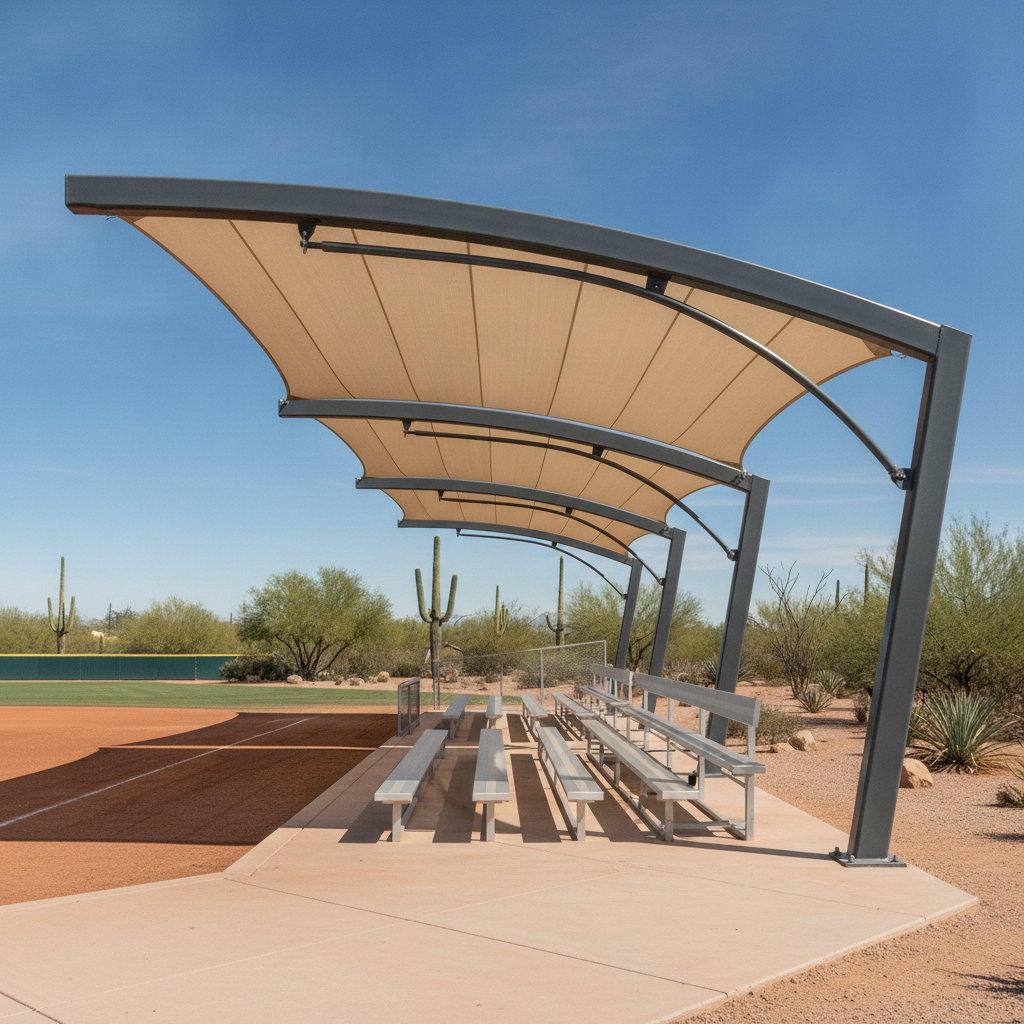
Bleacher and spectator shade for Peoria ball fields
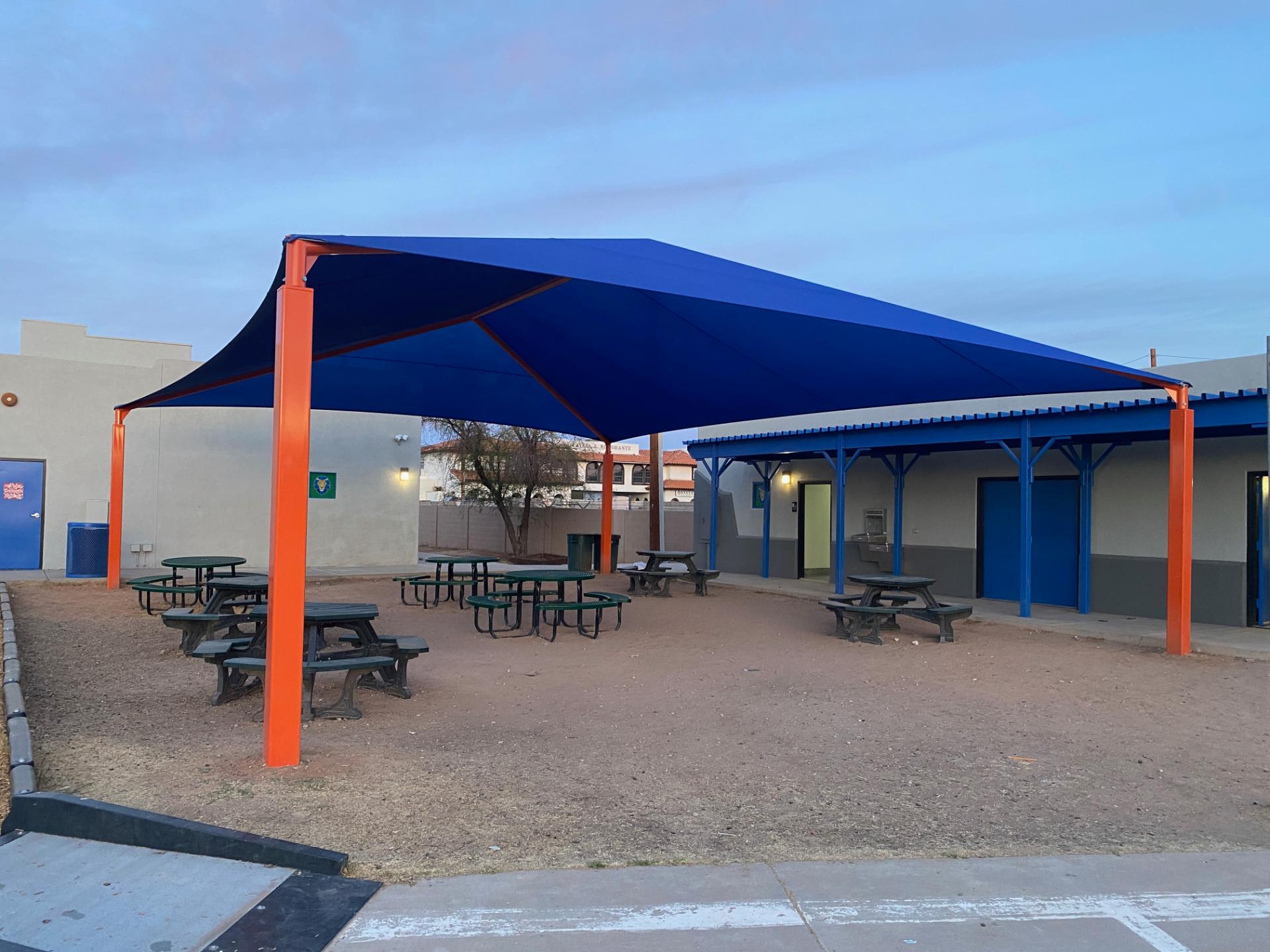
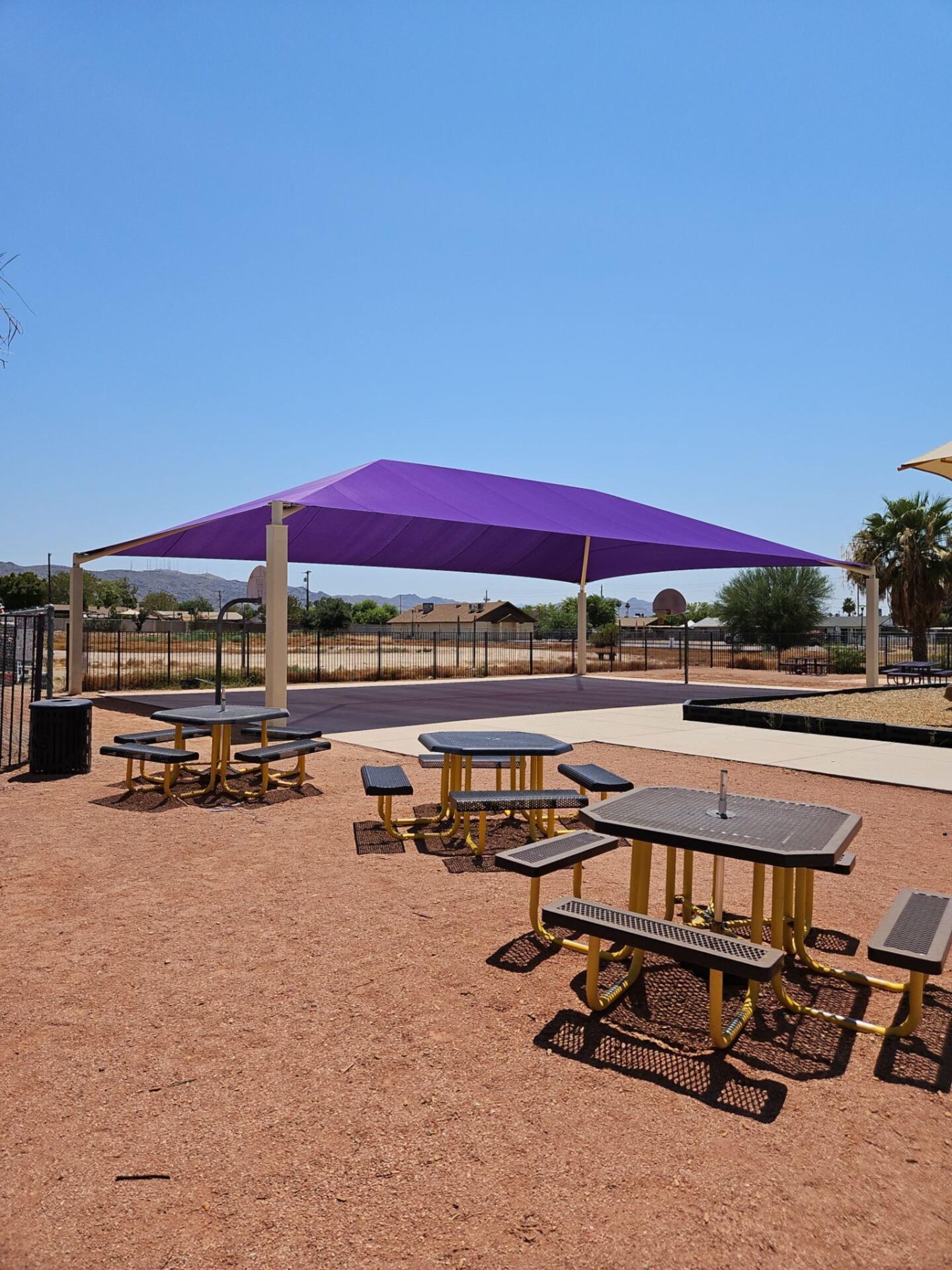
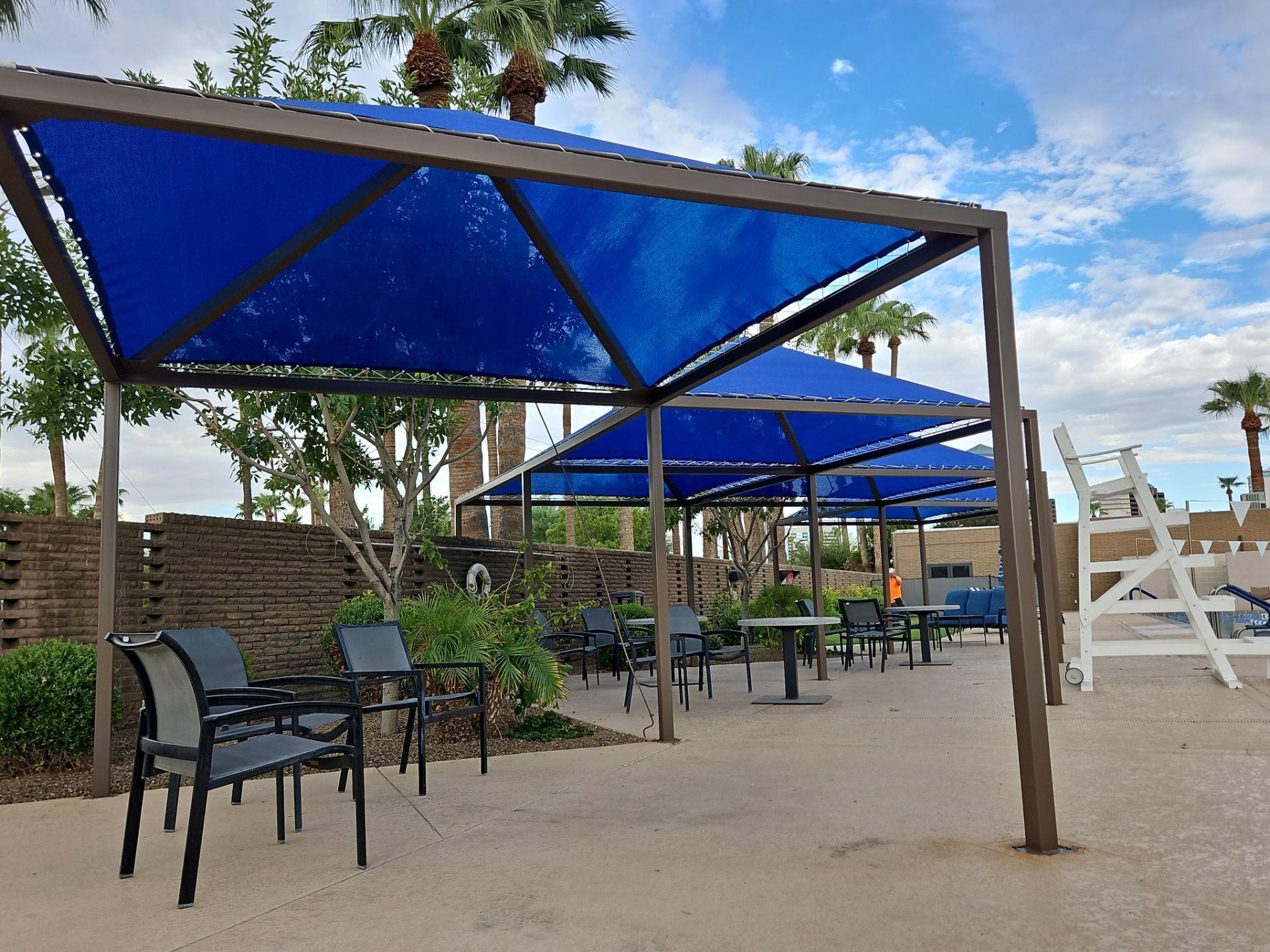
A cantilever canopy is usually the right answer over open bleachers. A flat cantilevered shade structure places its posts behind the seating, so nothing blocks sightlines to the field. A single bay commonly spans 20 to 40 feet of seating depth and clears 9 to 12 feet of headroom above the top row. For larger spectator zones at a complex like Peoria Sports Complex, bays gang into runs covering several sections end to end. Shade matters most between 11 a.m. and 4 p.m., when unshaded aluminum seating can reach 140 degrees. Hip-roof structures are an alternative where posts on both sides are acceptable and a more architectural roofline is wanted.
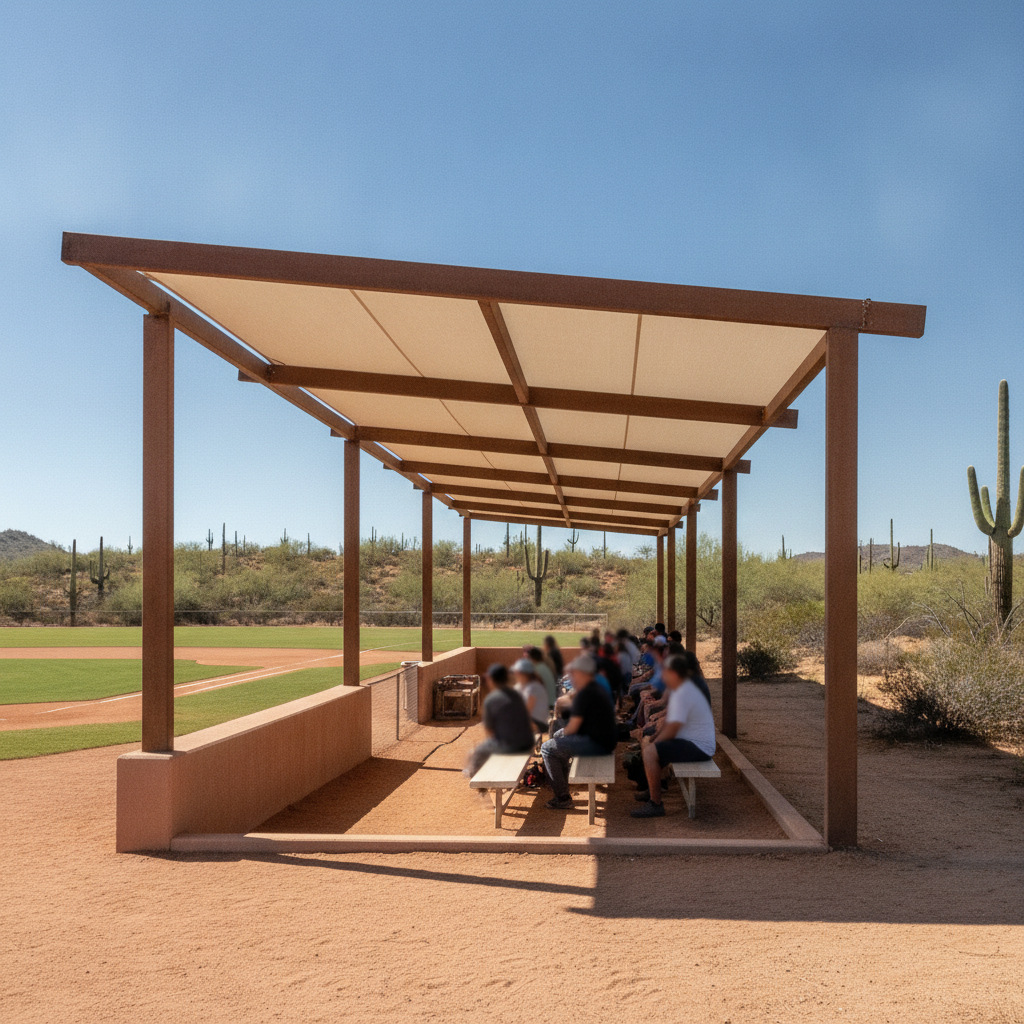
Dugout and concourse covers
Dugouts and concourse walkways need different geometry than bleachers. A dugout cover is a long, narrow run — often 20 to 30 feet of bench length and 8 to 10 feet deep — pitched to shed monsoon rain away from players. Concourse shade is a continuous breezeway, post-supported on one edge and tall enough (10 to 12 feet) for foot traffic and vendor carts.
Matching structure to the space
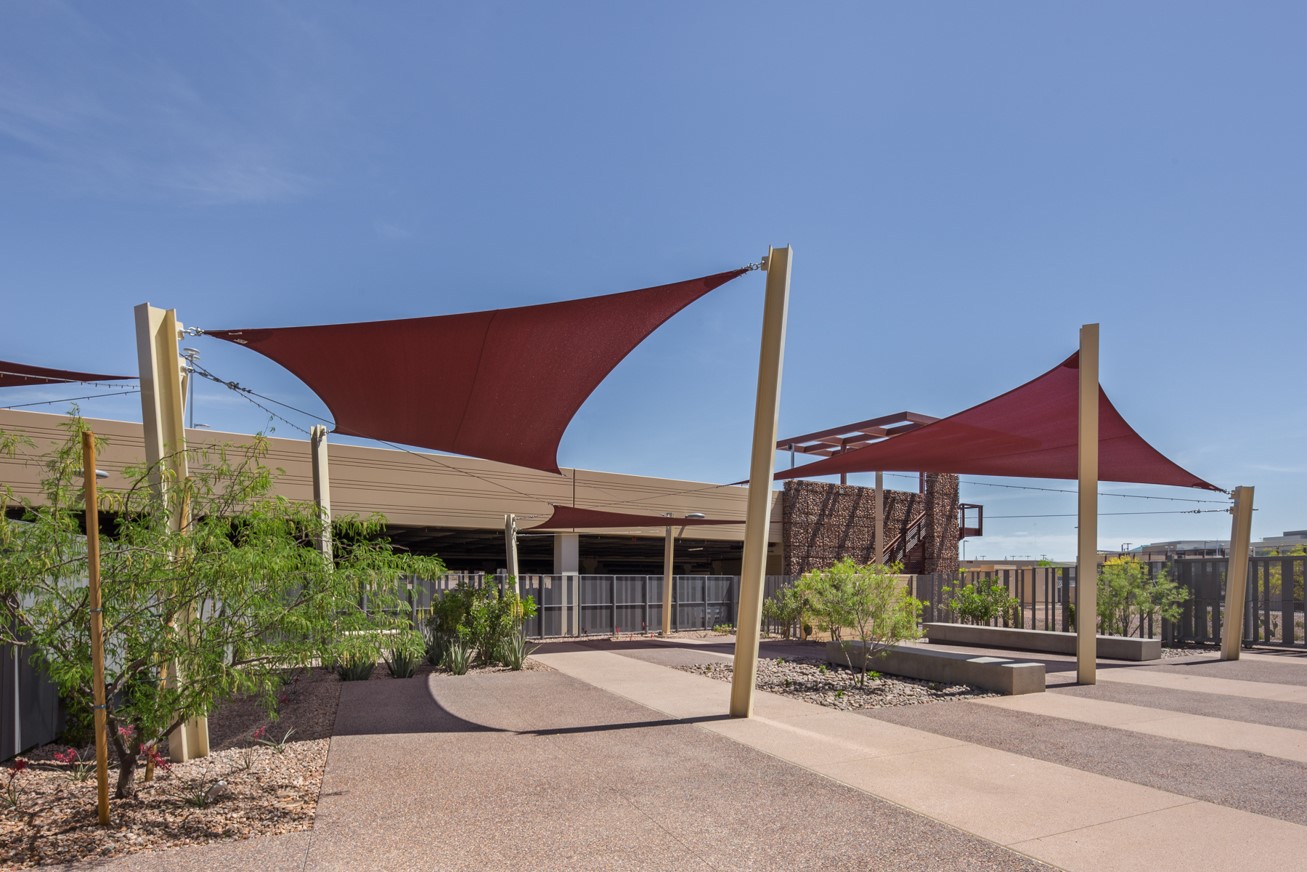
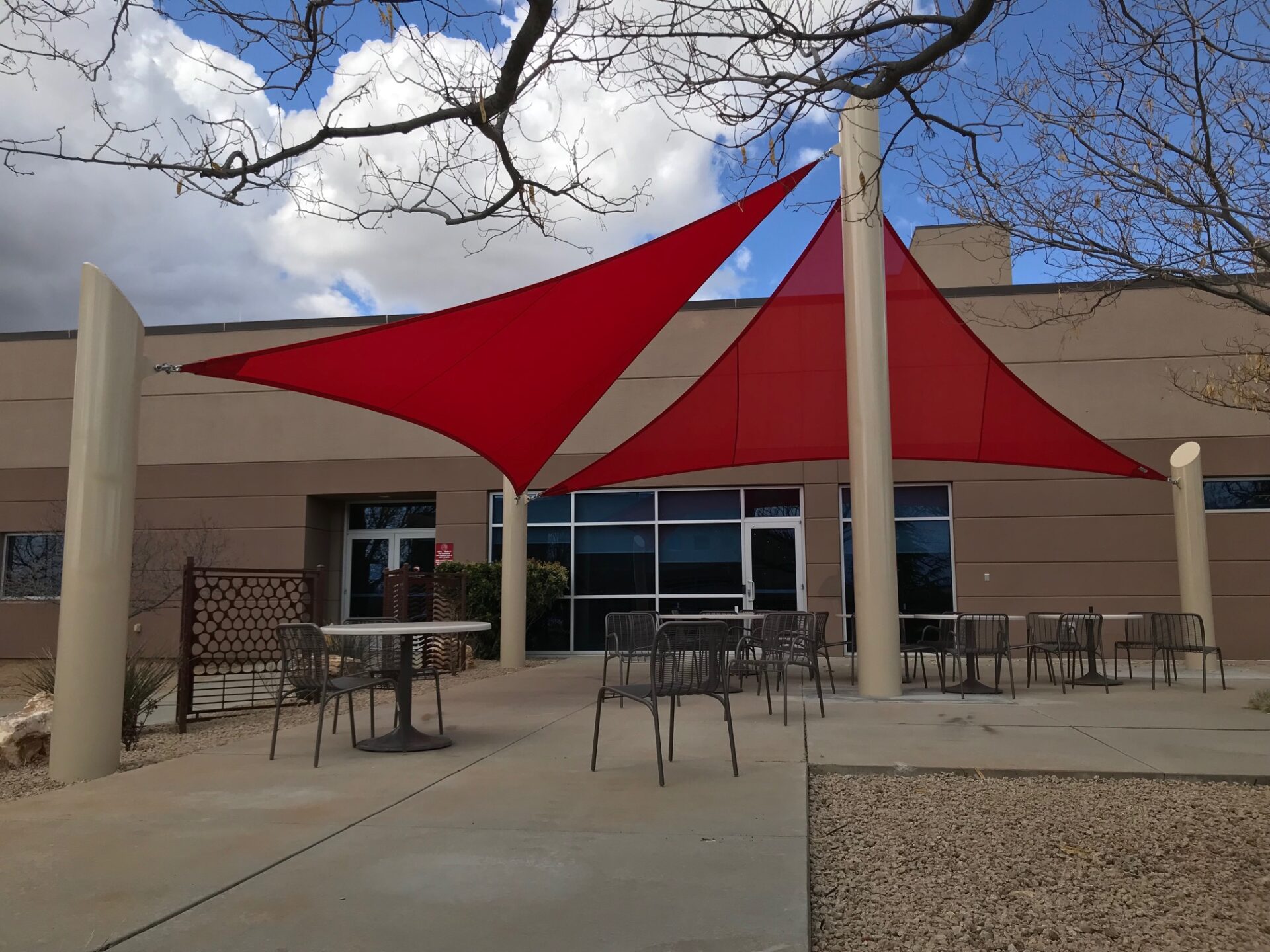
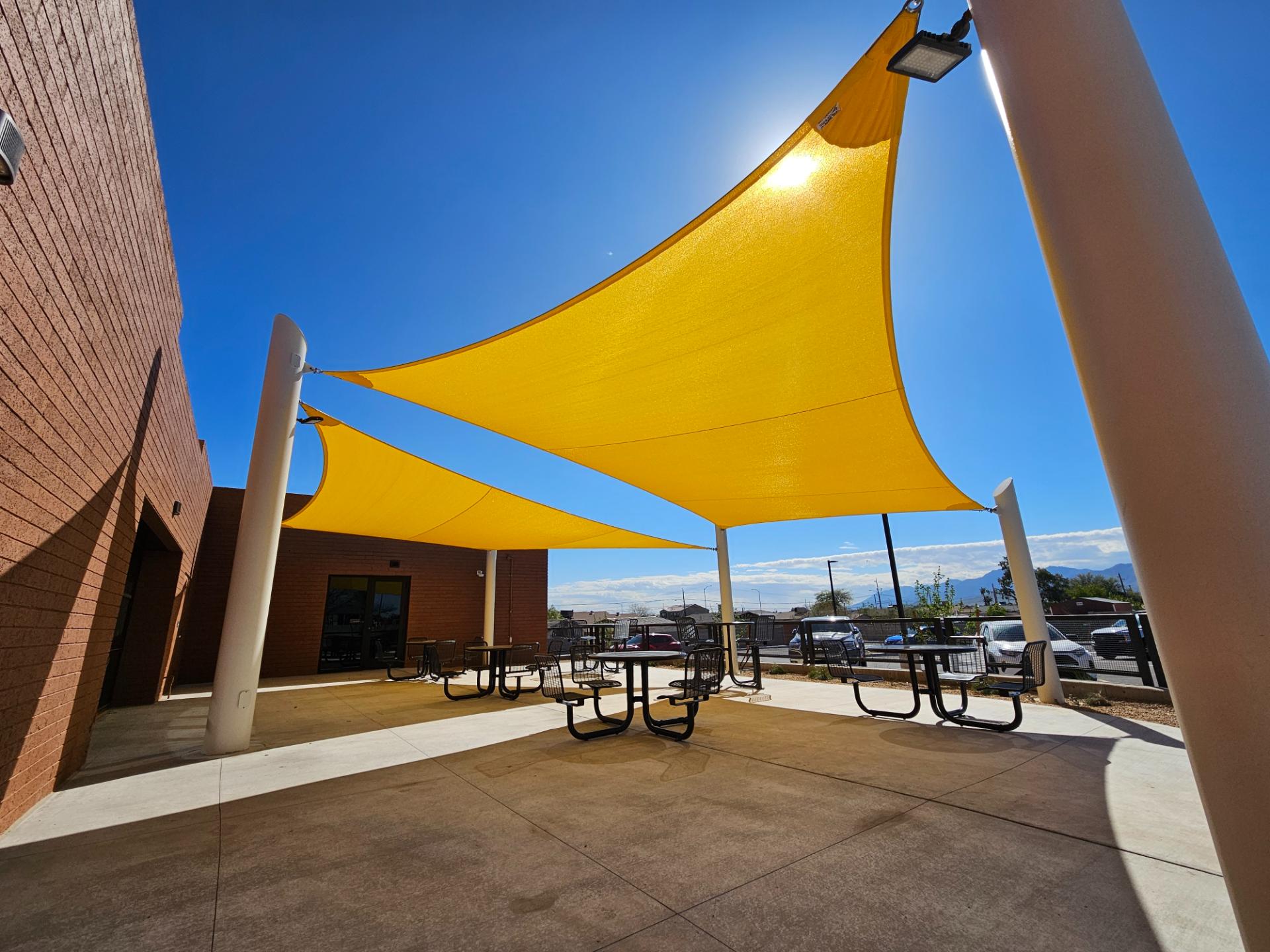
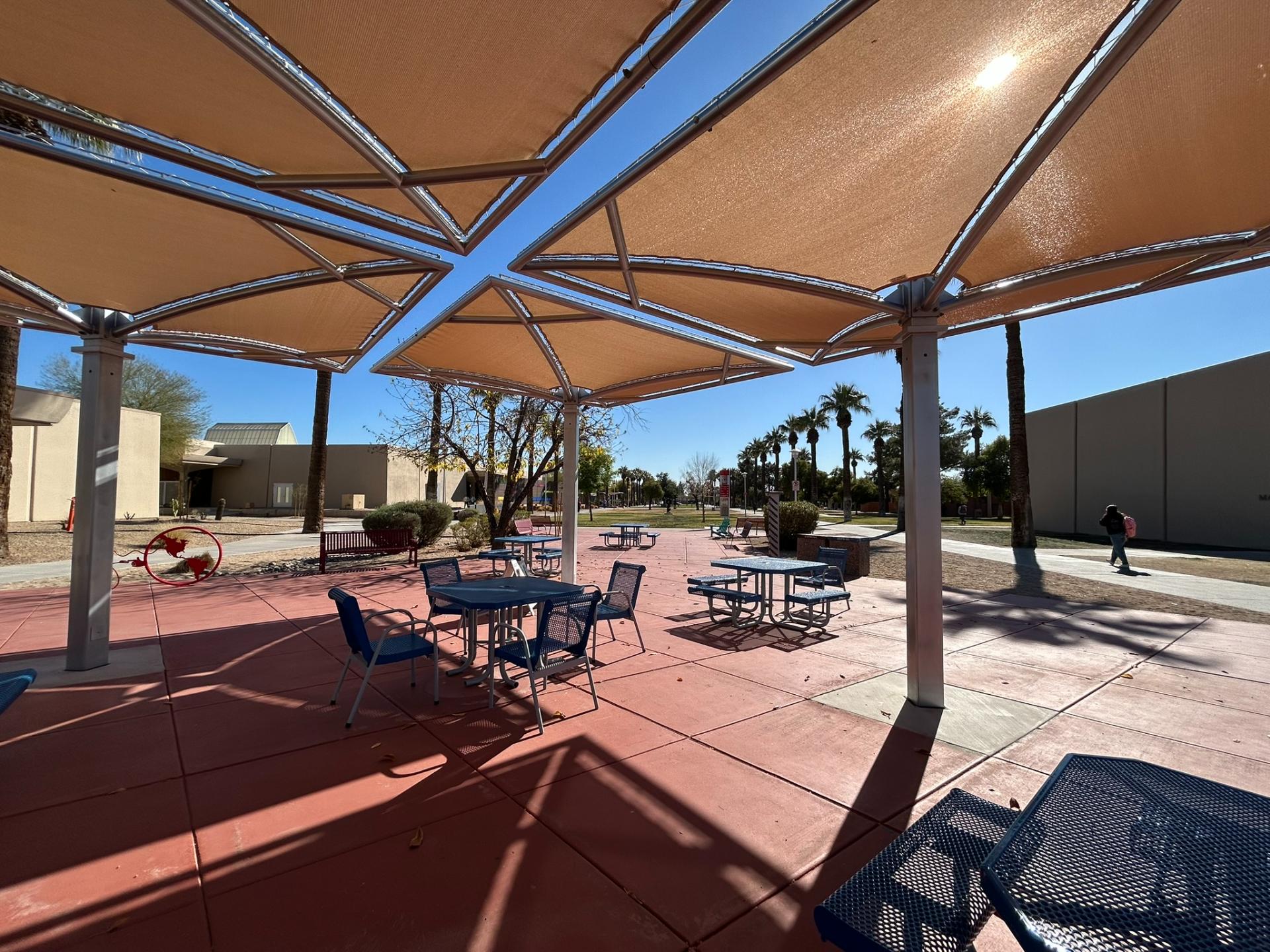
Open plazas between fields suit tensioned fabric. A four-point tensioned sail covers a rectangular concession area, while a three-point sail works for triangular corners and irregular footprints where a rigid roof would waste material.
Materials, wind engineering, and permitting
Every Peoria structure is engineered to Arizona building code and ASCE 7 wind loads — design wind speeds in the Valley run roughly 90 to 115 mph depending on the site. Frames are powder-coated steel; bleacher and concourse spans use heavier-gauge columns than a backyard ramada because cantilever loads and public-use factors are higher. The fabric is knitted HDPE: it blocks roughly 90 to 99 percent of UV, breathes so heat doesn’t pool underneath, and carries warranties commonly in the 10-to-15-year range. Steel frames outlast the fabric by decades, so re-covering is a planned event rather than a failure.
Public shade in Peoria requires engineered, stamped drawings first. We provide the plan set; the City of Peoria and Maricopa County handle plan review and inspection, covering footing depth, wind-load calculations, and ADA clearances. A commercial run takes a few weeks of shop fabrication after approval, then installs in a matter of days once footings have cured.
Where field-shade projects go wrong
The most common mistake on sports-field shade is undersizing — covering the bleachers at solar noon but leaving the front rows exposed by 3 p.m. as the sun angle drops. Shade has to be sized for the late-afternoon game window, which usually means extending the canopy 4 to 6 feet past the front edge of the seating. Two other recurring problems: orienting a structure without accounting for the summer sun line, and skipping fabric re-tensioning. HDPE relaxes slightly in its first season and after monsoon wind events; a structure that’s never re-tensioned will flutter and wear at the attachment points years early.
Re-covering existing field shade
When a park already has steel frames standing, re-covering beats rebuilding. Our canopy replacement and repair service pulls worn or storm-damaged HDPE and fits new fabric to the existing structure, restoring full UV protection without new footings, steel, or a fresh permit in most cases. Fabric is the consumable layer; a sound powder-coated frame takes three or four fabric cycles over its life. For a city managing dozens of covers across multiple parks, a re-cover rotation is the lower-cost path to keeping every field shaded.
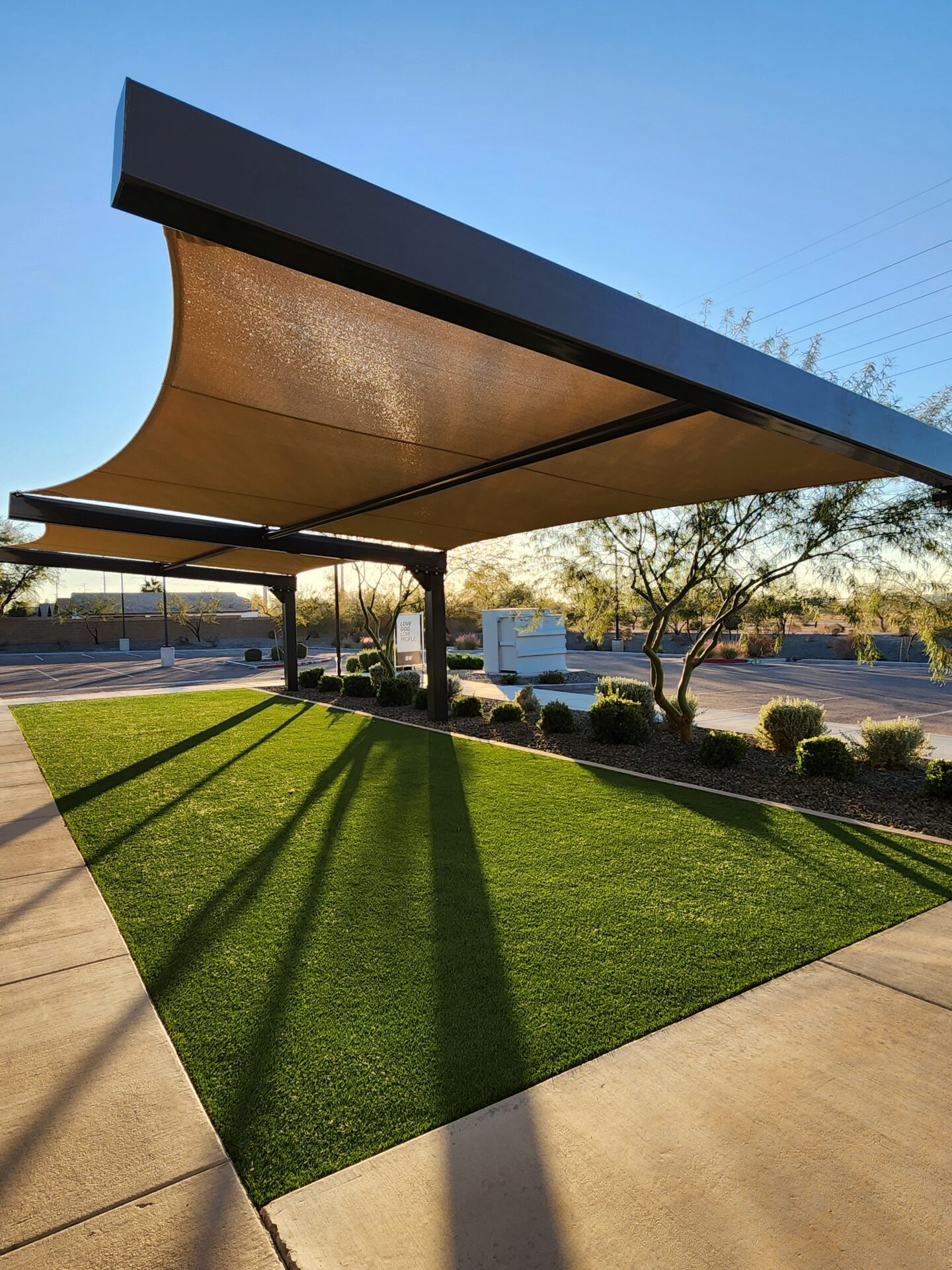
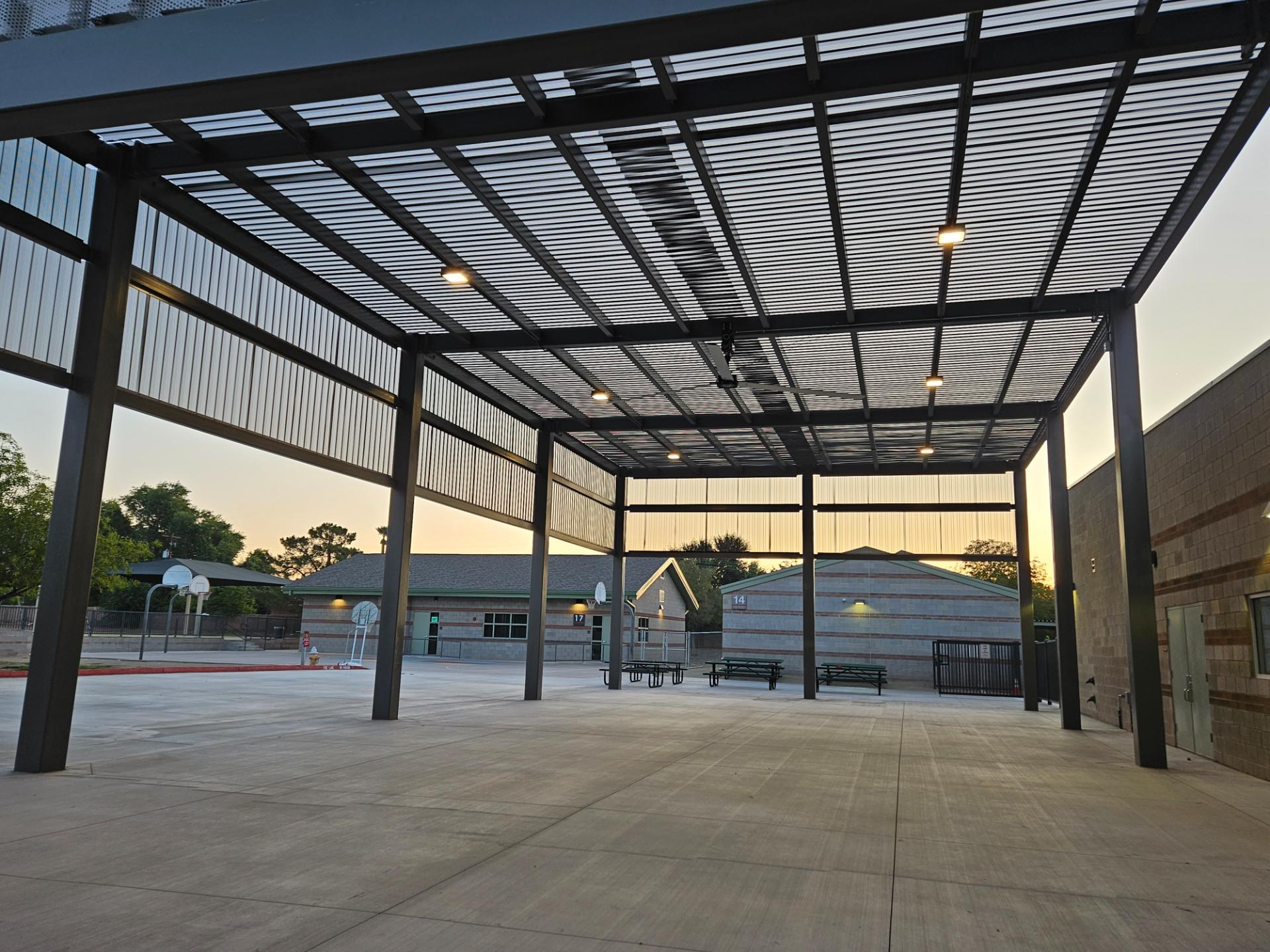
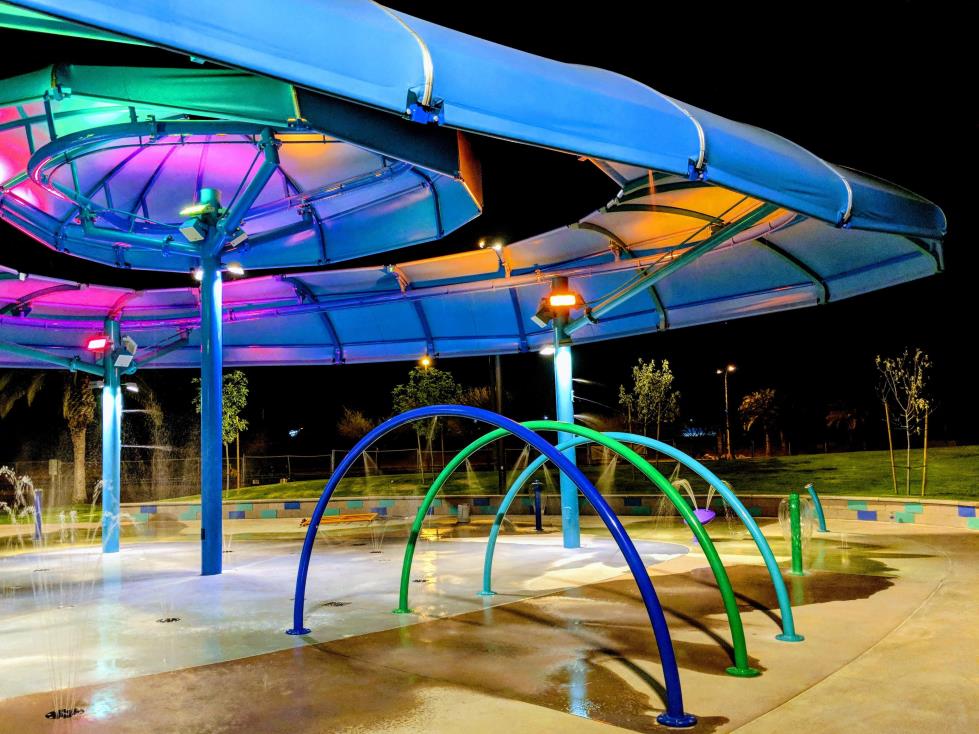
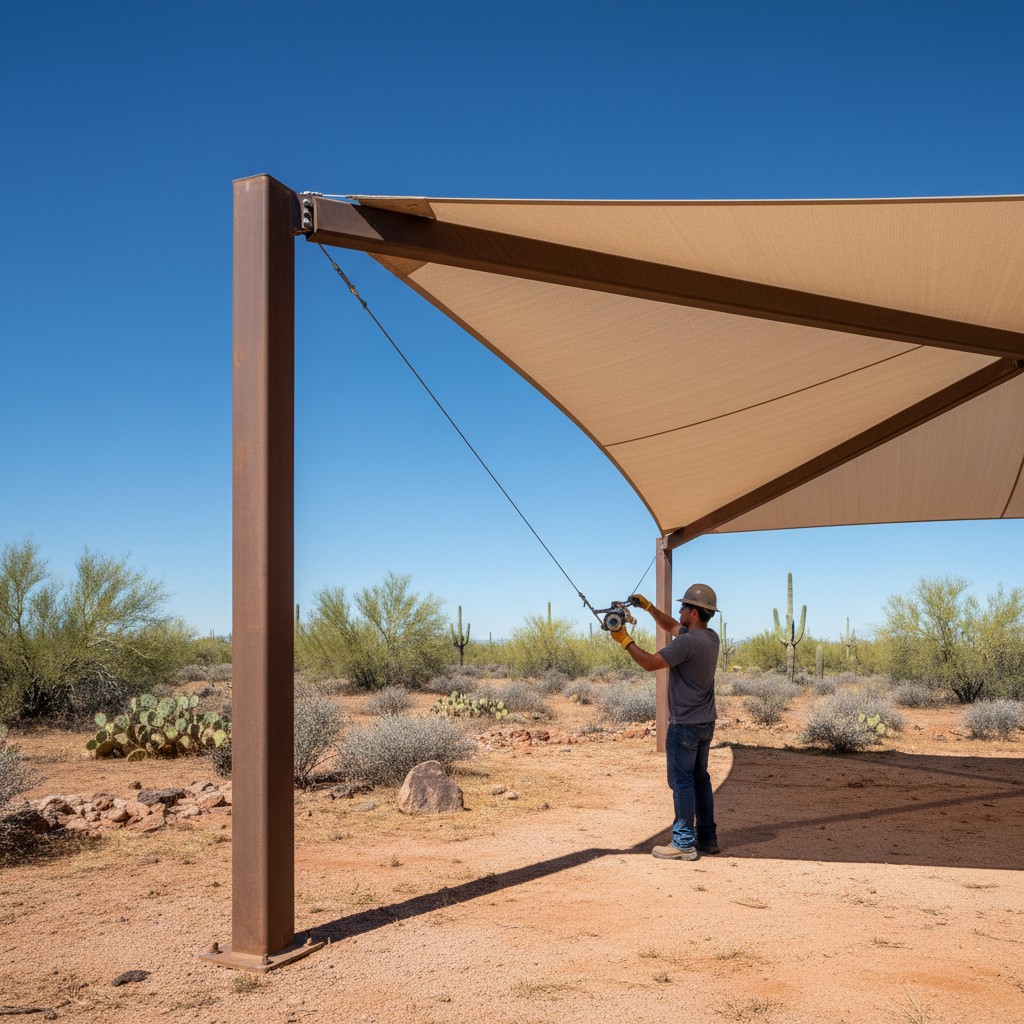
Every Shade Structure We Build for Peoria
Planning a shade project in Peoria?
Call (602) 265-0905 for a free assessment.
Serving Peoria and the Phoenix Metro
Total Shade LLC builds shade structures in Peoria as part of our Phoenix-metro service area, including nearby Glendale and Surprise. From our Phoenix fabrication shop we deliver engineered, permit-ready shade across the entire Valley.
Frequently Asked Questions
What kind of shade works best over bleachers at a Peoria ball field?
A flat cantilevered structure is usually best because its posts sit behind the seating, keeping sightlines to the field clear. One bay covers 20 to 40 feet of seating depth with 9 to 12 feet of headroom, and bays gang together for long spectator runs at a complex.
How much does spectator and dugout shade cost in Peoria?
Cost depends on span, steel gauge, and bay count, since public structures are engineered to ASCE 7 wind loads and use heavier columns than residential shade. A single dugout cover runs far less than a multi-bay bleacher run. The fastest path to a real number is sending field dimensions and seating capacity.
Will field shade structures hold up in monsoon storms?
Yes — every structure is engineered to Valley design wind speeds of roughly 90 to 115 mph, with footings and frames sized to the wind-load calculation. Monsoon microbursts can exceed 60 mph, so fabric is tensioned to shed both rain and gust loads. Re-tensioning after a major storm season protects the attachment points and extends fabric life.
Can you shade a concourse or walkway between fields, not just the seating?
Yes. Concourse shade is a continuous, post-supported run pitched for foot traffic and vendor carts, typically 10 to 12 feet of clearance. For open plazas and concession areas, tensioned fabric sails cover rectangular or triangular footprints cleanly and read lighter overhead than a rigid roof.
How long does HDPE shade fabric last on Peoria sports structures?
Knitted HDPE fabric commonly carries 10-to-15-year manufacturer warranties and blocks roughly 90 to 99 percent of UV. The powder-coated steel frame lasts decades longer, so re-covering is a planned maintenance event, not a rebuild. Periodic cleaning of Valley dust and a re-tension every few seasons keep fabric on its full service life.
Get a free on-site quote in Peoria.
Call (602) 265-0905 for a free assessment.