or call (602) 265-0905 — no-obligation, on-site.
Commercial Shade Structures in Surprise, Arizona
Since 1998
Designing & building Arizona shade
In-House Fabrication
Built at our Phoenix shop
Engineered & Permit-Ready
Stamped drawings for AZ wind loads
Free On-Site Quote
No-obligation project assessment
Total Shade builds engineered commercial shade structures for Surprise, Arizona — pickleball-court canopies, pool-deck sails, ramadas, and spectator cover — fabricated in-house at our Phoenix shop and installed across the West Valley. Surprise runs on two engines: spring-training crowds at Surprise Stadium and a wave of 55+ active-adult communities where pickleball, pool decks, and ramadas get daily use. Both demand shade that survives 110°F summers and 60+ mph monsoon microbursts. We engineer powder-coated steel frames and knitted HDPE fabric to Arizona building code, then handle stamped drawings and install with 25+ years behind the work.
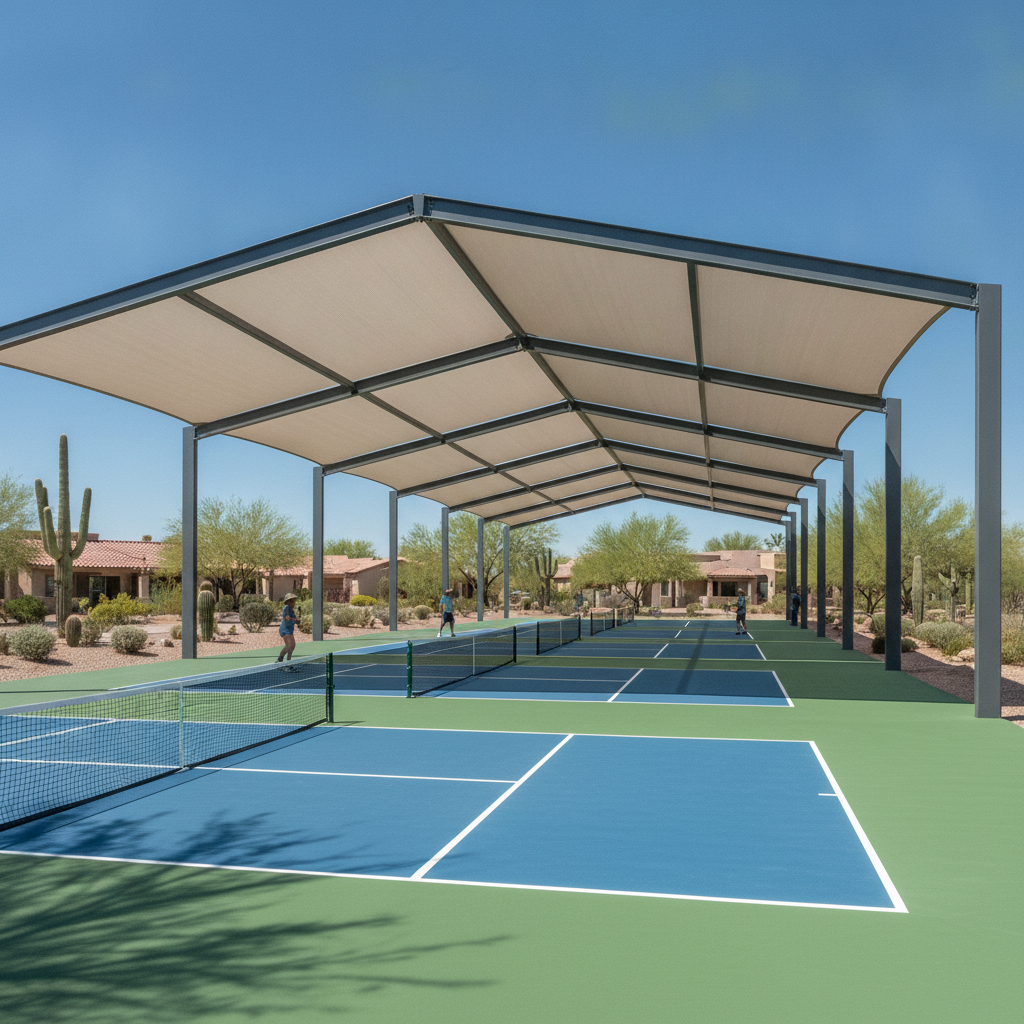
Pickleball and pool-deck shade for active-adult communities
The highest demand in Surprise comes from 55+ communities adding pickleball courts and protecting pool decks, and the right structure depends on what you are covering. A regulation pickleball court runs 20 ft by 44 ft inside fencing, so spectator and player-rest shade lives along the sidelines rather than over the playing surface — overhead fabric across an active court casts moving shadows and complicates ball tracking.
Court-side and pool-deck options
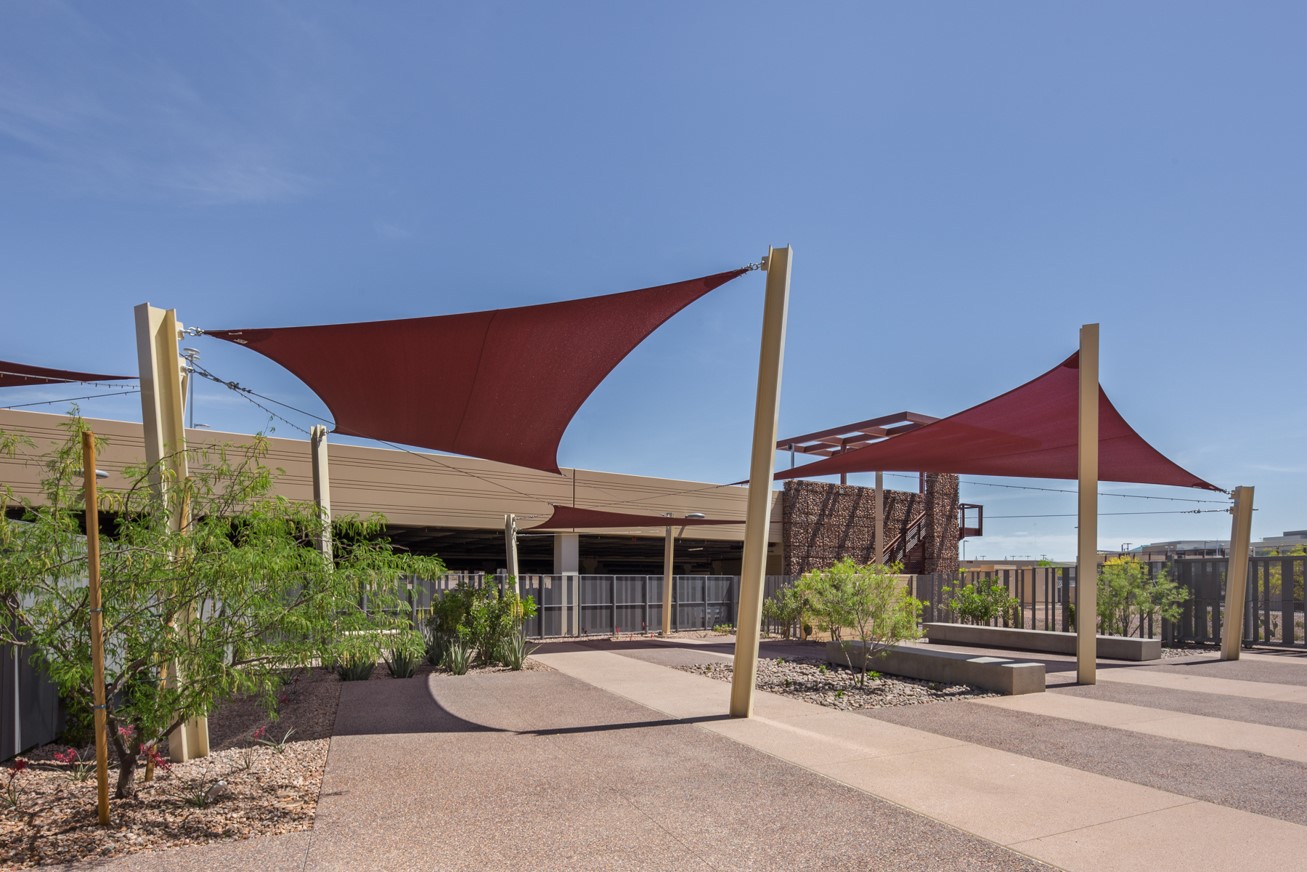
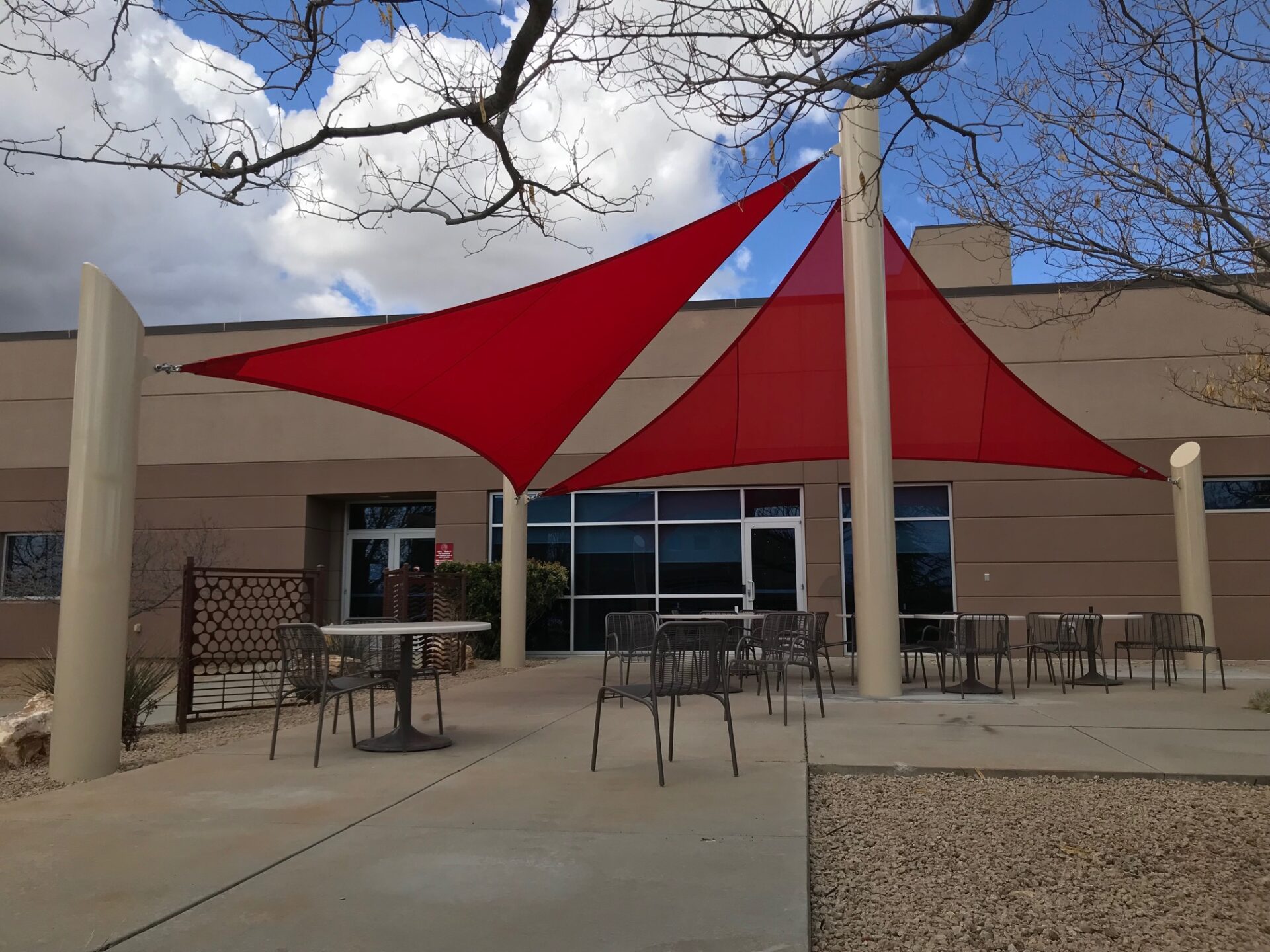
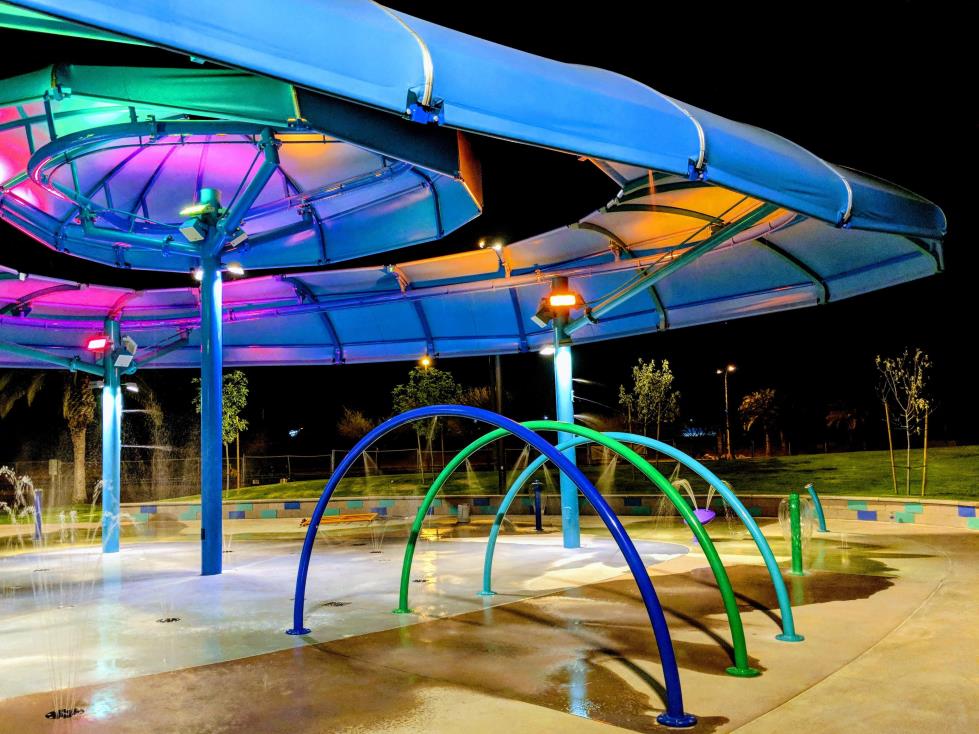
For seating areas and walkways between courts, 3-point tensioned fabric sails drop deck temperatures while keeping sightlines open. Around pools, where chlorine and reflected UV punish furniture, cabanas give swimmers a defined cool zone under an HDPE canopy that blocks roughly 90–99% of UV. A single freestanding cantilever shades a 200–400 sq ft lounge cluster on one set of footings, which keeps the deck open. These communities book year-round, across 300+ sunny days.
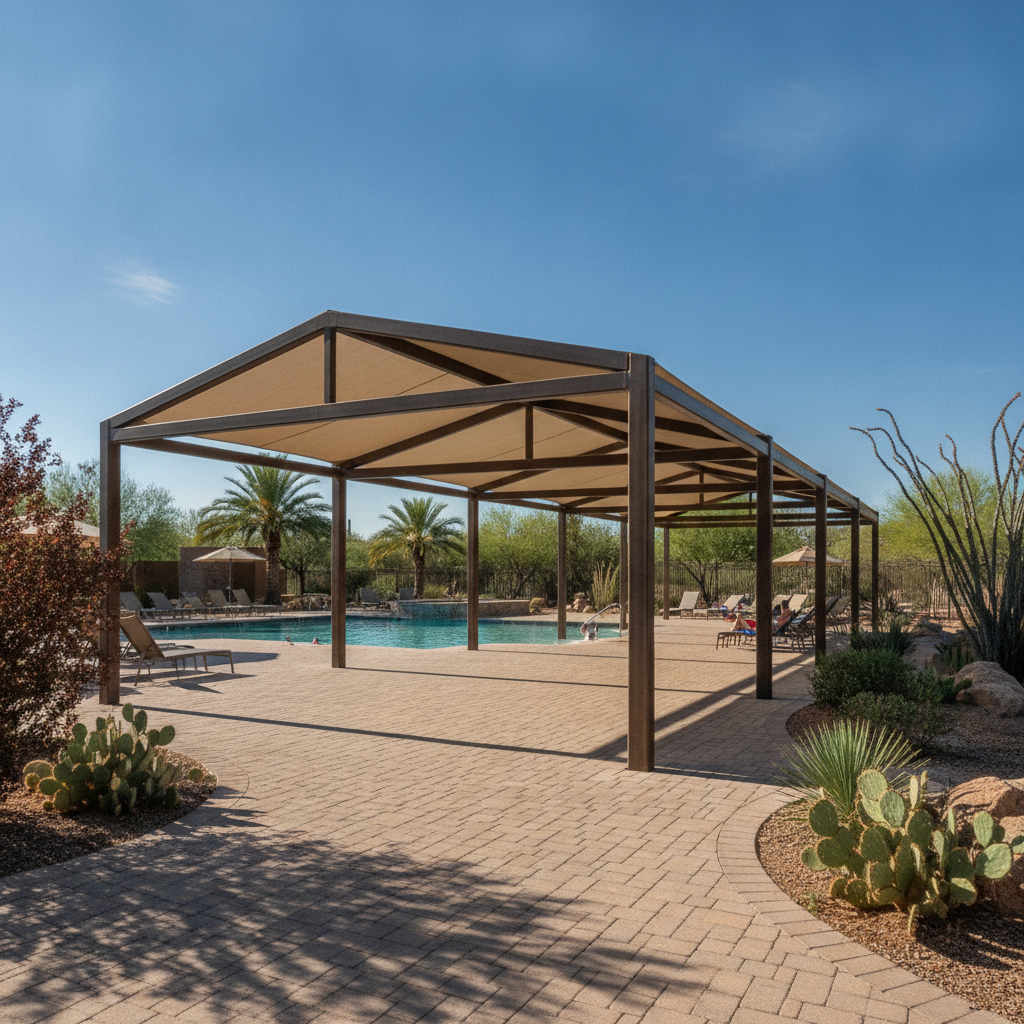
Ramadas and gathering shade for parks and HOA common areas
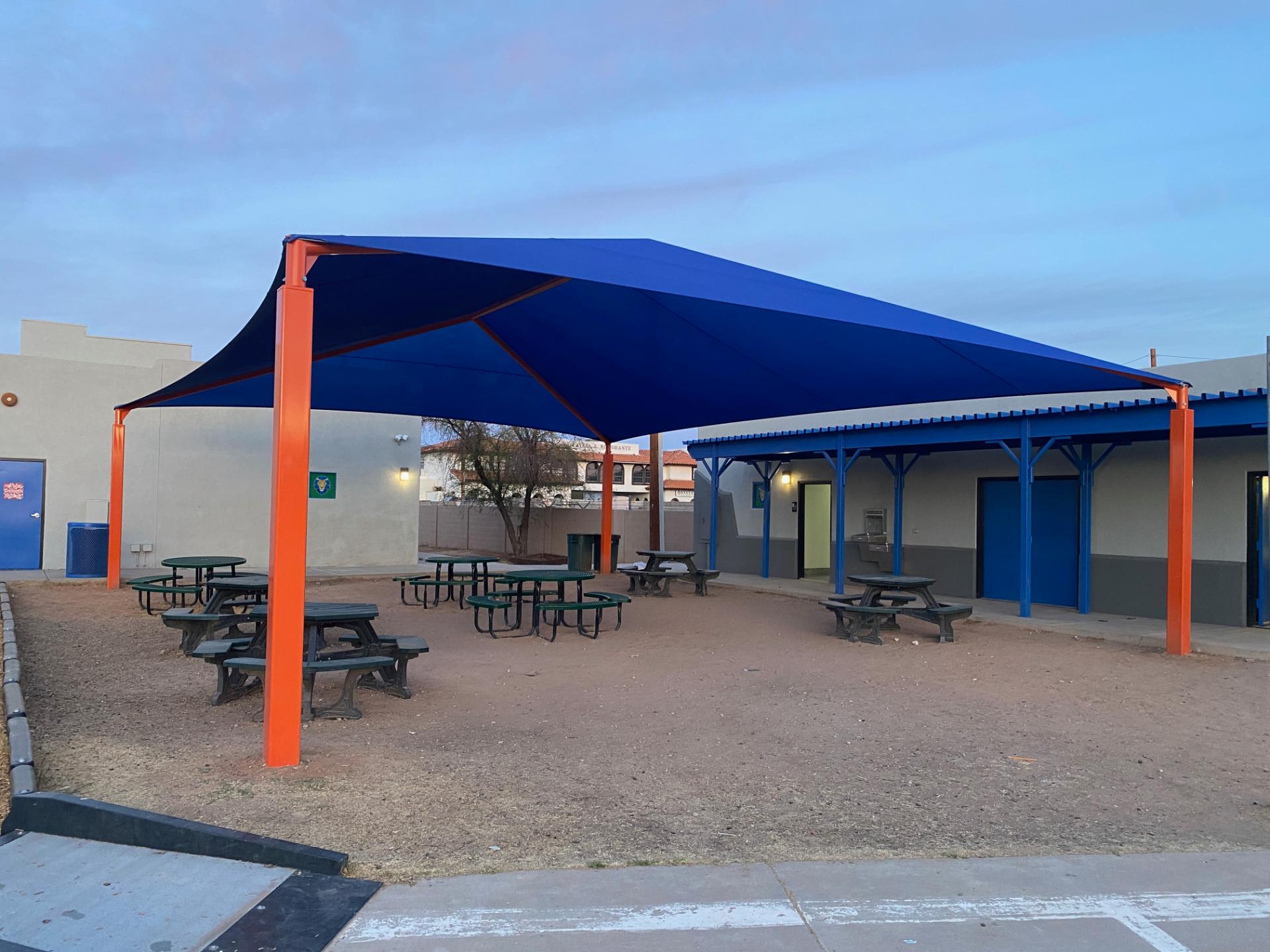
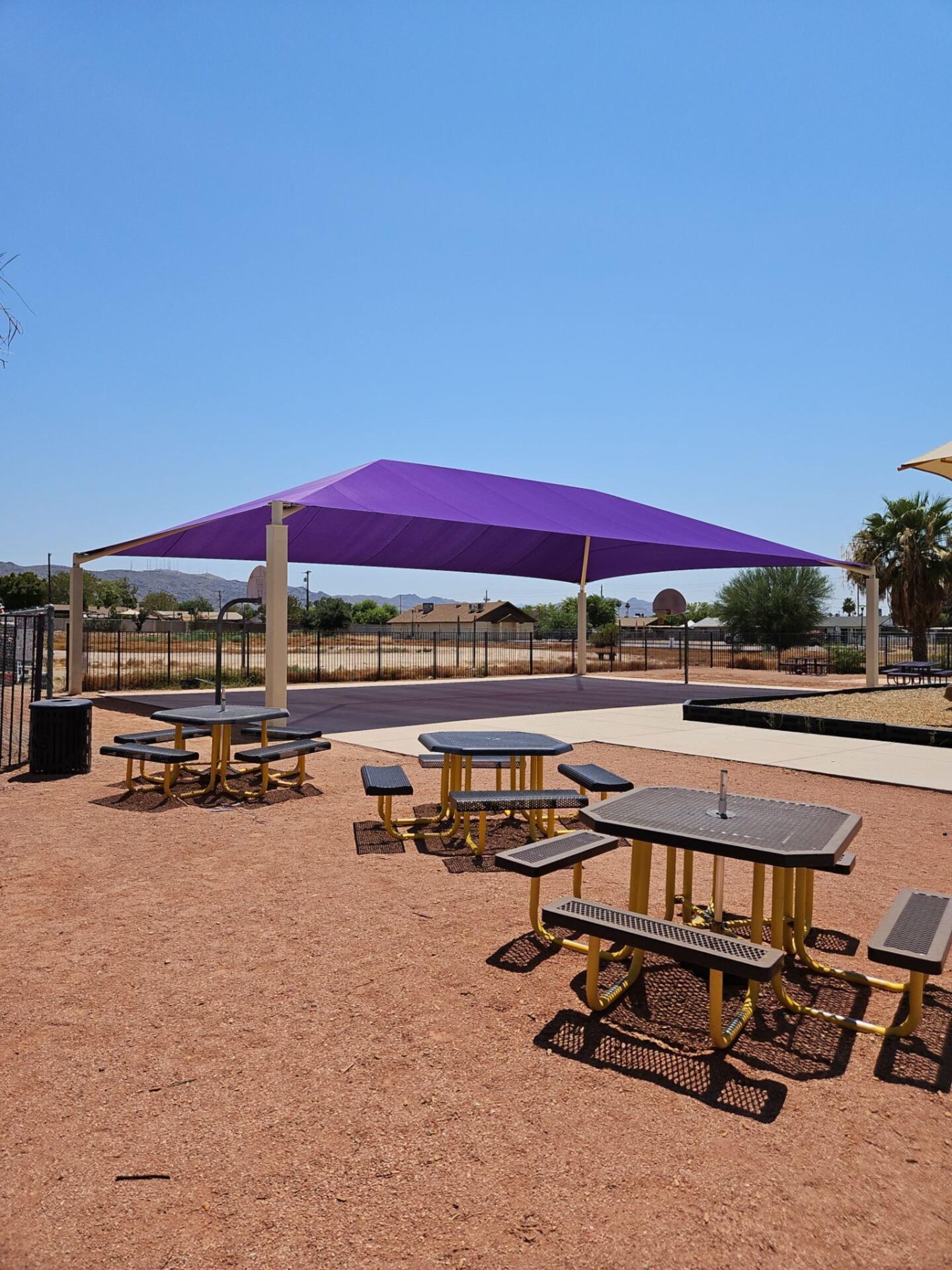
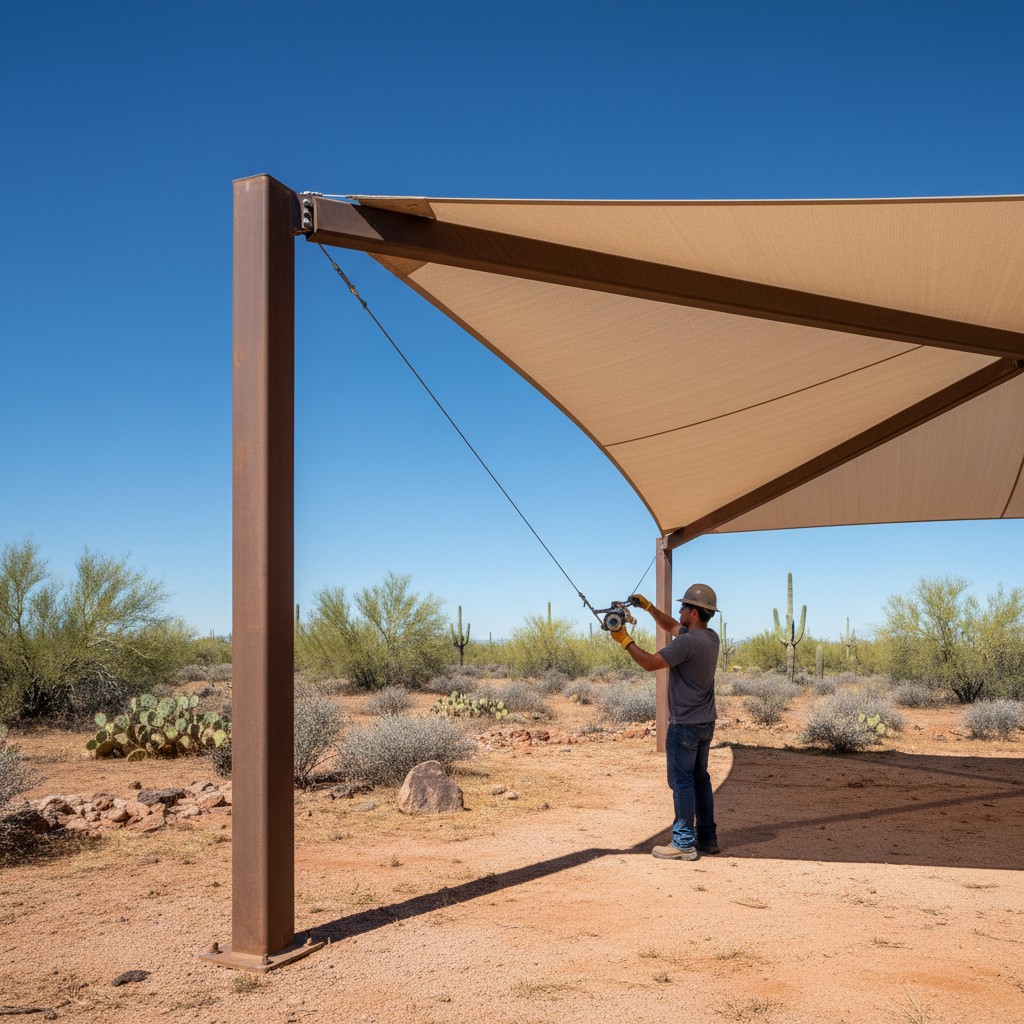
Ramadas anchor the shared spaces in Surprise — neighborhood parks, dog runs, bocce areas, and HOA picnic lawns. A standard steel ramada covers a 20 ft by 20 ft footprint and seats two to four picnic tables, while event ramadas span 30 ft or more for community gatherings. We build these with powder-coated steel posts on engineered concrete footings, then top them with either a solid metal roof for full sun blockage or knitted HDPE fabric that vents airflow on still summer evenings. Post placement matters as much as the canopy: a ramada sized to its slab and oriented against the afternoon sun stays useful from a 7 a.m. dog walk through a 6 p.m. cookout.
Spectator shade for stadium-style and youth sports venues
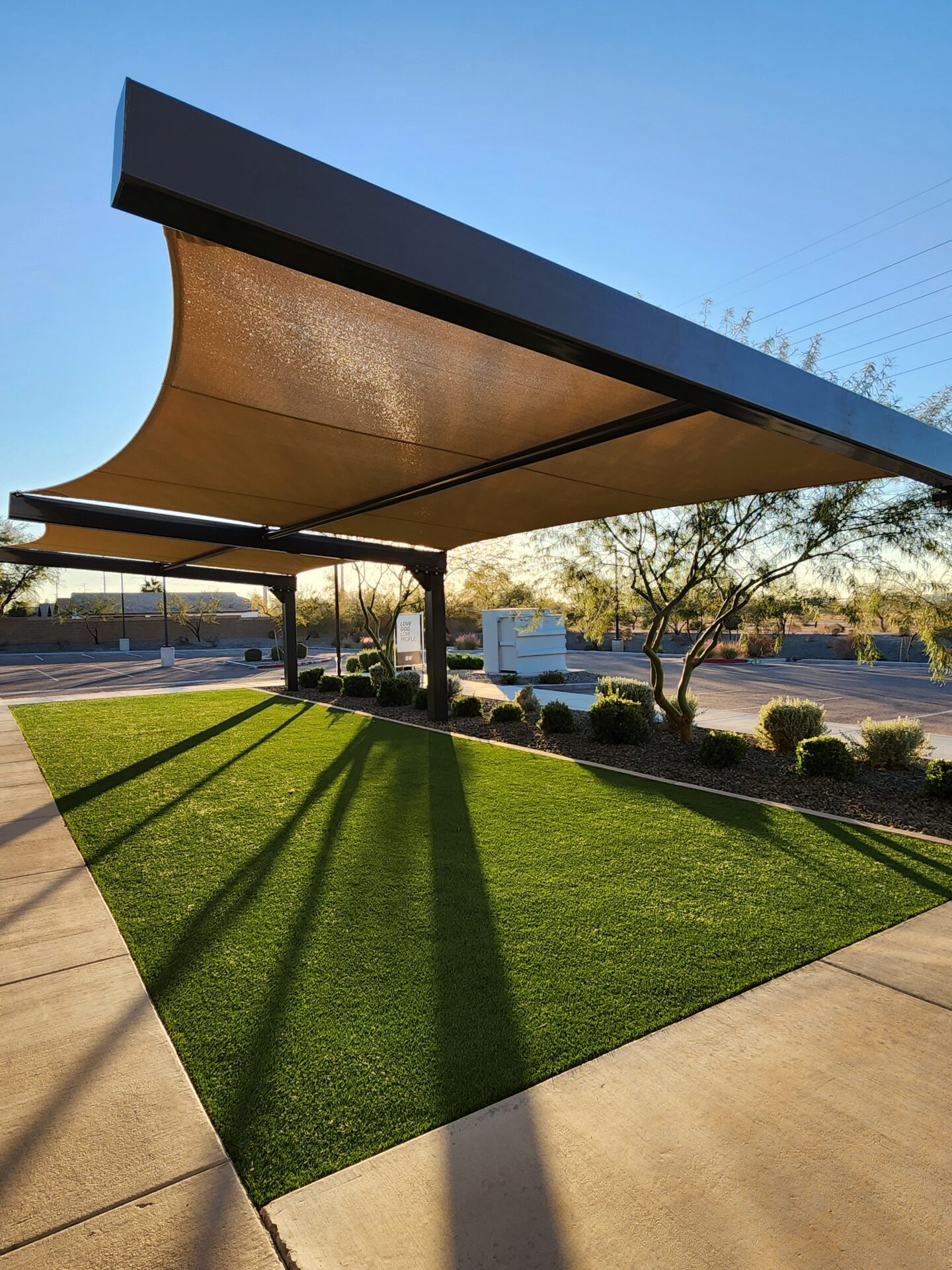
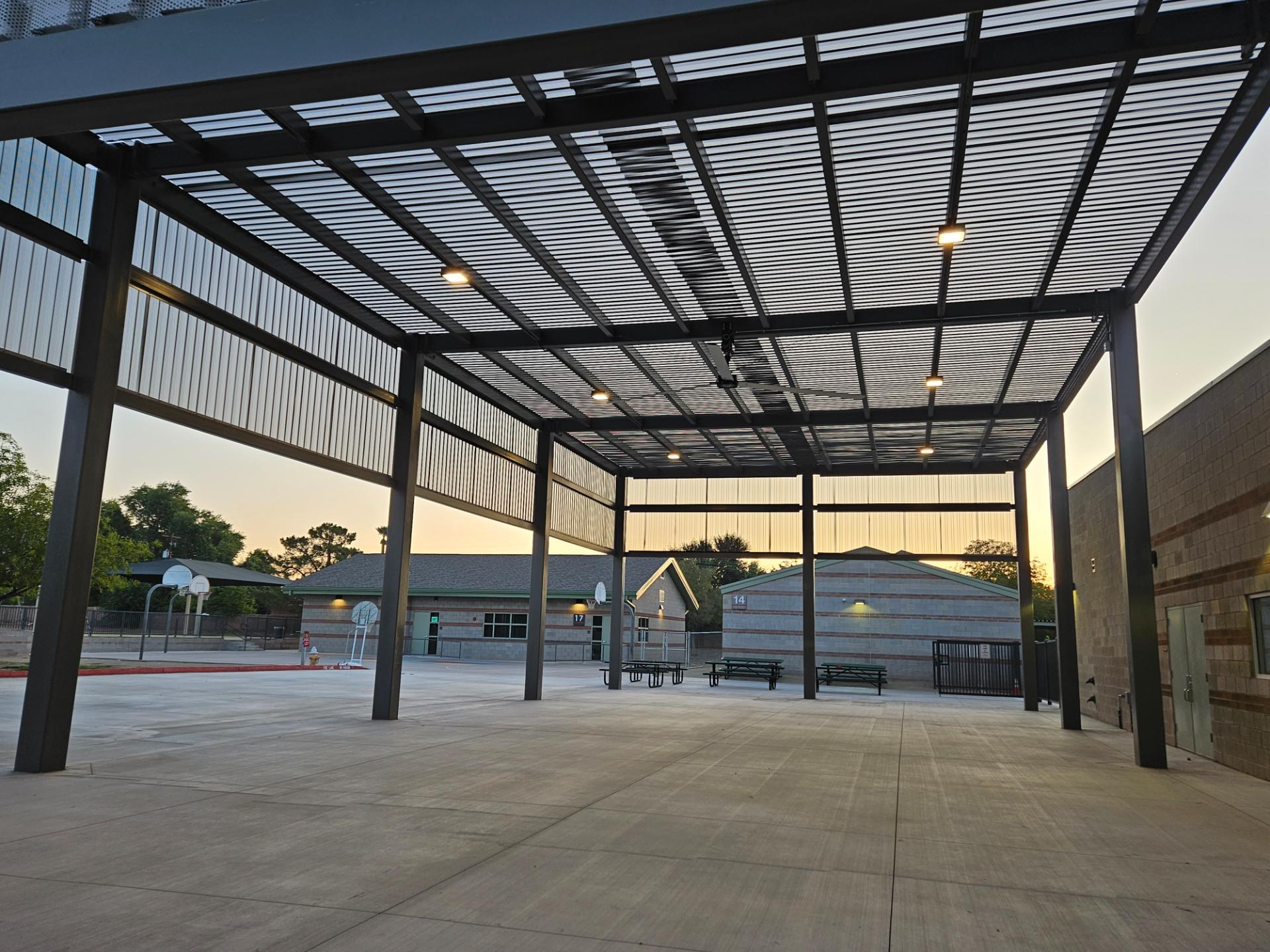
Spectator shade keeps bleachers and concourses usable through spring-training season and youth tournaments, and it is a different problem than a backyard cover. Surprise Stadium draws Cactus League crowds in March, and the same logic applies to the city’s youth ballfields and multi-court complexes: people sit in fixed rows under direct sun for two to three hours. A flat cantilevered shade structure works over bleachers because the support sits behind the seating — no posts blocking the view of the field — and commonly clears 15–25 ft of bleacher depth on rear columns. Fabric here behaves more like a permanent roof than a temporary tent, so it gets engineered for the same wind loads as the building beside it.
Materials, wind, and UV engineering for the West Valley
Every Surprise structure gets engineered to Arizona building code and ASCE 7 wind loads, with Valley design wind speeds running roughly 90–115 mph. That number drives the steel: we size commercial-grade powder-coated steel posts and footing depths to the structure’s sail area, because a large fabric canopy acts like a sail in a monsoon microburst that can top 60 mph.
What the fabric does
Knitted HDPE shade fabric blocks roughly 90–99% of UV depending on weave and color, and breathes enough to vent rising heat rather than trap it. Most commercial shade fabric carries a manufacturer warranty in the 10–15 year range, while the steel frame outlasts several fabric cycles. Solid metal-roof ramadas give 100% sun blockage at the cost of airflow — courts and decks want breathable fabric, picnic ramadas can take either.
Permitting, drawings, and how a Surprise project runs
Commercial shade structures in Surprise need stamped engineering drawings, and Total Shade provides those as part of the project. We produce engineered plans sized to your slab, wind exposure, and use case; the City of Surprise and Maricopa County handle permit review and inspection on their own timeline. Because we fabricate at our Phoenix shop at 2331 W. Holly St rather than ordering kits, we adjust spans, post placement, and footing details to fit an existing pool deck or court fence line instead of forcing a stock size. A typical commercial install runs one to a few days on site once footings cure, depending on span count and access. Lead time depends on the queue and the permit clock, so HOAs planning around a swim season should start the drawings early.
Honest limits and the maintenance reality
Shade fabric is a consumable, and pretending otherwise sets up a bad surprise down the road. HDPE canopies are engineered for years of West Valley sun, but UV, heat cycling, and grit eventually fade and weaken the weave — which is why we treat fabric as re-coverable on a steel frame that stays put. When a canopy reaches the end of its life or takes monsoon damage, canopy replacement and repair swaps the fabric without rebuilding the structure. Two other honest caveats: wind ratings have real limits, and no fabric structure is rated to stand through every microburst, so engineering buys margin, not invincibility. And Surprise dust means periodic cleaning — a rinse two or three times a year keeps fabric and powder-coat looking right. Plan for a re-tension check in the first year as fittings settle, then on a regular interval after.
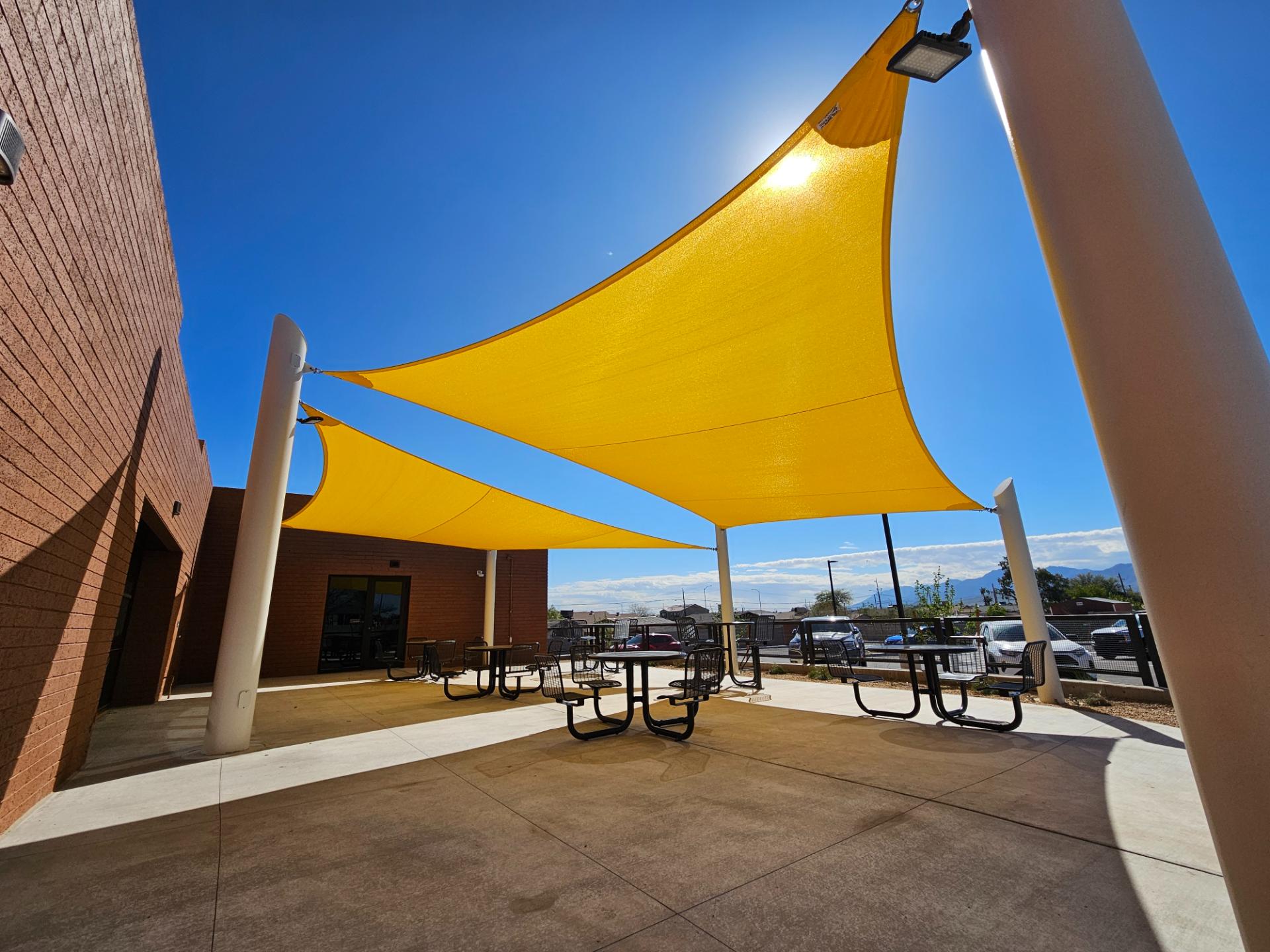
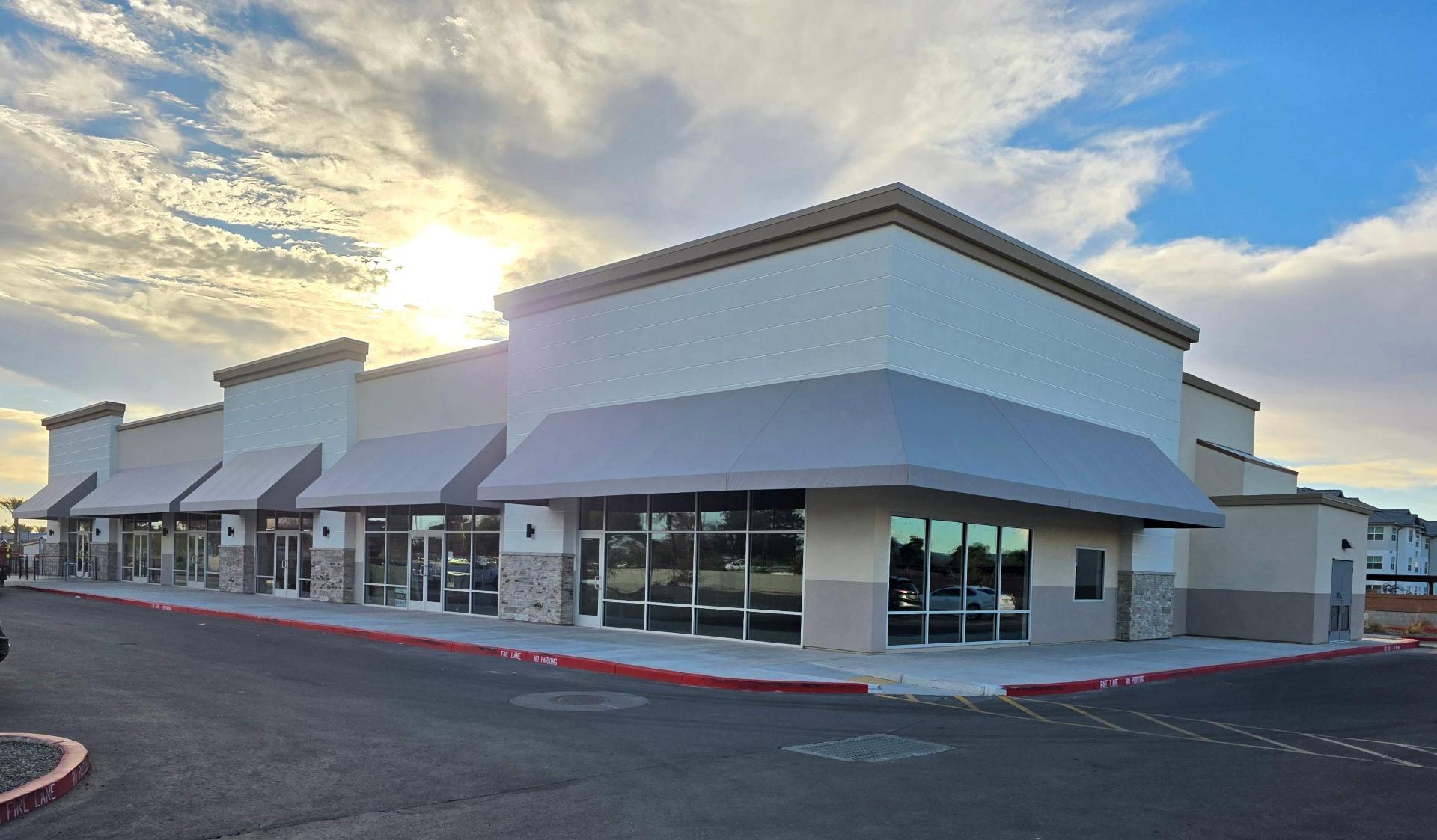
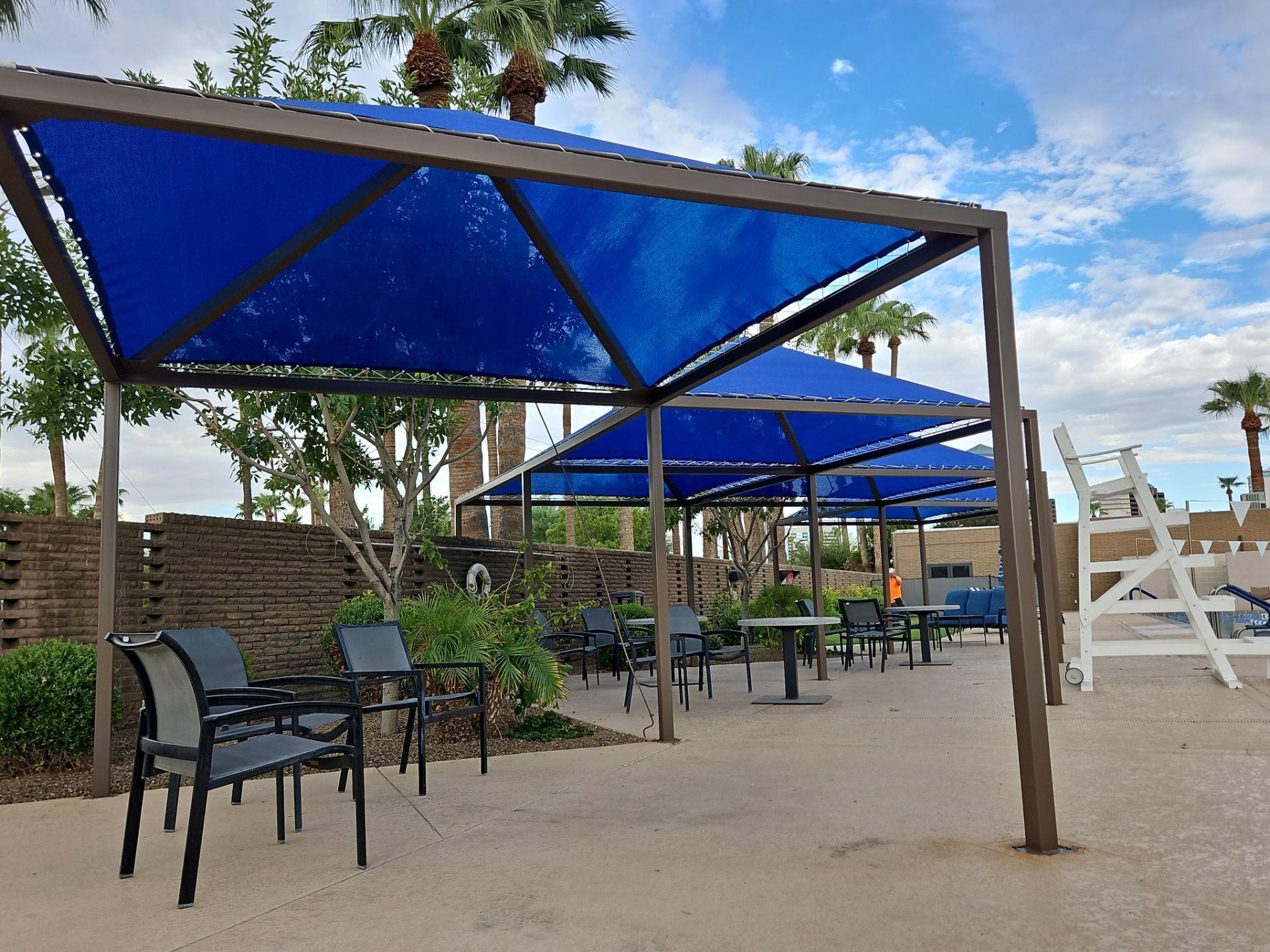
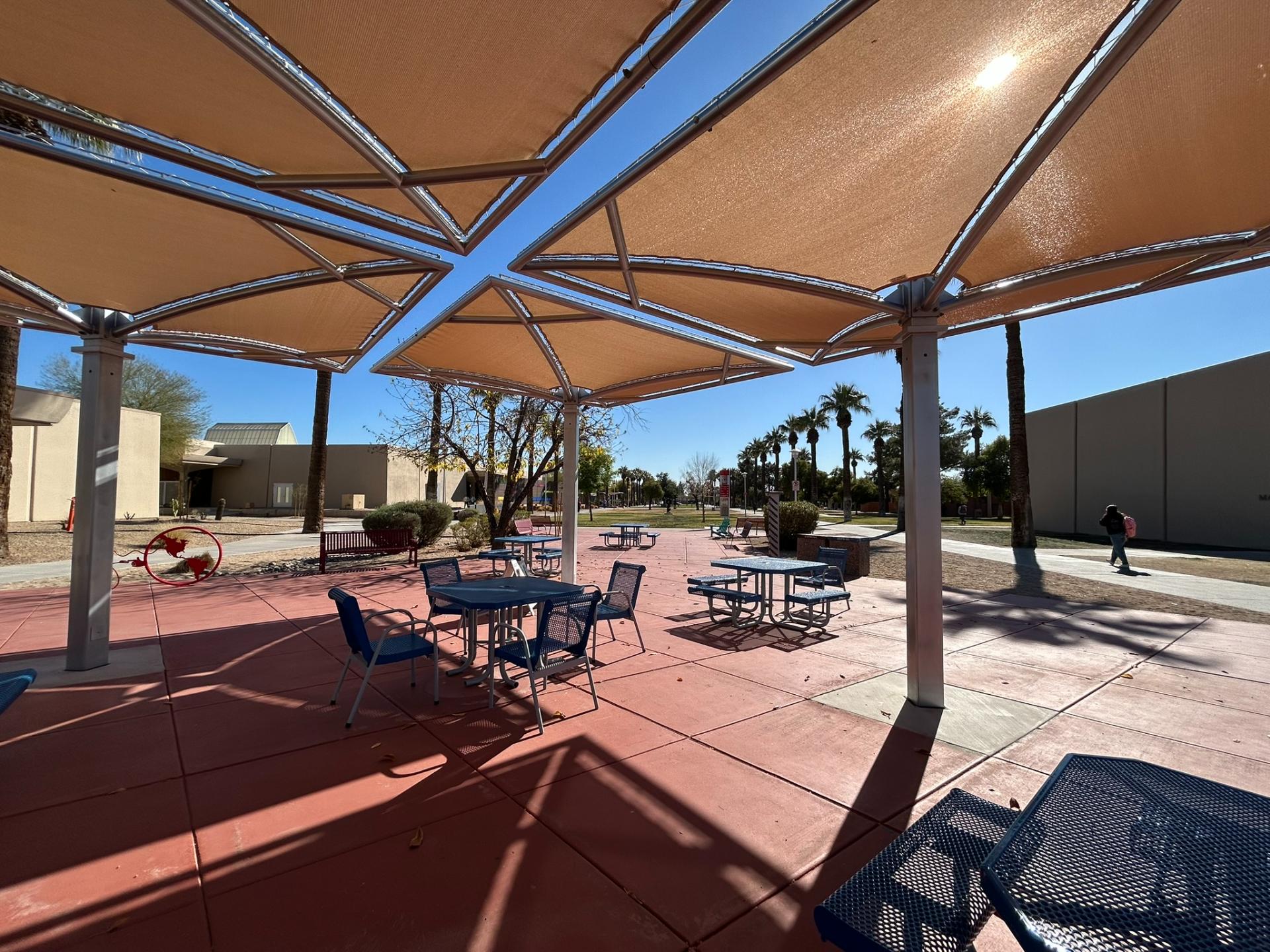
Every Shade Structure We Build for Surprise
Planning a shade project in Surprise?
Call (602) 265-0905 for a free assessment.
Serving Surprise and the Phoenix Metro
Total Shade LLC builds shade structures in Surprise as part of our Phoenix-metro service area, including nearby Peoria and Goodyear. From our Phoenix fabrication shop we deliver engineered, permit-ready shade across the entire Valley.
Frequently Asked Questions
What shade works best for pickleball courts in Surprise 55+ communities?
Side-mounted shade is the standard for pickleball. A regulation court is 20 ft by 44 ft, and overhead fabric across the playing surface casts moving shadows that complicate ball tracking, so we shade the sidelines, player-rest benches, and spectator seating with tensioned fabric sails or cantilevers instead. That keeps the court bright and even while giving players a cool place between games.
How much does a commercial shade structure cost in Surprise?
Cost depends on span, structure type, and footing requirements, so we quote per project rather than off a chart. A single sideline sail sits at the low end; a multi-bay ramada or a cantilever clearing 15–25 ft of bleachers runs higher because of the steel and engineered footings. Wind-rated commercial steel costs more than a stock kit and lasts through several fabric cycles — we give a firm number after we see the slab and use case.
Will my Surprise HOA need to approve a new shade structure?
Most active-adult and master-planned communities in Surprise require HOA architectural-review sign-off before a common-area shade structure goes in, and the city requires stamped engineering and a permit on top of that. We provide the engineered drawings the HOA board and the City of Surprise both need; the review timelines belong to them. Starting the drawings early keeps a swim-season deadline on track.
Can shade fabric survive Surprise monsoon storms?
Engineered structures are built to Arizona code and ASCE 7 wind loads, with Valley design wind speeds around 90–115 mph, and that engineering is what carries them through most monsoon weather. That said, microbursts can exceed 60 mph and wind ratings have limits — no fabric canopy is rated to stand through every storm. We size steel and footings to the canopy’s sail area to build margin, and fabric stays re-coverable if a severe storm does damage it.
How long does pool-deck and ramada shade last around chlorine and sun?
The steel frame lasts decades; the HDPE fabric is the wearing part, typically carrying a manufacturer warranty in the 10–15 year range. Chlorine splash, reflected UV off the water, and 300-plus sunny days a year are hard on any canopy, so pool-deck fabric ages faster than a shaded ramada cover. When it fades or weakens, we re-cover the existing frame rather than rebuild — and a rinse two or three times a year stretches its service life.
Get a free on-site quote in Surprise.
Call (602) 265-0905 for a free assessment.