or call (602) 265-0905 — no-obligation, on-site.
Commercial Shade Structures in Goodyear, Arizona
Since 1998
Designing & building Arizona shade
In-House Fabrication
Built at our Phoenix shop
Engineered & Permit-Ready
Stamped drawings for AZ wind loads
Free On-Site Quote
No-obligation project assessment
Total Shade LLC designs and builds commercial shade structures for Goodyear’s warehouses, distribution centers, and loading yards — outdoor break areas, employee walkways, and queuing zones where staff stand exposed for full shifts. We fabricate powder-coated steel frames and HDPE shade fabric in-house in Phoenix and have done Valley shade work for 25+ years. Goodyear’s growth story is industrial: million-square-foot fulfillment and logistics campuses keep opening along the I-10 corridor, each one putting dozens of people outside on docks, in yards, and on break patios. Most of our Goodyear builds cover spans of 14 to 50 ft and hold shaded surface temperatures 15 to 30 degrees below bare asphalt.
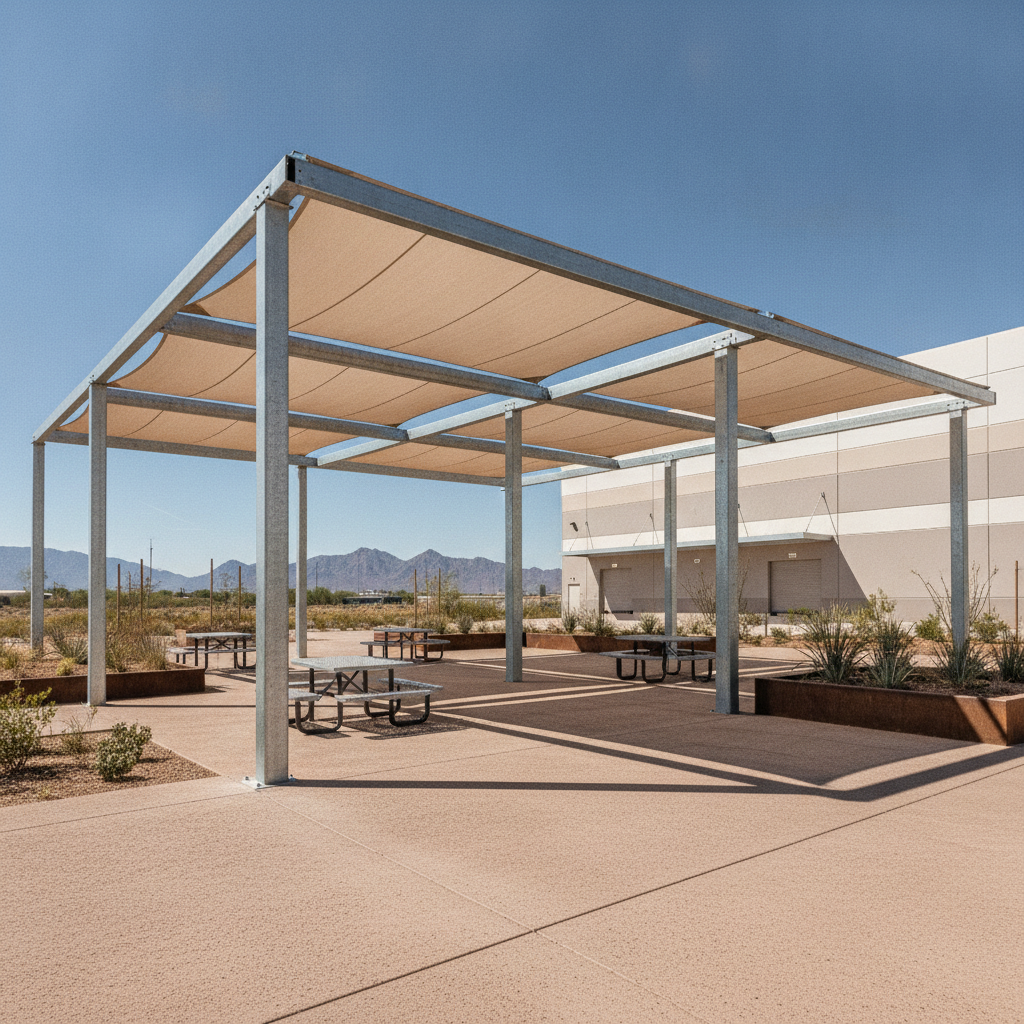
Break-area and walkway shade for distribution sites
For a Goodyear warehouse, outdoor shade is a heat-safety and retention decision, not a perk. A fulfillment campus can run several hundred workers across shifts, and the break patio, smoking area, and dock-side walkways all sit in full sun unless something covers them. An uncovered concrete break pad can read 140 degrees or hotter on a July afternoon; a shaded one runs 15 to 30 degrees cooler, which is the difference between a usable rest space and an empty one.
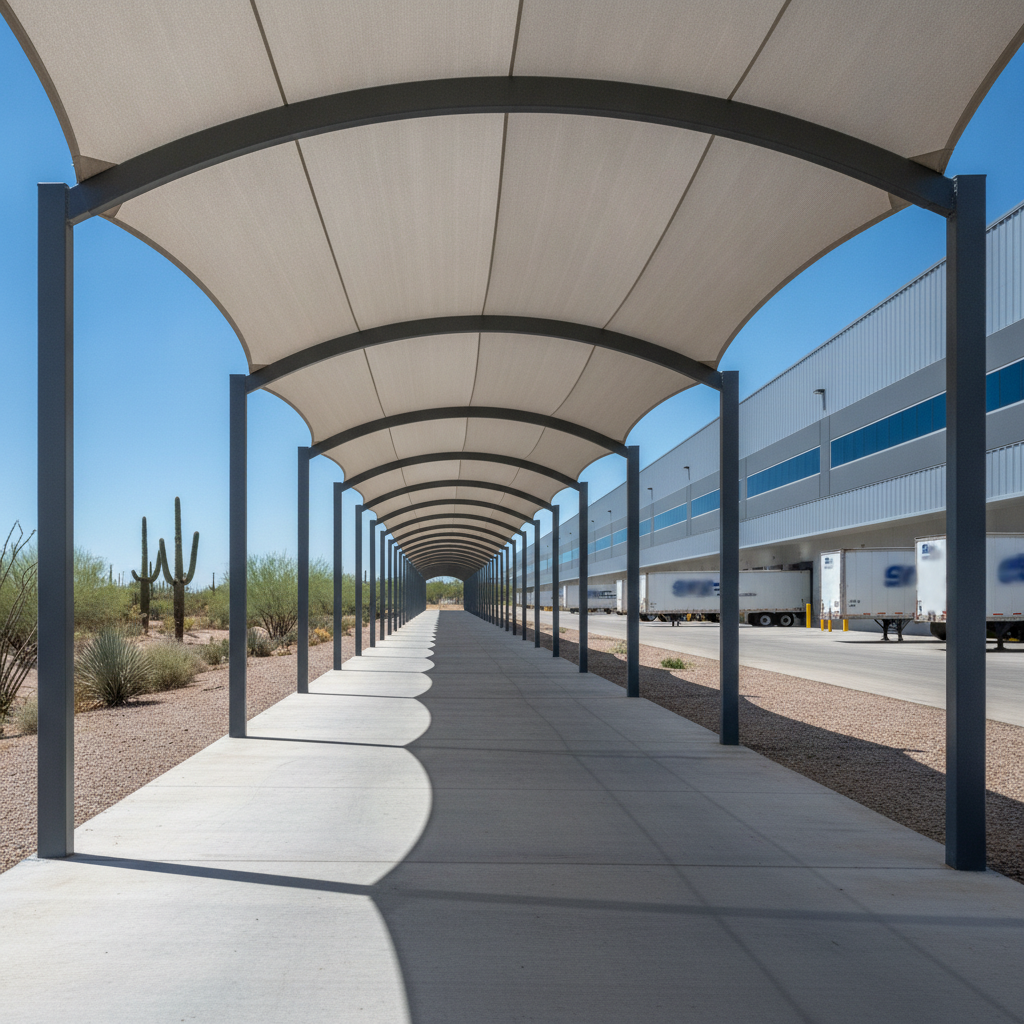
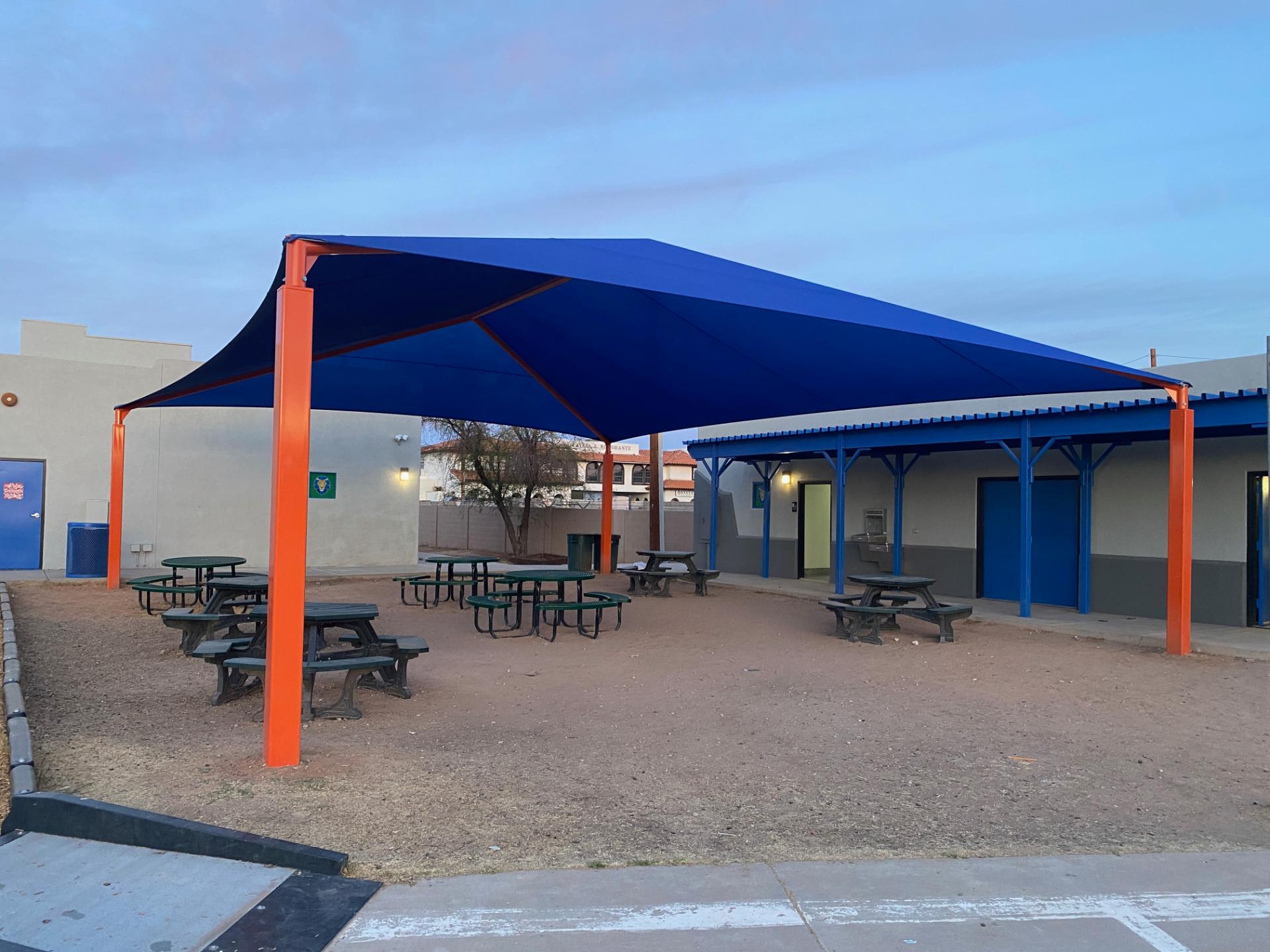
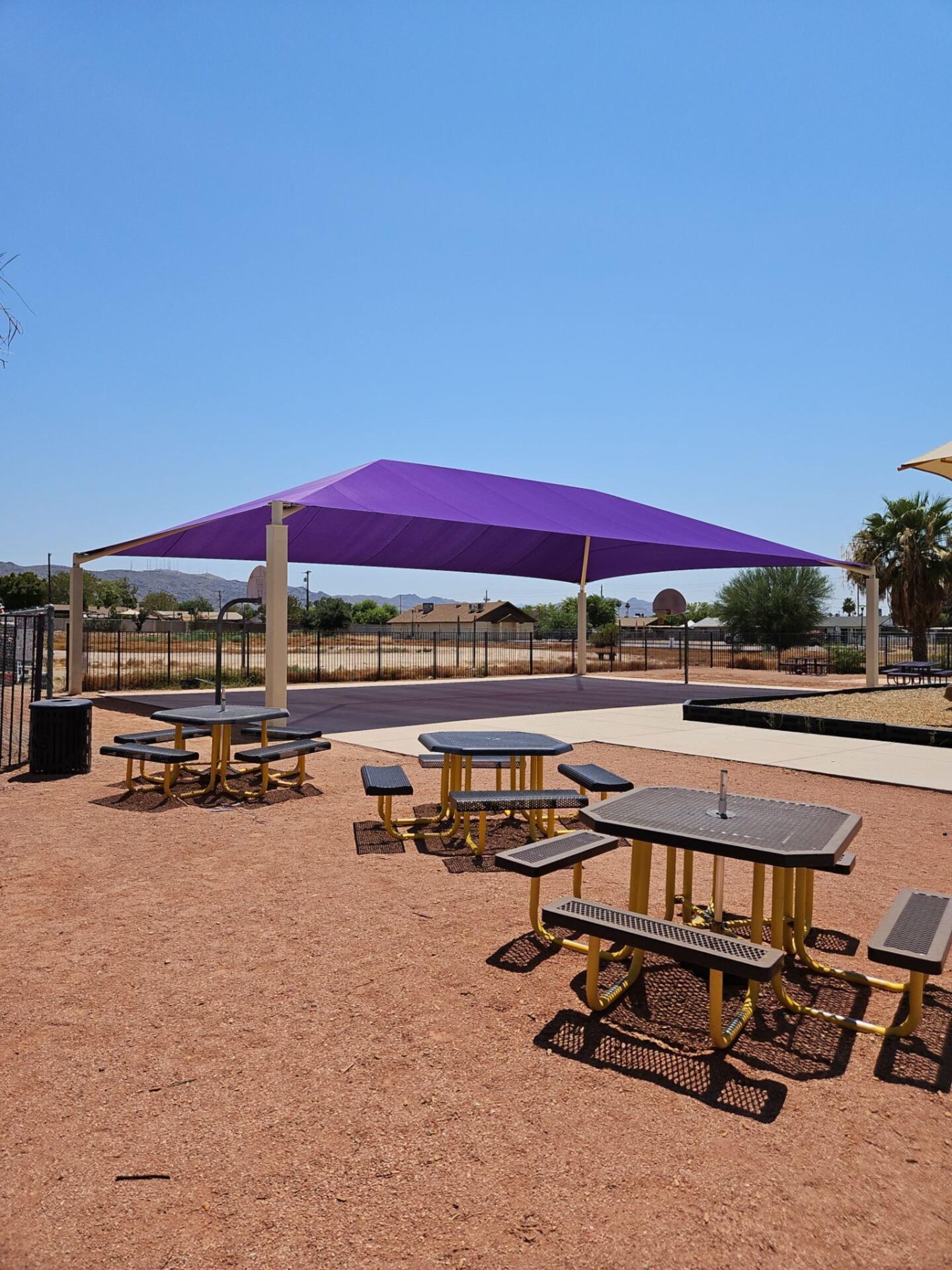
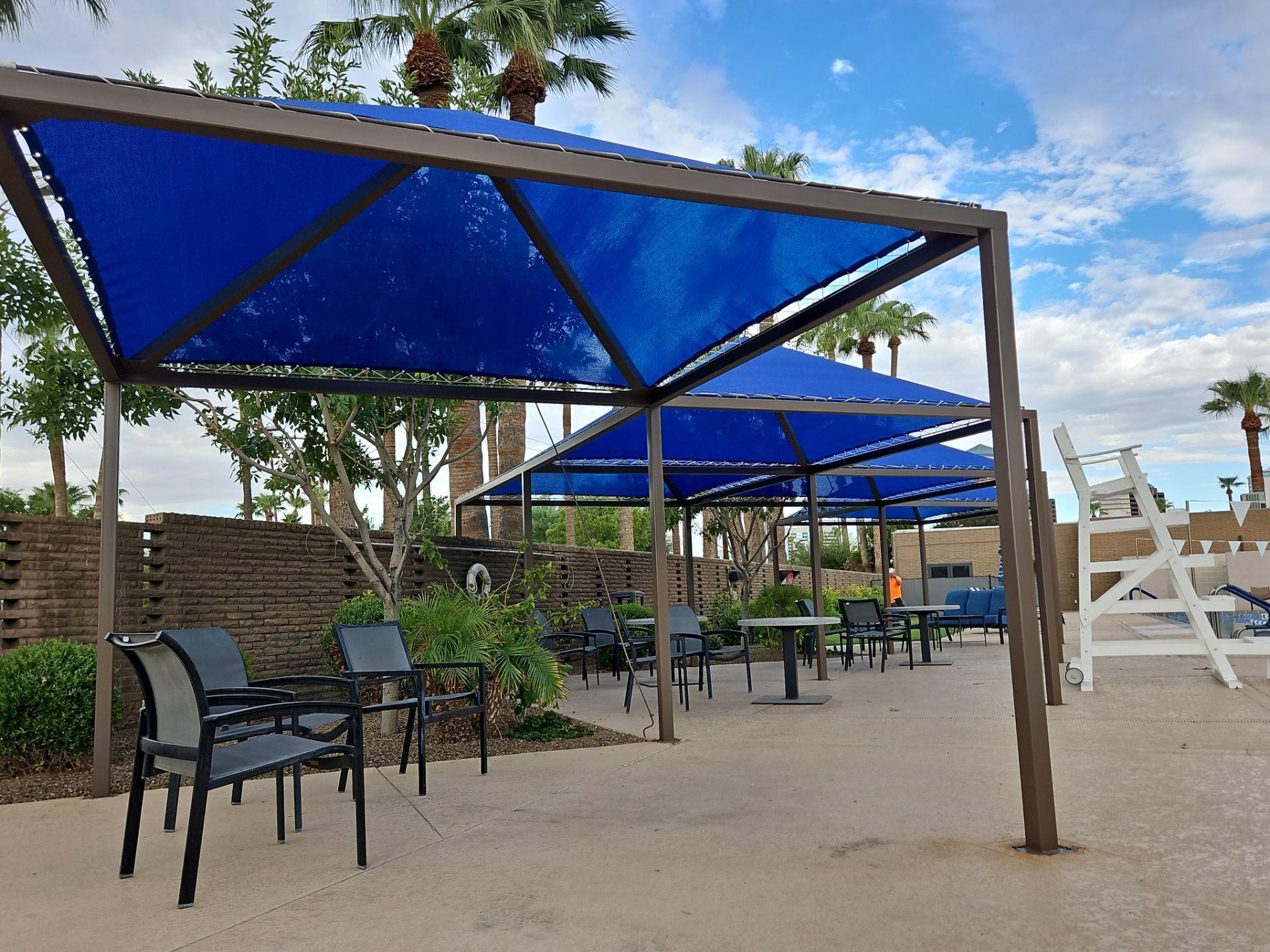
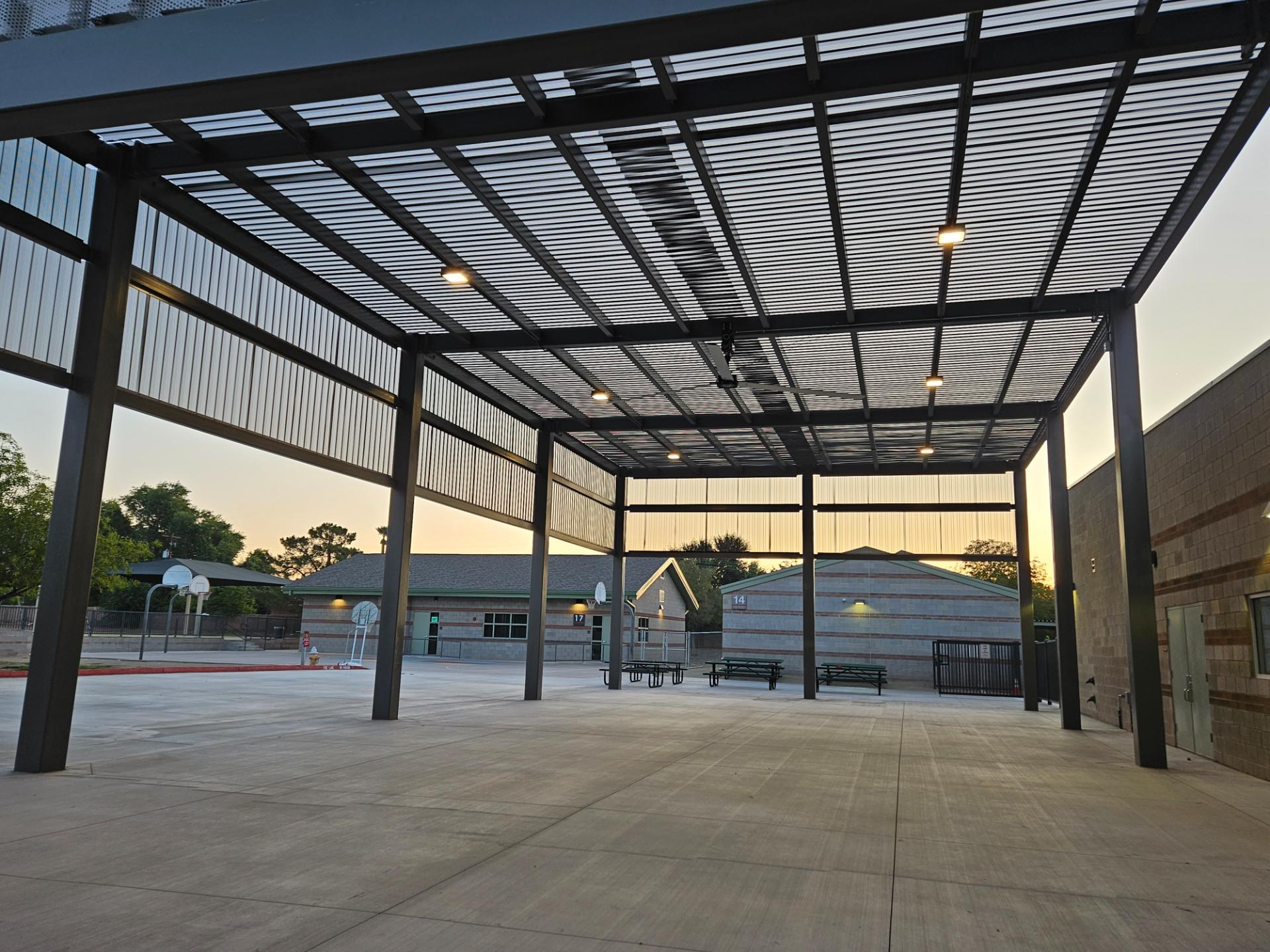
Over a rectangular break patio or a row of picnic tables, a hip structure gives full column-free cover with a clean four-slope roofline that sheds water and looks finished against a tilt-wall building. For long employee walkways between parking and the dock doors, a flat cantilevered shade structure shades the path from one side, so posts sit off the walking surface and forklift and pedestrian lanes stay clear.
Covering queuing and loading zones
Loading and queuing areas are where drivers and yard staff lose the most time to heat. A driver check-in line, a will-call pickup window, or a trailer staging lane can leave people standing 10 to 30 minutes in direct sun, and that exposure adds up across a day of turns. Shade over those points keeps the operation moving and keeps workers out of the worst of the radiant load off the asphalt.
Matching the cover to the footprint
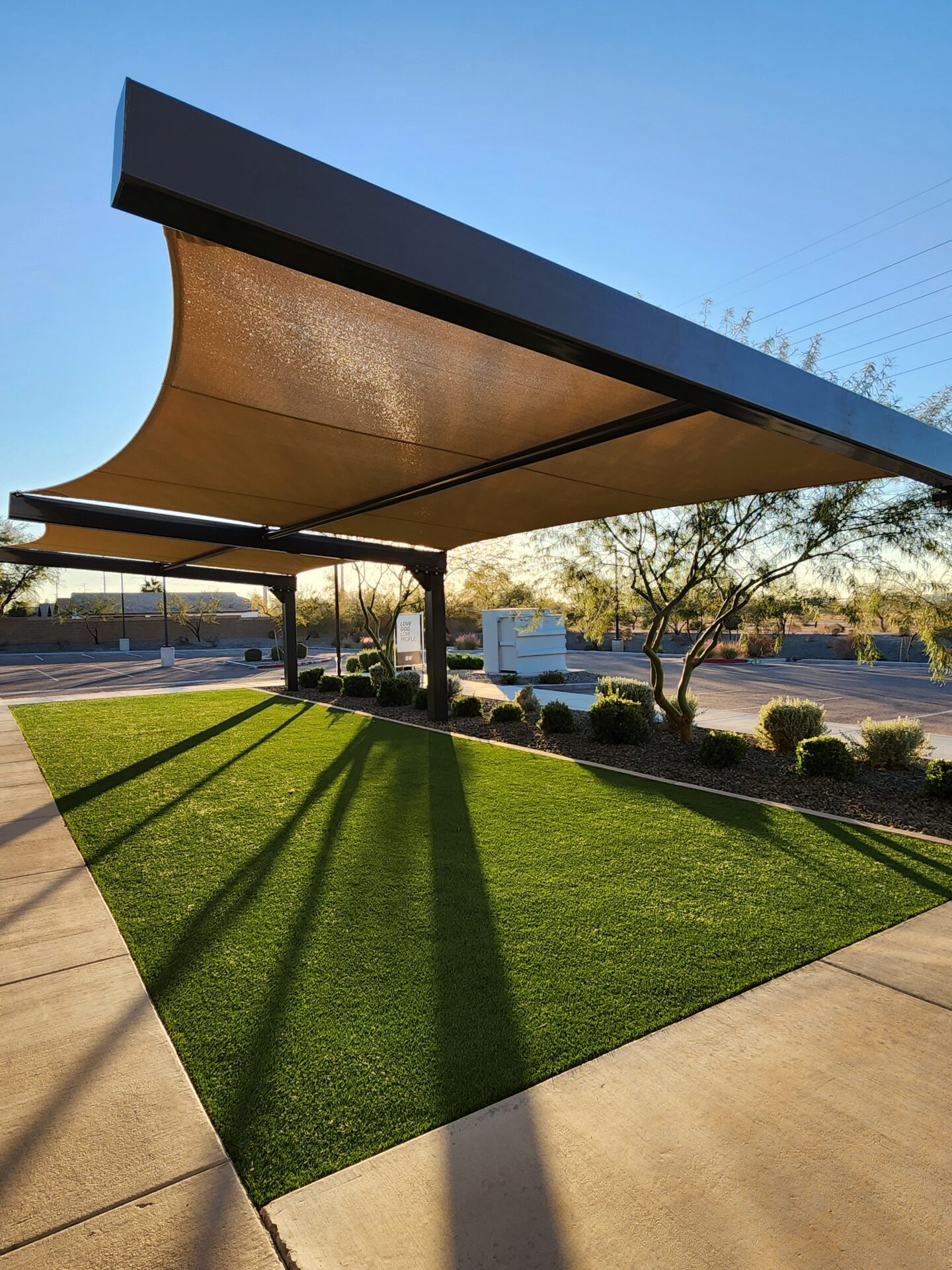
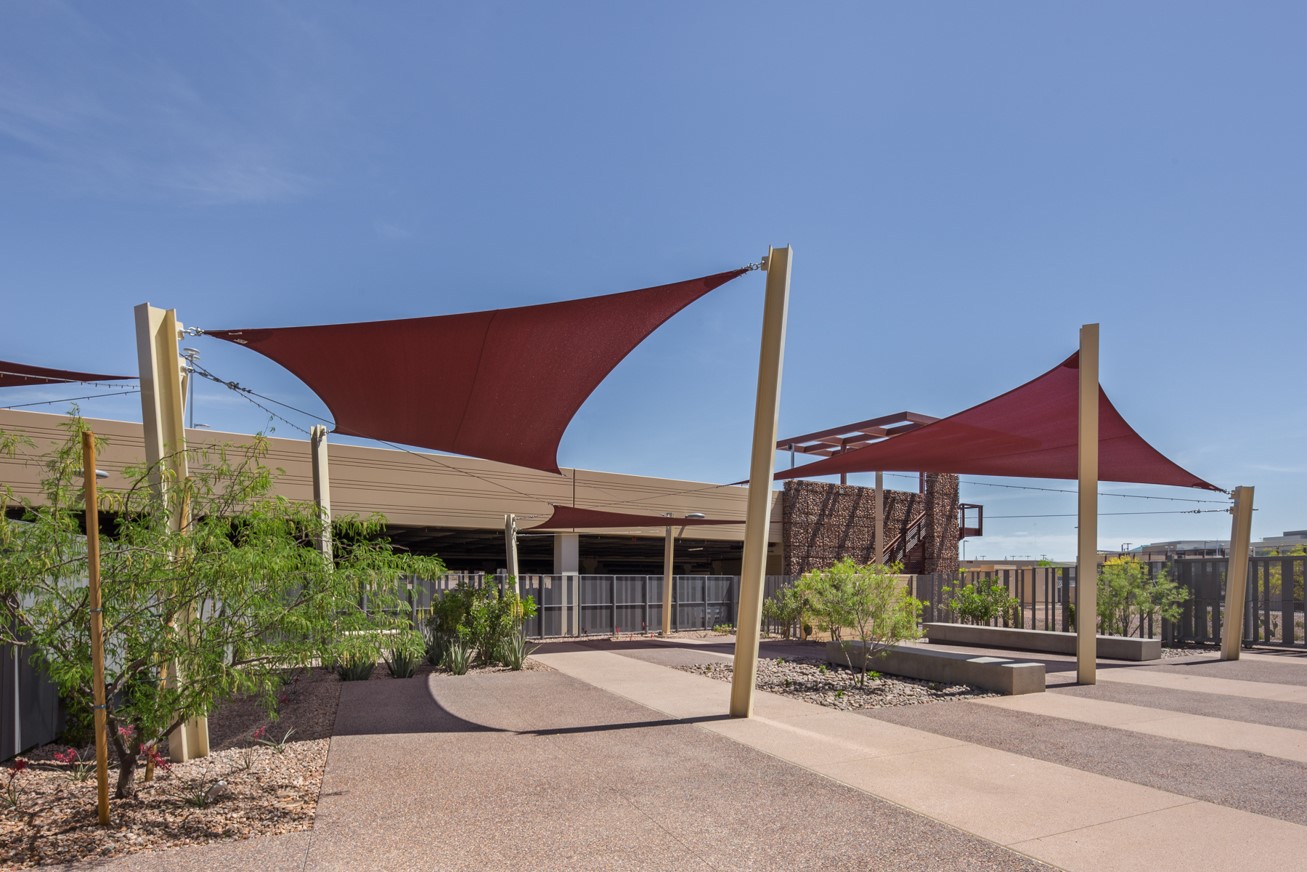
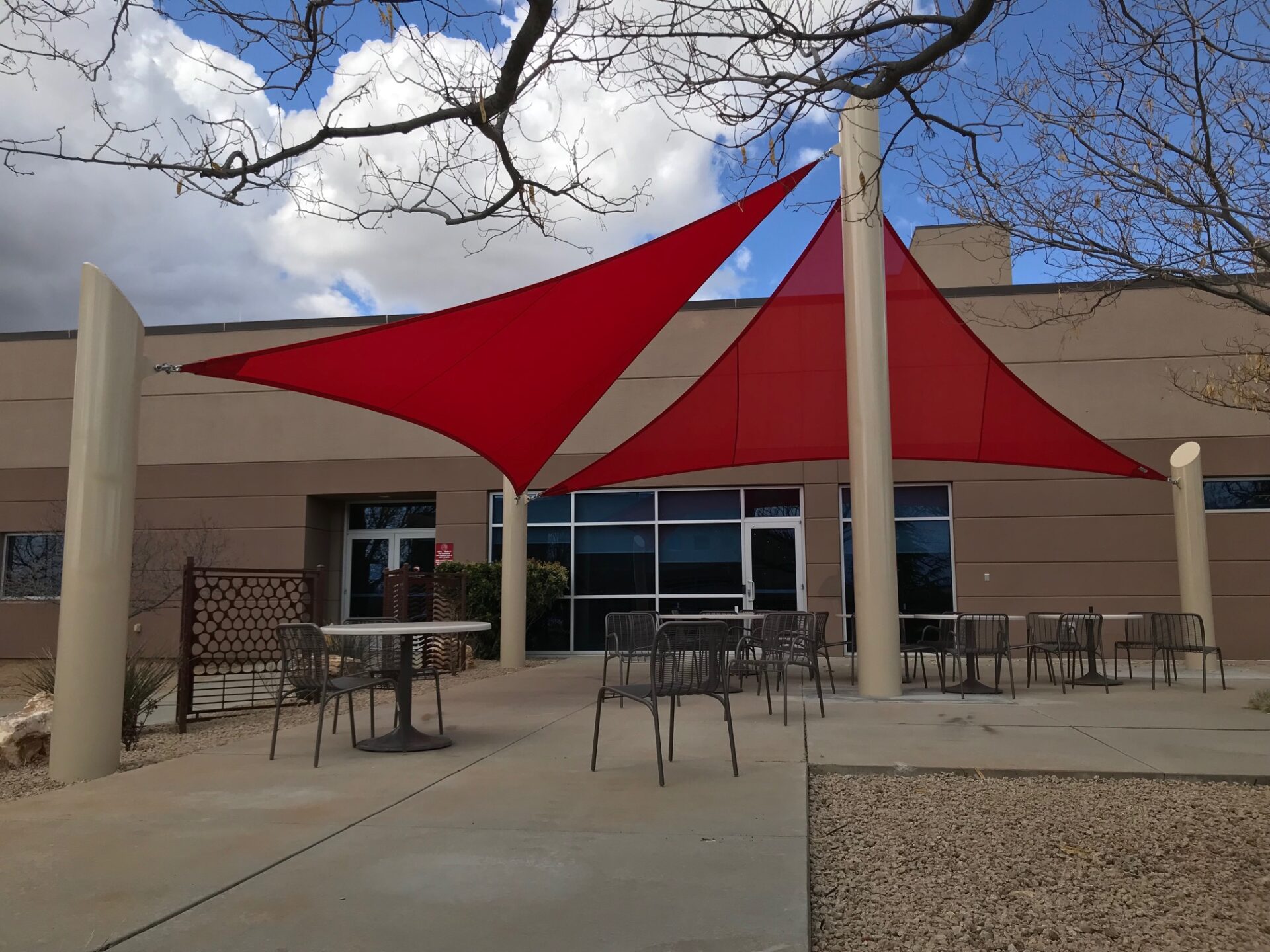
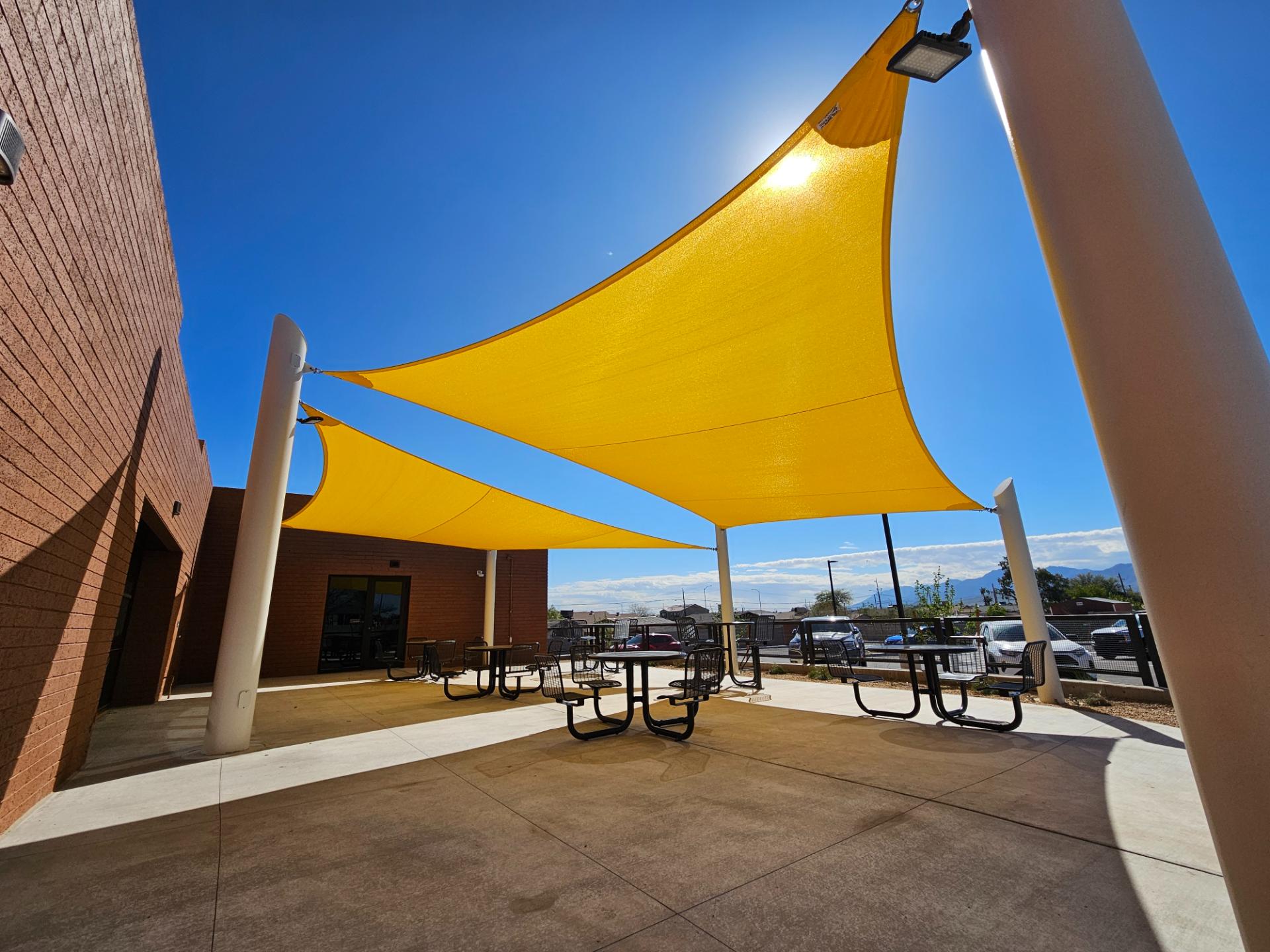
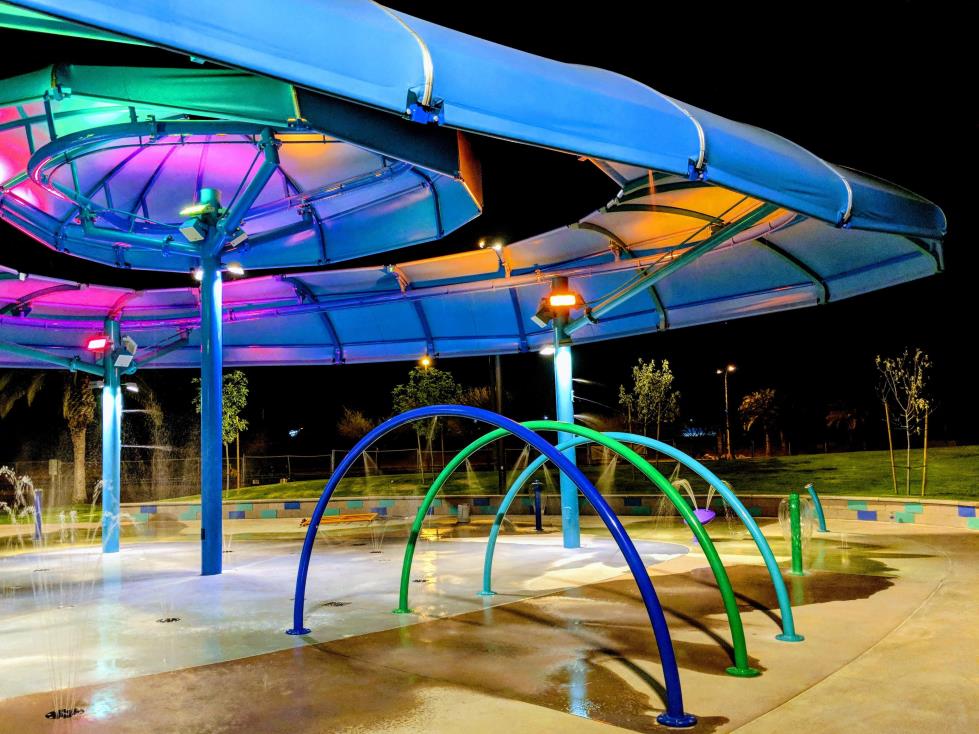
Over a wide, irregular yard area, overlapping tensioned custom-built shade structures let us cover a check-in lane or staging zone that does not fit a standard rectangle, with clearances set for trucks rather than cars. Loading-dock door heights commonly run 12 to 14 ft, and trailer-and-tractor clearance pushes 13.5 ft, so yard structures get sized taller than a typical parking canopy — usually 16 to 22 ft to the low edge so equipment passes underneath without a strike.
Heat safety for outdoor workers
Shade is the cheapest heat-illness control a Goodyear employer can install. Outdoor work in a West Valley summer puts crews under triple-digit heat for months, and shaded rest areas are a baseline recommendation in heat-illness prevention guidance — accessible shade close to where people work, sized so a crew can actually sit in it. A structure that shades 200 to 400 square feet covers a meaningful break rotation; undersize it and people skip the rest because there is no room.
The honest limit is that shade lowers radiant and surface temperature, not the air temperature — a covered break pad is cooler underfoot and out of direct UV, but it is not air conditioning. Pair it with water and a rotation schedule. HDPE shade fabric blocks roughly 90 to 99% of UV depending on weave density, so it takes the direct-sun load off skin even on the hottest afternoons, which is the exposure that drives most outdoor heat complaints.
Steel, fabric, and wind in the West Valley
Goodyear’s open, flat terrain along the I-10 logistics corridor gives monsoon wind a clean run, so the engineering lives in the steel and the footings. Maricopa County requires structures engineered to Arizona building code and ASCE 7 wind loads, with Valley design wind speeds landing roughly in the 90 to 115 mph range depending on site and structure category. Monsoon microbursts on that open ground can top 60 mph, which is what flat industrial sites have to absorb.
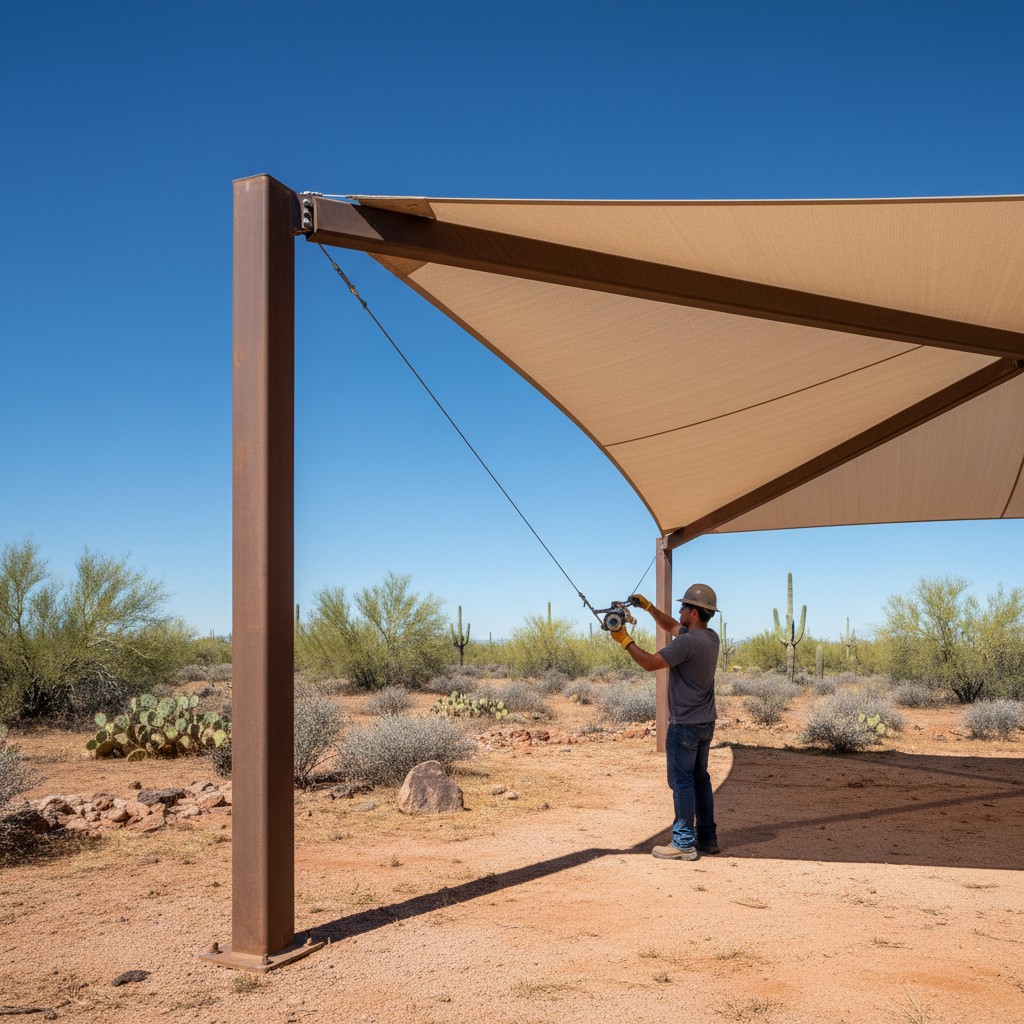
We build frames from powder-coated steel and size posts, footings, and connections to the engineered load, then stamp the drawings so the design intent is documented for plan review. The fabric is the consumable layer: commercial HDPE shade fabric commonly carries manufacturer warranties of 10 to 15 years against UV breakdown, and it is built to be re-covered without replacing the frame. Plan on rinsing dust off canopies once or twice a year — the desert dust around a busy yard is constant, and clean fabric holds tension and color longer.
Where Goodyear shade projects go wrong
The most common mistake on an industrial site is sizing the structure to the slab instead of the sun’s travel. A canopy matched to a break-pad outline shades the ground at solar noon, but by 4 p.m. the shadow has walked 6 to 10 ft off the seating and the tables bake again. We orient and oversize cover to the afternoon sun angle, which on a west-exposed yard usually means extending past the pad edge toward the southwest.
Two more failures show up around logistics: setting post and edge heights for cars when trucks and forklifts need 16 ft or more of clearance, and skipping re-tensioning on fabric so a loose canopy flutters, wears at the seams, and tears sooner in a gust. We walk the live traffic and equipment pattern before locating footings, so the structure shades the people without clipping a trailer turn or a forklift lane. The Goodyear Ballpark and the new residential rooftops going up nearby show the same range we cover — spectator and patio shade through heavy-duty yard cover — on one in-house fabrication line.
Every Shade Structure We Build for Goodyear
Planning a shade project in Goodyear?
Call (602) 265-0905 for a free assessment.
Serving Goodyear and the Phoenix Metro
Total Shade LLC builds shade structures in Goodyear as part of our Phoenix-metro service area, including nearby Avondale and Surprise. From our Phoenix fabrication shop we deliver engineered, permit-ready shade across the entire Valley.
Frequently Asked Questions
Can Total Shade build employee break-area shade for a Goodyear warehouse or distribution center?
Yes. Outdoor break areas, dock-side walkways, and smoking patios are a core part of our Goodyear work. A hip structure covers a rectangular break pad column-free, and a cantilever shades a long walkway with posts off the walking surface. We size cover to seat a real break rotation — usually 200 to 400 square feet of shade — and a shaded pad runs 15 to 30 degrees cooler than bare concrete.
How does shade help with heat safety for outdoor workers in Goodyear?
Accessible shade near the work area is a baseline heat-illness control. HDPE shade fabric blocks roughly 90 to 99% of UV and drops surface temperature 15 to 30 degrees, taking the direct-sun load off workers during triple-digit West Valley summers. The honest limit: shade lowers radiant and surface heat, not air temperature, so pair it with water and a rest rotation.
Can a shade structure clear a loading dock or trailer queuing lane?
Yes, when it is sized for trucks instead of cars. Dock door heights commonly run 12 to 14 ft and tractor-trailer clearance pushes 13.5 ft, so we set yard structures 16 to 22 ft to the low edge so equipment passes underneath. We walk the live traffic and equipment pattern before locating footings so a post never clips a trailer turn.
Do I need a permit for a commercial shade structure in Goodyear?
Yes, a permanent commercial shade structure requires a building permit, and the City of Goodyear handles plan review and inspection. We provide engineer-stamped drawings sized to Arizona building code and ASCE 7 wind loads, with Valley design wind speeds running roughly 90 to 115 mph, so the submittal has what reviewers need. Build a few weeks into the schedule for review.
What does commercial shade cost for a Goodyear industrial site?
Cost tracks size, height, and engineering rather than a flat rate. A tall yard structure cleared for trucks and a wide break-area canopy carry more steel and deeper footings than a standard parking cover, so they price higher per square foot. The fabric is the consumable layer — when it fades after its 10 to 15 year warranty window, we re-cover the existing frame for a fraction of a full rebuild. We quote off the footprint, clearance, and wind load.
Get a free on-site quote in Goodyear.
Call (602) 265-0905 for a free assessment.