or call (602) 265-0905 — no-obligation, on-site.
Commercial Shade Structures in Avondale, Arizona
Since 1998
Designing & building Arizona shade
In-House Fabrication
Built at our Phoenix shop
Engineered & Permit-Ready
Stamped drawings for AZ wind loads
Free On-Site Quote
No-obligation project assessment
Total Shade builds commercial shade structures in Avondale for event venues, retail corridors, and schools — the three sites that draw the most foot traffic and the most direct sun in this West Valley city. Around Phoenix Raceway and the retail centers along the I-10 and Avondale Boulevard, crowds and parked cars sit under summer surfaces that climb past 150°F. We fabricate powder-coated steel frames and knitted HDPE canopies in-house at our Phoenix shop, then engineer each one to Maricopa County code so spectator stands, parking rows, and playgrounds stay covered through race weekends and 110°F afternoons alike.
Spectator and event shade that holds a crowd
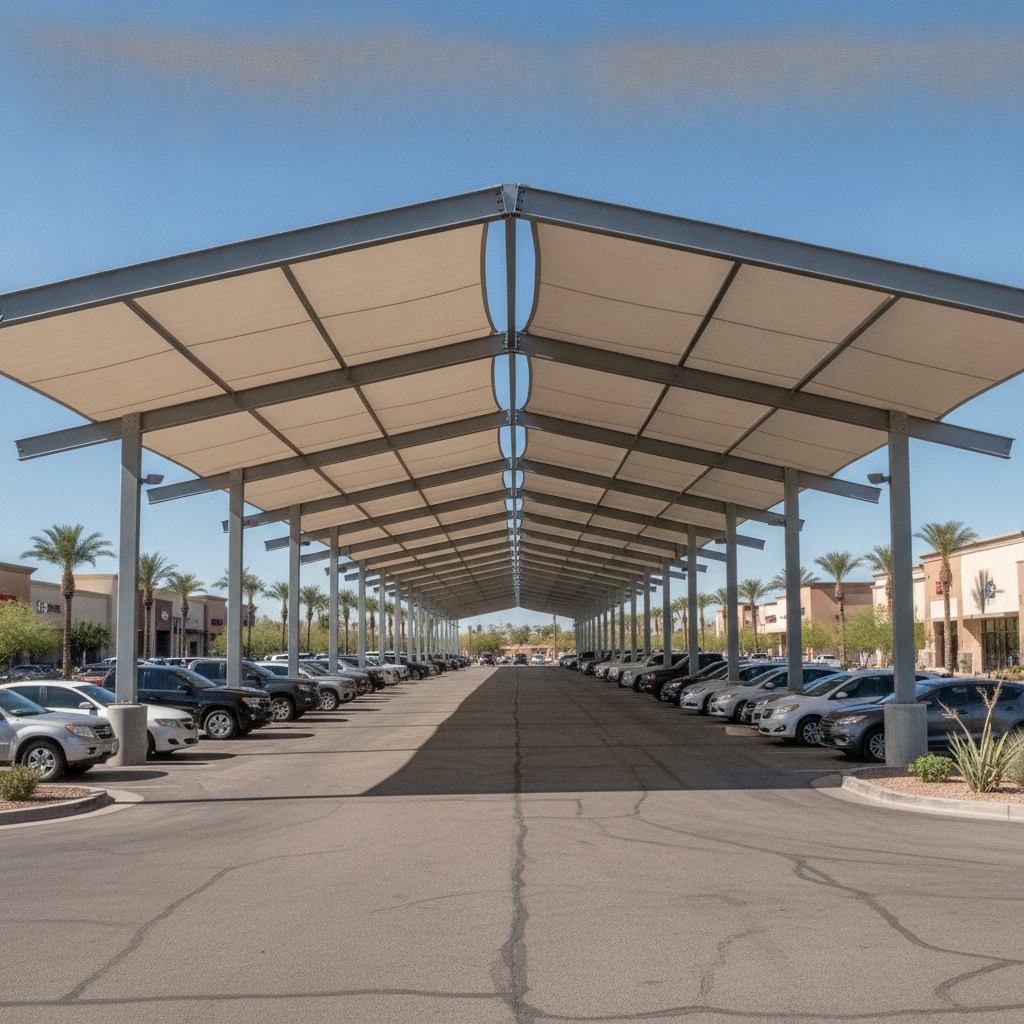
Event sites in Avondale need shade that covers concentrated crowds without blocking sightlines or airflow. Phoenix Raceway draws hundreds of thousands across a race weekend, and the same logic applies to any local venue with concourses, queue lines, or vendor rows: people stand still in the open for long stretches, and asphalt staging surfaces radiate heat into the evening.
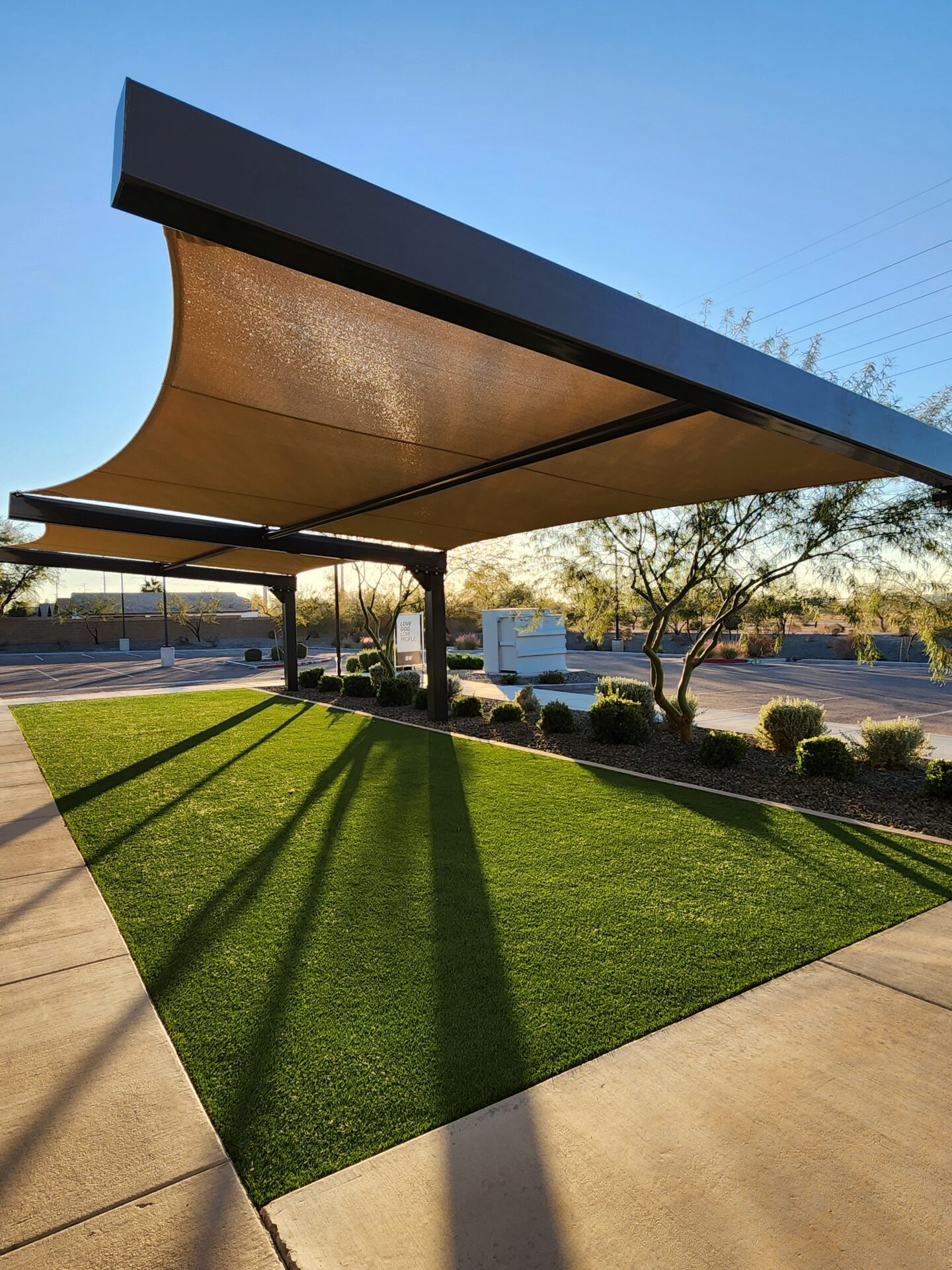
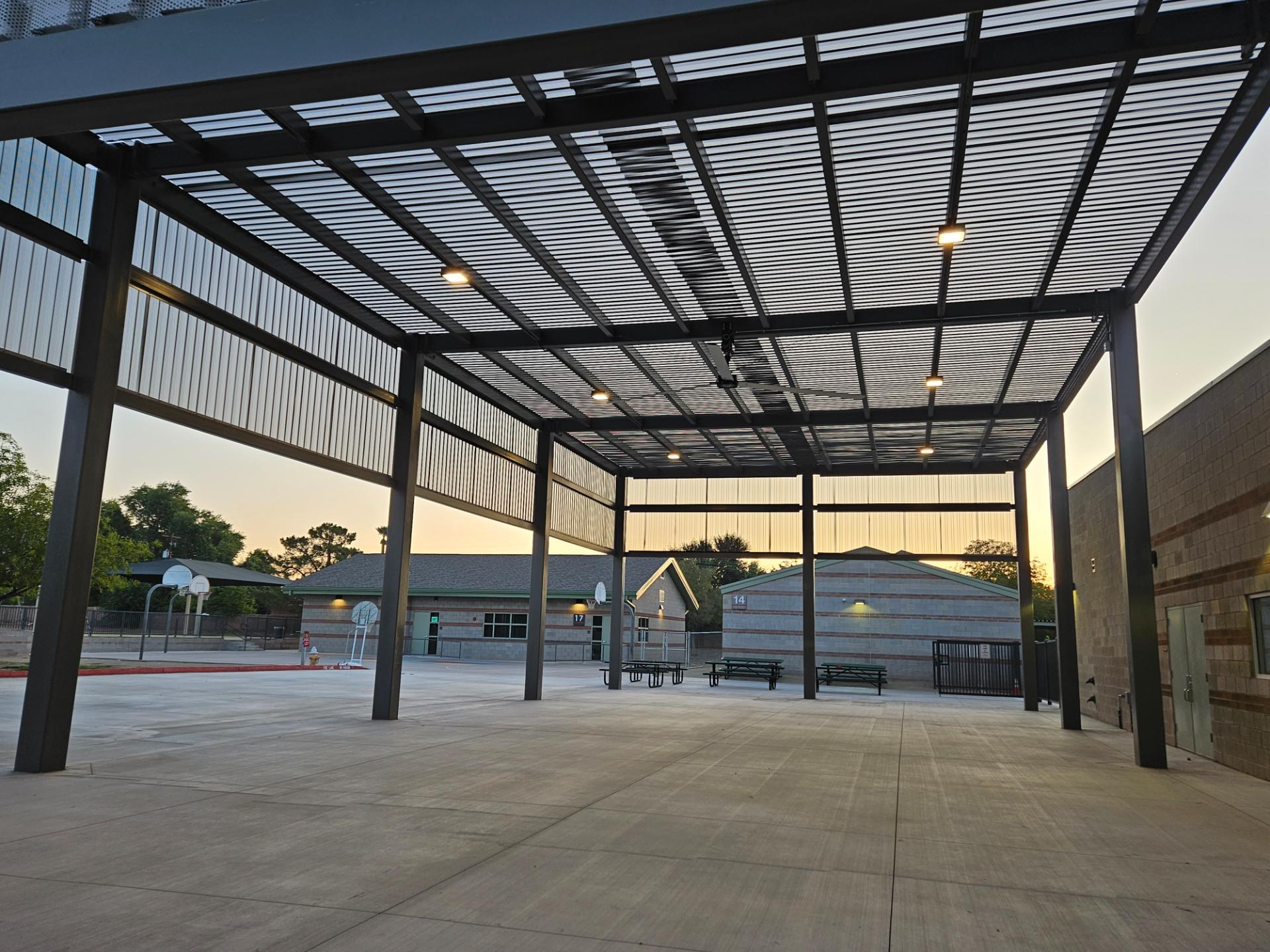
For these spaces we lean on long-span flat cantilevered shade structures, which carry the canopy on rear posts and leave the covered area column-free — useful where carts, wheelchairs, and crowd flow can’t weave around steel legs. A single cantilever bay commonly spans 20 to 40 ft of clear coverage. Knitted HDPE fabric blocks roughly 90–99% of UV while venting hot air through the weave, so the space underneath runs cooler than a solid roof that traps a heat pocket.
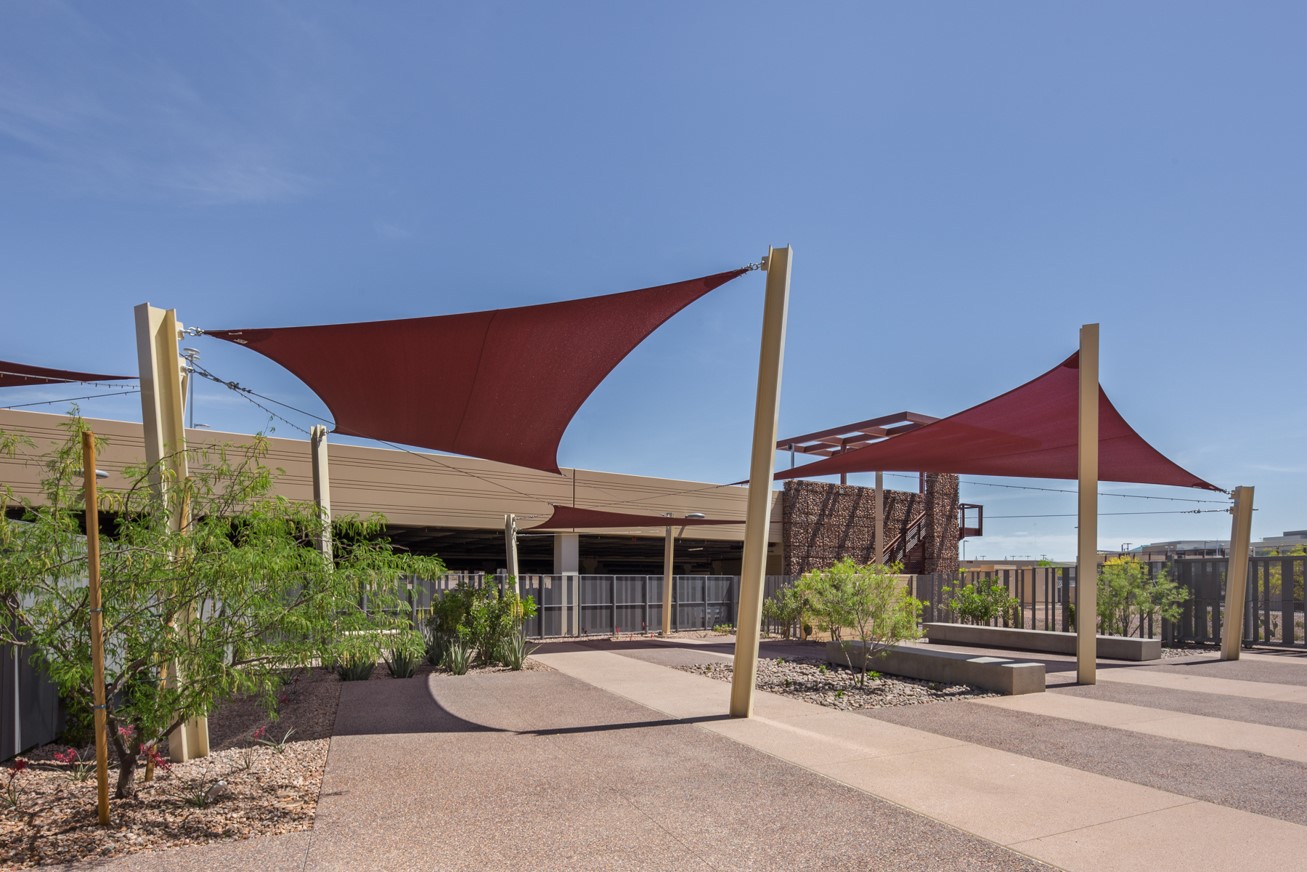
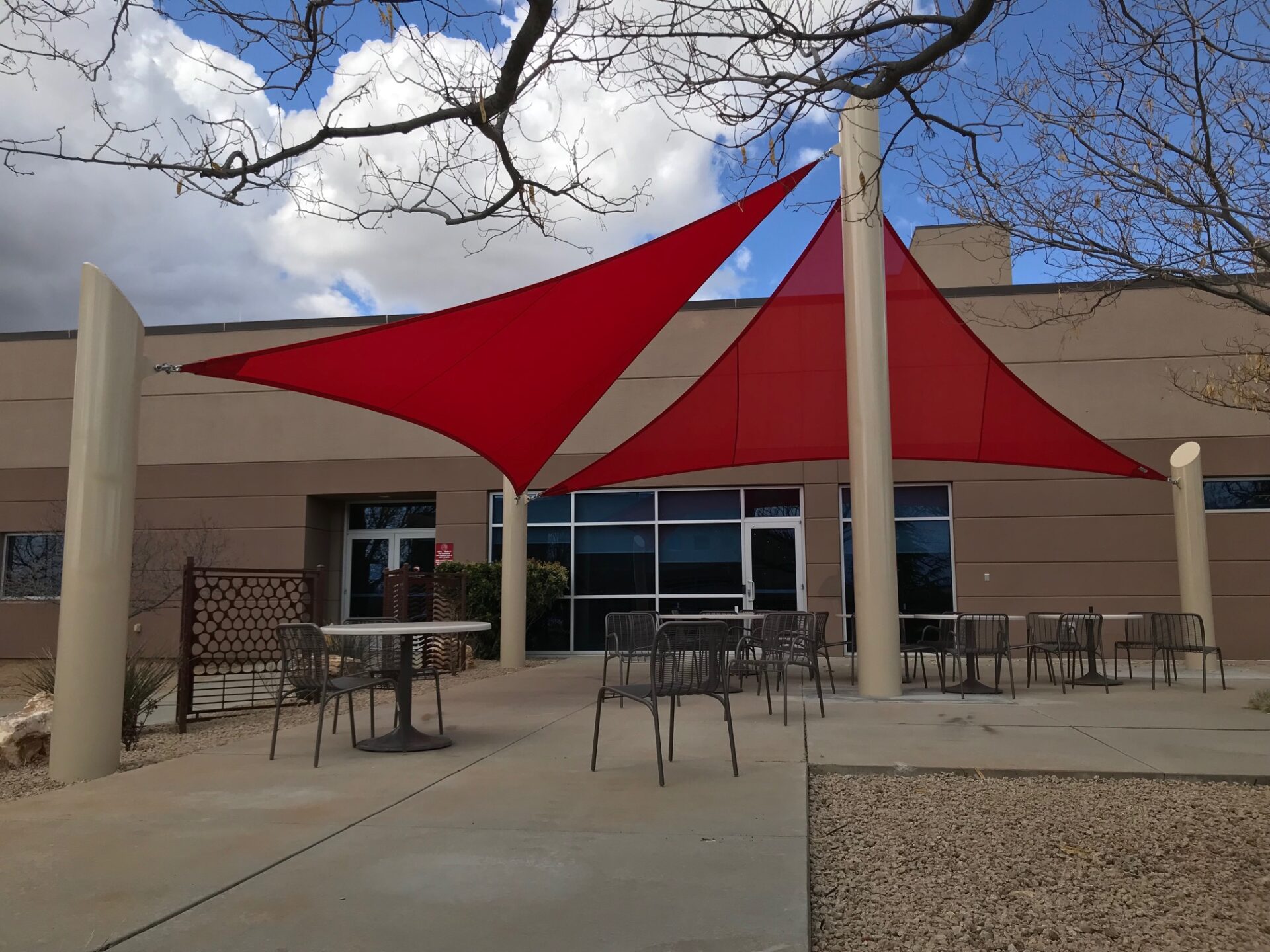
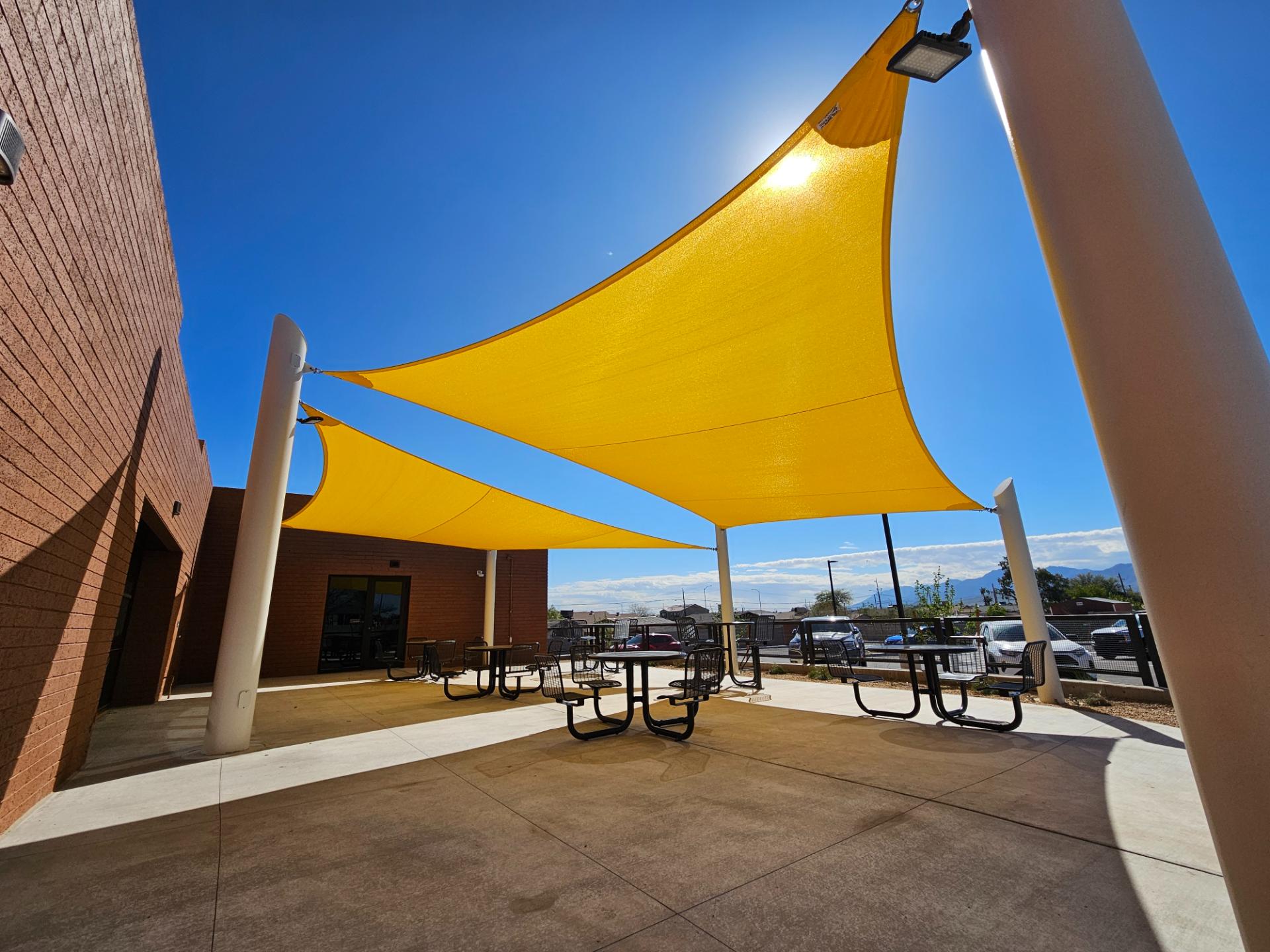
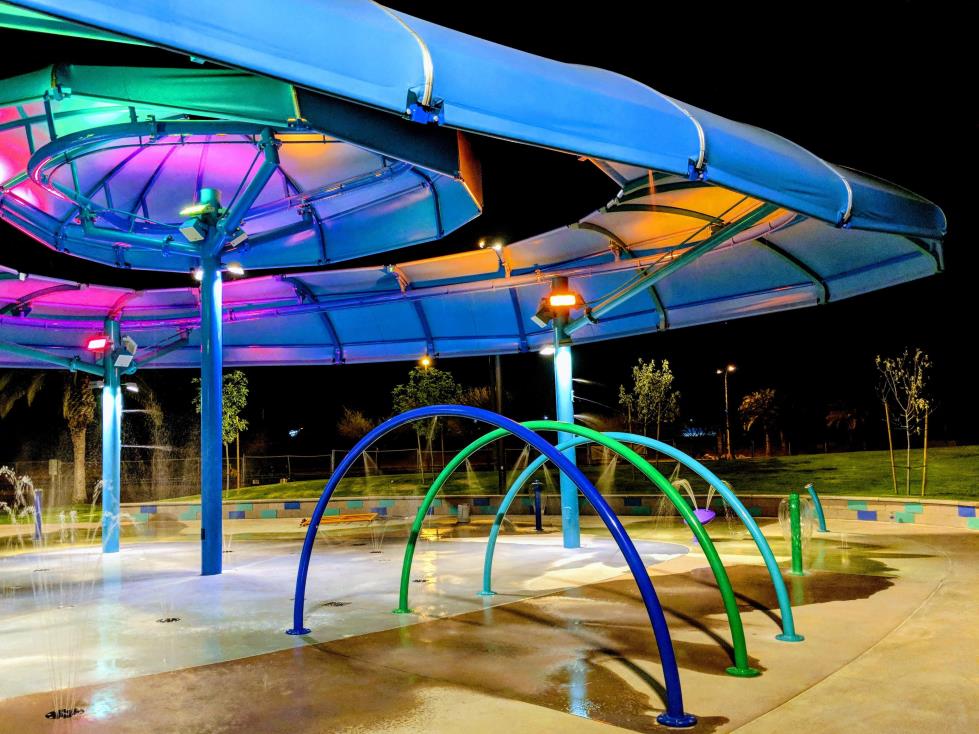
For plaza entries and ticketing areas where the look matters, 3-point tensioned fabric sails add height variation and a lighter visual line — closer to architecture than equipment, which suits a public-facing event frontage.
Retail-parking shade along Avondale’s corridors
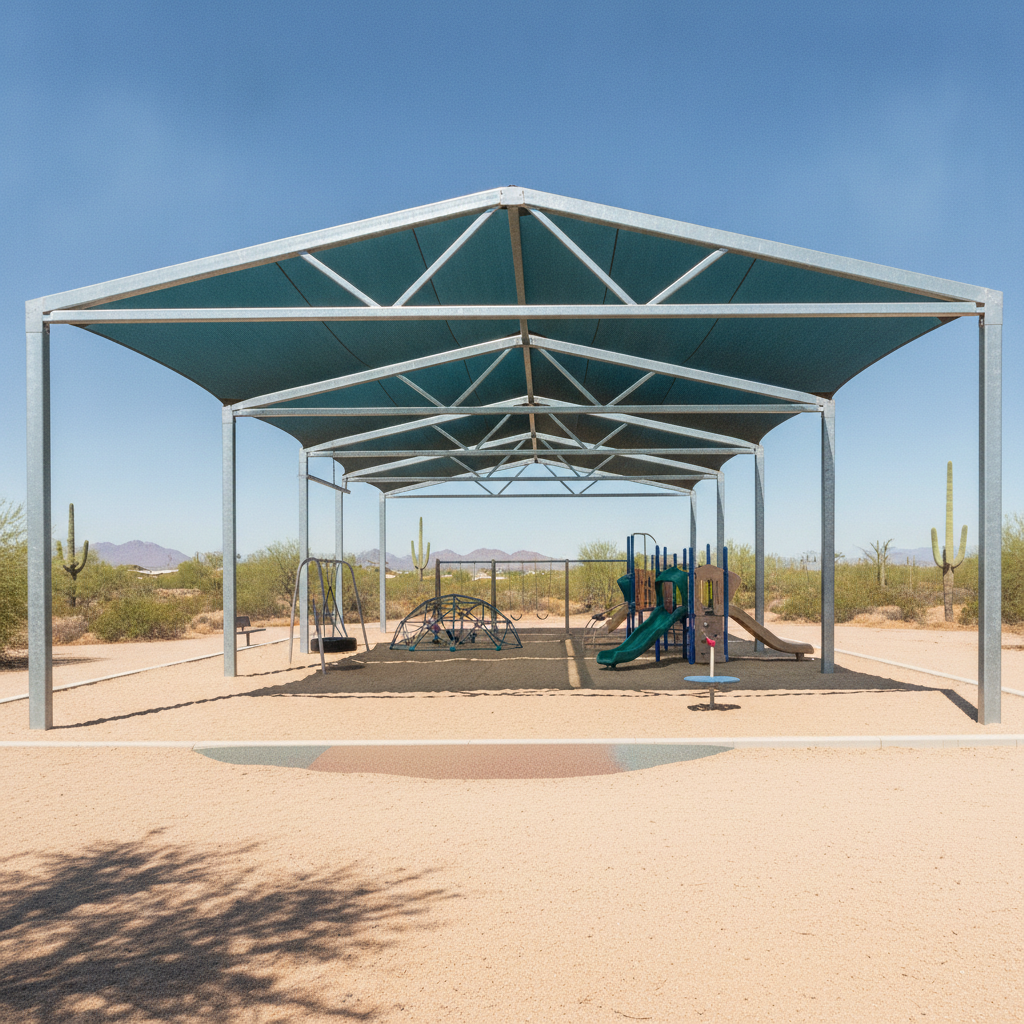
Retail parking is where shade pays for itself fastest in Avondale. The commercial corridors near I-10, McDowell Road, and Avondale Boulevard run wide surface lots, and a car left in open sun can reach a cabin temperature above 130°F within an hour. Covered stalls protect customers, slow vehicle-interior fade, and signal a maintained property.
Why hip structures fit parking rows
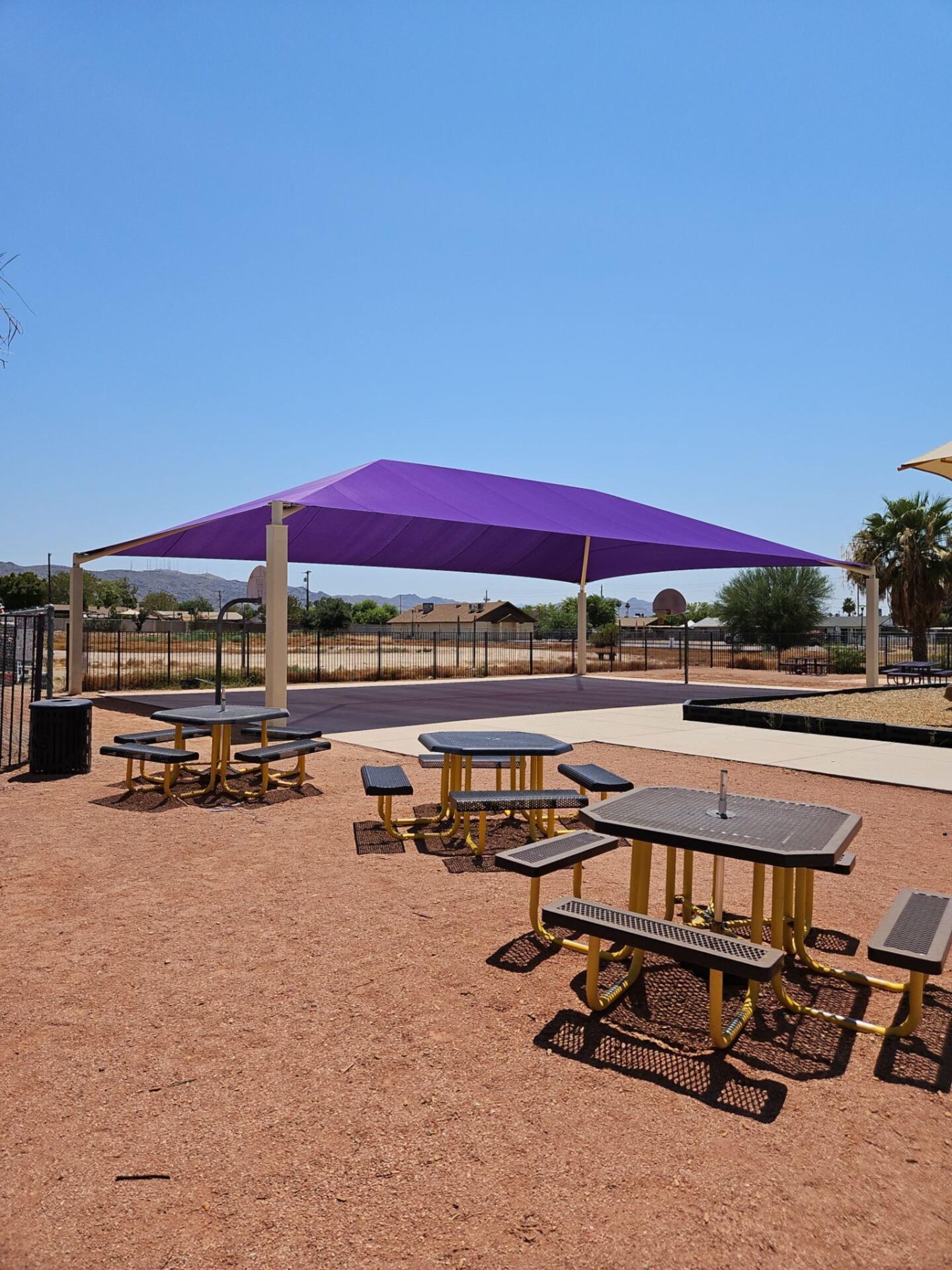
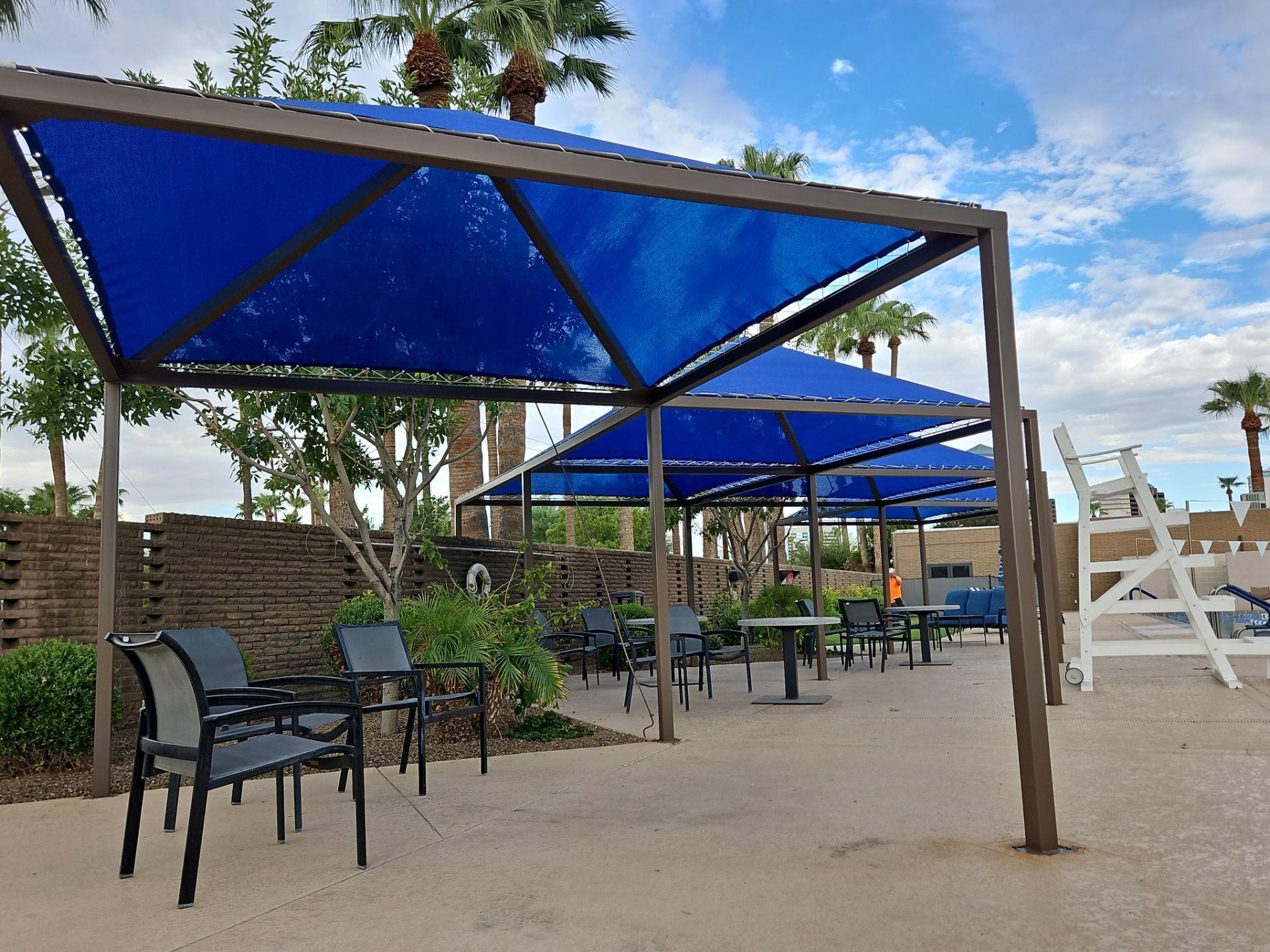
For multi-row parking fields, hip structures are the workhorse. The four-sided sloped roof sheds wind and dust evenly and tiles cleanly across long rows — a single-row hip run covers 9 to 18 stalls per structure depending on stall width. Powder-coated steel posts on engineered footings sit at the stall lines, so drive aisles stay open.
Hip and cantilever often share a lot: hip over the deep parking field, cantilever along the storefront edge where you want zero posts between walk and cars. Both use the same fabric family, so the property reads as one system rather than a patchwork.
Playground and lunch-court cover for Avondale schools
Avondale schools need shade where kids gather and sit still — playgrounds, lunch courts, and pickup lines. Surface play equipment can reach 140°F to 160°F in direct July sun, hot enough to burn skin in seconds; a fabric canopy keeps that direct radiation off the equipment and drops the surface temperature substantially.
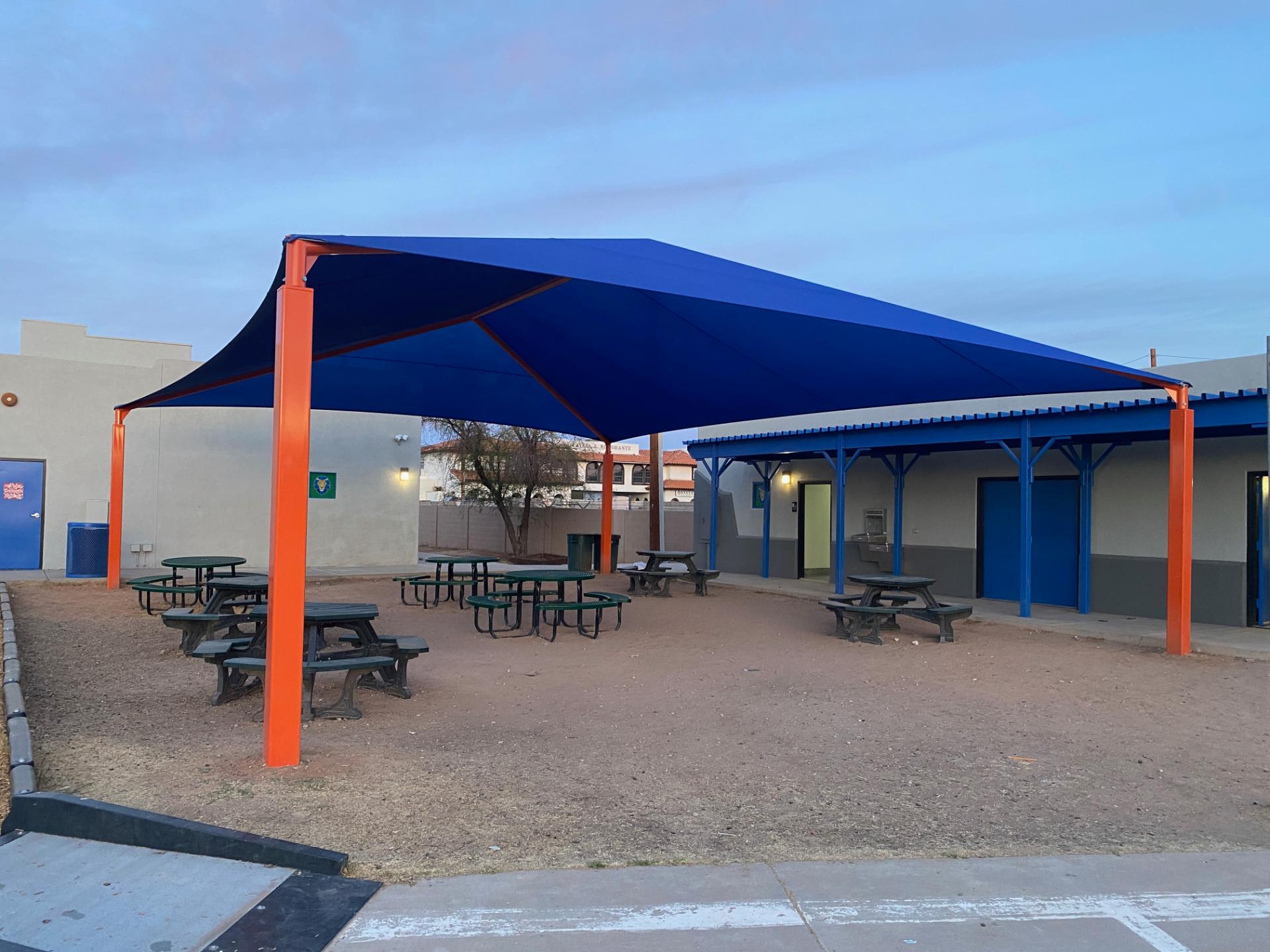
For playgrounds we set cantilever or hip canopies at 8 to 12 ft clearance — high enough to clear play structures and let staff keep sightlines underneath. Coverage commonly runs 600 to 1,800 sq ft per structure. A denser weave near 95% UV block is the usual spec where kids stay under cover for an hour at a time.
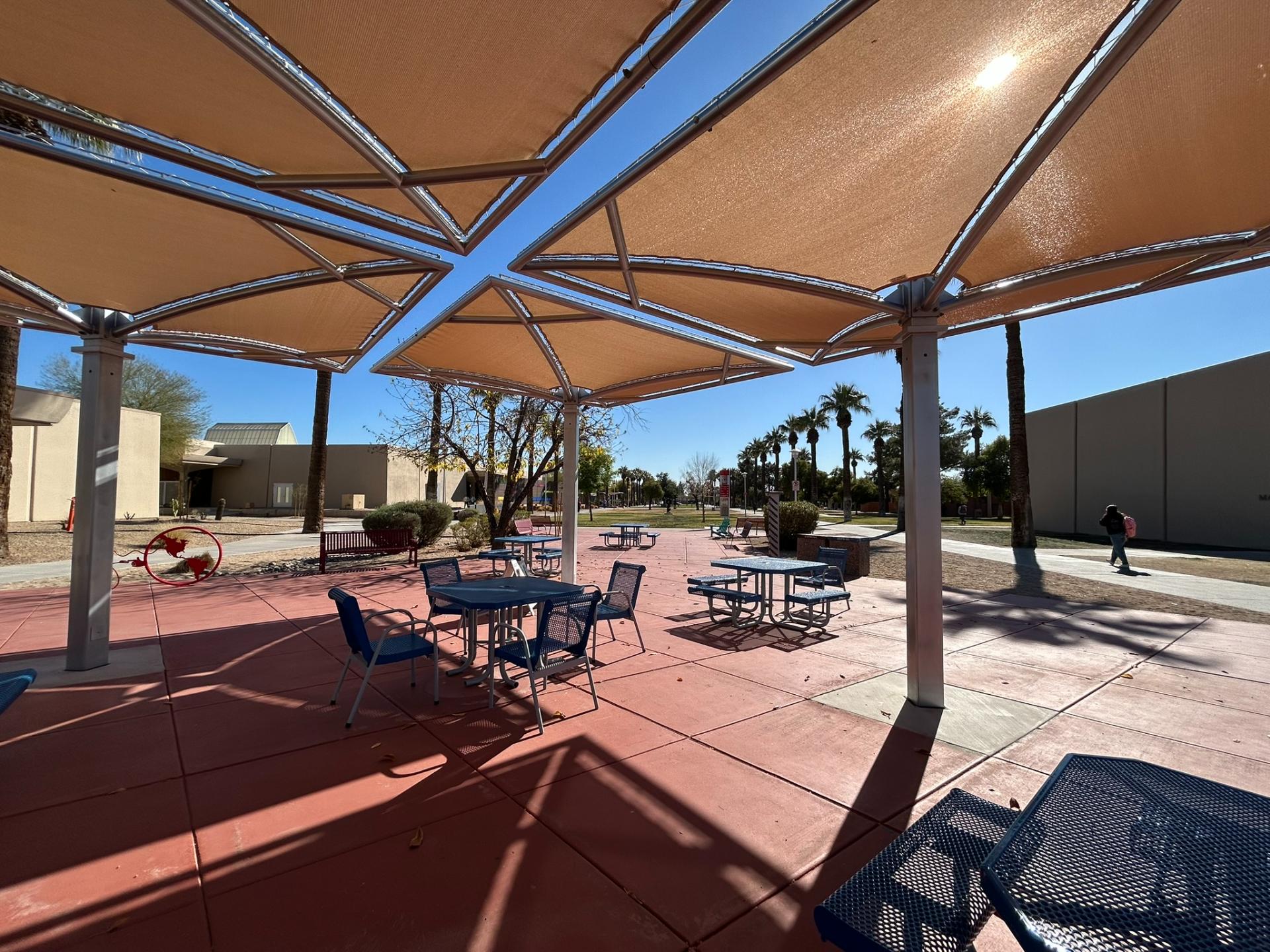
Lunch courts and bus lines favor wider hip spans so a whole class sits under continuous cover. Because school budgets run on cycles, we design these so the steel outlasts several fabric generations and only the canopy gets swapped later.
Durability for high-traffic public sites
High-traffic public sites in Avondale punish shade structures harder than a backyard ever would, so the engineering margin matters. A school playground, a race-weekend concourse, and a busy retail lot all see constant use, occasional impact, and full exposure to Valley sun, dust, and monsoon wind.
Our frames use commercial-grade structural steel, powder-coated to resist the UV chalking and corrosion that fade a cheap coating within a few seasons. Footings are sized for the soil and the structure’s wind load, not a one-size pour. The canopy behaves more like a consumable tire than the chassis: the steel is the long-term asset, and the HDPE fabric is engineered to be re-tensioned and eventually re-covered without touching the frame. That split is why canopy replacement and repair is a core service — a 15-year-old structure on a busy Avondale lot usually needs a fresh skin, not a teardown, at a fraction of a rebuild’s cost.
Materials and wind specifications
Every Avondale structure is engineered to Arizona building code and ASCE 7 wind loads before it leaves the shop. Valley design wind speeds generally fall in the 90–115 mph range, and monsoon microbursts can briefly exceed 60 mph with dust driving sideways — the loads a public structure has to survive, not just the calm-day average.
Specs we work to on a typical commercial job:
- Frame: commercial-grade steel, powder-coated for UV and corrosion resistance.
- Fabric: knitted HDPE shade cloth, roughly 90–99% UV block depending on weave density and color.
- Warranty: commercial shade fabric in this class commonly carries a 10–15 year manufacturer warranty against UV breakdown.
- Wind: footings and frame engineered to local design wind speeds; we provide stamped drawings for the city’s review.
Honest limits apply. Shade fabric is a consumable surface — UV and dust mean it loses tension and eventually needs re-coverage, and any wind rating has a ceiling above which fabric is meant to be removed or replaced rather than indefinitely guaranteed.
Common mistakes on Avondale shade projects
The failures we get called to fix in Avondale repeat in a few predictable patterns.
Undersizing the coverage. A canopy sized to the equipment instead of the sun line leaves seats and play surfaces exposed for hours as the sun moves. We size to the worst-case afternoon angle, not the noon footprint.
Ignoring orientation. Two structures with identical fabric can perform differently depending on how the slope and posts face the prevailing summer sun and monsoon wind.
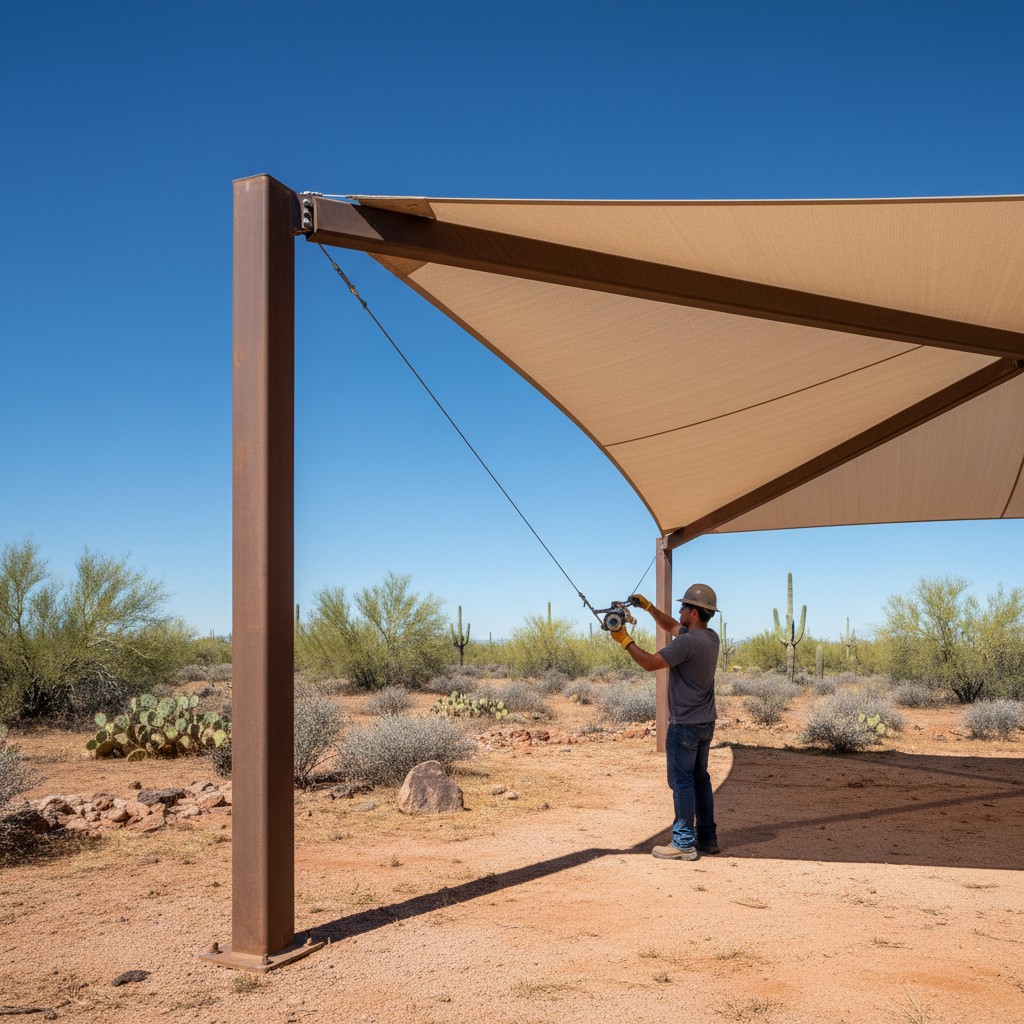
Skipping re-tension. Fabric stretches over its first season. A canopy that’s never re-tensioned flaps, wears at the attachment points, and fails years early — we recommend a re-tension check once a year on high-traffic sites.
For odd footprints — a vendor row, an irregular plaza, a tight school courtyard — a tensioned fabric sail solves a shape a rigid hip can’t, while a hip stays the right answer for clean parking grids.
Every Shade Structure We Build for Avondale
Planning a shade project in Avondale?
Call (602) 265-0905 for a free assessment.
Serving Avondale and the Phoenix Metro
Total Shade LLC builds shade structures in Avondale as part of our Phoenix-metro service area, including nearby Goodyear and Glendale. From our Phoenix fabrication shop we deliver engineered, permit-ready shade across the entire Valley.
Frequently Asked Questions
What kind of shade works best for events near Phoenix Raceway in Avondale?
Long-span flat cantilevered structures work best for event crowds, because they carry the canopy on rear posts and leave the covered area column-free for queue lines, vendor rows, and wheelchair access. A single cantilever bay commonly clears 20 to 40 ft. For ticketing entries and plaza frontages, 3-point tensioned fabric sails add height and a lighter architectural look.
How much does commercial parking-lot shade cost for an Avondale retail center?
Cost depends on coverage area, stall count, and footing requirements rather than a flat per-space figure. A hip structure typically covers 9 to 18 parking stalls per structure, and pricing scales with steel tonnage and engineered footings for your soil and wind load. We quote per-site after a measure-up; re-covering an existing frame later costs a fraction of a new build.
Is shade fabric safe for an Avondale school playground in summer heat?
Yes. Knitted HDPE shade fabric blocks roughly 90 to 99 percent of UV and keeps direct sun off play equipment that can otherwise reach 140 to 160 degrees in July. We set playground canopies at 8 to 12 ft clearance for sightlines and typically spec a denser weave near 95 percent UV block for areas where kids sit under cover for long stretches.
Will an Avondale shade structure survive monsoon winds?
Structures are engineered to Arizona building code and ASCE 7 wind loads, with Valley design wind speeds generally in the 90 to 115 mph range; monsoon microbursts can briefly exceed 60 mph. We size footings and framing to local loads and provide stamped drawings for city review. Fabric is the consumable part — every wind rating has a ceiling above which the canopy is meant to be replaced rather than indefinitely guaranteed.
Can you re-cover an existing shade structure on an Avondale commercial lot?
Yes — canopy replacement is one of our core services. On a busy retail or school site, a 10-to-15-year-old structure usually needs a fresh fabric skin, not a teardown. Re-covering an existing steel frame costs a fraction of a full rebuild and keeps the site in use, since the powder-coated steel is the long-term asset and the HDPE fabric is the part designed to be swapped.
Get a free on-site quote in Avondale.
Call (602) 265-0905 for a free assessment.