or call (602) 265-0905 — no-obligation, on-site.
Bleacher, Dugout & Sports-Field Shade Structures in Arizona
Cantilever, hip, and multi-dome shade for Arizona bleachers, dugouts, and grandstands — sightlines stay clear of the field.
Since 1998
Designing & building Arizona shade
In-House Fabrication
Built at our Phoenix shop
Engineered & Permit-Ready
Stamped drawings for AZ wind loads
Free On-Site Quote
No-obligation project assessment
Bleacher, dugout, and sports-field shade structures are steel canopies engineered to cover spectators and players without dropping a post into anyone’s view of the field, and on a Valley ballpark the structure type comes down to one question: where can the columns land? Total Shade has built athletic shade across Arizona since 1998, fabricating steel and knitted HDPE fabric in-house in Phoenix under AZ ROC #272680, with field work at sites like the Tumbleweed Park ballfields in Chandler and aquatic-spectator cover at Six Flags Hurricane Harbor in Glendale. Sports seating is its own problem, not general park shade: a grandstand bakes a crowd at 100-plus degrees through a 7 p.m. first pitch, a dugout has to stay cool through a doubleheader, and a foul ball can’t find a column. The sections below cover bleachers, dugouts, grandstands, multi-field complexes, the heat-and-sightline engineering, and the honest limits.
Cantilevers shade bleachers without blocking the field
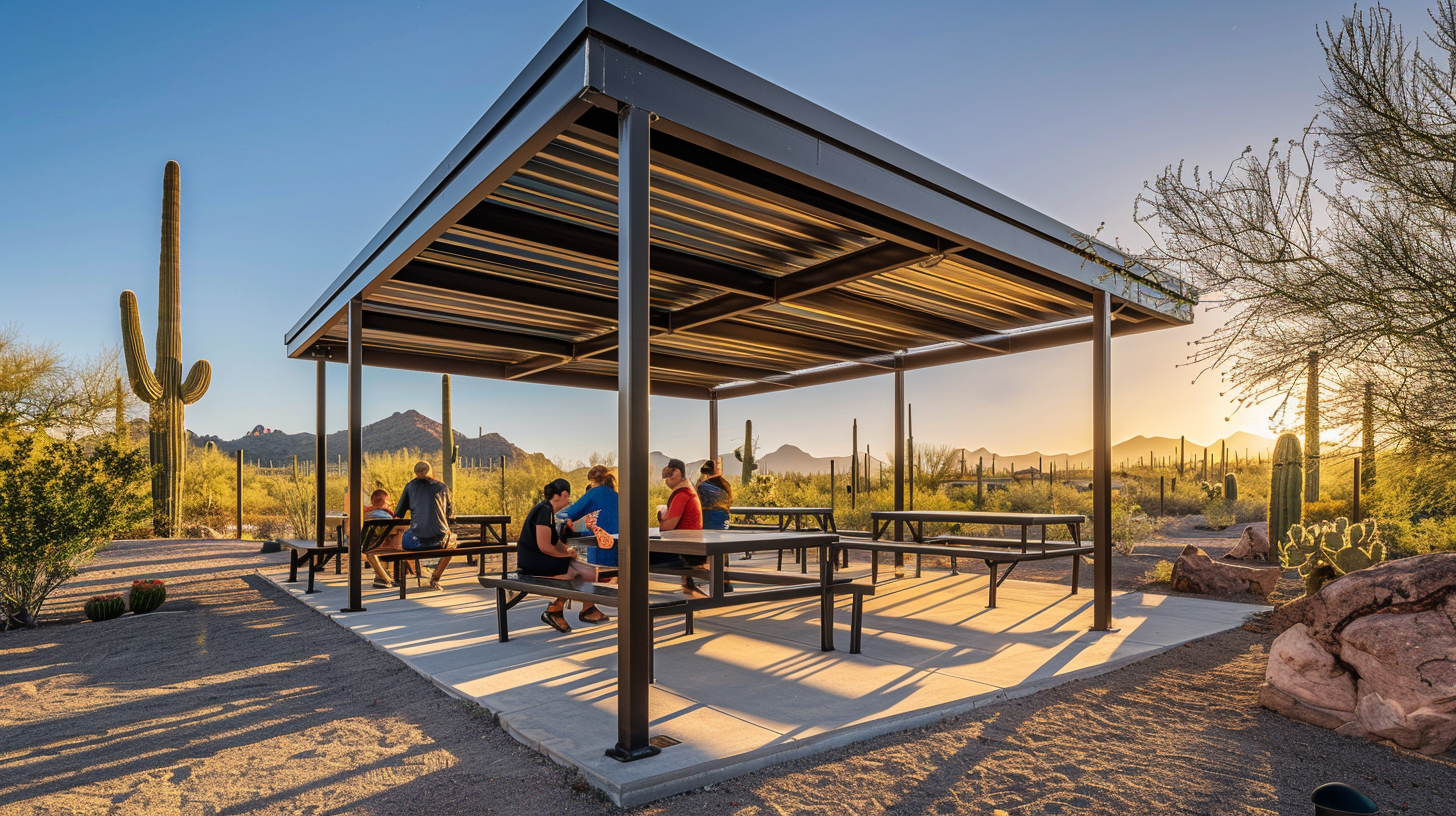
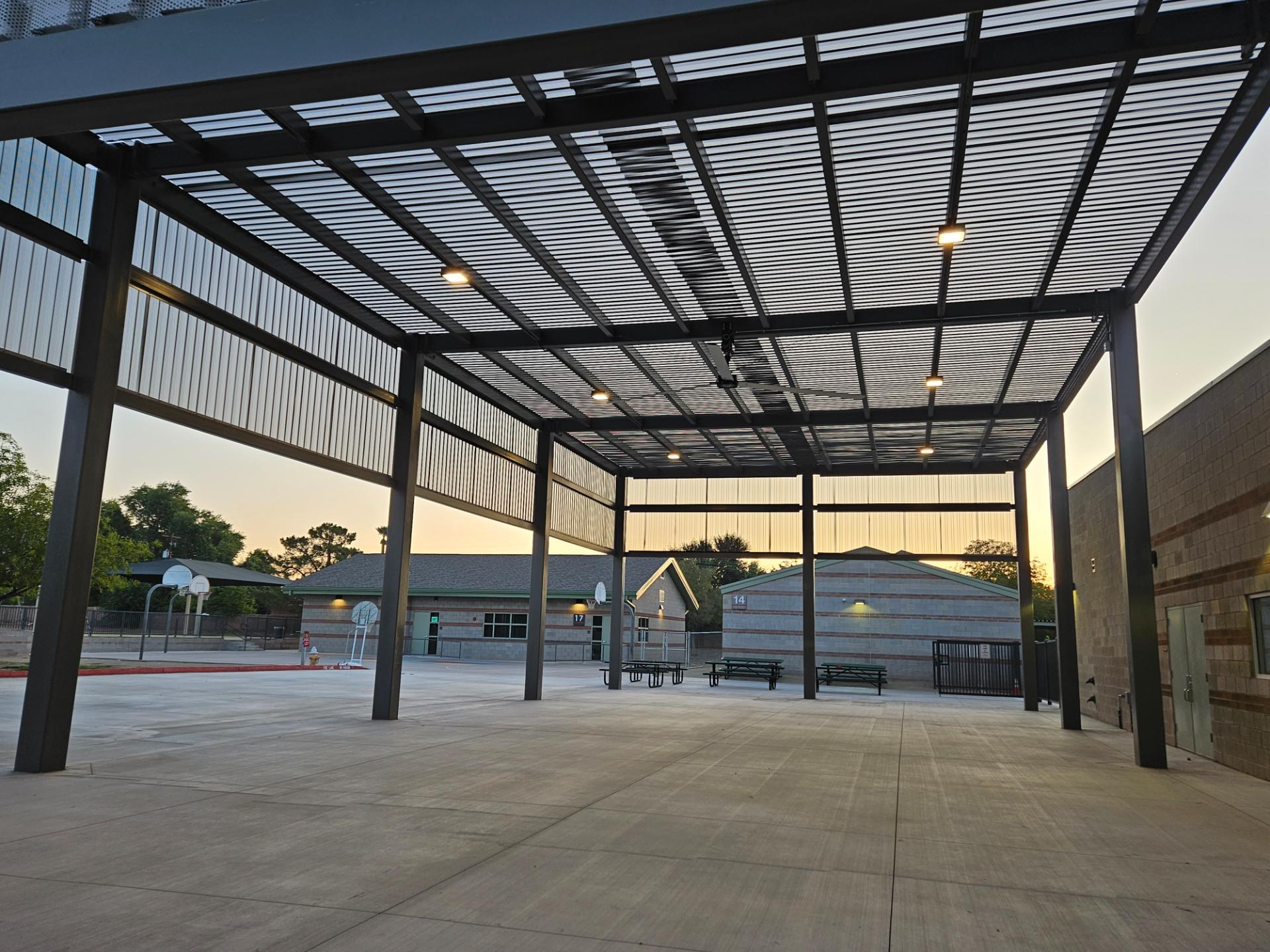
Bleacher shade lives or dies on sightlines, and that points to one structure above all others: the cantilever. A flat cantilevered shade structure carries the whole roof off a single line of posts set behind or beside the stands, so the cover reaches out over the risers while every footing stays clear of foul territory and the spectators’ view of the field. A center-post canopy can’t do that — it drops a column into the seating bank or the sightline — which is why cantilevers dominate spectator shade at Arizona fields.
The cantilever reach typically runs 15 to 25 ft of clear cover off the support line, enough for a standard bleacher bank of five to ten rows, and bays link end to end to follow a long set of stands. Total Shade built this kind of field shade at the Tumbleweed Park ballfields in Chandler — see how that city’s sports demand plays out on the Chandler commercial shade page.
Dugout and team-sideline shade for players
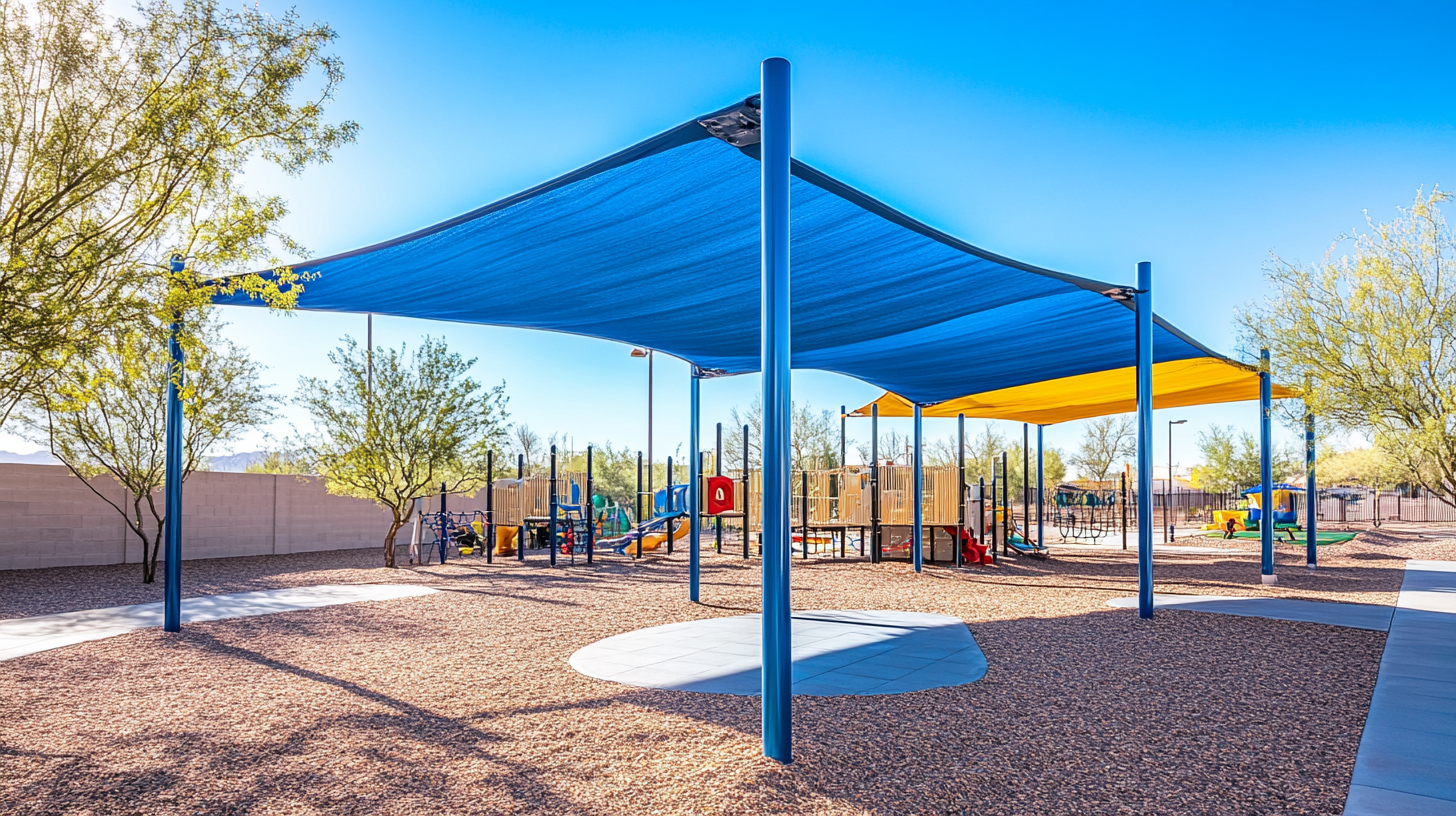
Dugouts need shade that survives abuse, not just sun, so they get the same commercial-grade steel as a grandstand rather than a lighter frame. A dugout roof runs smaller and lower than bleacher cover — often a 12 to 20 ft span over a bench — and it takes repeated ball impact, bag traffic, and players on the rail, so the frame and footings get sized for punishment a spectator canopy never sees. Most dugouts sit against a fence on the field side, where a post in foul ground is unwelcome, which again favors a cantilever reaching cover over the bench from the back wall.
Football and soccer sidelines are the open-field version of the same job, catching more wind than a fenced ballpark, so a cantilever or a linked run of posted bays shades the bench and coaching box without planting columns in the run of play. Heat is the real driver: an athlete cycling on and off a 100-plus-degree sideline through a Phoenix afternoon loses far more to heat than to UV, so a shaded bench is a recovery zone, not a comfort upgrade. Player and spectator needs split across the products overview.
Hip and multi-dome cover for grandstands and complexes
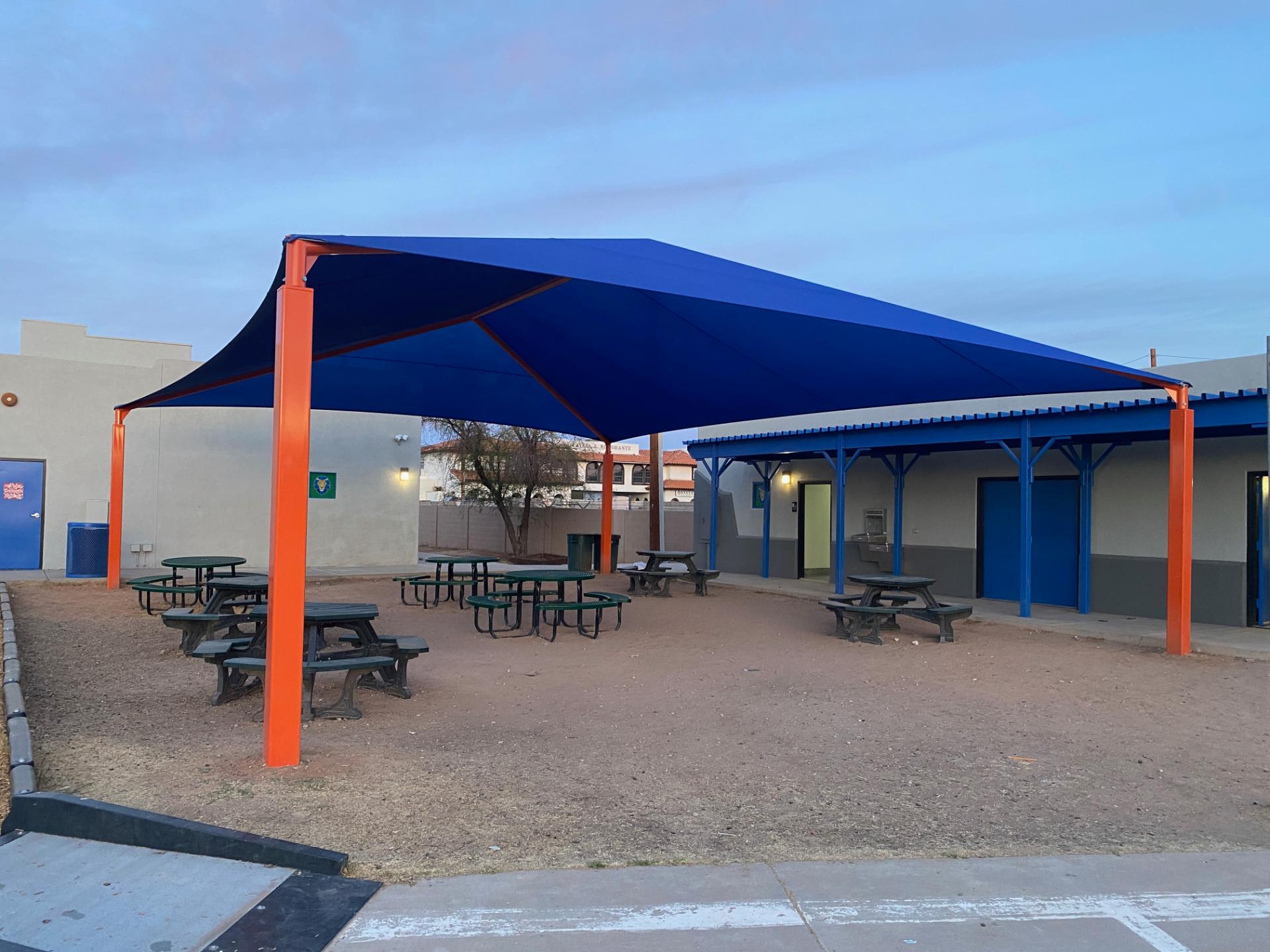
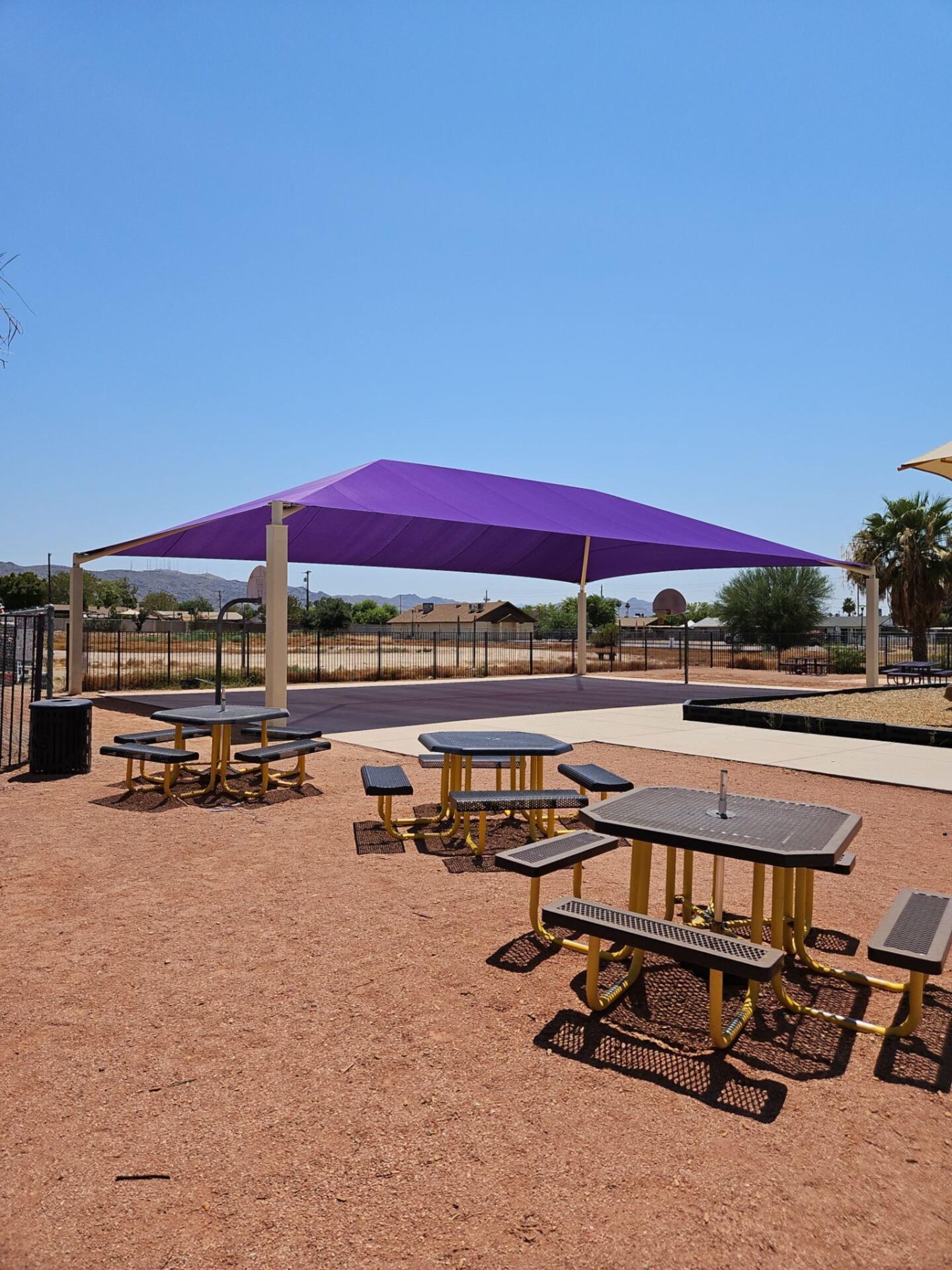
When a grandstand is too deep for a cantilever to reach across, the structure shifts to a hip or a multi-dome. A hip structure spreads a four-slope pitched roof across a wide footprint on a few interior posts, covering a deep bank of grandstand seating or a concourse far cheaper than stretching a cantilever past its honest reach. The peaked roof sheds monsoon rain off four faces, and at a 12 to 16 ft post height it clears a moving crowd and a scorers’ or concession setup underneath.
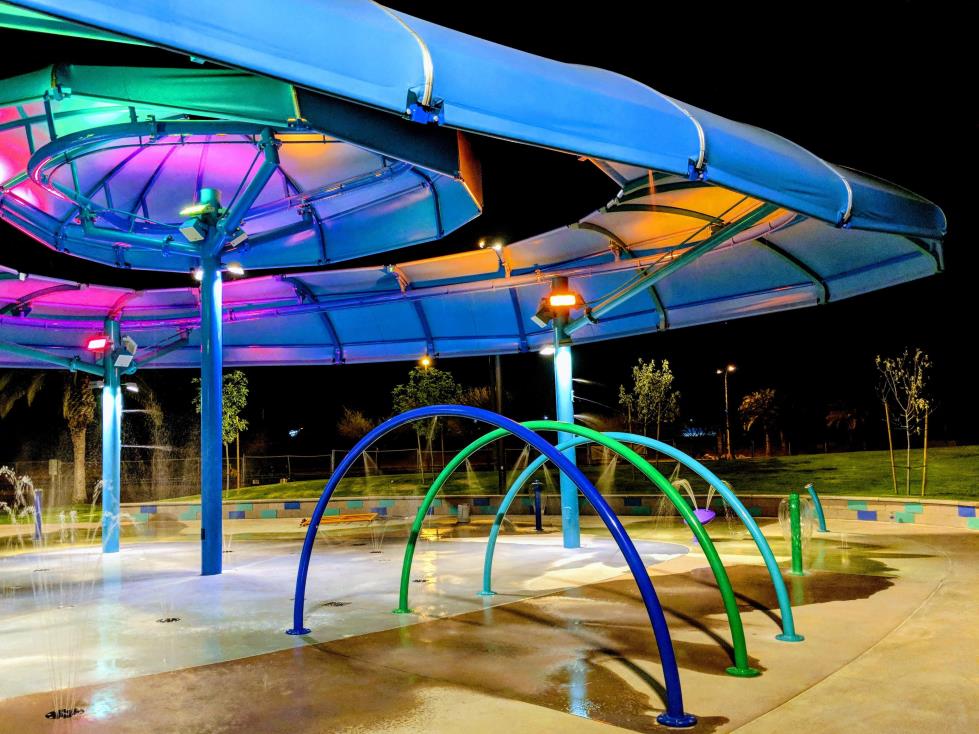
Large complexes combine the geometries. Multi-field venues — the layout the Peoria Sports Complex runs, eight-plus diamonds around shared concourses — pair cantilevers over the bleachers with hip or multi-dome canopies over plazas, concessions, and scorer areas where the crowd spreads instead of settling into one bank. Aquatic-spectator sites work the same way: at Six Flags Hurricane Harbor in Glendale, deck and seating shade covers a crowd over water and reflected glare. Complex-scale demand shows up in Peoria and Glendale.
Heat illness and UV drive every spectator canopy
The reason a ballpark buys shade is heat illness. A 100-plus-degree afternoon with full sun on aluminum bleachers pushes seating-surface temperatures well past air temperature, and exposed metal risers can scorch skin before a crowd even sits. Spectators baking through a three-hour game, and athletes cycling on and off a sun-soaked sideline, are the heat targets first — which is why a shaded grandstand reads as a safety structure, not an amenity.
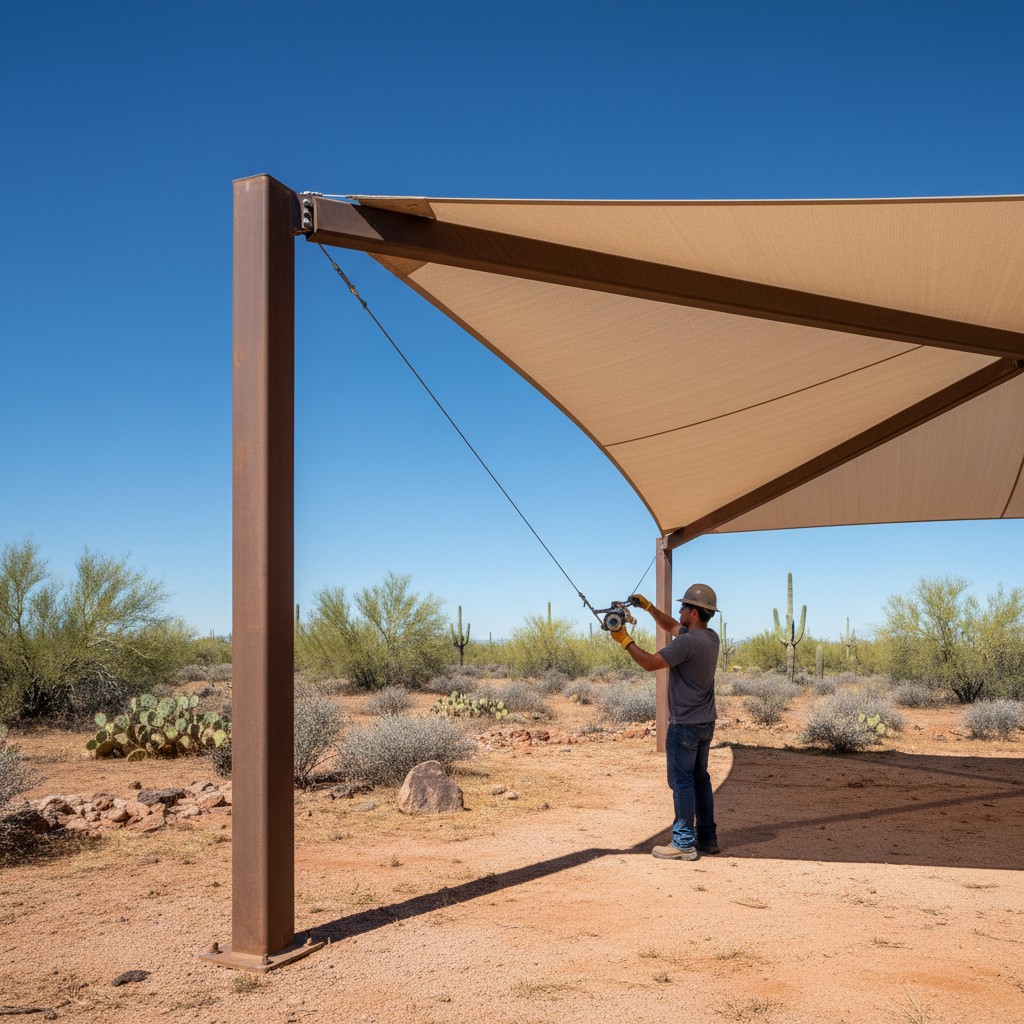
Knitted HDPE shade fabric blocks roughly 90 to 99% of UV depending on weave density and color, and it pulls the radiant load off the people underneath even more than it drops air temperature. That matters for evening games too: bleacher aluminum stores heat all day and radiates it into a 7 p.m. crowd, so breaking the daytime sun keeps the metal from loading up first. The fabric behaves more like a sail than a roof, so a taut pitched or tensioned shape — not a loose flat panel — keeps the cover from fluttering itself to an early failure.
Sightline and wind engineering for sports sites
Two constraints govern athletic shade design at once: a clear view of the field and the Valley’s wind. Sightlines come first because a spectator canopy that blocks the field is worse than none — so post layout gets driven by the lines of sight from the top row to home plate or the far goal, and footing positions get checked against foul-ball paths and walkways before steel is ordered.
Wind sets the steel. Every Arizona structure is engineered to building code and ASCE 7 wind provisions, with Valley design wind speeds landing roughly in the 90 to 115 mph range depending on site and exposure, and monsoon microbursts can briefly top 60 mph. Sports fields sit on open ground with nothing upwind to break the gusts, which pushes exposure higher and the frame heavier than a tucked-in commercial lot — powder-coated columns commonly 4 to 8 inches depending on span, on deeper footings. Because Total Shade fabricates in Phoenix, a span or post change to clear a sightline or harden a wind-exposed grandstand reaches the saw the same week instead of an out-of-state plant. Stamped drawings come with the job; the city handles plan review and inspection — the same path park and municipal buyers follow on the parks and municipal shade page.
Honest caveats for sports-field shade
The fabric is a consumable, and on a sports site that takes daytime UV plus stadium-light heat it lands at the demanding end of its window. A knitted HDPE cover commonly carries a 10 to 15 year warranty, and Phoenix sun works it hard, so budget a re-cover on a cycle rather than treating it as a failure — the steel frame outlasts several fabric covers. A canopy that rides out a microburst may still shed or tear its fabric to spare the frame, which is a re-cover job, not a rebuild.
Wind ratings have a ceiling. An engineered structure covers typical monsoon loads, not every freak gust on record, and an open field gives a haboob a clean run at the steel — so the stamped design speed matters more than any marketing number, and a light DIY bleacher kit is the wrong call in microburst country. Two more notes: dust settles on the weave, so a rinse once or twice a year keeps the fabric breathing; and shade has to oversail the seating to cover it when the sun drops low, so a canopy specced only to the bleacher footprint leaves the back rows in 6 p.m. glare. For campus athletic fields, the same rules carry over to the school and playground shade page.
Shade Structures We Build
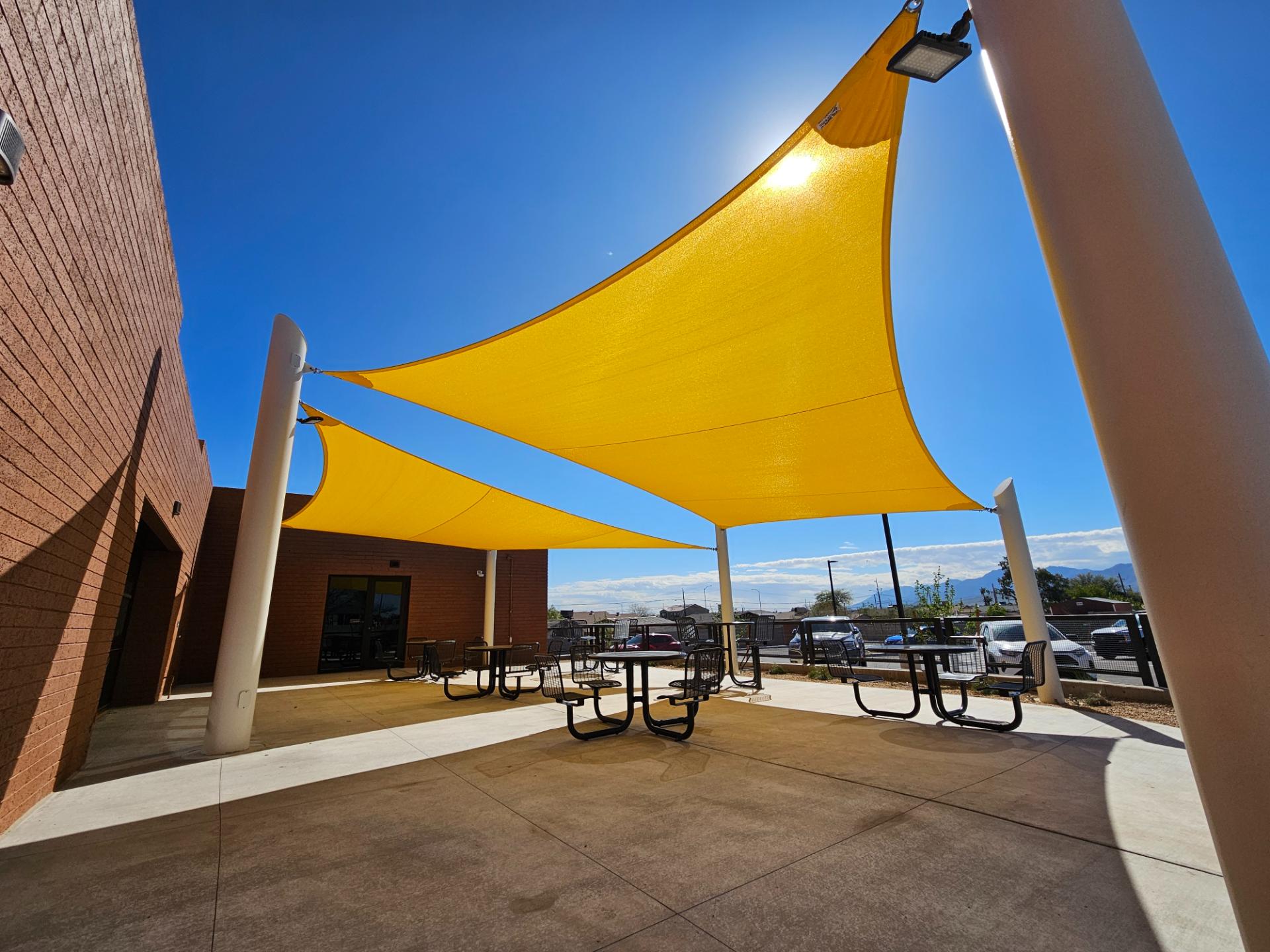
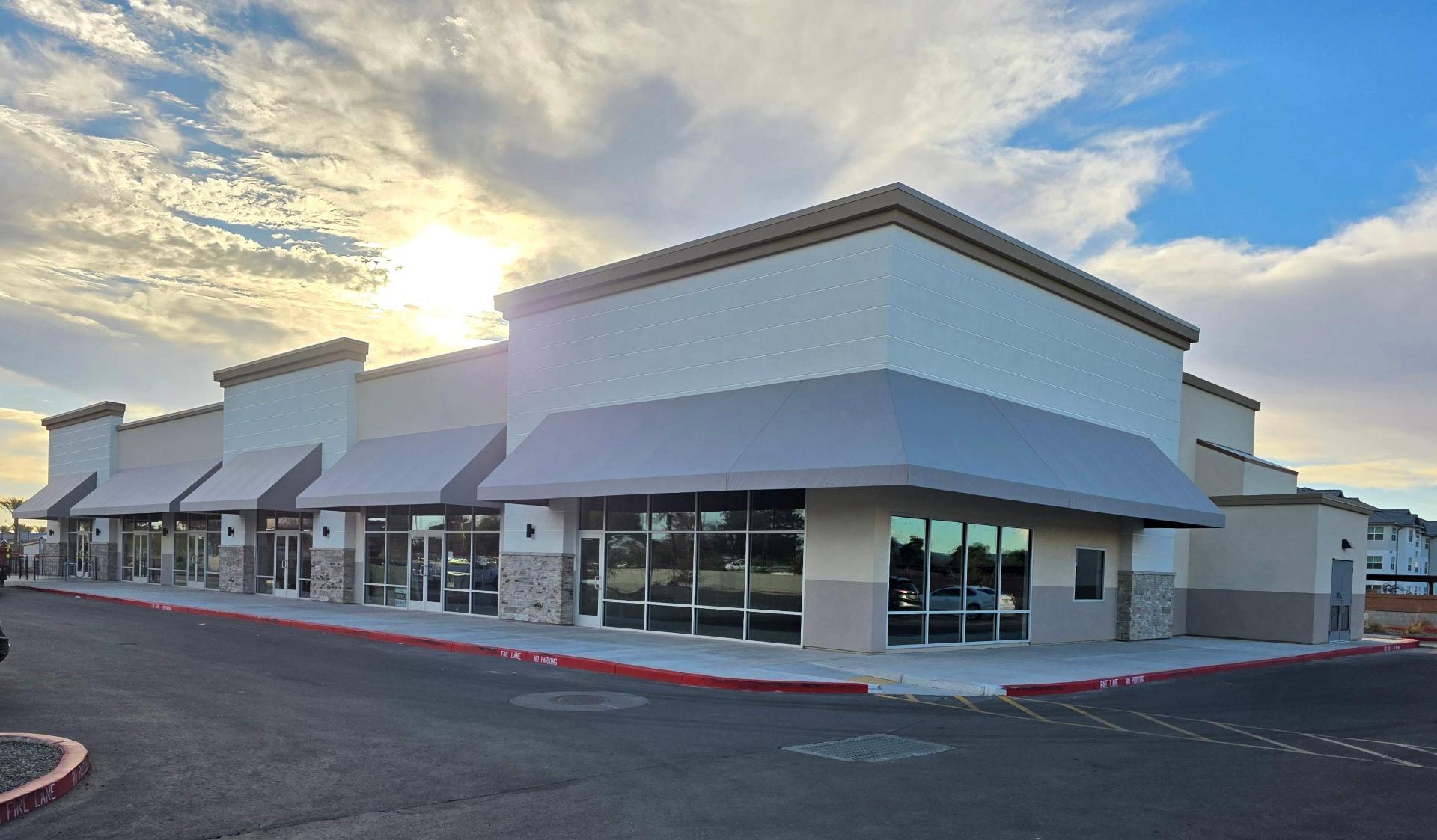
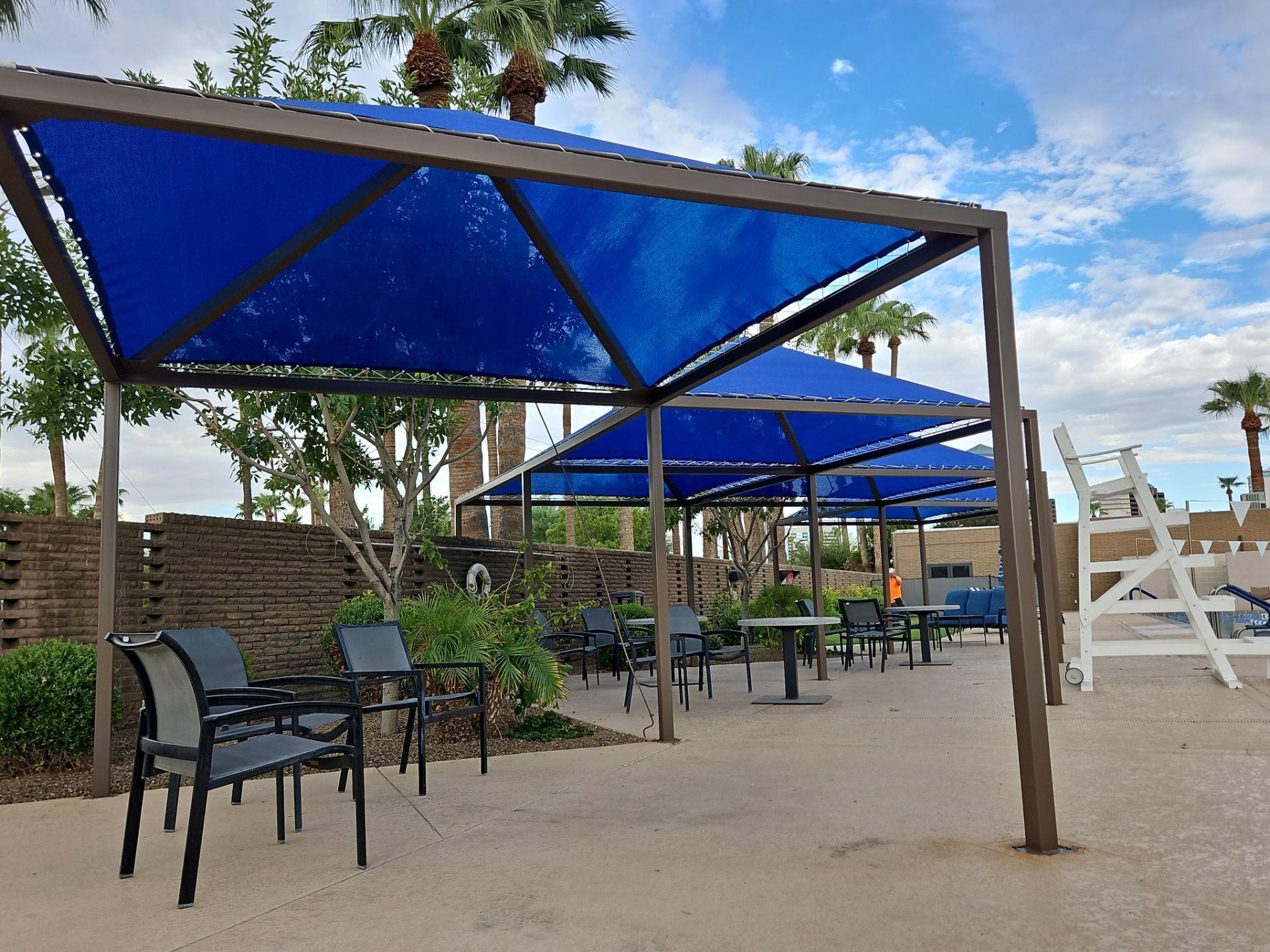
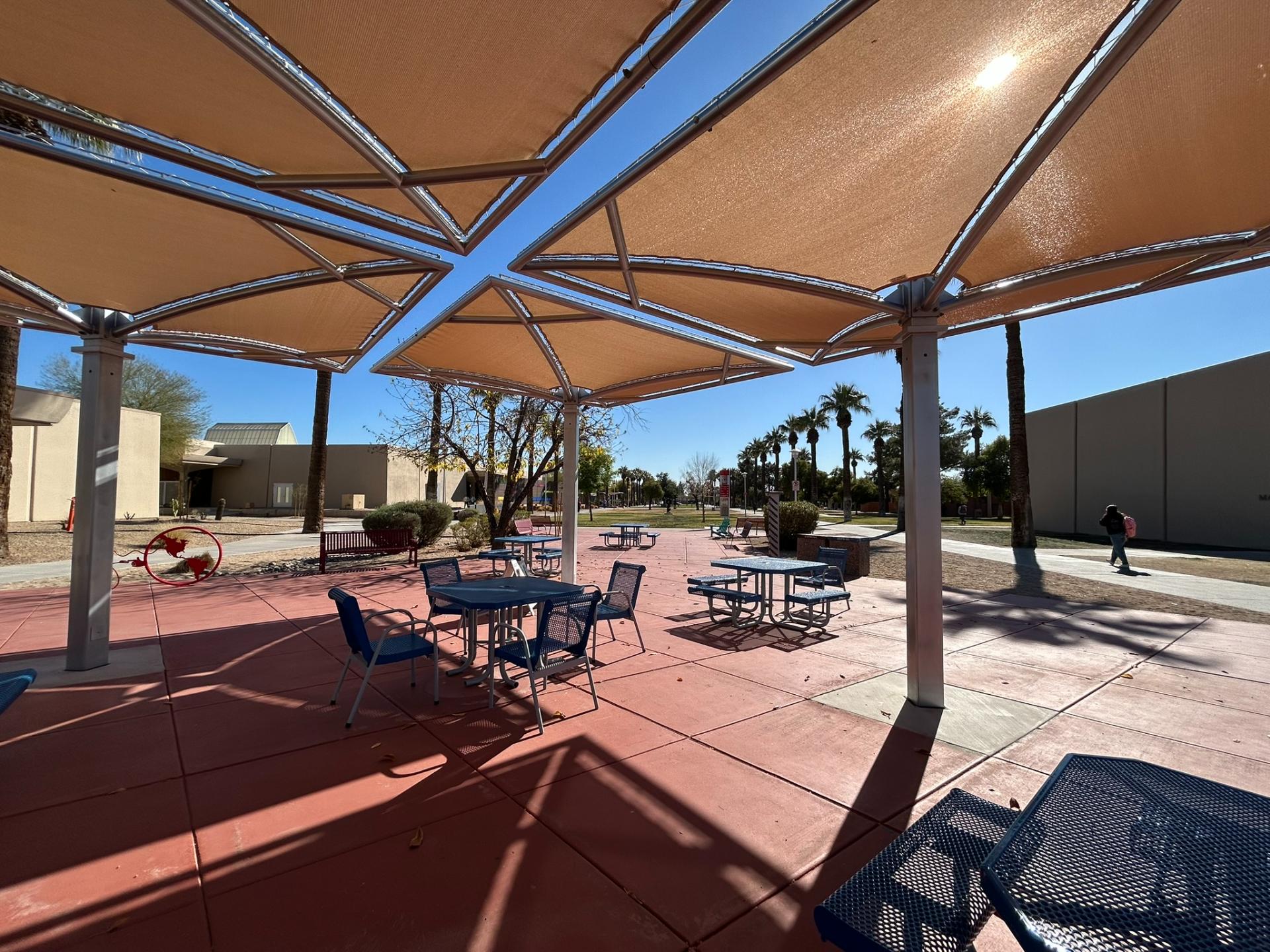
Frequently Asked Questions
What shade structure is best for bleachers?
A flat cantilevered structure. It carries the whole roof off a single line of posts behind or beside the stands, so the cover reaches over the risers while every footing stays clear of foul territory and the spectators’ view of the field. The reach typically runs 15 to 25 ft of clear cover off the support line, enough for a five-to-ten-row bank, and bays link end to end along a long set of stands. A center-post canopy can’t do it because the column lands in the seating or the sightline.
How do you shade a dugout without blocking the view?
Reach the cover out from the back wall with a cantilever so no post lands in foul ground on the field side. Dugouts usually sit against a fence, and a cantilever carries a 12 to 20 ft roof over the bench from a single rear support line, keeping the field side clear. We build dugout frames with the same commercial-grade steel as larger canopies because they take repeated ball impact, bag traffic, and players on the rail that a spectator canopy never sees.
Do sports-field shades hold up to Arizona monsoons?
Yes, when they are engineered for it. Every frame is built to Arizona building code and ASCE 7 wind provisions, with Valley design wind speeds around 90 to 115 mph, and pitched or tensioned shapes spill wind rather than catching it flat. Open sports fields get heavier steel and deeper footings because they sit exposed with nothing upwind to break the gusts. That said, wind ratings have limits: a microburst beyond the stamped design speed can damage any canopy, which is why the engineered number on the drawing matters more than a marketing claim.
Cantilever or hip structure for a grandstand?
It depends on how deep the seating bank is. A cantilever shades a standard bleacher bank of five to ten rows from one rear line of posts with no column in the sightline, and is the default for long, narrow stands. When a grandstand is too deep for the cantilever’s 15-to-25-ft reach, a hip structure spreads a four-slope roof across the full footprint on a few interior posts, covering deep seating or a concourse more cheaply and shedding monsoon rain off four faces. Large complexes pair both.
Does Total Shade build shade for whole sports complexes?
Yes. Total Shade has built athletic shade across Arizona since 1998 under AZ ROC #272680, from single dugouts to multi-field venues, including the Tumbleweed Park ballfields in Chandler and aquatic-spectator cover at Six Flags Hurricane Harbor in Glendale. Multi-field complexes pair cantilevers over the bleachers with hip or multi-dome canopies over central concourses, concessions, and scorer areas. Because we fabricate steel and fabric in-house in Phoenix, a span or post change to fit a specific field reaches the saw the same week.