or call (602) 265-0905 — no-obligation, on-site.
School & Playground Shade Structures in Arizona
Steel canopies for K-12 campuses that cool playgrounds, lunch courts, and bleachers while clearing CPSC fall zones.
Since 1998
Designing & building Arizona shade
In-House Fabrication
Built at our Phoenix shop
Engineered & Permit-Ready
Stamped drawings for AZ wind loads
Free On-Site Quote
No-obligation project assessment
School and playground shade structures are steel-framed canopies that pull surface temperatures down across a campus while leaving CPSC-required fall-zone clearances open underneath, and the right type depends on whether a support post can land inside the space. Knitted HDPE fabric blocks roughly 90-99% of UV, which is the number that matters when children spend recess and PE on equipment that bakes to 150-plus degrees in direct Phoenix sun. Total Shade fabricates these canopies in-house at 2331 W. Holly St and engineers every frame to Arizona building code and district facilities standards. The work clusters into a few jobs: playground canopies, lunch-court cover, bleacher and dugout shade, and covered walkways between buildings. Most of it gets built inside one short window, the summer break, when classrooms empty and crews can pour footings without working around 600 kids.
Playground and lunch-court cover are the two biggest jobs
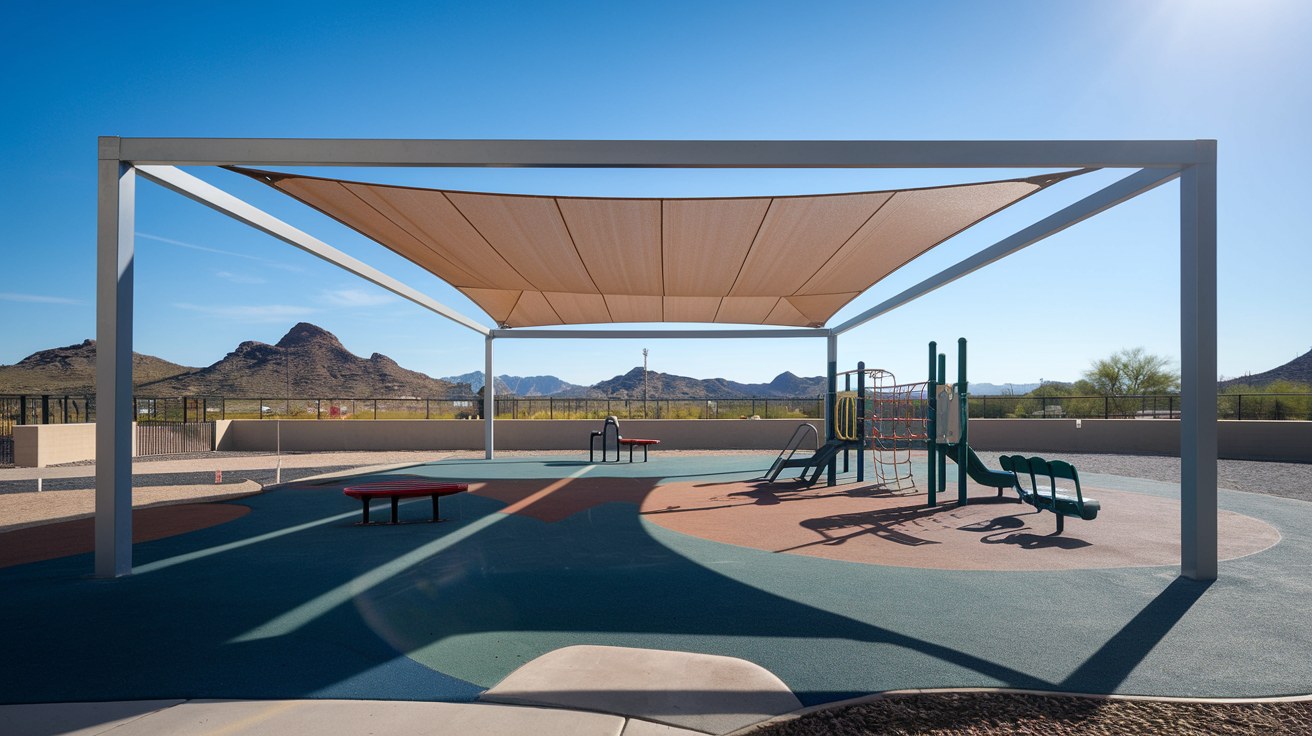
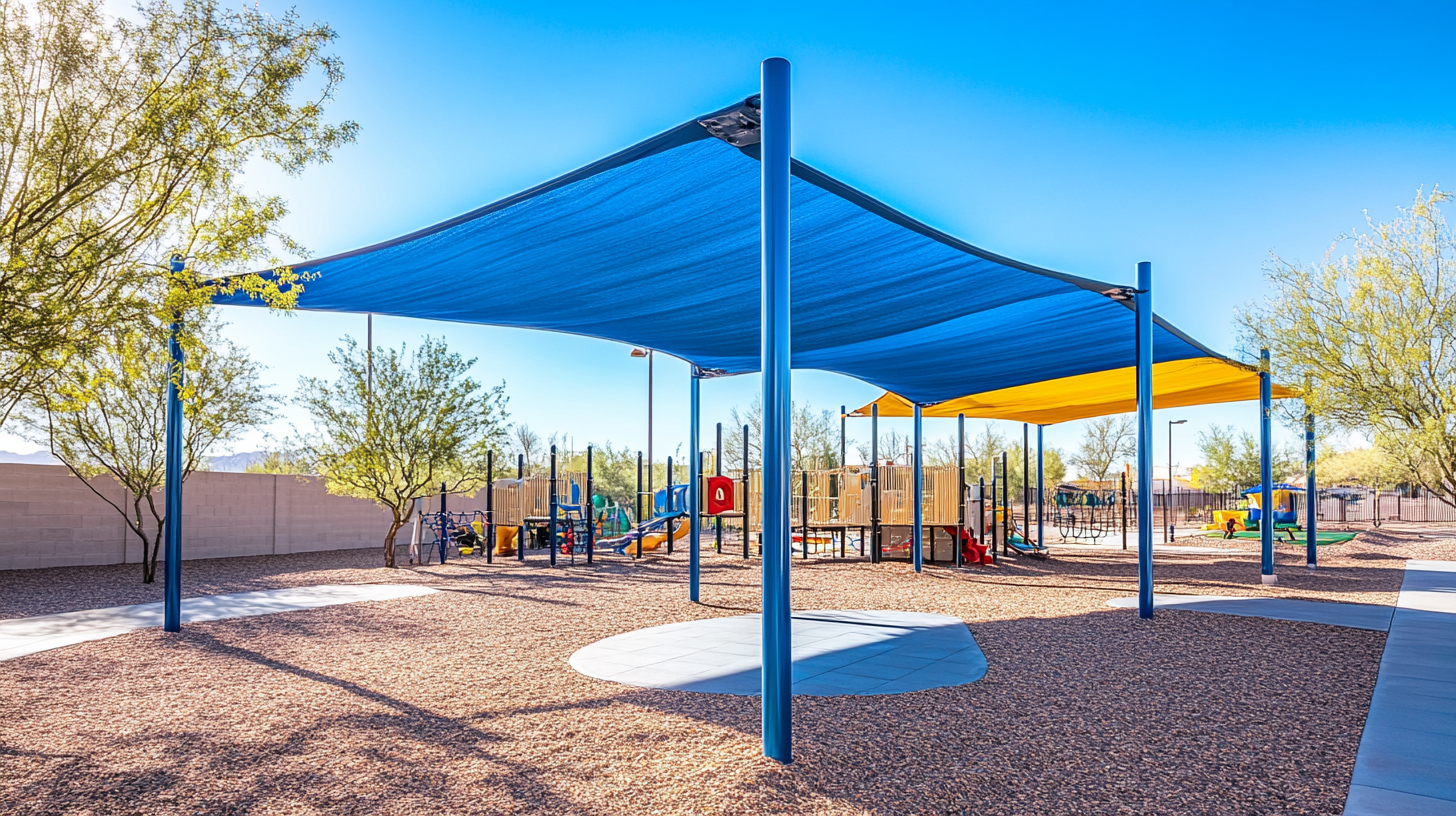
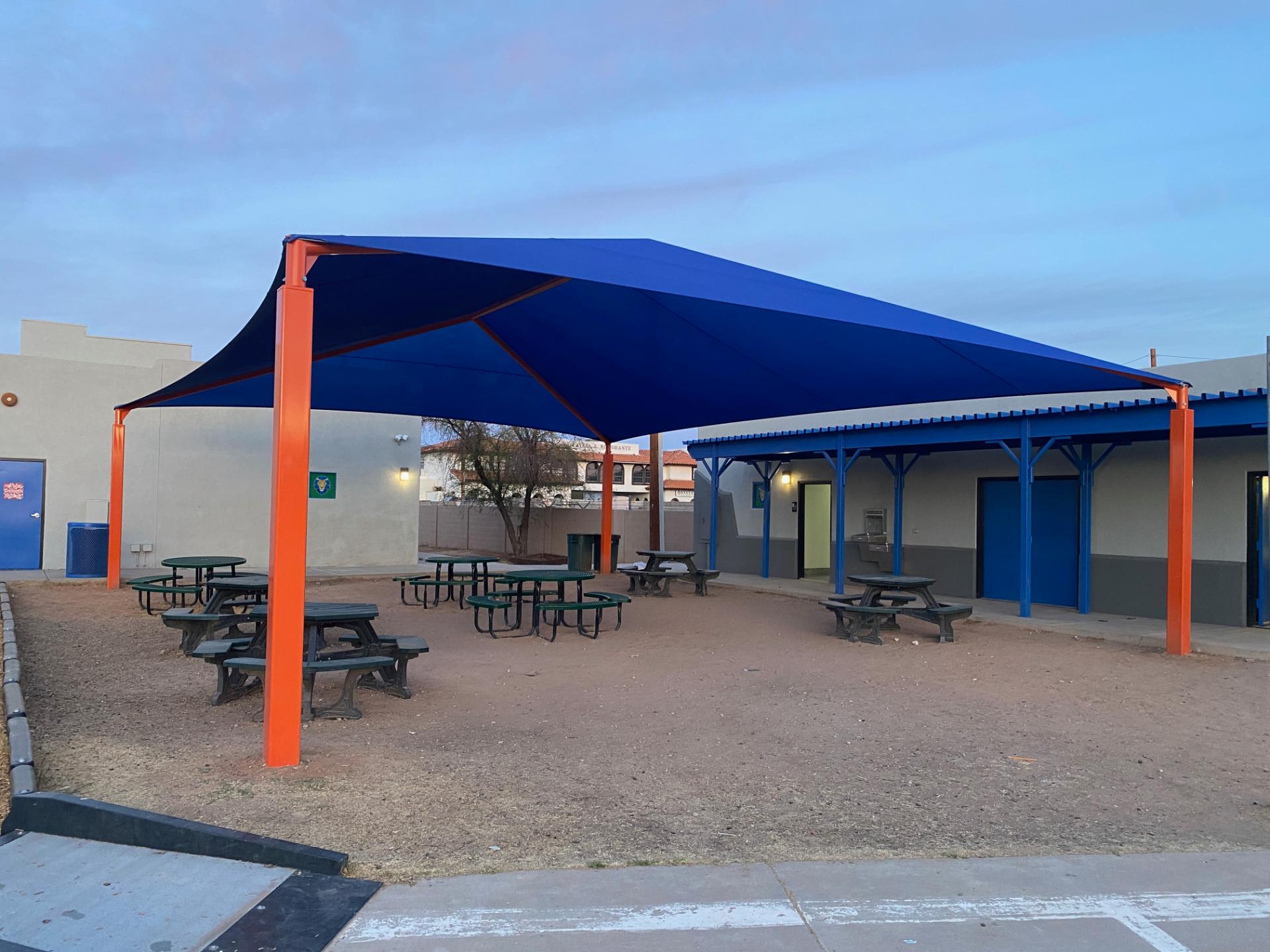
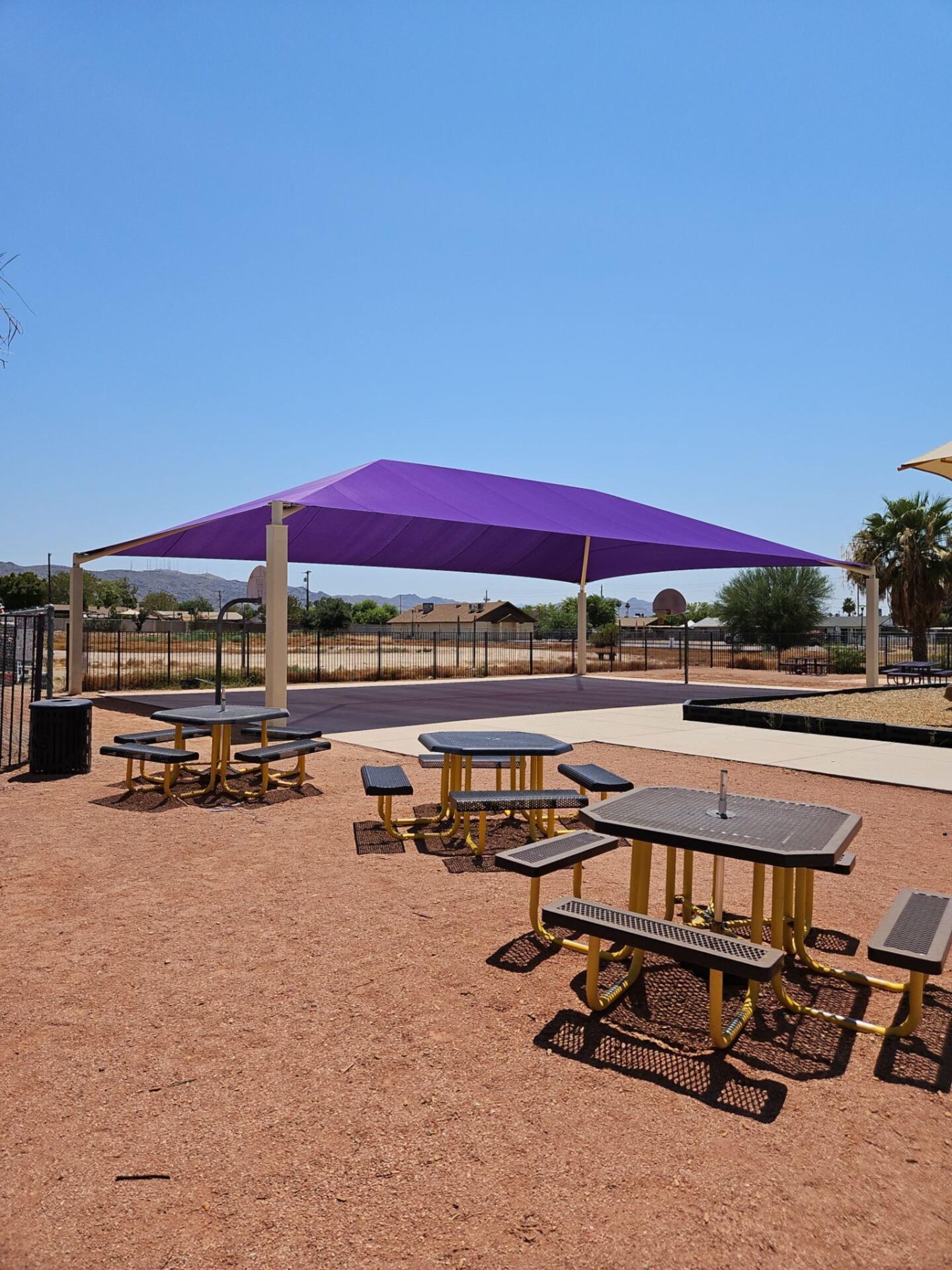
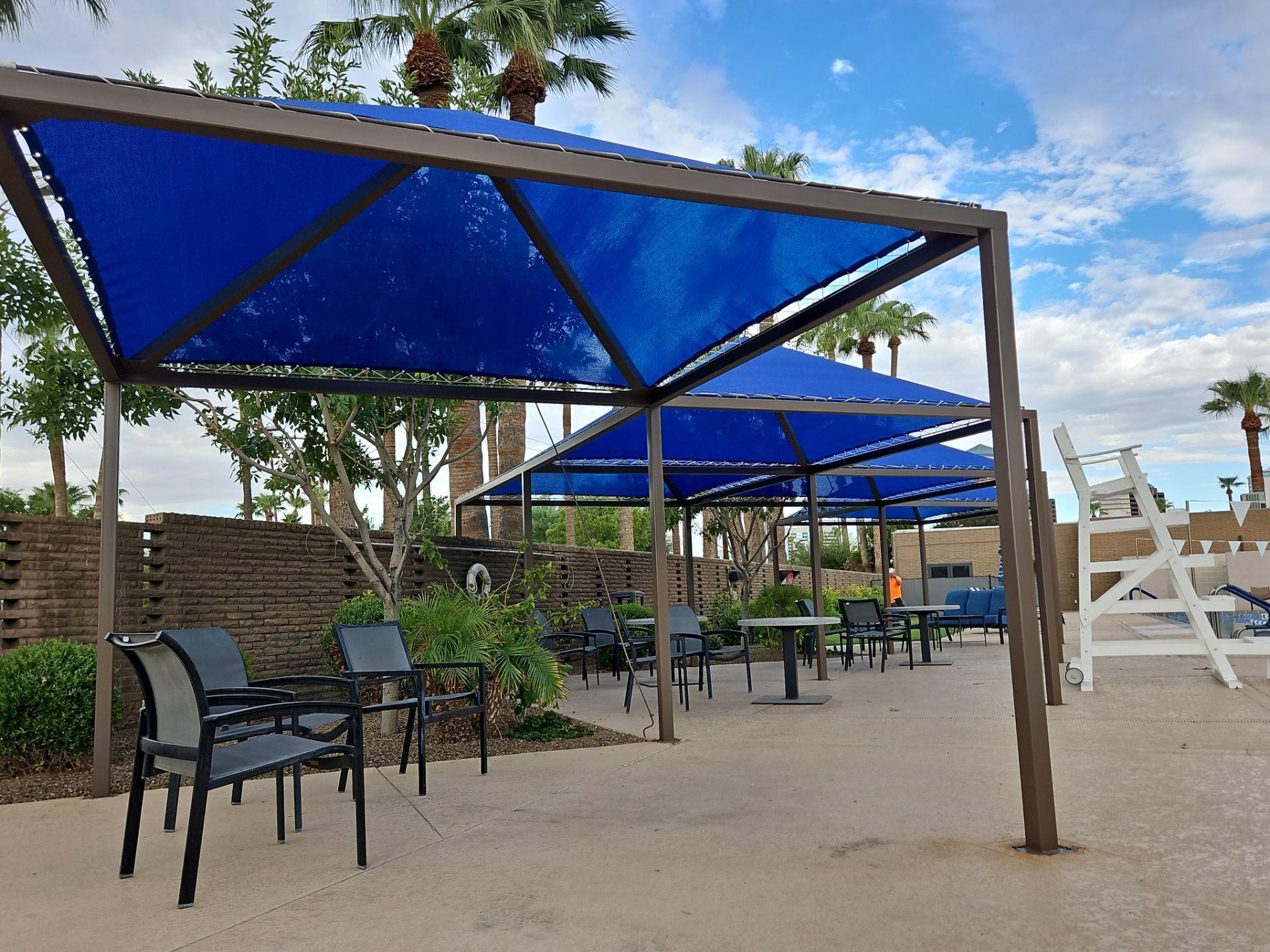
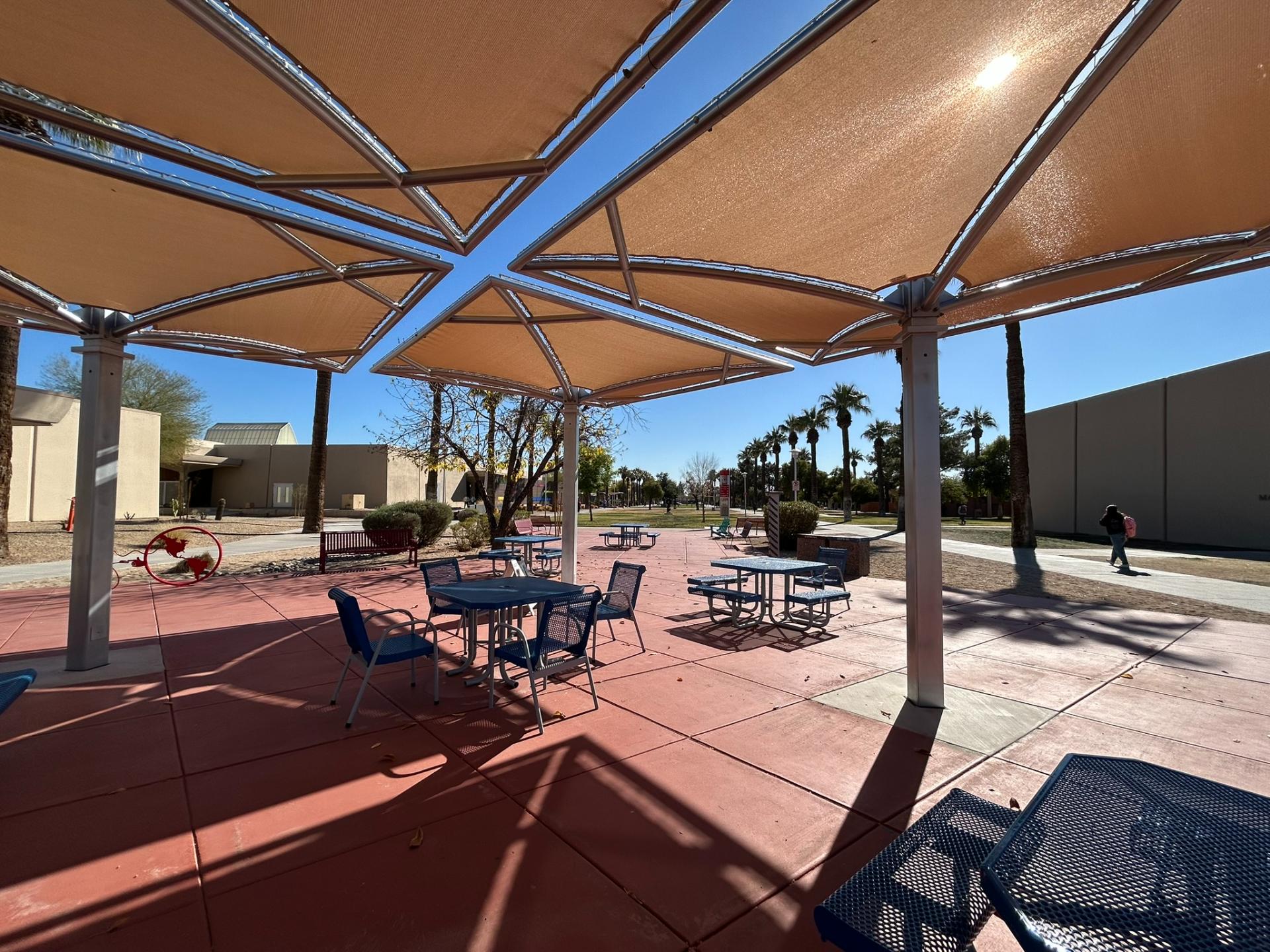
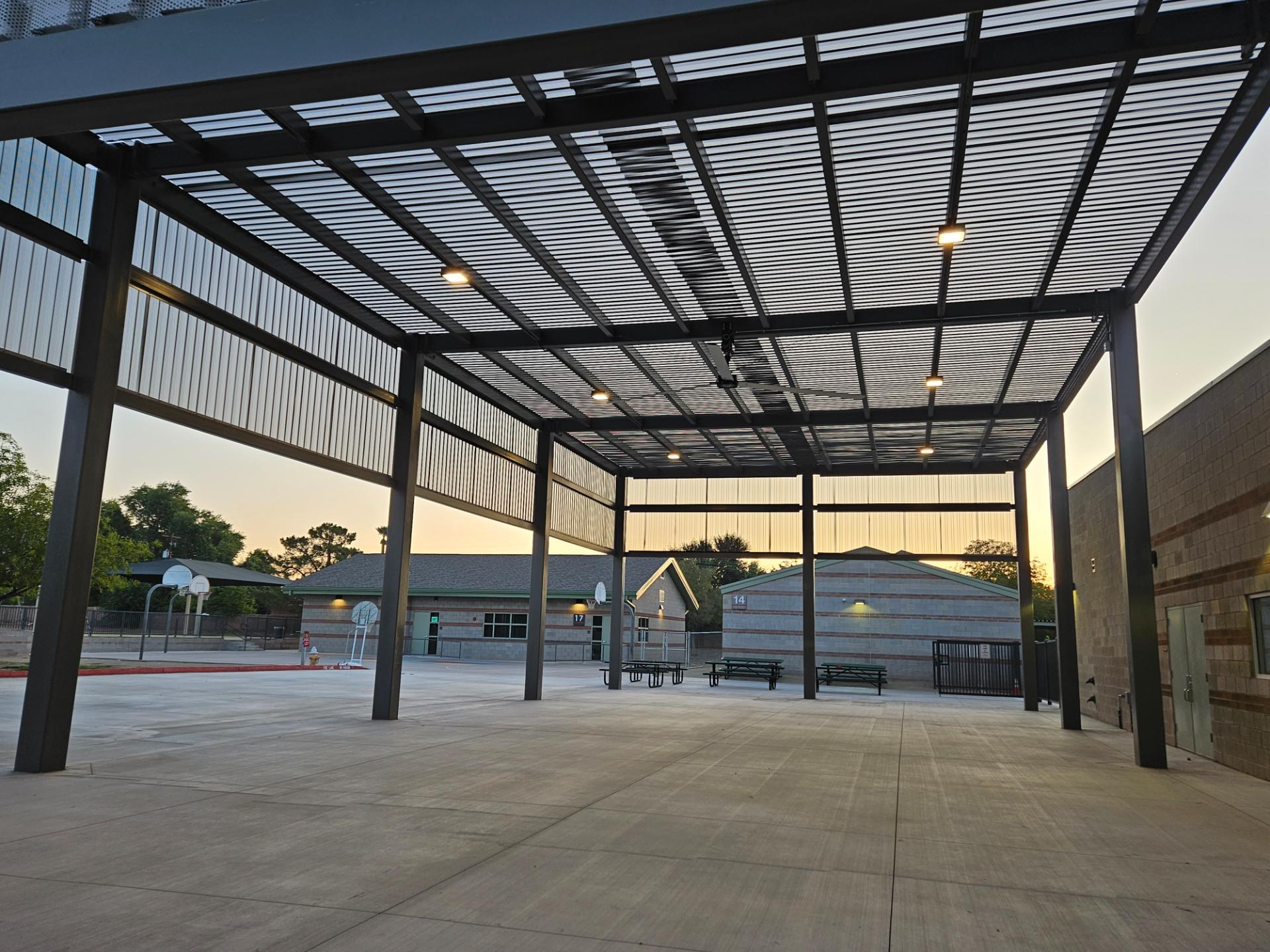
Playgrounds and lunch courts are where shade buys the most safety per dollar, so they sit at the top of nearly every district’s list. A hip canopy is the default for both, because it shares its load across a few interior posts and shades a large open footprint cheaper than any other form. A single hip structure can run a full lunch court at a 10-14 ft post height, enough headroom for picnic tables and a moving crowd, and the peaked four-slope roof sheds monsoon rain off four faces instead of ponding overhead.
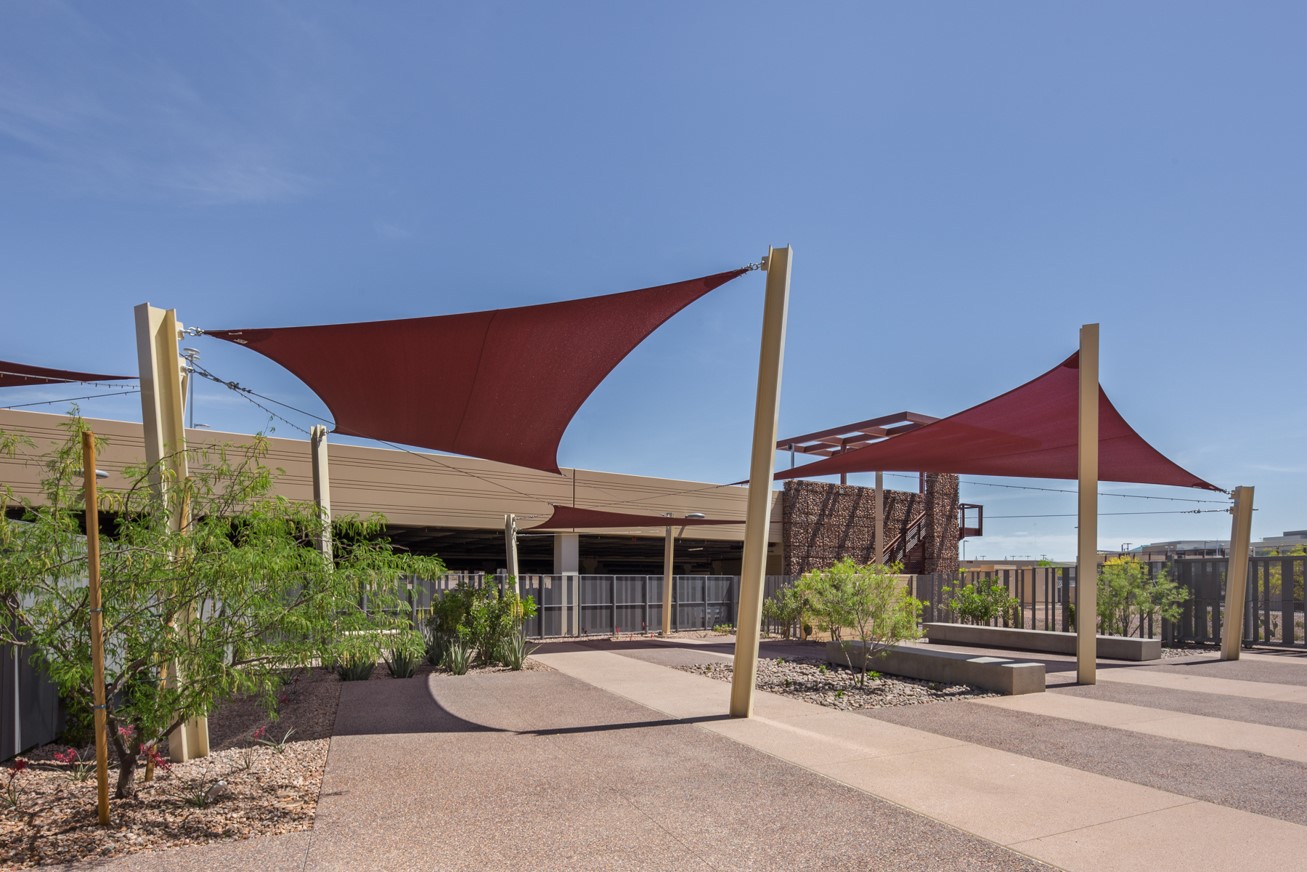
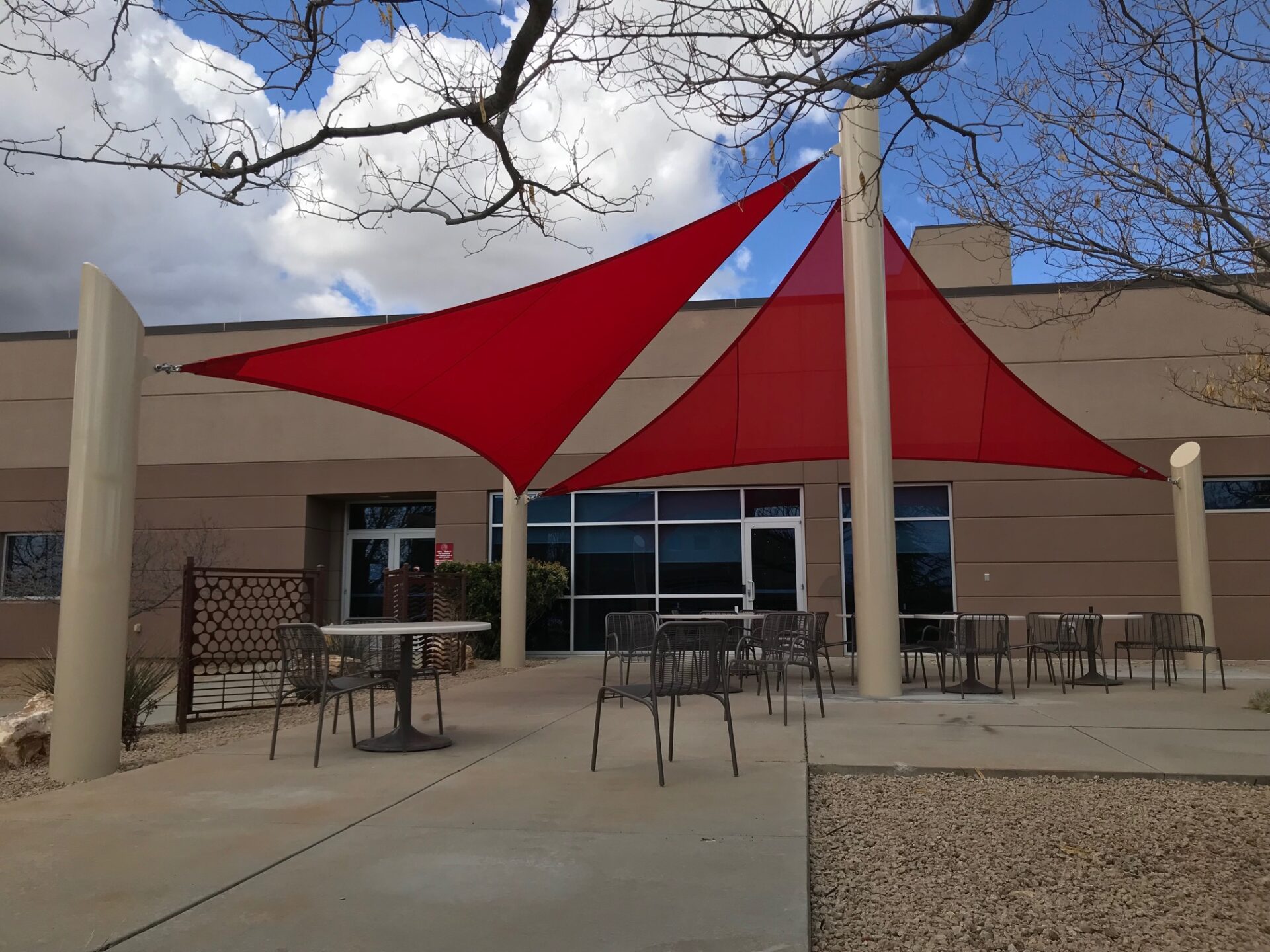
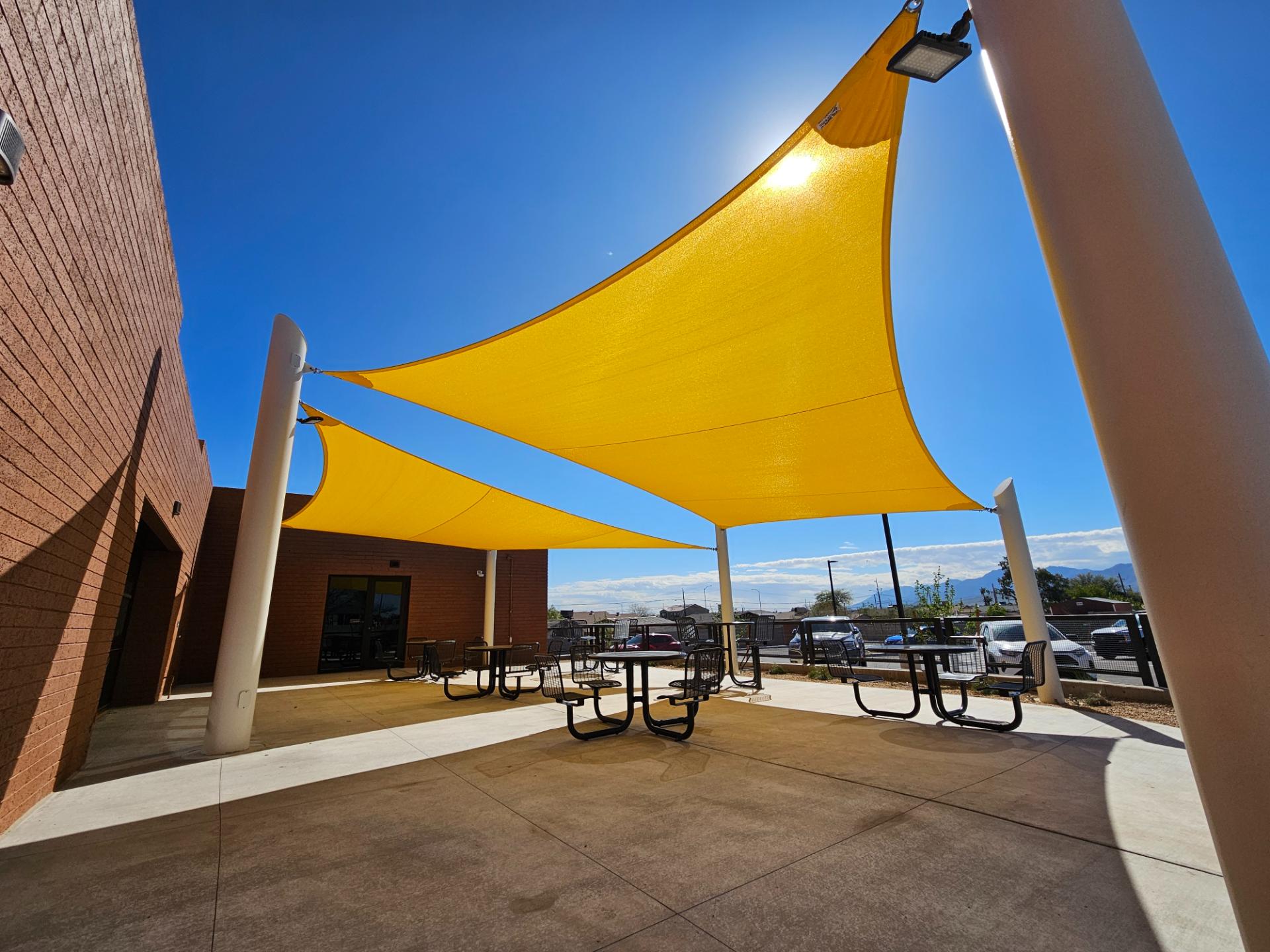
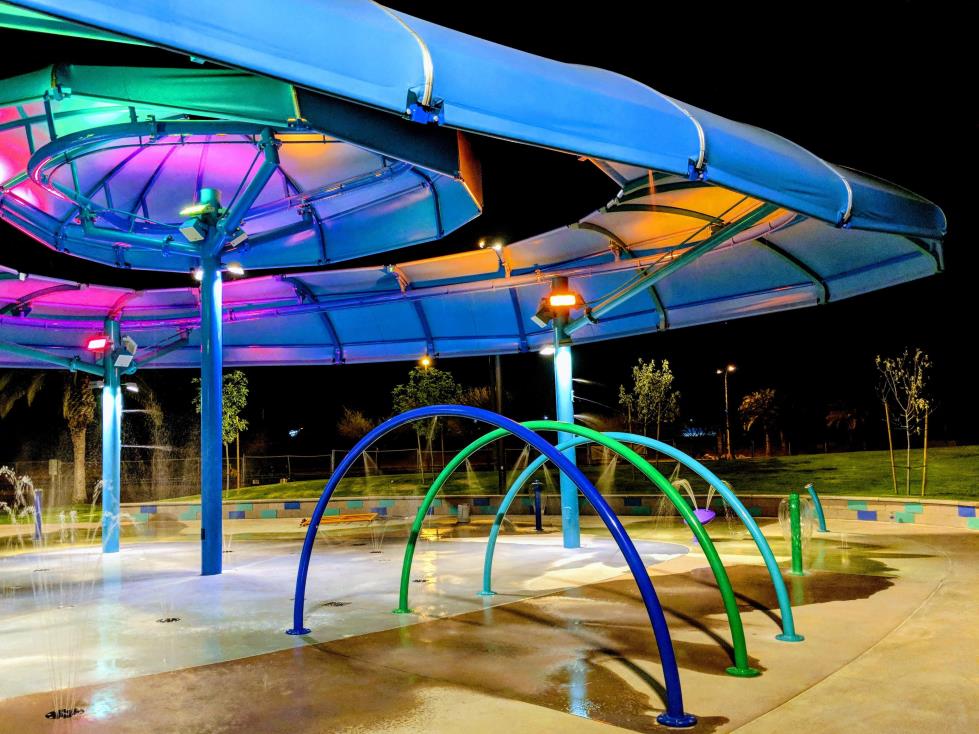
Playgrounds add one constraint a lunch court does not: equipment and the open space around it. Where posts cannot interrupt the play surface, a tensioned 4-point fabric sail floats cover over a structure with anchors pushed out to the perimeter, and a 3-point sail handles smaller pods or odd corners. Sails read lighter and cost less per anchor, but they cover smaller spans than a hip and must be re-tensioned over their life. The honest rule: post-friendly open ground takes a hip, equipment-crowded play areas take sails.
Bleacher, dugout, and walkway shade cover the rest of campus
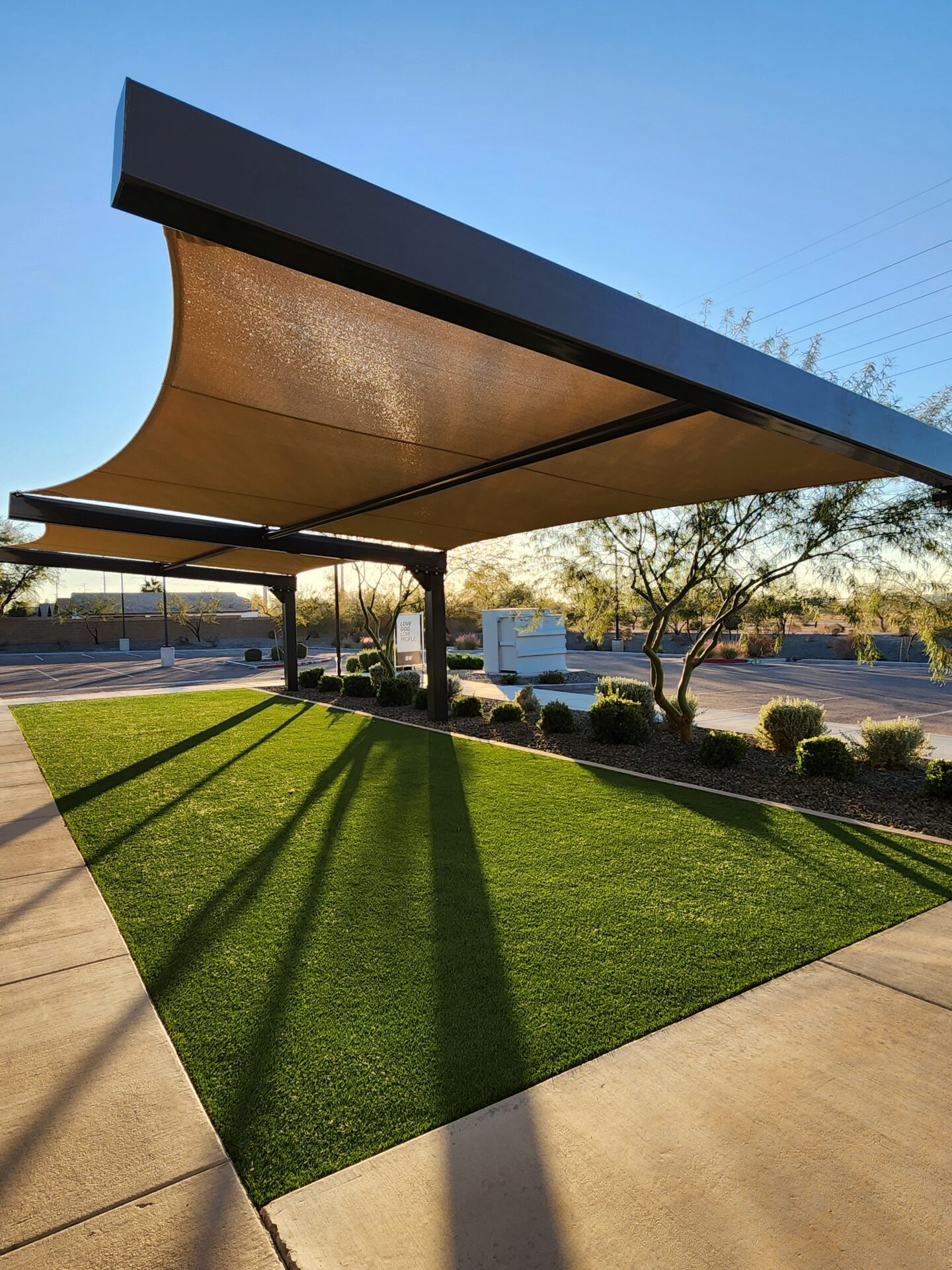
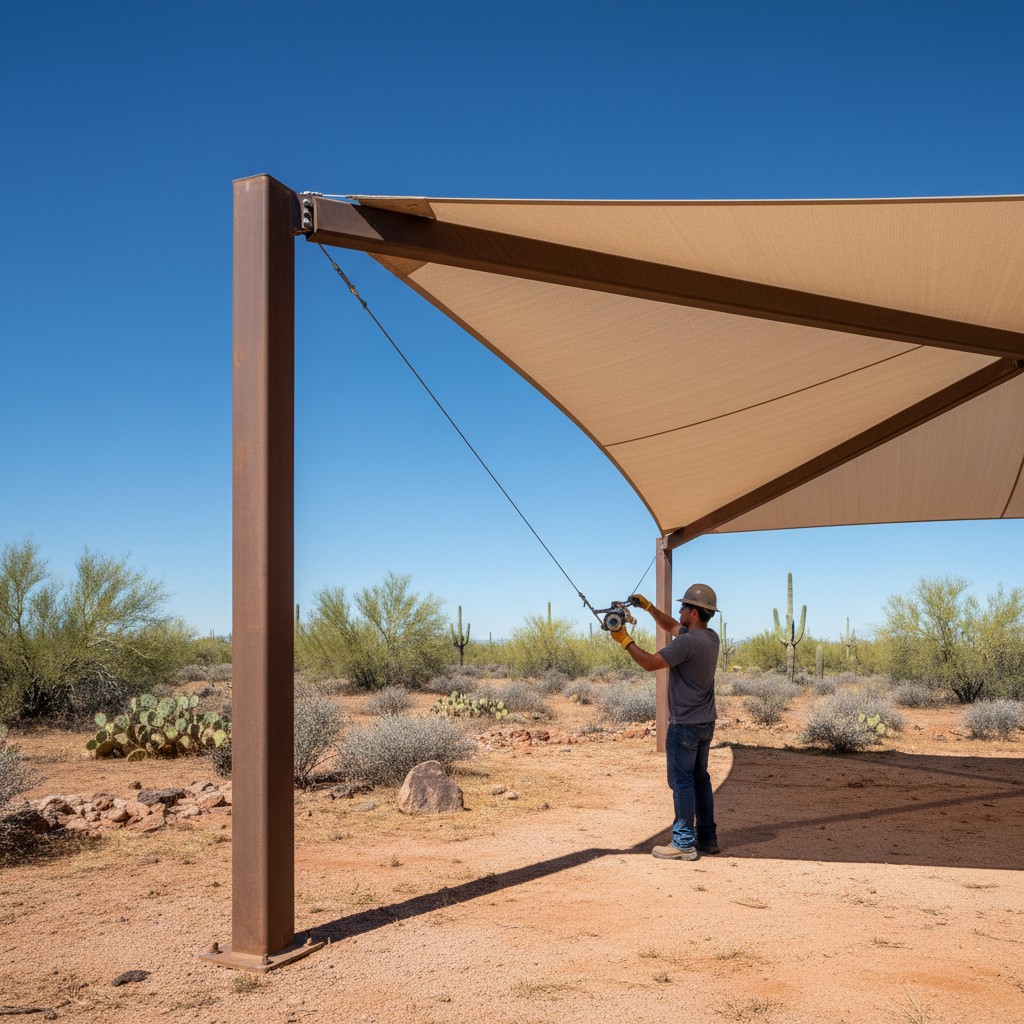
Bleachers, dugouts, and covered walkways round out a campus shade plan, and each wants a different geometry. Bleacher seating runs long and narrow, so a hip canopy stretched across the stands shades a full set of risers in one structure while keeping sightlines to the field clear. Dugouts and team benches are smaller and often sit against a fence line where a post on the field side is unwelcome, which is where a flat cantilevered structure earns its place by reaching cover out over the bench with no column in the way.
Covered walkways between portable classrooms and main buildings are a quieter but constant request, because they keep students out of both UV and summer downpours on the daily route to class. A run of linked cantilever or hip bays handles a walkway cleanly. When a footprint refuses to fit any stock geometry, a custom-built shade structure lets the frame follow the site instead of forcing the site to fit the frame. You can see how the campus pieces line up against other sectors on the shade structures by industry hub.
Child UV safety and fall-zone clearance drive the design
The whole point of campus shade is to cut UV exposure on children, and knitted HDPE delivers that by blocking roughly 90-99% of ultraviolet depending on weave density. Skin in the first 18 years takes a disproportionate share of lifetime UV, so a recess yard that drops from full sun to 90-percent-plus blocked is a measurable safety gain, not a comfort upgrade. Shade also pulls surface heat down hard: equipment metal and rubber that hits 150-plus degrees in open sun runs far cooler under fabric, which is what keeps a slide usable in May.
Fall-zone clearance is the constraint that separates playground shade from every other kind. CPSC and ASTM guidance call for a use zone of at least 6 ft around most equipment, extending farther off the exit of a slide or the arc of a swing, and nothing structural can intrude on it. That means posts get pushed to the perimeter, footings sit outside the protective surfacing, and any low member stays well above a child’s reach. A sail solves this by anchoring beyond the zone entirely; a hip solves it by spacing posts so the play surface stays clear. Getting clearance wrong is not a cosmetic miss, it converts a safety structure into a hazard, so it leads the design rather than following it.
Structural and wind engineering for school sites
Every school canopy is engineered to Arizona building code and ASCE 7 wind loads, with Valley design wind speeds landing roughly in the 90-115 mph range depending on the site and exposure. School sites often sit on open ground with no surrounding buildings to break the wind, which pushes exposure higher and the steel heavier than a tucked-in commercial lot. The frame is powder-coated steel, typically 2-3 inch tube on standard posts, finished with a baked coat that resists the chalking desert sun forces on cheaper brushed paint.
Spans set the post count. A standard hip bay covers roughly 20-40 ft between posts, and a long lunch court simply adds bays in a grid rather than chasing one impossible span. Footings are sized to the soil and the wind exposure, deeper on open athletic fields than on a sheltered courtyard. The fabric itself behaves more like a sail than a roof, so the pitched or tensioned shape matters: a slope keeps the cover taut against the flutter that wears fabric fastest, while monsoon microbursts that top 60 mph spill over a pitched surface instead of catching it flat. Stamped drawings come with the job for the district’s permit set.
District permitting and the summer-build window
School shade projects live or die on timing, and the build window is almost always summer break. With classrooms empty for 8-10 weeks, crews can stage steel, drill footings, and pour concrete without routing 600 students around an open excavation, so districts plan installs for June and July and want frames standing before the first bell in August. That compresses the schedule, which means engineering, permits, and fabrication all have to be moving before the last day of school.
Permitting runs through the local jurisdiction on top of district facilities standards. We provide stamped engineering drawings; the city or county plan review and inspection are handled by that authority, and many districts add their own facilities and procurement requirements on top, from prevailing-wage rules to approved-vendor lists to bond-funded purchasing thresholds. Built far enough ahead, the paperwork clears in time; started late, a permit queue can push a job past the window into an occupied campus. Districts in the East Valley coordinating multiple campuses can see how this plays out locally on the Mesa commercial shade page.
Common mistakes and honest caveats
The most expensive mistake is undersizing. A canopy specced to the equipment footprint but not to the low afternoon sun leaves kids in glare by 3 p.m., because shade has to oversail the play area to actually cover it when the sun drops. The second is fighting the fall zone, trying to land a post where CPSC clearance forbids it, which forces a redesign mid-permit and blows the summer window. The third is choosing the wrong family: a sail stretched over a footprint that really wanted a posted hip ends up smaller and pricier than it needed to be.
Three caveats worth saying plainly. The fabric is a consumable, not forever; knitted HDPE covers commonly carry 10-15 year warranties, and Phoenix UV sits at the demanding end of that window, so budget a re-cover rather than treating it as a failure. Wind ratings have hard limits, and a haboob beyond the stamped design speed can damage any canopy, which is exactly why the engineered number matters more than a marketing claim. And Valley dust settles on the weave, so an occasional rinse keeps the fabric breathing and the campus looking maintained.
Shade Structures We Build
Frequently Asked Questions
What shade options work best for a school playground?
It depends on whether a support post can land inside the play area. Open ground takes a hip structure, which shares load across a few interior posts and covers a large footprint cheaply. Equipment-crowded play areas take tensioned fabric sails, 3-point for small pods and 4-point for larger spans, because the anchors push out to the perimeter and leave the play surface clear. Bleachers usually take a hip and dugouts a cantilever.
How do shade structures meet playground fall-zone safety rules?
By keeping every structural element out of the CPSC use zone, which runs at least 6 ft around most equipment and extends farther off slide exits and swing arcs. Posts get pushed to the perimeter, footings sit outside the protective surfacing, and low members stay above a child’s reach. A sail anchors entirely beyond the zone; a hip spaces its posts so the play surface stays clear. Clearance leads the design rather than following it.
Who handles permitting for a school district shade project?
We provide stamped engineering drawings; the city or county plan review and inspection are handled by that jurisdiction. Most districts add their own facilities standards and procurement rules on top, which can include approved-vendor lists, prevailing-wage requirements, or bond-funded purchasing thresholds. Starting the engineering and permit set early is what keeps a job inside the summer-break build window instead of pushing it onto an occupied campus.
How much does school and playground shade cost?
Cost scales with footprint, post height, wind exposure, and which structure type fits, not a flat per-unit price, so the honest figure comes from a site-specific quote. As a rule, a posted hip covers more shaded square footage per dollar of steel than tensioned sails or a cantilever, because the load shares across interior posts. Open athletic fields cost more than sheltered courtyards because higher wind exposure means heavier steel and deeper footings.
Will campus shade structures hold up to Arizona monsoons?
Yes, when they are engineered for it. Every frame is built to Arizona building code and ASCE 7 wind loads, with Valley design wind speeds around 90-115 mph, and pitched or tensioned shapes spill wind rather than catching it flat. That said, wind ratings have limits: a microburst beyond the stamped design speed can damage any canopy, which is why the engineered number on the drawing matters more than any marketing claim. Open school sites get heavier steel because they catch more wind.