or call (602) 265-0905 — no-obligation, on-site.
Church & Worship-Center Shade Structures in Arizona
Shade for faith campuses, from covered drop-offs to courtyards, youth areas, and the walkways between buildings.
Since 1998
Designing & building Arizona shade
In-House Fabrication
Built at our Phoenix shop
Engineered & Permit-Ready
Stamped drawings for AZ wind loads
Free On-Site Quote
No-obligation project assessment
Church and worship-center shade structures cover the spots where congregations gather and wait outdoors, the entry drop-off, the fellowship courtyard, the youth playground, and the open walkways between buildings, so the heat never decides how long anyone lingers after service. Total Shade builds these from our Phoenix shop at 2331 W. Holly St, stretching knitted HDPE fabric that blocks roughly 90-99% of UV over powder-coated steel engineered to Arizona wind code. A campus is rarely one structure; it is a covered entry, a shaded gathering space, and a protected play area added as the budget and the board allow. The work pairs comfort and safety for older members and children with frames that read as architecture rather than equipment.
A covered entry and drop-off keeps the welcome out of the sun
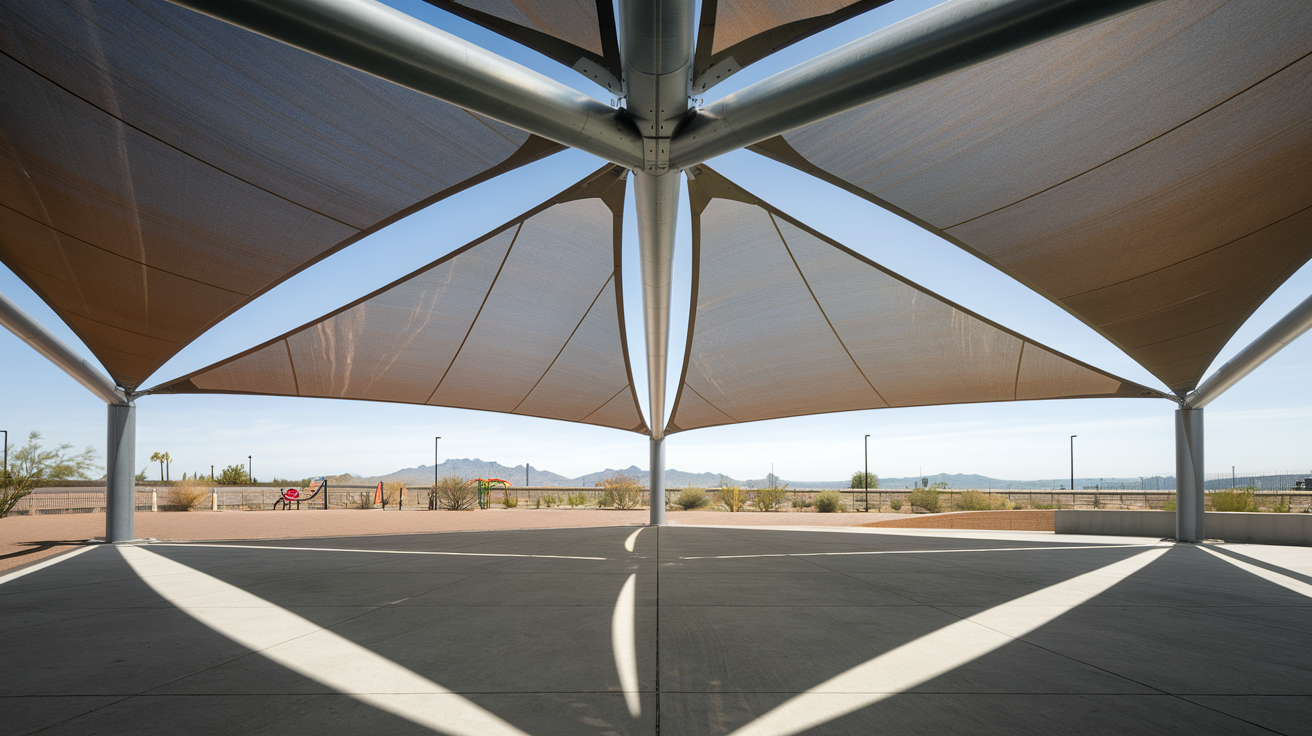
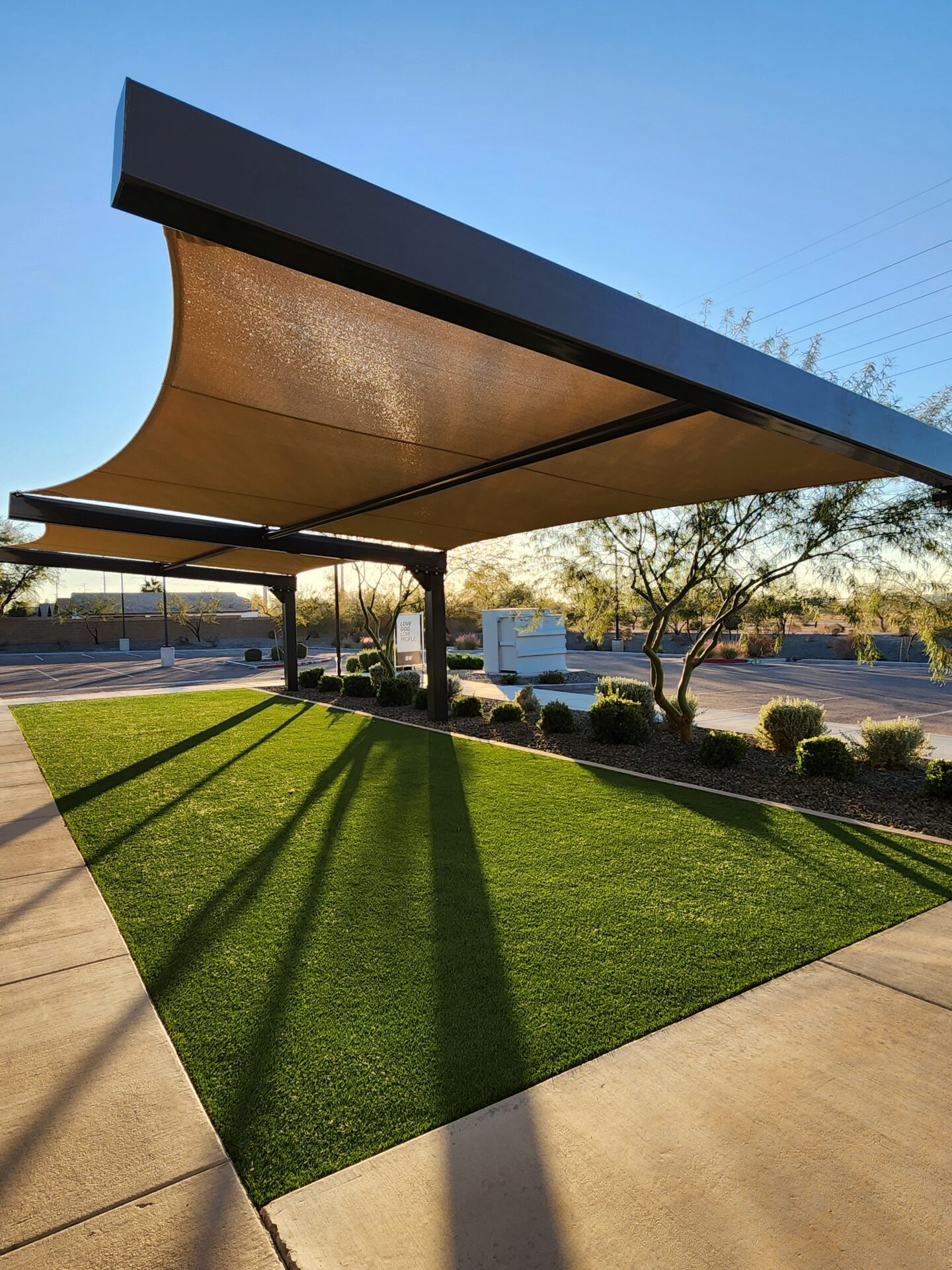
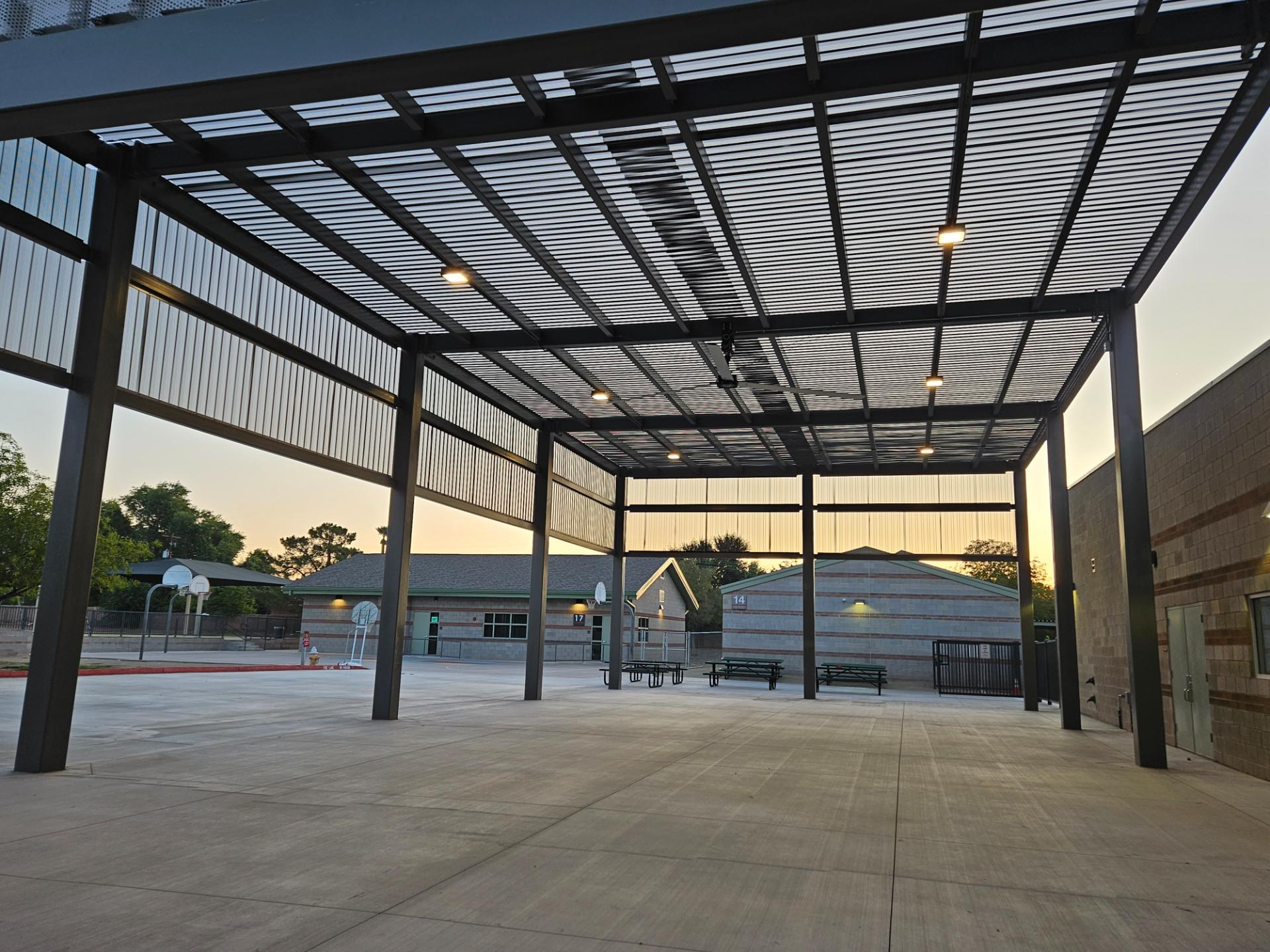
The first place to shade on a faith campus is the entry and passenger drop-off, because that is where the oldest and youngest members stand exposed while cars cycle through. A cantilevered canopy is the right tool here: it clears a 12-16 ft drive lane with no posts in the path of a car door or a wheelchair, so the column-free zone covers the loading curb completely. A typical entry run shades a 20-40 ft stretch of curb, enough for two or three vehicles to load at once during the Sunday rush.
The reason to favor a one-sided cantilever over a post-in-the-middle design is access. An older congregant transferring from a car, or a parent unloading a stroller, needs a clean path from door to door, and a flat cantilevered shade structure buys that clearance by carrying the roof off one line of heavier posts and deeper footings. Set the clearance high enough for a passenger van and the same cover handles event drop-offs, funerals, and weeknight programs without anyone ducking.
Courtyard and gathering shade is where fellowship actually happens
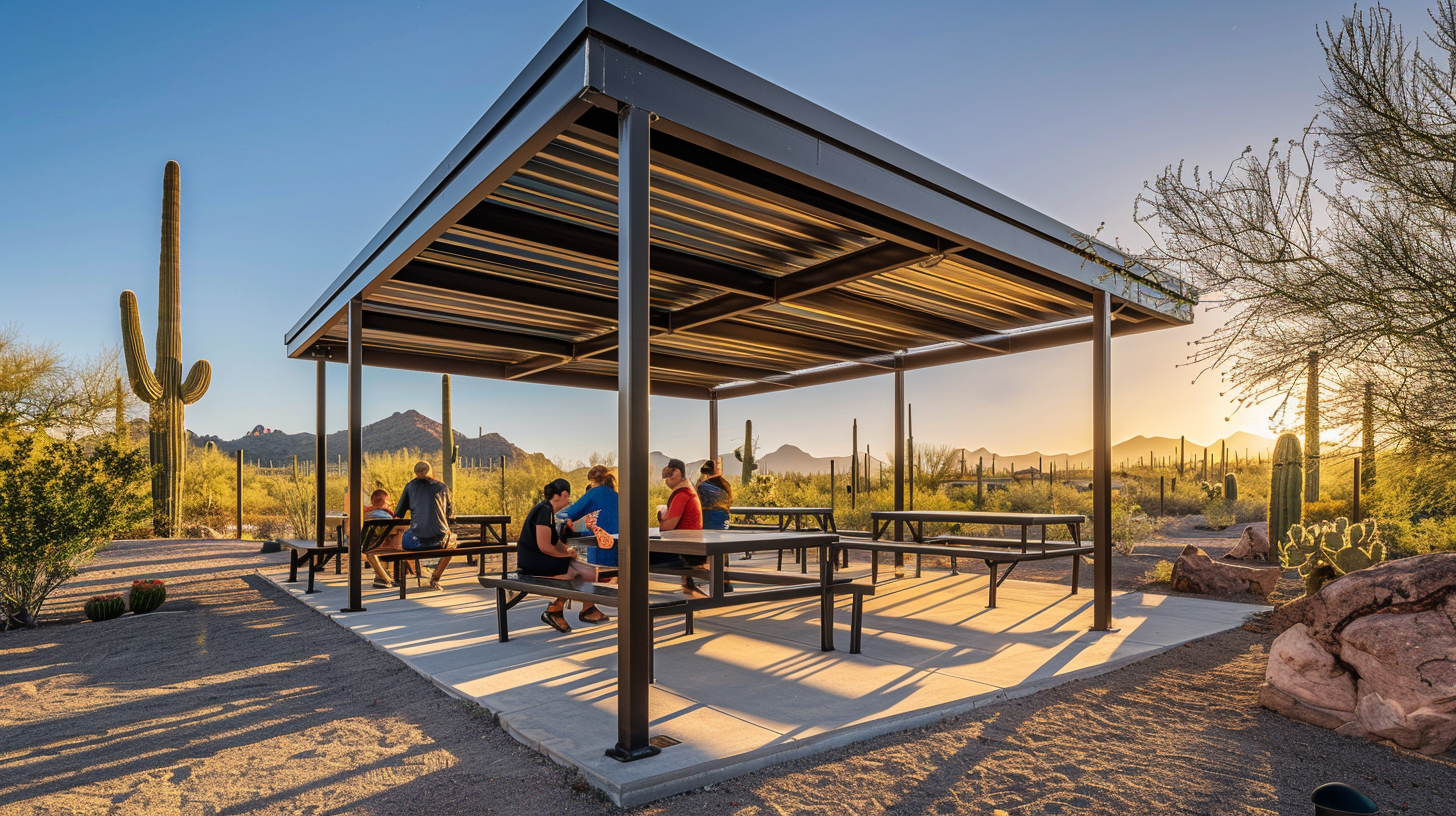
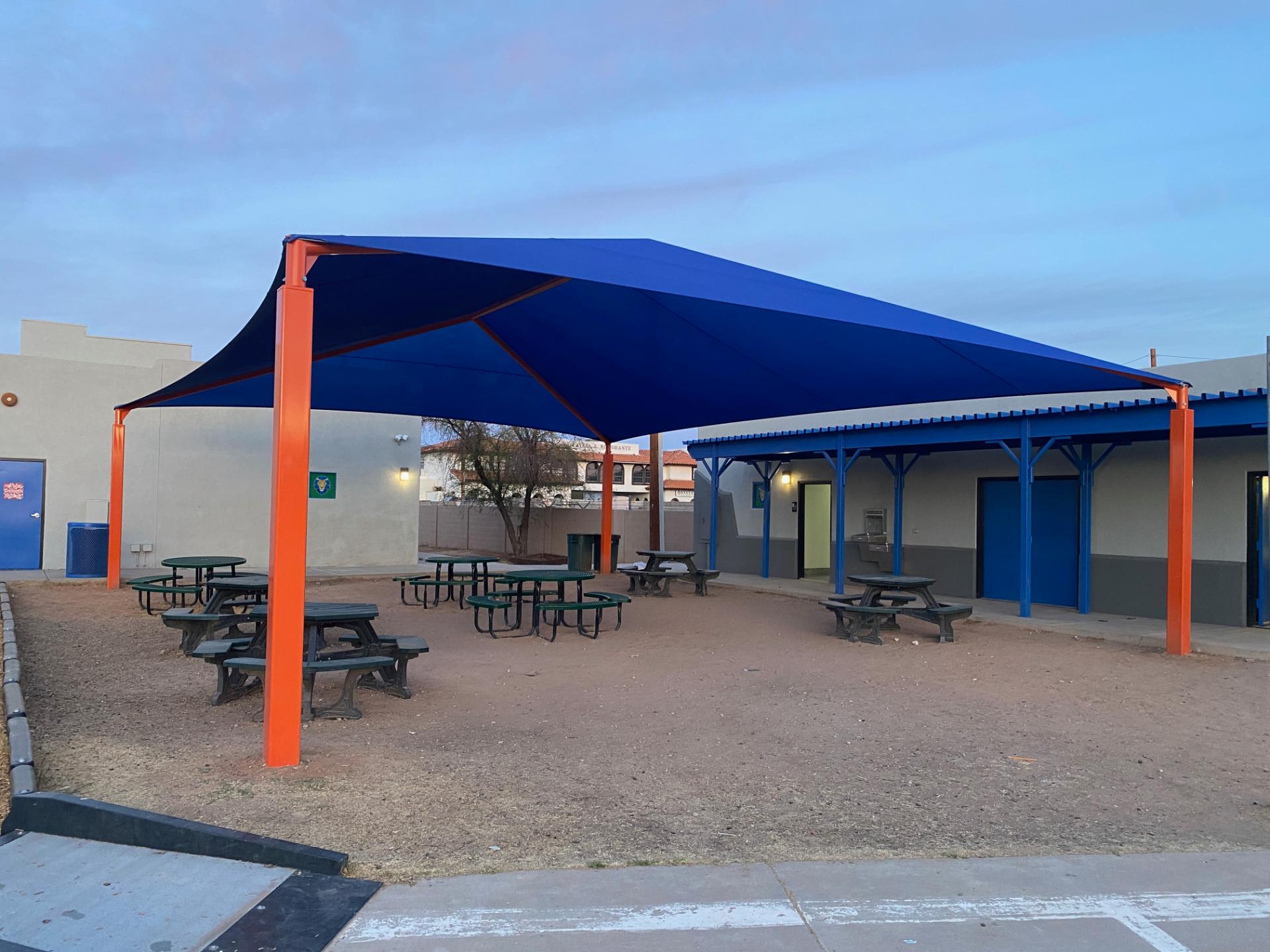
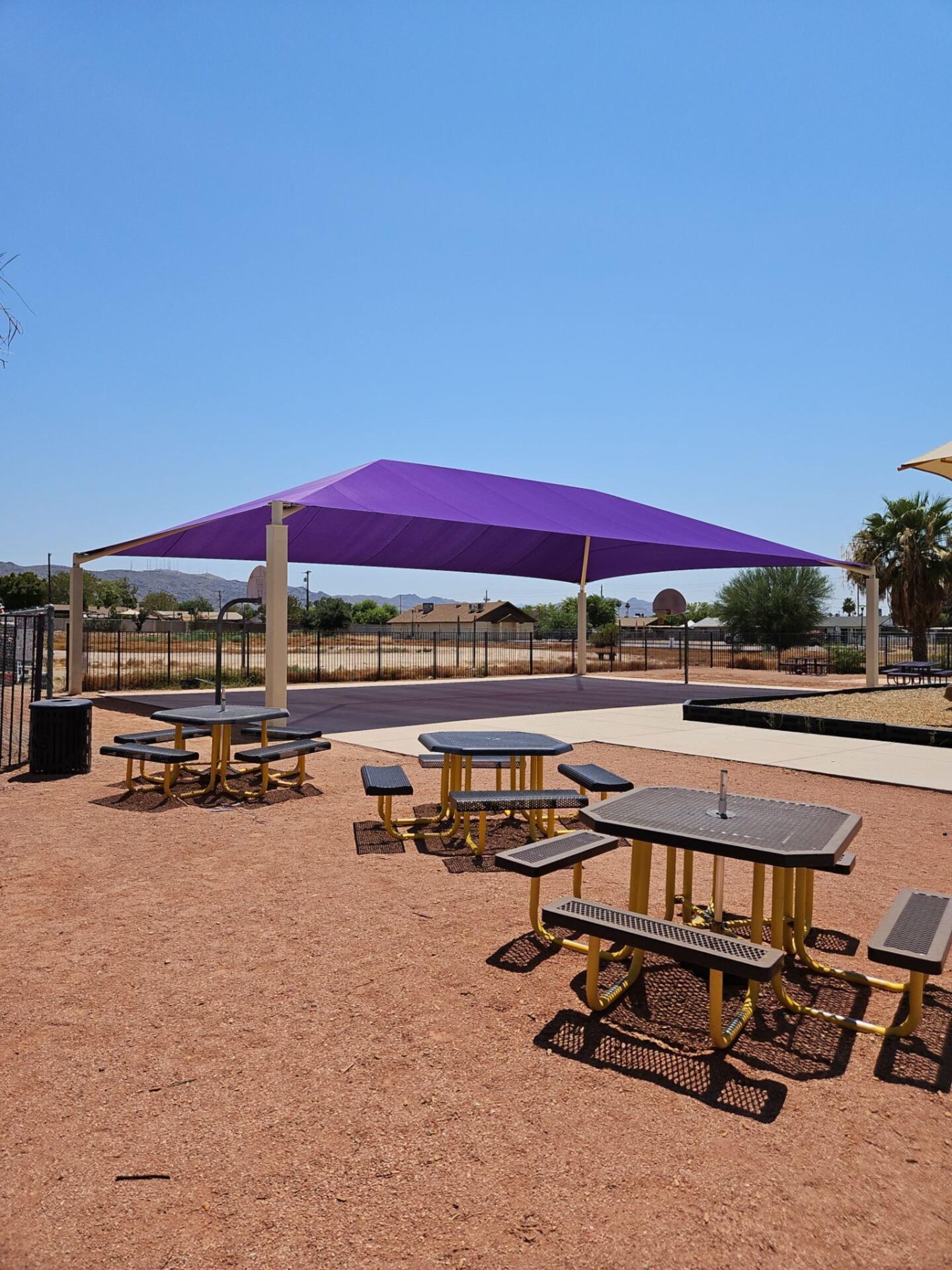
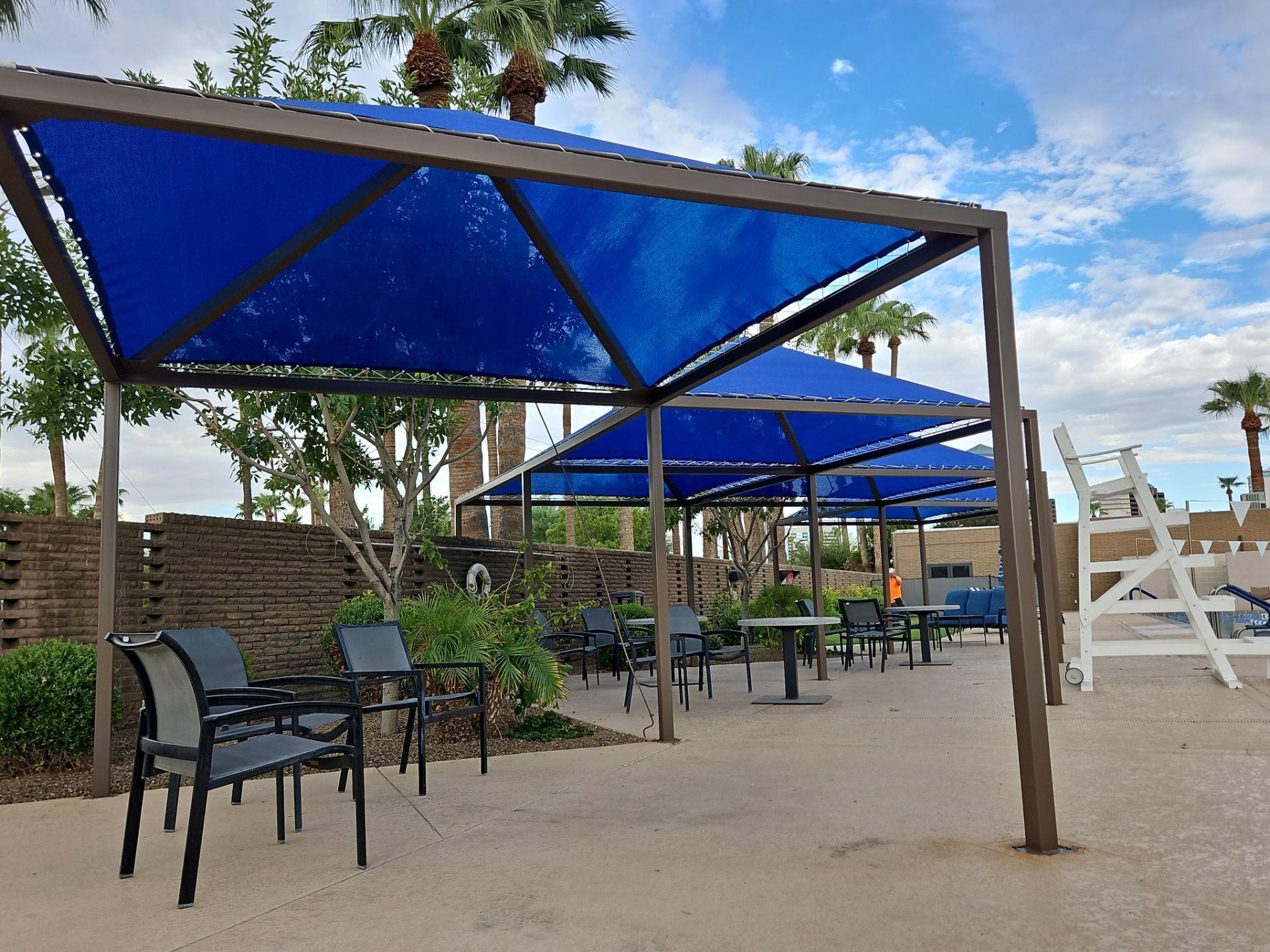
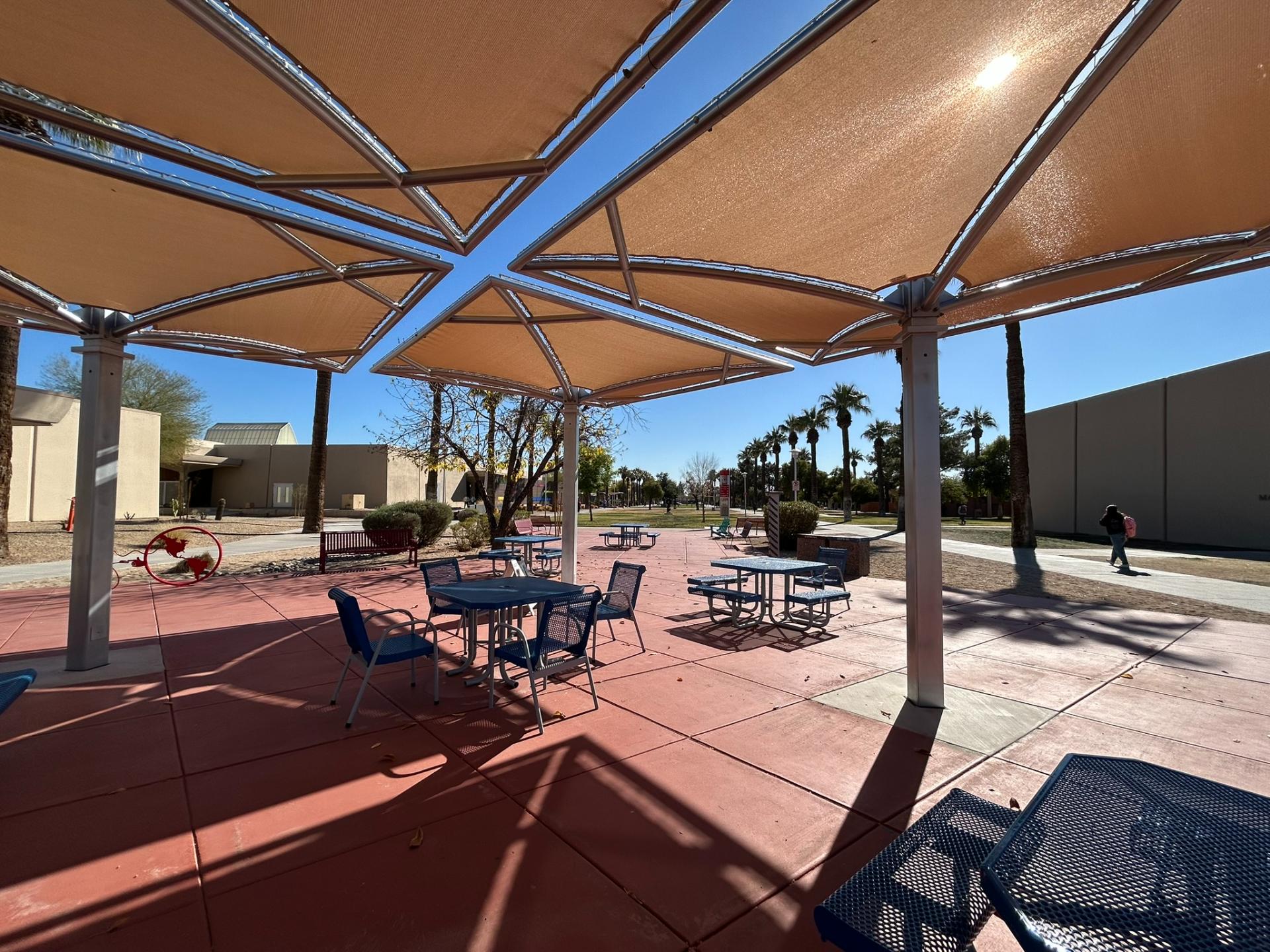
Fellowship lives outdoors between services, so the courtyard or gathering plaza is usually the highest-value shade on a campus. For a broad, open footprint where a support post or two between people is no problem, a hip canopy covers the most ground per dollar: its peaked four-slope roof sheds rain to the edges and runs at a 10-14 ft clearance, tall enough for coffee tables, greeting lines, and a crowd standing under it. A single hip structure can shade a 30-40 ft gathering bay, and larger plazas simply add bays in a grid.
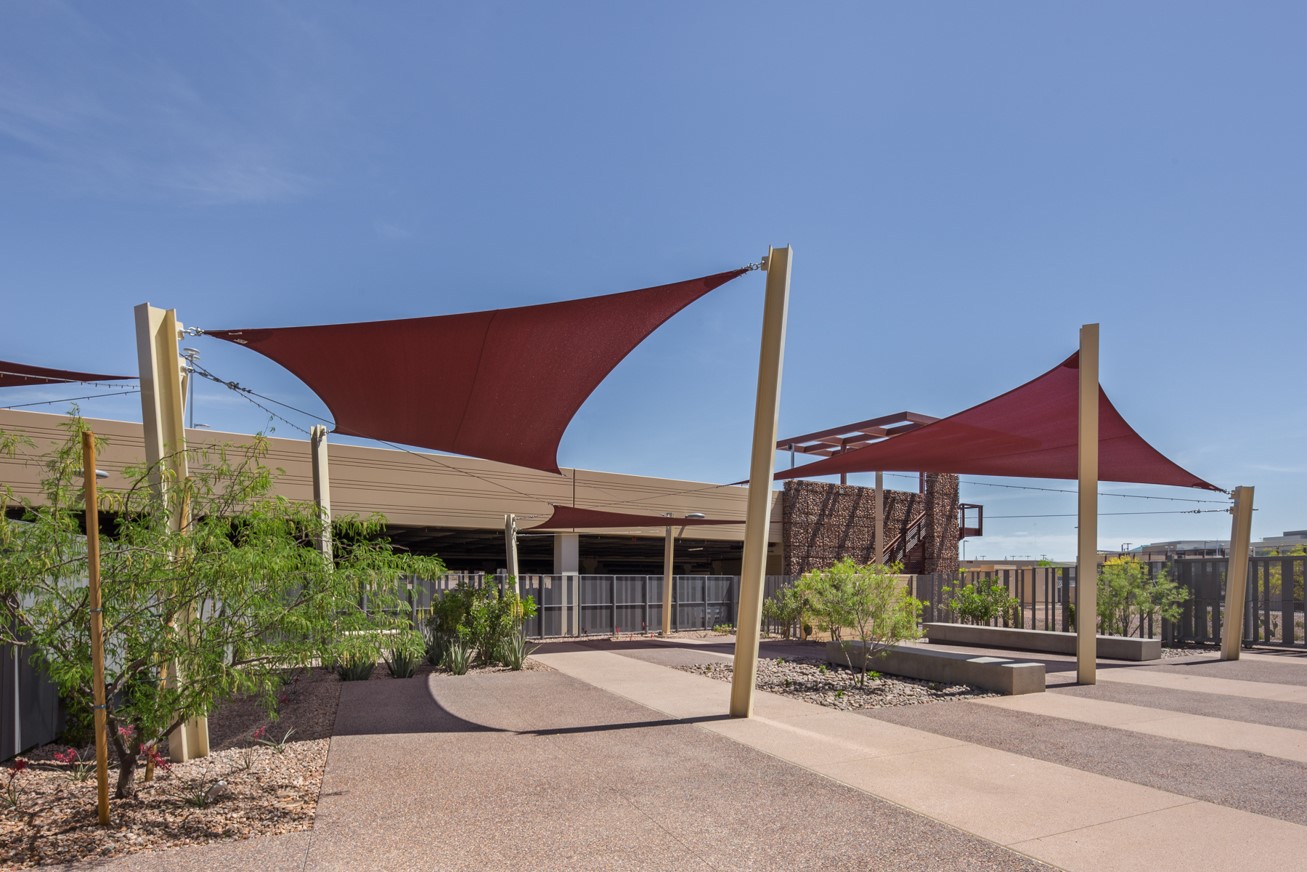
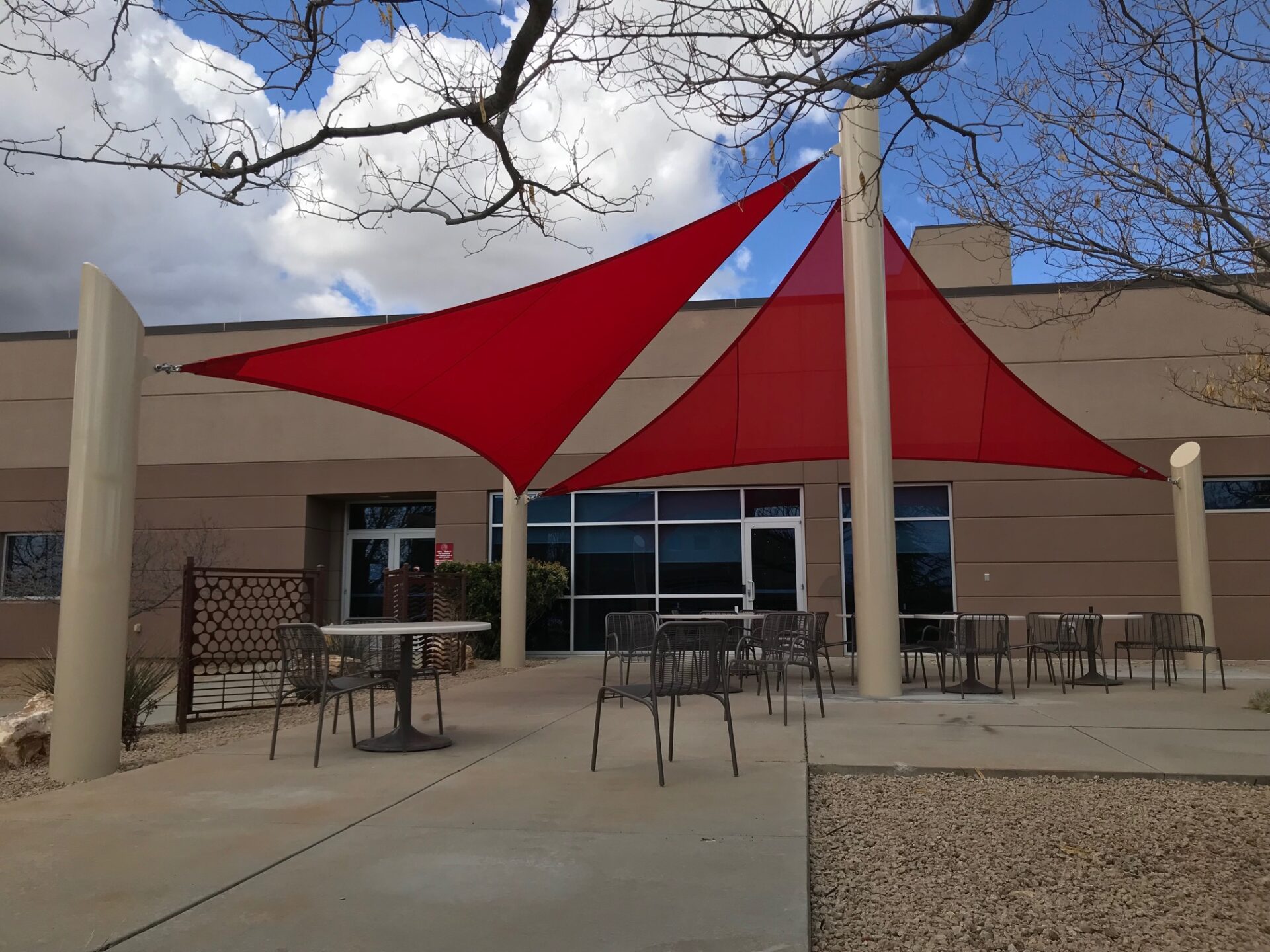
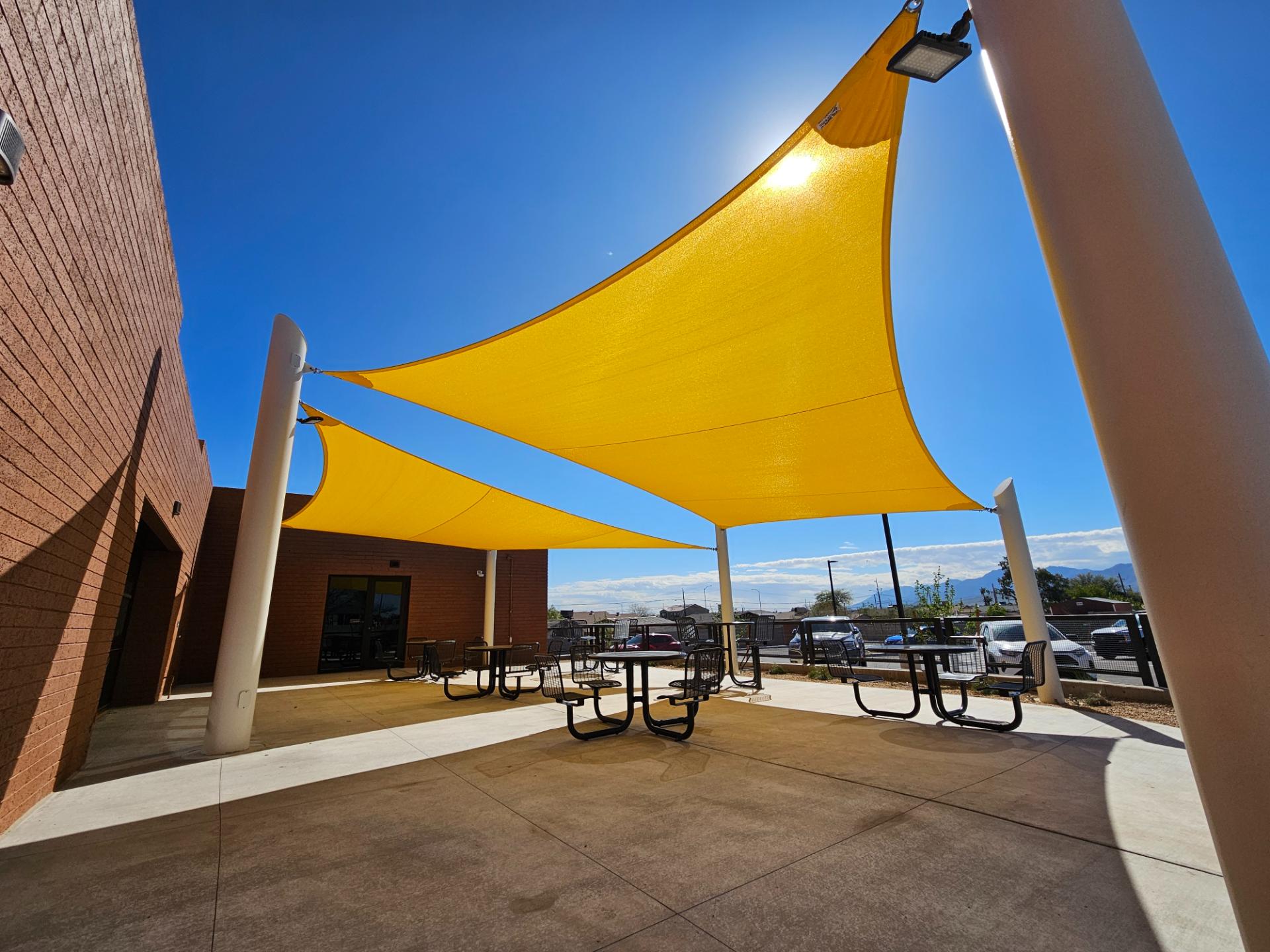
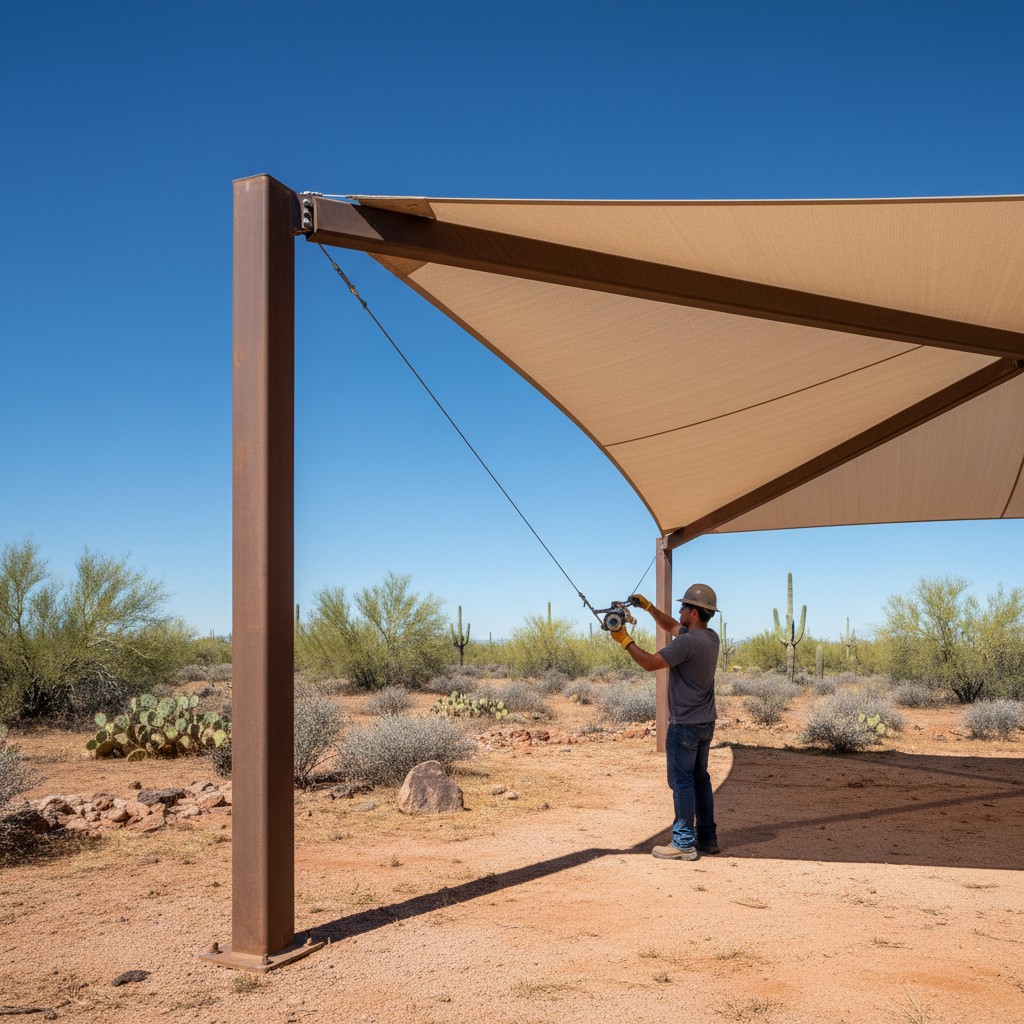
When the courtyard doubles as an outdoor sanctuary or covered patio for meals, a ramada reads more like permanent architecture, a solid pavilion roof that feels built to belong beside the building. For a design-forward entry plaza or a memorial garden where the shape itself should look intentional, a 3-point tensioned fabric sail floats a sculptural plane overhead and sheds wind cleanly while covering a smaller, accent-sized area. The honest split: hips and ramadas maximize coverage for fellowship, sails add architectural character to a focal point.
Youth and playground areas need shade rated for kids and sun
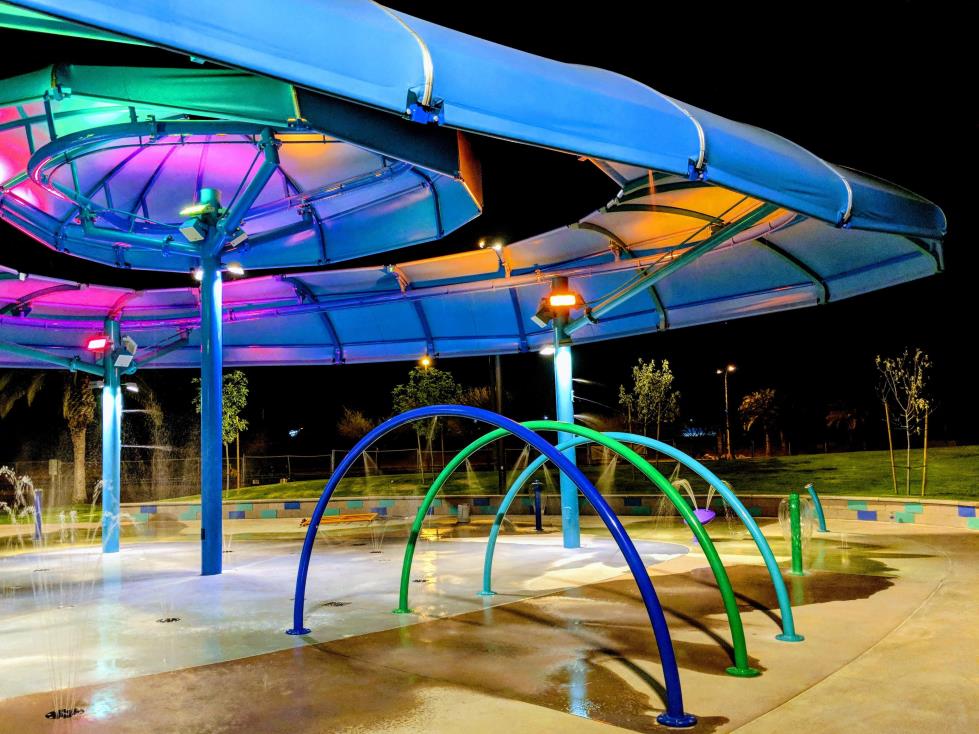
Youth play areas are the shade most parents notice first, because bare playground equipment in Phoenix can reach surface temperatures hot enough to burn small hands within seconds. A canopy that blocks 90-99% of UV drops both the burn risk and the air temperature in the play zone, which is why children’s ministry spaces and outdoor classrooms are common phase-one or phase-two projects. A hip canopy at a 8-12 ft clearance covers a full play structure, and the four-slope roof keeps the cover taut against the flutter that wears fabric fastest.
Mount the fabric high enough to clear the tallest slide or climber, and orient the cover to block the low afternoon sun, not just the noon overhead, since that western angle is what bakes equipment from roughly 2 to 6 pm. For an oddly shaped play lot or a footprint that wraps existing trees and fences, a custom-built shade structure lets the frame follow the site instead of forcing the play area to fit a stock canopy. This is also the page on the shade structures by industry hub where safety, not just comfort, drives the spec.
Materials, wind, and UV are matched to the desert and to code
The cover is knitted HDPE shade fabric, the commercial standard, blocking roughly 90-99% of UV depending on weave density and commonly carrying a 10-15 year warranty. Phoenix sun sits at the demanding end of that window, so the fabric is best treated as a long-lived consumable on a permanent frame rather than a forever surface. The structure underneath is powder-coated steel, typically 2-3 inch tube for posts, finished with a baked-on coat that resists the chalking and fading that desert UV forces on cheaper brushed paint.
Every structure we build is engineered to Arizona building code and ASCE 7 wind loads, with Valley design wind speeds landing roughly in the 90-115 mph range depending on the site and exposure. That matters on a church campus because the same open courtyards and drop-offs that make good gathering spots also catch monsoon gusts; a microburst can top 60 mph in minutes. Footings are sized to the soil, we provide stamped drawings for the permit, and the sloped or tensioned roof shapes spill wind rather than catching it like a flat panel. Walkways between buildings round out the campus, where a run of cantilever or hip bays shades the path so members move between the sanctuary, fellowship hall, and classrooms without crossing open sun.
Budget, phasing, and getting the board to yes
Most faith campuses build shade in phases, and that is the financially smart way to do it rather than a compromise. A board or building committee can approve the highest-need structure first, the entry drop-off or the children’s play area, then add the courtyard and walkways across later budget cycles. Because every Total Shade frame is permanent powder-coated steel with a replaceable HDPE skin, a phase-one structure installed this year sits ready for a re-cover in 10-15 years without rebuilding the steel, so early spending is not stranded.
Phasing also helps the approval conversation. A committee weighing a single covered drop-off against a full-campus master plan finds the smaller decision easier to fund through a designated gift or a capital line item, and a successful first structure makes the next phase an easy vote. To keep the architecture cohesive across phases, pick a frame family and fabric color in phase one and carry it forward, so the courtyard added in year three matches the entry built in year one. Total Shade has fabricated commercial shade in the Valley for 25-plus years, and stamped engineering on each phase keeps every city permit straightforward. For the East Valley specifically, see commercial shade structures in Chandler, AZ.
Common mistakes and the honest caveats
The most frequent mistake on a church campus is shading the wrong hour. A cover sized only for the noon sun leaves the entry and play area exposed to the low western glare from roughly 2 to 6 pm, which is when after-school programs and evening services actually run, so orientation matters as much as square footage. The second mistake is treating the project as one all-or-nothing build; campuses that phase by need get usable shade sooner and spread the cost across approving cycles.
Three caveats worth saying plainly. The fabric is consumable, not permanent; plan and budget for a re-cover inside the 10-15 year window rather than treating it as a failure, and a canopy replacement reuses the standing steel so the next cycle costs far less than a new build. Wind ratings have real limits, and a haboob beyond the stamped design speed can damage any canopy, which is why the engineered number on the drawing matters more than a marketing claim. Finally, Valley dust settles on the fabric and needs an occasional rinse to keep the weave breathing and the campus looking cared-for. None of these are reasons to wait; they are the maintenance reality of any honest shade investment.
Shade Structures We Build
Frequently Asked Questions
What shade options work best for a church entry and courtyard?
For the entry and drop-off, a flat cantilevered structure clears the drive lane with no posts in the path, so cars and wheelchairs load under cover with a clean 12-16 ft clearance. For the courtyard, a hip structure or ramada covers the most ground per dollar over an open gathering footprint, while a 3-point tensioned sail adds architectural character to a focal entry plaza or memorial garden. Most campuses mix the two: cantilevers and hips for coverage, sails for design accents.
Can we build the shade in phases to fit our budget?
Yes, and phasing is the smart way to fund a campus. A board can approve the highest-need structure first, usually the entry drop-off or the children’s play area, then add the courtyard and walkways in later budget cycles. Because every frame is permanent powder-coated steel with a replaceable HDPE cover, a phase-one structure stays ready for a re-cover in 10-15 years without rebuilding the steel, so early spending is never stranded.
How do we get our board or building committee to approve it?
Start with the single highest-need structure rather than a full-campus master plan, because a smaller, specific decision is easier to fund through a designated gift or a capital line item. We provide stamped engineering drawings for the city permit on each phase, which removes the unknowns a committee worries about. A successful first structure, like a covered drop-off, typically makes the next phase an easy vote.
How long do church shade structures last in Phoenix sun?
The powder-coated steel frame is built to last decades, while the knitted HDPE fabric cover commonly carries a 10-15 year warranty and blocks roughly 90-99% of UV. Phoenix sun sits at the demanding end of that window, so treat the fabric as a long-lived consumable on a permanent frame. When it finally fades, a re-cover reuses the standing steel and swaps only the skin, which costs far less than a new build.
Will the structures hold up to monsoon winds?
Yes, every structure is engineered to Arizona building code and ASCE 7 wind loads, with Valley design wind speeds landing roughly in the 90-115 mph range depending on the site. The sloped hip roof and tensioned sail shapes spill wind rather than catching it like a flat panel, and footings are sized to the soil. A monsoon microburst can top 60 mph, and any canopy can be damaged beyond its stamped design speed, which is why the engineered number on the drawings matters most.