or call (602) 265-0905 — no-obligation, on-site.
Car Dealership Shade Structures in Arizona
Engineered inventory canopies, service-drive covers, and customer shade for Arizona auto dealers.
Since 1998
Designing & building Arizona shade
In-House Fabrication
Built at our Phoenix shop
Engineered & Permit-Ready
Stamped drawings for AZ wind loads
Free On-Site Quote
No-obligation project assessment
Total Shade builds engineered shade structures for Arizona car dealerships — inventory and display-lot canopies, customer and service-drive covers, and employee break areas — fabricated in our Phoenix shop and engineered to Maricopa County code. A dealership lot is one of the harshest shade jobs in the Valley: hundreds of vehicles baking on open asphalt that can hit 150°F surface temperature, paint and interiors degrading under a UV load that runs year-round, and a sales floor that lives or dies on how clean the front row looks. We’ve stretched commercial-grade knitted HDPE over powder-coated steel for 25+ years at 2331 W. Holly St, sizing each canopy to the bay span and wind code rather than a stock footprint. Covered inventory keeps cabins 20–30°F cooler, blocks 90–99% of UV, and presents a row that photographs clean.
Inventory and display-lot canopies
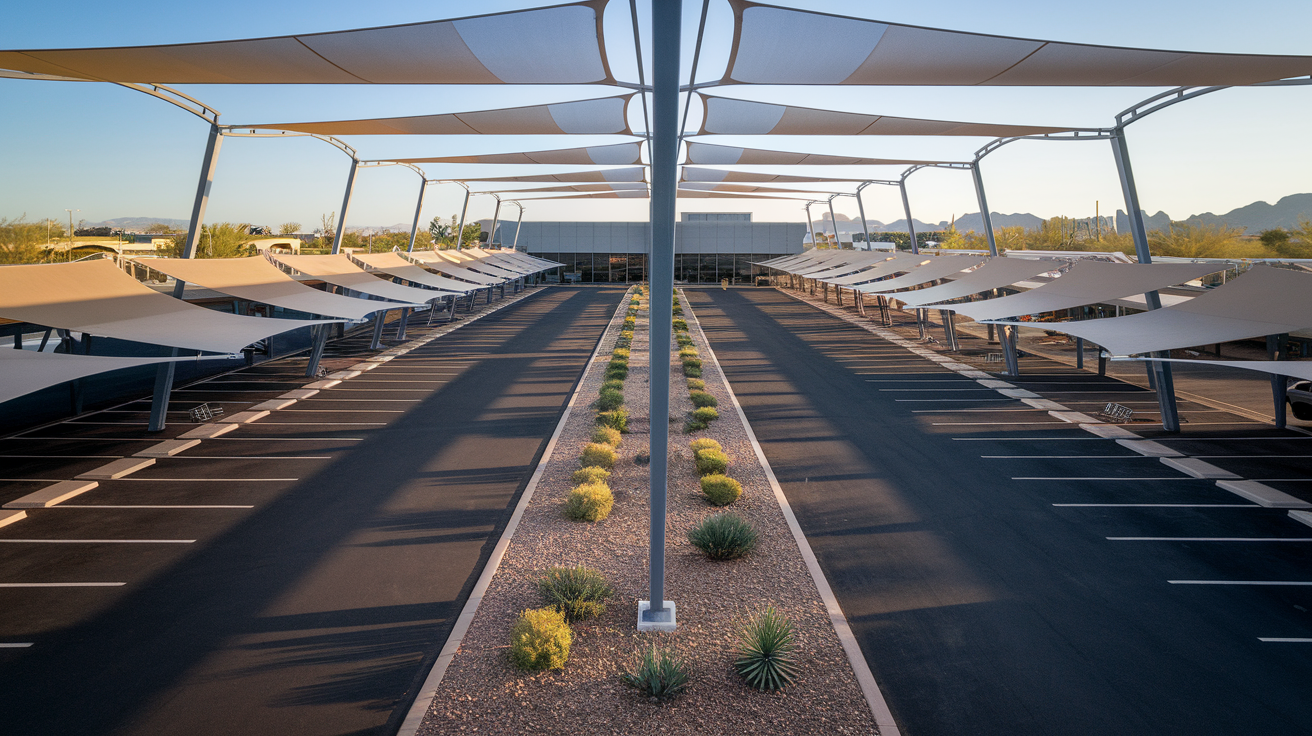
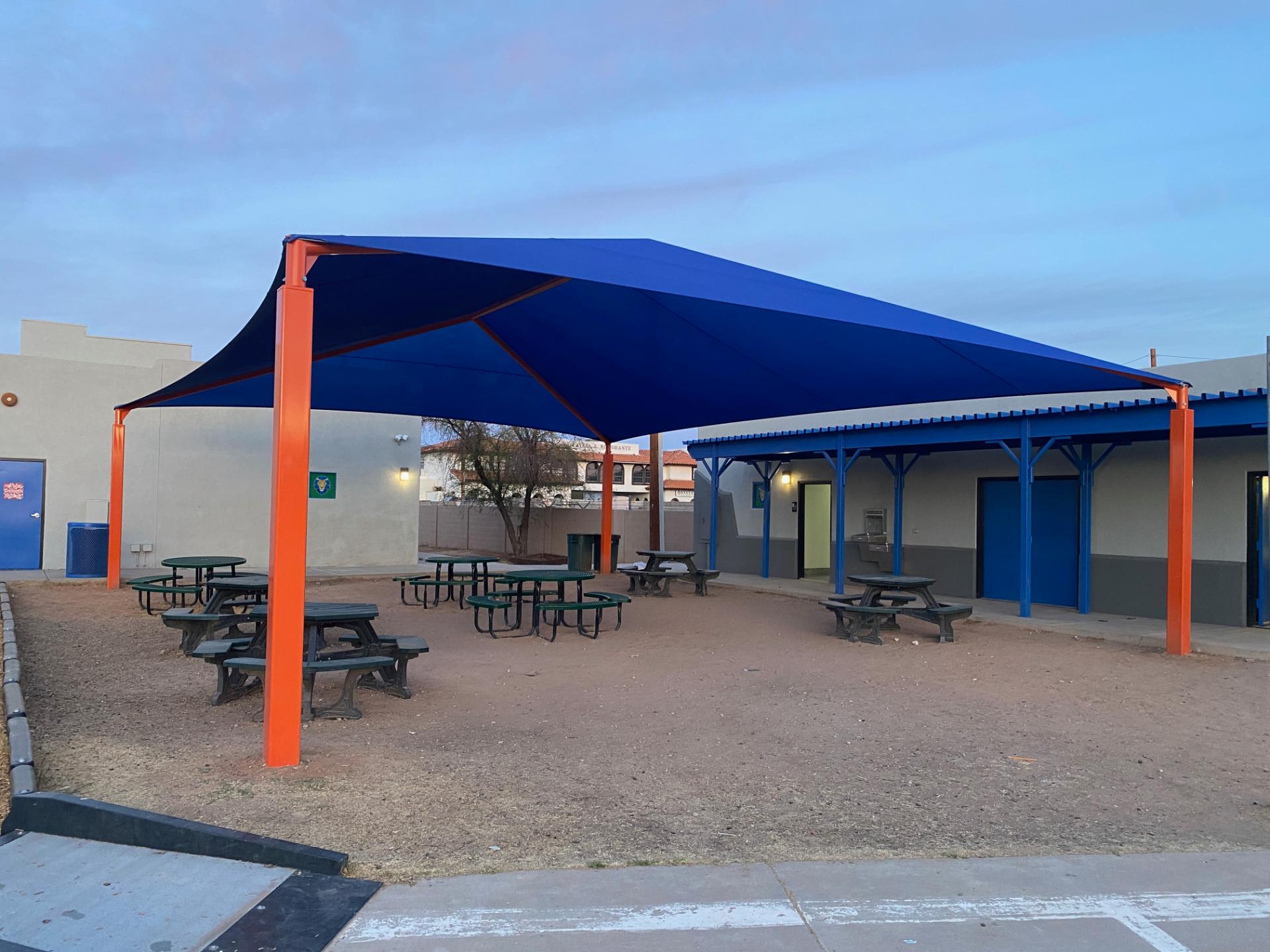
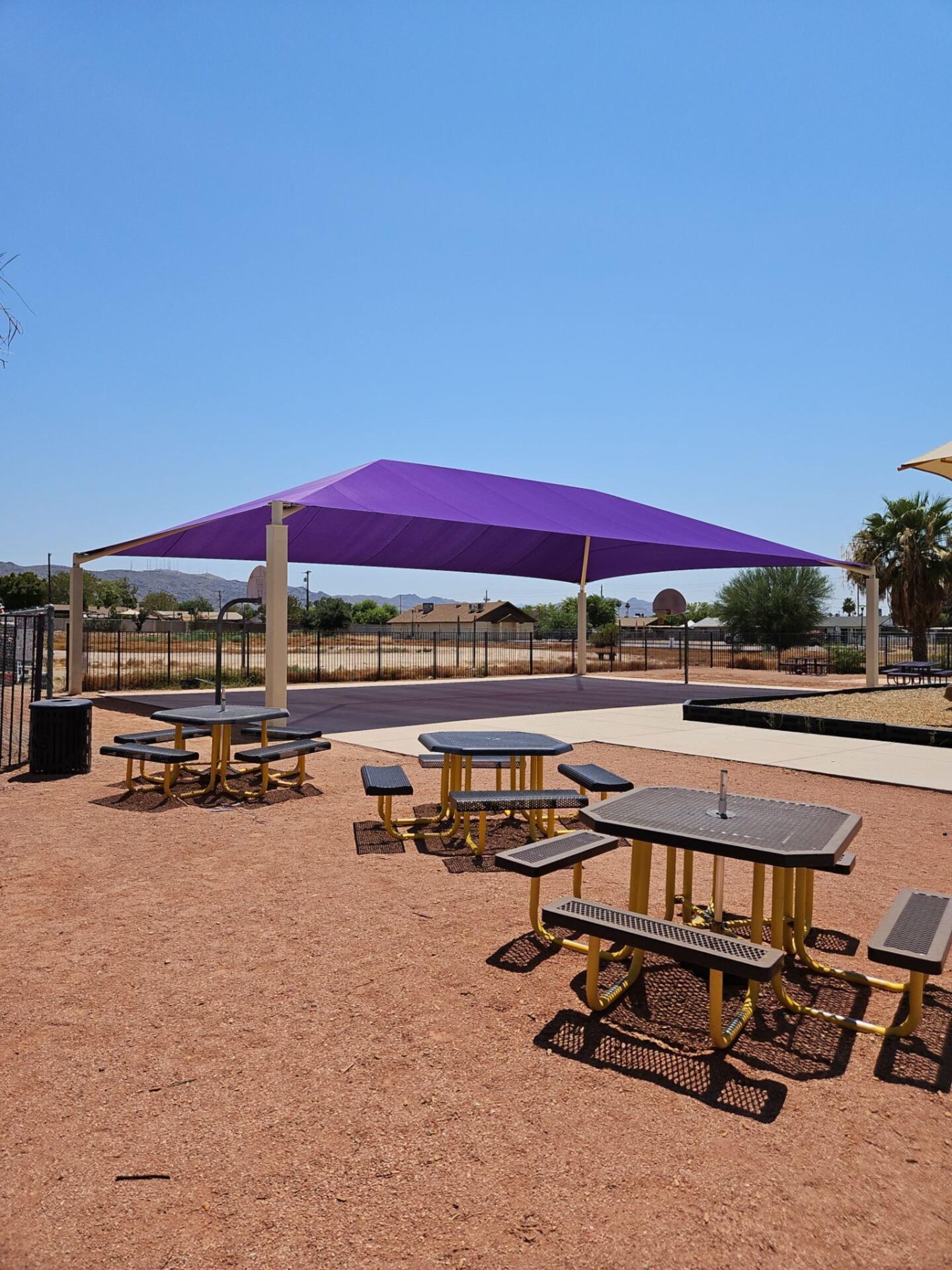
The biggest shade win on a dealership lot is the inventory line, because that’s where the most square footage and the most depreciating finish sit exposed. A long display row needs a repeating steel-bay canopy that covers two or three rows of vehicles on a predictable column grid, with spans wide enough that a porter can pull a car out without threading between posts. A hip structure handles long inventory runs cost-effectively — the four-sided slope sheds monsoon rain and dust toward the perimeter, and the per-shaded-foot cost stays low across repeating bays.
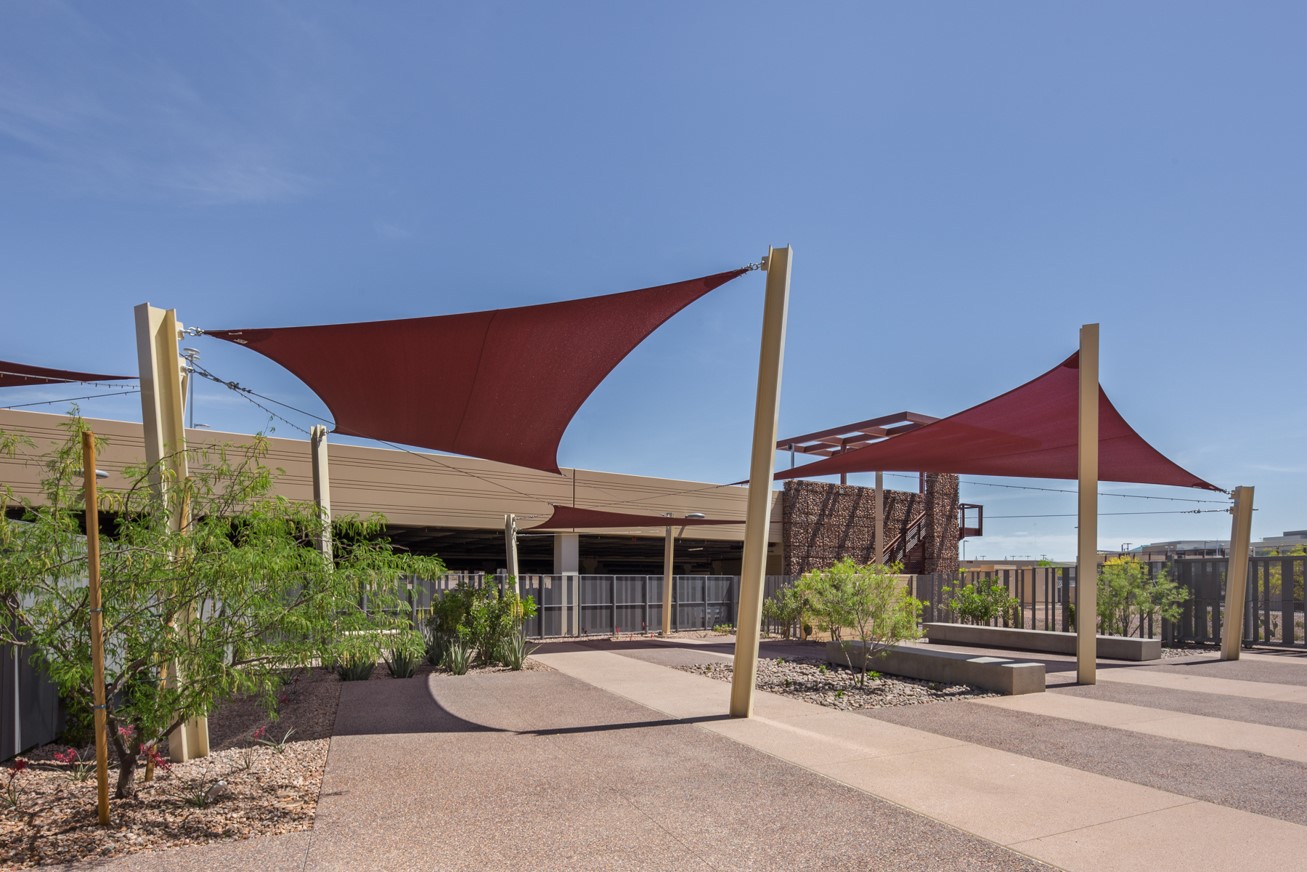
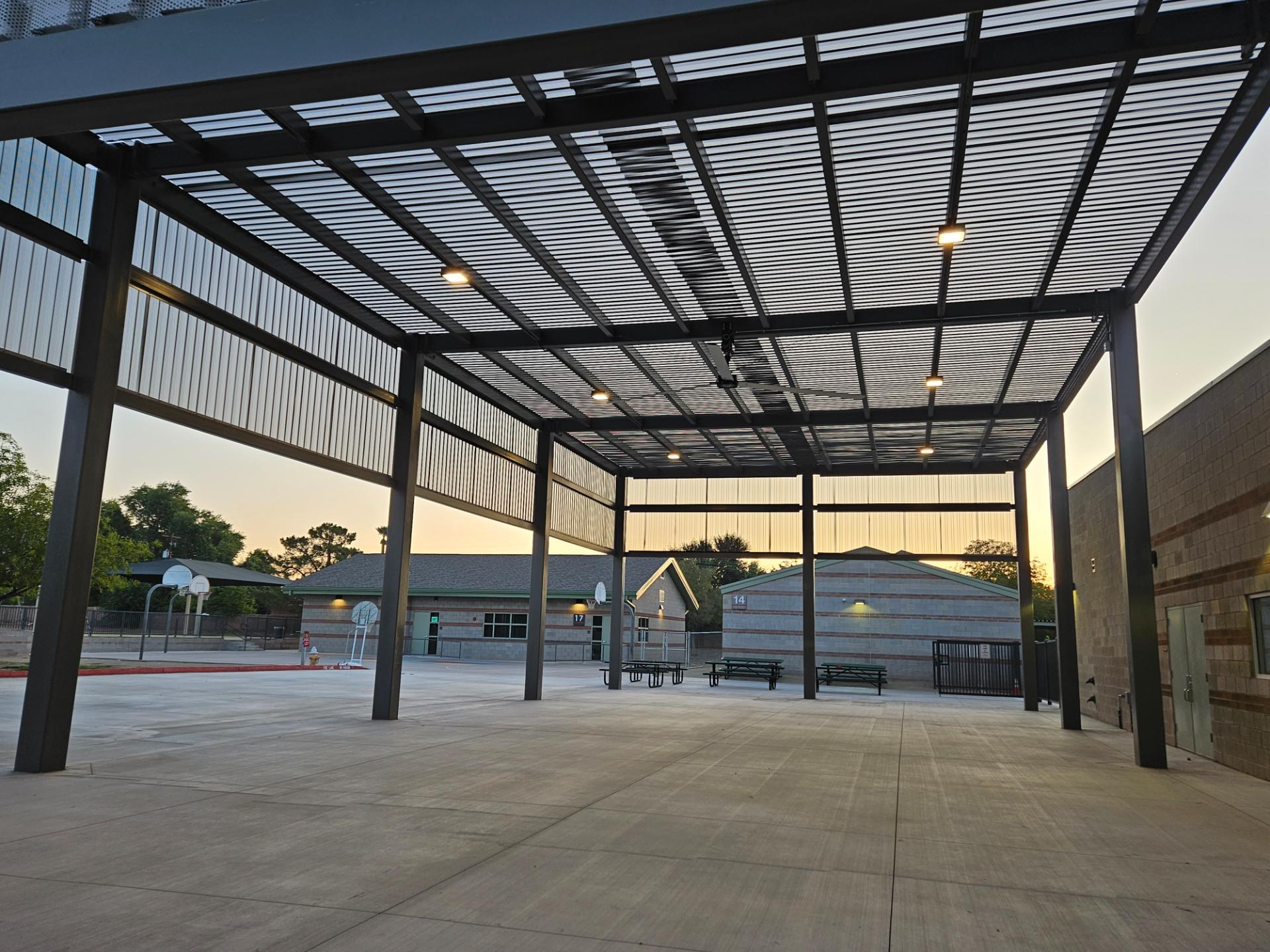
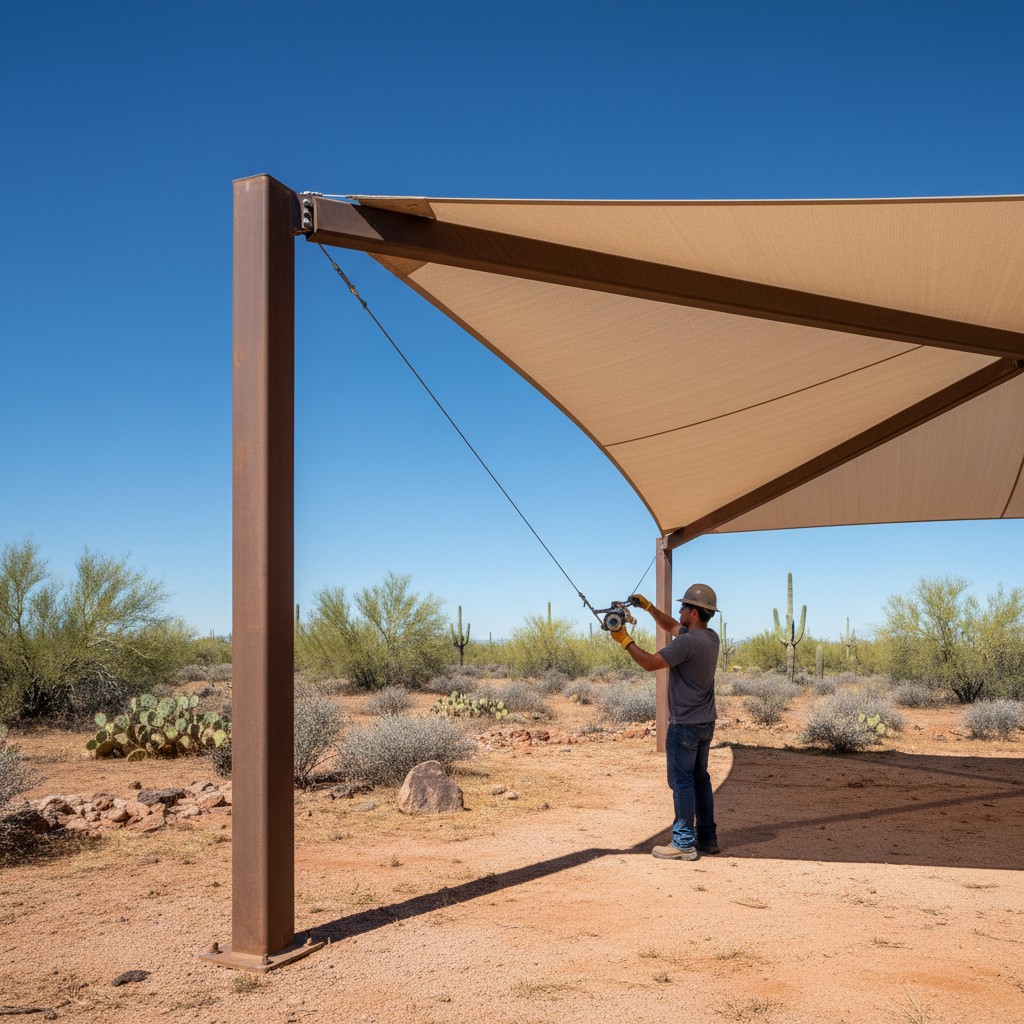
Bay widths on dealership canopies commonly run 18–24 ft of clear span to fit a vehicle row plus drive aisle, with column lines set on a 20–30 ft grid down the run. For the front display row facing the road — the inventory a customer sees first — a flat cantilevered shade structure puts all the posts on one side, leaving the showcased line clean and post-free from the street. That single design choice is the difference between a front row that looks like a parking deck and one that looks like a showroom under cover.
Customer and service-drive cover
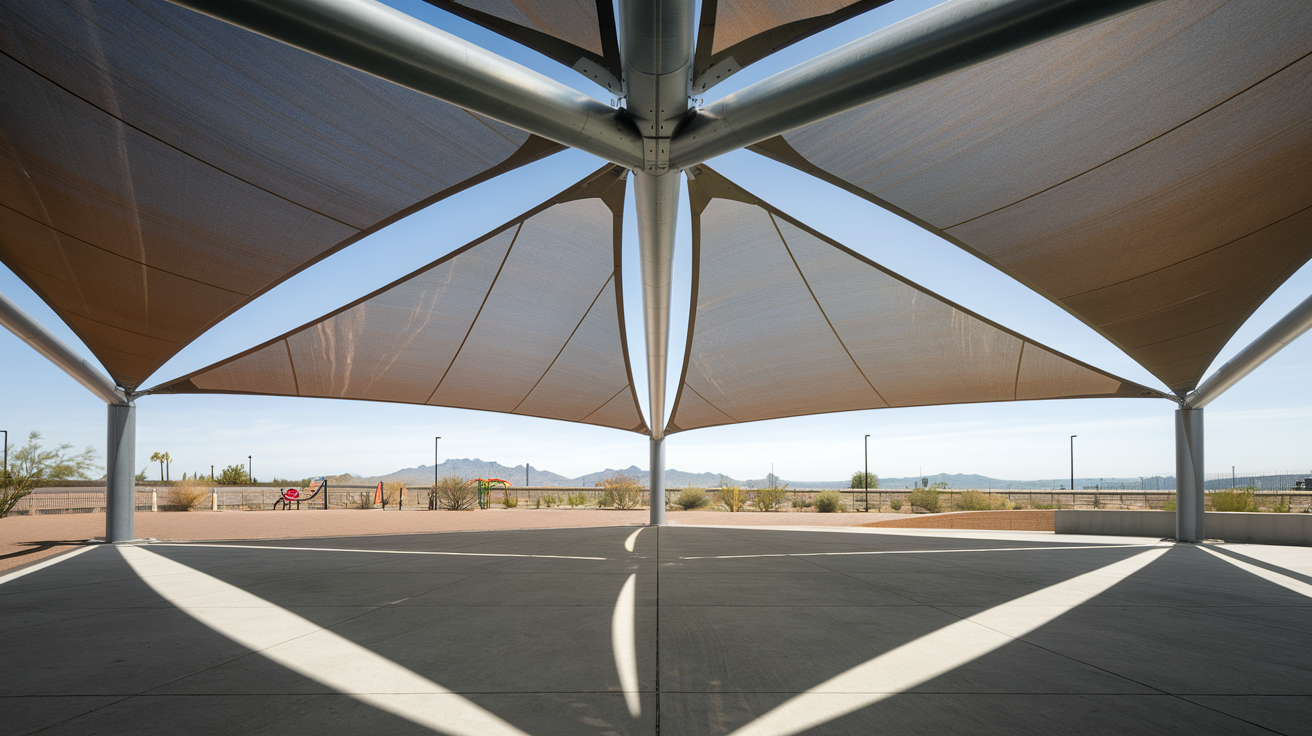
Customer-facing shade does for people what inventory shade does for paint, and the service write-up lane is where most dealers feel the gap first. A covered service drive lets a customer hand off keys and an advisor walk a vehicle in the shade instead of at 108°F in July, which is a measurable comfort and retention factor on the fixed-ops side. The delivery bay — where a buyer takes their first photos of a new vehicle — earns shade for the same reason a showroom does.
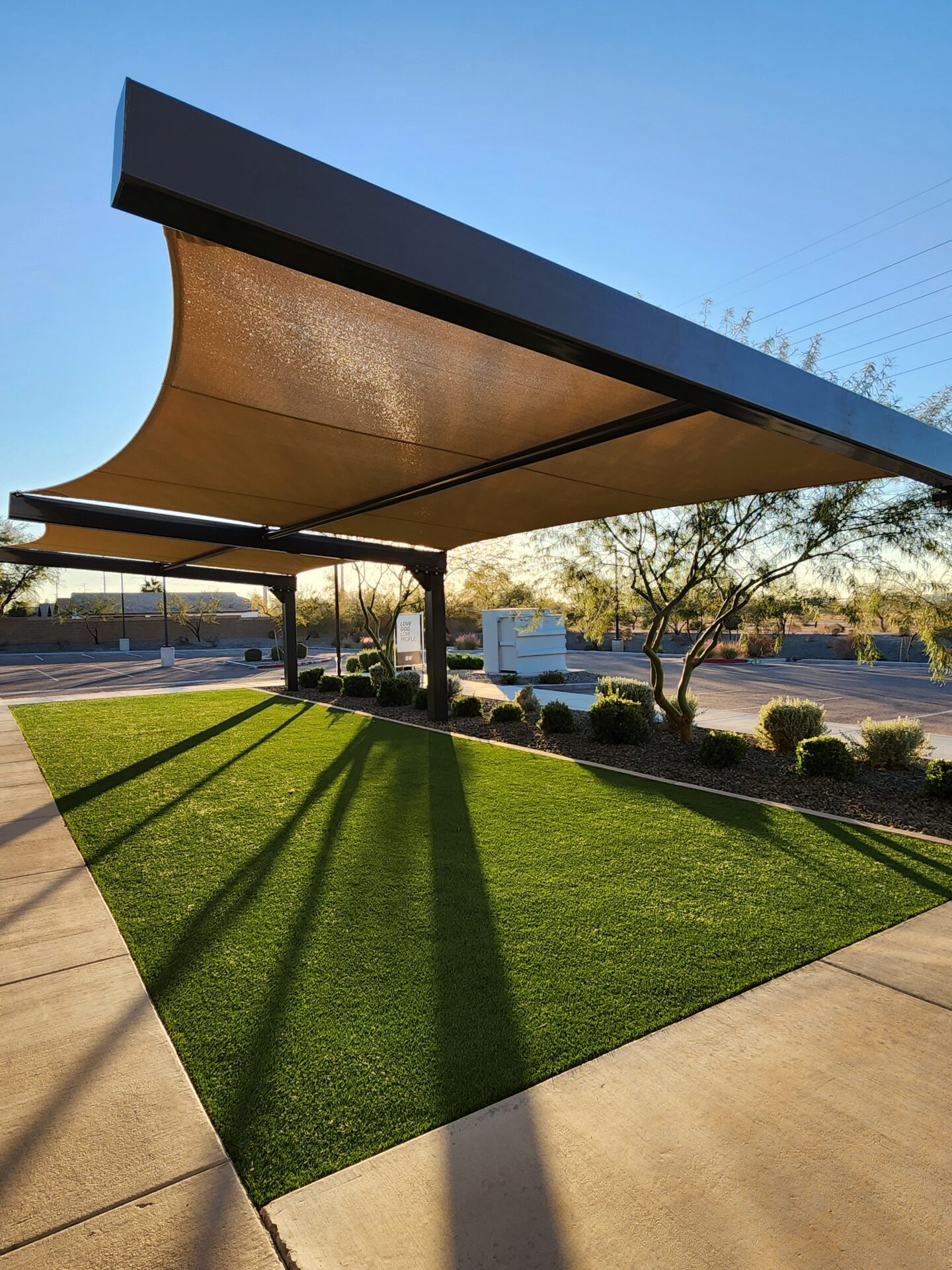
A cantilevered canopy fits the service drive because it leaves the lane fully open: cars pull straight through with no center posts to dodge. A cantilevered cover typically reaches 12–16 ft of cantilever off a single post line, enough to span a write-up lane or a two-lane drive-through. Where the entrance wants a more substantial peaked roofline that reads as architecture, a max hip structure carries wider spans on heavier steel for a covered porte-cochère or delivery canopy.
Why covered inventory protects vehicles
Shade pays for itself on a dealership lot through reduced reconditioning, not just customer comfort. Continuous Arizona sun fades paint clearcoat, cracks dashboards, hazes headlights, and degrades interior plastics — the same damage a buyer inspects for, accelerated. Knitted HDPE shade fabric blocks roughly 90–99% of UV depending on weave density, which removes the single largest driver of that wear.
The heat numbers are just as direct. An exposed cabin in a closed vehicle can climb 40–50°F above ambient on a clear summer afternoon; under a ventilated fabric canopy, surface and cabin temperatures typically run 20–30°F cooler than open asphalt. That cuts the re-detailing a porter does before delivery, slows interior aging across a 60–90 day average lot time, and keeps the inventory delivery-ready. Shade behaves less like a luxury line item here and more like preventive maintenance on the whole lot.
Multi-bay engineering and clear spans
The engineering on a dealership canopy is mostly about spanning vehicle rows without dropping posts into drive aisles, and that drives the steel. We size column and beam gauge to the actual span rather than a one-size default — a 24 ft clear-span bay carrying monsoon wind load needs more steel than an 18 ft one, and pretending otherwise is how a canopy starts sagging in three years. Maricopa County structures are engineered to Arizona building code and ASCE 7 wind loads, with Valley design wind speeds running roughly 90–115 mph.
For a large continuous lot, repeating hip bays on a shared column grid cover the most area per dollar; where a layout is irregular or has to wrap an existing building, custom-built shade structures let us match the footprint instead of forcing the lot to fit a catalog unit. Fabric tops breathe, so a gust passes through the canopy rather than loading it like a solid sail — which is why tension hardware and re-tension points matter as much as the cloth. Total Shade is one of several Valley fabricators serving auto dealers across the shade structures by industry hub, with Chandler-area dealerships a frequent build.
Finishes, branding, and permitting
A dealership canopy is a brand surface, so the finish has to match the franchise, not fight it. We powder-coat steel frames to a specified color so a canopy reads as part of the store’s architecture — body color matched to the building, posts in a brand-consistent finish, fabric in a tone that complements rather than clashes. Powder coat also resists the Valley’s UV and dust abrasion better than wet paint, holding color across a 10–15 year service life.
On permitting, be straight about the division of labor: a commercial dealership canopy requires a building permit, and the city reviews it. We provide the stamped engineering drawings, load calculations, and foundation details for submittal and coordinate revisions, but the municipal plan-review queue runs on its own timeline — typically a few weeks, longer if the site triggers zoning or setback conditions near a frontage road. Brand-mandated specs from the manufacturer’s facility-image program can add review steps, so it’s worth confirming those before fabrication starts.
Honest caveats for dealership shade
A few limits are worth saying plainly before a dealer signs. Shade fabric is a consumable — over a 10–15 year life it can be re-covered on the same steel frame, which is far cheaper than rebuilding, but it does mean a planned re-cover down the road rather than a permanent surface. Wind ratings have a ceiling: a canopy engineered to code can still be damaged by an extreme monsoon microburst, where gusts exceed 60 mph, and that’s true of every fabric structure on the market.
Dust is the other reality. A dealership lot near a frontage road collects grit, so a fabric top needs periodic cleaning and a re-tension check every year or two to stay taut and keep the warranty intact. None of this is a reason to skip shade — the reconditioning and customer-comfort math still favors covering the lot. It’s a reason to plan maintenance into the number instead of treating the canopy as install-and-forget.
Shade Structures We Build
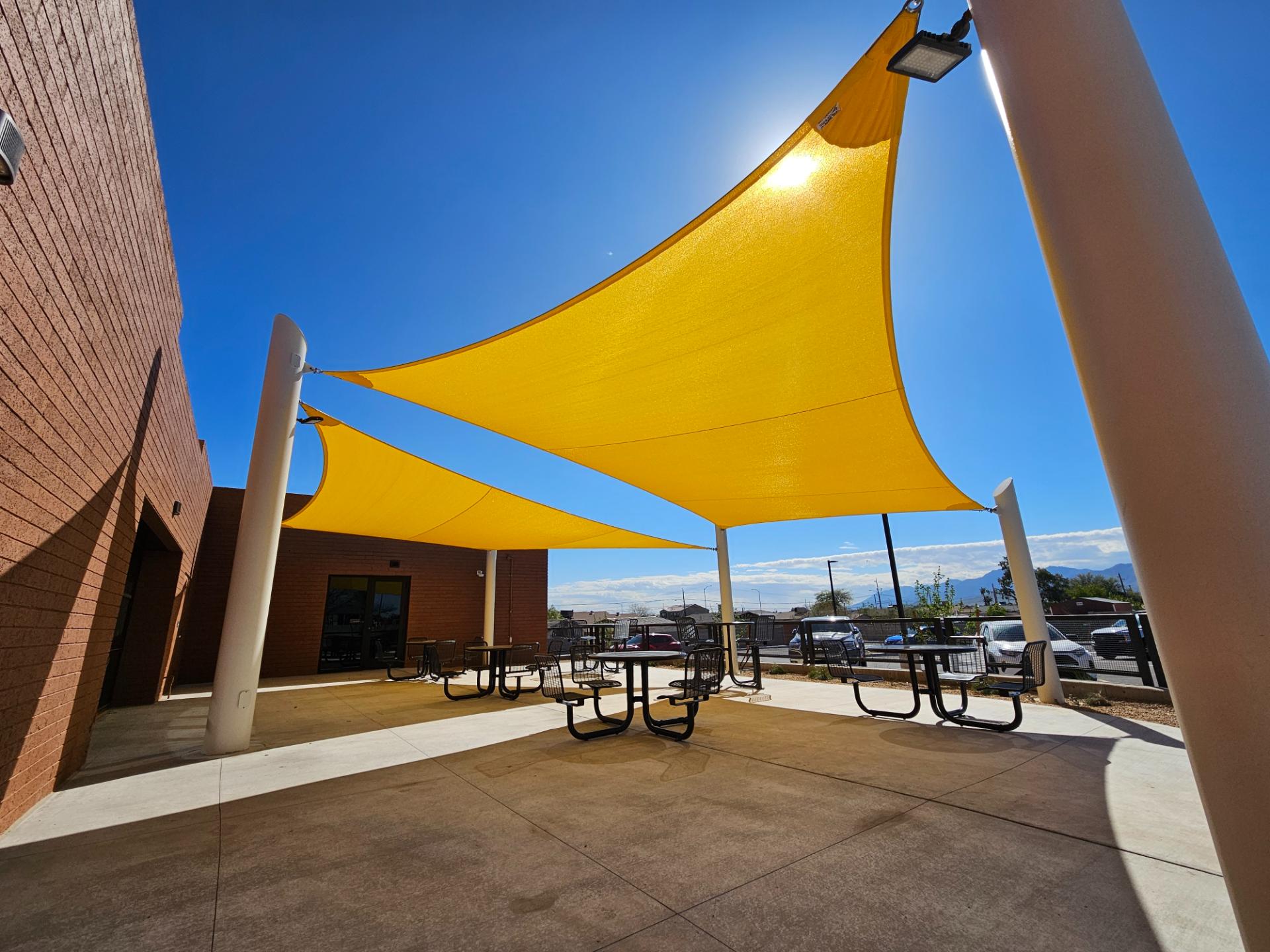
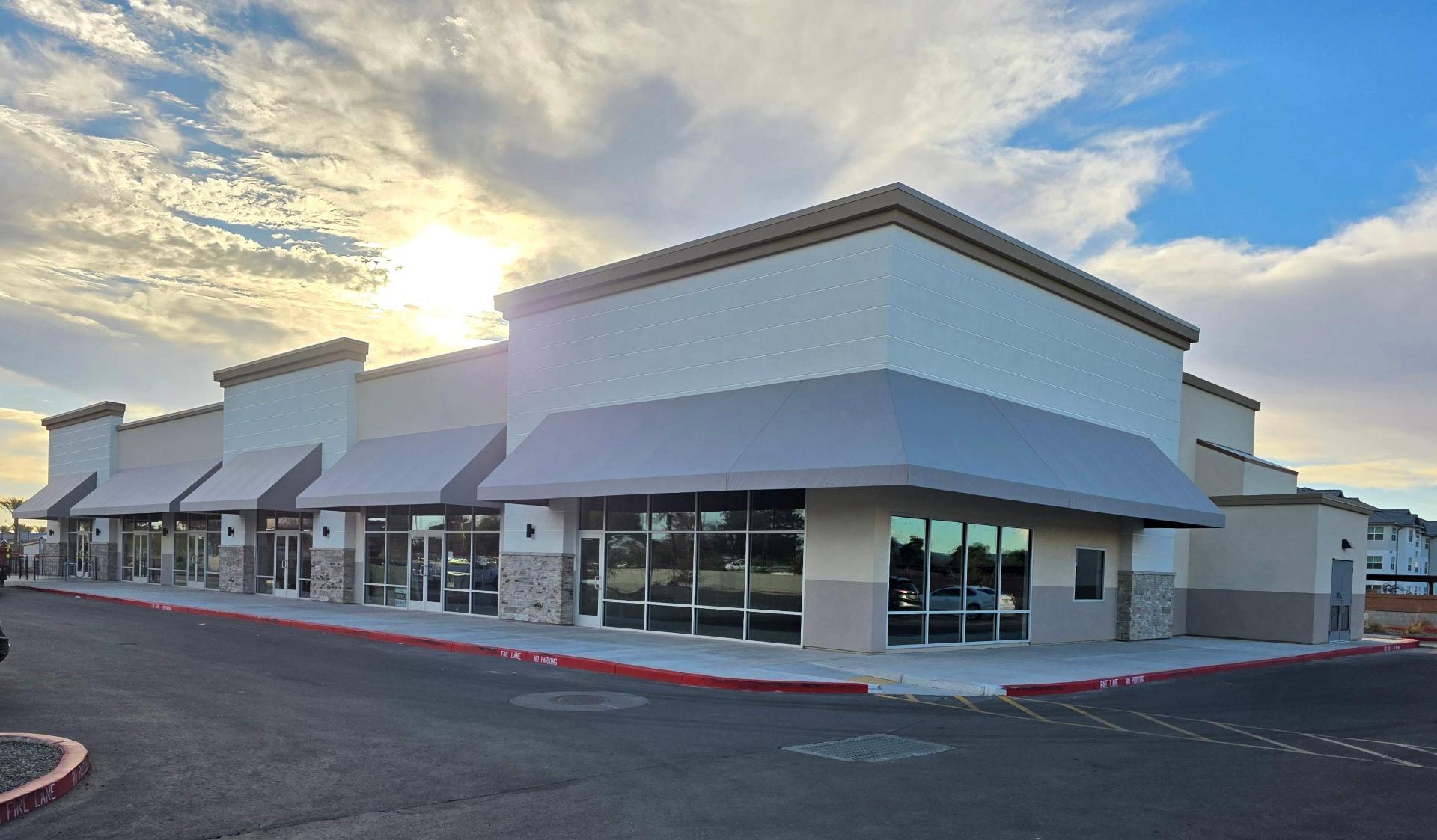
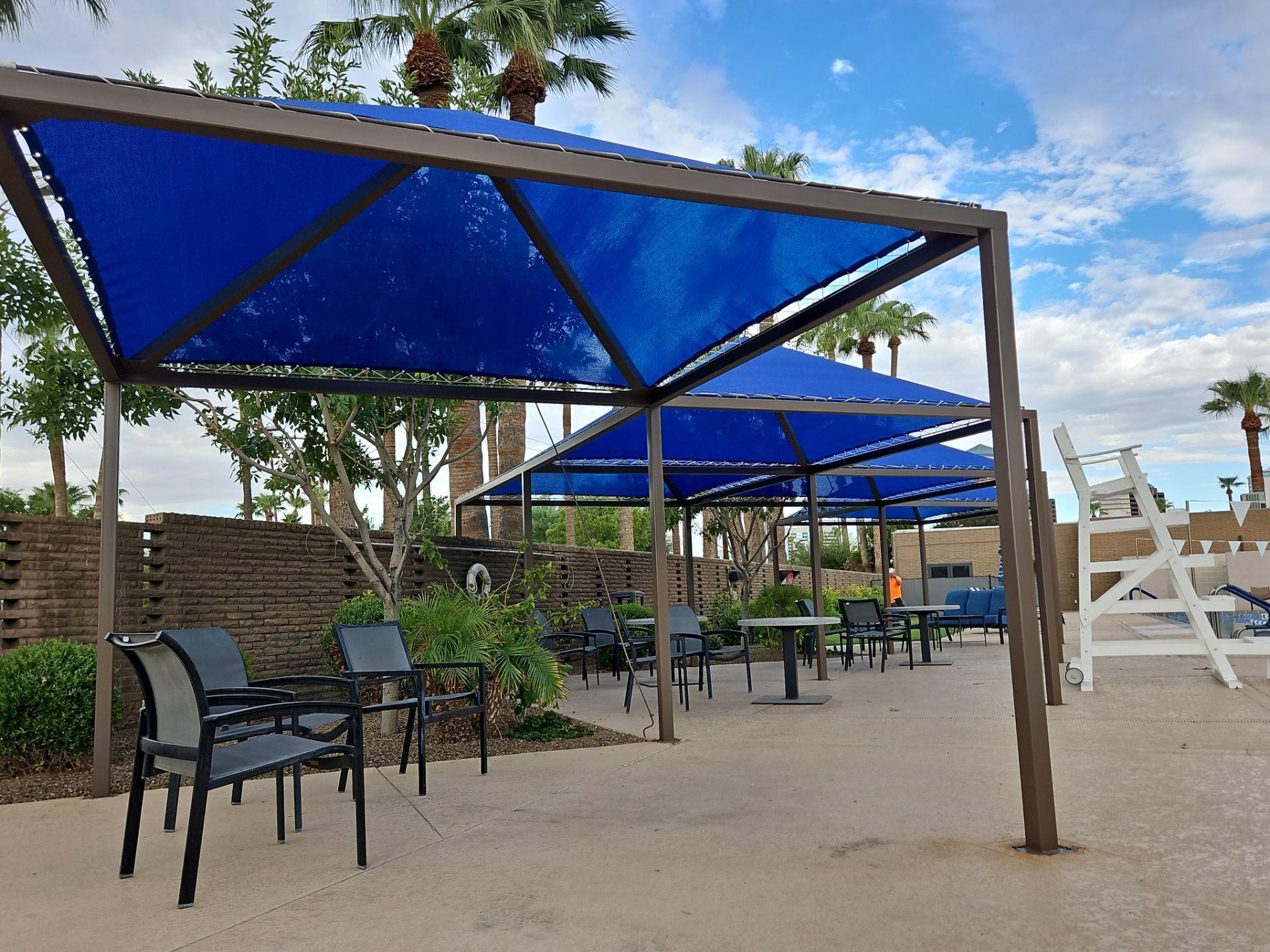
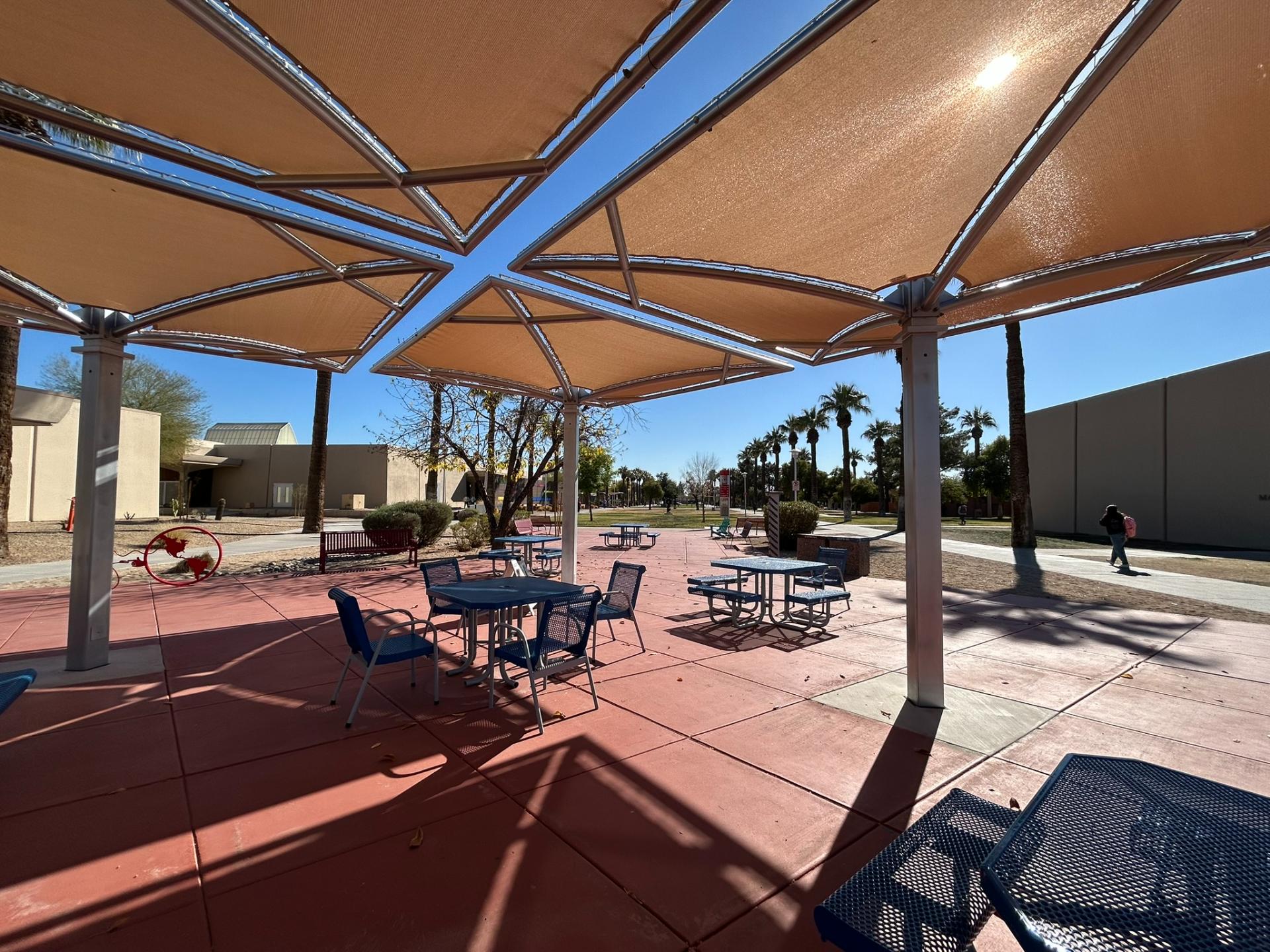
Frequently Asked Questions
How much does covered inventory actually help a dealership?
Covered inventory keeps vehicle cabins and surfaces 20–30°F cooler than open asphalt at midday and blocks roughly 90–99% of UV, which slows paint fade, dashboard cracking, and interior aging across a 60–90 day average lot time. That cuts the re-detailing porters do before delivery and protects delivery condition. On a long display run it functions more like preventive maintenance on the whole lot than a comfort upgrade.
What does a dealership shade canopy cost?
Cost scales with square footage, span width, and steel gauge, so a single-row cantilever over a service drive prices differently from a multi-bay inventory canopy covering hundreds of vehicles. Wider clear spans need heavier steel, which raises per-foot cost, while repeating hip bays on a shared column grid lower it. We quote against the actual lot layout and span rather than a flat rate — the honest answer is that it depends on how much you’re covering and how wide the bays run.
How wide can the bays span without posts in the drive aisle?
Dealership canopy bays commonly run 18–24 ft of clear span to fit a vehicle row plus drive aisle, on a 20–30 ft column grid down the run. A cantilevered cover reaches roughly 12–16 ft off a single post line, which keeps a service drive or front display row fully open. Wider spans are possible with heavier steel, sized to the Valley’s 90–115 mph design wind load.
Can the canopy match our franchise branding?
Yes. We powder-coat the steel frame to a specified color so posts and beams match the franchise’s building and facility-image standards, with fabric chosen to complement the brand palette. Powder coat holds color across a 10–15 year service life and resists UV and dust better than wet paint. If your manufacturer’s facility-image program mandates specific colors or specs, confirm those before fabrication so the canopy passes brand review the first time.
Will a dealership canopy hold up to monsoon winds?
Structures we build are engineered to Arizona building code and ASCE 7 wind loads, with Valley design wind speeds around 90–115 mph, and the knitted HDPE fabric breathes so gusts pass through instead of loading the canopy like a solid sail. That said, an extreme microburst above 60 mph can still damage any fabric structure on the market, which is why an annual re-tension check matters. Plan periodic cleaning and re-tension into maintenance to keep the top taut and the warranty intact.