or call (602) 265-0905 — no-obligation, on-site.
Pool & Aquatic Center Shade Structures in Arizona
Corrosion-resistant shade for pool decks, cabanas, splash pads, and competition bleachers
Since 1998
Designing & building Arizona shade
In-House Fabrication
Built at our Phoenix shop
Engineered & Permit-Ready
Stamped drawings for AZ wind loads
Free On-Site Quote
No-obligation project assessment
Total Shade builds engineered shade structures for pools and aquatic centers across Arizona — pool-deck and lounge cover, premium cabanas, spectator and bleacher shade for competition pools, and splash-pad and lifeguard cover — fabricated in-house at our Phoenix shop and engineered to survive chlorine, humidity, and 110°F afternoons. An aquatic facility is a harder environment than a parking lot: chlorinated splash and pool-deck humidity corrode ordinary steel and hardware, swimmers sit on reflective concrete where UV hits from above and bounces off the water, and any canopy near open water has to shed monsoon wind that can top 60 mph. We answer all three with powder-coated steel frames, marine-grade stainless hardware, and knitted HDPE fabric that blocks roughly 90–99% of UV.
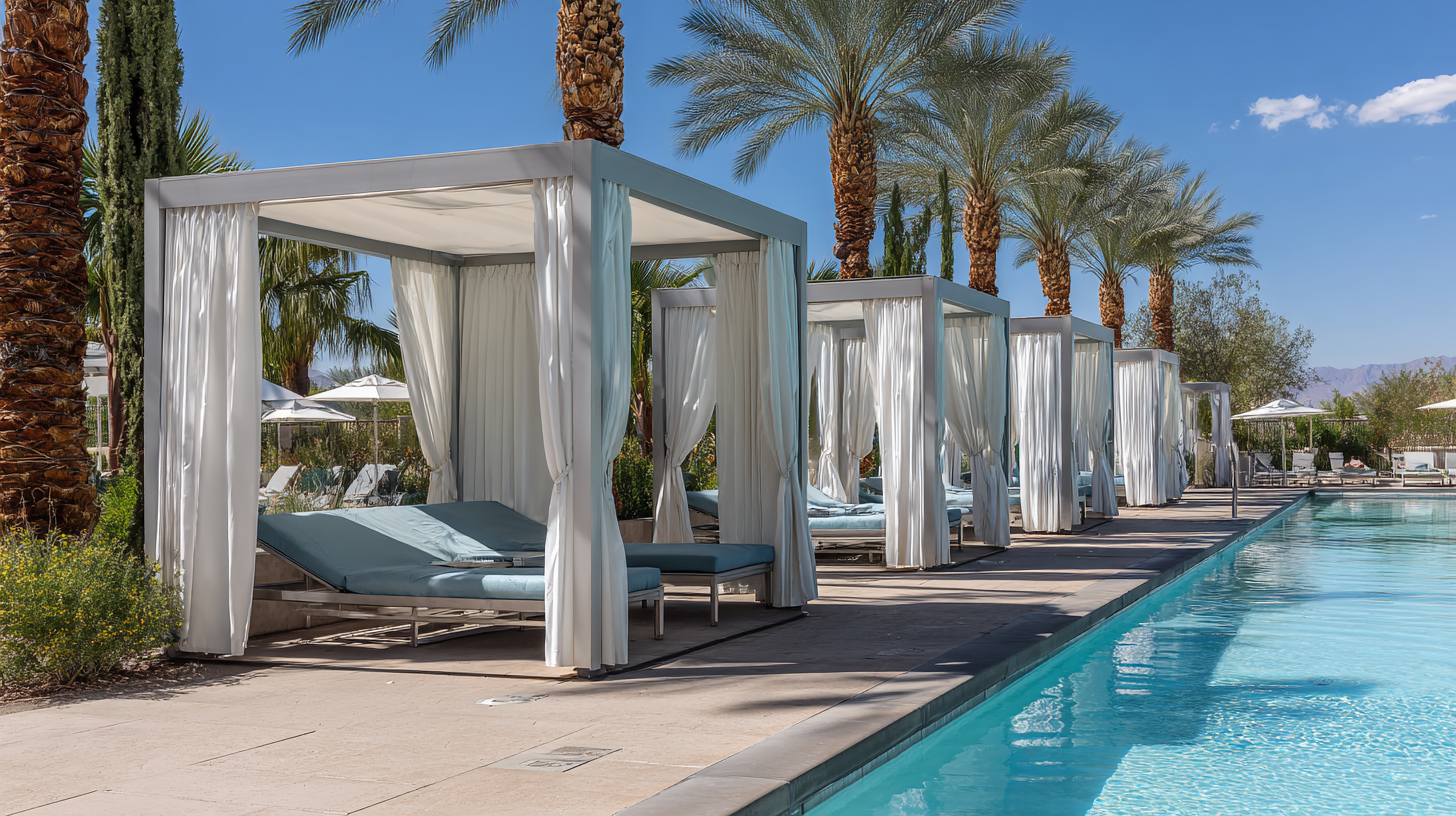
Pool-deck and lounge shade that keeps swimmers off blistering concrete
The most-requested aquatic shade covers the lounge and walkway zones around the water, because that is where guests overheat fastest. Pool decks compound the sun problem — UV arrives from overhead and reflects off both the water and light concrete, so a swimmer on an unshaded deck takes a double dose while the surface itself can run 40–50°F above air temperature underfoot.
Open-deck options
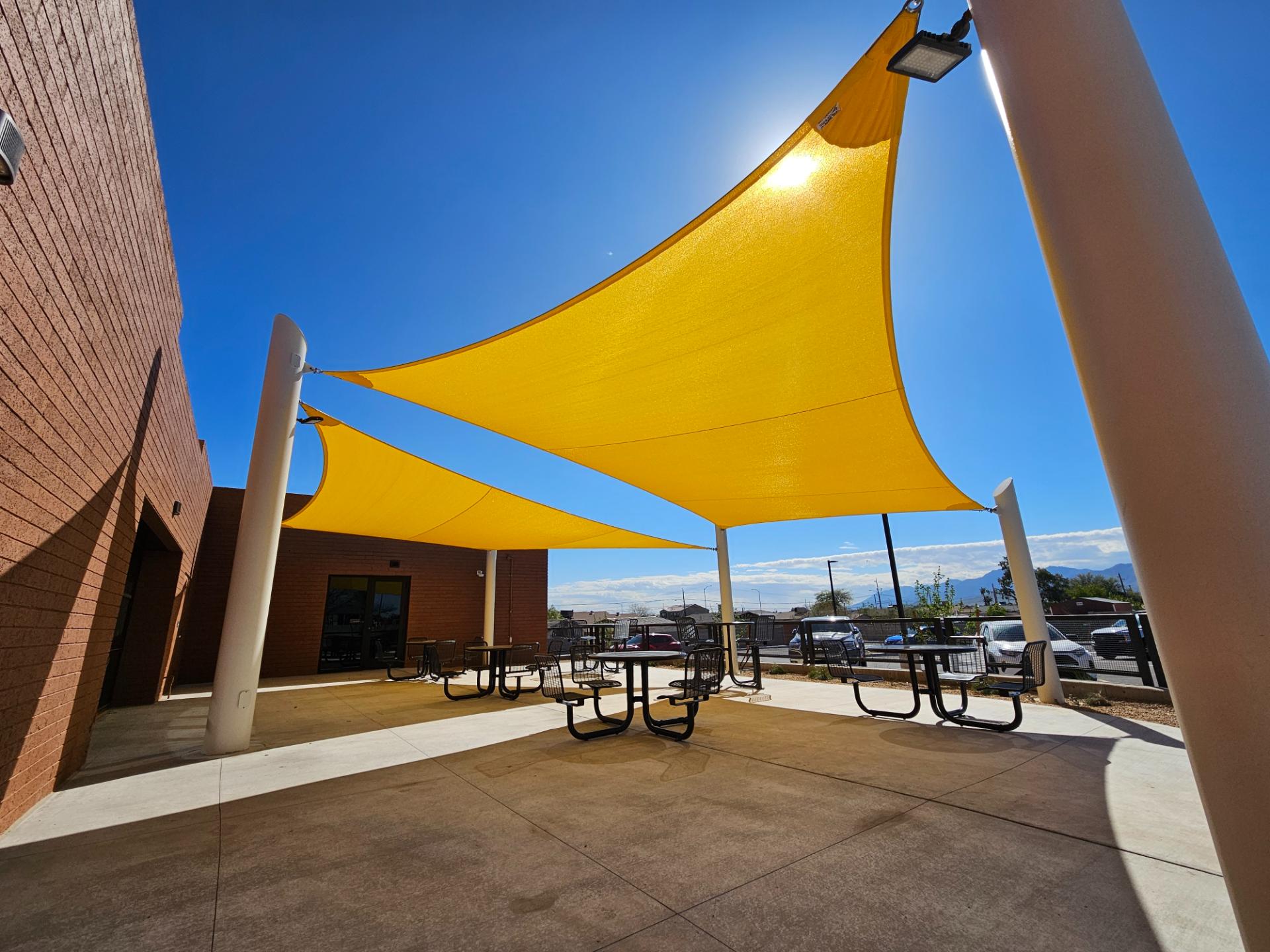
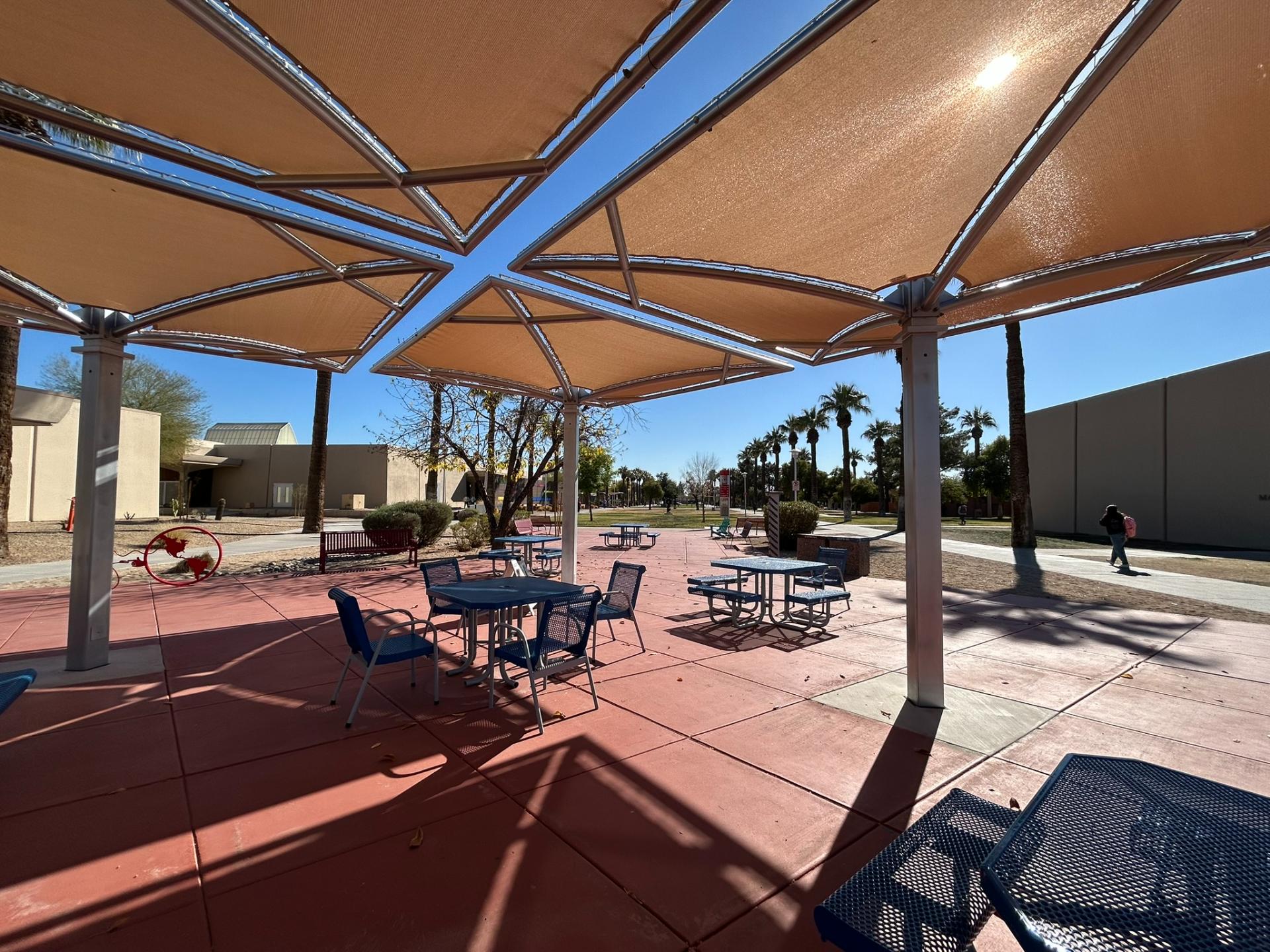
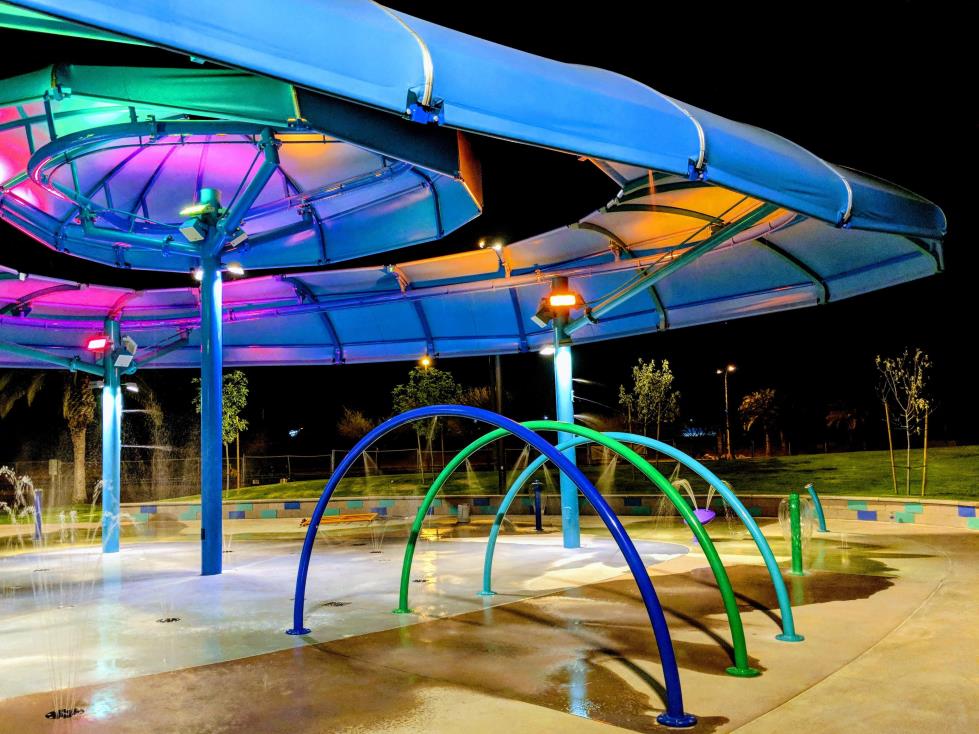
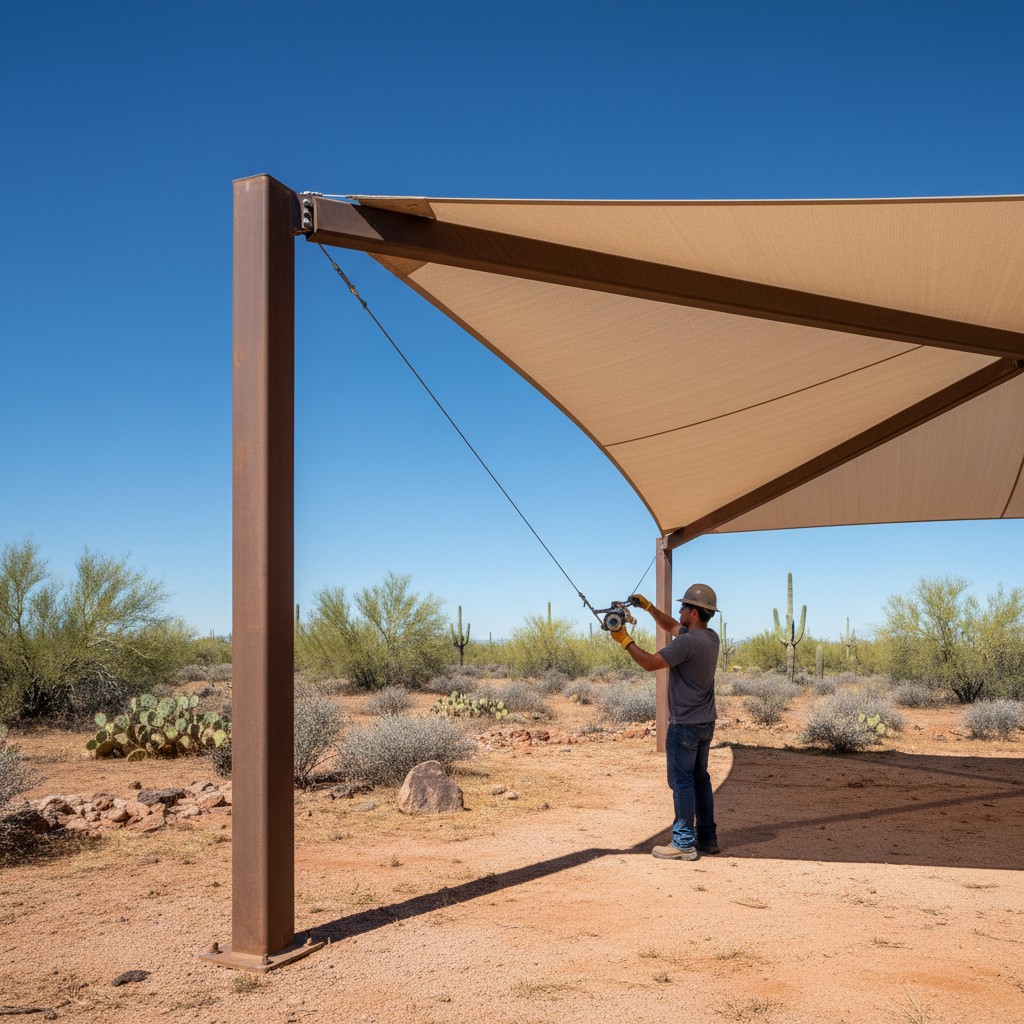
A single flat cantilevered shade structure covers a 200–400 sq ft lounge cluster on one set of footings set back from the water, so there are no posts in the splash zone or the deck circulation path. For larger sun fields, 3-point and 4-point tensioned fabric sails stretch across 20–40 ft spans while staying angled to vent heat and shed wind. The HDPE weave breathes, so it drops deck temperature without trapping the humid air that hangs over a pool on a still evening.
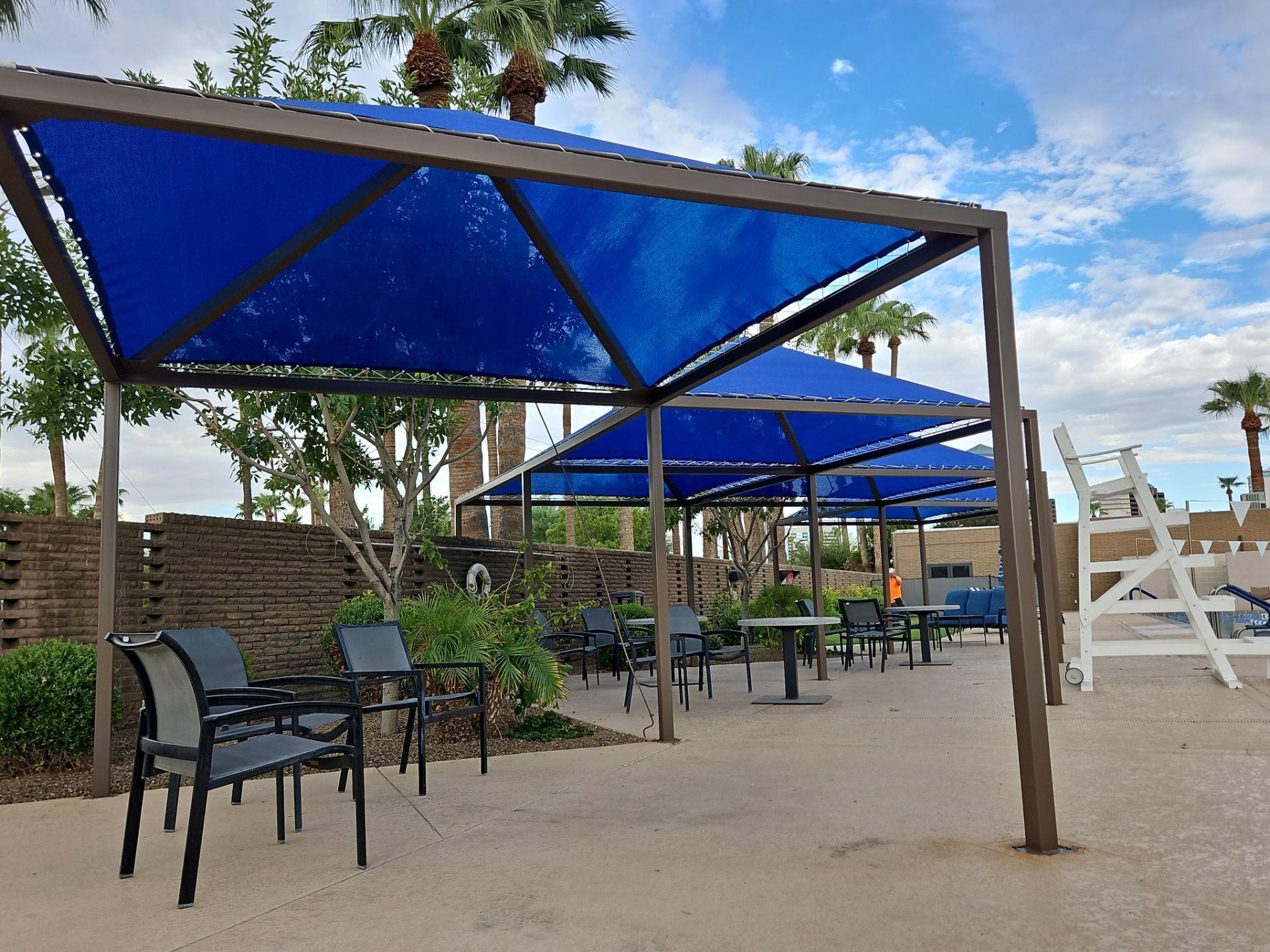
Cabanas and premium poolside shade for resorts and HOA pools
Cabanas turn a pool deck into a destination, and resorts and master-planned community pools are the main buyers. A cabana defines a private cooled zone — a four-post canopy over a lounge set, blocking roughly 90–99% of UV — that reads as an amenity rather than just sun cover, which is why hospitality clients use them to justify deck space and day-pass pricing. We build cabana frames in powder-coated steel with marine-grade stainless fittings so the splash, sunscreen, and chlorine humidity of a pool deck do not bleed rust streaks down a white post within a season. A hip structure works where a client wants a fuller, four-sided roofline over a cluster of cabanas or a poolside bar. Sizing follows the furniture: a single-lounge cabana sits near a 10 ft by 10 ft footprint, while a daybed-and-seating cabana wants closer to 12 ft by 14 ft.
Spectator and bleacher shade for competition and lap pools
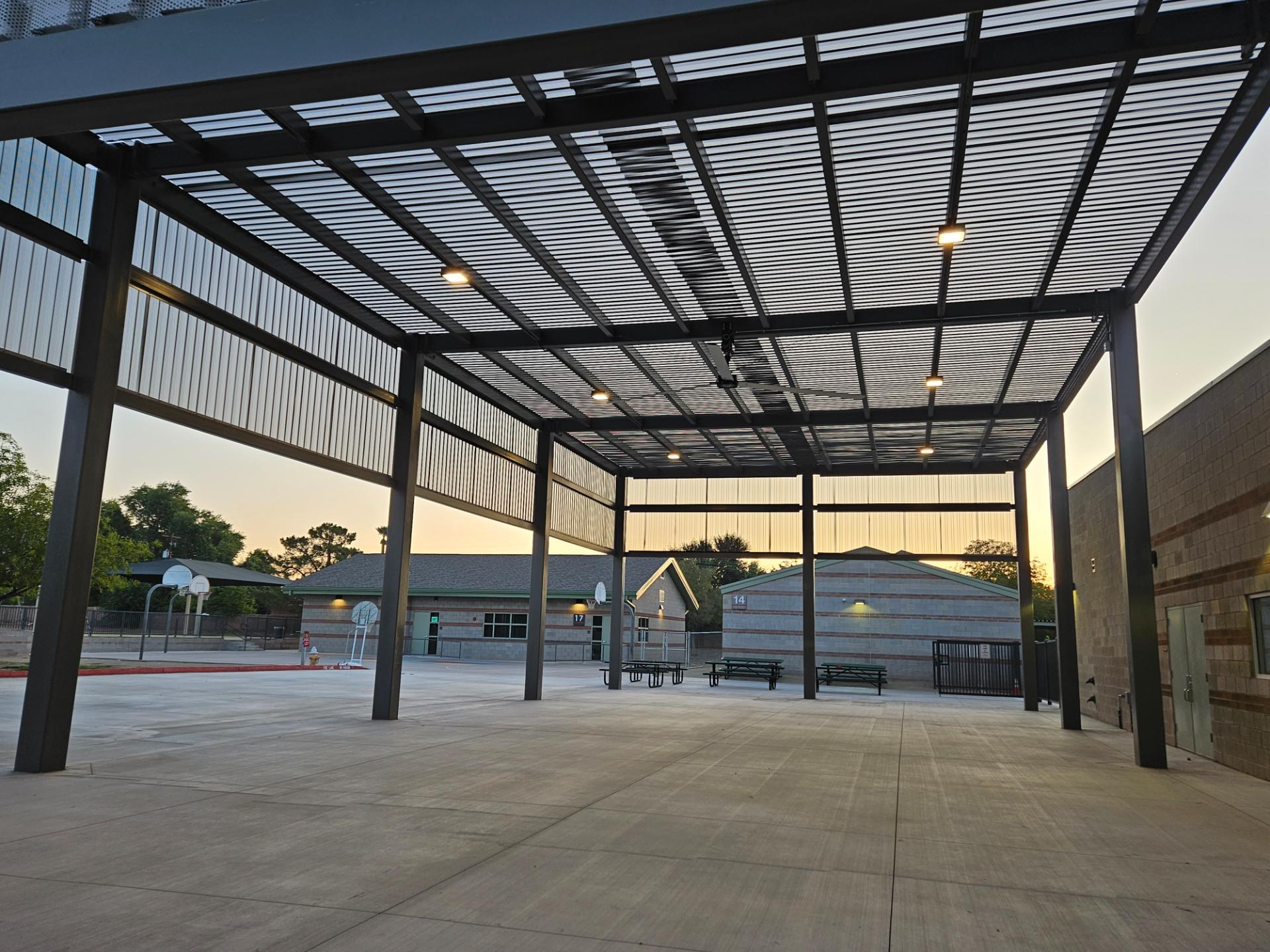
Competition pools need spectator shade that clears the seating without dropping posts into the deck, which is a different engineering problem than a backyard cover. A swim meet or water-polo match seats families in fixed bleacher rows for two to three hours of direct midday sun beside a reflective pool, and the same cantilever logic that shades a ballfield bleacher applies here: a cantilevered structure carries the canopy on rear columns set behind the seating, commonly clearing 15–25 ft of bleacher depth with nothing blocking the view of the lanes. Over a long lap or competition pool, a 4-point tensioned fabric sail can run a 30–40 ft span of shade along a deck edge while staying high enough to clear lifeguard sightlines. Fabric in this role behaves more like a permanent roof than a tent, so it gets engineered to the same wind loads as the natatorium beside it.
Corrosion resistance in chlorine and pool-deck humidity
Corrosion is the failure mode that kills aquatic shade early, so the hardware spec matters more here than anywhere else. Chlorinated water, the chloramine vapor that rises off an indoor or heavily-used deck, and standing humidity attack carbon steel and zinc plating faster than dry Phoenix air ever would — an untreated fastener near a pool can streak rust in a single summer. We answer that with powder-coated commercial-grade steel frames over the structural members and marine-grade stainless hardware at the splash-exposed connections, the combination boat builders rely on for the same reason.
Fabric in a wet environment
Knitted HDPE shade fabric is well suited to pool decks because it is mildew-resistant, drains and dries instead of soaking, and carries a manufacturer warranty commonly in the 10–15 year range. The fabric blocks roughly 90–99% of UV while breathing enough to vent the warm moist air a pool generates, rather than trapping it like a solid panel would.
Clearances, permitting, and how an aquatic project runs
Shade over a pool deck has to respect setbacks from the water and obey the same code path as any commercial structure, and Total Shade carries the engineering for both. Footings and posts are positioned to keep structural members out of the wet splash zone and clear of required deck circulation, with our sails and cantilevers angled to land shade on the lounge field while keeping a working clearance of roughly 8–10 ft of headroom over a walking deck. Every structure is engineered to Arizona building code and ASCE 7 wind loads — Valley design wind speeds run roughly 90–115 mph — and we provide stamped drawings sized to your deck; the city and Maricopa County handle permit review and inspection on their own timeline. Because we fabricate at our Phoenix shop at 2331 W. Holly St rather than ordering kits, we adjust spans and post placement to fit an existing deck, splash pad, or bleacher line instead of forcing a stock size. Facilities elsewhere in the northwest Valley can see how this runs on our Surprise commercial shade page.
Honest limits and the maintenance reality at a pool
Pool-deck fabric works harder than almost any other shade we build, and it is honest to say it ages faster. Reflected UV off the water, chlorine splash, sunscreen, and 300-plus sunny days a year all attack the canopy, so an aquatic-center fabric will reach the end of its life sooner than the same cover over a dry ramada — plan to re-cover the frame rather than rebuild it when it fades. Two more caveats worth stating plainly: wind ratings buy margin, not invincibility, and no fabric canopy is rated to stand through every monsoon microburst, so a facility near open water should expect to retension after a major storm. Chlorine residue and dust also mean cleaning — a freshwater rinse three or four times a year, more for splash-pad canopies, keeps the fabric and powder-coat from etching. Budget a re-tension check in the first year as fittings settle, then on a regular interval after. For a full map of facilities we shade, see our shade structures by industry hub.
Shade Structures We Build
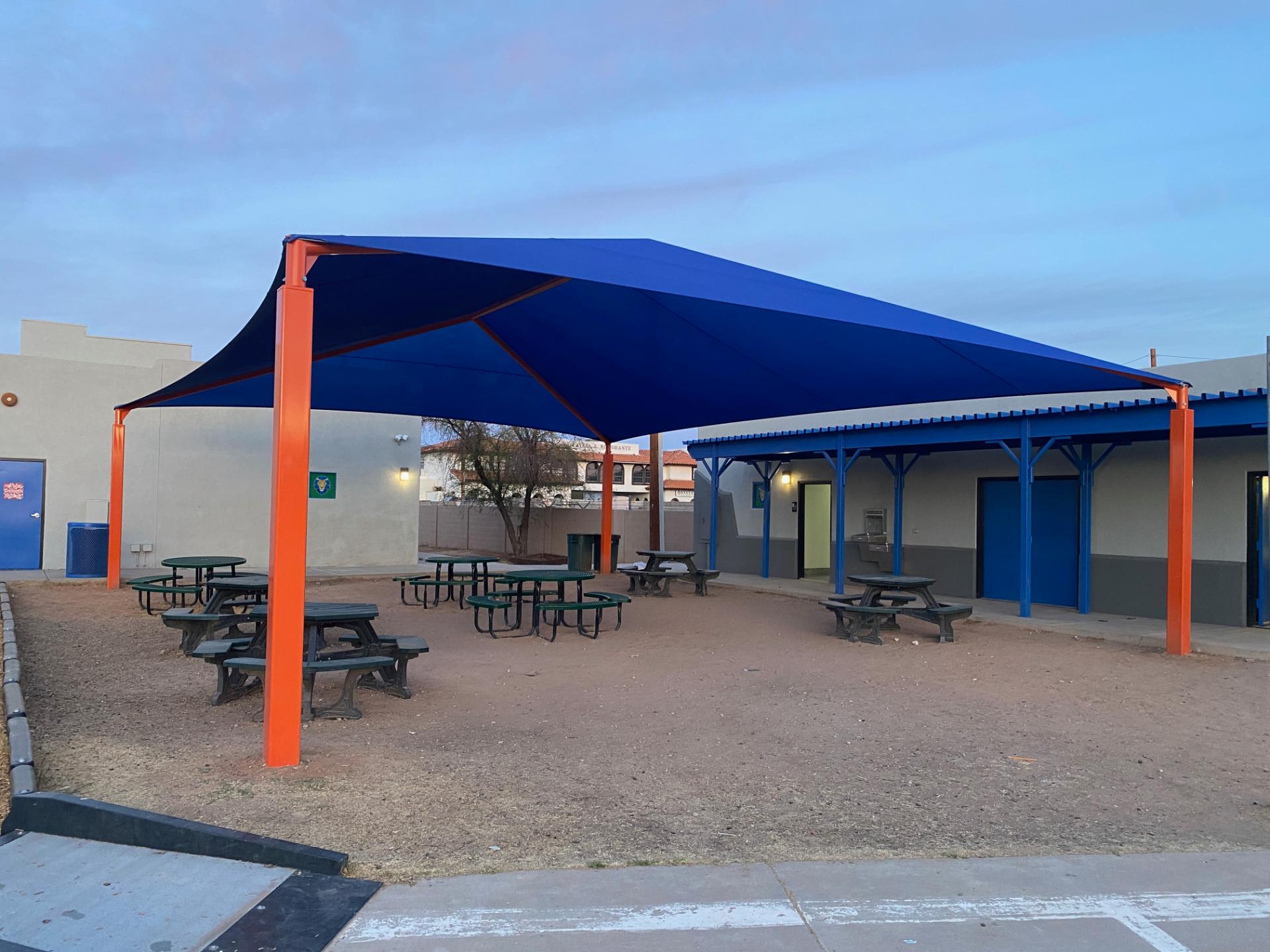
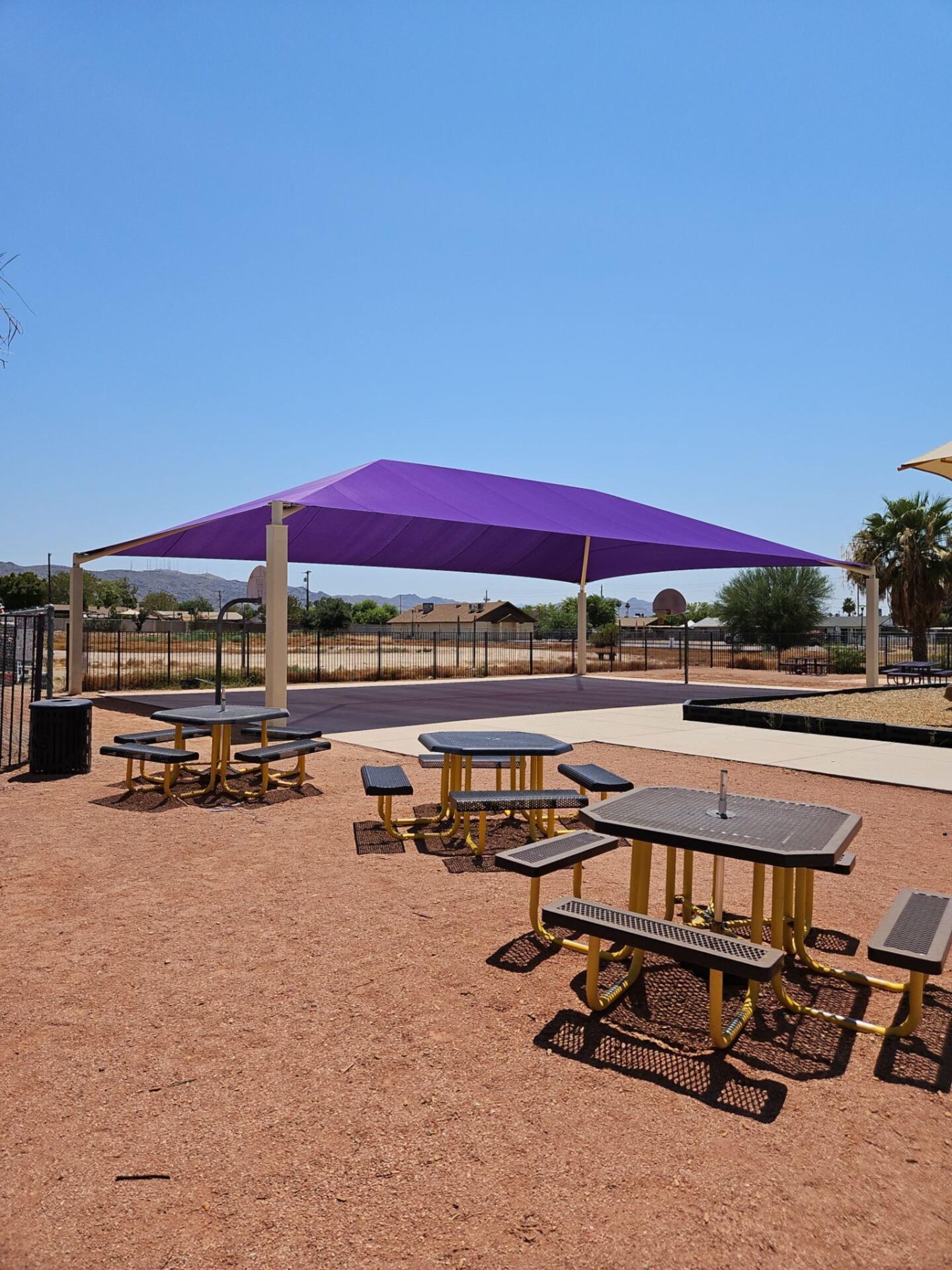
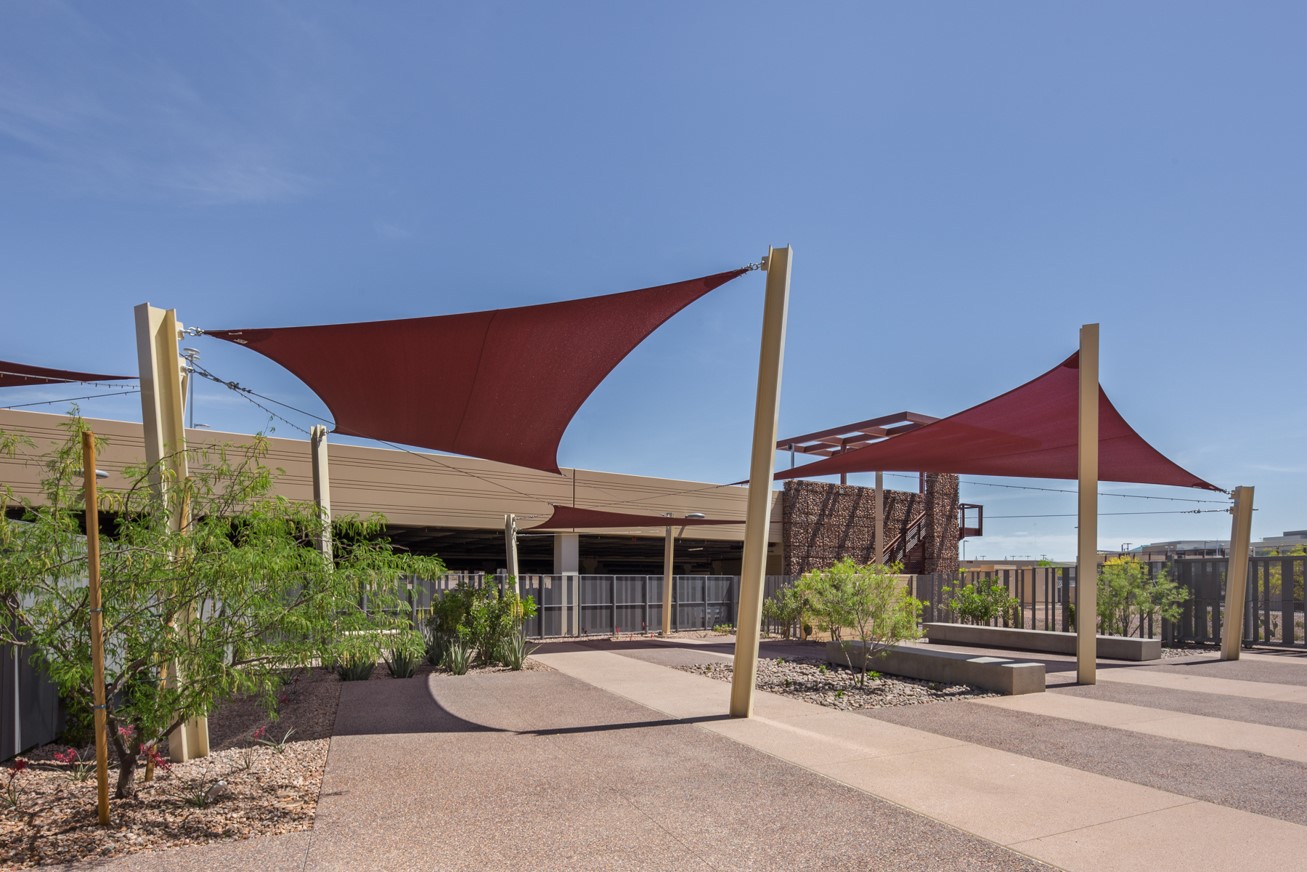
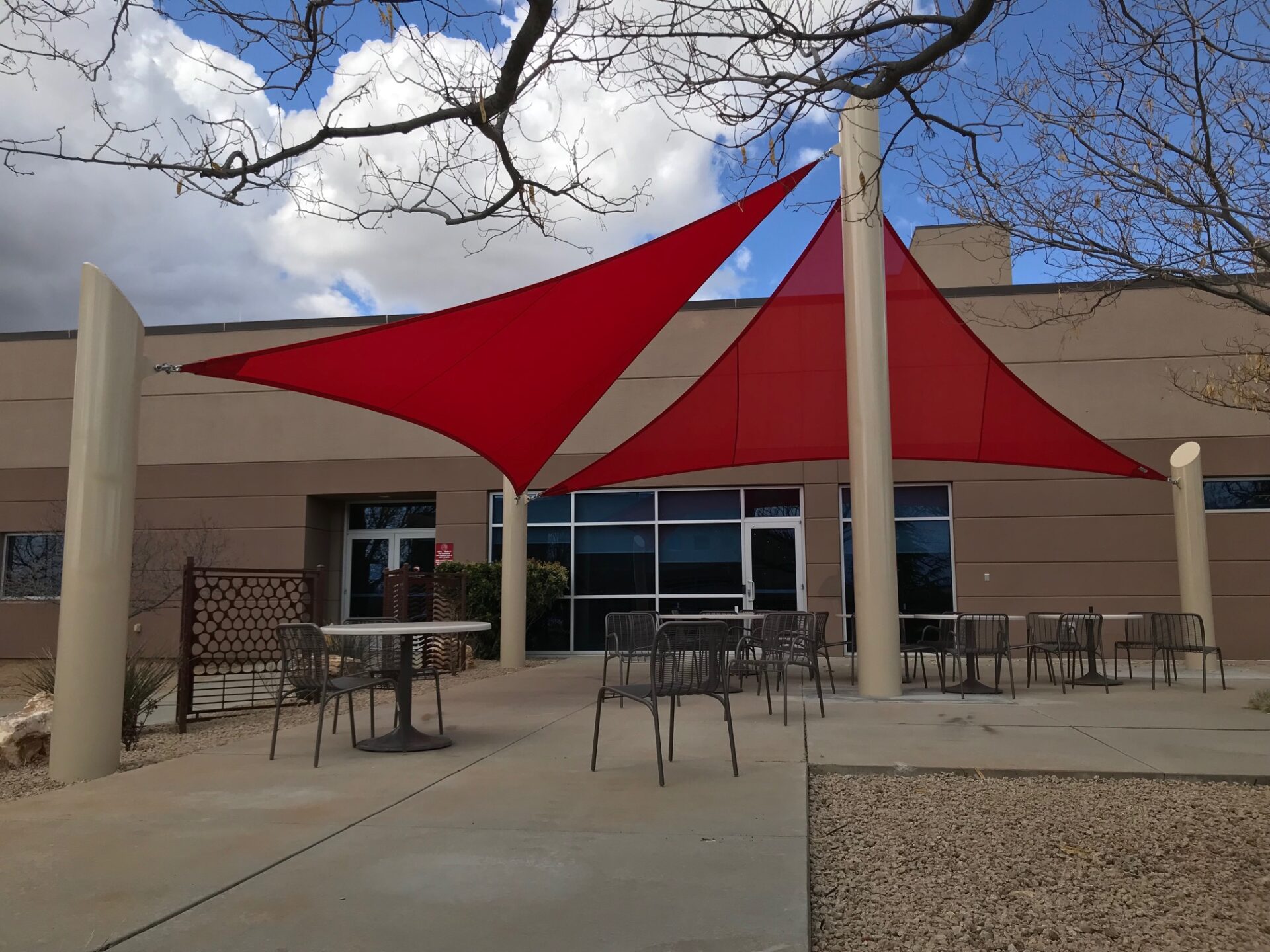
Frequently Asked Questions
What shade options work best for a pool deck?
It depends on what you are covering. Cantilevered structures shade a lounge cluster on a single set of footings set back from the water, so no posts land in the splash zone, while 3-point and 4-point tensioned sails stretch shade across 20–40 ft of open deck at an angle that vents heat and sheds wind. Cabanas suit resorts and HOA pools that want a defined, premium cooled zone. Most decks end up with a mix sized to the lounge layout.
How do you keep shade structures from corroding around chlorine and pool humidity?
We spec powder-coated commercial-grade steel frames and marine-grade stainless hardware at the splash-exposed connections, the same corrosion strategy boat builders use. Knitted HDPE fabric handles the wet environment well because it is mildew-resistant and drains and dries rather than soaking. Chlorine vapor and pool-deck humidity corrode ordinary zinc-plated steel and fasteners far faster than dry desert air, so the hardware spec matters more at a pool than almost anywhere else.
How much does pool or aquatic-center shade cost in Arizona?
Cost tracks span, structure type, footing requirements, and the corrosion-resistant hardware an aquatic deck needs, so we quote per project rather than off a chart. A single deck sail sits at the low end; a cantilever clearing 15–25 ft of competition bleachers or a run of premium cabanas costs more because of the steel, the marine-grade fittings, and the engineered footings. We give a firm number after we see the deck and the use case.
What clearances are required for shade over a pool deck?
Footings and posts are positioned to stay out of the wet splash zone and clear of required deck circulation, and our sails and cantilevers are angled to keep roughly 8–10 ft of working headroom over a walking deck while landing shade on the lounge area. Every structure is engineered to Arizona building code and ASCE 7 wind loads; we provide stamped drawings sized to your deck, and the city and Maricopa County handle permit review and inspection.
Will pool-deck shade hold up through monsoon season?
Structures are engineered to Arizona code and ASCE 7 wind loads, with Valley design wind speeds around 90–115 mph, and that engineering carries them through most monsoon weather. That said, microbursts can exceed 60 mph and wind ratings have limits — no fabric canopy is rated to stand through every storm, especially near the open exposure of a pool. We size steel and footings to the canopy’s sail area to build margin, and fabric stays re-coverable if a severe storm damages it.