or call (602) 265-0905 — no-obligation, on-site.
Parking Lot Shade Structures & Phoenix 50% Shade Rule
Multi-bay steel parking canopies that cover commercial lots on day one and satisfy the Valley’s parking-shade requirements.
Since 1998
Designing & building Arizona shade
In-House Fabrication
Built at our Phoenix shop
Engineered & Permit-Ready
Stamped drawings for AZ wind loads
Free On-Site Quote
No-obligation project assessment
Parking lot shade structures are large multi-bay steel canopies that cover rows of stalls in one engineered run, and across the Phoenix metro they are the fastest way to meet the municipal requirement that a share of a surface lot be shaded. Phoenix and several other Valley cities ask commercial lots to shade a meaningful portion of their parking area, and shade structures count toward that target alongside trees. The difference is timing: a canopy delivers its full shaded footprint the day it is bolted down, while a sapling takes years to throw the same coverage. Total Shade fabricates these canopies in Phoenix at 2331 W. Holly St, stretching knitted HDPE that blocks roughly 90-99% of UV over powder-coated steel engineered to Arizona wind code.
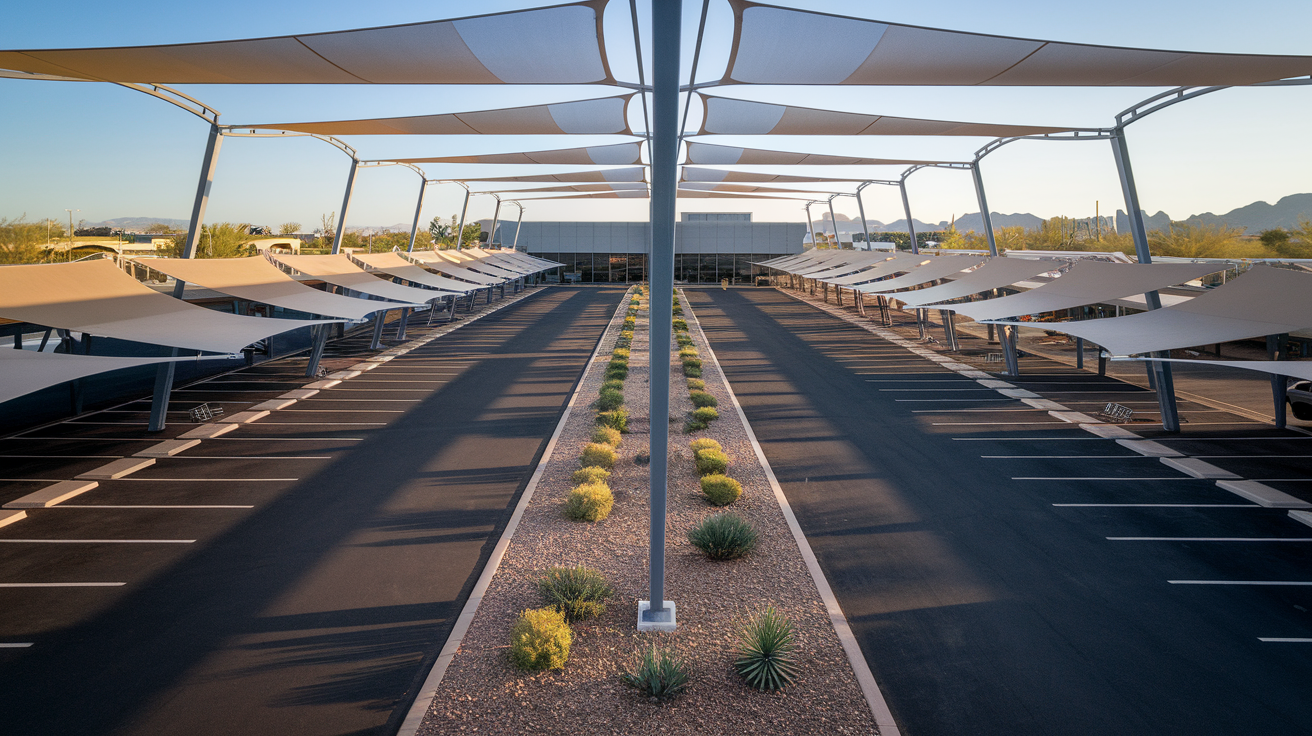
How a canopy satisfies the parking-shade requirement
A parking canopy counts as an accepted shade method under the Valley’s landscape and parking codes, the same way a shade tree does, which is why developers reach for it when a lot can’t fit enough trees or can’t wait for them to mature. Phoenix and a number of other Valley cities require that a portion of a surface parking lot fall under shade, and the ordinance language generally treats engineered canopies and tree canopy as interchangeable toward that number. The exact percentage and how it’s measured vary by city and by zoning case, so the governing figure always comes off your approved site plan rather than a rule of thumb.
The practical math favors steel. A single multi-bay canopy can shade an entire double row of stalls at once, and its coverage is fixed and verifiable on the day of inspection. A landscape plan that leans on trees has to reach a future canopy spread an inspector can’t see yet, and any tree that dies reopens the compliance gap. So once a canopy is signed off, the shaded-area count stays met. Most large lots use a blend, with trees on the perimeter islands and canopies over the open field of stalls.
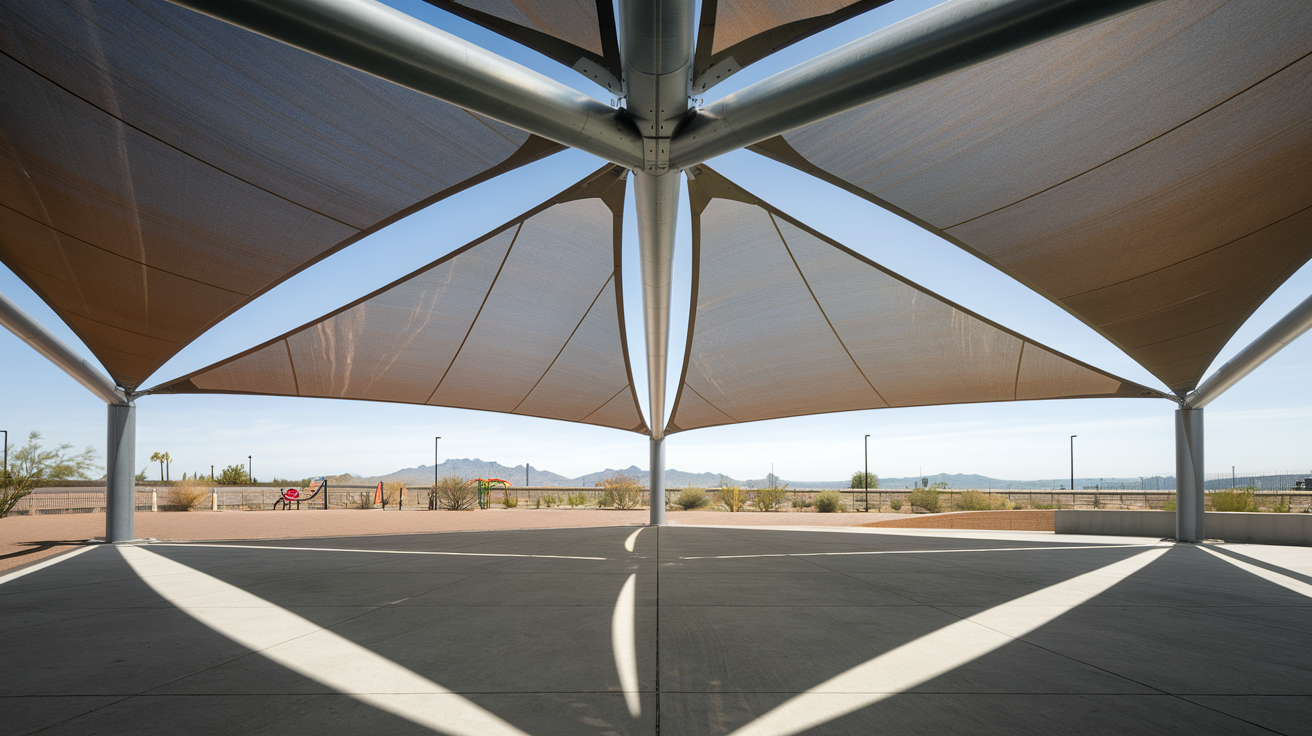
Multi-bay engineering and clear spans over the stalls
Parking canopies are built as repeating bays so the structure can run the length of a lot without an impossible single span. A typical bay covers roughly 18-20 ft of drive aisle or a double row of stalls, and longer runs add bays in line rather than stretching one giant beam. The two common layouts are a single-post cantilever, which holds the column out of the parking field so cars never dodge it, and a post-and-beam canopy with columns on the median or end islands.
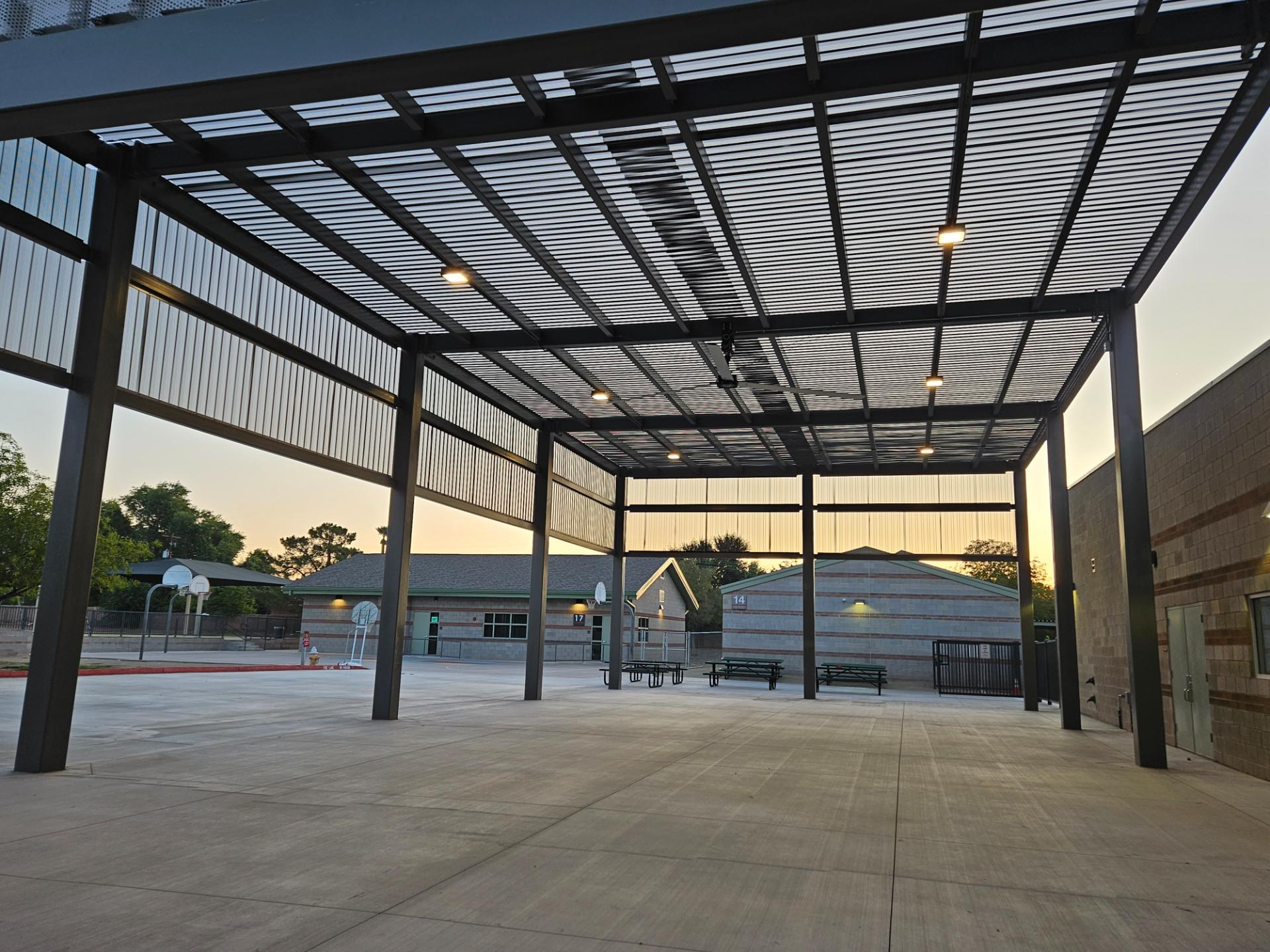
The cantilever is the workhorse over 90-degree stalls because it shades the cars from one side and leaves the pavement clean. A flat cantilevered shade structure buys that column-free aisle with deeper footings and heavier steel on the supported side, so it costs more per shaded foot than a posted design but earns it back in usable stalls. For broad open areas like an overflow or employee lot where an interior post is no problem, a hip structure covers more ground per dollar of steel, and the longer-span MAX hip structure stretches wider bays for the same four-slope geometry.
What the shade actually does for vehicles and customers
Covered parking knocks the interior temperature of a car down sharply and protects the lot’s surface and visitors from direct sun. A dashboard in an uncovered Phoenix lot can climb past 150 degrees on a summer afternoon, and the wheel and seats follow; parking under a canopy that blocks 90-99% of UV keeps the cabin far cooler and slows the cracking and fading that relentless sun forces on parked vehicles.
For the businesses that own these lots, the shade is a customer-experience asset as much as a code line item. Retail centers, medical offices, auto dealerships, and grocery anchors use covered parking as a reason shoppers choose their lot over the open one next door, and dealerships use it to protect inventory sitting in the sun for months. So a compliance build and an amenity build are usually the same structure. See how parking fits the wider line on the shade structures by industry hub.
Footings, wind, and the materials that survive the desert
The engineering that matters most on a parking canopy is below grade. Each column sits on a drilled and poured concrete footing, commonly in the 4-8 ft depth range depending on soil and how much load the canopy cantilevers, and cantilever designs need deeper, heavier footings because all the overturning force lands on one line of posts.
Wind is the design case, not shade
Every canopy is engineered to Arizona building code and ASCE 7 wind loads, with Valley design wind speeds landing roughly in the 90-115 mph range by site, so the footing and steel sizing is driven by gusts far more than by the fabric overhead.
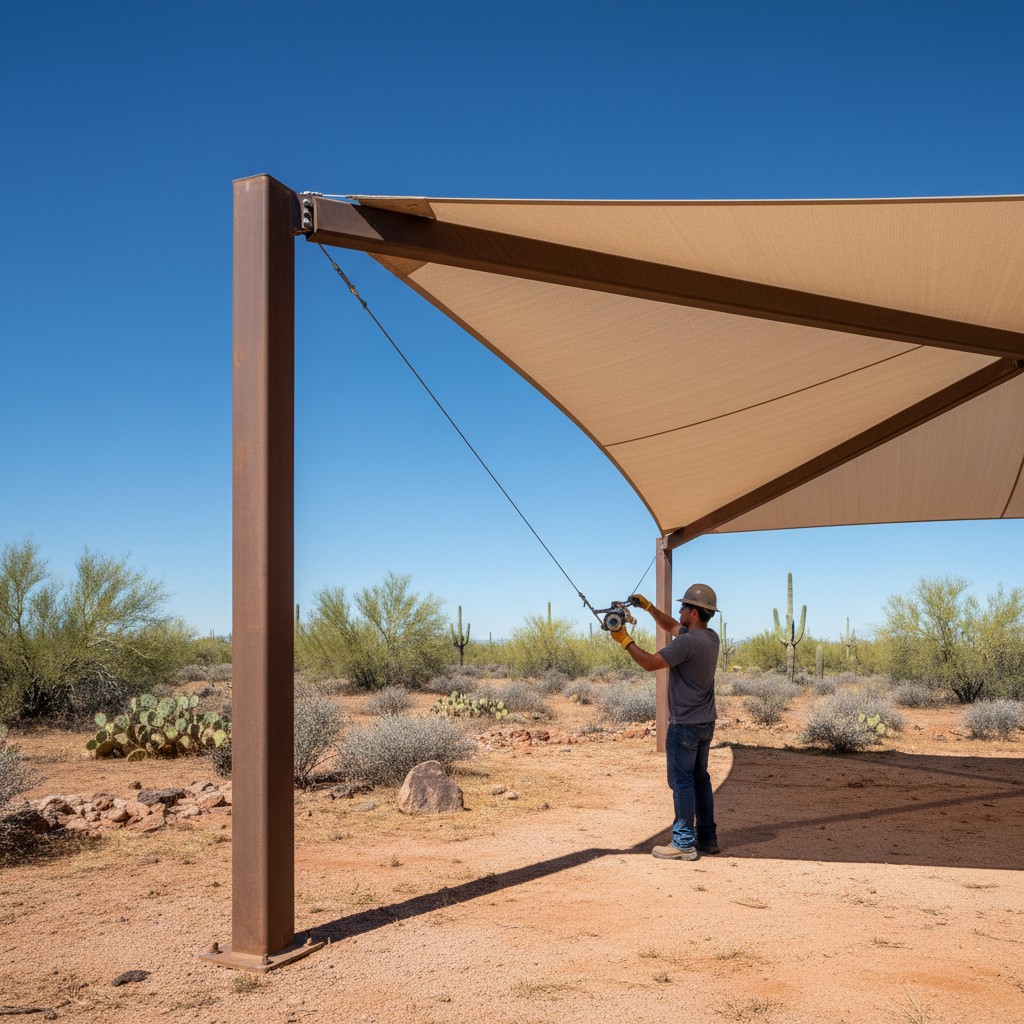
The frame is powder-coated steel, typically in the 3-6 inch tube range for parking-canopy columns, finished with a baked-on coat that resists the chalking that desert sun forces on cheaper paint. The cover is knitted HDPE shade fabric blocking roughly 90-99% of UV and commonly carrying a 10-15 year warranty. Some lots spec a solid metal deck instead of fabric where rain shedding or a hard roof matters more than cost. For an odd lot shape or a mixed solid-and-fabric run, a custom-built shade structure lets the frame follow the site.
Permitting and plan review across the Valley
A parking canopy is a permitted structure, so it goes through plan review at the city before a footing is poured. Total Shade provides stamped, engineered drawings sized to your lot’s soil and wind exposure, and the city or county handles the review and inspection on its own timeline. Because the canopy ties directly into the parking-shade calculation on your site plan, the structure and the landscape compliance are reviewed together, and getting the shaded-area math right up front is what keeps a project from stalling at the counter.
Requirements and review timelines differ by jurisdiction, so a build in Phoenix follows a different path than one in Glendale, where large retail and stadium-district lots drive much of the demand. We design to the governing code and supply the documents the reviewer needs, but the city owns approval. The honest version: budget a few weeks for plan review and don’t pour until the permit clears, because a canopy installed ahead of approval is an expensive thing to move.
The honest tradeoffs on a big-span canopy
Big clear spans cost money, and a parking canopy is the most expensive shade per square foot in the catalog for a reason: it stands over cars with no posts in the way and survives a monsoon doing it. The cantilever that keeps columns out of the parking field is the priciest layout because the deeper footings and heavier one-sided steel are doing real structural work, so the more column-free aisle you demand, the more the build costs. A posted hip or post-and-beam canopy over the same area runs cheaper, so the right answer is usually a mix that puts the expensive cantilever only where cars need a clear stall.
Three caveats worth saying plainly. The fabric is a consumable, not a permanent surface, so plan on a re-cover inside that 10-15 year window and budget for it. Wind ratings have limits, and a microburst beyond the stamped design speed, the kind that tops 60 mph in a Valley monsoon, can damage any canopy, which is why the engineered number matters more than a sales claim. And desert dust settles on the fabric, so an occasional rinse keeps the weave breathing. None of that changes the core trade: a canopy gives you full, code-counting shade on day one, which a tree simply cannot.
Shade Structures We Build
Frequently Asked Questions
Does my Phoenix-area parking lot actually need shade?
Many commercial lots do. Phoenix and several other Valley cities require that a share of a surface parking lot be shaded, and shade structures count toward that target alongside trees. The exact percentage and how it’s measured depend on the city and the specific zoning case, so the governing figure comes off your approved site plan rather than a general rule. If your project is going through site-plan review, ask the city for the shaded-area requirement that applies to your parcel.
How much does a parking lot shade structure cost?
Parking canopies are the most expensive shade per square foot in the line because they span over cars with no posts in the way and carry heavy wind loads, so the price comes from a site-specific quote rather than a flat per-stall number. Cost scales with how much column-free aisle you need, the number of bays, footing depth, and wind exposure. The cantilever layout that keeps posts out of the parking field costs the most, so most lots blend cantilever where cars need clear stalls with cheaper posted canopies elsewhere.
Does a parking canopy need a permit and plan review?
Yes. A parking canopy is a permitted structure, so it goes through city plan review before any footing is poured. Total Shade supplies stamped, engineered drawings sized to your soil and wind exposure, and the city or county handles review and inspection on its own timeline. Because the canopy ties into the parking-shade calculation on your site plan, the structure and the landscape compliance get reviewed together, so budget a few weeks and don’t pour until the permit clears.
How wide can a parking canopy span over the stalls?
Parking canopies are built in repeating bays, with each bay covering roughly 18-20 ft of drive aisle or a double row of stalls, and longer runs add bays in line rather than stretching one giant span. A single-post cantilever holds the column out of the parking field so cars never dodge it, while a posted or hip canopy puts supports on median and end islands. The wider the column-free zone you demand, the heavier the steel and the deeper the footings.
Will a parking canopy hold up to monsoon winds?
Yes, that’s the design case. Every canopy is engineered to Arizona building code and ASCE 7 wind loads, with Valley design wind speeds landing roughly in the 90-115 mph range by site, and a large flat canopy is sized for wind far more than for the fabric overhead. That said, a microburst beyond the stamped design speed, which can top 60 mph in a Valley monsoon, can damage any canopy, so the engineered number on the drawing matters more than a marketing claim.