or call (602) 265-0905 — no-obligation, on-site.
Commercial Shade Structures in Phoenix, Arizona
Since 1998
Designing & building Arizona shade
In-House Fabrication
Built at our Phoenix shop
Engineered & Permit-Ready
Stamped drawings for AZ wind loads
Free On-Site Quote
No-obligation project assessment
Total Shade designs, fabricates, and installs commercial shade structures across Phoenix, where surface asphalt can run 40-60°F hotter than the air and the city’s parking-lot landscaping rules require lots to shade a portion of their stalls. Shade canopies are an accepted way to meet that requirement alongside trees, and unlike a young tree they hit full coverage on day one. We build steel-framed cantilever and hip canopies, custom shade structures, and replacement covers from our shop at 2331 W. Holly St, with 25+ years serving the Phoenix metro. The result is cooler asphalt, protected vehicles, and a code path that does not wait a decade for canopy growth.
Why Phoenix parking lots need engineered shade
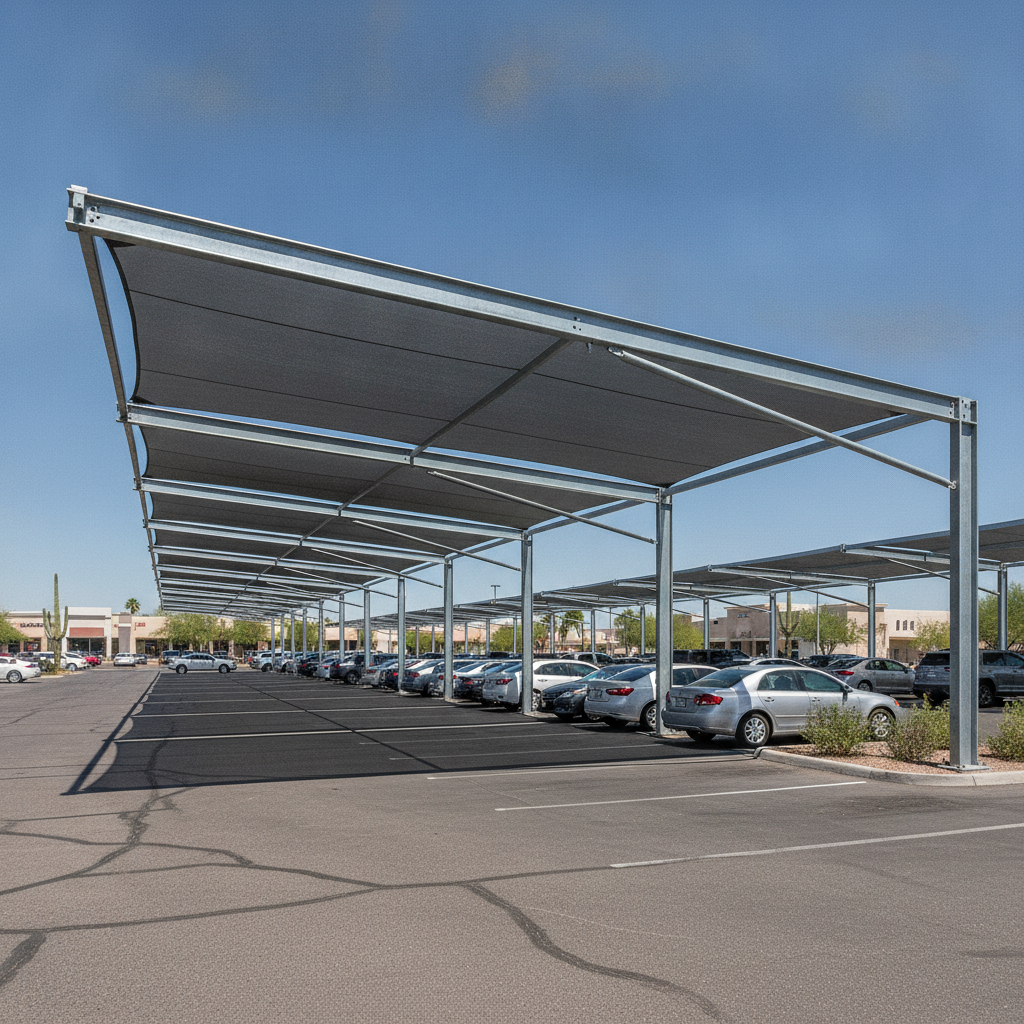
Phoenix’s urban heat island and its parking-lot shading rule are the two forces driving most commercial shade work in the city. Dark asphalt absorbs sunlight all day and re-radiates it after sundown, which is part of why nighttime lows here have climbed faster than daytime highs. To counter that, the city requires commercial surface lots to shade a share of their parking area, and a fabric or solid canopy counts toward that target.
A tree can satisfy the same rule, but it takes years to fill out and drops leaves, sap, and roots into the pavement in the meantime. A cantilevered shade structure covers the same stalls the day it is installed, with posts set on one side so cars are never threading between columns. For developers racing a certificate of occupancy, that day-one coverage is often the deciding factor.
Parking-canopy engineering for a single-post cantilever
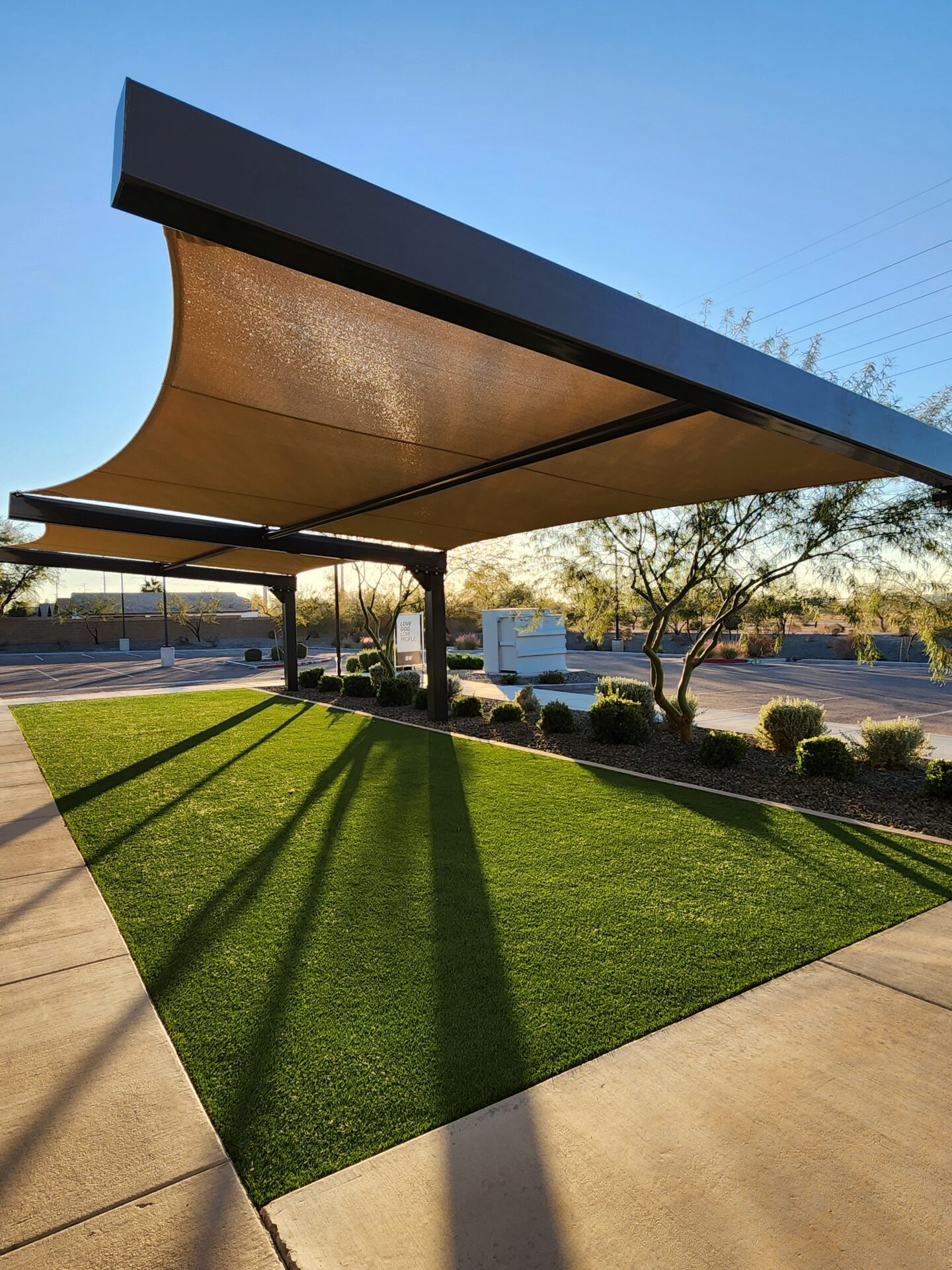
Single-post cantilever canopies carry their whole load on one row of columns, which is what makes them the workhorse of Phoenix parking lots. Removing the second post line means drivers and door swings clear the structure completely, and a typical bay runs roughly 18-20 ft of cover per stall row off that single foundation.
Spans and layout
- Cantilever arms commonly reach 16-20 ft of shaded depth from the post line.
- Bays bolt together in series to run a full drive aisle, often 60-100+ ft per continuous canopy.
- Foundations are sized by a soils report; caissons in Phoenix’s caliche-heavy ground frequently run 6-10 ft deep.
Where a lot has columns on both ends of a row, a hip structure or a higher-clearance max-hip canopy spreads the load across more posts and clears taller delivery and emergency vehicles. The right frame depends on stall geometry, not on a one-size template.
Materials that hold up to Phoenix UV and monsoon wind
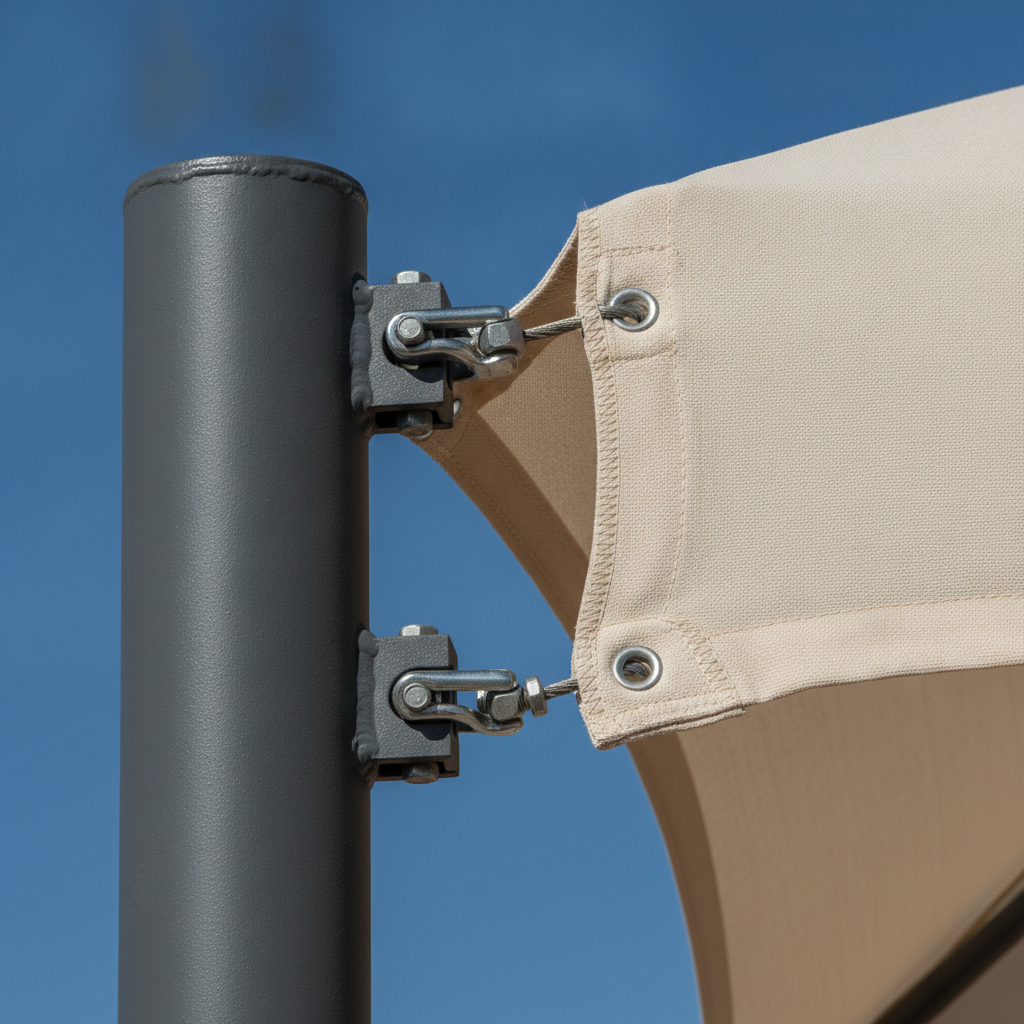
The two materials that decide how a Phoenix canopy ages are the steel frame and the shade fabric, and both are spec’d against local extremes. Knitted HDPE shade fabric blocks roughly 90-99% of UV depending on weave density, which keeps paint, dashboards, and trim from the fade and cracking that bare sun causes here. The fabric is a consumable layer, and commercial covers commonly carry 10-15 year warranties before they need replacing.
Frames are powder-coated steel, engineered to Arizona building code and ASCE 7 wind loads. Design wind speeds across the Valley land roughly in the 90-115 mph range, which matters because monsoon microbursts can punch past 60 mph with little warning. Powder coat behaves more like a baked-on finish than a brushed paint, so it resists the chalking that desert sun forces on lesser coatings. When a cover does reach the end of its life, a canopy replacement reuses the existing steel and keeps the structure out of the landfill.
Common mistakes on Phoenix commercial shade projects
Most failed parking canopies in Phoenix trace back to undersizing or wrong orientation, not bad fabric. A canopy aimed to shade stalls at noon can leave them in full sun by 3 p.m., when the heat index peaks, because the structure was never oriented against the afternoon sun angle. Getting the long axis right is worth more than adding square footage in the wrong place.
- Skipping re-tension. HDPE fabric relaxes over its first season; canopies that never get re-tensioned start flapping and wear at the seams.
- Underbuilt foundations. Footings sized for a still day, not a 60+ mph microburst, are where wind failures begin.
- Ignoring clearance. A canopy that clears sedans but not fire trucks or box vans can fail inspection or block access.
For sites that do not fit a standard bay, a custom-built shade structure lets the frame follow the lot instead of forcing the lot to fit the frame.
Honest limits of shade structures in the desert
A shade canopy manages sun and most weather, but it has real boundaries worth stating plainly. The fabric is consumable: even a well-made HDPE cover is a 10-15 year part, and planning for a re-cover is honest budgeting, not a defect. Wind ratings have ceilings too, and an engineered design protects against typical monsoon loads, not every freak gust on record.
Dust is the quiet maintenance reality. Phoenix’s haboobs leave grit that should be rinsed off once or twice a year so it does not abrade the weave or clog drainage. A canopy lowers surface temperature underneath by a meaningful margin, but it does not air-condition a parking lot. Knowing those limits up front is what separates a structure that lasts 15 years from one that disappoints in 5.
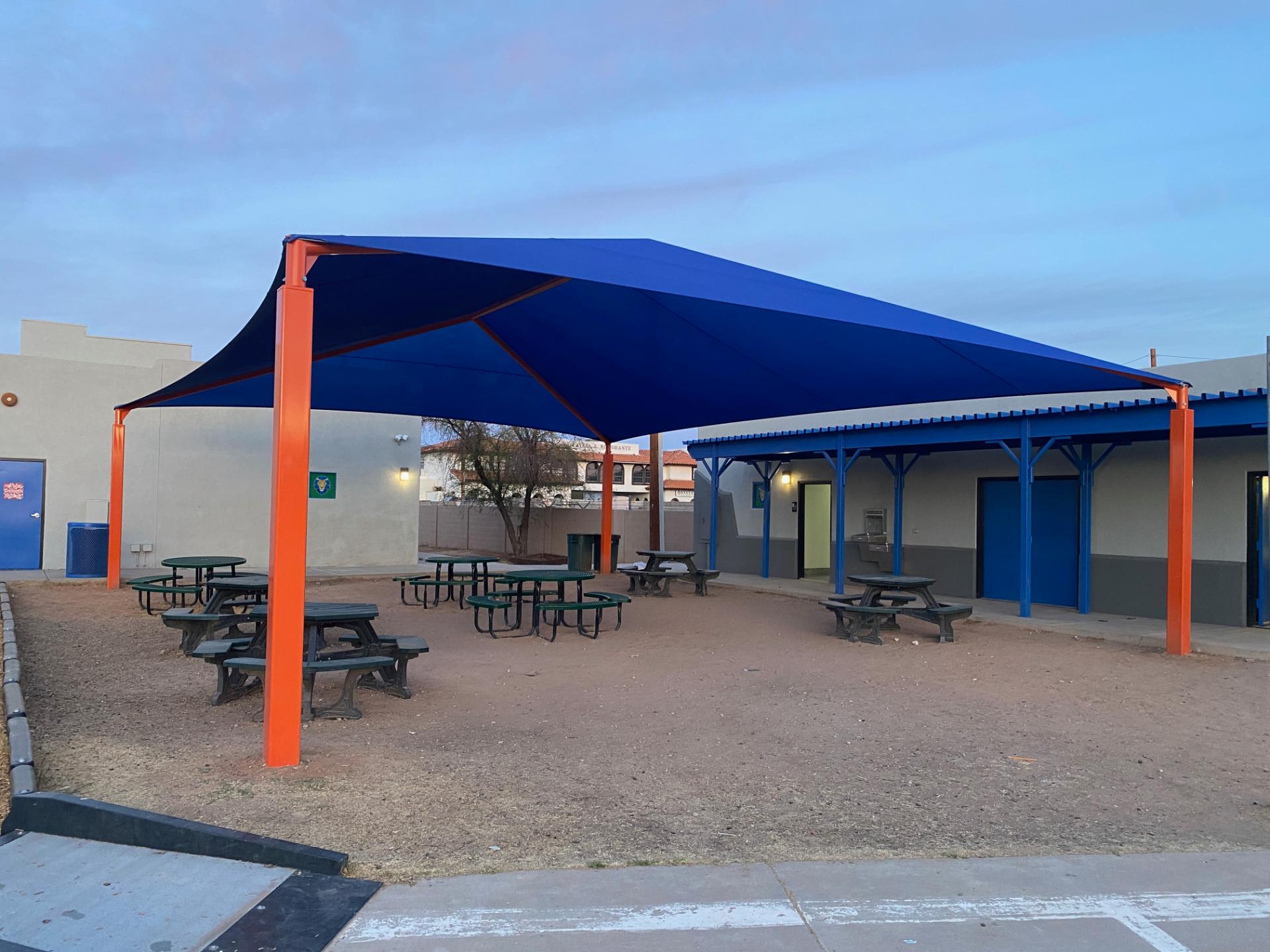
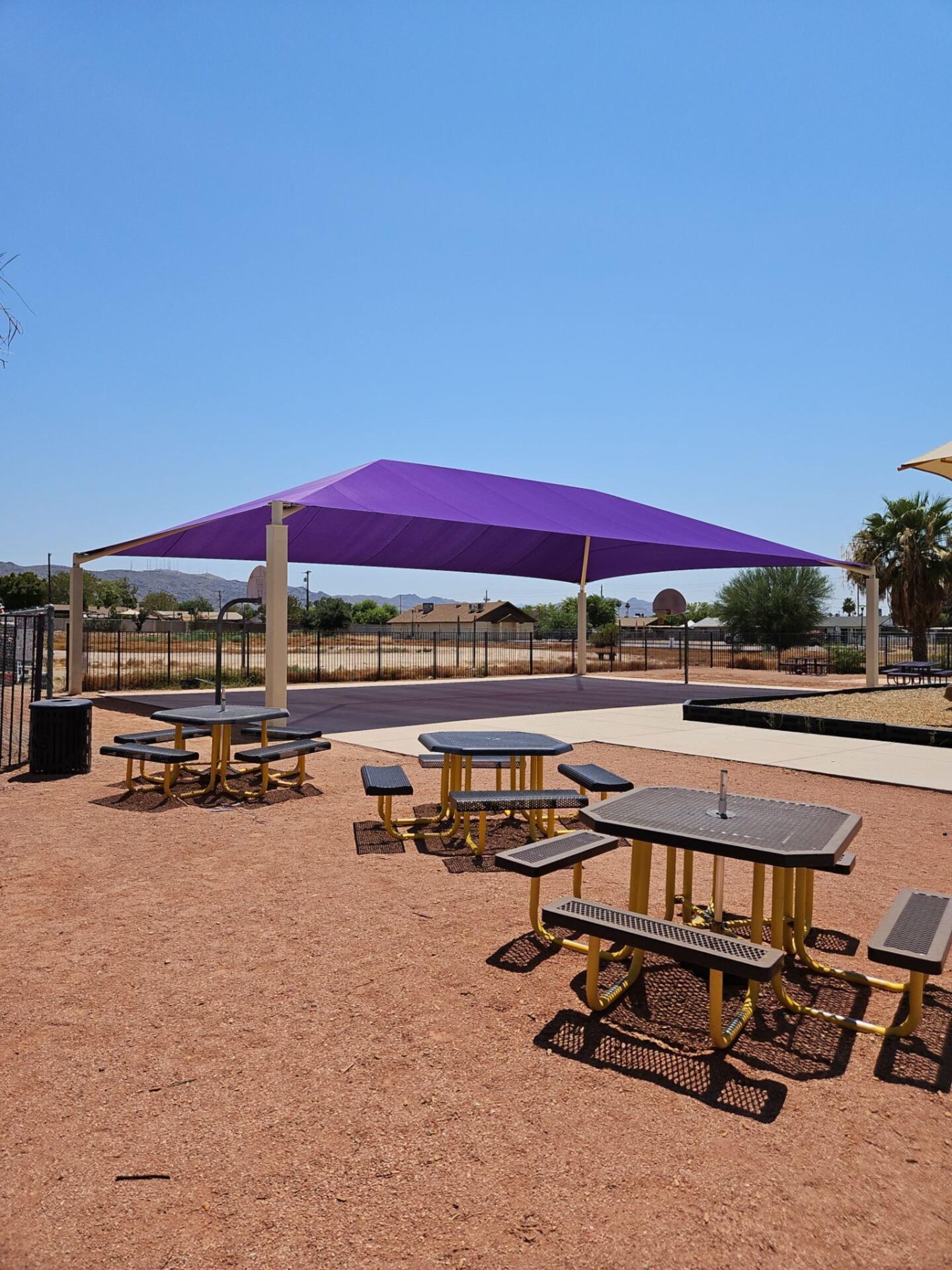
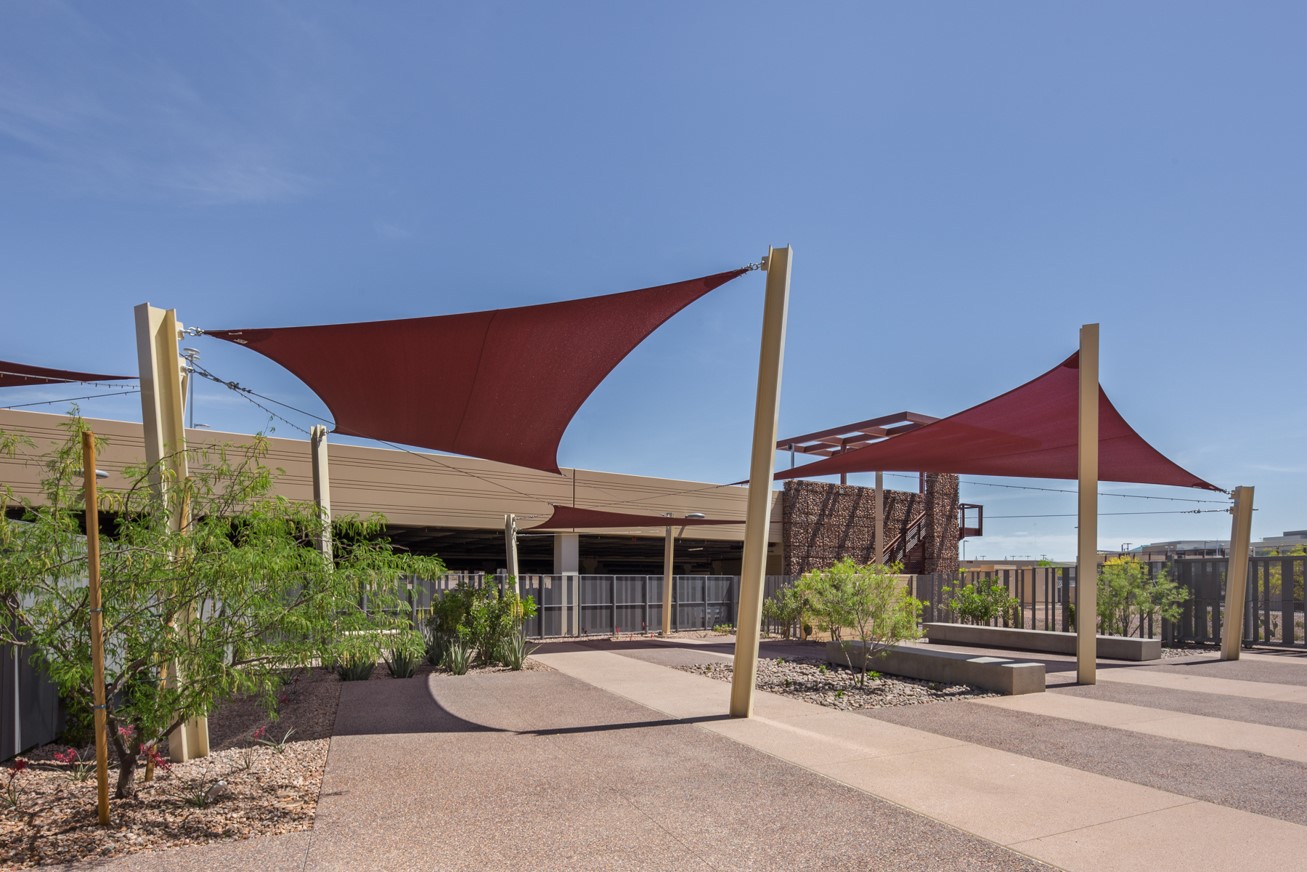
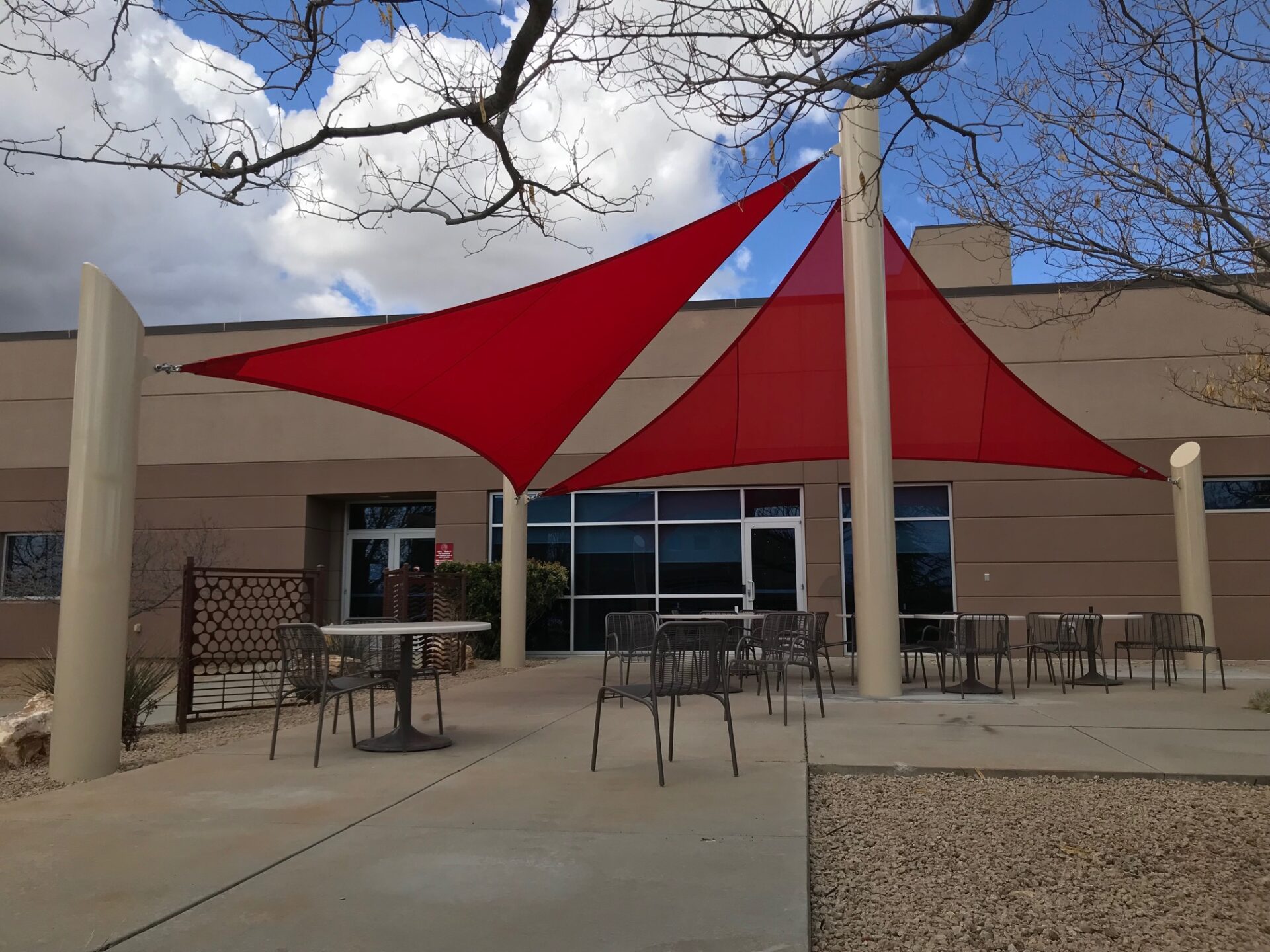
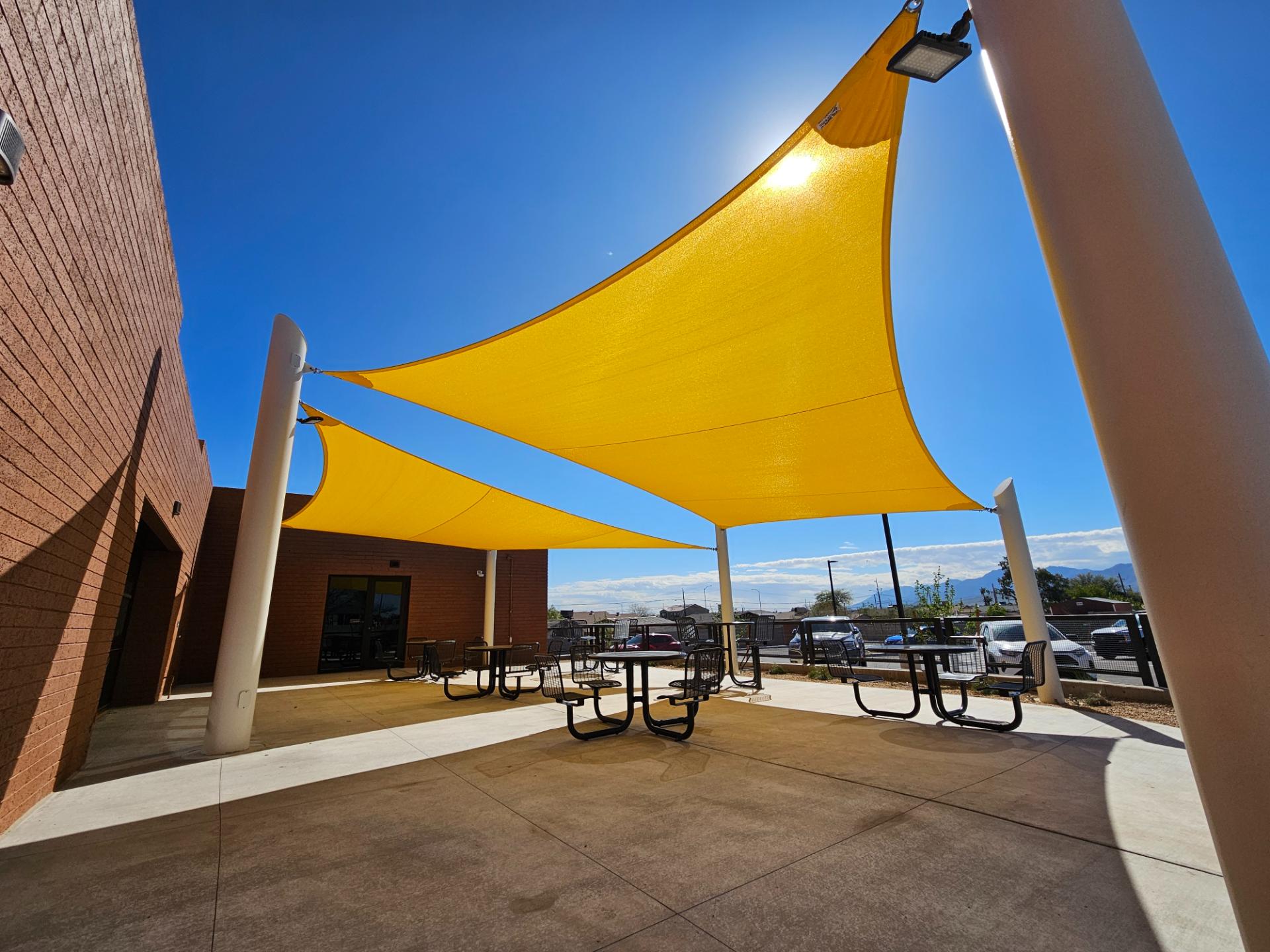
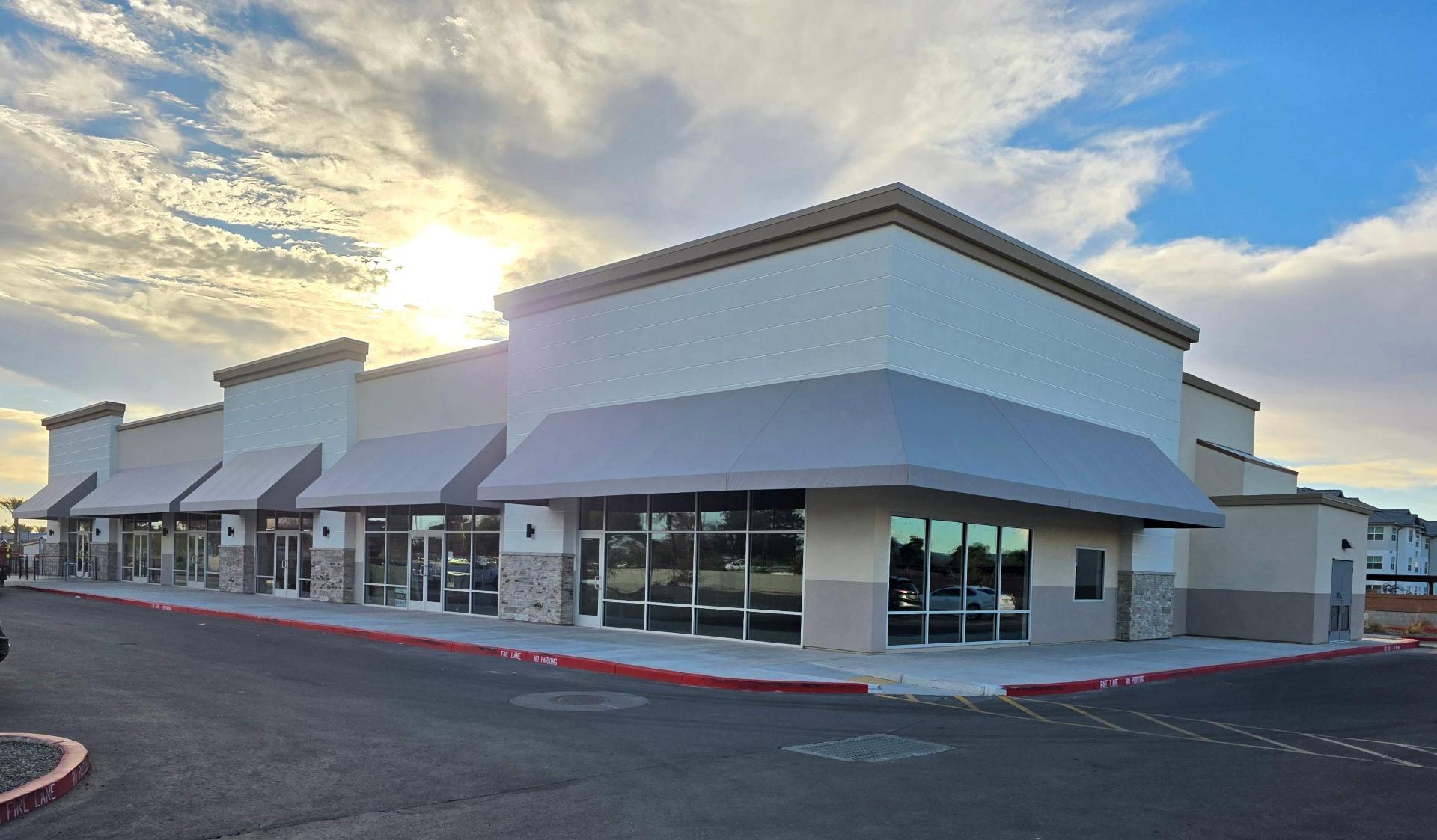
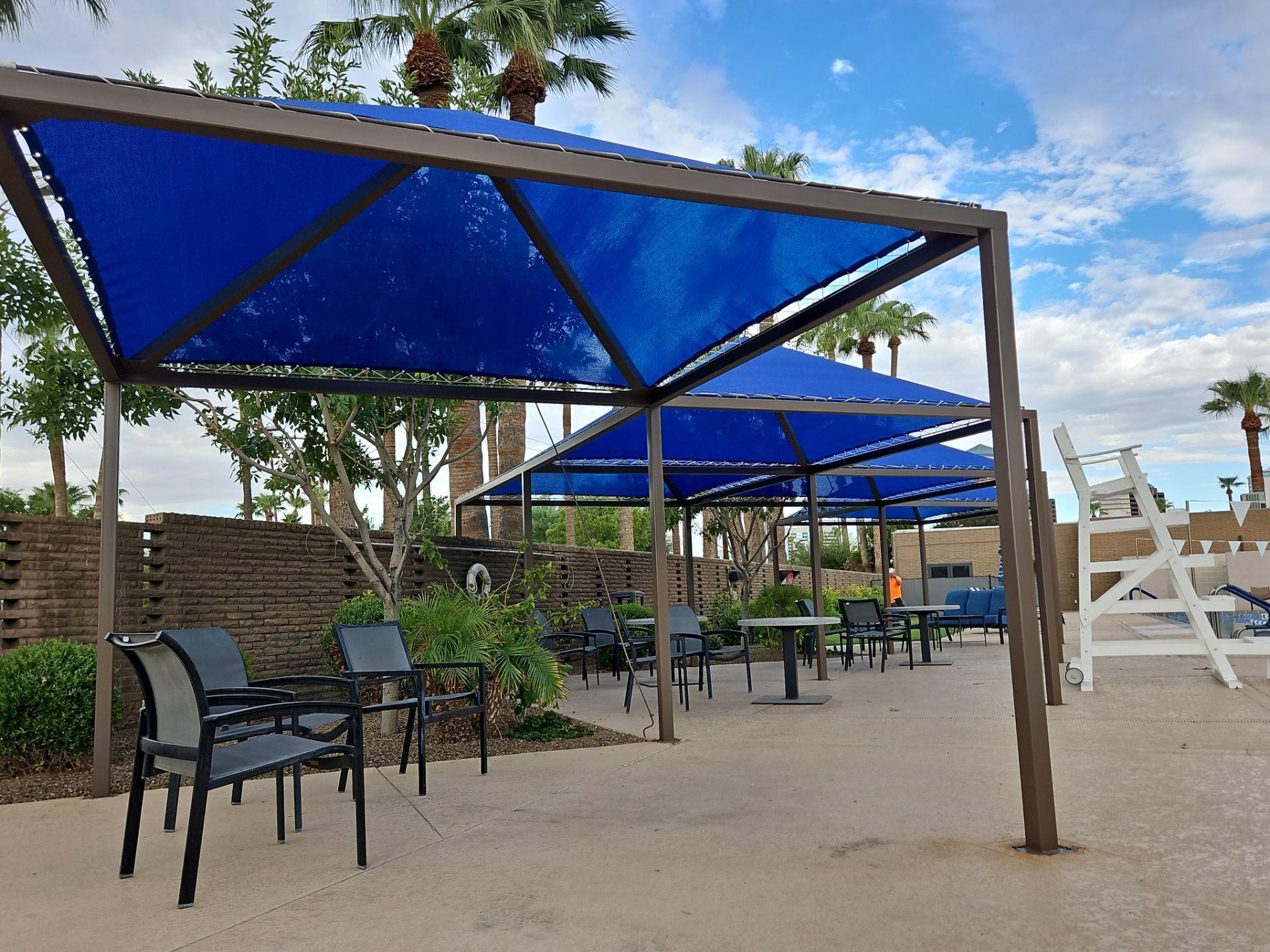
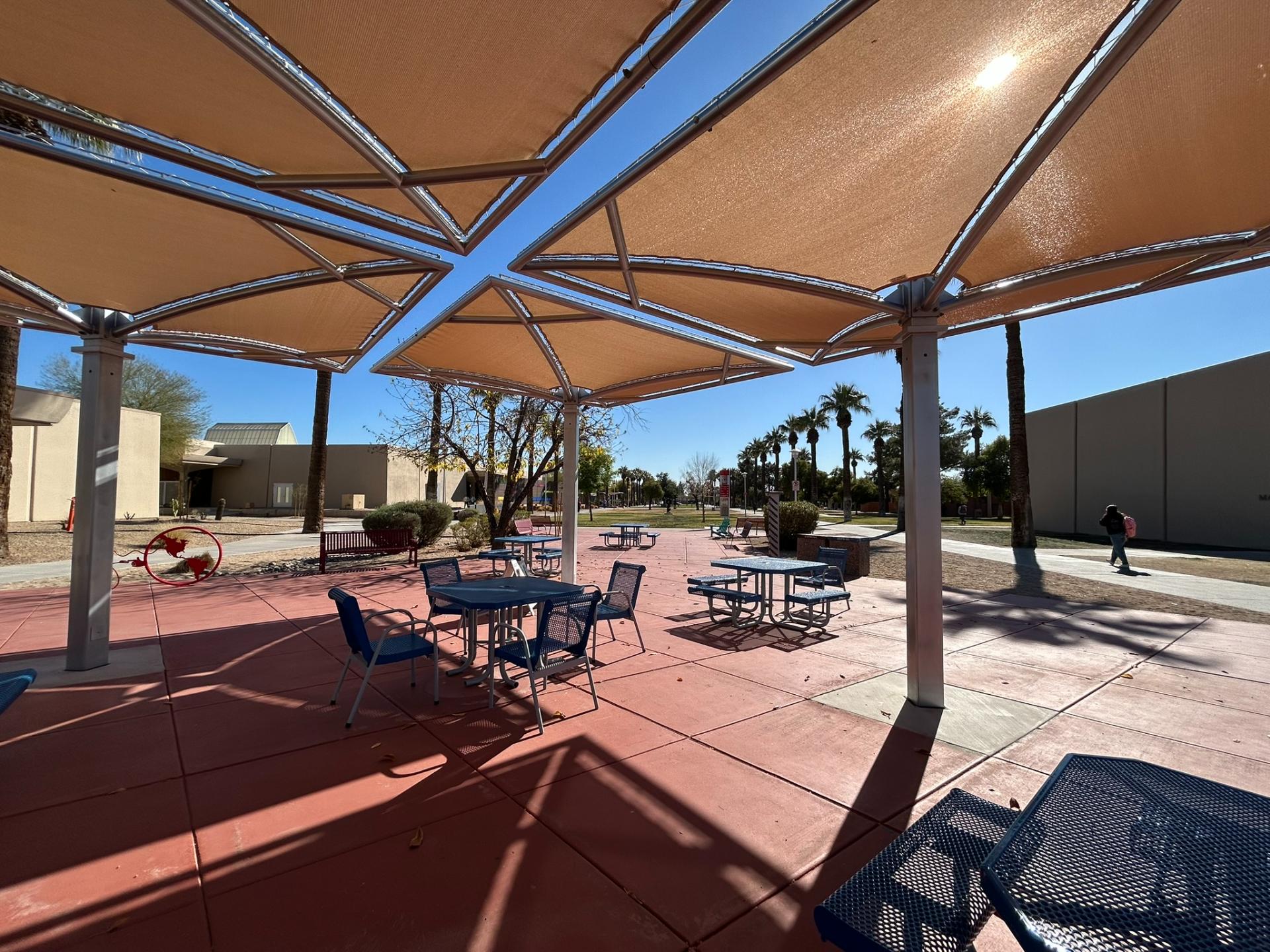
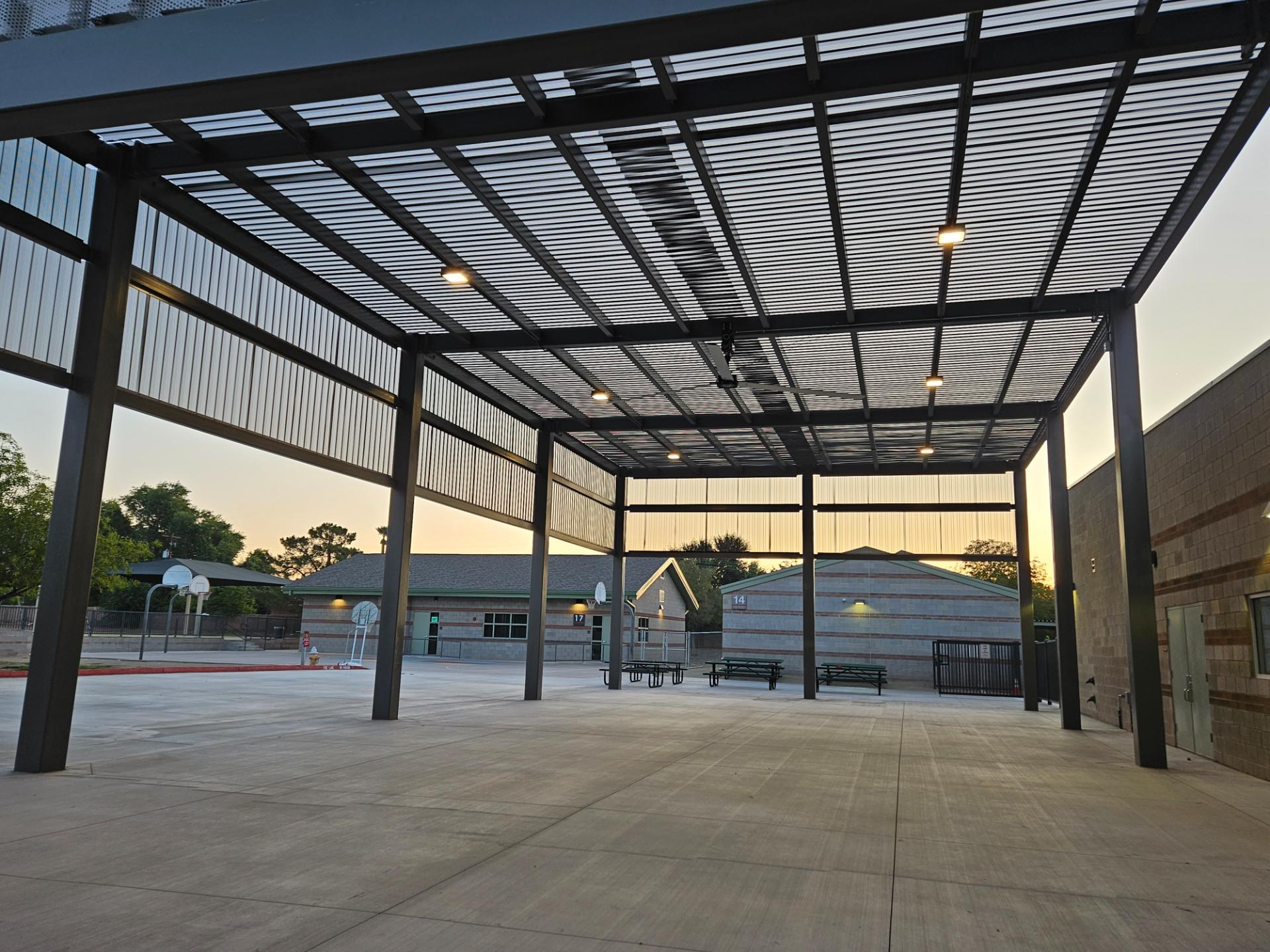
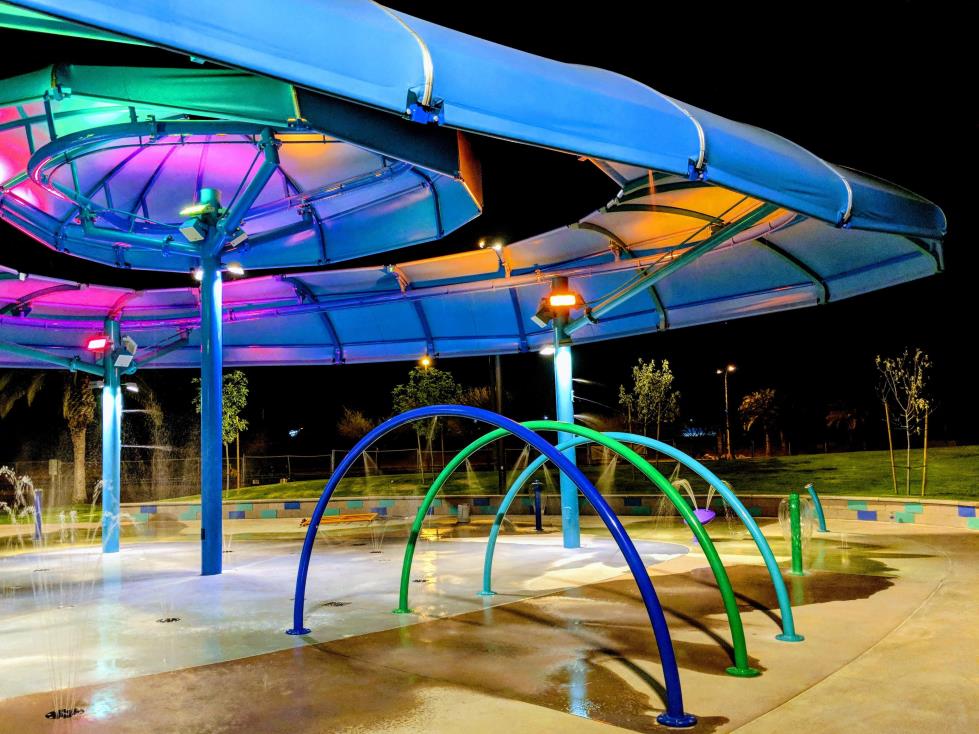
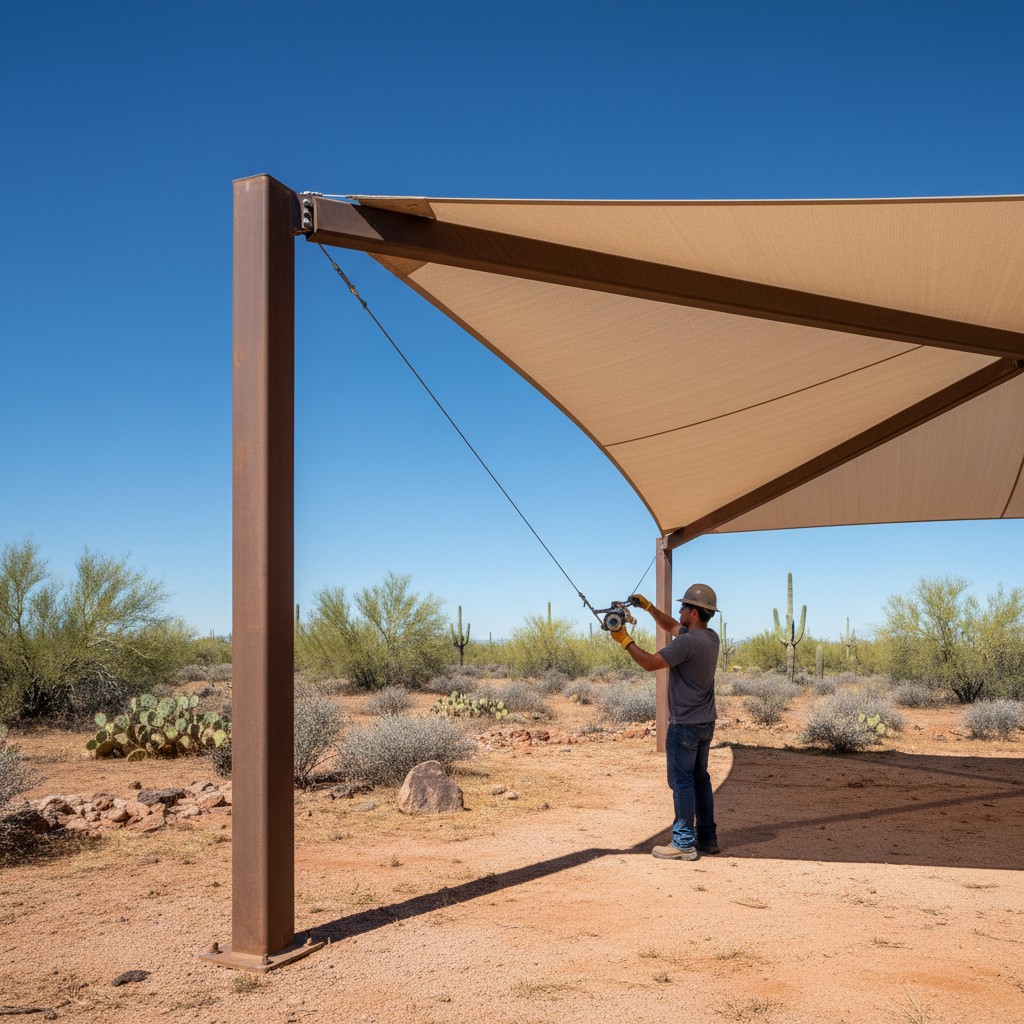
Every Shade Structure We Build for Phoenix
Planning a shade project in Phoenix?
Call (602) 265-0905 for a free assessment.
Serving Phoenix and the Phoenix Metro
Total Shade LLC builds shade structures in Phoenix as part of our Phoenix-metro service area, including nearby Glendale and Tempe. From our Phoenix fabrication shop we deliver engineered, permit-ready shade across the entire Valley.
Frequently Asked Questions
Does a shade structure satisfy Phoenix’s parking-lot shading requirement?
Yes. Phoenix’s landscaping rules require commercial surface lots to shade a share of their parking area, and engineered shade canopies are an accepted method alongside trees. A canopy reaches full coverage immediately, while a tree may take years, which is why many developers choose structures to meet the requirement at opening.
Do commercial shade canopies in Phoenix need a building permit?
Yes. Permanent steel canopies are engineered structures that require stamped drawings and a city permit, with plan review handled by Phoenix and structural review tied to Maricopa County code. We provide the engineered, stamped drawings; the city runs the review and inspections.
Can a Phoenix parking canopy survive monsoon microbursts?
Engineered canopies are designed to Arizona building code and ASCE 7 wind loads, with Valley design wind speeds roughly in the 90-115 mph range. Monsoon microbursts can exceed 60 mph, so foundation depth and frame gauge are sized for those gusts. No structure is rated for every extreme, but proper engineering covers typical monsoon conditions.
How much does a commercial shade structure cost in Phoenix?
Cost depends on span, post count, foundation depth, and fabric grade, so a parking canopy is priced per project rather than per square foot off a chart. Caliche soil can raise foundation cost because caissons may run 6-10 ft deep. We quote after reviewing the lot layout and stall count so the number reflects the actual structure, not a guess.
How long does HDPE shade fabric last in Phoenix sun?
Commercial knitted HDPE covers commonly carry 10-15 year warranties, and Phoenix’s intense UV sits at the demanding end of that window. The fabric is a replaceable layer, so when it wears out the steel frame stays and only the cover is swapped, which keeps a re-cover far cheaper than a new structure.
Get a free on-site quote in Phoenix.
Call (602) 265-0905 for a free assessment.