or call (602) 265-0905 — no-obligation, on-site.
Daycare & Preschool Shade Structures in Arizona
Smaller steel and fabric canopies that shade infant, toddler, and preschool play yards to licensing-grade coverage.
Since 1998
Designing & building Arizona shade
In-House Fabrication
Built at our Phoenix shop
Engineered & Permit-Ready
Stamped drawings for AZ wind loads
Free On-Site Quote
No-obligation project assessment
Daycare and preschool shade structures are smaller-footprint steel and tensioned-fabric canopies that cover infant, toddler, and preschool play yards to the usable-shade level Arizona childcare licensing expects, and the right type turns on how tight the yard is and where a post can land. Total Shade designs, fabricates, and installs these structures in-house at our Phoenix shop, and the early-childhood version of the job is its own thing, not a shrunken school playground. Children under five burn faster, overheat sooner, and play closer to the ground on surfaces that can pass safe touch temperature by mid-morning in summer. Knitted HDPE fabric blocks roughly 90-99% of UV, the number a licensing reviewer and a worried parent both care about. The work clusters into a few jobs: separate infant and toddler yards, preschool playgrounds, outdoor circle-time space, and the drop-off lane. Compare the early-childhood approach against the K-12 version on our school playground shade page.
Licensing-grade shade is the driver, not just comfort
Arizona childcare licensing generally expects usable shaded outdoor play space, which makes shade a compliance line item rather than an amenity for a daycare or preschool. Outdoor play sits in a licensed program’s daily schedule, and that play cannot happen in full Phoenix sun on a 110-degree afternoon, so a center without real shade loses usable yard hours for months of the year. A canopy holding a meaningful patch of the yard at 90-percent-plus blocked UV is what keeps that outdoor block on the schedule through summer.
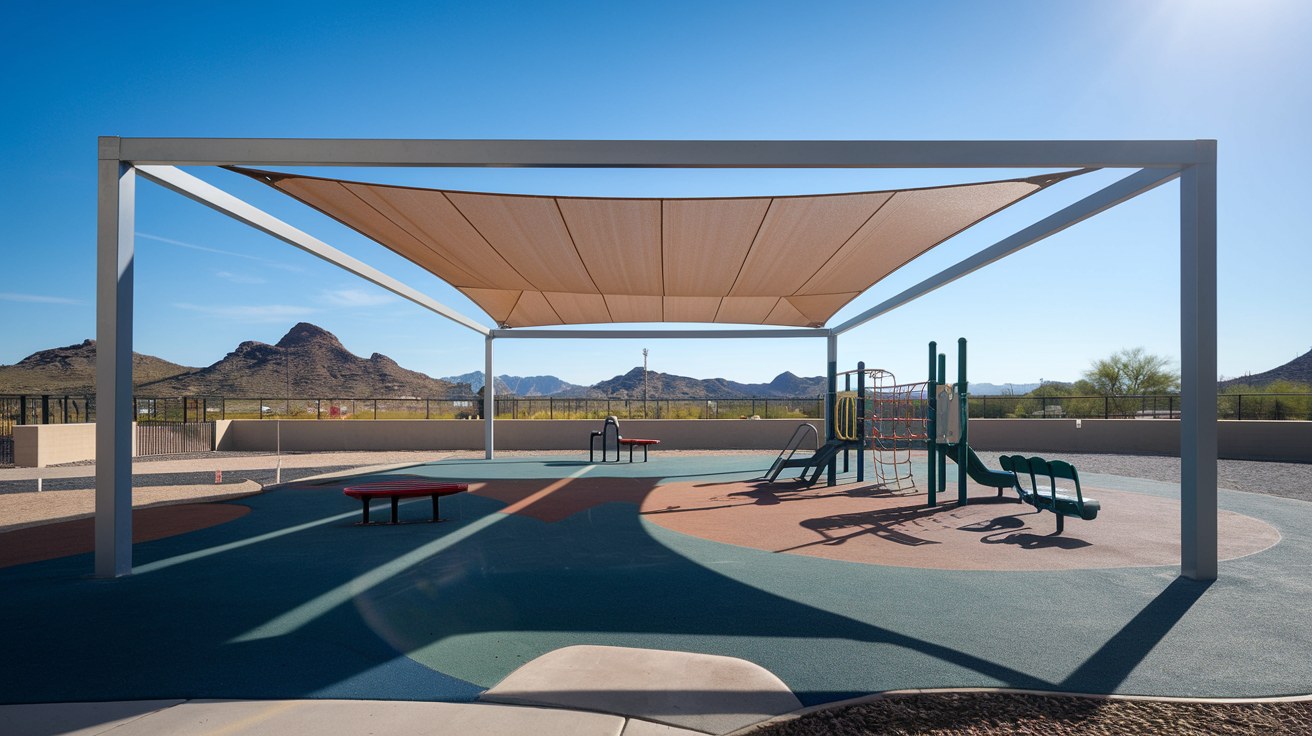
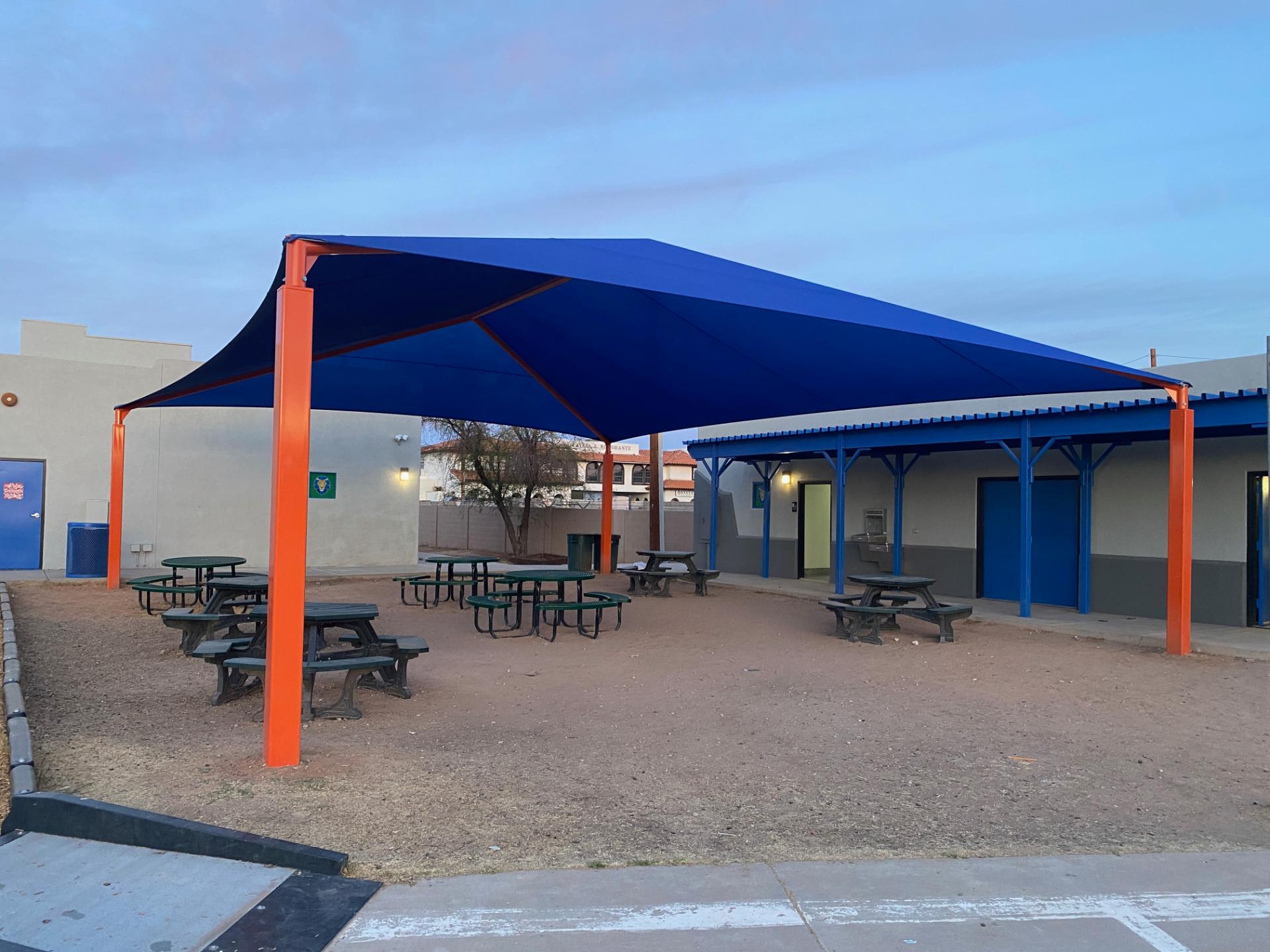
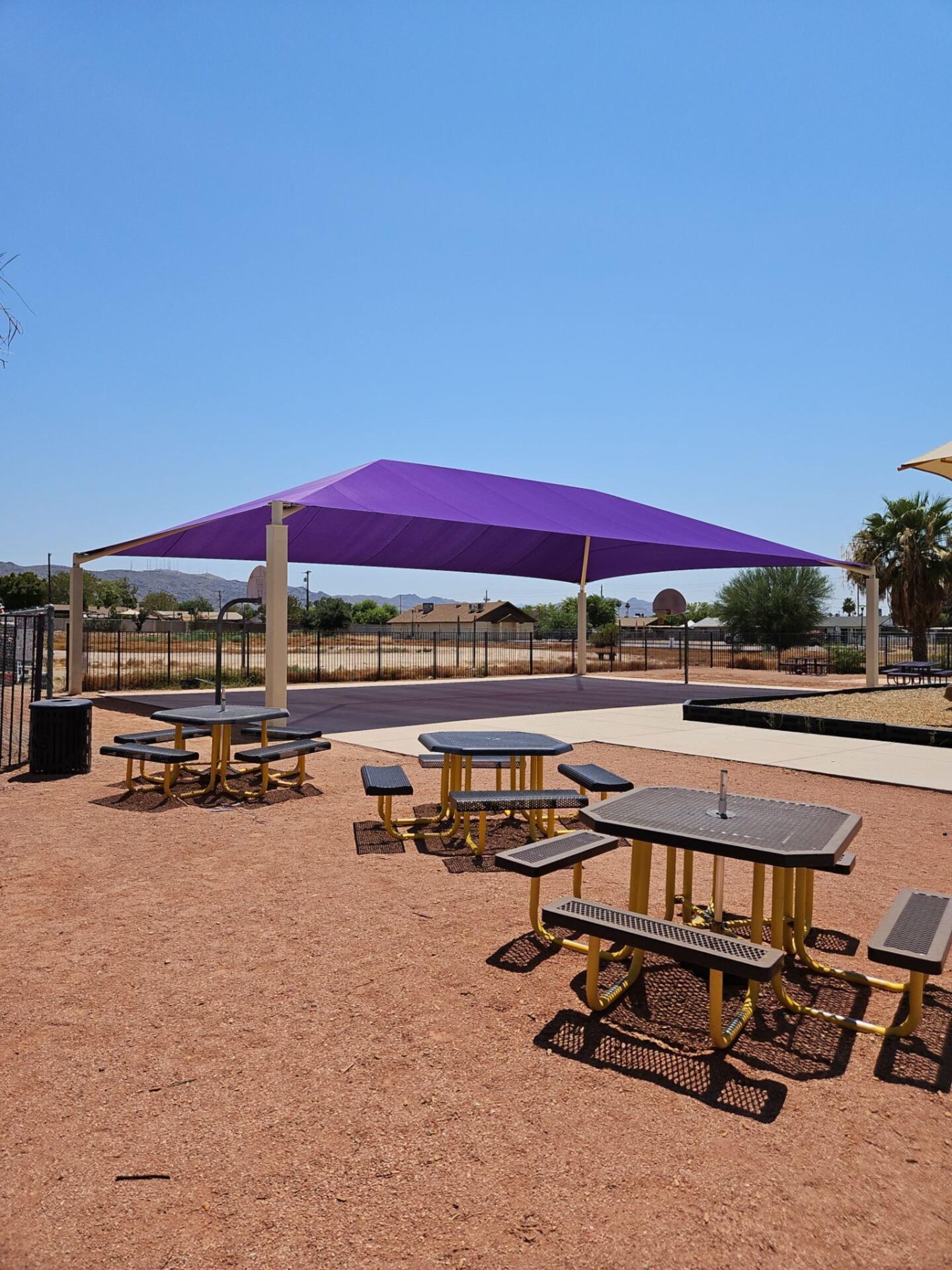
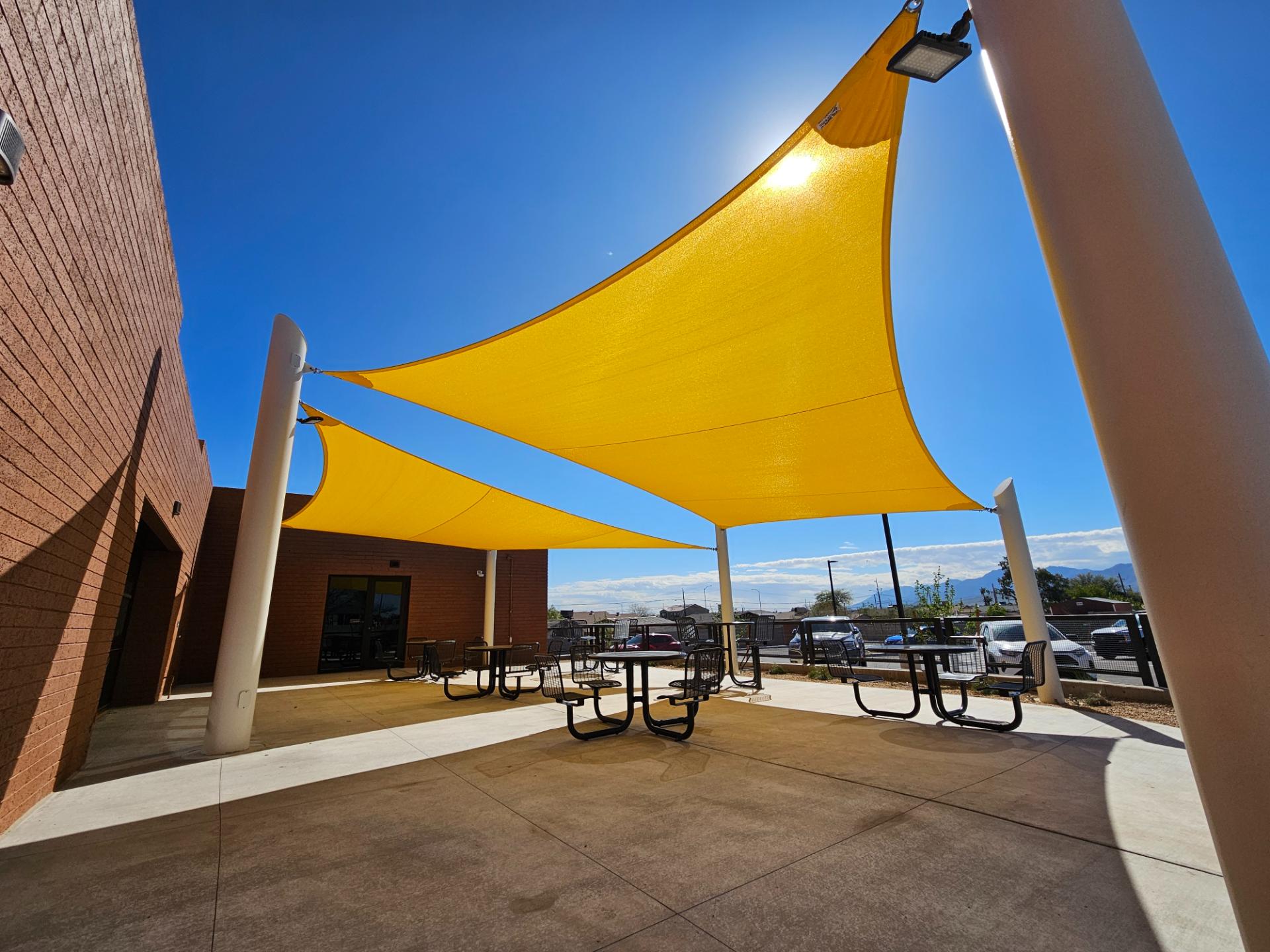
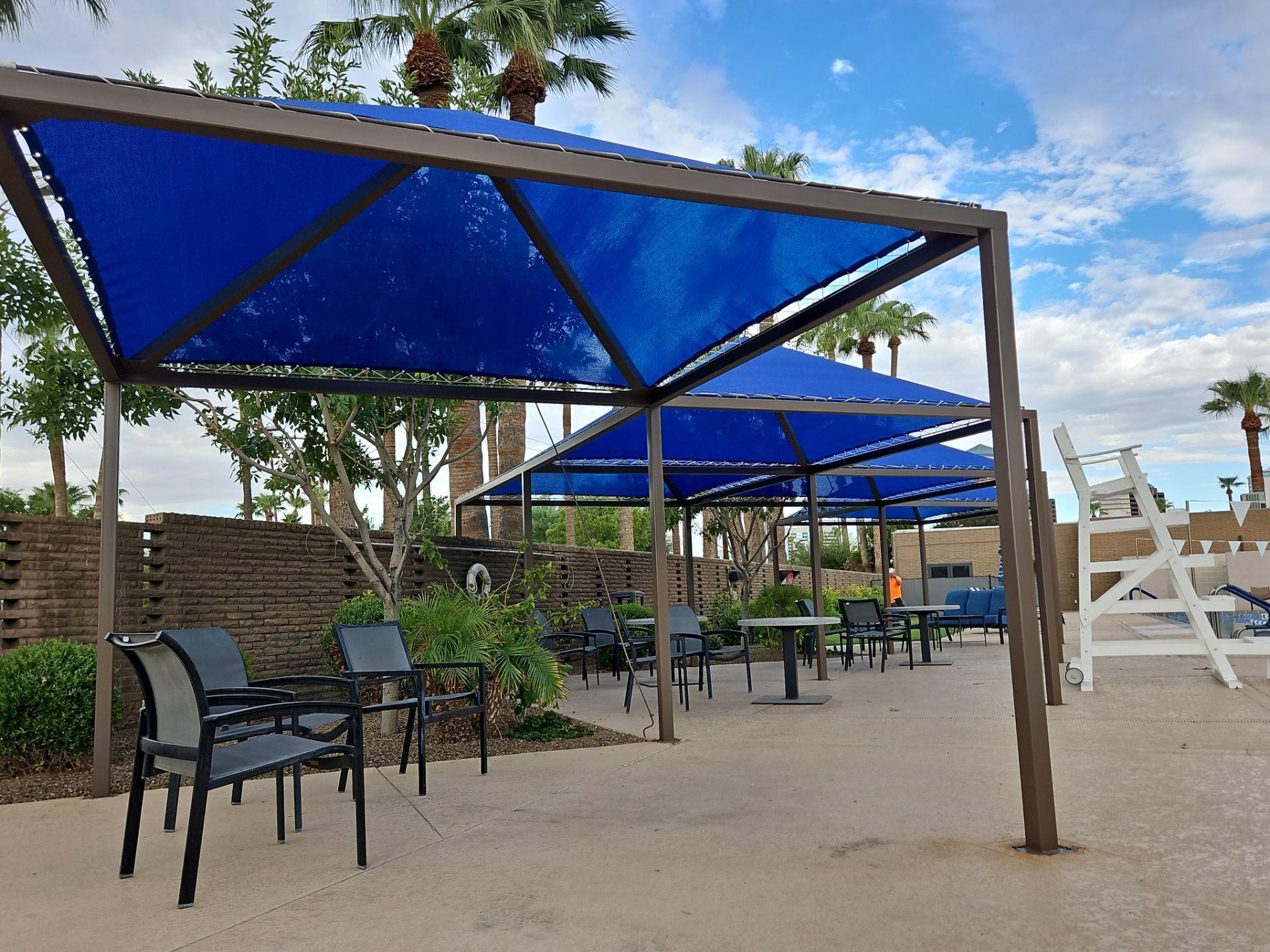
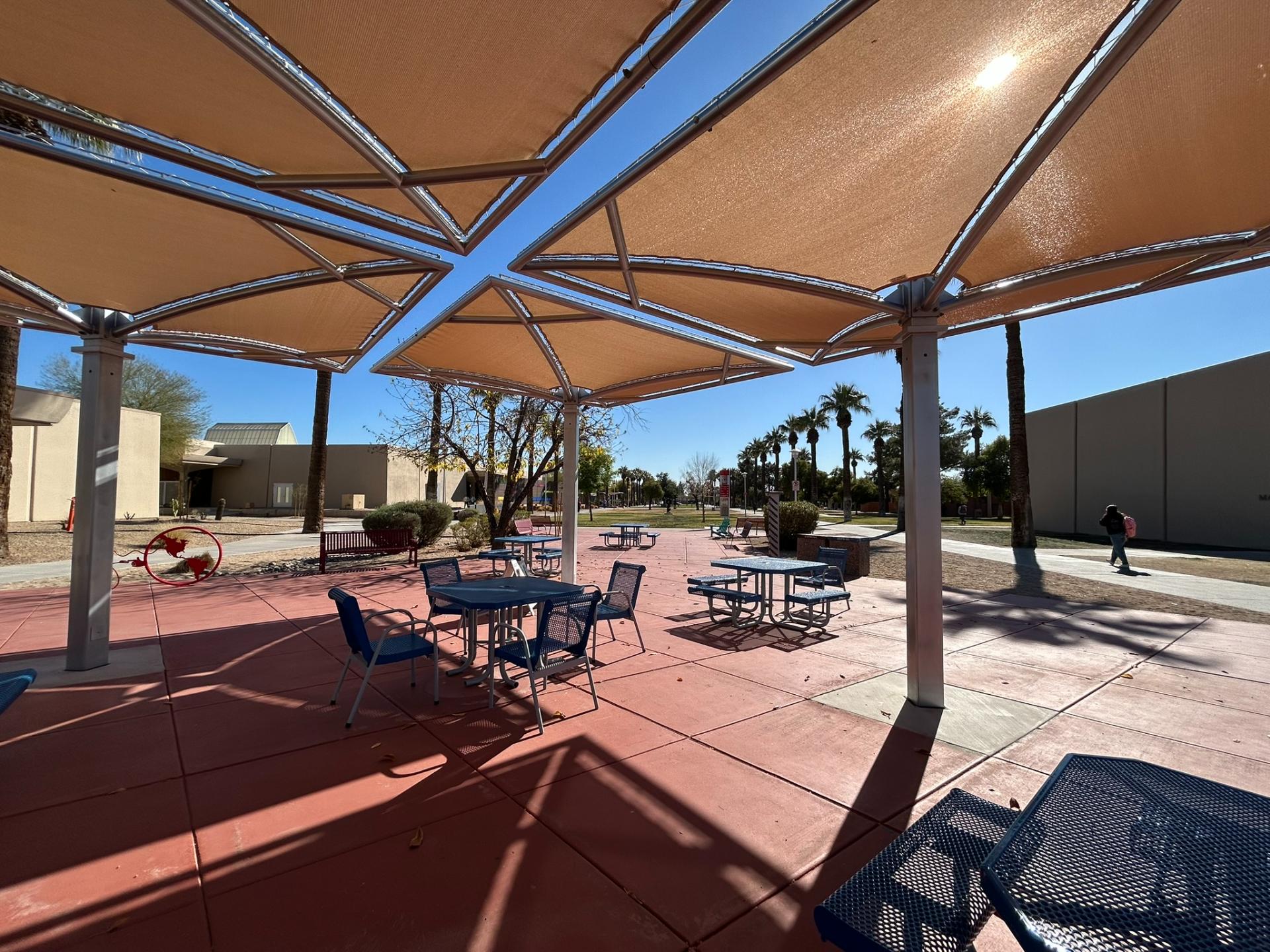
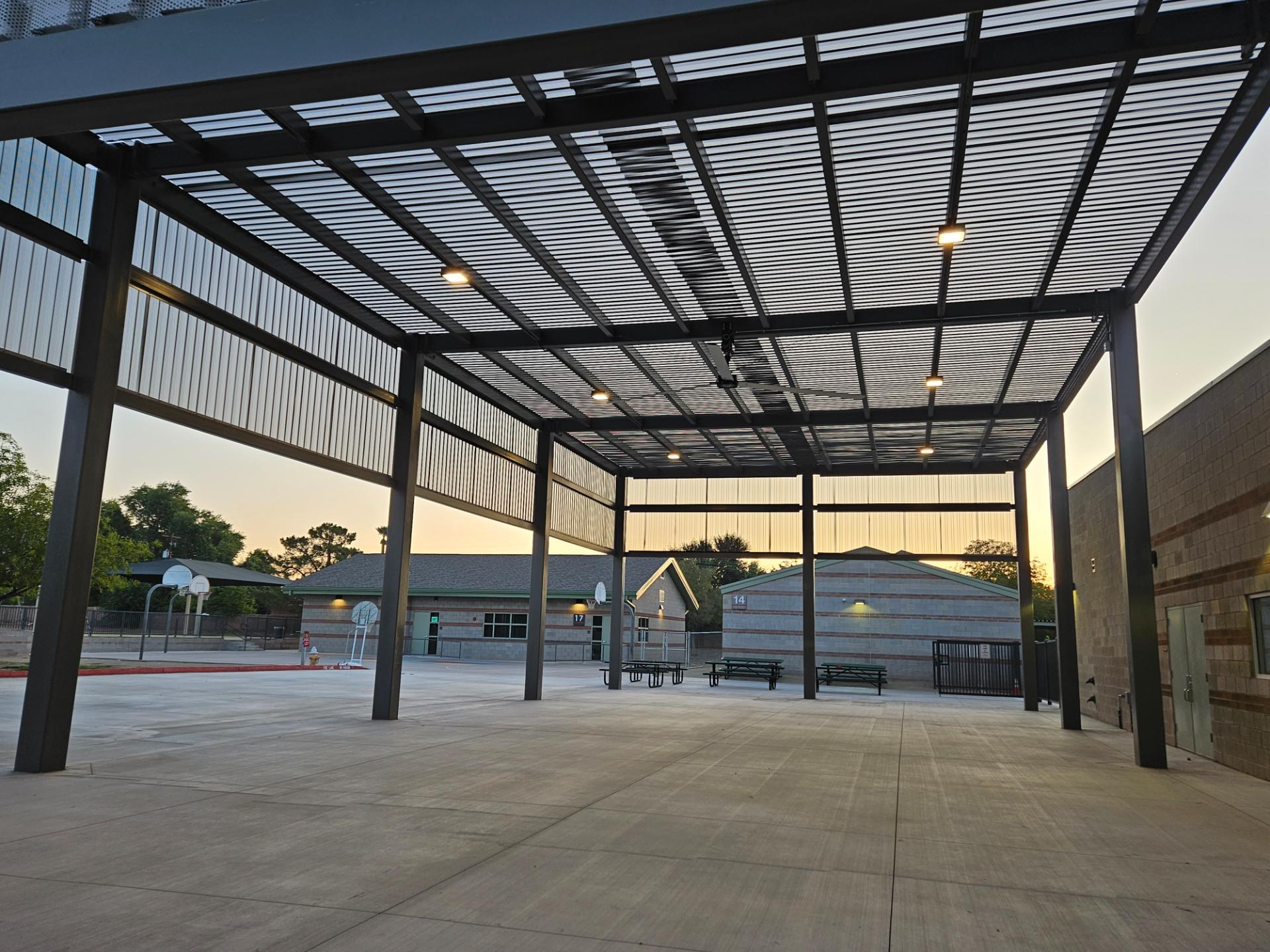
The early-childhood angle changes the coverage math. A preschool yard is smaller than a K-12 playground but used in tighter age bands, so the shade has to land on the zones the day actually uses, the climber, the trikes path, the sandbox, rather than oversailing a wide field. A hip structure covers an open preschool play area cleanly at a moderate post height, while a tensioned fabric sail floats over a tighter pod where a center post would be in the way. Coverage that satisfies a licensing reviewer leads the layout from the first sketch.
Infant and toddler yards need their own smaller structures
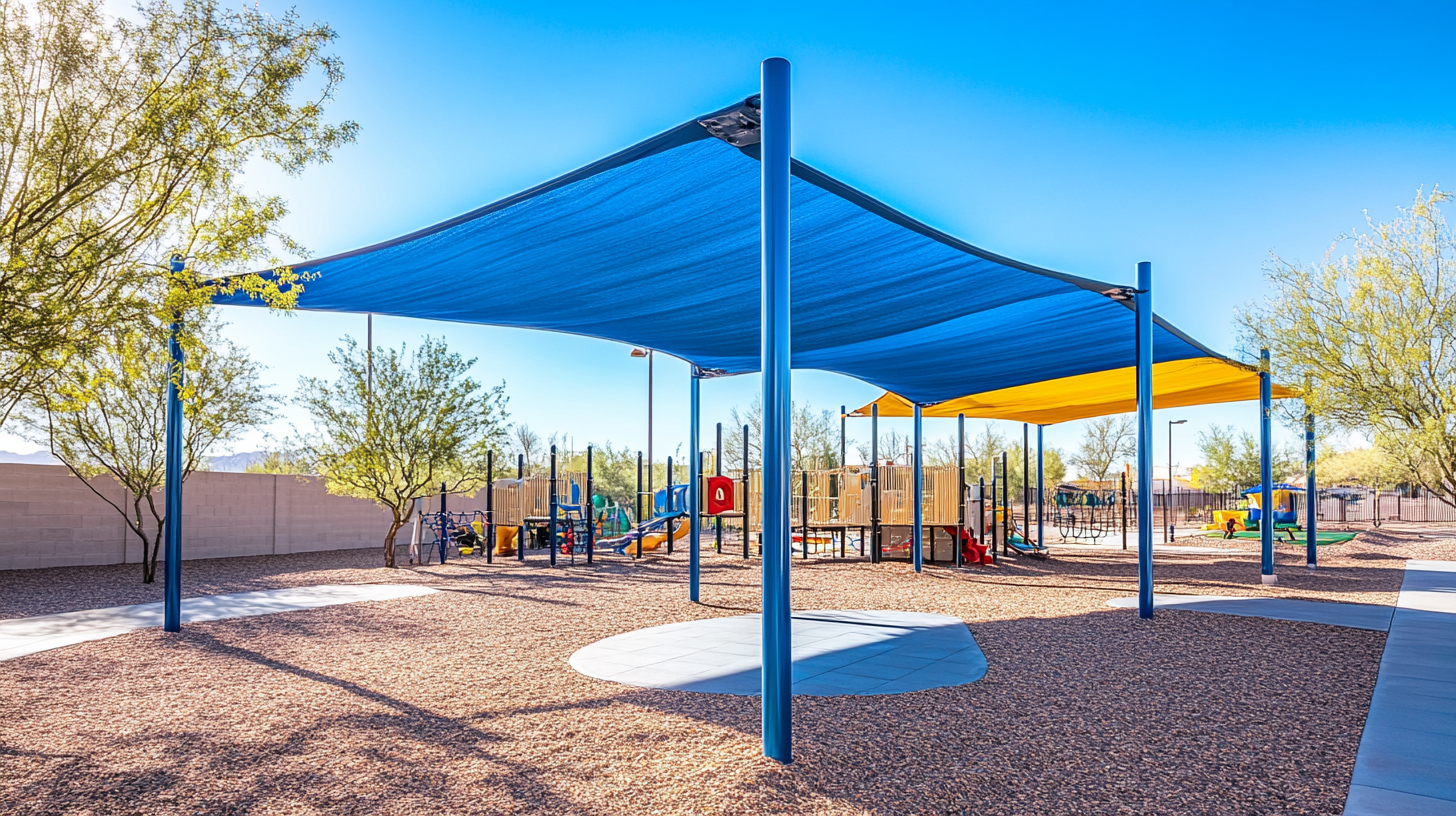
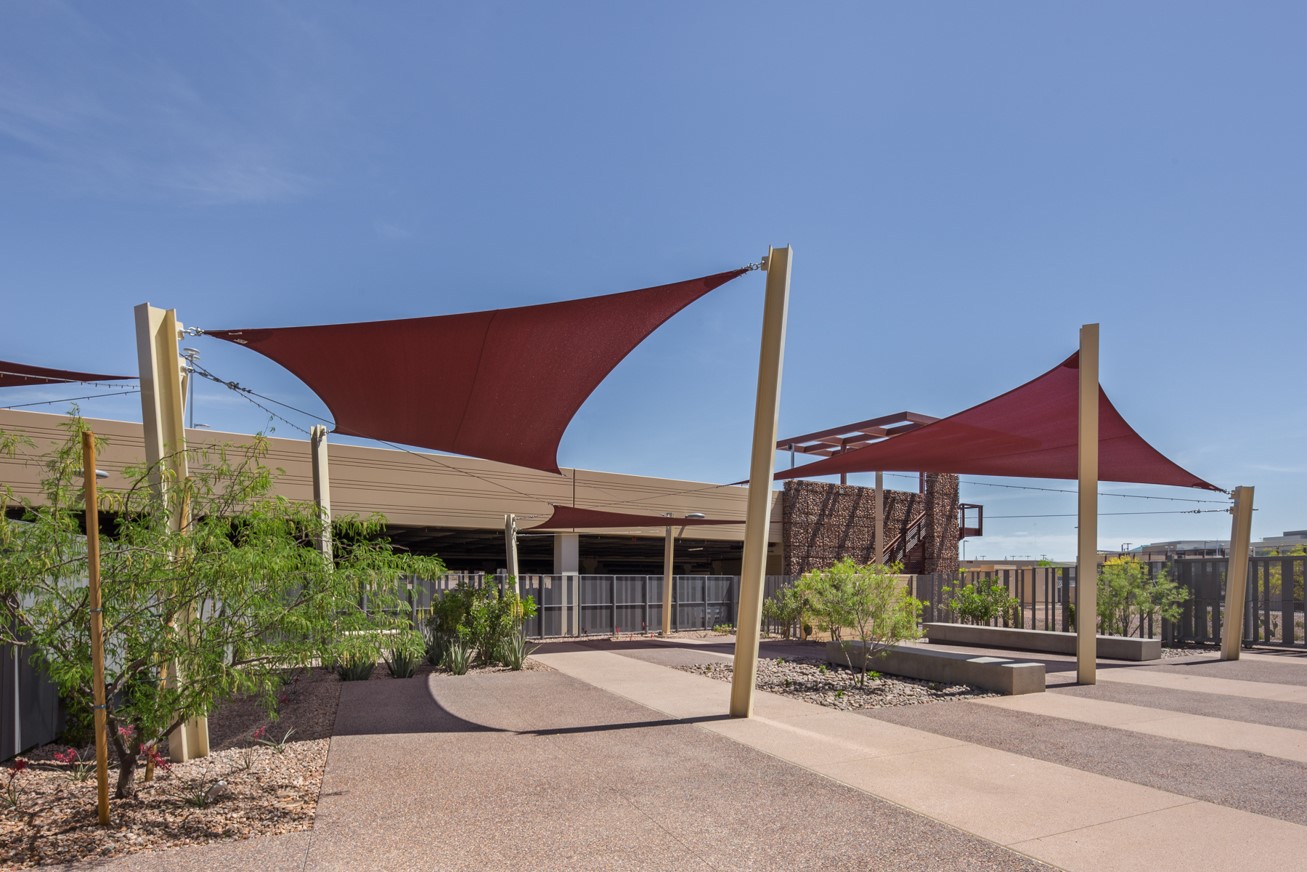
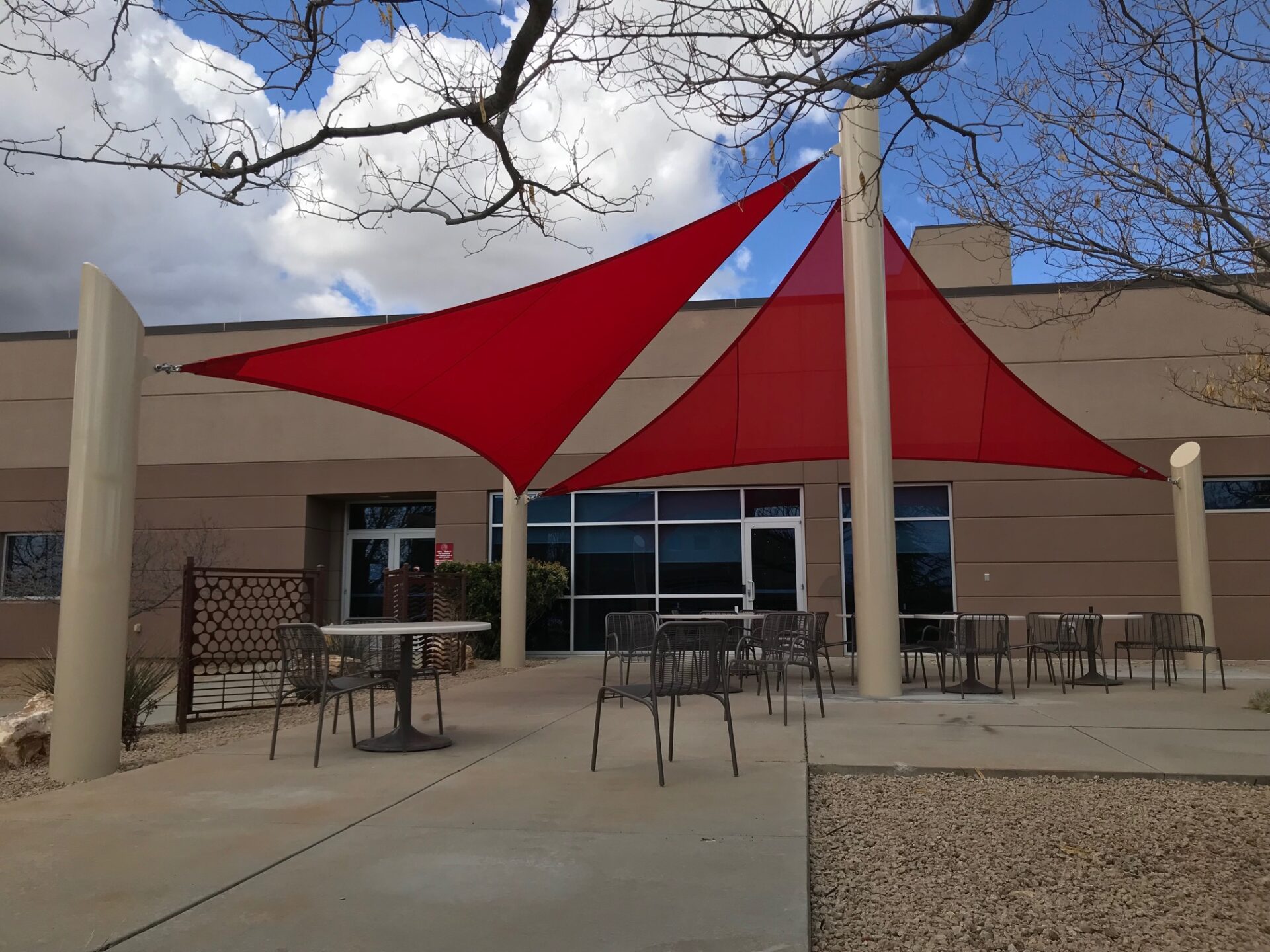
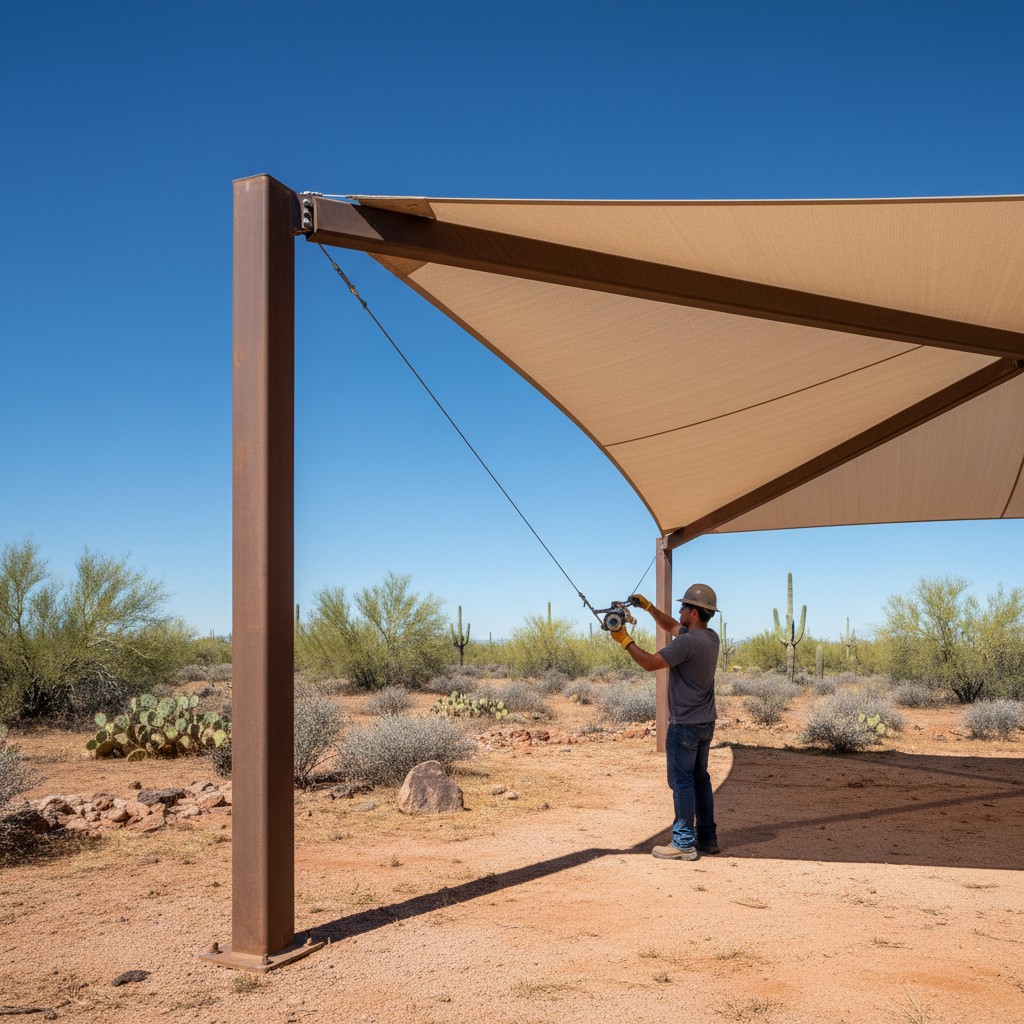
Infant and toddler play yards are usually fenced off from the preschool yard and sized for a dozen small bodies, not a hundred, so they take their own compact canopy rather than a share of one big roof. Infants have the thinnest, most UV-sensitive skin and the least ability to move themselves out of the sun, which is why their separate yard is often the first piece a center wants covered. A small 3-point tensioned fabric sail suits a tight toddler pod, anchoring to the perimeter and floating cover over crawl mats and low climbers without a column in the middle of the space.
Toddler yards also run hot at ground level, where these children play barefoot. Rubberized surfacing and equipment in open Arizona sun can climb past safe touch temperature by late morning in summer, and a crawling child is on that surface directly. Fabric over the yard pulls surface temperature down hard, the difference between a usable morning and an indoor day. Where a yard is too small or oddly shaped for any stock form, a structure from our product range can be sized to follow the fence line instead of forcing the yard to fit a catalog footprint.
Outdoor classrooms, drop-off canopies, and water play
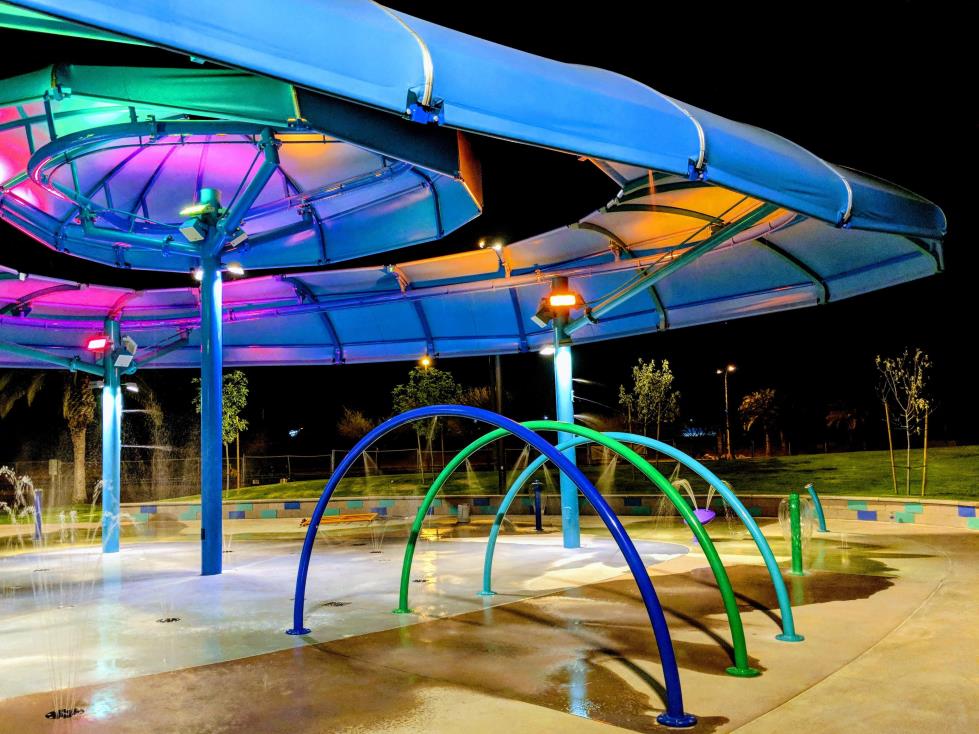
Beyond the play yards, three smaller jobs round out an early-childhood center, each wanting a different shape. Outdoor classroom and circle-time space takes a modest hip or sail bay that holds a stable patch of shade over a rug or low benches for the length of a lesson. A sandbox or water-play table needs cover sitting right over the activity, because both pull children into a fixed spot for long stretches with hands and faces in the sun.
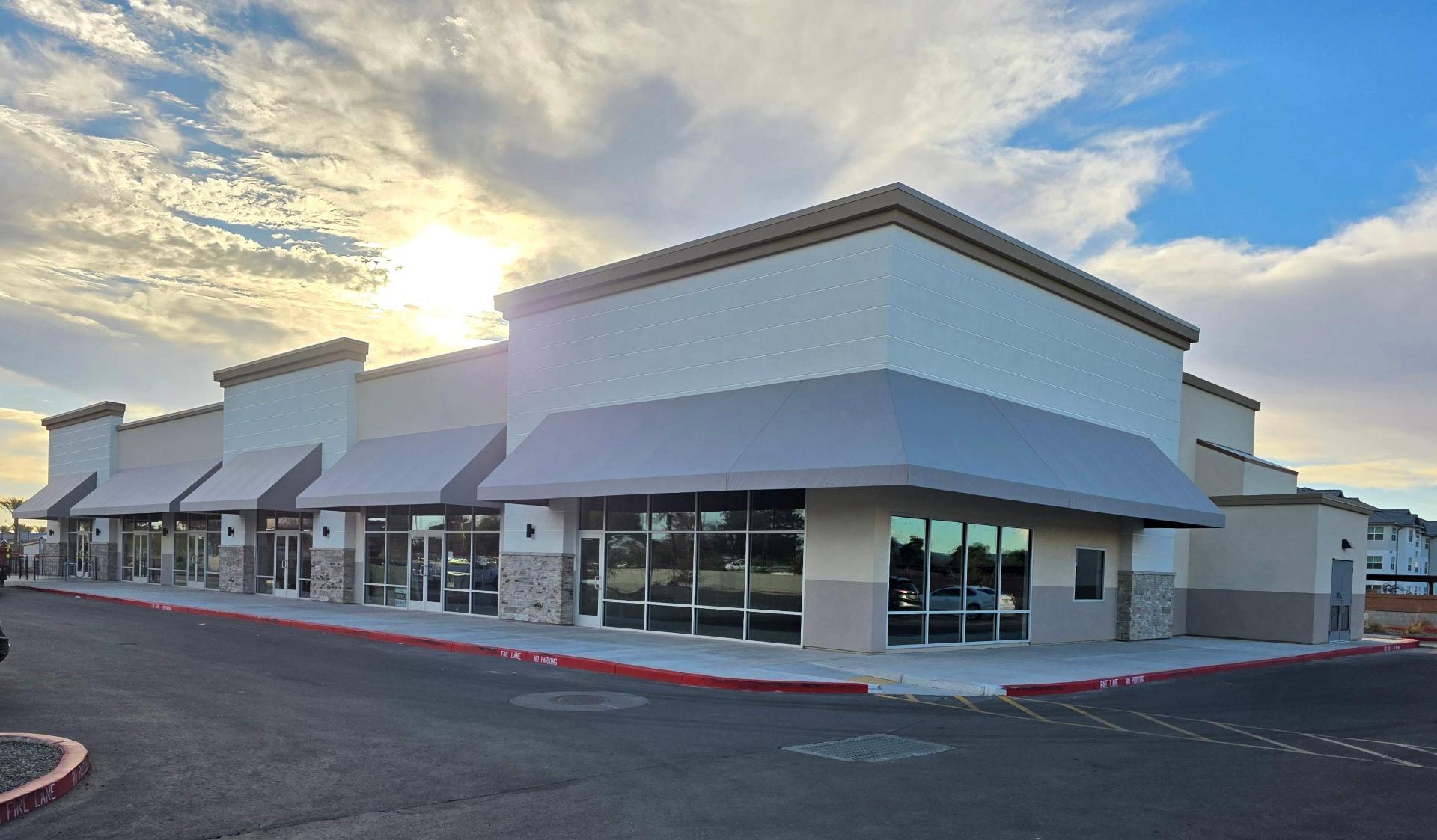
The drop-off and pickup lane is the other constant request. A canopy over the curb keeps parents and small children out of UV and summer rain during the daily handoff, and a tensioned sail reads light over an entry while covering the walk from car to door. West Valley centers can see how this fits a local site on our Glendale commercial shade page, and East Valley operators on the Gilbert page.
UV and hot-surface safety for children under five
The reason early-childhood shade is non-negotiable is biology: young children take a disproportionate share of their lifetime UV before they start kindergarten, and childhood sun exposure is a recognized skin-cancer risk factor in general pediatric guidance. Knitted HDPE blocks roughly 90-99% of ultraviolet depending on weave density, so a yard that drops from open sun to 90-percent-plus blocked is a measurable health gain for the age group that benefits most.
Heat is the second hazard, worse near the ground where toddlers play. Surfaces and equipment in direct Arizona sun can exceed safe touch temperature in summer, and a small child has thin skin, a high surface-area-to-mass ratio, and limited ability to say they are overheating. Shade fabric behaves more like a parasol than a roof, cutting the direct radiant load that drives those surface temperatures while still letting air move through the open weave. Blocked UV and a cooler touch surface together keep the outdoor block on the schedule rather than canceled by heat.
Materials, engineering, and tight-yard layouts
Every daycare canopy is built on powder-coated steel and engineered to Arizona building code and ASCE 7 wind loads, with Valley design wind speeds landing roughly in the 90-115 mph range depending on site and exposure. Early-childhood structures run smaller than school playgrounds, but the engineering bar is the same: a compact toddler-yard sail still needs footings sized to its anchors and the local wind exposure, because a smaller canopy in an open lot still catches wind. The fabric is the same commercial-grade knitted HDPE used on larger projects, over finished steel rather than the bolted-together residential kit a center sometimes compares it against.
Tight yards set these jobs apart. A preschool footprint is full of fences, equipment, and age-band partitions, so post placement matters more than on an open field, and the choice between a posted hip and a perimeter-anchored sail comes down to where a column can land without crowding the play. Soft-fall surfacing and age-appropriate equipment heights stay clear of any low structural member. Where an entry serves families and staff, the accessible route under it should meet ADA code compliance for clearance and slope. Stamped drawings come with the job for the center’s permit set.
Common mistakes and honest caveats
The most common early-childhood mistake is shading the wrong spot. A canopy centered on an empty corner while the climber, sandbox, and circle-time rug sit in glare looks like coverage on paper and fails in use, because low morning and late-afternoon sun slides under a canopy that was not sized to oversail the activity zones. The second is treating an infant yard as an afterthought, when the youngest children most need covered space. The third is buying a light residential-grade kit for a licensed commercial setting, where it will not carry the wind load or last under Phoenix UV.
Three caveats worth saying plainly. The fabric is a consumable, not permanent: knitted HDPE covers commonly carry warranties in the 10-15 year range, and intense Valley sun sits at the demanding end of that window, so budget a re-cover every decade or so rather than treat it as a failure. Wind ratings have hard limits, and a haboob beyond the stamped design speed can damage any canopy, which is why the engineered number matters more than a sales claim. And desert dust settles on the weave, so an occasional rinse keeps the fabric breathing and the yard looking maintained.
Shade Structures We Build
Frequently Asked Questions
Does Arizona require shade at daycares and preschools?
Arizona childcare licensing generally expects a licensed center to provide usable shaded outdoor play space, since outdoor play is part of the daily program and cannot happen in full summer sun. That makes shade a practical compliance item for a daycare or preschool, not just an amenity. The exact requirements are set by the licensing authority, so confirm specifics with your licensor; what we provide is engineered, stamped structures that deliver real, usable shade over the play yard to meet that expectation.
What shade structure is best for a toddler play area?
For a tight, fenced toddler yard, a 3-point or 4-point tensioned fabric sail usually fits best, because it anchors to the perimeter and floats cover over crawl mats and low climbers without a post in the middle of the play space. For a larger, more open preschool yard, a hip structure covers more square footage per dollar by sharing load across a few interior posts. The honest rule is open ground takes a hip and an equipment-crowded or small yard takes a sail.
How much UV does playground shade block?
Commercial knitted HDPE shade fabric blocks roughly 90-99% of UV depending on weave density, which is the manufacturer-typical range across the industry rather than a single fixed number. For children under five, who take a large share of their lifetime UV early and whose skin is more sun-sensitive, dropping a play yard from open sun to 90-percent-plus blocked is a meaningful health gain. The fabric also cuts the radiant heat that drives playground surfaces past safe touch temperature in Arizona summers.
Is Total Shade experienced with playground shade structures?
Yes. Total Shade was founded in 1998 and fabricates steel shade structures in-house in Phoenix under AZ ROC #272680, with playground and campus projects that include Tavan Elementary School, Paloma Elementary School, and Glendale Community College. Those are school sites rather than daycares, but the playground-shade capability, the hip, sail, and cantilever forms, and the ASCE 7 wind engineering carry directly into early-childhood work. Daycare and preschool structures are simply built at a smaller, age-appropriate scale.
How long does daycare shade fabric last in Arizona?
Commercial knitted HDPE covers commonly carry warranties in the 10-15 year range, and intense Phoenix UV sits at the demanding end of that window, so a center should plan to re-cover the fabric every decade or so. The steel frame underneath lasts far longer when it is powder-coated and engineered properly. Treat the fabric as a consumable with a predictable replacement cycle rather than a one-time purchase, and budget a re-cover into the long-term plan rather than treating it as a failure.