or call (602) 265-0905 — no-obligation, on-site.
Shade Structure ADA & Building-Code Compliance in Arizona
What it actually takes to put a commercial shade structure up legally in Arizona: a building permit, stamped engineering, ADA-accessible routes, playground fall-zone clearances, and your city’s parking-shade rules.
Shade-structure code compliance covers building permits, ASCE 7 wind loads, and ADA access: van-accessible shaded parking, a minimum 7-foot clear height under canopies, and accessible routes. A commercial installer provides stamped engineering drawings; the city or county plan-reviews and inspects before and after the structure goes up.
Since 1998
Designing & building Arizona shade
In-House Fabrication
Built at our Phoenix shop
Engineered & Permit-Ready
Stamped drawings for AZ wind loads
Free On-Site Quote
No-obligation project assessment
A commercial shade structure in Arizona almost always needs a building permit backed by stamped engineering, and once it goes up it cannot break three things already governed by code: ADA accessible routes, playground fall-zone clearances, and any local parking-lot shade requirement. The split is clean. Total Shade engineers and fabricates the structure and supplies permit-ready, professional-engineer-stamped drawings sized to Arizona building code and ASCE 7 wind loads, where Valley design wind speeds run roughly 90-115 mph. Your jurisdiction, almost always the city or county building department, reviews those drawings, issues the permit, and inspects the work. The sections below walk the permit, the ADA basics, playground safety, parking-shade rules, and the review process, then close with the honest caveat that rules vary by jurisdiction.
Building permits and stamped engineering
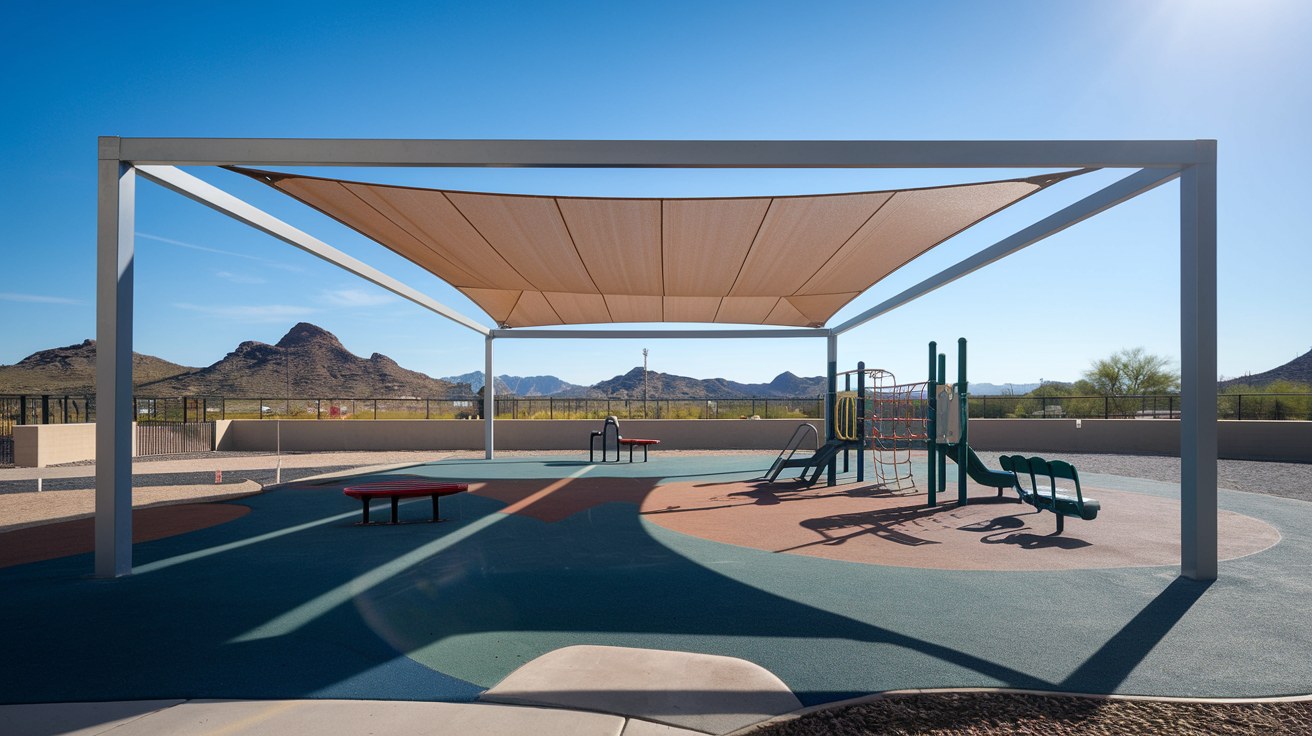
Nearly every freestanding commercial shade structure in the Valley needs a building permit, and that permit hinges on engineered drawings stamped by a licensed professional engineer. A shade canopy is a sail, so the building department treats it as a structure that has to stand up to wind and gravity, not as furniture, and it wants frame, post, and foundation calculations before anything is poured. Maricopa County structures are engineered to Arizona building code and ASCE 7 wind loads; because monsoon microbursts can punch past 60 mph in minutes, the engineering is sized for gusts, not averages.
This is the line where our work ends and the city’s begins: Total Shade provides the stamped, permit-ready drawings, and the jurisdiction issues the permit. The stamp lets a plan reviewer sign off without re-running the math. Foundation depth matters as much as steel, since caliche soil often pushes caissons 6-10 ft deep before they grip. Skipping the permit is the costly mistake, because an unpermitted structure can be red-tagged and removed.
ADA accessibility, the basics that apply
The core ADA rule is simple to state: a new structure cannot create a barrier on an accessible route, and any shaded path or seating it serves has to stay usable by someone in a wheelchair. ADA accessibility is largely about clearances, so where a shade structure lands relative to walkways, ramps, and entrances drives the layout. An accessible route generally needs a clear width on the order of 3 ft, and posts and foundation collars cannot pinch that path below the required clearance. Overhead, the canopy and any low member has to keep adequate headroom, typically around 80 in of clear height, so nobody walks into a beam, and shaded tables or a queue must leave room for wheelchair-accessible spots.
We describe these as general requirements, since the precise dimensions, slopes, and counts are set by federal ADA standards and the locally adopted code and checked by a plan reviewer against your site. What we control is positioning posts and foundations clear of the accessible route on the stamped drawings. For shading accessible stalls and the route from car to door, the parking-lot shade structures page covers the layout, and unusual footprints route through custom-built shade structures.
Playground fall-zone safety guidance
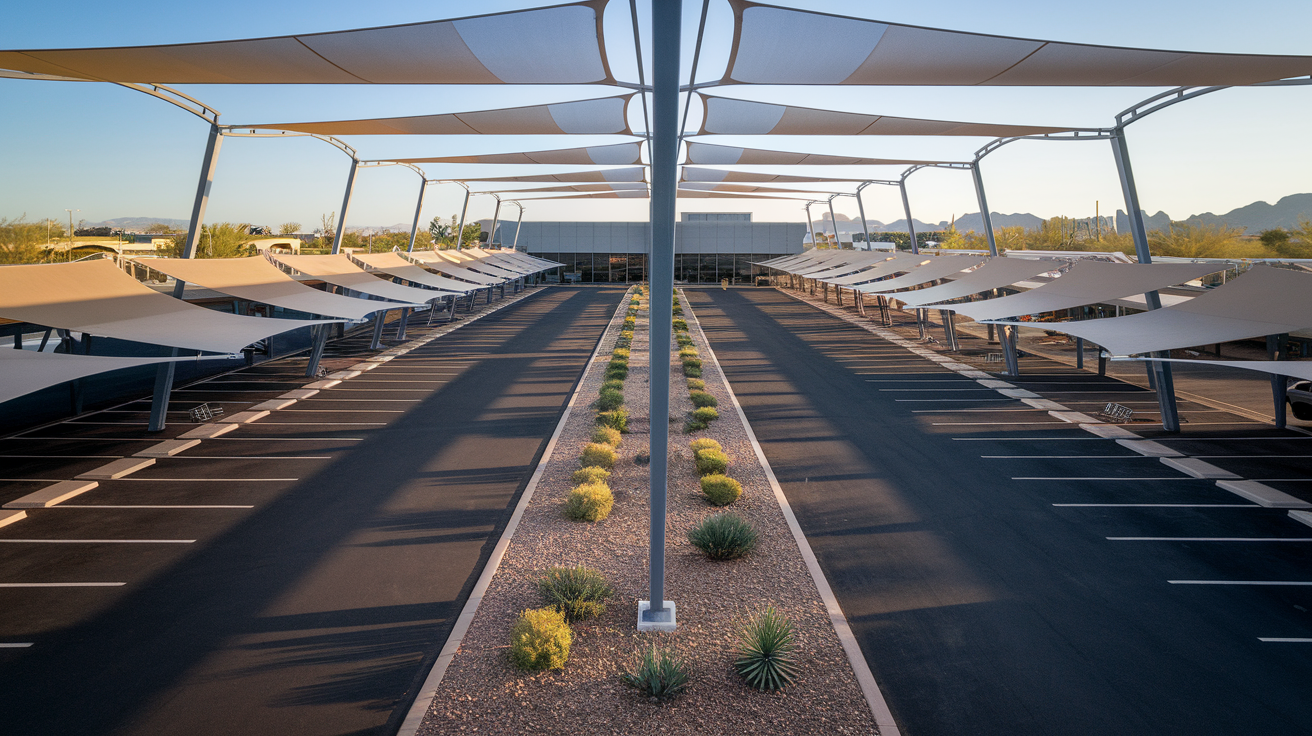
Over a playground the controlling rule usually is not the building code at all; it is the fall-zone clearance around the equipment, and a shade structure has to stay out of it. Public-playground safety guidance, the kind summarized in widely used CPSC and ASTM references, calls for a use zone of roughly 6 ft of clearance in every direction around most equipment, and more for swings and slides where a child’s exit path extends farther. A post planted inside that zone becomes an impact hazard, which is why playground shade leans toward single-post cantilever and tall multi-post hip frames that vault the canopy over the equipment while keeping every column outside the fall zone.
The canopy also has to clear the equipment height, sitting high enough that a child on the tallest deck has the recommended overhead room, often around 7 ft or more under the fabric. Knitted HDPE shade fabric blocks roughly 90-99% of UV depending on weave density, cutting the surface temperature of slides and decks that bake in the sun. The fall-zone-aware layouts we build for districts are on the school and playground shade structures page, and a clear-span design that keeps posts to one side sits under flat cantilevered shade structures.
Parking-lot shade landscape requirements
Several Valley cities require new and expanded commercial parking lots to shade a set percentage of the paved area, and that landscape ordinance is often the reason a parking structure gets built at all. Phoenix’s urban heat island made parking-shade rules a fixture of local development code, and while the figure varies, jurisdictions commonly require a meaningful share, frequently in the neighborhood of 25-50% of the lot, to be shaded by tree canopy or built structures at maturity. Structures count toward that requirement where trees cannot deliver coverage fast enough or caliche makes large planting wells impractical, so the shade calculation becomes part of the developer’s site plan, not a later add-on.
A single-post cantilever shades roughly 16-20 ft of depth off one foundation line while keeping columns out of the drive lane, which is why it carries so much of the parking-shade load. Because this is a development-code rule rather than a building-safety one, planning staff often review the coverage alongside, or before, the building department reviews the engineering. We describe the percentages and triggers in general terms because they differ by city and change over time; your civil engineer or site planner confirms the figure for your parcel. The structures sized for these ordinances live on the parking-lot shade structures page.
How plan review and inspection works
The approval path runs in a predictable order: stamped drawings go in for plan review, the jurisdiction issues a permit, the structure is built, and an inspector signs off the foundations and final assembly. Once we deliver the engineered drawings, they go to the city or county building department, where a plan reviewer checks the structural calculations, foundation details, ADA clearances, and any zoning or landscape conditions tied to the site. Review can come back with comments, and answering them with revised drawings is a normal part of the cycle, not a sign something went wrong.
After the permit issues, inspection verifies the build matches the stamped plans. The two checkpoints that matter most are the foundation inspection, where an inspector confirms the caissons hit the engineered depth and rebar before concrete is poured, and the final inspection that closes out the permit. Who files and pulls the permit varies by project, so settle that early. The throughline is that the city, not the fabricator, holds approval authority, and clean stamped drawings are the single biggest factor in moving through review without a second round. The broader engineering and permitting picture sits in the shade structure guides hub.
The honest caveat: rules vary by jurisdiction
The most important thing to understand about shade compliance in Arizona is that there is no single statewide rulebook; Phoenix, Scottsdale, Tempe, Mesa, and Maricopa County each adopt their own code editions, amendments, and landscape ordinances. A parking-shade percentage that applies in one city may not exist in the next, an ADA clearance is read against the locally adopted code, and even permit thresholds differ. That is why every figure here is a general range, not a citation, and the authoritative answer for your project always comes from your jurisdiction’s building and planning departments.
Compliance is also not only a build-day event. The HDPE cover is a consumable commonly warranted 10-15 years, and a structure that keeps an accessible route clear and a fall zone open on day one has to stay that way through re-tensioning and the eventual re-cover. Our role stays consistent: Total Shade engineers to code, stamps the drawings, and fabricates; the city reviews, permits, and inspects. Treat the permit and the engineering as part of the project from the first sketch, confirm the local rules with the jurisdiction, and the compliance picture becomes a checklist rather than a hurdle. Start mapping a specific build at our products.
Shade Structures We Build
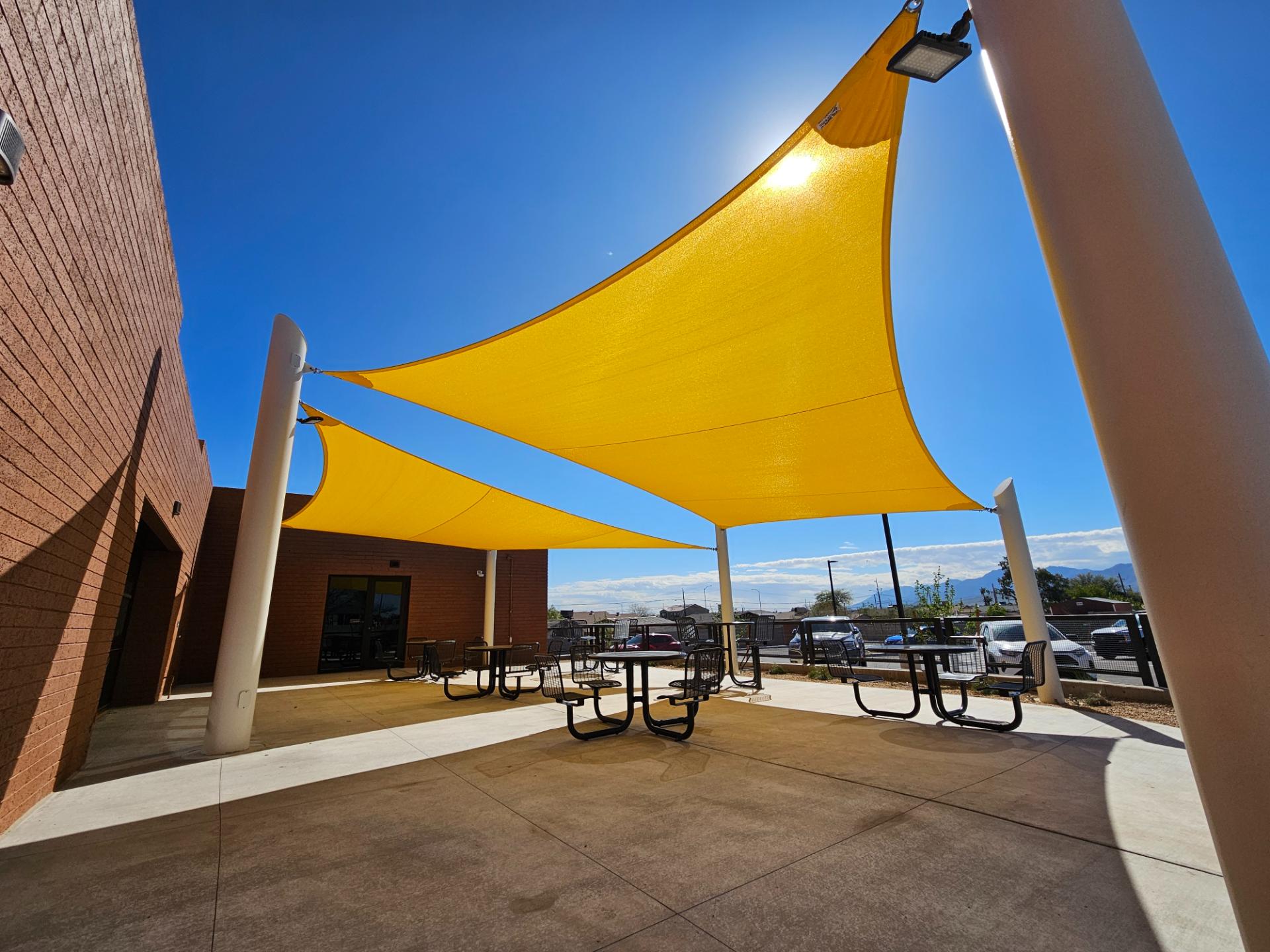
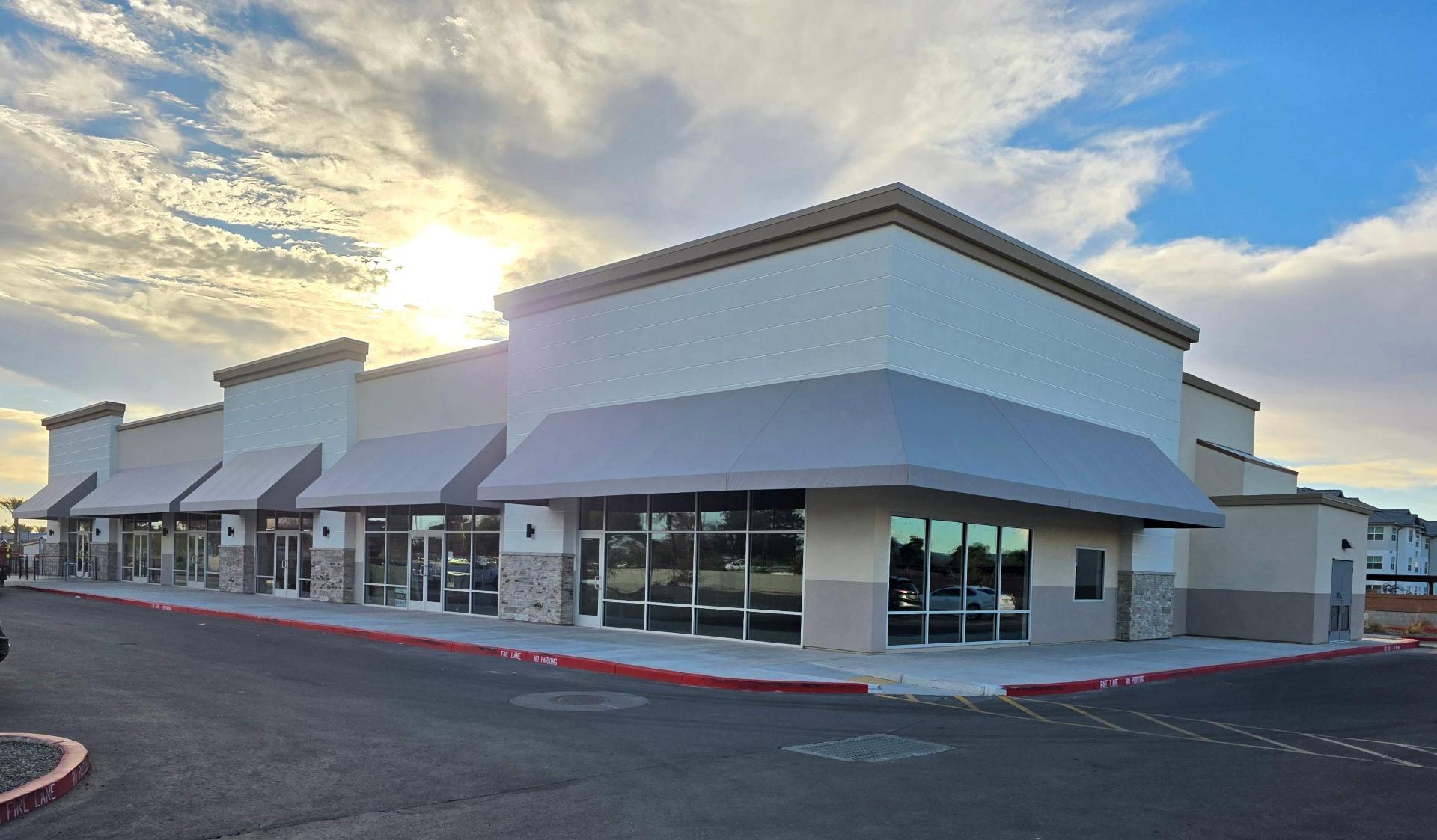
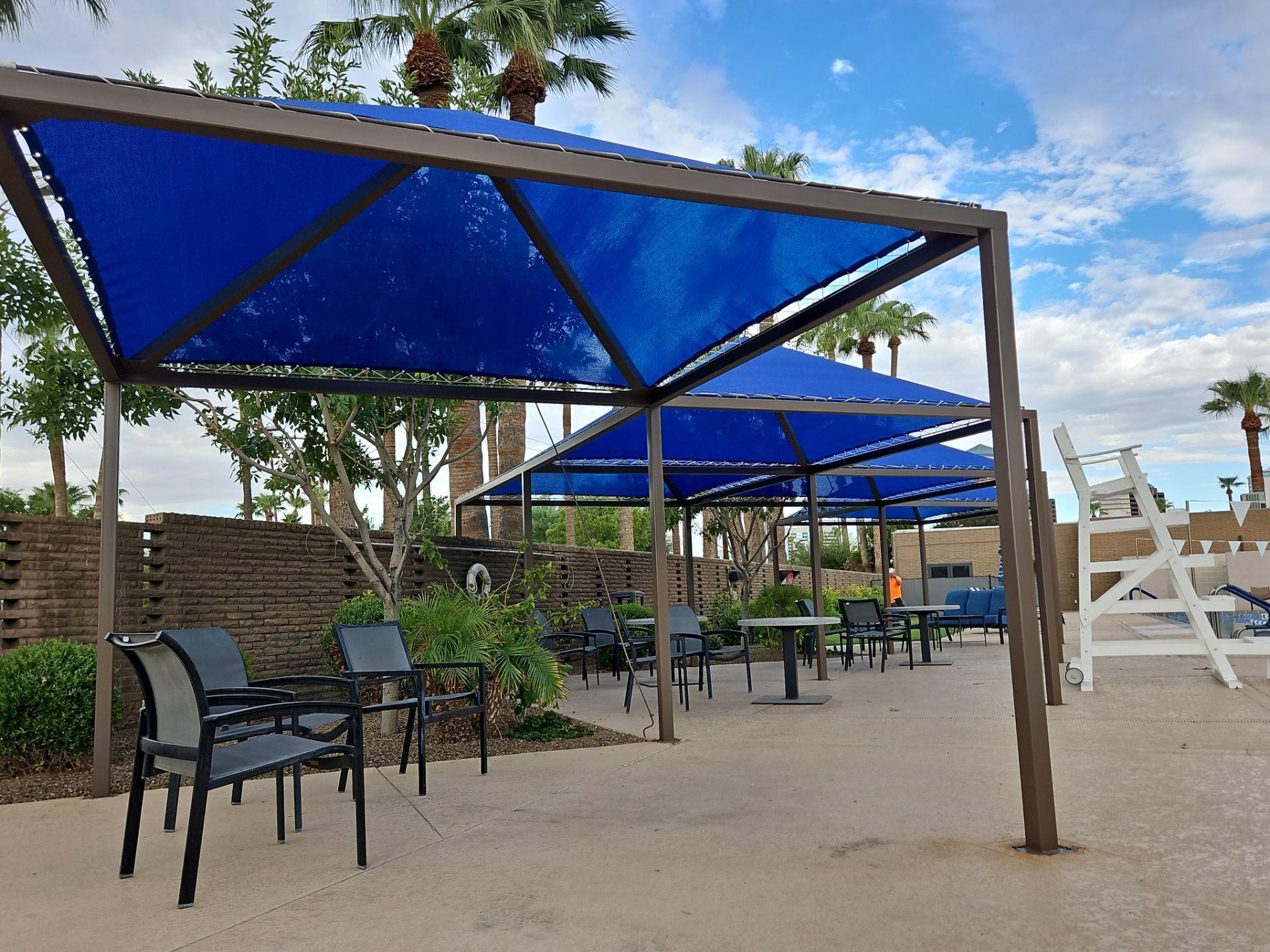
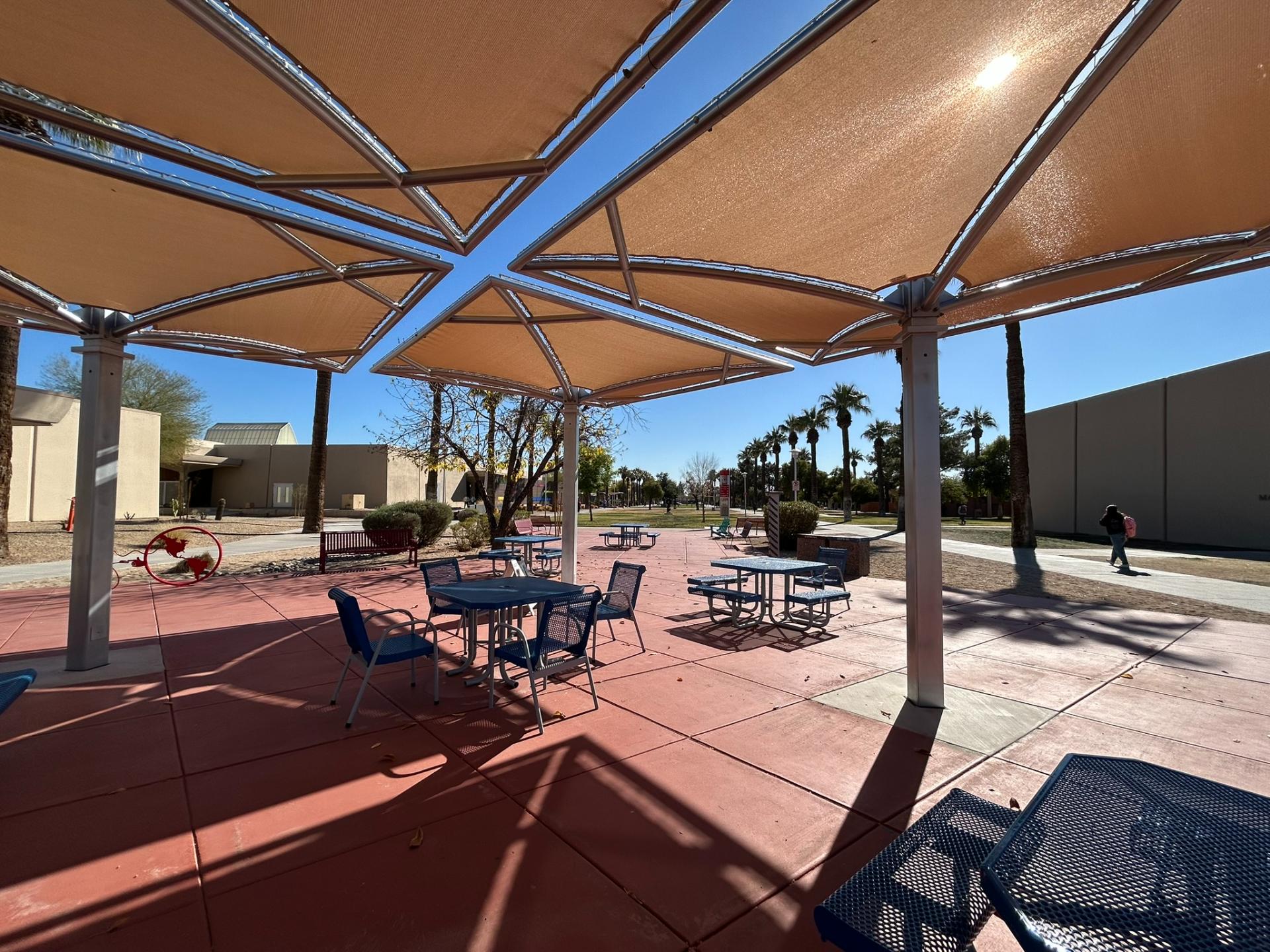
Ready to talk through your project?
Call (602) 265-0905 for a free assessment.
Frequently Asked Questions
Do I need a permit to install a commercial shade structure in Arizona?
In almost every case, yes. Freestanding commercial shade structures in the Valley must withstand wind and gravity loads, so the jurisdiction requires a building permit backed by professional-engineer-stamped drawings sized to Arizona building code and ASCE 7 wind loads near 90-115 mph. Total Shade supplies the permit-ready drawings; the city or county building department reviews them and issues the permit. Thresholds vary by jurisdiction and an unpermitted structure can be red-tagged, so confirm the requirement with your local building department before building.
What are the ADA requirements for a shade structure?
The governing principle is that a shade structure cannot create a barrier on an accessible route or remove accessible seating. In practice, posts and foundations stay clear of the accessible path, which generally needs a clear width on the order of 3 ft, the canopy keeps adequate headroom, typically around 80 in over a walking surface, and shaded seating leaves room for wheelchair-accessible spots. The exact dimensions and counts are set by federal ADA standards and the locally adopted code and checked by the city’s plan reviewer, so we coordinate post and foundation placement on the stamped drawings to keep routes clear.
What playground safety rules affect shade over play equipment?
The main one is the fall-zone, or use-zone, clearance around the equipment. Widely used CPSC and ASTM playground safety guidance calls for roughly 6 ft of clear space in every direction around most equipment, and more around swings and slides, so a shade post cannot land inside that zone. The canopy also has to clear the equipment height, often around 7 ft or more of overhead room depending on the tallest deck. That is why playground shade typically uses single-post cantilever or tall hip frames that keep columns outside the fall zone while the HDPE fabric blocks roughly 90-99% of UV over the play surface.
Is there a rule requiring shade in commercial parking lots?
Several Valley cities do require new or expanded commercial parking lots to shade a set share of the paved area, often somewhere in the range of 25-50% at maturity, using tree canopy, built shade structures, or both. The rule is a local landscape and development-code requirement, not a single statewide law, so the exact percentage and the triggers differ by city and change over time. Planning staff usually review that shade coverage as part of the site plan. Your civil engineer or site planner confirms the figure for your specific parcel, and structures sized to meet it appear on our parking-lot shade page.
Who handles the approval and inspection of a shade structure?
The local jurisdiction holds approval authority. Total Shade engineers, fabricates, and supplies the permit-ready stamped drawings, then the city or county building department reviews those plans, issues the permit, and inspects the work, most importantly the foundation inspection before concrete is poured and the final inspection that closes out the permit. Plan review may return comments that are answered with revised drawings, which is a normal part of the cycle. Who files and pulls the permit can vary by project, so settle that early. Clean stamped engineering is the biggest factor in clearing review without a second round.