or call (602) 265-0905 — no-obligation, on-site.
Industrial & Warehouse Shade Structures in Arizona
Heavy-gauge steel canopies for loading docks, truck staging, equipment yards, and worker heat-safety at Arizona warehouses.
Since 1998
Designing & building Arizona shade
In-House Fabrication
Built at our Phoenix shop
Engineered & Permit-Ready
Stamped drawings for AZ wind loads
Free On-Site Quote
No-obligation project assessment
Industrial and warehouse shade structures are heavy-gauge steel canopies built for the working edges of a distribution facility, where the buyer is an operations or facilities manager protecting trucks, equipment, inventory, and outdoor workers from sun, heat, and monsoon rain. Total Shade designs, fabricates, and installs these across Arizona, building the steel in-house in Phoenix and engineering every frame to Arizona building code and ASCE 7 wind loads. The work splits into a few jobs: loading-dock and truck-bay canopies, equipment and material-yard shade, trailer and fleet staging, and employee parking, break, and cool-down areas. Each carries different loads than a retail lot, because a 53-foot trailer and a crew working a 110-degree dock push the design in their own direction. Founded 1998, AZ ROC #272680.
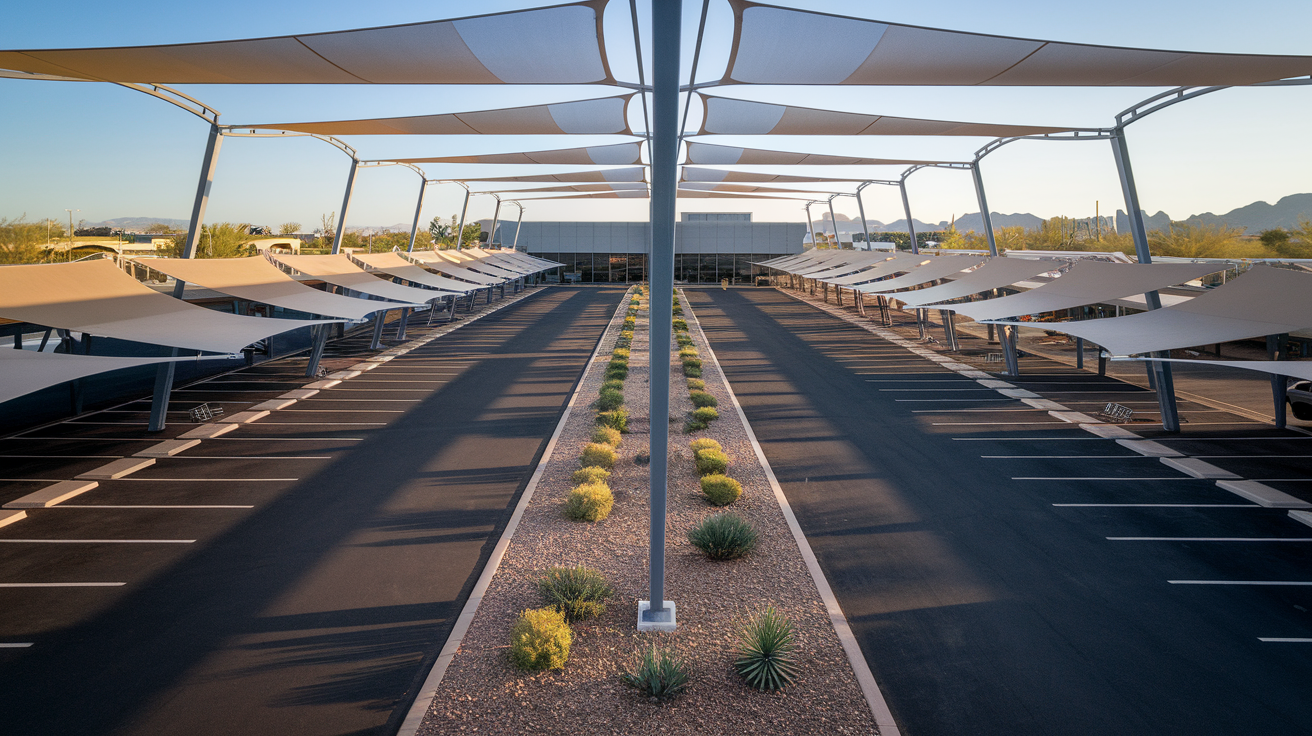
Loading docks and truck bays are the first job
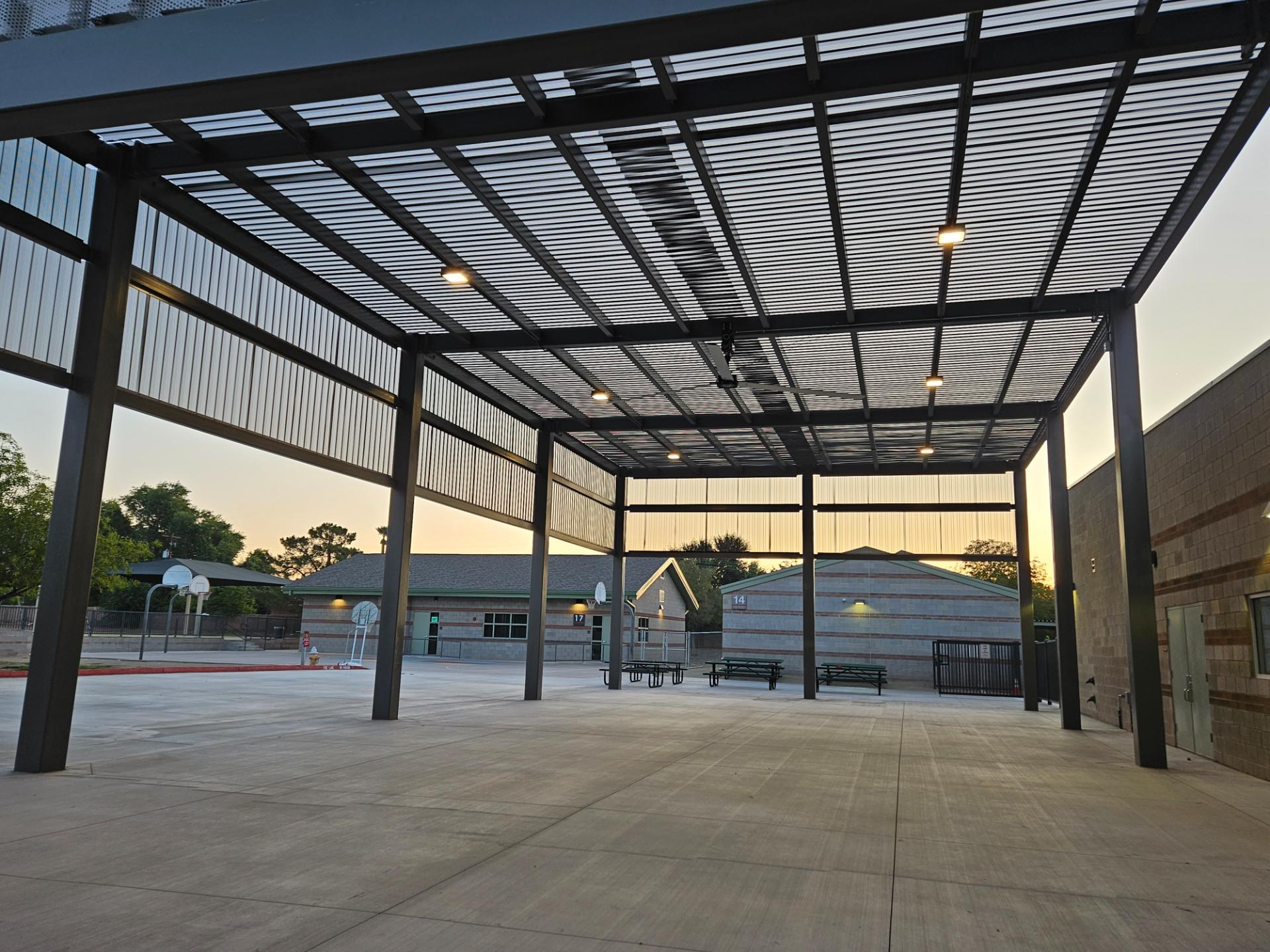
Loading-dock and truck-bay canopies are where industrial shade earns its keep first, because that is where product, equipment, and people meet weather at the same time. A dock canopy over the apron keeps rain off cartons during transfer and pulls heat off the staging zone, and the roof choice follows the cargo: a steel-panel roof sheds monsoon downpours and full sun off a pitched surface where a fabric top would let rain through. Knitted HDPE fabric blocks roughly 90-99% of UV and breathes, so it suits a shade-only bay, but a dock handling rain-sensitive freight wants the hard panel overhead.
Clearance is the number that gets a truck canopy wrong most often, because the trailer decides it, not the building. Tractor-trailers and high-cube vans need 14 ft or more of underside clearance to pull a bay without scraping a beam, so the design gets set to the tallest unit that will ever back in. Posts get pushed off the maneuvering lane so a driver swings in without threading between columns, which often calls for a flat cantilevered structure that reaches the roof over the apron with no leg in the path.
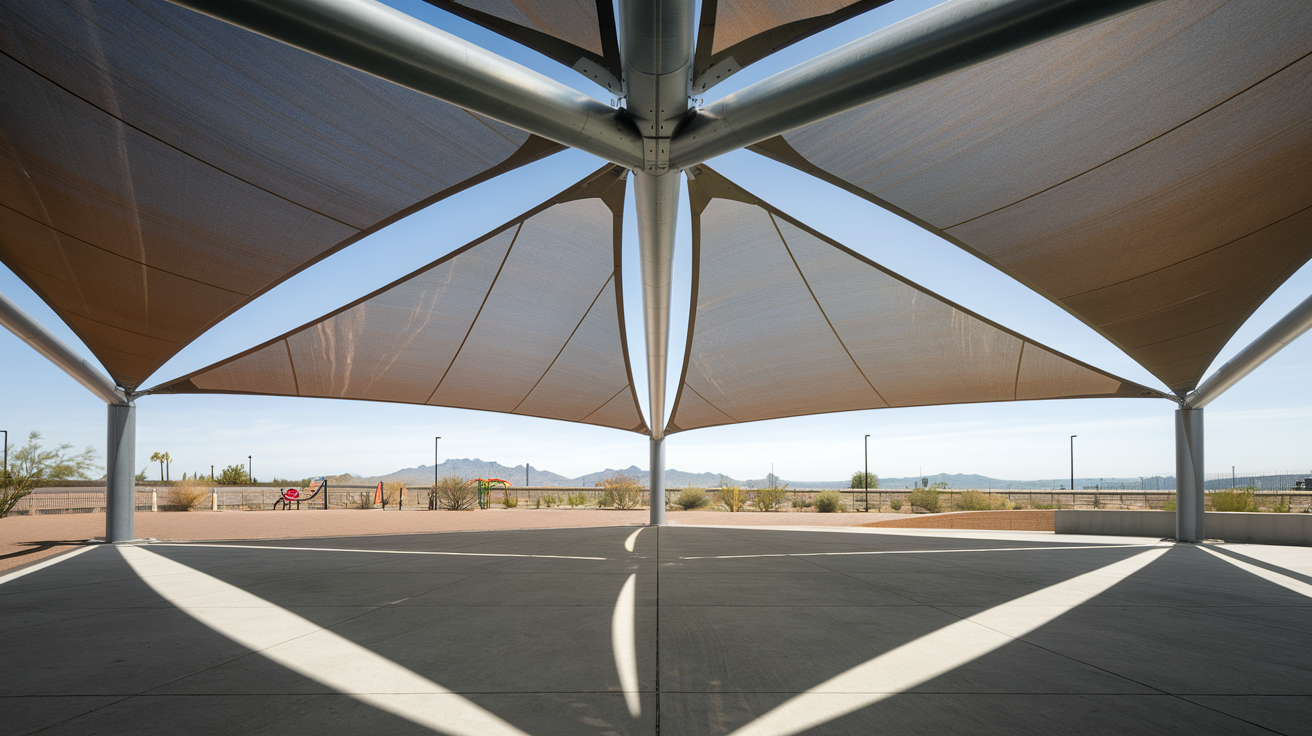
Equipment, material, and inventory yards take the next tier
Outside the dock, the yard is where steel and grit need cover. Equipment-protection canopies keep sun, dust, and monsoon rain off loaders, generators, attachments, and anything with hydraulics or electronics that ages fast in open Arizona exposure, and a steel-panel roof is the default there because the gear has to stay dry as much as cool. Material and inventory yards run the other way: a long fabric run over staged pallets, racked product, or curing materials cuts UV degradation and surface heat across a wide footprint at the lowest cost per shaded foot.
Trailer and fleet staging sits between the two. A line of parked trailers, yard trucks, or a service fleet bakes on asphalt between shifts, and a tall steel bay over the rows keeps cabs usable and slows the interior wear that ages a fleet early. These overlap with our shade carports line, but the industrial version runs taller, heavier, and wider-bayed to clear yard equipment rather than passenger cars.
Worker heat-safety is a structure decision, not an amenity
Shade over a distribution yard is a heat-illness control, not a perk, because Arizona summers regularly exceed 110°F and OSHA’s general duty clause and heat-illness guidance push employers to provide shade and rest for outdoor and dock workers when heat runs high. A cool-down station near the dock or yard gives a crew a place to recover between cycles, and a fabric canopy over an employee break area drops the working temperature enough to keep a shift on its feet. This is where an industrial site differs from a warehouse roof: the people problem lives outside, on the apron and in the yard, not under the building.
Covered employee parking is the same logic applied to the lot. A distribution center running shifts around the clock keeps workers’ vehicles out of full sun so cabins stay survivable at change-of-shift, and the canopy doubles as a recruiting and retention signal in a tight logistics labor market. A linked run of covered walkway canopies ties the lot, the break area, and the building entrance into a shaded path so the route from car to floor never crosses open sun.
Heavy-duty steel, deeper footings, and the wind case
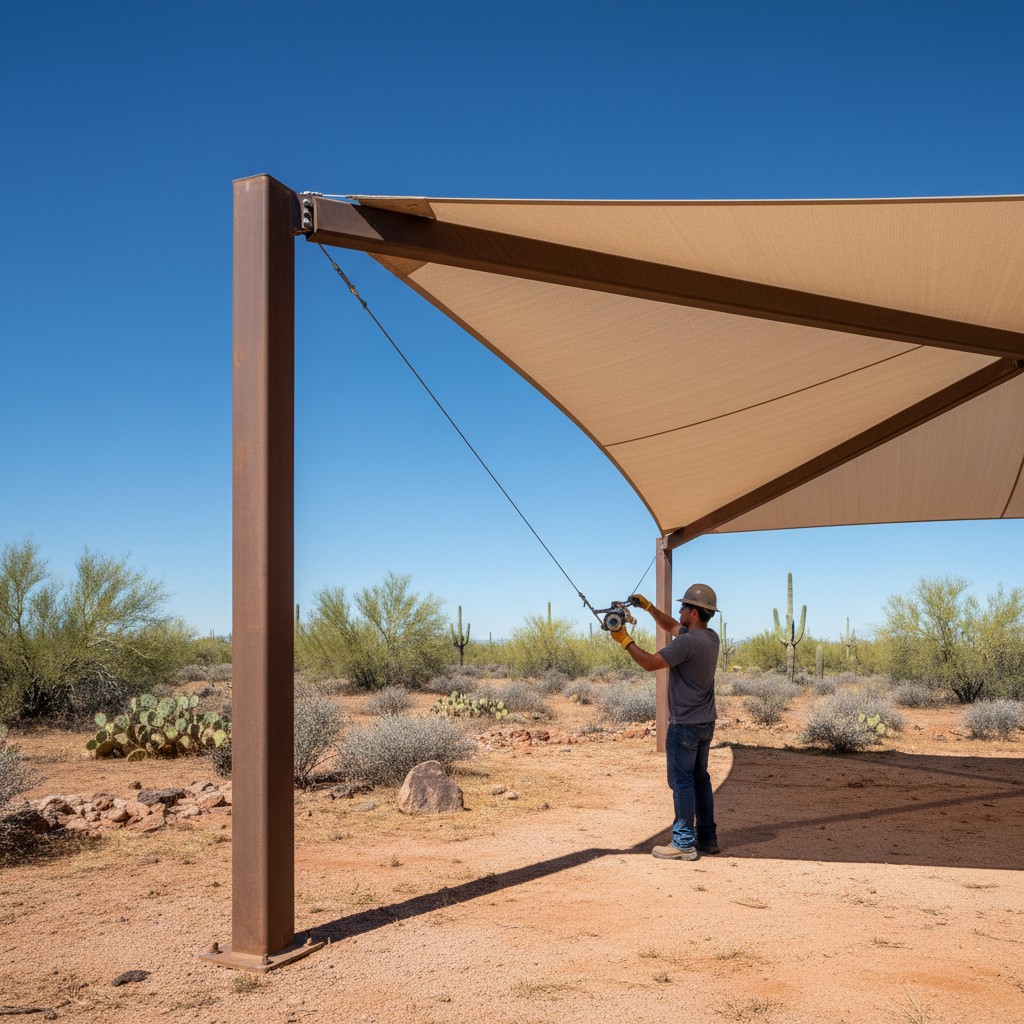
Industrial canopies carry heavier steel and deeper footings than a typical commercial lot, because the loads and the exposure are both larger. The frame is powder-coated structural steel, sized by span and roof type, finished with a baked-on coat that resists the chalking desert UV forces on cheaper wet paint. A steel-panel dock or equipment roof loads the frame far harder in a gust than a porous fabric top, so it gets heavier columns and footings drilled deeper for the added wind uplift a solid plane catches.
Wind is the design case, not shade. Every frame is engineered to Arizona building code and ASCE 7 wind loads, with Valley design wind speeds landing roughly in the 90-115 mph range by site and exposure. Distribution yards tend to sit on open ground along corridors like I-10 with no surrounding buildings to break the wind, which pushes exposure higher and the steel heavier than a tucked-in urban lot, and monsoon microbursts topping 60 mph are the real test. Stamped drawings, load calculations, and foundation details come with the job for the permit set, and a custom-built shade structure lets the frame follow an irregular yard.
Why the Goodyear and I-10 corridor drives this demand
Arizona’s West Valley logistics corridor is the reason industrial shade has become its own line of work. The distribution growth along Goodyear and the I-10 corridor has filled the area with large fulfillment and warehouse facilities that share the same outdoor problem: docks, trailer yards, and crews exposed to desert sun on sites that were open desert a few years ago. Total Shade serves that growth from the Phoenix shop, fabricating the heavy steel a 53-foot-trailer dock and an equipment yard demand rather than retrofitting a residential kit onto an industrial load.
Building the steel in-house matters more here than on a small canopy, because an industrial run mixes clearances, roof types, and bay widths a stock catalog cannot hit. In-house fabrication lets us match column spacing to the maneuvering lanes, pitch the roof to the cargo, and carry the heavier gauge a yard needs. Developers and operations teams in the corridor can start on our Goodyear commercial shade page, and see the full range on our products page.
Common mistakes and honest caveats
The most expensive industrial mistake is undersizing clearance. A dock canopy specced to a box truck that later has to take a high-cube trailer is a full redesign, so the underside height gets set to the tallest unit on the gate list, not the average. The second is choosing fabric where the job needed a steel panel, leaving rain-sensitive freight or hydraulic equipment exposed in a monsoon because the cheaper roof looked the same on a sunny day. The third is landing a post in a maneuvering lane, which a cantilever exists to avoid.
Three caveats said plainly. Fabric is a consumable, not a permanent surface; knitted HDPE covers commonly carry 10-15 year warranties, and Phoenix UV sits at the demanding end of that window, so a fabric yard should budget a re-cover every roughly 10-15 years rather than treat it as a failure. Wind ratings have a hard ceiling: a microburst beyond the stamped design speed can damage any canopy, which is why the engineered number on the drawing matters more than a marketing claim. And a steel panel costs more up front than fabric and catches wind like a solid plane, so it is the right call where rain cover and longevity justify the heavier frame, not the default for every bay.
Shade Structures We Build
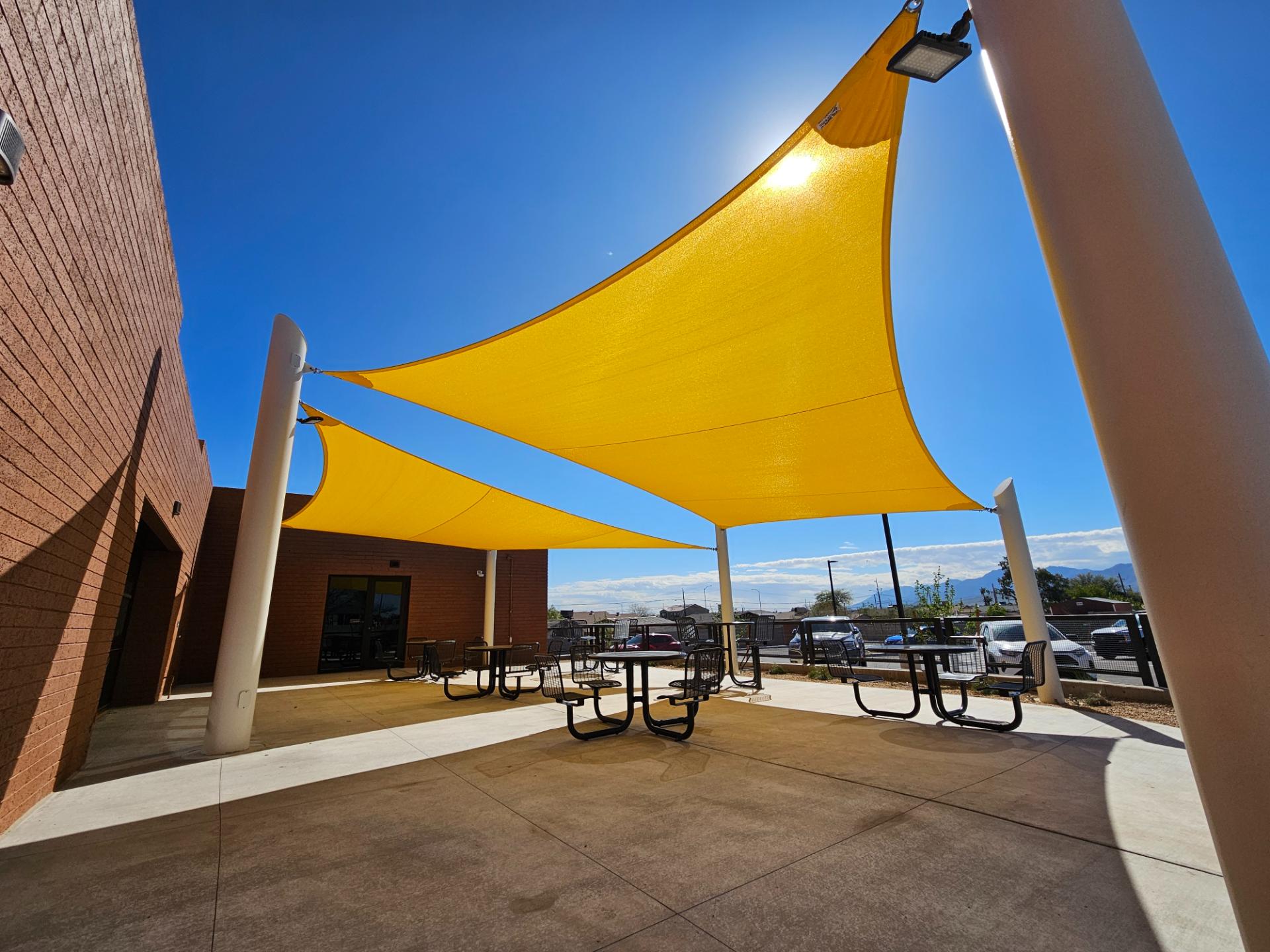
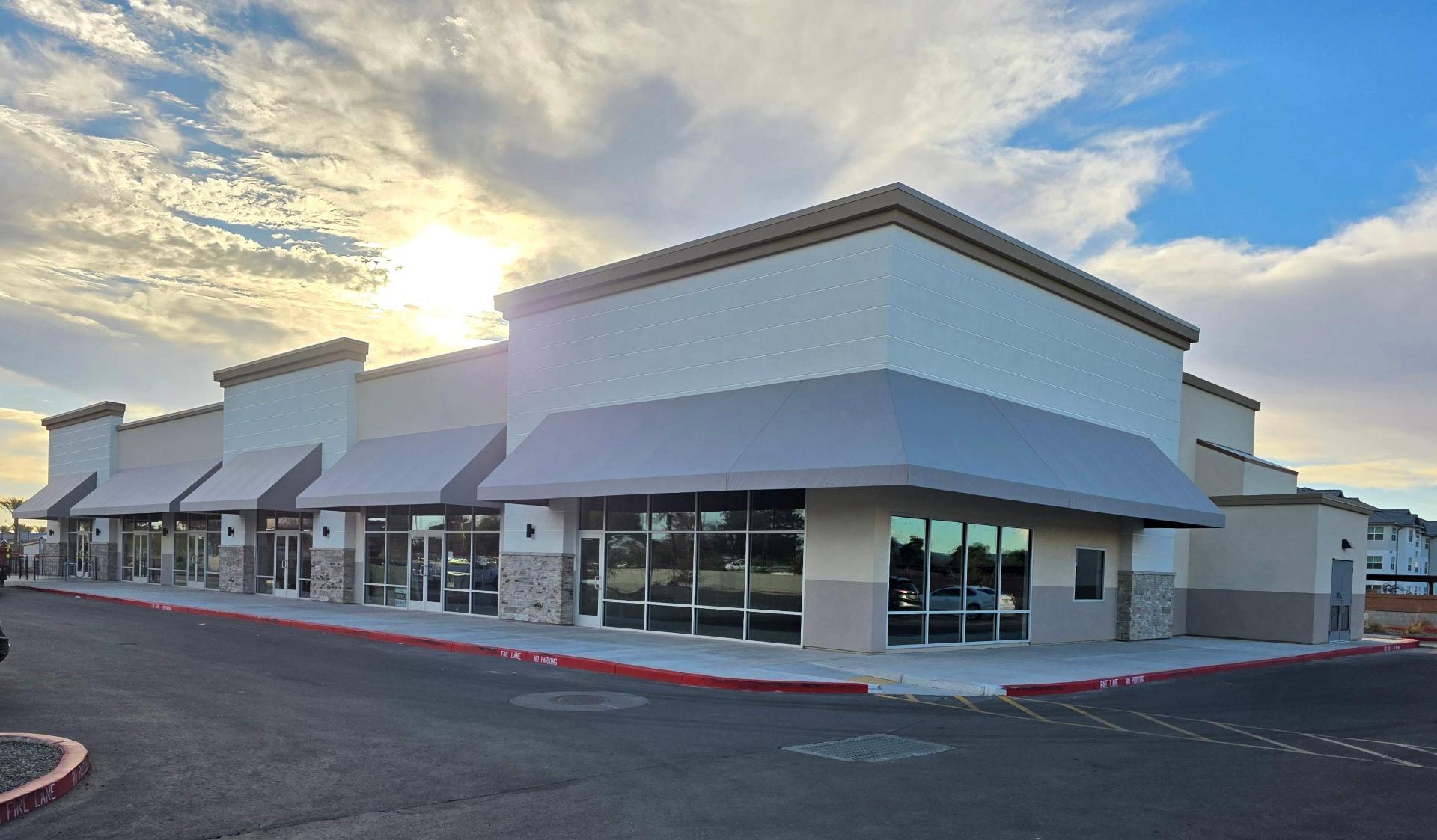
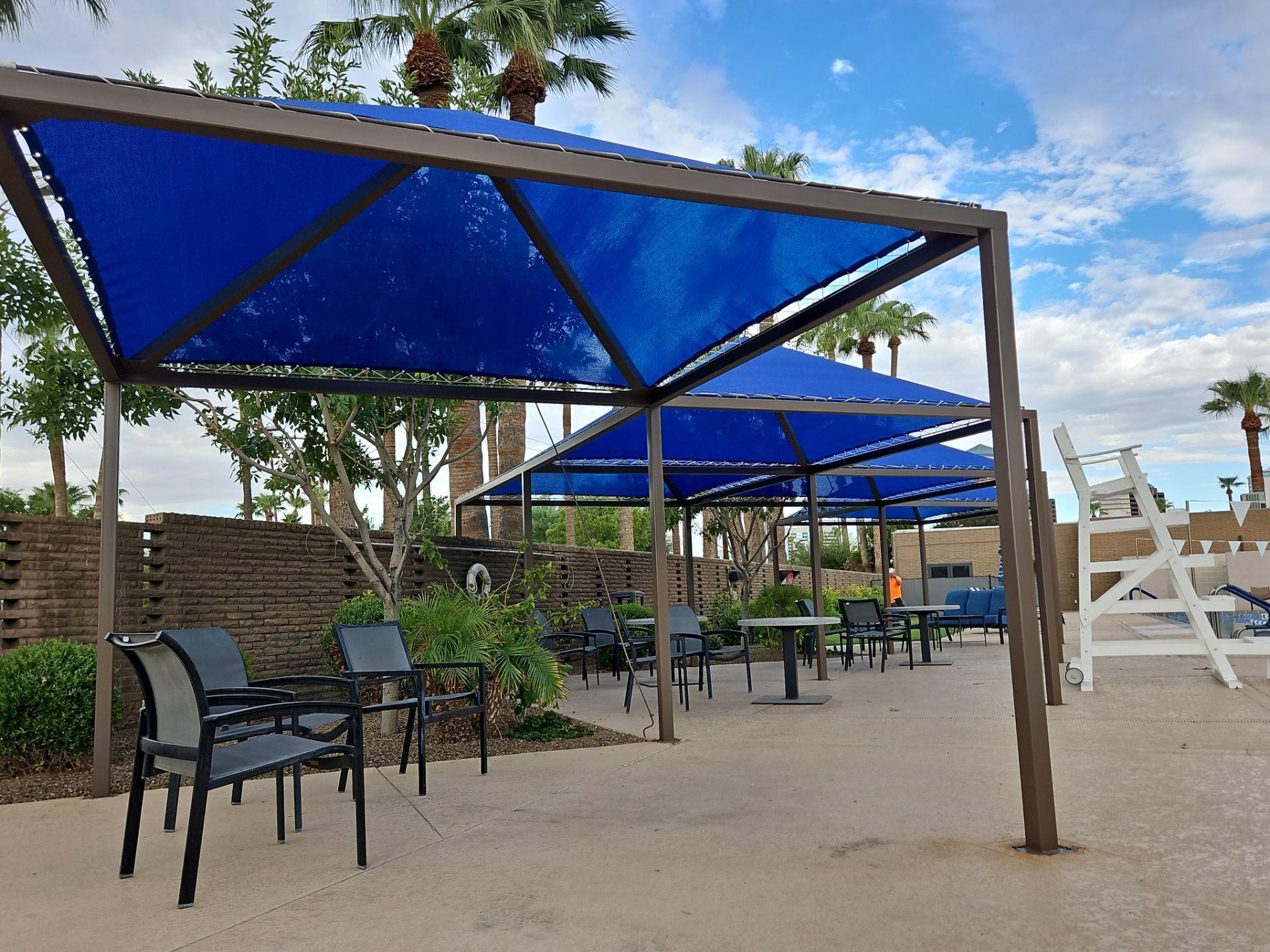
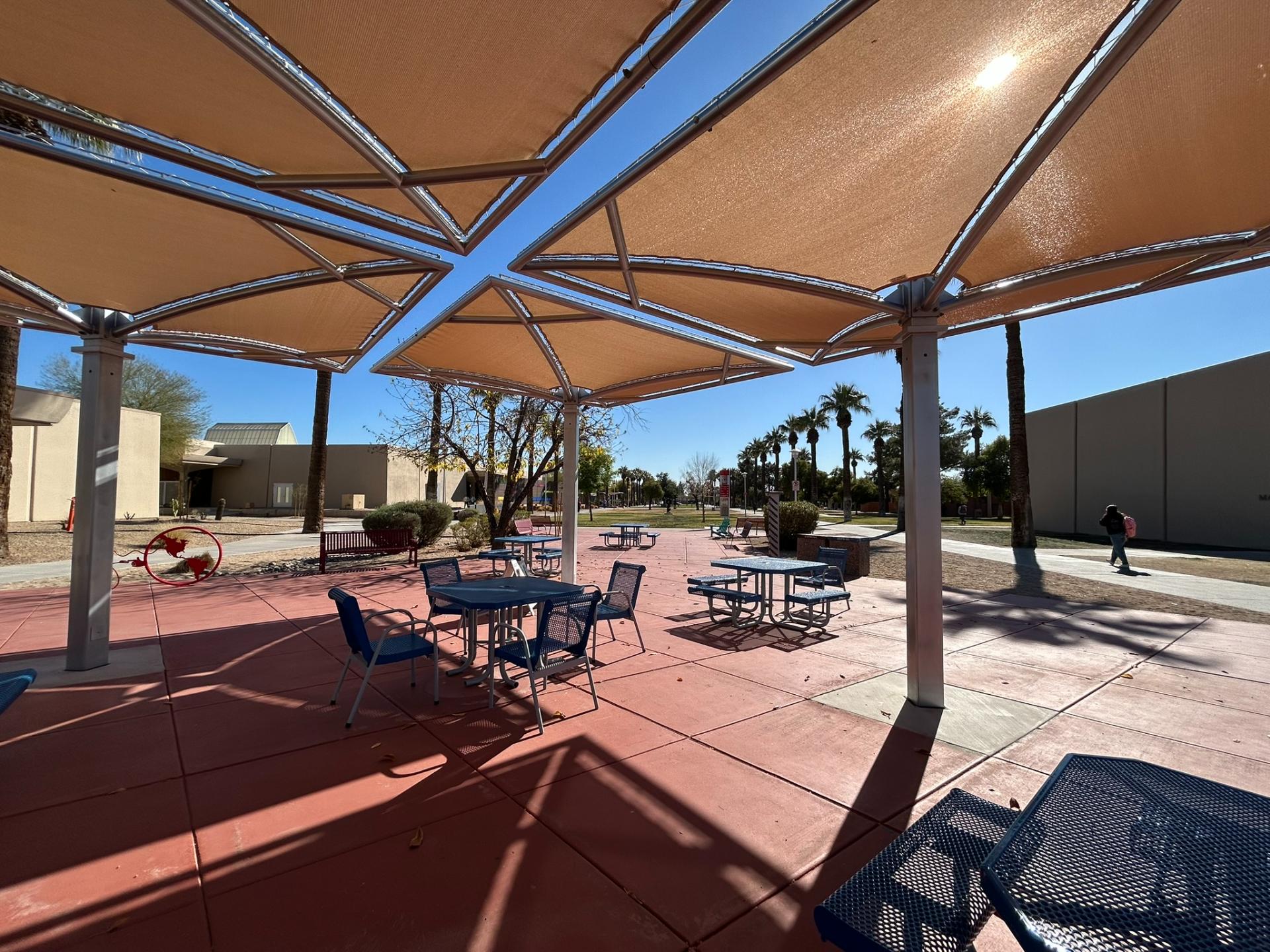
Frequently Asked Questions
What shade structures work for loading docks?
A loading dock usually wants a steel-panel-roofed canopy over the apron, because it has to shed monsoon rain and full sun while freight transfers, and a fabric top would let rain through. Posts get pushed off the truck maneuvering lane, which often means a cantilever that reaches the roof out over the dock with no column in the driver’s path. Where the bay only needs to block UV and heat, not rain, a knitted HDPE fabric roof that blocks roughly 90-99% of UV is the lower-cost option.
How much clearance does a truck canopy need?
A truck or trailer canopy is set by the tallest unit that will ever use it. Tractor-trailers and high-cube vans need 14 ft or more of underside clearance to back in without scraping a beam, so the design gets sized to that, not to the average vehicle. Bay width and post placement are set so a driver can swing in without threading between columns, which is why cantilevered canopies are common at docks. Specifying for a smaller truck and finding the trailer won’t fit is an expensive redesign.
Do warehouse shade structures help with OSHA heat rules?
Yes. OSHA’s general duty clause and heat-illness guidance push employers to provide shade and rest for outdoor workers in extreme heat, and Arizona summers regularly exceed 110°F, so a dock, yard, break-area, or cool-down canopy is a heat-illness control rather than an amenity. A fabric canopy over an employee break area or cool-down station drops the working temperature enough to keep a shift on its feet between cycles. We design the structure; the employer’s heat-safety program and any OSHA compliance determination stay with the facility.
Steel panel or fabric roof for an industrial yard?
Pick by whether the cover has to shed rain or only block sun. A steel-panel roof sheds monsoon downpours and full sun off a pitched surface and suits docks handling rain-sensitive freight, equipment that has to stay dry, and fleet staging. Knitted HDPE fabric blocks roughly 90-99% of UV, breathes so gusts pass through, and covers more area per dollar, which fits material yards, inventory rows, and employee parking. Many sites run a mix, steel panel over the dock and gear, fabric over the open parking and material field.
How are industrial shade structures engineered for Arizona wind?
Every frame is engineered to Arizona building code and ASCE 7 wind loads, with Valley design wind speeds landing roughly in the 90-115 mph range by site and exposure. Distribution yards often sit on open ground along corridors like I-10 with nothing to break the wind, which pushes exposure higher and the steel heavier, and a solid steel-panel roof gets deeper footings than fabric because it catches more uplift. That said, a monsoon microburst topping 60 mph and beyond the stamped design speed can damage any canopy, so the engineered number on the drawing matters more than a marketing claim.