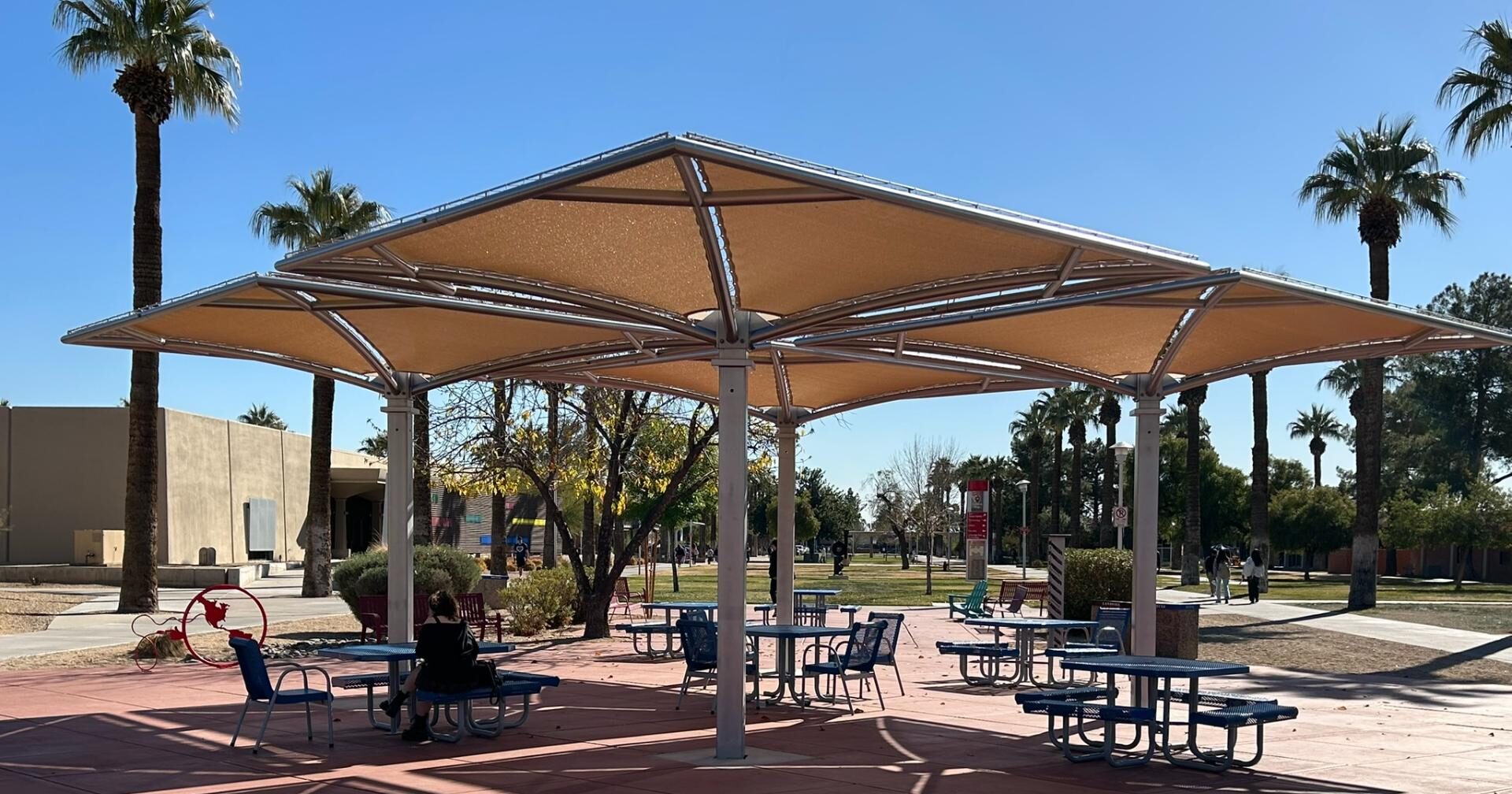
Glendale Community College Shade Structure — Glendale, AZ
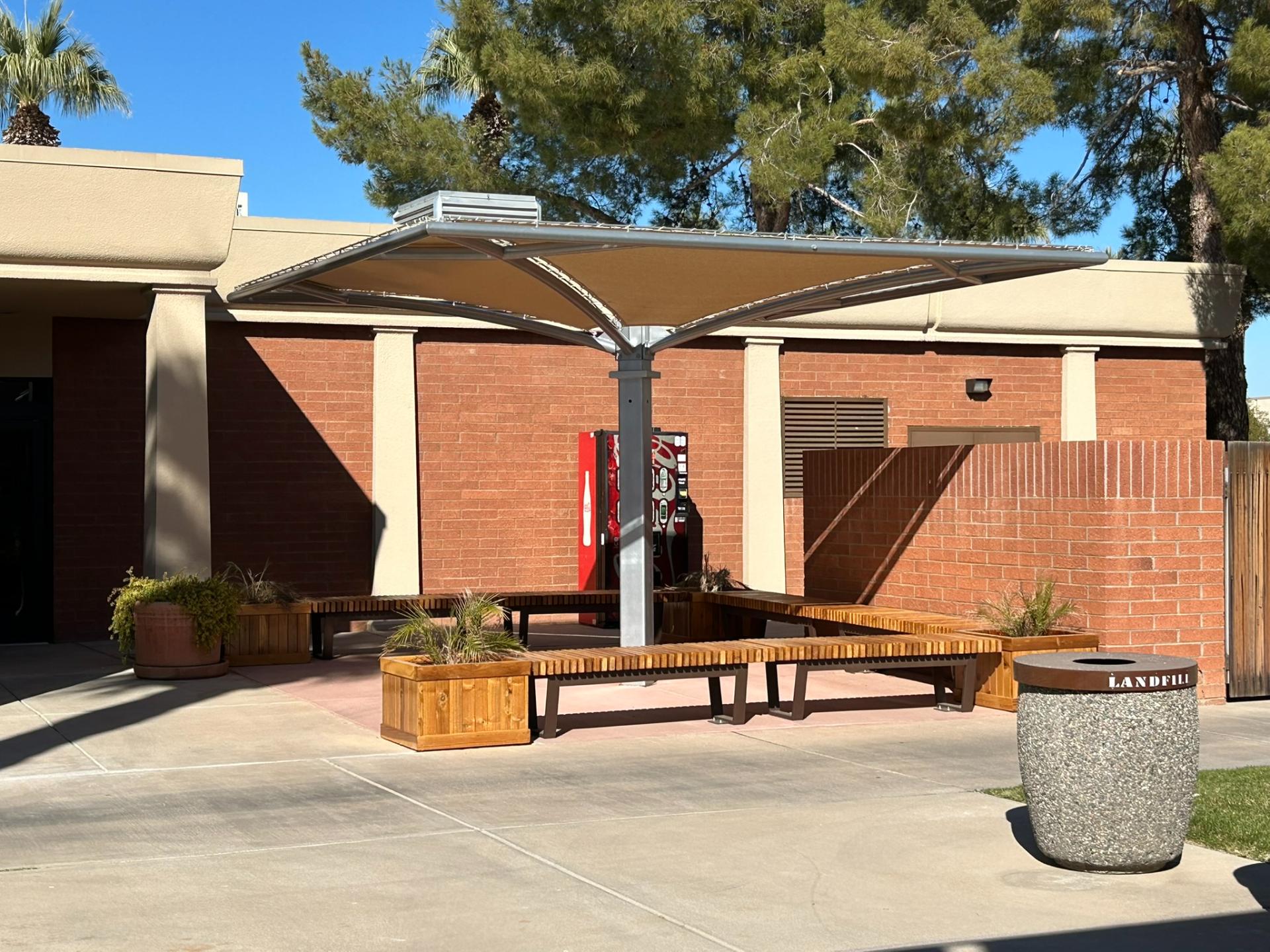
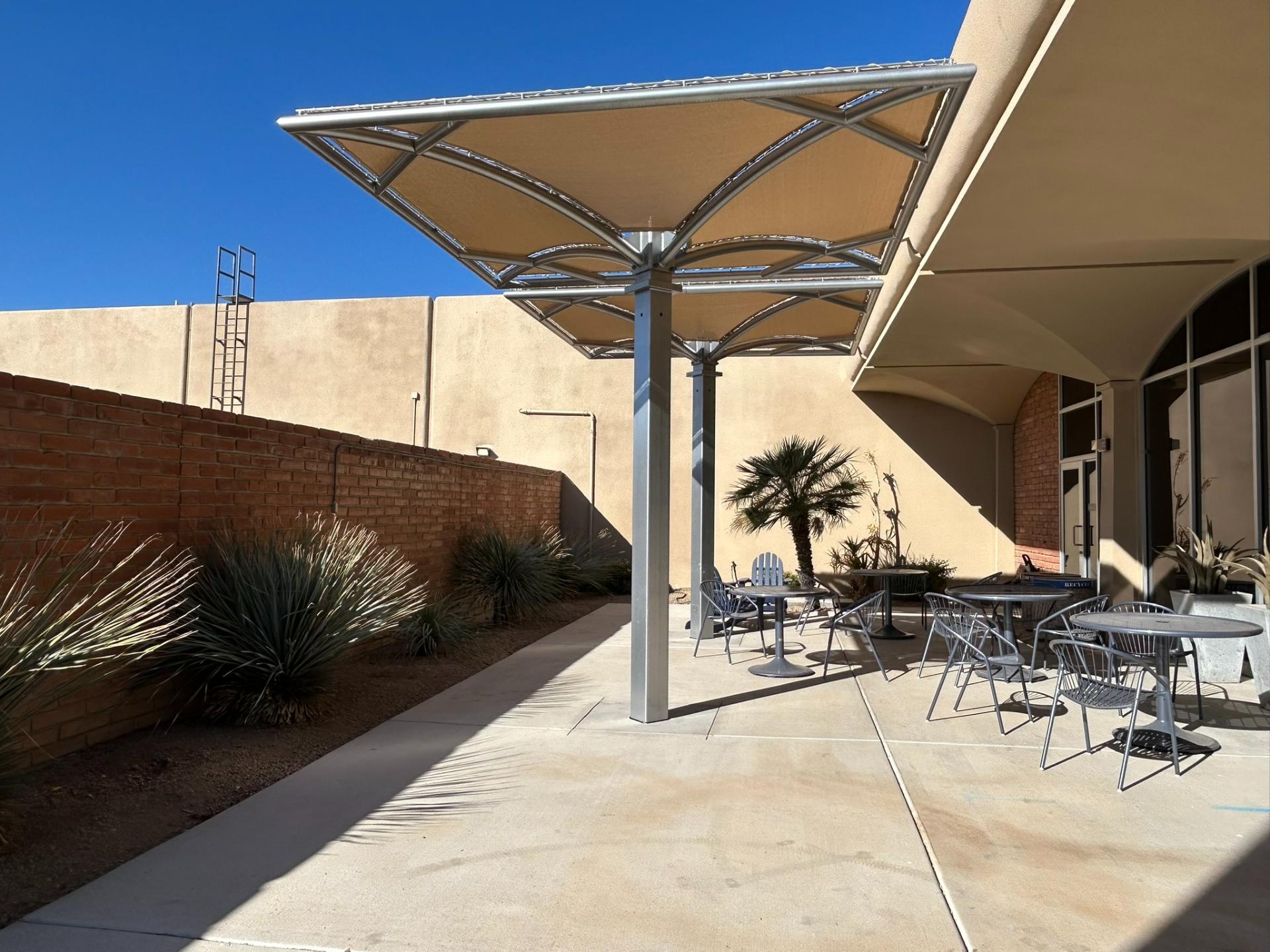
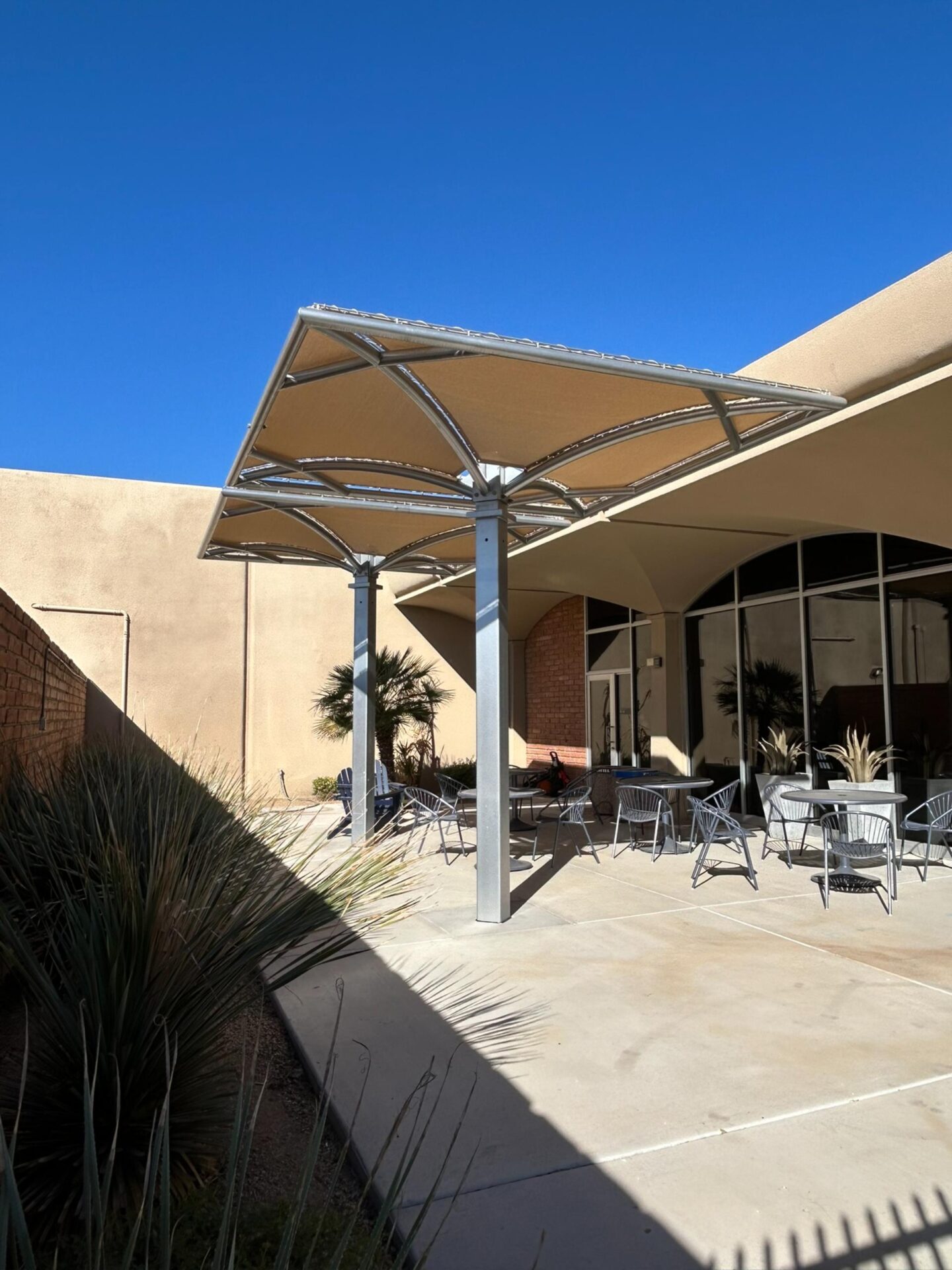
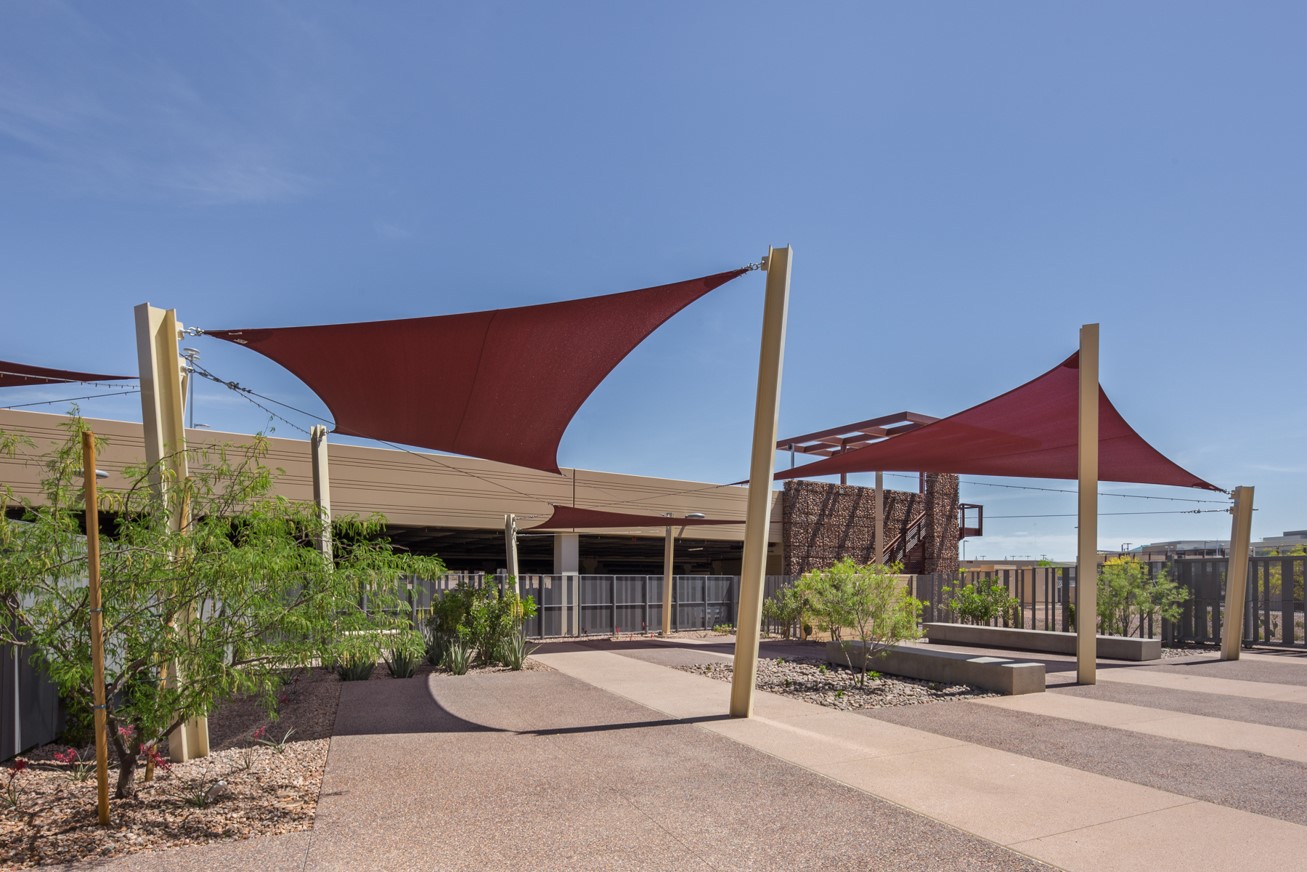
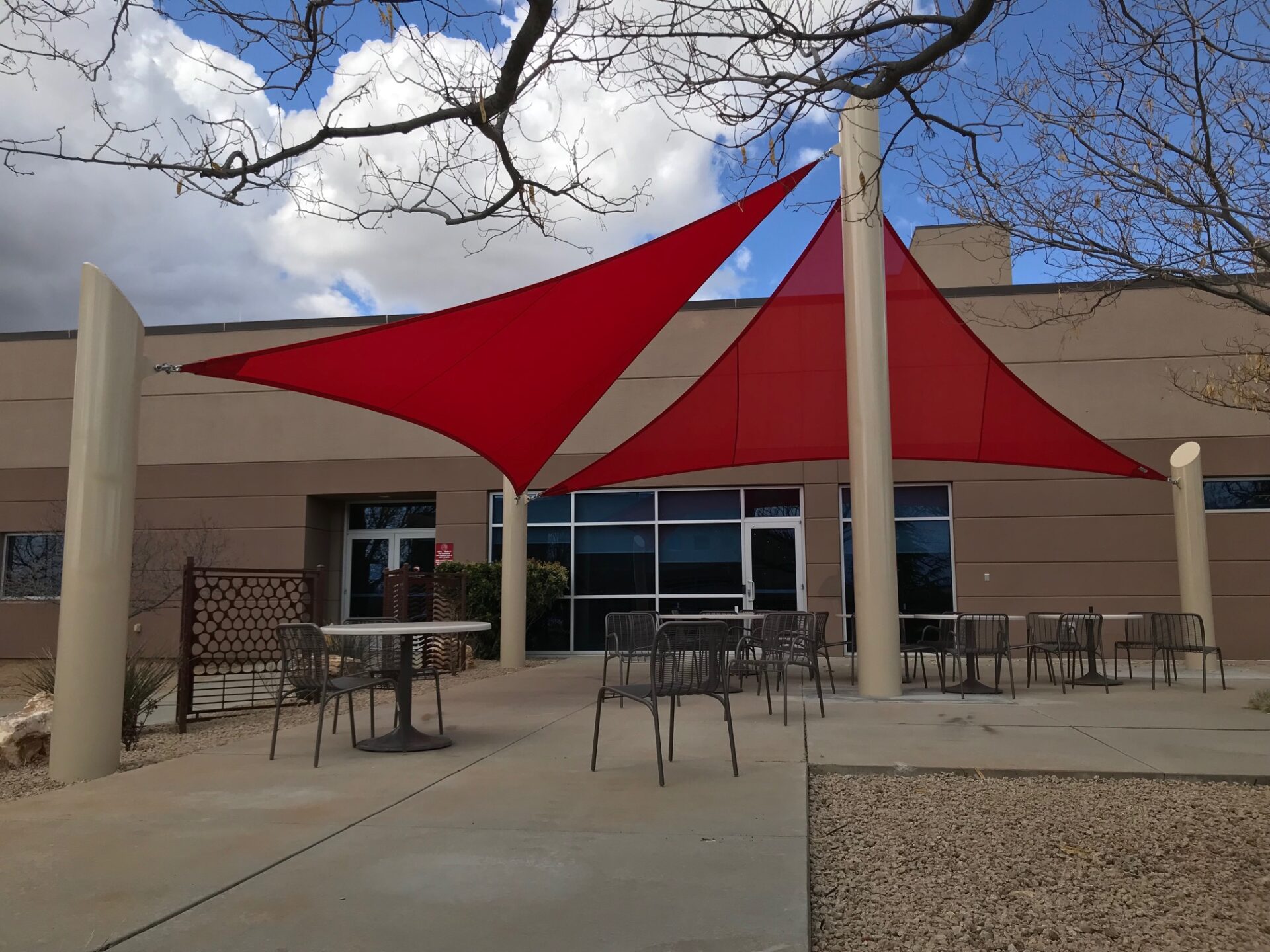
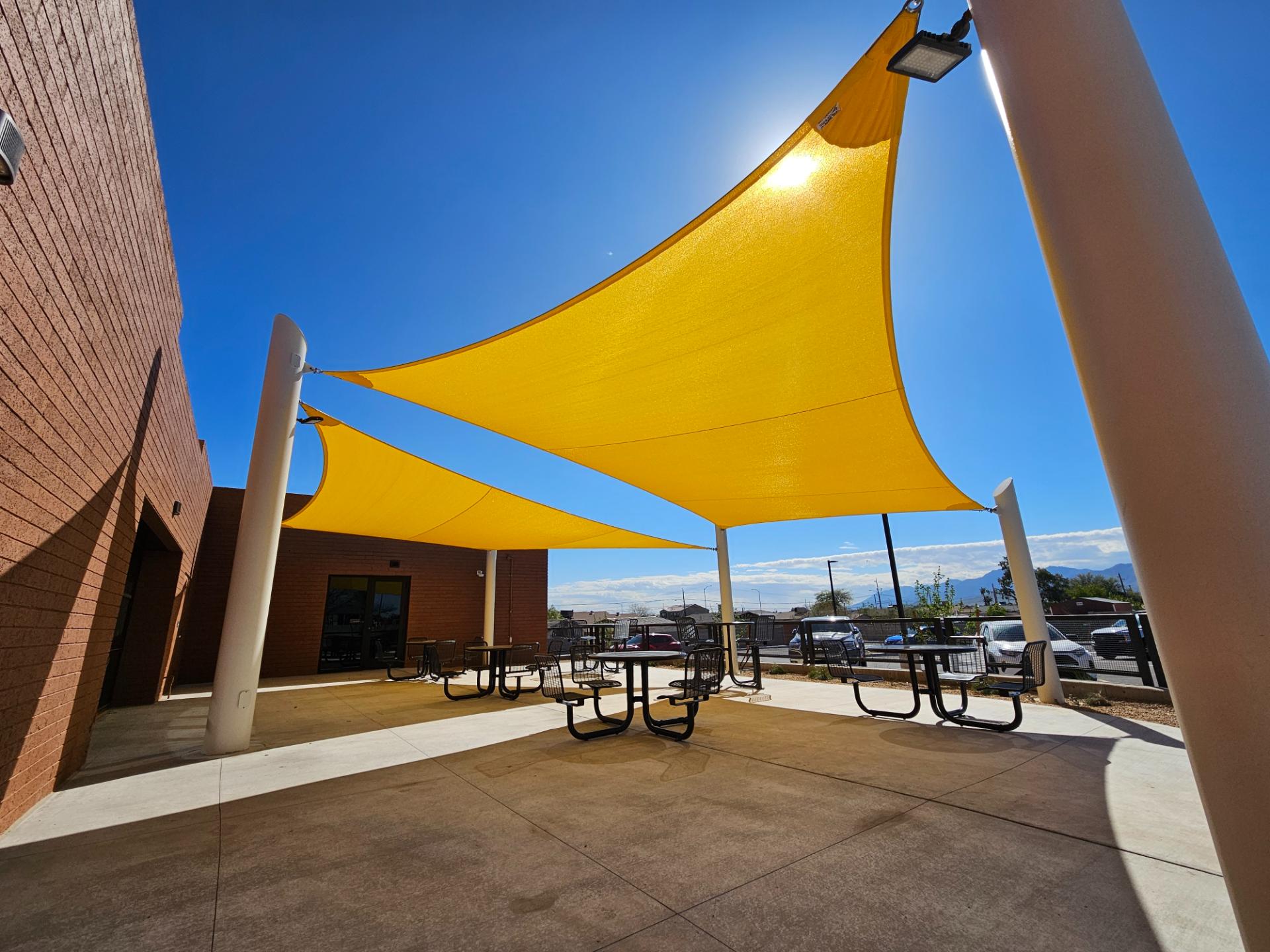
Total Shade LLC built hip-roof canopies, a flat cantilever cover, and tensioned shade sails across the walkways, courtyards, and seating areas at Glendale Community College in Glendale, AZ. We fabricated the steel frames in-house at our Phoenix shop, then set them over the high-traffic paths and gathering spaces students cross between classes. On a campus where foot traffic peaks in the 100-plus-degree midday hours, shade over the route between buildings turns an exposed walk into a usable one. Education clients across Glendale now treat campus shade as core infrastructure.
The Shade Structures We Built at Glendale Community College
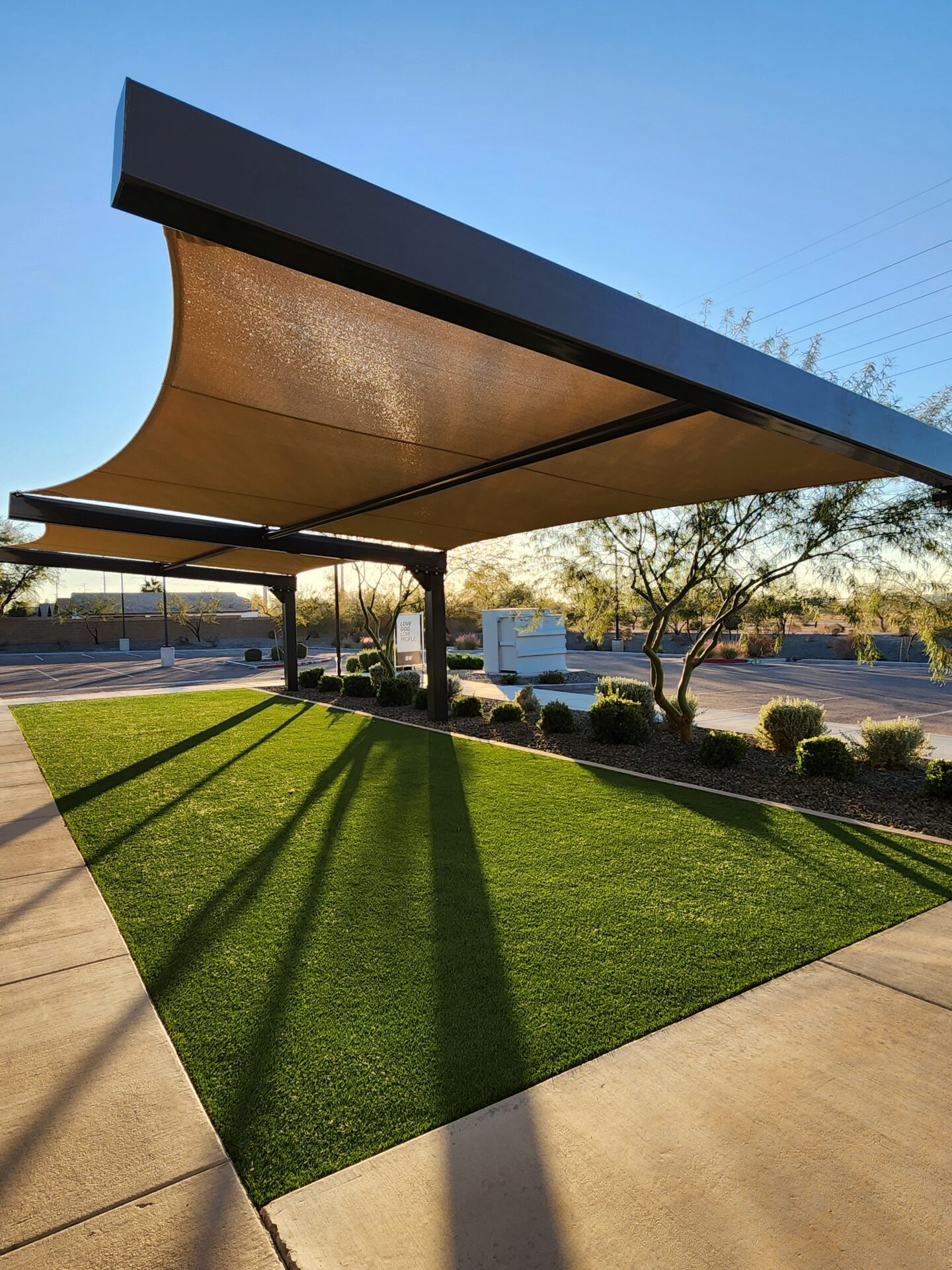
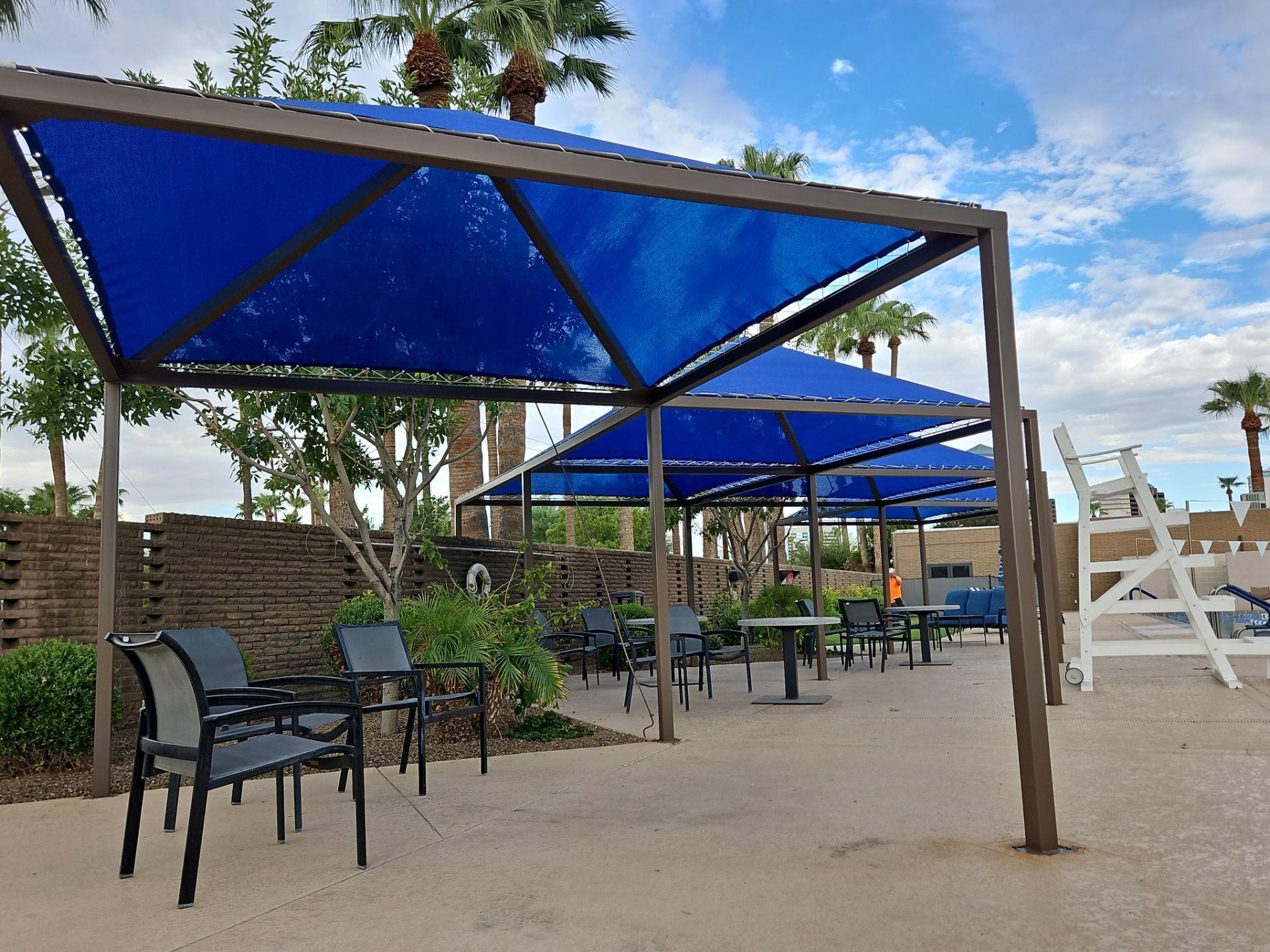
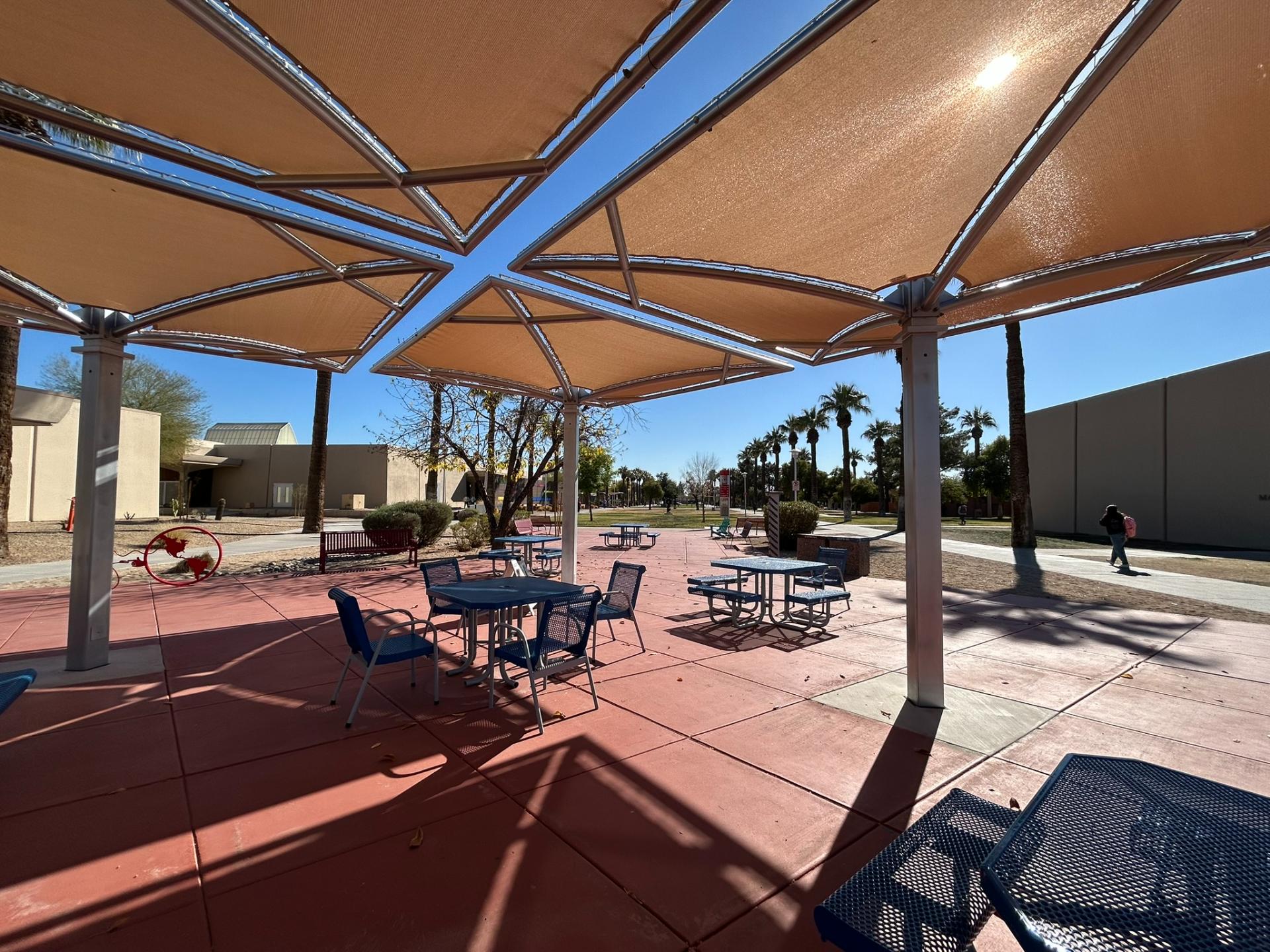
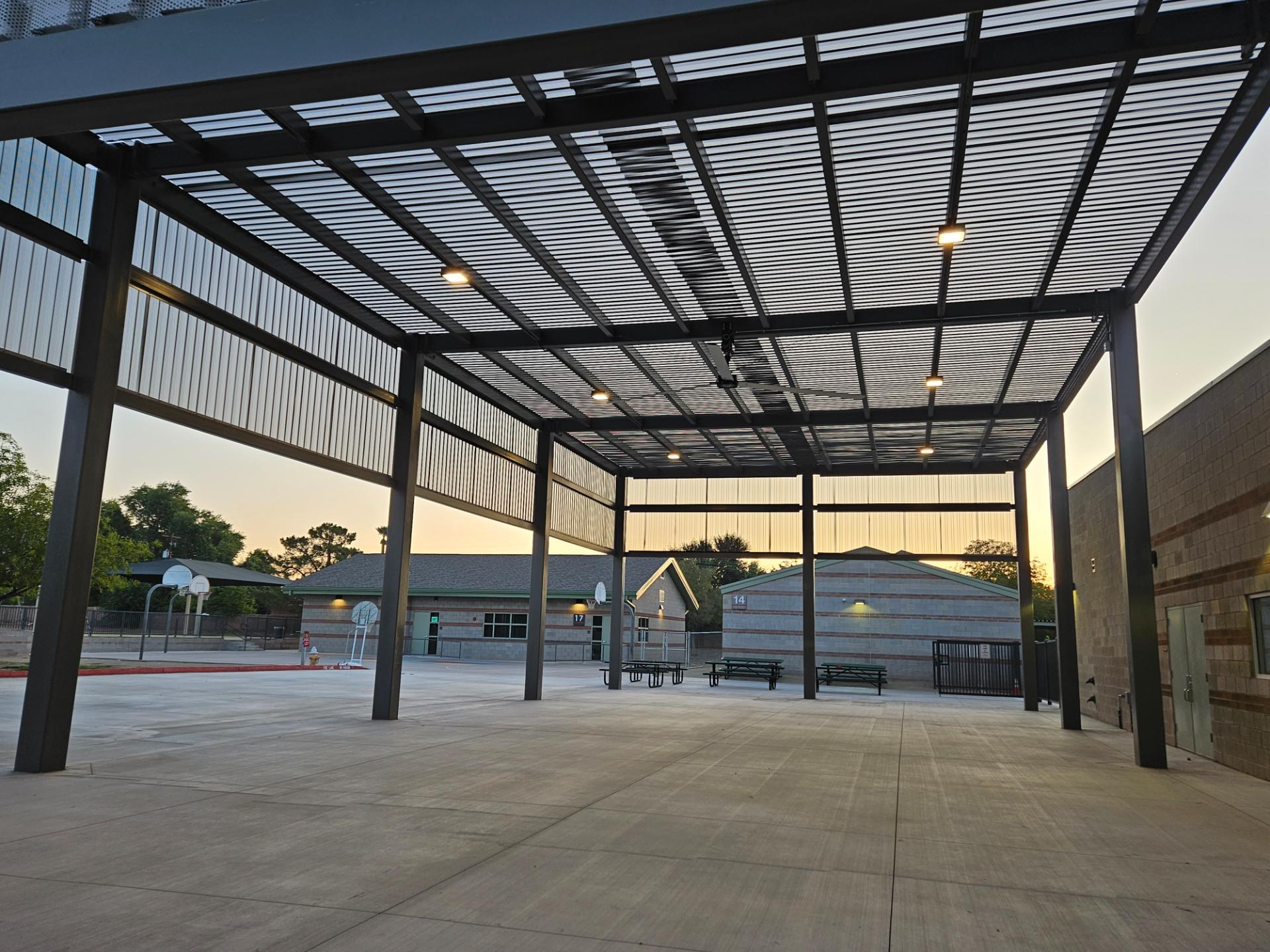
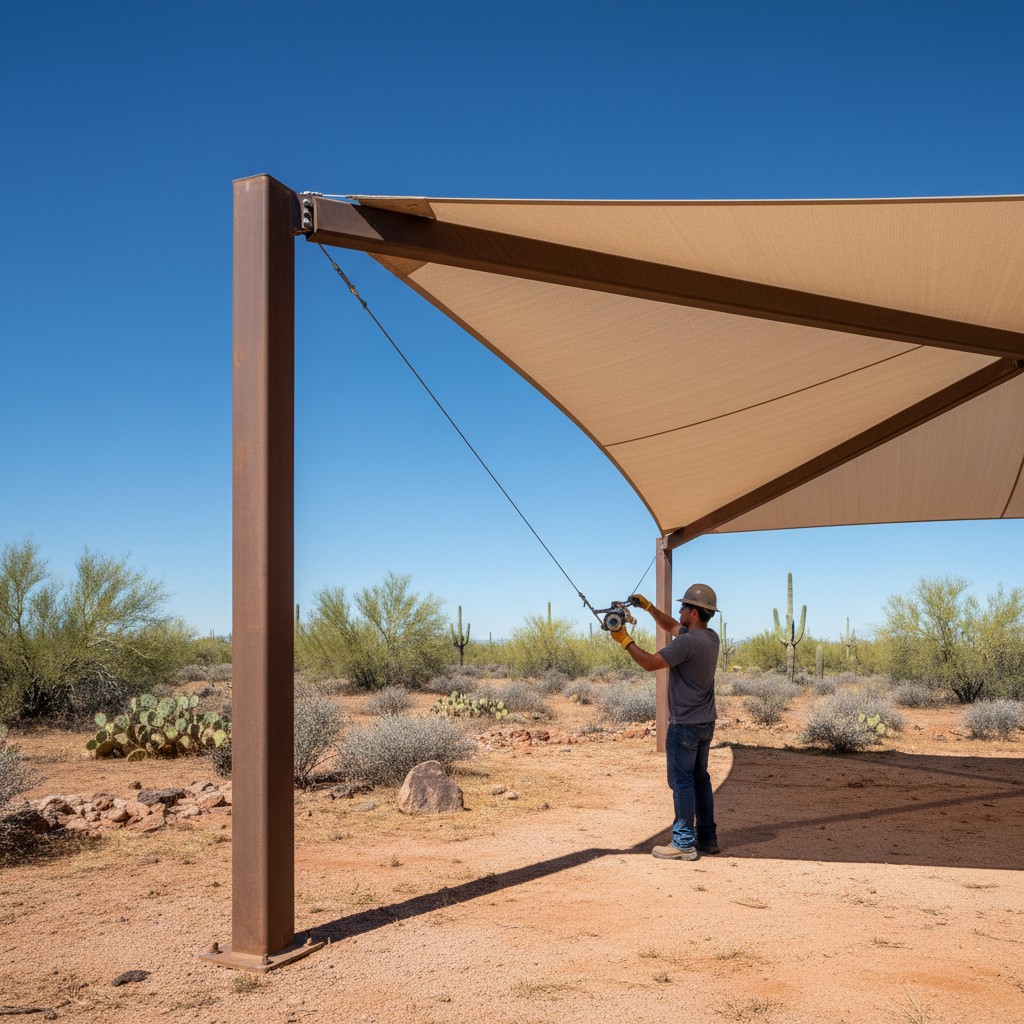
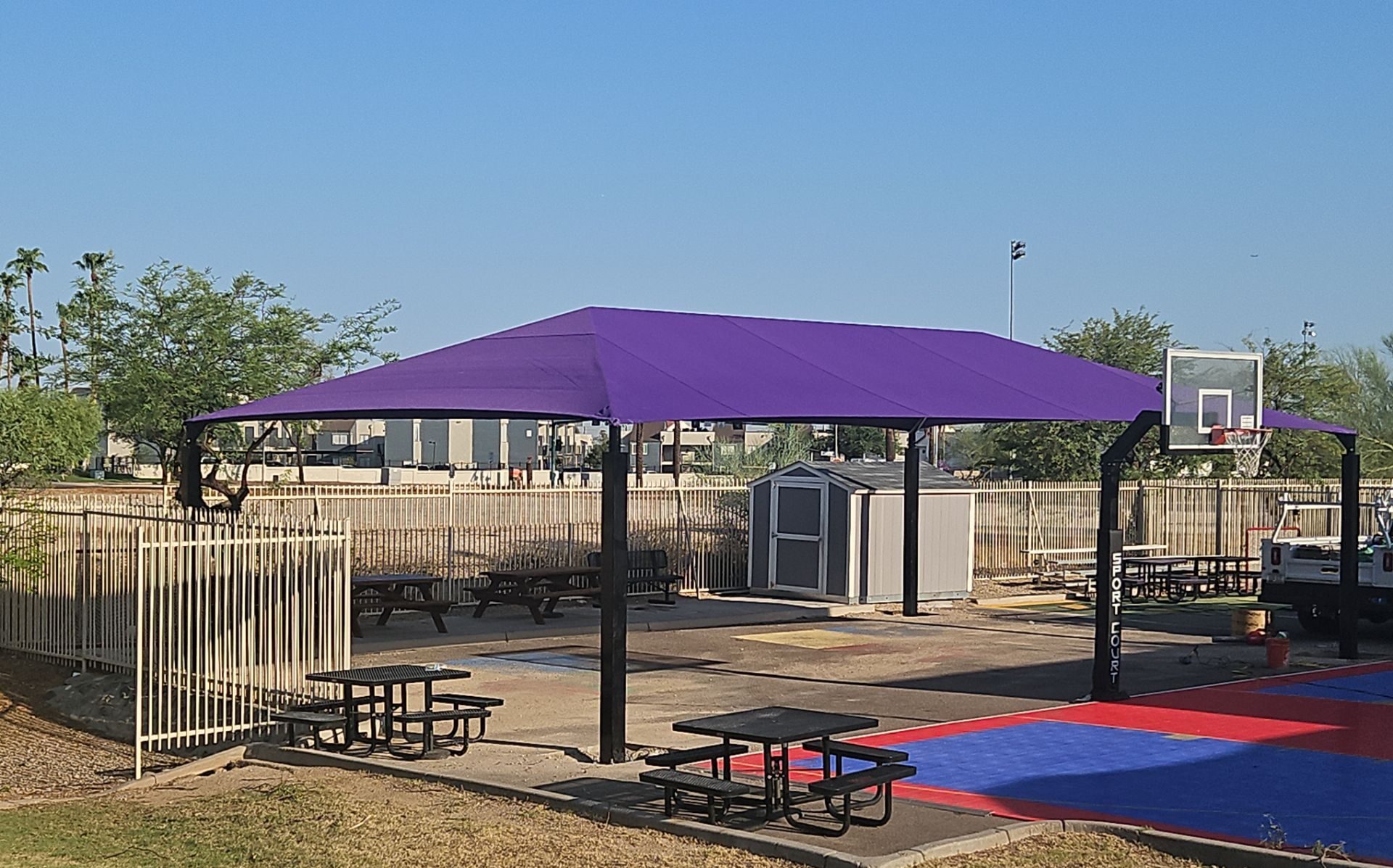
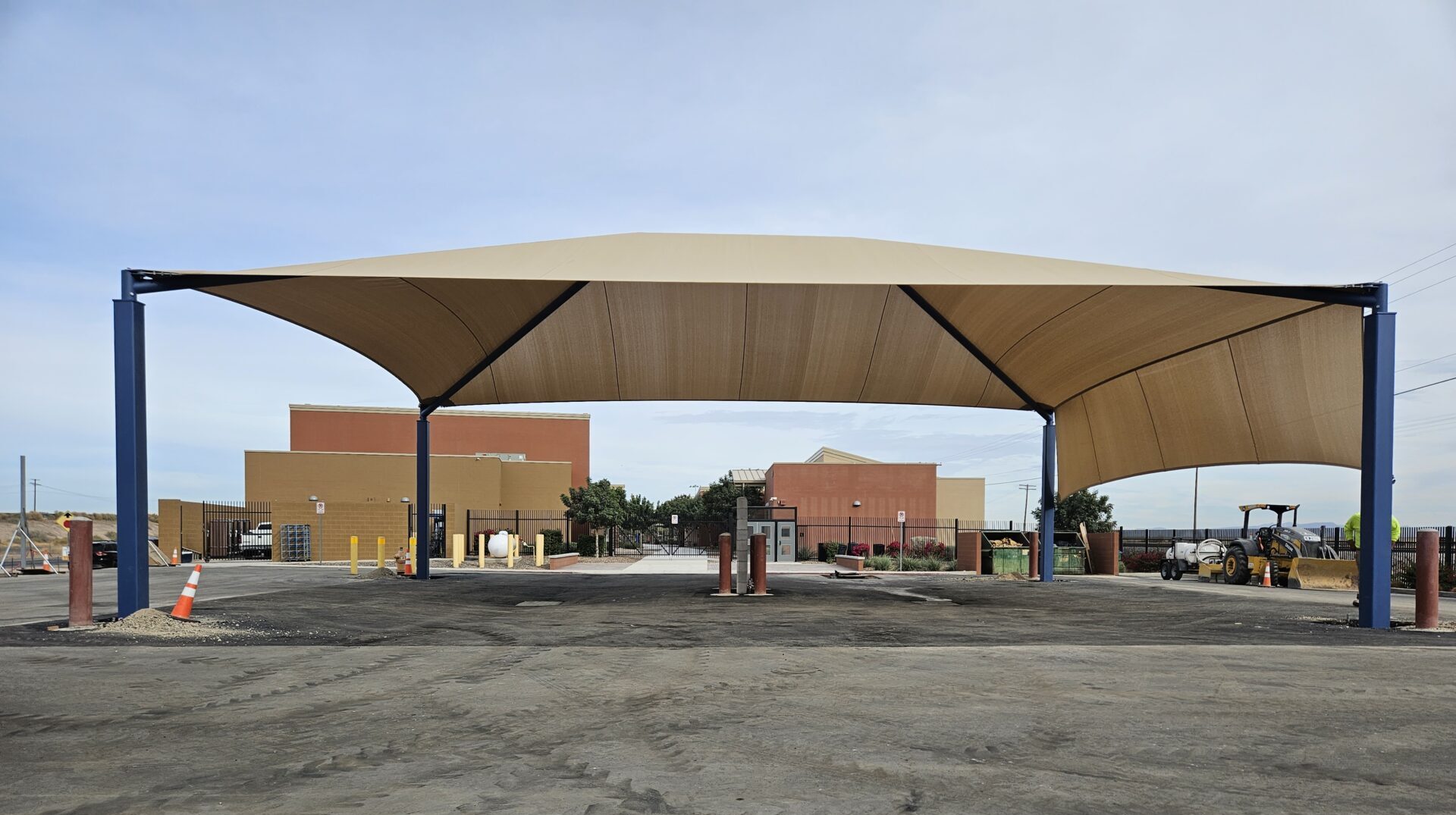
At Glendale Community College we built three structure types working together: hip-roof canopies over courtyards and seating clusters, a flat cantilever cover spanning a campus walkway, and 3-point tensioned shade sails over open gathering areas. The hip canopies cover wide footprints on four posts, keeping the ground under them clear for tables and benches. The cantilever puts every post on one side of the walkway, so foot traffic flows underneath with nothing to step around.
Every frame was fabricated at our Phoenix facility, where Total Shade has run in-house steel for 25-plus years. Doing the welding and powder-coating ourselves lets us control gauge and finish before anything ships the roughly 15 miles west to the Glendale campus. All three structure styles are engineered to Maricopa County building code and ASCE 7 wind loads — Valley design wind speeds run roughly 90 to 115 mph, which matters when a single July microburst can push past 60 mph over an open quad.
The shade sails read lighter than the rigid canopies and let air move through the gathering areas, while the hip roofs throw the deepest, most predictable shadow. Pairing the two means the campus gets architectural variety without sacrificing midday coverage where students actually sit.
Campus Shade for Glendale Schools and Colleges
Campus shade behaves more like infrastructure than amenity for schools and colleges across the Valley. A walkway that bakes at 140-plus degrees on bare concrete by late morning goes avoided; the same path under a cantilever cover stays in use through the afternoon. Knitted HDPE shade fabric — common on tensioned campus sails — blocks roughly 90 to 99% of UV, cutting both heat and the cumulative sun exposure students take crossing an open courtyard several times a day.
Accessibility shapes every education install. Covered routes between buildings need clear, level paths and adequate post clearance, and the cantilever’s single-sided posts keep the walkway free of obstructions in line with our ADA code-compliance approach. We coordinate footing placement so posts sit outside the accessible path, not in it.
The honest trade-offs: HDPE fabric is a consumable that typically carries a 10 to 15 year warranty and can be re-covered rather than replaced wholesale, while the powder-coated steel frames outlast it by years. Desert dust means periodic cleaning to keep fabric draining, and shade sails carry real wind limits that rigid hip roofs handle differently. Sizing and orientation decide whether any of it works — undersize a courtyard canopy and the shadow misses the seating by mid-afternoon; we size each structure against the sun’s seasonal path for the specific campus site.
Project Location & Directions
Total Shade LLC — 2331 W. Holly Street, Phoenix, AZ 85009 · (602) 265-0905
Explore Our Shade Structures
Related Total Shade Projects
Planning a shade structure for your property?
Call (602) 265-0905 for a free assessment.