or call (602) 265-0905 — no-obligation, on-site.
Fabric vs Metal Shade Structures Compared
A verdict-first breakdown: tensioned HDPE fabric roofs run cooler and cost less; solid metal roofs stay rain-tight and last longer. Here is when each one wins.
Fabric vs metal shade: knitted-HDPE fabric blocks roughly 90-99% of UV while letting heat escape, so it runs cooler and costs less, but is a consumable recovered every 10-15 years. Solid metal blocks all sun and rain and lasts decades with little upkeep, at higher cost and weight. Fabric for cool shade; metal for all-weather cover.
Since 1998
Designing & building Arizona shade
In-House Fabrication
Built at our Phoenix shop
Engineered & Permit-Ready
Stamped drawings for AZ wind loads
Free On-Site Quote
No-obligation project assessment
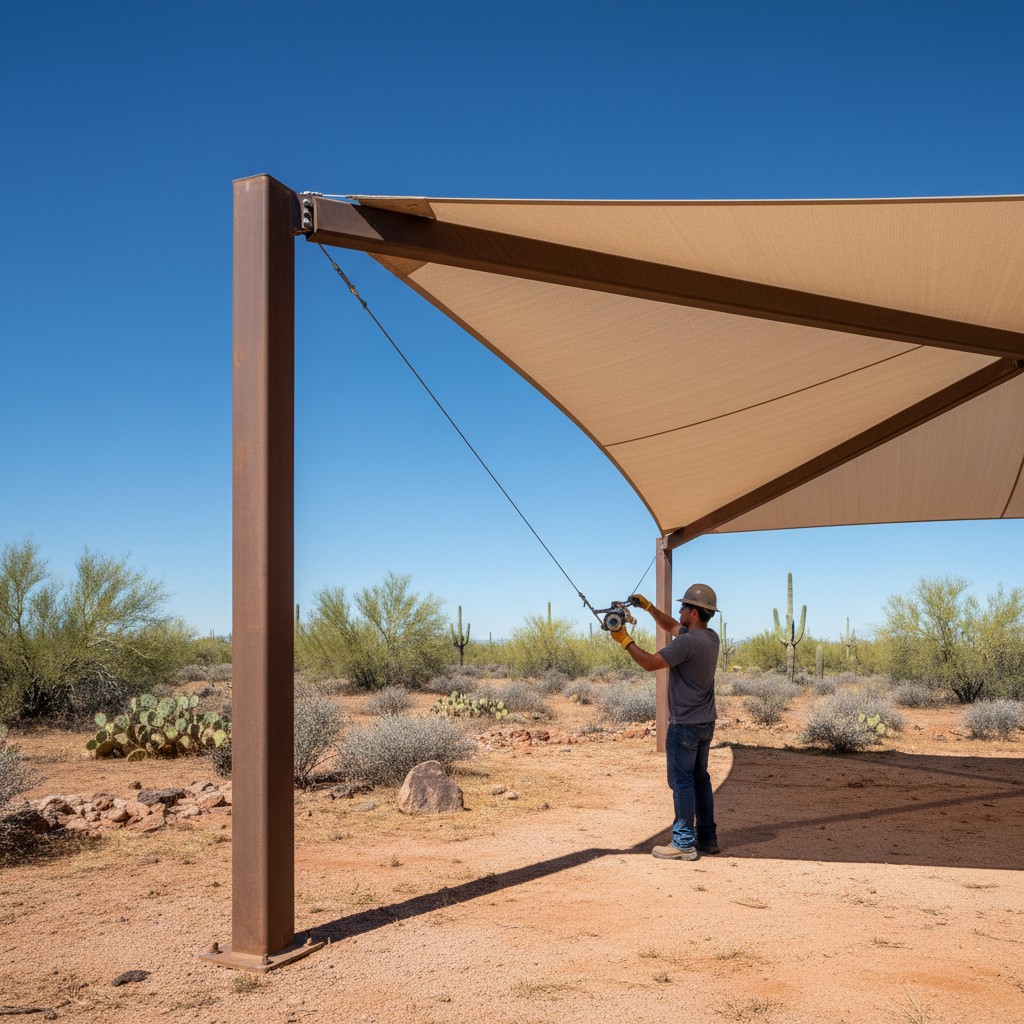
For pure heat and UV control at the lowest cost, tensioned HDPE fabric wins; for rain protection and the longest roof life with no cover to replace, a solid metal roof wins. A fabric structure stretches knitted HDPE across a steel frame, blocks roughly 90-99% of UV, breathes so heat vents instead of building up, and re-covers every 10-15 years for a fraction of the structure’s cost. A metal roof — corrugated or standing-seam panel on steel posts, the ramada style — blocks 100% of direct sun, sheds monsoon rain, and lasts 20-40 years with nothing to re-tension. Total Shade fabricates both in steel at our Phoenix shop at 2331 W. Holly St, engineered to Maricopa County code. The sections below compare the two on heat and UV, rain, maintenance, cost, lifespan, and look, then close with a plain verdict for each scenario.
Heat and UV: fabric runs cooler, metal blocks every ray
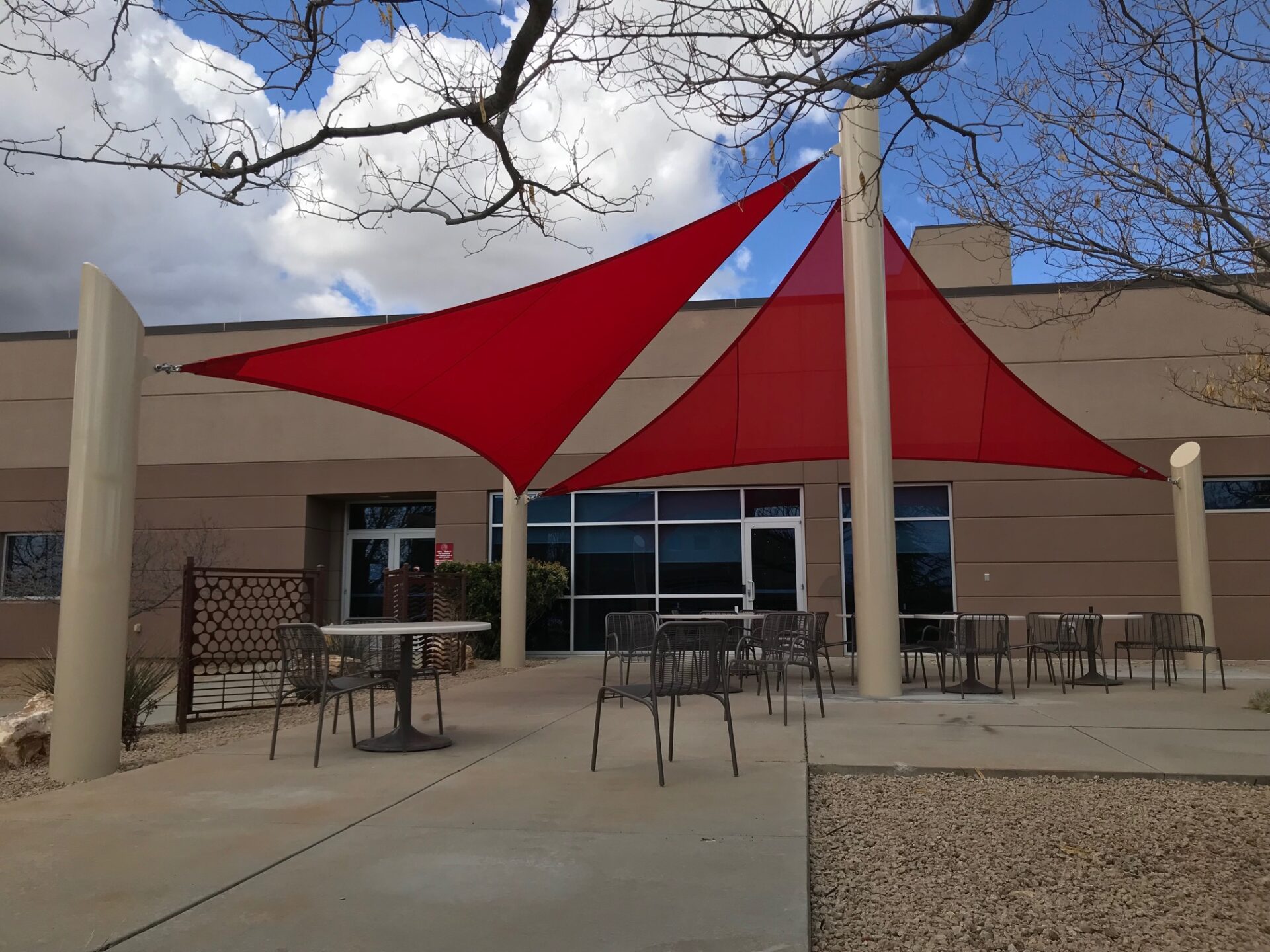
Fabric is the cooler roof to sit under, and the reason is airflow. Knitted HDPE is a breathable mesh: it blocks roughly 90-99% of UV depending on weave and color, but it lets hot air escape upward instead of trapping it underneath. The fabric heats in the sun, yet because air moves through it, the shaded zone stays closer to ambient — often 15-20 degrees cooler than full sun on a 110-degree afternoon.
A solid metal roof blocks 100% of direct sun and every UV ray, which sounds like a clean win until you account for radiant heat. Metal absorbs sun and re-radiates it downward, and a sealed panel has no path for trapped air to vent, so the pocket under a low metal roof can hold heat longer into the evening than open fabric. The practical read: for the coolest air over people and cars — playgrounds, patios, car lots — a tensioned fabric sail behaves more like a tree canopy than a roof. For total UV elimination over a surface that must stay sun-free, metal wins outright. Fabric controls heat; metal controls the last 1-10% of UV that fabric lets slip through.
Rain and weather: metal is the only one that keeps you dry
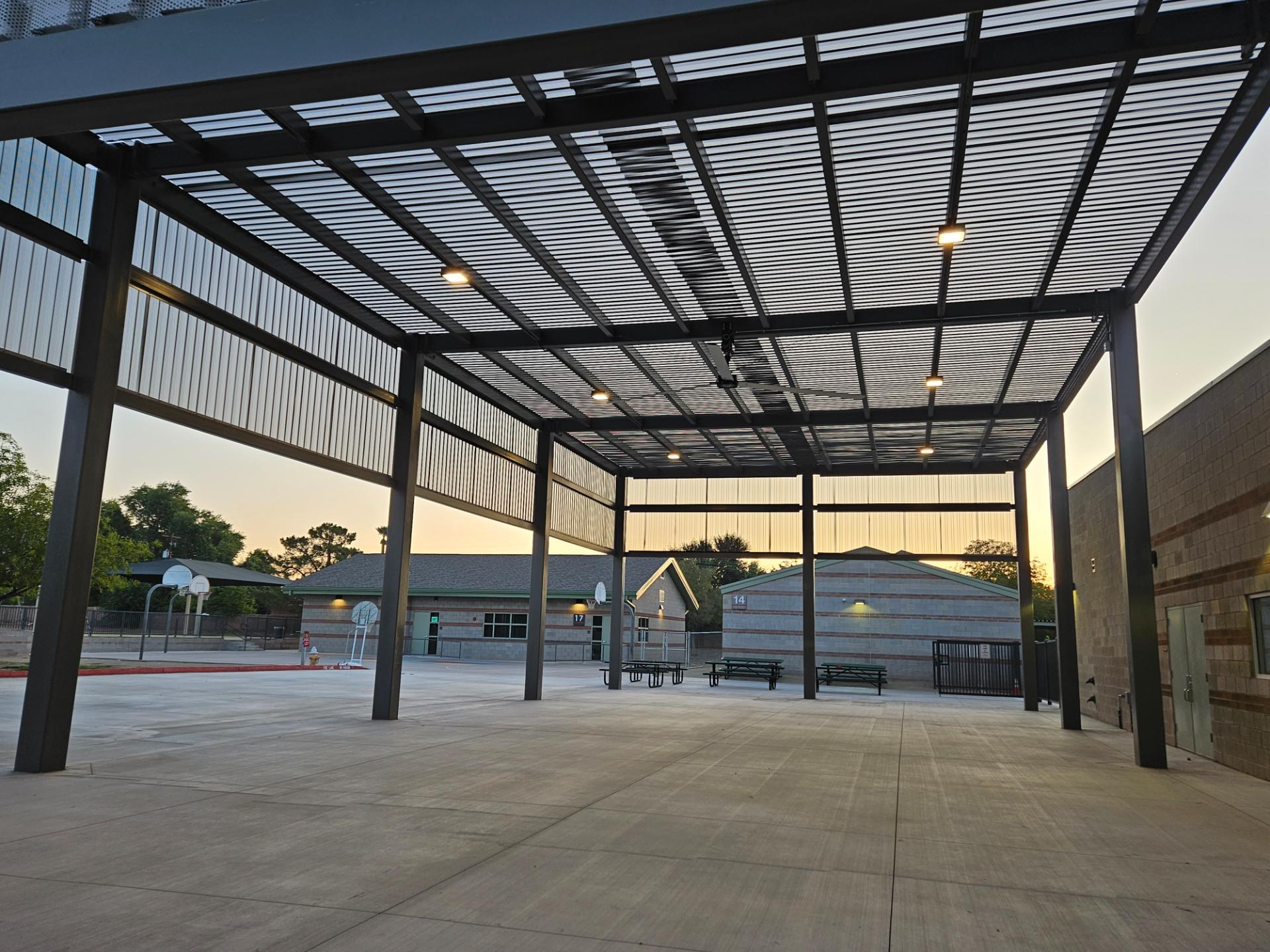
If staying dry matters, metal is the answer and fabric is not. A solid metal roof sheds monsoon rain to its edges and gutters, so the deck stays usable through a storm cell — the reason picnic ramadas, trailhead shelters, and lunch courts default to panel roofs. Knitted HDPE is woven, not sealed: it sheds a sprinkle but drips and passes water through in a real downpour, because the same pores that vent heat let rain through.
Wind is where the comparison flips. Fabric’s curved, tensioned shape spills wind rather than catching it, so a well-engineered fabric structure handles the Valley’s design wind speeds — roughly 90-115 mph under Arizona building code and ASCE 7 — with relatively light steel. A solid metal roof is a flat plane that catches uplift, so it needs heavier posts and deeper footings, often 3-8 ft into caliche, to resist microbursts that can punch past 60 mph. Both engineer to code; metal simply carries more steel to get there. The rule: choose metal when rain cover is non-negotiable, choose fabric when the only enemy is sun.
Maintenance and replacement: fabric is a consumable, metal is a fixture
The deciding maintenance difference is that fabric is a planned replacement and metal is not. A tensioned HDPE cover is a consumable: it needs occasional re-tensioning as it relaxes, and reaches the end of its service life in 10-15 years, at which point you swap the cover — not the frame — through a canopy replacement. That is a strength as much as a cost: a faded or storm-damaged fabric roof is renewed in a day for a fraction of a new structure, with the option to change color at the same time.
A metal roof has nothing to re-tension and no cover to replace. Maintenance is a rinse once or twice a year to clear desert dust off the panels and gutters, plus a check of the powder coat for chips. Over 30 years a fabric structure sees two or three re-covers while a metal roof sees none — but each re-cover is cheap relative to the metal roof’s higher upfront steel. Neither is maintenance-free: if your budget prefers small recurring costs, fabric fits; if it prefers one capital outlay and decades of quiet, metal fits.
Cost: fabric is the lower-priced roof, by design
Fabric usually prices below metal for the same footprint. A tensioned HDPE structure carries less steel and a lightweight cover, so a cantilevered fabric structure over a parking row or a sail over a playground comes in under a solid-roof ramada of the same span. The trade-off lives in the long-term ledger: budget for a re-cover inside 10-15 years, though each re-cover costs far less than the original structure because the frame stays.
A metal roof costs more upfront because it carries more steel, a heavier rigid roof, and deeper footings to resist uplift — but it removes the re-cover line entirely. The honest framing for a facilities or HOA budget: fabric is lower capital cost with a recurring refresh; metal is higher capital cost with near-zero roof spend after. Across a 30-year horizon the two land closer than the sticker prices suggest. Both are quoted per project — footprint, post count, roof type, wind exposure, and soil all move the number — rather than off a flat per-square-foot chart.
Lifespan and look: metal roof lasts longer, fabric reads architectural
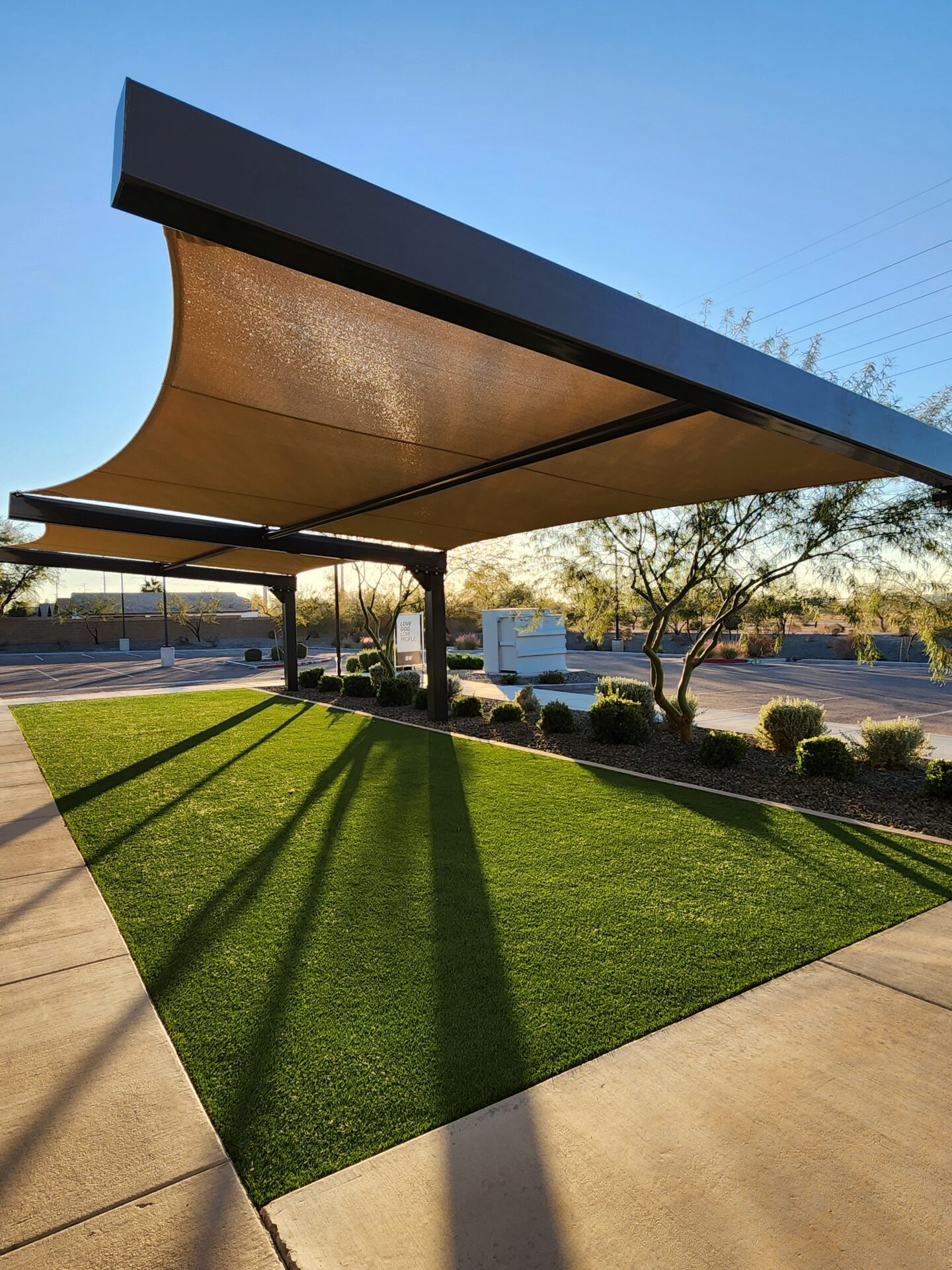
Metal wins on roof lifespan and fabric wins on aesthetics. A powder-coated steel frame with a solid metal roof is a 20-40 year asset, structural rather than textile, with no membrane to age out. A fabric structure’s steel frame lasts just as long, but the HDPE cover is the limiting component at 10-15 years, so the frame outlives several covers. Measured by the roof you never touch, metal leads; measured by the frame, they tie.
Look and enclosure separate them more sharply. Tensioned fabric reads as a sculptural plane — curved, lightweight, almost floating — which is why hip structures and sails dominate architecturally driven projects, resort pools, and design-review-sensitive HOAs. A metal roof reads as a small building: more enclosed, more solid, with the option of closed sides for a finished, room-like feel fabric cannot give. Fabric is the open, airy statement; metal is the permanent, building-like one. The choice here is as much about the look the site wants as about performance. Browse the full range on our products overview or the shade structure guides hub.
The verdict: which roof wins, scenario by scenario
Pick fabric when the enemy is heat and the budget favors a lower entry price; pick metal when rain protection, enclosure, or a forget-it roof matter most. Fabric wins for the coolest air over people and cars, the lowest upfront cost, the easy color-changing refresh every 10-15 years, and the architectural, floating look — playgrounds, parking lots, pool decks, and design-led patios are its home turf. A tensioned fabric sail or cantilever is the right call there.
Metal wins for rain-tight coverage that keeps a gathering usable through a monsoon, a roof with nothing to re-tension or replace, a more enclosed feel, and the longest roof life at 20-40 years — picnic ramadas, trailhead shelters, lunch courts, and any space where people settle in for hours and rain is unwelcome. A solid-roof ramada answers that brief. The caveats hold for both: fabric drips and is a planned consumable; metal costs more and catches more wind, so it must be engineered for uplift. Neither is universally better — the winner is whichever one matches what the site actually fights, sun or rain. Tell us the footprint and the priority and we will quote the roof that fits.
Shade Structures We Build
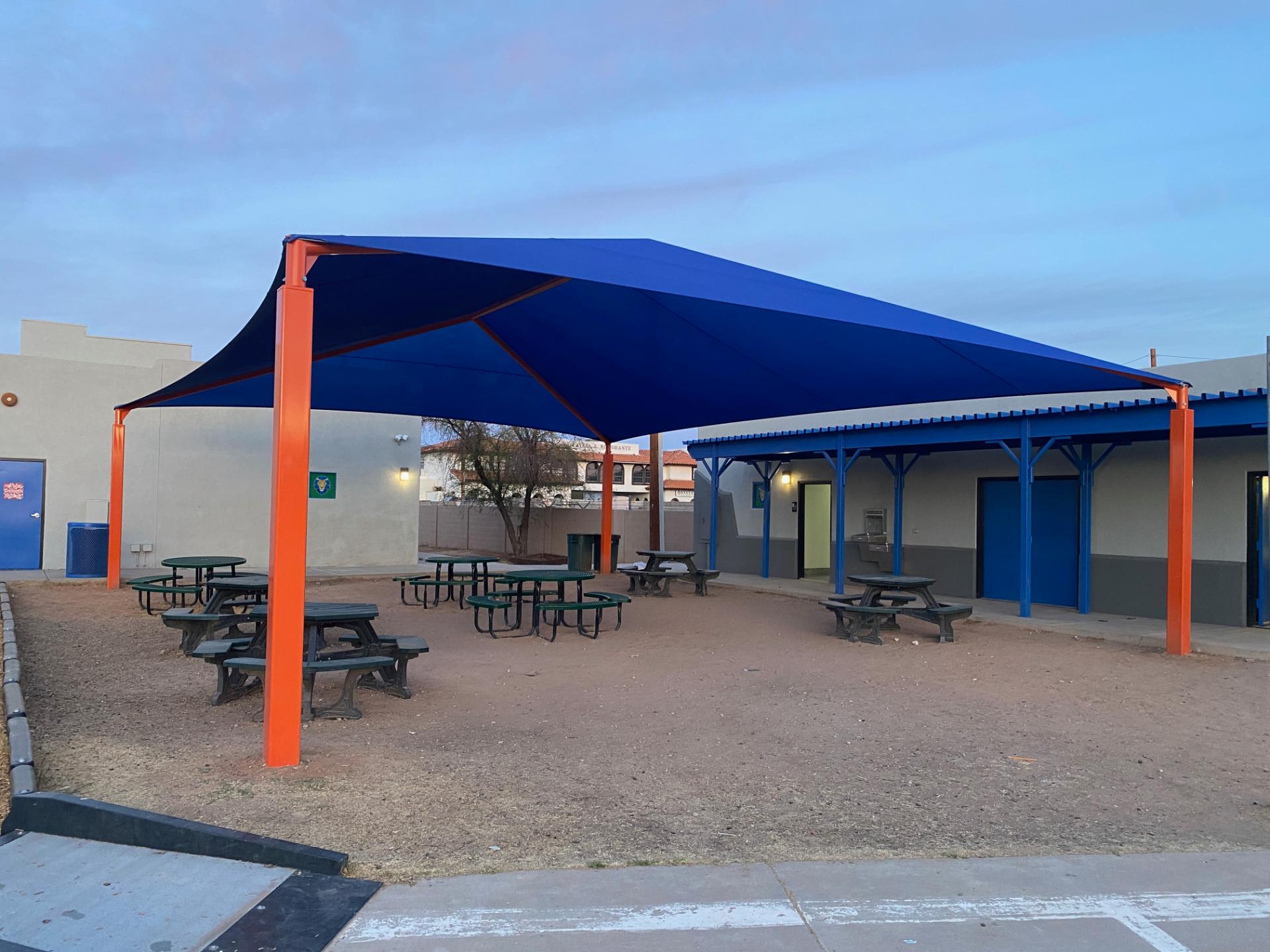
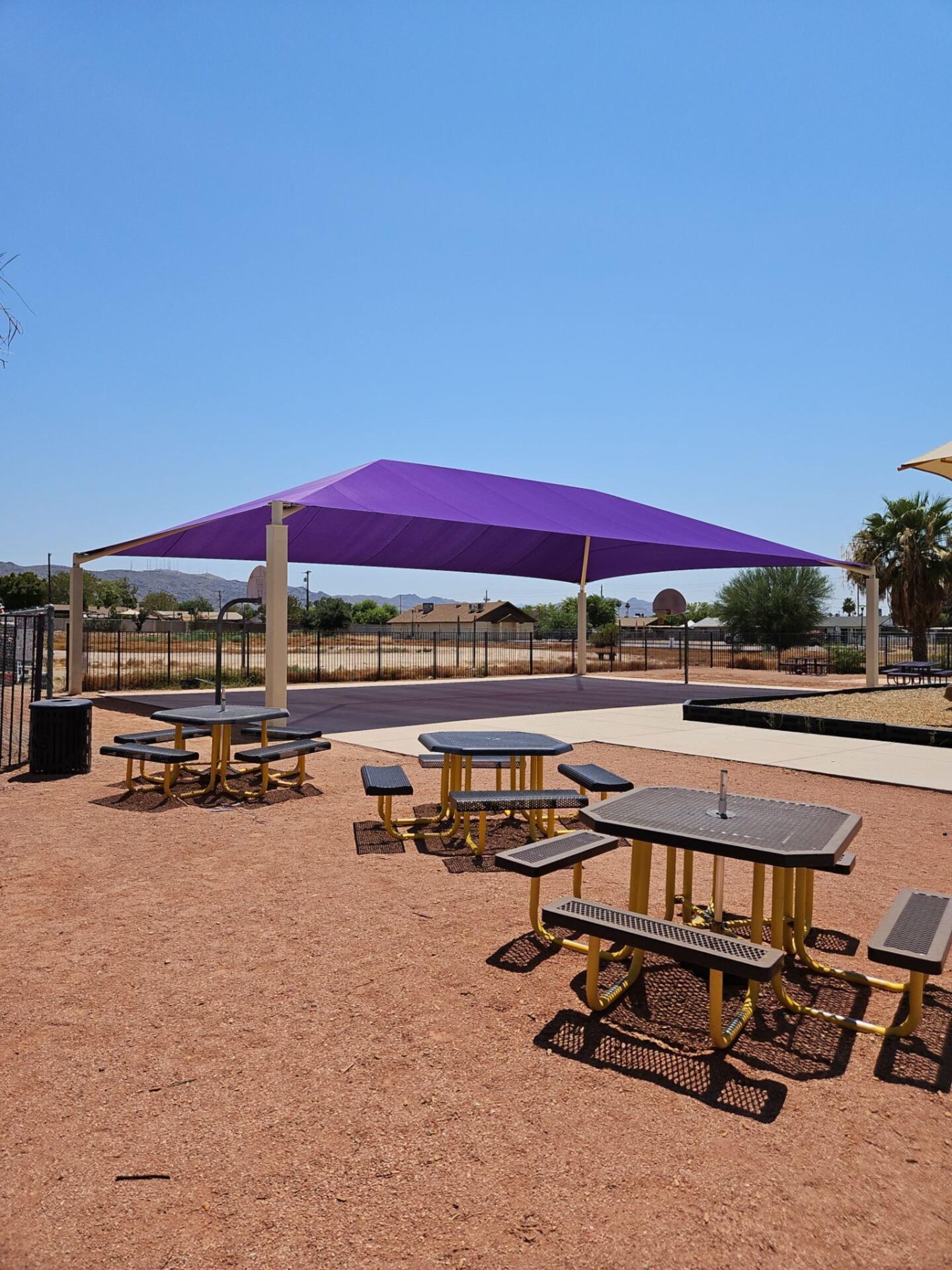
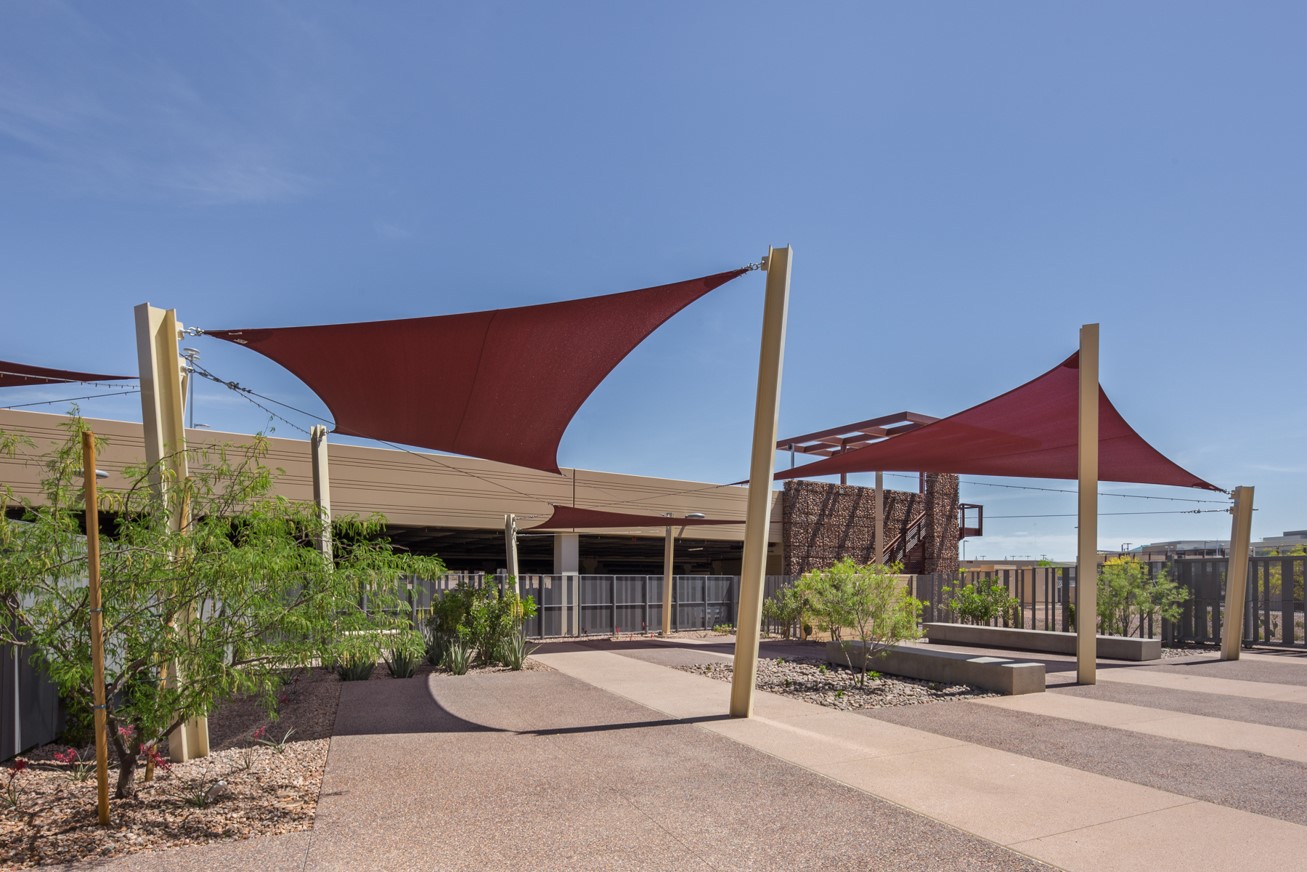
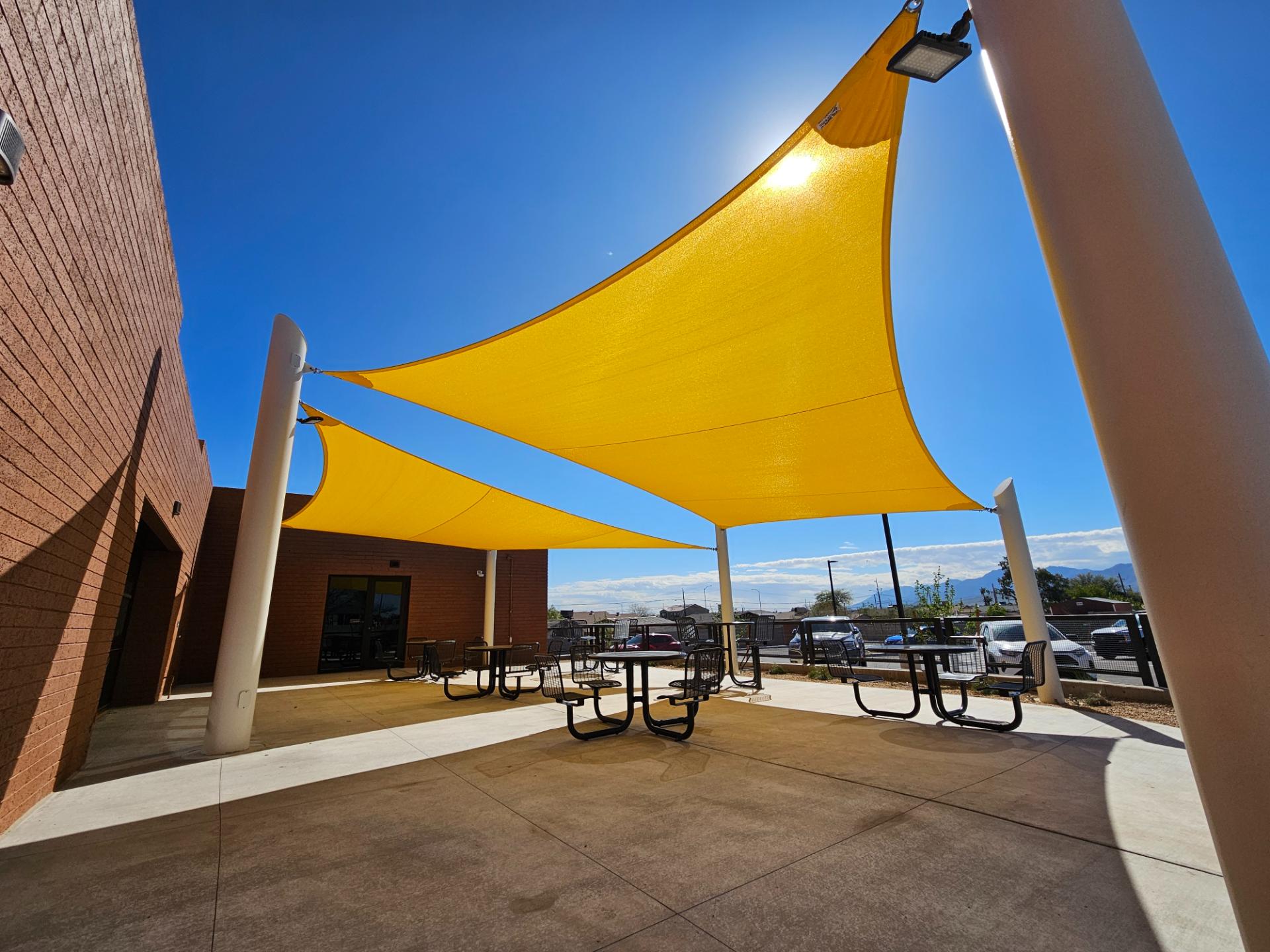
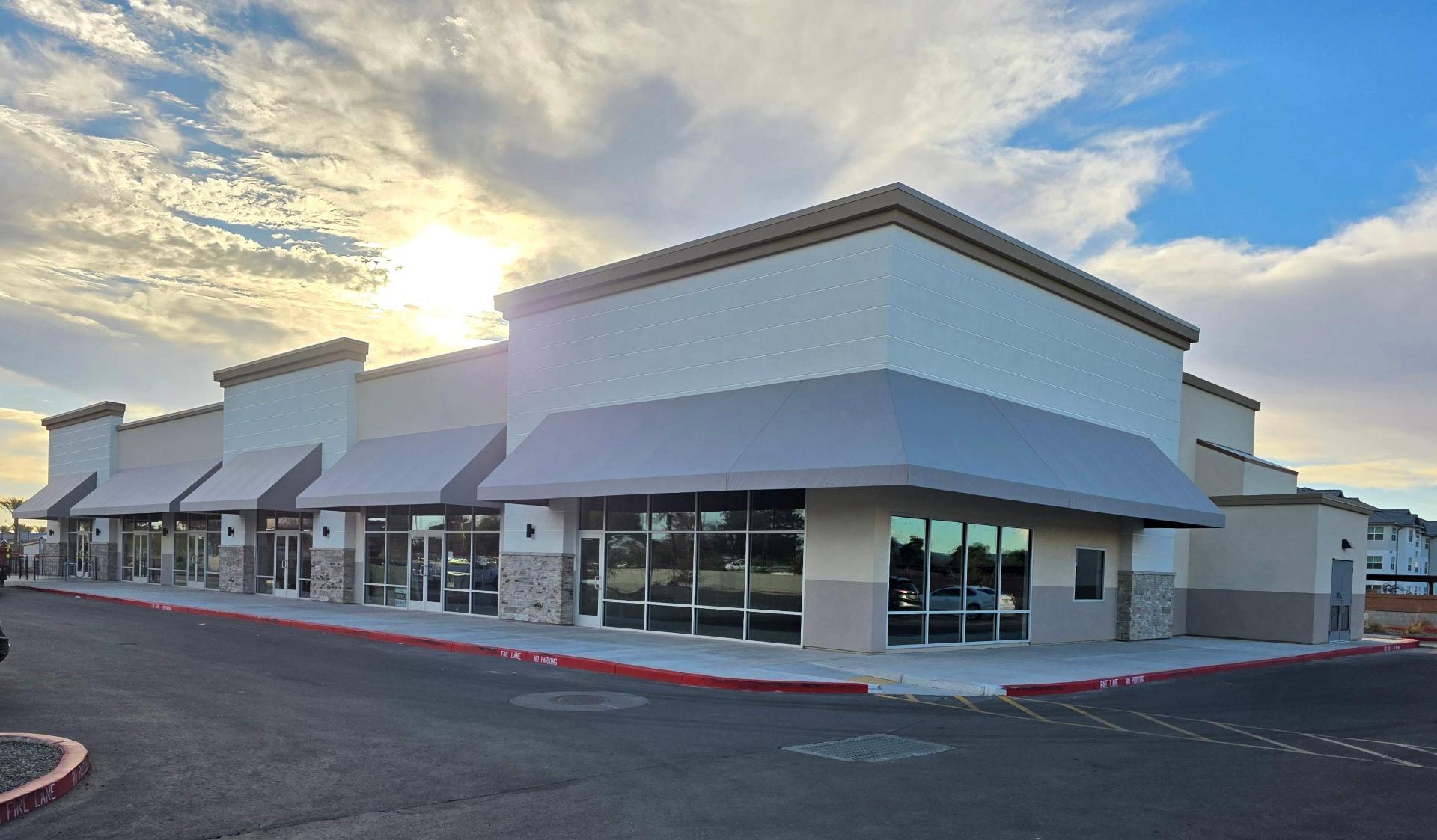
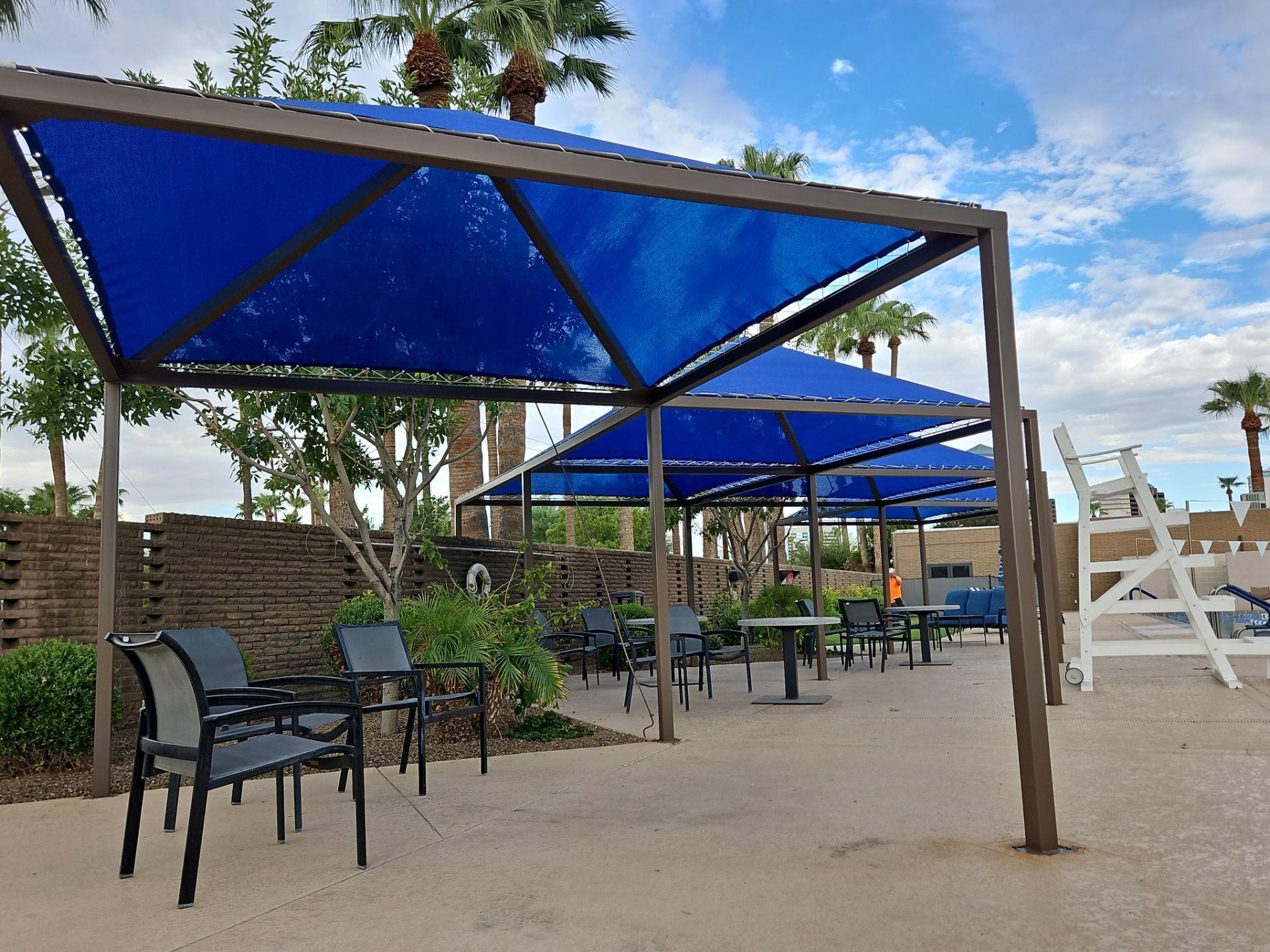
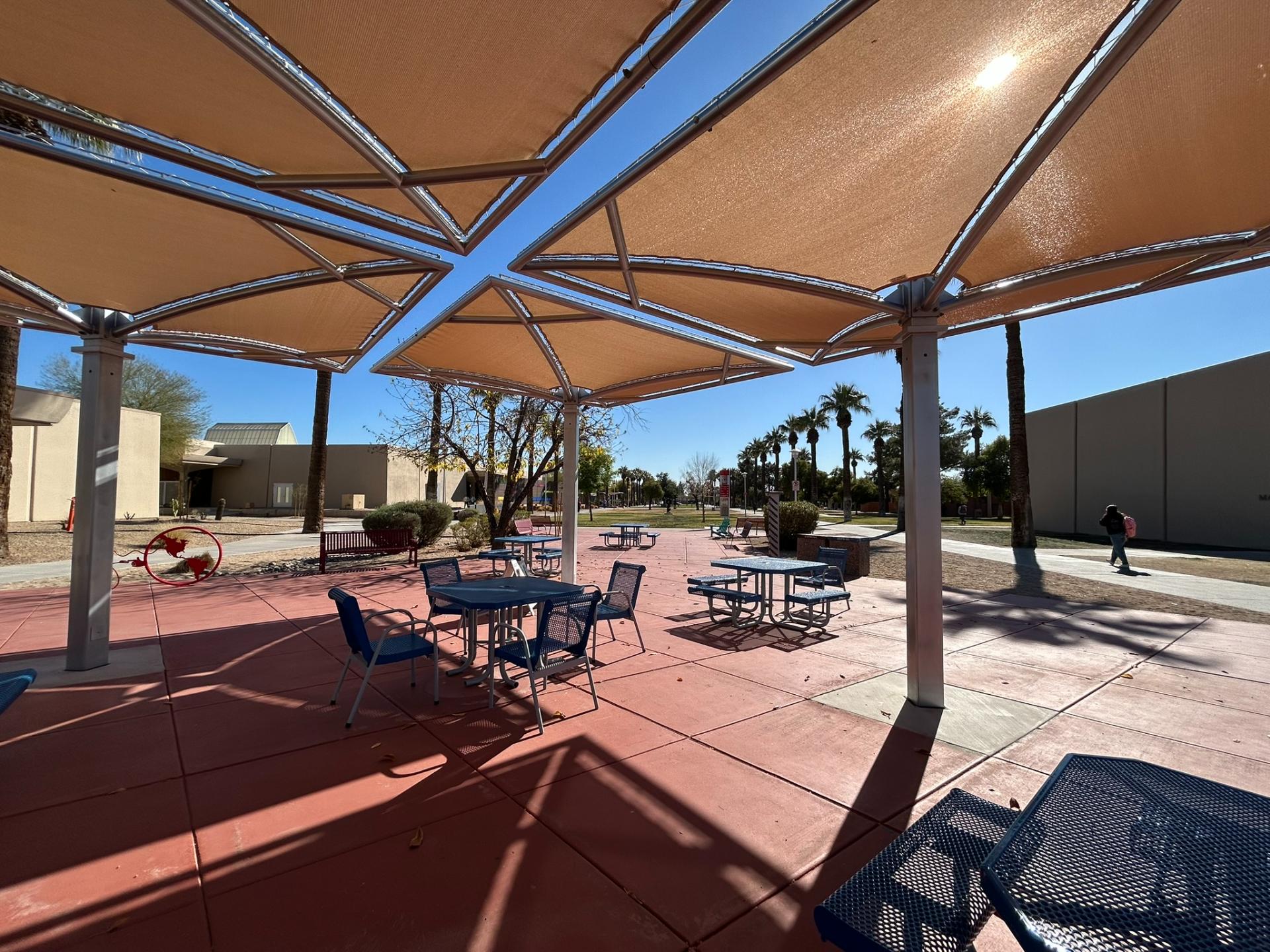
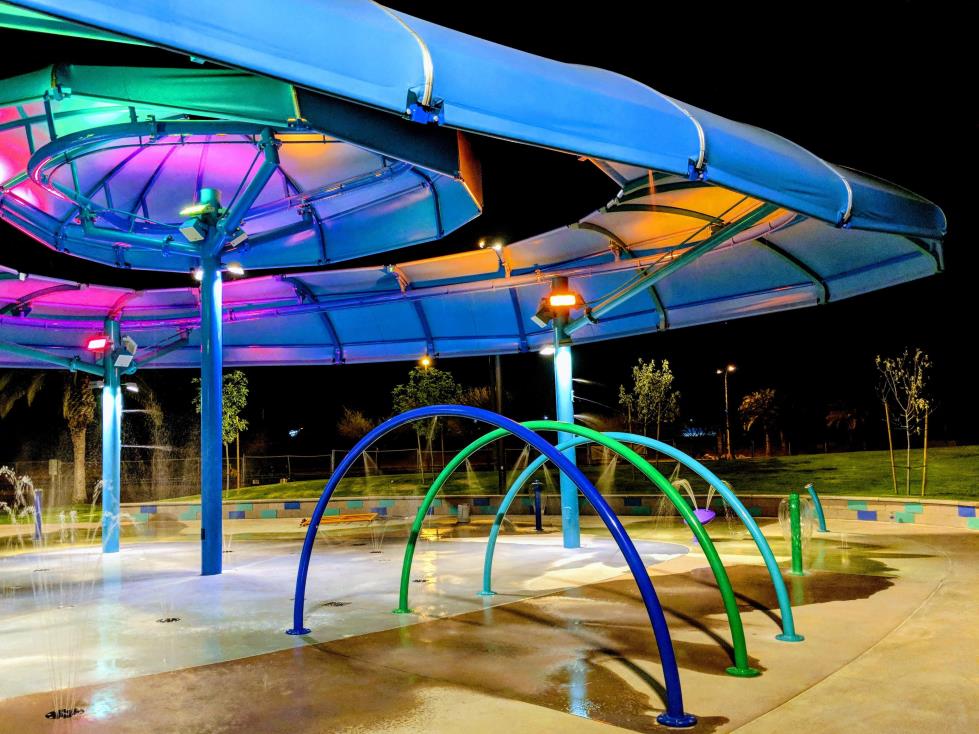
Ready to talk through your project?
Call (602) 265-0905 for a free assessment.
Frequently Asked Questions
Which is cooler under it, fabric or metal shade?
Fabric is cooler for the air over people. Knitted HDPE is a breathable mesh that blocks roughly 90-99% of UV while letting trapped hot air vent upward, so the shaded zone stays closer to ambient — often 15-20 degrees cooler than full sun on a 110-degree day. A solid metal roof blocks 100% of direct sun but absorbs and re-radiates heat with no path to vent, so the air pocket under a low metal roof can hold heat longer. For the coolest air over people and cars, fabric behaves more like a tree canopy than a roof.
Does fabric or metal keep you dry in the rain?
Metal keeps you dry; fabric does not. A solid metal roof sheds monsoon rain to its edges and gutters, so the deck stays usable through a storm — which is why picnic ramadas and lunch courts use panel roofs. Knitted HDPE is woven rather than sealed, so the same pores that vent heat also let rain drip through in a real downpour. If rain protection is non-negotiable, choose metal; if the only enemy is sun, fabric is the lighter, wind-spilling option.
Which needs less maintenance, fabric or metal shade structures?
Metal needs less ongoing attention because there is no cover to replace. A fabric roof is a planned consumable: it needs occasional re-tensioning and a re-cover inside 10-15 years, though each re-cover is cheap because only the HDPE is swapped, not the steel frame. A metal roof has nothing to re-tension and just needs a rinse once or twice a year to clear desert dust. Fabric trades easy, low-cost refreshes for more frequency; metal trades a higher upfront roof for decades of quiet.
How long do fabric and metal shade structures last?
The metal roof lasts longer. A powder-coated steel frame with a solid metal roof is a 20-40 year asset with no membrane to age out. A fabric structure’s steel frame lasts just as long, but the HDPE cover is the limiting part at 10-15 years, so the frame outlives several covers over its life. Measured by the roof you never touch, metal leads; measured by the frame, the two are even.
Is fabric or metal shade cheaper?
Fabric is usually cheaper upfront. A tensioned HDPE structure carries less steel and a lightweight cover, so it prices below a solid-roof ramada of the same footprint — but budget for a re-cover every 10-15 years, each costing far less than the original. Metal costs more upfront for the heavier roof and deeper footings, but removes the re-cover line entirely. Across 30 years the two land closer than the sticker prices suggest, so the call comes down to whether the budget prefers a low entry price or a single long-term outlay. Both are quoted per project.