or call (602) 265-0905 — no-obligation, on-site.
Shade Structure Materials: Steel Frames & HDPE Fabric
What a commercial shade structure is actually made of, and why the steel-and-HDPE pairing decides its lifespan.
Commercial shade structures are built from two core materials: powder-coated structural steel for the frame and knitted high-density-polyethylene (HDPE) fabric for the canopy. The steel carries wind loads and resists corrosion; the HDPE blocks roughly 90-99% of UV while breathing to release heat, and is re-tensioned or recovered over its 10-15 year life.
Since 1998
Designing & building Arizona shade
In-House Fabrication
Built at our Phoenix shop
Engineered & Permit-Ready
Stamped drawings for AZ wind loads
Free On-Site Quote
No-obligation project assessment
A commercial shade structure is built from two materials doing two jobs: a powder-coated structural steel frame that carries the wind and weight, and a knitted HDPE fabric skin that blocks roughly 90-99% of the sun’s UV. The steel is the permanent part, engineered to Arizona building code and ASCE 7 wind loads, and the fabric is the consumable part, typically carrying a 10-15 year UV warranty before a re-cover. Total Shade fabricates both in-house at our Phoenix shop at 2331 W. Holly St. Understanding which material does what is the fastest way to read a quote, because nearly every durability and cost difference between two structures traces back to steel gauge, fabric grade, and the hardware tying them together.
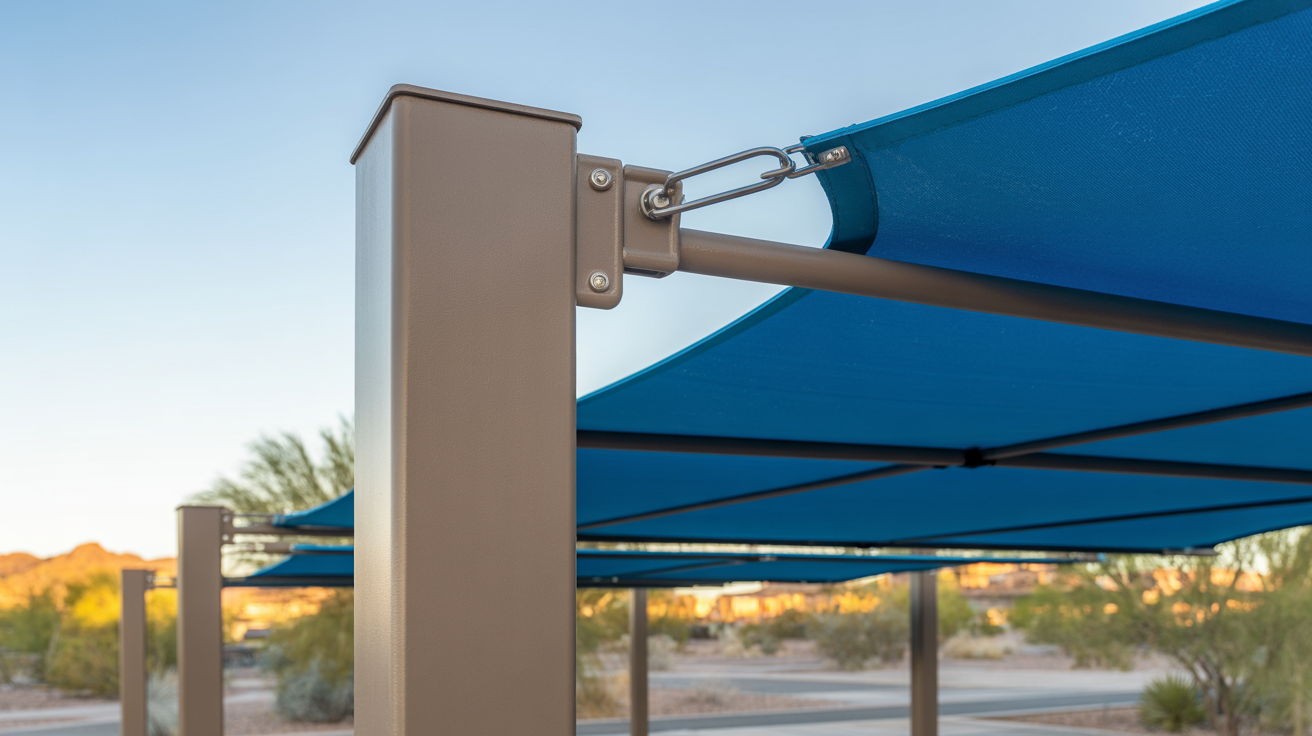
The steel frame is the permanent part, and powder coat is why it survives the desert
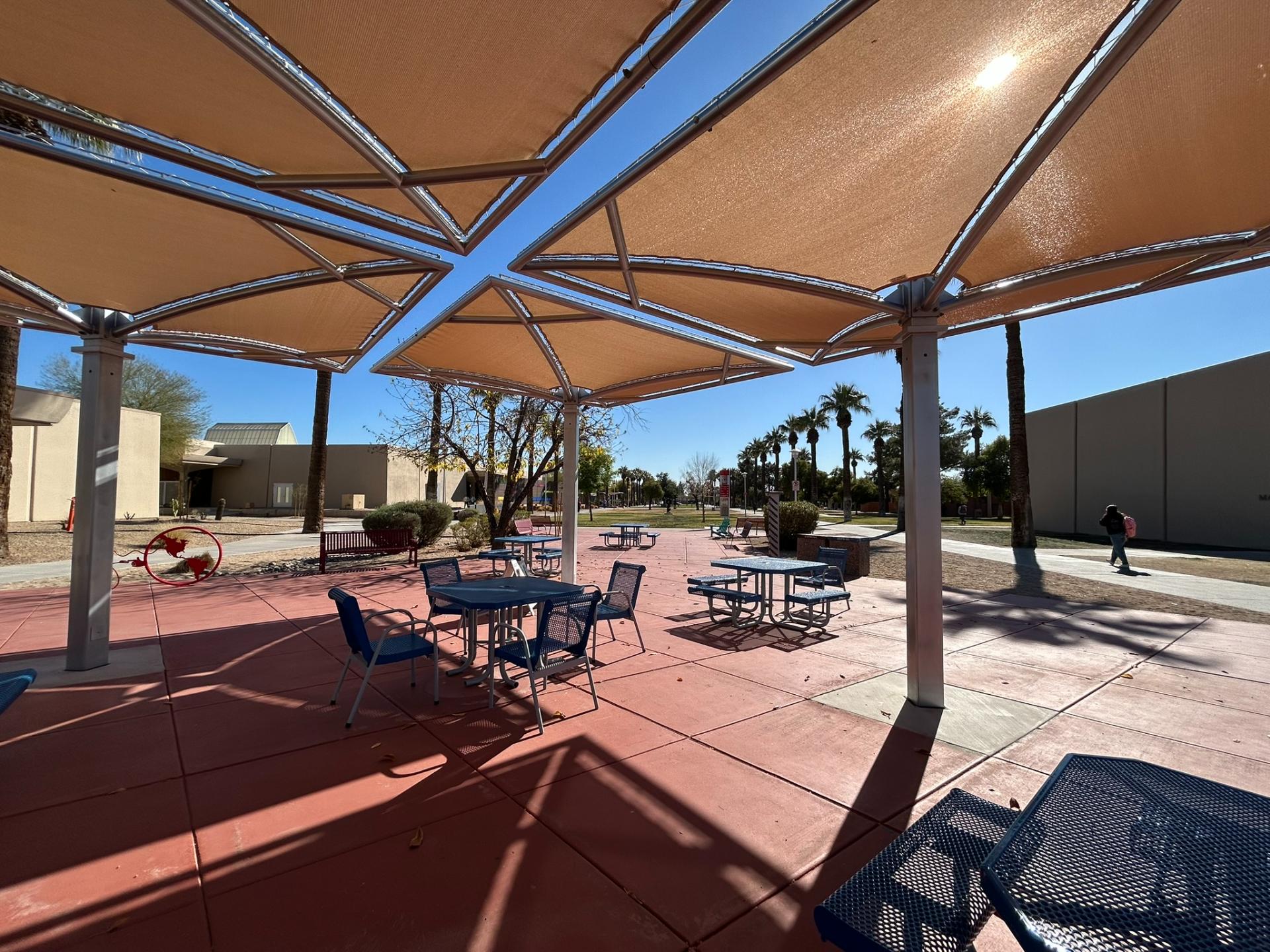
The frame is structural steel tube, almost always powder-coated, and it is the component that determines whether a canopy stands through a monsoon. Posts on commercial work typically run in the 4-8 inch round or square range, with wall thicknesses around 7-11 gauge depending on span and wind exposure. The load from a 90-115 mph design wind in the Valley has to travel from the fabric, through the frame, into the footings, so the steel is sized to the worst gust the site is engineered for, not the average day.
Powder coat is what keeps that steel from chalking and rusting under desert sun. Unlike brushed-on paint, it is an electrostatically applied dry finish baked on at roughly 350-400 degrees F, fusing into a hard shell that resists UV fade, scratching, and corrosion far longer than wet paint. Done right over a cleaned and primed surface, a powder-coated frame can run 15-20+ years before the finish needs attention, which is why the steel routinely outlives several fabric cycles.
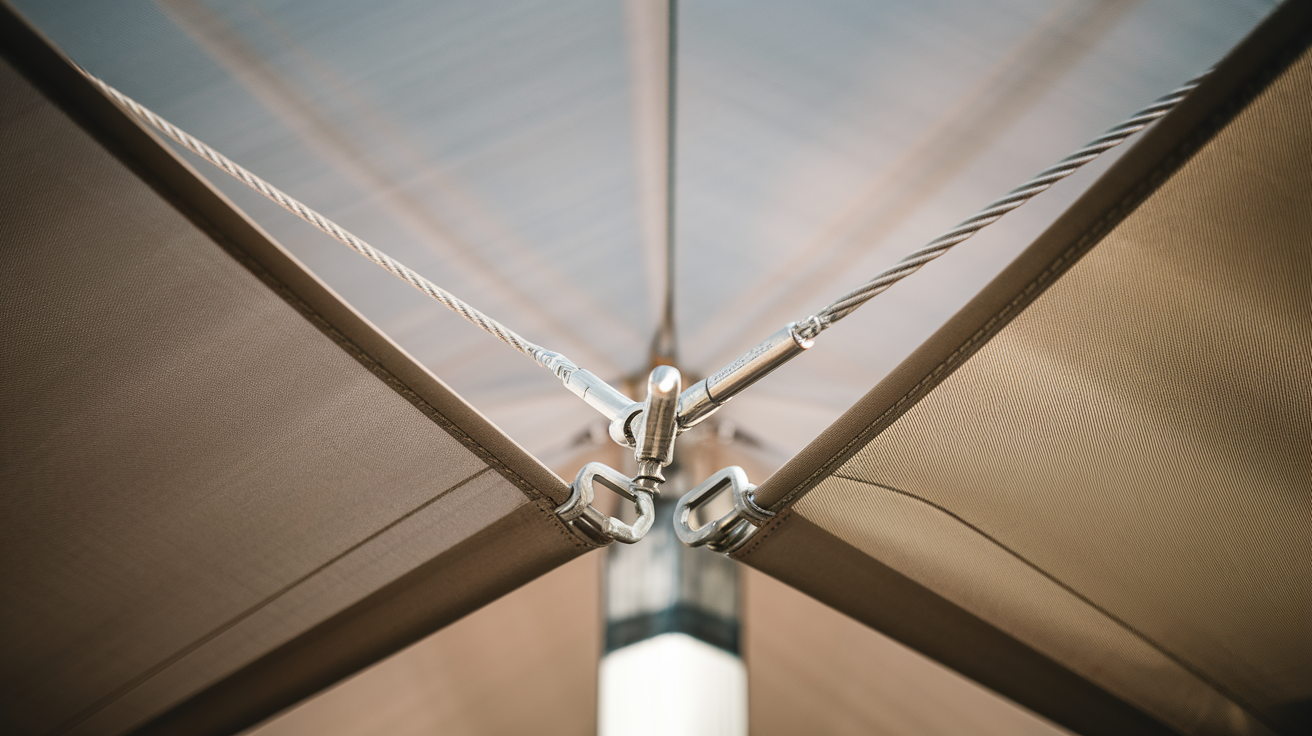
Knitted HDPE fabric blocks 90-99% of UV and breathes instead of trapping heat
The shade skin on a commercial structure is knitted high-density polyethylene, and its defining trait is that it blocks roughly 90-99% of UV while still letting air pass through. Because the fabric is knitted rather than coated solid, hot air rises through the weave instead of pooling underneath, so the space below a tensioned HDPE canopy reads cooler than the same footprint under a solid metal roof that radiates absorbed heat back down. Block percentage tracks weave density: a tighter knit blocks more UV and casts deeper shade, while an open weave trades a few points of coverage for more airflow and lighter wind load.
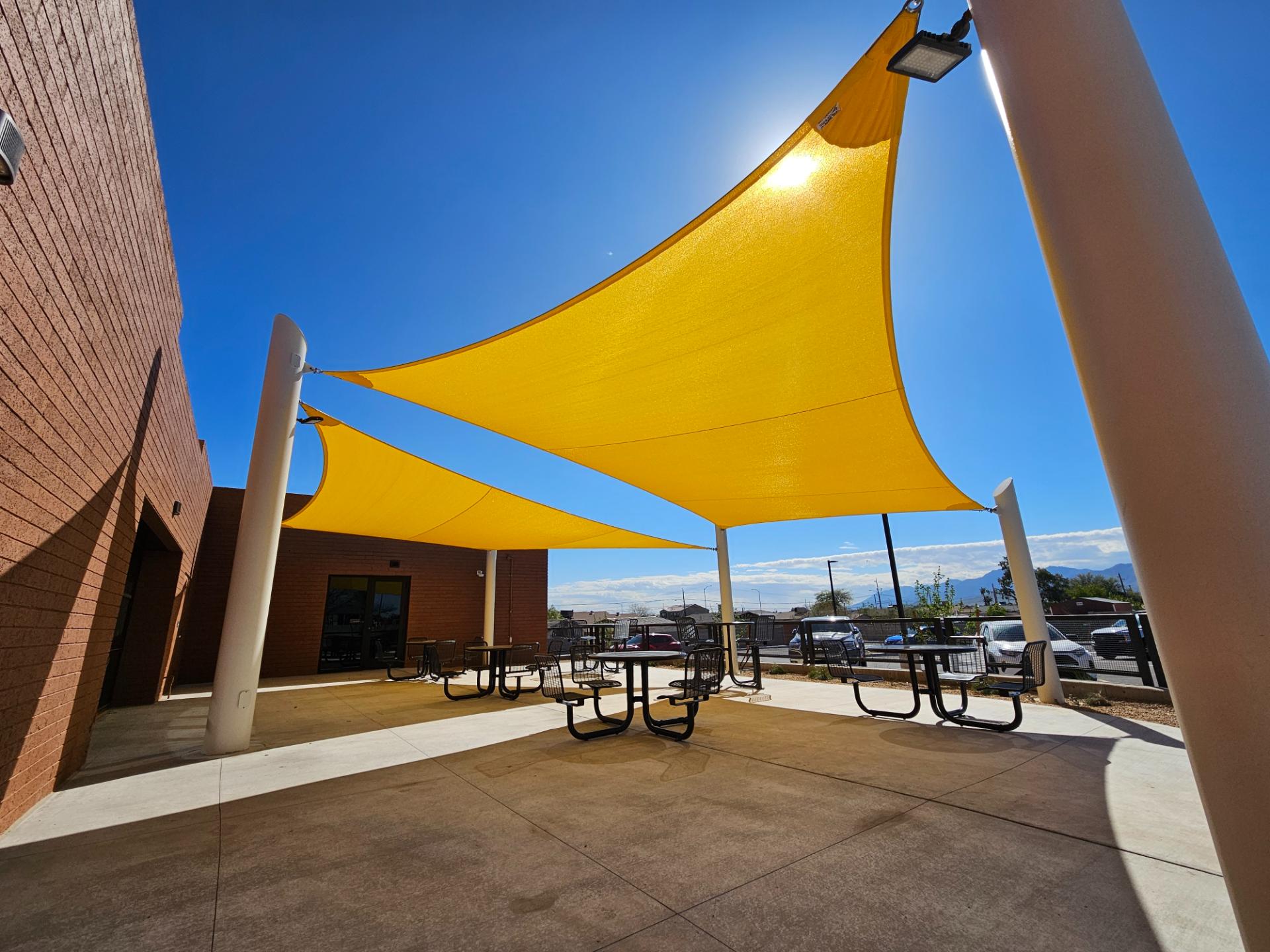
HDPE comes in a wide color range, and color is not just cosmetic. Darker fabrics absorb more solar energy and can run hotter at the surface, while lighter shades reflect more but may transmit a touch more glare, so the pick balances look, heat, and the UV target. The practical headline is the warranty: commercial HDPE covers commonly carry 10-15 year UV warranties against significant fade and degradation. Phoenix sun sits at the demanding end of that window, so the fabric is best understood as a long-lived consumable on a permanent frame, and it lives on tensioned forms like 3-point tensioned fabric sails and hip structures alike.
Cables, turnbuckles, and footings are the hardware that holds tension
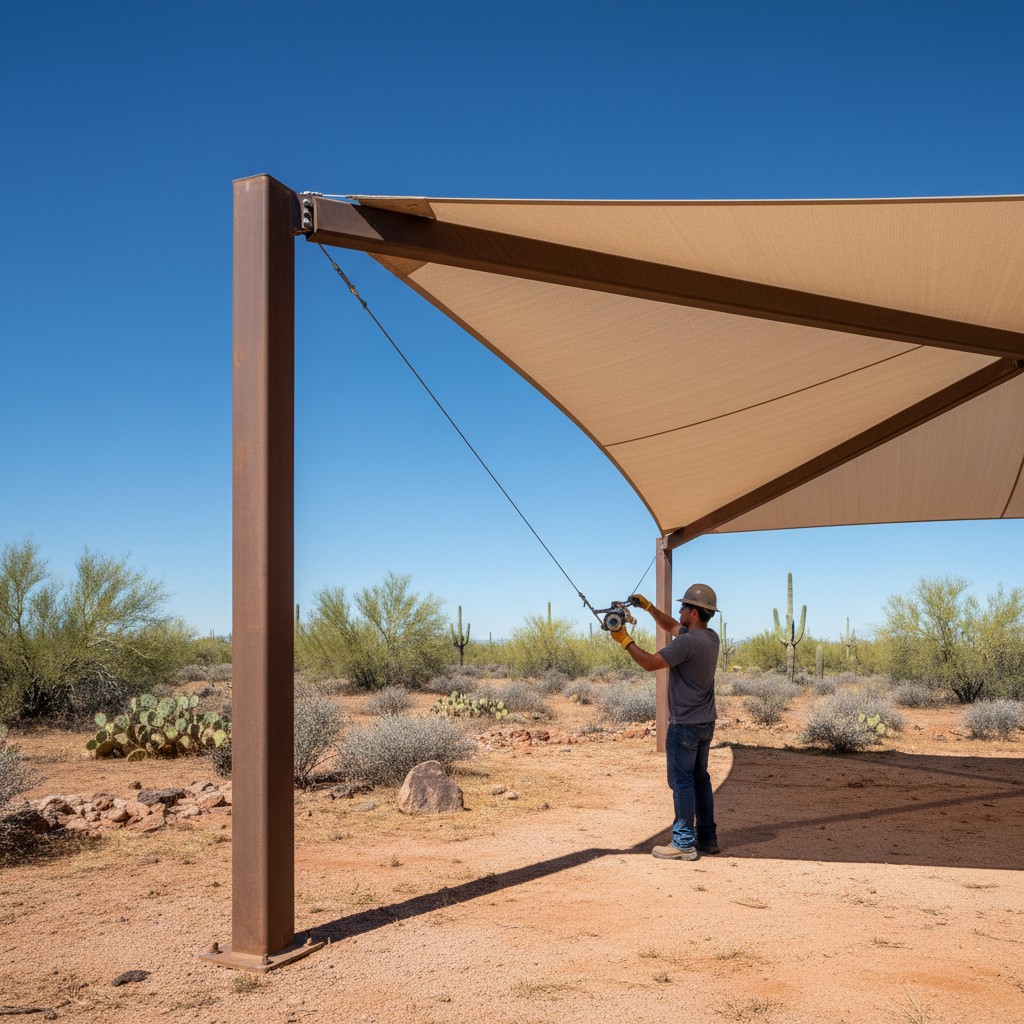
Between the steel and the fabric sits a layer of hardware that holds everything in tension, and it fails first when undersized. Tensioned covers are pulled taut with stainless or galvanized steel cable threaded through the fabric edge, anchored to the frame, and drawn tight with turnbuckles that let the crew dial in tension and re-tension later as the fabric relaxes. Cable diameters commonly land in the 1/8 to 3/8 inch range depending on the span and the pull, and the assembly has to match the wind load the same way the steel does.
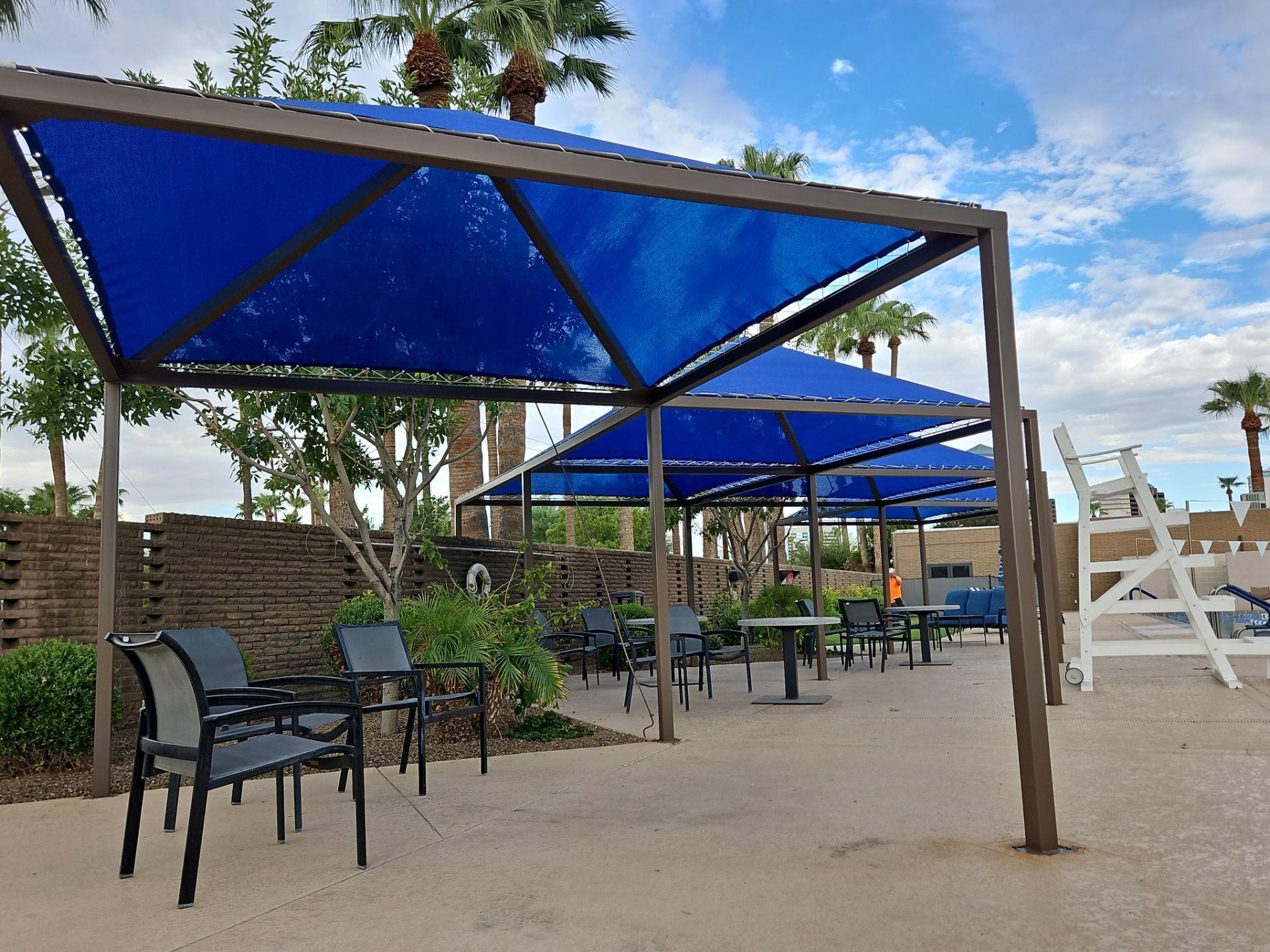
Hardware grade is a real decision near water. For pool and aquatic projects, marine-grade 316 stainless steel resists the chloride corrosion that ordinary 304 stainless or galvanized parts give in to around chlorinated air, which is why cabanas and poolside sails spec it. Underneath, the footings are reinforced concrete sized to the soil and post load, often several feet deep, because the deeper and wider the pour, the more overturning force it resists. Skimping on footing depth is a quiet way a cheap structure fails in a microburst topping 60 mph.
How the materials set lifespan, maintenance, and cost
Lifespan splits cleanly along the two materials: the steel-and-powder-coat frame is the 20-year asset, and the HDPE fabric is the 10-15 year wear item. That split is the most useful thing to know when reading a quote, because it shows where the long-term money goes. A higher fabric grade or a tighter weave buys more UV resistance and a longer warranty, and heavier steel buys a higher wind rating and a longer finish life, so two canopies of the same shape can carry markedly different price tags purely on material spec.
Maintenance is light but real. The fabric needs an occasional rinse, since Valley dust settles into the weave and dulls both color and airflow, and tensioned covers benefit from a re-tension check every year or two as the HDPE relaxes. The powder coat wants little more than the same rinse and a look for chips that expose bare steel. When the fabric reaches the end of its window, a canopy replacement and repair reuses the standing steel and swaps only the skin, which is why a structure’s second life costs a fraction of the first.
Fabric versus a solid metal roof, in one honest comparison
Tensioned HDPE fabric and a solid metal roof solve the same problem differently, and neither is universally better. Fabric breathes, so it sheds heat upward and runs cooler underneath, weighs far less so it needs lighter steel and smaller footings, and costs less per shaded square foot, which is why it dominates parking lots, playgrounds, and patios. The trade is that fabric is a consumable: it will need re-covering inside that 10-15 year window, and it does not stop rain the way a sealed roof does.
A solid metal roof is permanent and waterproof, but it is heavier, more expensive, hotter underneath unless it is insulated, and overkill when the only goal is UV and heat relief. For most commercial shade, the fabric wins on cost and comfort; for full weather enclosure, metal earns its premium. The deeper side-by-side on coverage, cost, and durability lives on the fabric vs metal shade structures comparison, and the structures themselves span the line from tensioned sails to a flat cantilevered structure on the products hub.
The honest caveats on consumables and wind limits
Three things are worth saying plainly before any material claim gets oversold. First, the fabric is consumable, not forever; a 10-15 year warranty is a planning number, and Phoenix UV pushes covers toward the near end of it, so budget for a re-cover rather than treating it as a failure. Second, wind ratings have a ceiling: a frame engineered to a 90-115 mph design speed is built for the worst expected gust, but an extreme haboob beyond that number can still damage any canopy, and the stamped engineering drawing matters more than a marketing figure.
Third, dust is non-negotiable in the Valley. HDPE weave traps fine grit that dulls color and chokes airflow, so an occasional rinse is part of owning shade here, not an optional upgrade. None of these undercut the material; they define how to own it well. For the full picture of how materials, spans, and code fit together across the line, the shade structure guides hub collects the deeper explainers in one place.
Shade Structures We Build
Ready to talk through your project?
Call (602) 265-0905 for a free assessment.
Frequently Asked Questions
What is the best fabric for a commercial shade structure?
Knitted high-density polyethylene (HDPE) is the standard for commercial shade because it blocks roughly 90-99% of UV while breathing, so it sheds heat upward instead of trapping it like a solid roof. The ‘best’ grade depends on your priority: a tighter weave blocks more UV and casts deeper shade, while an open weave adds airflow and cuts wind load. Commercial HDPE commonly carries a 10-15 year UV warranty, which is the spec worth comparing between quotes.
How long does shade fabric last in Arizona?
Commercial HDPE shade fabric commonly carries a 10-15 year UV warranty, and Phoenix sun sits at the demanding end of that window, so real-world life tends toward the nearer years rather than the far ones. Treat the fabric as a long-lived consumable on a permanent steel frame: a yearly rinse and an occasional re-tension extend its life, and when it finally fades, the standing steel gets re-covered rather than replaced.
Will the steel frame rust, and what does powder coat do?
A properly powder-coated steel frame resists rust for 15-20+ years in the desert. Powder coat is a dry finish applied electrostatically and baked on at roughly 350-400 degrees F, which fuses into a hard shell that resists UV fade, scratching, and corrosion far better than wet paint. The main thing to watch is chips that expose bare steel; caught early with a rinse and a look, the frame routinely outlives several fabric cycles.
Do I need marine-grade hardware for a pool shade structure?
Yes, near a pool you want marine-grade 316 stainless steel cable and fittings. Chlorinated air corrodes ordinary 304 stainless and galvanized hardware far faster, and the cables and turnbuckles holding a tensioned cover under load are exactly where you do not want corrosion. The fabric and steel frame matter too, but the hardware grade is the upgrade that specifically protects a poolside structure from chloride attack.
Can shade fabric be replaced without rebuilding the whole structure?
Yes, and that is the core advantage of the steel-and-HDPE design. The powder-coated steel frame is a 20-year asset and the fabric is a 10-15 year wear item, so a canopy replacement reuses the standing structure, hardware, and footings and swaps only the skin. Because the expensive part stays in place, a re-cover costs a fraction of a new build, which is why fabric structures are budgeted as a frame with a replaceable cover.