or call (602) 265-0905 — no-obligation, on-site.
Hip vs Hypar Shade Structures Compared
Pick the peaked hip for cheap wide coverage; pick the hypar when the shade has to be the architecture.
Hip vs hypar: a hip structure uses a pitched four-sided roof for clean, rain-shedding coverage in straight rows; a hypar uses a twisted saddle shape for a bold look and big single spans. Pick hip for schools, walkways, and bleachers; pick hypar for entries and signature spaces.
Since 1998
Designing & building Arizona shade
In-House Fabrication
Built at our Phoenix shop
Engineered & Permit-Ready
Stamped drawings for AZ wind loads
Free On-Site Quote
No-obligation project assessment
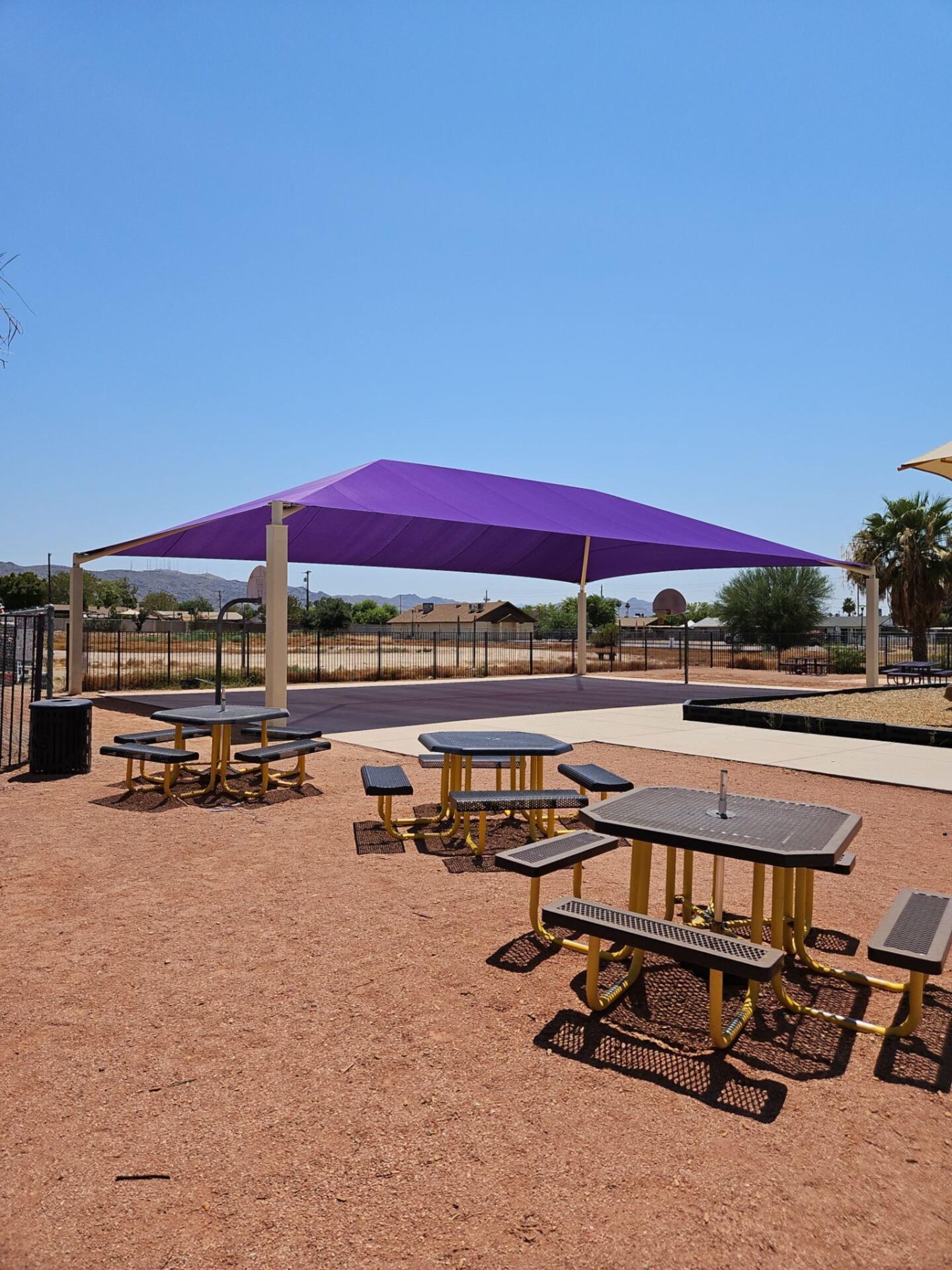
Choose a hip structure when you need the most shaded square footage for the least money over an open footprint, and choose a hypar when the structure itself has to look like architecture. The hip is a peaked, four-slope steel canopy that sheds rain off every face and rides on a few interior posts, which keeps cost per shaded foot the lowest of any commercial form. The hypar is a sculptural, tensioned-fabric plane warped into a saddle twist, prized for entries, plazas, and design-reviewed sites where appearance carries the job. Both come off Total Shade’s Phoenix shop floor at 2331 W. Holly St, both stretch knitted HDPE that blocks roughly 90-99% of UV, and both are engineered to Arizona wind code. The split is simple: the hip wins on coverage and price, the hypar wins on looks and modern lines.
How each one is built tells you what it does best
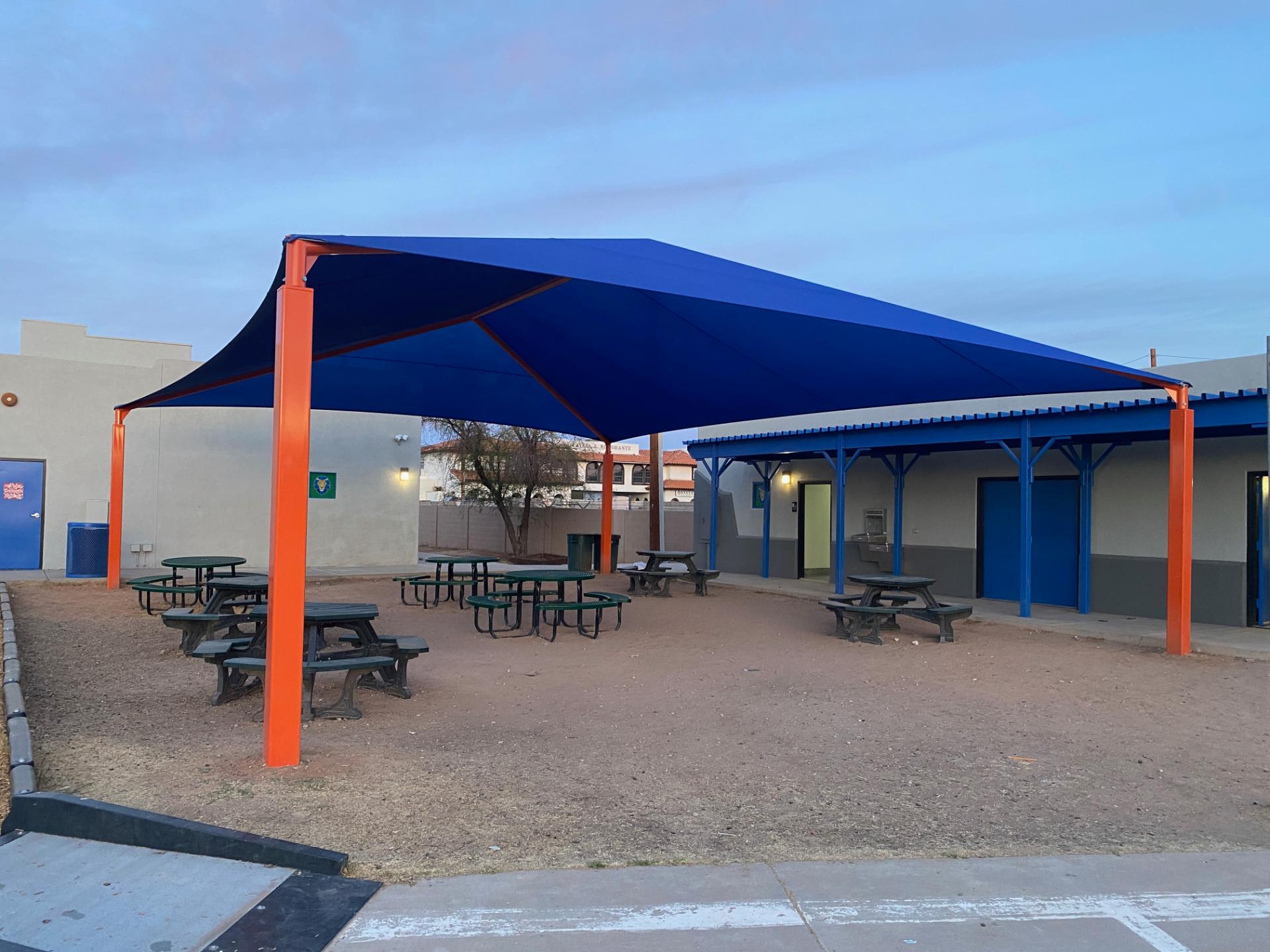
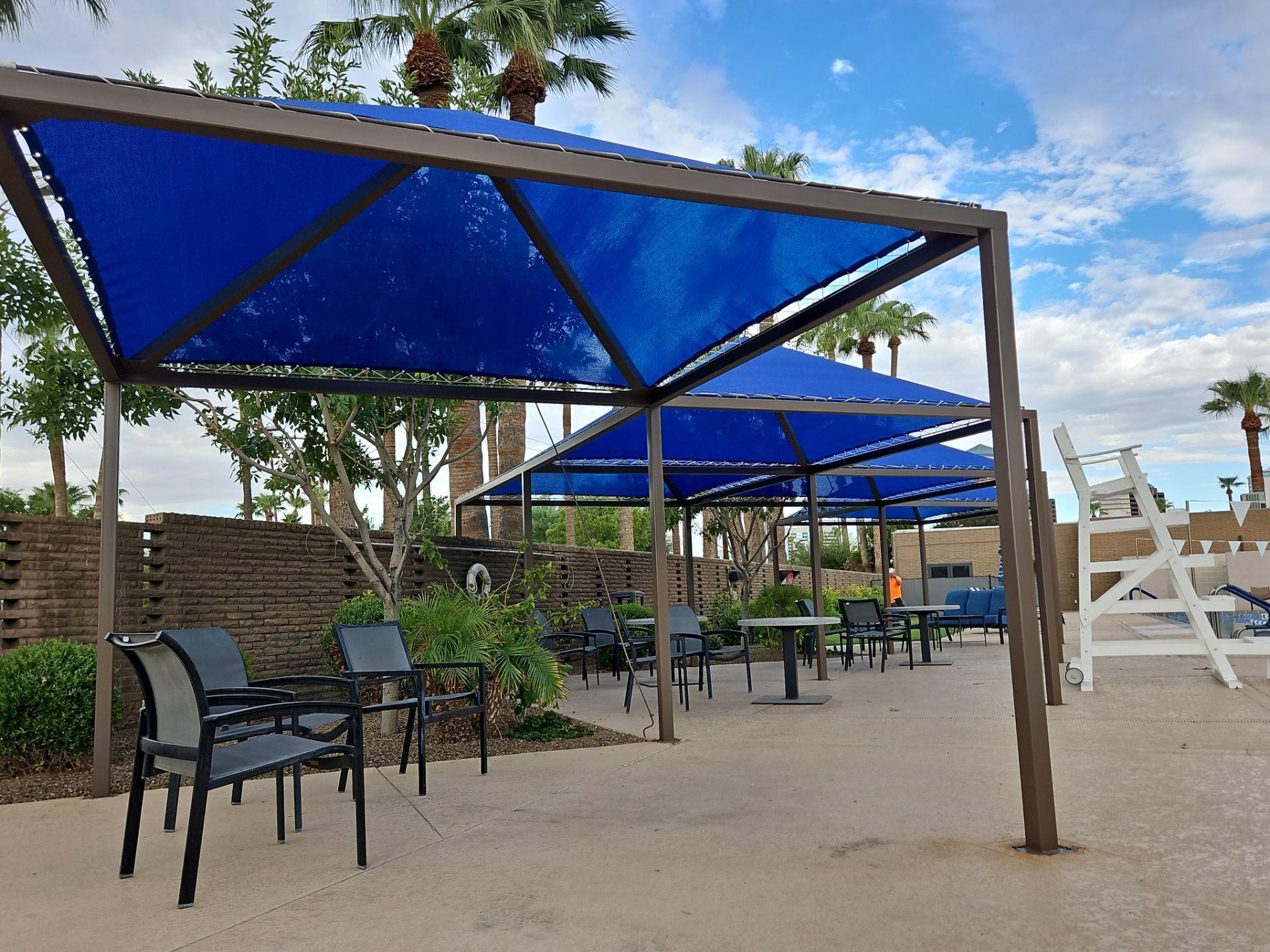
A hip structure is built like a pavilion roof. Four fabric planes pitch down from a central peak or ridge, usually at a 15-30 degree slope, and the whole load rides on interior steel columns spaced across the footprint. Because no single post carries the full roof, the steel runs lighter per square foot, and that shared load is the entire reason a hip stays cheap at scale.
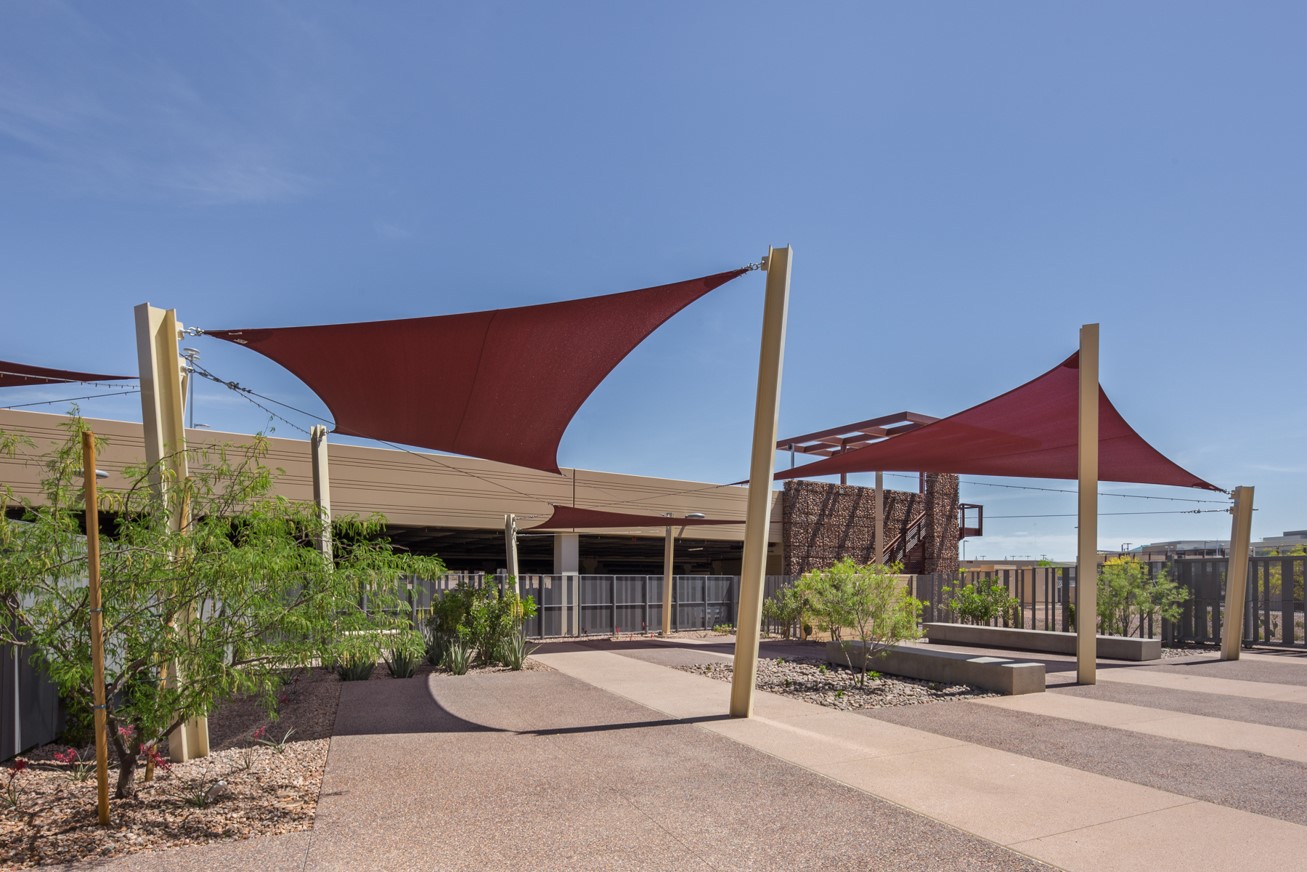
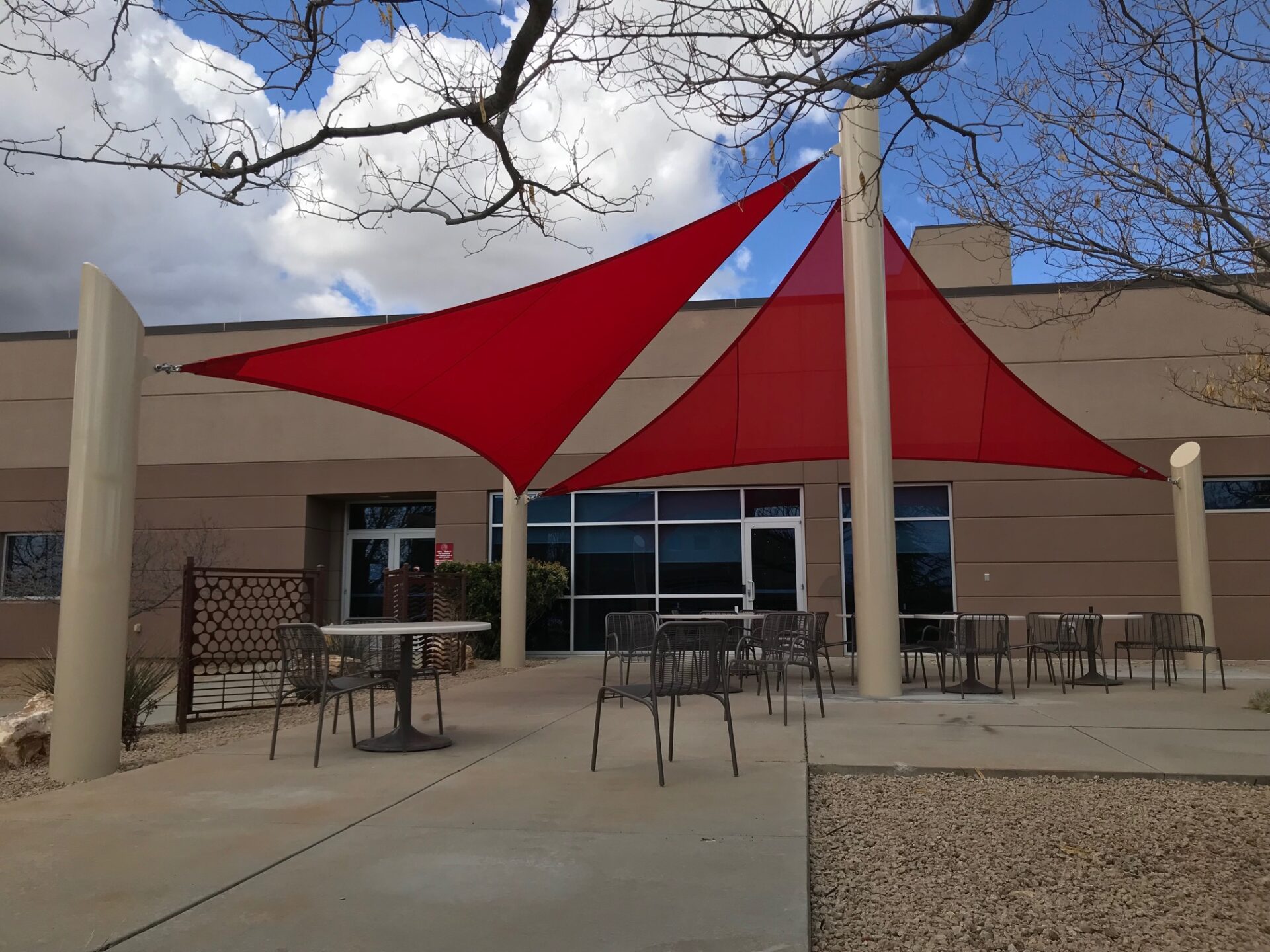
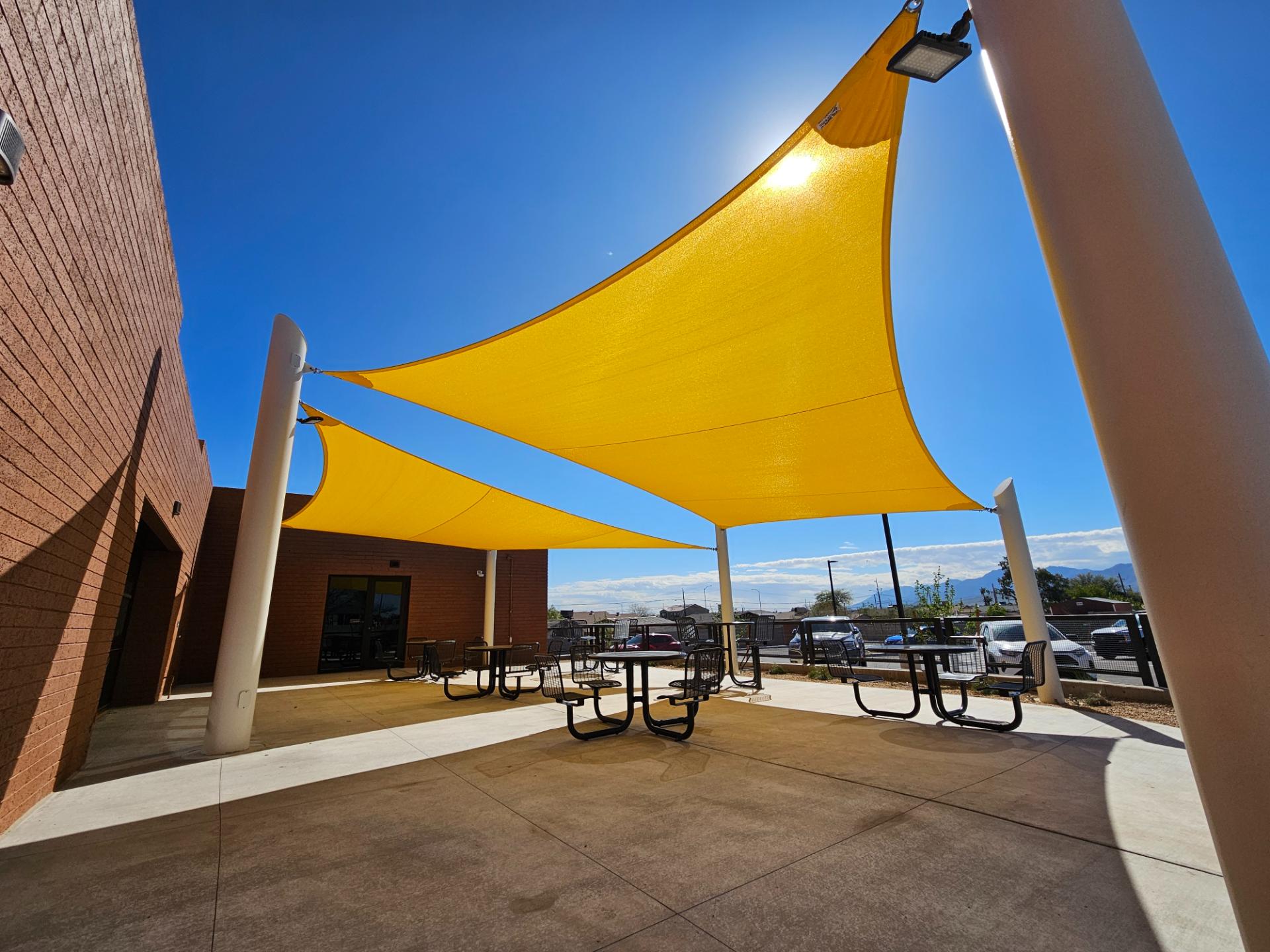
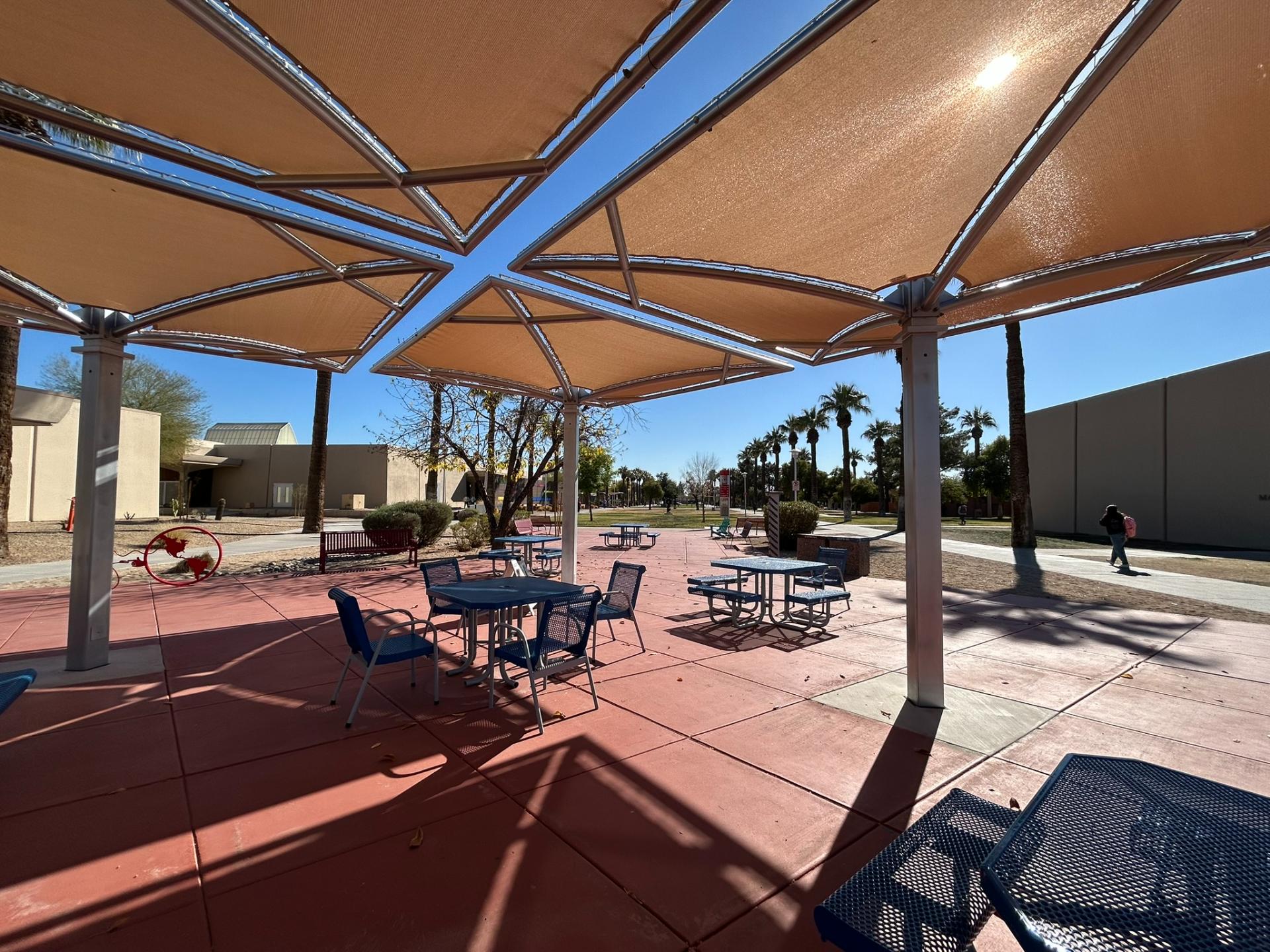
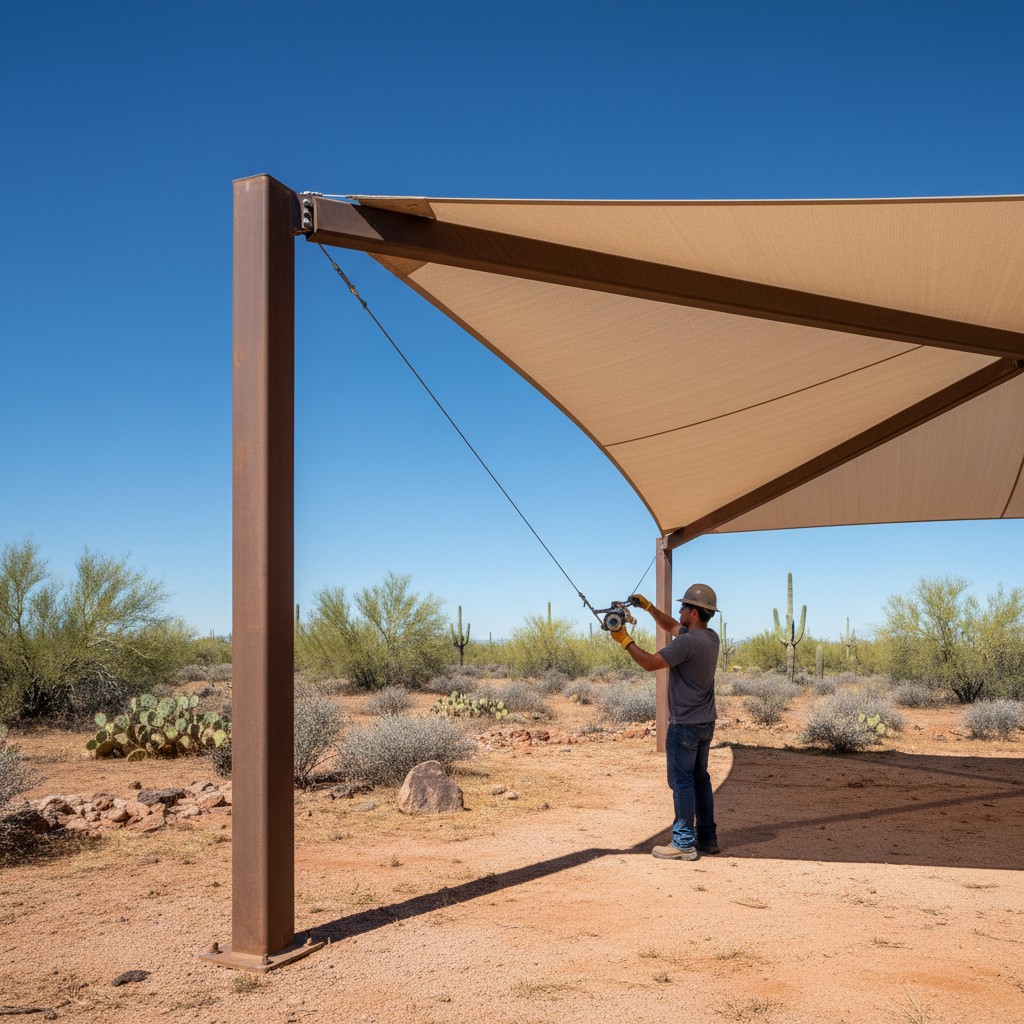
A hypar structure is built like a stretched membrane. “Hypar” is short for hyperbolic paraboloid, a doubly curved saddle shape where two corners lift high and two pull low, so the fabric is in pure tension across a warped plane. That twist is structural, not decorative: it locks the fabric taut, sheds wind, and lets the canopy float on as few as two or four masts. A hip behaves more like a roof that wants posts under it, while a hypar behaves more like a sail engineered into a permanent sculpture. The construction difference is the whole comparison in miniature.
The look and where each one fits
The hip reads classic and the hypar reads modern, and that single distinction decides most projects. A hip’s symmetrical four-slope peak looks like a familiar pavilion, which is exactly what a school lunch court, a city park, or a commercial yard wants: clean, unremarkable, and entirely about the shade. Nobody specs a hip to make a statement, and that is a strength, not a knock.
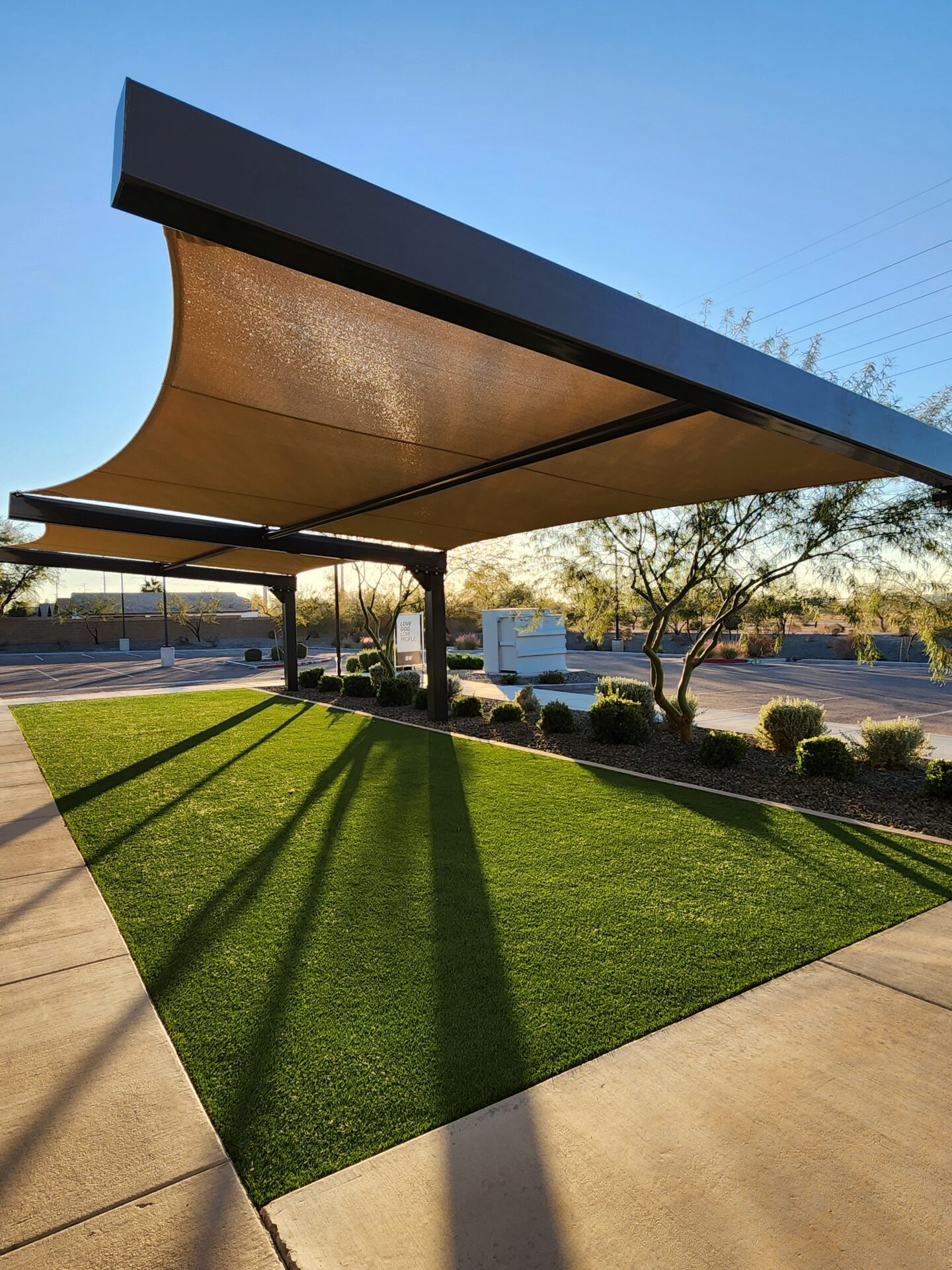
A hypar is the showpiece. Its warped, asymmetric plane catches light differently from every angle, so it earns its place at resort entries, hotel porte-cocheres, retail plazas, corporate campuses, and any HOA or design-reviewed common area where an architectural committee has to sign off. A hypar over a pool deck or a building entrance does design work a flat or peaked canopy cannot. Put the two side by side: the hip disappears into the background so the space reads as functional, while the hypar steps forward so the space reads as designed. Playgrounds and parks lean hip; resorts and signature entries lean hypar. You can see both lines alongside the rest of the catalog on the products hub.
Spans and coverage favor the hip
The hip covers more flat area per dollar, full stop. A standard hip bay spans roughly 20-40 ft between posts, and larger sites add bays in a grid rather than chasing one impossible span, so a single layout can shade a full bleacher run or a long lunch court continuously. When the brief needs a wider clear span with fewer columns, the MAX hip structure stretches the same four-slope geometry to bays of roughly 50-80 ft using heavier steel and deeper footings.
A hypar covers a smaller footprint for the same outlay because its strength is the curve, not raw square footage. Typical hypar units shade in the range of 200-900 sq ft each, with two or four masts, and they are usually sized to a feature area rather than a field. You can cluster hypars to cover more ground, but each added unit carries its own masts and footings, so the coverage-per-dollar never catches a hip grid. If the goal is maximum shaded square footage over a rectangular open space, the hip wins on the math every time. If the goal is a striking canopy over a specific spot, the hypar’s smaller, sculpted footprint is the point.
Cost: the hip is cheaper, and here is why
The hip is the cheaper structure per shaded foot, and the reason is structural rather than a pricing trick. Sharing the roof load across several interior posts lets each footing and each steel member stay modest, typically 2-3 inch tube for posts on a standard hip, so the steel and concrete bill stays low. Adding bays to a grid is cheaper than buying one extreme span, which is why schools and parks default to it.
A hypar costs more for the same coverage because the curved geometry demands more precise fabrication, more cable and hardware tension, and masts engineered to hold the saddle shape under load. You are paying for the form, and on a design-led project that form is worth it. Both share the same consumable economics underneath: knitted HDPE covers commonly carry 10-15 year warranties, and when a cover wears out, a canopy replacement reuses the standing steel and swaps only the skin on either structure. So the cost gap is mostly upfront. If budget per square foot is the deciding factor, the hip wins; if the canopy’s appearance is part of what the project is buying, the hypar’s premium buys something the hip cannot.
Wind and monsoon: both shed it, by different means
Both forms handle Arizona weather well, but they fight wind differently. A hip sheds gusts by pitch: the 15-30 degree slope spills monsoon wind over four faces instead of catching it like a flat sail, and the same slope runs rain and dust to the perimeter rather than letting it pool overhead. A hypar sheds wind by curvature: the doubly curved saddle keeps the fabric in tension from every direction, so gusts pass over the warped plane without the flutter that wears a flat cover fastest.
Every hip and every hypar Total Shade builds is engineered to Arizona building code and ASCE 7 wind loads, with Valley design wind speeds landing roughly in the 90-115 mph range depending on the site, and we provide stamped drawings for the permit. Two honest caveats apply to both: a monsoon microburst can top 60 mph and a severe haboob can exceed the stamped design speed, and no canopy is immune past its engineered number. Valley dust also settles on either fabric and needs an occasional rinse. The fabric on both is a long-lived consumable on a permanent frame, not a forever surface.
The verdict
Buy the hip for coverage and price; buy the hypar for design. If you are shading a playground, a school lunch court, a park ramada, bleachers, or any large open footprint where an interior post is no problem, the hip is the right answer and almost always the cheapest one. If you are shading a resort entry, a hotel drive, a plaza, a pool deck, or any site where an architect or HOA committee is judging the look, the hypar earns its premium by being the architecture.
The clean decision rule: can a post land where you need shade, and does the canopy need to make a visual statement? If a post is fine and looks are secondary, choose the hip. If the structure has to be a design feature, choose the hypar. Many large jobs even mix the two, running hip canopies over the working areas and a hypar over the signature entrance. Compare the full lineup and these trade-offs in depth on the shade structure guides, where each form is matched to the application it actually fits.
Shade Structures We Build
Ready to talk through your project?
Call (602) 265-0905 for a free assessment.
Frequently Asked Questions
Which is cheaper, a hip or a hypar shade structure?
The hip is cheaper per shaded square foot. It shares its roof load across several interior posts, so each footing and steel member stays modest and the material bill stays low. A hypar costs more for the same coverage because the doubly curved saddle shape needs more precise fabrication, more cable tension, and masts engineered to hold the twist. If budget per square foot is the deciding factor, the hip wins; the hypar’s premium buys the architectural look.
Which spans more, a hip or a hypar?
The hip covers far more flat area. A standard hip bay spans roughly 20-40 ft between posts and larger sites add bays in a grid, while the MAX hip stretches to bays of about 50-80 ft. A typical hypar shades a smaller feature area, often in the 200-900 sq ft range per unit on two or four masts. For maximum shaded square footage over an open footprint, the hip spans more for the money.
What is the difference in look between a hip and a hypar?
The hip reads classic and the hypar reads modern. A hip has a symmetrical four-slope peak that looks like a familiar pavilion roof, so it blends into the background and lets the space stay functional. A hypar is a warped, asymmetric saddle plane that catches light from every angle, so it steps forward as a design feature. Choose the hip when the shade should disappear, the hypar when it should make a statement.
Should a playground use a hip or a resort use a hypar?
Yes, and that split holds across most projects. Playgrounds, parks, and school lunch courts lean toward the hip because they want broad continuous cover at the lowest cost and an interior post is no problem. Resorts, hotel entries, and design-reviewed common areas lean toward the hypar because the canopy’s sculptural look is part of the project. Function and budget point to the hip; design and signage value point to the hypar.
Do hip and hypar structures hold up to Arizona wind and monsoons?
Both do, by different means. The hip sheds wind with its 15-30 degree pitch, spilling gusts over four faces and running rain to the perimeter. The hypar sheds wind with its curved saddle, keeping the fabric in tension so gusts pass over without flutter. Both are engineered to Arizona building code and ASCE 7 wind loads, with Valley design wind speeds around 90-115 mph, though a microburst past the stamped design speed can damage any canopy.