or call (602) 265-0905 — no-obligation, on-site.
Best Shade Fabric for Arizona Sun
How to pick a shade fabric for Arizona sun: knit density, shade factor, color, and warranty class.
The best shade fabric for Arizona sun is a commercial-grade knitted HDPE shade cloth with a high shade factor (blocking ~90-99% of UV) and a 10-year-class warranty. Denser knits give more shade and longer life; lighter colors stay cooler underneath while darker colors can block more UV. HDPE breathes, so heat escapes — unlike solid vinyl.
Since 1998
Designing & building Arizona shade
In-House Fabrication
Built at our Phoenix shop
Engineered & Permit-Ready
Stamped drawings for AZ wind loads
Free On-Site Quote
No-obligation project assessment
For Arizona commercial use, the durable pick is a commercial-grade knitted HDPE shade cloth with a high shade factor and a 10-year-class warranty, with the exact density and color chosen per site. Knitted HDPE blocks roughly 90-99% of UV depending on how tight the knit is, and it breathes, so heat escapes upward instead of pooling underneath the way it does beneath solid vinyl. The choice comes down to four levers on a spec sheet: shade factor (the percentage of UV blocked), fabric weight, color, and the warranty class behind it. Total Shade specs and installs commercial HDPE, fabricated in-house at our Phoenix shop, founded in 1998 (AZ ROC #272680). Get those four right and the fabric earns its place on a frame that outlives it.
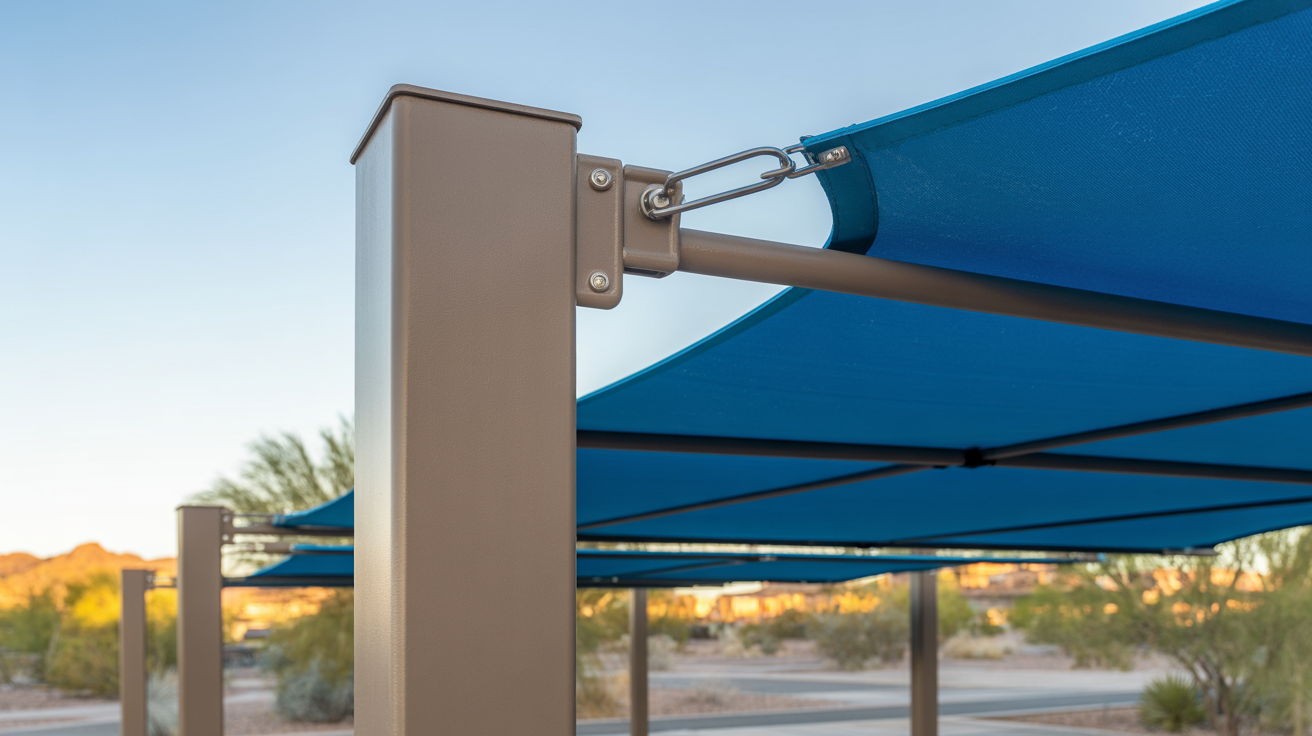
What makes a shade fabric “commercial grade”
Commercial-grade shade fabric is knitted high-density polyethylene engineered to hold its UV block and color through years of direct sun, not a lightweight residential cloth that fades in a couple of seasons. The dividing line is the warranty: commercial HDPE carries a manufacturer UV warranty in the 10-year class against significant fade and degradation, where bargain cloth often carries little or none. That warranty is a proxy for fabric weight, UV-stabilizer loading, and knit consistency.
Knitted HDPE is the industry standard for tensioned commercial shade because the knit stretches onto curved forms without tearing, and the polyethylene takes UV stabilizers that slow breakdown. On a quote, the fabric line is where a cheap structure hides its corners. The deeper material picture, including how the fabric pairs with a powder-coated steel frame, lives in the shade structure materials guide.
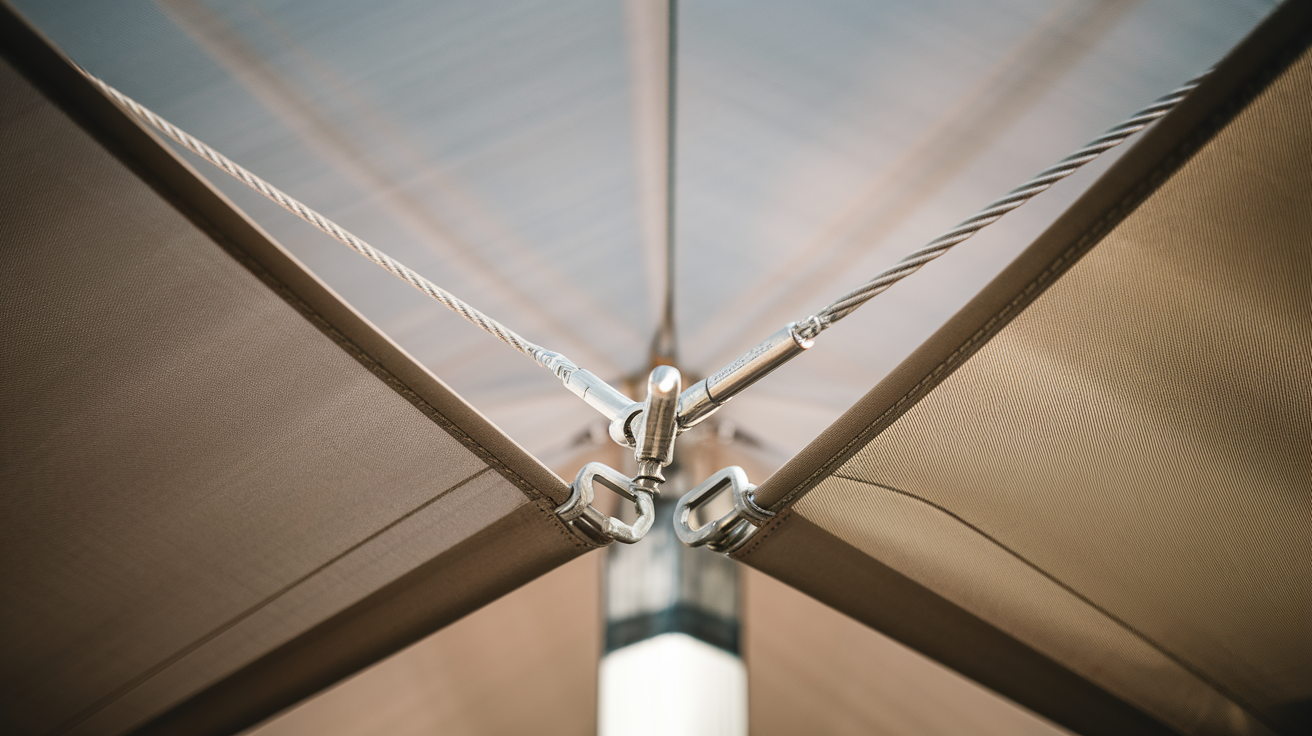
Shade factor and knit density: how much UV the fabric blocks
Shade factor is the headline number, and on commercial knitted HDPE it runs from about 90% to 99% UV block depending on knit density. A tighter knit packs more yarn per inch, so it stops more UV, casts deeper shade, and lasts longer because more material takes the hit. An open knit trades a few points of block for more airflow and lighter wind load on the frame.
That trade-off is the real decision, not a single “best” number. A playground or pool deck where people sit for hours wants a shade factor in the upper 90s; a high-wind corner may do better with a more open weave. Density and weight move together, so the heavier cloth that blocks the most UV also adds the most load the steel carries. Picking the density is part of matching the tensioned fabric sail or canopy to its site.
Color choice and the heat-versus-UV trade-off
Color is not only a look decision; it changes both the UV the fabric blocks and how hot the surface runs. As a general trade-off, darker colors absorb more solar energy and can block slightly more UV, but they heat up more at the surface. Lighter colors reflect more sunlight and tend to stay cooler underneath, though some transmit a touch more glare.
For Arizona, the color pick balances three things: the UV target, the temperature people feel below the canopy, and the architecture. A darker tone can read as deeper shade and suit a design-led structure, while a lighter tone keeps a busy patio cooler through a July afternoon. Because HDPE comes in a wide color range, you rarely choose appearance over performance outright; you tune toward whichever matters most. Treat color as a lever, not a free choice.
Why knitted HDPE is the desert pick: breathable and recyclable
Knitted HDPE suits the desert because it breathes, and breathing keeps the space below cooler than a sealed roof. Hot air rises through the knit instead of collecting under the fabric, so a tensioned HDPE canopy reads cooler underneath than the same footprint under solid vinyl or metal that radiates heat back down. That airflow through the weave is why fabric dominates parking lots, patios, and play areas across the Valley.
HDPE has two more things going for it here. It takes UV stabilizers well, which lets a knitted cloth survive Phoenix sun for years rather than months, and polyethylene is recyclable rather than landfill-only. The trade is honest: fabric does not stop rain the way a sealed roof does, and it is a wear item. When the cloth reaches the end of its window, a shade fabric replacement reuses the standing steel and swaps only the skin.
Warranty class and real-world lifespan in Arizona
The warranty class is the fastest way to compare fabrics. Commercial HDPE typically carries a UV warranty in the 10-year class, with real-world service often landing around 10 to 15 years. Phoenix sun sits at the demanding end of that range, so plan toward the nearer years. A longer warranty usually signals a heavier, more stabilized cloth, which the desert rewards.
Two honest points keep expectations straight. First, a warranty covers significant fade and degradation, not the slow color softening every fabric shows under intense UV, so a structure can perform fine and still look a few shades lighter than day one. Second, lifespan depends on care: dust ground into the knit dulls color and chokes airflow, so an occasional rinse is part of owning shade here. How long a structure holds up overall sits in the guide on how long shade structures last.
Matching the fabric to the application
The right fabric fits the use, so the spec changes with the job. A pool or playground where people sit for long stretches wants a high shade factor and a cooler-running lighter color; a high-wind corner may favor a more open knit so gusts pass through and the frame carries less load. A design-led structure might lead with color and form, then back into a density that still hits the UV target.
Two caveats are worth saying plainly. No shade fabric is maintenance-free, and none is permanent; the cloth is a consumable on a frame built to outlast several covers, so it gets budgeted as a replaceable skin. Get the four levers right and the fabric does its job for its full window. To see the cloth on real structures and pick a form, browse our products, and the deeper explainers sit in the shade structure guides hub.
Shade Structures We Build
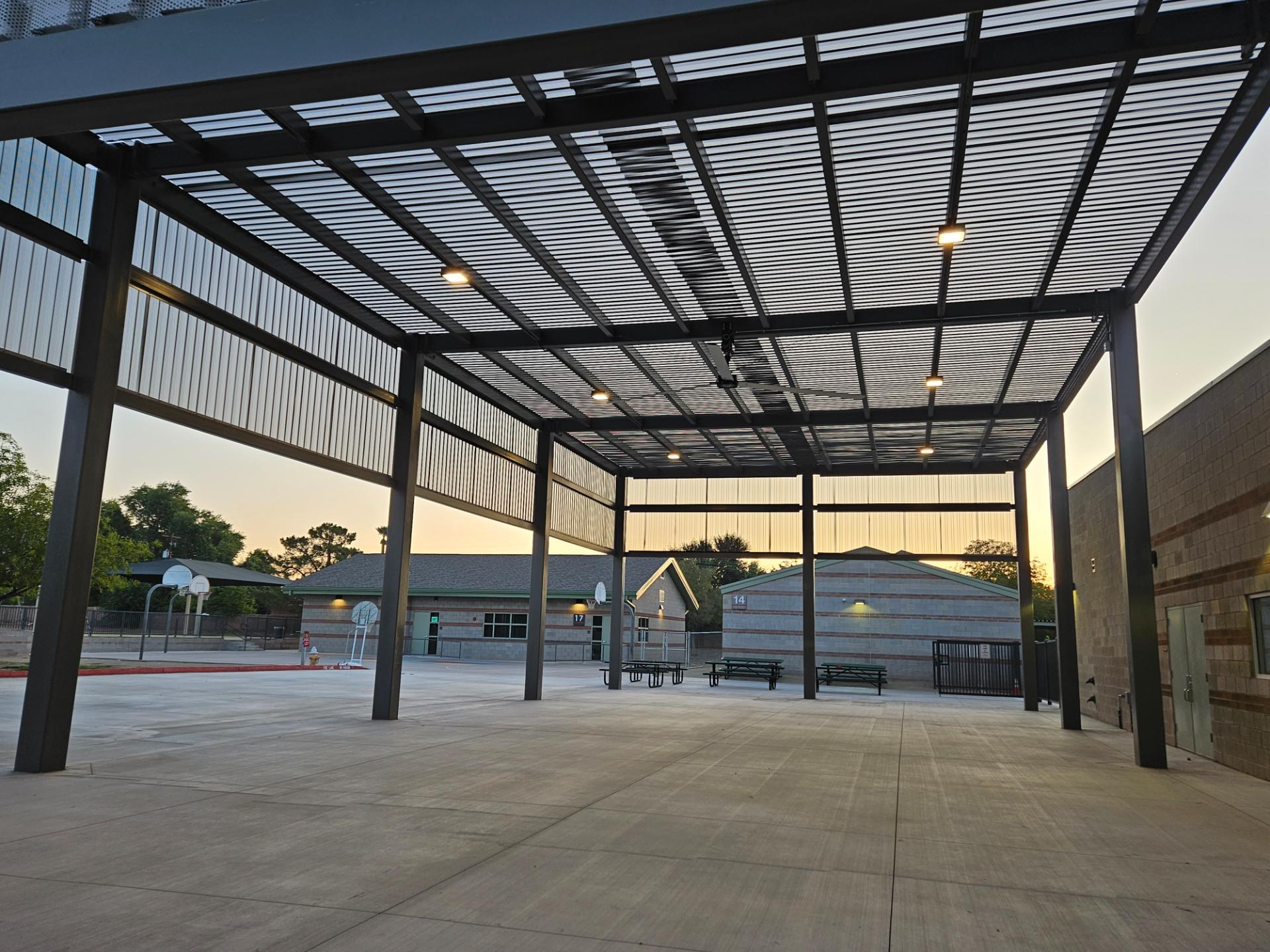
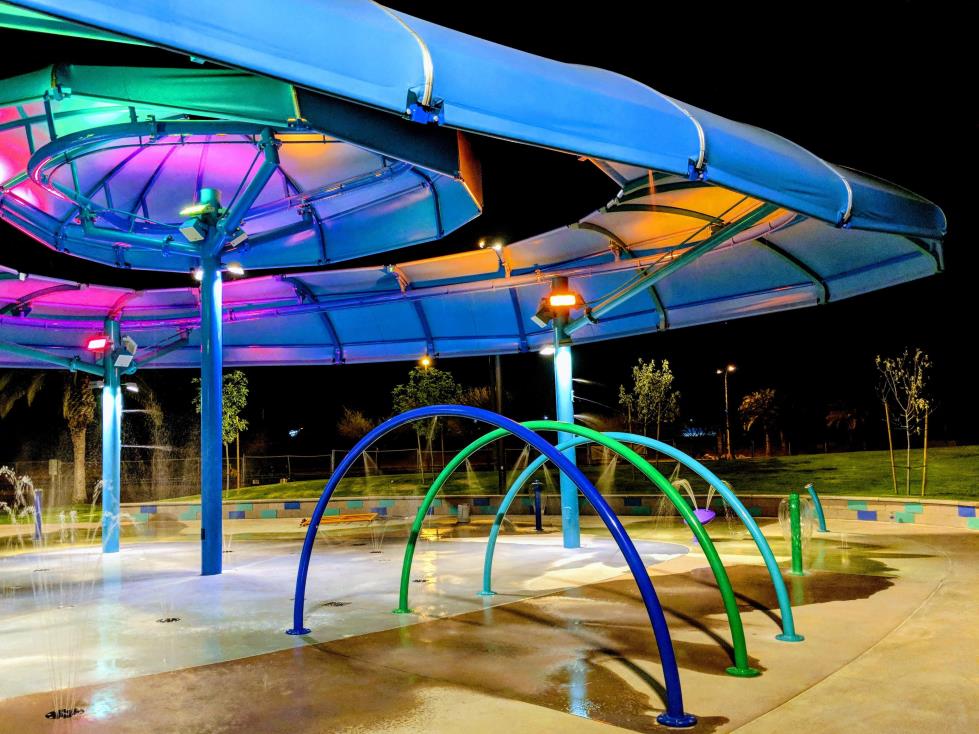
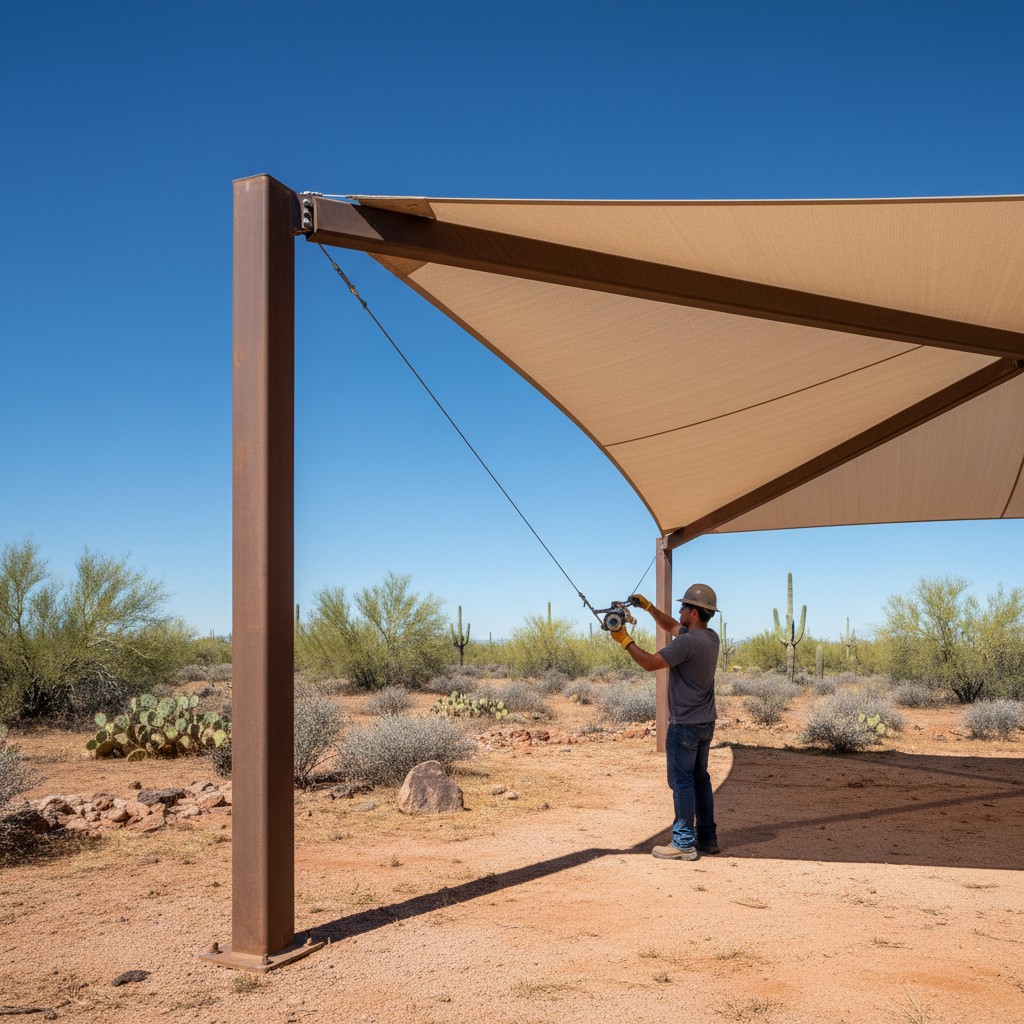
Ready to talk through your project?
Call (602) 265-0905 for a free assessment.
Frequently Asked Questions
What is the best shade fabric for Arizona sun?
Commercial-grade knitted HDPE shade cloth is the best fabric for Arizona sun. It blocks roughly 90-99% of UV depending on knit density, it breathes so heat escapes upward instead of pooling underneath, and commercial grades carry a UV warranty in the 10-year class. The exact density and color get chosen per site, but the fabric type itself is the industry standard for commercial shade in the desert.
Does shade fabric color matter?
Yes, color affects both UV block and how hot the fabric runs. As a general trade-off, darker colors absorb more solar energy and can block slightly more UV but heat up more at the surface, while lighter colors reflect more sunlight and tend to stay cooler underneath. For Arizona, the pick balances the UV target, the temperature people feel below the canopy, and the look you want.
How much UV does shade cloth block?
Commercial knitted HDPE shade cloth blocks roughly 90-99% of UV, and the exact figure depends on knit density. A tighter knit blocks more UV and casts deeper shade but allows less airflow; a more open knit trades a few points of block for better airflow and lighter wind load. The shade factor is the spec worth comparing between quotes.
How long does commercial shade fabric last in Arizona?
Commercial HDPE shade fabric typically carries a UV warranty in the 10-year class and often lasts around 10 to 15 years in service. Phoenix sun sits at the demanding end of that range, so plan toward the nearer years. Care matters too: an occasional rinse to clear dust from the knit, plus treating the fabric as a replaceable skin on a permanent steel frame, gets the most out of its window.
Is denser shade fabric always better?
Not always. A denser knit blocks more UV, casts deeper shade, and tends to last longer, but it also reduces airflow and adds weight the steel frame has to carry. For a pool deck or playground where people sit for hours, a high shade factor makes sense; for a high-wind corner or a breezeway, a slightly more open weave that lets gusts pass through can be the better fit. The right density follows the application.