or call (602) 265-0905 — no-obligation, on-site.
Shade Fabric Replacement in Arizona
Since 1998
Designing & building Arizona shade
In-House Fabrication
Built at our Phoenix shop
Engineered & Permit-Ready
Stamped drawings for AZ wind loads
Free On-Site Quote
No-obligation project assessment
Shade fabric replacement means stretching new knitted HDPE over an existing frame instead of demolishing and rebuilding – the right move once a cover hits the end of its 10 to 15 year warranty life, tears in a monsoon, fades light, or sags past re-tensioning. The fabric is the consumable; the powder-coated steel under it routinely outlasts two or three covers. Total Shade re-covers structures from our Phoenix shop at 2331 W. Holly St, including frames we did not originally build, fabricating a new cover cut to the exact panel and pulling it drum-tight. A re-cover keeps a sound frame in service at a fraction of a full rebuild, and you walk away with fresh UV block at roughly 90 to 99% again.
How to tell the fabric is done, not the structure
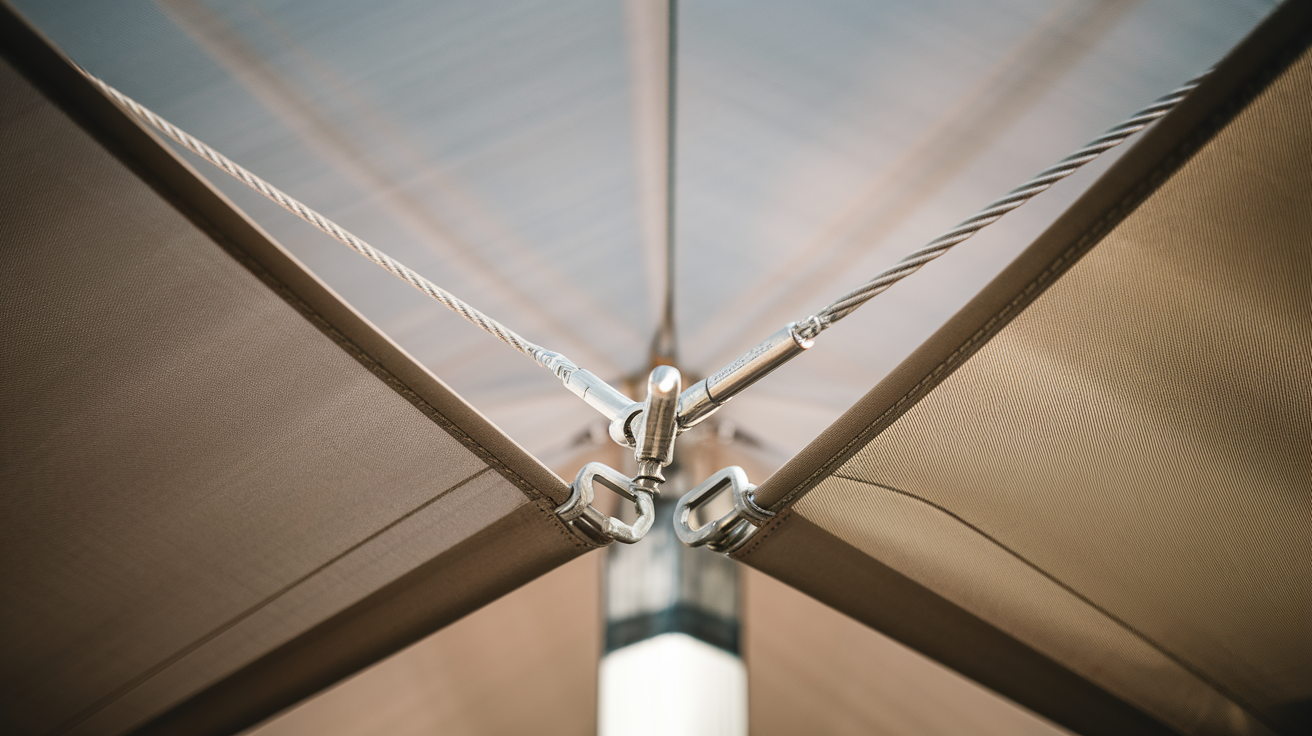
Four signs say the cover is spent while the frame is fine: UV degradation, a tear, heavy fading, and sag that re-tensioning no longer fixes. Knitted HDPE breaks down from the top down – Arizona sun bombards a cover with UV year-round, and after 10 to 15 years the yarn goes brittle and the weave starts shedding fibers when you brush it. A monsoon tear, usually starting at a corner or seam where a gust loaded an already-weakened panel, is the abrupt version of the same failure. Fading is cosmetic at first but tracks fiber breakdown underneath; a cover that has shifted two shades lighter is telling you its UV block has dropped from that 90 to 99% range. The last sign is a belly that comes back within weeks of a re-tension – once the fiber has stretched out permanently, no turnbuckle pulls it flat again. Frame repair is a separate question; check the steel before assuming a saggy cover means the whole structure is failing.
What a re-cover actually involves, start to finish
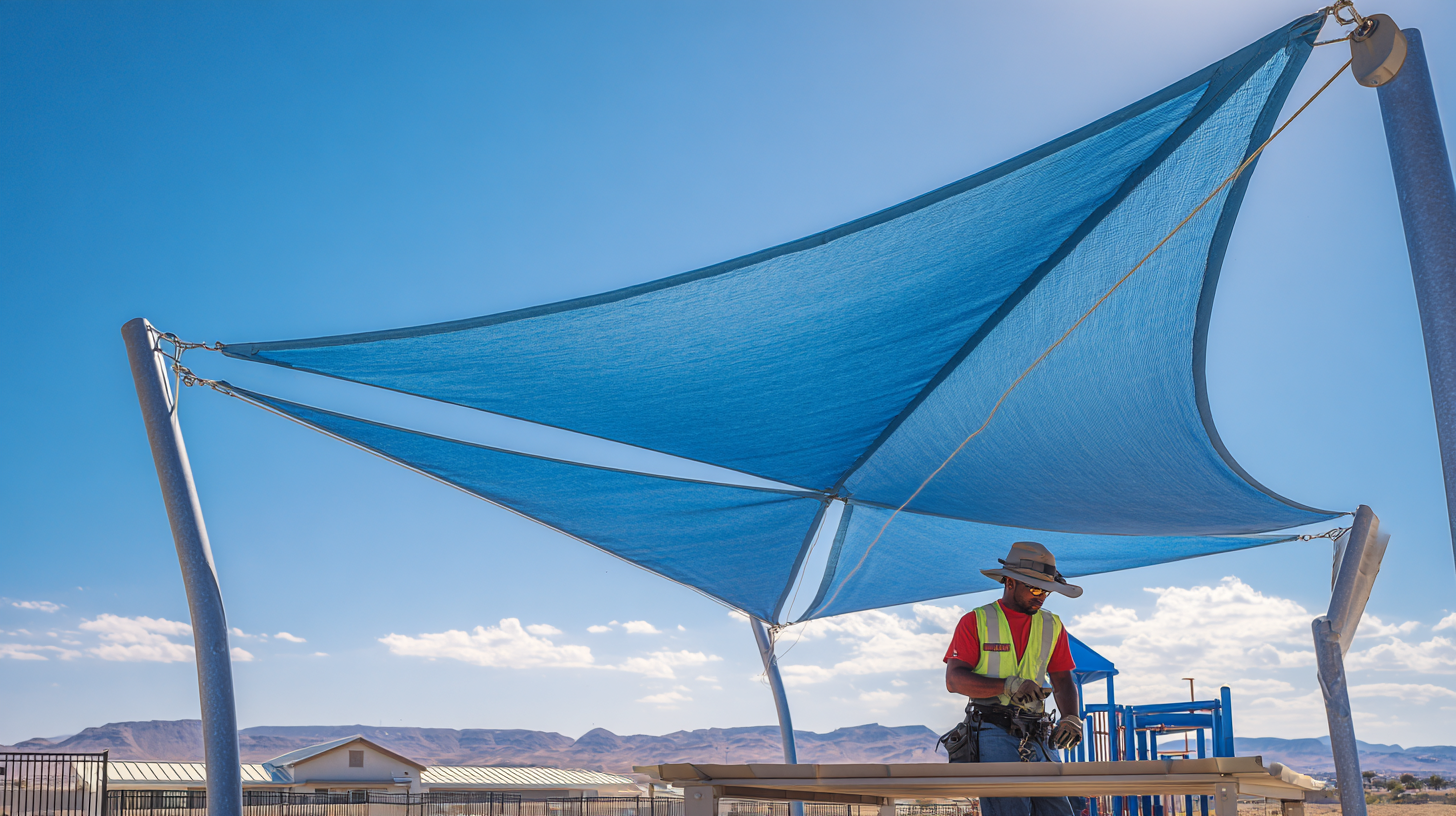
A re-cover is a measure, fabricate, swap, and tension job – the old fabric comes off, a new cover cut to the frame goes on, and the structure stays standing the whole time. The crew measures the existing frame panel by panel, because a 12-year-old structure has almost never settled into exactly its original dimensions, and an off-the-shelf cover that does not match leaves slack diagonals that flutter and tear early. We fabricate the new HDPE in the Phoenix shop to those field measurements, then return to strip the old cover, inspect the attachment hardware, and stretch the new one across the keder rail or cable line. Most single-structure re-covers run a few hours to a day on site once the cover is built, far quicker than the multi-day footing, steel, and inspection sequence a ground-up build needs. The fabrication lead time is the longer part of the clock, typically a couple of weeks between measuring and install. This sits under the broader canopy replacement and repair work we do across the Valley.
Picking the new fabric: grade, color, and UV
A re-cover is the moment to reconsider grade and color, not just match the old one. Knitted HDPE comes in different weave densities, and a tighter knit pushes UV block toward the top of the 90 to 99% range while a more open weave breathes more air and costs less – the trade is shade depth against airflow. Color is a real decision in the desert: darker covers read more dramatic but run hotter and tend to fade more visibly, while mid-tone greens, tans, and blues hold their look longer under relentless sun.
Matching an existing color is harder than it sounds
Manufacturers revise their color lines over a decade, and an exact match to a 12-year-old cover often is not stocked anymore, so a re-cover on a multi-structure site sometimes means re-covering neighbors together to keep the field uniform. We pull current swatches before committing. If you want to see the full range of weights and shades, the steel and HDPE materials page lays out what the fabric does and does not do.
Re-tensioning and the frame inspection that comes with it
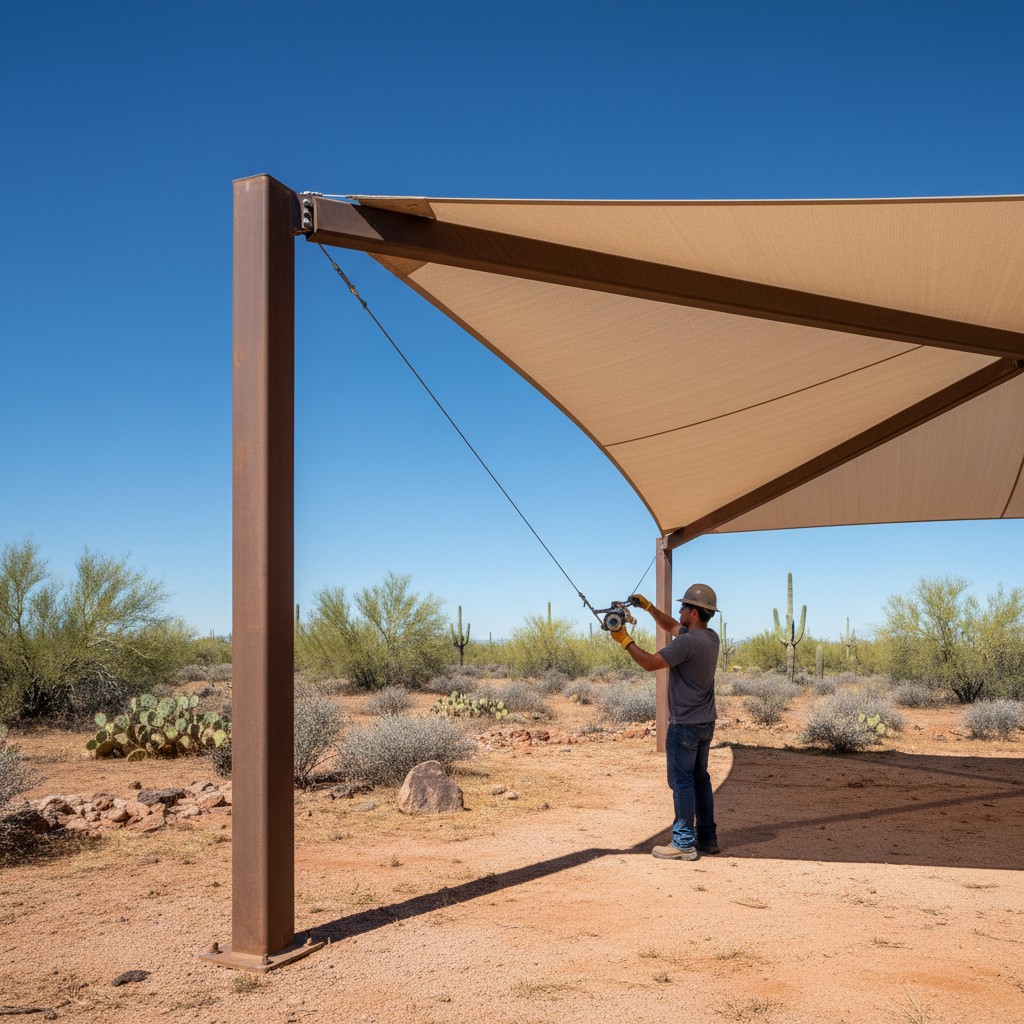
Every re-cover ends in a tensioning pass, and a new cover needs a second one a few months later. Knitted HDPE relaxes under constant load and Arizona heat, so a cover stretched drum-tight on install day gives up some tension over its first season – the turnbuckles at the corners or along the cable take the slack out on a return visit. Skipping that follow-up is the most common reason a fresh cover starts flapping and abrading at the edges within a year. While the old cover is off, the crew has a clear look at the frame: powder-coat that has chipped to bare steel, rust blooming at welds, loosened hardware, or a post that has shifted in its footing. That inspection window is the quiet value of a re-cover, because a frame caught early is a touch-up, while one left under a torn cover for two seasons can corrode into a real repair. A tensioned sail follows the same logic – the cover is replaceable, the masts and anchors are the long-lived bones.
Re-cover cost versus a full rebuild
A re-cover typically costs a fraction of a new structure because you keep the expensive, slow part – the steel and the footings. The bulk of a ground-up shade structure’s price and timeline lives below grade and in the frame: caissons drilled 4 to 8 ft into Valley caliche, structural steel, powder coat, and engineering. A re-cover reuses all of it and pays mainly for new fabric, hardware, and a day of labor, which is why owners replace covers two or three times over a single frame’s life rather than rebuilding. The math flips only when the frame itself has failed – if rust has eaten weld joints or a footing has heaved, the savings of reusing it evaporate and a rebuild is the honest call. The break point is structural, not cosmetic: a sound frame under a shot cover is the textbook re-cover candidate, and a 25-year-old powder-coated steel frame in good shape often has another decade or two in it. Frames and covers across the line live on the products hub.
Honest limits on re-covering
Re-covering is not always the cheaper answer, and a few cases deserve straight talk. A frame that was undersized or under-footed originally will keep failing covers no matter how good the new fabric is – if the masts flex or the footing is shallow, a re-cover buys a couple of years, not a fix. Heavily rusted steel is the clearest stop: once corrosion reaches structural welds, reusing the frame trades a known cost now for a hidden failure later, and we will say so rather than sell a cover over bad steel. Wind ratings carry over from the original engineering, so a re-cover does not upgrade a structure built to a lighter load – a frame designed below current ASCE 7 expectations is still that frame with new fabric. And HDPE stays a consumable: the new cover is warranted commonly 10 to 15 years, Arizona’s UV sits at the demanding end of that window, and microbursts past 60 mph can still tear any fabric. None of that argues against re-covering a sound structure; it argues for checking the bones first.
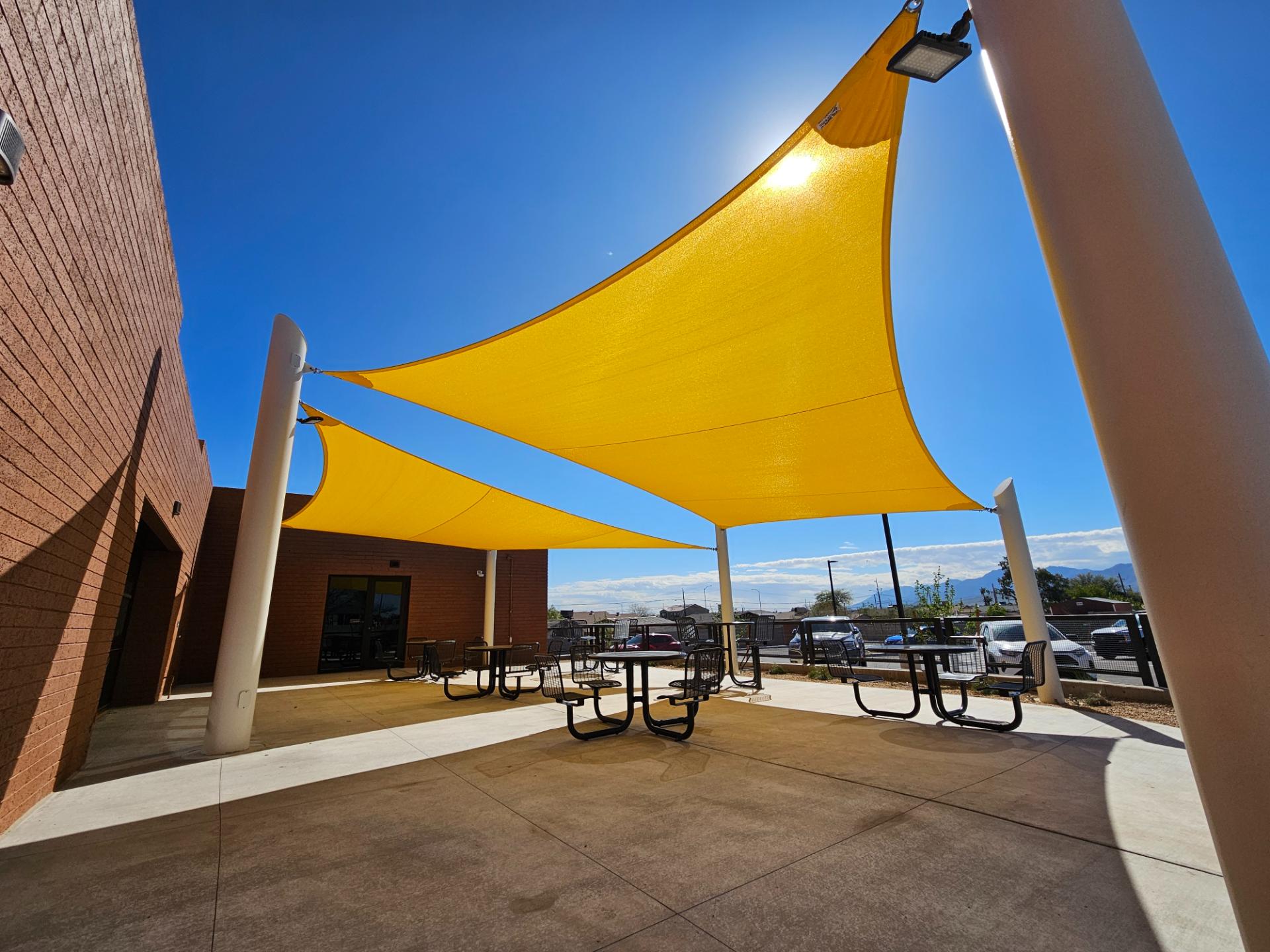
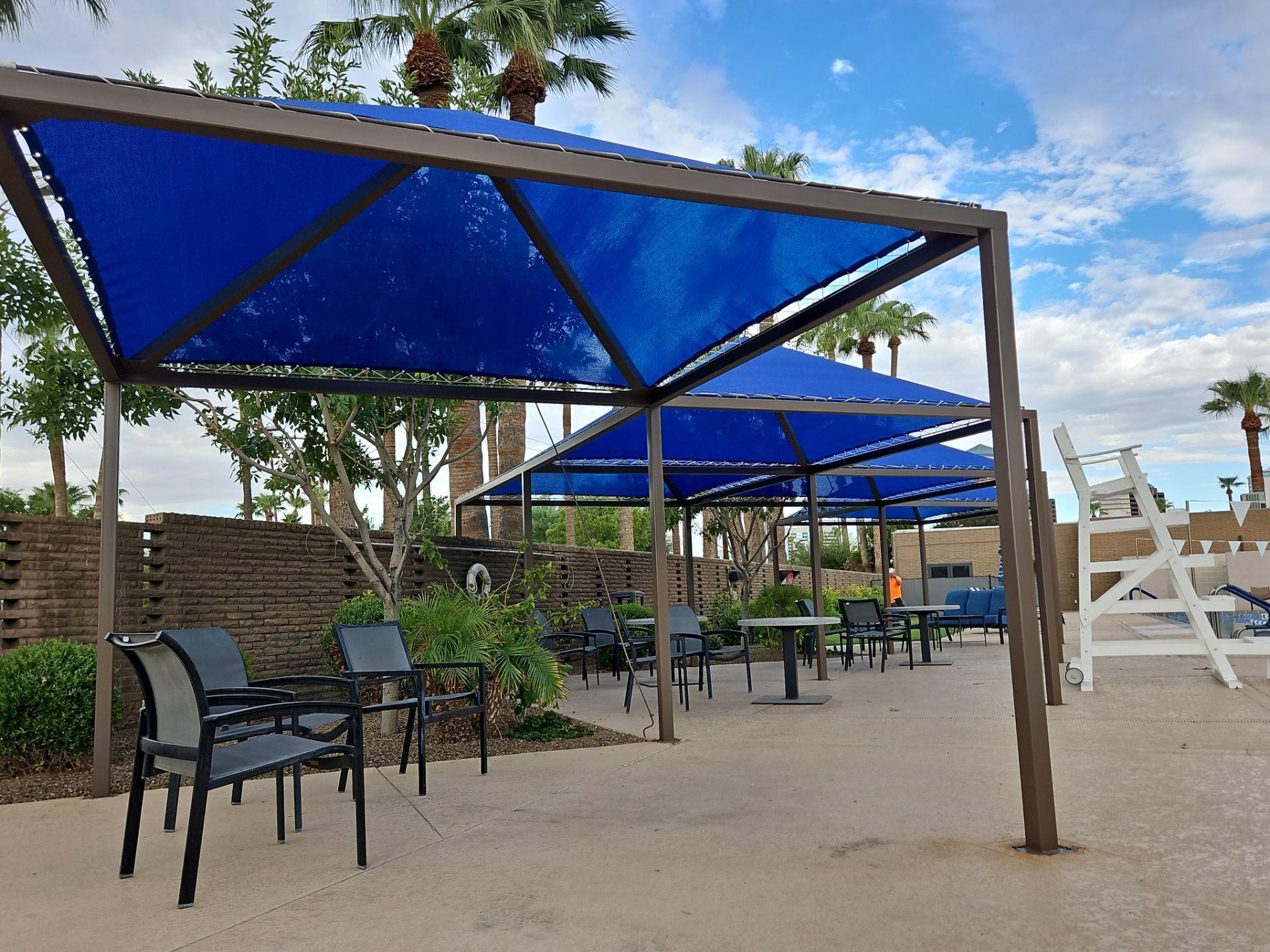
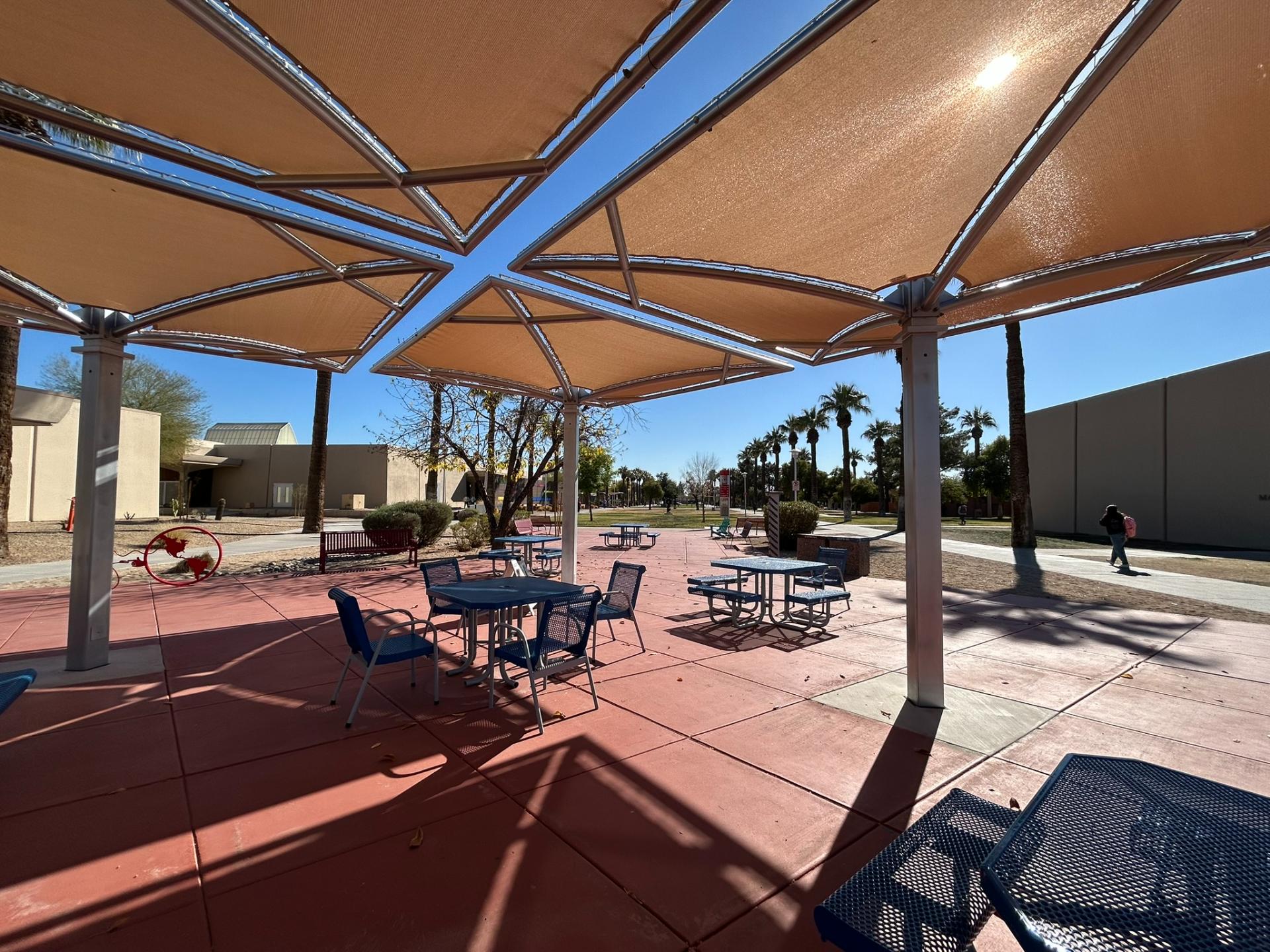
Shade Structures We Build
Need a shade structure repaired or re-covered?
Call (602) 265-0905 for a free assessment.
Frequently Asked Questions
How long does new shade fabric last in Arizona?
Knitted HDPE shade fabric commonly carries a 10 to 15 year manufacturer warranty, and Arizona’s intense year-round UV pushes most covers toward the shorter end of that window. The fabric blocks roughly 90 to 99% of UV when new, and that protection slowly drops as the yarn breaks down. Plan a re-cover inside that 10 to 15 year span rather than treating a faded cover as a defect – the fading is the fabric doing its job until it can’t.
Can you re-cover a shade structure you didn’t build?
Yes. Total Shade re-covers existing structures regardless of who originally fabricated them, as long as the frame is sound. We measure the frame panel by panel because a frame that has been standing for years rarely matches its original drawings, then fabricate a new HDPE cover cut to those field measurements. The only structures we won’t re-cover are ones whose steel has corroded to the point that reusing the frame is unsafe.
Is replacing the fabric cheaper than a whole new structure?
In almost every case, yes – a re-cover typically costs a fraction of a ground-up build because you keep the steel frame and the footings, which are the expensive, slow parts. A new structure pays for caissons drilled 4 to 8 ft deep, structural steel, powder coat, and engineering; a re-cover pays mainly for fabric, hardware, and labor. The exception is a frame that has failed structurally, where reusing bad steel costs more in the long run than rebuilding.
Can you match the color of my existing shade fabric?
Often, but not always exactly. Manufacturers revise their HDPE color lines over the years, so an exact match to a cover that’s 10 or more years old may no longer be stocked. We pull current swatches before committing so you can see the closest options. On multi-structure sites where a perfect match matters, re-covering several structures together is sometimes the cleaner route to a uniform field.
How long does a fabric replacement take?
On-site install of a single structure usually runs a few hours to a day – the old cover comes off, the new one goes on, and the frame never comes down. The longer part of the timeline is fabrication: we typically measure first, then build the cover to those measurements over a couple of weeks before installing. A new cover also needs a re-tension visit a few months after install once the HDPE settles.