or call (602) 265-0905 — no-obligation, on-site.
Shade Structure Frame Repair & Re-Tensioning
When a commercial shade frame leans, rusts, or sags, what actually gets repaired, what gets re-tensioned, and when the steel has to come out.
Since 1998
Designing & building Arizona shade
In-House Fabrication
Built at our Phoenix shop
Engineered & Permit-Ready
Stamped drawings for AZ wind loads
Free On-Site Quote
No-obligation project assessment
Most commercial shade structures that look failed are repairable at the frame, not totaled: a leaning post can be re-plumbed, a corroded base can be cut out and re-welded, loose cables get re-tensioned with their turnbuckles, and a chalked powder coat gets touched up long before the steel is structurally gone. The frame is the 20-year asset, so the question on a sagging or tilting canopy is rarely ‘replace it all’ and usually ‘which part of the load path broke.’ Total Shade fabricates and repairs steel in-house at our Phoenix shop at 2331 W. Holly St, which is why a bent post or a pulled anchor gets fixed against the original engineering rather than guessed at. The fastest way to know what you are looking at is to trace the load from the fabric, through the cables and frame, into the footing, and find the link that gave.
The frame problems that show up first in the Valley
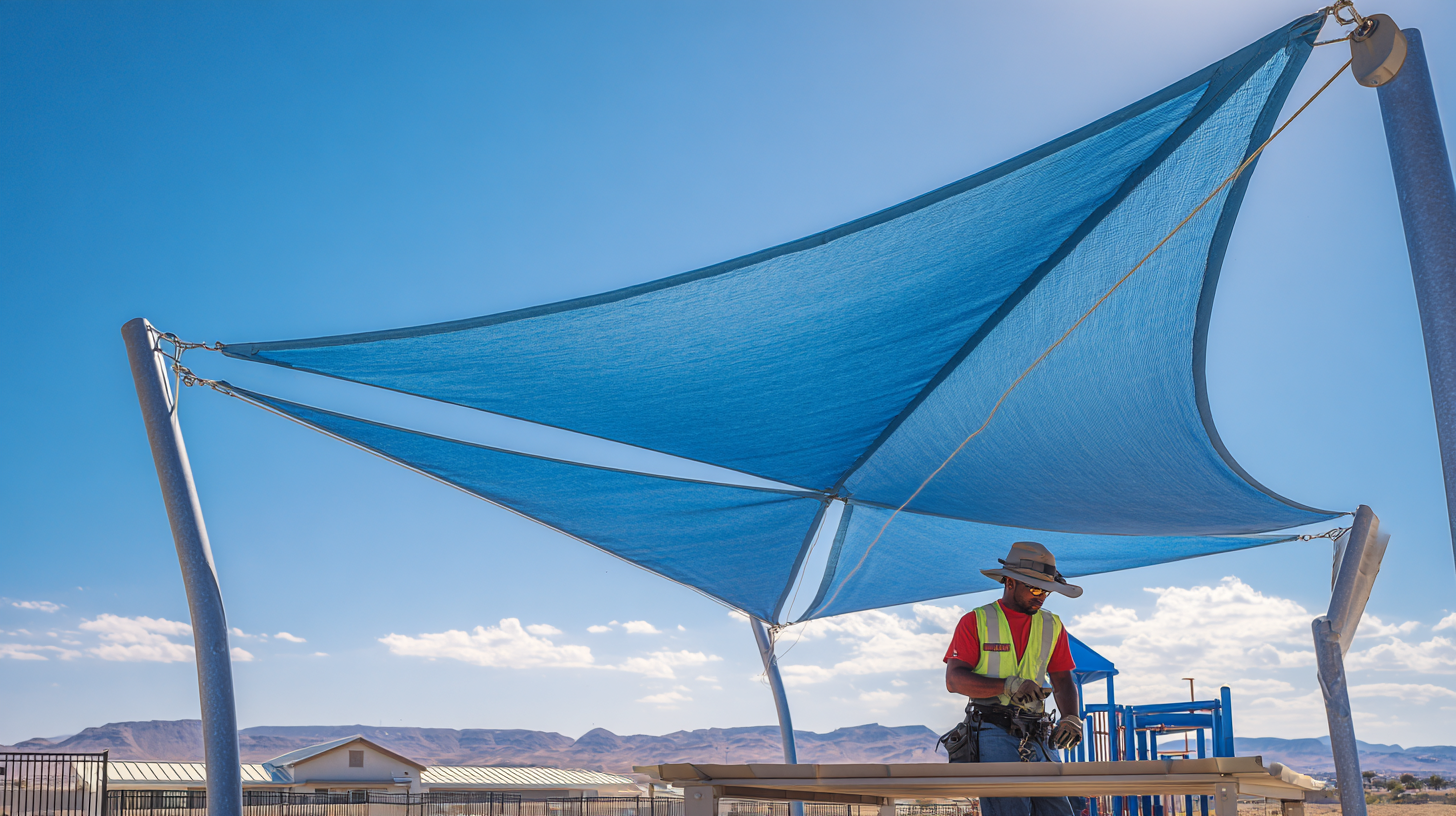
The common frame and hardware failures cluster in five spots: leaning or out-of-plumb posts, loose or stretched cables, corrosion at the base, fatigued welds at the connections, and a powder coat that has chalked through to bare steel. Each one is a different fix, and most are far cheaper than they look from the parking lot. A post that has tilted a few degrees after a microburst topping 60 mph usually means the footing shifted or a connection yielded, not that the steel snapped.
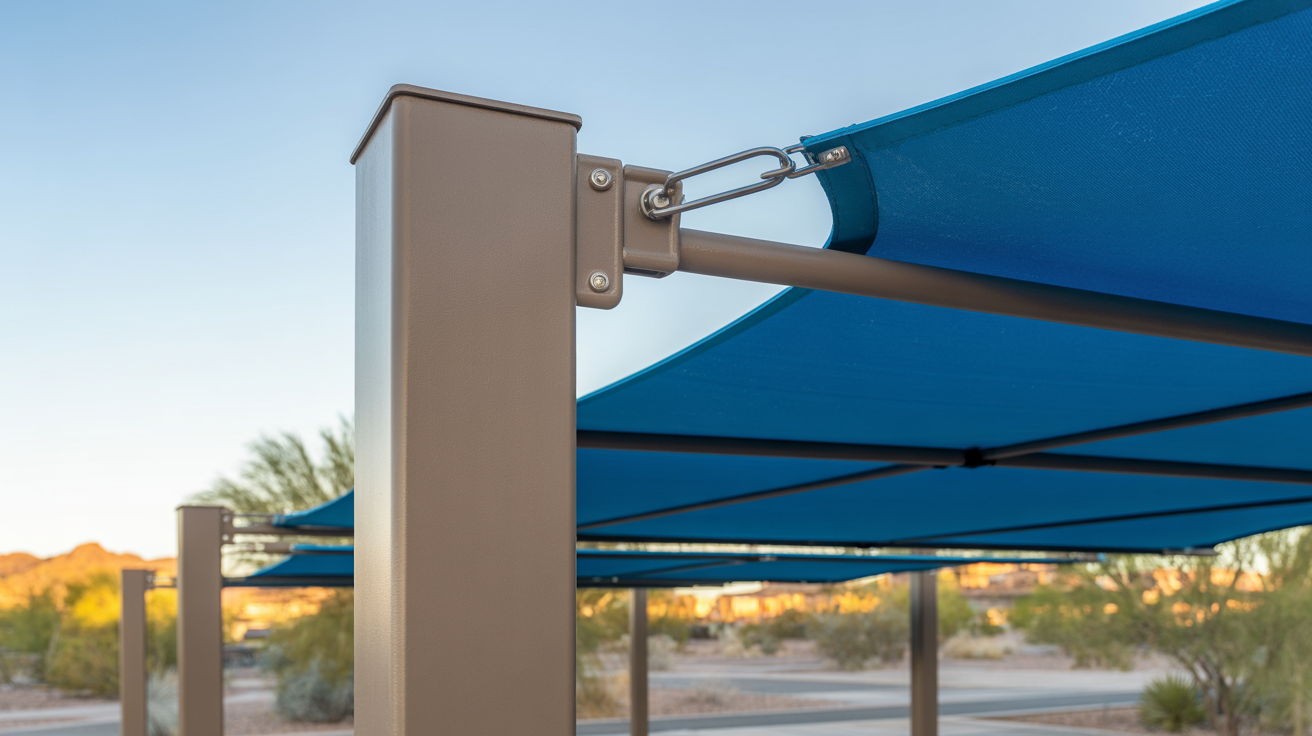
Loose hardware is the most frequent call. Tensioned covers run on stainless or galvanized cable in the 1/8 to 3/8 inch range, drawn tight by turnbuckles, and the assembly relaxes over time the same way the fabric does. When a turnbuckle backs off or a cable stretches, the canopy starts to flap and sag, which then accelerates fabric wear at the corners. Catching it as a hardware adjustment instead of waiting for a torn cover is the difference between a service call and a re-cover. The deeper repair-versus-replace logic for the whole structure lives on the canopy replacement and repair hub.
Re-tensioning a sagging fabric: usually a hardware fix, not a new cover
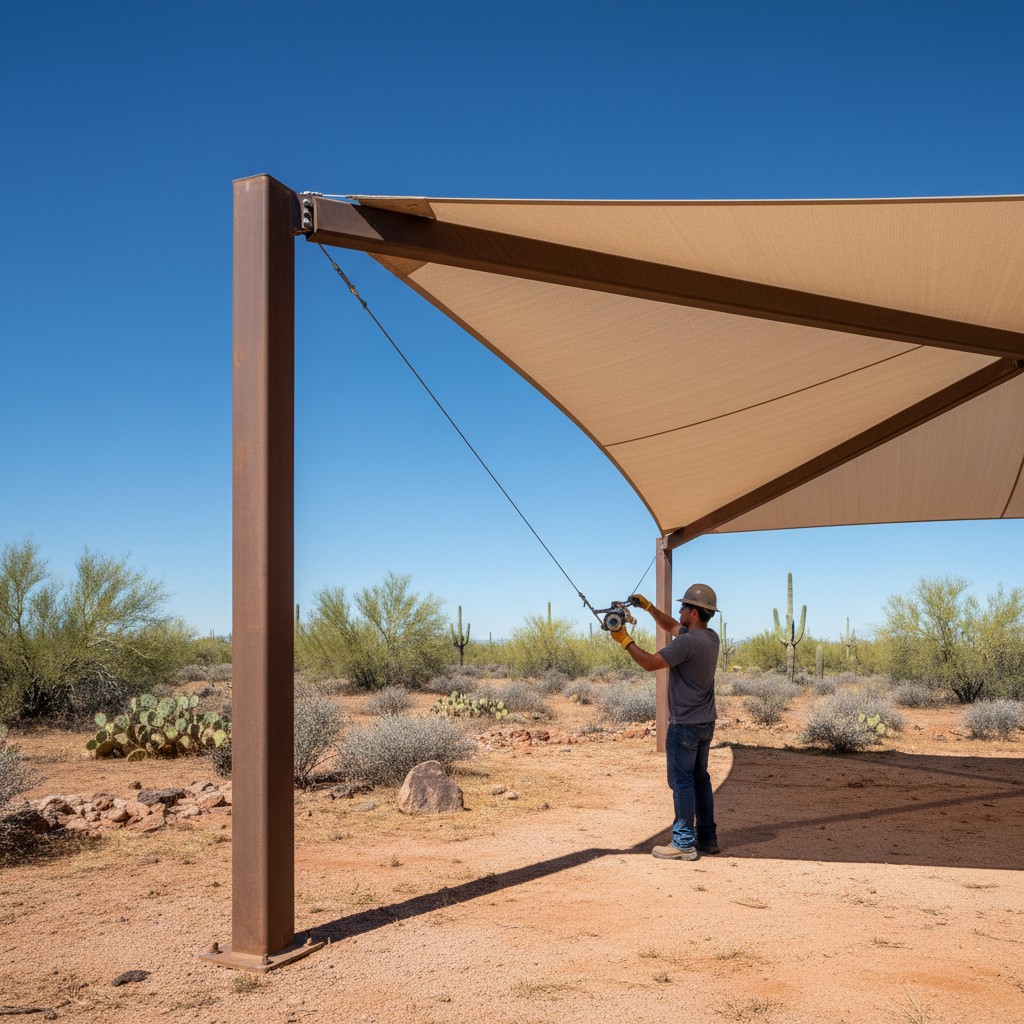
A sagging canopy is most often a tension problem, not a worn-out fabric problem, and re-tensioning the existing skin solves it without replacing anything. Knitted HDPE relaxes slightly over its first season and then continues to creep a few percent over years of sun and wind cycling, so tensioned covers are designed to be re-pulled. The crew works the turnbuckles and cable terminations to draw the edges taut again, restoring the shape that makes the structure shed wind instead of catching it like a sail.
A good rule is a re-tension check every 1 to 2 years on tensioned forms; high-wind or high-traffic sites benefit from the shorter end. Done on schedule, re-tensioning keeps a 10-15 year fabric warranty period from ending early, because a slack cover snaps and abrades at the corners under every gust. There is a limit, though: if the HDPE has stretched past its elastic range, gone brittle, or torn at the cable pocket, tightening it only buys weeks, and the answer shifts to a shade fabric replacement on the same standing frame. Knowing which side of that line you are on is exactly what an inspection settles.
Footings, posts, and anchors: repairing the load path into the ground
When a post leans, the fix starts at the footing, because the steel above is usually fine and the concrete or anchor below is what moved. Commercial posts sit in reinforced concrete footings often several feet deep, sized to the soil and the overturning force from a 90-115 mph design wind, and a shallow or undersized original pour is the classic reason a structure tilts in its first big monsoon. Repair options run from re-plumbing and re-grouting the existing base, to cutting out and re-pouring a deeper footing, to retrofitting heavier anchor hardware where the post bolts to a slab.
Bent or kinked posts are a separate call. A post tube that has yielded past straightening has to be cut and a new section welded in to the original gauge, which on commercial work runs roughly 7-11 gauge wall in the 4-8 inch tube range. The repair is only as good as the engineering it matches, so re-welding to spec and re-checking plumb across all posts matters more than a fast patch. Because the underlying choice is steel-specific, the trade-offs trace back to the steel and HDPE materials the frame was built from in the first place.
Corrosion and powder-coat repair near wash racks and pools
Rust on a shade frame is usually surface corrosion at a chip or a wet zone, and it is repairable long before it threatens the steel. The danger spots in the Valley are predictable: the base of posts where dust and water pool, fleet wash racks where soapy spray hits the frame daily, and pool decks where chlorinated air attacks ordinary hardware. Caught at the chalking or light-rust stage, the repair is mechanical cleaning back to sound steel, priming, and a powder-coat touch-up or a re-coat of the affected section.
Hardware near water is the part that fails quietly. Chlorine corrodes standard 304 stainless and galvanized cable and turnbuckles, so a pool structure that is rusting at the fittings often needs those parts swapped to marine-grade 316 stainless rather than just cleaned. A properly powder-coated frame resists rust for 15-20+ years, so widespread corrosion usually means a finish breach years ago that went unwashed, not steel at the end of its life. The honest move is to address the breach and the cause, since a touch-up over a wash-rack post that keeps getting blasted daily will need attention again sooner than one on a dry lot.
When the frame is repairable versus when the steel has to be replaced
Repair the frame when the steel section is sound and the problem is in the hardware, the finish, or the footing; replace the steel when the load-bearing members themselves are compromised. A leaning post over an intact footing, a backed-off turnbuckle, a chalked coat, or surface rust are all repairs, and they account for the large majority of service calls. The structure keeps its stamped engineering and its 20-year steel life, and only the failed link gets restored.
Replacement enters when the steel is structurally gone: deep rust that has eaten through a tube wall, a post that has buckled or torn at a weld and cannot be re-welded to spec, or a footing that has failed in a way the soil will not support a re-pour. The deciding factor is whether the frame can still carry its design wind load after repair, which is an engineering question, not a cosmetic one. The full economics of patch-versus-rebuild, including when a re-cover is the smarter spend than chasing an old frame, are laid out on the repair vs replace guide, and the structure types themselves sit on the products hub.
Safety after a monsoon or impact, and the honest limits
After a microburst, a vehicle strike, or any event that moved the structure, treat the canopy as unverified until it is inspected, even if it still stands. The failure that matters most is invisible from below: a footing that shifted, a weld that cracked, or a cable that partially pulled can hold in calm air and let go in the next gust. A post out of plumb, a slack cover, fresh rust streaks at a connection, or a new gap at a base plate are all signs to keep people out and get eyes on it before the next storm.
Two honest caveats are worth stating. First, wind ratings have a ceiling: a frame engineered to a 90-115 mph design speed is built for the worst expected gust, but a haboob beyond that number can damage any structure, and a repair restores the original rating, not a higher one. Second, a repair is judged against the frame’s stamped engineering, so a re-pour or re-weld has to match spec to be worth doing; a fast cosmetic patch over a real structural problem is not a fix. When the steel still carries its load, a frame repair and a re-tension are the cheapest 20 years of shade you will buy.
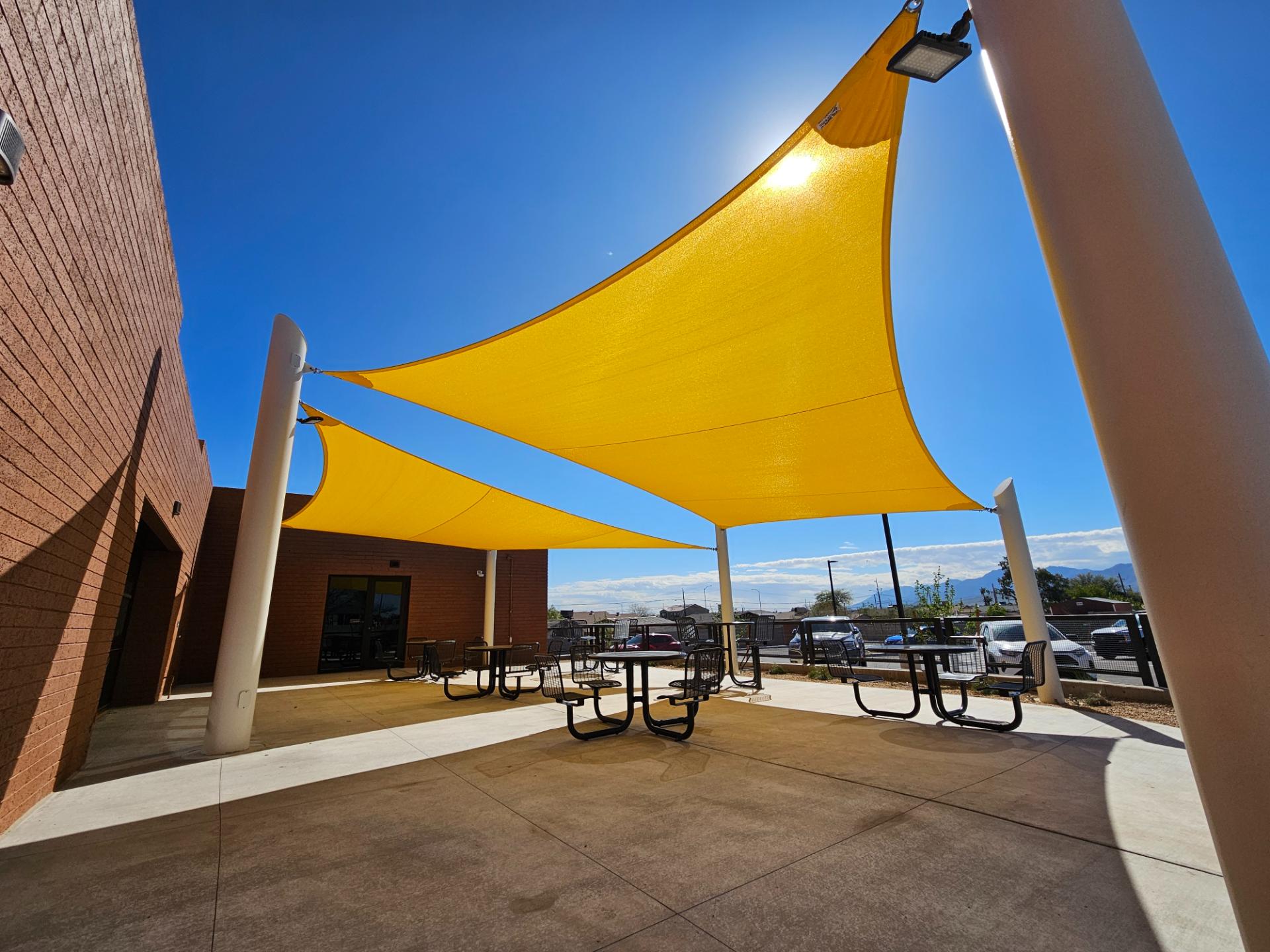
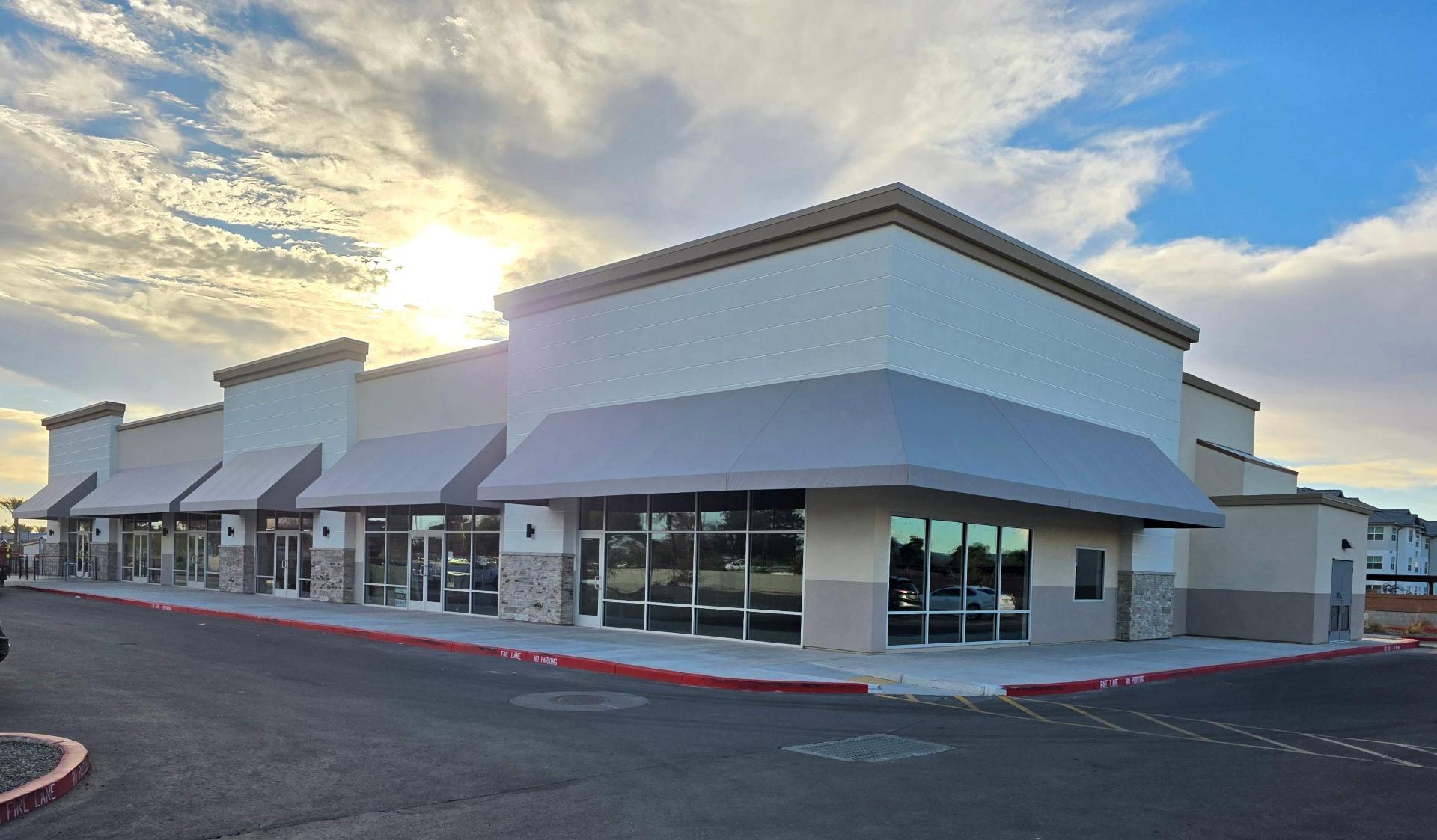
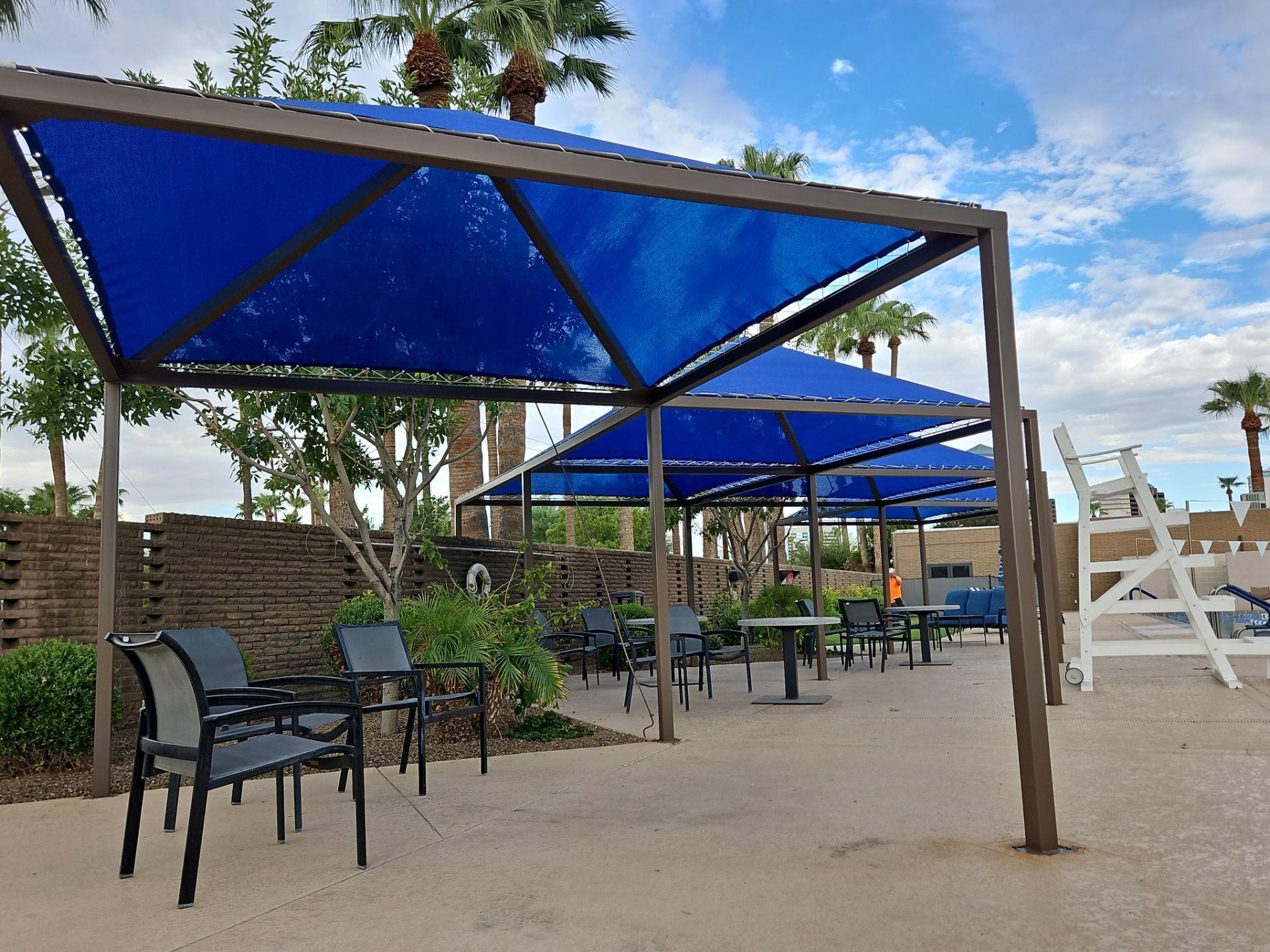
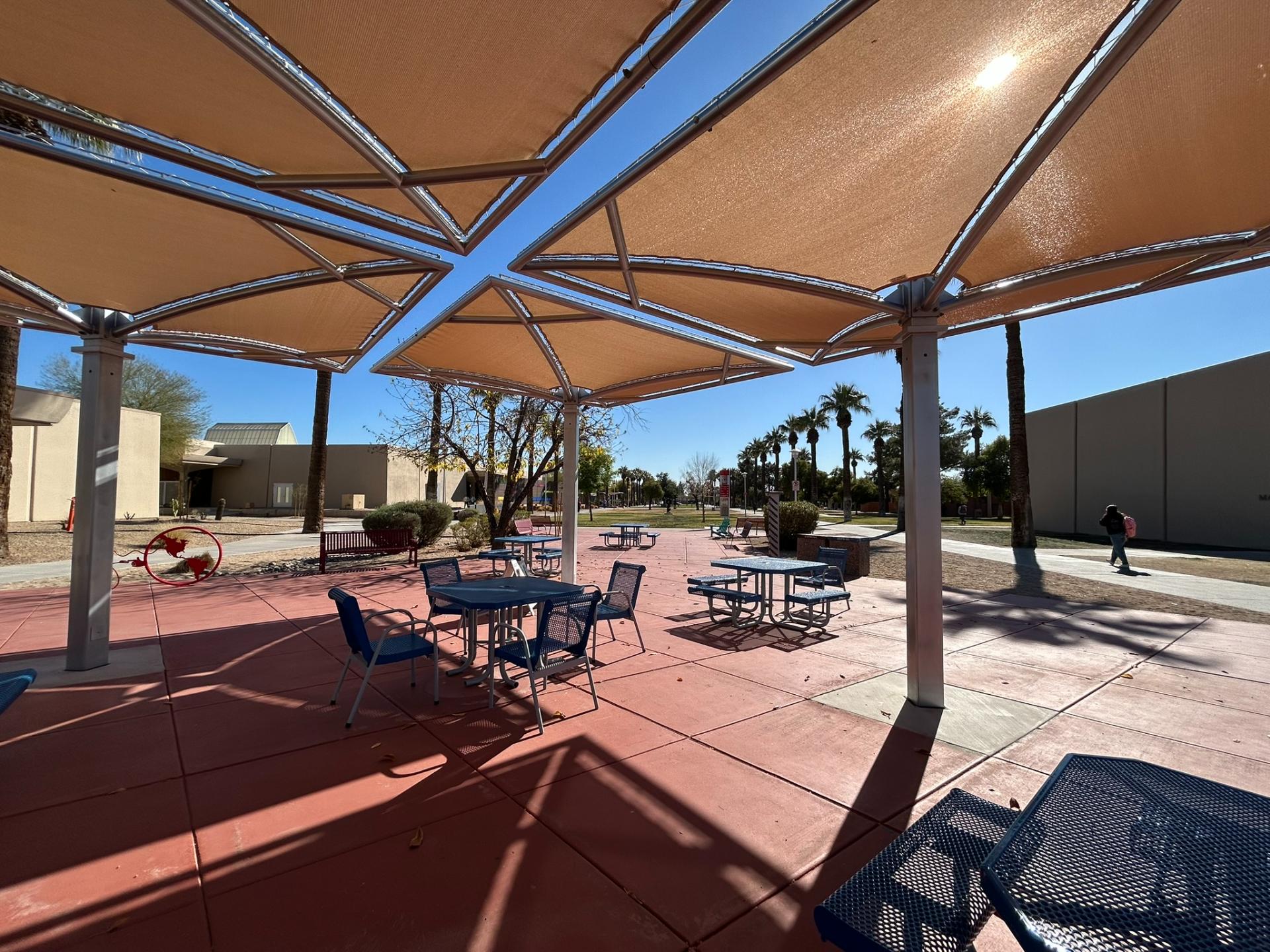
Shade Structures We Build
Need a shade structure repaired or re-covered?
Call (602) 265-0905 for a free assessment.
Frequently Asked Questions
How do I know if my shade structure frame is repairable or needs replacing?
The frame is repairable when the steel members are sound and the problem is in the hardware, finish, or footing, which covers most service calls: leaning posts, loose cables, surface rust, and chalked powder coat all get fixed without replacing the structure. Replacement is needed only when the steel itself is compromised, meaning rust has eaten through a tube wall or a post has buckled or cracked at a weld and cannot be re-welded to its original gauge. The deciding test is whether the frame can still carry its design wind load after repair, which is an engineering judgment, not a cosmetic one.
Can a leaning shade structure post be fixed without rebuilding everything?
Yes, a leaning post is usually a footing or connection problem, not a broken post, and it is repaired in place. The fix starts below grade because the steel above is typically fine: options run from re-plumbing and re-grouting the existing base, to cutting out and re-pouring a deeper footing, to adding heavier anchor hardware where the post bolts to a slab. A post tube that has actually bent past straightening is cut and re-welded to the original 7-11 gauge spec rather than replacing the whole canopy.
How much does it cost to re-tension a sagging shade canopy?
Re-tensioning is the low end of shade service work because it adjusts existing hardware rather than replacing parts, so it costs a fraction of a re-cover when the fabric is still sound. The crew works the turnbuckles and cable terminations to draw the edges taut again, which restores the shape and stops the corner flapping that wears fabric out early. The honest qualifier is that if the HDPE has stretched past its elastic range, gone brittle, or torn at the cable pocket, tightening only buys weeks and the work shifts to a fabric replacement on the same frame.
Can rust on a steel shade frame be repaired?
Yes, most rust on a shade frame is surface corrosion at a chip or a wet zone and is repaired long before it threatens the steel. The work is mechanical cleaning back to sound metal, priming, and a powder-coat touch-up or a re-coat of the affected section. Near pools and wash racks the cause matters as much as the rust: chlorinated or soapy spray corrodes standard 304 stainless and galvanized hardware, so the cables and turnbuckles often get swapped to marine-grade 316 stainless rather than just cleaned. A properly powder-coated frame resists rust for 15-20+ years, so widespread corrosion usually points to an old finish breach, not steel at the end of its life.
What should I do with my shade structure after a monsoon?
After a microburst or any event that moved the structure, treat it as unverified until inspected, even if it is still standing, because the dangerous failures are invisible from below. A shifted footing, a cracked weld, or a partially pulled cable can hold in calm air and let go in the next gust, so watch for a post out of plumb, a suddenly slack cover, fresh rust streaks at a connection, or a new gap at a base plate. If you see any of those, keep people out and get eyes on it before the next storm; a frame engineered to a 90-115 mph design wind is built for the worst expected gust, but an extreme haboob can still damage any structure.