or call (602) 265-0905 — no-obligation, on-site.
Repair vs Replace: Deciding on Your Shade Structure
A verdict-first guide: if the steel frame is sound, re-covering or repairing usually wins on cost and downtime; replace only when the frame is corroded, damaged, or undersized for current code.
Since 1998
Designing & building Arizona shade
In-House Fabrication
Built at our Phoenix shop
Engineered & Permit-Ready
Stamped drawings for AZ wind loads
Free On-Site Quote
No-obligation project assessment
If the steel frame is structurally sound, repairing or re-covering an existing shade structure almost always wins — a new HDPE cover typically runs a fraction of a full replacement and installs in a day or two. Replace the whole structure only when the frame is corroded through, bent, or under-engineered for current wind code. The deciding question is not the age of the fabric — that is a consumable that ages out at 10-15 years regardless — but the condition of the steel underneath it. A powder-coated frame is a 20-40 year asset; a faded or torn cover on a good frame is a same-day fabric replacement, not a teardown. Total Shade inspects, re-covers, and rebuilds shade structures from our Phoenix shop at 2331 W. Holly St, engineered to Maricopa County code. The sections below cover how to assess the frame, when repair wins, when replacement is the honest call, the cost and downtime gap, the code and wind upgrades worth catching, and a plain verdict.
Assess the frame first — that decision drives everything
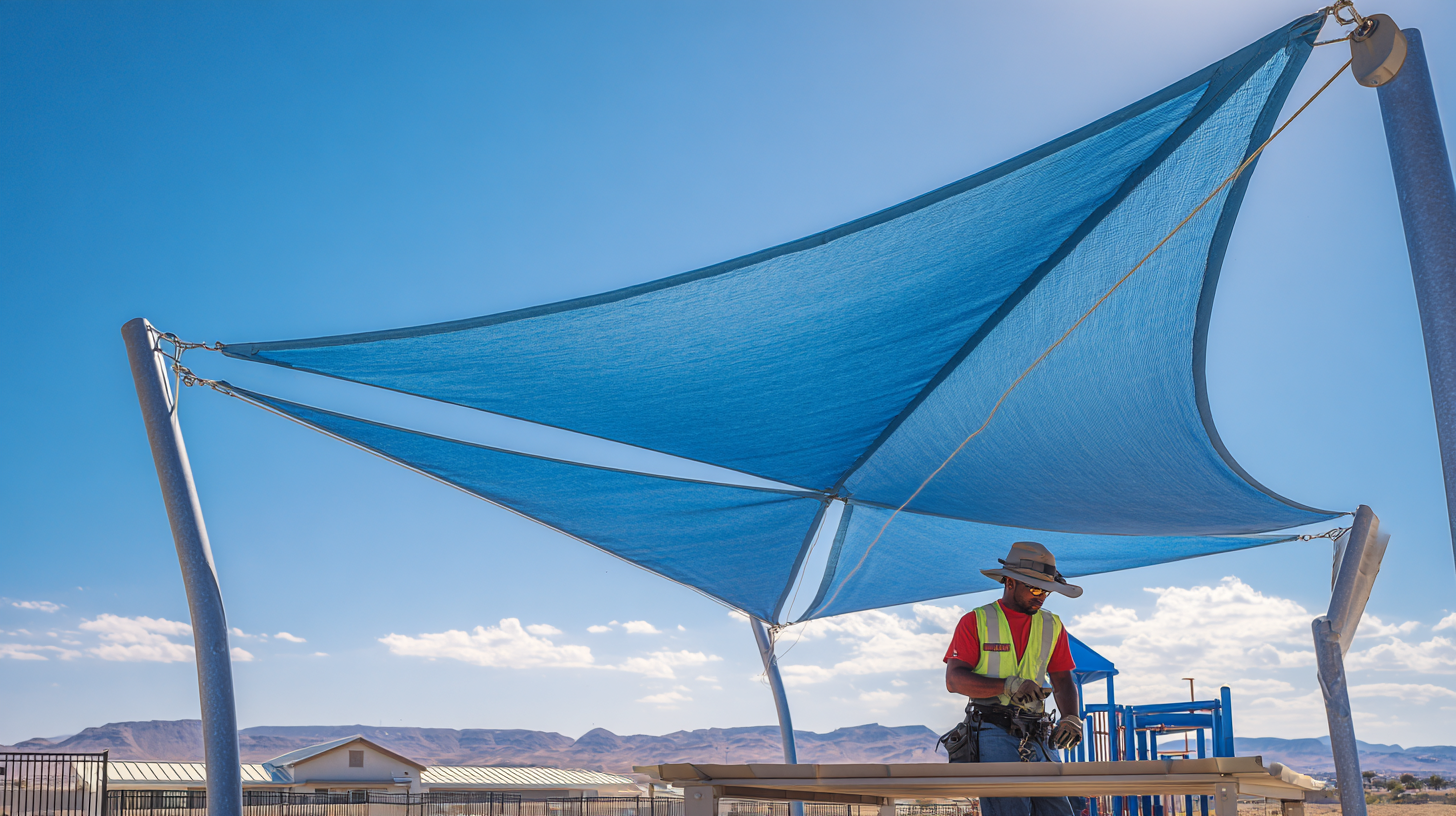
Start with the steel, not the fabric, because the frame is what determines whether you have a repair or a replacement on your hands. Walk the structure and look at four things: the footings and base plates for rust bleed or heaving concrete, the posts and beams for bends or buckling from a past wind event, the welds and connections for cracks, and the powder coat for chips that have let corrosion start. A frame with intact welds, plumb posts, and surface rust no worse than chipped coating is a candidate for repair — surface corrosion grinds back and re-coats, and the structure keeps its full frame service life.
The fabric, by contrast, tells you almost nothing here. Knitted HDPE is a consumable: it fades, loosens, and tears at 10-15 years whether the frame is new or old, so a shredded cover is expected maintenance, not a failed structure. Judge the cover and the frame separately — a 12-year-old sail with a thrashed canopy and clean steel is a re-cover, while a 6-year-old structure with a rusted-through base plate is a different conversation entirely.
When repair or re-cover wins: a sound frame on a budget
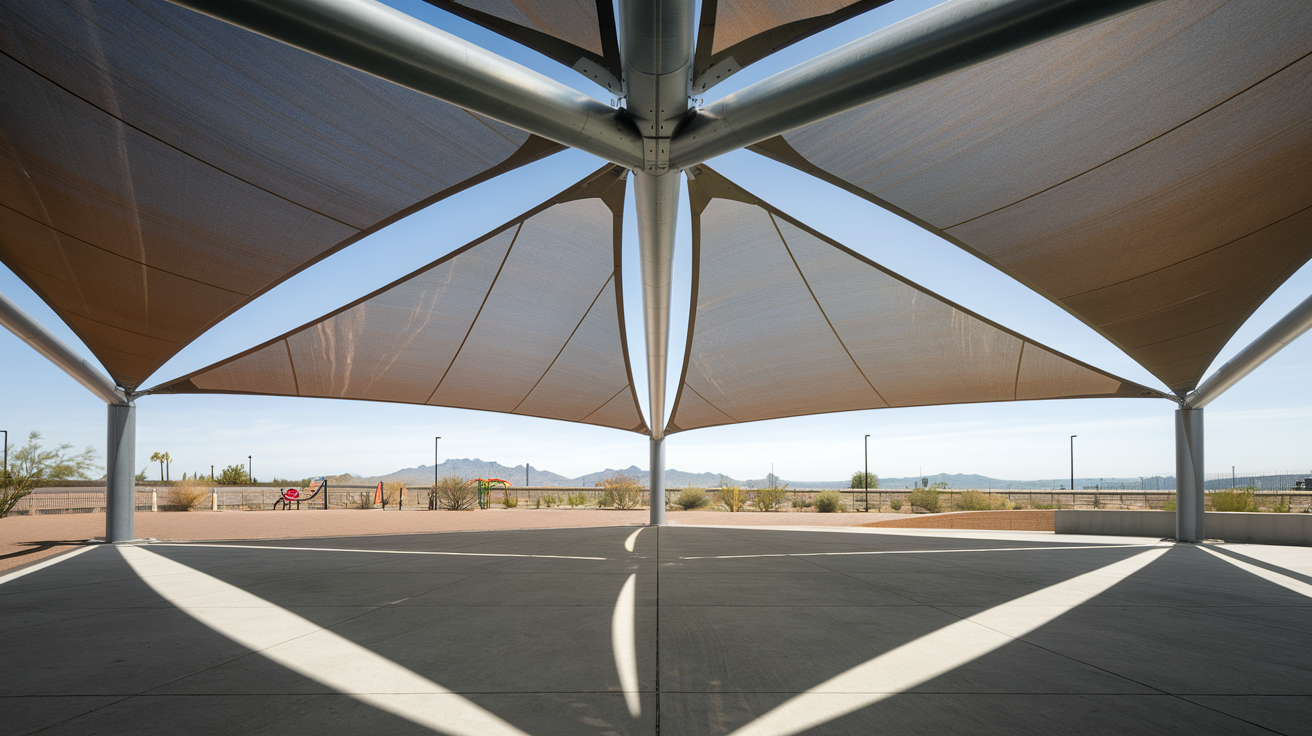
Re-covering wins whenever the frame passes inspection, and it wins by a wide margin — a new HDPE cover commonly runs 20-40% of the cost of a full structure replacement, because you are buying fabric and labor, not steel, footings, and engineering. The frame is the expensive, permanent part; the cover is the cheap, renewable part. A faded, torn, or sun-rotted canopy on plumb, well-welded steel is the textbook re-cover, handled through a canopy replacement in a day or two rather than the weeks a new build can take.
Repair — distinct from re-cover — also wins for localized frame damage. A single bent purlin, a cracked weld, or a rusted base plate can be cut out, re-welded, re-plated, and re-coated for far less than scrapping a structure that is 90% intact. Re-tensioning a relaxed but undamaged cover is the cheapest fix of all. The pattern: if the bones are good and the problem is the skin or one repairable joint, you fix it.
When replacement wins: corrosion, damage, or undersizing
Replace the structure when the frame itself has failed, and three conditions trigger that call. First, structural corrosion: rust that has eaten through a post wall, base plate, or weld is not a coat-over fix — once the steel section is compromised, the load path is compromised, and patching a corroded frame trades a known problem for a hidden one. Second, impact or wind damage that has bent main posts or beams beyond straightening; a structure that has taken a microburst and twisted is often cheaper to replace than to true and re-engineer. Third — and most overlooked — a frame that was under-engineered for the load it actually faces.
That last case is the one owners miss. A structure built cheaply 15 or 20 years ago may sit below today’s wind requirements, use light steel that flexes in a storm, or span too far on too few posts. Re-covering an under-built frame just puts a fresh cover on a structure that will move or fail in the next monsoon cell — microbursts in the Valley can exceed 60 mph. When the frame is undersized, the honest answer is replacement engineered to current wind-load standards, not a re-cover that hides the weakness.
Cost and downtime: the gap is large, and it favors repair
On both cost and downtime, repair beats replacement decisively when the frame allows it. A re-cover typically lands at 20-40% of a full replacement’s price and installs in 1-2 days with the existing footings and posts left in place — no demolition, no new concrete, no cure time. A frame repair on a sound structure falls in a similar low-cost, low-disruption band. For a parking lot, school, or HOA that cannot lose its shaded area for long, that short window is often the deciding factor on its own.
A full replacement is a different project: removing the old structure, often re-pouring footings that may cure for days, fresh stamped engineering, city permit review, and a new fabrication run — typically weeks from order to standing, plus the permit timeline the city controls. Replacement costs several times more and takes far longer, so it earns its place only when the frame genuinely cannot be saved. When the steel is good, paying for a teardown is paying to discard a 20-40 year asset early.
Code and wind upgrades worth catching during the decision
A replacement is the moment to fix engineering shortcomings a re-cover would only paper over. Valley structures are engineered to Arizona building code and ASCE 7 wind loads — design wind speeds run roughly 90-115 mph across Maricopa County — and a frame built decades ago may predate the standard it now needs to meet. If your existing structure flexes in storms, lost a cover to wind before, or was built on light steel with shallow footings, replacement lets you right-size the posts, deepen the footings into caliche, and add the post count the span actually requires.
Re-covering an undersized frame, by contrast, locks in the original under-engineering for another 10-15 years — the cover will be new, but the weakness will not have moved. Many older structures were also built smaller than the area now needs as parking lots, playgrounds, or patios grew around them. If you are spending on the structure anyway, a replacement is the chance to right-size the footprint and the engineering together — see the full range on our products overview — rather than re-covering a frame that was wrong from the start.
The verdict: how to decide in one pass
Inspect the frame, then follow the steel. If the posts are plumb, the welds are clean, the footings are solid, and the structure is sized and engineered for its load, repair or re-cover — you spend roughly 20-40% of a replacement and lose only 1-2 days, and the frame carries on through its 20-40 year life with a fresh 10-15 year cover. That is the winning move in the large majority of cases, because fabric ages out long before sound steel does.
Replace when the frame fails the inspection it cannot fake: corrosion through the steel, posts bent past straightening, or a structure under-built for current wind code or outgrown in size. In those cases a re-cover hides a real risk, and replacement engineered to ASCE 7 and current Maricopa County code is the honest spend — higher cost, longer timeline, but a structure that will hold. The caveats hold both ways: a re-cover cannot rescue bad steel, and a replacement is overkill for a good frame. Send us photos of the base plates, posts, and welds, or let us inspect on site, and we will tell you plainly which one your structure needs.
Shade Structures We Build
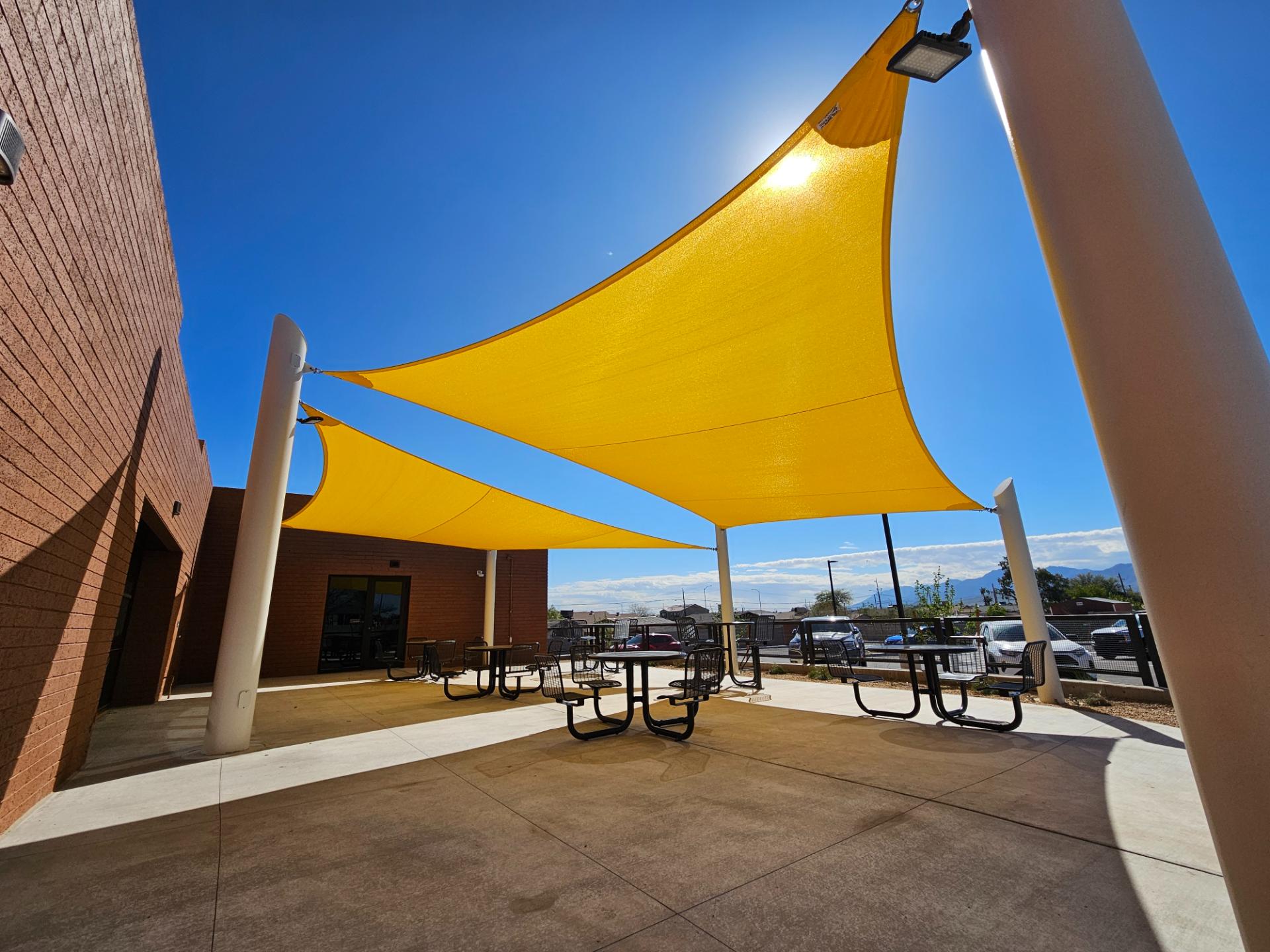
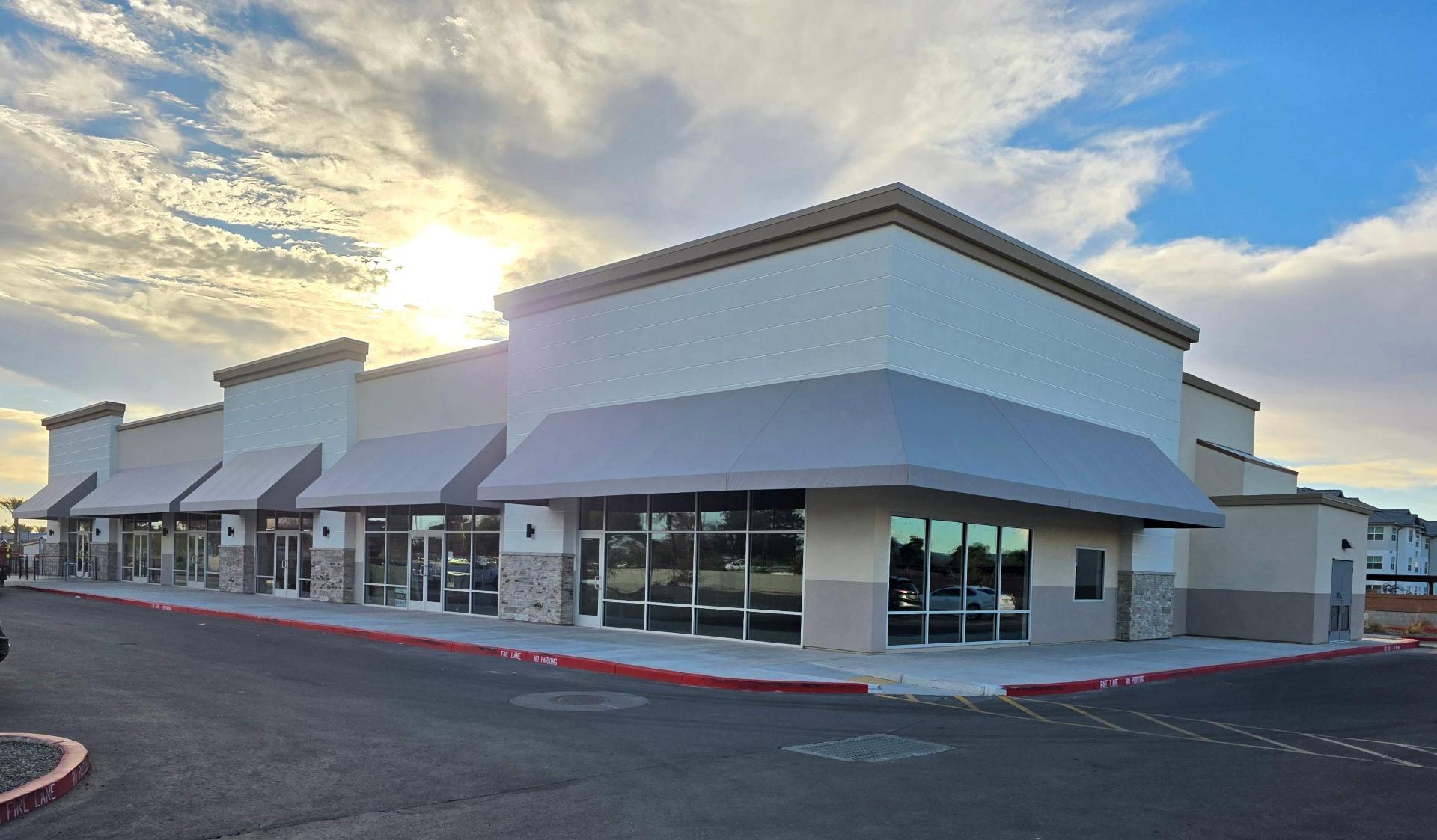
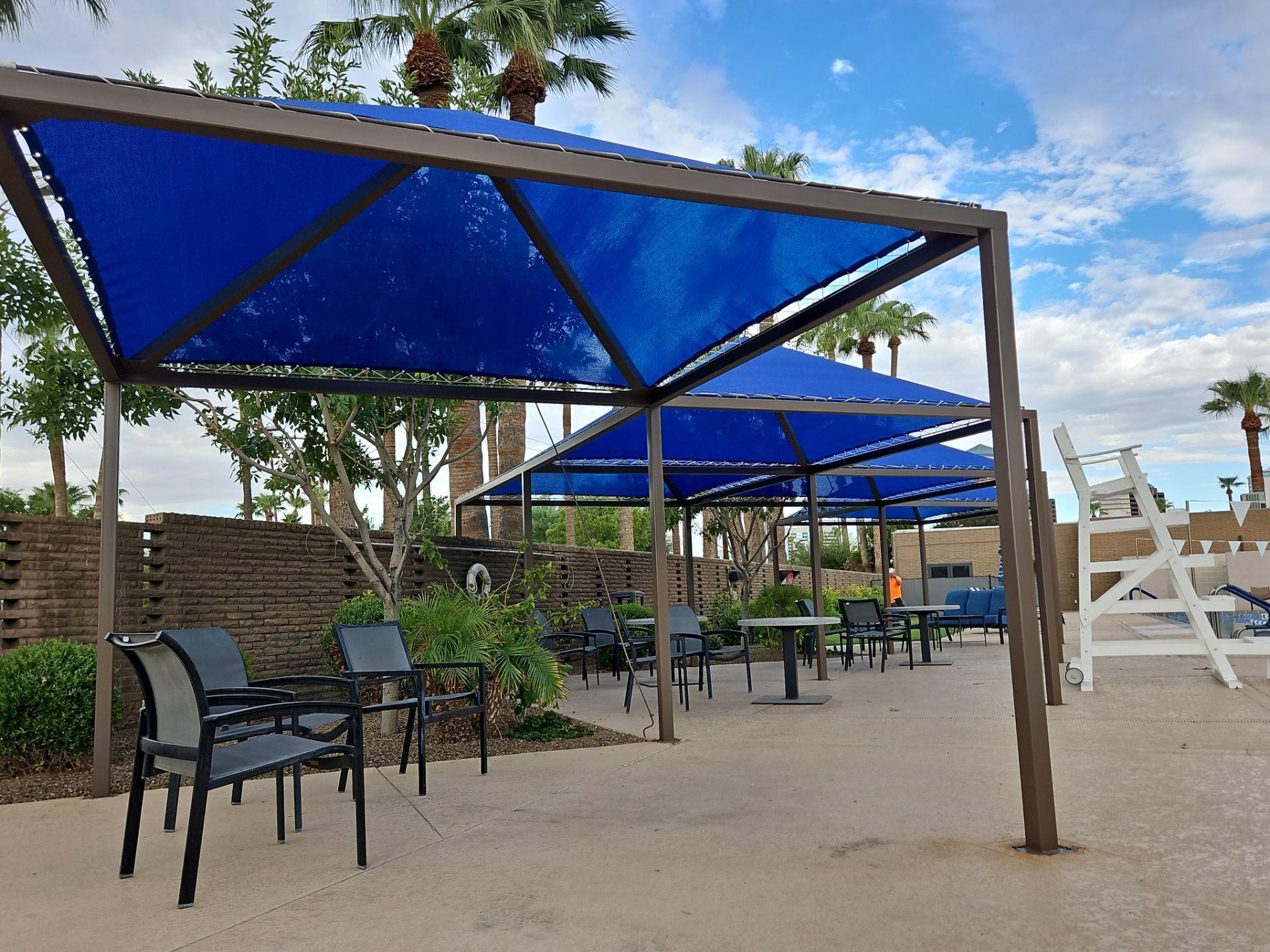
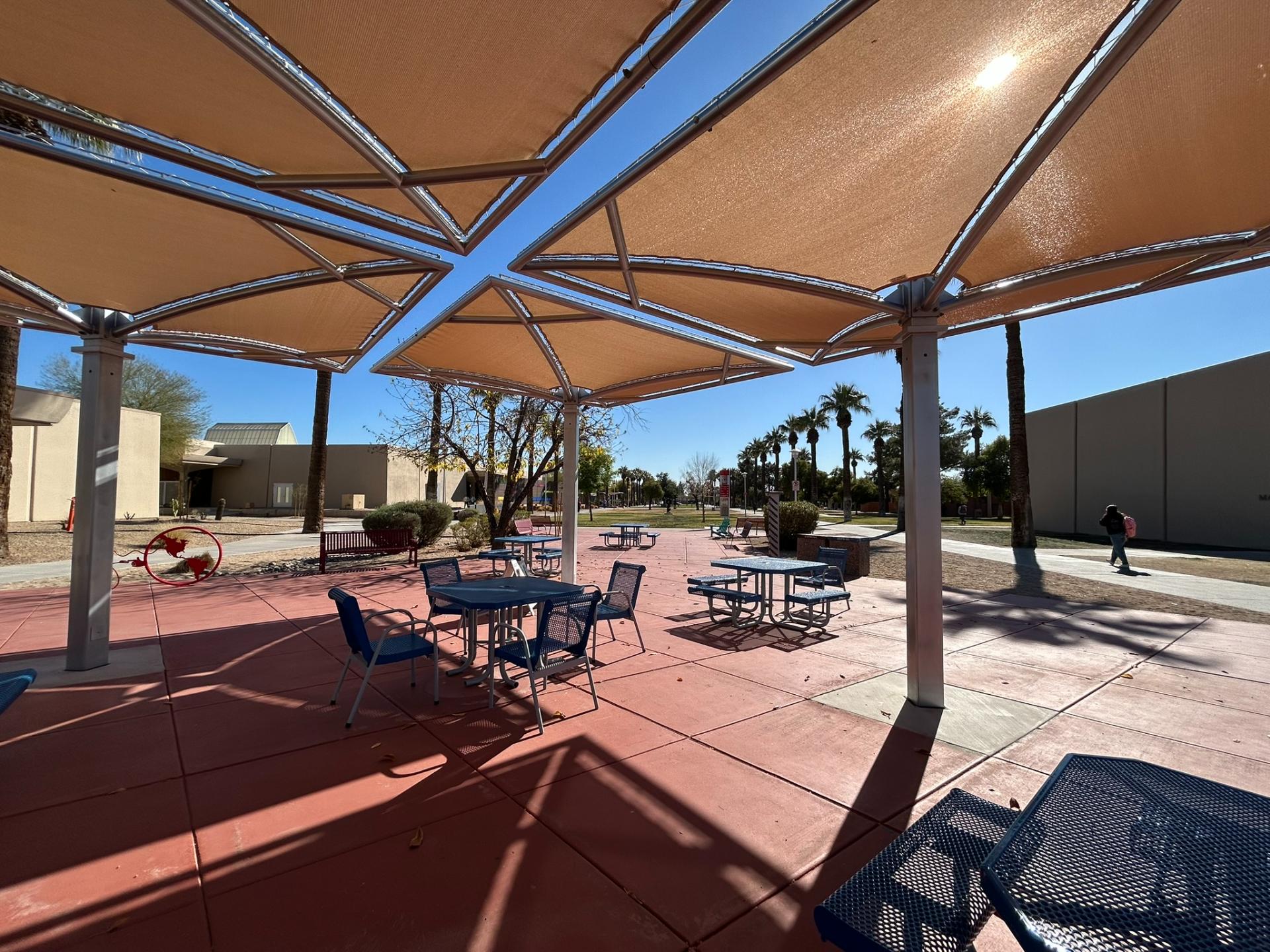
Need a shade structure repaired or re-covered?
Call (602) 265-0905 for a free assessment.
Frequently Asked Questions
Should I repair or replace my shade structure?
Decide by the condition of the steel frame, not the fabric. If the posts are plumb, the welds and base plates are sound, and the structure is sized and engineered for current wind code, repair or re-cover it — a new HDPE cover typically runs 20-40% of a full replacement and installs in 1-2 days. Replace the whole structure only when the frame is corroded through, bent past straightening, or was under-engineered for the load it faces. The fabric is a consumable that ages out at 10-15 years regardless, so a worn cover alone is never a reason to replace the frame.
How much cheaper is re-covering than replacing a shade structure?
Re-covering commonly costs about 20-40% of a full structure replacement, because you are paying for fabric and labor rather than steel, footings, and engineering. The frame is the expensive, permanent part — a 20-40 year asset — while the HDPE cover is the cheap, renewable part that ages out at 10-15 years. A re-cover also avoids demolition, new concrete and its cure time, fresh engineering, and the city permit timeline that a full replacement requires. When the frame is sound, paying for a teardown means discarding a long-life asset early. Both are quoted per project, since footprint, post count, and wind exposure all move the number.
When is replacing a shade structure actually worth it?
Replacement is worth it in three cases: the steel is corroded through a post, base plate, or weld; the frame is bent past straightening from impact or a wind event; or the structure was under-engineered — built on light steel, too few posts, or shallow footings that no longer meet current wind code. Valley structures engineer to ASCE 7 wind loads of roughly 90-115 mph, and microbursts can exceed 60 mph, so an undersized frame is a real risk a re-cover only hides. Replacement is also the moment to right-size a structure that has been outgrown by the parking lot, playground, or patio around it.
Can I reuse the existing frame when the fabric wears out?
Yes, in most cases — that is exactly why re-covering wins so often. A powder-coated steel frame lasts 20-40 years, while the HDPE cover is the limiting component at 10-15 years, so a sound frame outlives two or three covers over its life. As long as the posts are plumb, the welds and base plates are intact, and the frame meets current code, the old structure takes a fresh cover in a day or two. The exception is a frame that is corroded, damaged, or under-engineered — reusing that frame just puts a new cover on a structure that will fail, so in those cases the steel goes too.
How much downtime does a re-cover take versus a full replacement?
A re-cover typically takes 1-2 days because the existing footings and frame stay in place — no demolition, no new concrete, no cure time. A frame repair on sound steel is similarly quick and low-disruption. A full replacement is a multi-week project: removing the old structure, often re-pouring footings that may need days to cure, fresh stamped engineering, city permit review on the city’s timeline, and a new fabrication run. For a school, parking lot, or HOA that cannot lose its shaded area for long, that short re-cover window is frequently the deciding factor on its own.