or call (602) 265-0905 — no-obligation, on-site.
Shade Structure Wind Load & Arizona Monsoon Engineering
How commercial shade structures are engineered for Arizona wind, monsoon microbursts, and the building code that signs off on them.
Shade-structure wind engineering sizes the posts, footings, and fabric to the site's design wind speed under ASCE 7 and the local building code. In the Phoenix Valley that means roughly 90-115 mph design winds plus monsoon microburst gusts, handled with deeper footings, heavier steel, and stamped drawings the city reviews before issuing a permit.
Since 1998
Designing & building Arizona shade
In-House Fabrication
Built at our Phoenix shop
Engineered & Permit-Ready
Stamped drawings for AZ wind loads
Free On-Site Quote
No-obligation project assessment
A commercial shade structure survives Arizona wind because it is engineered as a sail, not a roof: the frame, footings, and fabric tension are all sized for sudden gusts rather than steady pressure. Maricopa County structures are designed to Arizona building code and the ASCE 7 wind standard, where Valley design wind speeds land roughly in the 90-115 mph range depending on site exposure and risk category. Monsoon microbursts are the real stress test, sometimes punching past 60 mph in minutes with little warning. That is why column gauge, footing depth, and fabric tension are set by a stamped engineering calculation, not a catalog. This guide walks how those numbers are determined and where the honest limits sit.
How Arizona wind loads are determined
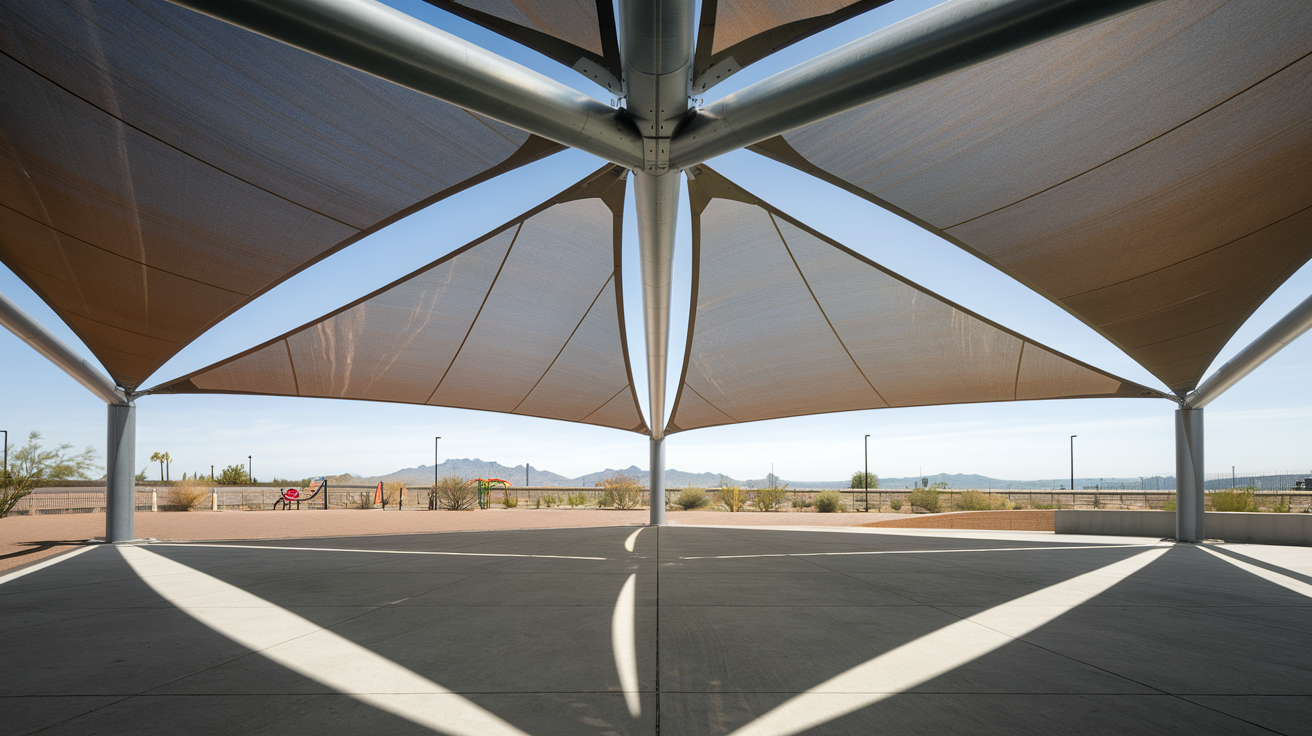
Wind load on a shade structure is calculated, not estimated, using the ASCE 7 standard that Arizona building code adopts, which converts a site’s design wind speed into pressure on every surface of the canopy. For the Phoenix metro that basic design wind speed generally falls in the 90-115 mph range, and the exact figure depends on the building’s risk category, surrounding exposure, and the local amendments Maricopa County and each city apply. An engineer works that speed through the structure’s height, the fabric’s projected area, and gust factors to land on the actual force the frame must carry.
The key idea is that a shade canopy behaves more like a flag than a wall: wind does not just push it sideways, it lifts and twists it. A flat or low-slope cover catches uplift the way an airplane wing does, so the engineering must resist the cover peeling up and out, not only flexing back. That uplift is why two structures with identical square footage can need markedly different footings. Structure family matters too: a single-post cantilevered shade structure loads its one foundation line, while a multi-post hip structure spreads load across several. Get the wind speed and exposure right first, because every downstream number flows from it.
Monsoon microbursts versus steady wind
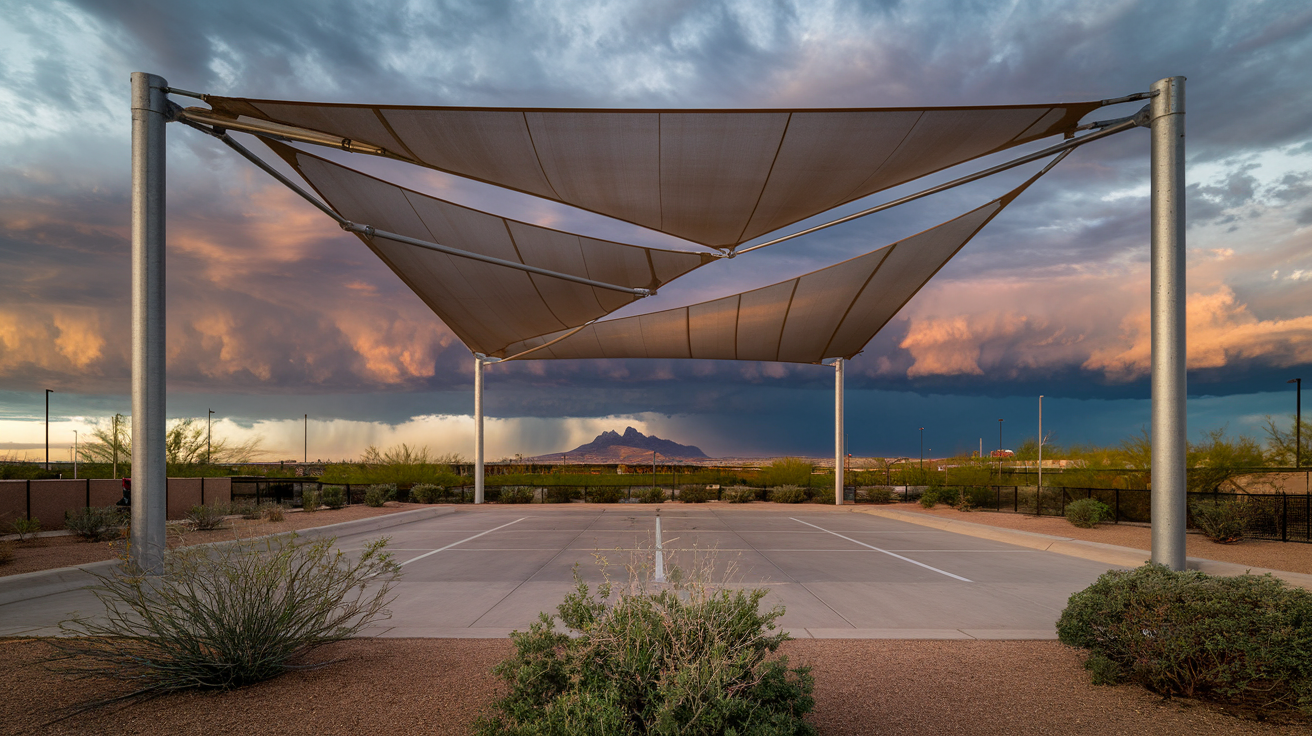
The load that actually threatens Arizona shade structures is the monsoon microburst, a short, violent downdraft that can exceed 60 mph and arrive in minutes, which is a different problem than a steady 30 mph afternoon breeze. A microburst hits like a slap rather than a lean: it slams down, spreads outward, and can flip a cover’s load from downward pressure to sudden uplift in seconds. Haboobs, the wall-of-dust events that precede many storms, add their own gust front before the rain lands.
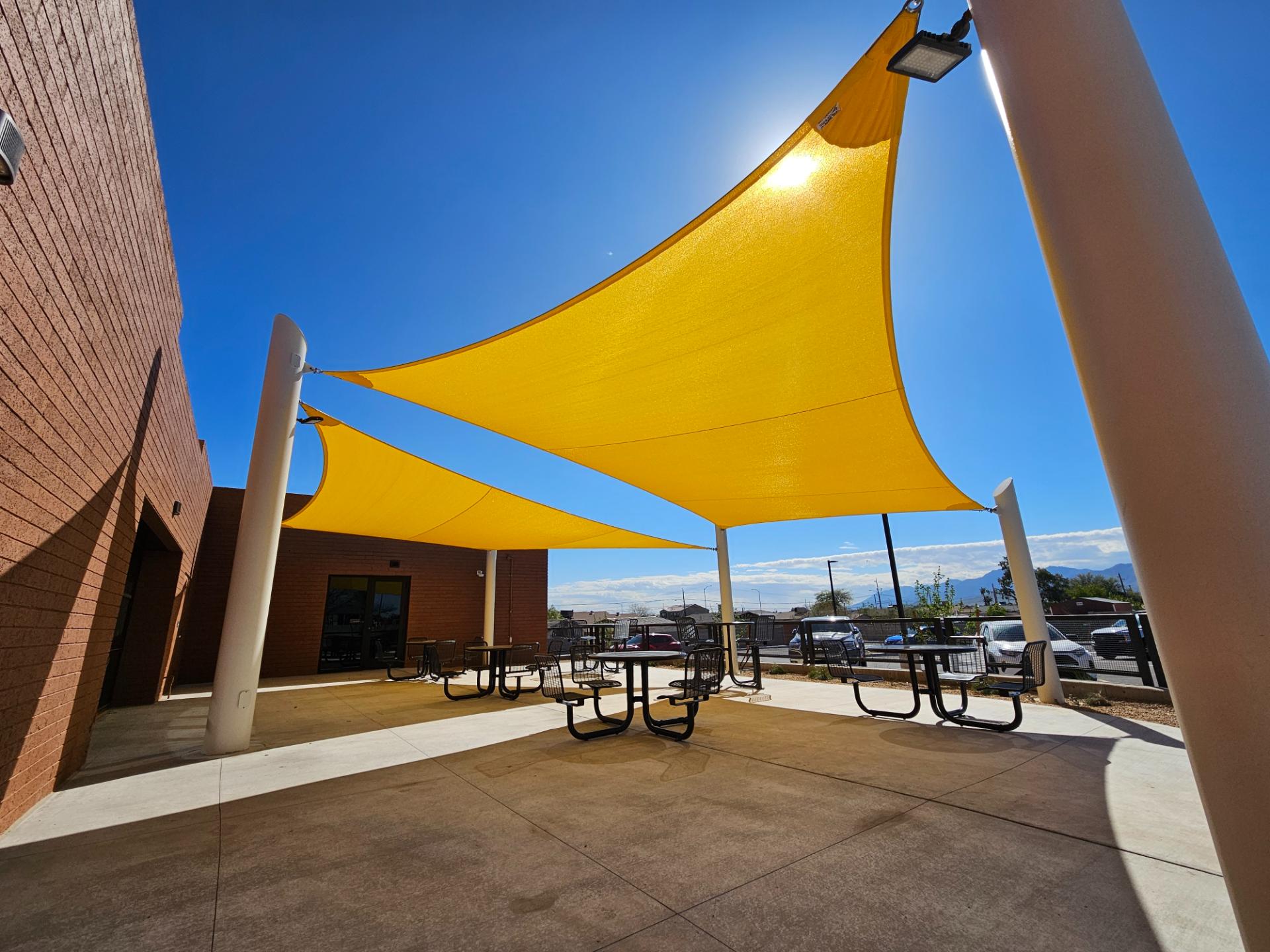
That is why engineers size frames for peak gusts, not average wind. A structure rated only for steady pressure would meet its sustained number and still fail the gust that defines a Valley summer. ASCE 7 builds gust effects directly into the calculation, so a designed canopy carries reserve capacity above the wind it sees on a normal day. Tensioned geometry helps: a three-point tensioned fabric sail sheds and reshapes around gusts by design, where a flat cover relies more on frame stiffness. Monsoon engineering is gust engineering, and a structure quoted off steady wind alone is quoted wrong.
Columns, footings, and fabric tension
Three things absorb wind on a shade structure, and all of them are sized for gust uplift: the steel columns, the concrete footings under them, and the tension holding the fabric taut. Columns are heavy-wall powder-coated steel sized so they neither buckle under uplift nor twist under an off-center gust, with larger spans and single-post cantilevers demanding the heaviest sections. Skimp on column gauge and the failure shows up as a permanent lean after the first hard storm.
What the engineering sets
- Footing depth. Foundations resist uplift as much as the steel does, and in the Valley’s caliche-laden soil drilled caissons often run roughly 4-10 ft deep before they grip enough to anchor a gust trying to lift the whole frame.
- Column size. Wall thickness and diameter are set by the calculated moment at the base, not by appearance, so a taller or wider structure gets visibly heavier posts.
- Fabric tension. Knitted HDPE shade fabric is engineered to a specific tension so it stays drum-tight; a loose cover flutters, fatigues, and tears years early, while correct tension lets the cover work with the wind instead of fighting it.
The cover itself is engineered too: heavier knit grades that carry 10-15 year warranties are specified where wind and UV are harshest, and the steel-versus-fabric trade-offs are detailed in our guide to shade structure materials, steel and HDPE. A frame is only as strong as the footing holding it down.
Stamped engineering and permit review
A commercial shade structure in Maricopa County needs stamped engineering drawings sealed by a licensed engineer, and the local jurisdiction reviews those drawings before issuing a permit. The stamp certifies that the wind, uplift, and foundation calculations meet ASCE 7 and the adopted building code for that site’s specific risk category and exposure. That seal separates an engineered structure from a fabricated guess, and it is the document the city plan reviewer checks.
The division of labor is simple: the fabricator provides the stamped drawings and engineering, and the city or county handles plan review and inspection. Total Shade fabricates commercial-grade steel frames in-house in Phoenix and supplies the engineered drawings a permit requires; the jurisdiction signs off. Treat a missing or unstamped drawing as a red flag, because an uninspected structure is a liability the moment a microburst arrives. The full range of engineered families is on our products page, with broader engineering basics across the shade structure guides hub. Ask for the stamp before you ask for a delivery date.
Pre-monsoon inspection and maintenance
The cheapest way to protect a shade structure through monsoon season is a once-a-year inspection before the storms start, because most wind failures begin as small, fixable problems. Bolts loosen, fabric tension relaxes over time, and powder-coat chips open the door to rust at the base plate, all of which weaken a frame’s ability to handle a gust. Catching a sagging cover in May is a re-tension; missing it can mean a torn cover in July.
A practical check covers a few items: confirm the fabric is still drum-tight and re-tension if it has gone slack, inspect base plates and footings for movement, rust, or hairline cracks, snug every bolt, and look for early fabric wear at the high-stress corners. When a cover is past its service life or storm-damaged, canopy replacement and repair swaps the consumable fabric while the engineered steel stays put, often for a fraction of a new build. Dust matters too: haboobs cake the fabric, and periodic rinsing keeps the weave breathing and the warranty intact. Inspect on a schedule and the structure earns its full 10-15 year run.
The honest limits of wind ratings
No commercial shade structure is rated for every wind on record, and the honest engineering reality is that the fabric is designed to be the part that gives way first to protect the frame. When a gust exceeds what the cover was tensioned for, a well-designed structure lets the fabric shed loose or tear at the seam rather than transfer that full force into the columns and footings, where failure would be catastrophic. A shredded cover after a record microburst is often the system working as intended, not a defect.
That is why fabric is a consumable layer with a 10-15 year service life, not a permanent roof. A torn cover after an extreme event is a re-cover, and the engineered steel underneath usually survives to carry the next one. The line a buyer should hold: design wind speeds of 90-115 mph and gust engineering cover the typical Arizona monsoon, but a freak burst beyond the design event can still take a cover, and a credible builder says so up front. Plan for the re-cover the way you plan for new tires, and the structure stays a 25-plus-year asset.
Shade Structures We Build
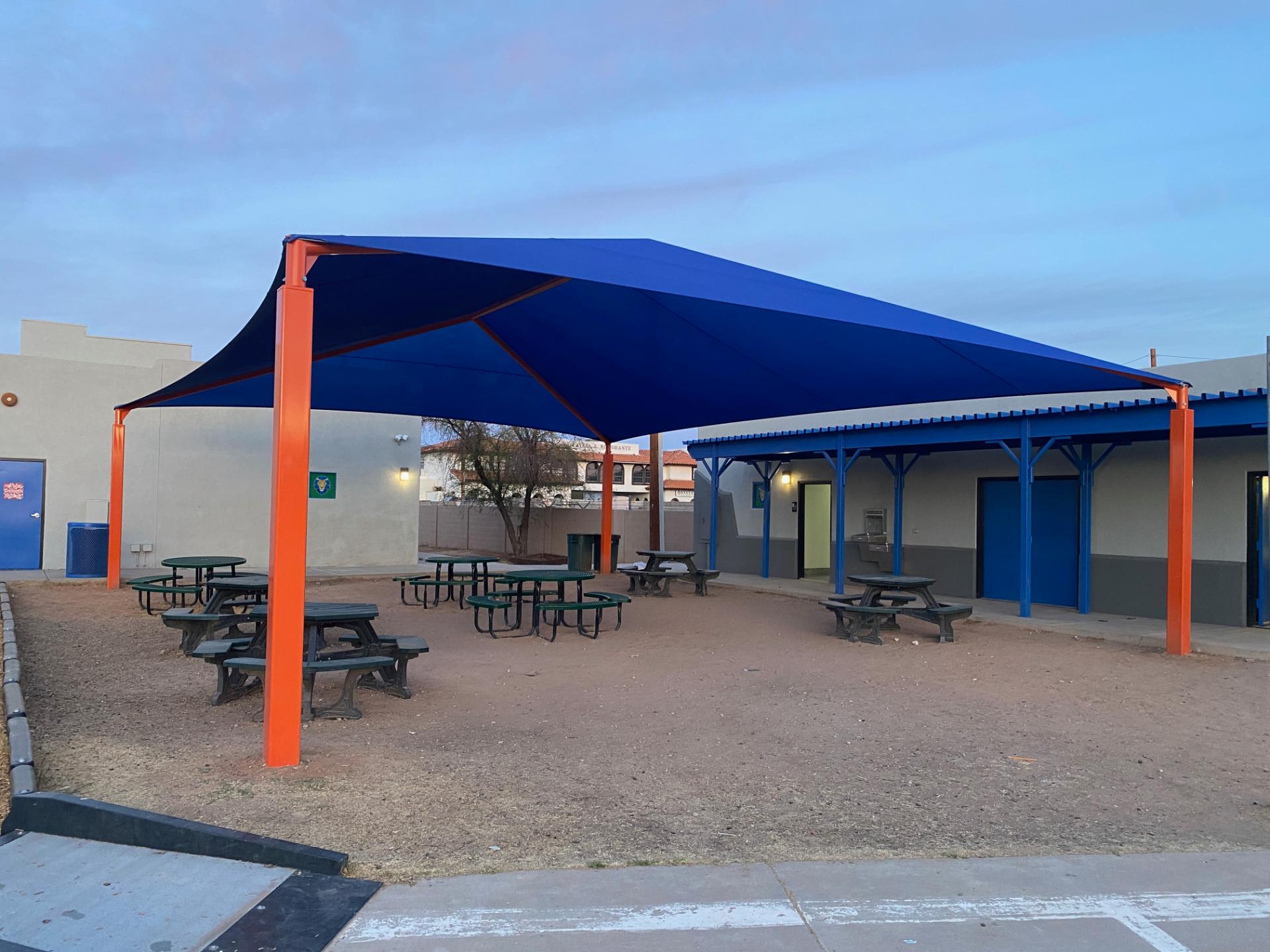
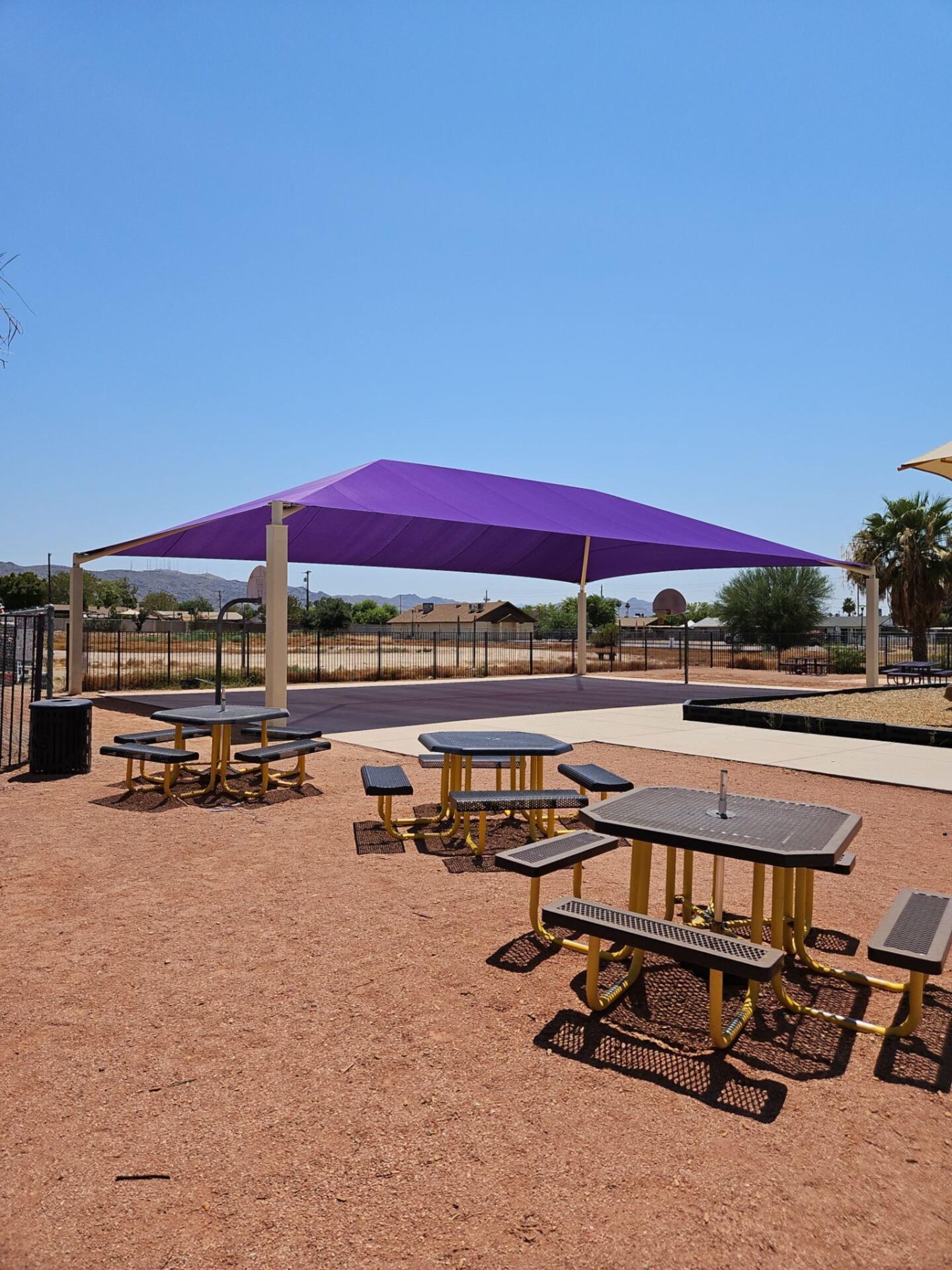
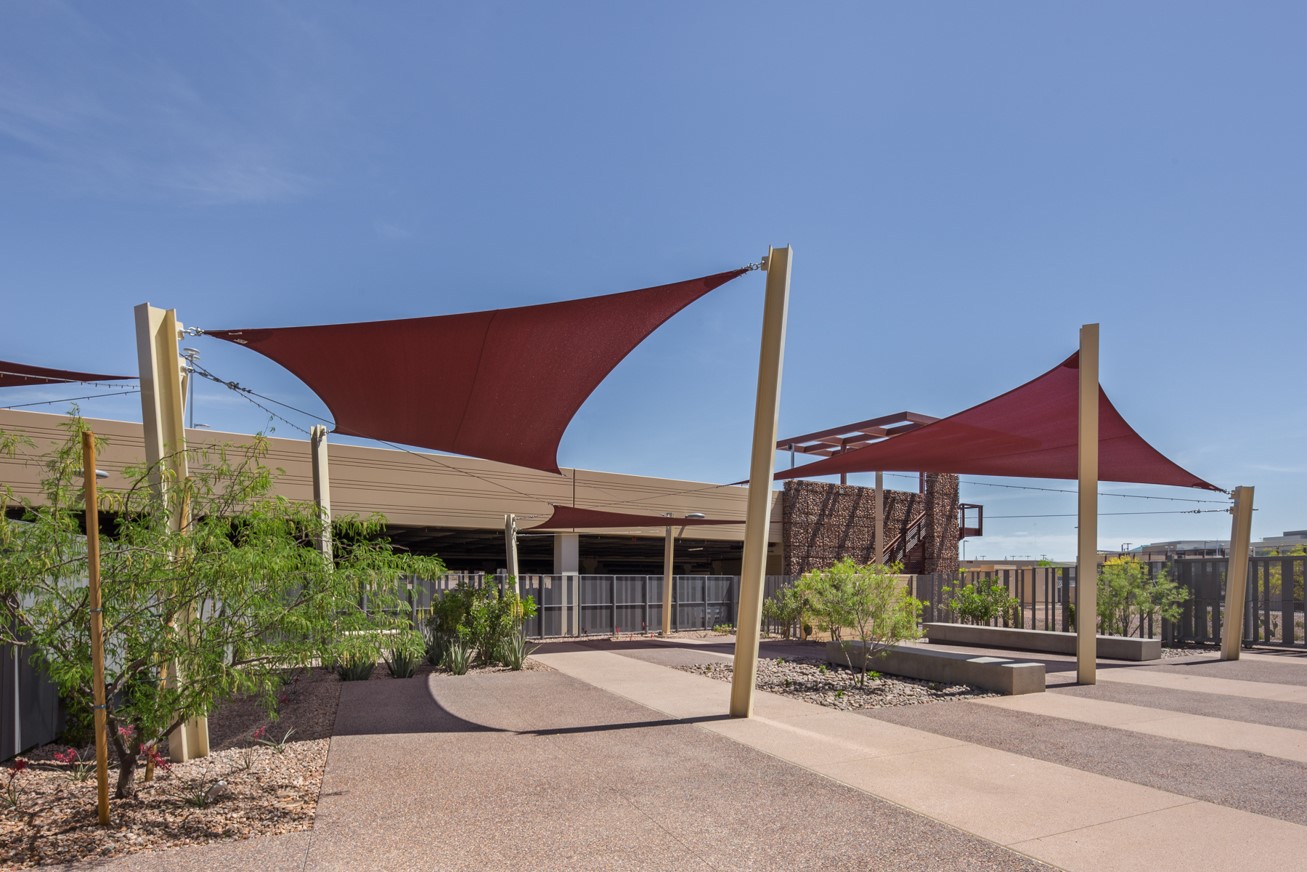
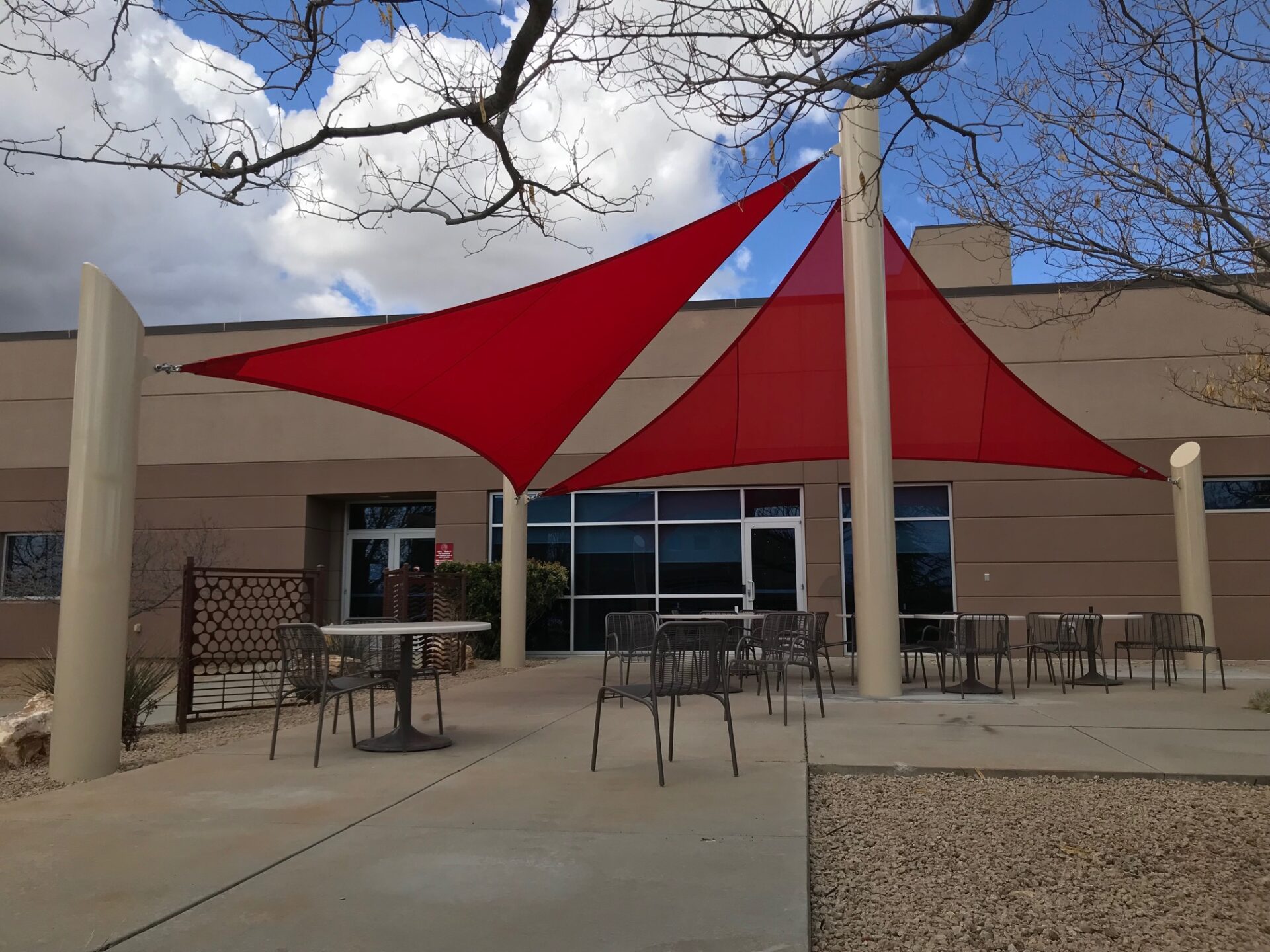
Ready to talk through your project?
Call (602) 265-0905 for a free assessment.
Frequently Asked Questions
How much wind can a commercial shade structure take?
Phoenix-area structures are engineered to the ASCE 7 standard with design wind speeds generally in the 90-115 mph range, set by the site’s risk category and exposure. That figure is a calculated, code-reviewed number rather than a marketing claim, and it includes gust effects so the frame carries reserve capacity above the wind it sees on a normal day. The exact rating appears on the stamped engineering drawings for your specific structure.
Will a shade structure survive an Arizona monsoon?
A properly engineered structure is designed to survive a typical monsoon, including microburst gusts that can exceed 60 mph, because the frame, footings, and fabric tension are all sized for sudden gusts rather than steady wind. Footings in caliche soil often run 4-10 ft deep to resist uplift. The honest limit is that a freak burst beyond the design event can still tear a cover, which is engineered to give way before the frame does.
Does a shade structure need stamped engineering in Maricopa County?
Yes. A commercial shade structure needs engineering drawings sealed by a licensed engineer that certify the wind, uplift, and foundation calculations meet ASCE 7 and the adopted building code. The fabricator supplies those stamped drawings, and the city or county reviews them before issuing a permit and inspects the finished structure. Treat a missing or unstamped drawing as a red flag.
What happens if the fabric tears in a storm?
A torn cover is usually the system working as designed: when a gust exceeds what the fabric was tensioned for, the cover sheds or tears at the seam to protect the steel frame and footings from a far costlier failure. Fabric is a consumable layer with a 10-15 year service life, so a storm-damaged cover is a re-cover while the engineered steel stays in place, typically for a fraction of a new build.
How often should a shade structure be inspected?
Inspect once a year before monsoon season, plus a quick look after any major storm. Confirm the fabric is still drum-tight and re-tension if it has gone slack, check base plates and footings for movement or rust, snug every bolt, and look for early fabric wear at the high-stress corners. Periodic rinsing clears haboob dust from the weave. A yearly check is what lets a structure reach its full 10-15 year service life.