or call (602) 265-0905 — no-obligation, on-site.
How Long Shade Structures Last in Arizona
How long a commercial shade structure lasts in Arizona, broken out by fabric, steel frame, and hardware.
Commercial shade structures last for decades — the powder-coated steel frame typically 20-30+ years and the knitted-HDPE fabric canopy about 10-15 years in Arizona's intense UV before it's recovered. The fabric is the consumable; the frame is re-covered, not replaced. Sun, monsoon wind, dust, and skipped re-tensioning shorten fabric life; cleaning and re-tensioning extend it.
Since 1998
Designing & building Arizona shade
In-House Fabrication
Built at our Phoenix shop
Engineered & Permit-Ready
Stamped drawings for AZ wind loads
Free On-Site Quote
No-obligation project assessment
A quality commercial shade structure lasts for decades, because its two parts wear on different clocks: the knitted HDPE fabric is a 10-15 year consumable, and the powder-coated structural steel frame is a 20-30+ year asset that gets re-covered, not replaced. Premium fabrics push toward 12-20 years, usually under a 10-year-class UV warranty. Arizona shortens the fabric clock, since high UV and 110-degree-plus summers age any cover faster than a milder climate, and monsoon wind and dust add wear on top. Total Shade has fabricated both the steel and the skin in-house in Phoenix since 1998 (AZ ROC #272680), and we recover fabric and re-tension frames as standard service. The headline to carry into any quote: you buy the steel once and replace the fabric on a cycle.
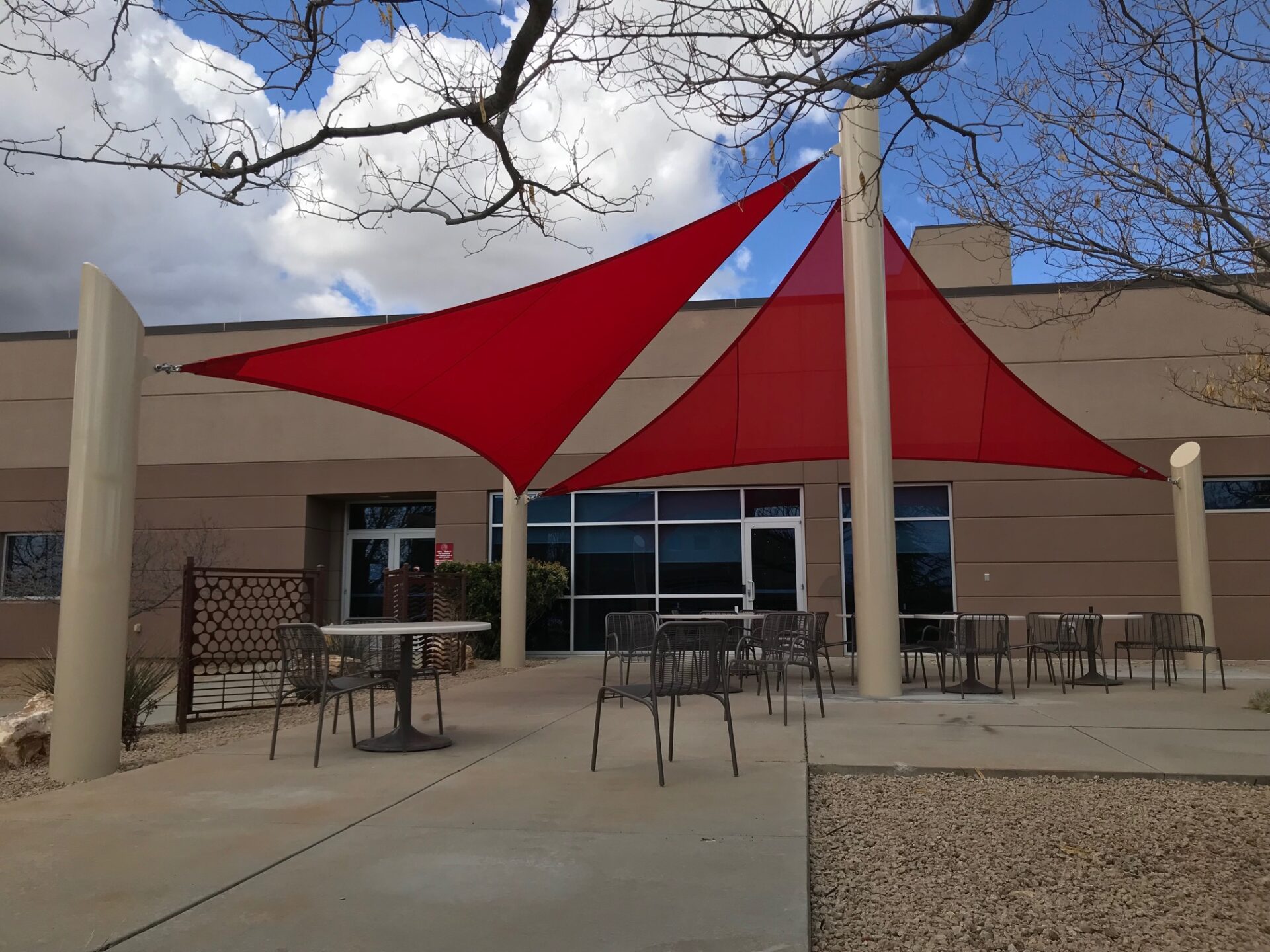
How long the fabric lasts, and why Arizona shortens that window
Knitted HDPE shade fabric commonly lasts about 10-15 years, with premium grades reaching 12-20 years, typically backed by a 10-year-class UV warranty against significant fade and degradation. The fabric is the consumable in the system, and its lifespan tracks how much ultraviolet energy it absorbs over time. A tighter weave that blocks more UV also takes more UV punishment, so the warranty number, not the look, is the figure worth comparing between products.
Arizona pushes covers toward the near end of that range. The Valley’s UV index runs higher than most of the country, and surface temperatures on a dark cover under 110-degree summer air climb well past the air reading, which accelerates the slow breakdown of the polymer. A cover that might see 15 years in a mild coastal climate is more honestly planned at 10-12 here. That is not a defect; it is the trade for the strongest sun in the lower 48, and it is why shade fabric replacement is treated as scheduled upkeep rather than repair. The fabric grade you pick sets where in that window you land.
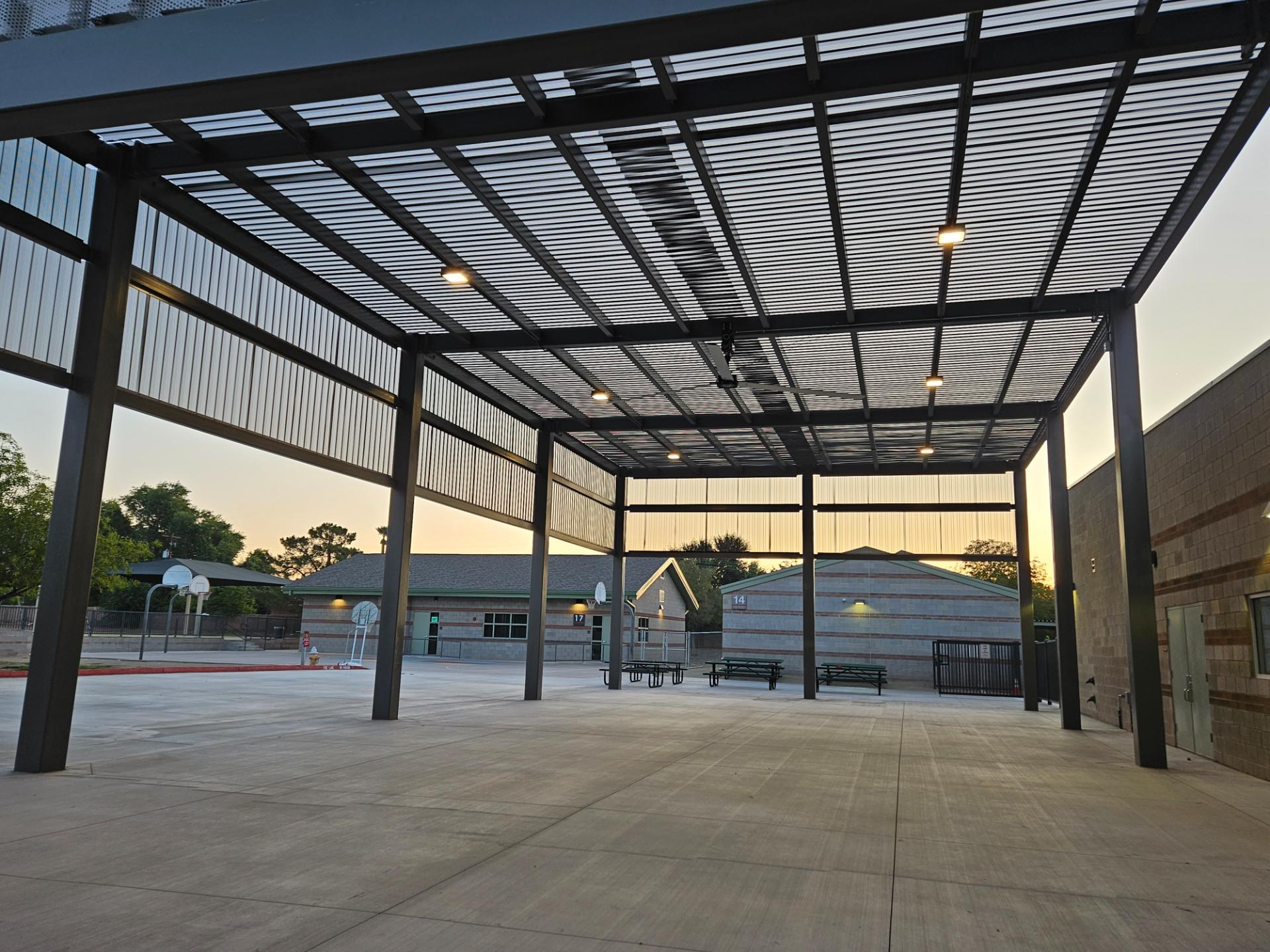
How long the steel frame lasts: the part you buy once
A powder-coated structural steel frame lasts 20-30+ years and routinely outlives two or three fabric cycles. The steel is the permanent half of the structure, and the powder coat is why it survives the desert: a dry finish applied electrostatically and baked on at roughly 350-400 degrees F, fused into a hard shell that resists UV fade, chalking, and corrosion far longer than brushed-on paint. Over a cleaned and primed surface, that finish carries the frame for 15-20+ years before it needs any attention.
Because the frame is engineered to Arizona building code and ASCE 7 wind loads, with posts and footings sized to the worst design gust on the site, its structural life is measured in decades, not warranty years. When a cover reaches the end of its run, the steel stays standing and only the skin changes. That single fact reshapes the math on a shade structure: the expensive, engineered part is a long-term asset, so a re-cover years later costs a fraction of the original build. The fuller material breakdown sits in the steel and HDPE materials guide.
What shortens shade-structure life in Arizona
Four local forces shorten a shade structure’s life, and they hit the fabric first. UV and heat lead the list: a higher UV dose and 110-degree-plus surface temperatures age the cover from the day it goes up, which is why Phoenix sits at the demanding end of every fabric warranty. The polymer does not fail overnight; it slowly loses strength and color until the cover thins and the weave opens.
Monsoon wind and dust do the rest. Microbursts topping 60 mph flex the fabric and load the cables and footings, and repeated gusting works tension loose over a season. Fine grit driven into the HDPE weave dulls color and chokes the airflow that keeps the space below cooler than a solid roof. A poor install compounds all of it: undersized footings, the wrong post for the span, or a cover hung without proper tension will fail in a microburst that a correctly engineered structure shrugs off. The honest read is that Arizona is a hard climate for shade, and a re-cover on a 12-year cycle is normal; the question is whether the frame underneath was built to outlast it. The split between a fix and a rebuild lives in the repair vs replace guide.
Signs it’s time to recover or repair
The clearest sign a cover is done is light: when sunlight starts coming through where it used to cast deep shade, the weave has opened and the UV block has dropped below useful. Watch for color that has faded unevenly, a surface that feels stiff or brittle instead of taut, fraying along the cable edges, and tension that has gone slack no matter how the turnbuckles are set. Any one of those means the fabric is near or past its window.
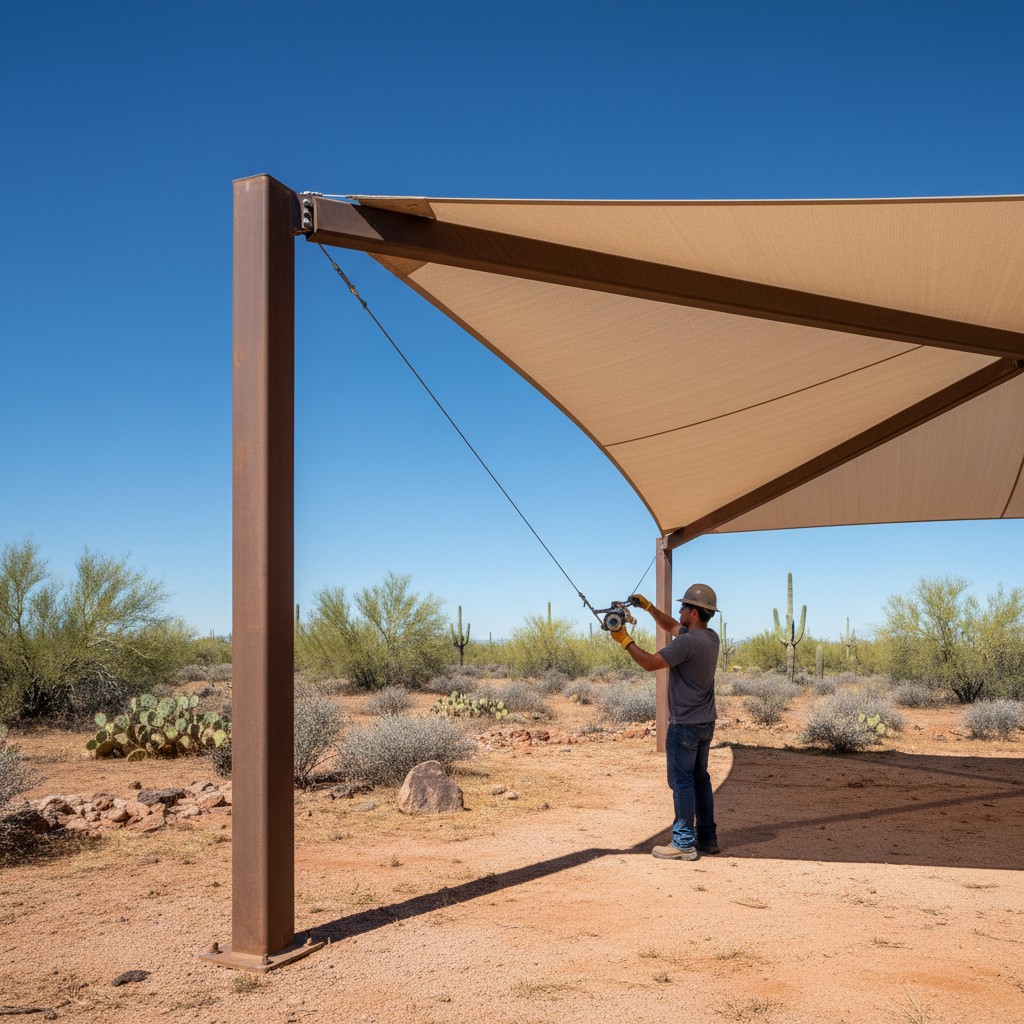
Frame and hardware send different signals, and they usually call for repair rather than full replacement. Powder coat chipped down to bare steel, surface rust at a weld or footing, a cable showing corrosion or broken strands, or a post that has shifted all point to hardware work, not a re-cover. The useful distinction is that a faded or sagging cover means the fabric is consumed, while rust or a loose post means the structure needs service before the next cover goes on. Catching the hardware issues early, often at a planned re-tension, is what keeps a frame on its 20-30 year track. A fabric replacement reuses the standing steel and swaps only the skin.
How to extend lifespan: cleaning and re-tensioning
Two habits add years to a shade structure: rinse the fabric and re-tension the cover. Valley dust settles into the HDPE weave within weeks, and left there it dulls color, blocks airflow, and holds moisture against the fibers, so an occasional rinse with plain water is the single highest-value thing an owner does. It is maintenance, not an upgrade, and skipping it is a quiet way to lose a year or two off the cover’s life.
Re-tensioning matters because HDPE relaxes as it ages, and a slack cover flogs in the wind instead of holding its shape, which accelerates wear at every seam and cable. A re-tension check every year or two pulls the cover back taut and lets a crew catch loose hardware, a chipped footing, or surface rust before it spreads. The frame wants little more than the same rinse and a look for chips that expose bare steel. None of this is heavy work, and it is exactly what moves a fabric from the near end of its window toward the far end. Total Shade re-tensions frames and recovers covers as standard service across the product line.
Warranty years versus real-world life, said honestly
A warranty is a planning number, not a promise of the exact day a cover fails, and three honest caveats keep it in perspective. First, a 10-year-class UV warranty describes the manufacturer’s coverage against significant fade, while real-world life in Phoenix often lands a little under the headline because of the sun load here; budget for a re-cover around year 10-12 rather than treating it as a failure. Second, wind ratings have a ceiling: a frame engineered to a 90-115 mph design speed handles the worst expected gust, but a haboob beyond that figure can damage any canopy, and the stamped engineering drawing matters more than a marketing line.
Third, the fabric is consumable by design, and that is a feature. Because the steel frame is the 20-30+ year asset and the cover is the 10-15 year wear item, the structure is built to be re-covered cheaply rather than rebuilt. None of these caveats undercut the value; they describe how to own shade in Arizona with eyes open. The deeper read on coverage terms sits in the warranty guide, and the rest of the explainers are collected in the shade structure guides hub.
Shade Structures We Build
Ready to talk through your project?
Call (602) 265-0905 for a free assessment.
Frequently Asked Questions
How long do shade sails last in Arizona?
Knitted HDPE shade sails commonly last about 10-15 years, with premium fabrics reaching 12-20, usually under a 10-year-class UV warranty. Arizona’s high UV and 110-degree-plus summers push real-world life toward the near end of that range, so a re-cover around year 10-12 is normal planning. The cable, turnbuckle, and steel post hardware that holds a sail under tension lasts far longer, so when the fabric fades the sail gets re-covered on the standing frame rather than rebuilt.
How often does shade fabric need replacing?
Plan on replacing commercial shade fabric roughly every 10-15 years, and nearer 10-12 in Phoenix because of the UV load here. The clearest cue is light coming through where the cover used to cast deep shade, along with uneven fade, a stiff or brittle feel, and fraying at the edges. A yearly rinse and an occasional re-tension stretch the fabric toward the far end of its window, and because the steel frame stays in place, replacement means swapping only the skin.
Does the steel frame need replacing too?
No, the powder-coated steel frame is built to outlast the fabric and typically runs 20-30+ years. It is engineered to Arizona building code and ASCE 7 wind loads, and the baked-on powder coat resists rust and UV for 15-20+ years before it needs attention. The frame outlives two or three fabric cycles, so each re-cover reuses the standing steel, hardware, and footings and costs a fraction of the original build. Watch only for chips that expose bare steel and surface rust at welds or footings.
What shortens the life of a shade structure in Arizona?
Four things age it fastest: high UV, 110-degree-plus surface heat, monsoon wind, and dust. UV and heat break down the HDPE polymer from day one, microbursts topping 60 mph flex the fabric and loosen tension, and grit driven into the weave dulls color and chokes airflow. A poor install makes all of it worse, since undersized footings or a cover hung without proper tension fail in a gust that a correctly engineered structure handles. Regular rinsing and re-tensioning offset most of this.
Can re-tensioning and cleaning really extend the life?
Yes, both add real years. Rinsing dust out of the HDPE weave keeps color, airflow, and fiber strength up, and it is the highest-value maintenance an owner does because Valley dust settles within weeks. Re-tensioning every year or two pulls a relaxing cover back taut so it stops flogging in the wind, which slows wear at every seam and cable, and it lets a crew catch loose hardware or surface rust early. Together they move a fabric from the near end of its 10-15 year window toward the far end.