or call (602) 265-0905 — no-obligation, on-site.
Shade Structure Warranty Coverage Explained
How commercial shade warranties actually split into two parts, what each one covers, and the written terms to confirm before you sign.
Since 1998
Designing & building Arizona shade
In-House Fabrication
Built at our Phoenix shop
Engineered & Permit-Ready
Stamped drawings for AZ wind loads
Free On-Site Quote
No-obligation project assessment
A commercial shade structure carries two separate warranties, not one: a manufacturer’s UV warranty on the fabric, commonly 10-15 years and often prorated, and an installer’s warranty on the steel frame and workmanship, which varies by builder. The two protect different failures and run on different clocks, so a 10-year fabric warranty does not mean the frame is covered for 10 years, and a strong steel warranty says nothing about UV fade. Both warranties also carry exclusions, normal fade limits, storm and wind damage, vandalism, that catch buyers who never read the document. This page explains how each warranty typically works across the industry, what is usually covered versus excluded, and the exact terms to get in writing on your quote. None of the numbers here are Total Shade-specific guarantees; treat them as industry-typical ranges and confirm your own terms against the written warranty.
The fabric warranty: a manufacturer UV guarantee
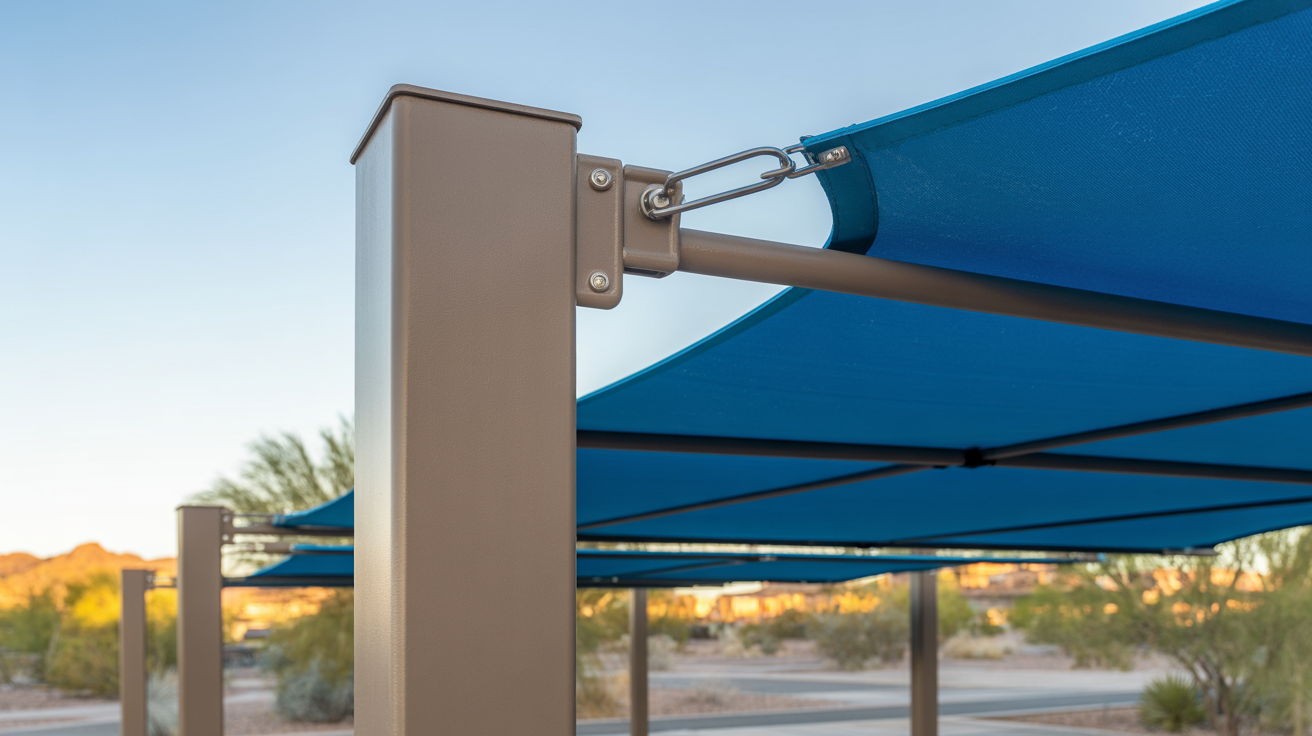
The fabric warranty comes from the cover manufacturer, not the installer, and it protects the knitted HDPE shade cloth against UV degradation, that is, the fabric tearing, disintegrating, or losing structural integrity from sun exposure rather than fading. Across the industry these run roughly 10-15 years on commercial-grade HDPE, with the denser, higher-end weaves carrying the longer terms. If the fabric goes brittle and fails within the term from normal sun, the manufacturer replaces the cloth. What it usually does not cover is color fade, which manufacturers treat as cosmetic and expected. HDPE shade fabric blocks around 90-99% of UV depending on weave density, and absorbing that radiation for a decade-plus in Arizona sun naturally lightens the color long before the yarn fails, so a 15-year warranty on the cloth does not promise the original color for 15 years. The fabric is a consumable cover with a planned replacement window, and the warranty length tells you roughly how long that window is, not that the cover is permanent.
The frame and workmanship warranty: the installer’s promise
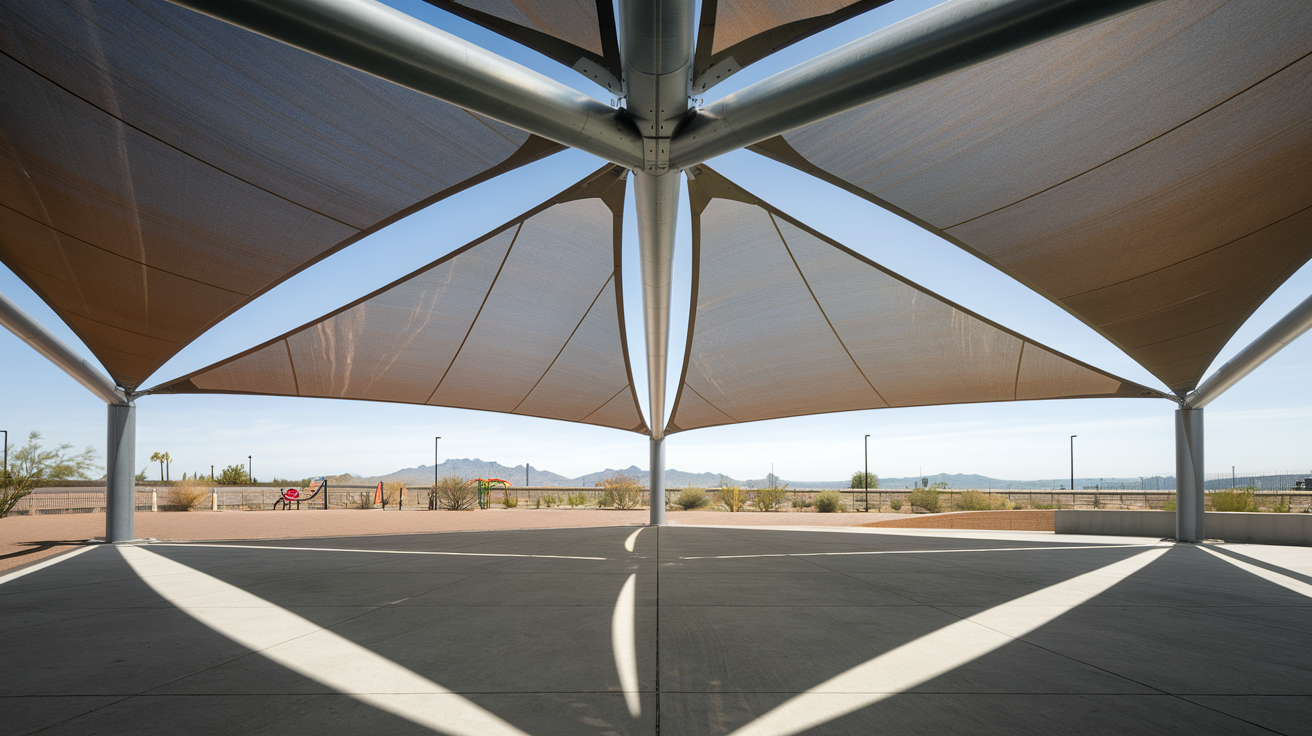
The steel frame and the quality of the install are covered by the installer’s own warranty, a separate document from the fabric warranty and the one that varies most between builders. This is the warranty that backs the powder-coated steel against premature rust or structural failure and backs the workmanship, footings, welds, hardware, fabric attachment, against defects in how the structure was built. Terms here are all over the map: workmanship coverage commonly runs anywhere from 1 to 10 years, and some builders warrant the structural steel separately for longer. Because no manufacturer standardizes it, the frame warranty is exactly as good as the company writing it. A 2-year-old company offering a 10-year workmanship warranty is making a promise it has never had to honor, while a shop with 25-plus years of in-house fabrication has a track record behind the same words. The frame and fabric warranties run on independent clocks, so confirm both terms separately, never assume the longer number covers everything.
What’s typically excluded from both warranties
Most warranty disputes trace back to an exclusion the buyer never read, so know the standard ones before you need them. Storm and wind damage is the big one: a structure engineered to Arizona code and ASCE 7 wind loads is rated to design wind speeds of roughly 90-115 mph in the Valley, but monsoon microbursts can exceed 60 mph and a rating is a design target, not a guarantee, so wind damage above the rated load is almost always excluded and routed to your property insurance. Vandalism, cuts, fire, and impact are excluded across the board, and color fade is excluded as normal wear since the cloth is built to absorb UV. Improper maintenance voids coverage too, fabric left slack and flogging in the wind, or dust left to abrade the weave, are owner-side failures, and removing the cover yourself usually voids the fabric warranty while modifying the steel voids the frame warranty. The pattern is consistent, warranties cover defects in materials and workmanship, not damage from forces outside the structure’s design, which is why a warranty and a property-insurance policy do different jobs and you want both.
Prorated vs full coverage: read the fine print
Most long fabric warranties are prorated, meaning the payout shrinks each year, so a 15-year warranty rarely pays 100% in year 14. Under proration, the manufacturer covers the full replacement cost only early in the term, then reduces its share on a schedule, often roughly 10% per year or by a published table, so by year 10 of a 15-year warranty you might recover only a fraction of the cloth while paying the balance plus labor to re-cover. A full or non-prorated warranty replaces the failed material at the same coverage level for the entire term, which is rarer and usually shorter. So a 15-year prorated warranty and a 10-year non-prorated one are not the longer-is-better comparison they look like, run the proration math. Also check whether the warranty covers material only or material and labor, since most fabric warranties cover the cloth but not the crew time to install it, and on a large parking-lot system that labor is a real number. Ask for the proration schedule in writing so you know what year 8 actually pays.
What to ask for in writing before you sign
Get every warranty term on paper before the deposit, because a verbal promise is not a warranty. Ask for five things in the written document: the fabric warranty length and the manufacturer’s name, so you can verify it independently; whether that fabric warranty is prorated or full, and the proration schedule if it is; the separate frame and workmanship warranty term and exactly what it covers; whether either warranty includes labor or only materials; and the full exclusions list. Then confirm the practical mechanics, who you call to make a claim, the installer or the manufacturer, and what voids coverage on your end. A reputable builder hands these over without hesitation; reluctance to put warranty terms in writing is itself the answer. The same document should name the steel gauge and HDPE fabric grade, because the warranty is only as meaningful as the materials it backs, a long warranty on thin economy cloth still fades and wears early. When you eventually need a re-cover, those terms are also what the canopy replacement and repair conversation starts from.
Honest caveats: terms vary, so verify your own
Every number on this page is an industry-typical range, not a Total Shade guarantee, and the only warranty that governs your project is the one written on your quote. Fabric warranties commonly run 10-15 years and frame and workmanship terms vary widely, but a competitor’s 20-year claim and a 10-year claim can describe nearly identical real-world protection once you account for proration, labor exclusions, and fade carve-outs. Three honest realities shape what a warranty is worth: the fabric is a consumable that will likely need replacing inside its term in Arizona sun; wind ratings have hard limits and monsoon damage above them belongs to your insurer; and dust means periodic cleaning that, if skipped, can void coverage. A warranty measures how confident a builder is in its own steel and how the manufacturer rates its cloth, not a promise that nothing will ever fail. The useful next step is simple, ask for the written warranty alongside the quote, read the exclusions and proration, and compare builders on those terms rather than on the headline year.
Shade Structures We Build
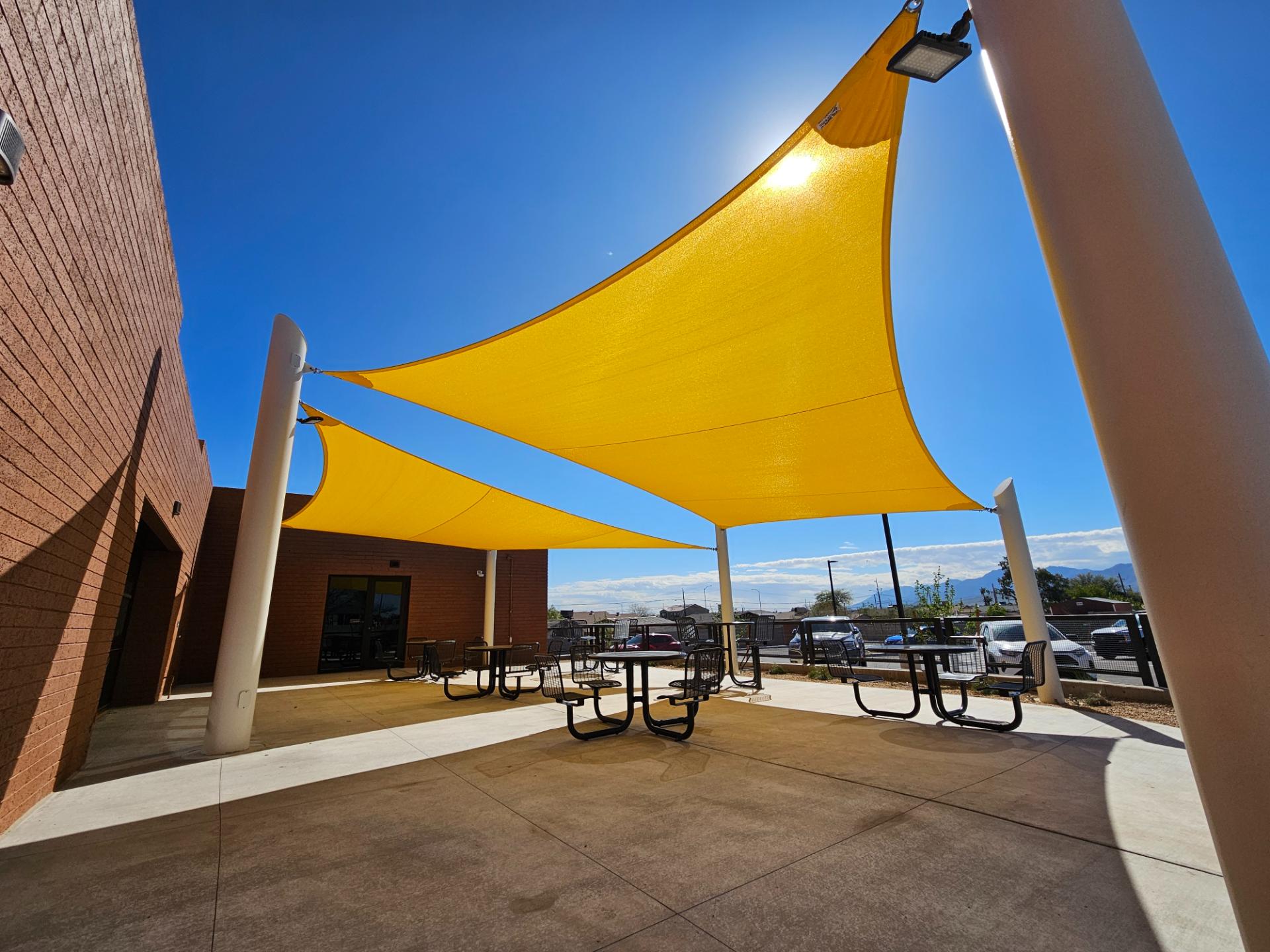
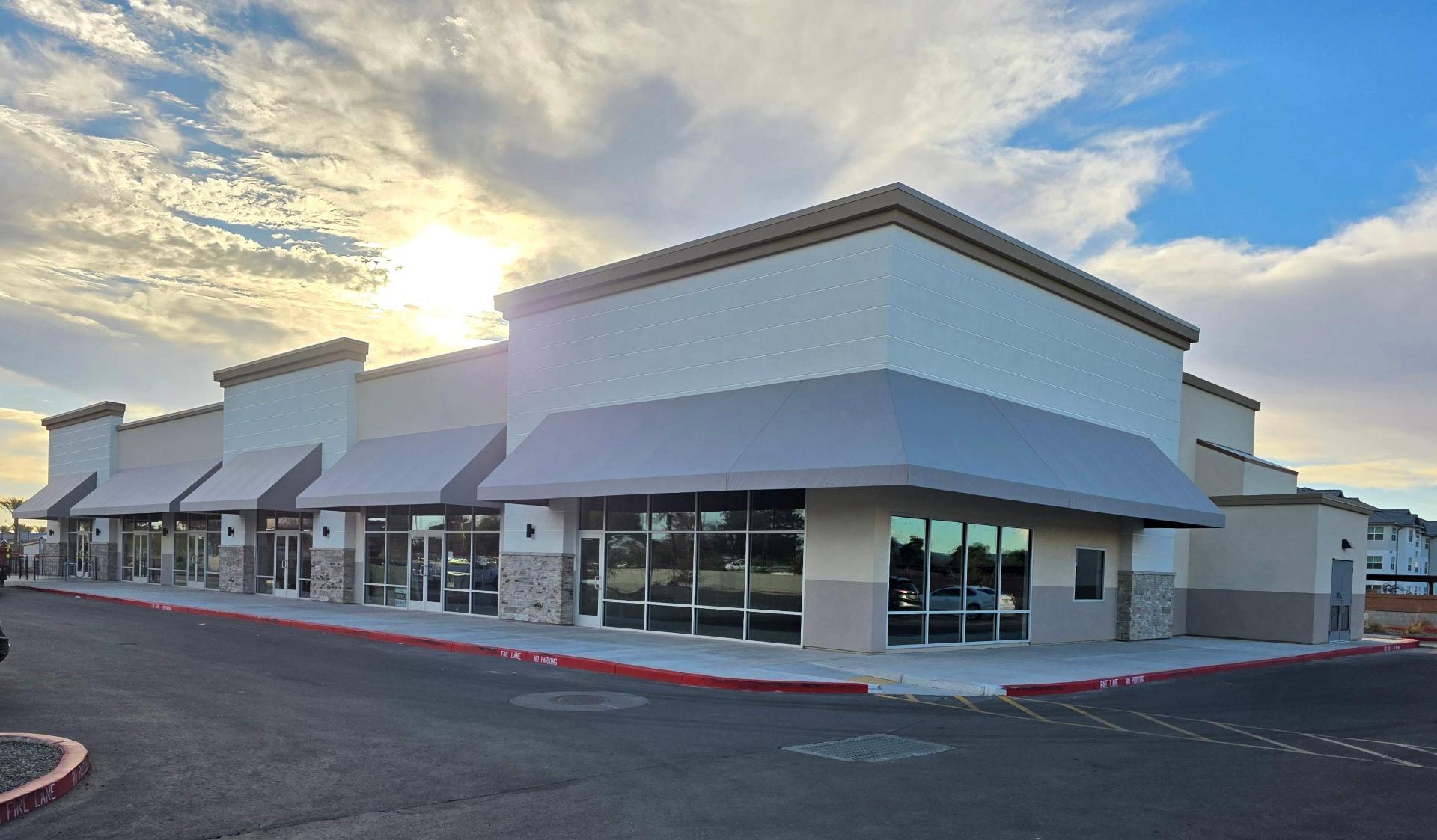
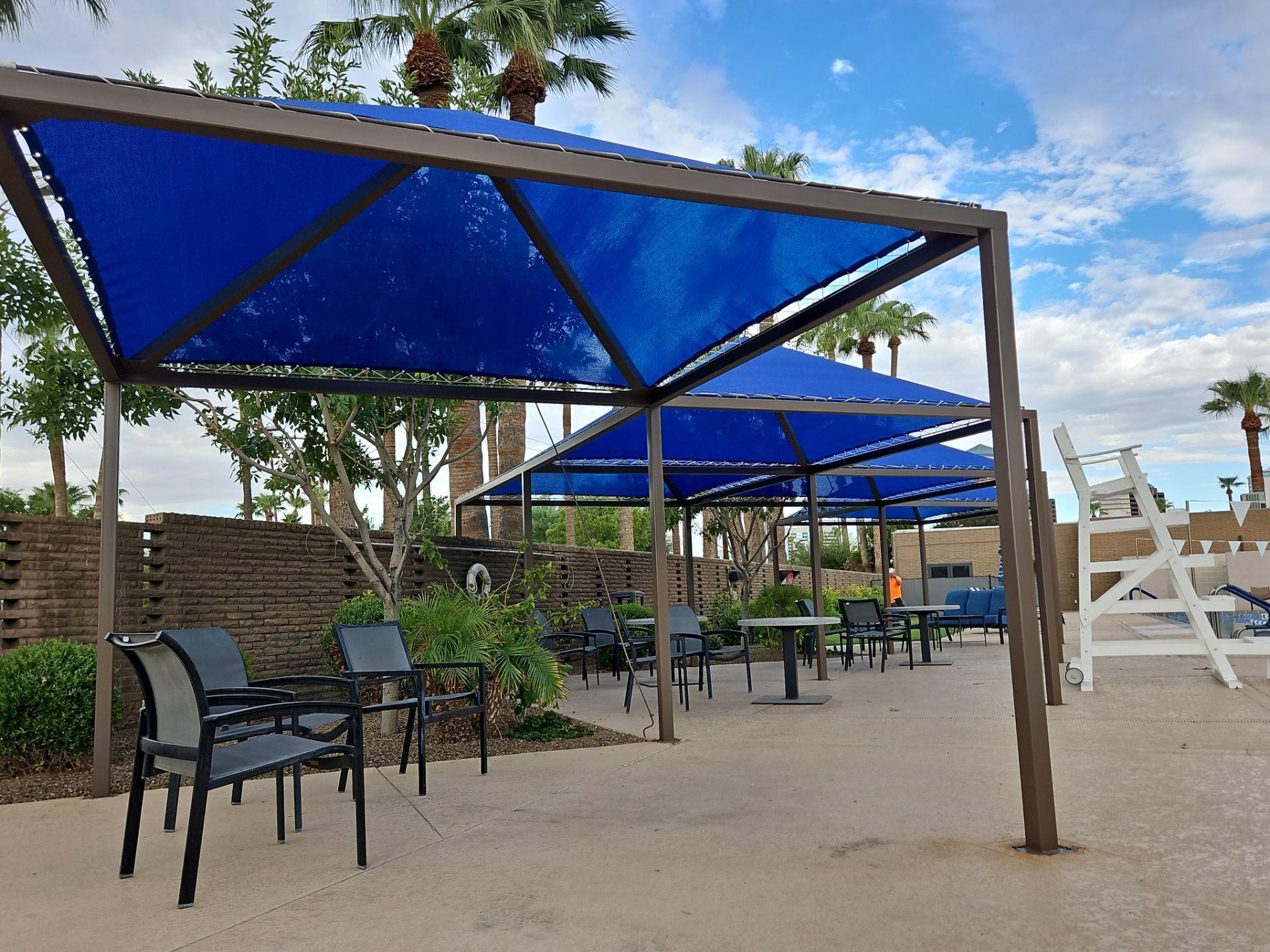
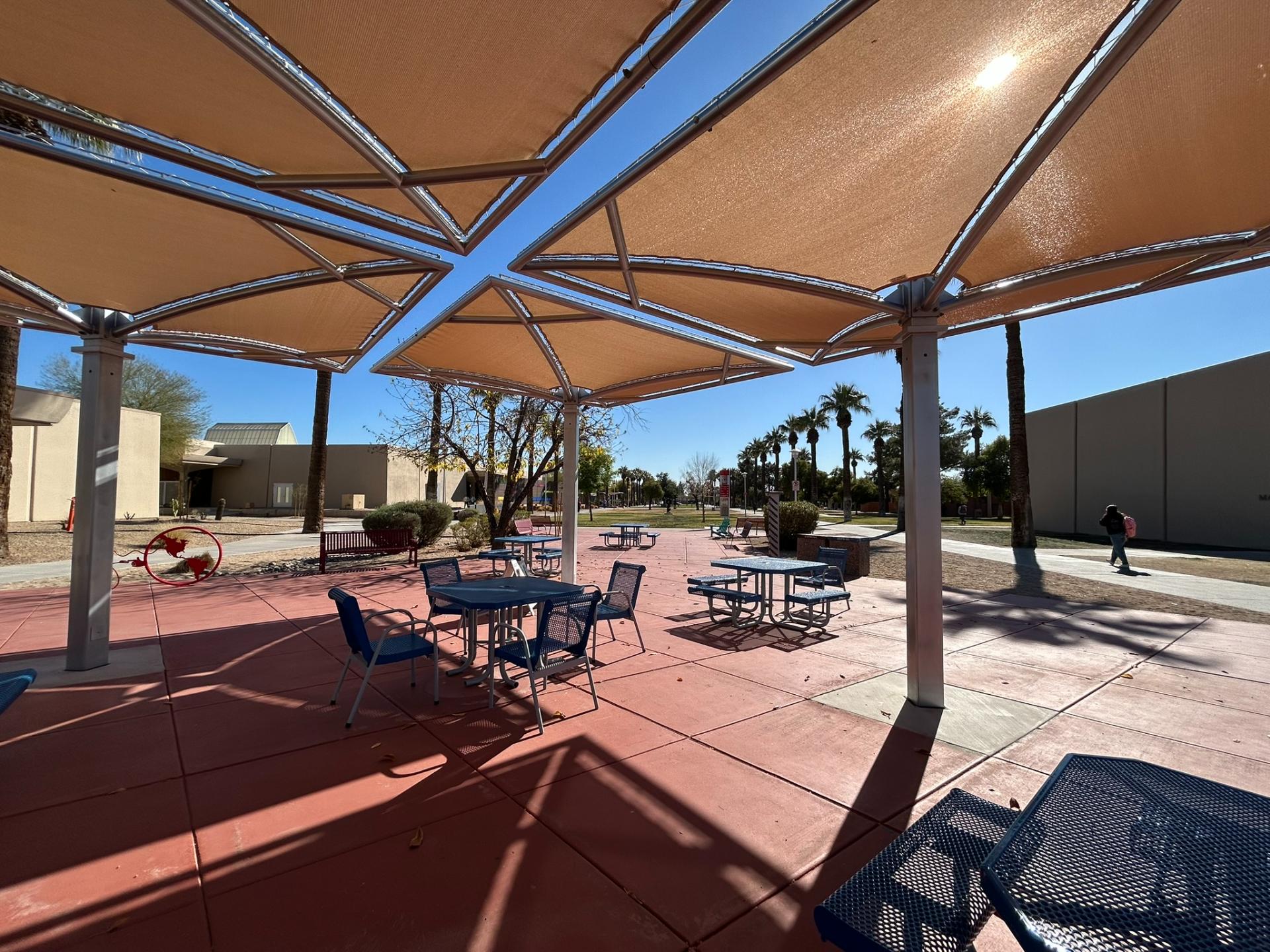
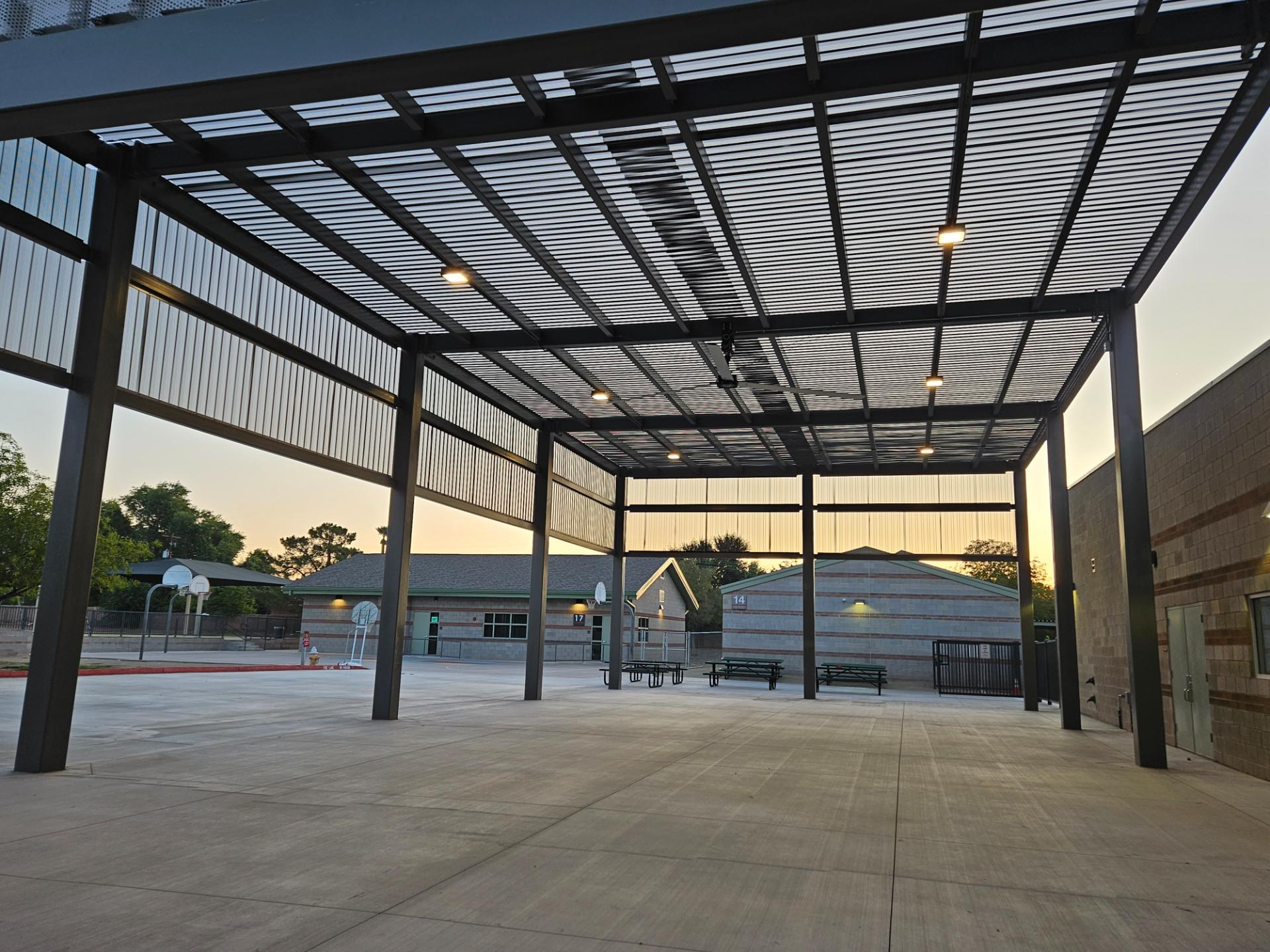
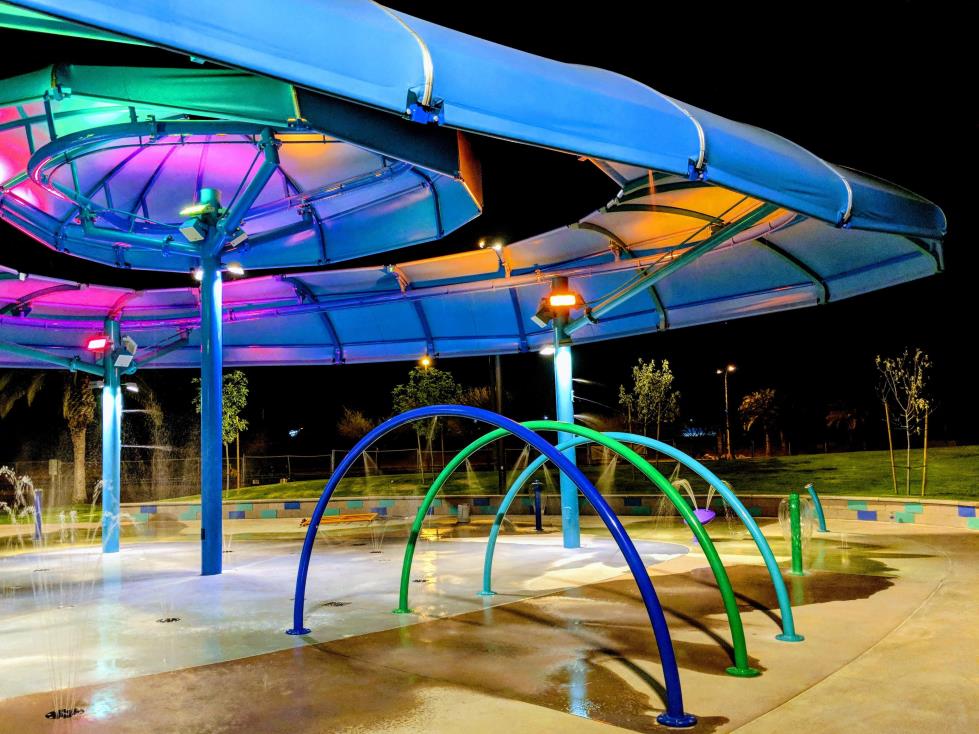
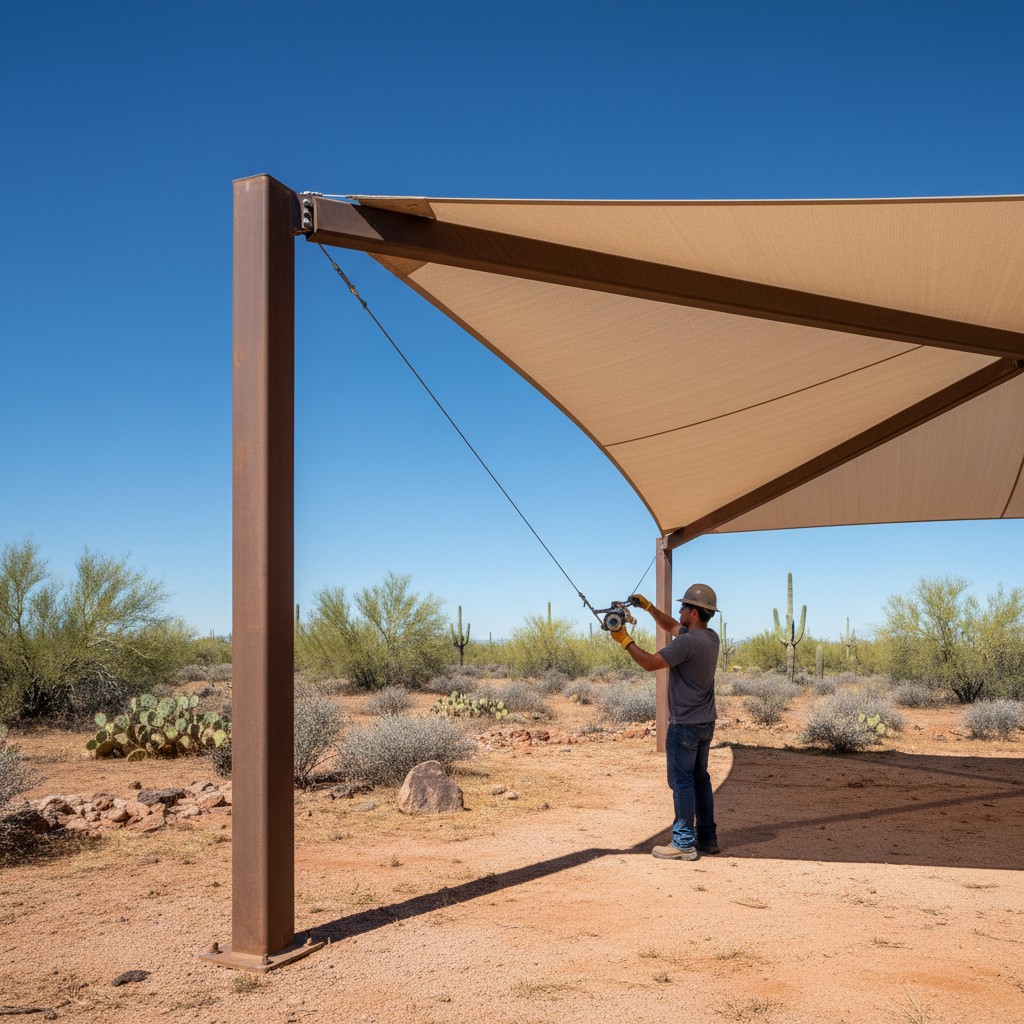
Need a shade structure repaired or re-covered?
Call (602) 265-0905 for a free assessment.
Frequently Asked Questions
How long is the warranty on a commercial shade structure?
There are two warranties with different lengths. The fabric’s UV warranty from the cover manufacturer commonly runs 10-15 years on commercial-grade HDPE, and is often prorated. The frame and workmanship warranty from the installer is separate and varies widely, frequently 1-10 years depending on the builder. A long fabric warranty does not mean the frame is covered for the same period, so confirm both terms separately. These are industry-typical ranges; check the written warranty on your own quote for the terms that actually apply.
What does a shade structure warranty actually cover?
The fabric warranty covers UV degradation of the HDPE cloth, the yarn going brittle or failing structurally from sun within the term, while the installer’s frame warranty covers defects in the steel and workmanship, such as premature rust, footing problems, welds, or fabric attachment. Both cover defects in materials and construction, not damage from outside forces. Color fade, storm and wind damage, vandalism, and damage from skipped maintenance are typically excluded. Read both documents, because coverage stops exactly where the exclusions list begins.
Is monsoon or storm damage covered under warranty?
Usually no. A structure is engineered to Arizona code and ASCE 7 wind loads, design wind speeds of roughly 90-115 mph in the Valley, but a rating is a design target, not a guarantee, and monsoon microbursts can exceed 60 mph. Wind, storm, hail, and impact damage are almost always excluded from both the fabric and frame warranties and are instead a matter for your property insurance. That is why a warranty and an insurance policy do different jobs; for a commercial structure you generally want both in place.
What does a prorated warranty mean?
Prorated means the warranty pays less as it ages. Early in the term the manufacturer may cover the full replacement cost of failed fabric, but its share drops on a schedule, often around 10% per year or by a published table, so by year 10 of a 15-year warranty you might recover only a fraction of the cloth and pay the rest plus labor. A full or non-prorated warranty keeps the same coverage level for the whole term but is usually shorter. Run the proration math before assuming a longer warranty is the better one.
What should I ask for in writing before buying?
Get five things on paper: the fabric warranty length and the manufacturer’s name, whether it is prorated and its schedule, the separate frame and workmanship term and what it covers, whether either warranty includes labor or materials only, and the full exclusions list. Also confirm who handles a claim and what voids coverage on your end. The written warranty should sit alongside the quote and name the steel gauge and fabric grade. A builder that puts all of this in writing without hesitation is showing confidence in its work.