or call (602) 265-0905 — no-obligation, on-site.
Awnings vs Umbrellas: Commercial Shade Compared
Building-mounted awnings versus freestanding cantilever umbrellas, and the four site facts that decide which one a commercial space actually needs.
Awnings vs umbrellas: choose an awning for fixed shade attached to a building over windows, doors, or a patio edge; choose a shade umbrella for movable, freestanding cover over tables or open areas. Awnings shade structures and glass; umbrellas shade people and furniture you may rearrange.
Since 1998
Designing & building Arizona shade
In-House Fabrication
Built at our Phoenix shop
Engineered & Permit-Ready
Stamped drawings for AZ wind loads
Free On-Site Quote
No-obligation project assessment
Choose a commercial awning when shade has to attach to a building, hold a wall line, and stay put for 15-plus years; choose a freestanding cantilever umbrella when you need shade that drops anywhere, moves with the layout, and tilts or folds out of a monsoon. An awning is architecture bolted to a wall: it covers a doorway, storefront, or patio edge and reads as part of the building. A commercial cantilever umbrella is furniture-grade equipment: a single offset post lifts a 10-to-13-ft canopy over tables with no center pole in the way. They solve different problems, so the real question is not which is better but which job is on your site. With 25+ years fabricating powder-coated steel and knitted HDPE covers in Phoenix, Total Shade specs both, and the sections below sort the decision by mounting, coverage, branding, cost, and monsoon wind.
How each one mounts and carries its load
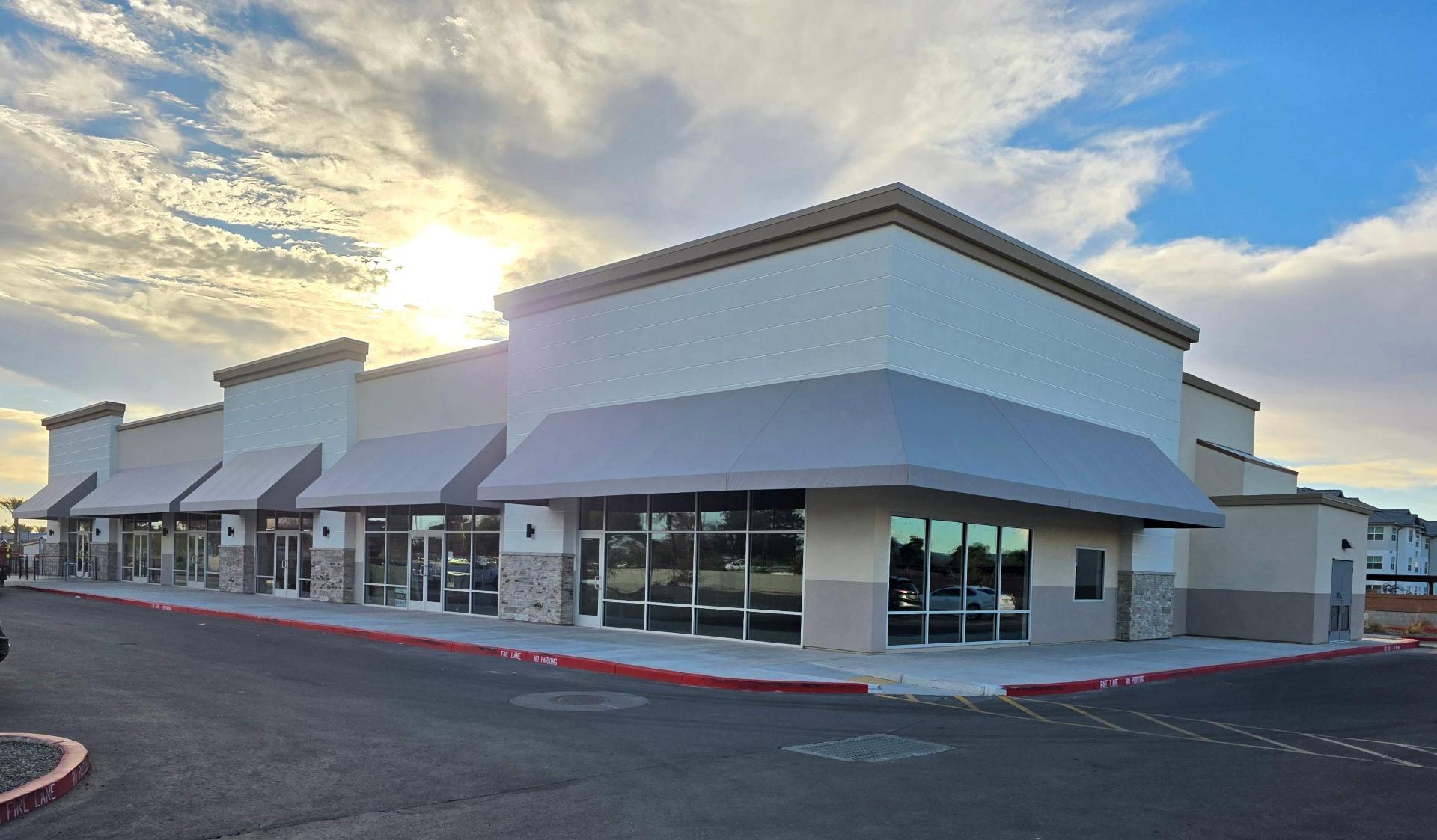
An awning anchors to the building; an umbrella anchors to the ground or to itself. That single structural difference drives almost every other trade-off. A commercial awning ties into the wall with a ledger and brackets, then projects out 3-8 ft over a door, window, or patio edge, so the building carries part of the load and the fabric or metal panel holds a fixed line. Because it is fastened to structure, an awning needs sound wall backing and, in most Valley jurisdictions, a permit and stamped drawings before it goes up.
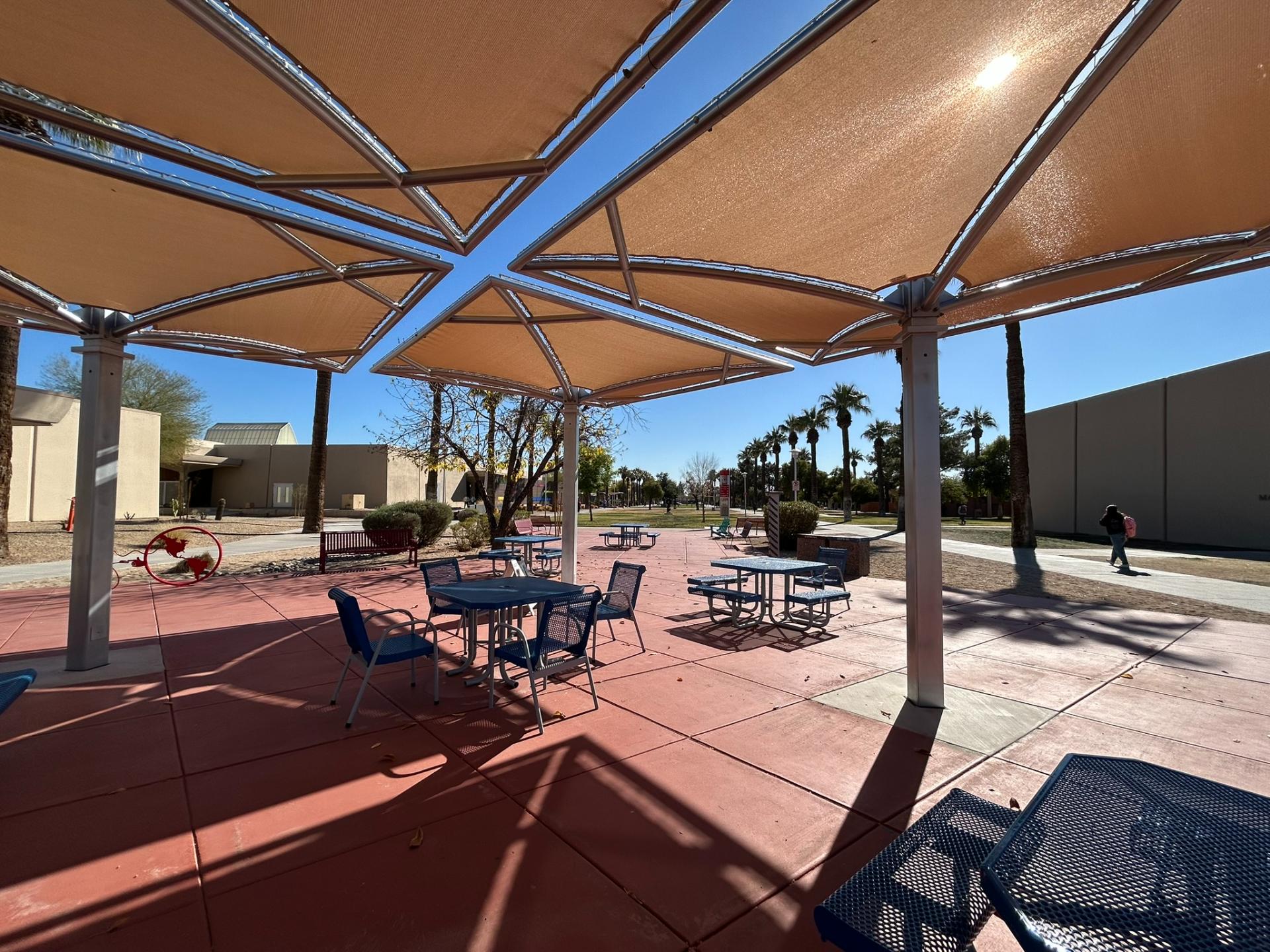
A freestanding cantilever umbrella carries everything on one offset mast set in a weighted base or a small in-ground footing, which is why the canopy floats clear with no pole through the table. It needs no wall, so it works in the middle of a courtyard, a pool deck, or a parking-adjacent patio where there is nothing to bolt to. The mechanics behave more like a heavy-duty patio fixture than a permanent building element: you can reposition a base-mounted unit in an afternoon, where moving an awning means patching the wall it left behind.
Coverage shape and how the space lays out
Awnings shade an edge; umbrellas shade a point. If your shade problem runs along a wall, an awning is the cleaner fit. It throws a continuous band of cover the full length of a storefront or patio frontage, and several bays can run end to end for an unbroken line, so a 30-ft restaurant facade gets one uninterrupted shaded strip. The coverage is directional and predictable, which is exactly what a queue, a drive-up window, or a row of patio tables against the building wants.
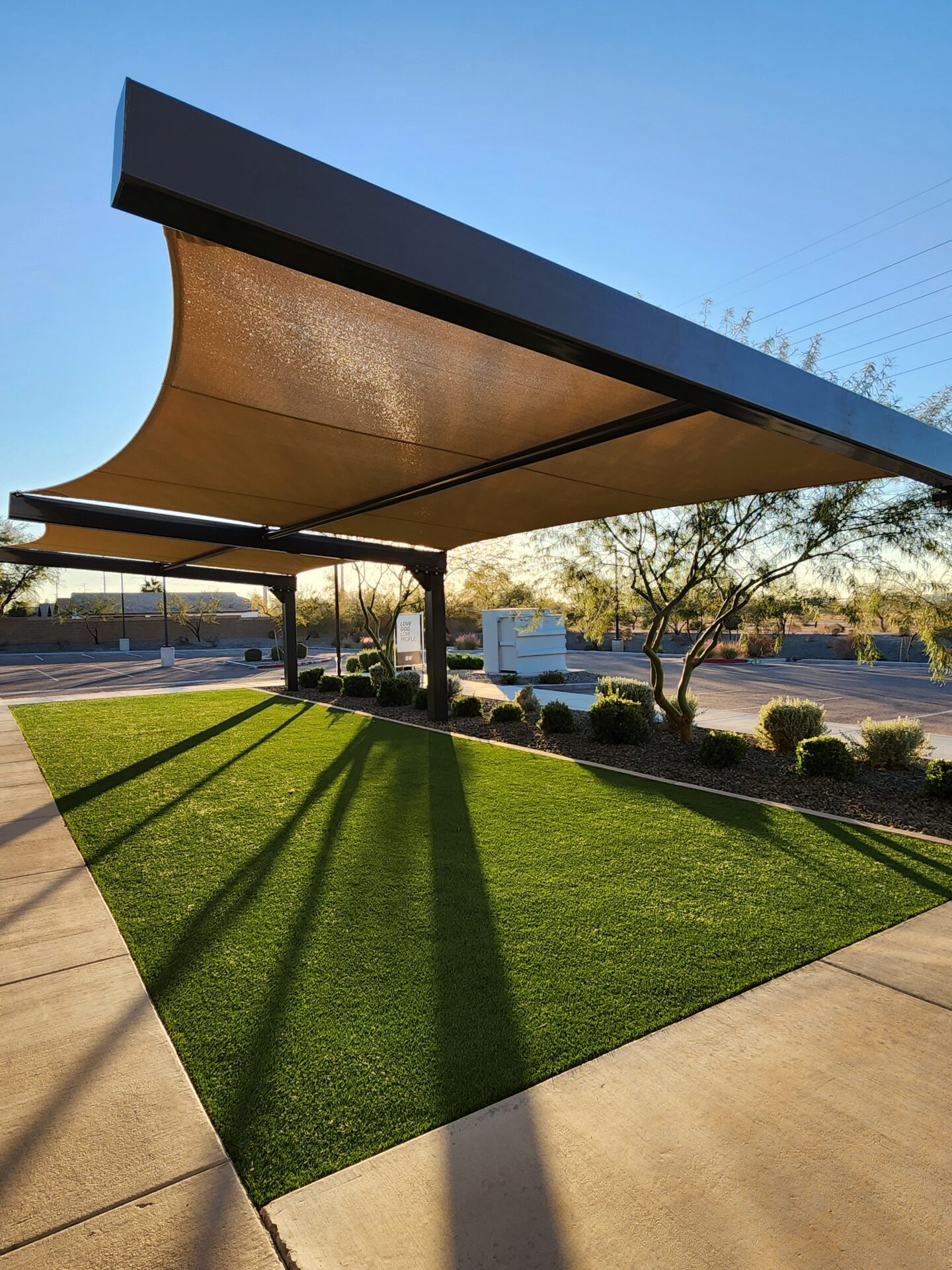
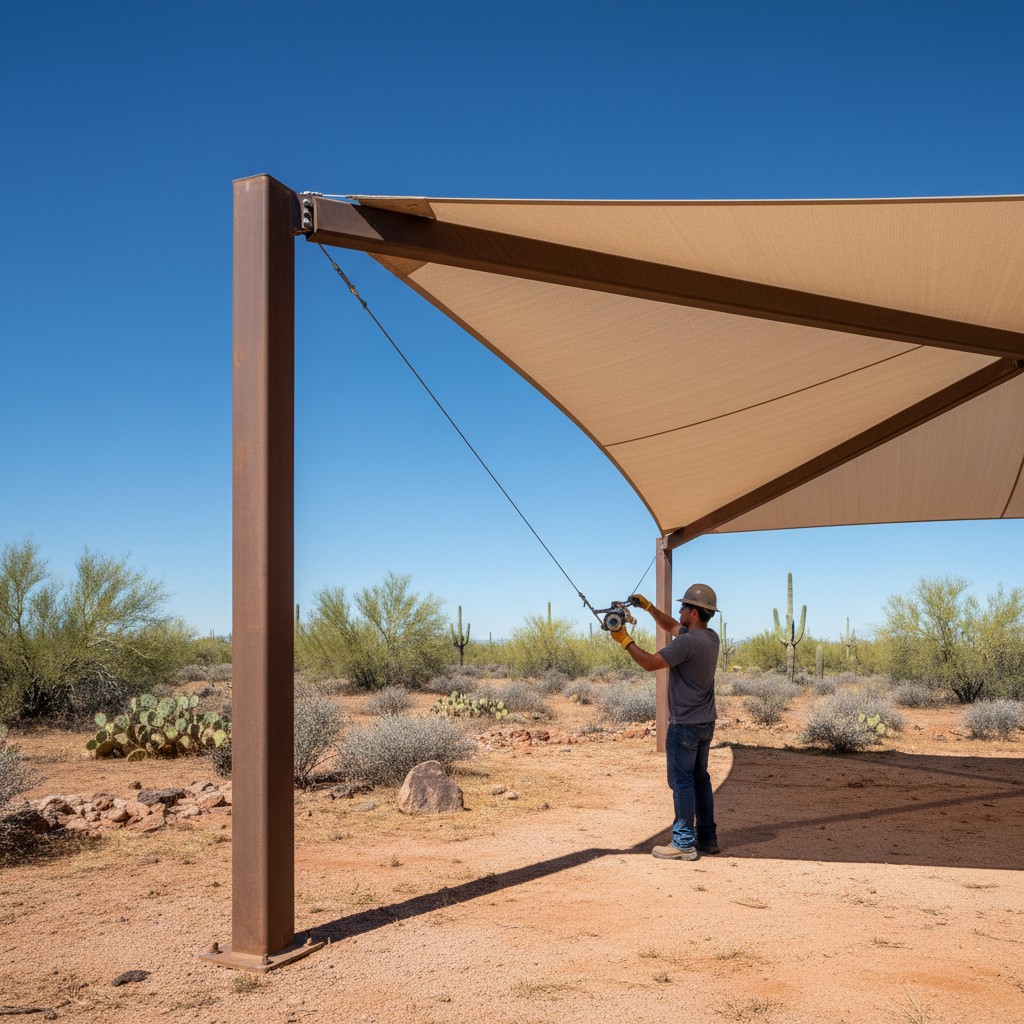
A cantilever umbrella shades a circle or square island, typically 10-13 ft across, dropped wherever a cluster of tables sits. That makes umbrellas the right tool for an open courtyard or pool deck where seating is scattered and rearranged seasonally; you place one unit per table group and move them as the layout changes. The honest limit cuts both ways. An umbrella cannot cover a long frontage without a forest of poles, and an awning cannot reach a table marooned in the center of a plaza. When a site needs both an edge and an island shaded, the answer is often both products, not a compromise on one. For shading a full open footprint with no wall and no scattered furniture, a single-post flat cantilevered structure covers far more ground than either.
Branding, aesthetics, and the look from the street
For built-in branding, awnings win decisively. A fabric awning is a billboard the building wears: the valance and face panels print a business name, logo, and colors in a spot the eye already lands when reading a storefront. That is why cafes, boutiques, and medical offices reach for awnings first, since the shade and the signage are the same purchase. The panel becomes part of the architecture and signals an established, permanent business in a way movable furniture cannot.
Commercial umbrellas brand differently and more lightly. The canopy and valance can be printed or color-matched to a brand palette, and a row of matching umbrellas reads as a coordinated, polished outdoor room, which resorts and breweries use to good effect. The difference is permanence of message: an awning hangs a fixed sign on the wall, while umbrellas project a movable, repeatable color cue across a patio. A site chasing a strong fixed identity leans awning; a site wanting flexible, resort-style ambiance leans umbrella. Neither is generic, and both block roughly 90-99% of UV through knitted HDPE depending on weave density, so the aesthetic choice does not cost you sun protection.
Cost, lifespan, and what you are actually buying
Per shaded foot, a freestanding umbrella is usually cheaper to buy and install; per year of service on a fixed spot, a building-mounted awning often wins on cost-to-own. An umbrella ships as a finished unit and sets on a base in an afternoon with no wall work and frequently no permit, so the up-front number and the labor are both lower. The trade-off is that a commercial umbrella is equipment with moving parts: the tilt and lift mechanism, the offset arm, and the fabric all see wear, and the canopy is a consumable replaced on a shorter cycle than a fixed structure.
An awning costs more to engineer, permit, and install because it is fastened architecture, but the steel frame and powder-coated finish are sized to outlast the fabric, and knitted HDPE covers commonly carry 10-15 year warranties. Plan the cover as a wear part on both products: Arizona’s UV sits at the demanding end of that window, so budgeting a re-cover is honest planning, not a defect. The frame is the long-lived asset; the fabric is the part you refresh. Across the full line, that frame-versus-cover split is the single most useful idea for budgeting commercial shade, and the full product line follows the same logic.
Wind and monsoon performance, the honest version
In a monsoon, a fixed awning sized to code outlasts an umbrella left open; but a closed umbrella beats both, and an open one in a microburst is a liability. A fastened awning engineered to Arizona building code and ASCE 7 wind loads is designed for the Valley’s roughly 90-115 mph design wind speeds, so it stays put through typical storms because it is bolted to structure and the panel is held on all sides. That permanence is its monsoon advantage. The caveat is real: no fabric awning is rated for every freak gust on record, and a deep projection on a windy facade needs extra bracing.
A cantilever umbrella’s defense is that it folds. Most commercial units are rated to handle wind only when closed, and microbursts in the Valley can punch past 60 mph in minutes, far faster than staff can react if the canopy is open. The discipline an umbrella demands is procedural: close and secure it at the first dust wall, or weight the base heavily and accept that a freak gust can still flip an unattended open unit. An awning’s risk is engineered out at install; an umbrella’s risk is managed daily by the people on site. For an unattended patio that nobody watches during summer storms, that difference alone often settles the choice.
The verdict, and how to choose for your site
Pick the awning when shade must live on a wall, brand the building, and survive monsoons unattended; pick the umbrella when shade must move, cover scattered tables, and fold out of the wind. Run your site through four questions in order. First, is there a wall where the shade needs to be: yes points to an awning, no points to an umbrella. Second, is the coverage an edge or an island: a frontage wants an awning, a table cluster wants an umbrella. Third, does fixed signage matter more than flexible layout: branding leans awning, rearrangeable seating leans umbrella.
Fourth, who manages wind on storm days: an unattended patio favors the engineered permanence of an awning, while a staffed venue can run umbrellas safely by closing them on schedule. Most real sites end up wanting both, an awning holding the storefront and umbrellas dotting the open patio, and there is no penalty for mixing them. If your problem is bigger than either, a long frontage and a wide open lot both needing cover, step up to a structure and start at the shade structure guides hub, which routes each problem to the right product page. The point is to match the tool to the job, not to crown a winner.
Shade Structures We Build
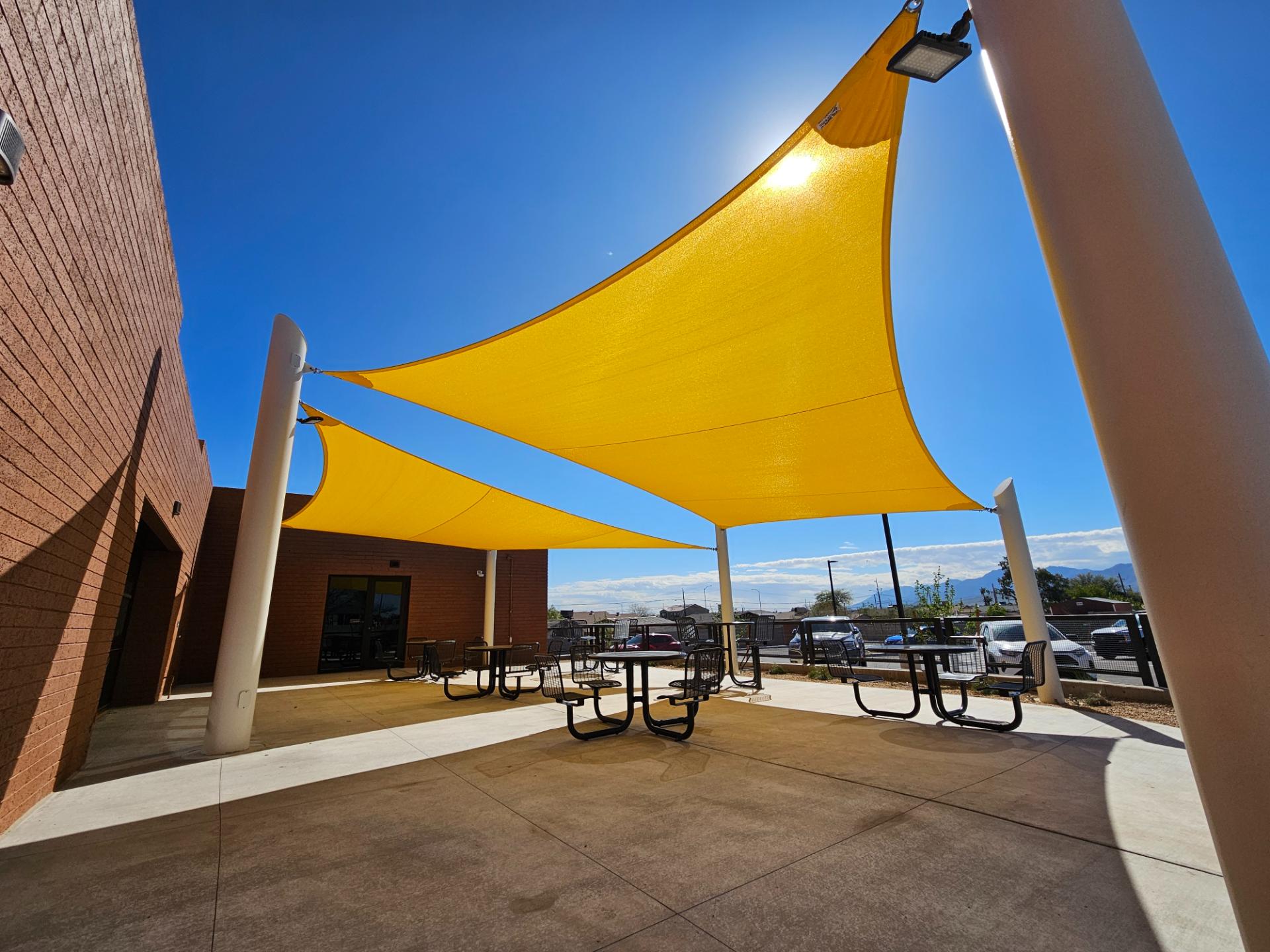
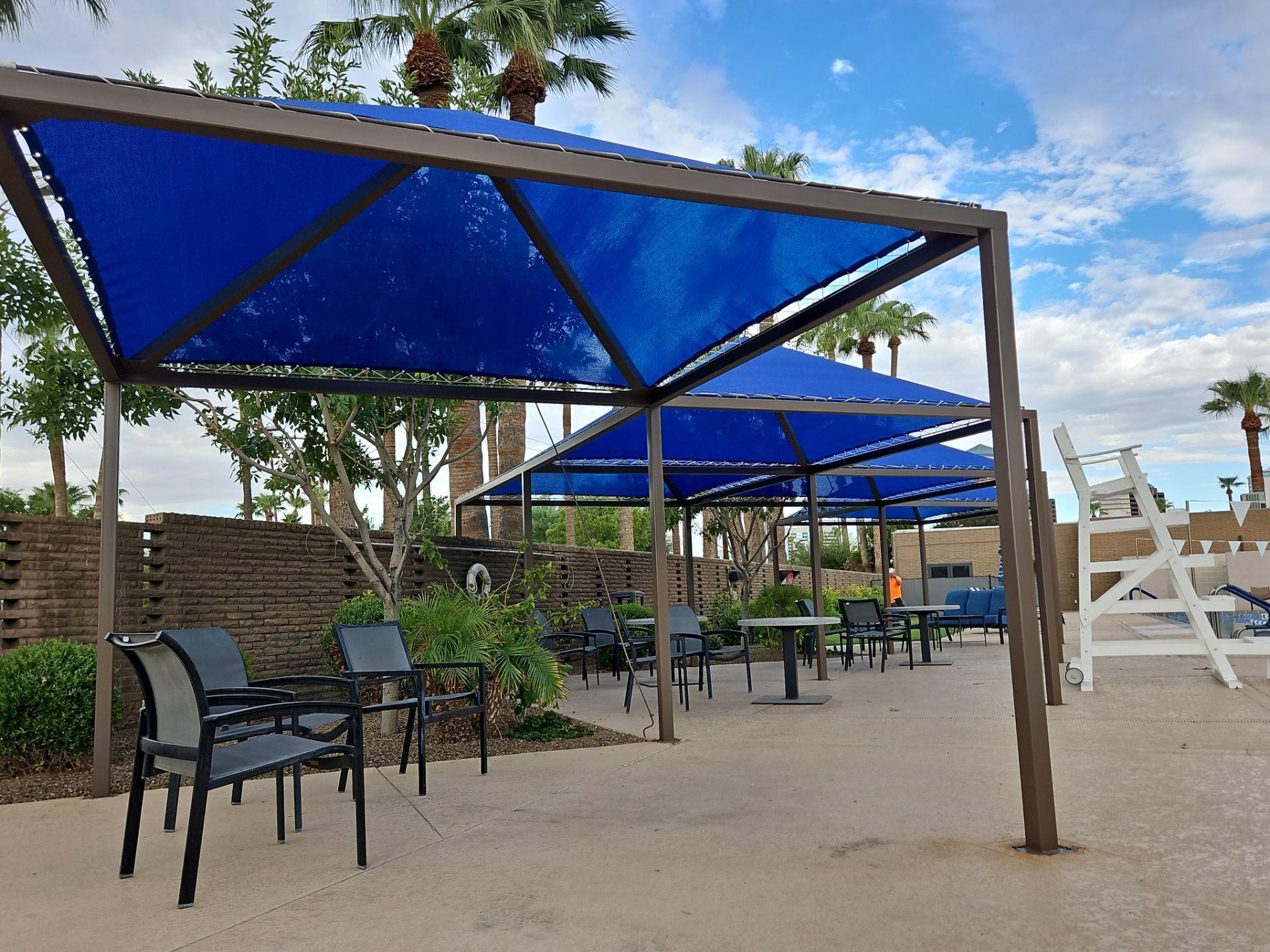
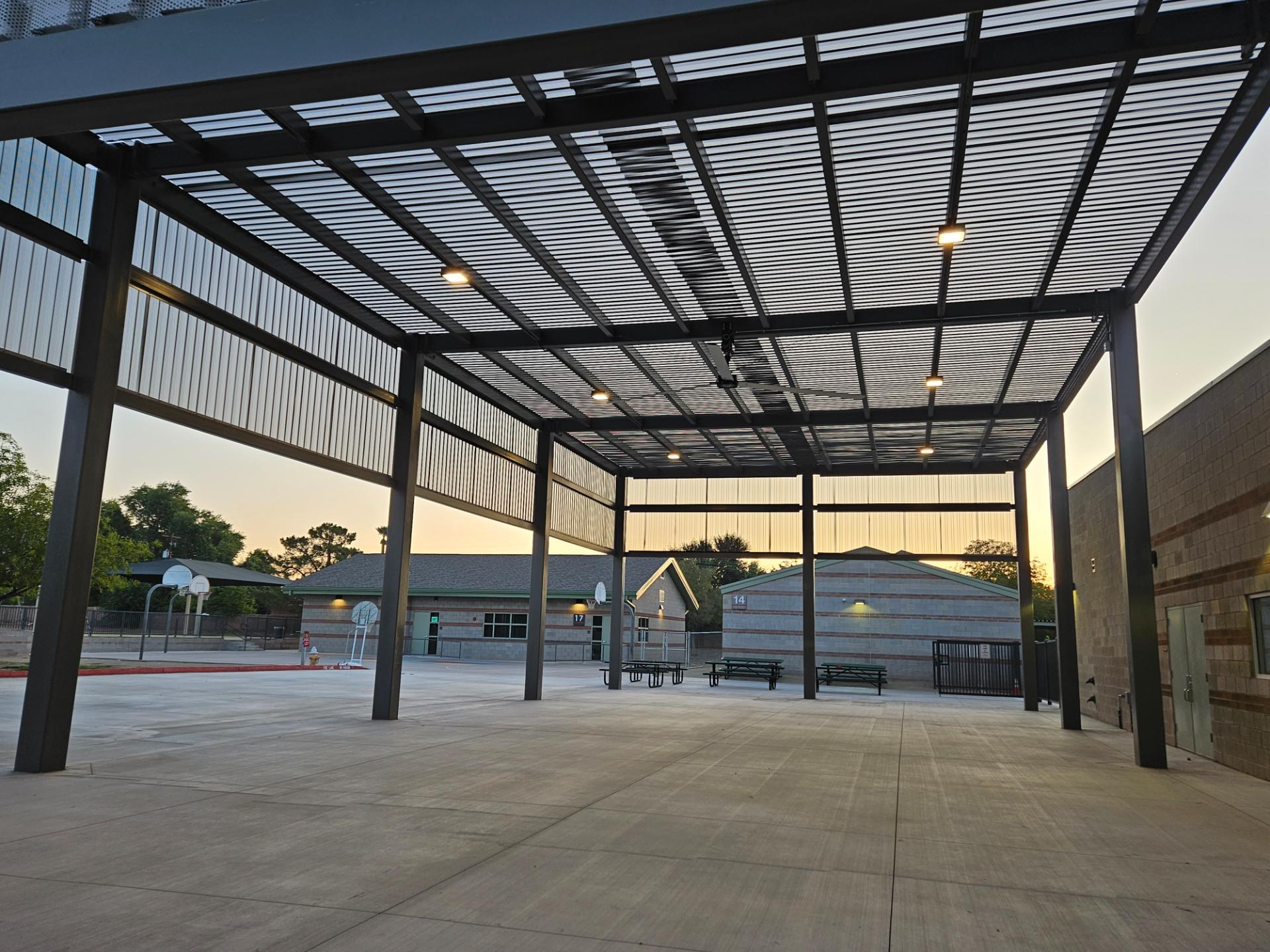
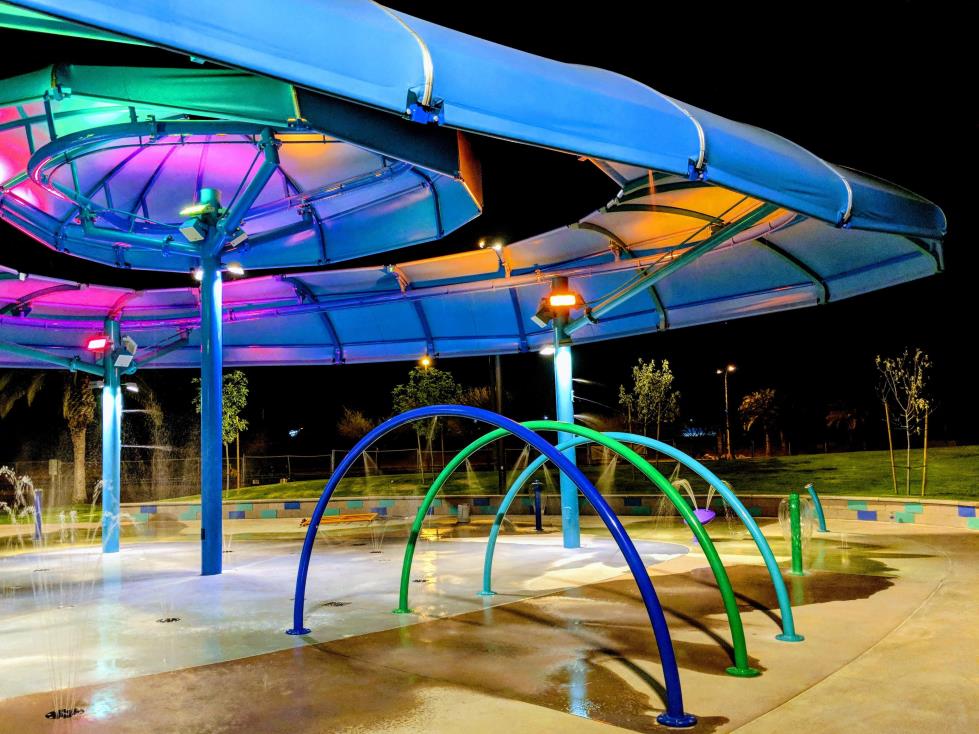
Ready to talk through your project?
Call (602) 265-0905 for a free assessment.
Frequently Asked Questions
Which is cheaper, a commercial awning or a freestanding umbrella?
Per unit and at install, a freestanding cantilever umbrella is usually cheaper because it ships finished, sets on a weighted base in an afternoon, and often needs no wall work or permit. A building-mounted awning costs more up front since it must be engineered, permitted, and fastened to structure. Over years on a fixed spot, though, the awning’s steel frame outlasts an umbrella’s moving parts, so cost-to-own can flip in the awning’s favor. Both share the same wear part: a knitted HDPE cover commonly warranted 10-15 years.
Which lasts longer, an awning or a commercial umbrella?
The awning frame typically lasts longer because it is powder-coated structural steel bolted to a building with no moving parts to wear. A commercial umbrella’s tilt and lift mechanism and offset arm see mechanical wear, so the unit generally cycles sooner. On both, the fabric is a consumable: knitted HDPE covers carry common 10-15 year warranties, and Arizona’s UV sits at the demanding end of that window, so plan a re-cover regardless of which product you choose. The frame is the durable asset; the cover is the part you refresh.
How do awnings and umbrellas handle Arizona monsoon wind?
An awning fastened to code handles monsoons by staying put: it is engineered to Arizona building code and ASCE 7 loads, where Valley design wind speeds run roughly 90-115 mph, and it needs no daily action. A cantilever umbrella handles wind by folding; most commercial units are rated for wind only when closed, and microbursts can exceed 60 mph in minutes. So an awning suits unattended patios, while umbrellas suit staffed venues where someone closes them at the first dust wall. Neither is rated for every freak gust on record.
Which is better for branding, an awning or an umbrella?
Awnings are the stronger branding tool because the valance and face panels carry a printed business name, logo, and colors in the exact spot the eye lands when reading a storefront, making the shade and the signage one purchase. Umbrellas brand more lightly: canopies can be printed or color-matched so a row reads as a coordinated outdoor room, but the message moves with the furniture rather than hanging fixed on the wall. A business wanting permanent identity leans awning; one wanting flexible, resort-style color leans umbrella.
Can you combine awnings and umbrellas on the same site?
Yes, and most real commercial sites end up using both. An awning holds the storefront or patio edge and carries the branding, while freestanding umbrellas drop shade over scattered tables in the open part of the patio or courtyard. There is no penalty for mixing them, since they solve different coverage shapes, an edge versus an island. If the combined need is bigger than either, such as a long frontage plus a wide open lot, a single-post cantilevered structure may cover more ground for less, and the shade structure guides hub routes you to the right fit.