or call (602) 265-0905 — no-obligation, on-site.
Ramada vs Pergola: Which Suits Arizona
For full Arizona sun protection a steel ramada wins; a pergola is the decorative, partial-shade choice. Here is where each one earns its place.
Ramada vs pergola: a ramada has a solid roof that blocks all direct sun and rain, built as a permanent commercial shelter; a pergola has open slats that cast dappled, partial shade for a decorative feel. Choose a ramada for real sun protection at parks and schools; a pergola for ambiance.
Since 1998
Designing & building Arizona shade
In-House Fabrication
Built at our Phoenix shop
Engineered & Permit-Ready
Stamped drawings for AZ wind loads
Free On-Site Quote
No-obligation project assessment
For full protection from Arizona sun, a steel ramada usually wins: its solid metal roof blocks 100% of direct sun and sheds monsoon rain, while a pergola’s open slatted roof only filters light and leaves a dappled pattern of shade and glare beneath it. The two structures look similar from a distance — posts holding a roof over a gathering space — but they solve different problems. A ramada is a commercial-grade, full-shade shelter engineered to last 25-40 years; a pergola is a lighter, decorative frame that breaks up sun rather than stopping it. Total Shade fabricates steel ramadas at our Phoenix shop at 2331 W. Holly St, engineered to Maricopa County code. The sections below compare shade coverage, materials, intended use, cost, lifespan, and look — then give a plain verdict for the Valley.
Shade coverage: full block vs. dappled light
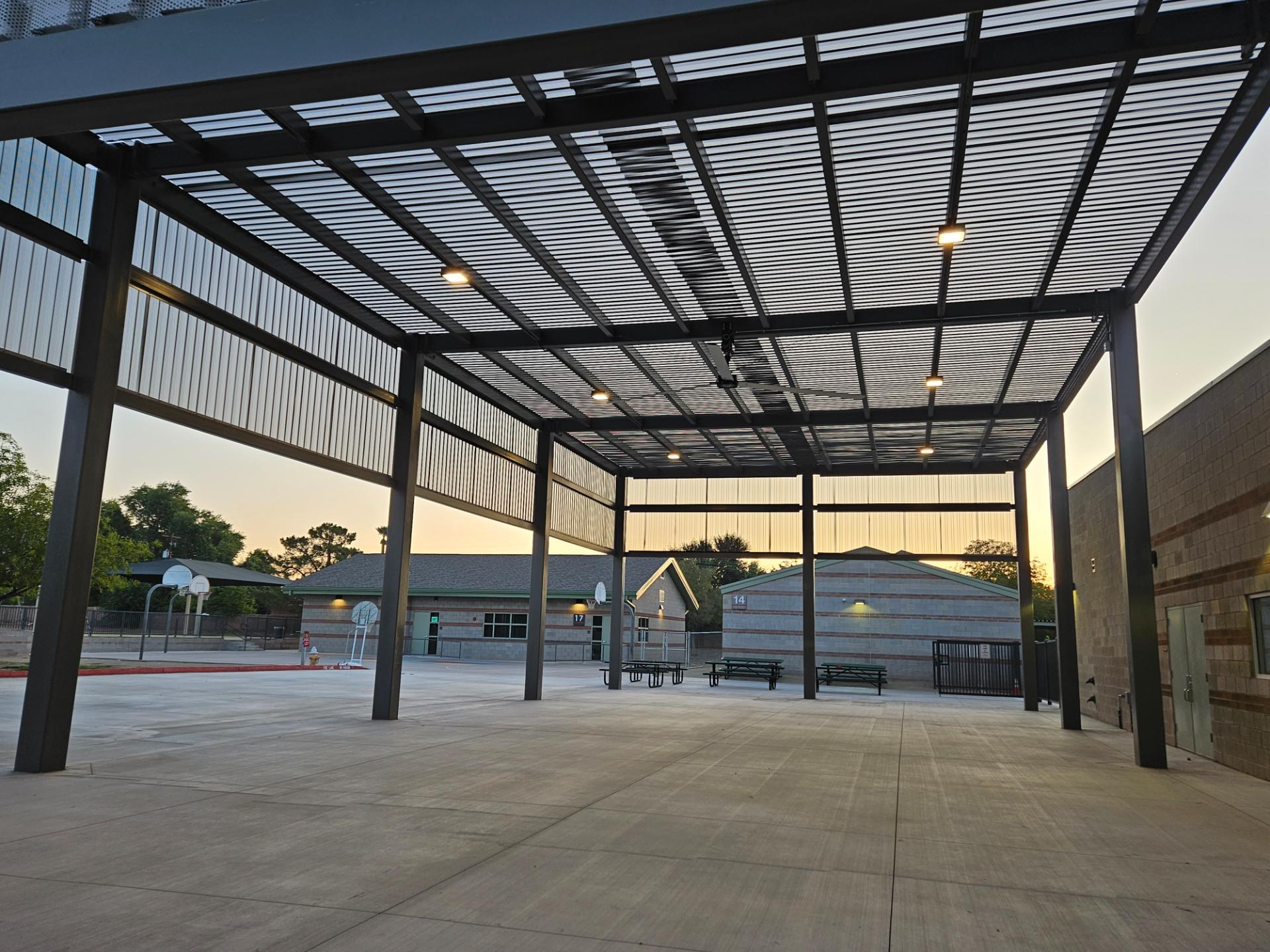
A ramada blocks far more sun than a pergola, and in 110-degree heat that gap decides comfort. A ramada’s solid metal roof — corrugated or standing-seam panel — stops roughly 100% of direct sun under its deck and casts a single, cool, continuous shadow. A pergola’s open slats let sunlight pass between the boards, so the ground beneath shows a striped pattern of light and shade; depending on slat spacing, a fixed pergola typically blocks only about 40-70% of direct sun at midday, and less when the sun rakes in low from the west by 4 p.m.
Louvered pergolas with adjustable blades close tighter for 80-90% coverage, but even closed they leak light at the seams and offer little defense against monsoon rain. A ramada behaves more like a roof than a screen: under it, surface temperatures and UV exposure drop sharply, and a surprise storm cell stays off the picnic tables. If the goal is a genuinely cool, usable room in July, a solid roof beats filtered light from slats every time.
Materials and durability in the desert
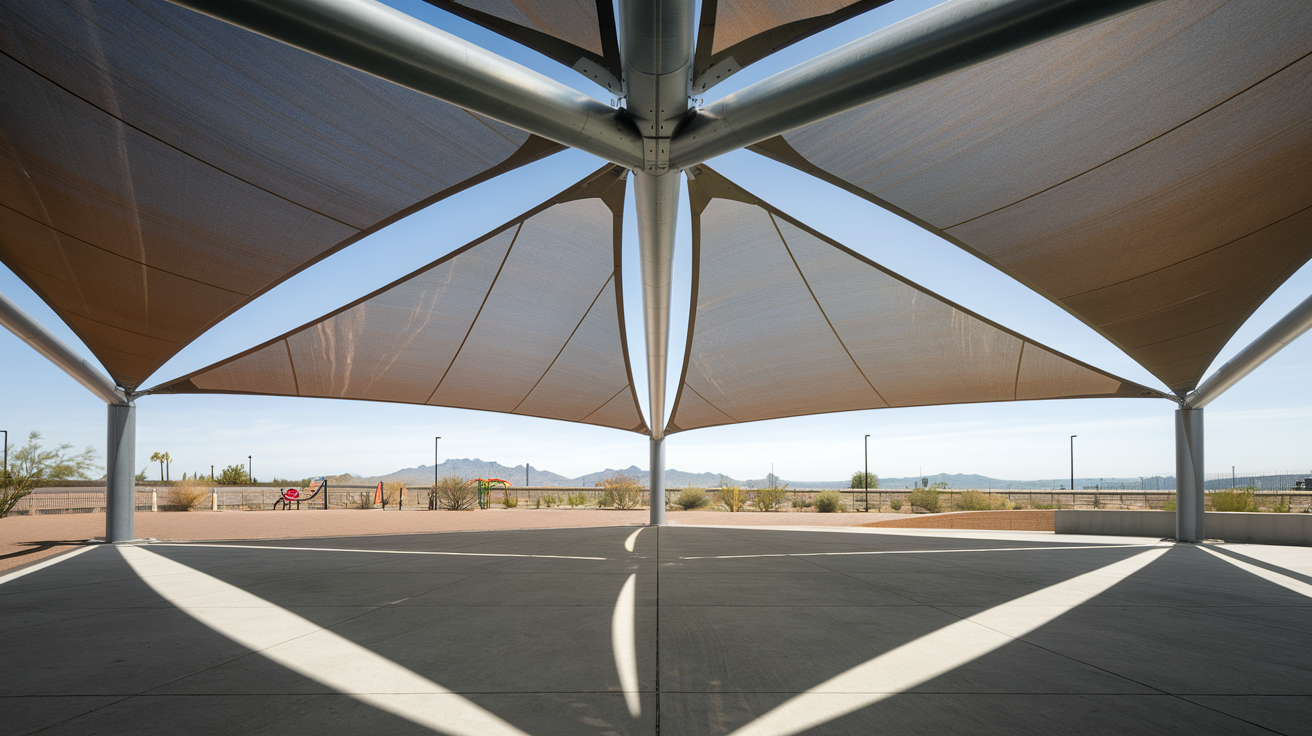
Steel ramadas are built to outlast pergolas because they carry more structure and a finish made for desert UV. A commercial ramada uses powder-coated structural steel posts — often 4-8 inches depending on span — on footings frequently set 3-8 ft deep in caliche, with a rigid roof engineered to Arizona building code and ASCE 7 wind loads, where Valley design wind speeds run roughly 90-115 mph. Pergolas are commonly built from wood or lighter aluminum; wood checks, fades, and needs re-staining every 2-4 years under relentless sun, and a light frame is sized for a backyard, not for monsoon microbursts that can punch past 60 mph.
Because a solid ramada roof catches more wind uplift than an open slatted pergola, the steel and footings are deliberately oversized to carry that load — which is exactly why an engineered ramada survives a storm that flattens a bargain-kit pergola. The finish matters too: a baked-on powder coat resists the chalking that desert sun forces on cheaper sprayed paint, holding color for decades. Durability here is not a claim; it is gauge of steel, depth of footing, and quality of coating.
Commercial vs. decorative: who each is built for
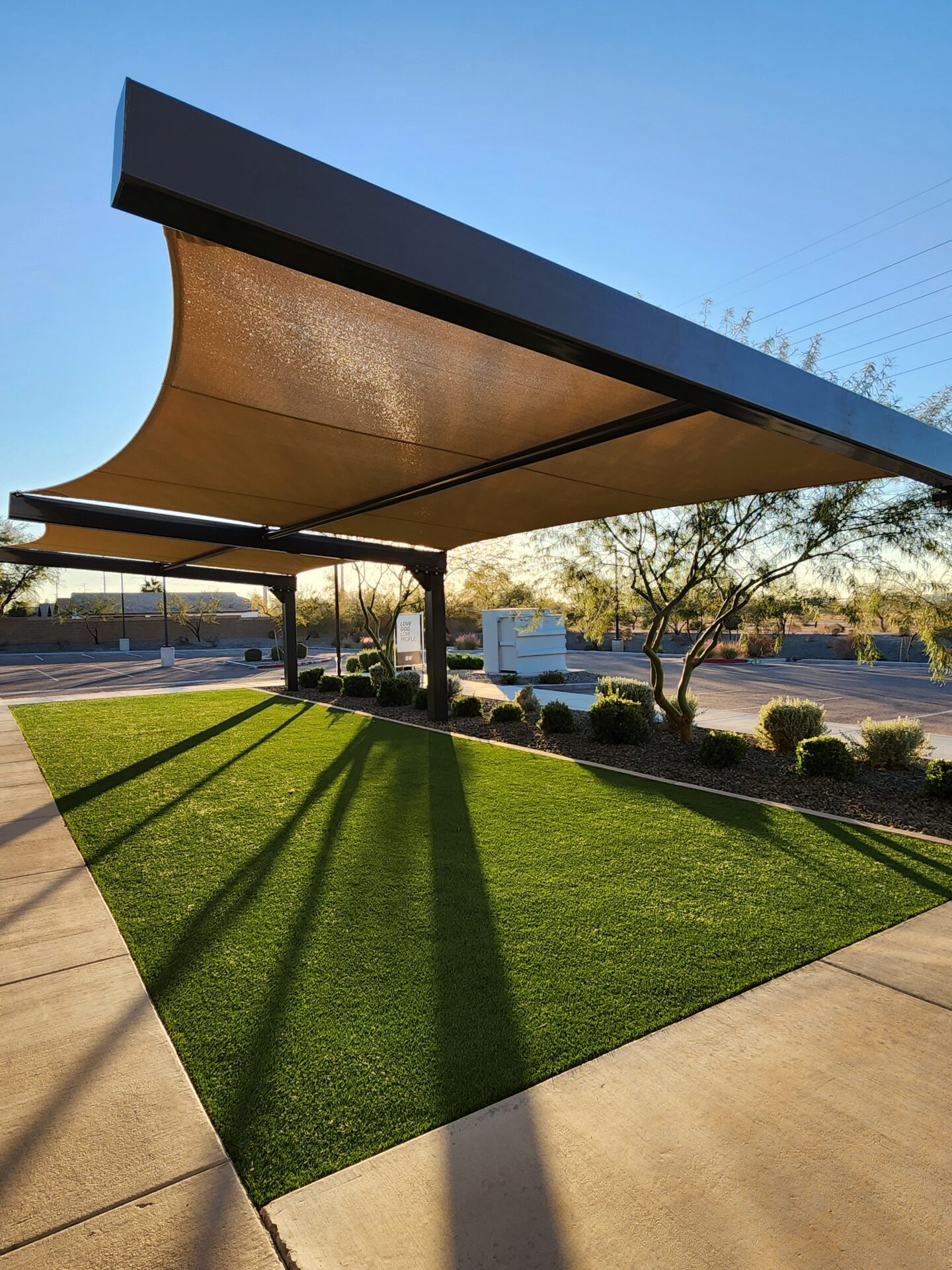
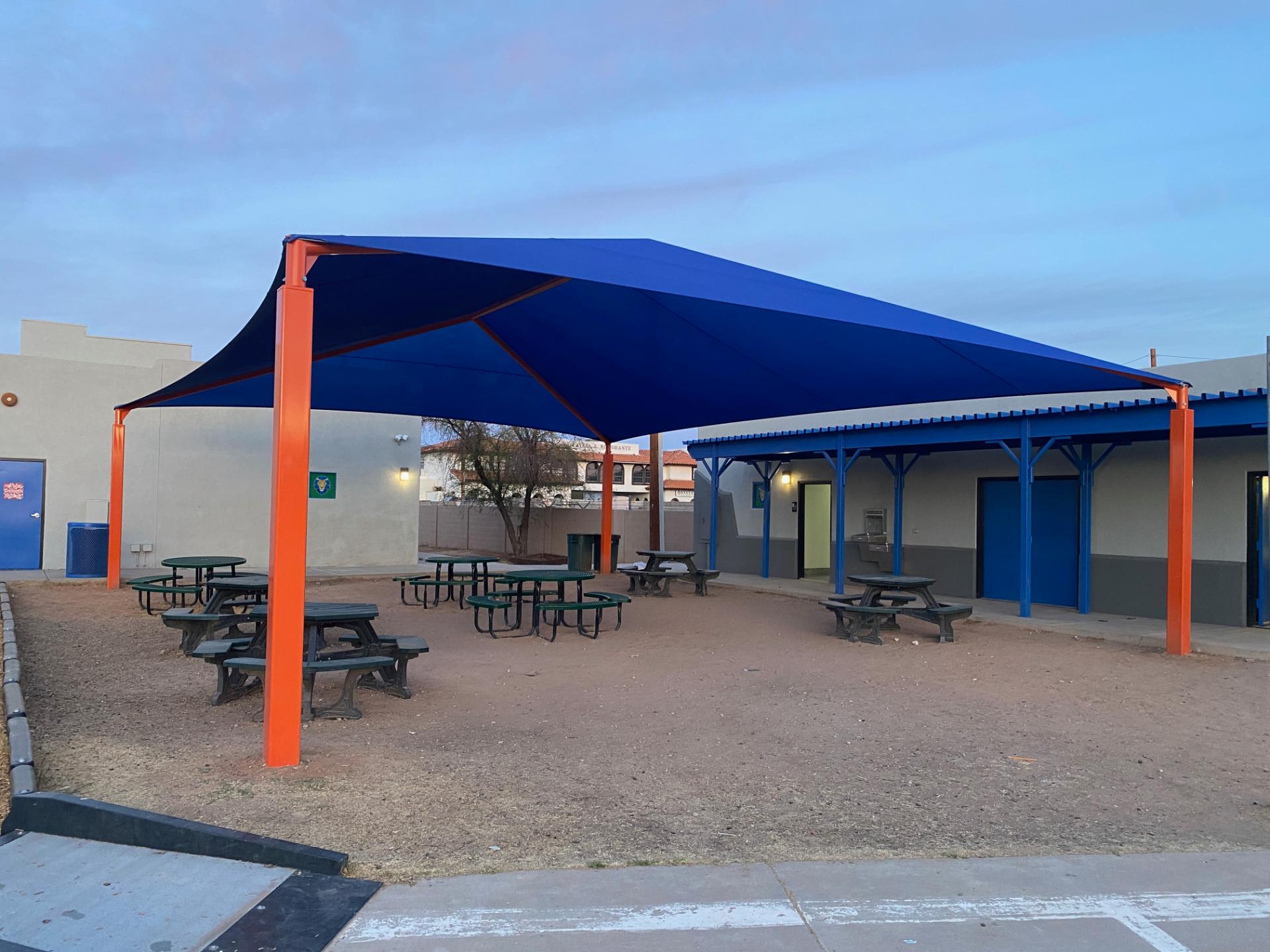
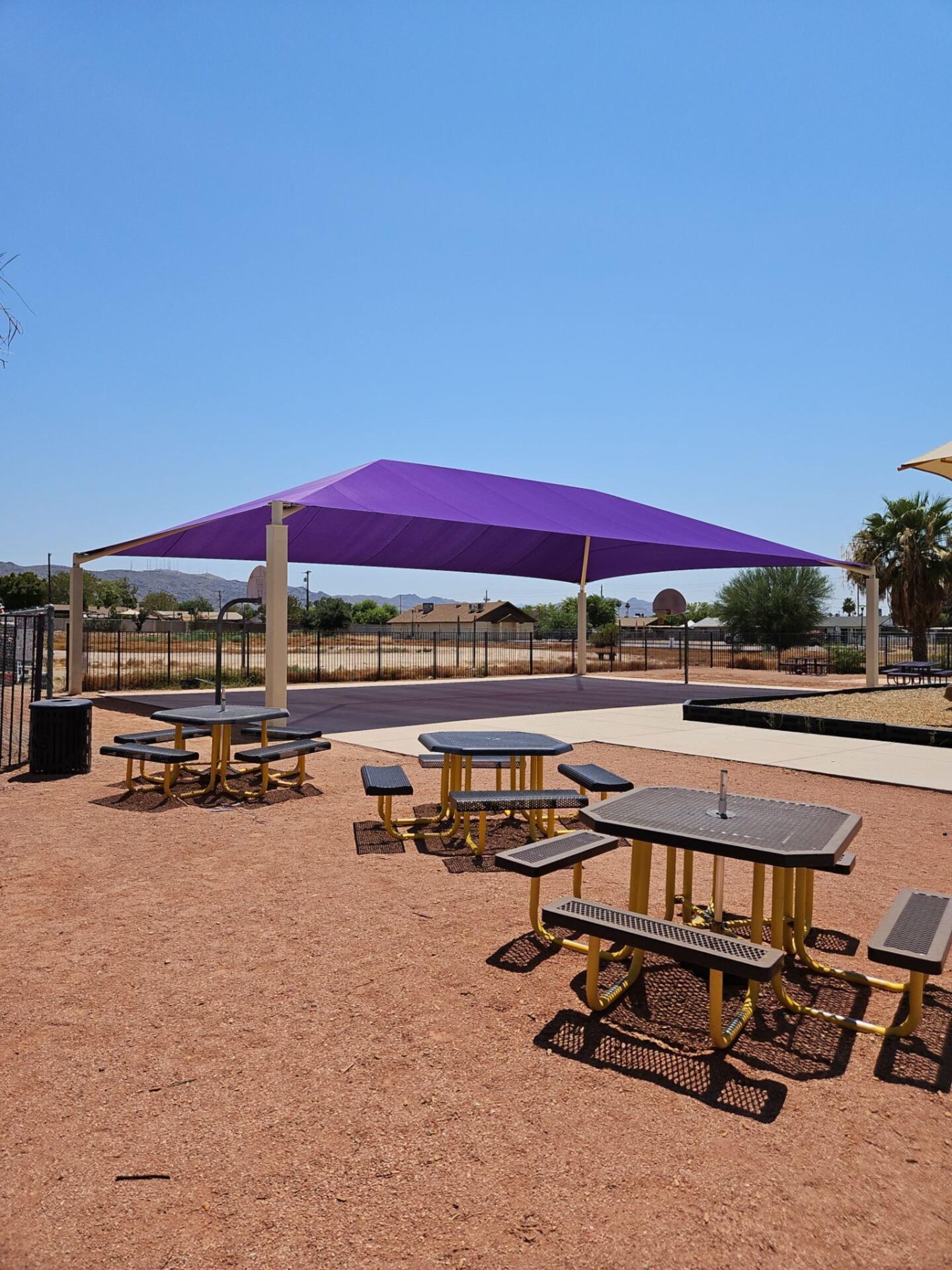
Ramadas are commercial shelters; pergolas lean residential and decorative. The ramada is the Southwest park-and-picnic archetype — a fixed, all-weather room over concrete pads, picnic tables, and grills at municipal parks, schoolyards, trailheads, HOA common areas, and pool decks. It is engineered to hold dozens of people through a 110-degree afternoon or a sudden monsoon cell, which is why parks departments, school districts, and HOA boards specify steel ramadas for high-use gathering spots. For a wide, columnless run of shade over a parking lot or play area, a hip structure or cantilever covers more square footage than either a ramada or a pergola.
A pergola, by contrast, is a design element. It defines a patio, frames a garden path, or adds vertical interest to a backyard or restaurant entry, and it does that job well. But it is not engineered as a public commercial shelter, and it does not deliver the full shade or rain cover a busy park or campus needs. When a project calls for an unusual footprint, a specific roof profile, or a structure that has to clear an HOA architectural review, a custom-built shade structure lets the frame follow the site instead of forcing the site to fit a catalog unit. The dividing question is simple: a place where people gather for hours points to a ramada; an accent over a private patio points to a pergola.
Cost and lifespan over the long run
A pergola usually costs less up front, but a steel ramada often wins on cost per year of service. A ramada carries more steel, a heavier roof, and deeper foundations, so it prices above a comparable pergola at install. Over time, though, the math flips. A powder-coated steel ramada is a 25-40 year asset with light upkeep, while a wood pergola may need re-staining every 2-4 years and outright replacement in 10-20 years as desert UV breaks down the lumber. An aluminum or louvered pergola lasts longer than wood but still trails a structural steel ramada, and adjustable-louver mechanisms add moving parts that wear.
Run the numbers across two decades and the ramada’s premium often disappears: no re-staining cycle, no roof replacement, just an occasional rinse of the roof and gutters to clear dust. Both are quoted per project rather than off a flat per-square-foot chart, because cost tracks footprint, post count, roof type, wind exposure, and footing depth. The honest framing is this — pay less now for a decorative pergola, or pay more now for a ramada that removes replacement from the budget for a generation.
Look and feel: which fits the space
A pergola wins on decorative warmth; a ramada wins on substantial, finished permanence. A pergola’s open slats and lighter frame read as airy and architectural — the dappled light is part of its appeal, and wood especially brings a softness that suits a private patio, a garden, or a restaurant entry where ambiance matters more than total shade. It frames a view rather than enclosing a room.
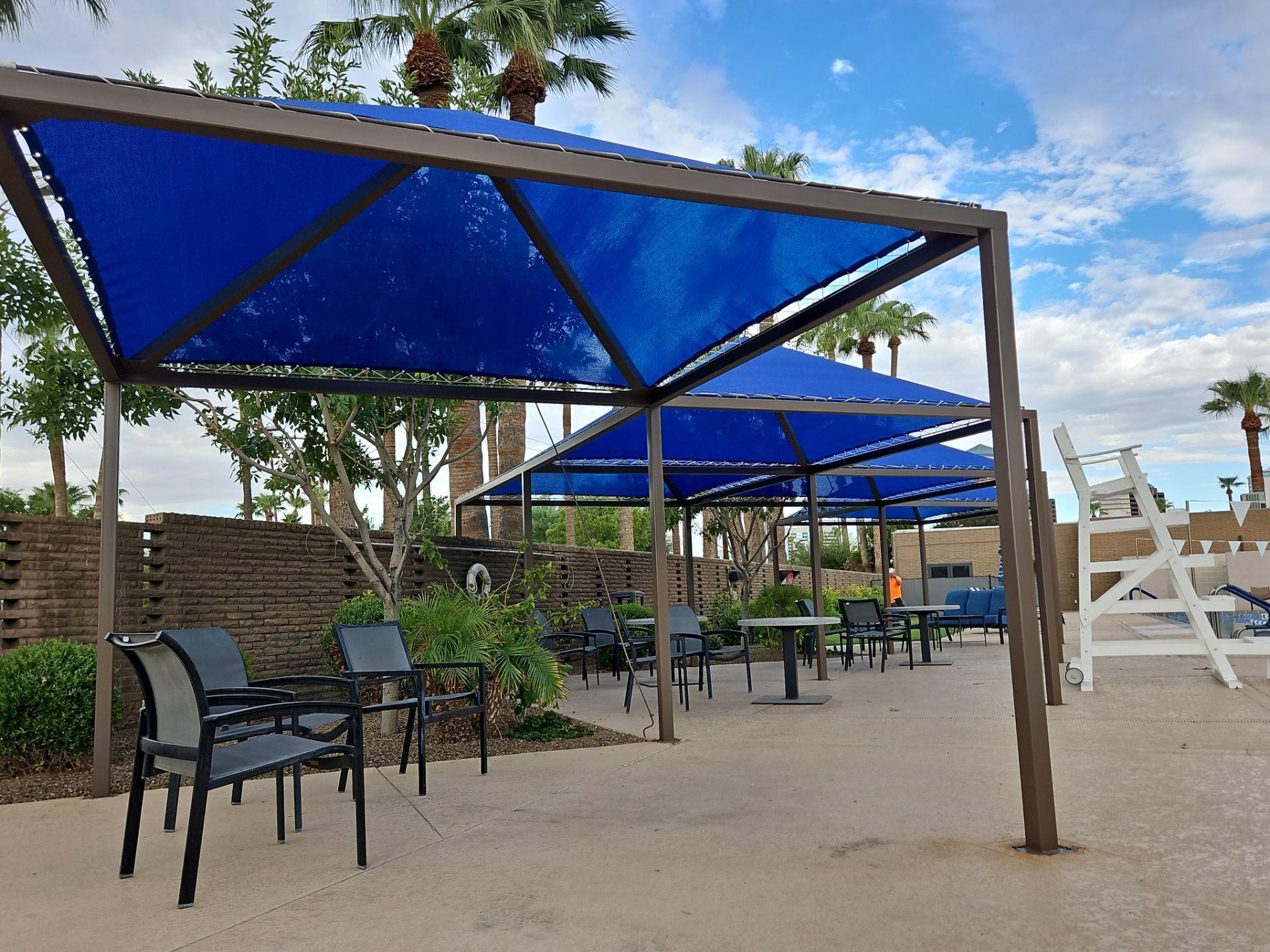
A ramada reads as a small building: a clean, pitched metal roof on solid steel posts, more shelter than sculpture. That heavier presence is exactly what a park, school, or HOA common area wants — a structure that signals permanence and holds its color and line for decades. Roof choices tune the look: a solid panel roof feels the most building-like, while a slatted ramada roof borrows some of the pergola’s open feel while keeping the heavier steel underneath. Total Shade carries the full product line, so the look can be matched to the site rather than to a catalog. Aesthetics rarely override function in 110-degree heat, but where a structure also has to look right, the roof style is the lever to pull.
The verdict for Arizona
For Arizona heat and monsoon, a steel ramada is the stronger choice in most commercial and high-use settings; a pergola is the right call only when the priority is a decorative accent over a private space. Choose a ramada when you need full sun block (roughly 100% under a solid roof versus about 40-70% under fixed pergola slats), rain protection, a 25-40 year lifespan, and a structure engineered for 90-115 mph design winds at a park, school, HOA, or pool deck. Choose a pergola when the job is to frame a patio or garden with filtered light and you accept partial shade, lighter materials, and a shorter service life.
Honest caveats apply to both. A ramada’s solid roof catches more wind uplift, so the footings and steel must be engineered for it — a light kit is the wrong call in microburst country, and no structure is rated for every freak gust on record. A pergola will never match a ramada for sun or rain cover, and desert UV is hard on wood. Dust accumulates on either, so plan a rinse once or twice a year. For most Valley commercial projects, the deciding factor is whether people need to be genuinely cool and dry for hours — and that points to a ramada. Compare the full lineup in our shade-structure guides before you specify.
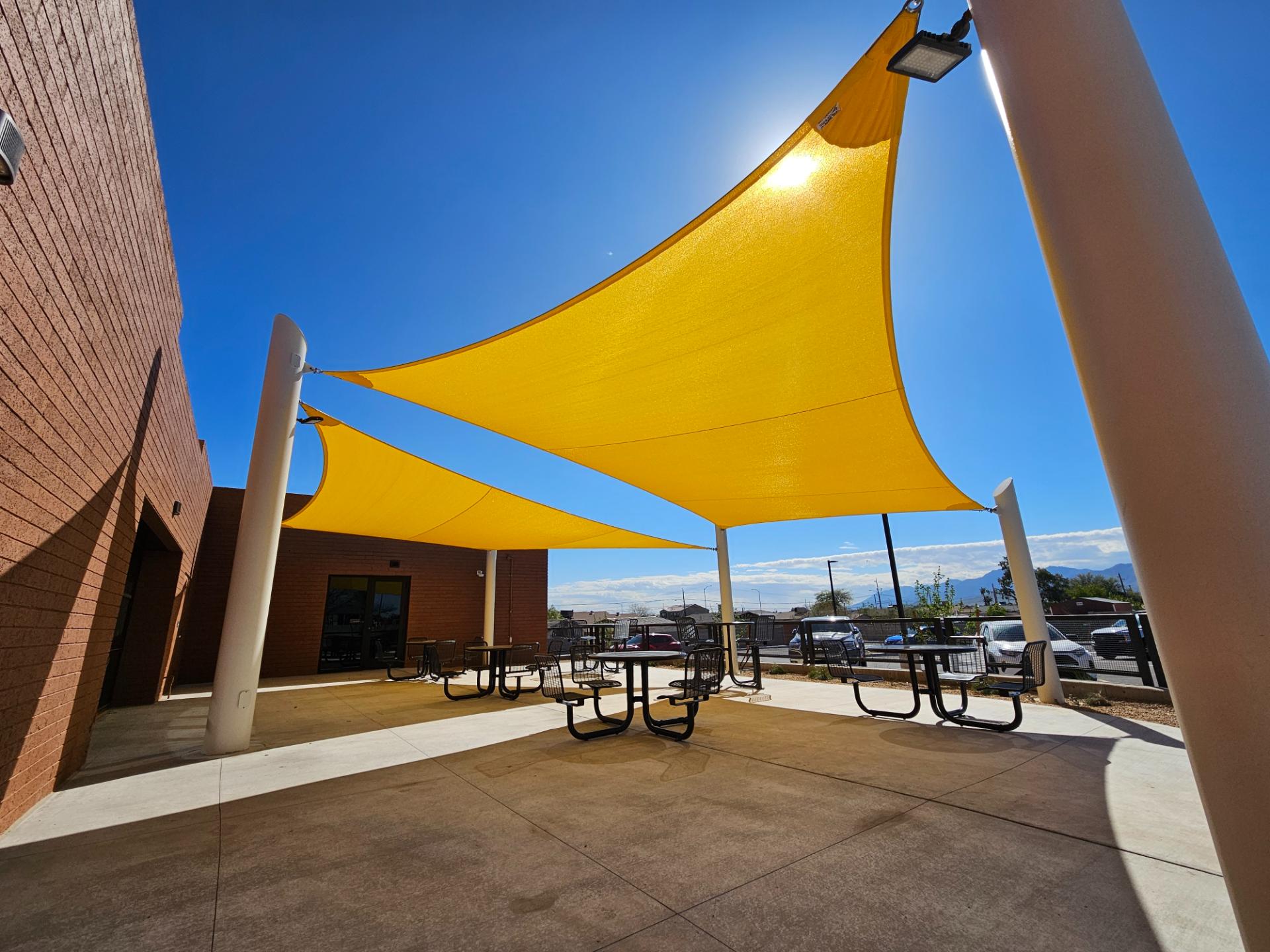
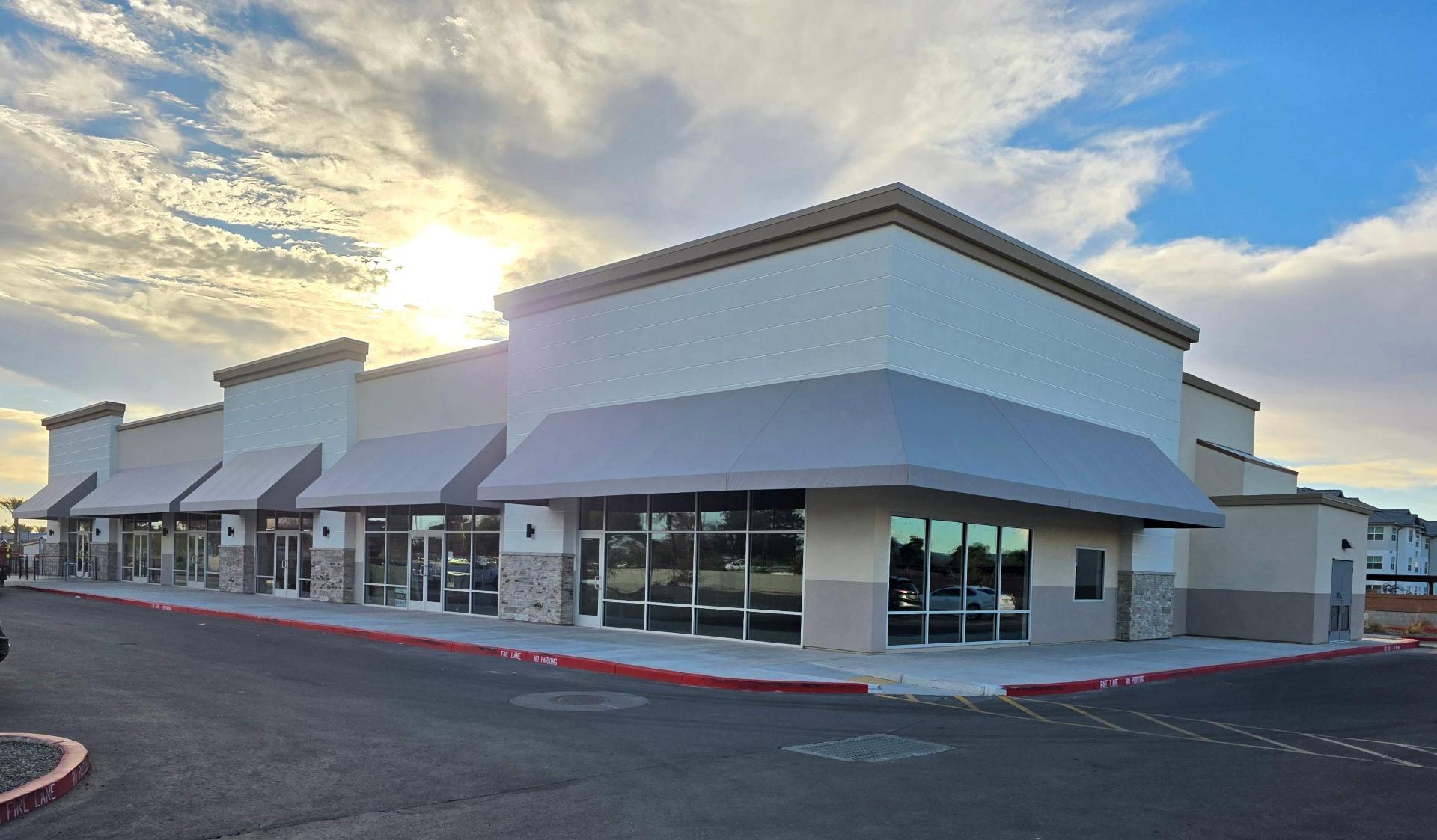
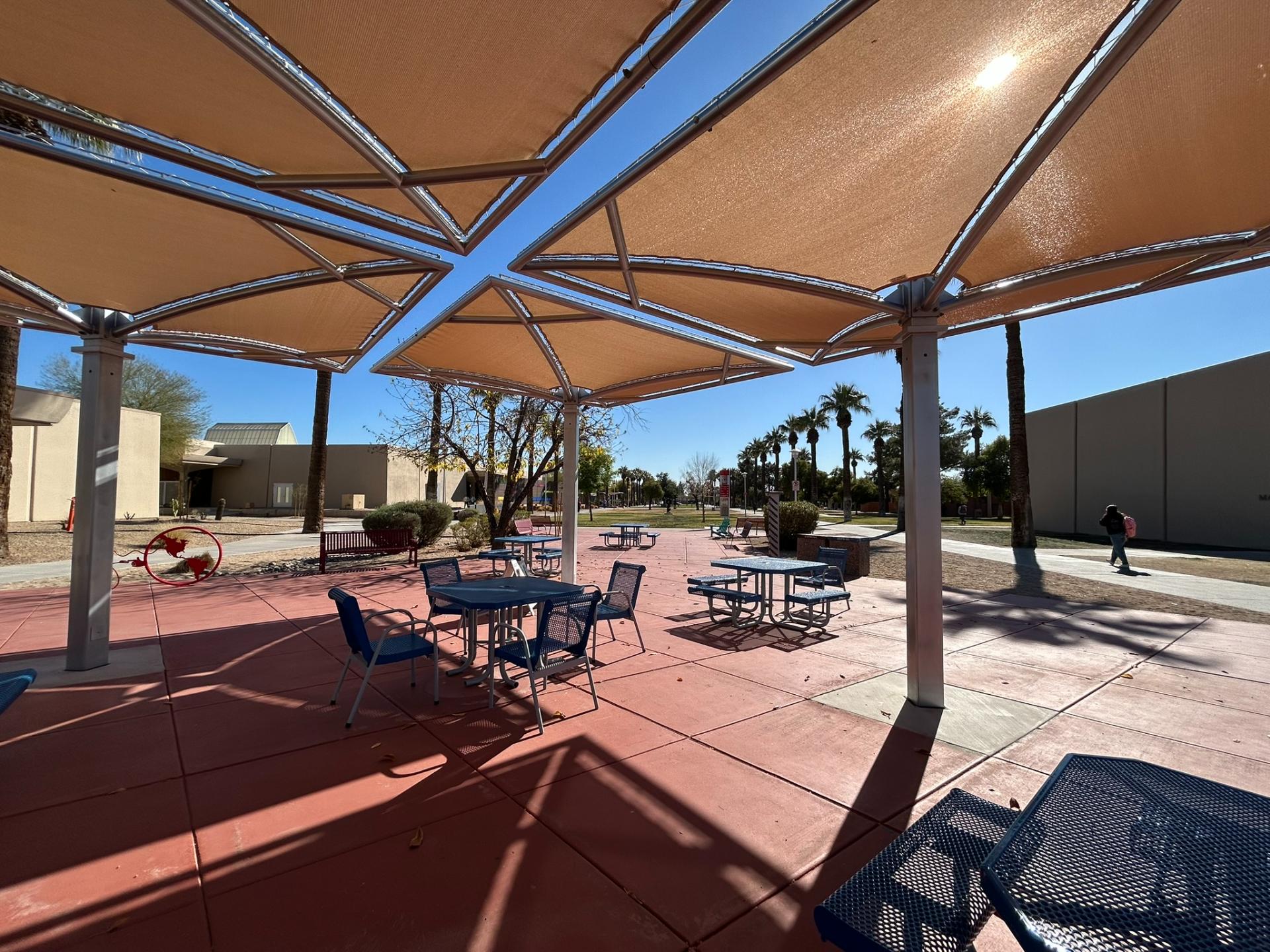
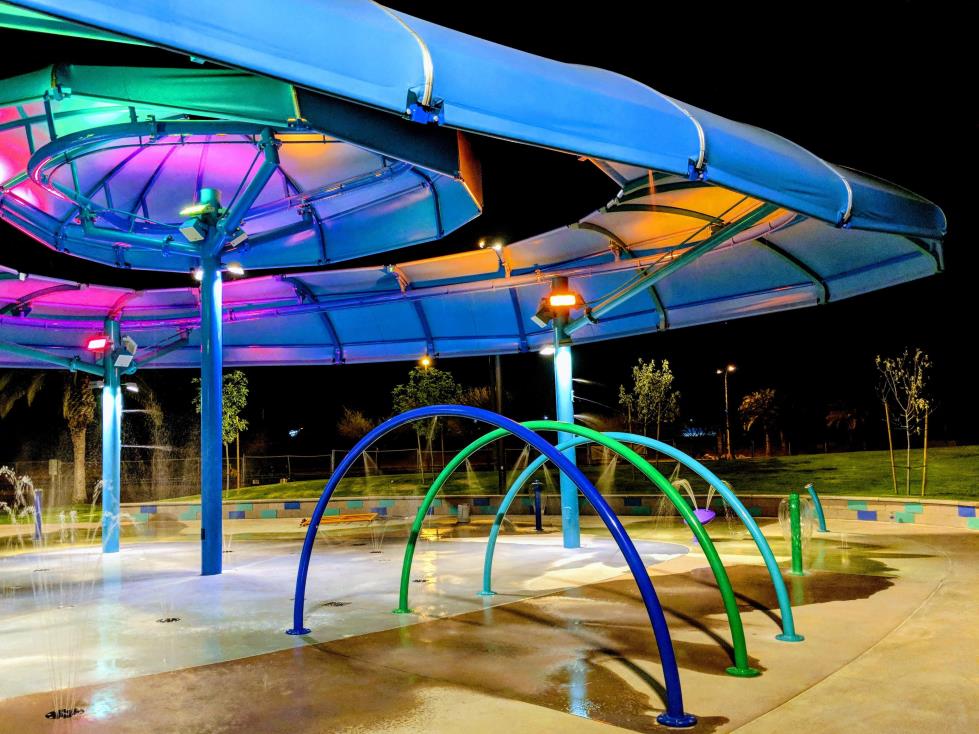
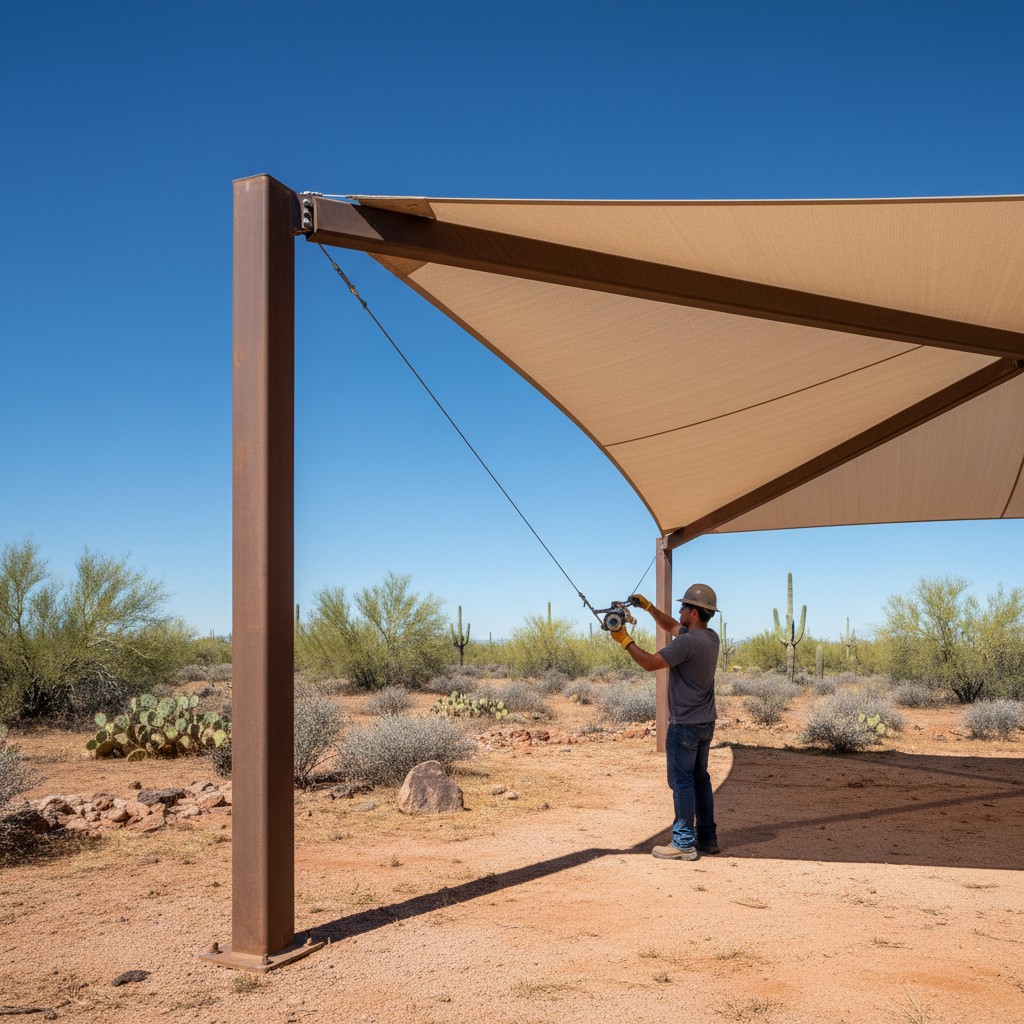
Shade Structures We Build
Ready to talk through your project?
Call (602) 265-0905 for a free assessment.
Frequently Asked Questions
Does a ramada or a pergola block more sun?
A ramada blocks far more sun. Its solid metal roof stops roughly 100% of direct sun under the deck and casts a single continuous shadow, while a fixed-slat pergola typically blocks only about 40-70% of direct sun at midday and leaves a dappled pattern of light and shade. Adjustable louvered pergolas can reach 80-90% when closed but still leak light at the seams. In Arizona heat, the solid ramada roof delivers a genuinely cool, usable space; a pergola only filters the sun.
Which is more durable in the Arizona desert, a ramada or a pergola?
A steel ramada is more durable. It uses powder-coated structural steel posts on footings often set 3-8 ft deep in caliche, engineered to ASCE 7 wind loads where Valley design speeds run roughly 90-115 mph. Pergolas are commonly wood or lighter aluminum; wood checks and fades and needs re-staining every 2-4 years, and a light frame is not sized for monsoon microbursts that can exceed 60 mph. The baked-on powder coat also resists the chalking desert sun forces on cheaper paint, holding color for decades.
Is a ramada or a pergola cheaper?
A pergola usually costs less up front, but a steel ramada often wins on cost per year. A ramada carries more steel, a heavier roof, and deeper footings, so it prices higher at install. Over 20 years the gap narrows or flips: a powder-coated steel ramada is a 25-40 year asset with light upkeep, while a wood pergola needs re-staining every 2-4 years and replacement in 10-20 years. Both are quoted per project because cost tracks footprint, post count, roof type, and footing depth.
Can a pergola be used as a commercial shade structure?
A pergola is better suited to decorative, residential-scale settings than to busy commercial shade duty. It frames a patio, garden, or restaurant entry with filtered light, but it is not engineered as a public shelter and does not provide the full shade or rain cover a park, school, or HOA gathering space needs. For commercial use, a steel ramada — or for a wide columnless run, a hip or cantilever canopy — is the structure engineered to hold crowds through Arizona heat and monsoon.
Which looks better, a ramada or a pergola?
It depends on the space. A pergola reads as airy and decorative, with open slats and often wood that suit a private patio or garden where ambiance matters more than total shade. A ramada reads as a finished small building — a clean pitched metal roof on solid steel posts — which is exactly the substantial, permanent presence a park, school, or HOA common area wants. A slatted ramada roof can borrow some of the pergola’s open feel while keeping the heavier engineered steel underneath.