or call (602) 265-0905 — no-obligation, on-site.
Shade Sails vs Cantilever Structures Compared
Sails win on look, cost, and overlapping odd-shaped spans; flat cantilevers win when you need column-free coverage over one big clear footprint.
Shade sails vs cantilever: tensioned sails are the lower-cost, sculptural option anchored at three or four corners; a cantilever puts every post on one side to leave the shaded area column-free. Choose sails for patios and play areas; choose a cantilever for parking, drive lanes, and seating that can't have center posts.
Since 1998
Designing & building Arizona shade
In-House Fabrication
Built at our Phoenix shop
Engineered & Permit-Ready
Stamped drawings for AZ wind loads
Free On-Site Quote
No-obligation project assessment
Pick a tensioned-fabric shade sail when you want an architectural look over a small or oddly shaped area at the lowest cost, and pick a steel flat cantilever when you need a large column-free footprint shaded from one side – a parking aisle, a play field, a pool deck where posts cannot land in the middle. A sail is a knitted-HDPE plane stretched drum-tight between three or four masts; it is light, sculptural, and cheap to set, but every anchor it needs occupies ground. A flat cantilever carries the whole roof off a single line of columns set on one edge, so the footprint underneath stays open – the trade is heavier steel, deeper footings, and a higher price per square foot. Both block roughly 90-99% of UV and carry commonly 10-15 year fabric warranties; the choice is almost never about shade quality and almost always about where the posts can go and what shape the ground is.
How each one carries the load
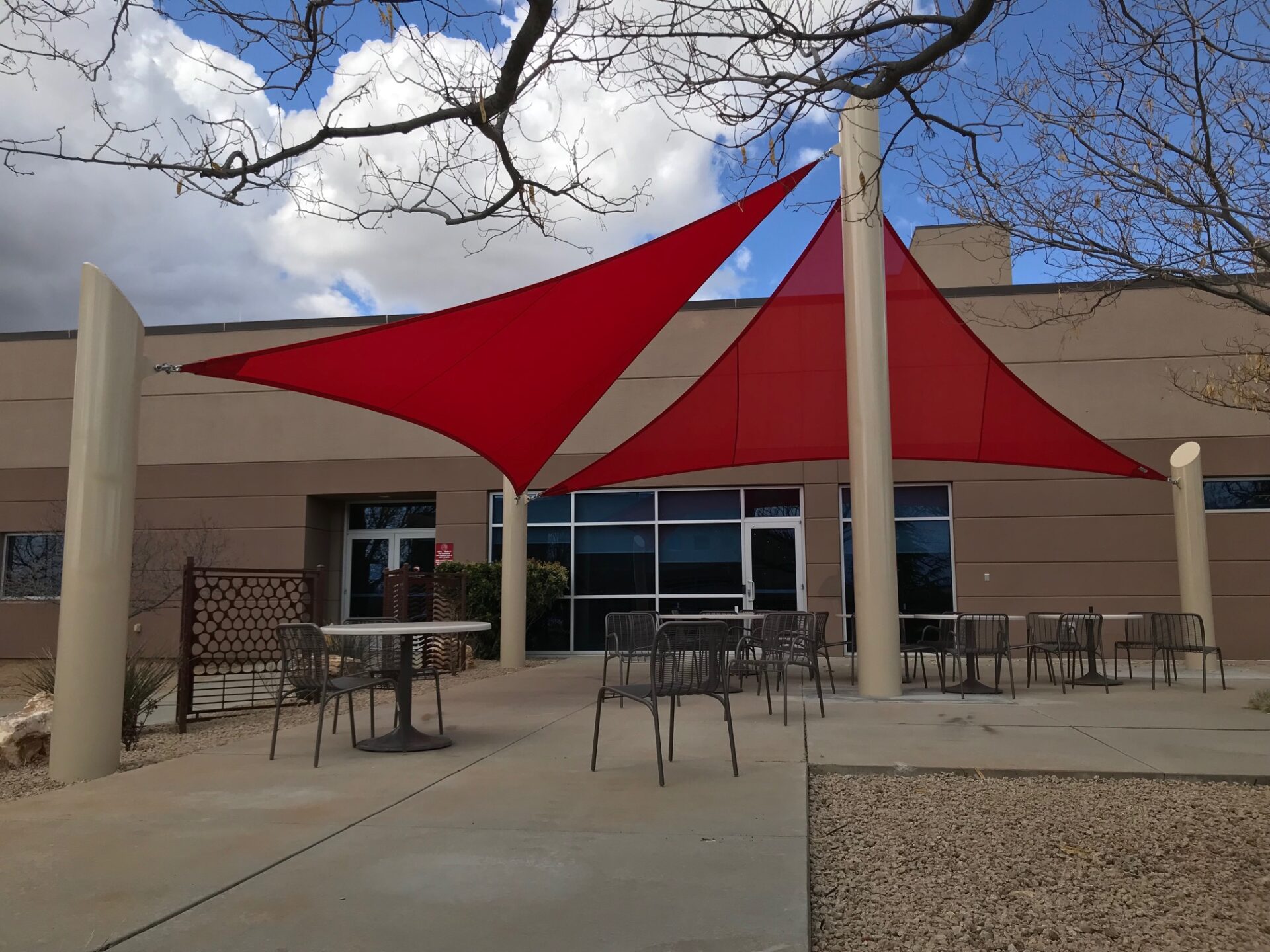
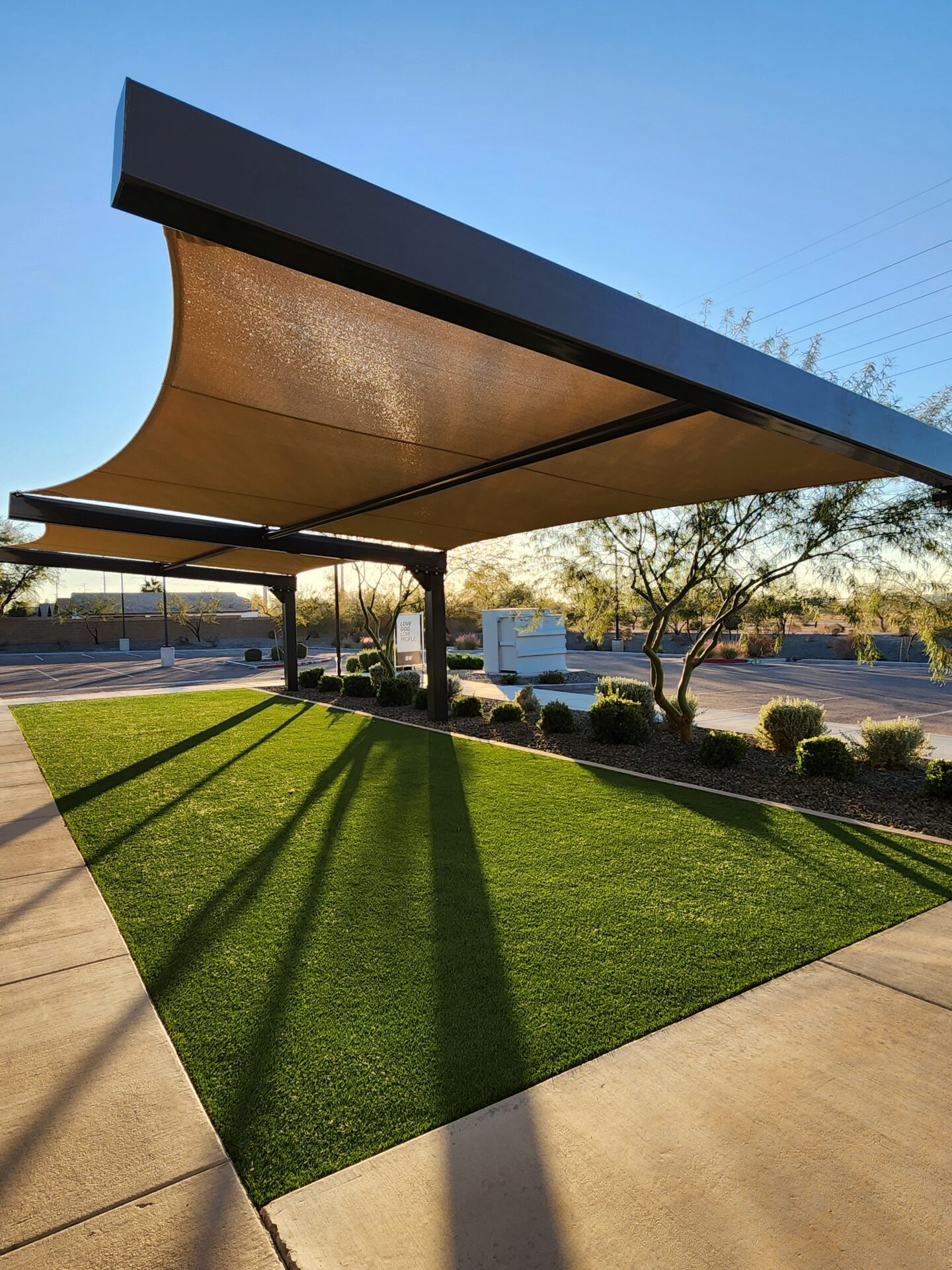
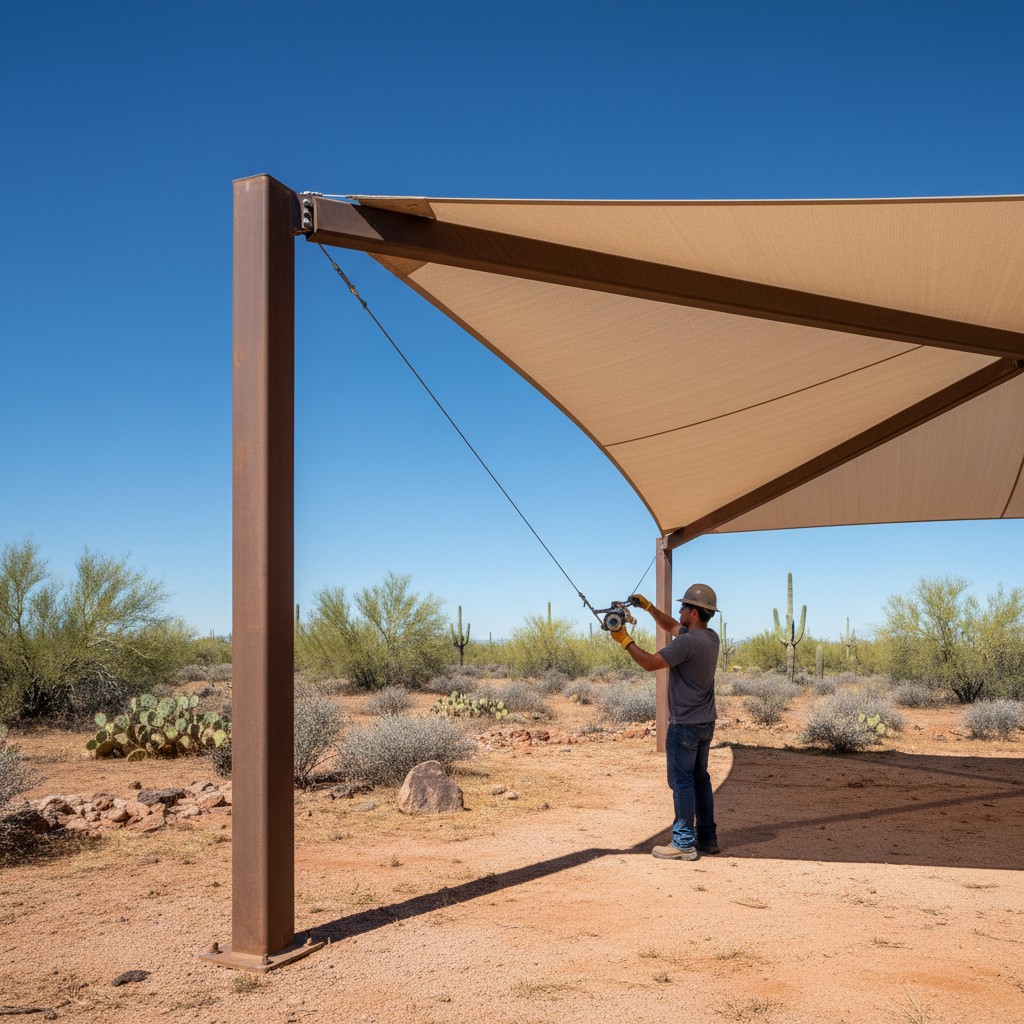
The difference starts with where the weight goes. A 3-point sail or 4-point sail holds its shape by tension – the fabric is pulled taut between masts that rake back 10 to 15 degrees, so the plane itself is the structure and the masts only resist the pull. Take the tension out and a sail goes slack; it has no rigidity of its own. A flat cantilever works the opposite way: a single line of heavy powder-coated steel columns on one edge carries a rigid framed roof that projects out over open ground, the way a carport reaches over a car without a post at the far corner. The cantilever’s roof holds its shape whether the fabric is tight or not, because the steel frame does the work. That is the whole story in one line – a sail spreads its anchors across the span and stays light; a cantilever concentrates all its load on one edge and stays heavy.
Coverage shape and where the columns land
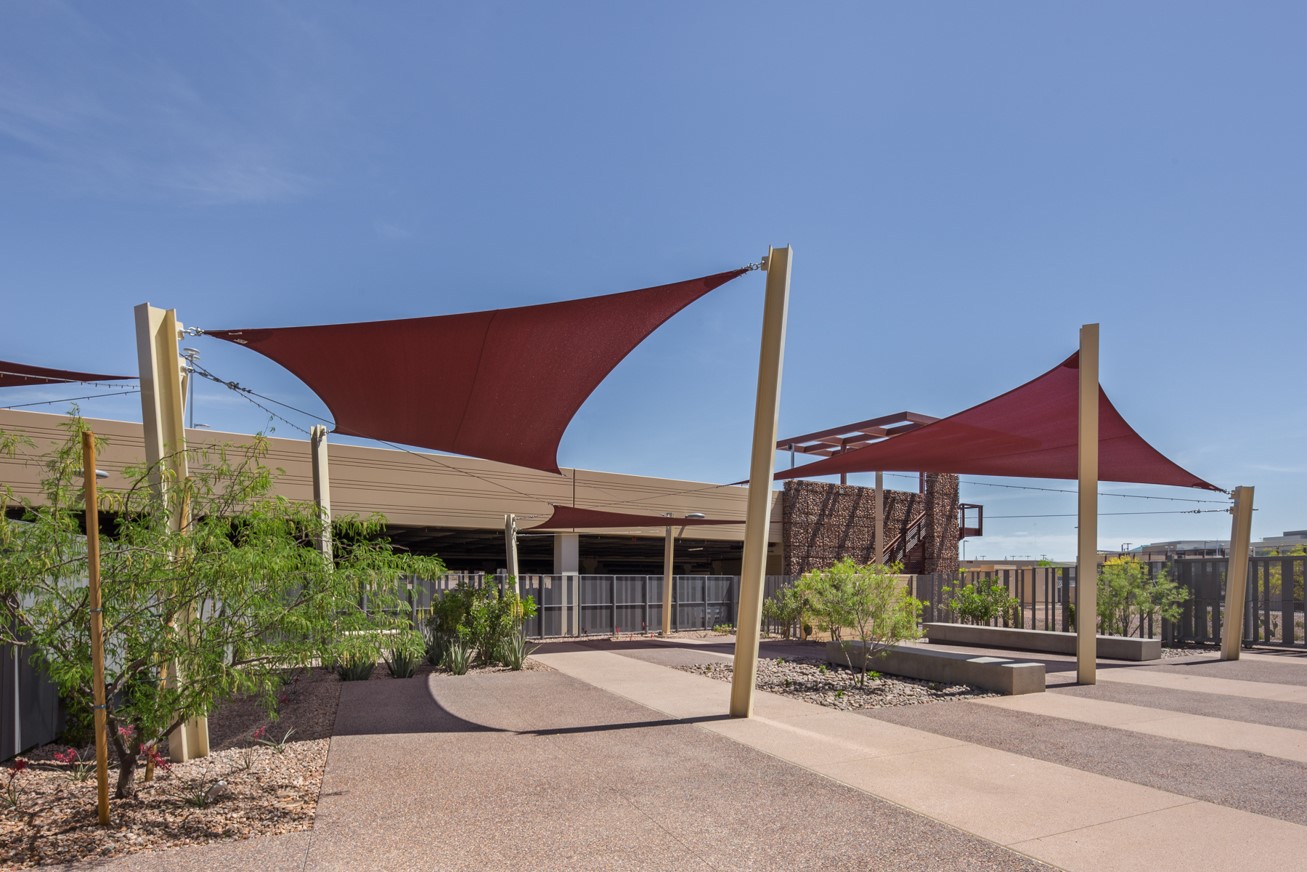
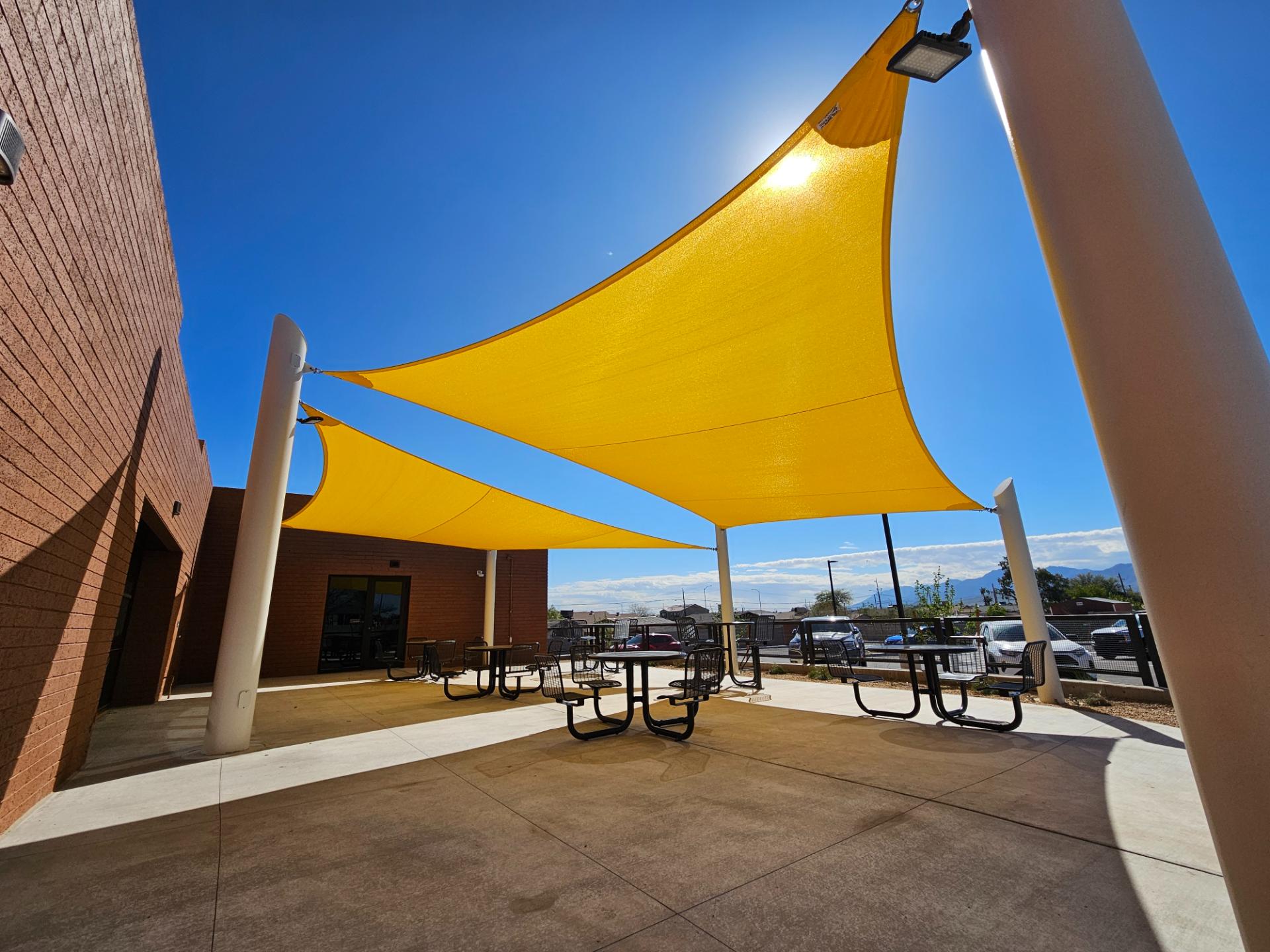
Column placement is the deciding factor more often than any other. A sail needs an anchor at every corner, so a single 4-point sail puts a mast at each of the four edges of its footprint – fine over a patio, a problem over a parking aisle where a center or corner post would block a drive lane or a swim lane. A flat cantilever moves every column to one side, leaving the entire shaded footprint clear; that is why cantilevers dominate parking lots and play areas where vehicles, kids, or swimmers need uninterrupted ground. Sails answer the other half of the problem – irregular and overlapping coverage. Because a single triangle is light and cheap, two or three overlap at staggered heights to follow a curved courtyard or an L-shaped patio no rectangle would fit, each sail sharing a mast with its neighbor. So the rule of thumb is shape-driven: one big clear rectangle with a clean post line on one edge points to a cantilever; an odd footprint where the look matters and a few interior anchors are acceptable points to sails.
What each one costs
Sails are the cheaper structure per project, and a 3-point triangle is usually the lowest-cost entry in the whole shade line. It sets the fewest masts, uses the least steel and hardware, and tensions a thin fabric plane rather than carrying a rigid frame. A flat cantilever costs more per square foot because the engineering is heavier on every axis: the steel section is thicker to resist the bending a one-sided support creates, the footings are deeper to keep the columns from tipping under that leverage, and the connection details carry more load. In hard Valley caliche a cantilever’s caissons often run 6 to 10 ft deep against the overturning force, where a sail mast might grip at 4 to 8 ft. The honest framing is value, not sticker price – if your site genuinely needs a column-free 30 to 60 ft clear span, a cantilever delivers shade no affordable sail can, and trying to force sails across that span with interior masts usually costs more and looks worse. If the span is small and the budget is tight, sails win outright.
Spans, size, and how big each can go
Size separates these two more cleanly than anything else. A single sail tops out fast – a 3-point triangle works best from about 12 to 20 ft per side, and a 4-point sail from roughly 20 to 30 ft on a side before the masts and footings grow enough that the math stops favoring fabric. Past that, you layer multiple sails rather than stretching one. A flat cantilever is built for the large single footprint a sail cannot reach: a cantilevered bay commonly covers a column-free projection in the 16 to 25 ft range off one post line, and runs of bays line up to shade a 40-car parking row or a full play field as one continuous structure. So sails scale by adding overlapping pieces; cantilevers scale by adding bays along the post line. For especially large flat coverage where a center column is allowed, a hip canopy may beat both – the hypar and the rest of the range sit on the products hub, and the shade structure guides walk through sizing each by use.
Look, wind, and the honest trade-offs
On looks, sails win for most people – the curved, overlapping fabric planes read as architecture, which is exactly what owners picture when they ask for sails by name, and the twisted hypar pushes that sculptural look the furthest. A flat cantilever reads as clean and structural rather than sculptural; its appeal is the open footprint and the crisp engineered line, not curves. On wind, both are engineered to Arizona building code and ASCE 7 loads, with Valley design wind speeds running roughly 90-115 mph, and both have honest limits. A sail is the lightest structure in the line, so it spills gusts by shape but depends entirely on how deep its masts are set; in a microburst past 60 mph the rating lives in the footings, not the fabric. A cantilever’s one-sided support puts heavy leverage on its columns, so its weak point is overturning – the footings have to be sized for it, and a bargain cantilever with shallow caissons is the failure to watch for. Both fabrics are consumables: budget a re-cover inside the 10-15 year window, expect a first-season re-tension on a sail, and plan a rinse once or twice a year so Valley dust does not sand the weave. Neither is bulletproof, and any installer who says otherwise is selling.
The verdict – which one to buy
Buy sails when look, cost, and footprint shape lead the decision – a patio, an entry, a courtyard, a play cluster, anywhere a few masts can land and the architectural curve is the point. A 3-point sail is the lowest-cost way in; a 4-point sail covers a wider single plane; layered sails follow any odd shape. Buy a flat cantilever when column-free coverage over a big clear footprint is non-negotiable – parking aisles, play fields, pool decks – and the budget can carry heavier steel for the clear span. The honest middle ground: many sites use both, sails over the architectural front edge and cantilevers over the working lot behind. When neither answers the lot cleanly, the full range and the comparison logic live on the products hub and the shade structure guides.
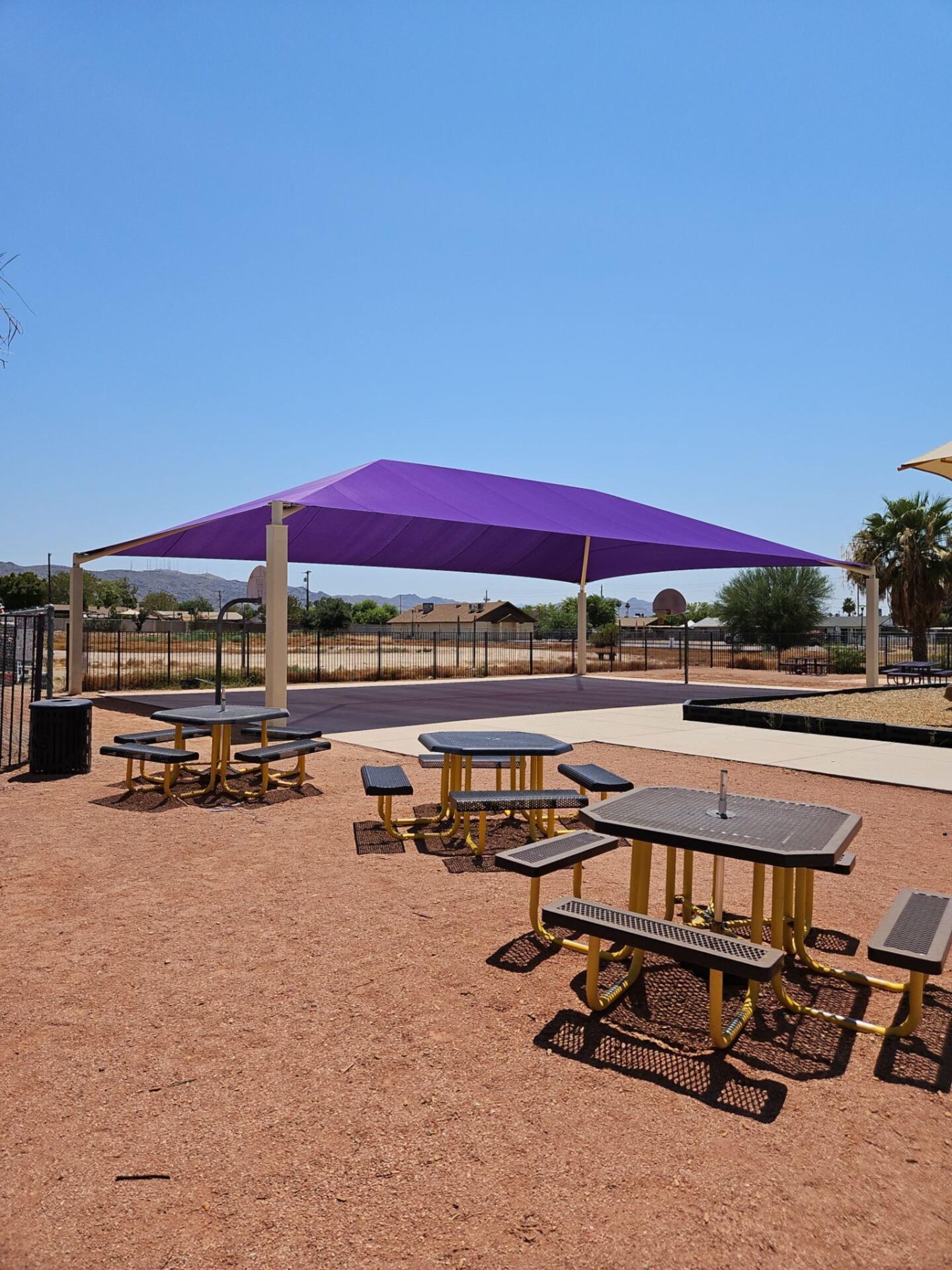
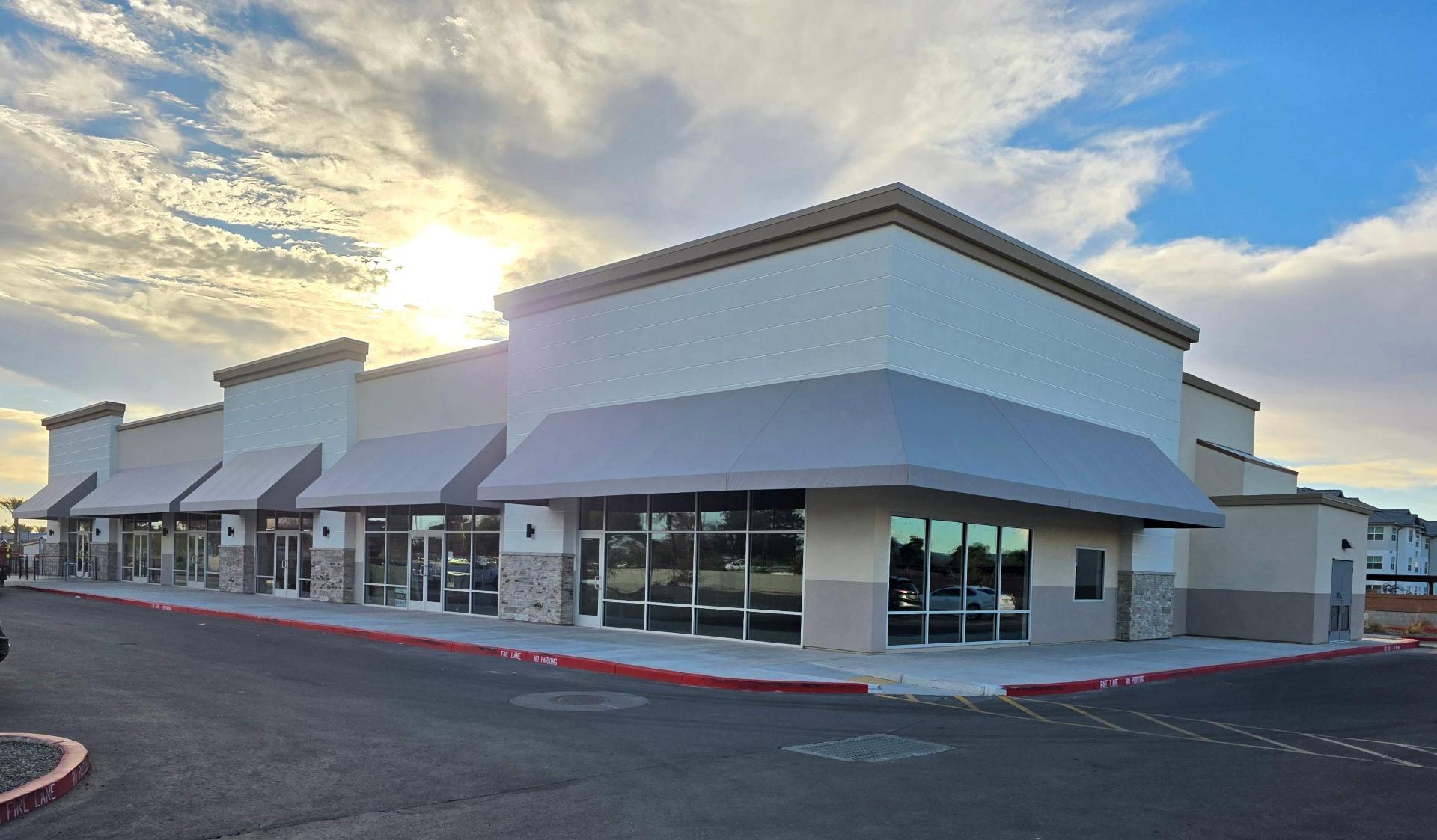
Shade Structures We Build
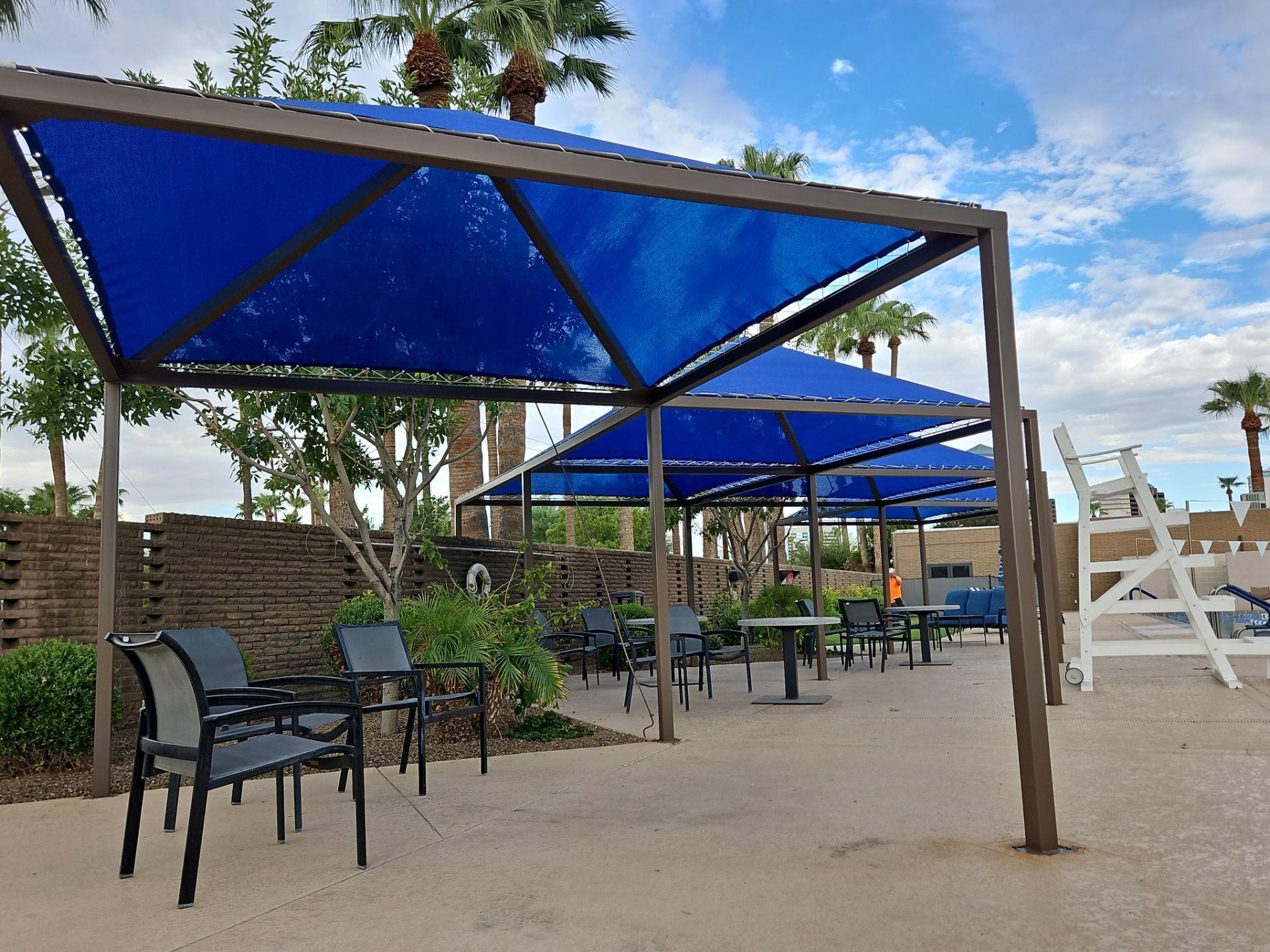
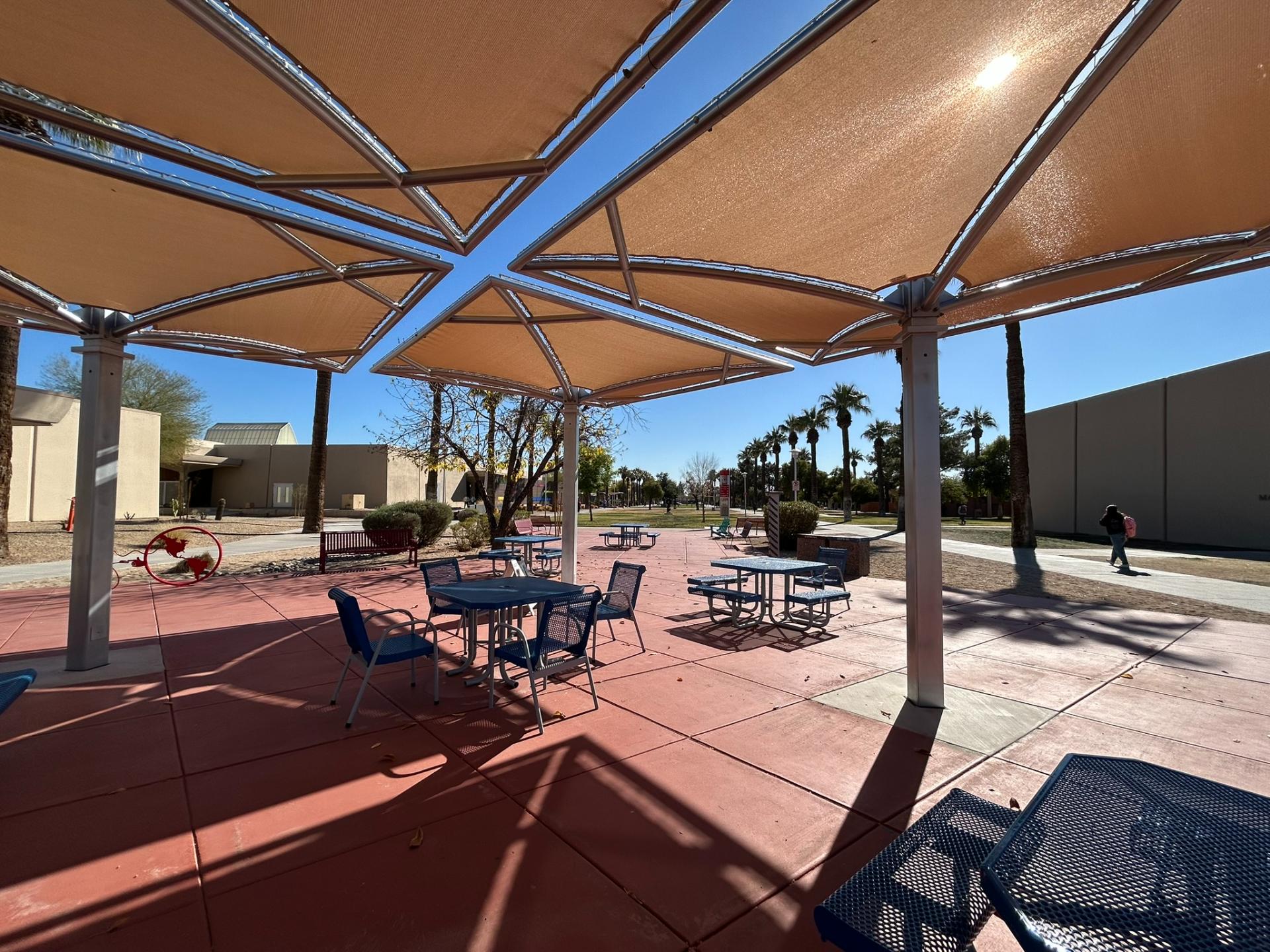
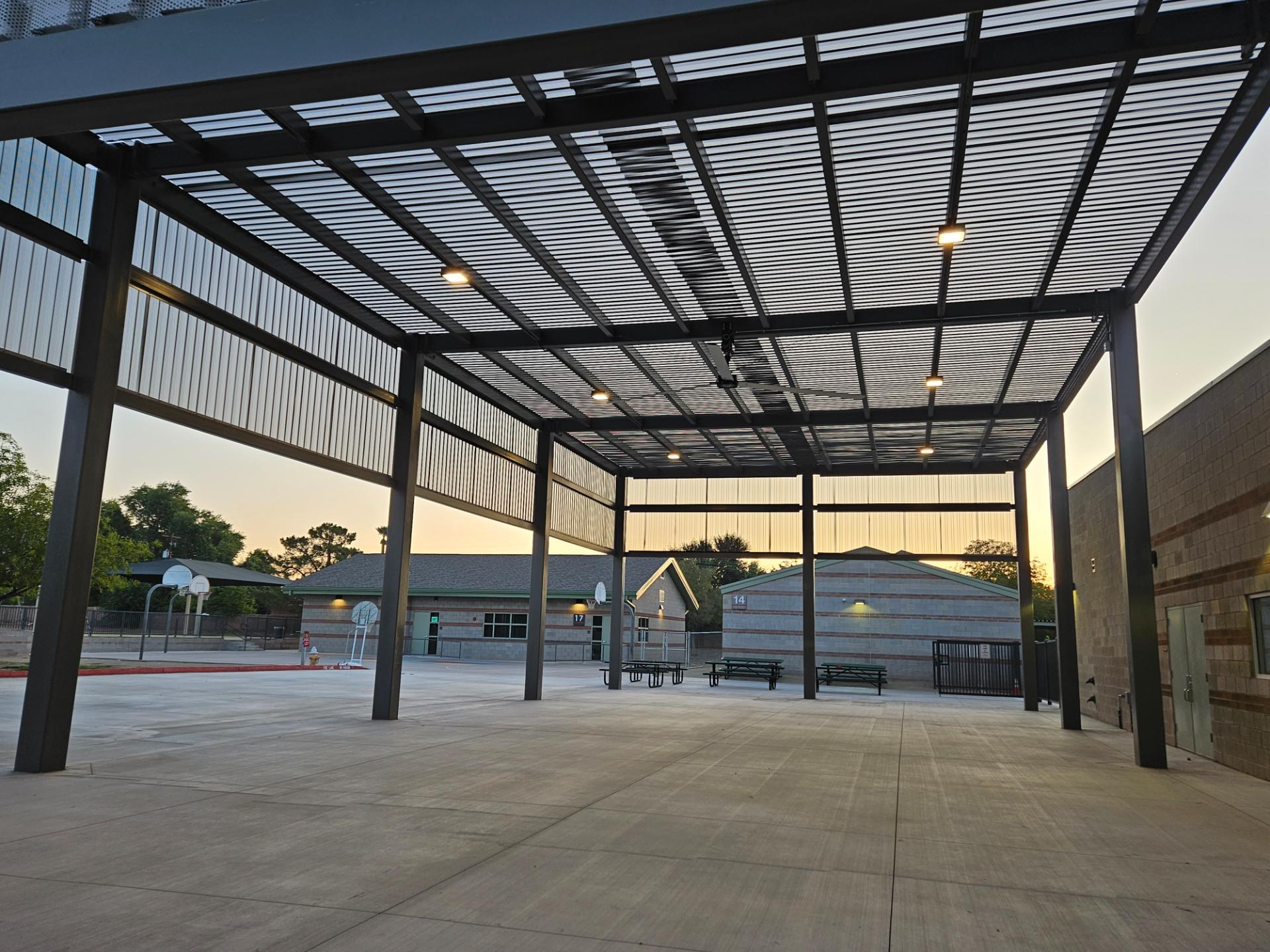
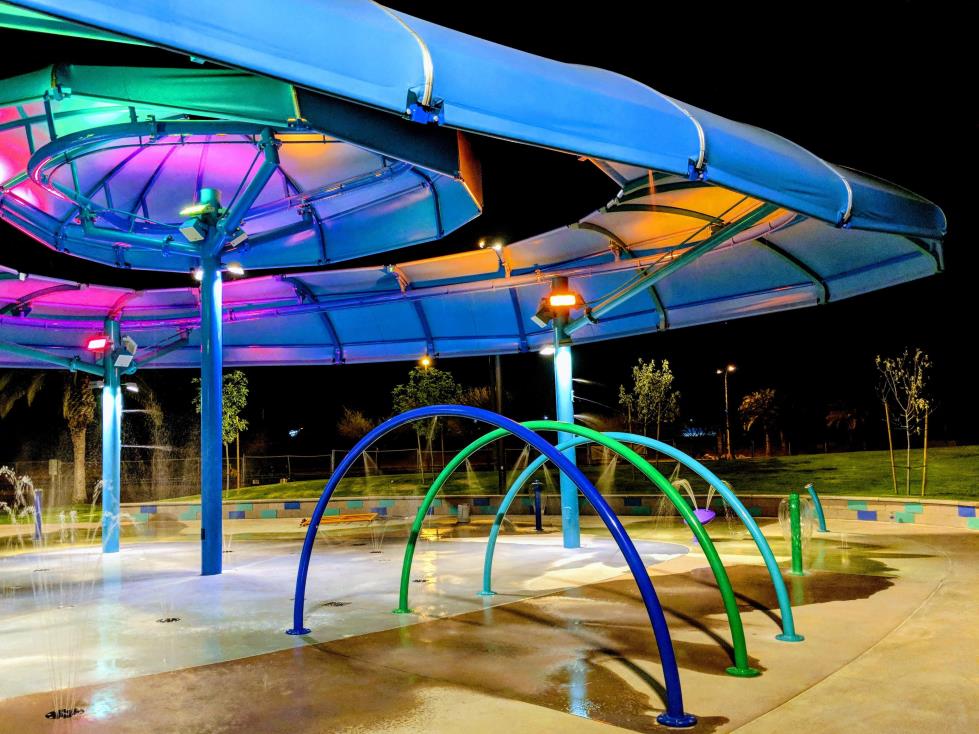
Ready to talk through your project?
Call (602) 265-0905 for a free assessment.
Frequently Asked Questions
Are shade sails cheaper than a cantilever structure?
Yes, in almost every comparison sails cost less. A tensioned-fabric sail sets the fewest masts and uses the least steel and hardware, and a 3-point triangle is usually the lowest-cost entry in the shade line. A flat cantilever costs more per square foot because its one-sided support demands thicker steel, deeper footings, and heavier connections to carry the load and resist overturning. The exception is a large column-free span – there a cantilever delivers shade no affordable sail can match, so it becomes the better value even though the sticker is higher.
Which covers more area, a shade sail or a cantilever?
It depends on how the coverage is shaped. For one large continuous footprint, a flat cantilever covers more – bays line up off a single post line to shade a 40-car row or a full play field as one structure, with each bay projecting 16 to 25 ft of column-free ground. A single sail tops out around 20 to 30 ft per side before you have to layer multiple pieces. Sails cover more total area only when the shape is irregular and overlapping triangles can follow it better than a rectangle would.
I need column-free coverage in the middle – which should I choose?
Choose a flat cantilever. Its entire support sits on one edge, so every column lands on one side and the shaded footprint underneath stays completely open – which is exactly why cantilevers dominate parking lots, play areas, and pool decks where a center post is not an option. A sail needs an anchor at every corner, so even a 4-point sail puts a mast at each edge of its footprint. If posts cannot land inside or across your space, the cantilever is the structure built for that.
Do shade sails or cantilevers hold up better in Arizona wind?
Both are engineered to Arizona building code and ASCE 7 loads, with Valley design wind speeds running roughly 90-115 mph, and each has a different weak point. A sail is the lightest structure in the line – it spills gusts by its curved shape but relies entirely on how deep its masts are set, so in a microburst past 60 mph the rating lives in the footings. A cantilever’s one-sided support puts overturning leverage on its columns, so its footings must be sized deeper, often 6 to 10 ft in caliche. Neither is bulletproof; the engineering, not the fabric, carries the wind.
Which looks better, a shade sail or a cantilever structure?
Most owners find sails more striking. The taut, curved, overlapping fabric planes read as architecture, and the twisted hypar pushes that sculptural look the furthest – it is the look people picture when they ask for sails by name. A flat cantilever reads as clean and structural rather than sculptural; its appeal is the crisp engineered line and the open footprint beneath it, not curves. If the design is meant to be a feature, sails or a hypar usually win the look. If the priority is uninterrupted coverage that disappears into the background, the cantilever’s plain lines suit it.