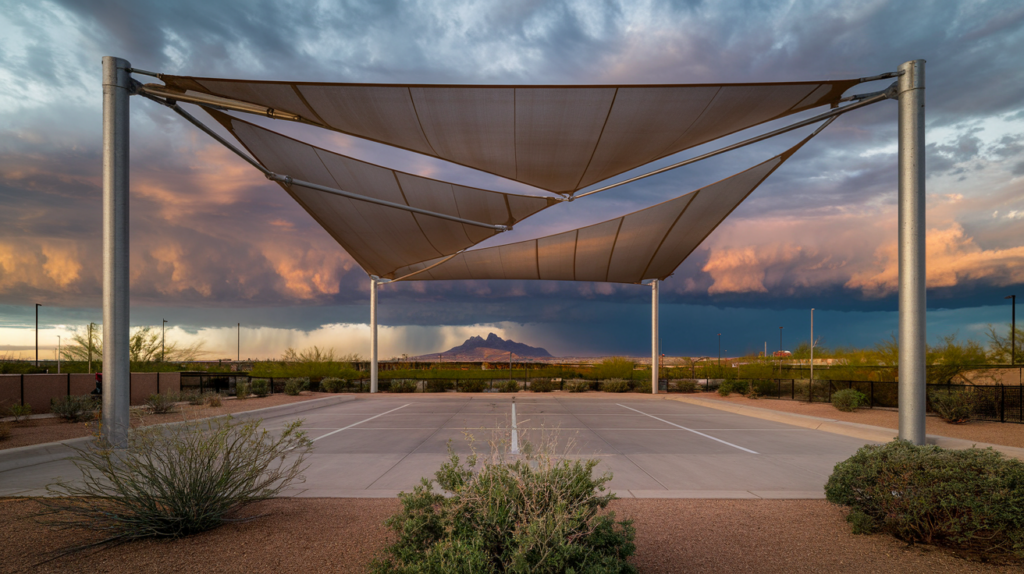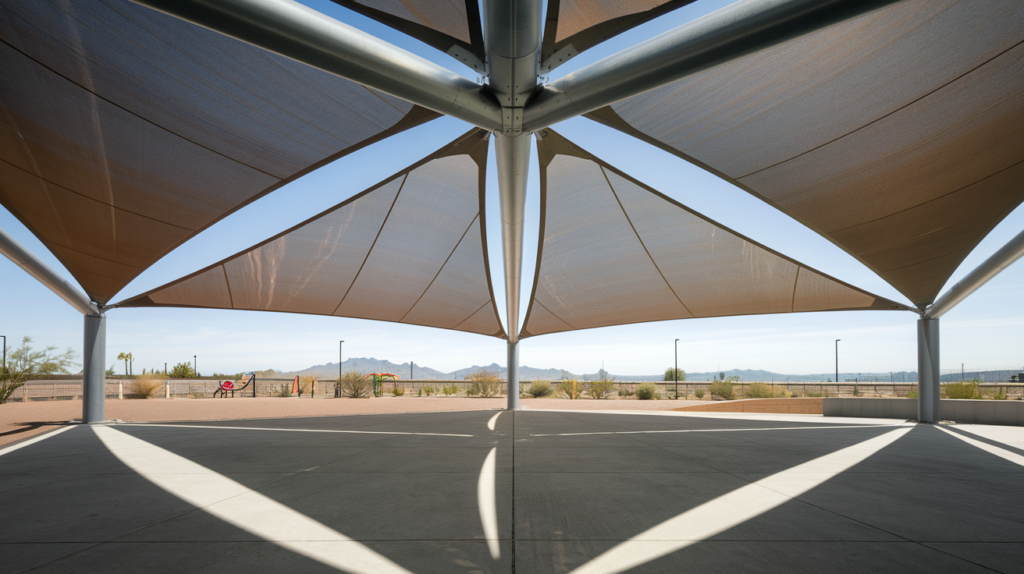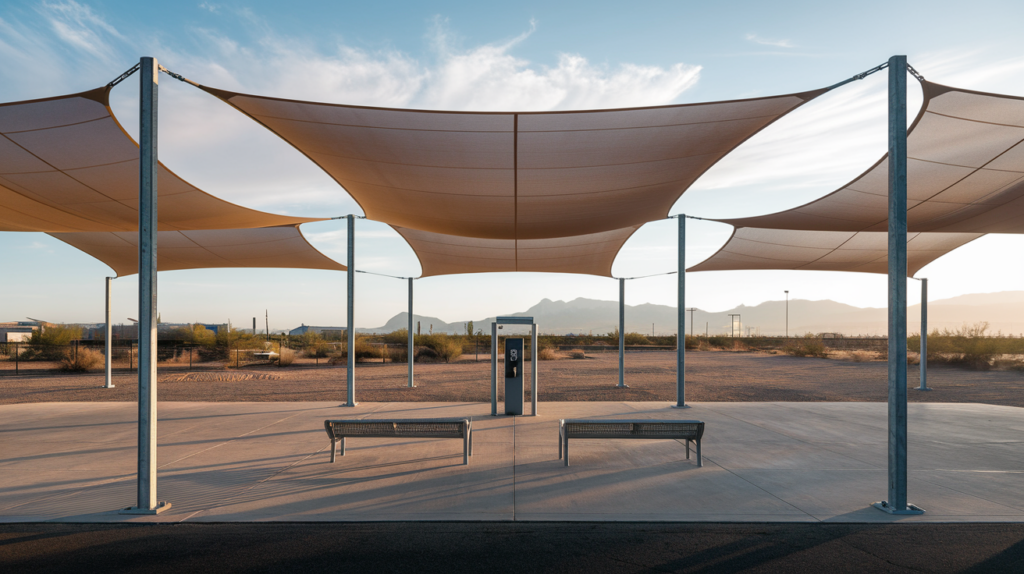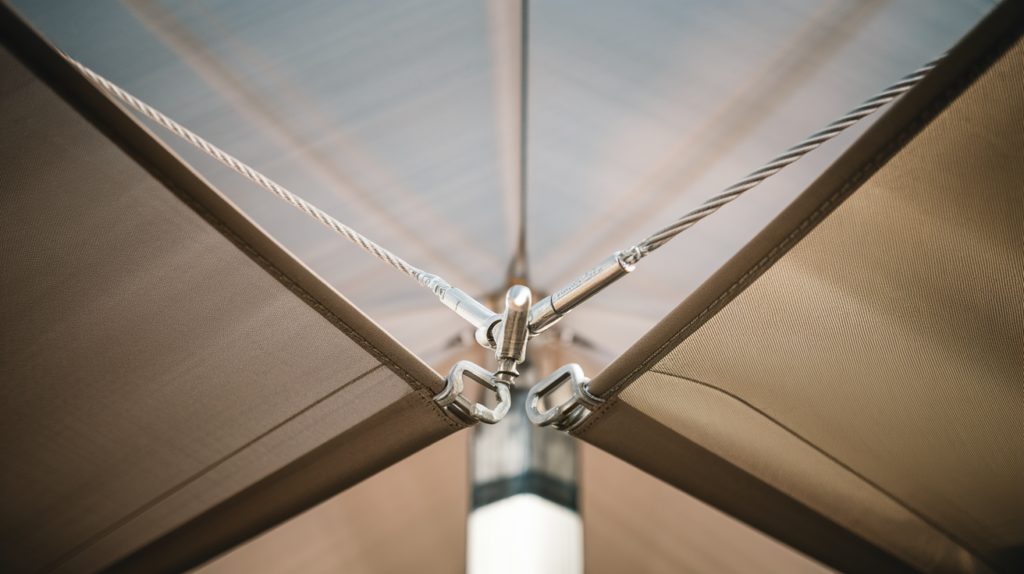
Phoenix’s July 23-27 Extreme Heat Warning is running 115-116 degrees with monsoon humidity pushing heat indices to 113 — the conditions that make misters and evaporative cooling quit. Why breathable engineered shade is the outdoor heat control that keeps working, and how humidity should change your fabric spec.
Posts by Clint Butler
News
School Is Back and the Curb Is 160 Degrees: Closing the Dismissal-Zone Shade Gap on Arizona Campuses
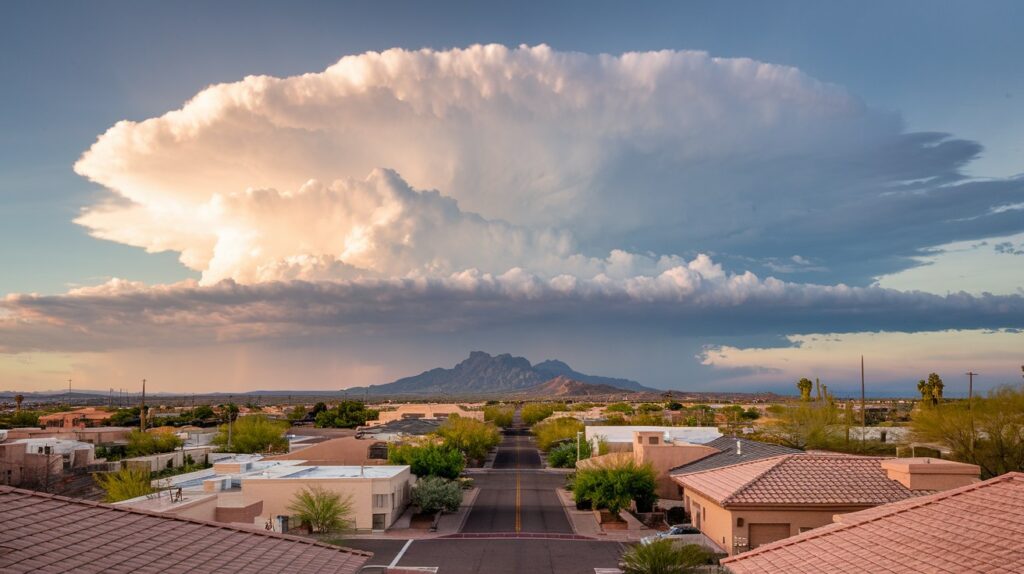
Valley campuses reopened this week in 113-114 degree heat, a day after a 68 mph monsoon gust — and the bus loading zones and pickup lines every student stands in twice a day are still bare. Why the dismissal zone is the next shade priority for Arizona schools.
News
The Storms Are Here — and So Are the Door-Knockers: Vetting a Commercial Shade Contractor in Peak Monsoon
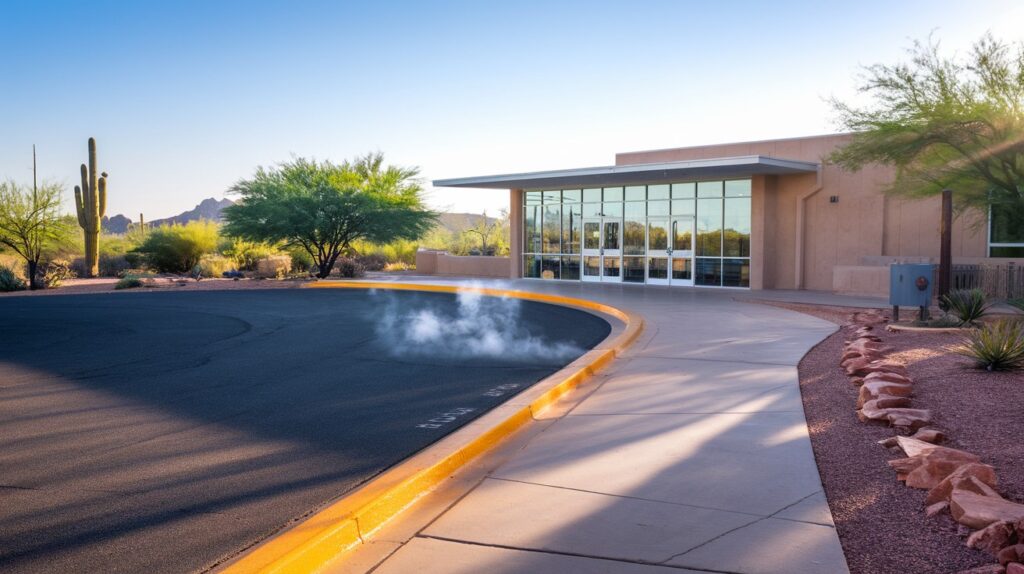
This week’s flood watches and flash flooding opened post-storm repair season — and the door-knockers followed. How Arizona districts, HOA boards, and municipalities vet a commercial shade contractor before signing repair or replacement contracts.
News
Fall Practice Starts July 27: The Athletic-Facility Shade Audit Arizona Schools Have Two Weeks to Run
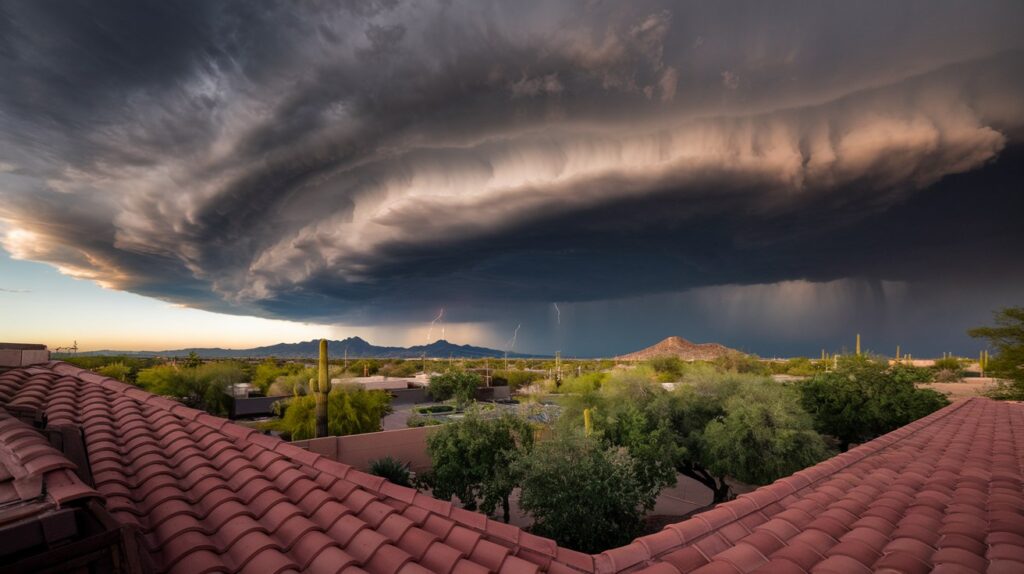
AIA fall sports practice opens July 27 — in the deadliest month for heat illness in high school athletics. A two-week audit guide for shading sidelines, bleachers, dugouts, and the spectator areas heat policy never reaches.
News
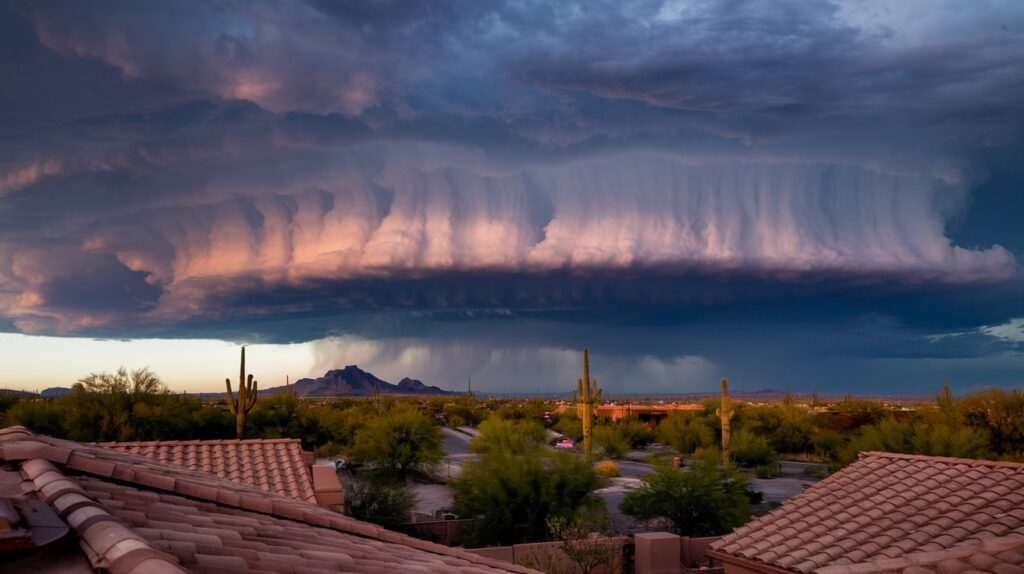
The Monsoon Ramps Up This Weekend: A Post-Storm Damage and Insurance Playbook for Commercial Shade Structures
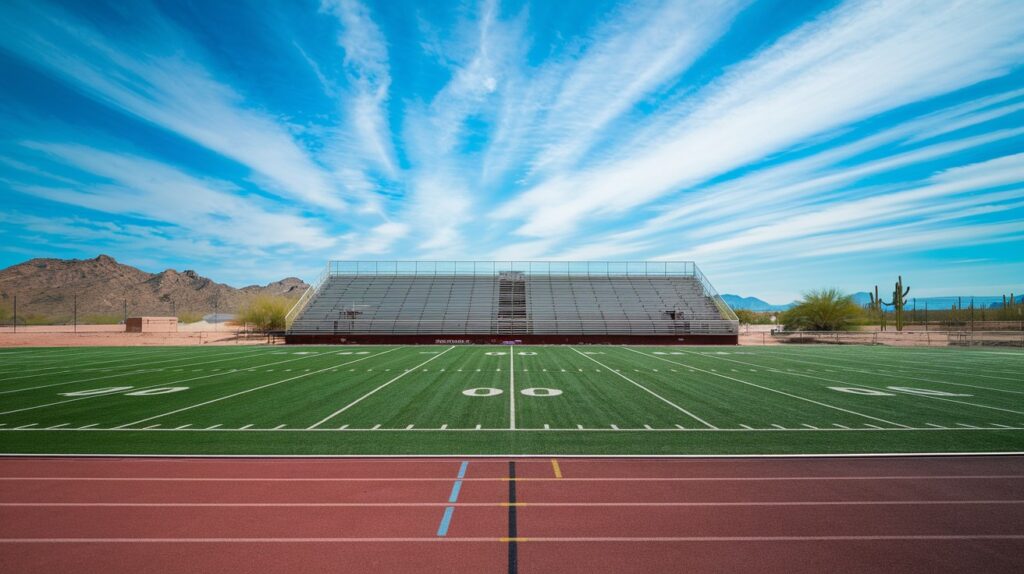
The 2026 monsoon’s first real storm cycle hits the Valley this weekend — outflows Saturday, storms Sunday. Here’s the post-storm playbook for commercial shade structures: how to triage damage safely, document it so the insurance claim pays, and know when a re-skin beats a full replacement.
News
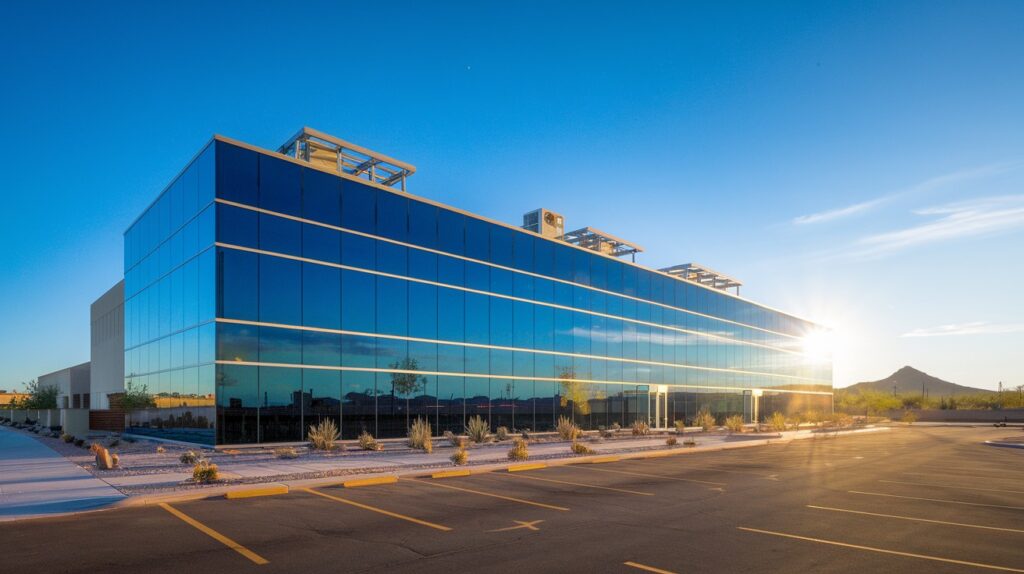
Phoenix’s Hottest Week of 2026 Is Also Its Most Expensive: How Commercial Shade Cuts the Cooling Bill
Phoenix is under an Extreme Heat Warning with highs of 112–116°F — and every degree runs through a commercial building’s cooling bill. Exterior shade blocks up to 77% of solar heat gain at west-facing glass and cuts cooling costs as much as 25%, right in the 2-to-8 p.m. demand window utilities bill hardest.
News
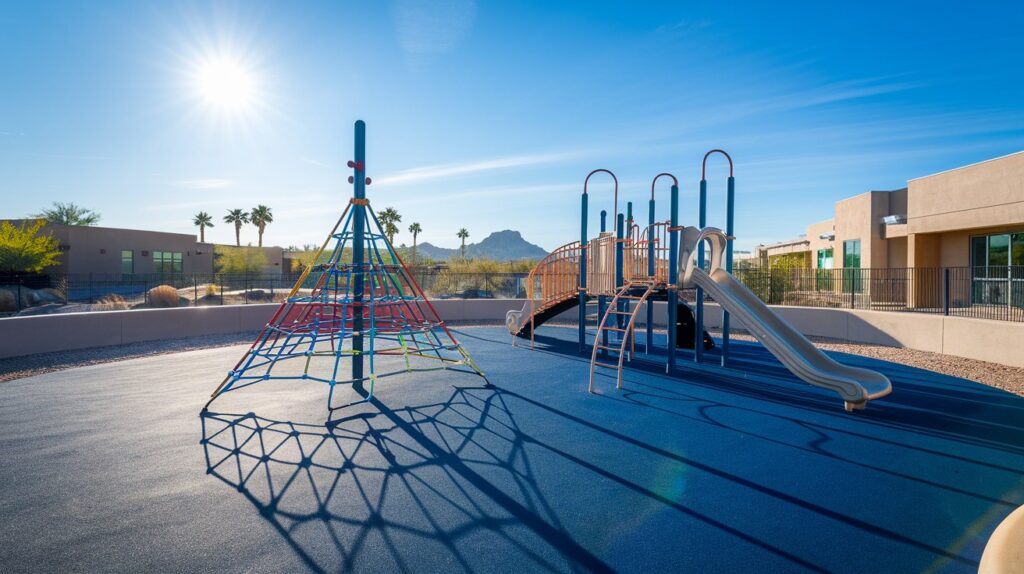
The Hidden Schoolyard Hazard Arizona Districts Face This July: Play Surfaces Hot Enough to Burn
As Arizona students return in mid-to-late July, the real schoolyard hazard isn’t the air — it’s play surfaces. Slides hit 160°F, turf and rubber 180–188°F, and metal equipment up to 250°F, all hot enough to burn in seconds. Here’s how shade measurably brings those numbers down.
News
How to Write a Commercial Shade Structure RFP That Survives the Arizona Desert
A vague RFP gets you vague bids, and the cheapest vague bid usually wins. Here is what belongs in a commercial shade structure RFP — wind ratings, fabric grade, stamped engineering, and warranty terms — so every bidder quotes the same durable thing.
News
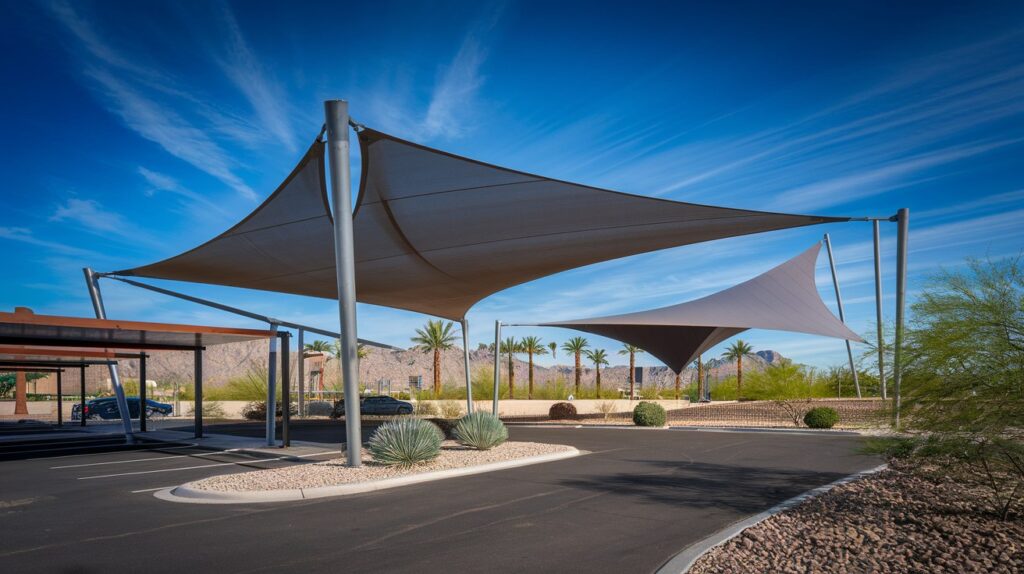
Hip, Cantilever, or Sail? How to Choose the Right Commercial Shade Structure Form for an Arizona Site
Hip, cantilever, fabric sail, or sculptural hypar? Each commercial shade form covers a different footprint and behaves differently in wind. Here is how to match the right form to your Arizona site, your storm exposure, and your budget.
News
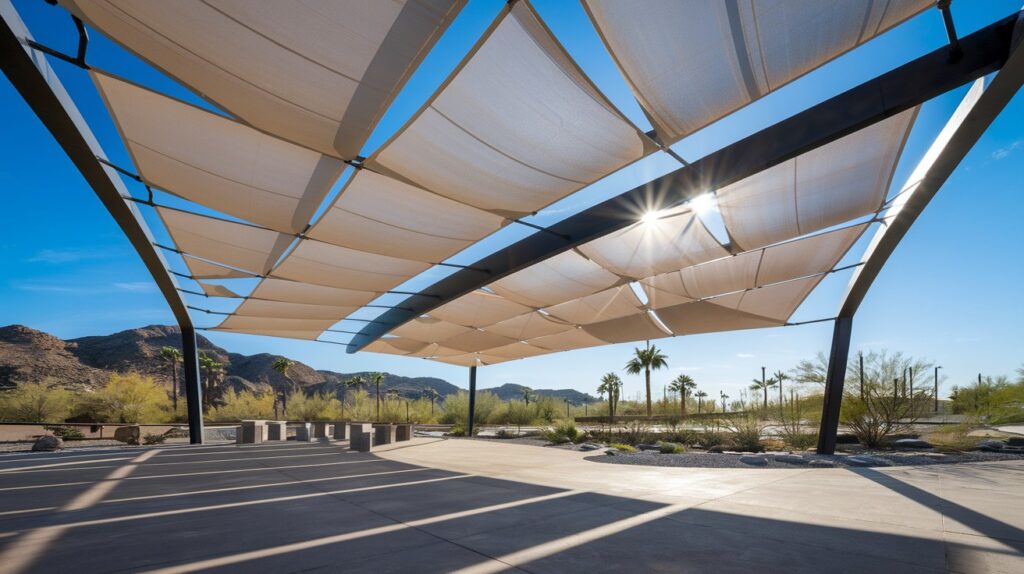
Phoenix Burns Through Shade Fabric Faster Than Anywhere — Here’s When to Re-Skin Instead of Replace
Phoenix’s extreme UV spends shade fabric faster than the spec sheet assumes. Here is how long HDPE really lasts in the desert, what end-of-life looks like, and why re-skinning the original frame usually beats a full rebuild.
News
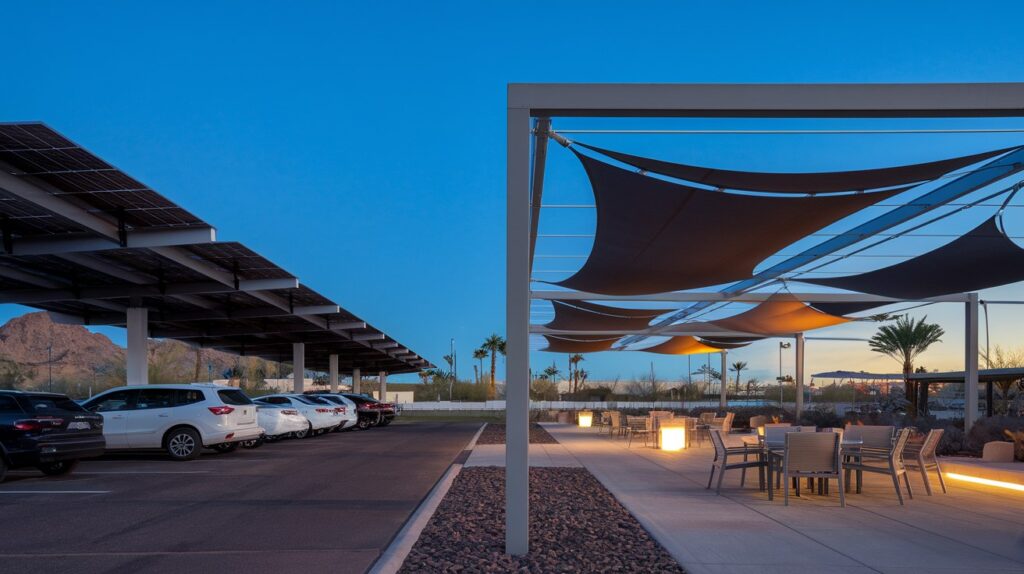
Solar Carport or Fabric Shade Structure? The Question Arizona Buyers Should Ask First
Solar carports are being pitched across the Valley as shade with a power bonus. But when the goal is shade, a commercial fabric structure usually wins on cost-per-covered-foot, surface cooling, and timeline. Here is how Arizona buyers should decide.
News
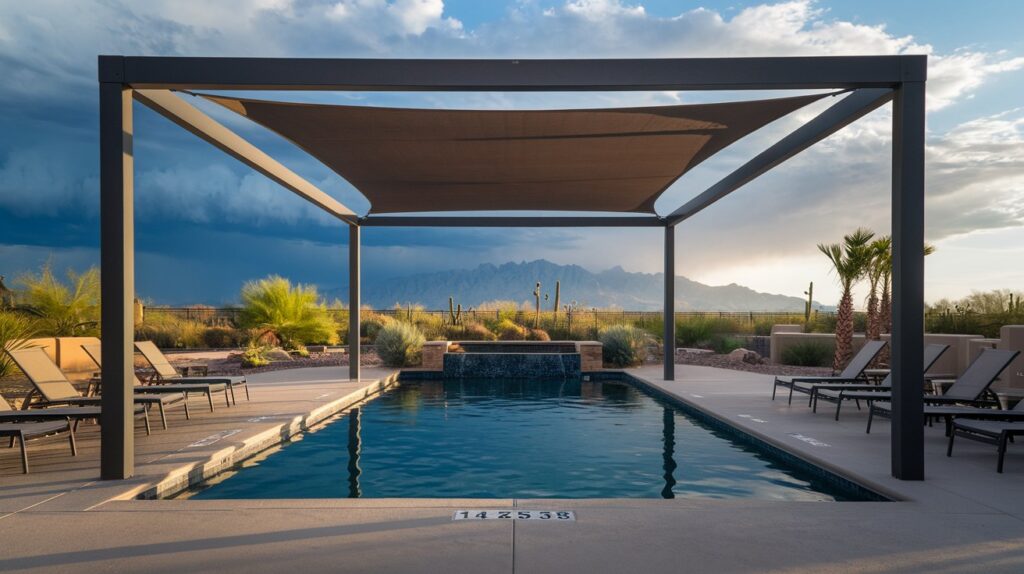
Arizona’s New Shade Law Is About Backyards. Your HOA’s Real Risk Is the Pool Deck, the Ramada, and the Playground
Arizona’s new HB 2342 ends HOA bans on backyard shade, but a board’s real exposure is the common-area shade it owns. Here is how HOA boards should spec, engineer, and reserve-fund pool, playground, and ramada shade with the 2026 monsoon now open.
News
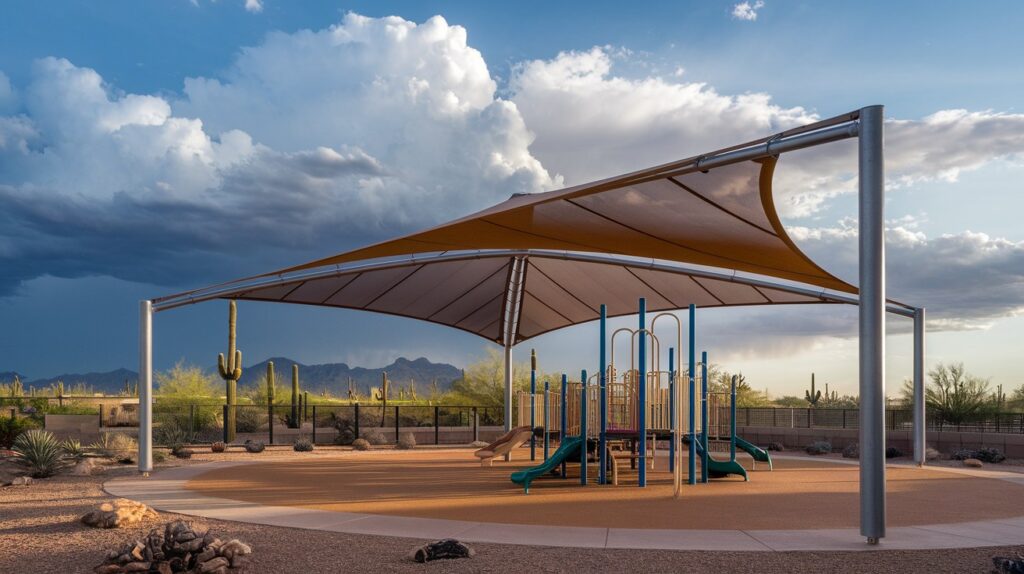
The Splash Pads Opened Early and the Monsoon Opens Monday — Arizona Park Shade Now Has to Work in Two Seasons at Once
Phoenix opened its splash pads early in record heat, and the monsoon opens June 15 with an above-normal outlook. Here is how Arizona parks and recreation departments should spec shade that survives both seasons — and where the bond and grant money is actually moving in 2026.
News
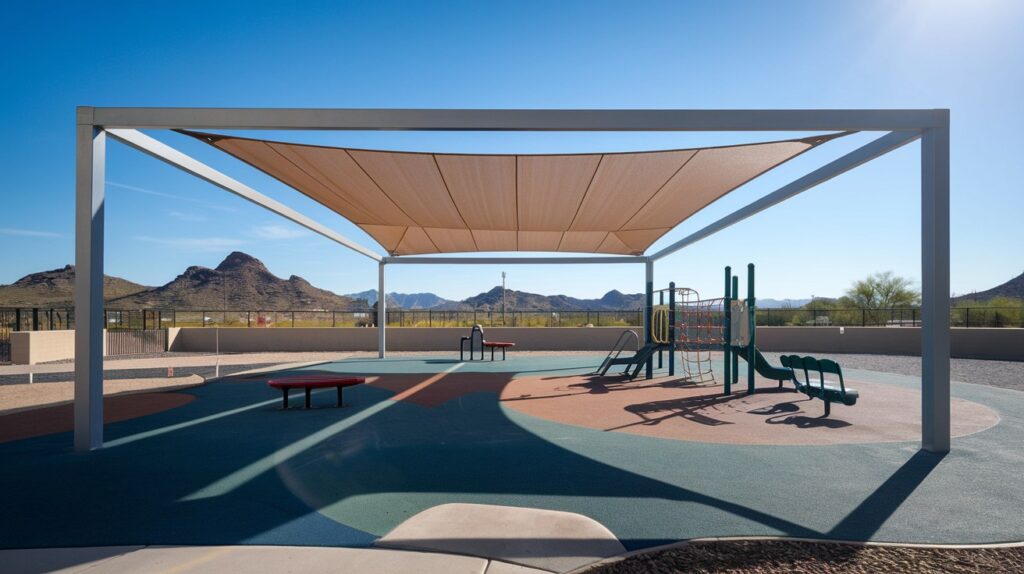
The Summer Build Window Is Open — and Arizona Schools Have About Ten Weeks to Get Shade Over the Playground
Most Arizona campuses reopen between late July and mid-August, leaving facility directors about ten weeks to get engineered shade over playgrounds, lunch courts, and bus zones. Here is how the summer build window actually spends down — and what the 2026 heat and monsoon data mean for the spec.
News
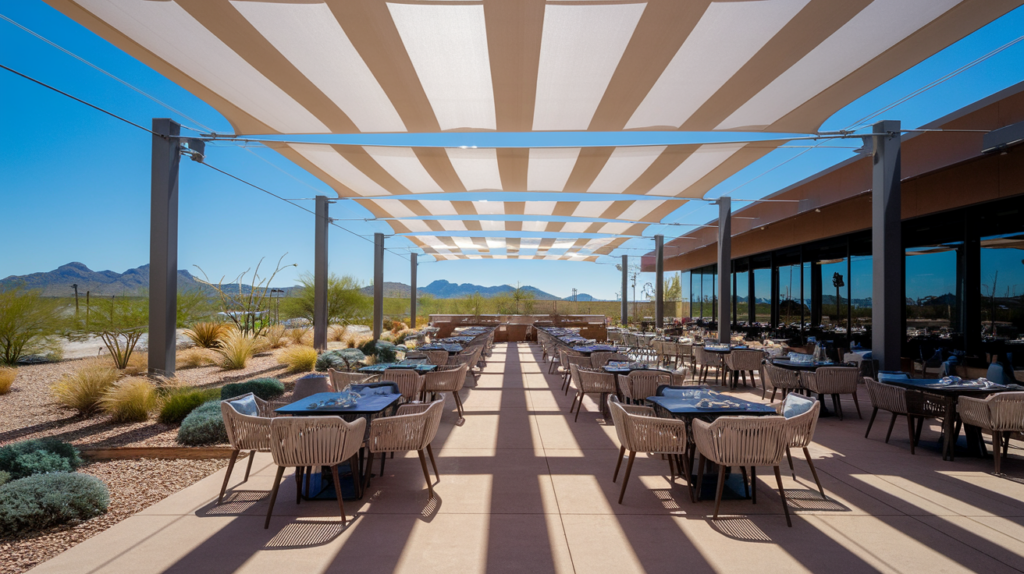
Phoenix’s Hottest Spring on Record Just Rewrote the Patio Math for Every Valley Restaurant
Phoenix just logged the hottest spring in its recorded history — 80.2°F average, 6.4 degrees above normal — and every unshaded restaurant patio in the Valley lost revenue weeks to it. Here is the patio shade math for operators heading into monsoon season.
News
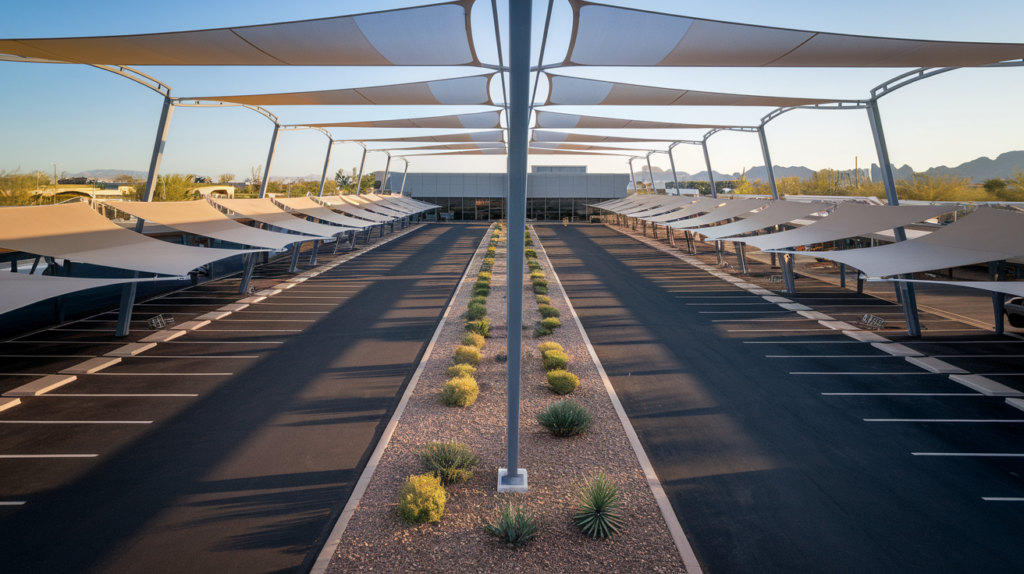
Phoenix’s 50% Parking-Lot Shade Rule Just Became the Compliance Line Every Commercial Property Owner in the Valley Needs to Read
Phoenix Ordinance G-7446 (codified January 2026), the Shade Phoenix Plan, and Arizona’s new ADOSH workplace-heat guidelines have converged on the same square of asphalt. Here is the parking-lot shade playbook for Valley commercial property owners with a procurement window that closes in August.
News
The Federal Playground Handbook Just Put Shade on the Safety Page — Here’s What Arizona Schools and Parks Should Do by September 1
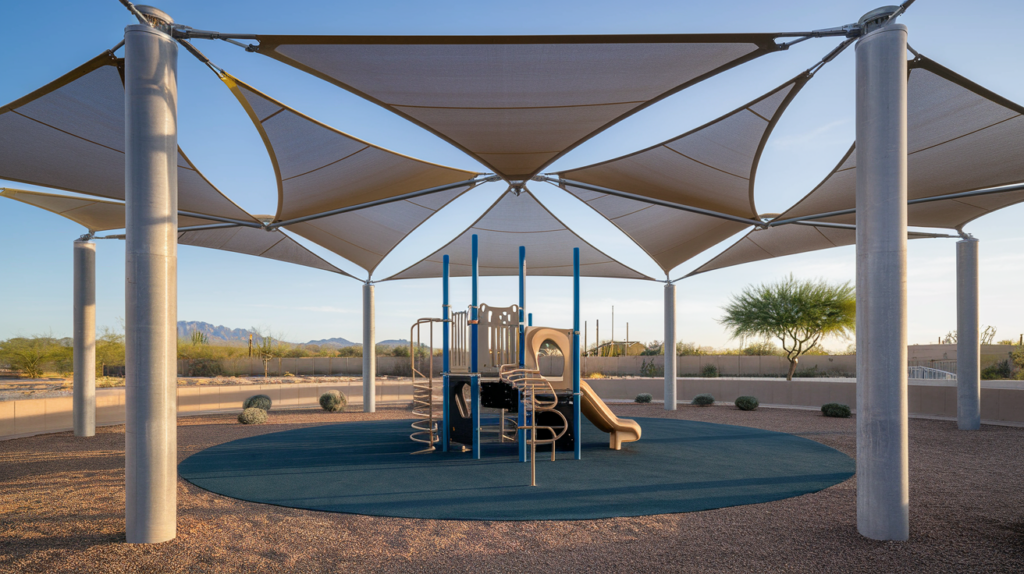
The CPSC’s 2025 Public Playground Safety Handbook update — the first in 15 years — names shade as a thermal-burn mitigation, and ASTM F1487-25 takes effect September 1, 2026. Here is what Arizona school district and parks buyers should do with the back-to-school capital window.
News
The 2026 Super El Niño Monsoon Forecast Just Made Your Shade Structure’s Wind Rating the Question
NOAA puts the 2026 super El Niño at 82% probability and Arizona’s monsoon outlook is above-normal for the second straight year. Verify the 115 mph wind rating stamped on your commercial shade structure before the first cell of the season.