The 2026 monsoon stopped hinting this week and arrived. Wednesday brought a First Alert Day and a flood watch covering Maricopa County, with flash flood warnings for North Scottsdale and Cave Creek and storm cells dropping rain at 2 to 3 inches per hour, per KTAR and azfamily reporting from July 15 and 16. All of it landed two days after the July 13 wind event that gusted to 50 mph, tore roofing off structures in Glendale, and cut power to roughly 20,000 customers. Somewhere in that sequence, fabric tore, hardware loosened, and a facility manager somewhere in the Valley started getting calls from contractors they had never heard of.
That last part is predictable enough that the state has a standing playbook for it. The Arizona Registrar of Contractors publishes a monsoon-season scam advisory every year, and the Attorney General’s office issues after-storm fraud alerts almost as reliably as the National Weather Service issues flood watches. Most of that guidance is aimed at homeowners, but commercial buyers — school districts, HOA boards, parks departments, property managers — sign far larger contracts under the same post-storm pressure. This article walks through how to qualify a commercial shade contractor before you sign anything, whether the job is a torn canopy on an existing frame — the kind of work our canopy replacement and repair team handles even on structures we didn’t build — or a full engineered replacement.
Why Storm Season Is Also Scam Season
The economics are simple. A damaging storm creates a sudden concentration of repair demand, an insurance clock, and decision-makers who want the problem gone before the next cell builds. That combination rewards speed over diligence, and the operators the Registrar of Contractors warns about are built for exactly that moment. The ROC’s advisory describes the pattern: unsolicited contact after a storm, pressure to act immediately, claims that prices rise tomorrow, demands for cash or large deposits up front, and reluctance to put anything in writing. Arizona’s monsoon season runs June 15 through September 30, and complaint volume tracks the storm calendar.
Commercial buyers tend to assume this is a residential problem. It isn’t. A board member fielding a cold call about “storm damage we noticed on your canopies” is being worked the same way a homeowner is — the invoice just has more zeros. And a commercial buyer who signs with the wrong outfit doesn’t just lose a deposit. They put an unpermitted, unengineered repair over a playground, a pool deck, or a dining patio, and they own the liability when the next outflow boundary finds it. The contractor who found the damage is not automatically the contractor who should repair it.
The License Check That Takes Five Minutes
Arizona makes the first vetting step easy, and almost nobody takes it. Every legitimate contractor holds a license number issued by the Registrar of Contractors, verifiable in the contractor search at roc.az.gov. The record shows the classification, current status, expiration, bond information, and the qualifying party — the individual whose trade experience stands behind the license. If a contractor hesitates to give you the number, the vetting is already over.
Read the classification, not just the status. Arizona licenses are scoped as commercial, residential, or dual, with general and specialty classes under each — and a shade project at a school, park, or commercial property requires a license whose scope actually covers commercial work. A residential-only specialty license does not qualify an outfit to erect steel over your lunch court, no matter how good the price is. The record also reflects the license bond required under A.R.S. § 32-1152, which scales with volume — from $1,000 for small residential specialty firms to $100,000 at the top commercial tier. The bond is not deep protection on a six-figure project, which is why it’s the floor of the check, not the ceiling. The ROC fields complaints at 1-877-692-9762, the right destination for any post-storm solicitation that smells wrong.
Insurance, Crews, and the Paper Behind the Promise
The second layer is insurance and workforce, and here you should ask for documents, not assurances. A qualified commercial contractor will produce a certificate of insurance naming your organization as certificate holder, with general liability limits appropriate to the contract and workers’ compensation for every person on your site. This matters more in shade work than in most trades because installation is lift work — crews at height, over hardscape, often inside occupied facilities. Our own crews are OSHA-certified and trained for desert-condition lift work, because a heat-stressed installer forty feet over a pool deck is a risk category of its own.
Then comes the contract itself. The ROC’s guidance is blunt: written scope, written price, written timeline, no cash, and never sign over an insurance check directly to a contractor. For commercial work, add retention terms, a written warranty statement, and named responsibility for permits and inspections. A ten-year limited fabric warranty means something on paper from a company with 25-plus years of Arizona history — the fly-by-night version lasts until the truck leaves the county. Our testimonials page exists for exactly this stage of diligence: ask every bidder for references from districts and boards, then actually call them.
Engineering Questions That Separate Builders from Brokers
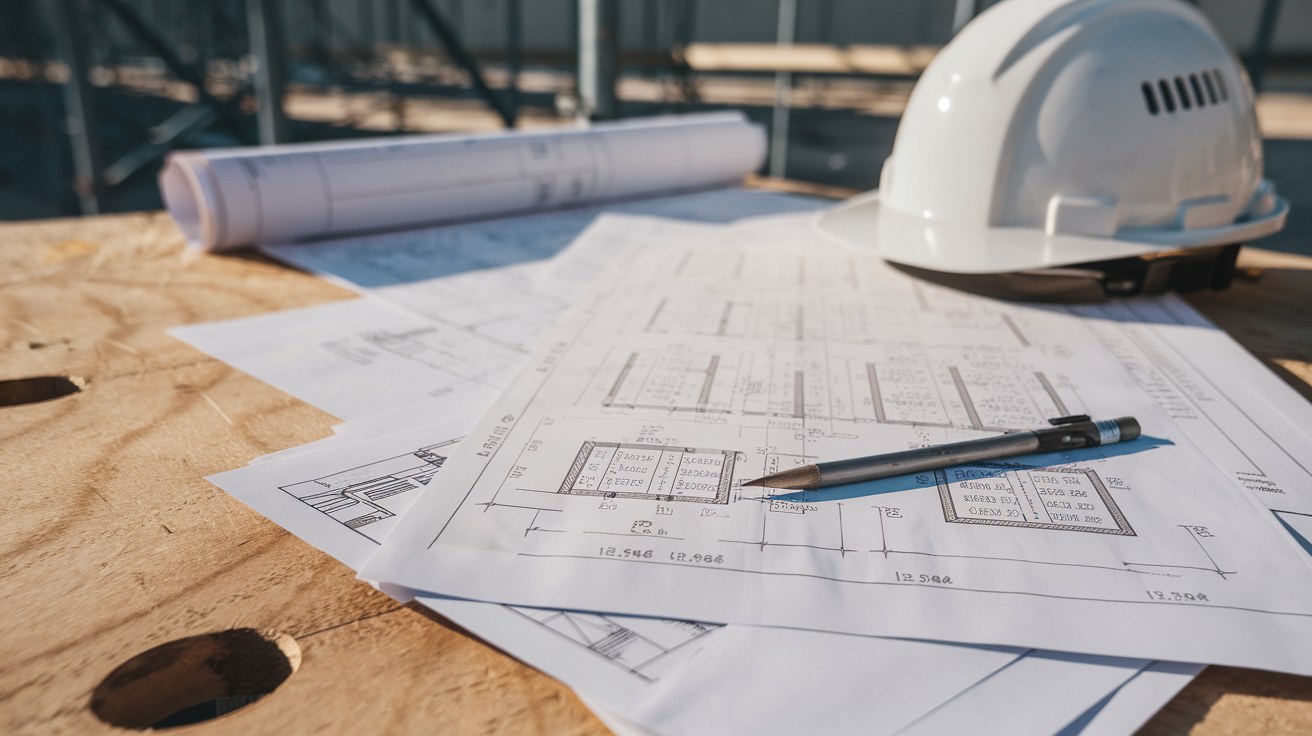
License and insurance checks screen out the fraudulent. The engineering conversation screens out the merely unqualified — in commercial shade, the larger population. Plenty of outfits can bolt together a catalog kit; far fewer can produce stamped structural calculations for your site’s actual wind loads, and after a week like this one, that distinction is the whole game. We cover what wind ratings mean — and how structures fail when they’re guessed at — in our guide to monsoon-ready commercial shade structures in Arizona.
Put four questions to every bidder. First, who does the engineering? The answer should be a licensed structural engineer producing sealed calculations for your site — soil, exposure, geometry — not a brochure wind rating. Second, what exactly is the fabric? A real answer names the material and the numbers: we standardize on Commercial 340/95 HDPE, which blocks up to 96 percent of UV, and work with Polyfab, Alnet, and Serge Ferrari when a project needs fire-rated, translucent, or waterproof properties — the specification logic we cover in Arizona shade structure UV protection. Third, who fabricates and who installs? A broker subcontracting both controls neither. Fourth, what range do they build? A shop that engineers hip structures, flat cantilevers, sculptural hypar forms, cabanas, and building-mounted awnings — the full inventory is on our products overview — can match the structure to your site. A shop that sells one form will sell you that form regardless.
Repair, Re-Skin, or Replace — Make the Vendor Justify the Answer
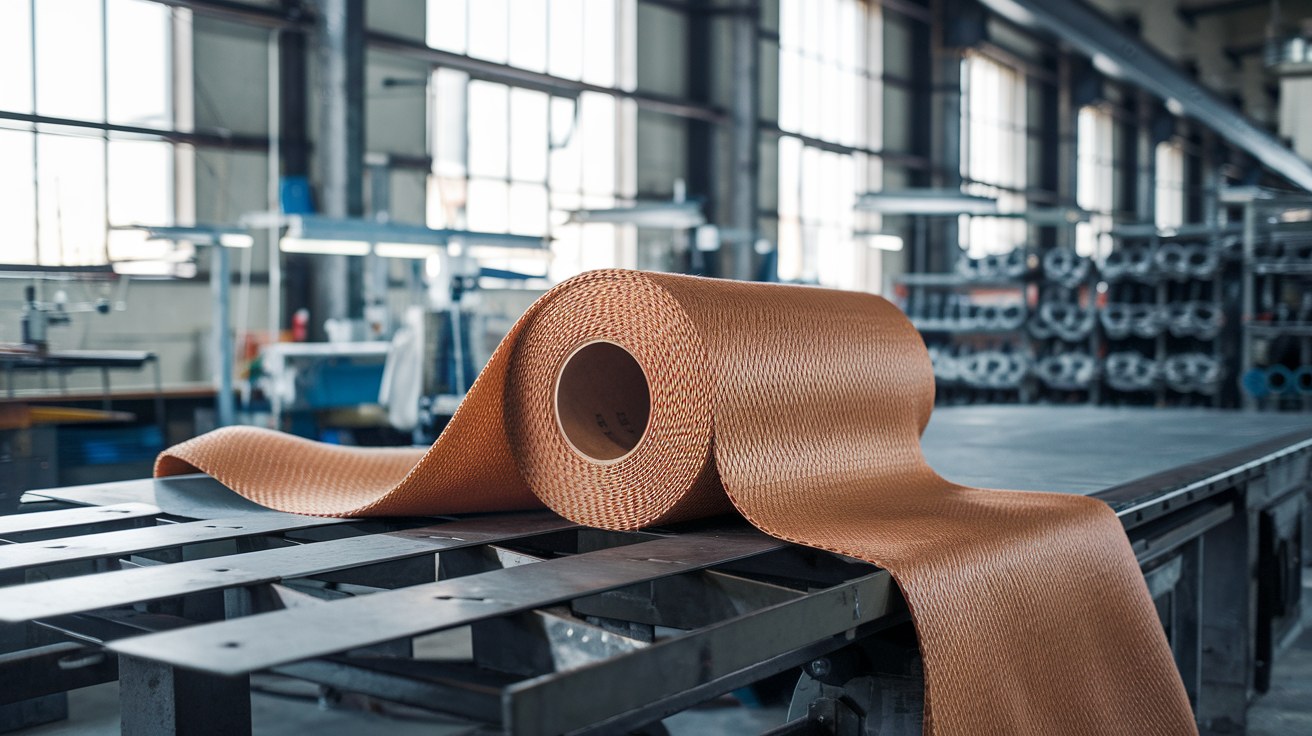
Post-storm solicitations share a tell: the recommendation is always the biggest possible job. The honest assessment starts smaller. Storm damage splits into three tiers — fabric damage on a sound frame, hardware and tension issues, and structural compromise — each with a different remedy and a very different price. A torn panel on undamaged steel is a re-skin: our in-house sewing team fabricates replacement fabric on the original frame, typically at about two-thirds the cost of full replacement. Bent posts, cracked footings, or elongated bolt holes are a different conversation — sometimes repairable, sometimes a sign the structure was under-engineered for its exposure in the first place.
The vetting question is whether the bidder can say which tier your damage falls in and why. Ask what they inspected and measured. An outfit that quotes full replacement without touching a tension gauge is selling, not assessing. And if the damage traces to a structure that never matched its site — wrong form, wrong clearances, an off-the-shelf frame forced onto an irregular footprint — the fix is custom-structure engineering, not a like-for-like rebuild of the thing the wind already rejected.
The Bottom Line
The National Weather Service called for an above-normal monsoon this year, and this week delivered the first heavy installment — with ten more weeks of season to run. Storm damage will keep generating repair contracts, and repair contracts will keep attracting operators whose entire business model is your urgency. The defense is boring and fast: verify the ROC license and its commercial scope, demand the certificate of insurance, require sealed engineering, get every term in writing, and make the vendor prove whether you need a re-skin or a replacement. Five phone calls, one afternoon — against a liability that lasts as long as the steel stands. If a storm found your structures this week, or a stranger’s phone call did, contact Total Shade today for an assessment from a crew that has built for Arizona monsoons for more than 25 years.
Sources: July 15-16, 2026 monsoon surge — First Alert Day, Maricopa County flood watch, flash flood warnings for North Scottsdale and Cave Creek, and 2-3 inch-per-hour rainfall rates (KTAR, azfamily, ABC15 reporting, July 15-16, 2026); July 13, 2026 wind storm with 50 mph gusts, Glendale structural damage, and roughly 20,000 customers without power (azfamily, KTAR reporting); monsoon season dates of June 15 through September 30, scam tactics, license verification at roc.az.gov, written-contract and no-cash guidance, and the 1-877-692-9762 complaint line (Arizona Registrar of Contractors monsoon scam advisories); after-storm fraud alerts (Arizona Attorney General’s office); license scopes and bonds of $1,000 to $100,000 under A.R.S. § 32-1152 (Arizona Registrar of Contractors); above-normal 2026 monsoon outlook (National Weather Service); Commercial 340/95 HDPE specification (up to 96% UV block), Polyfab, Alnet, and Serge Ferrari options, OSHA-certified crews, ten-year limited fabric warranty, in-house sewing, and re-skin economics at roughly two-thirds of replacement cost from Total Shade specification sheets and project experience.
