
or call (602) 265-0905 — no-obligation, on-site.
Shade Structure Cleaning & Maintenance
Routine shade structure maintenance: how to clean HDPE fabric, check tension and hardware, and prep for Arizona monsoon.
To maintain a shade structure, rinse the knitted-HDPE fabric with a hose and mild soap — never harsh solvents or pressure-washing — check cable tension and bolt tightness a couple of times a year, and inspect before and after monsoon season. Routine care keeps fabric near the top of its 10-15 year life; structural damage is a job for a pro.
Since 1998
Designing & building Arizona shade
In-House Fabrication
Built at our Phoenix shop
Engineered & Permit-Ready
Stamped drawings for AZ wind loads
Free On-Site Quote
No-obligation project assessment
Routine shade structure maintenance is a short, owner-doable cycle of rinsing the fabric, checking tension and hardware, and giving the structure a look before monsoon season, and it is what pushes a knitted HDPE cover toward the high end of its 10-15 year life instead of the low end. None of this is repair work. Repair fixes damage after it happens; maintenance is the cheaper habit that keeps the damage from starting. A hose, mild soap, a wrench, and 30 minutes a couple of times a year handle the bulk of it. The frame and fabric are engineered to last, but Arizona dust and four months of summer storms work against an unmaintained cover. This guide covers what to do, how often, and the line where owner care ends and a pro takes over.
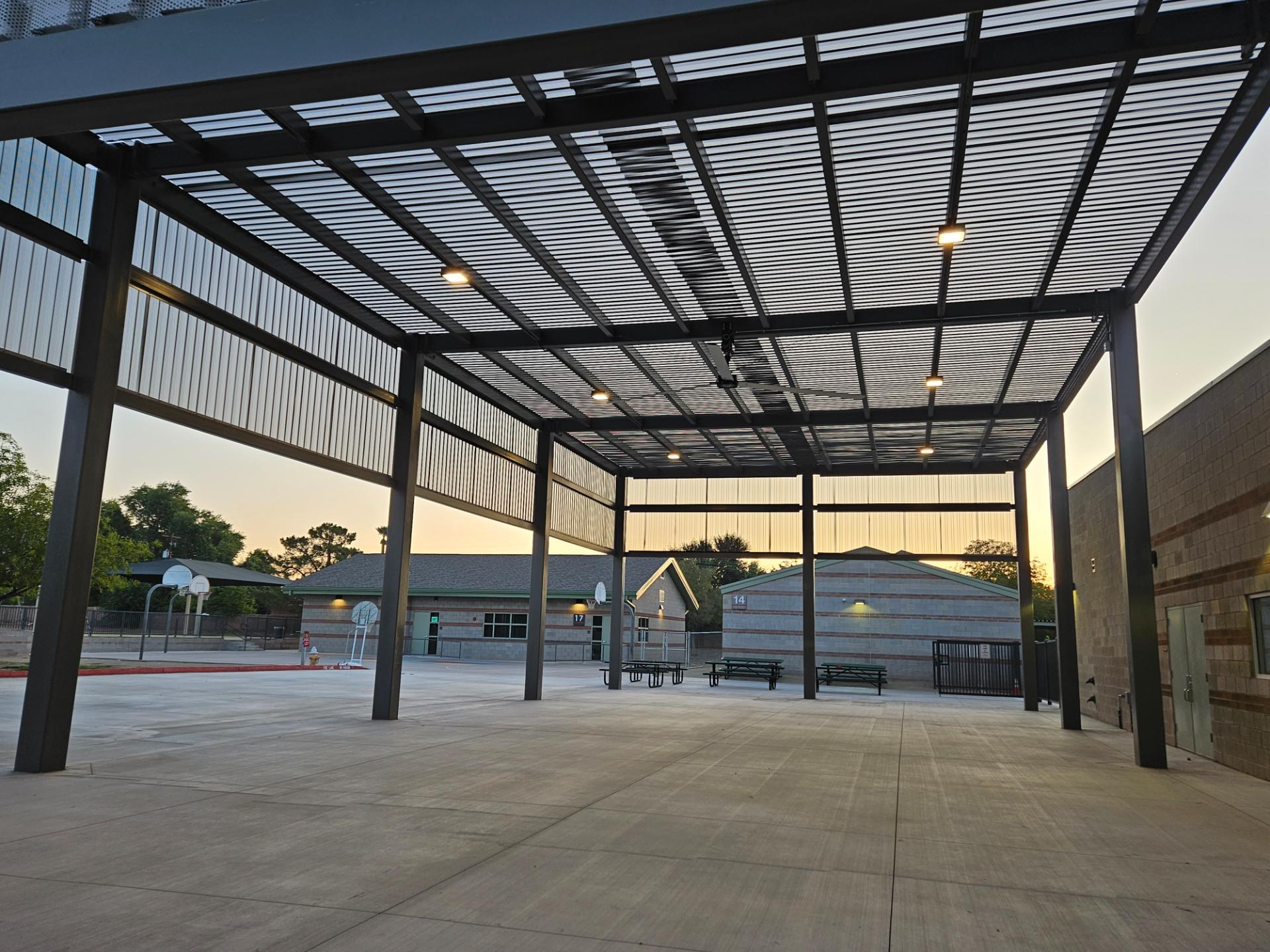
How to clean shade fabric: the do’s and don’ts
Clean knitted HDPE shade fabric the gentle way: rinse it with a garden hose, and for caked-on grime, use a soft brush or sponge with mild soap and water, then rinse the soap fully out. That is the whole method, and it is industry-standard care. The knit is breathable and sheds most dust on its own, but Arizona grit still settles into the weave.
What helps and what hurts
- Do rinse from above with plain water first, then spot-clean stubborn marks with mild dish soap and a soft brush.
- Do let the fabric air-dry in place; HDPE dries fast in the Valley sun.
- Don’t pressure-wash. A pressure washer can drive water through the knit, distort the weave, and damage stitching at the seams, the opposite of what you want on a tensioned cover.
- Don’t reach for bleach, degreasers, or harsh solvents. They can strip the UV treatment that gives the fabric its block rating.
Give the seams and corners a closer look while you clean, since that is where wear shows first. If you spot fraying or a thinning panel rather than dirt, that is a planning signal, not a cleaning job, and the shade fabric replacement guide covers when a re-cover makes sense.
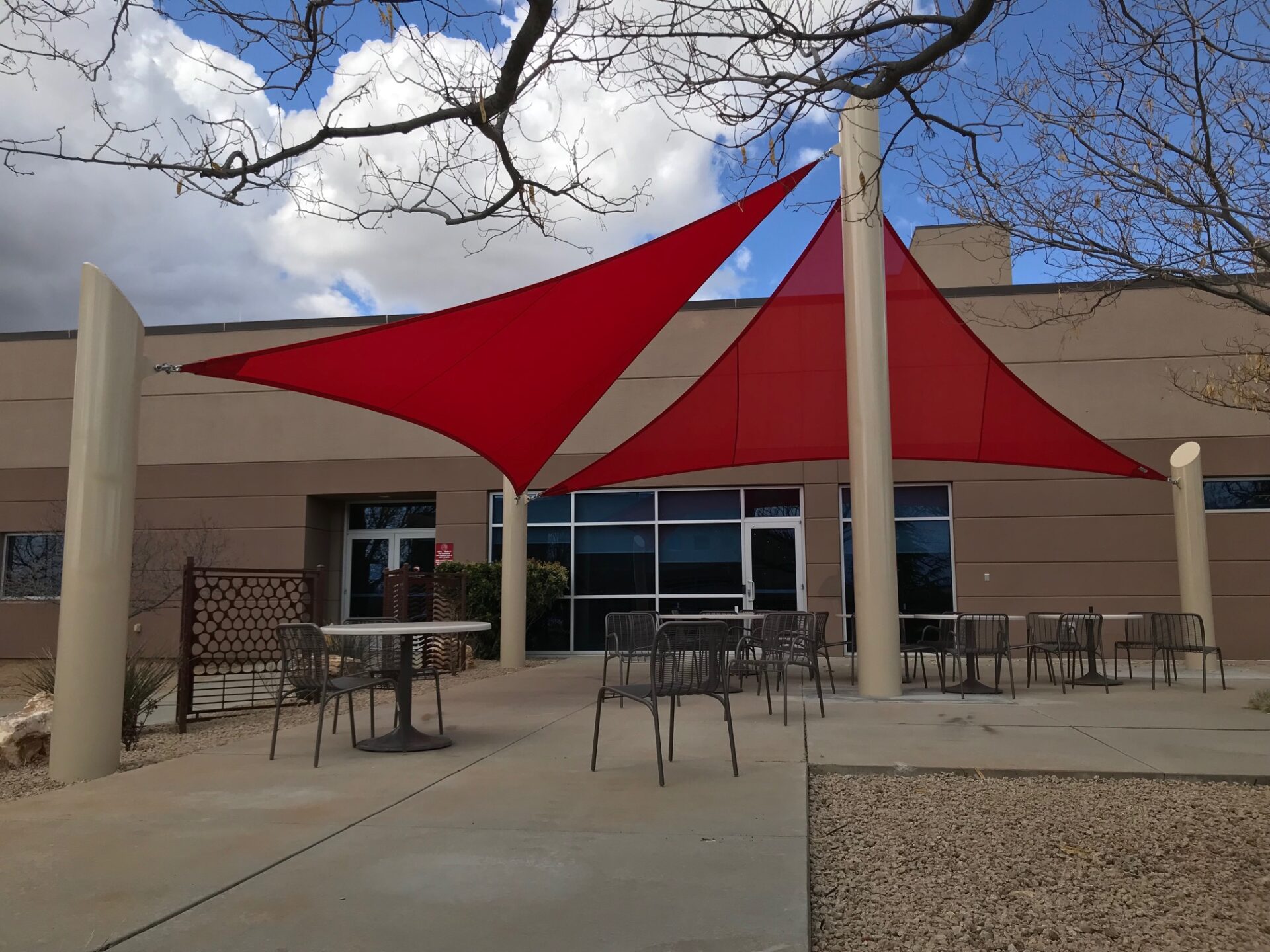
Checking tension and hardware
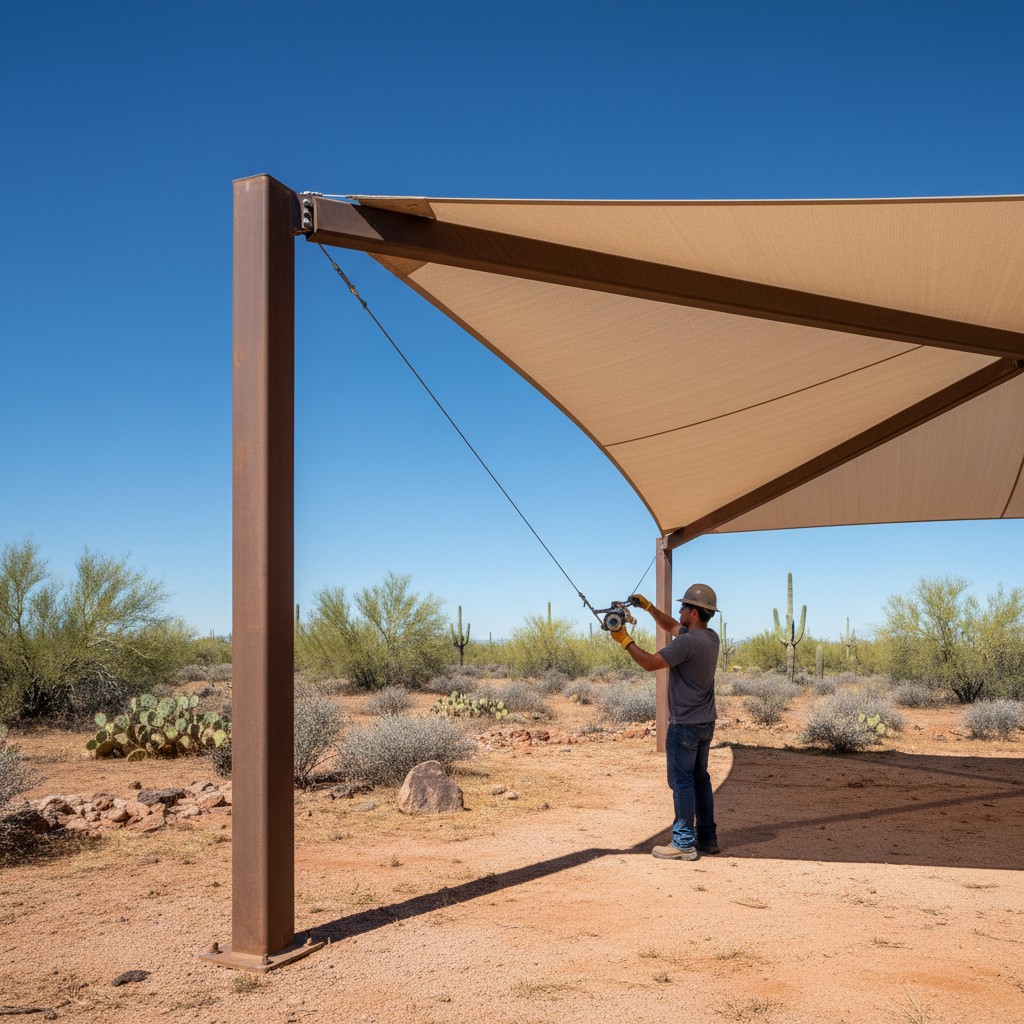
Check that the cover is drum-tight and that the bolts, clamps, and turnbuckles holding it are snug, because a loose cover and loose hardware are the two things that quietly turn a calm-day structure into a storm casualty. This is a 10-minute walk you can do whenever you clean. Push a flat palm against the fabric: a tensioned panel barely gives, while one that flutters or sags has relaxed and needs attention.
Fabric relaxes a few percent over time, so commercial covers are typically re-tensioned every few years. Hardware loosens too, since the daily temperature swing across Phoenix expands and contracts steel and backs bolts off over months. Snugging accessible fasteners and a backed-off turnbuckle is owner-doable. Re-tensioning the cover itself usually is not, because over-cranking or pulling a panel unevenly does more harm than the slack did, which is why Total Shade re-tensions frames as a service rather than leaving it to guesswork. If a bolt spins free, a fitting shows fraying cable, or a panel will not come back to tension, that has crossed into shade structure frame repair territory. A snug, drum-tight structure works with the wind; a slack one flaps against it until something tears.
Seasonal and monsoon prep
Give the structure one deliberate look before monsoon season opens in mid-June and another quick walk-through after any major storm, because Arizona’s June-through-September storms test everything the rest of your maintenance was protecting against. Spring, roughly April through early June, is the window to clean the fabric, snug the hardware, and confirm tension while there is still time to act before the first microburst.
The pre-season pass is owner-friendly: rinse, snug, and tension-check. The post-storm pass is a 15-minute look at the points a gust attacks, the corners and seams where uplift concentrates, the turnbuckles a downdraft can back off, and the base plates for fresh movement. Maintenance and a true inspection overlap but differ. A full structural inspection of cables, footings, and the whole load path is its own discipline, and the monsoon shade structure inspection guide walks that checklist in depth. Do the spring rinse-and-snug, book the deeper inspection if the structure warrants it, and the season stops being a gamble.
Dust and the desert
Arizona dust is the steady, low-grade wear that no shade cover escapes, and managing it is most of what desert maintenance comes down to. Knitted HDPE is breathable and sheds airborne dust on its own, one reason it outperforms solid vinyl in the Valley, but a haboob is a different category. A wall-of-dust event cakes the weave with grit that traps moisture against the fibers, and that is what dulls the fabric and accelerates wear over years.
The fix is the cleaning routine already covered: rinse the fabric after a heavy dust event so the grit washes out before it bakes in. Left to sit, caked dust can also void some manufacturer warranties, so a hose-down after a haboob protects more than appearance. Dust behaves more like sandpaper running slowly than like a stain, so the goal is to keep removing it rather than wait for it to look bad. A cover rinsed a few times a year ages slower than one that never is.
A simple maintenance schedule
A workable schedule for most commercial structures is a spring pre-monsoon pass, a quick check after any major storm, and a rinse whenever a haboob coats the fabric, with re-tensioning planned every few years as the cover relaxes. Treat it as a guideline shaped by your site, not a guarantee; a structure over a dusty lot or under heavy tree drop needs more frequent rinses than one in the open.
The rhythm runs across the year. In spring, clean the fabric, snug the hardware, and confirm the cover is drum-tight before storms arrive. Through summer, walk the structure after each major monsoon event and rinse after the dust days. Every few years, schedule a professional re-tension, and track each cover’s age against its 10-15 year window so a re-cover is budgeted rather than a surprise. For a portfolio across a property, HOA, or campus, the full lineup and the maintenance points specific to each type live on the our products page. Set the spring date as a standing line item and the rest of the year stays predictable.
When routine care ends and repair begins
Routine care is owner-doable; structural damage is a call to a pro, and the honest dividing line is whether the problem is wear you can manage or a failure in the load path. Rinsing, snugging accessible bolts, and watching tension are maintenance. A torn panel, a frayed cable, a shifted base plate, a leaning column, or a turnbuckle that will not hold are not, and trying to muscle through them tends to make the repair larger.
Maintenance slows aging; it does not stop it, and the fabric is a consumable by design. A well-kept cover reaches the upper end of its 10-15 year life, but it still reaches the end, the way good tires still wear out. When it does, the engineered steel frame is sized to outlast several covers, so a re-cover renews the consumable layer at a fraction of a new build. Framing, footings, and major damage belong with the repair work in shade structure frame repair, and how it all stacks up over a structure’s full service run is laid out in how long do shade structures last. Total Shade has fabricated, re-tensioned, recovered, and inspected commercial structures in-house in Phoenix since 1998 (AZ ROC #272680), so the line between what you handle and what we handle is one we draw with you. More guides on care, materials, and planning sit in the shade structure guides hub.
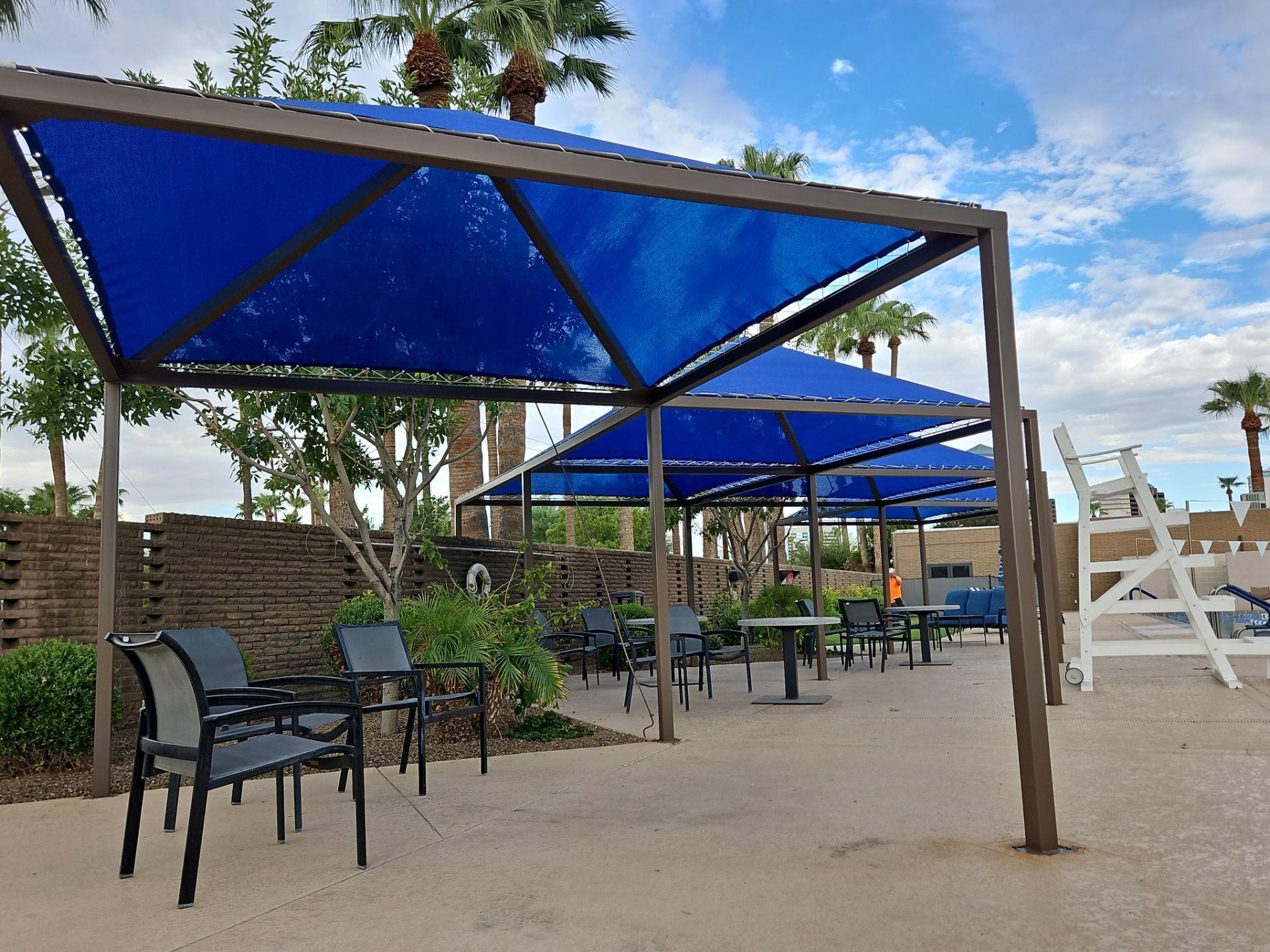
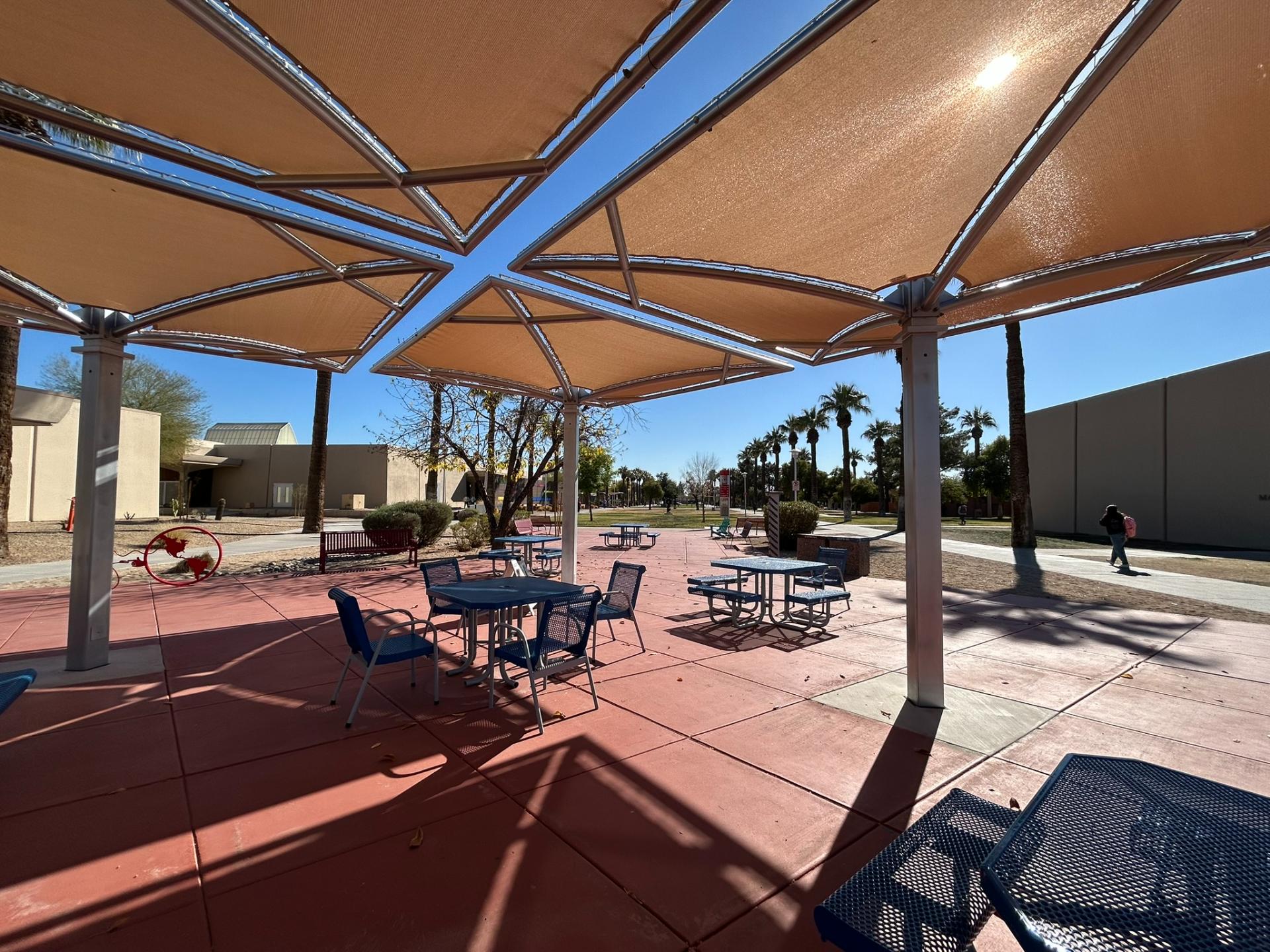
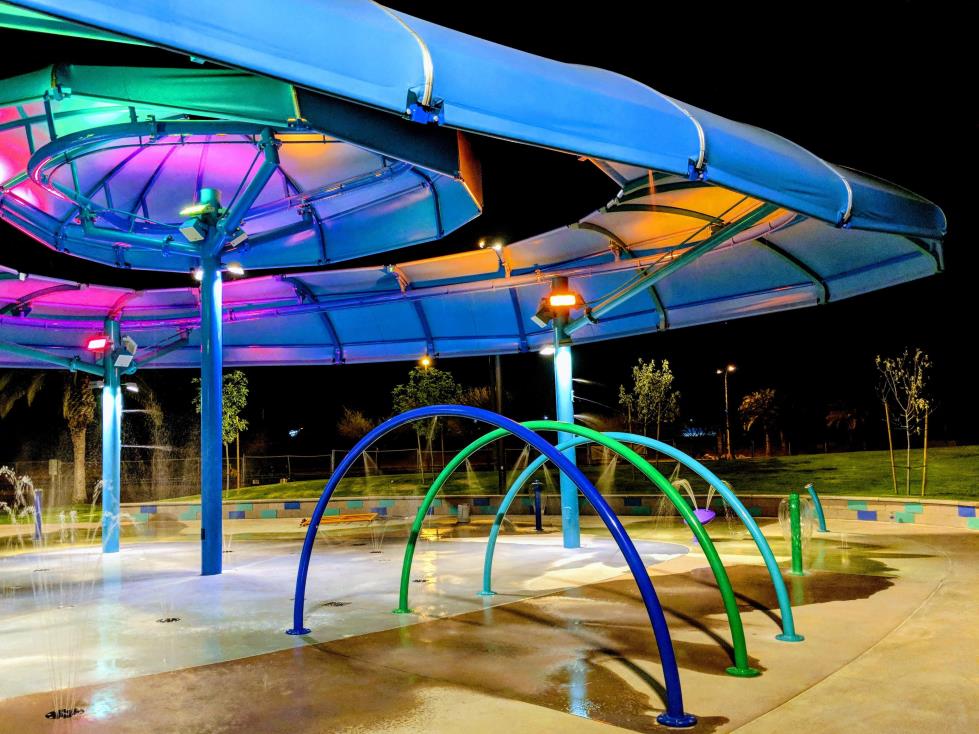
Shade Structures We Build
Ready to talk through your project?
Call (602) 265-0905 for a free assessment.
Frequently Asked Questions
How do you clean a shade sail or fabric structure?
Rinse knitted HDPE shade fabric with a garden hose, and for caked-on grime use a soft brush or sponge with mild dish soap and water, then rinse the soap out fully and let it air-dry in place. That gentle method is industry-standard care because the knit is breathable and sheds most dust on its own. Pay attention to the seams and corners while you clean, since wear shows there first. Skip bleach, degreasers, and harsh solvents, which can strip the fabric’s UV treatment and shorten its life.
Can you pressure-wash shade fabric?
No. A pressure washer can force water through the knit, distort the weave, and damage stitching at the seams, which is the opposite of what you want on a tensioned cover. Plain water from a garden hose, plus a soft brush and mild soap for stubborn spots, removes Arizona grit without the risk. The fabric is engineered to be breathable and gentle cleaning keeps it that way, while high-pressure water works against both the knit and the seams that hold tension.
How often should a shade structure be re-tensioned?
Commercial shade covers are typically re-tensioned every few years as the fabric naturally relaxes a few percent over time, plus any time a panel reads slack or flutters in a light breeze. Snugging a backed-off turnbuckle is owner-doable, but re-tensioning the cover itself is usually a job for a pro, since over-cranking or pulling a panel unevenly does more harm than the slack did. A drum-tight cover works with the wind instead of flapping against it, which is what prevents early fatigue and tearing.
How do I prepare my shade structure for monsoon season?
In spring, roughly April through early June, clean the fabric, snug the accessible hardware, and confirm the cover is drum-tight before Arizona’s monsoon opens around mid-June. Then do a quick 15-minute walk-through after any major storm, focused on the corners, seams, turnbuckles, and base plates where gusts concentrate stress. This lighter routine prep feeds a deeper structural inspection if the structure warrants one. Acting in spring leaves time to fix slack tension or loose hardware before the first microburst rather than after a tear.
Does maintenance really extend the life of a shade structure?
Yes, within limits. Routine rinsing, hardware checks, and periodic re-tensioning push a knitted HDPE cover toward the high end of its 10-15 year life instead of the low end, and they prevent the slack-tension and loose-hardware failures that lead to costly repairs. Maintenance slows aging but does not stop it; the fabric is a consumable by design and still reaches the end of its run. The engineered steel frame outlasts several covers, so a re-cover renews the consumable layer rather than replacing the whole structure.