or call (602) 265-0905 — no-obligation, on-site.
Apartment & Multifamily Community Shade Structures in Arizona
Amenity shade that makes apartment pools, playgrounds, and dog parks tour-ready — steel sized for hundreds of residents, low upkeep.
Since 1998
Designing & building Arizona shade
In-House Fabrication
Built at our Phoenix shop
Engineered & Permit-Ready
Stamped drawings for AZ wind loads
Free On-Site Quote
No-obligation project assessment
Apartment and multifamily shade is an amenity-and-leasing asset: it cools the pool deck, playground, dog park, and gathering areas prospects walk past on a tour, and it has to survive shared use by hundreds of residents across many units without becoming a maintenance line that eats the budget. That makes it a property-manager decision more than an architectural one. Knitted HDPE fabric blocks roughly 90-99% of UV, which keeps a sundeck usable through a Phoenix summer and a July tour comfortable. Total Shade fabricates these structures in steel at our Phoenix shop, founded in 1998 and licensed under AZ ROC #272680, and engineers every frame to Arizona building code. The work clusters into a handful of amenities — pool and sundeck shade, community playgrounds, dog parks and splash pads, ramada cookout areas, covered mail and seating, and leasing-office entries.
Shade is a leasing asset, not just a comfort upgrade
At an apartment community, shade earns its budget on the tour and on the renewal — a different economic case than an owner-occupied neighborhood weighing an HOA assessment. A bare pool deck that bakes at 110 degrees reads as an amenity nobody uses; the same deck under a tensioned sail reads as a reason to sign. Because a property’s value tracks net operating income, an amenity that lifts tour appeal and retention works on occupancy and rent, not just resident happiness, and unlike a clubhouse remodel it keeps paying every summer it stands.
The amenities that move a tour are predictable — pool and sundeck, playground, dog park, and the covered grill areas where residents linger — and they are the same ones that fill the listing photos, so shading them is as much marketing as maintenance. Communities that also run owner-occupied product can compare the buyer math on the HOA and residential community shade page, where the spend clears an architectural board instead of a leasing pro forma. Here the manager’s question is simpler: does this amenity help close a tour and hold a renter.
Pool and sundeck shade is the highest-leverage amenity
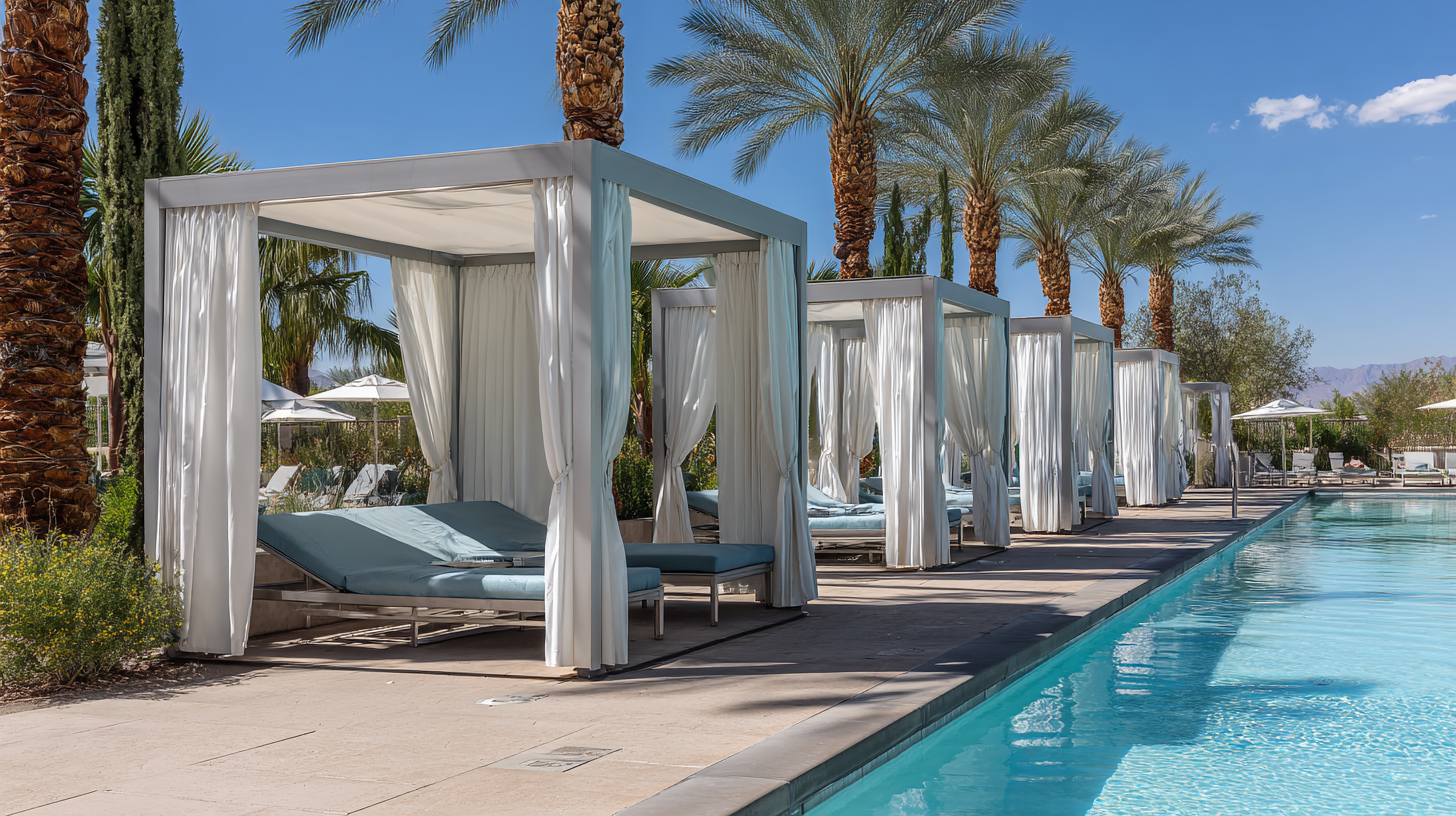
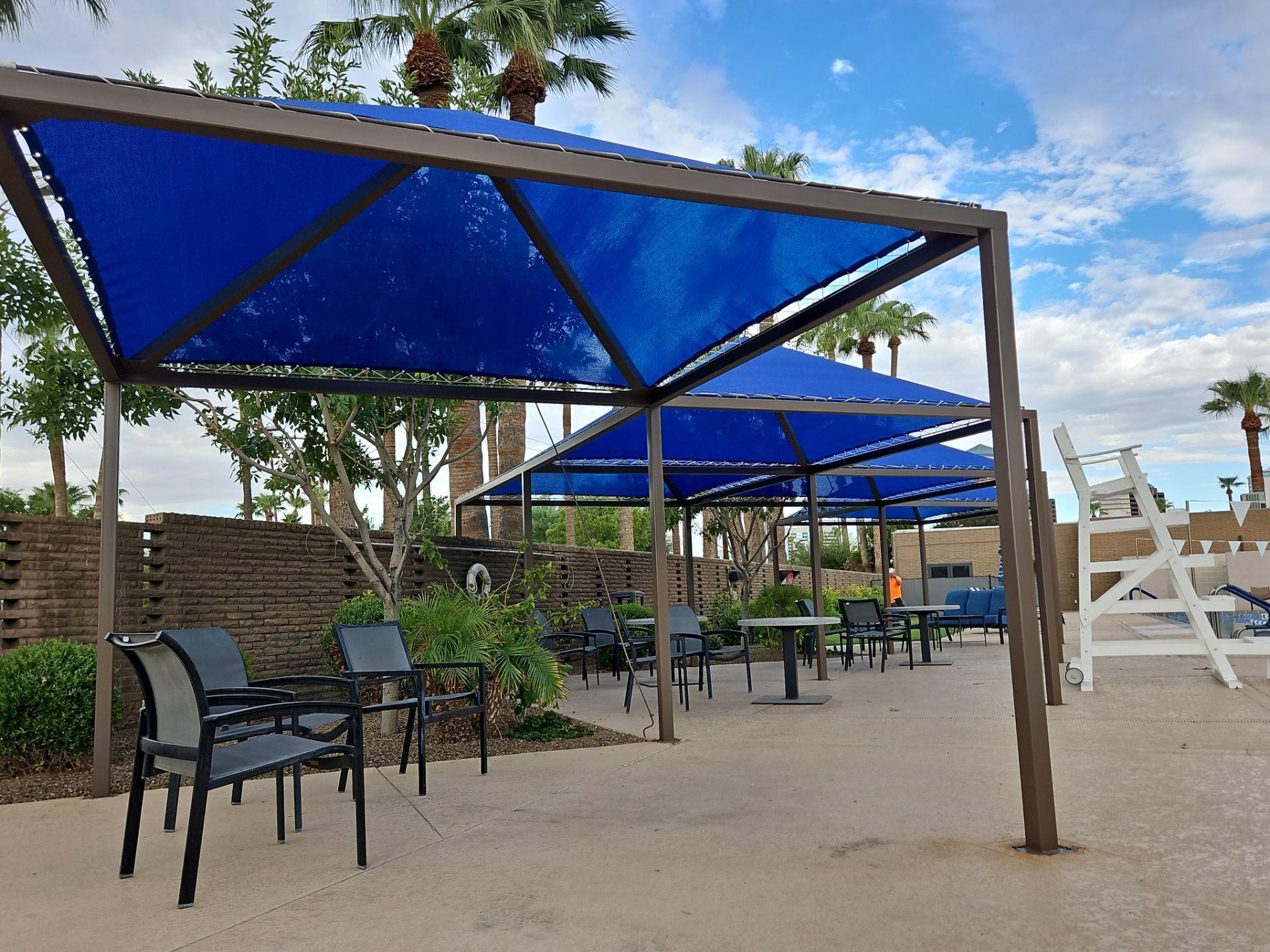
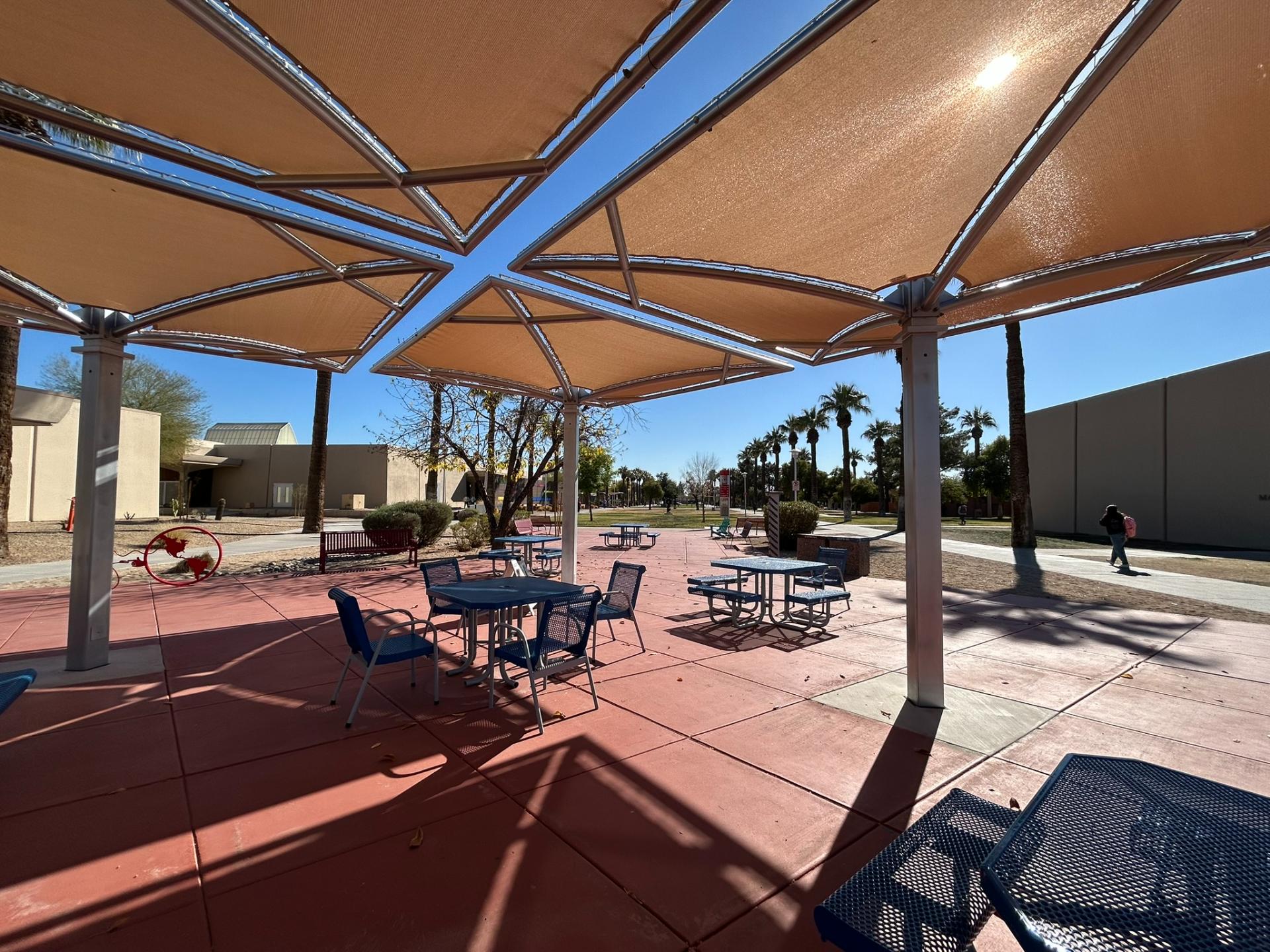
The pool deck is where apartment shade pays back fastest, because it is the single amenity most prospects judge a community on. An open, sculptural sail keeps lounge chairs and the splash-out zone cool while leaving the water and sky visible, so the deck photographs and tours well instead of feeling boxed in. Knitted HDPE on that sail blocks roughly 90-99% of UV — the difference between a deck that fills on a Saturday and one that sits empty by 11 a.m. For reservable, finished lounging, cabanas give a built corner that reads resort-grade in a listing photo.
The structure follows the deck layout: a long open sundeck takes a sail array with posts at the edges, while a tighter deck with lounge clusters mixes sail planes and cabanas. Which membrane suits a pool versus a play area, and how UV and water reflection drive the spec, lives on the pool and aquatic shade page. A shaded deck is the amenity most likely to swing a tour, so it usually earns first call on the budget.
Playgrounds, dog parks, and splash pads round out the amenity set
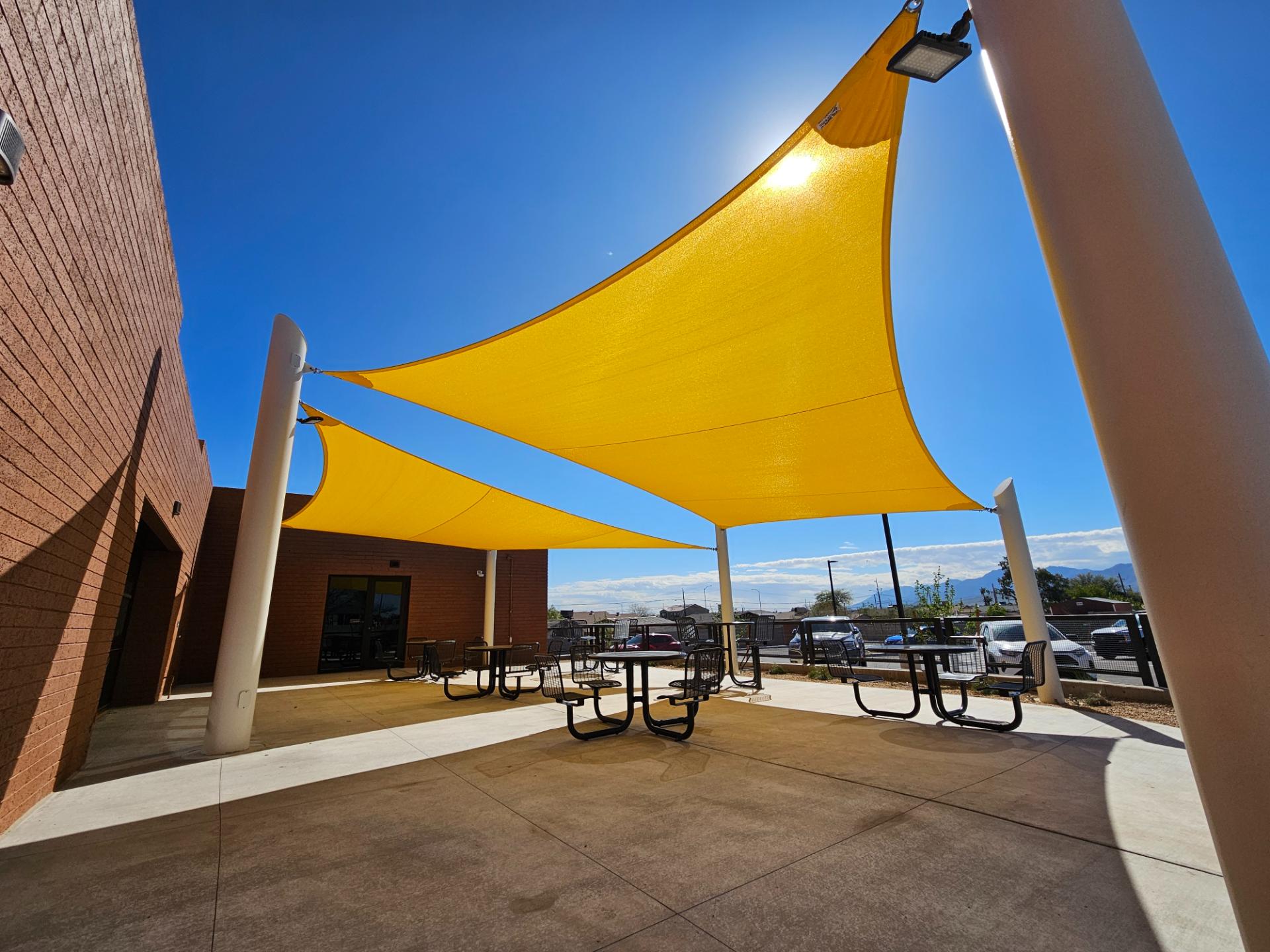
Beyond the pool, families and pet owners tour for the playground, dog park, and splash pad, and each takes a different structure. A community playground needs maximum cover with no posts in the play zone — a hip canopy spanning the footprint or a tensioned sail anchored to the perimeter; the same fall-zone logic that governs campus play areas applies here, covered on the school and playground shade page. A shaded play structure also stays usable in May, when bare metal and rubber climb past 150 degrees in open sun.
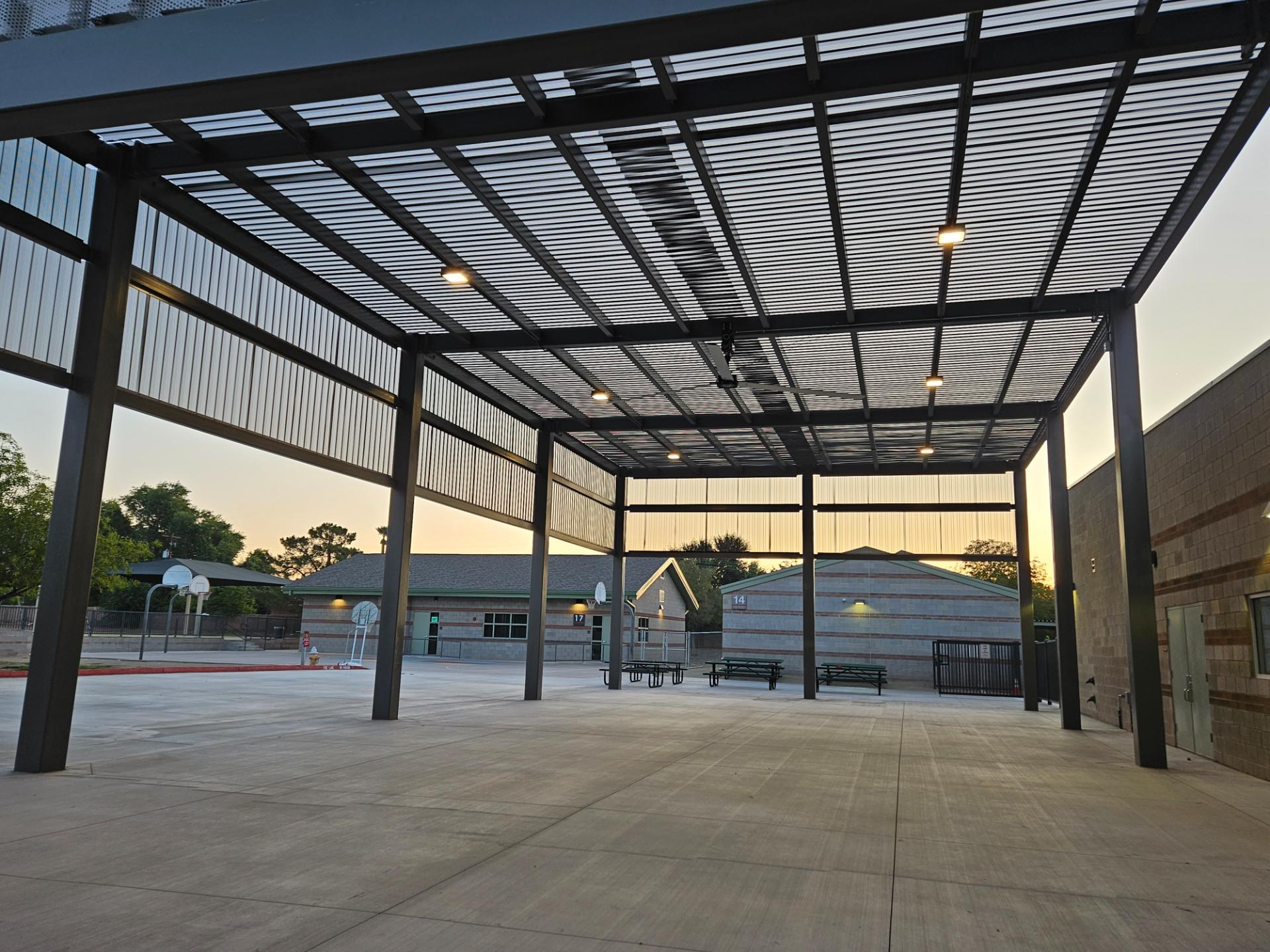
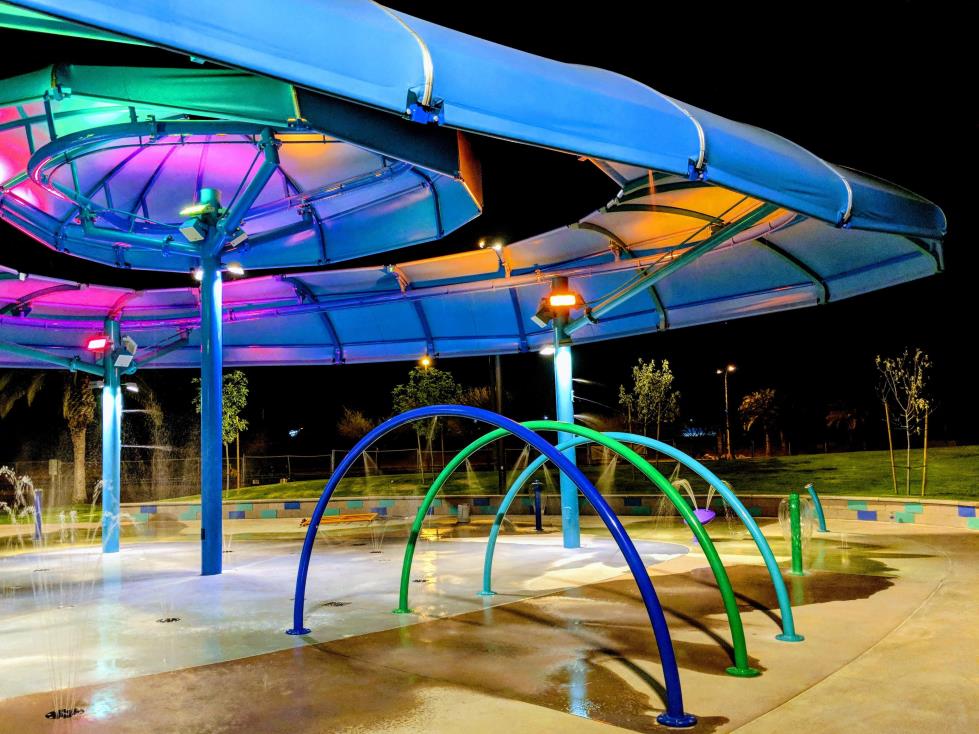
Dog parks and splash pads punch above their size on a pet-heavy or family lease — cantilever or sail shade over a dog-park bench keeps owners on-site, and a splash pad without shade goes unused by July. Ramada cookout areas are the other anchor: a fixed-roof ramada over picnic tables and a grill gives an all-weather room that sheds monsoon rain instead of dripping through, which a fabric sail cannot. The full menu of forms sits on the products page, so a manager can map amenity to structure before pricing.
Covered mail, seating, and leasing entries finish the first impression
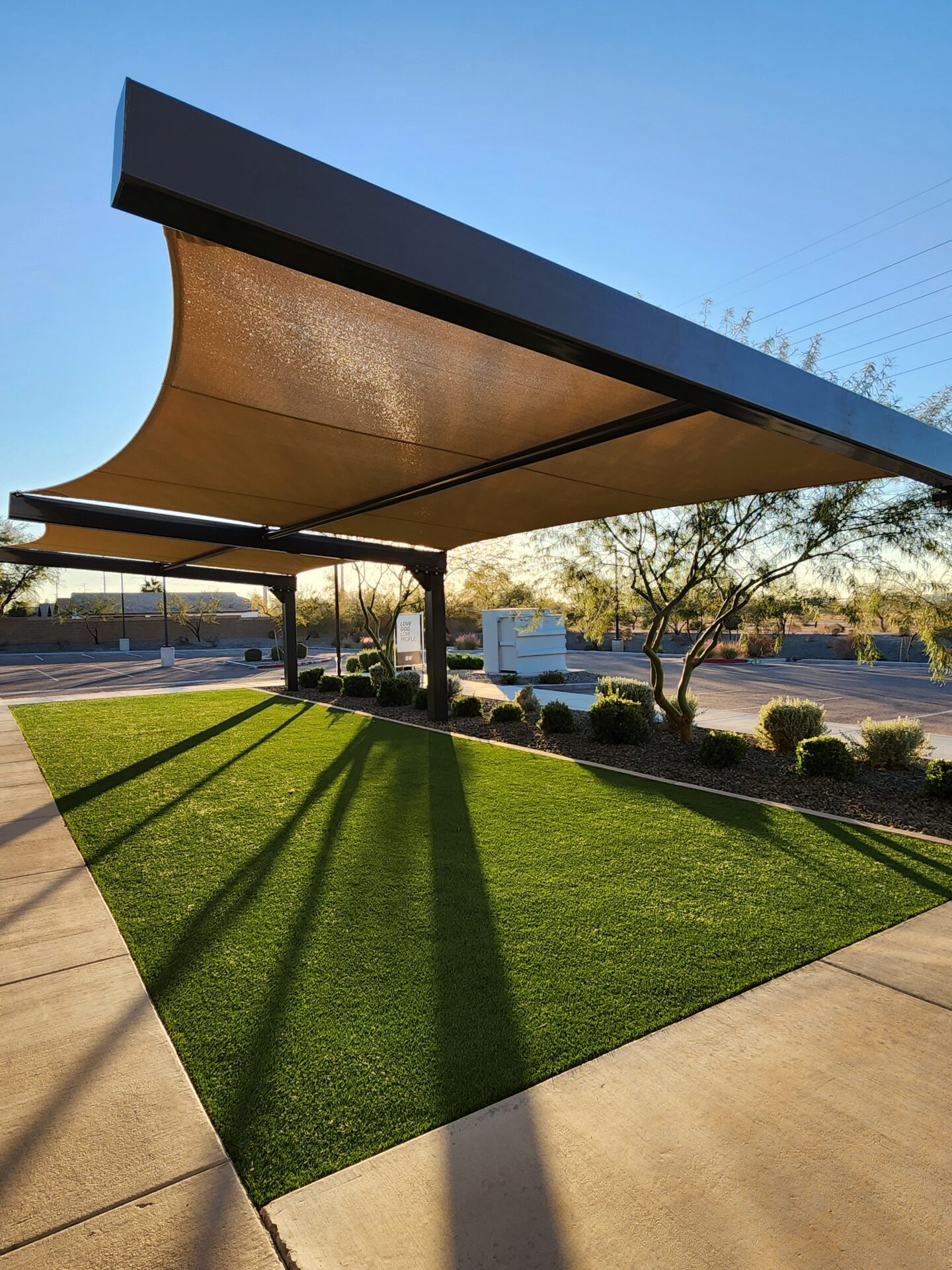
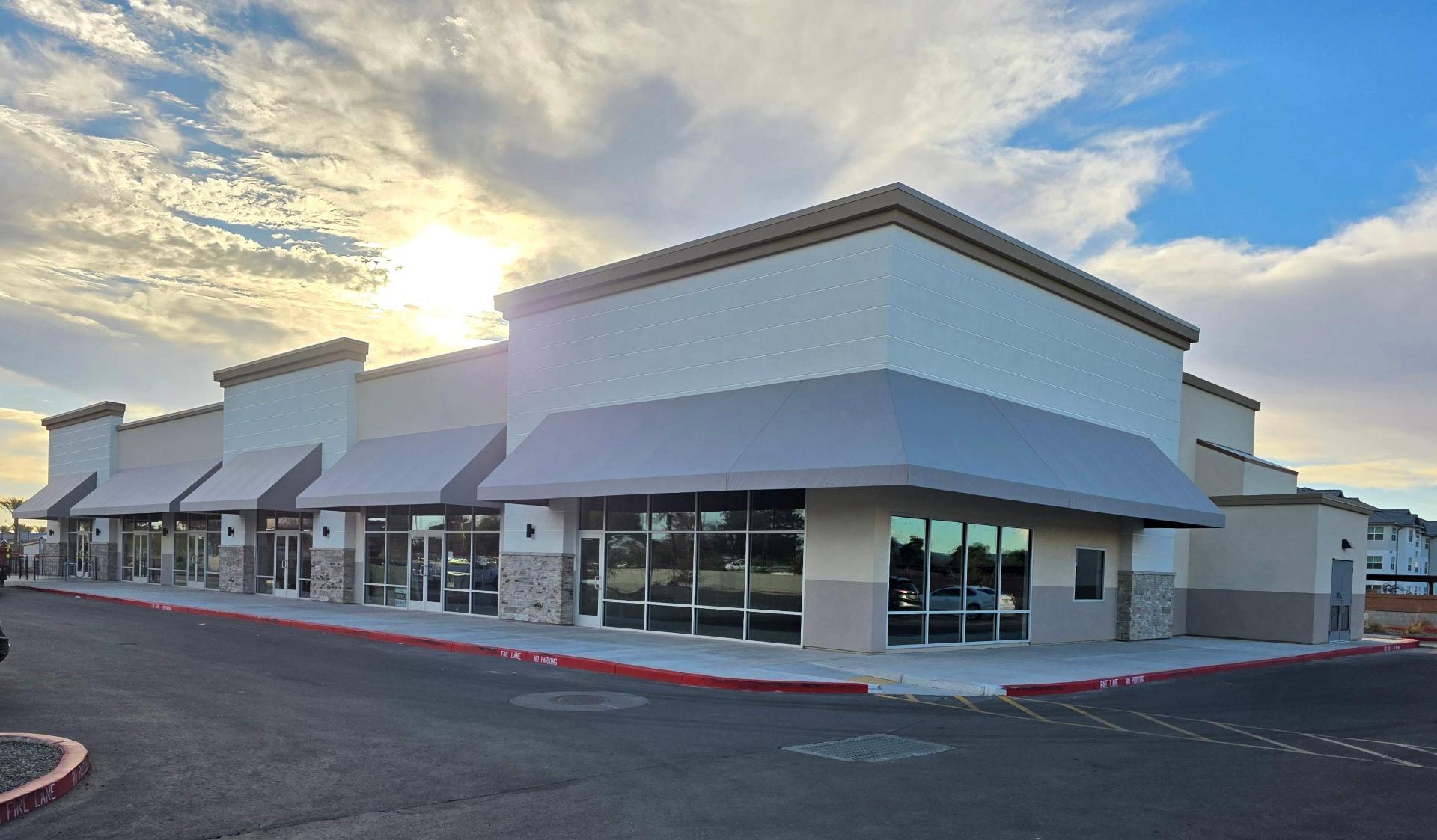
The shade a prospect meets first is at the front door, and it is easy to underspend on. A covered leasing-office entry and a shaded seating cluster set the tone before anyone reaches the pool, and a covered mail and parcel area solves a daily friction every resident feels — collecting packages out of full sun and summer downpours. The structure is usually a cantilever or linked hip bay that reaches cover over a walkway or mail kiosk without dropping a post in the path. Run the same powder-coat color and roof profile across entry, mailroom, pool, and playground, and the community reads as one designed property instead of a patchwork of mismatched covers added year by year — which is why owners coordinating several amenities tend to plan them as a single package rather than one-off add-ons.
Why shared-amenity steel is sized for hundreds of residents
Apartment amenities take far heavier use than a private cover, so the steel and fabric are specced for a crowd, not a family. A pool sail at a 300-unit community runs hot from open to close all summer, so these structures use powder-coated structural steel with posts sized to the span and a baked-on coat that resists the chalking brushed paint shows within a few desert seasons. Every frame is engineered to Arizona building code and ASCE 7 wind loads, where Valley design wind speeds run roughly 90-115 mph and monsoon microbursts can punch past 60 mph in minutes.
The maintenance math is what makes shade manager-friendly across many units: the steel frame behaves like permanent infrastructure, while the fabric membrane is the wear item, recovered roughly every 10-15 years rather than replaced whole. Because engineering, steel cutting, welding, and install run under one Phoenix roof, a span change to clear a play structure or tight pool-deck setback reaches the saw the same week. That local fabrication shows up on the Phoenix commercial shade and Tempe commercial shade pages, where urban and student-dense properties lean hardest on amenity shade to compete.
Honest caveats every property manager should price in
Three things are worth saying plainly before a community commits. First, the fabric is a consumable: knitted HDPE covers commonly carry 10-15 year warranties, and Phoenix UV sits at the demanding end of that window, so budget a re-cover as a planned line item, not a failure. Second, wind ratings have hard ceilings — an engineered structure covers typical monsoon loads to its stamped ASCE 7 design speed, not every freak haboob on record, which is exactly why a bargain DIY kit is the wrong call for an amenity hundreds of residents stand under.
Third, Valley dust settles on the weave, so a rinse once or twice a year keeps the fabric breathing and the community looking maintained — real upkeep, but small against the leasing value. The most expensive mistake is undersizing a high-use amenity: a pool sail or playground canopy that looks right on an empty drawing crowds the first full Saturday, because community use runs heavier than a quiet weekday walk-through suggests. Size to peak weekend use, and the amenity keeps doing its leasing job long after the first cover comes due.
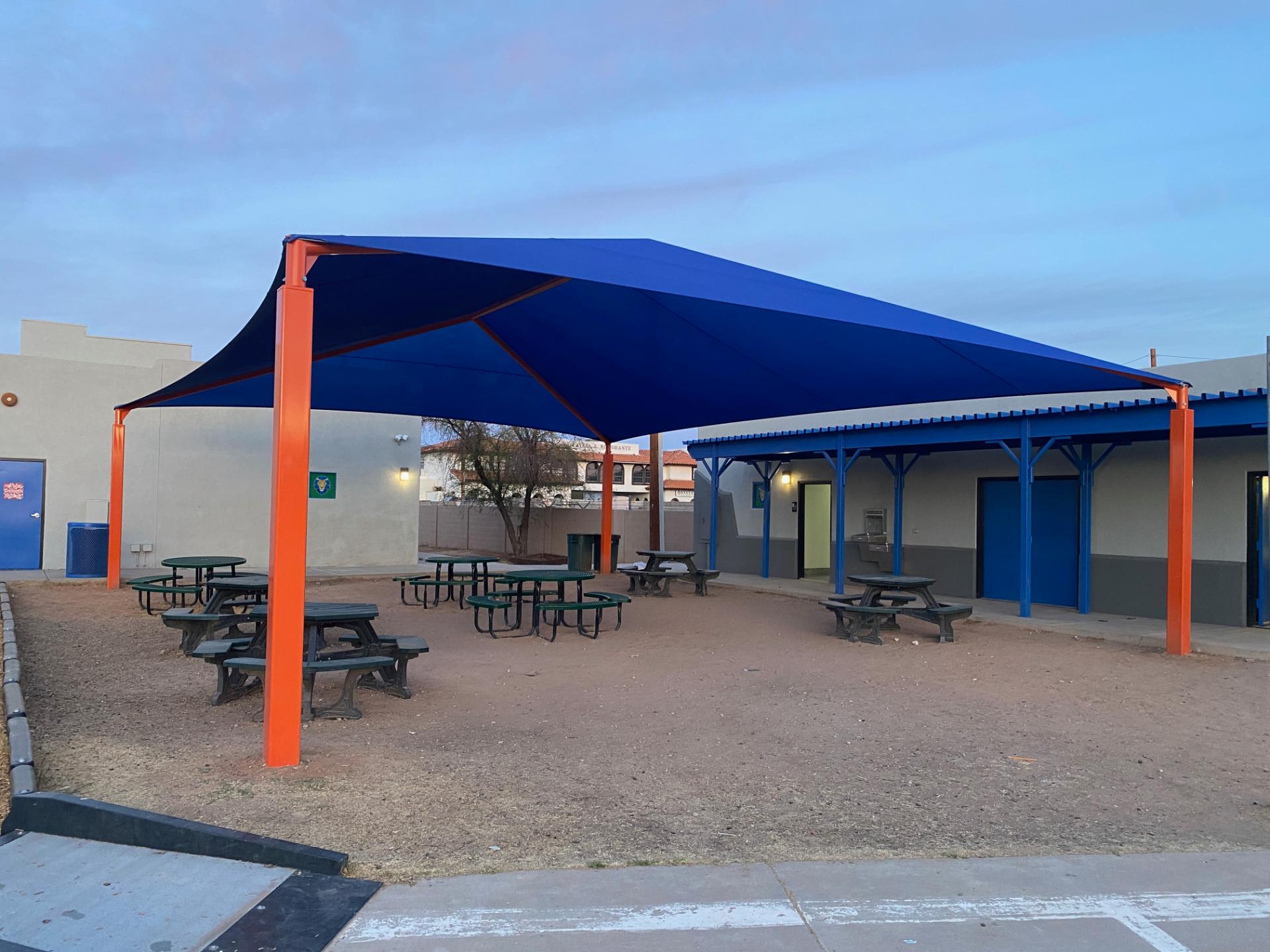
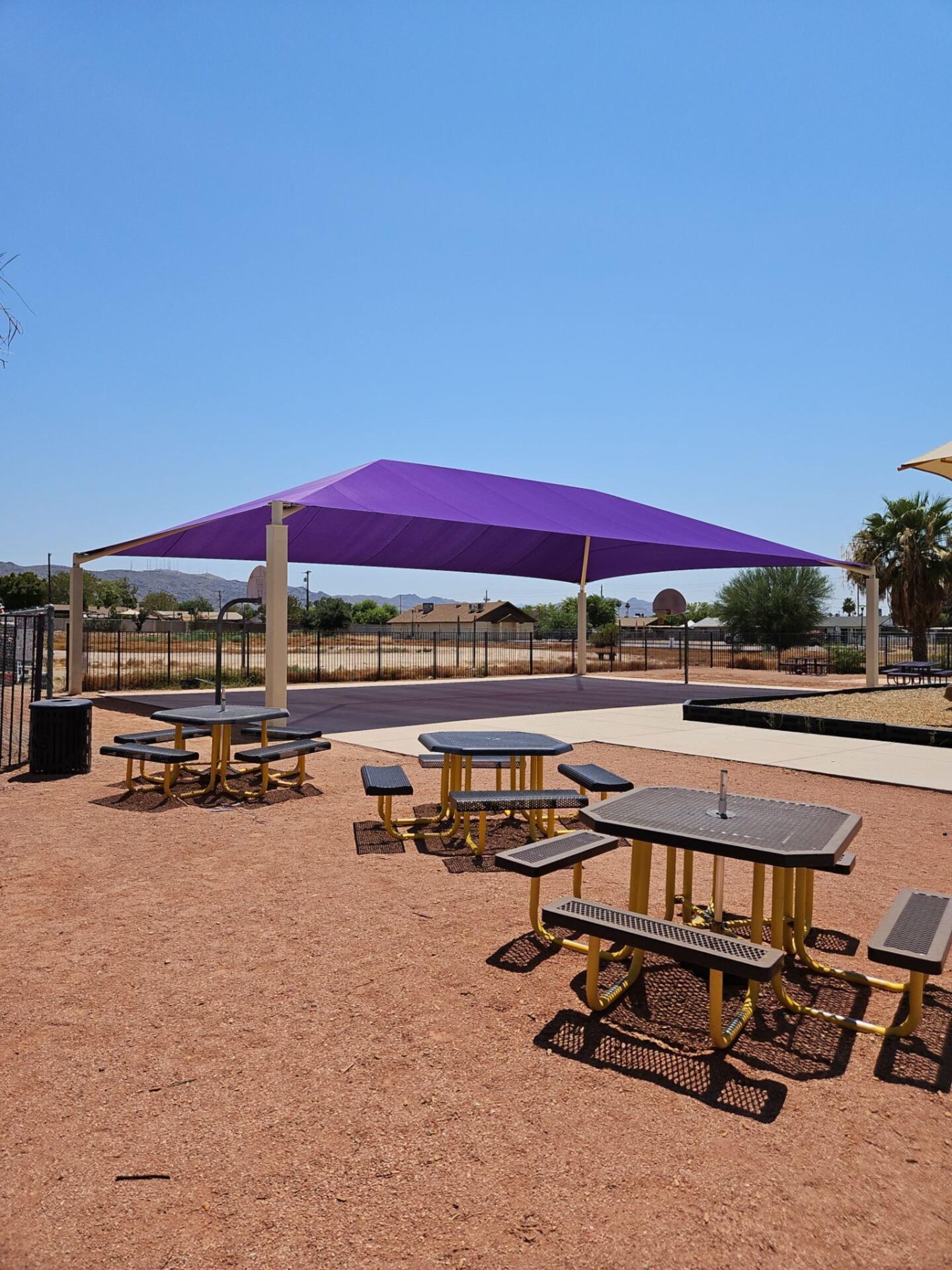
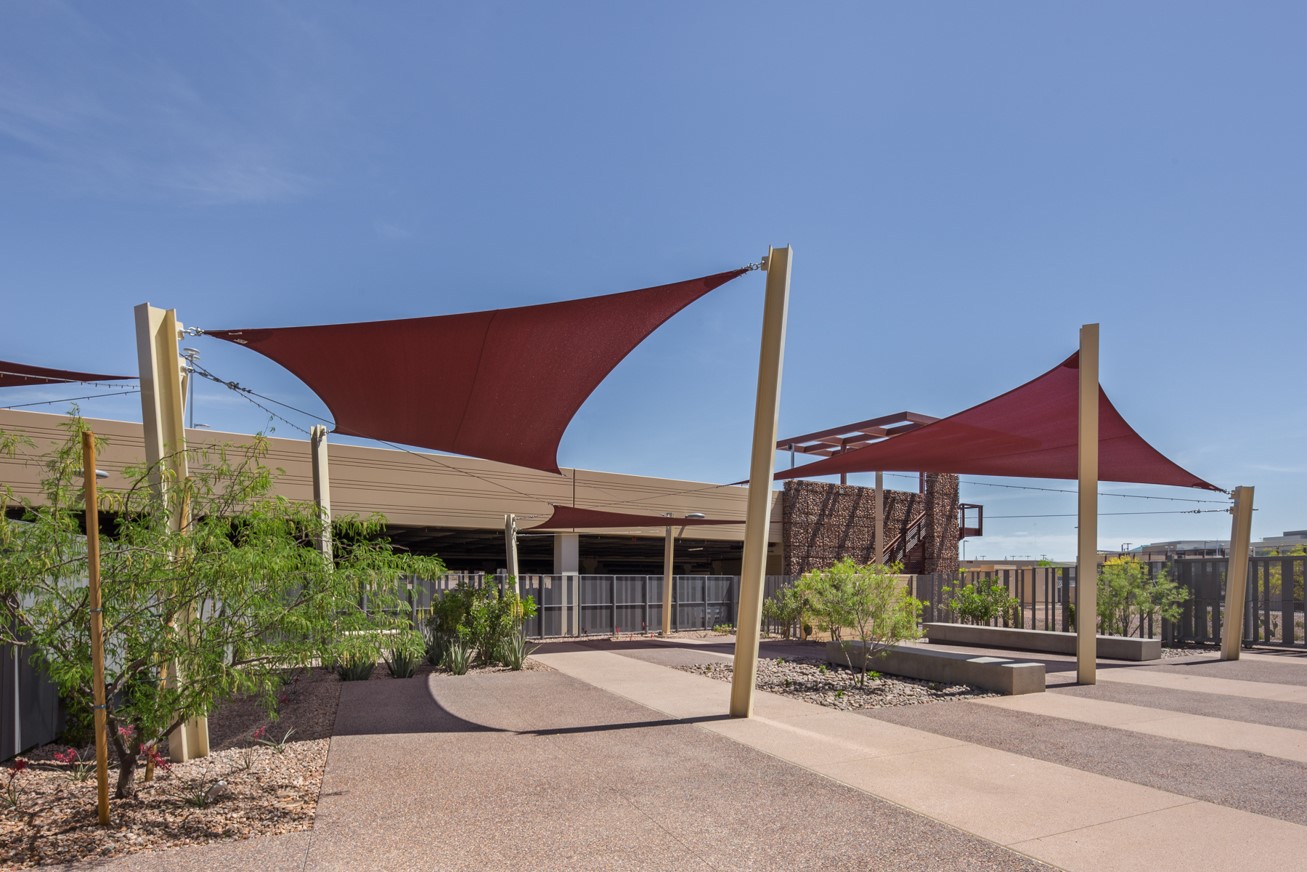
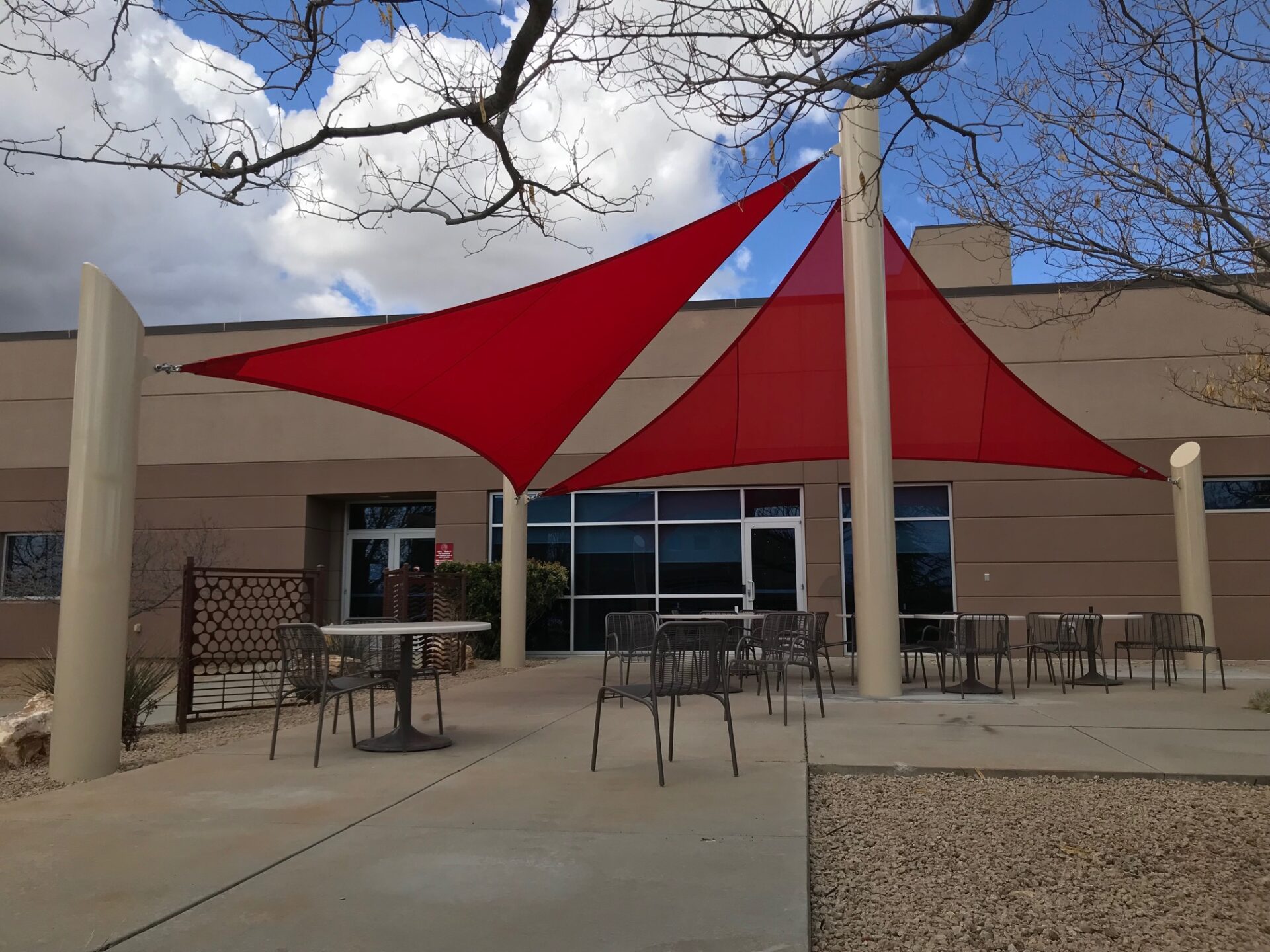
Shade Structures We Build
Frequently Asked Questions
What shade structures work best for apartment pool areas?
Open tensioned fabric sails are the usual answer for an apartment sundeck, because they keep lounge chairs and the splash-out zone cool while leaving the water and sky visible, and the knitted HDPE blocks roughly 90-99% of UV. For reservable, resort-style lounging, cabanas give residents a built corner that photographs well on a listing. The layout drives the mix: a long open deck takes a sail array with posts pushed to the edges, while a deck with lounge clusters mixes sail planes and cabanas.
How does amenity shade help leasing and resident retention?
Shade turns amenities prospects only judge on a tour — the pool deck, playground, dog park, and grill areas — from unusable in summer heat into reasons to sign and renew. Because a property’s value tracks net operating income, an amenity that lifts tour appeal and holds renters is working on occupancy and rent, not just comfort. The shaded versions of those amenities are also what shows up in listing photos and walk-throughs, so the spend doubles as a marketing investment that keeps paying through every summer it stands.
Who maintains shade structures at an apartment community?
The property’s maintenance team handles the light, recurring upkeep — a rinse once or twice a year to clear Valley dust off the fabric and frame. The structure itself is built to need little: the powder-coated steel frame is long-term infrastructure, and the fabric membrane is the wear item, recovered roughly every 10-15 years rather than replaced whole. Planning that re-cover as a scheduled line item, instead of a surprise, is what keeps a multi-amenity community’s shade budget predictable across many units.
Which apartment amenities should get shade first?
The pool and sundeck usually earn first call, because it is the single amenity most prospects judge a community on and the one most likely to swing a tour. After that come the playground, dog park, and splash pad, which matter most on family and pet-heavy leases, then ramada cookout areas and covered mail, seating, and the leasing-office entry. Running one powder-coat color and roof profile across all of them lets the property read as a single designed community rather than a patchwork of mismatched covers.
Will apartment amenity shade hold up to Arizona monsoons and heavy use?
Yes, when it is engineered and specced for a crowd. Every frame is built to Arizona building code and ASCE 7 wind loads, with Valley design wind speeds around 90-115 mph, and the powder-coated structural steel and footings are sized for uplift, not just shade on a calm day. Shared apartment amenities take far heavier use than a private cover, so posts are sized to the span and the fabric to the duty cycle. No structure is rated for every freak gust on record, which is why a light kit is the wrong call for an amenity hundreds of residents stand under.