Arizona voters approved close to a billion dollars in new K-12 school bonds last November — roughly $971 million of the nearly $2 billion on the ballot, according to AZBEX — and a wave of those projects is moving from budget line to construction this summer. Parks departments, municipalities, and HOA boards are scoping their own capital lists on the same calendar. For most of those buyers, shade is on the list. And right now, in the last week of June, the reason is hard to ignore: Phoenix just spent days under Extreme Heat Warnings with highs of 110 to 114 degrees, and the 2026 monsoon has opened on schedule, with the National Weather Service leaning above normal for storm activity across Phoenix and Tucson.
Here is the part most buyers underestimate. The structure you end up with is decided long before a crew shows up — it is decided in the request for proposal. A vague RFP gets you vague bids, and the cheapest vague bid usually wins. Six months later, an outflow wind off a monsoon cell finds the weakest structure in the parking lot. The way to avoid that is to write a specification tight enough that every bidder is quoting the same durable thing. This guide walks through what belongs in a commercial shade structure RFP, drawn from 25 years of building these in the desert and from the bids we read every week. The full range of forms is on our products overview, but the durability starts with the document.
Why the RFP Is Where the Project Succeeds or Fails
A shade structure RFP is not a formality you rush through to start collecting numbers. It is the only point in the project where you control the outcome for free. Once bids are in and a contract is signed, every gap in the specification becomes a change order, a downgrade, or a structure that underperforms — and you pay for all three. The buyers who get burned are almost never the ones who asked for too much. They are the ones who asked for “a shade structure, roughly this size, lowest responsible bid,” and got exactly that.
The trouble is that shade structures look interchangeable on paper. Two quotes for a “40-by-60 fabric canopy” can describe wildly different objects: one engineered and footed for a 90 mph wind load with marine-grade hardware and a stamped drawing set, the other built to the minimum that will pass a glance, with thinner steel and a fabric warranty measured in single digits. A structure rated for 90 mph wind survives an Arizona storm. A structure rated for 70 mph becomes scrap metal and a liability claim. The RFP is where you force those two quotes to stop looking alike — by naming the numbers that matter. We treat the engineering behind those numbers in depth in our breakdown of monsoon-ready commercial shade structures in Arizona, and the RFP is where that engineering gets required or quietly dropped.
Specify the Wind Rating in Numbers, Not Adjectives
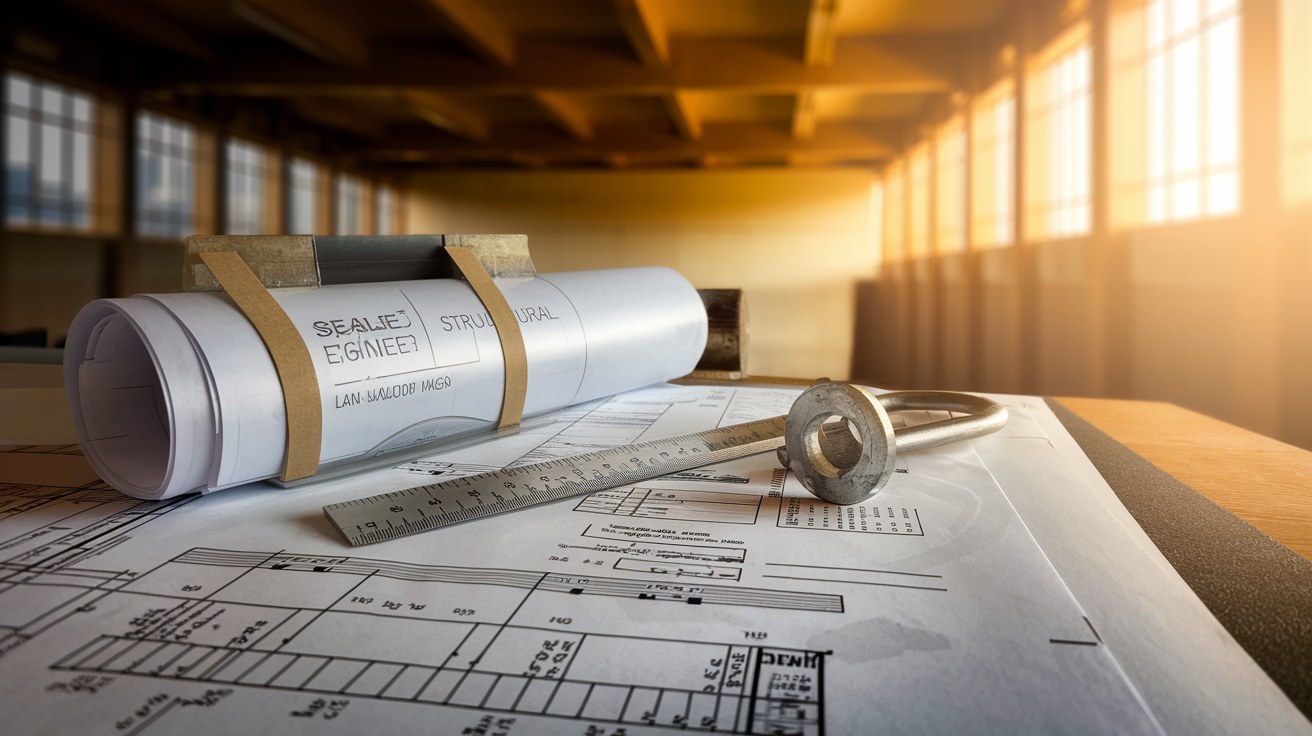
The single most important line in your RFP is the wind load, and it has to be a number tied to a standard — not a word like “durable” or “monsoon-ready.” The governing reference is ASCE 7, the American Society of Civil Engineers standard that the International Building Code points to for structural loads; ASCE 7-22 is the edition adopted in the 2024 IBC, while ASCE 7-16 is still the most widely enforced version across the country. Require that the structure be designed to the ASCE 7 edition your jurisdiction has adopted, for the design wind speed at your specific site, and that the bid include stamped engineering calculations from a licensed Arizona structural engineer.
That stamp matters more than the marketing number a salesperson quotes. Freestanding canopies are analyzed under both the Main Wind Force Resisting System and Components and Cladding provisions of ASCE 7, because uplift on a broad fabric canopy can be just as destructive as lateral push — a monsoon outflow boundary can throw a 50-to-70 mph wall of wind at a structure with only minutes of warning. Ask the bidder to state the design wind speed, the ASCE 7 edition, and the footing design in the proposal itself, and require that the engineering be sealed before fabrication. If a bidder cannot produce stamped calculations for the wind speed you named, you have learned something important about that bidder before you signed anything.
Pin Down the Fabric — Grade, UV Block, and Warranty
The steel holds the structure up; the fabric is what does the actual work, and it is the component buyers most often leave undefined. Specify the fabric by grade, not by adjective. We standardize on Commercial 340/95 HDPE — a high-density polyethylene knit that blocks up to 96% of UV — and for projects with specific needs we also work with Polyfab, Alnet, and Serge Ferrari, including translucent, fire-rated, and waterproof variants. Your RFP should name a minimum fabric weight, a minimum UV block percentage, and the manufacturer lines you will accept, so a bidder cannot substitute a lighter, cheaper knit that fades and frays in a few desert summers. The fabric science behind those specs is worth understanding before you write the line; we cover it in our piece on Arizona shade structure UV protection.
Warranty is the other half of the fabric spec, and it is where the real differences hide. Require the bidder to state the fabric warranty in years and to spell out what voids it — most fabric warranties have exclusions buried in the fine print that turn a “10-year” promise into something far shorter in practice. We carry a ten-year limited fabric warranty, and we will tell you plainly what it covers. Just as important, ask whether the fabric can be replaced on the existing frame at end of life. A structure designed for canopy replacement and repair lets you re-skin the fabric for roughly two-thirds the cost of a full new structure a decade from now — a lifecycle advantage that should weigh in your scoring, not just the upfront price.
Describe the Site, Then Let the Form Stay Open
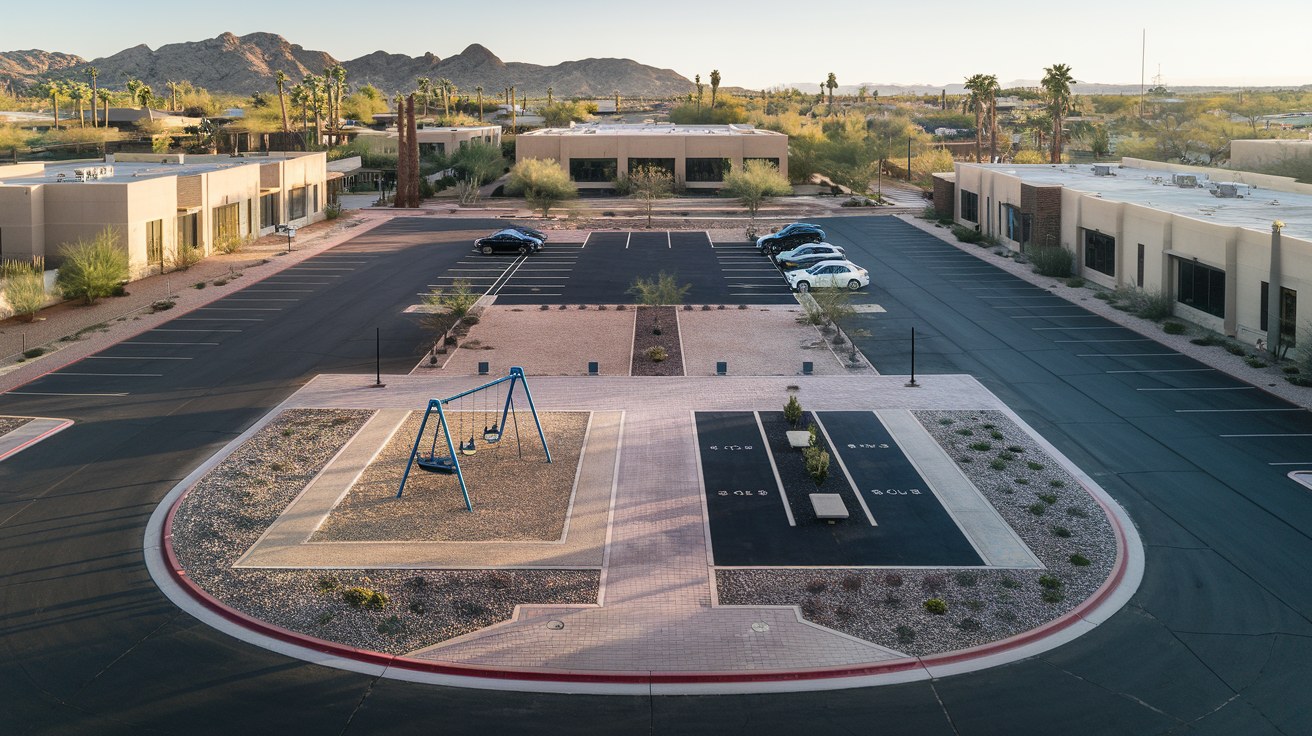
A common RFP mistake is over-specifying the form and under-specifying the site. If you dictate “four-post hip structure” when what you actually need is a clean run with no posts in the drive lane, you have boxed every bidder into the wrong answer. Instead, describe the site precisely — the footprint, what is being shaded, where posts can and cannot go, what the structure attaches to, and the clearances required — and let qualified bidders propose the form that fits. A hip structure covers the most open ground per dollar, a flat cantilever keeps sightlines and drive lanes clear, and tensioned forms like a hypar, a cabana, or a building-attached awning deliver coverage that reads as architecture.
Where your site is irregular — a non-rectangular footprint, a tie-in to an existing building, integration with playground equipment or seating — say so, and invite bidders to propose a custom structure rather than forcing an off-the-shelf footprint onto ground it does not fit. The goal of the RFP is to lock the performance requirements — coverage area, wind rating, fabric grade, clearances — while leaving the engineering solution open enough that an experienced builder can give you the best answer for your money. The performance lines are non-negotiable; the form is where you want expertise, not a checkbox.
Require Installation, Permitting, and Service in Scope
A structure that is engineered and fabricated correctly can still fail on a bad install, so the RFP should pull installation and permitting inside the scope of work rather than leaving them as someone else’s problem. Require that the bidder handle the building permit and inspections through your jurisdiction — Phoenix, Maricopa County, or your local authority — and that installation be performed by a crew trained and certified for the lift and rigging work the job demands. We field an OSHA-certified installation crew for exactly this reason; desert footing conditions and summer lift work are not where you want a low bidder learning on the job.
Build the back end into the document too. Ask for the expected service life, the maintenance the structure will need, and the path to fabric replacement years down the road, so you are scoring the full lifecycle and not just the day-one price. References belong here as well — require recent commercial projects of similar scope and call them, the way you can review ours on our testimonials page. The cheapest bid that omits permitting, skips stamped engineering, and stays silent on warranty is not actually the cheapest bid. It is a deferred cost with a delivery date.
The Bottom Line
The bond money is approved, the planning window is open, and the monsoon is already running — which means the structures specified well this summer are the ones standing through next summer’s storms, and the ones specified carelessly are the ones we get called to replace. A strong RFP does not cost more to write. It costs a few hours of naming numbers: the ASCE 7 wind speed and stamped engineering, the fabric grade and UV block and warranty terms, the site requirements, and installation, permitting, and service in scope. Those lines are the difference between bids you can actually compare and a pile of look-alike quotes hiding very different structures. If you are scoping a school, park, HOA, or commercial shade project and want help building a specification that gets you durable bids — or a straight read on a bid you have already received — contact Total Shade today for a site assessment, stamped engineering, and an honest answer about what your project actually needs.
Sources: Arizona 2025 K-12 school bond results — approximately $971 million of $1.957 billion approved (AZBEX, KJZZ, 12 News); NWS Phoenix late-June 2026 Extreme Heat Warnings with forecast highs of 110–114°F (azfamily, KTAR); 2026 Arizona Monsoon Outlook leaning above normal for Phoenix and Tucson with an on-schedule onset (NWS Arizona Monsoon Outlook, FOX 10, abc15); ASCE 7-22 adoption in the 2024 International Building Code and ASCE 7-16 as the most widely enforced edition, with Main Wind Force Resisting System and Components and Cladding provisions governing freestanding canopy design (ASCE/SEI, International Building Code, Engineering Express); 90 mph wind-load ratings and monsoon outflow wind speeds of 50–70 mph from industry technical guides and NWS monsoon hazard data; Commercial 340/95 HDPE specifications (up to 96% UV block) and manufacturer lines (Polyfab, Alnet, Serge Ferrari) from manufacturer specification sheets; fabric re-skin economics (roughly two-thirds the cost of full replacement) from Total Shade project experience.
