Ready to get started? Call Total Shade LLC today at (602) 265-0905 or request a free consultation.
Commercial Cabana Shade Structures
Premium Poolside Shade for Hotels, Resorts, HOAs, Country Clubs, and Multifamily Properties
Built for Arizona.
The Ultimate Outdoor Shade Solutions for Arizona’s Sun
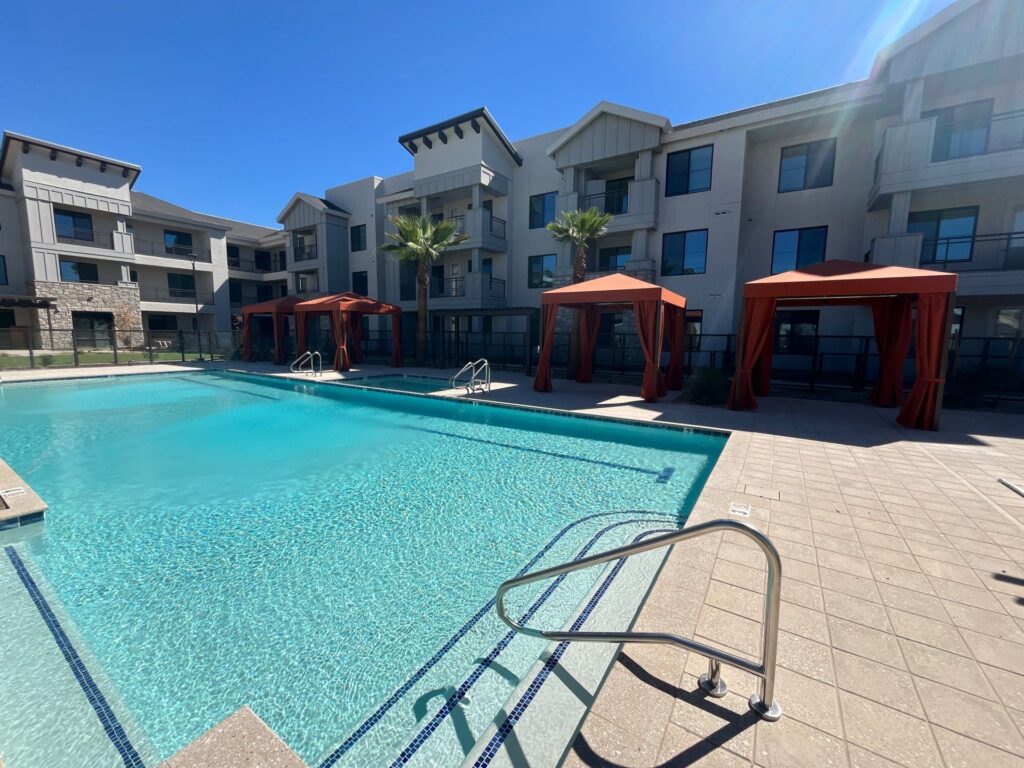
A cabana is more than a shade structure. It is a semi-enclosed outdoor room that provides shade, privacy, and an elevated guest experience — the kind of amenity that turns a standard pool deck into a destination. For hotels, resorts, country clubs, HOA community pools, and multifamily properties, commercial cabanas create a premium experience that drives direct rental revenue, increases guest dwell time, boosts on-property food and beverage spending, and differentiates the property in a competitive market.
At Total Shade LLC, we design and build commercial cabanas in both fabric and wood-framed configurations, each engineered for the demands of Arizona’s desert climate. With over 25 years of experience fabricating and installing shade structures across the Southwest, we understand what it takes to build cabanas that look right on day one and still perform a decade later — after thousands of guest turnovers, monsoon seasons, and summers of unrelenting sun.
This page covers everything a commercial buyer needs to evaluate: what separates a commercial cabana from a residential one, the two primary construction types we offer, where cabanas create the most value, materials and durability in Arizona conditions, code and permitting considerations, and how to think about cost and return on investment.
Our Hypar Shade Structures
What Is a Commercial Cabana?
A commercial cabana is a freestanding or semi-attached outdoor shelter designed for poolside, patio, or amenity-area use in hospitality and commercial settings. Unlike a simple shade canopy that blocks sun, a cabana creates a defined private space — typically with a roof structure, side panels or curtains for privacy, and an interior configured for lounging, dining, or socializing.
Commercial cabanas differ from residential versions in several critical ways: they are built to withstand constant daily use by rotating guests, they use commercial-grade materials that resist UV degradation and corrosion over many years of outdoor exposure, they are designed for fast cleaning and turnover between guests, and they must comply with commercial building codes including wind load, fire safety, and accessibility requirements.
Total Shade builds commercial cabanas in two primary configurations:
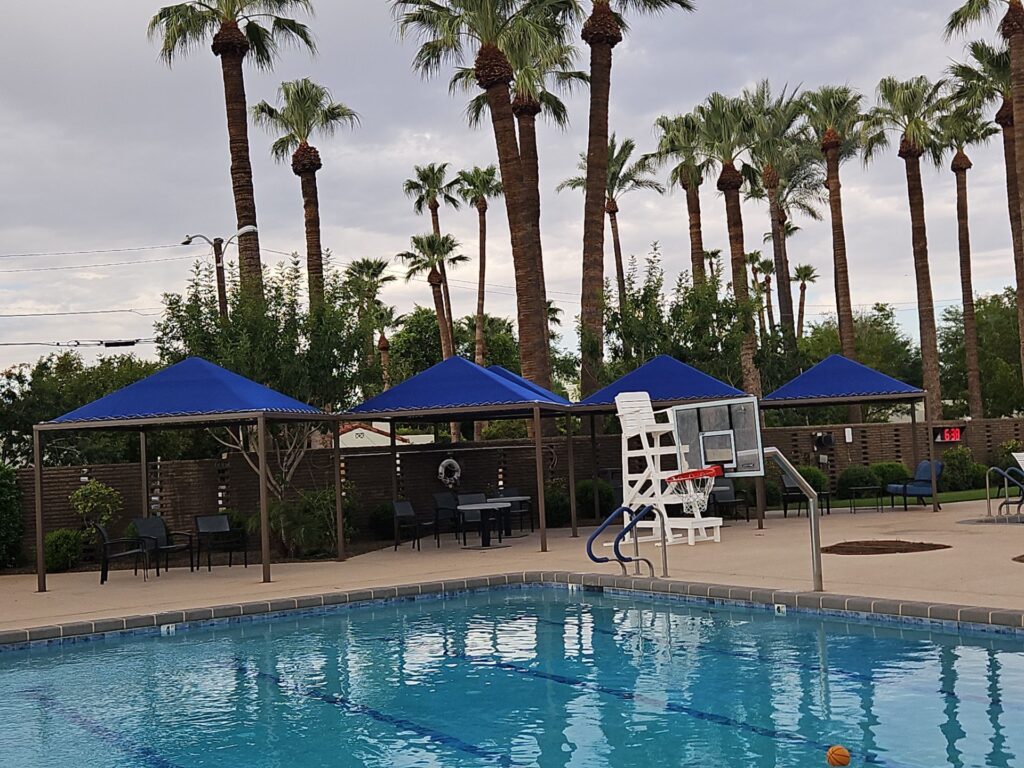
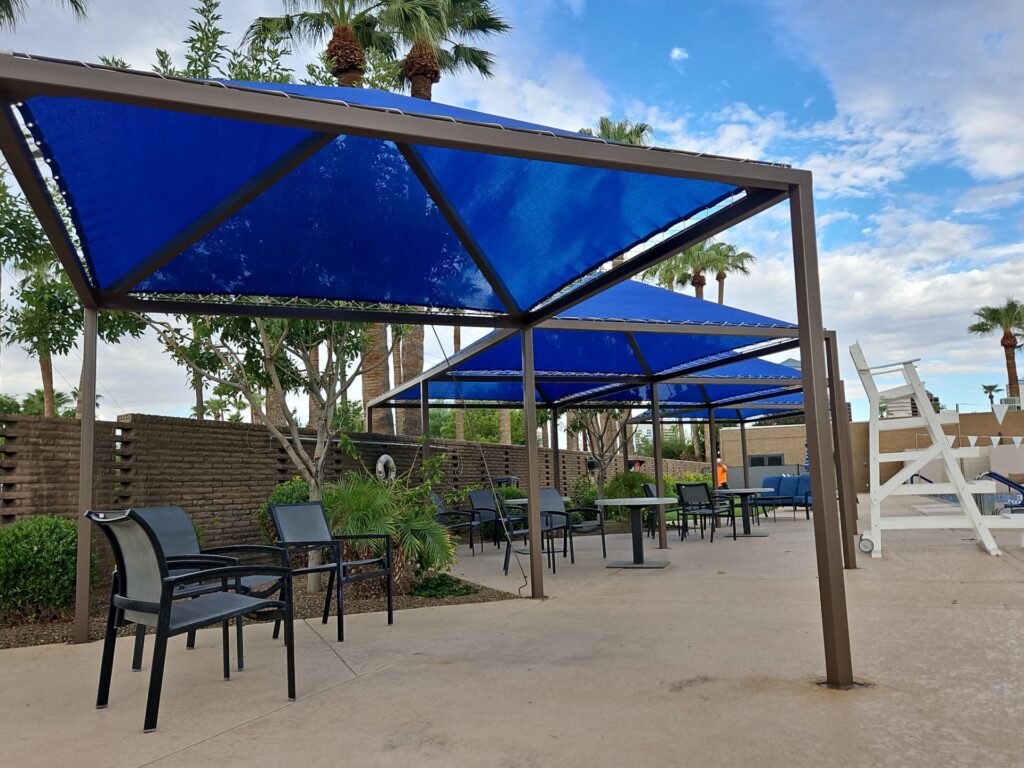
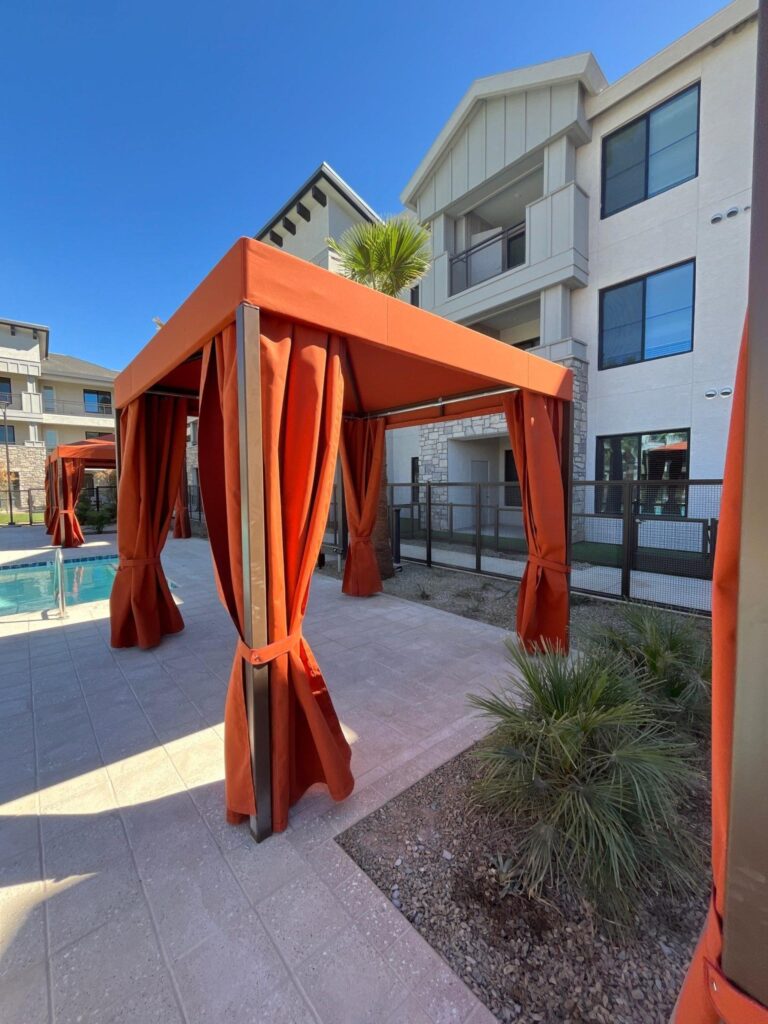
- Fabric cabanas — Steel-framed structures with tensioned fabric roofs and fabric side panels or curtains. These offer a lighter, more contemporary aesthetic, excellent UV protection through breathable HDPE shade cloth, and the ability to customize colors to match property branding. Fabric cabanas are typically more cost-effective than wood-framed versions and work well for properties that want a modern, resort-style look.
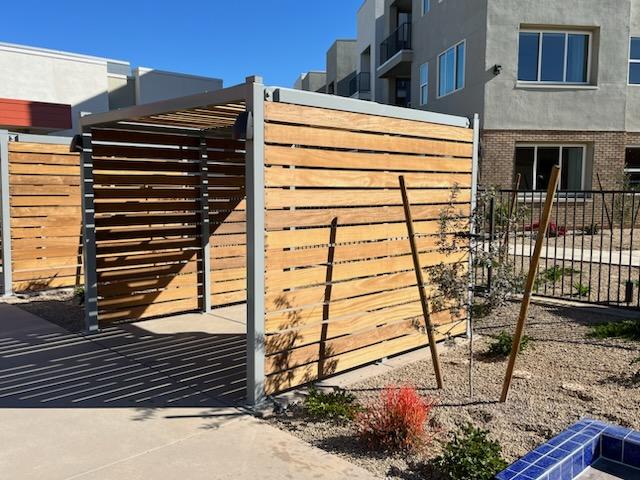
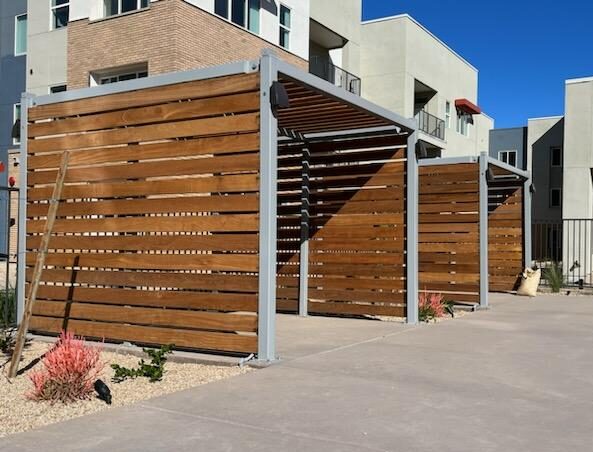
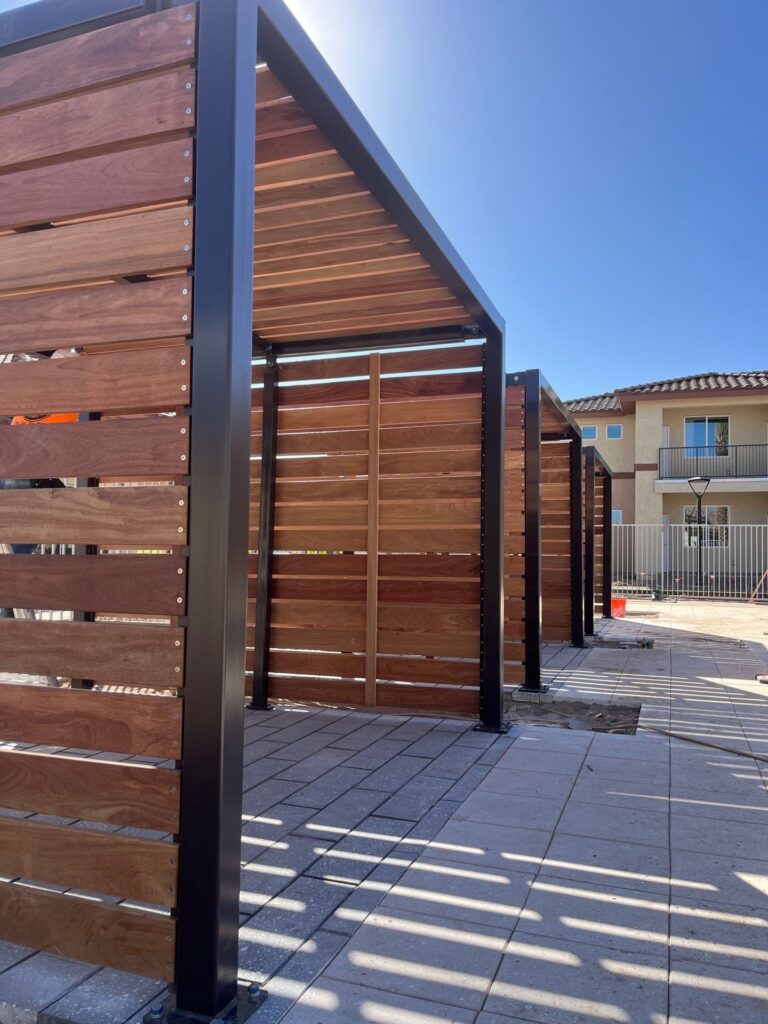
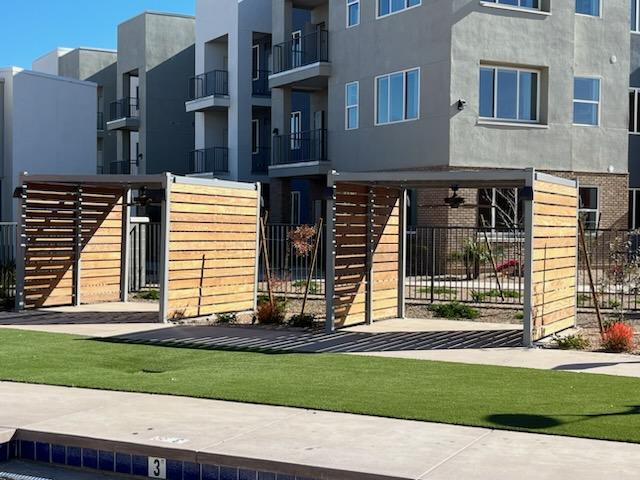
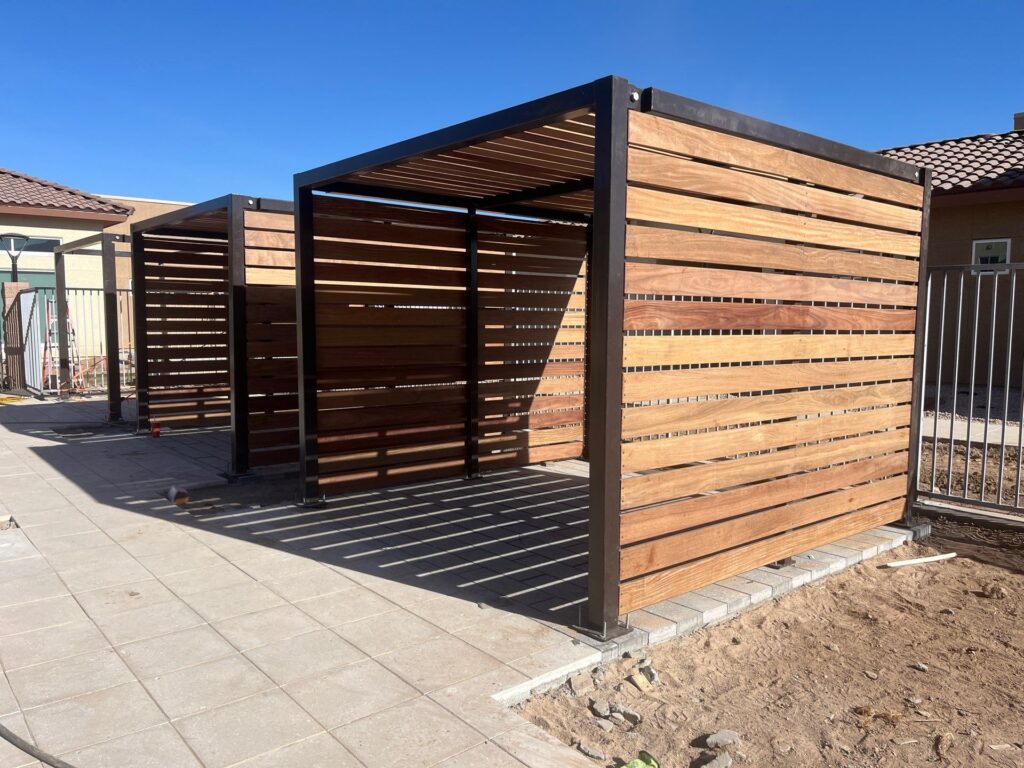
- Wood-framed cabanas — Heavier, more permanent structures with timber framing, solid or fabric roof options, and the warm, natural aesthetic that many luxury resorts, country clubs, and high-end HOA communities prefer. Wood cabanas create a more substantial architectural presence and can incorporate built-in features like benches, storage, and integrated lighting.
Both types can be designed as open-air structures with retractable curtains, fully enclosed rooms with lockable entry, or anything in between — depending on the level of privacy, weather protection, and amenity integration your property requires.
Why Cabanas Create Commercial Value
Cabanas occupy a unique position in the commercial shade landscape: they are the only shade structure that functions as both a sun-protection asset and a revenue-generating amenity. Here is how they create value across different property types:
Direct Revenue Generation
Hotels, resorts, and private clubs routinely rent cabanas by the day or half-day at premium rates. A well-positioned poolside cabana program can generate significant ancillary revenue while simultaneously driving higher food and beverage spending — guests who have a shaded, comfortable base of operations tend to stay poolside longer and order more. Properties that offer cabana packages (including F&B credits, towel service, and dedicated attendant access) report that cabana guests spend meaningfully more per visit than guests using standard pool seating.
Property Differentiation and Perceived Value
In competitive hospitality and multifamily markets, cabanas signal a higher tier of property. They photograph well for marketing materials, create aspirational imagery for social media, and give leasing teams and hotel sales staff a tangible premium amenity to point to during tours. For HOA communities and multifamily developments, cabanas are one of the most visible amenity upgrades a property can make — and one of the few that residents consistently identify as elevating their experience.
Extended Usable Hours and Seasons
In Arizona, where summer surface temperatures on exposed pool decks can exceed 160 degrees F, the difference between a shaded cabana and an unshaded lounge chair is the difference between a usable amenity and an abandoned one. Cabanas extend the hours and months that outdoor pool and patio areas are actively used, which for commercial properties translates directly to higher occupancy of the amenity space and greater return on the investment in the pool area itself.
UV Protection and Guest Safety
The Centers for Disease Control and Prevention (CDC) recommends shade as a primary defense against ultraviolet radiation, advising that outdoor facilities provide shaded areas where people spend extended time in the sun. For pool decks and resort amenity areas where guests may spend hours in swimwear, effective shade is not a luxury — it is a health and liability consideration.
The U.S. Environmental Protection Agency (EPA) reports that one in five Americans will develop skin cancer, with unprotected UV exposure being the most preventable risk factor. Providing cabana shade over poolside seating areas during peak UV hours (10 a.m. to 4 p.m.) demonstrates a property’s commitment to guest welfare and reduces the risk of heat-related incidents on the premises.
For properties with outdoor workers — pool attendants, food service staff, maintenance crews — OSHA’s Water-Rest-Shade guidelines identify shade as a core element of heat illness prevention. Cabanas that serve double duty as staff shade stations during low-occupancy hours help satisfy this requirement.
Common Applications
Commercial cabanas serve a wide range of property types, each with distinct requirements:
- Hotels and resorts — Poolside cabana programs are among the highest-margin amenity offerings in hospitality. Cabanas support day-rental revenue, VIP packages, wedding and event staging, and the aspirational imagery that drives bookings.
- Country clubs and private membership facilities — Cabanas elevate the pool and outdoor dining experience for members, supporting retention and justifying membership rates. They also serve as reservable event spaces for private parties.
- HOA community pools and multifamily amenity areas — Cabanas are one of the most visible and appreciated amenity upgrades for residents. They differentiate the community in the leasing and resale markets and reduce complaints about insufficient shade.
- Waterparks and aquatic centers — Rentable cabanas provide a premium tier of shade and privacy for families and groups, creating a revenue stream that helps offset operational costs.
- Corporate campuses and employee amenity areas — Outdoor cabanas provide shaded break spaces, meeting areas, and event staging that support employee satisfaction and campus branding.
- Event venues and wedding properties — Cabanas serve as staging areas, bridal suites, vendor stations, and guest lounge spaces for outdoor events.
Browse completed cabana and shade structure installations in our project gallery.
Materials and Construction
Fabric Cabanas
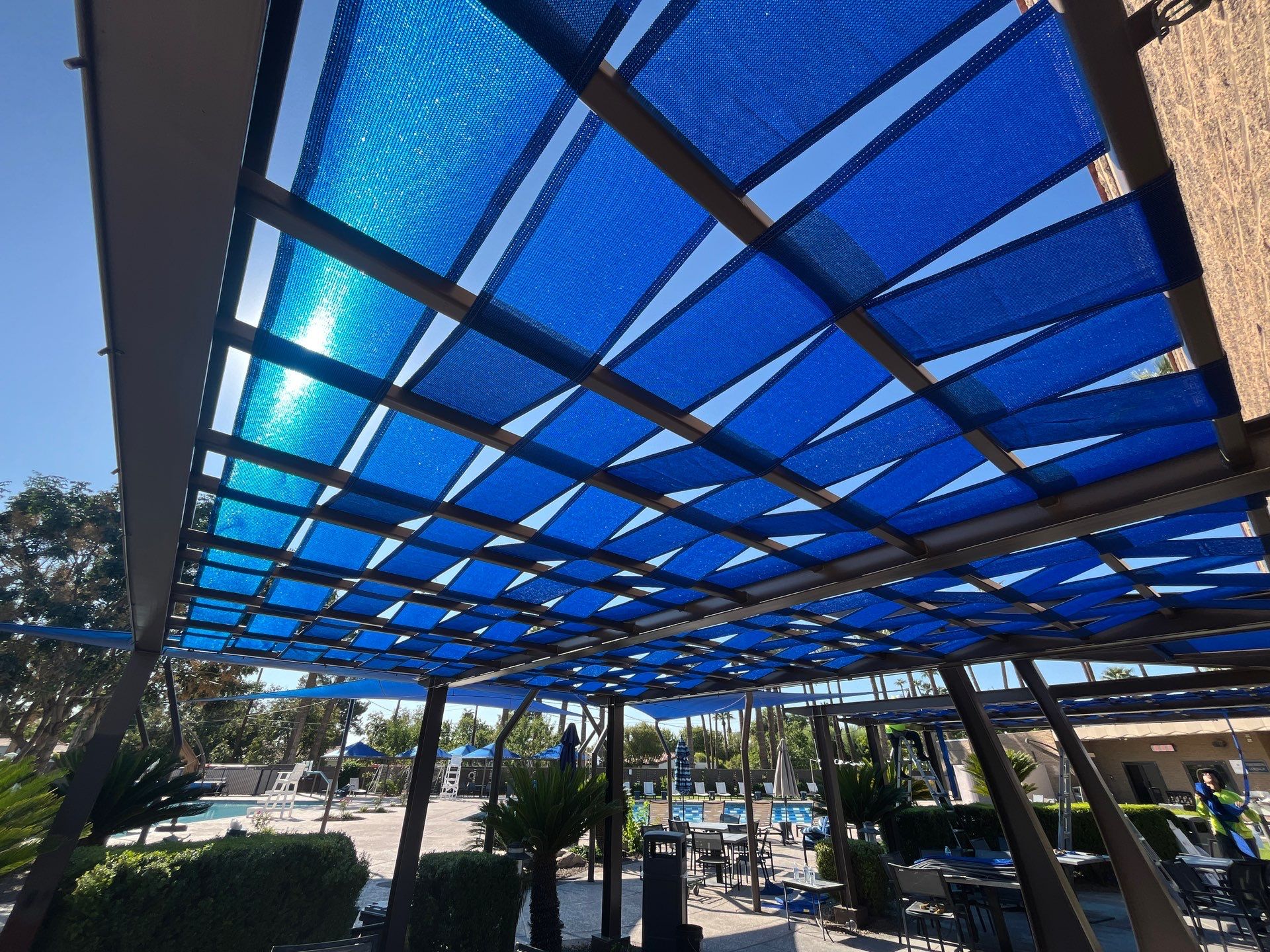
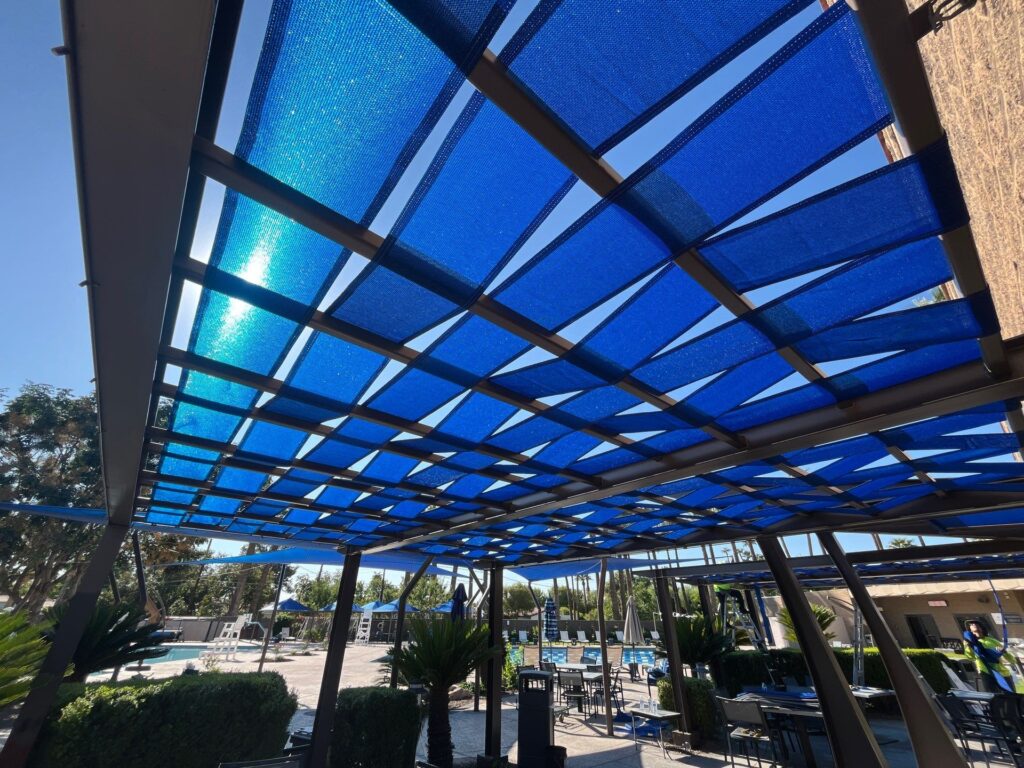
Our fabric cabanas use a welded steel frame fabricated in our Phoenix facility. After fabrication, all steel components are powder coated to a minimum of 3 mil thickness, providing a corrosion-resistant finish rated for decades of Arizona sun and weather exposure. The roof canopy uses Commercial 340/95 HDPE shade cloth — the same commercial-grade fabric we specify across our tensioned shade product line — delivering up to 96% UV block while remaining breathable so hot air escapes upward rather than being trapped inside the cabana.
Side panels and privacy curtains can be fabricated from the same HDPE shade cloth or from heavier outdoor-rated textiles depending on the level of privacy and wind protection required. All fabric is available in a wide range of colors for coordination with property branding.
Commercial 340/95 is available in standard, heavy weight, and FR (fire resistant) configurations. The FR option is certified to CSFM 1237.1 and NFPA 701 — important for cabanas located near grills, fire features, or building facades where local fire codes apply.
We also work with Polyfab, Alnet, and Serge Ferrari fabric lines for projects with specialized UV performance, color, or fire rating requirements.
Wood-Framed Cabanas
Our wood cabanas use heavy timber framing designed for the structural and aesthetic demands of commercial hospitality environments. Wood species and finishes are selected for durability in Arizona’s climate — resistance to UV bleaching, moisture cycling, and insect damage. Roof options include fabric canopy, solid panel, or a combination depending on the desired look and level of weather protection.
Wood cabanas create a warmer, more natural aesthetic than steel-and-fabric designs and are often preferred by luxury resorts, country clubs, and high-end residential communities where the architectural character of the cabana is as important as its function. They can incorporate built-in seating, storage compartments, integrated electrical (lighting, fans, outlets), and heavier curtain or panel systems for more complete enclosure.
Powder Coat and Finish Options
For steel-framed cabanas, we offer over 25 standard powder coat colors with custom color matching available. Wood cabanas can be stained or sealed to match existing property architecture. Both construction types are finished to coordinate with pool deck furniture, building facades, and landscape elements so the cabanas feel integrated with the property rather than bolted onto it.
If your existing cabanas need new fabric panels, roof canopies, or curtains, our in-house sewing team can fabricate replacement fabric cut to fit your current frames.
Design and Layout Considerations
Getting the most guest value and operational efficiency from a cabana installation requires planning beyond just picking a size and dropping it on the deck:
- Orientation to sun and views — Cabanas should be positioned so the shaded interior faces the pool or primary view while the back faces the strongest afternoon sun exposure. In Arizona, this typically means the opening faces east or north, with the solid back or curtained side taking the western sun.
- Privacy vs. openness — Fully open cabanas feel more casual and resort-style. Cabanas with heavier curtains or panel walls create more privacy and a VIP feel but reduce airflow. Most commercial installations use a hybrid approach — open front with retractable side curtains that guests can adjust to their preference.
- Circulation and access — Cabanas must not block pool deck circulation, fire egress paths, lifeguard sightlines, or ADA-accessible routes. Spacing between cabanas should allow service carts, housekeeping staff, and emergency access.
- Service and operations — If the property plans to offer food, beverage, or attendant service to cabanas, the layout must accommodate service paths and staging areas. Fast turnover between guests requires cabana designs that can be cleaned and reset quickly — removable cushion covers, wipeable surfaces, and simple curtain systems beat complex built-ins for high-turnover environments.
- Electrical integration — Cabanas with lighting, fans, USB charging, or TVs require electrical service. This must be planned during the design phase, as running power to poolside locations involves trenching, conduit, GFCI protection, and coordination with the pool’s electrical system and local code requirements.
- Seasonal considerations — Some properties prefer cabanas that can be partially or fully disassembled for off-season storage or monsoon preparation. Fabric cabanas on steel frames are generally easier to remove and reinstall than permanent wood structures.
Not sure whether cabanas or another shade type is the best fit? Explore our full range of shade products, including hip structures, tensioned fabric sails, umbrellas, ramadas, and custom designs.
Codes, Permitting, and Compliance
Commercial cabanas — particularly permanent or semi-permanent installations with electrical systems, solid panels, or enclosed configurations — may trigger building permit requirements, fire code review, and accessibility compliance obligations. The specifics vary by municipality, but common considerations include:
- Building permits — Most Arizona jurisdictions require permits for permanent shade structures. Even freestanding cabanas may require permits if they exceed certain size thresholds or include electrical service.
- Wind load engineering — Commercial cabanas must be designed to resist local wind loads per the International Building Code and ASCE 7. Total Shade provides sealed structural engineering drawings for cabana projects that require them.
- Fire code — Cabanas near grills, fire pits, heaters, or building facades may need to use FR-rated fabrics and maintain specific clearances. Enclosed or semi-enclosed cabanas with electrical systems may trigger additional fire code review.
- ADA accessibility — Pool areas and amenity spaces are subject to accessibility requirements. Cabana placement must not obstruct accessible routes, and a portion of cabanas may need to be accessible to wheelchair users depending on the total count and jurisdiction.
- Health department requirements — Properties that serve food or beverages in cabana areas may face additional requirements around sanitation, surface materials, and waste handling.
We navigate code and permitting requirements as part of every commercial cabana project, coordinating with building departments, fire marshals, and health inspectors as needed.
Understanding Total Cost of Ownership
Commercial cabanas represent a higher per-unit investment than open shade structures, but they also deliver revenue and guest experience value that standard shade canopies cannot. Buyers should evaluate cost in the context of the revenue model and the expected 10 to 20 year service life of a well-built commercial cabana.
| Cost Category | What It Includes | Why It Matters |
|---|---|---|
| Cabana Structure | Steel or wood frame, roof system, side panels or curtains, powder coat or finish | Frame type and materials are the primary cost and durability drivers; fabric cabanas cost less than wood-framed versions |
| Fabric & Soft Goods | Roof canopy fabric, curtain panels, cushion covers if applicable | Fabric quality determines UV performance, appearance, and replacement frequency in Arizona conditions |
| Engineering & Permits | Structural drawings, wind load calculations, permit applications, fire and accessibility review | Required for permanent installations; complexity varies with enclosure level and electrical integration |
| Foundations & Site Work | Concrete footings, deck penetrations, drainage modifications, electrical trenching | Site conditions and electrical requirements can significantly affect installation cost |
| Installation | Frame assembly, fabric tensioning, curtain hanging, electrical connection by licensed trades | Poolside installations often require coordination with pool operations and restricted access hours |
| Ongoing Maintenance | Fabric cleaning and replacement, curtain repair, frame inspection, finish touch-up, seasonal removal if applicable | High-turnover hospitality use wears soft goods faster; plan for curtain and canopy replacement every 5-10 years |
Cabanas vs. Other Shade Options
Cabanas serve a different purpose than open shade structures. Here is how they compare on the factors commercial buyers weigh most:
| Factor | Cabanas | Open Shade Structures |
|---|---|---|
| Privacy | Semi-enclosed with curtains or panels; adjustable by guest | Open on all sides; no privacy |
| Revenue potential | Directly rentable at premium rates; drives F&B upsell | Indirect value through comfort and facility utilization |
| Guest experience | VIP, resort-level; dedicated personal space | Communal; shared shade for all users |
| Coverage area per unit | Smaller; designed for individual groups | Larger; covers playgrounds, parking lots, courts |
| Cost per unit | Higher; includes enclosure, curtains, and amenity features | Lower per square foot of coverage |
| Marketing value | High; aspirational imagery for brochures, social, and listing photos | Functional; less photogenic for marketing purposes |
| Maintenance | Higher; curtains, cushions, and enclosed spaces require more frequent cleaning | Lower; periodic fabric cleaning and re-tensioning |
Many properties use both: cabanas for premium poolside experiences and open shade structures like hip shades or hypar sails for broader coverage over playgrounds, common seating areas, and parking. We help you determine the right combination during the consultation process.
What to Compare When Evaluating Proposals
| Your Question | What You’re Really Comparing | Why It Matters |
|---|---|---|
| Will it hold up to daily commercial use? | Frame material, hardware quality, fabric grade, curtain mechanism durability | Residential-grade cabanas fail within 1-2 seasons of commercial turnover; commercial builds last 10-20 years |
| Does it match our property aesthetic? | Design style (fabric vs. wood), color options, customization level | Cabanas are high-visibility amenities; they must elevate the property, not detract from it |
| How fast can we turn it over? | Cleanability of surfaces, removable vs. fixed cushion covers, curtain operation simplicity | Guest turnover speed directly affects daily rental revenue capacity |
| Does it meet code? | Wind engineering, fire-rated fabrics, ADA compliance, electrical code | Non-compliant installations create liability and can be ordered removed by inspectors |
| What’s the replacement plan? | Availability of matching replacement fabric, curtains, and soft goods | Without replacement fabric sources, worn cabanas become full-replacement expenses |
| What’s the total investment? | Structure + site work + electrical + install + maintenance over 10-20 years | Evaluate against projected rental revenue and amenity value, not just upfront price |
Why Work with Total Shade LLC?
- 25+ years of commercial shade experience — We have designed and installed cabana structures for hotels, resorts, HOAs, country clubs, and commercial properties across Arizona and the Southwest.
- Both fabric and wood-framed cabana options — We offer the flexibility to match the right construction type to your property’s aesthetic, budget, and operational requirements.
- In-house fabrication — Steel fabrication, powder coating, and fabric cutting and sewing are done by our own teams in Phoenix. No middlemen, no outsourced quality.
- OSHA-certified installation crew — Our field team handles the complete installation, including coordination with pool operations and restricted-access scheduling.
- Replacement fabric and soft goods — Our in-house sewing facility can produce replacement canopies, curtains, and panels when your cabana fabric reaches end of life, extending the value of your frame investment for years beyond the original fabric’s service life.
- Single source for all shade types — If your property needs cabanas poolside and a MAX Hip structure over the playground, we handle both under one contract with one point of contact.
Read what our clients say on our testimonials page.
Get a Free Consultation for Your Cabana Project
Whether you are planning a single poolside cabana or a full cabana program for a resort or multifamily property, Total Shade LLC is here to help. We will evaluate your site, discuss your guest experience and revenue goals, recommend the right cabana type and materials, and provide a detailed proposal — all at no cost or obligation.
Call us today: (602) 265-0905
Email: info@totalshadellc.com
Submit a Project Inquiry Online →
Total Shade, Total Solution!